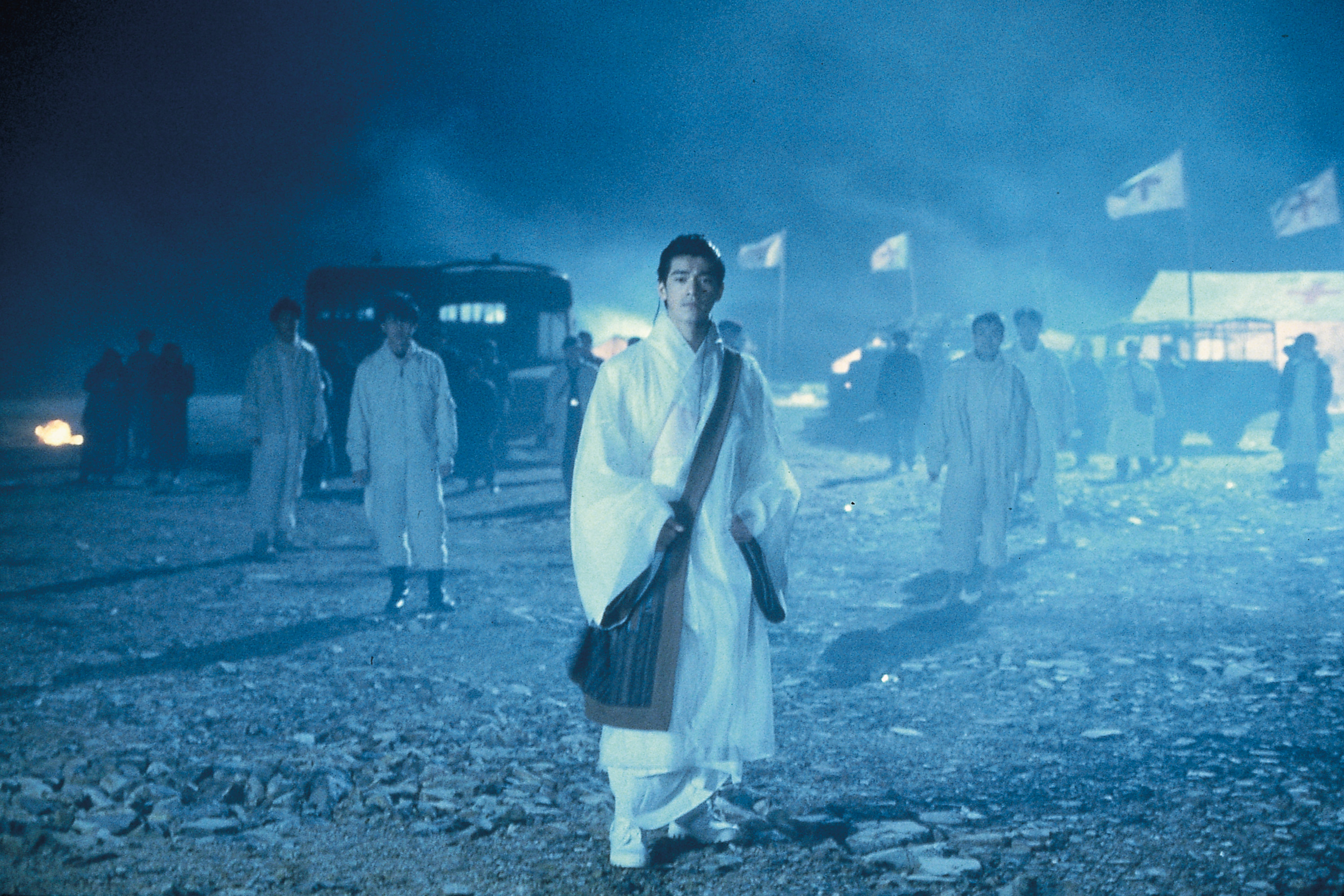
Papa (爸爸, Philip Yung Chi-kwong, 2024)

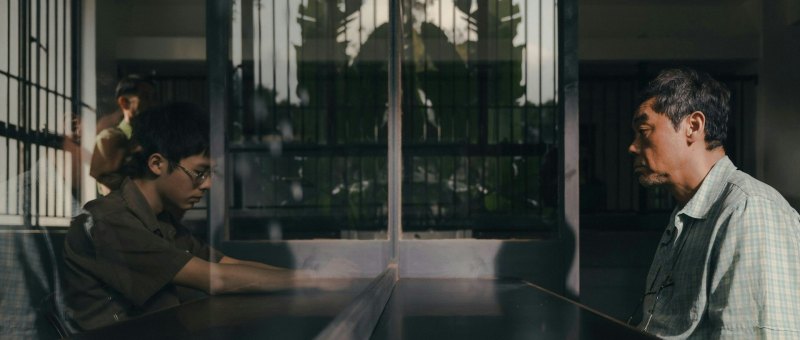
A man struggles with conflicted emotions after learning that his teenage son has killed his mother and sister in a bloody attack in Philip Yung Chi-kwong’s empathic character drama, Papa (爸爸). As much as he’s responsible for the deaths of those dearest to him, Ming (Dylan So) is still Nin’s (Sean Lau Ching-wan) son and he has a real desire to love and care for him while at the same time wondering why and continuing to blame himself as if this tragedy were really provoked by his failures as a father. 

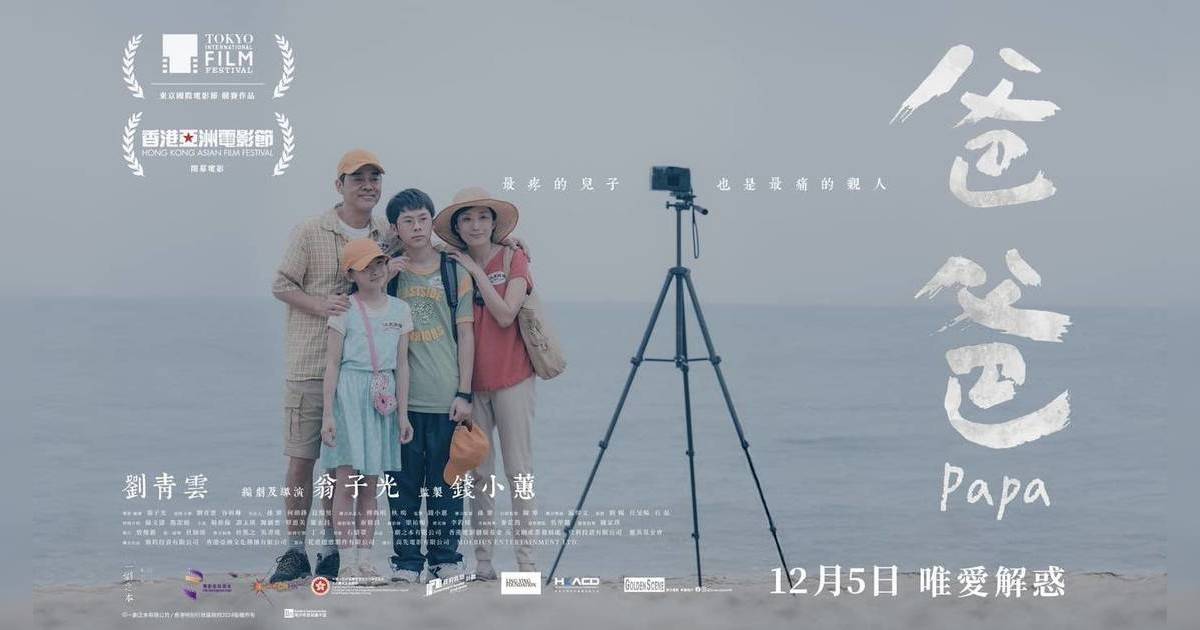
Weaving back and forth through the last 30 years, Yung meditates on a theme of loss while linking Nin’s life with key moments in history. In 1997, the year of Hong Kong’s handover to China and also the beginning of the Asian financial crisis, Nin buys a newfangled digital camera hoping to record the birth of his daughter, Grace. Nin isn’t convinced by this technological advance and wonders if it will just lead to people wasting their time taking endless photos now they don’t have to worry about running out of film, but it’s also the means by which he is eventually able to preserve his family by making use of the temporary pause provided by its timer function so that they can all occupy the same space for a moment but also for eternity.

Otherwise, he worries that the family’s business concerns put too much strain on their relationships. He and his wife Yin (Jo Koo Cho-lam) worked opposing shifts at a 24hr eatery meaning they rarely got to spend time together and the children grew up with each of their parents never fully there. Though Nin had wanted to stop opening overnight so they could have a more conventional family life, Yin, from Guangdong on the Mainland, was against it and wanted to keep going until the children were a bit older. There’s an implication that this 24hr culture is also something of an older Hong Kong that’s gradually being erased in the post-Handover society and that Nin and his family are living in an age of decline.

Though Ming won’t give a reason for what he did, in his court testimony he claims to have heard voices telling him that there were too many people and it was making everyone angry so he needed to kill a few and bring the population down. Nin again blames himself, reflecting that the family live in a typically cramped flat where the children have to share a room and everyone is piled on top of each other even if he and his wife are rarely there at the same time. In flashbacks to happier times when Ming was small, there’s a suggestion that Ming resented his sister and that he always had to share not only his possessions, his mother suggesting that they buy a smaller bike for his birthday so Grace can use it too, but his parents’ attention. In a particularly cruel moment, Ming tells Grace that none of her favourite characters from Doraemon are actually “real” but merely imaginary friends Nobita made up in his head because he is autistic. 

But along with his aloofness, poor social skills and lack of empathy, Nin remembers Ming caring for the stray kitten Grace adopted but then grew tired of though he had not originally been in favour of taking it in. He seems to have been living with undiagnosed schizophrenia, something else Nin blames himself for wondering if there was something he could have done. “If I’d been there it wouldn’t have happened,” he tells the press in the incident’s aftermath, but even if he was ill it’s hard to believe the little boy he taught to ride a bike and took on trips to the beach could have done something so violent and hateful and then show such little remorse. Even so, he’s still his son and the only thing he can still rescue from the wreckage of his life while meditating on all he’s lost. As such, it’s another recent film from Hong Kong about how to live on in a ruined world. Yung’s camera has an elegiac quality aided by a retro synth score and the neon lighting of an older Hong Kong drenched in melancholy, but also weary resignation and a determination to keep going if only in memory of a long absent past that were it not for a photograph “to prove that we were here” would go unremembered.  


Trailer (Traditional Chinese / English subtitles)
The White Storm 3: Heaven or Hell (掃毒3︰人在天涯, Herman Yau, 2023)

Who is the most foolish, the arch criminal who didn’t realise his two best buddies were undercover cops, or the cops that killed or took bullets for him? The latest in the White Storm series of standalone action thrillers with starry casts thematically dealing with drugs and organised crime, White Storm 3: Heaven or Hell (掃毒3︰人在天涯) like its immediate predecessor casts the net a little wider than just Hong Kong and is keen to stress the real victims of the international drug trade are the economically disadvantaged farmers who are left with no other option than to turn their fields to poppies. 

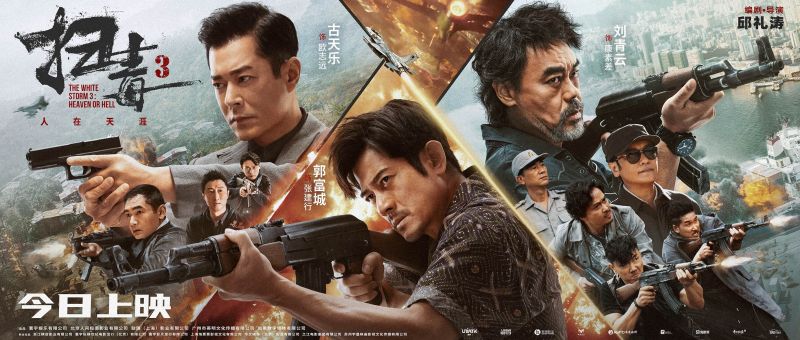
Back in Hong Kong, meanwhile, the film opens with local drug lord Suchat (Sean Lau Ching-Wan) retrieving a huge haul of drugs dropped in the ocean by helicopter only to be interrupted by the police who were watching all along. Suchat’s righthand man Yuen (Louis Koo Tin-Lok) blows his cover by pulling a gun to convince him to surrender, but Suchat chooses not to and in the firefight that ensues his other buddy, Hang (Aaron Kwok Fu-Sing), who is also an undercover cop and in fact very good friends with Yuen, is seriously wounded. In a show of loyalty, Suchat rescues Hang and manages to flee to Thailand where he sets up in his home village soon coming to the attention of the warlord who controls the local drug trade.

Describing the gang as the “rising stars of the Golden Triangle”, Suchat eventually cuts a deal with the general to provide security for his logistical operation in which drugs, mostly ice but also heroin, are transported inside fruit and other foodstuffs to be moved through the local market. Suchat had originally tried to set up his own operation only to fall foul of the general but also concedes that the margins in this game are fairly thin, no one in this area has any money to spend on drugs and there’s no point trying to produce them with the general in town so his only option is to provide a different service at another point in the chain. Hang becomes fond of the young woman who nurses him back to health, Noon, who explains that the only crop anyone is interested in is opium so aside from the food they grow for themselves it’s all they can produce to support themselves. There may a particular implication in her reply when Hang asks her if she’s ever considered moving that this even if this place is not a “home” because she has no remaining family members (her grandfather in fact seems to die of opium poisoning) it is still her hometown and why should she have to leave it. 

Before being taken to Thailand, Hang’s boss had worried that he might have spent too long undercover to successfully come back and it’s true enough that he seems to have become conflicted not only in his feelings for Noon but reflecting on the genuine brotherhood that exists between himself and Suchat whom he will eventually have to betray. Hang almost died for him, and Suchat repaid the favour by refusing to leave him behind. But on the other hand, there’s also a degree of homoerotic tension between himself and Yuen who rushes straight over to Thailand to rescue him once he’s able to make contact only to be frustrated when Hang tells him he has to go back to the village to save Noon who, as she’s already told him, does not actually want to leave despite the danger of constant violence from drug gangs and army raids. 

The film ends with the razing of the village of the Thai authorities who evidently decide the loss of life is justified in the necessity of stopping the general though it’s the ordinary farmers who lose their lives, families, homes and livelihoods because of their proximity to the trade in drugs. “I miss Hong Kong” Hang finally exclaims as if longing to shake off his undercover persona and recommitting himself to his role as a policeman but also perhaps hinting at a more subversive meaning as Yau ends on the clouds parting to reveal the famous city skyline amid picturesque terrain. Filled with a series of incredibly elaborate action sequences culminating in the all out warfare of the village raid, Yau’s heroic bloodshed subversion has its share of absurdity in the complicated relationships between its central trio and the ambivalent justice of its final resolution.


Original trailer (Traditional Chinese / English subtitles)

Executioners (現代豪俠傳, Johnnie To & Tony Ching Siu-Tung, 1993)

At the end of The Heroic Trio, the shadowy rise of authoritarianism seemed to have been beaten back. The three superwomen at the film’s centre had discovered joy and liberation in female solidarity and were committed to fighting injustice in a flawed but improving world. If Heroic Trio had been a defiant reaction to Handover anxiety, then sequel Executioners (現代豪俠傳) is its flip side shifting from the retro 40s Hong Kong as Gotham aesthetic to a post-apocalyptic nightmare world where nuclear disaster has normalised corporate fascist rule. 

As Ching (Michelle Yeoh) explains in her opening voiceover, a nuclear attack has ruined the city contaminating its water and leaving ordinary citizens dependent on the Clear Water Corporation for safe drinking supplies and basic sanitation. The trio have been scattered, pushed back into the roles from which they escaped at the first film’s conclusion save perhaps for Ching who continues to serve a duplicitous authority but does so with clearer eyes and a humanitarian spirit driving a medicine truck to ensure those in need have access to healthcare. Chat (Maggie Cheung Man-Yuk) meanwhile has reverted to her cynical bandit lifestyle, hijacking water trucks mostly for her own gain but also ensuring the water gets to the needy. Tung (Anita Mui Yim-Fong) has abandoned her Wonder Woman persona on the insistence of her husband who is now a high ranking policeman with the military authority devoting herself to the role of the traditional housewife and mother to her daughter Cindy. 

Though the women seem to have maintained their bond, Ching and Chat turning up for a Christmas celebration with Cindy, the political realities soon disrupt their friendship as they find themselves at odds with each other given their shifting allegiances. As in the first film, Chat has continued to accept work from dubious authority in the form of the Colonel including tracking down a man who embarrassed the police by firing a gun at a rally for a cult-like protest leader, Chung Hon (Takeshi Kaneshiro), only the gunman later turns out to be a patsy and Chat has unwittingly helped them bump off the voice of the people as an overture for a military coup. Ching is secretly working for responsible government trying to safeguard the President to prevent his assassination by the Colonel, but obviously cannot say very much about her mission arousing Tung’s suspicions that she may have been part of a plot to have her husband killed. 

In any case, the true villain turns out to be a kind of Wonder Woman mirror image in that the mysterious Mr. Kim (Anthony Wong Chau-Sang), CEO of Clear Water Corporation, is a man who wears a mask to hide his scarred face and dresses like an 18th century aristocrat as if engaged in some kind of Man in the Iron Mask cosplay. Kim and the Colonel have been collaborating to engineer a military coup by deliberately restricting water supplies. The oblivious Chung Hon had unwittingly been Kim’s stooge, stoking up public resentment about the water situation to give the government an excuse for a crackdown and the Colonel to move. Chat’s path to redemption amounts to vindicating the faint hope that the water contamination was a hoax, which she eventually does by taking Cindy with her to smash the corporate dam and return the water to its rightful flow and the people of the city. But like the Evil Master, Kim does not die so easily turning up for a surprisingly hands on fight squaring off against the barely unified trio who are only just beginning to repair their friendships on coming to a fuller understanding of the reality of their circumstances. 

They are all in a sense liberated, though less joyfully than in the first film and largely through violent loss. The good guys don’t always win and a fair few die while all the women can do is keep moving, fighting off one threat after another with few guarantees of success and not even each other to rely on. Where the first film had embraced a hopeful sense of comic camp, Executioners skews towards the nihilistic in its dystopian world of corporate overreach and increasing militarism in which the trio no longer trust each other and are each re-imprisoned inside their original cages from patriarchal social norms to capitalistic inhumanity and questionable loyalties with the only hopeful resolution resting on “the sincerity of our friendship” in a world which may be healing but is far from happy. 


Executioners screened as part of this year’s San Diego Asian Film Festival.

Life Without Principle (奪命金, Johnnie To, 2011)

A financial earthquake destabilises the ordinary lives of a series of Hong Kongers in Johnnie To’s circular thriller, Life Without Principle (奪命金). As one character puts it, greed is human and everyone always seems to want more but even a little is out of the reach of many and so perhaps their desire is understandable in a world in which a loan shark can lord it over the bank who are in essence little better than he is in exploiting their customers by charging them extortionate fees yet failing to protect their investments. 

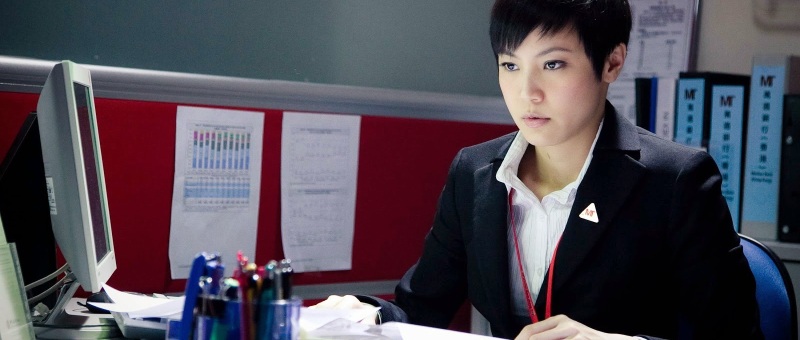
Just before the financial crisis of 2008, bank clerk Teresa (Denise Ho Wan-see) is beginning to fear for her job because she’s stuck at the bottom of the staff sales leader board and her boss doesn’t even bother to tell her off anymore. Under pressure she finds herself misselling a high risk BRIC loan to an older woman seemingly fearful of her declining economic power and hoping to make her savings pay a little more rather than just sitting in the bank doing nothing. Meanwhile Teresa is at the constant beck and call of boorish loanshark Yuen (Lo Hoi-pang) who won’t take out a loan with her because banks just rip you off. “Business is about profit but you have to play fair” he unironically explains handing over a card in case Teresa ever needs a “fair” loan pointing out you’ll pay 35% interest on a credit card but he’ll give you 15% even with bad credit. In any case, he leaves with only half of the 10 million he took out, asking Teresa to deposit the rest and sort the forms out later because he’s in a hurry, only he ends up getting offed in the car park meaning that second five million is in paper limbo. 

Teresa can’t really argue that the bank is morally any better than the loanshark, only that what they’re doing is legally regulated even if she has just broken a series of regulations in talking the old woman into the risky loan because she herself fears a financial crisis in losing her job. Meanwhile in another part of the city, one old man ends up killing another in a property dispute amid the city’s notoriously difficult housing market. The policeman investigating, Cheung (Richie Jen), is ironically called away because his wife, Connie (Myolie Wu Hang-yee), is nagging him about buying a new apartment requiring a one million deposit on a 30-year mortgage. She complains that he’s stubborn and overcautious, but he is at least pretty much the only person showing any kind of prudence in the cutthroat investment world even as he hesitates on learning that his estranged father is at death’s door leaving behind an illegitimate little girl it falls on he and his wife to adopt. 

If Cheung’s caution seems cold, it’s ironically mirrored in the film’s only pure hearted hero, ironic triad parody Panther (Sean Lau Ching-wan) who only cares about old-fashioned ideals like gangster loyalty even if those ideals are often expressed through money. Complimented by a boss for not trying to steal from a wedding collection he nevertheless games the restauranteur but only desires money in order to bail out his gangster friend Wah (Cheung Siu-fai) who is immediately deserted by all his minions who obviously don’t have the same ideas of loyalty as old school Panther. “Loyalty matters most” he insists to an old friend who left the triads to work as a junk collector because you can make more money recycling cardboard than in the contemporary underworld. Even his former sworn brother Lung (Philip Keung Ho-man) has managed to do very well for himself as a legitimate businessman hosting online gambling platforms and playing the stock market. 

Yet as Panther pores over data it becomes obvious that they are all betting on the market remaining the same, blindsided by the advent of the Greek Debt crisis and its devastating destabilisation. They thought they had control, that the decisions they made based on the data they received would remain correct only to realise that they are almost entirely powerless. Teresa fiddles with the jammed lock on her cabinet as she vacillates over whether or not to cash out of the corporate life with the “invisible” money, while Connie reckons with potentially losing her deposit when the already risky mortgage application is turned down, and the old lady is left to face potential financial ruin all alone in the twilight of her life. Then again, fate is fickle. The crisis passes as quickly as it arrived allowing a kind of normality to return but finding the desperate protagonists largely unchanged if perhaps emboldened by the feeling of relief resulting from their accidental lucky escapes from certain ruin. A slick and intricately plotted elliptical thriller, Life Without Principle revels in cosmic ironies but nevertheless holds only scorn for the dubious promises of spiralling consumerism in an increasingly jaded society.


Life Without Principle screens at London’s Prince Charles Cinema on 7th July as part of The Heroic Mission: Johnnie To Retrospective.

Original trailer (English subtitles)

Shock Wave 2 (拆彈專家2, Herman Yau, 2020)

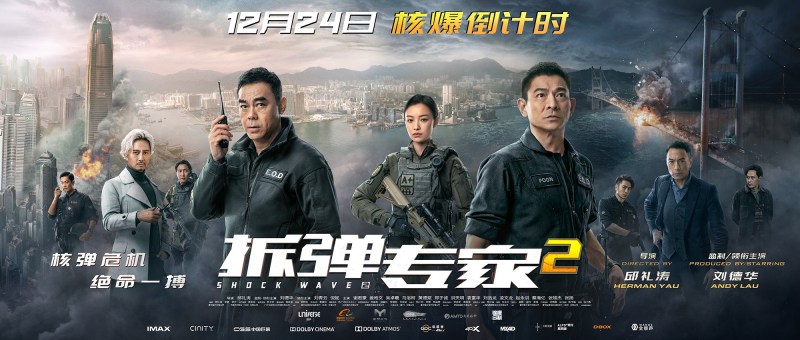
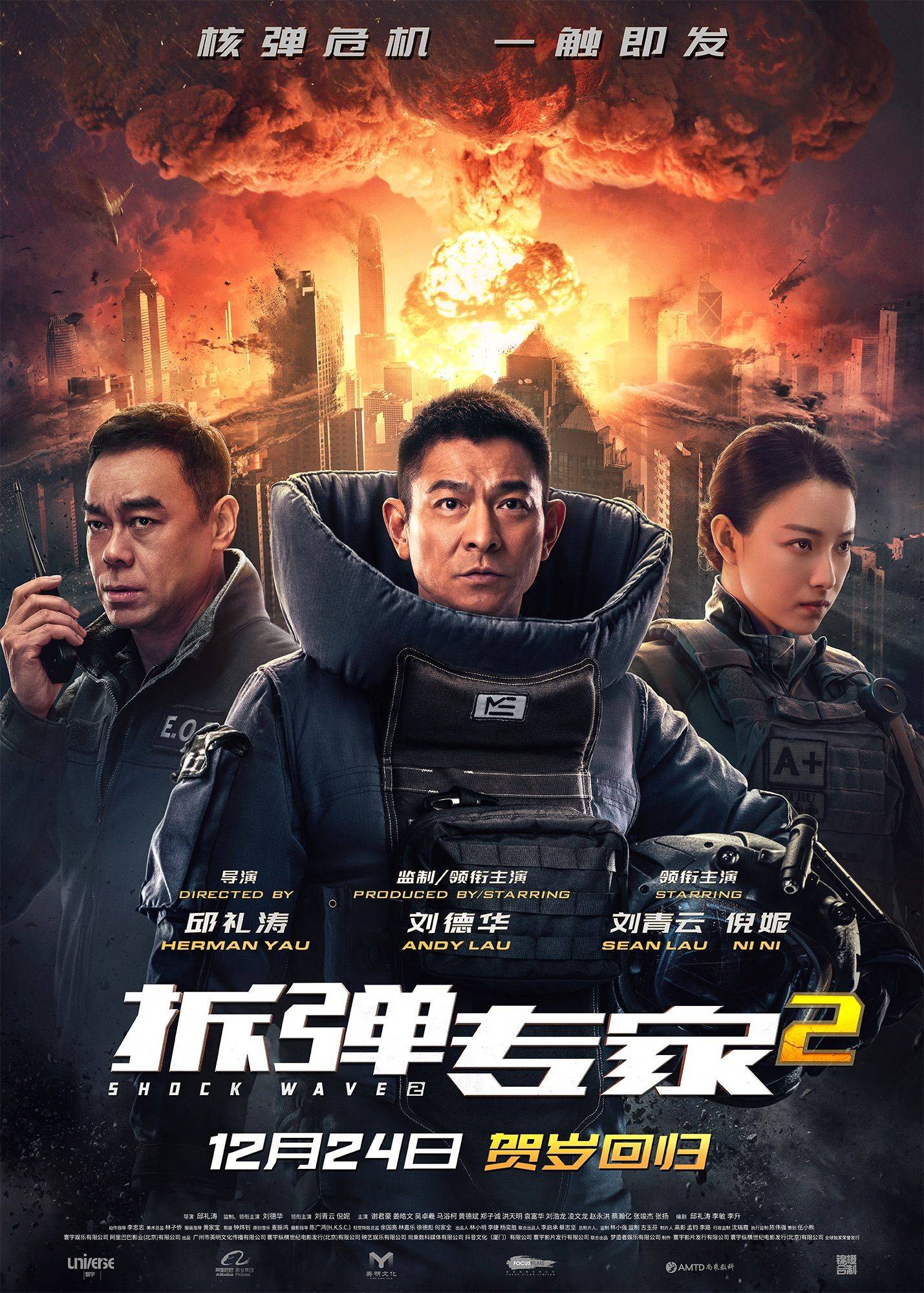
“Anger can destroy everything” according to the voiceover opening Herman Yau’s Shock Wave 2 (拆彈專家2), a thematic sequel to the original Shock Wave once again starring Andy Lau as a Hong Kong police bomb disposal officer battling serious threat to the island’s transport infrastructure but also picking up themes from the pair’s subsequent collaboration White Storm 2 in which the veteran actor had starred against type as a Batman-esque billionaire vigilante fighting a one man war on drugs. The villains here claim they want “change”, but in reality want little more than to burn the world, enraged by its refusal to recognise or remember them consumed as they are by wounded male pride. 

The hero, Fung (Andy Lau Tak-wah), finds himself suffering from amnesia after encountering the second serious accident of his professional life. When we first meet him, he’s essentially playing the same role as the first film, a cheerful, slightly cocky bomb disposal expert with a potentially reckless streak born of his willingness to risk his own life to save those of others. When he’s injured on a job, tricked by a random booby trap while trying to free a trapped cat, and loses his leg he reacts with characteristically upbeat stoicism quickly adjusting to his new prosthesis and determined to get back to work, training intensely with the help of his friend Tung (Sean Lau Ching-wan) who was also injured in the same blast only not so seriously. Despite passing all the fitness criteria Fung is fobbed off with an offer of a desk job in police PR, refused a return to the bomb squad as the panel quite openly admit not so much because they feel his disability impairs his ability to do the job as they fear public blowback should something go wrong and they be blamed for having hired a disabled person in the first place. 

It’s less a sense of discrimination than unfairness that fuels Fung’s growing sense of anger and resentment not only towards the police force but towards society in general which he now feels regards human beings as little more than disposable tools. He rejects the sense of himself as “disabled”, internalising a sense of societal shame keen to remind everyone that he is not impaired proving himself capable above and beyond the force’s criteria but is still rejected while Tung, who suffered only minor burns, is permitted to return to duty and even gets a promotion. His friends later recount that he became a different person after the accident, angry and embittered as if at war with the world. 

Yet after encountering a second accident, Fung loses his declarative memory which is to say he still has his everyday skills such as walking around (including using a prosthesis), getting dressed, brushing his teeth, using a computer and presumably the mechanics of bomb disposal but no longer remembers his own name or how he ended up in hospital now at least implicated in an act of major terrorism. Without his memories, Fung is a blank slate, freed from all the trauma and resentment that may have pushed him towards the dark side and returned to the innate goodness of a soul untouched by the world’s cruelty. The question is, which way will he turn, back towards the darkness or further into the light as the Fung they once new who willingly risked his life for others? In any case, he finds himself potentially misused by his well meaning ex Pong Ling (Ni Ni) who engages in some dubious psychology involving false memory implantation to convince him that he’s been working for the Hong Kong police undercover, hoping to engineer a softer landing for him than the realisation that he may be responsible for the deaths of at least 18 people as a member of an anarchist sect going under the apt name of “Vendetta”. 

Like Fung, the leader of Vendetta is an angry man resentful of having been forgotten by someone he cared about who had simply grown away from him. He rages against the world partly as a consequence of his aimless privilege having discovered his wealthy family made their money peddling opium with the assistance of the colonial authorities, but also as a direct result of childhood bullying and frustrated male friendship. Vendetta claims it wants to stop the world from getting “worse”, but all it really has is anger and the intense hurt of wounded pride. These men refuse to be “KO’d by this sick society” but in the end all they want is to be seen, to be recognised and remembered. To ease their sense of belittlement and impotence, they plan to burn the world by literally severing connections with it. 

Yau takes aim at the various systems which generate this kind of anger, hinting at the shockwaves of ingrained societal discrimination even if Fung internalises a sense of stigmatisation in his intense need to prove himself free of “disability”. Robbed of his memories, Fung’s anger dissipates allowing his natural capacity for selfless heroism to resurface along with a healthy desire to reflect on his own behaviour, at least as much as can he rely on the sometimes duplicitous vagaries of memory both his own and that of others as he searches for the truth of himself and his “vendetta” with the world. Torn between risking his life to save others and blowing it all to hell, Fung ends up doing both, sending shockwaves throughout his society in a deeply ambivalent act of personal and societal redemption. 


Shock Wave 2 is available to stream in the UK until 12th May as part of the Chinese Cinema Season. It will also be released on DVD/blu-ray on 7th June and digitally on 14th June courtesy of Cine Asia.

UK release trailer (English subtitles)

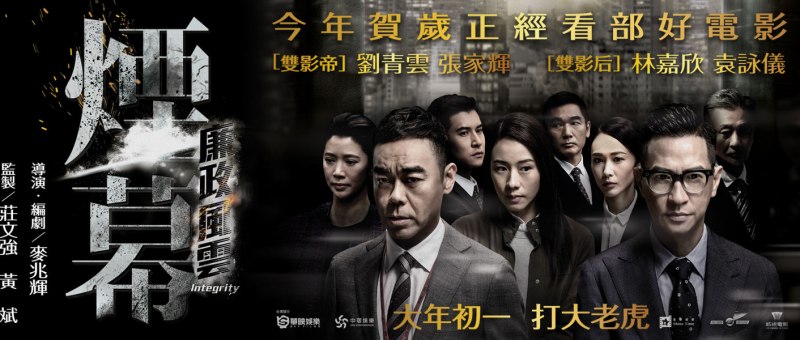
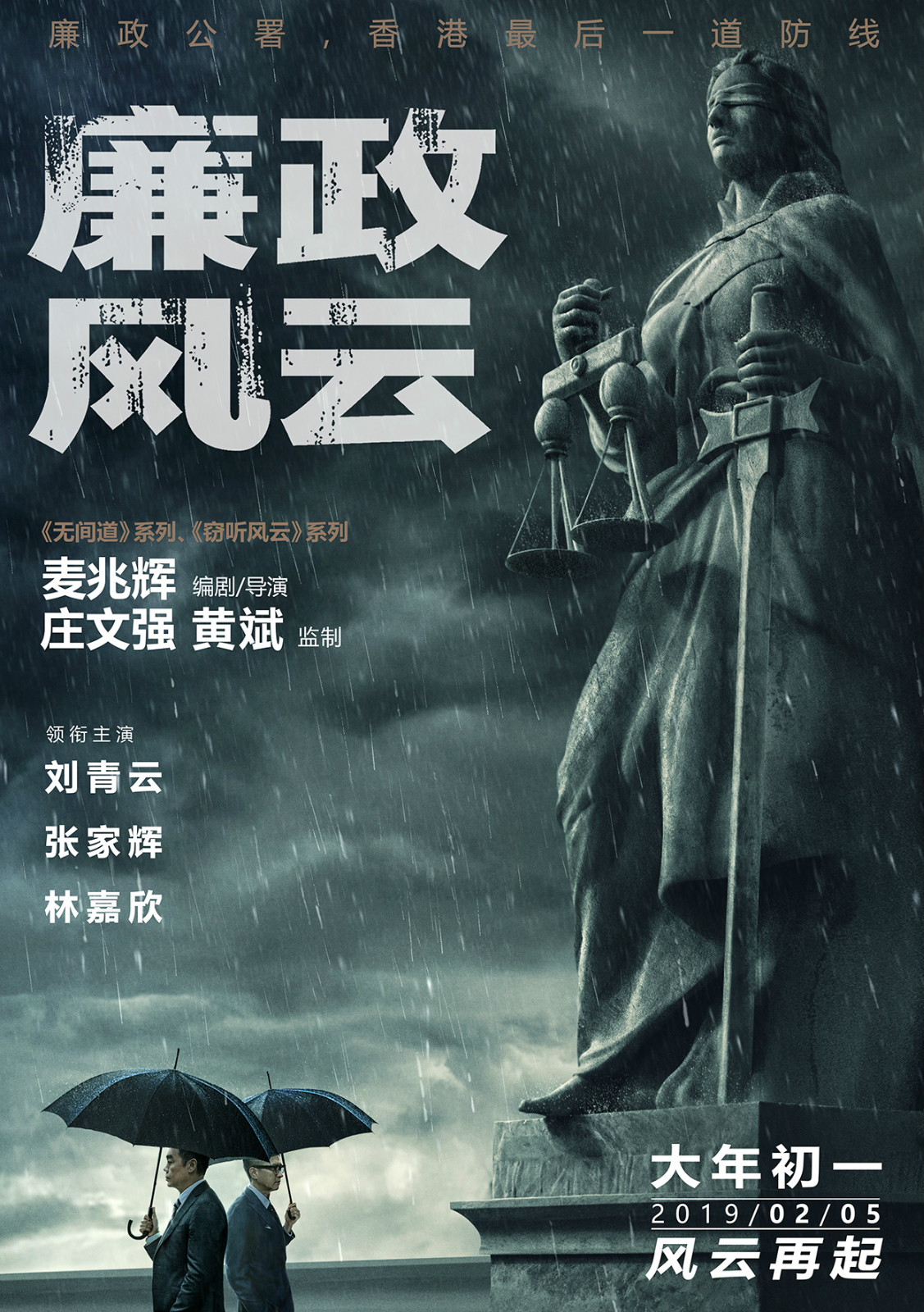
Integrity (廉政風雲 煙幕, Alan Mak, 2019)

Integrity poster 1Alan Mak made his name with the phenomenally successful Infernal Affairs (co-directing with Andrew Lau) which later blossomed into a trilogy – a pattern he repeated with the Overheard series, making time for a few standalones in between. 2019’s Integrity (廉政風雲 煙幕), released as gritty alternative to the saccharine and silly fare usually on offer for Lunar New Year, finds him in similar territory and is once again touted as the first in a projected trilogy this time revolving around the ICAC who have become a Hong Kong movie favourite as of late. Drawing inspiration from classic ‘70s thrillers and American New Cinema, Integrity has a few questions to ask about the nature of corruption and the limits of control.

The drama begins with ICAC officer King (Sean Lau Ching-wan) briefing star witness Jack Hui (Nick Cheung Ka-fai) on their upcoming court case. Shortly after Jack has handed over a USB stick containing new evidence, he slips his protective detail and disappears leaving King’s case with a giant hole in the middle, especially considering one of the two defendants has also skipped town. Given a seven day recess, King reluctantly allows his wife, fellow ICAC officer Shirley (Karena Lam), to travel to Sydney to chase Jack while pressing his available leads in the form of defendant two and the rest of the USB stick.

Eschewing action in favour of intricately plotted conspiracy, Mak keeps the tension high as he slowly reveals the ambiguities of the case, reminding us that no one is quite as innocent as we might assume. We find out the relationship between Jack and King (pregnant names indeed) may not have been as straightforward as we first assumed while we’re also made aware of the extremely lucrative trade in black market cigarettes and the backhanders to the customs bureau that make it possible. Then again we have to ask ourselves why it is a top accountant like Jack might suddenly decide to turn whistleblower when he’s been perfectly content with his complicity in corruption for the last 20 years.

King is intent on catching “The Puppet Master” by following their financial trail, convinced that taking down the middlemen in the tobacco smuggling scam will eventually flush them out. He thinks he holds all the cards but isn’t quite aware what game it is he’s playing. Desperate to catch his quarry, King is in danger of crossing the line as he convinces defendant two to tell all by (falsely) promising her immunity as a prosecution witness. She eventually spills the beans, but warns him that people will die – something that tragically comes to pass when the Puppet Master starts taking care of loose ends.

Obsessed as he is, King isn’t quite sure he cares who might get hurt in his quest for justice. Then again, King’s need to catch the bad guy, as his boss (Alex Fong) tries to point out as kindly as possible, is a kind of displacement activity designed to get his mojo back so he can patch things up with his put-upon wife. Despite talk of divorce, the pair are still wearing their wedding rings and have romantic photos as their smartphone wallpaper while they continue to bicker (somewhat) affectionately via text message. The awkward romantic subplot is most likely intended to set up a series motif though it seems wholly out of place with Mak’s more serious themes, especially when tipping into unwelcome clichés such as Shirley’s impromptu shopping trips paid for with King’s card when she gets fed up with his persistent sexism.

The central theme of King’s own fracturing “integrity” gets lost in the shuffle but is dealt a killer blow by the extremely unwise ‘90s flashback and its eventual ‘80s counterpart which undercut almost everything that’s gone before, creating a series of inconvenient plot holes in the process. Mak isn’t quite sure where he wants to go and presents us with a series of trick endings, the final of which is a step too far even if it perhaps plays into his themes of karmic justice and the costs of betrayal (not to mention making it 100% clear for the mainland censors’ board that crime never pays). Though managing to nail the the tense ‘70s conspiracy thriller vibe in its early stretches Integrity’s ridiculous third act plot twists ruin an otherwise promising tale of greed and suspicion while perhaps reinforcing the idea that no one can be trusted and all connections are, to a point at least, mercenary.


Currently on limited release in UK cinemas.

Original trailer (English subtitles)

https://www.youtube.com/watch?v=bh3W1QOA4kI

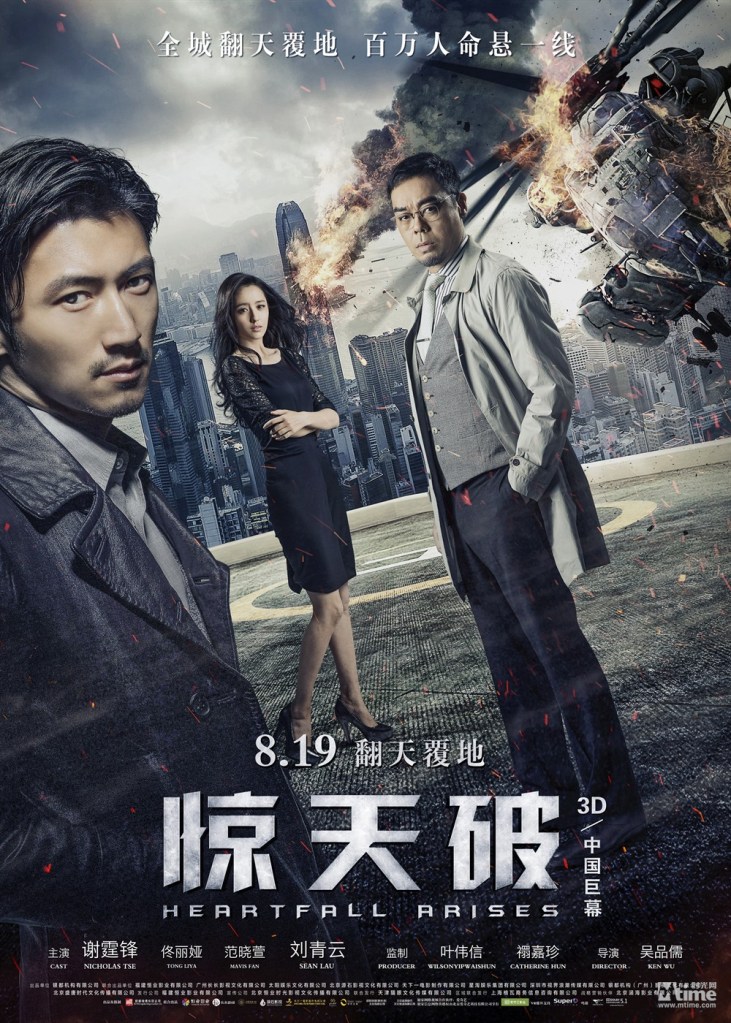
Heartfall Arises (惊天破 / 驚心破, Ken Wu Pinru, 2016)

Sean Lau Ching-wan and Nicholas Tse are together again after being denied the opportunity to reteam for a sequel to the acclaimed The Bullet Vanishes but if Heartfall Arises (Mainland China – 惊天破  / HK – 驚心破) was intended to repeat the successful buddy cop pulp of Bullet it sadly fails. A very modern tale of chess playing genius detectives, Heartfall Arises tantalises with some bizarre B-movie antics but remains intent on becoming this year’s big arthouse leaning crime thriller. Unfortunately Wu’s highly stylised approach, though often impressive, only serves to highlight the weaknesses inherent in the film’s construction.
Taking the lead this time, Tse plays snappy dresser and maverick cop John Ma who, when we first meet him, is busy giving a chess lesson to a little boy on a park bench while the rest of the Hong Kong police department is hot on the trail of a serial killer, The General (Gao Weiguang), who’s been targeting “evil” corporate big wigs. Ma wades in to save the day but, tragically, he and the killer are caught in a face-off in which both fire their guns at the same time with Ma securing a headshot only to be shot in the heart. Luckily Ma is saved by medical science thanks to a heart transplant from, you guessed it, The General.

Whilst in the hospital Ma meets police psychoanalyst, Calvin Che (Sean Lau Ching-wan), who (besides being another chess expert) has a theory about cell memory and the possibility that personality traits can be inherited through organ transplant. Ma has been relegated to desk work since returning to the police force but gets a chance to return to active duty when a spate of incidents occur eerily mimicking The General’s crime spree. Could his new heart really help them catch a killer, or will Ma too find himself crossing the line from law enforcement to vigilante avenger?

Though the personality transplant logic sets us up for a series of silly B-movie shenanigans, the idea is never treated with anything less than total seriousness. Thus when Ma realises that he suddenly likes spicy food we’re supposed to be worried – doubly so when he starts having visions of a pretty girl he doesn’t know frolicking on a romantic beach, especially as his nice doctor girlfriend has already gone out of her way to tell us she doesn’t mind very much about Ma’s new tastebuds. Figuring out the girl becomes key but, it seems, Ma is incorruptible when it comes to love making this particular drama ally a dead end.

Drama is where Heartfall Arises truly flatlines. Despite having played such a large part in the success of The Bullet Vanishes, Tse and Lau never generate the same kind of chemistry which made their previous collaboration so enjoyable. Both characters are hugely underwritten with Tse bundled into expensive looking fashionable outfits proving a mismatch with his cerebral policeman persona whereas Lau sports a scrabbly chin beard more in keeping with a hipster hacker than an uptight shrink. The cardinal sin is that Heartfall Arises actually pinches one of its central twists from The Bullet Vanishes but does it so clumsily as to completely undermine everything which has gone before.

Heartfall Arises wouldn’t be the first Hong Kong thriller to get away with a nonsensical plot but its relentless pretentiousness robs it of the possibility of escaping rigour through style. Slickly shot, Wu aims for a swanky, upscale noir from the well appointed office blocks to fancy apartments and Ma’s strangely dapper attire but the elite cops vibe remains decidedly low stakes as Ma and Che swap philosophical quotes and talk chess until the potentially explosive finale. A buggy chase in Thailand proves particularly unexciting as Wu fails to make the action scenes compensate for the weakness of the plot, and though he has some intriguing visual ideas they’re often ones which don’t serve the film. Taking itself far too seriously, Heartfall Arises would be more fun if it allowed itself to revel in the ridiculousness of its premise but becomes far too caught up looking at itself in the mirror to notice that the villain has escaped by grapple gun and taken the audience’s suspension of disbelief with him.


HK Trailer (English subtitles)

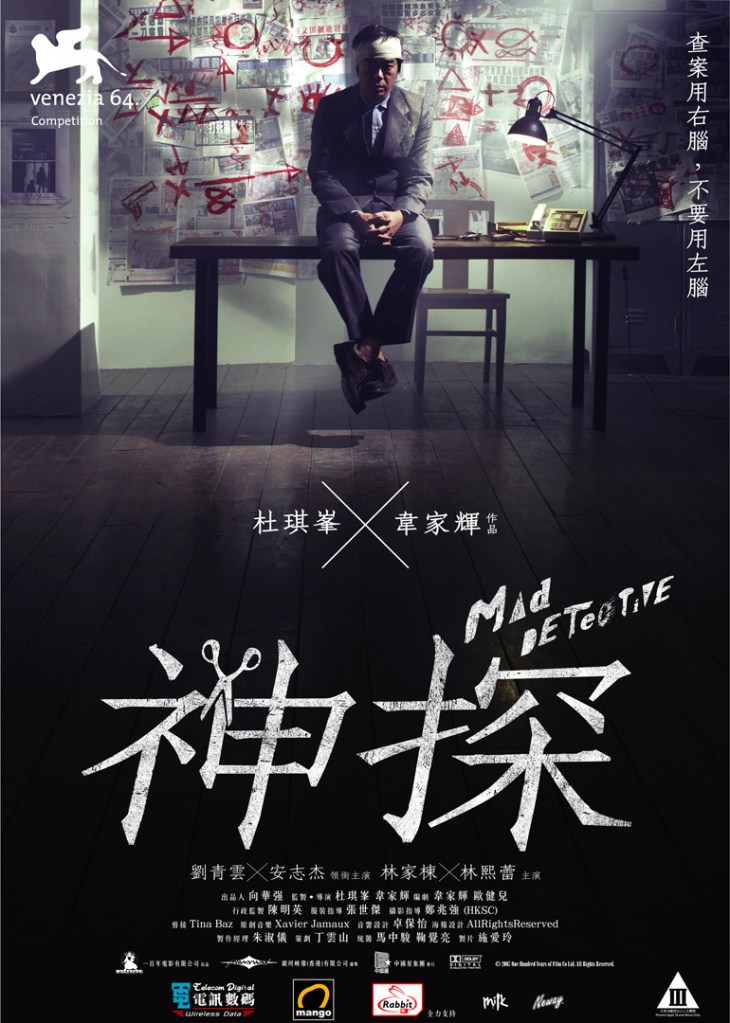
Mad Detective (神探, Johnnie To & Wai Ka-Fai, 2007)

mad-detective

The border between “eccentric” and just “insane” can be quite a thin one but that tiny liminal space of uncertainty is where the hero of Johnnie To and Wai Ka-Fai’s Mad Detective (神探) resides. The titular Mad Detective, Bun (Sean Lau Ching-Wan), is about as unreliable a narrator as they come owing to the fact that he experiences frequent hallucinations and delusions meaning that absolutely nothing of his perception can be taken at face value. Despite his unorthodox approach, Bun is a fine a detective with an almost supernatural crime solving ability but, tragically, sometimes he sees more than he would like of human nature.

The day rookie detective Ho (Andy On) joins the force, he walks in on an unusual scene. Knives and cutting implements are lined up on a table while a pig’s carcass hangs from the ceiling. Veteran cop Bun then enters into the mind of a killer by viciously stabbing the pig carcass (and lovingly caressing it afterwards), before tucking himself inside a suitcase which he asks Ho to throw down the stairs only so he can then leap out and shout “The guy at the ice-cream store did it!”. A montage of newspaper cuttings testifies to Bun’s track record, but his career is over when he suddenly decides to cut off his own ear and present it to his boss at his retirement party.

Not so long after, two cops enter a forrest and only one leaves. That’s one problem, but the missing cop’s gun has been used in a series of robbery/homicides which is another. Exhausting all leads in trying to find out what happened between gun losing Wong (Lee Kwok-Lun) and his shady partner Chi-wai (Gordon Lam Ka-Tung) in a dark forest 18 months previously, Ho turns to Bun despite the misgivings of his colleagues. Bun’s wife begs him not to go back to police work, fearing for both his life and his mental state but Bun would rather live crazy than bored and so it’s back to burying himself alive and chatting with ghosts among other strange pursuits undertaken in the name of law enforcement.

Bun’s major talent is his ability to see people’s “inner personalities” which take the form of personified aspects of their psyches. We see through Bun’s POV as the figures in front of him change without warning – fighting one moment with a lady cop in a men’s bathroom but turning to see an overweight veteran in her place at the next. Bun comes to suspect Chi-wan thanks to his overly complicated personality which has seven different “ghosts” – an amusing sight when they all end up piled into the back of his tiny car. This goes someway to explaining the bemused looks Bun often attracts as he chats with people no one else can see.

Reactions to Bun’s outburst in a convenience store seem like they might just be mild embarrassment at his causing a scene, but could also easily be because he’s shouting at someone who isn’t really there. Whether “real” or not, it’s clear that Bun’s emotional intelligence and ability to read people are key to his crime solving talent. As he later tells Ho, it’s not about logic, it’s about emotion. Through “extreme profiling”, Bun “becomes” the killer, experiencing their emotions to get to the heart of the crime. Bun, like Manhunter’s Will Graham, absorbs too much of the world he sees around him and is unable to reconcile his reality with the commonly accepted one. Quite mad, but also brilliant, Bun’s genius makes him dangerous in a hundred different ways.

To and Wai create doubles and dualities left, right, and centre. Fittingly enough, Mad Detective takes inspiration from The Lady from Shanghai for its shoot out finale which occurs in a house of mirrors. This time it’s not just Bun’s vision which is uncertain even as he can see multiples of ghosting personalities, but ours too as reality fractures into tiny, reflective fragments. Ho, by the film’s conclusion, may have absorbed too much of Bun, but also perhaps of the worst aspects of his profession. Bun’s tragedy is his innocence – he literally sees the bad the in people and tries to exorcise demons through exposing their presence, but Ho’s is cowardice in his refusal to truly look at the people in front of him rather than blindly follow the nearest available leader. A supremely complex and original thriller, To and Wai’s Mad Detective is a fascinating psychological journey constructed with unusual rigour and as oblique and elliptical as it is entertaining.


Original trailer (English subtitles)

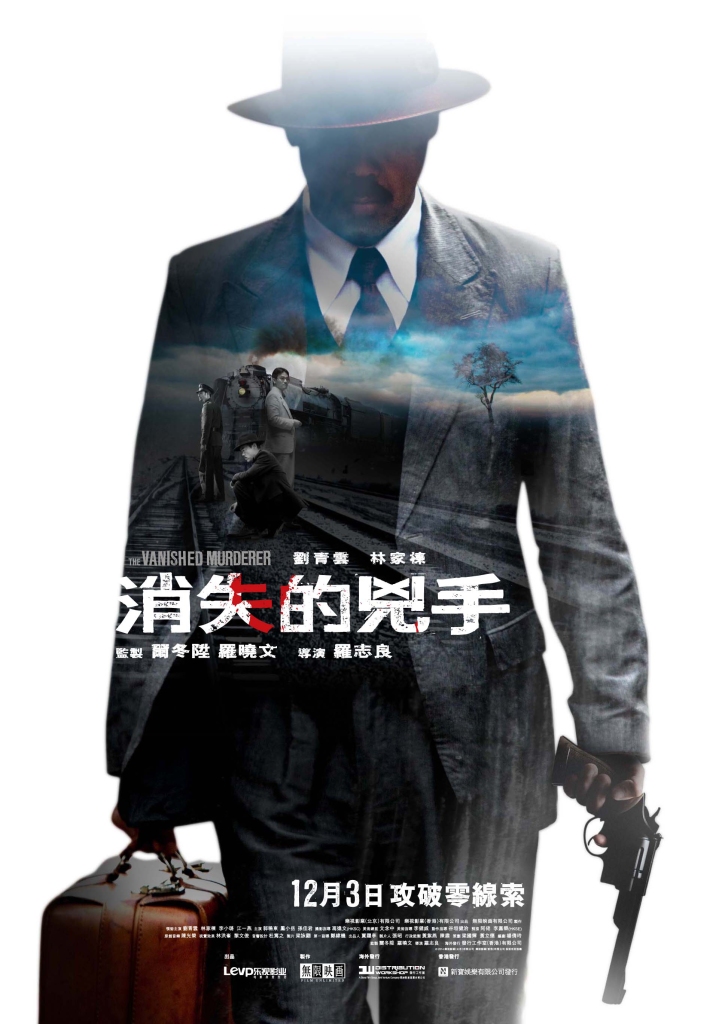
The Vanished Murderer (消失的凶手, Law Chi-leung, 2015)

vanished-murderWhen The Bullet Vanishes was first released back in 2012, the film received unfair criticism in some quarters due to its enormous debt to Guy Richie’s then popular Sherlock Holmes. Derivative or not, The Bullet Vanishes remains an innovative and intricately plotted cerebral thriller, primed to launch the return of its central detective, former prison warden, Inspector Song (Sean Lau). Only slightly late, Song is finally back to address another series of baffling deaths and conspiracies in 1930s China only this time he’s landed in a pulpy LA noir rather than the cowboy-tinged action of the previous film.

The Murderer Vanishes (消失的凶手, Xiāoshī de Xiōngshōu) revolves around Song’s Irene Adler figure, Fu Yuan (Jiang Yiyan), whom we saw Song making frequent prison visits to in The Bullet Vanishes. Song is called to the prison because Fu Yuan has mysteriously disappeared from her cell leaving only a Shawshank Redemption inspired red herring behind her. The strange bond between Song and Fu Yuan in which they chastely dance around each other in the ultimate long distance romance, dictates that Fu Yuan send him a letter to tell him exactly where she is so he can come and arrest her all over again.

After a hot date at the cemetery, Fu Yuan takes Song to a philosophy lecture in which the speaker, Professor Hua (Gordon Lam), muses on a thought experiment in which he discusses the ethical problem of making an active choice to sacrifice one life in order to save multiple lives and whether making such a choice is any different from committing a murder – i.e. pushing another person in front of a moving train to stop it hitting a crowd further up the track. The experiment is eerily echoed when a body falls out of the sky just as Song is about to re-arrest Fu Yuan, allowing her to once again slip away.

Song investigates and is arrested only to be recruited to solve the mystery of why so many of the workers at evil corporate boss Gao Minxiong’s (Guo Xiaodong) string of factories are suddenly leaping to their deaths whilst wearing shirts bearing slogans which decry him as a slave driver.  Song is assisted by the girl he jilted at the alter eight years ago with whom he was improbably reunited on the train, Chang Sheng (Li Xiaolu), and a local policeman, Mao Jin (Rhydian Vaughan), as well as the philosophy professor but somehow this must all be linked to Fu Yuan’s mysteriously timed prison escape.

The biggest departure The Vanished Murderer has to deal with is the absence of co-star Nicholas Tse. Rather than give Song a new partner or attempt to ditch the buddy format altogether, Tse’s role has been awkwardly split into four with Song surrounded by his cohorts of varying stripes but never achieving the same kind of bond that made The Bullet Vanishes so satisfying. Many of the first film’s plot elements are also ported over wholesale, rehashing the same political subplots and betrayals but without the subtlety.

One again we have an exploited work force of factory workers suffering at the hands of a heartless capitalistic sociopath. Gao Minxiong is seen early on collaborating with a British businessman who warns him about the effects of the depression only for Gao to explain the “measures” he’s taken which include burning harvests to increase demand and therefore drive prices up, as well as closing factories to increase competition for jobs and therefore drive wages down. Gao also has a private militia he uses for strike breaking and indiscriminate massacre. The people suffer while the elites prosper, it’s an old story.

The Bullet Vanishes may have had one foot in the Old West, but The Vanished Murderer has stayed in the same geographical area whilst jumping fifty years into the future in terms of tone. Gone are the lawless, dingy back alleys and saloons – The Murderer Vanishes takes place under bright sunlight, in an airy city surrounded by green country estates. Song has even switched up his zany bowler hat from the first film for a wide brimmed fedora and the musical score also pulls in some Spanish guitar to ram home that West coast style. This is a land of flappers and jazz babies, filled with art deco elegance and international flair.

For all that it’s a pulp world too and as such exempts itself from the need to make any kind of real sense. The central mystery is nowhere near as compelling as that of The Bullet Vanishes and resolves in a less than satisfactory manner. In the great pulp tradition action set pieces become increasingly ridiculous until the point Song and Fu Yuan attempt to escape by riding a horse through a building. The film’s finale takes place entirely on a train and does at least make good use of its CGI budget even if it’s a disappointingly simple way to conclude.

A slight misstep after the well plotted charm of The Bullet Vanishes, The Vanished Murderer can’t live up to the promise of the first film. The relationship between Song and Fu Yuan ought to take centre stage but the pair spend too much time apart to make it work and the film kills off a promising ongoing plot strand for the sake of cheap melodrama in the closing moments. Still, The Vanished Murderer provides enough thrills of its own even if lighter in tone and with a weaker central mystery to make the continuing adventures of Inspector Song worth investigating.


Original trailer (Mandarin with English subtitles)

Call of Heroes (危城, Benny Chan, 2016)

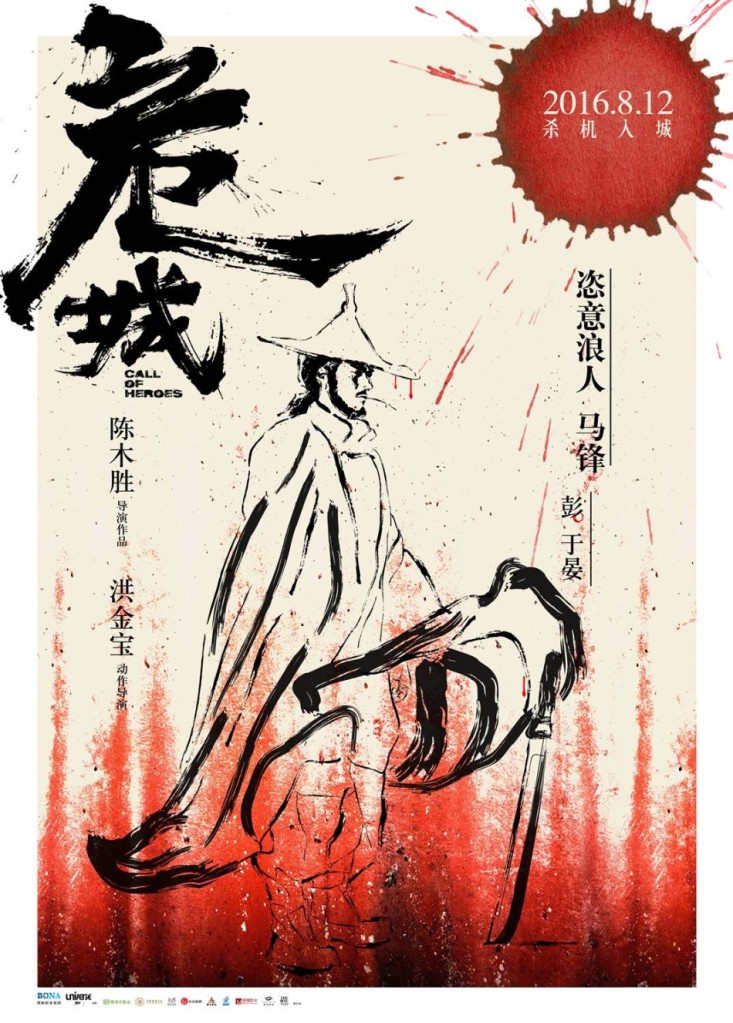
call of heroesA blast from the past in more ways than one, Benny Chan’s Call of Heroes (危城, Wēi Chéng) is a western in disguise though one filtered through Akira Kurosawa and Sergio Leone more than John Ford. Filled with Morricone-esque musical riffs and poncho wearing reluctant heroes, Chan’s bounce back to the post-revolutionary warlord era is one pregnant with contemporary echoes yet totally unafraid to add a touch of uncinematic darkness to its wisecracking world.

1914 – three years after the collapse of Chinese feudalism and warlords rule the land, each vying for power and terrain but taking little account of the displaced people in their path. The residents of Stone City find this out the hard way when notorious general Cao Ying wades into town and conducts a widespread massacre seemingly for the fun of it. Plucky school teacher Bai Ling manages to escape with some of her pupils even whilst other teachers and children are being summarily executed by Cao’s troupes.

Having left with nothing and walked miles, Bai and the children are near starvation when they stop into a noodle house to share a single bowl. Unfortunately the noodle house is about to be robbed but fortunately one of the diners is bearded wanderer Ma Feng (Eddie Peng) who isn’t up for anyone disturbing his serious food coma. Impressed with Ma’s skills, the kids and Bai make their way to Pucheng where Bai has a cousin but Cao is still on the warpath and trouble has a way of tracking good people down.

Pucheng (the name of which literally means ordinary town), is watched over by the noble sheriff Yang Kenan (Sean Lau Ching-wan) though the protective garrison has been sent to the front leaving them with only a skeleton defence. When a mysterious visitor arrives in town and proceeds to shoot dead a man, woman, and even a child, Yang arrests him but when the killer turns out to be Cao Ying’s unhinged son, a number of questions arise. Yang is committed to justice – no matter the man’s name, he ought to pay for his crimes. Yet, Cao Shaolun’s presence is sure to attract his father’s attention and so many of the townspeople feel it might be better to let Cao Shaolun go. Placate a tyrant and undermine the idea of justice by failing to enforce the law or sign your own death warrant by standing up for your principles, it’s a frontiersman’s dilemma.

The references to classic Hollywood westerns are obvious enough, particularly when the narrative takes a turn for the High Noons as Yang finds himself standing alone as the sole resistance to the oncoming militia man threat. Though the townspeople do not exactly turn on Yang in the same way they turn on Kane, they clearly choose appeasement over war. Yang’s dedication to justice is purehearted, there’s little hint of personal vanity in his decision to stand up for the rule of law but only the knowledge that folding now is the same as bowing to Cao’s tyranny.

Though introduced as a possible protagonist, Ma Feng takes a far smaller role in the action than might be expected. Clearly channeling Mifune’s Sanjuro, Peng’s wisecracking drifter and cynical, reluctant hero is almost at odds with the serious business of law vs politics over in Pucheng. His character centric subplot of conflict with a former friend who works for the other side is insufficiently developed to support the emotional weight it’s intended to carry and sometimes feels like a distraction from the main narrative though the great pot mountain based martial arts set piece is certainly one worth waiting for.

If Peng’s Ma Feng feels slightly misplaced with his cynicism and comic stunts, Louis Koo’s hammed up villain Cao Shaolun is in an entirely different film altogether. Wildly over the top, Koo plays Cao Shaolun as a permanently amused psychopath, all crazy eyes and manic laughter. A self consciously cool guy, Cao Shaolun dresses in white and murders innocents with a golden gun all the while knowing he can do as he pleases simply by the virtue of his name.

Shot with a heavily digital aesthetic, Call of Heroes’ evidently high production values are sometimes reduced to a televisual quality or otherwise let down by substandard CGI. The fight scenes themselves are filmed with an old fashioned rigour filled with innovative and exciting choreography and are refreshingly humour free. Like the best westerns, Call of Heroes contains its own parable in that the best weapon against tyranny is a strong and righteous populace but the final stretch almost undermines its noble aims by presenting what is either a revolutionary spring lead by the people for the people, or a worrying case of mob justice.

Prone to narrative dead ends in setting up major characters only to sideline or kill them off unexpectedly, Call of Heroes has a frustrated quality in not being able to decide whether it wants to be a serious call to arms for standing up for what’s right in the face of overwhelming force, or a comedic romp in which a cocky drifter sorts everything out by accident. Either way, Call of Heroes does provide a number of genuinely exciting martial arts set pieces even if floundering slightly in-between them.


Original trailer (Cantonese with Traditional Chinese/English subtitles)