The Cold-Blooded Trap (冷血の罠, Takahisa Zeze, 1998)

“This place is full of people like me” a violent criminal jeers, admitting that he’s killed “plenty” of women but not necessarily the one he’s being questioned about. There is indeed something eerie that seems to have taken over this small corner of Shibuya in Takahisa Zeze’s dark millennial thriller The Cold-Blooded Trap (冷血の罠, Reiketsu no Wana). “Strange things are happening here” another investigator notes, “someone’s malice has infected this whole place.” Yet the sense of haunting may be closer to home than it first seems as two men attempt to come to terms with a traumatic past by solving present mystery. 

Even the police seem to concede that the strange goings on are a “continuation” of something else. As we first meet him private detective Fujiwara (Sho Aikawa) appears to be following a young woman home from the station only as we later discover she hired him herself to watch over her because she had the feeling she was being watched. Fujiwara watches her enter her apartment building and then calls her to say everything looks clear on the ground, but a short time later a body wrapped in sheets is dropped from the roof onto the street below. The weird thing is that it’s the same building Fujiwara’s sister Noriko used to live in, only she took her own life and that of her child by jumping off the roof five years previously. 

Not only does Fujiwara feel as if he failed in his duty to protect his client, but he’s forced into a similar contemplation in his latent guilt surrounding his sister’s death. The most obvious reason for Noriko to have considered suicide was that her salaryman husband Hanazono (Hidetoshi Nishijima) had been having an affair with a work colleague, Yoko (Asuka Kurosawa), yet Hanazono refuses to accept responsibility and is convinced that Noriko was murdered by a mysterious serial killer stalking the streets of Shibuya. 

The irony is that we first think Hanazono is the faceless killer after watching him enter the woman’s apartment building, only to learn that he may have been investigating Noriko’s death. Later these assumptions are overturned again, but even he concedes that he seems suspicious. Wandering around the city at night, he runs into women alone who immediately see him as a threat and assume he may be a dangerous criminal who means them harm. The realisation first shocks him, but then gives way to a physical high in the adrenaline rush of fleeing the scene. He comes to the conclusion that he must get into the killer’s mindset in order to catch him and begins actively stalking people around the city, following them home and checking mailboxes to find out names. 

Fujiwara doesn’t trust Hanazono for obvious and understandable reasons, but even so he begins following him as Hanazono continues to follow the killer. Zeze opens the film with fuzzy 90s camcorder footage trained on the forecourt of a station from a balcony opposite. The camera follows a woman as she leaves, and Fujiwara behind her with eerie intent evoking the mild paranoia of millennial surveillance. Later Hanazono films his own POV walking through the midnight city, once again lending the streets a sense of lurking malevolence and dread-fuelled fatalism even before he arrives at his shocking destination. 

Yet we wonder if Hanazono is just a paranoid obsessive with his giant map of crime insisting that seemingly isolated incidents of violence are somehow linked. Before Fujiwara hears about the woman’s death on the news they were reporting on insolvent banks hinting at a financial anxiety in the contemporary society, and as the suspect Fujiwara later tracks down suggests there are lot of distressed or perhaps disturbed people around. The crimes may really be random, but they are also connected by virtue of being provoked by an anxious society even if as Hanazono admits there are several criminals behind them. Whether or not he gets the answer he seeks, Fujiwara will have to accept that he too bears some responsibility as Hanazono has perhaps already done even if desperate to deny it. “I’ve always been responsible” he admits while taking control over his life, only the elliptical structure of the film may imply otherwise. Dark and eerie, Zeze captures a sense of millennial dread in the streets of the capital filled as they are with “random” crimes and lurking killers in the haunting anxiety of constant threat.


Clip (English subtitles)

Ghost Man (幽霊男, Motoyoshi Oda, 1954)

Employees at a small nude modelling agency find themselves in the firing line when a “bloodsucking painter” escapes from a psychiatric institution in Motoyoshi Oda’s adaptation of Seishi Yokomizo’s Ghost Man (幽霊男, Yurei Otoko). Though produced by Toho and helmed by the director of The Invisible Man, the film does not particularly make use of special effects and as it turns out, Ghost Man is just a creepy name for a weird villain rather than an accurate description of a supernatural threat. 

Even so, you’d expect someone who runs a modelling agency to be on high alert after hearing that a crazed painter who is a danger to women is on the loose, but the manager of the Mutual Art Club simply assumes it must be an eccentric artist thing when he’s presented with a business card from “Ghost Man” Sugawa. Ghost Man is dressed in an unsettling outfit and is immediately rough with the model he picks out, Keiko, all of which you would think would have the manager thinking twice about allowing her to go with him. Some of the other girls urge her to turn the job down, but Keiko is the breadwinner for her family and work has been thin on the ground so she agrees to take it only to realise Ghost Man does indeed intend to kill her on arrival at an abandoned house way out in the country. 

“What a single woman has to do to earn a living, it’s both thrilling…and terrifying,” one of the other women, Ayuko, tells her boyfriend Ken (Yu Fujiki) after she quits the agency to become a stripper and decides to take to the stage despite knowing that Ghost Man may try to kill her during the show. Her words hint at a transgressive frisson of danger which she at least has chosen to embrace, an icy glint in her eye as she encourages Ken to pay close attention to her performance which she claims will be “wonderful”. Nevertheless, it also makes clear that the work the women do at the agency is necessarily unsafe given that it involves travelling to the home of a man they don’t know where they will be expected to undress. 

For reasons the film doesn’t quite explain, the models are also members of the “Bizarro Enthusiast Club” led by Dr. Kano (Joji Oka) who is the head doctor at the psychiatric hospital from which the bloodsucking painter, Tsumura (Ren Yamamoto), escaped. Meanwhile, Dr. Kano also seems to have a sideline in taking the girls to remote locations for nude photoshoot parties. In all honesty, he’s quite suspicious especially seeing as he seems to instinctively know how to open the tricky door at the abandoned house where Keiko’s body is found. Then again, we’re also told that Tsumura was once a member of the club with at least some suggesting that he ended up getting too into the bizarre and going out of his mind to the extent that he began committing weird acts of crime of his own. 

The lesson might be that getting overly obsessed with the occult and esoteric is unhealthy, only it turns there’s something else going on entirely that isn’t really about anything “weird” but caused by completely banal negative human emotions resulting from spurned romantic interest and the fear of parental disappointment. This being a Kindaichi mystery, the famous detective soon makes his appearance (played by a hardboiled Seizaburo Kawazu) only in a less eccentric guise and accompanied by a more efficient Todoroki who assists him as he begins to put the pieces together to solve the mystery. 

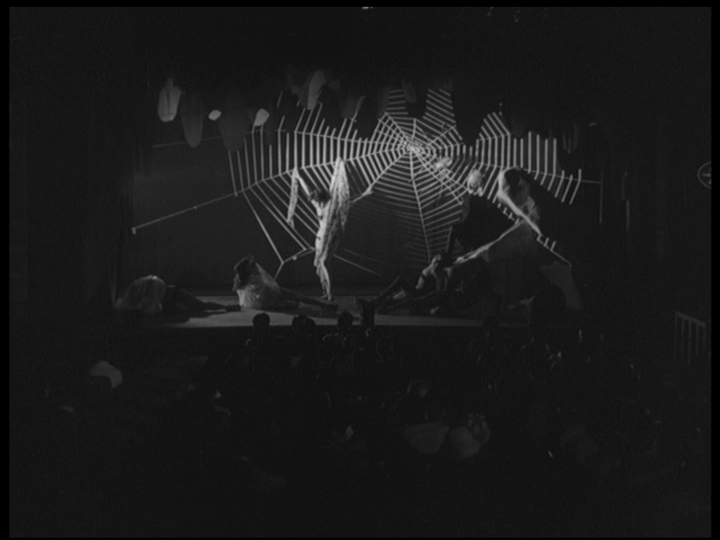
The villain may be taking advantage of a historical moment in allowing others to think his face is bandaged to disguise a disfigurement like those of many men wounded in the war, as was the case in another Kindaichi case The Inugami Family, but is also harking back to the Invisible Man while his accomplice adopts a much more “monstrous” appearance with buck teeth and the two missing fingers on his hand along with the insectile movements that play into the spider-themed finale. Oda has a lot of fun with the villain’s Phantom of the Opera-esque antics which include recording a tape to taunt the police along with a public announcement of “Act 3” of his ongoing drama to be staged at the “Reijin Theatre” which literally means “the beautiful lady show” but is also a minor pun that makes it sound a little “Ghost Man Theatre” in true B-movie villain fashion. Even so, there’s an underlying darkness in the serial killer drama most particularly in the scrapbook the villain makes with photos of the dead women posed and titled as works of art as if they were never any more alive than the mannequins he often substitutes for them. Striking in its set pieces and unsettling design, Oda’s strange drama is surprisingly nasty and actually quite cynical even as it unmasks its villain as little more than a ghost of man who hid behind the spectre of unease to mask his cowardice and insecurity.


The Scarlet Camellia (五瓣の椿, Yoshitaro Nomura, 1964)

Little known outside of Japan, Yoshitaro Nomura is most closely associated with post-war noir and particularly with adaptations of Seicho Matsumoto’s detective novels, yet he had a wide and varied filmography directing in several genres including musicals and period dramas. The son of silent movie director Hotei Nomura, he spent the bulk of his career at Shochiku which had and to some degree still has a strong studio brand which leans towards the wholesome even if his own work was often in someway controversial such as in the shocking child abuse drama The Demon or foregrounding of leprosy in Castle of Sand. Part of the studio’s series of double-length epics, 1964’s Scarlet Camellia (五瓣の椿, Goben no Tsubaki) is nevertheless an unusual entry in Nomura’s filmography, adapting a novel by Shugoro Yamamoto essentially setting a policier in feudal Japan and perhaps consequently shot largely on stage sets rather than on location. 

Nomura opens with artifice as Shino (Shima Iwashita) stares daggers at an actor on the stage but later returns to his rooms every inch the giggling fan before finally offing him with her ornate silver hairpin leaving behind only the blood red camellia of the title. The first in a series of killings later branded the Camellia Murders, we later realise that the actor had to die because of his illicit relationship with Shino’s mother whom he brands a “nympho” and as we later discover had several extra-marital lovers. Extremely close to her father who, as we’re told, perished in a fire while resting in the country due to his terminal tuberculosis, Shino is apparently on a quest for revenge against the faithless men who humiliated him though her feelings towards her mother seem far more complex. 

Indeed, Shino regards her mother’s carrying on as “dirty” and seems particularly prudish even as she wields her sex appeal as a weapon in her quest for vengeance. Yet it’s not so much the free expression of sexuality which seems to be at fault but excess and irresponsibility. Shino resents her mother primarily for the ways in which she made her father suffer, off having fun with random men while he shouldered the burden of her family business which, Shino might assume, has contributed to his illness. Aoki (Go Kato), the Edo-era policeman to whose narrative perspective the second half turns, advances a similar philosophy in that there’s nothing wrong with having fun, he has fun at times too, but people have or at least should have responsibilities towards each other which the caddish targets of the Camellia Killer have resolutely ignored. He can’t say that he condones the killer’s actions, but neither can he condemn them because her motivations are in a sense morally justifiable. 

Realising the end is near, Shino indulges in a very modern serial killer trope in leaving a note for Aoki alongside one of her camellias in which she claims that she is exacting vengeance for “crimes not punishable by law”. There was nothing legally wrong in the way these men treated her mother or any other woman, but it is in a sense a moral crime. “You’re a woman and I’m a woman too” she later tells another scorned lover, a mistress thrown over by her patron with two small children after he tired of her, as she hands over a large sum of money and encourages her to return to her family in the country. Shino’s quest is essentially feminist, directed against a cruel and patriarchal society in which the use and abuse of women is entirely normalised, yet it is also slightly problematic in her characterisation of her mother as monstrous in her corrupted femininity for daring to embrace her sexuality in exactly the same way as her male counterparts though they, ironically, mainly seem to have been after her money rather than her body. 

Shino’s mother’s death is indeed regarded as “punishment from heaven” presumably for her sexual transgressions and neglect of her family, rejecting both the roles of wife and mother in a ceaseless quest for pleasure. Yet even in her resentment, Shino’s ire is directed firmly at the men taking the last of her targets to task when he justifies himself that women enjoy sex too and are therefore equally complicit by reminding him that he gets his moment of pleasure for free but the woman may pay for it for the rest of her life. Just as Shino’s mother neglected her family, the men harm not only their wives in their illicit affairs but cause concurrent damage to the mistresses they may later disown and the illegitimate children they leave behind. Abandoning the naturalism of his contemporary crime dramas for something much more akin to a ghost film with his eerie lighting transitions and grim tableaux of the skewered victims, Nomura crafts a melancholy morality tale in which the wronged heroine turns the symbol of constrained femininity back on the forces of oppression but is eventually undone by the unintended consequences of her quest for vengeance even as she condemns the architect of her misfortune to madness and ruin. 


I, the Executioner (みな殺しの霊歌, Tai Kato, 1968)

Nephew of Sadao Yamanaka, Tai Kato joined Toho as an apprentice in 1937, returning after the war training under Daisuke Ito and Akira Kurosawa, but later moved to Toei where he became closely associated with ninkyo eiga yakuza movies and jidaigeki. From the mid-1960s, however, he made several movies at Shochiku which had, it has to be said, a house style that was almost the polar opposite with a clear focus on polite, family-friendly melodrama. 1968’s I, the Executioner (みな殺しの霊歌, Minagoroshi no Reika) meanwhile is a surprisingly dark affair even among the grittier examples of Shochiku’s similarly themed B-movie thrillers, an avant-garde noir and proto-giallo in which the fugitive, serial killer antihero sees himself as an agent of divine justice in a hellish and immoral post-war landscape. 

Kato opens with a shocking scene of sexualised violence in which a woman is knocked unconscious, stripped, bound with telephone cord, and finally revived, forced to write down the names of four other women before being brutally raped and murdered by a killer whose voice we have not yet heard nor face seen. The police are mystified, attributing the woman’s death to the fact that she had worked as a bar hostess and maybe things like this are an occupational hazard for women who are surrounded by too many men. Her landlord, however, laments that hers is the second death to occur recently after a laundry boy threw himself off the roof. All things considered, he wishes the boy had picked somewhere else. 

The police have no reason to connect the two unfortunate events and so remain largely clueless, but we gradually become aware that the killer, Kawashima (Makoto Sato), is targeting the women because he holds them directly responsible for the boy’s death. He is the inspector that calls, avenging the death of this young man who, he has learned, like him hailed from Hokkaido and had come to the city at only 16 years old to earn money to support his family, saving almost all of his wages in the hope of opening a shop. Kato shows us scenes of a city under construction, a land of girders casting shadows on the ground like prison bars trapping men like these who are building the new Japan but will be discarded as soon the job is done and their labour no longer so much in demand. Kawashima has another reason for living like this, but he perhaps admires something pure and innocent in the desire of a young man leaving home to seek his fortune so that he might take care of those he loves and that this world betrayed that desire is something he finds impossible to forgive.

The five women have apparently done quite well for themselves, despite the fact that more than one of them has worked on the fringes of the sex trade. Their treatment of the boy is attributed to their boredom in the relative ease of their lives as monied women with little to occupy their time other than getting their kicks abusing the less powerful. It’s an uncomfortable role reversal that places women in a position of power and then sees them abuse it in the exact same way that men do, slinging back the same pithy justifications that men offer for sexual violence while the police meditate on the relative connotations of rape when the word is applied to a man at the hands of women rather than the other way around. If it were their sister, they could understand the desire to kill the men who had done it but a part of them struggles to see that a teenage boy may still find unwanted sexual contact a traumatic enough experience to push him towards suicide. 

Yet Kawshima appears to have no real connection to the boy, and his “revenge” is also a product of his misogyny in that as we later learn he also has reason to feel betrayed by womanhood and is already on the run from previous crime. Nevertheless, he is drawn to the innocent Haruko (Chieko Baisho), a girl-next-door type who works in his favourite ramen restaurant, only to discover that she too has a dark and violent past which may be why she seems to be drawn to him. He struggles with himself, but believes that he is taking revenge on a brutalising society defined by violence and abuse while sublimating his sense of emasculation in the face of women’s growing social and sexual freedoms in the post-war era. It is perhaps the post-war era which is cast as the major villain, one of the women later escaping her protective custody to dance furiously a hip nightclub only to return to the scene of her crime while refusing to see that she has done anything so “wrong” as to merit this kind of persecution. 

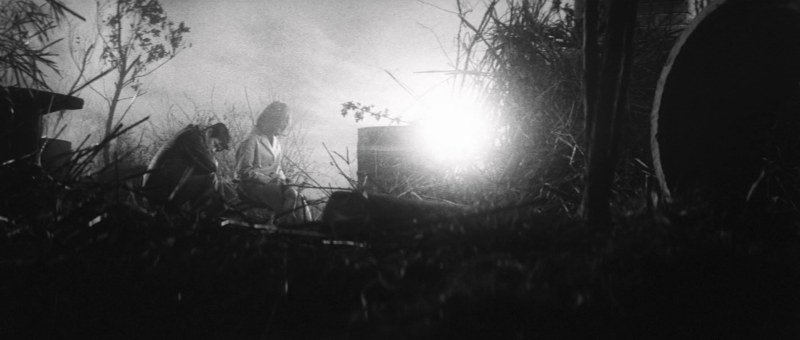
“The cycle of divine punishment must be fulfilled” Kawashima finally laments, acknowledging his grim place within this series of post-war tragedies. Surprisingly avant-garde, Kato experiments with blown out negatives, extreme close up, and deep focus mixed with his characteristic low angle composition to add to the sense of noirish dread which paints the modern city as an inescapable hellscape while even the romantic place of refuge shared by Kawashima and Haruko is a gothic moorland lit by moonlight and filled with eerie mist. Lurid and sweaty, the film has a grim sense of humour even in its oppressive atmosphere with a running gag devoted to the lead investigator’s painful case of piles, but its overriding fatalism nevertheless offers the hero a sense of redemption if only in acceptance of his narrative destiny. 


Memoirs of a Murderer (22年目の告白―私が殺人犯です―, Yu Irie, 2017)

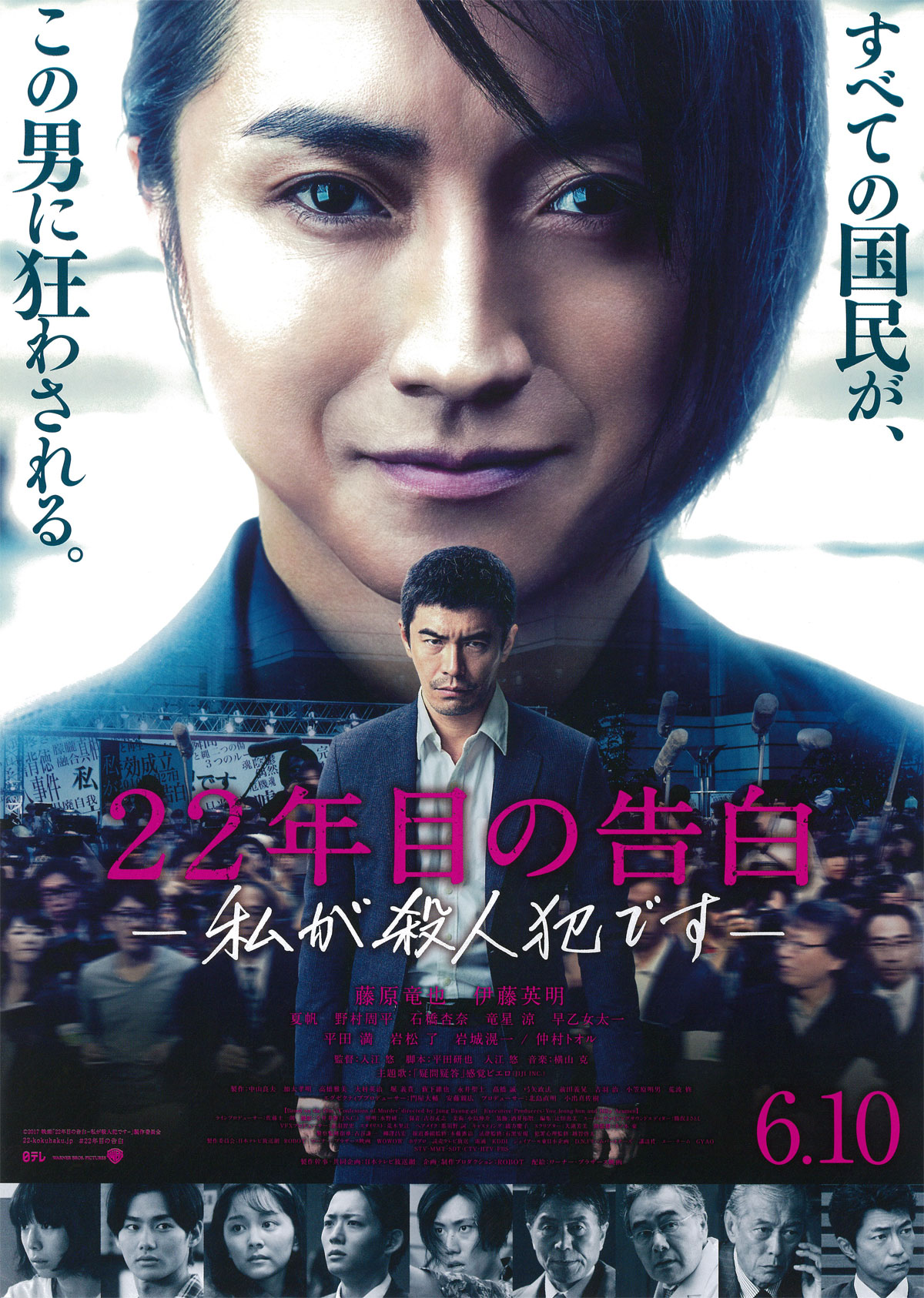
Memoirs of a MurdererJung Byung-gil’s Confession of Murder may have been a slightly ridiculous revenge drama, but it had at its heart the necessity of dealing with the traumatic past head on in order to bring an end to a cycle of pain and destruction. Yu Irie retools Jung’s tale of a haunted policeman for a wider examination of the legacy of internalised impotence in the face of unavoidable mass violence – in this case the traumatic year of 1995 marked not only by the devastating Kobe earthquake but also by Japan’s only exposure to an act of large scale terrorism. Persistent feelings of powerlessness and nihilistic despair conspire to push fragile minds towards violence as a misguided kind of revenge against their own sense of insignificance but when a killer, safe in the knowledge that they are immune from prosecution after surviving the statute of limitations for their crimes, attempts to profit from their unusual status, what should a society do?

22 years ago, in early 1995, a spate of mysterious stranglings rocked an already anxious Tokyo. In 2010, Japan removed the statute of limitations on capital crimes such as serial killings, mass killings, child killings, and acts of terror, which had previously stood at 15 years, leaving the perpetrator free of the threat of prosecution by only a matter of seconds. Then, all of a sudden, a book is published claiming to be written by the murderer himself as piece of confessional literature. Sonezaki (Tatsuya Fujiwara), revealing himself as the book’s author at a high profile media event, becomes a pop-culture phenomenon while the victims’ surviving families, and the detective who was in charge of the original case, Makimura (Hideaki Ito), incur only more suffering.

Unlike Jung’s version, Irie avoids action for tense cerebral drama though he maintains the outrageous nature of the original and even adds an additional layer of intrigue to the already loaded narrative. Whereas police in Korean films are universally corrupt, violent, or bumbling, Japanese cops are usually heroes even if occasionally frustrated by the bureaucracy of their organisation or by prevalent social taboos. Makimura falls into hero cop territory as he becomes a defender of the wronged whilst sticking steadfastly to the letter of the law in insisting that the killer be caught and brought to justice by the proper means rather than sinking to his level with a dose of mob justice.

Justice is, however, hard to come by now that, legally speaking, the killer’s crimes are an irrelevance. Sonezaki can literally go on TV and confess and nothing can be done. The media, however, have other ideas. The Japanese press has often been criticised for its toothlessness and tendency towards self-censorship, but maverick newscaster and former war correspondent Sendo (Toru Nakamura) is determined to make trial by media a more positive move than it sounds. He invites Sonezaki on live TV to discuss his book, claiming that it’s the opportunity to get to the truth rather than the viewing figures which has spurred his decision, but many of his colleagues remain skeptical of allowing a self-confessed murderer to peddle his macabre memoirs on what they would like to believe is a respectable news outlet.

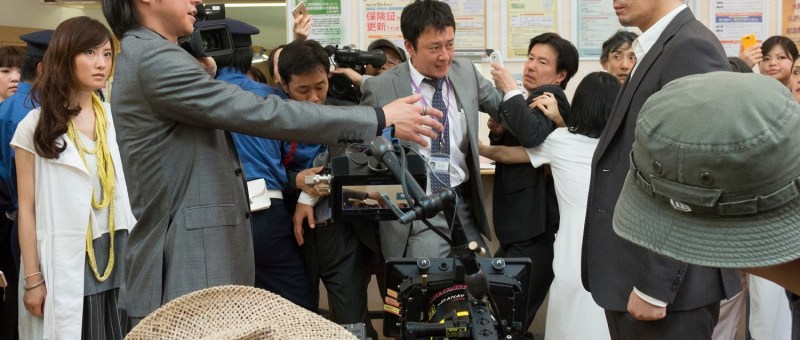
The killer forces the loved ones of his victims to watch while he goes about his bloody business, making them feel as powerless as he once did while he remains ascendent and all powerful. It is these feelings of powerlessness and ever present unseen threats born of extensive personal or national traumas which are responsible for producing such heinous crimes and by turns leave behind them only more dark and destructive emotions in the desire for violence returned as revenge. Focussing in more tightly on the despair and survivors guilt which plagues those left behind, Irie opts for a different kind of darkness to his Korean counterpart but refuses to venture so far into it, avowing that the law deserves respect and will ultimately serve the justice all so desperately need. Irie’s artier approach, shifting to grainier 16:9 for the ‘90s sequences, mixing in soundscapes of confusing distortion and TV news stock footage, often works against the outrageous quality of the convoluted narrative and its increasingly over the top revelations, but nevertheless he manages to add something to the Korean original in his instance on violence as sickness spread by fear which can only be cured through the calm and dispassionate application of the law.


Screened as part of the Japan Foundation Touring Film Programme 2018.

Screening again:

  • Showroom Cinema – 22 March 2018
  • Broadway – 23 March 2018
  • Firstsite – 24 March 2018
  • Midlands Arts Centre – 24 March 2018
  • Queen’s Film Theatre – 25 March 2018

Original trailer (English subtitles)

V.I.P. (브이아이피, Park Hoon-jung, 2017)

V.I.P. posterIn New World, Park Hoon-jung provided a bleak overview of creeping corruption with the absolute certainty that the forces of darkness will always win over those of the light, but with V.I.P. (브이아이피) he turns his attentions away from South Korea’s hellish gangland society to examine the effect of geopolitical concerns on the lives of ordinary citizens. He does this by positioning South Korea’s two biggest international concerns – America and The North, as twin manipulators with his home nation caught in the middle, trapped between the need to preserve allies and defend against enemies. The “enemy” here is a sociopathic serial killer allowed to get away with his crimes at home because of his elite status and then again abroad as a key informant of the American intelligence services.

Beginning at the end with a weary man accepting a gun and striding into a rundown building in Hong Kong, Park jumps back a few years to North Korea where an innocent schoolgirl is grabbed by a gang of three boys on a peaceful country road. Not only do they brutally rape and kill the girl, but they even go so far as to massacre her entire family. Police Chief Lee (Park Hee-Soon) identifies the killer as Kim Gwang-il (Lee Jong-Suk), son of a high ranking official. His boss closes the case; Gwang-il is untouchable. Lee is demoted and sent to a fertiliser plant.

A couple of years later similar crimes begin occurring in the South and maverick policeman Chae (Kim Myung-min), temporarily reinstated after being suspended for his violent ways, is handed the case after his superior apparently “commits suicide”. Like Lee, who eventually makes contact with Chae having followed his quarry to the South, Chae identifies Gwang-il and is prevented from arresting him but this time by South Korean intelligence services who were partly responsible for Gwang-il’s defection working closely with America’s CIA and the very greasy Agent Gray (Peter Stormare).

Like many Korean films of recent times the central point of concern is in the ability of the rich and powerful to do whatever they please and get away with it because their special status makes them untouchable. Park scores a double a whammy when he casts his villain both as an elitist and as a North Korean though he draws no connection between life in a brutalising regime and the desire to inflict violence.

This is a violent tale and the violence on show is sickening, often needlessly so. After showing us the aftermath of what happened to the innocent teenage girl in the prologue and then to her entire family including a five year old brother, there was really no need to go into detail but Park eventually includes a horrifying scene of Gwang-il garrotting his victim in an elegant drawing room right underneath the portraits of the Kims hanging proudly on the wall. The scene is problematic for several reasons but the biggest of them is in the depiction of the naked female body covered in blood and bruises while Park’s minions stand naked around her, pale and unstained by her blood, each of the actors carefully hiding their genitals from the camera. The victim, who has no lines other than a final plea not to kill her, is the only real female presence in the film save for one female police officer who is seen briefly and only appears to become another potential victim for Gwang-il.

The real ire is saved not for Gwang-il but for the intelligence services who lack the backbone to stop him. The Americans, or more precisely a need to placate them, are the major motivator – a fact which takes on additional irony considering Gwang-il is the North Korean threat the US is supposed to be helping to mitigate. It remains unclear why the CIA would be allowing Gwang-il free reign to live as a regular citizen given that he supposedly has important information regarding North Korean finances which is the reason the Americans are helping him defect, rather than keeping him safely contained and preventing him from committing heinous crimes all over the world which, apart from anything else, threaten to cause huge embarrassment to everyone involved. Still, Agent Gray lives up to his name in his general sleaziness and the intense implication that he is playing his own long game which may have nothing to do with country or protocol.

Park’s decision to structure the film in several chapters each with a different title card often works against him, taking the momentum of his procedural and occasionally proving confusing. Loosely, Park ties the stories of three men together – the idealistic North Korean officer who wants to see justice done, the grizzled cop with a noble heart, and the conflicted NIS officer realising the unforeseen consequences of his attempts to play politics for career advancement, but he fails to weave their fates into anything more than an extremely pessimistic exploration of hidden geopolitical oppression. Final shootout aside, V.I.P. is a grimy, politically questionable thriller which irritates in its narrative sluggishness and leaves a sour taste in the mouth in its own indifference to its villains’ crimes in favour of his V.I.P. status as the representative of an entirely different existential threat.


Screened at the London East Asia Film Festival 2017.

Original trailer (no subtitles)

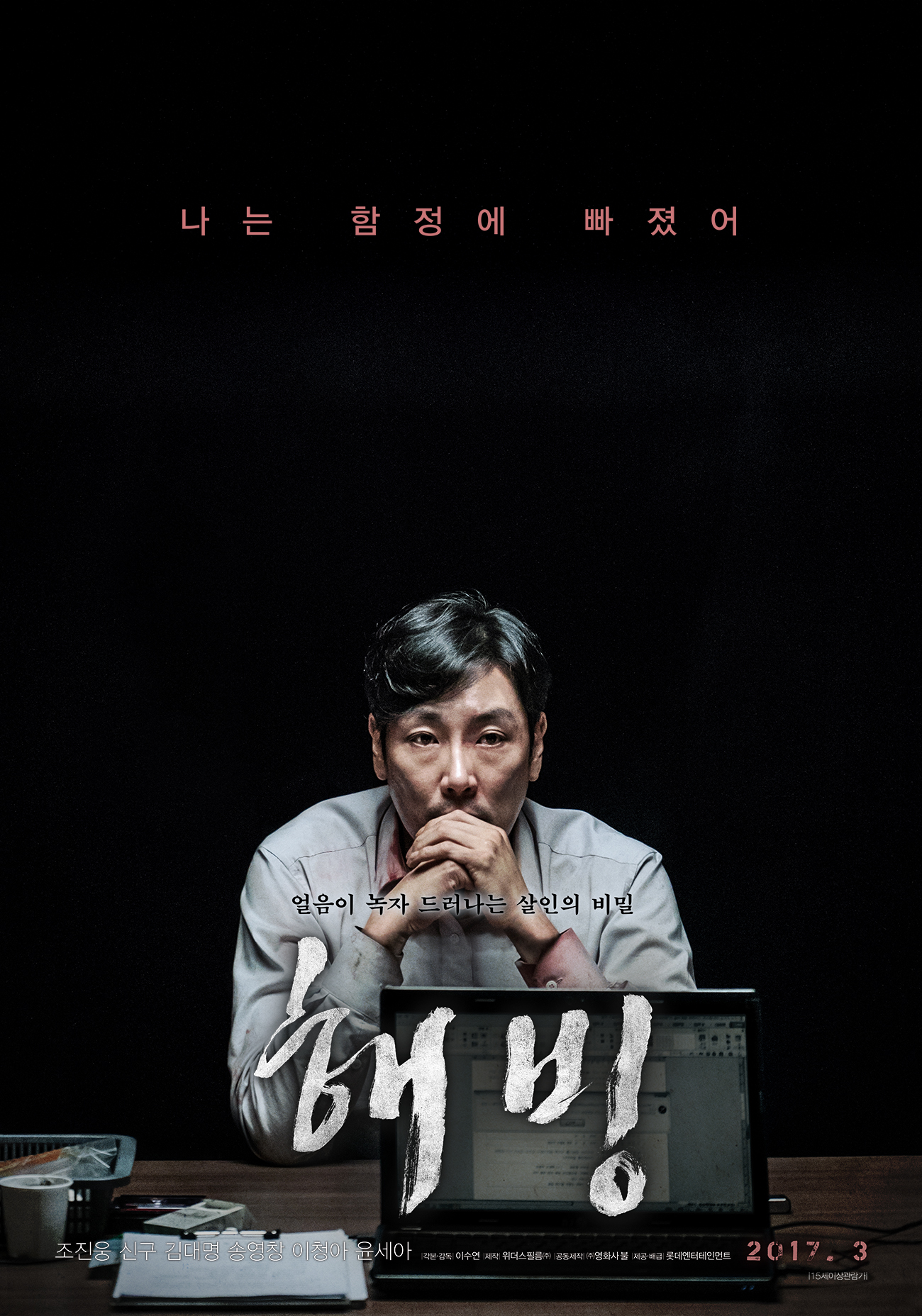
Bluebeard (해빙, Lee Soo-youn, 2017)

bluebeardIf you think you might have moved in above a modern-day Sweeney Todd, what should you do? Lee Soo-youn’s follow-up to 2003’s The Uninvited, Bluebeard (해빙, Haebing), provides a few easy lessons in the wrong way to cope with such an extreme situation as its increasingly confused and incriminated hero becomes convinced that his butcher landlord’s senile father is responsible for a still unsolved spate of serial killings. Rather than move, go to the police, or pretend not to have noticed, self-absorbed doctor Seung-hoon (Cho Jin-woong) drives himself half mad with fear and worry, certain that the strange father and son duo from downstairs have begun to suspect that he suspects.

Seung-hoon has only just moved into this very modest apartment after a recent setback in his career and personal life. Once the owner of an upscale practice in Seoul’s trendy Gangnam (not usually known for its doctor’s surgeries), Seung-hoon is bankrupt, divorced, and working as a colonoscopy specialist in a local clinic which just happens to be situated in a run down industrial town that everyone knows the name of because it’s that place where all those murders happened.

Used to better things, Seung-hoon finds his new job boring and annoying. Though members of staff at the clinic including pretty nurse Mi-yeon (Lee Chung-ah) do their best to make him feel at home, Seung-hoon spends all his time alone staring into space and eating snacks in the treatment room rather than enjoying proper meals with the others in a nearby cafe. Despite being a bookish looking guy, Seung-hoon hasn’t much taste for literature but loves his mystery novels. When his landlord’s family use him as a connection to get the elderly patriarch in for a scan, it sparks a crisis in Seung-hoon’s already strained mind. Midway through the treatment, the old guy starts muttering about dumping body parts in a lake. Is he just senile and dragging something up from the news or a movie, is Seung-hoon’s overactive imagination coupled with a steady stream of grisly police procedurals playing tricks on him, or is this diminished yet creepy old duffer really responsible for a series of brutal killings?

The original Korean title means something like “ice melting” which gives a better indication of Lee’s intentions as long-buried evidence is unearthed by changing weather both mental and physical. Bluebeard, for those who don’t know, is a creepy horror story told to children in which a horrible old man imprisons and then murders all his wives. Seung-hoon’s suspicions are further aroused by the fact that all of the women associated with the guys downstairs seem to disappear. Then again, they are quite strange, so perhaps their wives really did just leave without warning.

Seung-hoon’s wife appears to have left him high and dry preferring to stay behind in the city rather than accompany him to this grim one horse murder town. The couple’s son wants to go to summer camp in Canada but Seung-hoon can’t quite afford it in his present difficulties. Now afraid to go home because of his creepy neighbours, Seung-hoon spends his nights curled up in the office where he accidentally discovers another employee’s morphine pilfering habit. Pushed to the edge, Seung-hoon’s mind starts to crack. Less concerned with the murderer than Seung-hoon’s fracturing mental state, Bluebeard neatly frames its hero whilst blithely wondering if he’s accidentally framing himself. Presented with a series of alternate histories, Seung-hoon’s memories seem increasingly unreliable and his paranoid, irrational behaviour less justifiable. When the ice melts the truth will be exposed, but it looks like it might be a long, cold winter for Seung-hoon.

Lee takes her time but builds an eerie, dread filled atmosphere where everything seems strange, suspect, and frightening. Seung-hoon has already hit rock bottom and may not have been such a great guy in the first place, but his descent into psychotic desperation and terrified paranoia is at the heart of the story which hinges on whether his suspicions are correct or if he’s simply read too many detective novels and has too much time on his hands now that he’s all alone. Anchored by a stand out performance from Cho, Bluebeard is an intricately designed, fascinatingly complex psychological thriller which carries its grimly ironic sense of the absurd right through to the cynical closing coda.


Bluebeard was screened at the 19th Udine Far East Film Festival.

International trailer (English subtitles)