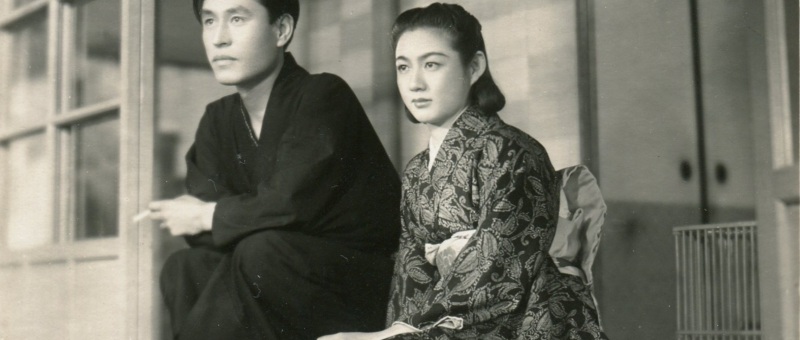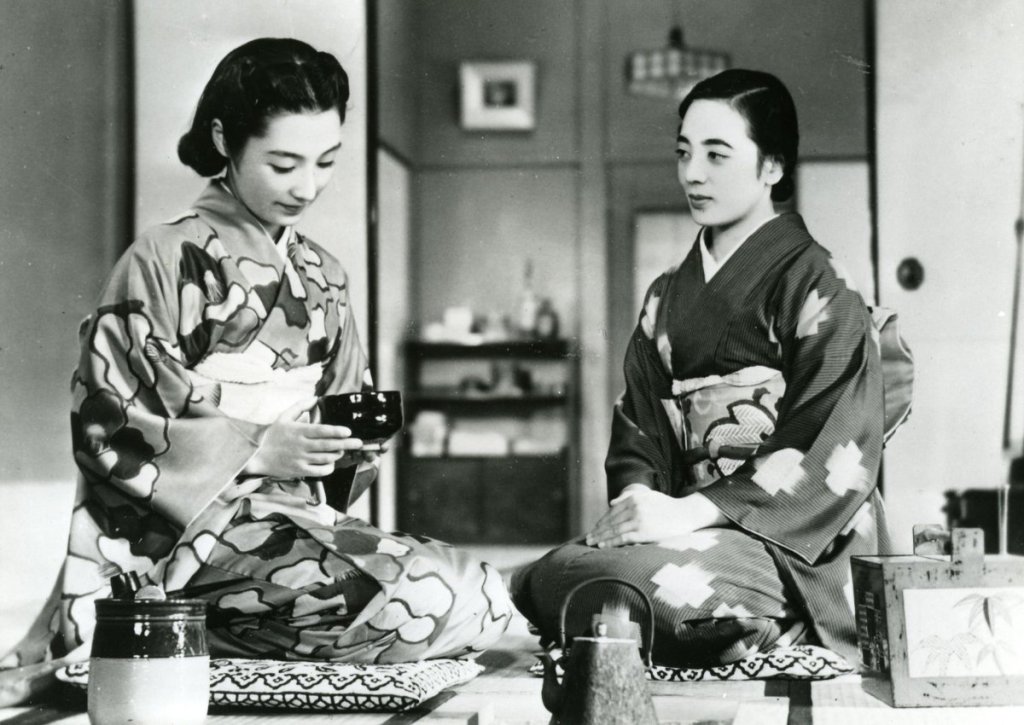
Dawn Chorus (暁の合唱, Hiroshi Shimizu, 1941)

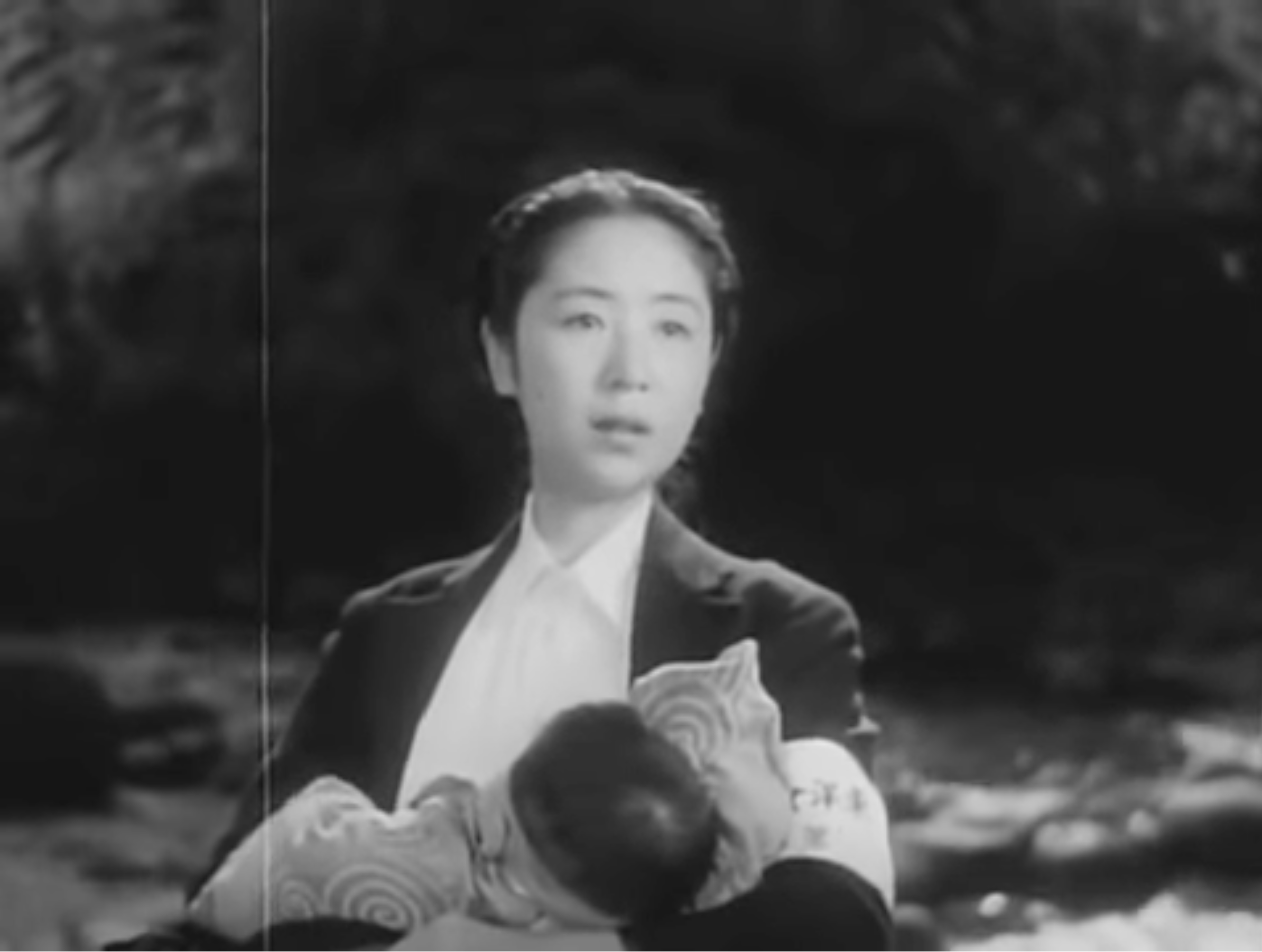
“Before me flows a wide and serene river of life,” a young woman writes in an unexpectedly poetic essay, “I beg you to pray for my just and happy future.” Yet Tomoko (Michiyo Kogure) does appear to be pretty happy with her choice, even if the just future she’s forging for herself might not be what others see as just. Though she cites her family’s poverty and a minor disability as her reason for giving up on education, there seems to be another side of her that eagerly embraces independence and looks for it in unexpected places.

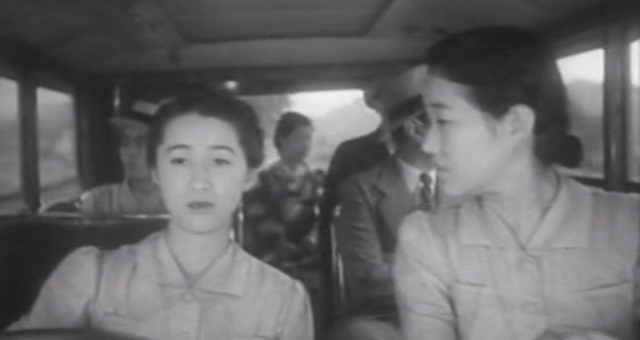
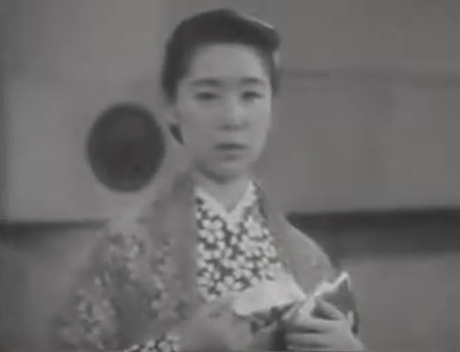
That would be her desire to become a bus driver, an occupation then thought to be inherently masculine. Perhaps in that way, it reflects her desire to be in control of her own destiny, while her apparent love of life on the bus hints at another for travel and ever-expanding horizons. Another of Shimizu’s travelling films, he often as in Mr Thank You includes scenes shot through the bus’ rear window including that of a flock of boys off to school on their bikes that makes Tomoko think of her stepbrother Ginjiro (Giichi Okita) who has a voracious appetite despite their family’s poverty. There are indeed all kinds of people who get on the bus, including, at one point, a melancholy woman in a bridal outfit who nevertheless pitches in when the bus gets stick in a ditch and needs a push. Tomoko fixes the bride’s makeup and gives her her compact, but there’s no avoiding the fact that she looks miserable despite the joy of the older women accompanying her.

Even Tomoko remarks that she isn’t sure whether her tears were in joy or sorrow even while wishing her a broad-shouldered husband. Later the bus catches her again trailing behind the man to whom she was married, older than her and not particularly handsome, pulling a cart. She still doesn’t look very happy, and is presumably bound for a life of drudgery over which she has little say. Her fate contrasts with that of Tomoko who is actively choosing her way forward even if the bride’s plight forces Tomoko to think about marriage and her womanhood as does the birth of a baby on the bus. Everyone is always telling Tomoko that she ought to get married quickly, and not least among them Eiko (Kiyoko Hirai) who declares herself tired by life. Working for a newspaper, she had apparently been the girlfriend of Saburo (Toshiaki Konoe) whose late brother once owned the company while now he runs a cinema. Saburo has apparently tired of her, though he appears to have developed a fondness for Tomoko which might seem slightly problematic to modern eyes because of Tomoko’s relative youth while she is in the process of coming of age and into herself uncertain if marriage is even something that she’s interested in.

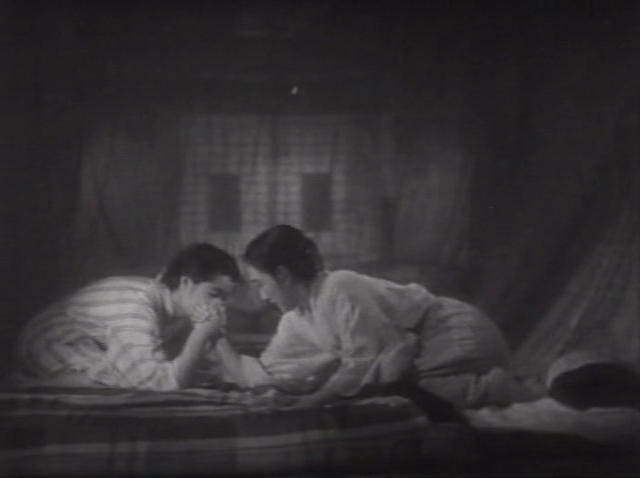
On the other hand, her tomboyish qualities leave her in a slightly liminal space as reflected in her desire to become a driver, rather than a conductress. In learning to drive, she mostly wears trousers while Eiko remarks on her “big hands” and she prides herself on her physical strength when engaging in an impromptu arm wrestling match with Yoneko (Hiroko Kawasaki), the widow of Saburo’s brother who now manages the bus company and has a crush on handsome driver Ukita (Shin Saburi) who also had to drop out of university for undisclosed reasons. Tomoko loses the match because she’s overcome by tears without really knowing why, which might in its way be a manifestation of her returning femininity along with her maturity, but there’s also something strangely transgressive about the scene featuring two women under mosquito net randomly arm-wrestling in the middle of the night.

Nevertheless, Tomoko’s life seems otherwise happy and pretty care free even if there are signs of corruption all around her. One of her first challenges while working as a conductress is an old woman (Choko Iida) who tries to get out of paying. It seems like the old woman probably can’t really afford to pay, but puts on a show of having tried to cheat them deliberately to save face. She suggests to Tomoko that she simply neglect to punch a ticket and pocket the money she’s already given her, until the bus driver, a man, gets out to exert his authority and tell her off despite Tomoko’s offer to make up the shortfall out of her own money. Later it’s discovered that two of the other conductresses have been made unhappy enough to consider quitting their jobs and are deliberately avoiding riding with one particular driver because he’s forcing them to embezzle ticket money in this way on his behalf, hinting at a kind of greed and immorality that might not necessarily be motivated by abject poverty.

It is though a presence Tomoko is able to dispel, bringing on Kimie (Chiyoko Fumiya) as her own conductress when she finally becomes a driver in her own right. Though the film hints at her feelings for Saburo, it does not end on marriage but with Tomoko’s personal fulfilment if tempered by the idea that a woman must now be useful and productive in the wider world while the men are away which might be how it gets around the censors despite otherwise avoiding overtly patriotic or imperialistic themes. Based on a novel by Yojiro Ishizaka, the film rather validates Tomoko’s desire to take charge of her life and drive off towards the future as an independent woman.


A Brother and His Younger Sister (兄とその妹, Yasujiro Shimazu, 1939)

A young man’s love of go ends up getting him into hot water at work in Yasujiro Shimazu’s surprisingly progressive shomingeki, A Brother and his Younger Sister (兄とその妹, Ani to Sono Imoto). It seems office politics might not have changed all that much in the last 80 years even if many other things have, but conversely the film seems to have more to say about the changing nature of gender roles and attitudes towards women in a time in which it was becoming possible for a woman to live a fully independent life. 

This window wouldn’t last very long and the situation largely reversed itself even amid the supposed equality enshrined in the post-war constitution, but Fumiko (Michiko Kuwano) at least has a well paying job as a secretary at a large company and consequently little desire to marry even at the comparatively late age of 24. Her earning capacity is later put forward as a reason that there “aren’t many opportunities” for marriage as men apparently feel threatened and embarrassed especially if their salary is lower than hers. It’s not exactly that she’s against marriage, but as she can support herself and is otherwise happy living with her brother Keisuke (Shin Saburi) and his wife Akiko (Kuniko Miyake). She doesn’t see the need to rush into such an important decision. Though she might change her mind if the right person came along, for the moment she just isn’t interested. Then again, Akiko’s sucking of her finger when she’s ironically cut by a thorn on a bouquet of roses from an unwanted admirer might suggest another reason marriage is not on her radar.

Her suitor, Michio (Ken Uehara), despite his handsomeness is a little creepy in his courtship and cannot seem to take a hint that Fumiko isn’t interested in him. A friend of her boss, he has a habit of dropping into the office for no real reason and attempts to ask her out when the boss isn’t there. She lies and tells him she’s married already (to a penniless painter!) but after the boss reveals the truth it doesn’t seem to occur to Michio that if she made up a story like that it’s because she doesn’t want to go out with him. We’re told that Michio studied at Oxford and is attracted to Fumiko because he’s impressed by her language skills, but he’s also some kind of stockbroker which quickly paints him as no good seeing as the film seems to have a minor message about how dabbling in stocks and shares is little better than gambling and definitely dangerous.

One of Keisuke’s colleagues has been given a warning because there’s a rumour that he’s into shares while another has apparently been demoted because it came to light that he had a fondness for horse racing. More than a moral judgement, it seems the reason is that these sorts of hobbies may eventually lead someone towards embezzling from the company to cover their debts. Keisuke’s supervisor is also worried that his 18-year-old son is refusing to go to university and apparently wants to join some kind of “investment society” which admittedly does not sound like a good idea so he wants Keisuke to talk him out of it. The big boss, meanwhile, who is also Michio’s uncle, turns out to be into shares himself which makes him a very compromised authority figure. 

Keisuke is not into shares, but he is very into the game of go which causes him to stay out until late at night playing with his bosses. He does this because he genuinely likes playing, but Fumiko worries that his colleagues will come to resent him assuming that he does so to curry favour. Apparently, something similar happened at his previous job which is why he ended up quitting abruptly. As he was quite lucky to get this one despite how impressed everyone seems by his capabilities, it would be better if that didn’t happen again. Nevertheless, the perspicacious Fumiko turns out to be right as as his co-worker Yukito (Reikichi Kawamura) becomes increasingly jealous of his success fearing that he will leapfrog him to take the shortly to open up supervisor position which he believes to be his simply because he’s been there longer (which is generally how things work at Japanese companies). Consequently, starts a series of rumours that Keisuke is a snitch who got the horse racing guy demoted and is only in his position thanks to schmoozing with the bosses.

This obviously leaves him with a huge dilemma when his boss asks him to put in a good word for Michio with Fumiko whom he is pretty sure won’t be interested. To his credit, Keisuke maintains that it’s up to her and his career is nowhere near as important as her happiness though he is also aware it’s going to be embarrassing for him when she says no. Fumiko knows this too, and it’s clear that she also feels incredibly awkward when he puts it to her but only asks for a few minutes to think before offering her primary justification for refusing which would be that she fears Keisuke’s colleagues will resent him even more if they come to the conclusion that he sold his own sister in the hope of career advancement. This does in fact turn out to be the case as Yukito has already started a rumour about a dynastic marriage that turns the rest of Keisuke’s colleagues against him especially as he’s given the promotion immediately before he was going to tell the boss Fumiko isn’t interested. 

Confronted by the horse racing guy, Keisuke ends up quitting again after getting into a physical confrontation with a seemingly remorseful Yukito who probably didn’t mean for it to go that far. Keisuke quits because he won’t have people think he was gossiping behind their backs and is offended by this attack on his integrity, but his decision is also a rebuke against this infinitely corrupt employment regime in which hypocritical bosses hand out jobs to their favourites and maybe do expect that Keisuke will persuade his sister to sacrifice herself for his career. She meanwhile is portrayed as an independent woman, but ironically rejects the marriage to save her brother’s reputation though perhaps equally she feared her “no” would not be enough on its own. Then again, she had apparently turned down several suitors already and no one really expected her to say yes this time unless she’d suddenly begun to feel anxious about her age and declining prospects. 

Nevertheless, it’s refreshing that the film does not force Fumiko into accepting marriage as so many others would and in fact legitimises her opposition to it and right to live as an independent woman for as long as she chooses. Keisuke is also in some ways rewarded for quitting his job at the corrupt company in immediately getting another one from a former co-worker who’s since started his own business and wants to expand to Manchuria. But this final scene almost seems tacked on for the censor’s benefit. It is perhaps a little unusual for 1939 that the film has so far made no mention of Japan’s imperial ambitions nor made any kind of patriotic appeal. It’s even been quite pro-internationalist in the talk of people speaking English and engaging in European trade (even if the currency trading Michio’s doing is definitely framed as bad). Fumiko spots a little patch of grass clinging onto the plane as they take off for Manchuria with Keisuke remarking that he hopes this little piece of Japan will take root on the continent. On one level, it suggests that contemporary Japan was too corrupt for an “honest” man like Keisuke to prosper while Manchuria will offer greater freedom for himself and the independent modern girl Fumiko (who declares she won’t marry until Keisuke’s successful), but it’s also of course an unpalatable advocation for the ongoing imperialist expansion which seems so out of keeping with everything that’s gone before. Even so, the message is clear that it’s Keisuke and Fumiko who are in the right and should be allowed to live just as they are in a society free of judgement and hypocrisy.


Three Women of the North (北の三人, Kiyoshi Saeki, 1945)

Film was the primary medium for propaganda and Japan had been pumping out increasingly patriotic fare under the National Policy programme since the late 1930s but what’s interesting about those which appeared towards the war’s end is that they do not try to sugarcoat the situation or pretend that the conflict is going well, rather they use the encroaching sense of desperation as an additional motivator to get all hands on deck. Released on Aug. 5, 1945, Three Women of the North (北の三人, Kita no Sannin) was the last propaganda film to be produced and the only film currently screening when the war ended on Aug. 15. Of course, after that it was swiftly withdrawn by the Occupation forces never to be seen again except perhaps as a historical document. 

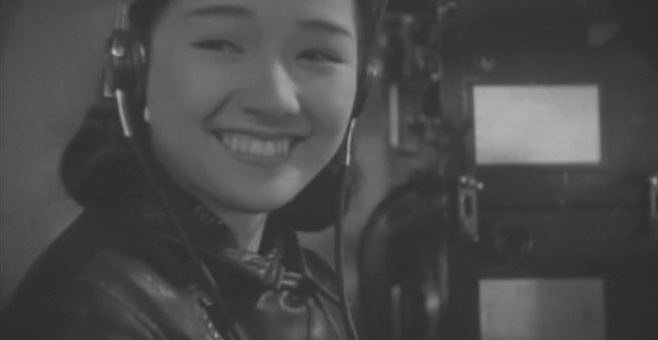
Like The Most Beautiful, the film skews accidentally feminist in its focus on three female radio operators who seem to be regarded as something of pioneers in the field. After encountering technical issues, a plane with a top secret mission is guided into an airfield in Aomori by nothing more than the voice of radio operator Sumiko (Setsuko Hara) yet on landing the pilot expresses surprise apparently stunned that a young woman would be able to perform such a stellar job. The sexist attitudes seem almost set up so they can be shot down, the pilot is quickly corrected by the ground control chief (Takashi Shimura) who explains “nowadays women can become excellent radio operators.”

Of course, this is born of necessity seeing as at this late stage there is a huge untapped resource of young and widowed middle-aged women previously discouraged from getting directly involved with the war effort. In earlier propaganda films, the most important thing a woman could do was get married and particularly to a young man who was going to the war, but this time a conflict develops between two of the women, Yoshie (Hideko Takamine) and Sumiko, because Sumiko declined to marry Yoshie’s brother Kazuo before he left because she too wanted to do her bit for the war effort and would not have been able to do so as a married woman. On learning from Yoshie that Kazuo has been killed after volunteering to lead a suicide mission, she breaks down in tears and cries that she should have married him but Yoshie, who has forgiven her on learning of her patriotic reasoning, tells her that she has done the right thing and her brother would be proud of her for serving her country. 

Meanwhile, at another airfield even deeper into the frozen north their friend Akiko (Hisako Yamane) has a developed a fondness for a research scientist but their romance is of course frustrated by the war. In a moment of fraught emotion, he tells her that he will be returning after delivering his findings and she should wait for him there which is almost to say that they will be granted their romantic resolution once the war is over. The curious thing is that Hara (Shin Saburi) is a weather scientist whose cloud forecasts have apparently been very useful to the pilots. A slightly strange diversion sees the film try to argue that at this point the greatest threat to the Japanese war effort is the weather, which aside from sounding like a very British excuse makes very little sense even if it is obviously a factor in mission success. 

The radio operators obviously can’t do much about the weather, but they can pull together with plucky spirit dedicating themselves to the national good and giving all to the war effort. While Sumiko and Yoshie are having their emotional confrontation they’re interrupted by a trio of young women who were supposed to be getting a radio demonstration from Sumiko but they’ve come to say they can’t make it because one of the other girl’s mothers has been taken ill so they’re walking up the snowy mountain to the observatory in the middle of the night to send her back and take over her shift. When the radio operator on the special flight is taken down by pneumonia (the weather, again), Yoshie volunteers insisting that she’s prepared if the worst should happen but on landing remarks that she couldn’t have got through it without Sumiko and Akiko on the other end of the line resting their success on female solidarity. Though it’s clear the film was made on a shoe string it does feature special effects by none other than Eiji Tsuburaya along with some well conceived action sequences that lend an uncomfortably thrilling note to this extremely late entry into the realms of propaganda filmmaking. 


Kinuyo’s First Love (絹代の初恋, Hiromasa Nomura, 1940)

The changing social mores of the 1930s are played out in the fortunes of two sisters unwittingly falling for the same man in Hiromasa Nomura’s melancholy romance Kinuyo’s First Love. One of Shochiku’s most bankable directors, Nomura had one of his greatest hits with the romantic melodrama Aizen Katsura starring Kinuyo Tanaka and Ken Uehara. Tanaka was herself so popular in this period that her name was sometimes inserted into the titles of films in which she starred as it had been in earlier Nomura collaboration Kinuyo the Lady Doctor though this time she plays another stoic and self-sacrificing woman who gives up her own chance of happiness for that of her sister. 

Kinuyo (Kinuyo Tanaka) is the oldest daughter of the Miyoshi senbei shop and has been acting as a mother to her sister Michiyo (Kuniko Igawa) since their own passed away some years previously. Their father, Mr Miyoshi (Reikichi Kawamura), has a job as a doorman at a Western-style hotel, but as the opening sequence proves he’s no longer as young as he was. When Kinuyo reminds him to be careful on his way, he snaps back that he’s “not that old”, though proceeds to forgot almost everything he needs including his hat and walks off with Michiyo’s significantly smaller bento rather than his own. The bento mixup, however, enables a meet cute between Michiyo, who has a job on the trading floor of a stockbroker’s, and the boss’ ennui-ridden son Shoichiro (Shin Saburi). Meanwhile, Kinuyo ends up falling head over heels for him when he gives she and her friend his tickets for a kabuki play after his geisha girlfriend stands him up. 

The arrangements of the Miyoshi family are perhaps odd for the time in that Kinuyo seems to be supporting the family well enough with the senbei store alone even though she keeps giving half the stock away to a little girl who comes every morning. She desperately wants her father to retire and evidently feels their finances wouldn’t suffer without his wages. When he’s eventually fired for being old by the young boss who apparently “just likes everything new” and doesn’t appreciate the hotel’s history or Mr. Miyoshi’s place within it, she’s pleased rather than worried and sets about finding things for him to do at home where she can keep an eye on him and he can still feel useful. Michiyo meanwhile though she has received a good education and has managed to get a stable modern office job feels much the same secure in the knowledge that it doesn’t really matter if she gets fired because Kinuyo can go on supporting them all without her help. It’s perhaps this freedom that all own her to talk to the boss’ son like he was a regular human, something that immediately impresses him because he’s fed up of people sucking up to him or only telling him what they think he wants to hear. 

To that extent, Shoichiro maybe an example of the wastrel modern boy who is ruined by his privilege as evidenced in his lack of interest in the family business and relationships with geisha though the film is also usually sympathetic of his go-playing girlfriend Fusa (Yoshiko Tsubouchi) whom he callously throws over after falling in love with Michiyo ironically because of her seeming modernity in her willingness to be straight with him. But then, lingering feudalism continues to overshadow their romance in the obvious class difference which exists between them. Mr Miyoshi wonders if the marriage is a good thing or if they will simply be incompatible but Kinuyo, even on realising that her sister’s suitor is the man with whom she has also fallen in love, assures him social class needn’t be an issue unless they make it one while simultaneously explaining that Michiyo will need to sever ties with them to fully join Shoichiro’s social rank because they are no longer good enough to be accounted members of her family. To make her point, she begins teaching Michiyo matters of upper-class ettiequte such as the importance of kneeling down to open a shoji with the wooden kick board rather than risk damaging the paper by opening it while standing up. 

Michiyo’s forthrightness might be seen as modern, but her values are otherwise old-fashioned bringing Shoichiro back to the “right” path of honest handwork through refusing to indulge him. Meanwhile a very clear message is being sent that the older generation need to step out of the way, as Kinuyo puts it make their children capable and then let them work as Shoichiro’s father has perhaps failed to do while Mr. Miyoshi has done all too well. For a film of 1940, Kinuyo’s First Love has surprisingly little political content but is perhaps intended to send this message of industry among the young while the family’s senbei store may otherwise satisfy the censors in its presentation of a traditionally Japanese culinary craft. Having adopted the role of the mother, Kinuyo selflessly sacrifices her own happiness for that of her sister even though it will mean their separation but remains undefeated even in her heartbreak sniffling through her tears that she will go on looking for a good husband for herself refusing to “burden” her father with a responsibility which would traditionally belong to him declaring herself perhaps the most modern of them all. 


Record of a Woman Doctor (女医の記録, Hiroshi Shimizu, 1941)

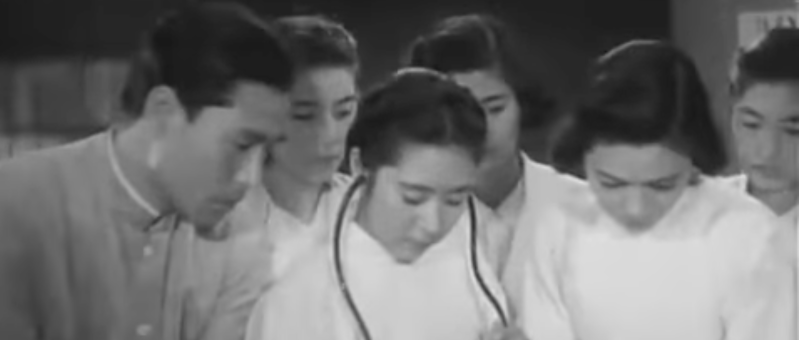
By 1941 it was becoming harder to make films which were strictly apolitical, though many directors were able to circumvent the constraints of a tightening censorship regime in focusing on the kinds of messages they could get behind. Hiroshi Shimizu’s 1941 drama Record of a Woman Doctor (女医の記録, Joi no Kiroku) is in essence a public information film hoping to foster better hygiene practices in rural areas while encouraging those who might have felt mistrust towards modern medical professionals that they need have no fear of doctors, but in its own way presents a challenge to the militarist line in implying that the humanist teacher and female doctor of the title are in a sense “re-educated” though their exposure to the rural poor. 

As the film opens, a collection of medical students from Tokyo Women’s Medical University is sent to a small rural village as part of a pop-up free clinic in an area which otherwise has little access to professional healthcare. As the school teacher, Kamiya (Shin Saburi), who is their liaison explains, the the major health problems faced by the villagers are largely those of poverty, i.e. malnutrition, while infant mortality remains high. Each of these is compounded by the contemporary economic and social realities in that the young often leave to work in cities and then bring back with them urban diseases such as tuberculosis to which the locals are especially vulnerable while in the absence of a professional doctor medical emergencies such as appendicitis or complications with childbirth which might be easily treated are often fatal. 

Even so, the villagers are not initially grateful for the doctors’ arrival for various interconnecting reasons. The first is obviously their poverty, not realising that the clinic is free and assuming they cannot afford to take advantage of it. Secondly, they have experience of being ripped off by duplicitous conmen calling themselves doctors and fear that they will simply incur a large debt to be paid at a later date, wary that though the consultation may be free the treatment may not be, the doctor suddenly discovering they are actually incredibly ill and must part with a lot of money in order to redeem their health. The third reason, meanwhile, is older still in the intense stigma surrounding sickness and particularly any respiratory condition. 

These are all the attitudes the doctors and the film intend to challenge in insisting that modern medicine is both safe and responsible, interested only in helping prevent the onset of sickness rather needlessly meddling in their way of life. All from the city, the conditions in this small mountain village necessarily shock the doctors noting that the villagers have no culture of regular bathing, often wear the same clothes day and night for indefinite amounts of time with no washing, never air their futons, and live in dark and poorly ventilated homes. The authorities have often recommended felling a thick circle of trees which surrounds the village to let more light in and allow the breeze to travel through though the villagers have always refused. 

The felling of the trees takes on a symbolic association of freeing the village from primitive superstition, literally enlightening it, as they shift closer towards modernity in learning the importance of proper sanitation. In a sense these ordinary rural people are being patronised, even sympathetic teacher Kamiya describing them as “culturally deprived” while later implying that he himself has been reformed by their simple way of life. Kamiya’s life is certainly not easy, effectively acting as something like a village headman called in to deal with any sort of local problem while often providing childcare to the infants brought in by his pupils who are supposed to be minding their siblings while the parents work in the fields but are not always completely responsible. Earnest doctor Natsuki (Kinuyo Tanaka) is later much the same, touched by the plight of a local girl suffering with TB kept like a secret in the back room by her mother after being sent back from her factory job. The mother is intent on sending the younger sister in her place even though she too is in poor health because the family is without a male earner and unable to support itself. 

The fact that the doctors are all female may in itself be somewhat progressive but also speaks of the times, the male medical students presumably diverted to the military ironically reinforcing the idea that “domestic” concerns are women’s concerns, something echoed in the film’s concluding scenes which see Natsuki, a qualified doctor, operating a daycare centre taking care of local infants while Kamiya runs a callisthenics session behind her. Conversely, it’s also implied that Natsuki must give up her womanhood or any sense of personal desire in order to dedicate herself to the village making it quite clear that there is no possibility of a romantic connection with Kamiya. Even so, the secondary message seems to be that the key to inspiring confidence lies in a process of mutual understanding, Natsuki belatedly realising she’s accidentally alienated some of the local children by usurping their position as caregivers to Kamiya, less relieving them of a burden than firing them from a job they were proud to do while the only real way to gain the villagers’ trust is to listen to their concerns and show them they really do care about their welfare. The subtext may be that their health is important because healthy bodies are needed to fuel the war effort, but even so you can’t argue with the humanist message even as Shimizu’s subversive implication that one can learn alot from the simple way of life cuts against the militarist grain. 


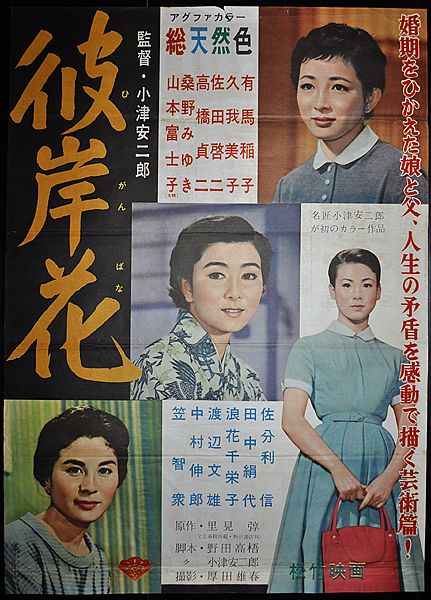
Equinox Flower (彼岸花, Yasujiro Ozu, 1958)

Japanese golden age cinema is famed for its centring of female stories, but while it’s true that many of Yasujiro Ozu’s family dramas revolve around a young woman’s feelings towards marriage, the perspective is often surprisingly male. Equinox Flower (彼岸花, Higanbana), his first film in colour, marks something of a change in direction in its spirited defence of the young, but at heart is still a story as much about impending old age, the responsibilities of fatherhood, and changing times as it is about contemporary family dynamics or female agency. 

The father in question, Hirayama (Shin Saburi), is a high ranking executive with two daughters. The older, Setsuko (Ineko Arima), is working at another company, and the younger, Hisako (Miyuki Kuwano), is still in school. Marriage is on his mind because he’s just attended the wedding of an old school friend’s daughter at which he gave a speech, with his wife Kiyoko (Kinuyo Tanaka) sitting awkwardly next to him, describing the arranged marriage he had with her as “pragmatic, routine” while he envies the young couple’s “fortunate opportunity” to indulge in romance. He and Kiyoko idly discuss the idea of Setsuko’s marriage, it seems as if there is a promising match on the horizon, with Hirayama conflicted while Kiyoko is very much in favour of doing things the traditional way. She’s already mentioned it to her daughter, but all she does is smile demurely which seems to provoke different interpretations from each of the parents. 

While thinking about all of that, Hirayama receives a visit from an old friend who was a notable absence at the wedding asking him to check up on his daughter Fumiko (Yoshiko Kuga) who ran away from home two months ago to live with a musician after he tried to veto her intention to marry without consulting him. Hirayama is sympathetic, perhaps thinking his friend has acted foolishly and pushed his daughter away. After visiting the bar where she works, he comes to the conclusion that as long as she’s happy with her choice then everyone else should be too. That all goes out the window, however, when a young man, Taniguchi (Keiji Sada), visits him unexpectedly at work and asks for permission to marry Setsuko. Hirayama quite rudely asks him to leave and then irritatedly talks the matter over with Setsuko before petulantly refusing his consent, not because he objects to Taniguchi, but because he is hurt on emotional level that she hadn’t talked to him about this first (not least so that they stop worrying about arranging a marriage) while resentful that she’s gone behind his back and undercut his patriarchal authority. 

In addition to the changing nature of family dynamics, Hirayama is perhaps conscious of his advancing age, feeling himself increasingly obsolescent and therefore additionally wounded by this assault on his authority as a father. The generation gap, however, is all too present. Both Setsuko and Fumiko feel as if they simply cannot talk to their parents because they wouldn’t listen and will never understand. Yukiko (Fujiko Yamamoto), the daughter of another friend, feels something similar in her exasperation with her well-meaning single mother who keeps hatching plans to set her up with various men she isn’t interested in. Intellectually, Hirayama sides with the young, envying them their freedoms and advising Yukiko firstly not to marry at all, and then encouraging her desire to resist arranged marriages despite trying to foist them on his own daughters. 

Even Kiyoko eventually describes her husband’s continuing petulance as “inconsistent”. It seems obvious that Kiyoko is siding with her daughter, immediately taking a liking to Taniguchi who politely brought her home after she stormed out following an argument with her father, but she continues to behave as a “good wife” should, politely minding her husband while gently hoping that he will eventually come round. Only once pushed does she try to explain to him, again politely, that he’s being selfish and unreasonable, but he continues on in resentment while causing his daughter emotional pain simply for trying to find her own happiness rather letting him decide for her. Kiyoko is afraid that if it carries on like this, then Setsuko will, like Fumiko, eventually leave and they’ll lose her completely, something which Hirayama either hasn’t fully considered or is actively encouraging through his petulance. 

In the end the conclusion he comes to is that the parents will eventually have to give way or risk losing their children entirely. He tells both Fumiko and Yukiko that all parents want is for their children to be happy and so nothing else matters, but struggles to put his advice into practice when it comes to his own daughter. Like pretty much everyone in an Ozu film, Hirayama is a good, kind person, even if one struggling against himself as he contemplates a loss of authority, a change in standing, and the difficulty of dealing with complex emotions as a man in a patriarchal society. Predictably, it’s women who essentially bully him into making better decisions, Yukiko “interfering” in the nicest of ways, while his wife makes it clear that though she thinks he’s wrong she will continue to stand by him if only in the hope he will eventually see the light. “Life is absurd, we’re not all perfect” he admits, only later realising how his stubborn foolishness may have caused unnecessary suffering to those he loves the most.


Currently streaming in the UK via BFI Player as part of Japan 2020. Also available to stream in the US via Criterion Channel.

Original trailer (no subtitles)

The Three Undelivered Letters (配達されない三通の手紙, Yoshitaro Nomura, 1979)

The ensemble crime drama was at its zenith in the 1970s which saw a series of starry mysteries dominate the box office for most of the decade. Director Yoshitaro Nomura had long associated himself with the noirish thriller, frequently adapting the work of Seicho Matsumoto and perhaps skewing a little darker than your average drawing room mystery would usually dare. Scripted by Kaneto Shindo, 1979’s Three Undelivered Letters (配達されない三通の手紙, Haitatsu Sarenai Santsu no Tegami), meanwhile, is adapted not from Matsumoto but from a novel by American crime powerhouse Ellery Queen, Calamity Town, and as such avoids the central topic of wartime corruption which is at the centre of many similarly themed crime dramas. Nevertheless, it paints a complex picture of Japan in the increasingly prosperous late ‘70s in which class distinctions, it seems, prove hard to kill. 

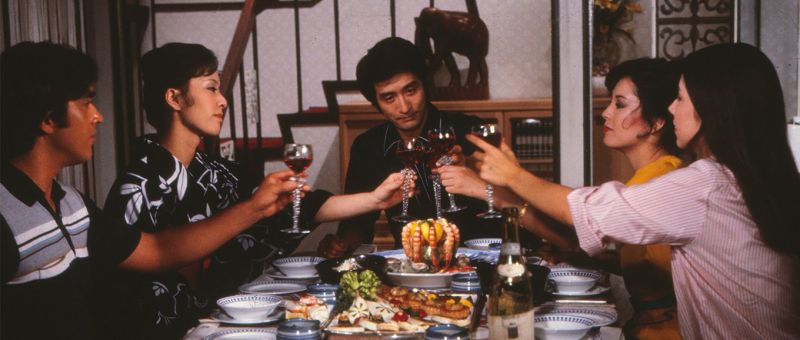
Nomura begins, as he so often does, with a lengthy train journey this time undertaken by the quasi-protagonist, Japanese-American student Bob (Ryo Hikime) who has come to Japan on a research trip for his East Asian studies degree and is travelling from Tokyo where he stayed with a friend to provincial Hagi where he’s to stay with distant relatives, the Karasawas. As we begin to realise, the Karasawas are fabulously wealthy, members of an entrenched upperclass living out in the country. Grumpy patriarch Mitsumasa (Shin Saburi) is the CEO of a bank, and actually not all that welcoming of his visitor though they agree to put him up in an entirely separate house they had built for the impending marriage of daughter Noriko (Komaki Kurihara). Unfortunately, three years previously once the house had been built and the marriage agreed, Noriko’s fiancé Toshiyuki (Takao Kataoka) simply vanished without trace. Heartbroken, Noriko suffered a breakdown and has been living in a depressive state ever since. 

The trouble begins when already disowned oldest daughter Reiko (Mayumi Ogawa) rings her sister to let her know that Toshiyuki has resurfaced, apparently having been living quietly as a fisherman in Hokkaido. Perhaps surprisingly, their reconciliation is speedy. Noriko brings Toshiyuki home, explains the reason for the breakup was that Toshiyuki was uncomfortable with the constraints of her upperclass life, and states that the wedding is back on. Mitsumasa is understandably irate, but agrees to the marriage on the same terms as before. Toshiyuki must join his bank and they have to live in the house he built for them. Despite his earlier aversion, Toshiyuki agrees and the pair are married but on moving his belongings into the house Noriko discovers three disturbing letters hidden in a book each bearing a future date and addressed to Toshiyuki’s younger sister, the first explaining that his wife has been taken ill, the second that her condition continues to deteriorate, and the third that she has passed away. 

All things considered, it is odd that the marriage was agreed so quickly, the family perhaps feeling that Toshiyuki has had a humbling and is willing to submit himself to the feudalistic, patriarchal world of the upper classes in order to escape hardship while knowing that refusing may be the most dangerous thing for Noriko’s precarious mental health. Entirely absent are the usual background checks such families usually run on a prospective son-in-law, and no one seems keen to ask for much detail as to Toshiyuki’s life over the past three years. The class conflicts are however brought to the fore when a brassy young woman turns up and claims to be Toshiyuki’s previously unseen younger sister who for mysterious reasons did not attend the wedding ceremony and has never been introduced to the family. The contrast between the two women could not be more plain, Noriko often appearing in kimono or elegantly attired in the latest fashions, while Tomoko (Keiko Matsuzaka) is a full on modern girl who finds the house stuffy and the company dull but shows no signs of leaving. 

As so often in Japanese mysteries the focus is very much on the how, or in this case the “if”, rather than the who or the why which are in themselves fairly predictable at least to those familiar with the genre. Bob and middle sister Keiko (Ai Kanzaki) who is being pressured into an arranged marriage with a public prosecutor she doesn’t seem to even like but also has not rejected, are perturbed enough by the letters to start investigating but their biggest obstacle it seems is Noriko herself who is at great pains to exonerate her husband from suspicion believing the letters are some kind of dark joke rather than genuine evidence of an imminent attempt on her life even as Toshiyuki’s behaviour becomes ever more erratic and suspicious. 

“Everyone should live the way they like” Bob avows in laughing off a request for life advice, apparently wisdom handed down from his Japanese grandma. That sense of restricted freedoms does indeed seem to be at the heart of the issue, hinting at the changing nature of Japanese society even as it struggles to free itself from the feudal past. Keiko resents being pushed towards the prosector but only ever comes up with excuses, never actively resisting her parents’ attempt to marry her off. Oldest daughter Reiko, meanwhile, was kicked out of the family after eloping with an actor who eventually left her flat and now runs a bar. Keiko may feel she has only these two choices, a marriage such as Noriko’s on her father’s terms only, or a dubious independence which might not suit her in the same way as her infinitely competent sister. Toshiyuki resented placing himself under the patriarchal authority of his father-in-law, a job in his bank, living in a house he built on the property he owns, with no real control over his life. Reiko may well have a point when she eventually tells Mitsumasa that this is all his own fault, a consequence his rigid authoritarianism that insisted on maintaining an outdated ideal of patriarchal control. 

For his part, Mitsumasa is forever keen to emphasise that there are no crimes in his house, resolutely refusing to admit that there are problems within the Karasawa family even while perhaps knowing where the fault may lie. The one mystery which is never solved is why exactly so many women are so in love with Toshiyuki who all things considered is no great catch, a coward who makes a point of disappearing on people rather than deal with unpleasantness only to resent it when his moral cowardice returns to haunt him. He resents the emasculation of being a wealthy man’s son-in-law with its concurrent loss of personal autonomy, but simultaneously refuses to take responsibility for his actions or reject a life of comfort as someone assured both of continued financial security and of a certain place in society. Love destabilises the social order, but seemingly cannot change it leaving only the lovers bruised by their attempts to free themselves from the latent feudalism of the post-war world which continues to promise more than it has to offer. 


Brothers and Sisters of the Toda Family (戸田家の兄妹, Yasujiro Ozu, 1941)

Yasujiro Ozu made only two films during the height of the war. After being drafted for the second time in 1943, he famously sat out the main action from the relative safety of Singapore where he was able to indulge his love of Hollywood cinema to an extent impossible in Japan. Somewhat surprisingly, 1941’s Brothers and Sisters of the Toda Family (戸田家の兄妹, Toda-ke no Kyodai) does not seem to fit the censor’s ideal in that it contains little to no patriotic content and never mentions the war save for presenting the idea of “Manchuria” as a place to start again free of burdensome codes of social oppression but, crucially, embraces classic ideas of filial piety which is presumably how it came to be approved by the powers that be. 

Shortly after the Toda family gathers for the first time in quite a while to celebrate Mrs. Toda’s (Ayako Katsuragi) 61st birthday, Mr. Toda (Hideo Fujino) drops dead of a heart attack and it is discovered that the family firm is near bankruptcy. The large, Western-style mansion where the family photo so recently took place will have to be sold and Mrs. Toda and her unmarried daughter Setsuko (Mieko Takamine) will have to move in with one of the married children. 

Like the later Tokyo Story, Brothers and Sisters of the Toda Family concerns itself with the failure of filial piety in an increasingly corrupt society. Multigenerational homes might once have been a cultural norm, but perhaps it’s understandable that few people might be excited about the prospect of their mother suddenly moving in with them especially as the traditional Japanese house is not designed with personal space in mind. Power dynamics seem to be the problem at the first home where daughter-in-law Kazuko (Kuniko Miyake) makes no secret of the fact that the two women are in the way. She resents having to shift everything around and reorder her home to give them space upstairs, complains about their noisy pet bird, and is then put out when Setsuko and her mother fail to greet her guests even though she specifically asked them to absent themselves in order to avoid meeting them. 

At the next home, however, it’s more a question of maternal heirarchy. Daughter Chizuru (Mitsuko Yoshikawa) has two children and the oldest, her son Ryokichi (Masao Hayama), is very attached to his grandma, so much so that he confides in her about skipping school because he got into a fight and is worried about reprisals. Chizuru’s main objection to them moving in had been that it might distract Ryokichi from his studies, and it’s clear that she finds it difficult to assert her own maternity with her mother hovering in the background. She accuses Mrs. Toda of interfering by keeping her promise to Ryokichi and not telling her about skipping school, making it impossible for them to keep living in the same house. 

Rather than descend on the home of the last daughter, Ayako (Yoshiko Tsubouchi), who is hurt but perhaps relieved to hear they won’t be living with her, Mrs. Toda and Setsuko decide to move into a dilapidated summer house the family thought too worthless to sell. They are now thoroughly marginalised, living in a literal half-way home having lost their position in society. Setsuko, naive but earnest, is the keenest to adapt to her circumstances. Her best friend Tokiko (Michiko Kuwano) is from an “ordinary” family and tries to point out, as nicely as possible, that Setsuko is going to find it much more difficult than she thinks to move beyond her privilege. Aware of her precarious circumstances, she expresses the intention to work but is quickly shut down by Chizuru who finds the idea highly offensive and in fact embarrassing. She urges her to think about a socially advantageous marriage instead.  

Shojiro (Shin Saburi), the youngest and as yet unmarried son, urges her to do something much the same at the film’s conclusion but also offers his sister the freedom to fulfil herself outside the home by accompanying him to the land of the possible, Manchuria. Previously regarded as a feckless failure, Shojiro decided to take up the opportunity to make something of himself in Japan’s new colonial endevour. On his brief return to mark the first anniversary of his father’s passing, he appears in a China-style suit and fiercely takes his siblings to task for their disrespect of his mother. It has to be said, however, that he does not particularly take Mrs. Toda’s feelings into account and foregrounds his own duty of filial piety in insisting that she live with family rather than alone excluding the possibility that she too may prefer her freedom. In any case, it’s freedom he dangles before Setsuko in suggesting that in Manchuria you can do as you please without needing to worry about what others think. He offers her the possibility of marriage, but also of working and a kind of independence which is bound within the family. For herself, Setsuko wants to bring Tokiko too, positing a possible arranged match between her friend and her brother which other members of the family may find inappropriate in its transgressive breach of the class divide. 

The family is both dissolved and restored as the three Todas prepare to remove themselves from a corrupted Japan for, ironically, a new start in the home of old ideas, China, where there is both the promise of modernity and all the “good” aspects of the traditional, to whit filiality. Fulfilling the censors demands in subtly criticising the decadent, selfish, and hypocritical lifestyles of an impoverished nobility while presenting Manchuria as an opportunity remake a better, purer (and subversively progressive) Japan through imperialist pursuits, Brothers and Sisters of the Toda Family offers an ambivalent portrait of contemporary Japanese society in which the young save themselves but only by saving their parents first. 


Brothers and Sisters of the Toda Family is available on blu-ray in the UK as part of the BFI’s re-release of Tokyo Story in its recent 4K restoration which also includes an introduction to Tokyo Story from Tony Rayns, and Talking with Ozu: a tribute to the legendary director featuring filmmakers Lindsay Anderson, Claire Denis, Hou Hsiao-hsien, Aki Kaurismäki, Stanley Kwan, Paul Schrader and Wim Wenders. The first pressing also comes with a booklet featuring an essay by Professor Joan Mellen, archival writing by John Gillett and Lindsay Anderson, and a biography of Yasujiro Ozu by Tony Rayns.

It is also available to stream online via BFI Player as part of the BFI Japan Yasujiro Ozu collection.

Titles and opening (no subtitles)

Late Autumn (秋日和, Yasujiro Ozu, 1960)

“It’s people who complicate life. Life itself is surprisingly simple” according to a puffed up old man having just hugely overcomplicated an admittedly delicate situation in Yasujiro Ozu’s Late Autumn (秋日和, Akibiyori). A reinterpretation of his classic Late Spring, Late Autumn once again stars Setsuko Hara but this time as a widowed mother far more enthusiastic about marrying off her only daughter while enduring the sometimes unwelcome assistance of a group of middle-aged men stepping into the decidedly female realm of matchmaking and of course concluding that they are doing a fantastic job. 

The action opens at the seventh memorial service for Akiko’s (Setsuko Hara) late husband, Miwa, attended by his three old high school friends, Taguchi (Nobuo Nakamura), Hirayama (Ryuji Kita), and Mamiya (Shin Saburi) who’s turned up fashionably late in the hope of skipping most of the sutras. At the refreshments afterwards, talk turns to the marriage of Miwa’s daughter Ayako (Yoko Tsukasa) who is now 24 which is actually edging towards the late side by the standards of the time. The three old men offer to help find prospective matches with Taguchi instantly proposing an acquaintance to which Ayako smiles demurely but is later relieved to discover is already taken. Mamiya too has a lead, a nice young man from his office, Goto (Keiji Sada) who graduated from a good university and is not bad looking either. Though Akiko is excited, she’s surprised to discover that her daughter wants to shut the offer down immediately before even exchanging photos. She feels she’s not ready for marriage and is happy the way things are. Of course, if she fell in love it might be a different matter, but to her mind there’s no rush to get married just for the sake of it. 

Generally speaking, it’s other women who mostly enforce these restrictive patriarchal social norms, after all a daughter’s marriage is ironically the one area of a woman’s life over which she usually has total control. In this case, however, Ayako’s marriage becomes a kind of hobby for three eccentric old men who each have problems of their own they don’t seem to be in a big hurry to deal with. They each have a latent crush on Akiko from their youth though it was obviously Miwa who later married her. Hirayama is widowed with a teenage son, but Mamiya and Taguchi have wives and daughters of their own, Taguchi’s already married but apparently experiencing frequent bouts of “frustration” with her husband, and Mamiya’s still in school, while their wives are fully aware of their lingering affections for Akiko but mostly content to laugh at their ridiculousness. They are all certain that Ayako “needs” to get married as soon as possible and that they are “helping” her towards “happiness” though what they’re mostly doing is a father knows best routine in which they resolutely ignore her repeated desire for things to go on as they are until she decides that they shouldn’t. 

Ayako isn’t interested in arranged marriage, but does become interested in Goto after accidentally meeting him at Mamiya’s company and then discovering they have a mutual friend, all of which makes their relationship both “arranged” and “not”, giving Mamiya cause to think he’s responsible when he’s really just incidental. Thinking things aren’t moving fast enough, the guys decide the problem is Akiko and if they can persuade her to remarry then Ayako will be less reluctant to leave home. Their behaviour is in fact quite manipulative, something they are later called out on by Ayako’s feisty friend Yuriko (Mariko Okada) who is also trying to help but determined to do it in a less problematic way. The gang’s suggestion to Ayako that her mother is considering remarriage when in fact she had no such intentions at all places a rift between the two women with Ayako left feeling hurt and betrayed, as if her mother has offended her father’s memory and done something improper behind her back. 

Ayako is not alone in her lingering prejudice against second marriage even if Yuriko tries to explain to her that she’s being unreasonable. Hirayama too originally objects to the gang’s plan to get him to marry Akiko on the grounds that it would be “immoral” to marry his old friend’s wife, but is brought round when he puts the idea to his son and finds him wildly enthusiastic if only in part because he’s already thought ahead to his own marriage and is worried his dad will want to live with them and that would inconvenient for everyone. When it comes to Akiko’s marriage, there seems to be more wiggle room. Everyone wants her to be “happy” and so there’s a greater freedom to explore various options while completely ignoring her preference to remain a widow. As we see from Akiko’s life, she is already financially independent and really has no “need” to remarry unless she happened to fall in love though she remains attached to her husband’s memory. As she later confesses to Ayako, she has no desire to “climb that mountain” again, and in fact will be happier living in freedom as an independent woman. 

As so often, however, while remarriage is optional marriage is not. Ayako has to marry, she never really has the option to remain single even that was what she wanted. She falls in love with Goto and indeed wants to marry him if perhaps worried about leaving her mother behind, making the three old men partially correct in their conviction that her reluctance was more anxiety than it was opposition. Unfortunately, their “success” emboldens them towards the next match and possibly more unhelpful meddling, complicating what should be simple with their increasingly outdated ideas fuelled by a desire to rebel against their sense of impending obsolescence. “In marriage you just give up” an exasperated wife admits, but wouldn’t it be something if you didn’t have to?


Late Autumn is currently streaming on BFI Player as part of the BFI’s Japan season.

Original trailer (no subtitles)

The Flavour of Green Tea Over Rice (お茶漬けの味, Yasujiro Ozu, 1952)

Famously, many of Yasujiro Ozu’s films end with a young woman getting married and the emotional desolation that it provokes in those left behind. Ozu, unlike some of his contemporaries, generally comes down on the side of marriage. His heroines always succumb, rarely finding independence or resignation and settling for a second choice even if their first proved unavailable. The Flavour of Green Tea Over Rice (お茶漬けの味, Ochazuke no Aji), however, takes him in a slightly different direction in asking what, if anything, is to blame when a marriage is unhappy, repurposing the arranged married debate to perhaps imply that wedded bliss is less about romance than it is about endurance and mutual understanding. 

Taeko (Michiyo Kogure), a middle-aged woman, consented to an arranged marriage to Mokichi (Shin Saburi) at the usual age but seems to feel little more than contempt for him. A friend from school, Aya (Chikage Awashima), invites her on an impromptu trip to an onsen and for reasons not entirely clear, Taeko feels she has to lie rather than simply telling Mokichi that she would like to go away with a friend for a couple of days. Aya encourages her to spin a tale that her niece, Setsuko (Keiko Tsushima), who often stays with them in the city, has been taken ill and is in need of urgent care, but the plan is foiled when she swans into their home right as rain before Aya could give her instructions. Caught on the hoof, Taeko is forced to improvise that a different friend is ill, the four women eventually heading off on a girls’ trip leaving Mokichi at home alone and apparently none the wiser. 

Perhaps surprisingly, Mokichi turns out to be a kind and considerate, if perhaps dull, kind of man. We later discover that he knew all along that Taeko was lying but thought it wasn’t worth making a fuss over. He makes a point of chatting with the maid, asking after her family and is apparently well acquainted with her circumstances. Unlike other men, he doesn’t spend his time out drinking or gambling or even overworking, coming home to read instead, but still Taeko is put out when she phones him at work to kickstart the onsen plan and discovers his desk to be empty. It turns out that he met up with the younger brother of an old friend killed in the war who had asked for his help with a recruitment exam. Non-chan (Koji Tsuruta), as everyone calls him, is a cheerful sort guy who openly admits he wears army surplus suits and likes to eat in restaurants which are “good and cheap”, all of which suits Mokichi much better than his wife’s rather more sophisticated tastes. The younger man is quick to introduce him to the pleasures of the age including bicycle racing and pachinko parlours which is where he runs into an old army buddy, Hirayama. 

While Taeko and her old friends break into a rendition of a song from their student days with Setsuko looking on in minor confusion, Mokichi sits around a small table with Hirayama and an equally out of place Non-chan recalling his glory days in Singapore and singing old army songs. They are each, in their own and infinitely parallel ways, mourning the promise of their youth. Taeko’s friends, Aya and Takako, have an equally cynical view of marriage. Takako’s husband has gone to Paris and she, it seems, couldn’t be happier with her newfound freedom, while Aya runs a small boutique and regards hers as little more than a necessary inconvenience. When the ladies take in a baseball game, Aya is surprised to spot her sports-hating husband on the bleachers apparently escorting a woman she recognises from a nearby bar, but she isn’t in any way jealous or angry merely amused and planning to use it as extra leverage to persuade him to buy her a new kimono despite the fact that we later see him asking her for money (which she snatches back as punishment). 

Despite all of that however Taeko’s tragedy maybe that somewhere deep down she wanted her marriage to work. Her open contempt for Mokichi, likening him to a big fat carp and referring to him as “Mr. Bonehead” in assuming he is stupid enough to believe all her lies, annoys the otherwise modern Setsuko who sees their unhappy union as definitive proof that arranged marriages do not work. Interrogated by her exasperated niece who was sure her aunt would support her in her resistance to her parents’ matchmaking, Taeko claims that she is happy and perhaps she is even if in her unhappiness, but Setsuko’s unexpected seizure of her agency though rudely walking out on the omiai brings her own marriage to a crisis point. Mokichi cannot quite say so but tacitly supports Setsuko’s desire to decide her own romantic future even if he disapproves of her irresponsible rudeness to her prospective suitor. “Forcing her to marry against her will would just create another couple like us” he eventually explains to Taeko in boldly saying that which should not be said. 

It would be easy to think that the problem is Taeko and Mokichi simply aren’t suited. There is an obvious class difference that seems to be a continuing problem for the snooty Taeko. It annoys her that he insists on pouring his miso soup into his rice bowl which she feels is common, like his cheap cigarettes and preference for third class rail travel. He explains that it’s not that he’s cheap, simply that these are the things he likes, that he’s familiar with, that make him feel relaxed. Their upbringings are different. Taeko feels relaxed in first class because that’s how she’s always travelled and she likes the finer things because they reassure her in her status. That might be one reason they occupy different areas of a shared home, he with a traditional futon in a tatami mat room, she in a well appointed Western-style boudoir even as she exclusively wears kimono. 

Yet the problem isn’t that they like different things so much as an essential misconnection. Without perhaps knowing, Taeko is so filled with resentment over her lack of control of her romantic destiny that she’s never warmed to her husband or felt secure in her marital home. It’s a cliche to say she doesn’t understand him, but perhaps she wanted something different to what she eventually got. A sudden crisis after the Setsuko episode sees Taeko make a temporary retreat only for Mokichi to be abruptly sent abroad. Sharing the homely comfort food of green tea poured over rice, she finally begins to understand that what she took for indifference was perhaps merely a different way of showing love. Mokichi really is a man who likes the simple things, affection without ceremony, like the flavour of green tea over rice. She knows that unlike Aya’s husband Mokichi will never betray or hurt her. He is infinitely “reliable” which might not sound romantic, but is perhaps the only solid basis for a successful marriage. 

That’s the advice she eventually offers to Setsuko, walking back on her commitment to arranged marriage, a “feudal” tradition she and all the other women had been determined to force onto her despite the fear and pain it caused them in their own youth and beyond, to remind her that marriage is for life. Find someone “reliable”. A flashy suit and a handsome face might look good now, but they might not in 20 years’ time. Setsuko has taken a liking to Non-chan who claims to be “reliable” but his taste for pachinko and bicycle races might suggest otherwise. In any case, after a heartwarming resolution that repairs the fractured marriage of Mokichi and Taeko, Ozu ends on a moment of cheeky ambivalence in which Non-chan says the wrong thing, upsetting Setsuko who retreats into a small hut. Non-chan repeatedly apologises and tries to enter, while she pushes him back out, neatly symbolising the arc of a marriage as an accidental battleground of intimacy though in this case one with a playful resolution. 


The Flavour of Green Tea Over Rice is released on blu-ray in the UK on 18th May courtesy of BFI in a set which also includes an audio commentary by Tony Rayns. The first press edition also comes with a booklet featuring an essay by Tom Milne.

Short clip (English subtitles)