Samurai Fury (室町無頼, Yu Irie, 2025)

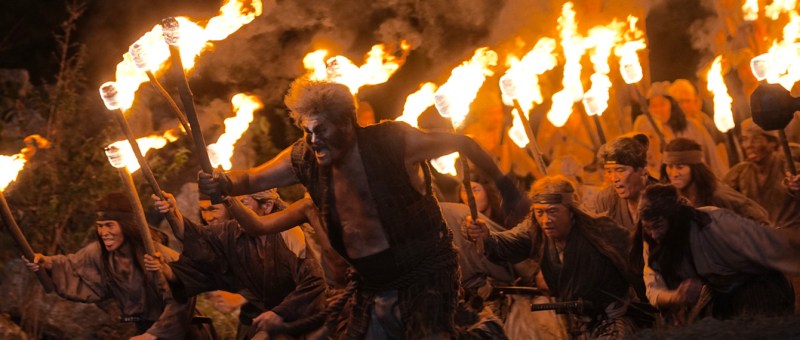
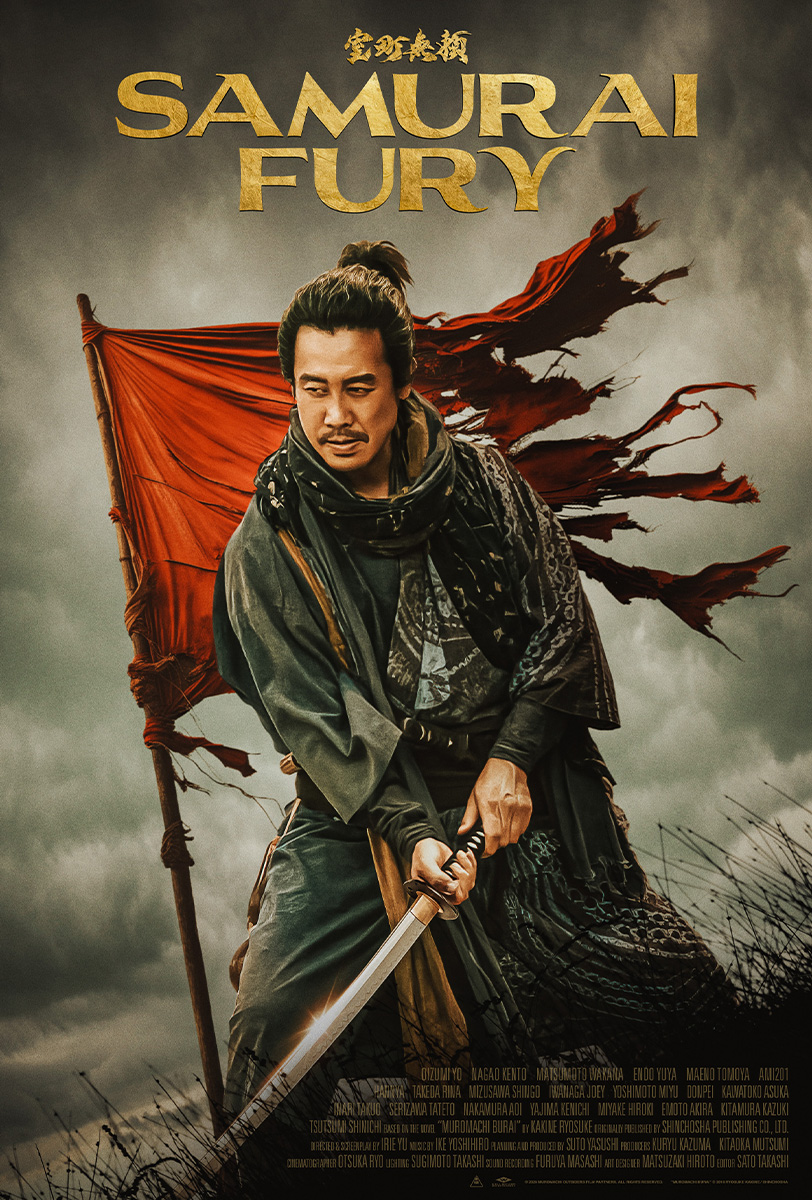
Retitled Samurai Fury (室町無頼, Muromachi Burai) for it’s US release, Yu Irie’s Muromachi Outsiders is indeed a tale of righteous anger though like many jidaigeki the rage is directed towards the corrupt samurai class and wielded by a ronin with a noble heart. Based on a novel by Ryosuke Kakine, it recounts a rebellion that took place five years before the Onin War that would lead to the end the Ashikaga Shogunate and initiate the Sengoku or warring states period that lasted until the Tokugawa era began. 

The cause is, really, the incompetent government of shogun Ashikaga Yoshimasa (Aoi Nakamura) who is largely seen here gazing out at his view from the palace in Kyoto which he is obsessed with rebuilding. Meanwhile, famine has taken hold following a period of drought that ended with a typhoon and flooding of the river Kamo, and the starvation has also led to a plague. Between the lack of food and disease, 82,000 people will die, but the government doesn’t really do anything because they don’t think the lives of peasants are all that important. This is of course very shortsighted because someone has to plant all that rice that gets delivered to the palace and they can’t do that if they’re too busy starving to death. In the opening sequences, peasants are whipped and beaten as they transport a giant rock for the shogun’s new garden, though when it gets there he doesn’t like it. Meanwhile, a giant pile of bodies in approximately the same shape is dumped at the edge of the river where they’re burning the dead.

The farmers are forced to take such onerous jobs for extra money because they can’t produce enough to pay their taxes which the samurai keep putting up. To make up the shortfall, they have to take out loans from usurious monks who seize their property or take their wives and daughters when they can’t pay. A young man pressed into working for debt collectors from the temple is told to kill a man who owed them money but hits the barrel beside him instead and exposes him for keeping his seed grain without which he won’t be able to plant more rice but they’re going to take that anyway which means that in the end everyone is going to starve. A village favoured by the hero, Hyoe (Yo Oizumi), is also subject raids from disenfranchised ronin who’ve taken to banditry to survive. 

Hyoe is also a ronin, but in his life of wandering he’s found a kind of freedom even as he straddles an awkward line, sometimes working with an old friend from the same clan, Doken (Shinichi Tsutsumi), who has turned the other way and is now the security chief for the government in Kyoto with his own gang of bandit dent collectors. Hyoe’s role is, ostensibly, to stop peasant uprisings, which he does, but mostly because he knows they’re pointless and the farmers armed with little more than hoes and stolen armour will simply be massacred, but he’s also secretly plotting a giant rebellion of his own, harnassing the forces of the ronin and the fed up peasants to storm the capital, burn the debt agreements, and rescue the women taken in lieu of payment. 

But to do so means he’ll have to betray his oldest friend and that he likely won’t survive. Still he thinks someone’s got to do something about this rotten world and sees a better one beyond it if only they can throw off the yoke of the samurai class that thinks peasants are the same bugs to squeezed dry under their boots. That’s perhaps why he trains a young successor, knowing that can’t remake the world with just this one assault on the mechanisms of government and that even if they get rid of the drunken fool Lord Nawa (Kazuki Kitamura), someone not all that different will pop up in his place. “Tax is supposed to improve people lives,” one of the revolters screams at a young soldier, not pay for a new wing at the palace, though it’s a lesson the young shogun seems incapable of learning even as the city burns all around him. 

Taking a leaf out of The Betrayal’s book, the climax is a lengthy action sequence in which Hyoe’s apprentice Saizo (Kento Nagao) takes on half the Kyoto garrison single-handed armed only with his staff. Though the themes are common enough for jidaigeki, though in truth jidaigeki mainly refers to films set in the Edo era under the Tokugawa peace, Irie modernises the way battle is depicted to incorporate wuxia-style wirework and rooftop chases along with martial arts training sequences for the young Saizo who learns the way of the warrior from a cackling old man with a long white beard (Akira Emoto) who has also taken in a young Korean woman (Rina Takeda) who was sold to a brothel by her father in just another one of the injustices of the era but has now become a badass archer and another of Hyoe’s righteous avengers. Solidarity is it seems the best weapon, along with biding your time and knowing when to retreat because this is a war that’s never really won but only held back while the powers that be never really learn.


Samurai Fury is released Digitally in the US Oct. 7 courtesy of Well Go USA.

Trailer (English subtitles)

Iwane: Sword of Serenity (居眠り磐音, Katsuhide Motoki, 2019)

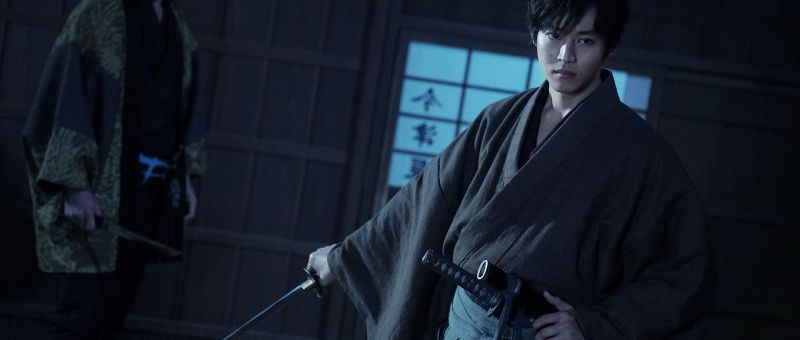
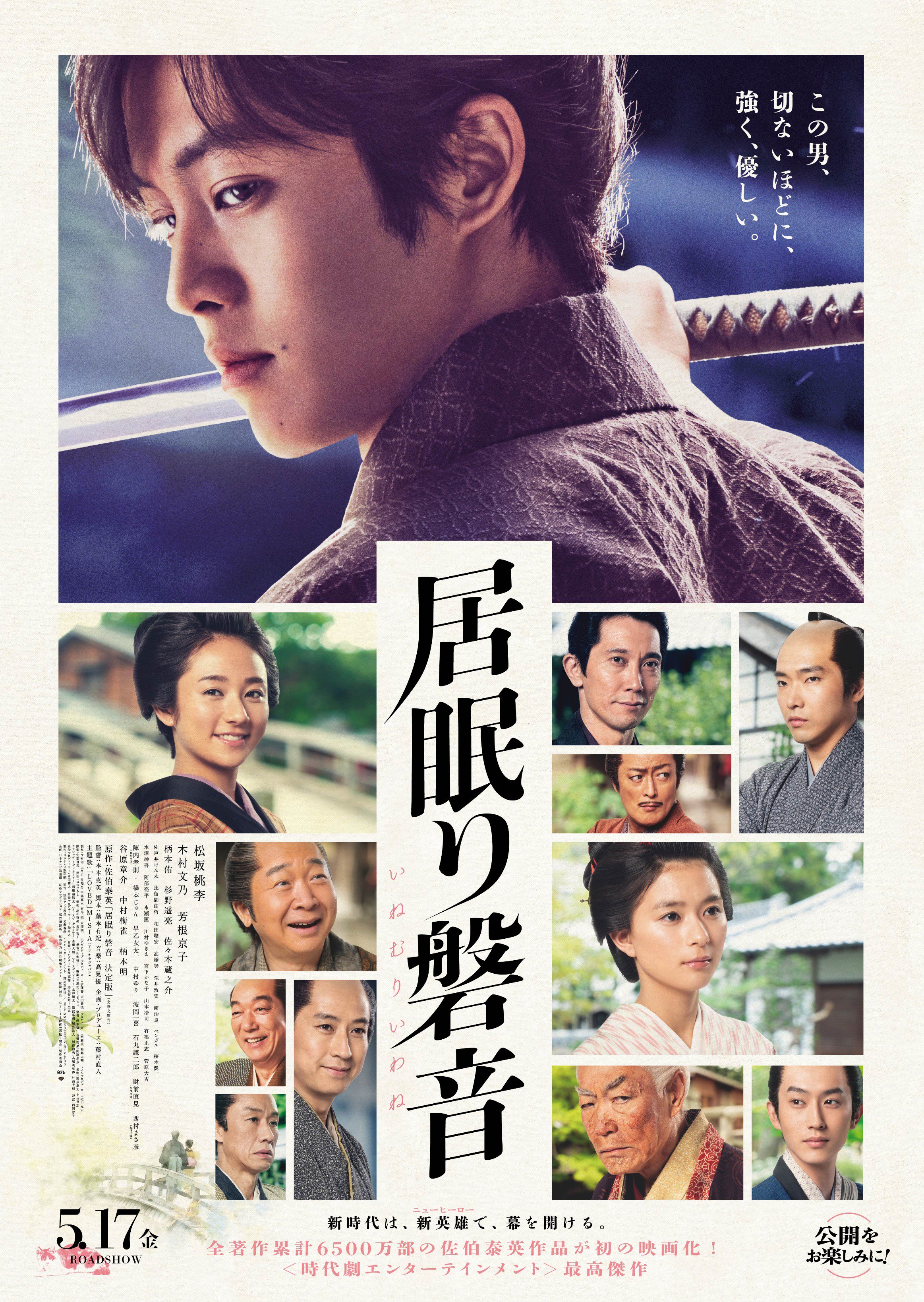
The contradictions of the samurai code conspire against one noble-hearted young man in Katsuhide Motoki’s adaptation of the long running series of historical novels by Saeki Yasuhide, Iwane: Sword of Serenity (居眠り磐音, Inemuri Iwane). Yet this truly serene samurai is a stoical sort, learning to bear his pain with fortitude while standing up for justice in an increasingly corrupt Edo where money rules all while an ascendent merchant class continues to challenge the fiercely hierarchical social order. 

Beginning in 1772 which turned out to be a disastrous year, the tale opens as hero Iwane (Tori Matsuzaka) prepares to return home after completing his three year rotation in Edo in the company of childhood friends Kinpei (Tasuku Emoto) and Shinnosuke (Yosuke Sugino). Shinnosuke is in fact married to Kinpei’s sister Mai, while Iwane will himself be married to Kinpei’s other sister Nao immediately on his return so close are they. As Iwane’s father tells him, there are great hopes for these young men that they can “turn our outdated clan around”, but events will conspire against them. Spoiling the happy homecoming, Shinnosuke is accosted by a drunken uncle who convinces him Mai has been unfaithful in his absence with the consequence that he kills her immediately on his return home. Unable to understand this turn of events, Kinpei confronts his friend but eventually kills him, while Iwane is then forced to kill Kinpei after he goes on murderous rampage in revenge for the wrong done to his sister. 

In trying to mediate the case, the argument is put forward that Shinnosuke acted rashly and should have brought his suspicion to the authorities rather than opting for summary execution. The lord however disagrees, condoning Shinnosuke’s actions under the rationale that to do so would have been considered “weak minded” while as Shinnosuke himself had claimed he acted in accordance with the samurai code in which female adultery is illegal and punishable by death. By contrast, he finds Kinpei’s rashness offensive, insisting that he also should have recognised the legitimacy of his sister’s murder and simply left quietly with her body. Having learned the truth in which his childhood friends became victims of clan intrigue, romantic jealousy, and tragic misunderstandings in this Othello-like plot, Shinnosuke and childhood sweetheart Nao are also consumed by the rashness of samurai law each exiled from their clan and cast adrift in Edo-era society. 

Edo-era society is however also itself corrupt. Some months later, Iwane has returned to Edo as a lowly ronin lodging with a kindly old man, Kinbei, who helps him find a job firstly gutting eel then as a bodyguard at a money exchange which has been receiving anonymous threats they assume are from rival broker Awaya who has hatched a nefarious plan to manipulate the currency market to stop the current Shogun introducing a new unit which can be used in both Edo and Kyoto which would understandably cut into his already corrupt business model. Luckily, Imazuya is an honourable man who backs the new currency plan and wants to do the right thing which makes him a perfect fit for Iwane’s innate sense of justice. “You don’t know the way of the merchant” Awaya snaps at him, suggesting both that the samurai are already on their way down as the merchants rise and that his unwillingness to play dirty will be his downfall. Nevertheless, Iwane is the type to adapt quickly, instantly coming up with a way to play Awaya at his own game and kick his destructive amoral capitalism to the curb. 

Meanwhile, he continues to pine for Nao while drawing closer to Kinbei’s earnest daughter Okon (Fumino Kimura). As we discover Nao is also a victim of an intensely patriarchal social order but through the tragedy that befalls them also finds strength and agency making a life changing decision that allows her to become independent while looking after her family if in the knowledge that the childhood romance she shared with Iwane is a thing of the past. Iwane too agrees that he is trapped in a living hell of guilt and grief, yet choosing to go on living anyway as calm and cheerful as he’d ever been while standing up to Edo-era corruption though uncomfortably enough this time against the destabilising influence of the rising merchant class and therefore in contrast to most jidaigeki reinforcing the legitimacy of the samurai order which has paradoxically also ruined his life with its rigid and implacable social codes. In any case, Motoki’s classic chanbara melodrama has a serenity of its own as the cheerfully laidback hero resolves to live his life by a code of his own free of samurai constraint. 


Trailer (no subtitles)

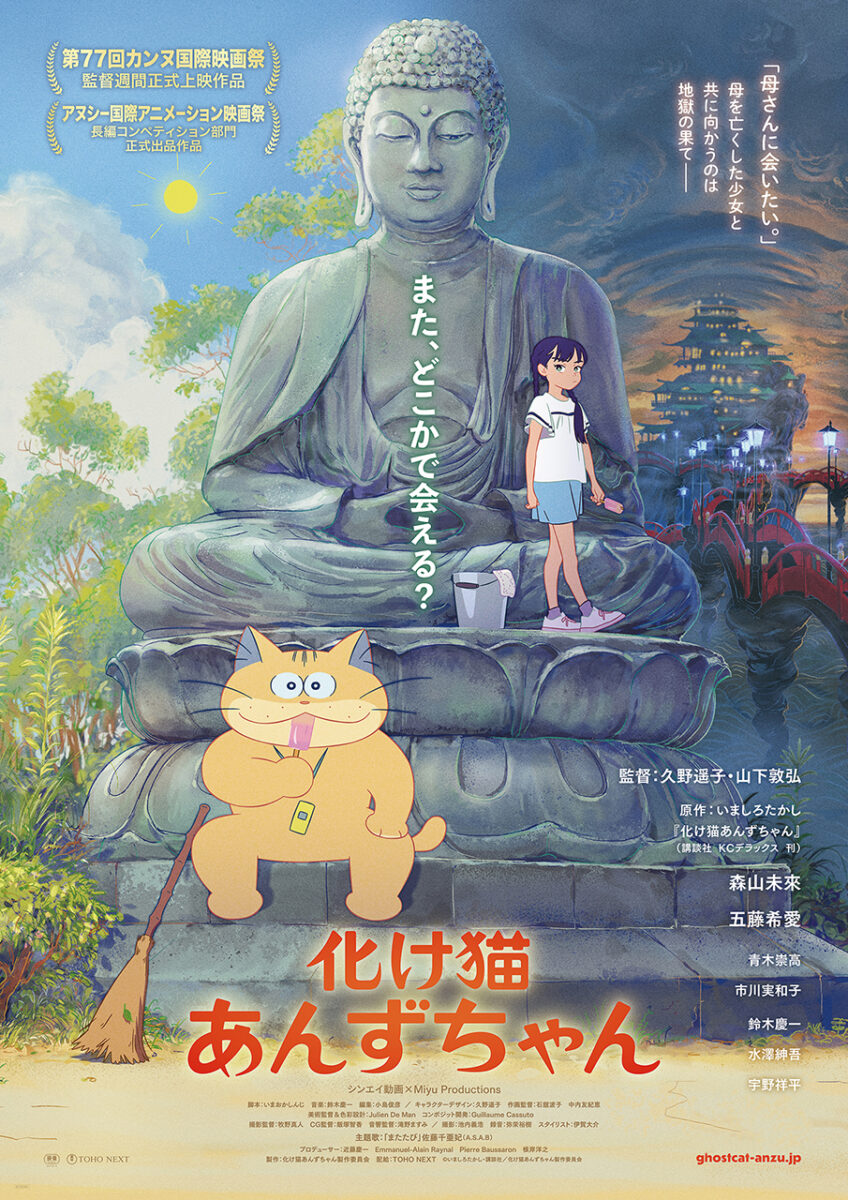
Ghost Cat Anzu (化け猫あんずちゃん, Yoko Kuno & Nobuhiro Yamashita, 2024)

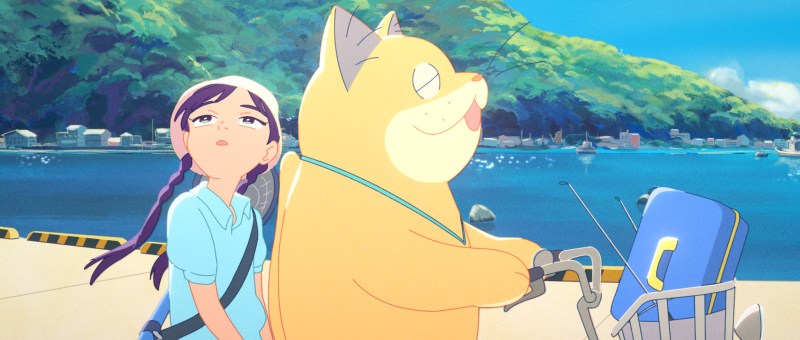
It can be comforting, in a way, to think that this world is deeper than we often think it is and that we live surrounded by ancient spirits who touch our lives in ways we never suspect. All of this is, however, a little more palpable in Iketeru, the town of eternal summer, where the heroine of Yoko Kuno and Nobuhiro Yamashita’s animation Ghost Cat Anzu (化け猫あんずちゃん, Bakemono Anzu-chan) is unceremoniously dumped by her feckless father as he attempts to sort out some persistent trouble with loan sharks. 

Of course, to a girl from Tokyo who hoped to spend the summer break with her cram school crush, being sent to a temple to stay with an estranged grandfather it’s not even clear she has ever met before is not a whole lot of fun. But then as Karin (Noa Goto) says, she’s used to being alone, which might be why she takes against the giant ghost cat, Anzu (Mirai Moriyama), who lives like a human but obviously isn’t one. The funny thing about Iketeru is that no one finds Anzu’s existence odd, if at times troublesome. He’s even patiently arrested by a pair of policemen for not having a proper license for his moped which he didn’t think he needed because, after all, he’s a ghost and also a cat. A pair of little boys who’ve formed their own gang called “The Contrarians” to “defy society” call him “aniki” like some kind of yakuza boss and try to recruit him though being in a gang seems like too much bother for Anzu, which is something he has in common in Karin. 

But the funny thing is, Anzu isn’t really so different from her father in that he too can be somewhat irresponsible. Though he knows he shouldn’t, he spends the money he was keeping for her on pachinko hoping to win big but predictably loses it all. He gets over excited about jobs that pay 3000 yen (£15) a day and overcooks food he’s dropped on the floor because it’ll burn off all the dirt. But like Karin, Anzu can be a little standoffish and it isn’t even until her arrival that he starts to interact with some of the other supernatural creatures in the area who appear to have already set up some kind of club. Having invited them over, Anzu complains they didn’t pay him enough attention and he won’t invite them again while Karin asserts that they seemed “nice”. Though Anzu himself has not yet quite taken to her, the yokai are touched by her tragic circumstances and feelings of abandonment so decide to do what they can to help her. 

Part of Karin’s problem is that she’s still struggling to come to terms with her mother’s death three years previously. Iketeiru calls itself the town of eternal summer, but the summer in Japan is synonymous with the Bon festival during which this world and the other are at their closest and the spirits of the departed may temporarily return. Thus the town itself is a liminal space caught between the living and the dead which the mortal and supernatural co-exist in a very tangible way even if Karin’s eventual descent into hell involves jumping into a broken toilet in a Tokyo columbarium. Even so, she eventually finds herself squaring off against the King of Hell himself in the middle of the Bon festival while straddling the worlds of the living and dead and discovering the will to go on living which is perhaps what the town’s name may actually mean. 

In that sense, it’s a place Karin discovers as much as it’s home to cure her sense of rootless abandonment. The rotoscoped animation and live-recorded dialogue lend a sense of uncanniness to the beautifully animated backgrounds which effortlessly evoke a sense of serenity in the timelessness of a summer in small-town Japan. The juxtaposition of the ancient and the modern, Jizo playing Nintendo Switch, yokai working at the golf course which is perhaps a manifestation of the disruption wrought on the natural world by human endeavour, echo a kind of cosmic irony but also an odd kind of warmth in the strangeness of the world around us with its immortal cat spirits and friendly supernatural creatures that seems a far cry from the sterility of the city with its violent loan sharks and indifferent friends. 


Trailer (English subtitles)

Father of the Milky Way Railroad (銀河鉄道の父, Izuru Narushima, 2023)

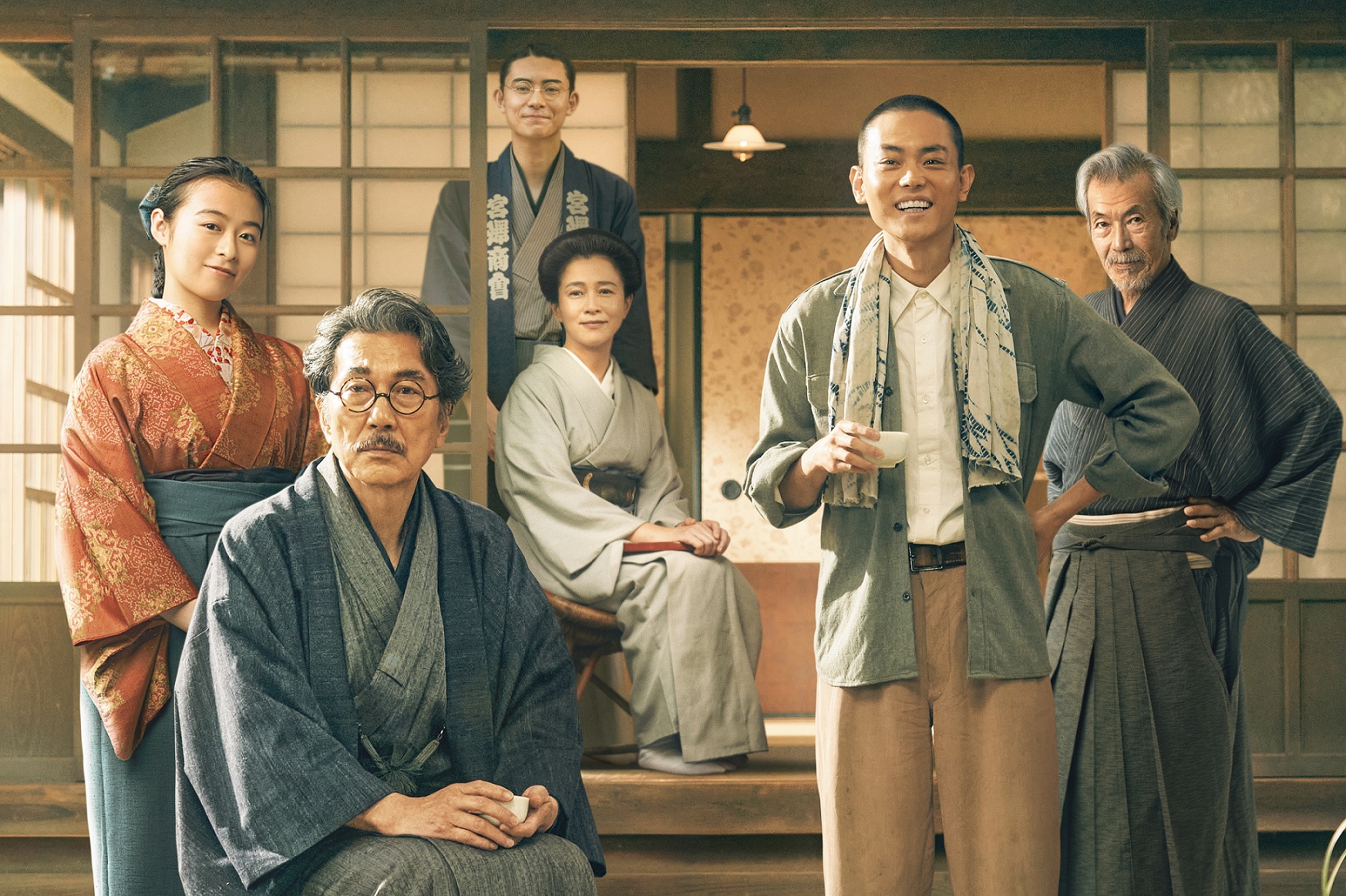
Generations of Japanese children have grown up with Kenji Miyazawa’s much loved classic Night on the Galactic Railroad but Miyazawa remained largely unknown in his lifetime and passed away from pneumonia at the young age of 37 in 1933 with the book that would make his name still unpublished. His story has been told before, most notably by Kazuki Omori in 1996’s Night Train to the Stars, but Izuru Narushima’s Father of the Milky Way Railroad (銀河鉄道の父, Ginga Tetsudo no Chichi), adapted from the Naoki Prize-winning novel by Yoshinobu Kadoi, takes a slightly different angle in exploring the life of his generally supportive father, Masajiro (Koji Yakusho).

As he’s fond of saying, Masajiro is a product of the modern era and a very modern father even in some ways by the standards of today. The film opens (and closes) with him on a train, this time hurrying home having received a telegram informing him that his first child has been born. So excited is he that he offends his own father by running past him on the way to see the baby without offering the proper greeting. Kisuke (Min Tanaka) is indeed more of a traditionalist raised with feudal values that are fast becoming out of date in the new society. As the head of the household, it’s he who gives the baby his name, Kenji, written with the characters for intelligence and healing which will indeed define his character if leaving him somewhat at odds with his society. 

Such a devoted father, Masajiro breaks with tradition and accepted gender roles in insisting on accompanying Kenji to hospital when he is taken ill despite his father’s admonition that caring for the sick is a role reserved for women. Kisuke also tells him his decision to have Kenji educated is wrongheaded, that literature and the arts only confuse a man and may prove more ruinous to him than drink or women. Annoyingly, Kisuke may have a point in that on his return from middle school Kenji (Masaki Suda) immediately rejects the family’s business as pawnbrokers having read too many Russian novels in which they are depicted as exploiters of the poor. He decries Masajiro’s justification that they support farmers who would otherwise be unable to access other forms of financial help such as bank loans and be forced to sell their daughters into sex work as mere sophistry. Masajiro may share some of his concerns, but remains in part wedded to some aspects of feudalism in insisting that as the oldest son Kenji has no choice other than to take over the family pawn shop.

Nevertheless, he also educates his daughter, Toshi (Nana Mori), who later begins working as a school teacher and is able to convince him to allow Kenji to further his studies only for Kenji to suddenly announce he wants to go to agricultural college to better understand their customers who are after all predominantly farmers. Having sent him away to be educated, Masajiro laments that Kenji knows “nothing of the world” after seeing him taken in by an obvious sob story from a duplicitous customer reflecting that his liberal education may have given him ideas that prevent him from living successfully in the society in which he lives. Kenji continues to resist the idea of taking over the pawnbroker’s while evidently unsuited to it before worrying his family further by becoming dangerously obsessed with radical new Buddhist sect Nichiren. 

It’s with this that Masajiro cannot really help him and begins to lose his patience as Kenji gives in nihilistic despair believing that nothing he does has any real meaning. His literary gifts are appreciated only in the wake of a tragedy that reconnects him with his childhood self while finally freeing Masajiro to embrace his son’s natural gifts as a writer rather than trying to force him to take over the family business. In truth, the film barely touches on the novel from which it takes its title if subtly hinting at it and bookending itself with the celestial train motif, but rather takes its lead from one of Miyazawa’s best known poems about his desire to become a better, more selfless, less self-defeating person that is perhaps inspired by his “modern” father’s “new” ideas of a society founded above all else on love. Perhaps it’s not so bad to know nothing of the world after all.  


Father of the Milky Way Railroad screens in New York July 29 as part of this year’s JAPAN CUTS.

Original trailer (no subtitles)

Family of Strangers (閉鎖病棟 それぞれの朝, Hideyuki Hirayama, 2019)

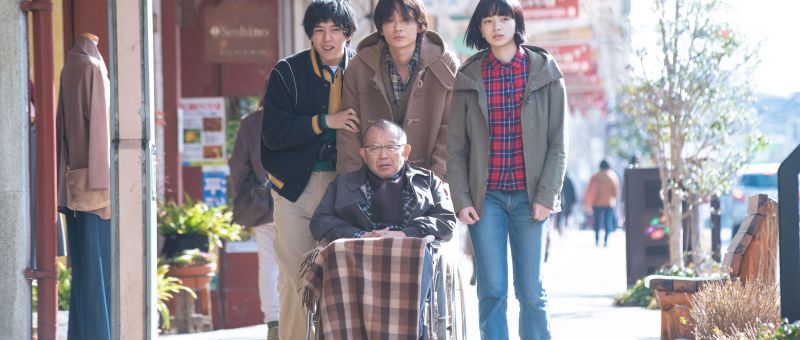
“Things happen to everyone” the hero of Hideyuki Hirayama’s Family of Strangers (閉鎖病棟 それぞれの朝, Heisa Byoutou: Sorezore no Asa, AKA Closed Ward) explains, not in an accusatory sense or attempt to limit someone else’s trauma response but in a gentle spirit of empathy, a reminder that everyone has their own load to carry and theirs are heavier than most. Empathy is indeed a minor theme of Hirayama’s drama as his wounded protagonists eventually find the strength to allow themselves to live again in the unconditional solidarity of their newly found family in defiance of the internalised shame and external stigma that plagues them in an admittedly conformist society. 

Hirayama opens with a flashback, shot in muted colour, as a man, Hide (Tsurube Shofukutei), is marched slowly towards the execution chamber where he is eventually hanged but, inconveniently for the prison authorities, does not die. Lacking a clear precedent for such an unusual event, they are at a loss as to how to proceed while Hide does not exactly seem overjoyed in his improbable survival. As hanging him again would be cruel and simply letting him off as if reborn to live a new life they feel not in the interests of justice, they opt for a fudge, palming the now wheelchair-using Hide off on the hospitals system by placing him in the secure ward of a psychiatric institution. 

A quiet man keeping himself to himself, Hide patiently crafts ceramics and meditates on his crime keeping others at arm’s length as if believing himself unworthy of human society. He may have been sentenced to death for something truly unforgivable, but he is not mentally ill and does not really belong in the hospital whereas many of the other patients are self-committals who are technically free to leave at a time of their own choosing. Chuya (Go Ayano), a young man with schizophrenia, has more or less learned to live with his condition and exercises a greater degree of personal freedom, often venturing into town and bringing back various items he cynically sells to others on the ward. He could leave if he wanted to, but stays partly out of a sense of internalised shame and partly in fear of the outside world. Yuki (Nana Komatsu), meanwhile, an 18-year-old woman committed by her mother (Reiko Kataoka) after becoming worryingly withdrawn, has little personal agency, first placed on the ward and then removed from it neither with her full consent. 

Though we can see that the hospital is a largely positive, supportive place where the patients are well cared for we do not see a great deal of treatment practices and it is in someways surprising that Yuki is allowed to leave in the company of a man who is quite clearly violent and abusive even if we can also infer that she herself has remained largely silent as regards the nature of her trauma. Her silence is perhaps her means of both defence and resistance with her first words offered to Hide largely because he does not ask her for them, merely sitting by giving her the space to choose to speak or not to. Despite his caution that the longer one stays on the ward the more one begins to think of oneself as a patient, she begins to think of the hospital of her safe place and the other patients as her surrogate family, touched by an old woman’s radiant happiness as she helps her back to her room mistaking her for her granddaughter. 

Yet as much as the hospital works for her, it does not necessarily work for others as in the case of Shigemune (Kiyohiko Shibukawa) whose antisocial and violent tendencies often endanger other patients not least because of lax supervision and questionable decisions made by members of staff. A direct parallel is perhaps being drawn between the jail and the ward, Chuya frightened he may never leave while Hide believes he does not deserve to and Yuki longs to stay only to have her new safe place ruined by another predatory man of violence. Yet there is also a sense that society views the hospital as a place to dump those it feels to be problematic, Hide hidden away in embarrassment, Chuya rejected by his family, and Yuki betrayed by a mother who has come to see her as a rival. Shopkeepers look at them askance, not altogether happy that “even crazy people have rights these days” while the trio struggle to accept themselves as having a right to a happier future even as they begin to bond in a newfound sense of family. While the closing scenes may engage in an uncomfortable ableism, there is an undoubtable sense of warmth and compassion in Hirayama’s egalitarian sense of solidarity as his wounded protagonists find strength in faith reflected in others to shake off their sense of internalised shame and claim their right to life in an often hostile society. 


Family of Strangers streams in Germany 1st to 6th June as part of this year’s Nippon Connection.

Original trailer (English subtitles)

Farewell: Comedy of Life Begins with a Lie (グッドバイ~嘘からはじまる人生喜劇~, Izuru Narushima, 2019)

“You wrote that a man should be pure and honest” a conflicted editor reminds his friend, “yes”, he replies, “but that was fiction.” Osamu Dazai is not particularly remembered for his sense of humour, but Farewell: Comedy of Life Begins with a Lie (グッドバイ~嘘からはじまる人生喜劇~, Goodbye, Uso kara Hajimaru Jinsei Kigeki) adapted from a play by Keralino Sandrovich (Crime or Punishment?!?) inspired by his final and in fact unfinished novel Goodbye is a dark-hearted farce grafting ‘30s screwball comedy onto an ironic satire of heartless post-war capitalism through the prism of one man’s emotional cowardice. 

As the black and white newsreel-style opening informs us, literary magazine editor Tajima (Yo Oizumi) made a bit of money on the black market amid post-war chaos but is beginning to feel conflicted about his Tokyo existence especially after receiving a postcard from his small daughter Sachiko in provincial Aomori whom he hasn’t seen since her infancy. His problem is that he’s an inveterate womaniser with several mistresses on the go at once who ironically all already know that he’s a married man, to that extent “honest” at least, but remain unaware of each other. Suddenly wanting to reform his image and become a proper father to his little girl, he’s realising he ought to sort out his problematic love life but Tajima is also the sort of man who can’t bear unpleasantness and is too frightened to break up with his lady friends in case they cry. His writer friend, Rengyo (Yutaka Matsushige), comes up with a cunning ruse – find a pretty woman to pretend to be his long absent wife returned and the mistresses will most likely retreat voluntarily. Tajima decides to do just that on catching sight of a beautiful lady through a peephole in the gents at a bathhouse only she turns out to be someone he already knows, manly black-markeeter Kinuko (Eiko Koike) who secretly loves dressing up in the latest fashions. 

Kinuko is in a sense everything Tajima is not. An abandoned child, she’s learned to take care of herself and is strong both physically and emotionally. She agrees to help him with his nefarious plan because he offers to pay her handsomely, feeding her well in her copious desire for food which perhaps indicates her strong desire to live in a society where many are starving. She’s a black-marketeer because that’s all that’s left for her to be and perhaps has made her peace with exploiting the desperation of others in the knowledge that they also need the service she provides. In any case, she won’t let herself be trampled, frequently getting into fights with male dealers and later throwing Tajima off a balcony when he follows some bad advice from Rengyo and attempts to seduce her in the hope that then he wouldn’t have to pay her for participating in his scheme to rid himself of extraneous women. 

Yet it’s also clear that it’s women who are most at the mercy of the times, Tajima’s first mistress being a heartbroken war widow (Tamaki Ogawa) making a living as a florist who later attempts suicide after saying “Goodbye” to Tajima and the possibility of romantic salvation from post-war hopelessness (though her involvement with him does perhaps eventually lead her to that). The second mistress is a young painter (Ai Hashimoto) who approached him for work on the magazine attempting to support herself while her brother (Sarutoki Minagawa) remained in a Siberian labour camp, and the third is a self-assured doctor (Asami Mizukawa) looking perhaps for company though seemingly aware that Tajima is a weak-willed, unreliable man. His wife, Shizue (Tae Kimura), meanwhile, has become fed up with waiting for him to accept his male responsibility as a husband and father and unbeknownst to him his plans to keep her looked after may have backfired. 

Yet strangely Kinuko finds herself falling for the “pathetic” Tajima without quite knowing why while he perhaps begins to accept that maybe what he needs is a capable woman to look after him because he is after all too cowardly to look after himself. He’s fond of saying that the war changed everything for everyone, but she points out that her life has always been one of scrappy survival and now perhaps they are all equal in that. The post-war world however seems to be in permanent decline, an associate of Tajima’s (Gaku Hamada) eventually becoming accidentally rich, buying a suburban mansion, dressing in a garish white suit and snarling with a mouth full of gold teeth as he advances that money is everything and can even love can be bought. In this at least it turns out he may be wrong. Taking a “detour” allows Tajima to shed his commitment phobia and finally say “Goodbye” to post-war limbo in embracing both a desire to live and the possibility of enduring love. 


Farewell: Comedy of Life Begins with a Lie streamed as part of the 2021 Japan Foundation Touring Film Programme.

Original trailer (no subtitles)

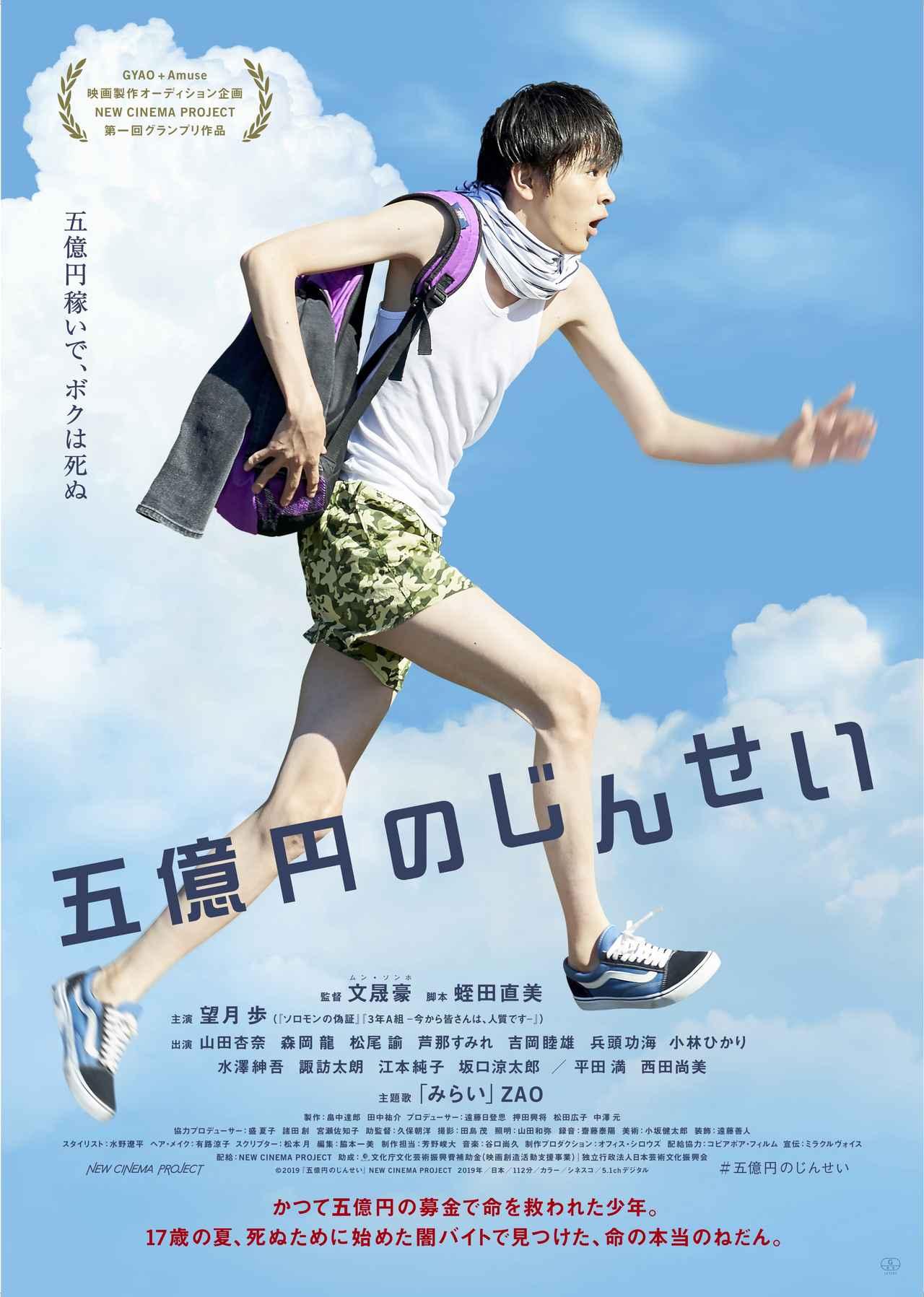
5 Million Dollar Life (五億円のじんせい, Moon Sung-ho, 2019)

5 Million Dollar Life posterIs it possible to live a life without “debts” of one kind or another or are we all just living on loans? The hero of Moon Sung-ho’s 5 Million Dollar Life (五億円のじんせい, Gooku Yen no Jinsei) wants to find out, not least because he feels himself indebted to those who have helped him in the past and struggles with the pressure of living up to their expectation. An unexpected source provides some helpful advice in pointing out that “value” in one sense at least is not something you’re free to decide for yourself but is defined by others. Then again, not being certain of your own worth makes it impossible to claim your rightful place in society as someone as worthy of love and respect as any other.

When Mirai (Ayumu Mochizuki) was six, his family found out he had a congenital heart defect and would need to go abroad for a transplant. His community rallied around him and raised five million dollars so he could go to America for treatment. The heartwarming story also made him the star of an ongoing documentary in which he’s interviewed on television every year so those who contributed to saving his life can find out how he’s getting on. Becoming a local celebrity and an accidental TV star is obviously a lot of pressure for any young man, but Mirai feels acutely burdened by the responsibility of “repaying” the kindness that was offered to him. He doesn’t feel his life was worth five million dollars and knows he is unlikely to repay their “investment”. He is after all just “ordinary”. He won’t win a Nobel prize or cure cancer, all he can do is live his life in the normal way but that’s hard when it feels like everyone is secretly looking over his shoulder and waiting for him to make a mistake.

Meanwhile he’s also become a role model to the suicidal Chiharu (Hikari Kobayashi) who doesn’t “see the value in life”  and feels that “death is glorious” because people can hate you while you’re alive, but they’ll love you when you’re gone. Mirai gets where she’s coming from. He longs for an ending too, if only to reject the responsibility he feels towards those who saved his life. Attacked by a troll online, he takes up the challenge to make the five million dollars back and then kill himself to bring an end to the whole affair but quickly discovers that it’s a lot harder to make five million dollars than he thought.

Neatly taking place during the last summer of high school, Mirai’s odyssey sends him on an odd trek across working class Japan as he finds himself alone and without money or means to support himself. At only 17, he can’t even stay in a hotel on his own and so he winds up becoming homeless but is taken in by a nice old man who claims he decided to help him because he bought an umbrella with his last pennies rather than pinching someone else’s. Though he is often exploited and betrayed by those who take advantage of his goodness, that same quality finds an answer in others who, sometimes despite themselves, want to help him because he seems like the sort of person who needs help.

This idea finds encapsulation in the surprisingly astute words of wisdom Mirai receives from a petty gangster he meets after getting involved with sex work. The gangster, who starts off by telling him that he’s making a mistake selling himself short when it’s the customer who decides what his “value” is, later explains that it’s not so much that the world is divided into people who are nice and people who aren’t, but that some people are “worth” being nice to and Mirai, for one reason or another, is one such person who thrives on kindness.

Mirai’s desire to quantify his life by putting a price on it may be mistaken, as proved by the sad case of a family committing suicide because of monetary debt, but what he realises is that people help because they want to and they don’t necessarily expect anything in return other than kindness. If he wants to find a way to repay them, he’ll have to figure it out on his own terms first, but all they really wanted they wanted from him was that he live his life as happily as possible. 5 Million Dollar Life goes to some pretty dark places, but always maintains a healthy cheerfulness as Mirai goes on his strange odyssey looking for the “value” in being alive and discovering that it largely lies shared kindnesses and unselfish connection.


5 Million Dollar Life screens on 11th July as part of the 2019 New York Asian Film Festival.

Original trailer (no subtitles)

We Are Little Zombies (ウィーアーリトルゾンビーズ, Makoto Nagahisa, 2019)

Little Zombies poster“Reality’s too stupid to cry over” affirms the deadpan narrator of Makoto Nagahisa’s We Are Little Zombies (ウィーアーリトルゾンビーズ), so why does he feel so strange about feeling nothing much at all? Taking its cues from the French New Wave by way of ‘60s Japanese avant-garde, the first feature from the award winning And So We Put Goldfish in the Pool director is a riotous affair of retro video game nostalgia and deepening ennui, but it’s also a gentle meditation on finding the strength to keep moving forward despite all the pain, emptiness, and disappointment of being alive.

The “Little Zombies”, as we will later discover, are the latest tween viral pop sensation led by bespectacled 13-year-old Hikari (Keita Ninomiya). Recounting his own sorry tale of how his emotionally distant parents died in a freak bus accident, Hikari then teams up with three other similarly bereaved teens after meeting at the local crematorium where each of their parents is also making their final journey. Inspired by a retro RPG with the same title, the gang set off on an adventure to claim their independence by revisiting the sites of all their grief before making themselves intentionally homeless and forming an emo (no one says that anymore, apparently) grunge band to sing about their emotional numbness and general inability to feel.

Very much of the moment, but rooted in nostalgia for ages past, Little Zombies is another in a long line of Japanese movies asking serious questions about the traditional family. The reason Hikari can’t cry is, he says, because crying would be pointless. Babies cry for help, but no one is going to help him. Emotionally neglected by his parents who, when not working, were too wrapped up in their own drama to pay much attention to him, Hikari’s only connection to familial love is buried in the collection of video games they gave him in lieu of physical connection, his spectacles a kind of badge of that love earned through constant eyestrain.

The other kids, meanwhile, have similarly detached backgrounds – Takemura (Mondo Okumura) hated his useless and violent father but can’t forgive his parents for abandoning him in double suicide, Ishii (Satoshi) Mizuno) resented his careless dad but misses the stir-fries his mum cooked for him every day, and Ikuko (Sena Nakaijma) may have actually encouraged the murder of her parents by a creepy stalker while secretly pained over their rejection of her in embarrassment over her tendency to attract unwanted male attention even as child. The kids aren’t upset in the “normal” way because none of their relationships were “normal” and so their homes were never quite the points of comfort and safety one might have assumed them to be.

Orphaned and adrift, they fare little better. The adult world is as untrustworthy as ever and it’s not long before they begin to feel exploited by the powers intent on making them “stars”. Nevertheless, they continue with their deadpan routines as the “soulless” Little Zombies until their emotions, such as they are, begin inconveniently breaking through. “Despair is uncool”, but passion is impossible in a world where nothing really matters and all relationships are built on mutual transaction.

Mimicking Hikari’s retro video game, the Zombies pursue their quest towards the end level boss, passing through several stages and levelling up as they go, but face the continuing question of whether to continue with the game or not. Save and quit seems like a tempting option when there is no hope in sight, but giving in to despair would to be to let the world win. The only prize on offer is life going on “undramatically”, but in many ways that is the best reward one can hope for and who’s to say zombies don’t have feelings too? Dead but alive, the teens continue their adventure with heavy hearts but resolved in the knowledge that it’s probably OK to be numb to the world but also OK not to be. “Life is like a shit game”, but you keep playing anyway because sometimes it’s kind of fun. A visual tour de force and riot of ironic avant-garde post-modernism, We Are Little Zombies is a charmingly nostalgic throwback to the anything goes spirit of the bubble era and a strangely joyous celebration of finding small signs of hope amid the soulless chaos of modern life.


We Are Little Zombies was screened as part of the 2019 Nippon Connection Film Festival.

Original trailer (English subtitles)

Makoto Nagahisa’s short And So We Put Goldfish in the Pool

Music videos for We Are Little Zombies and Zombies But Alive

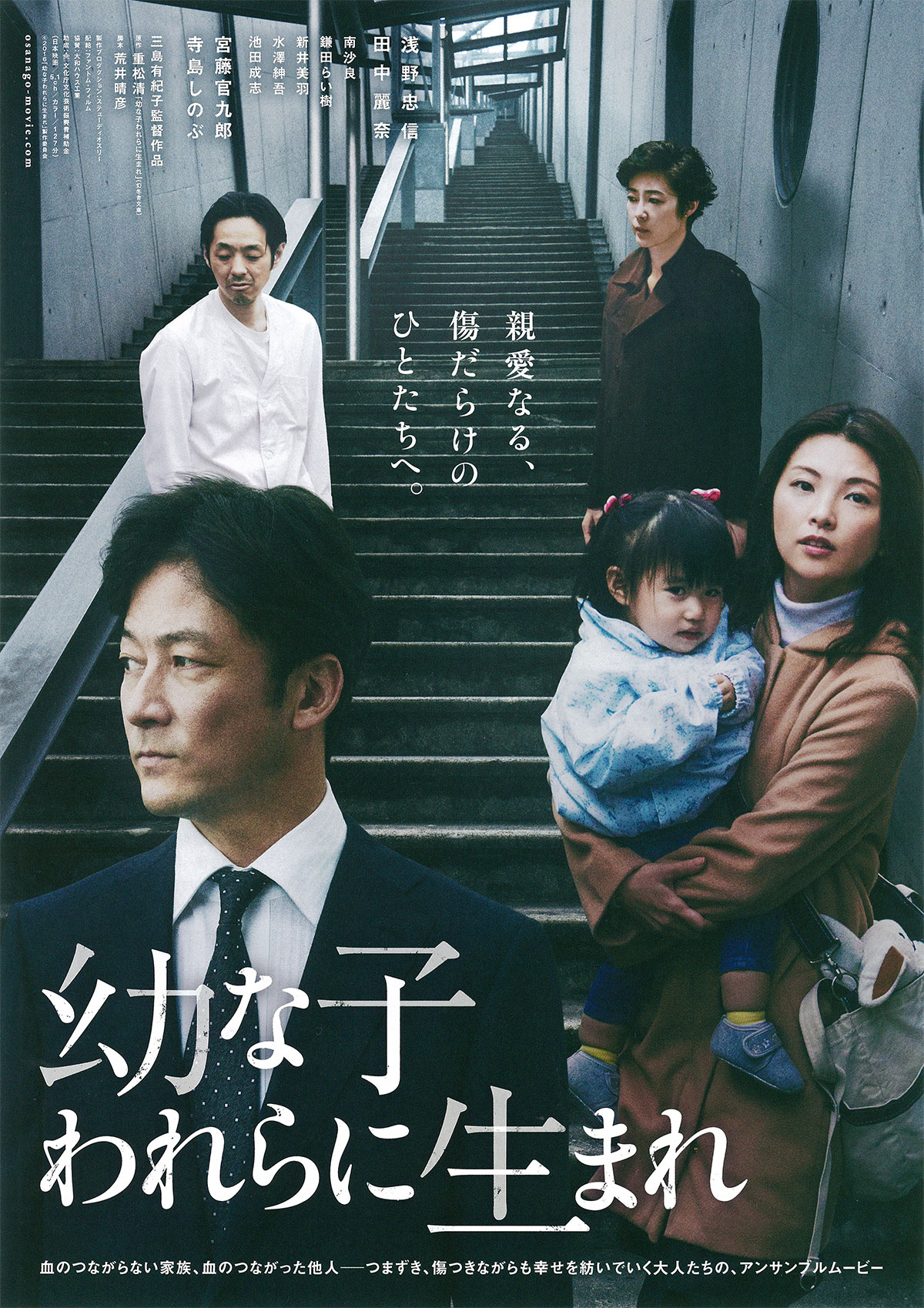
Dear Etranger (幼な子われらに生まれ, Yukiko Mishima, 2017)

Dear Etranger posterThe family drama has long been considered the representative genre of Japanese cinema, but with the days of Ozu long gone the family itself has become a subject for reappraisal. Yukiko Mishima’s Dear Etranger (幼な子われらに生まれ, Osanago Warera ni Umare) is the latest to take a scalpel to the nation’s basic social unit and ask what the word “family” means in an ever changing social landscape. In an Ozu picture, one family must be broken for another to be formed – this is the way of things and in the end must be accepted if with sadness, but does it really need to be this way or is there room for more as connections become less easy to define?

Makoto Tanaka (Tadanobu Asano) separated from his first wife some time ago and still spends time with his daughter, Saori (Raiju Kamata), though only a few times a year. Four years ago he married another woman, Nanae (Rena Tanaka), who had also been married before and has two children – Kaoru (Sara Minami) and Eri (Miu Arai). Nanae has recently discovered she is pregnant and is thrilled to bits to add to their family, but Makoto is conflicted. He liked the family as it was and worries that the new baby will place a wedge between himself and his step-daughters, that they may suddenly feel themselves pushed out and not really part of the new family that is being forged by a child who has a blood relation to both their parents rather than just one.

In truth, family dynamics aren’t all Makoto currently has to worry about. A 40-year-old man, he’s also hitting the scrap heap at work – rather than laying people off, they’re transferring them to unpleasant jobs in the hope they’ll resign. A lifelong salaryman, Makoto has been sent to the packing warehouse where his every move is logged on computer and he’s rated for speed. This is partly his own “fault”. Rather than play the salaryman game, Makoto wanted to be a family man. He doesn’t work weekends or overtime, he takes public holidays off, and never stays out late drinking with colleagues – all things which mark your card as an antisocial shirker in workaholic Japan.

Makoto’s superior, warning him about the imminent transfers, criticises his attitude. He tells him that he doesn’t think spending time with his children is his “job” as a father. He sees his responsibility as one of providing a role model and he thinks the best way to do that is to be seen working hard as a “respectable” member of society. Makoto couldn’t disagree more. He works to rule, but wants to be the sort of father that’s there for his kids, not just an authoritarian figure who comes home late smelling of booze and throws his weight around. He knows that as the children grow up they’ll grow away from him and won’t want to hang out with dad anymore, so he wants to spend time with them now while he still can.

Makoto’s intense desire to be a family man is perhaps unusual in Japan where men channel their ambition into work and women are (still) expected to channel theirs into the home. It is therefore doubly painful for Makoto when his elder step-daughter, Kaoru, heading into a difficult age, suddenly rejects him on hearing about the new baby. Despite the fact that Kaoru’s biological father (Kankuro Kudo) was violent towards both her and her mother, Kaoru begins to insist on seeing him, complaining that it’s unfair to be forced to live with “a stranger”. On one level, Kaoru is at the age at which most young women begin to find their father annoying and embarrassing, but her resentment is also informed by a fear of abandonment and cultural doubt about her place in a still atypical family, unconvinced that it’s possible for a man to become a father to a child that’s not his own by blood.

Blood ties still seem to trump all in most people’s minds, but bureaucracy plays its part too. Makoto still insists on making time to see Saori – something which is sadly unusual in Japan where divorce usually results not only in the children losing contact with the absent parent but also the entirety of an extended family. Kaoru doesn’t quite like it that Makoto does this, she feels almost betrayed as if he’s choosing his biological child over her and that continuing to associate with Saori means he hasn’t fully committed to her family. There seems to be an idea that the family unit is a distinct bubble and one can’t be inside more than one at a time, just as one can’t be listed on more than one “family register”. When an emergency occurs and Saori needs to get a lift from Nanae who has Eri in the back of the car, she isn’t sure if it’s OK for her to get in even with her father with her. She suddenly feels awkward, as if her presence in his car with his new family is inappropriate. None of these people know each other – the existence of a parallel family is so embarrassing as to be “unseen”, buried like a scandalous secret and kept entirely separate to avoid any cross-contamination. When Eri asks who Saori is, awkward silence prevails until she is forced to introduce herself as a “friend” of her father’s – something he doesn’t bother to correct until the drive home when another encounter has pushed him into reconsidering what it means to be a “father”. 

Makoto’s strong desire for acceptance and for forging a “family” that is “his” may perhaps seem selfish and possessive, yet he also tries to react with patience and empathy towards others in his position. He tries to be patient with Kaoru, advising her that he doesn’t think meeting her “real” dad is a good idea but if it’s what she wants he’ll try to make it happen. Likewise, he is grateful to Saori’s stepfather for raising his daughter when he wasn’t able to. Finally the walls begin to dissolve and it stops being about who belongs on which bit of paper and starts being about connections forged through love and understanding. The new baby, rather than forcing everyone apart, begins to bring them together, each joined by a feeling of joy and responsibility towards the new life to which they are all connected. 


Screened at Nippon Connection 2018.

Original trailer (no subtitles)

The Scythian Lamb (羊の木, Daihachi Yoshida, 2017)

Scythian Lamb posterSometimes life hands you two parallel crises and allows one to become the solution to the other. So it is for the bureaucrats at the centre of Daihachi Yoshida’s The Scythian Lamb (羊の木, Hitsuji no Ki). The prisons are overcrowded while rural Japan faces extinction thanks to depopulation. Ergo, why not parole some of those “low risk” prisoners whose problems have perhaps been caused by urban living and lack of community support on the condition that they move to the country for a period of at least ten years and contribute to a traditional way of life. The prisoners get a fresh start where no one knows them or what they might have done in the past, and the town gets an influx of new, dynamic energy eager to make a real go of things. Of course, there might be some resistance if people knew their town was effectively importing criminality, but that’s a prejudice everyone has an interest in resisting so the project will operate in total secrecy.

Not even civil servant Tsukisue (Ryo Nishikido), who has been tasked with rounding up the new recruits, was aware of their previous place of residence until he started to wonder why they were all so unusual and evasive. Tsukisue likes to think of himself as an open-minded, kind and supportive person, and so is disappointed in himself to feel some resistance to the idea of suddenly welcoming six convicts into his quiet little town, especially on learning that despite being rated “low risk” they are each convicted murderers. Thus when a “murder” suddenly happens in the middle of town, Tsukisue can’t help drawing the “obvious” conclusion even if he hates himself for it afterwards when it is revealed the murder wasn’t a murder at all but a stupid drunken accident.

The ex-cons themselves are an eccentric collection of wounded people, changed both by their crimes and their experiences inside. Many inmates released from prison find it difficult to reintegrate into society, especially as most firms will not hire people with criminal records which is one of the many reasons no one is to know where the new residents came from. Yet, there are kind and understanding people who are willing to look past the unfortunate circumstances that led to someone finding themselves convicted of a crime such as the barber (Yuji Nakamura) who reveals his own difficult past and happiness in being able to help someone else, or the woman from the dry cleaners (Tamae Ando) who is upset by other people’s reaction to her new recruit who, it has to be said, looks like something out of Battles without Honour. Tsukisue doesn’t know anything about these people save for the fact they’ve killed and has, unavoidably, made a judgement based on that fact without the full details, little knowing that one, for example, killed her abusive boyfriend after years of torture or that another’s crime was more accident than design.

Tsukisue later becomes friends with one of the convicts, Miyakoshi (Ryuhei Matsuda), whose distant yet penetrating stare makes him a rather strange presence. Miyakoshi is the happiest to find himself living in the small coastal town, enjoying the lack of stimulation rather than resenting the boredom as some of the other new residents do. Despite his obvious inability to “read the air”, Miyakoshi is quite touched by Tsukisue’s kindness and by the way he treated him as a “normal” person despite his violent criminal past, excited to have made a real “friend” at last. Trouble begins to brew when Miyakoshi joins Tsukisue’s garage band and takes a liking to another of its members – Aya (Fumino Kimura), another returnee from Tokyo with a mysterious past though this time without a prison background. Tsukisue has had a long standing crush on Aya since high school but has always been too shy to say anything. He thought now was his chance and is stunned and irritated to realise Miyakoshi might have beaten him to it and, even worse, given him another opportunity to disappoint himself though doing something unforgivable in a moment of pique.

The bureaucrat in charge of the scheme wanted it kept secret in part because he was afraid the criminals might find each other and start some sort of secret murderer’s club (betraying another kind of prejudice) which actually turns out not to be so far fetched, though the main moral of the story is that kindness, understanding, and emotional support go a long way towards keeping the peace. Meanwhile, another of the convicts has taken to “planting” dead animals inspired by a plate she finds on a refuse site featuring a decoration of a “Scythian Lamb” – a plant that grows sheep which die when severed from their roots, and the evil fish god Nororo sits atop the cliffs in reminder of the perils of the sea. The Scythian Lamb is a poignant exploration of the right to start again no matter what might have gone before or how old you are. It might not always be possible to escape the past, and for some it may be more difficult than others, but the plant withers off the vine and there’s nothing like good roots for ensuring its survival.


Screened at the 20th Udine Far East Film Festival.

Original trailer (English subtitles)