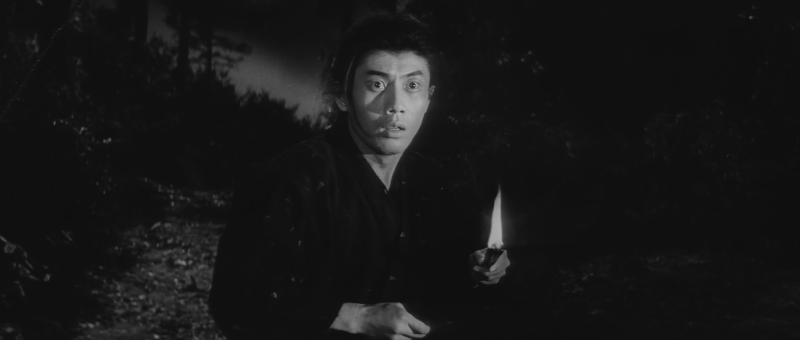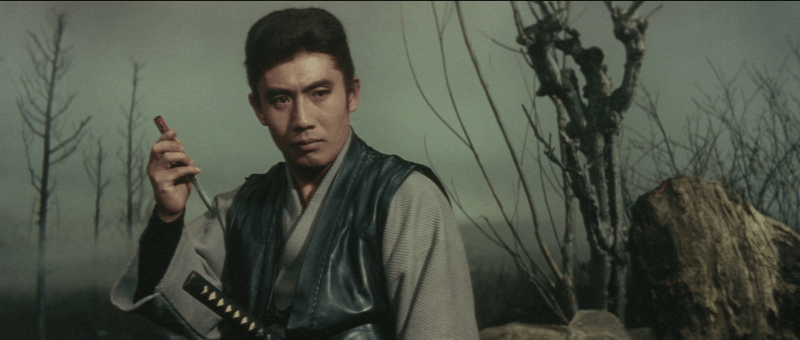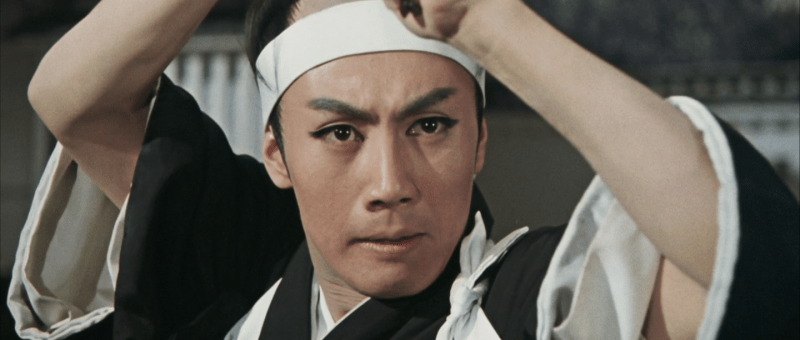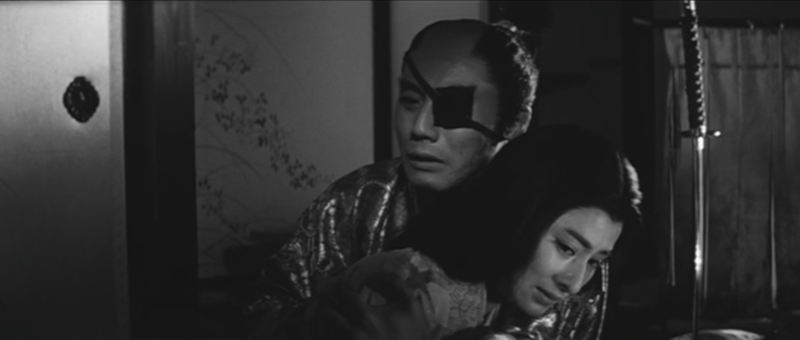
Shinobi no mono 8: The Three Enemies (新書・忍びの者, Kazuo Ikehiro, 1966)

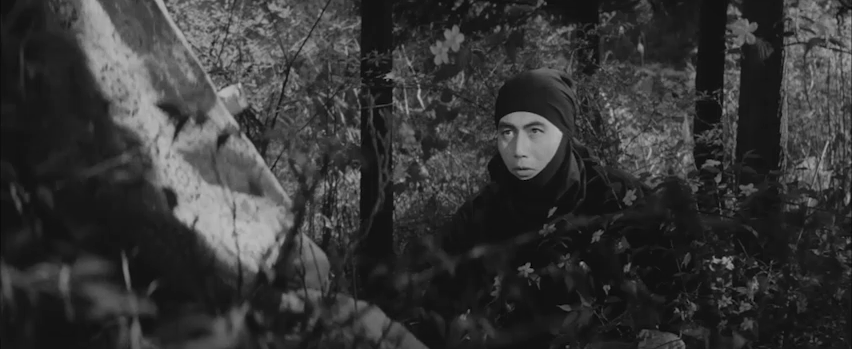
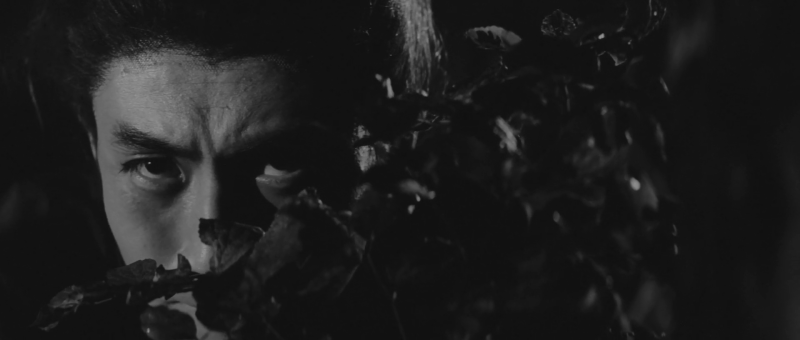
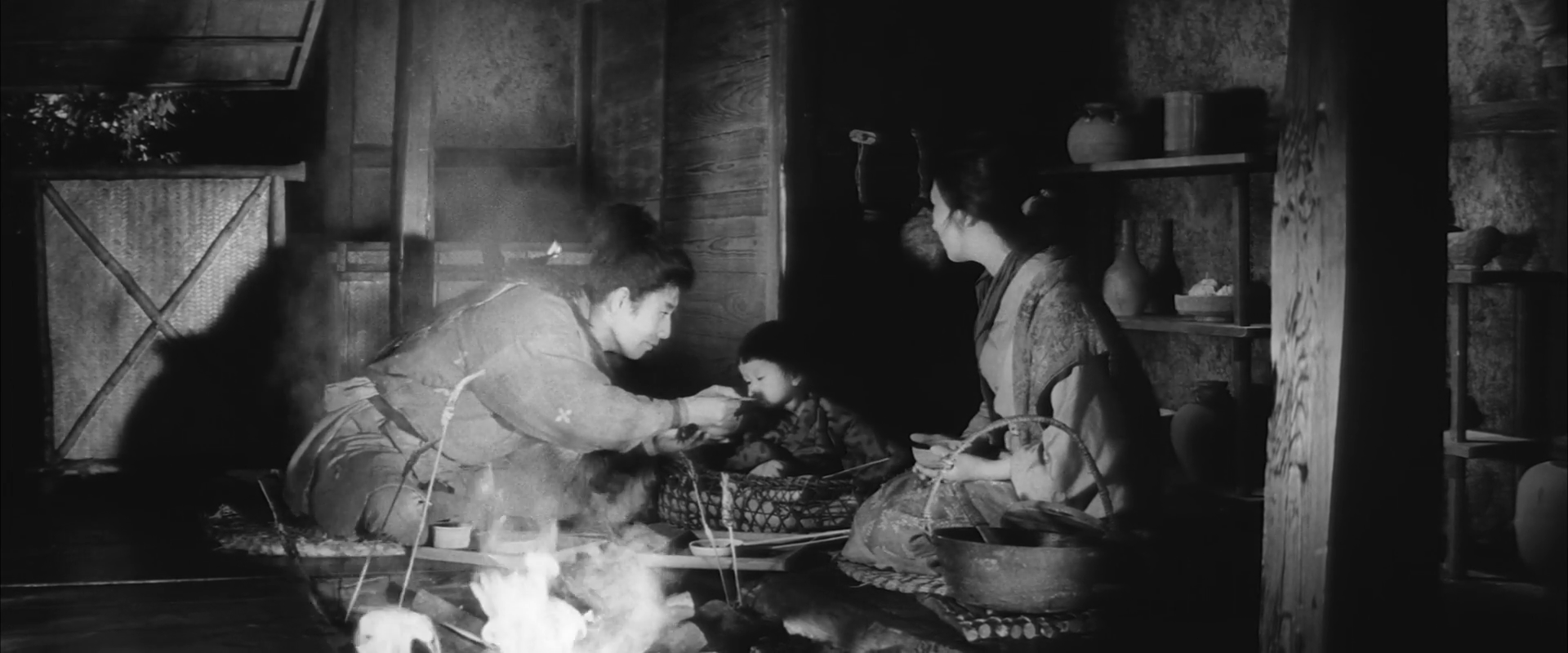
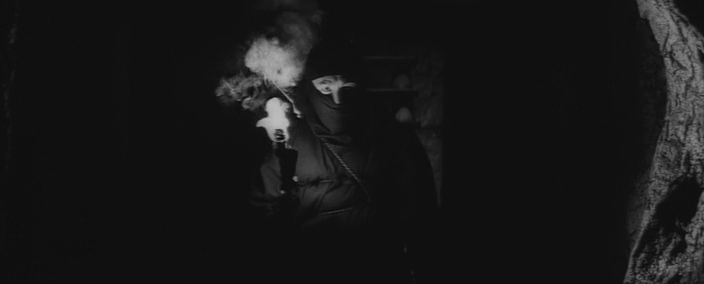
The abiding constant of the Shinobi Mono series had been its continual forward motion, at least up until instalment seven which had backtracked to the death of Ieyasu. This eighth and final film (save for a further sequel released in 1970 starring Hiroki Matsukata replacing Raizo Ichikawa who had sadly passed away a couple of years earlier at the young age of 37) however reaches even further back into the mists of time setting itself a few years before the original trilogy had begun.

This time around, we follow young Kojiro (Raizo Ichikawa) on what is a more stereotypical tale of personal revenge albeit that one that eventually becomes embroiled in politics as he joins a ninja band that’s working for Takeda Shingen (Kenjiro Ishiyama). In slightly surprising turn of events, Ieyasu (Taketoshi Naito) turns out to be what passes for a good guy at least in contrast to Shingen’s duplicity though Ieyasu himself is still young and at the very beginning of his military career which is why unlike his older self he’s a little more proactive and willing to start a fight as well as finish one. In any case, Shingen thinks he’s an easy target largely because he simply hasn’t been in post long enough to have begun making connections with local lords, bribing them with gifts to secure their loyalty. 

In any case, Kojiro’s journey begins as something more like a martial arts film as he surpasses his current teacher and is told to find a man called Sadayu (Yunosuke Ito) in the mountains if wants to be up to gaining his revenge against the three men who killed his father while trying to steal his gunpowder. Perhaps there’s something a little ironic in the fact that Kojiro’s father was killed in a fight over what amounts to the substance of the future engineering a wholesale change in samurai warfare and edging towards the oppressive peace of the Tokugawa shogunate. But to get she revenge, Kojiro commits himself to learning true ninjutsu as the film demonstrates in a lengthy training montage. Unlike previous instalments, however, there is left emphasis place on the prohibition of emotion with the reason Kojiro cannot romance Sandayu’s adopted daughter down to her father’s whim forbidding her from marrying a ninja.

Apparently not the Sandayu of the earlier films despite the similarity of the name, this one has decided to side with Shingen because he’s mistakenly concluded that he is a “fair person who understands us ninja” when in reality he just using them and is no better than Nobunaga or Ieyasu. Shingen hires them to tunnel into a castle through the well, but is entirely indifferent to their complaints about safety leaving a Sandayu voiwing vengeance. The ninja, he says, generally serve themselves and are bound to no master but he seems to have thought Shingen was different only to be proved wrong once again.

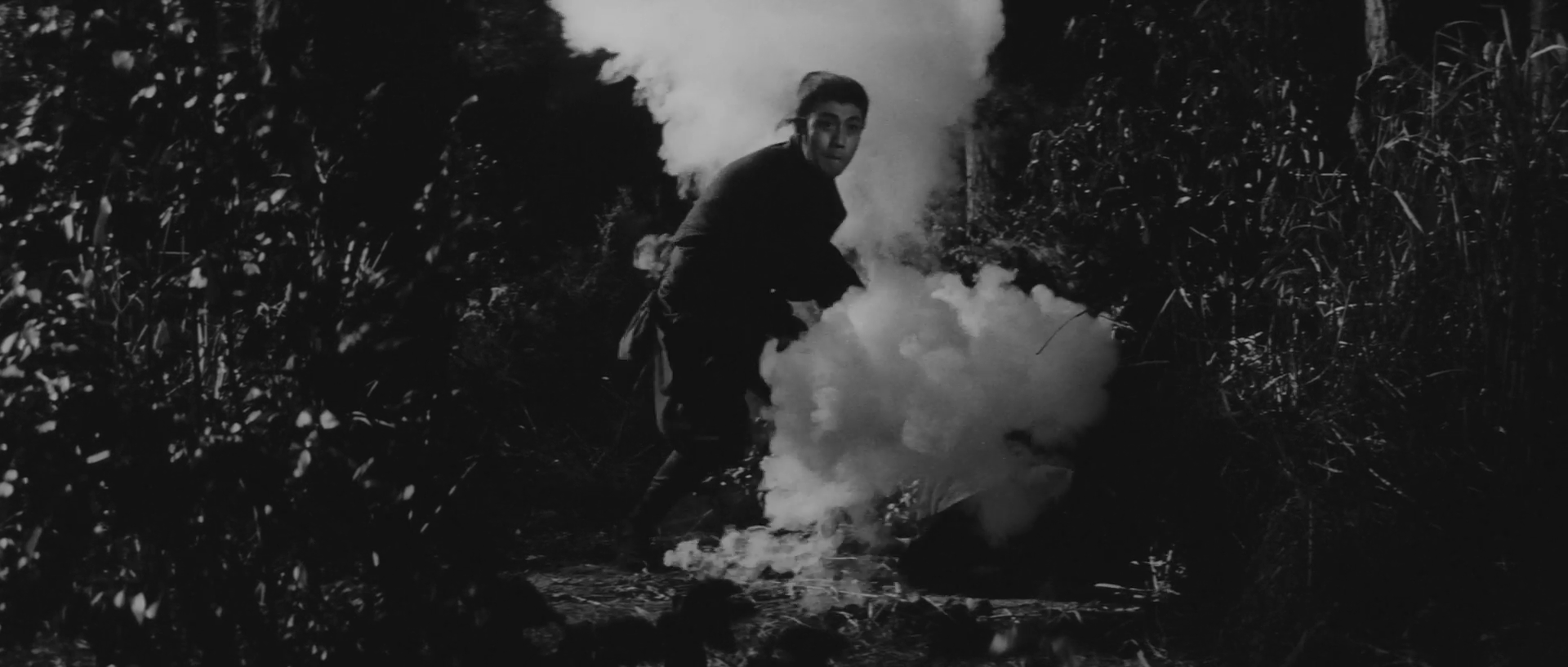
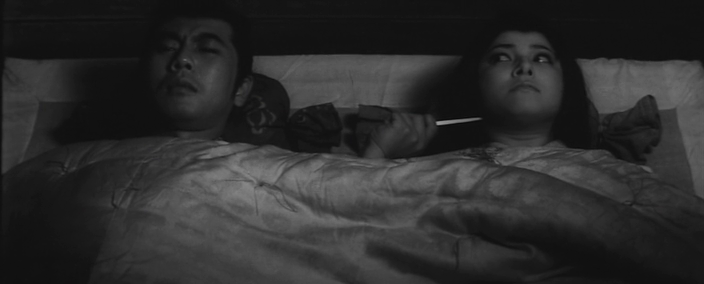
Of course, Kojiro continues looking for the men who killed his father though they obviously guide him back towards conflict anyway. When he tracks some of them down, one remarks that all he did was finish him off which was an act of kindness to end his suffering not that he necessary approved of what his fallow gang members had done. Kojiro finds a surrogate father in Sadayu much as Goemon had though this time a slightly better one even if Sandayu is also a man with a lot on his conscience. Even more so than the other films, this one takes place in a largely lawless land too consumed with perpetual warfare to notice the starving and the desperate let alone the inherent corruption of the feudal era. The bad of ninjas has a rather scrappy quality, not quite as sleek as the Iga of previous films while also a little naive. Shooting more like a standard jidaigeki, Ikehiro uses relatively few ninja tricks generally sticking to smoke and blow tarts with a few shrunken battles. Nevertheless, the violence itself is surprisingly visceral beginning with unexpected severing of an arm and leading to a man getting stabbed in both eyes. Then again, the film ends in the characteristically upbeat way which has become somewhat familiar only this time Kojiro runs back towards romantic destiny now freed of his mission of vengeance and the oppressive ninja code. 

Shinobi No Mono 6: The Last Iga Spy (忍びの者 伊賀屋敷, Kazuo Mori, 1965)

Though there’s a clear divide between the first three films in the Shinobi no Mono series and those that followed, one thing that remained constant is that time passed. By the sixth instalment, we’re already in 1637 which is more than 50 years after the setting of the first film which began in 1575 at the tail end of the Warring States era. Hero of films four and five, Saizo had been desperate to return to the chaos of the pre-Seikgahara society in which the ninja could indeed hold sway though as he discovered the pax Tokugawa was definitely here to stay. 

Given that Saizo would now be an old man, the torch is passed to his son, Saisuke (Raizo Ichikawa), who like his father opposes the Tokugawa but also has a desire for revenge against the corrupt petty official who killed him during the battle of Shimabara which definitely sealed the Tokugawa victory. Ieyasu may be dead, but the regime has only become more oppressive while it seems there is still enough intrigue to provide work for the jobbing ninja only now it’s taking place largely within the palace in the de facto one party state of the feudal society. 

On the other hand, there is a degree of destabilisation and societal flux as the old class system struggles to adjust to a world of peace. The nation is filled with disenfranchised samurai and ronin who largely have no real options to support themselves other than becoming mercenaries or taking odd jobs from various lords in the hope of eventually being taken in as a permanent retainer. It’s these ronin that Saisuke, and the rebellion’s leader Yui Shosetsu (Mizuho Suzuki), hope to marshal in convincing them to rise up against Tokugawa oppression and regain at least a little of the freedom their immediate forebears enjoyed.

The evils of this system can be seen in an otherwise sympathetic lord’s insistence that his underling will have to take the blame and commit seppuku if his decision to help the rebels is discovered. As Saisuke later remarks, the era of human knowledge rather than weaponry is already here and battles are largely being fought over parlour games played in court. At this point, the shogun’s sudden demise leaving only an 11-year-old son has opened a power vacuum that allows unscrupulous lords, like Saisuke’s enemy Izu (Isao Yamagata), to exercise power vicariously. Izu has used it to enrich himself by exploiting desperate ronin and spending vast sums on personal projects, yet he proves himself a true politician in effortlessly covering up for the lord who tried to help the rebels doubtless knowing that he now has him in his pocket for life.

Seemingly returning to the low-key social principles of the first few films, Saisuke’s rebellion is also towards the inherently unfair system complaining that the battle for power is a monster that feeds on courage and will crush conscience like an insect. But as Izu says, times have changed and the struggle cannot be ended even if Saisuke argues that anything manmade can be dismantled. Saisuke has to admit that he’s been outplayed, the leader of the revolution also turns out to be corrupt, taking advantage of other people’s desperation and dissatisfaction to enrich himself while Izu’s plotting has left him largely blindfolded as a ninja clearly out of his depth in the new and confusing world of the Tokugawa hegemony. A powerful man is always looking for a victim, he reflects, perhaps echoing the plight of Goemon unwittingly manipulated by the duplicitous Sandayu while admittedly somewhat drunk on his own misplaced sense of self-confidence. 

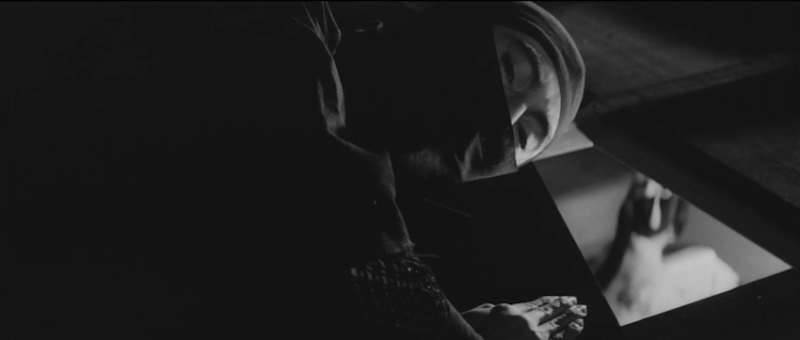
Deviating a little from the realism of the series as a whole, the film shifts into more recognisably jidaigeki territory revolving around corrupt lords and an exploited populace even if in this case it’s the disenfranchised warrior class experiencing a moment of mass redundancy though apparently unwilling to resist. Peep holes behind noh masks add a note of quirky innovation to the backroom machinations of the Tokugawa regime while silent ninja battles and flaming shuriken add to the sense of noirish danger even as it becomes clear that the ninja is approaching a moment of eclipse, no longer quite necessary in a world of constant duplicity.  


Shinobi no Mono 3: Resurrection (新・忍びの者, Kazuo Mori, 1963)

At the end of the second film in the Shinobi no Mono series, Goemon (Raizo Ichikawa) was led away to be boiled alive in oil after failing to assassinate Hideyoshi Toyotomi. Obviously, Goemon did not actually die, but exchanged places with a condemned prisoner thanks to the machinations of Hanzo Hattori (Saburo Date) which is a clear diversion from the accepted historical narrative to which the film otherwise remains more or less faithful. However, in this instalment more than all the others, Goemon is very much a shadow figure, pale and gaunt, who appears much less frequently on screen and mainly relies on stoking the fires of an already simmering succession conflict in the Toyotomi camp.

At this point, Hideyoshi has already made himself de facto leader of a unified Japan having been made the “kampaku”, advisor to the emperor, only to cede that position in favour of his adopted heir, Hidetsugu (Junichiro Narita) taking the title of “Taiko.” Hideyoshi has been childless for many years which is why he adopted his nephew, but the birth of his son by blood has dangerously unbalanced the palace order with Hidetsugu increasingly certain he’s become surplus to requirements. Meanwhile, in an effort to secure his position Hideyoshi has also embarked on an ambitious plan to conquer Korea as a means of getting to Ming China and circumventing the tributary requirements necessary for trading with it. 

This plan necessarily means that they need more money with Hideyoshi calling an end to all building and renovation projects including that of a Buddhist temple playing into the series’ themes about hubris in the face of Buddha though by this point Goemon too has lost faith in Buddhism in the clear absence of karmic retribution. As Ieyasu (Masao Mishima) points out, this works out well for him as it will stir discord among local lords who will be forced to squeeze their already exploited subjects even more earning nothing more than their resentment which will then blow back on oblivious Hideyoshi.  

Thus Goemon’s role mostly involves sneaking in and telling various people that others are plotting against them and they’d be better to get ahead of it. A secondary theme throughout the series has been a sense of powerlessness which is perhaps inevitable in a historical narrative in which we already know all of the outcomes. Ieyasu scoffs at Goemon, remarking that he thinks he’s walking his own path but is really being manipulated into walking that which Ieyasu has set down for him, though Goemon effectively rejects this stating at the conclusion that as Ieyasu believed he was using him he was also using Ieyasu to achieve his revenge on Hideyoshi for the death of his wife and son. In the historical narrative, Hideyoshi dies of a sudden illness as he does here with Goemon lamenting that his revenge is frustrated by the fact that Hideyoshi is now old and frail though he achieves it through symbolically cutting off his bloodline but explaining to him that Hideyoshi will not become the heir to anything because Ieyasu will be taking the role he has so patiently waited for. Hideyoshi has in any case perhaps disqualified himself as the father of a nation by wilfully sacrificing his adopted son, Hidetsugu, who was ordered to commit suicide to avoid any challenge to Hideyori after becoming desperate and debauched in the knowledge that his days were likely numbered anyway.

In any case, Goemon perhaps declares himself free in asking why he should care who’s in charge after Hanzo once again tries to recruit him to work for a now triumphant Ieyasu whose long years of simply waiting for everyone else to die have paid off. This is what passes for a happy ending in that he has thrown off the corrupt authority of the feudal era and discovered a way to live outside of it as a “free” man though as others point out the system hasn’t changed. Poor peasants continue to be exploited by lords who are greedy but also themselves oppressed by an equally ruler playing petty games of personal power. Fittingly, ninja tricks mainly revolve around smoke bombs and the covert use of noxious fumes to weaken the opposition as they creep in to spread their poison. Never shedding the series’ nihilistic tone, the film ends on a moment of ambivalent positivity albeit one of exile as Goemon declines the invitation to the fold instead wandering off for a life of hidden freedom in the shadows of a still corrupt society. 

Shinobi no Mono 2: Vengeance (続・忍びの者, Satsuo Yamamoto, 1963)

Though Goemon might have thought himself free of his ninja past at the conclusion of the first film, he was unfortunately mistaken. Shinobi no Mono 2: Vengeance (続・忍びの者, Zoku Shinobi no Mono) sees him trying to live quietly with Maki and their son in a cabin in the woods, but Nobunaga is more powerful than ever. He’s wiped out the Iga ninja and is currently hunting down stragglers. Try as he might, what Goemon discovers the impossibility of living outside of the chaos of the feudal era. 

After he’s caught and suffers a family tragedy, Goemon and Maki (Shiho Fujimura) move to her home village in Saiga which is the last refuge of the Ikko rebels who oppose Nobunaga. This time around, the film, based on the novel by Tomoyoshi Murayama, even more depicts the ninja as backstage actors silently shuffling history into place. Thus Goemon takes advantage of a rift between the steady Mitsuhide (So Yamamura) and loose cannon Nobunaga (Tomisabur0 Wakayama) in an attempt to push him into rebellion. But what he may discover is that even with one tyrant gone, another will soon rise in its place. Hideyoshi (Eijiro Tono) seems to be forever lurking in the background, while Ieyasu makes a few experiences explaining that he intends to wait it out, allowing his rivals to destroy each other so he can swoop down and snatch the throne at minimal cost. 

But he too has his ninja such as the legendary Hanzo Hattori (Saburo Date) who arrives to complicate the intrigue and tempt Goemon away from his attempts to live a normal life. Interestingly enough, one of the factors leading to Nobunaga’s downfall is his disregard for Buddhism in frequently burning temples associated with ninja along with everyone inside them. Burning with a desire for vengeance, Goemon describes Nobunaga as inhuman, a demon, though he also embodies the vagaries of the feudal era in which no one is really free. Nobunaga has built a large castle estate for himself while ordinary people continue to suffer under onerous demands from local lords. Hideyoshi has also done something similar in an attempt to bolster his status and prepare for his own inevitable bid for national hegemony. 

The implication is that though the constant warfare of the Sengoku era is of course bad for farmers in particular, the political machinations which revolve around the egos of three men are far removed from the lives of ordinary people. Even so, the code of the ninja continues to be severe as we’re reminded that love and human happiness are not permitted to them. A female ninja spy working for Hanzo is despatched to Nobunaga’s castle to seduce his retainer Ranmaru but is cautioned that she must not allow her heart to be stirred. Predictably this seems to be a promise she couldn’t keep, eventually dying alongside him during an all out attack on the castle. 

Goemon discovers something much the same in encountering further losses and personal tragedies, but takes on a somewhat crazed persona in his continuing pursuit of Nobunaga, grinning wildly amid the fires of his burning castle while taunting Nobunaga that he is the ghost of the Iga ninjas he has killed. Then again, he’s laid low by his own ninja tricks on discovering that Hideyoshi has had a special “nightingale floor” installed that lets out a song whenever someone crosses it, instantly ruining his attempt to infiltrate the castle. “The days when a few ninja could control the fate of the world are over,” Ieyasu ironically reflects though perhaps signalling the transition he embodies from the chaos of the Sengoku era to the oppress peace of the Tokugawa shogunate.

Somehow even bleaker than its predecessor, Yamamoto deepens the sense of nihilistic dread with increasing scenes of surreal violence and human cruelty from a baby been thrown on a fire to a dying commander teetering on his one leg and holding out just long enough to gesture at a sign requesting vengeance against those who have wronged him. Echoing the fate of the real Goemon, dubbed the Robin Hood of Japan for his tendency to steal from the rich to give to the poor, the conclusion is in its own way shocking but then again perhaps not for there can be no other in this incredibly duplicitous world of constant cruelty and petty violence. 


Ninja, A Band of Assassins (忍びの者, Satsuo Yamamoto, 1962)

Ninja in Japanese cinema had largely been relegated to the realms of childish fantasy prior to Satsuo Yamamoto’s Ninja, A Band of Assassins (忍びの者, Shinobi no Mono) which cast a distinctly less heroic light on the famed mercenary spies of the feudal era. Indeed, there’s something reminiscent of the cult of militarism in the repressive nature of the ninja code and the hero Goemon’s (Raizo Ichikawa) original allegiance to it despite his father’s wariness and attempt to warn him that human happiness has no place in the life of a ninja. 

As the leader of Goemon’s clan, Sandayu (Yunosuke Ito), explains the ninja are obliged to serve whichever lords require their service, but he refuses to work with Oda Nobunaga (Tomisaburo Wakayama, billed as Kenzaburo Jo) owing to his famous animosity towards them. He even goes so far as to call Nobunaga a greater threat to the ninja than demons or devils. Opening in 1573, the film takes place at a tumultuous moment as Nobunaga continues to solidify his plan to unite the whole of the land under his banner by absorbing or defeating rival clans. The pre-credits sequence finds Goemon playing dead on a battlefield surrounded by ominous crows and encountering another ninja from a rival clan, Kizaru (Ko Nishimura), who has become a more literal kind of vulture in stealing from the dead.

Stealing is against the ninja code and something of which the young and idealistic Goemon fiercely disapproves. Nevertheless, in a cruel irony he’s forced to become a burglar in an effort to raise funds for more weapons to combat Nobunaga whom he has also been ordered to assassinate in return for his life after having been caught having an affair with Sandayu’s wife, Inone (Kyoko Kishida). Goemon is inspired by the legendary figure dubbed the Japanese Robin Hood for his mission stealing money from the rich to give to the poor, but here is far from heroic. When his affair with Inone is discovered by a servant, Goemon kills him to maintain the silence. He then believes that Inone has also been killed after falling into a well and attempts to flee the scene only to be confronted by Sandayu. 

Only too late does to he begin to understand what his father tried to warn him about, that the code of the ninja is cruel and unforgiving. It cannot grant him pride or happiness despite the self-satisfied glow he feels on having been singled out by Sandayu as a protege. A ninja must be ready to sever all ties to those he loves and endure intense torture without speaking. If caught in an impossible situation he must scar his face and take his own life as one of Goemon’s acquaintances eventually does after being captured by Nobunaga. Goemon assumes he has no reason to be afraid because he is the most skilled ninja in the garrison and a single ninja can take down a fortress all on his own, but in reality he is powerless, merely a puppet manipulated by Sandayu for his own ends. After falling in love with a sex worker, Maki (Shiho Fujimura), he grows tired of his missions, gives up on burglary, and makes no move to assassinate Nobunaga but is pursued by Sandayu’s minions, the irony being that not even a ninja can escape from the confined space of ninjadom.

This world is so steeped in secrecy that nothing is as it seems and Goemon discovers the rug pulled out from under him in more ways than one before beginning to realise that Sandayu has deliberately engineered his downfall and was most likely behind his father’s murder in an attempt to get his hands on his recipe for gunpowder which is, as Nobunaga says, the future of warfare. Nevertheless, even within its commitment to realism the film contains plenty of ninja tricks from sudden appearances to superhuman leaps and expert shuriken throwing and grappling hooks.  The sense of melancholy futility implied by the presence of the crows in the opening scenes never recedes, Yamamoto frequently descending into mists as Goemon sinks into his confusion and eventual disillusionment with the tenets of ninjadom. Rival ninja clans more obsessed with their reputation and status vie for the head of Nobunga while all Goemon wants is the right to live a quiet life with Maki though that’s something that largely cannot be found amid the constant chaos of the feudal era. 

Bloody Shuriken (赤い手裏剣, Tokuzo Tanaka, 1965)

A cynical ronin spots a business opportunity when he rides into a town beset by gangsters in Tokuzo Tanaka’s samurai western, Bloody Shuriken (赤い手裏剣, Akai Shuriken). Despite the name, this is not a ninja movie. The title refers to the knives the hero throws with almost supernatural skill. Adapted from a short story by noir master Haruhiko Oyabu, the action may sound reminiscent of Yojimbo but there’s a different kind of irony in its humour and a lightheartedness to its cynicism even if its final message is that the wages of greed are death.

We can tell that Ibuki (Raizo Ichikawa) is both good man and bad in that he immediately breaks up a fight between rival gangs on entering town, depriving the men in question of their money, but then handing it straight to the owner of the bar they were fighting in to cover the damage. He’s concerned about his horse too, but can’t quite afford the lodging fees at the stable run by the grumpy Yuki (Chitose Kobayashi) who loathes samurai, and with good reason. After hearing about the complicated makeup of the town’s hierarchy, Ibuki decides to stay and make some money by essentially playing each of the three gang leaders off against each other so they end up taking care of themselves. 

So far, so Yojimbo. But this town seems to be even further out, much more like a decrepit western outpost filled with scum and villainy. When the wind picks up, the dust blows through as if signalling the murky air and sense of futility. We’re told that the leader of the biggest gang, Hotoke (Isao Yamagata), is also the police chief, while his rival Sumiya (Yoshio Yoshida) complains that he’s usurped his position as his family has been there longer. Hotoke arrived a starving man three years previously and got back on his feet thanks to the support of the community, but then he turned around and got rich running a gambling den targeting local miners. Kinuya (Fujio Suga) has been here a little longer, but is otherwise biding his time until the other gangs fall from grace.

Of course, Ibuki foments conflict and strikes deals with all of them, but the real trouble is some missing gold that was stolen from the government causing even more disruption in the town with inspectors targeting ordinary people who weren’t even involved. Bar owner Chinami (Masumi Harukawa) is one of many interested in finding out what happened to the money, but she’s also in a precarious position, on the one hand throwing her lot in with Hotoke but on the other hating him and approaching both Ibuki and moody ronin Masa (Koji Nanbara ) to help her be free of the troublesome gangster. 

The fact that the two most prominent business owners are women is perhaps uncomfortably intended to signal the breakdown of the town in which Ibuki becomes the only real “proper” man amid bumbling gangsters and crazed ronin. Yet Chinami is directly contrasted with the pure and innocent Yuki who hates all the gangsters, as well as the samurai and generally everyone who isn’t a horse. Cynical and greedy, Chinami wants the gold and she’s prepared to use her body to manipulate men into doing what she wants, whereas Yuki defiantly keeps her head down and refuses to participate in gangster nonsense because she just wants to run her stables in peace. Only later does she develop a fondness for Ibuki on realising that he’s not so cynical after all and is interested in a kind of justice and getting rid of the corruption in the town for reasons other than money. Having discovered the location for the gold, he leaves the knowledge to Yuki so she can avenge her father who was killed during the robbery. 

But in other ways, this is already a post-apocalyptic hellscape as Ibuki discovers on spotting a pair of crows feeding on a corpse in a river. Perhaps taking pity on one less fortunate than himself, he throws one of his darts and skewers them. Ibuki’s knife supply seems to be inexhaustible, and he never appears to go back and retrieve the ones he’s thrown though his skill does seem to lend him an almost supernatural quality. In any case, Tanaka injects a degree of weird humour in the strange town with its eccentric residents including ronin Masa who looks permanently evil yet has a strange love of dolls, while the fight scenes themselves are often somewhat comical as the gangs seem to clash like a pair of cats slapping each other. There’s even something quite funny about the way the film bluntly drops exposition at unexpected moments even in the midst of the farcical scheming between the gangsters and Ibuki running back and forth to stoke the fires of conflict. This land is so bleak, it seems to say, all you can do is laugh or you’ll end up face down in a river with crows picking at your back too, so you might as well ride off into the sunset like Ibuki looking for the next corrupt town to purify and onward towards the bounty on the horizon. 


Trailer (no subtitles)

Freelance Samurai (桃太郎侍, Kenji Misumi, 1957)

An abandoned son resolves to wander Japan killing the “demons” of Edo-era society in Kenji Misumi’s adaptation of the popular novel by Kiichiro Yamate, Freelance Samurai (桃太郎侍, Momotaro-Zamurai, AKA The Demon Crusader). Starring a young Raizo Ichikawa in dual roles as twins separated at birth, a familiar jidaigeki plot device, Misumi’s drama is among his most conventional but still finds the demon-hunting hero of the title resolutely rejecting the “silly rules of the samurai” in refusing to serve or be served while resisting the persistent corruptions of the feudal society. 

First spotted returning a paper balloon to some children playing in the street, the hero (Raizo Ichikawa) later gives his name as “Momotaro”, the legendary folklore champion who was born from a peach and then went on to befriend various forest creatures travelling with them to fight the cruel demons who had been oppressing the peasants of the farmland where his adoptive parents lived. The name is a sense ironic in that it reflects his own fatherless existence having discovered that he is actually Shinjiro, the younger brother of the heir to a nearby clan, Shinnosuke (also Raizo Ichikawa). At this particular cultural moment, twins were thought inauspicious with one usually cast out, Momotaro in someways more fortunate than most in that he was sent away and raised by his mother to whom he was apparently devoted. In fact, as he says, he only delayed his demon-killing mission out of consideration for her but that now that she has sadly passed away he is free to pursue justice as a wandering ronin determined to serve no master but himself. 

This insistence on justice and opposition to samurai oppression is made plain in the opening scene in which he rescues pickpocket Kosuzu (Michiyo Kogure) from two samurai she’d robbed who were hassling her. She of course falls in love with him, but is also party to the central conspiracy engineered by high ranking retainer Shuzen (Shosaku Sugiyama) who is plotting to unseat Shinnosuke in favour of the lord’s illegitimate young son Mantaro (Junta Yamamoto) with the help of ambitious underling Iga (Seizaburo Kawazu). Momotaro is swept into the intrigue when he rescues the beautiful daughter of loyal retainer Iori (Gen Shimizu), Yuri (Yoko Uraji), from an attempted kidnapping. Both sides want to recruit him for his bravery and sword skill, but Momotaro is reluctant to help either of them especially on discovering the ironic coincidence that he finds himself caught up in a succession struggle in the very clan which previously cast him out. 

Deciding to help when hearing that Shinnosuke has been poisoned, Momotaro demonstrates his strategic abilities in coming up with a ruse to trick the conspirators but remains somewhat conflicted remembering his mother’s dying words that he should hold no grudges even as a part of him continues to resent his abandonment. That may in part explain his defiant rejection of the hierarchal society, ignoring the “silly” rules of the samurai while insisting on equality in refusing to serve or be served by anyone else. In a nod to the folktale, his greatest friend is a humble peddler, Inosuke “the monkey man” (Shunji Sakai) who gives him a place to stay in the rundown tenement where he lives affectionately known as “ghost apartments”. Even so, Inosuke as much servant as sidekick, and while he is in a sense torn between the earthy pickpocket Kosuzu who is later redeemed through her loyalty to him and the beautiful samurai daughter Yuri it seems fairly clear that he will eventually opt for his class-appropriate match the only surprising thing being that it is she who transgressively breaks with convention in abandoning her samurai home in order to follow Momotaro out on the road as he hunts other “demons” corrupting the social order all over Japan. 

Shot in colour academy ratio, Freelance Samurai features little of Misumi’s trademark natural vistas save for the poignant pillow shots of flowers growing in the compound though it does reflect his preoccupation with absent fathers and perpetual wandering. In the many dualities in play, it is also interesting that Momotaro is depicted as the more capable of the brothers, Ichikawa’s characterisation of the cosseted Shinnosuke as a kind and compassionate, effete young man rather than the strapping warrior the heir to a clan is expected to be hinting perhaps at the perceived weakness that allowed the conspirators to assume they could usurp him. Similarly, it’s Michiyo Kogure’s tragic pickpocket undone by her love for the noble samurai that makes the deeper impression rather than the rather insipid Yuri who makes her mark only in her final decision to follow Momotaro unbidden. Momotaro’s quest may in a sense be ironic in that he outwardly rejects the superiority of the samurai but effectively preserves it even as he determines to clean out the oppressive “demons” intent on corrupting the land just as his folkloric namesake had done, but in its own way has its defiant nobility in his fierce love of justice and equality. 


The Third Shadow Warrior (第三の影武者, Umetsugu Inoue, 1963)

“In this world the weak are playthings of the strong” according to the hidden villain concealing himself slightly to the side in Umetsugu Inoue’s dark identity drama The Third Shadow Warrior (第三の影武者, Daisan no Kagemusha). Adapting a novel by Norio Nanjo, Inoue, most closely associated with sophisticated musicals, shoots in the manner of a ghost story adapting the trappings of a minor parable on the consequences of selling one’s soul for advancement in complicity with an inherently broken feudal order. 

Opening in 1564, the film wastes no time reminding us that the samurai were cruel and duplicitous, a troop of them riding through the contested mountain territory of Hida bearing the severed heads of their enemies casually insulting peasants as they go. Young farmer Kyonosuke (Raizo Ichikawa), however, can’t help but think that they’re heroic and dashing, longing like many young men as the voiceover explains to make his fortune as a samurai in this the age of war. Kyonosuke gets his wish when retainer Shinomura (Nobuo Kaneko) turns up and offers him a job at the castle, only it’s not quite what he expected. Bearing a striking similarity to lord Yasutaka, he has been hired as his third “shadow”, a decoy intended to shield the lord from harm. 

Sitting down with his two new brothers, Kyonosuke remarks how ironic it is that he’s here to escape the land but Kuwano (Katsuhiko Kobayashi) is patiently saving up his pay with the intention of using it to buy a farm and settle down with a beautiful wife. His is the most dangerous of doubling roles as the lord’s battlefield stand-in, while Ishihara (Yuji Hamada), a former actor apparently not much good with the sword, takes his place behind closed walls. Kyonosuke is quite taken with the world of the samurai, but Ishihara cautions that he’ll soon tire of this “phoney life”. In accepting this devil’s bargain, Kyonosuke has in essence consented to his own murder. A shadow man, he can no longer call himself Kyonosuke, but nor can he say he is Yasutaka. He has no fixed identity and is merely in waiting for a veil. Worse still as Ishihara has begun to suspect, they no longer have bodily autonomy because their physicality must match that of the lord. When he is blinded in a battlefield mishap with an arrow, so must they be. Deciding he’d rather not lose an arm, Kyonosuke finds himself in an altercation with his other self which leads to his demise. He intends to make a life for himself under his own name with another clan, but is forced to permanently assume Yasutaka’s identity after being cornered by Shinomura intent on manipulating him for his own ends. 

“I’m no puppet, I no longer need a puppeteer” Kyonosuke exclaims drawing strength from embracing his new identity as a samurai lord, but perhaps overreaches himself in ambitious desire failing to see the various ways he is still merely a pawn in a bigger game as Yasutaka himself once was because the lord is only ever an empty vessel and far more expendable than might be assumed. Princess Teru (Hizuru Takachiho), Yasutaka’s conquest bride, declares that she is “just a doll, the strongest will win me” but is of course playing a role herself, one which she does not desire but has been thrust upon her while her cousin, Sadamitsu (Shigeru Amachi), is engaged in a much more active piece of long form role play. Only the lord’s concubine (Masayo Banri) sees through him, falling for the gentle peasant after the rough lord who toyed with her, but their complicated love eventually seals his fate even as he believes it offers him victory. Kyonosuke became a samurai to escape his lack of agency but is arguably much less free than he ever was, driven slowly out of his mind by his fractured sense of identity and realising that in killing the only man who knew who he “really” was, he also killed himself. 

Quite literally imprisoned, Kyonosuke finds himself a shadow once again neither one man nor another, denied an identity and forever a puppet of duplicitous game players better versed in the realities of the samurai existence. “How ugly fighting over this transient kingdom” the princess disdainfully remarks while herself engaging this apparently meaningless foolishness, reminded by her cousin that a princess may hold the keys to a castle or even a nation even if he implies she is little more than his tool, a puppet to be manipulated if knowingly. Shooting with deep, expressionist shadows, chiaroscuro lighting, and a melancholy voiceover Inoue frames his tale as a parabolic caution against selling one’s soul for gold but also a crushing indictment of the inequalities of the feudal order built on wilful hypocrisy and cynical exploitation. 


Bronze Magician (妖僧, Teinosuke Kinugasa, 1963)

Even when you’re the empress, a woman has little freedom. Teinosuke Kinugasa’s Bronze Magician (妖僧, Yoso) is loosely based on a historical scandal concerning Nara-era empress Koken/Shotoku and a Rasputin-like monk, Dokyo, who unlike his counterpart in the film, eventually tried to seize the throne for himself alone only to have his ambitions frustrated by the empress’ death and the fierce resistance of her courtiers. As the title implies, Kinugasa is more interested in Dokyo than he is in the perilous position of Nara-era women even in power, painting his fall from grace as a Buddhist parable about a man who pays a heavy price for succumbing to worldly passions. 

As the film opens, Dokyo (Raizo Ichikawa) emerges from a shallow cave amid many other caves after meditating for 10 years during which he reached a higher level of enlightenment and obtained mystic powers. Now he thinks it’s time to continue the teachings of departed mentor Doen and use his abilities to “actively do good and save the masses”. Before that, however, he does some not quite Buddhist things like turning a rat into a living skeleton, and twisting a snake into a tangle. In any case, he begins roaming the land, miraculously healing the sick. While reviving a thief who had been killed by samurai after trying to make off with a bird they shot, Dokyo is spotted by a retainer of the empress who brings news of his miracles back to her closest advisors. 

Empress Koken (Yukiko Fuji), in the film at least, was a sickly child and even after ascending the throne has often been ill. She is currently bedridden with a painful respiratory complaint that is giving her servants cause for concern. None of the priests they’ve brought in to pray for her (apparently how you treat serious illness in the Nara era) has been of much use. The empress’ steward Mabito (Tatsuya Ishiguro) orders that Dokyo be found and brought to the palace to see if he can cure Koken, which he does while stressing that he’s helping her not because she’s the empress but in the same way as he would anyone else. 

As might be expected, the empress’ prolonged illness has made her a weak leader and left the door open for unscrupulous retainers intent on manipulating her position for themselves. There is intrigue in the court. The prime minister (Tomisaburo Wakayama) is colluding with a young prince to depose Koken and sieze power. Left with little oversight, he’s been embezzling state funds to bolster his position while secretly paying priests to engineer Koken’s illness continue. Dokyo’s arrival is then a huge threat to his plans, not only in Koken’s recovery and a subsequent reactivation of government but because Dokyo, like Koken, is of a compassionate, egalitarian mindset. She genuinely cares that the peasants are suffering under a bad and self-interested government and sees it as her job to do something about it, which is obviously bad news if you’re a venal elite intent on abusing your power to fill your pockets while the nation starves. 

As the prime minister puts it, however, the empress and most of her courtiers are mere puppets, “naive children”. At this point in history, power lies in the oligarchical executive who are only advised by the empress and don’t actually have to do what she says. As she is also a woman, they don’t necessarily feel they have to listen to her which is one reason why the prime minister assumes it will be easy to manoeuvre the young prince toward the throne. Koken’s short reign during which she overcame two coups is often used to support the argument against female succession because it can be claimed as a temporary aberration before power passed to the nearest male heir. Nevertheless, Koken tries to rule, even while she falls in love with the conflicted Dokyo. Her right to a romantic future, however, is also something not within her control. Many find the gossip scandalous and use it as an excuse to circumvent her authority, especially after she gives Dokyo an official title which allows them to argue she has been bewitched by him and he is merely manipulating her to gain access to power. 

Dokyo, meanwhile, is in the middle of a spiritual crisis. After 10 years of study he as reached a certain level of enlightenment and attained great powers which he intended to use for the good of mankind. He is happy to discover that Koken is also trying to do good in the world but she is, ironically, powerless while the elitist lords “indulge in debauchery”, abusing their power to enrich themselves while the people starve. He begins to fall in love with her but the palace corrupts him. He accepts a gift of a beautiful robe despite his vows of asceticism, and then later gives in to his physical desire for Koken only to plunge himself into suffering in the knowledge that he has broken his commandments. He loses his magic, but chooses to love all the same while rendered powerless to hold back Koken’s illness or to protect her from treachery. 

The pair mutually decide they cannot “abandon this happiness”, and Dokyo’s fate is sealed in the acceptance of the extremely ironic gift of golden prayer beads which once belonged to Koken’s father. He is reborn with a new name in the same way as the historical Koken was reborn as Shotoku after surviving insurrection, embracing bodily happiness while attempting to do good but battling an increasing emotional volatility. The lords continue to overrule the empress’ commands, insisting that they are really commands from Dokyo, while Dokyo’s “New Deal” involving a 2 year tax break for impoverished peasants finds support among the young radicals of the court who universally decide that they must stand behind him, protecting the ideal even if they are unable to save the man.

This troubles the elders greatly. Declaring that Dokyo has used “black magic” to bewitch the empress, they determine to eliminate him, but Dokyo never wanted power. “Power is not the final truth” he tells them, “those blindly pursuing status and power only destroy themselves”. Yet Dokyo has also destroyed himself in stepping off the path of righteousness. He damns himself by falling in love, failing to overcome emotion and embracing physical happiness in this life rather than maintaining his Buddhist teachings and doing small acts of good among the poor. Nevertheless, he is perhaps happy, and his shared happiness seems to have started a compassionate revolution among the young who resolve to work together to see that his ideal becomes a reality even in the face of entrenched societal corruption.


Original trailer (no subtitles)

Gate of Hell (地獄門, Teinosuke Kinugasa, 1953)

Which is the greater challenge to the social order, love or ambition, or are they in the end facets of the same destabilising forces? Teinosuke Kinugasa’s Gate of Hell (地獄門, Jigokumon) is, from one angle, the story of a man driven mad by “love”, reduced to the depravity of a crazed stalker betraying his samurai honour in order to affirm his status, but it also paints his need as a response to the chaos of his age along with its many repressions while the heroine is, once again, convinced that the only freedom she possesses lies in death. Yet in the midst of all that, Kinugasa ends with a triumph of nobility as the compassionate samurai restores order by rejecting the heat of raw emotion for an internalised contemplation of the greater good. 

Set in the 12th century, the film opens in revolt as two ambitious lords combine forces to attack the Sanjo Palace in what would become known as the Heiji Rebellion. The lords have attacked knowing that Taira no Kiyomori (Koreya Senda) is not in residence, having departed on a pilgrimage. Fearful for the safety of his sister and father, retainers order decoys to be sent out to distract the rebels. Kesa (Machiko Kyo), a court lady in service to the emperor’s sister, agrees to be her decoy and Morito (Kazuo Hasegawa), a minor retainer, is ordered to protect her. He manages to escort her back to his family compound where he assumes she will be safe, transgressively giving her a kiss of life, pouring water into her mouth with his own, after she has fainted during the journey. Unfortunately, Morito has miscalculated. His brother has sided with the rebels and they are not safe here. During the chaos they go their separate ways, and as soon as Kiyomori returns he puts an end to the rebellion restoring the status quo.  

Shocked at his brother’s betrayal, Morito tells him that only a coward betrays a man to whom he has sworn an oath of loyalty but he explains that he is acting not out of cowardice but self interest. He has made an individualist choice to advance his status in direct opposition to the samurai code. Morito doesn’t yet know it but he is about to do something much the same. He has fallen in love with Kesa and after meeting her again at the Gate of Hell where they are each paying their respects to the fallen, his brother among them, is determined to marry her, so much so that he asks Kiyomori directly during a public ceremony rewarding loyal retainers for their service. The other men giggle at such an inappropriate, unmanly show of emotion but the joke soon fades once another retainer anxiously points out that Kesa is already married to one of the lord’s favoured retainers. Kiyomori apologises and tries to laugh it off, but Morito doubles down, requesting that Kiyomori give him another man’s wife. 

This series of challenges to the accepted order is compounded by a necessity for politeness. Morito is mocked and derided, told that his conduct is inappropriate and embarrassing, but never definitively ordered to stop. Making mischief or hoping to defuse the situation, Kiyomori engineers a meeting between Morito and Kesa, cautioning him that the matter rests with her and should she refuse him he should take it like a man and bow out gracefully. Kesa, for her part, has only ever been polite to Morito and is extremely confused, not to mention distressed, by this unexpected turn of events. She is quite happily married to Wataru (Isao Yamagata) who is the soul of samurai honour, kind, honest, and always acting with the utmost propriety. That might be why he too treats Morito with politeness, never directly telling him to back off but refusing to engage with his inappropriate conduct. That sense of being ignored, however, merely fuels Morito’s resentment. He accuses Kesa of not leaving her husband because Wataru is of a higher rank, as if she rejects him out of snobbishness, rather than accept the fact she does not like him. 

Morito continues in destructive fashion. We see him repeatedly, break, smash, and snap things out of a sense of violent frustration with the oppressions of his age until finally forced to realise that he has “destroyed a beautiful soul” in his attempt to conquer it. “One cannot change a person’s feelings by force” Wataru advises, but is that not the aim of every rebellion, convincing others they must follow one man and not another because he is in someway stronger? The priest whose head was cut off and displayed at the Gate of Hell was killed in part because he reaped what he had sown in beheading the defeated soldiers of a previous failed revolution. Morito kills a traitor and he falls seemingly into rolling waves which transition to an unrolling scroll reminding us that rebellions ebb and flow through time and all of this is of course transient. Only Wataru, perhaps ironically, as the unambiguously good samurai is able to end the cycle, refusing his revenge in the knowledge it would do no real good. Morito is forced to live on in the knowledge of the destruction his misplaced passion has wrought, standing at his own Gate of Hell as a man now exiled from his code and renouncing the world as one unfit to live in it. 


Gate of Hell is currently streaming on BFI Player as part of the BFI’s Japan season.