Crime Hunter: Bullets of Rage (クライムハンター 怒りの銃弾, Toshimichi Ohkawa, 1989)

Home video may still have been in a nascent and chaotic stage of development when Toei video executive Tatsu Yoshida began conducting customer research in video rental stores, but what he discovered shocked him. Customers were maxing out their five video allowance and watching them all the same evening. How did they have time for that, he wondered. The answer was that they were watching them all on fast forward to cut out the boring bits, like the story and exposition. It was this that gave him the idea to create “movies that will not be fast forwarded,” chiefly because they had already been excised of anything “inessential”.

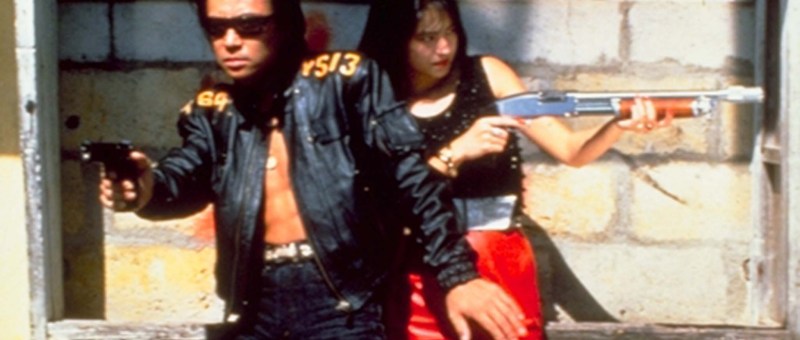
Only an hour in length, 1989’s Crime Hunter: Bullets of Rage (クライムハンター 怒りの銃弾, Crime Hunter: Ikari no Judan) was the first in Toei’s new V-Cinema range and was indeed made to conform to these aims. Consequently, it focuses mainly on action with minimal narrative and relies on genre archetypes to help the plot move along. In that, it owes something to Nikkatsu’s borderless action films in taking place in Little Tokyo (largely filmed in Okinawa) though otherwise in a world that’s recognisably Japanese despite the English-language police radio and Japanese-American names like that of fugitive criminal Bruce Sawamura (Seiji Matano) and Joe “Joker” Kawamura (Masanori Sera), the cop who’s trying to track him down but only as a means to an end in his quest to avenge the death of his partner, Ahiru (Riki Takeuchi). We can tell that Ahiru’s not going to last long in this film because we’re told quite quickly that he’s been invited to the chief’s daughter’s birthday party and is seen as a potential suitor, while after apprehending Bruce he complains that his mother bought him the shirt that’s now been stained. 

Joker’s attachment to Ahiru goes a little beyond that of a mere partner as he hands back his badge to pursue revenge while picking up the empty packet of pop-corn Ahiru had been eating and placing it over his heart. The film seems to owe a lot to contemporary Hong Kong action films and Heroic Bloodshed such as A Better Tomorrow, and it’s apparent that this almost homoerotic relationship between the men has taken the place of heteronormative romance. The female star, Lily (Minako Tanaka), is (nominally at least) at nun which makes her romantically unavailable to Joker or indeed to Bruce while in some senses she represents opposition because her cause is at odds with Joker’s. While they temporarily align in wanting to find Bruce, Joker wants information that will lead him to the identity of his partner’s killer, while for Lily he’s the endgame because she wants to get back the money he stole from the donation box at her church. 

This whole narrative strand doesn’t make a lot of sense in that Lily says she accidentally told Bruce about the donations after having too much to drink at a party with her non-nun girlfriends, which is strange behaviour for a bride of Christ. Now she feels like retrieving the money is her responsibility, though Joker isn’t really interested in that. What he discovers is further kinship with the fugitive Bruce on realising that they’ve both become victims of a corrupt police force. The opening police radio broadcast implies that Little Tokyo has become an oppressive police state in which the threat of drugs and gangs is being used to control people while cops like Joker have been given blanket permission to aim at the head of suspected criminals as they do while arresting Bruce. Joker had thought that the guys who attacked them were Bruce’s men breaking him out or otherwise trying to steal the money off him, only to later realise they were actually corrupt police. 

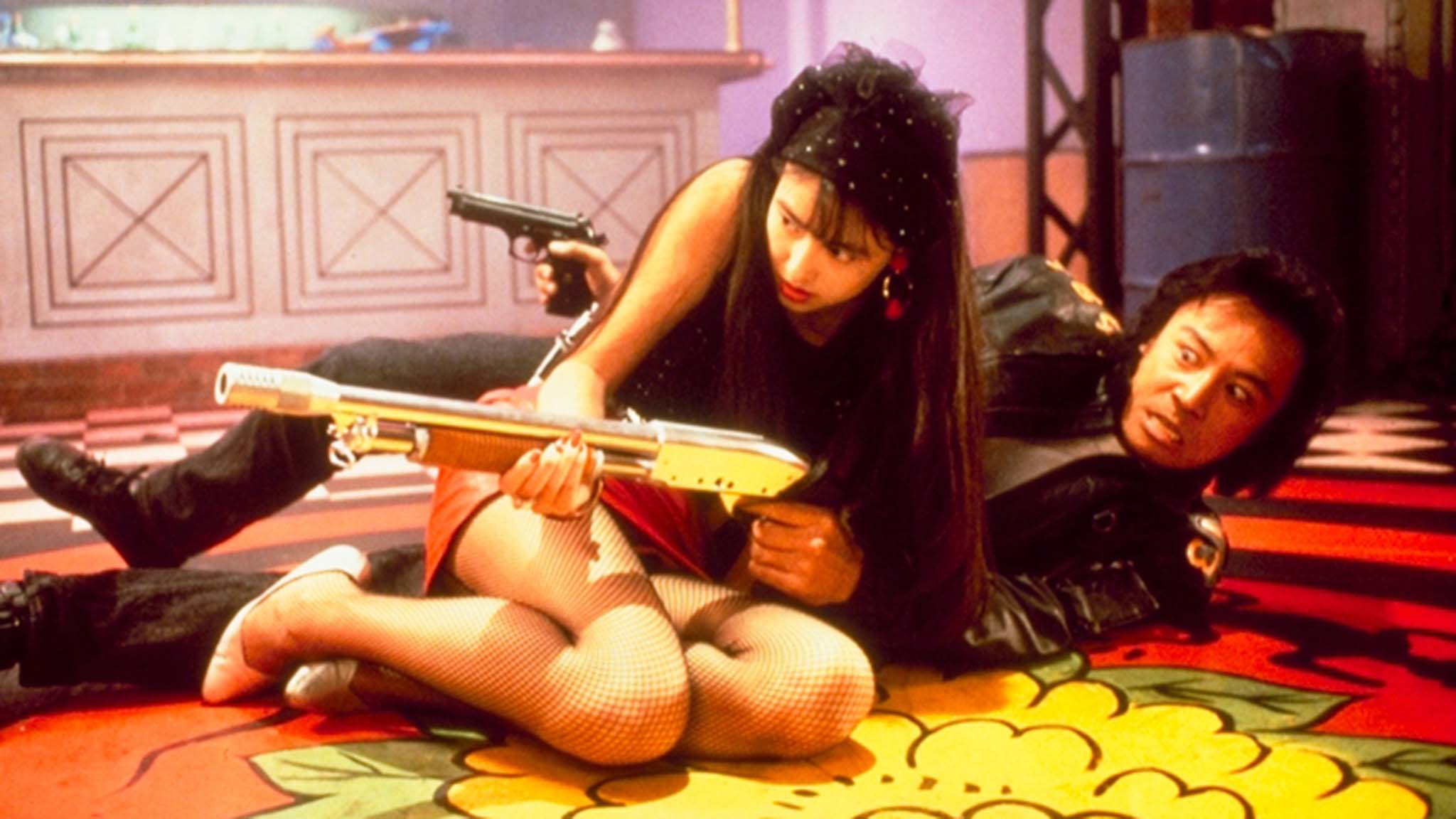
But really not much of that matters in comparison to the increasing outlandishness as Lily transitions from wimple-wearing bad ass sister to a nightclub dancer femme fatale in fishnets infiltrating the Cathay Tiger gang with expertly crafted dance routines. Former mercenary Bruce similarly boasts and improbably impressive arsenal of grenade launchers and machine guns before arriving at the depressing environment of a disused industrial complex for the nihilistic showdown in which Joker realises there is no way to right this world of corruption and that he and Bruce weren’t so different in each being controlled and defined by an oppressive society in which there are no happy endings even for heroes.


Negotiator (交渉人 真下正義, Katsuyuki Motohiro, 2005)

Beginning as a popular television drama, Bayside Shakedown developed into hugely successful franchise. Released two years after the second theatrical feature, 2005’s Negotiator (交渉人 真下正義, Koshonin: Mashita Masayoshi) is a self-contained spin-off revolving around Japan’s first specialist negotiator Mashita, whose name actually appears in the title. In Bayside Shakedown 2, he’d returned to the Wangan police department having left to pursue specialist training in the city. Though some of his former colleagues make cameo appearances and Motohiro maintains the lighthearted tone the series is known for, Negotiator essentially reverses the position of previous instalments, adopting the outsider’s perspective as Mashita finds himself implanted in the control room of the metropolitan mass transit system. 

For some reason in Japanese cinema, terrorist threats seem to arrive on Christmas Eve with alarming frequency, significantly upping the stakes for Mashita personally as he was planning to propose to fellow police officer Yukino (Miki Mizuno) after a romantic date the details of which he seems to be rather sketchy on. In any case, the crisis at hand is a rogue and unexpected train on the Tokyo subway. It quickly becomes apparent that someone has hijacked a remote-driven experimental “Spider” train designed to automatically switch gauges so that it can travel between differing lines on the complicated transit map. The hijacker will apparently only speak to Mashita, impressed or irritated by his accidental celebrity status following the Rainbow Bridge incident in Bayside Shakedown 2. One of the problems of that crisis had been the police discovering they do not actually have the power to unilaterally close a bridge because it requires the consent and co-operation of numerous other transportation officials (though actually in the end they just do it anyway). 

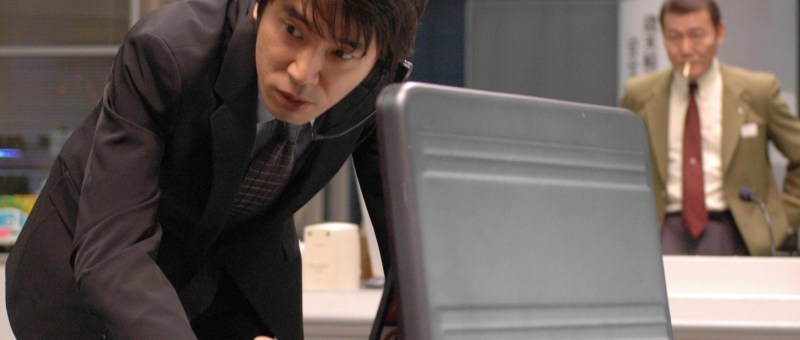
Something similar happens to Mashita when he fetches up in the control room to help. The official in charge, Kataoka (Jun Kunimura), directly tells him that they don’t require his assistance. He will just be in the way and should sit quietly in the corner while they get on with solving the crisis. In this scenario, Mashita is the outsider akin to the HQ guys descending on the Wangan police station and taking over, though as a trained negotiator he is more aware of the implications of his actions and temporarily agrees to take a back seat while his team set up shop in a meeting room only to be further embarrassed when it becomes apparent that the hijacker is intent on playing a game with him personally while thousands of ordinary passengers, not to mention railway and law enforcement officials, are placed in danger. 

Unlike previous instalments in the franchise, Negotiator is prepared to leave several questions unanswered such as the hijacker’s identity, purpose, and intentions focussing instead on the approach of the police and railways in response to the crisis. As in Bayside Shakedown 2, a solution is only possible once both sides have learned to trust each other letting go of any sense of division so that they can work together in total harmony. Meanwhile, there is also a minor criticism of institutional insularity as it becomes clear that part of Kataoka’s reluctance to cooperate is out of a sense of duty to the rail service in that he feels himself duty bound to withhold “secret” information that would help Mashita solve the case, that being the existence of tunnels and sidetracks not listed on the map because they are intended for use by the government and the military only in the event of an emergency fearing that revealing them would, ironically, present a security risk. Meanwhile, on the other side, Mashita and his team find their investigations hampered by the fact most of the data they need from HQ is stored on outdated media such as floppy disks, Jazz and Zip drives they do not immediately have the capability to open. 

Meanwhile, Mashita is engaged in a game of cat and mouse with a train obsessive who baits him with movie trivia and inevitably threatens his romance by targeting the oblivious Yukino who thinks she’s been stood up again and has no idea she’s actually in the middle of a terrorist incident. Like the previous films in the franchise, however, the central thesis is that in the end you just have to ignore all of the annoying bureaucracy and learn to work together for a common goal which is in essence what a negotiator is for, Mashita smoothing over conflict and differences of opinion with sympathetic politeness while unafraid to put on a show for the hijacker in order to get what he wants. A seasonal thriller, Negotiator is in an odd way about peace and harmony to all men and saving Christmas from the forces of disorder. 


Trailer (no subtitles)

Kubi (首, Takeshi Kitano, 2023)

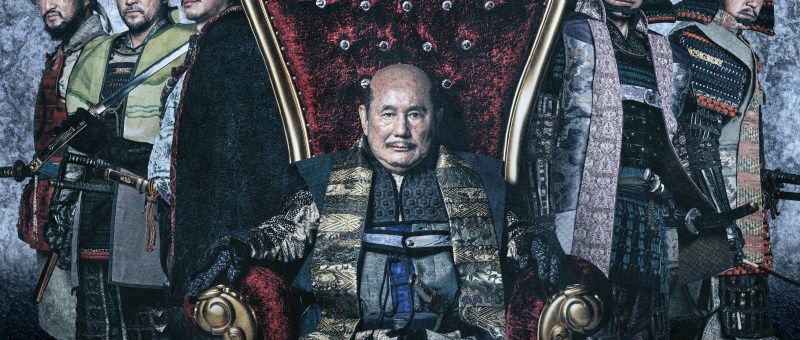
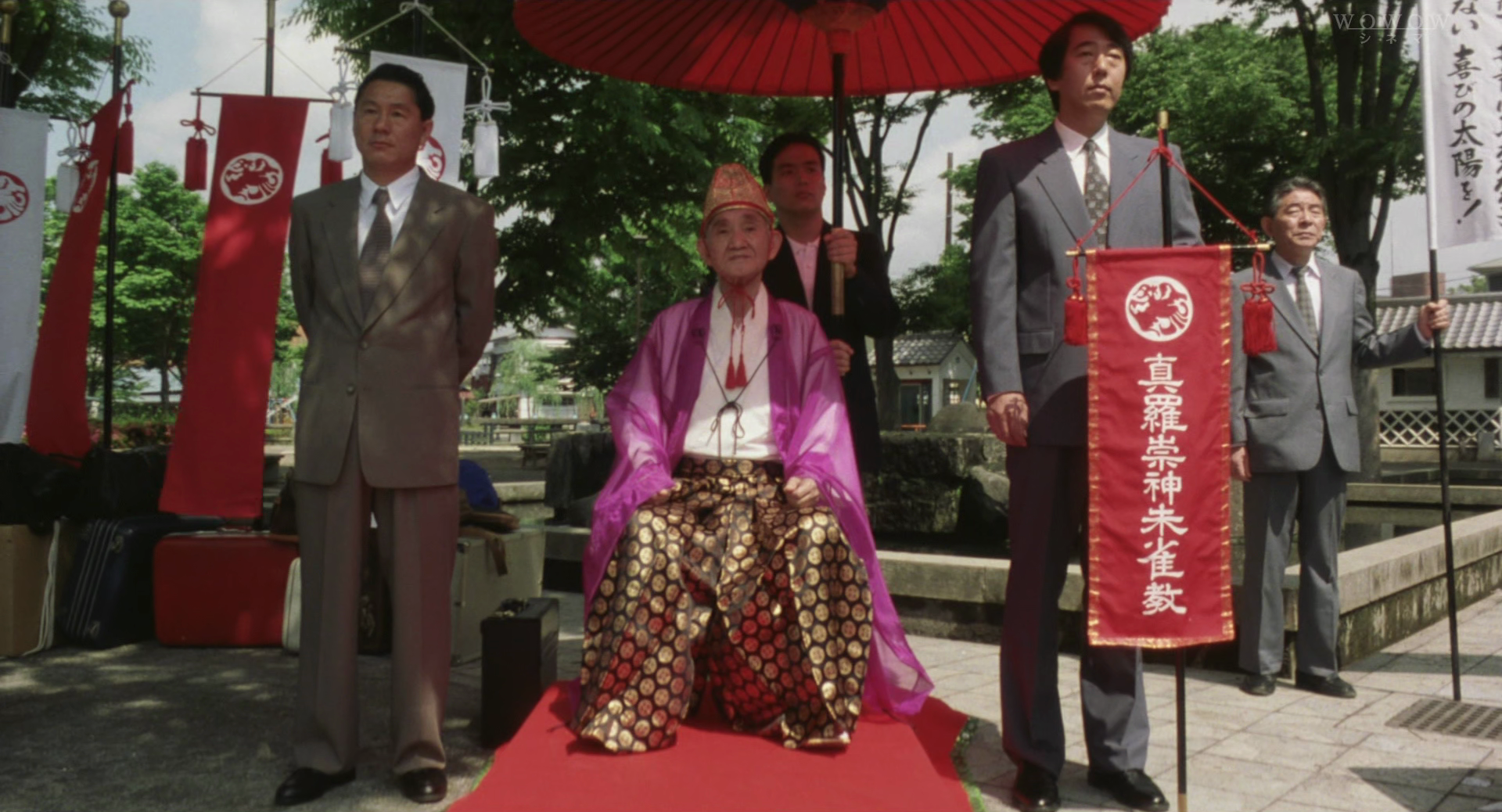
Apparently in gestation for a couple of decades, it’s unsurprising that Takeshi Kitano gave himself the role of Hideyoshi in a long-awaited historical drama adapted from his own novel, Kubi (首). Played as an irascible but wily old man, Hideyoshi is the second of Japan’s great unifiers and, unlike his predecessor, died as a result of an illness rather than intrigue. He was also a peasant who rose through the ranks and is perhaps witness to the tumultuous class conflict and social divisions of a hierarchal society.

Even so, in this version of events, Oda Nobunaga (Ryo Kase) too speaks in a thick rural dialect that sets him apart from his retainers and seems to hint at his uncouthness. This Nobugana is an unhinged despot who threatens and humiliates his subordinates, not to mention sexually assaulting them. In short, there’s no real mystery why his men have begun to turn against him and there is intrigue in the court. The film opens with Murashige’s (Kenichi Endo) quickly quelled rebellion which floundered when his reinforcements failed to arrive. Murashige is on the run and Nobunaga has heavily suggested whoever brings in his head will be first in line for the succession, but Murashige is also in a relationship with Mitsuhide (Hidetoshi Nishijima) another courtier vying for favour in more ways than one from the capricious Nobunaga. 

The striking thing about the staging is how like a yakuza drama this intrigue really is with each of the main factions manoeuvring for control, forming temporary or duplicitous alliances forged in the mutual desire of ousting a ruler whose increasing instability presents only the likelihood of a return to chaos. Nobunaga’s flamboyant speech and threatening manner are reminiscent of a yakuza boss on his way out, as is his obvious tactic of setting his rivals against each other while secretly planning to hand the reins to his son anyway. The film takes place in a largely homosocial world, the only women on screen are sex workers and peasants about to be murdered, only this time defined by romantic intrigue in which the various relationships between the men are inescapably linked with power and duplicity.

Mitsuhide’s relationship with Murashige is originally framed as a giri/ninjo conflict, Mitsuhide torn between the exercise of his duty as a samurai and his love for Murashige, only to later be set wondering if Murashige isn’t also playing him in urging him too towards rebellion, while Murashige accuses him of harbouring desires for Nobunaga which would also necessarily be desire for advancement. Advancement is something sought by all and in particular Mosuke (Shido Nakamura), a peasant who is taken on as a foot soldier after looting a battlefield for amour and killing his friend to get his hands on the prize only to realise just at the critical moment how pointless the constant desire for heads really is. The absurdity is rammed home in the closing scene in which Hideyoshi declares himself uninterested in the severed head he asked for, rendering the quest entirely pointless.

This absurdity extends to introducing the character of a comedian who is later killed for talking too much, while Kitano wise cracks his way along as the affable Hideyoshi. Kitano is in his way in dialogue with other samurai epics, using Akira Kurosawa’s horizontal wipes and introducing a pair of bumbling comic relief peasants only to suddenly kill one of them off because at the end of the day this world isn’t very funny. It’s cruel, and mean, and meaningless, so you might as well laugh like Hideyoshi. Residents of a ninja village conduct a festival in which they pray for death and to be released from this earthly torment as soon as possible, while farmers still dream of becoming samurai little knowing the reality of samurai life.

It’s this cycle of futility that is echoed in the opening image of a severed neck into which crabs in a river are crawling. Kitano stages lavish battle scenes, but ones that are often horrifying and absurd, a visceral struggle in mud and blood fought for no real reason. These samurai live their lives on the point of a sword, but they move and behave like yakuza fighting pointless turf wars and games of petty intrigue until someone finally comes for their heads. In the end, the victor is the one who doesn’t play the game at all, but sits and laughs at the absurd cruelty all around them in which the only stable force is ambition accompanied by a nihilistic lust for blood in an already bloody world.


Kubi  screens in New York July 16 as part of this year’s JAPAN CUTS.

Trailer (English subtitles)

Noise (ノイズ, Ryuichi Hiroki, 2022)

The dark heart of small-town Japan is fully exposed in Ryuichi Hiroki’s ironic tale of murder and mass deception, Noise (ノイズ). “It’s for the sake of the island” the heroes are fond of claiming, one morally dubious justification leading to another as they contemplate the greater good saving their town while eroding its soul assuming of course that it had one to begin with. Addressing everything from rural depopulation to a back to the land philosophy, Hiroki’s quietly escalating drama imbues its “idyllic” wholesome island with an unsettling sense of quasi-spiritual unease as its well-meaning hero begins to buy in to his own saviourhood deciding all things are permissible so long as they serve the town. 

Following a recent trend, Keita’s (Tatsuya Fujiwara) big plan for saving the island is through the cultivation of black figs which he hopes to turn into a local industry boosting the economy and encouraging young people from the mainland to repopulate the rapidly ageing village. Ironically enough, it’s this that brings him to the attention of recently released ex-offender Mutsuo (Daichi Watanabe) whose kindly probation officer has brought him to the island in the hope of finding him an honest job so he can restart his life in a wholesome and supportive environment. Unfortunately, however, Mutso suddenly kills the old man for no particular reason and then begins wandering the island generally acting suspiciously and alarming the islanders including Keita’s best friend Jun (Kenichi Matsuyama), a hunter. When Keita returns home and discovers the bottle he’d seen Mutso drinking from lying in his garden and his small daughter Erina missing, he assumes the worst. He, Jun, and their childhood friend Shin (Ryunosuke Kamiki) recently returned to the island to take over as its one and only policeman, finally track Mutsuo down to one of the greenhouses and challenge him only for Mutsuo to fall over and hit his head during the tussle. 

Obviously on a personal level it’s not an ideal situation for the three guys but their first thoughts are for the island. Keita was supposed to be its saviour and now he’s killed someone in right under the figs that were supposed to rescue the economy. If this gets out it’s game over for everyone. The first lesson new policeman Shin had been taught by his departing predecessor (Susumu Terajima) had been that a policeman’s job is about more than enforcing the law and sometimes what’s “right” might not be “best” for the town using the example of a middle-aged woman with a history of bad driving who’d hit a wild boar. If she lost her license the family’s life would become impossible, so seeing as it’s “only” an animal, perhaps it’s better not to bother logging it as a “crime”. Faced with this situation, Shin decides the greater good of the island is more important and that covering up the crime is best thing for everyone only to be caught out when mainland police arrive having been alerted by the probation officer’s daughter. 

The situation is complicated by the fact that the town had been in the running for a government development grant based on the potential of the figs which gives everyone a reason not to want the scandal of a murder taking place on the “idyllic” wholesome island where according to the mayor, Shoji (Kimiko Yo), there is “absolutely no crime”. That may largely be true especially given the attitude of local law enforcement but is also an ironic statement seeing as we later discover Shoji apparently cannot sleep without her trusty taser by her side, just in case. Having lied in trying to cover up the murder, Keita is later forced to get even more of the townspeople involved in the conspiracy while they are it seems surprisingly happy to help because they believe in him as the saviour of the town and are prepared to do pretty much anything to help save the island. 

Stoic yet omniscient police detective Hatakeyama (Masatoshi Nagase) sneers at the villagers’ tendency to see all outsiders as enemies. “Typical of a dying town” he adds, commenting on the way the combination of isolation and desperation has brought the townspeople together as they present a united front in the face of the things they think threaten their small-town wholesomeness, some objecting to the idea of new residents moving in a fear which is ironically borne out in the arrival of a man like Mutsuo. Yet their small town wasn’t all that wholesome to begin with. Shoji had told the three guys to eliminate the “noise” that disturbs the island though in the end it isn’t’ so much Mutsuo who created the disturbance as their own quasi-religious determination to save the island by whatever means necessary. Keita wants to save the island because the island once saved him, but in saving it like this he ironically destroys the very qualities he hoped to preserve in building their new future on blood and lies. 

Meanwhile the strain of trying to conceal a murder exposes the cracks in the foundations of the friendship between the men, earnest policeman Shin continually conflicted in betraying his own ideals, while hunter Jun’s personal insecurity in continually playing second fiddle to saviour Keita who is so obsessed with the idea of being the island’s chosen one that he never notices the pain in each of his friends, gives rise to a degree of instability in their otherwise carefully crafted plan. Maybe this island isn’t so idyllic after all, keeping a dark hold on the bewitched Keita as his increasingly worried wife Kana (Haru Kuroki) suggests concerned he’s “becoming someone else” in buying in to his own messianic hype. “What are you trying to protect?” Hatakeyama had asked him hinting at the dark side of the furusato spirit but also at his misplaced priorities as the forces of greed and anxiety threaten to consume the wholesome soul of moribund small-town Japan. 


Noise streams in Europe until 30th April as part of this year’s Udine Far East Film Festival.

international trailer (English subtitles)

Funky Forest: The First Contact (ナイスの森 The First Contact, Katsuhito Ishii & Hajime Ishimine & Shunichiro Miki, 2005)

“Is that normal?” someone asks watching a previously mild-mannered doctor having a right old go at a tiny man baby currently attached to a high school girl’s armpit after being pulled free of its aquatic carapace, “don’t be rude” his companion shushes him. Katsuhito Ishii, Hajime Ishimine, and Shunichiro Miki’s Funky Forest: The First Contact (ナイスの森 The First Contact, Nice Mori: The First Contact) became the best known example of the short-lived trend in surreal comedy which came to dominate a certain kind of Japanese cinema from the late ’90s to early 2000s while perhaps surviving into the present day in a more arthouse friendly form in the deadpan absurdist cinema of filmmakers such as Akira Ikeda (Ambitious Places, The Blue Danube) or Isamu Hirabayashi (Shell and Joint).  

Even so, Funky Forest is wilfully anarchic skipping between a series of interconnected skits that eventually coalesce as something like a unique universe loosely revolving around three “unpopular with women” brothers and a “delusional” high school teacher in a non-relationship with a former student who thinks he’s seen a UFO and is engaged in a battle to save the aliens from the planet Piko-Riko. Two and a half hours long, which is admittedly pushing it for a non-linear sketch comedy, the film is split into two parts, Side A and Side B, joined by a short intermission after which the surrealism intensifies, the design of the title cards changes, and the action shifts in focus from a quiet onsen to an ordinary high school where the teacher and the two adult brothers each work. 

The action begins however with a pair of manzai comedians seemingly performing on some kind of space ship and to an audience consisting of identical military personnel each like the comedians dressed in white and silver while the show is broadcast to a man sitting in a tiny pod-like dream ship. The “Mole Brothers” recur throughout, their set routinely dividing one skit from another while one, Kazushi, also turns up on his own in a couple of other sketches as part of the great connected universe, and though their act being kind of a dud is part of the joke their variety-style humour is an otherwise key indicator of the kind of comedy which is being employed and subverted even as the action becomes ever more surreal. As it happens, each of the major plot strands seems to lead us towards a dance sequence such as that which closes the first half in Takefumi’s (Ryo Kase) strange fever dream which culminates in a Mandarin-language group routine and the first appearance of the weird, shrimp-like creatures which dominate Side B. 

Side B is indeed somewhat through the looking glass as we find the high school kids literally playing these alien creatures like musical instruments some of which need to be plugged in to the human body in one way or another such as the strangely cute rat/shrimplike beings which attach directly to the tongue. Sitting right in front of the high school class which is taught by lovelorn brother Katsuichi (Susumu Terajima) is none other than the film director and Neon Genesis Evangelion creator Hideaki Anno who later turns up again to discuss contemporary anime with guitar bother Masaru (Tadanobu Asano) in one of his many part-time jobs, though the class also includes the young primary school student who featured in the first skit in which she lamented having so much homework and escaped to the dreamscape in order to fight giant orbs with her mind. 

In an odd way perhaps that’s what our three directors are doing too, away on flights of fancy which make little literal sense but seem to have their own internal logic even though the directorial force the film presents is an adorable little scottie dog whose thoughts are translated by someone wearing a giant papier-mâché head. “Thinking is too scary, so I’ll forget about it”, someone explains which may be good advice in deciding to just accept the crazy randomness and play along. Often interrupting the action by cutting to black to mimic old-fashioned channel hopping the directors also throw in a random 20s intermission in the middle of a scene, animation of various styles, and surreal body-horror-adjacent practical effects, before winding up at the funky forest itself, a weird dreamscape somewhere in Hokkaido ruled by a dream-hopping girlband.  “What a strange dream” one character exclaims though in the great scheme of things perhaps it’s easier to make sense of a dream than a defiantly surreal reality.  


Funky Forest: The First Contact is released on blu-ray in the UK on 21st March courtesy of Third Window Films alongside quasi-sequel Warped Forest in a set which includes a feature length commentary from all three directors and a series of deleted scenes.

Original trailer (English subtitles)

Air Doll (空気人形, Hirokazu Koreeda, 2009)

“Was everything you saw in this world sad? Was there something, anything, what was beautiful?” the heroine of Hirokazu Koreeda’s exploration of urban loneliness Air Doll (空気人形, Kuki Ningyo) is asked by her creator though he can offer her few answers for the strange mystery of her life. Like a child, she takes beauty where she finds it yet much of what she sees is indeed sad as she reflects on the disconnected lives around her, the emptiness and futility of life in the contemporary society where everything is just a substitute for something else which cannot be obtained. 

As for herself, she is quite literally empty inside, an inflatable sex doll owned by middle-aged family restaurant waiter Hideo (Itsuji Itao) who has given her the name of his ex, Nozomi (Bae Doona), which ironically means hope, wish, or desire though not generally of the sexual kind. Yet one day she suddenly wakes up and begins to explore the world rejoicing in its new sensations feeling the rain on her hands and the wind that sounds the chimes as she watches her neighbours go about their daily routine. Dressed in the French maid’s outfit picked out for her by Hideo she gets a job at a local video store and begins living a more independent life while learning how to operate in human society. She feels herself out of place but is repeatedly told that there are others like her, mistaking her literal emptiness for their spiritual despair. 

Yet that sense of emptiness and futility is evident from Nozomi’s first forays into the human world in that the first act of mundanity she witnesses is the bin men sorting rubbish for disposal. “Unfortunately they’re non-burnable” Nozomi’s creator explains when she visits him in search of answers revealing he throws out the broken dolls that are returned to him once a year, “after all, once we die we’re burnable garbage. It’s not such a big difference” he adds, though as it turns out it is quite a big difference to Nozomi in ramming home to her that she can never become human and will always be something else, an inorganic “substitute” for something perceived as the “real”. 

“Your only flaw is that your body’s so cold” Hideo ironically laments as he warms her up in the bath, something she is told repeatedly to remind her that though she has discovered a heart it does not beat and she is not “alive”. Yet an old man (Masaya Takahashi) seeking a different kind of comfort later remarks that those with cold hands often have warm hearts as he reflects on his own life as a “substitute” teacher while she looks over the pictures of the many dogs he’s had through the course of his life as substitutes for the traditional family that have only left him feeling lonelier through their inevitable absences. There is perhaps in this a slightly conservative and uncomfortable implication that the loneliness we see in everybody that we meet is partly caused by the decline of the traditional family itself partly a consequence of the shifting gender roles of the later 20th century society. When they first meet, Nozomi has been rejected by a group of local mothers for inappropriately cooing over a baby in a pushchair the old man comforting her with a tale of the mayfly which is itself empty inside existing only to give birth and then die its own life defined by futility. Nozomi can never truly be human, but more than that she can never truly be a woman because she cannot reproduce as signalled in her final exchange with a little girl in her neighbourhood who swaps her beaten up and broken doll, a substitute for her absent mother now symbolic daughter to Nozomi, in exchange for her ring, a symbol of adulthood. 

In this way Nozomi becomes herself a symbol of something that is broken, an active barrier to societal happiness in providing a way for men like Hideo to escape the responsibility of the traditional family by satisfying his sexual desire through a fantasy of intimacy with an inanimate substitute. When Nozomi throws her pump away, Hideo buys a new model and when she confronts him he asks her to go back to being a passive doll because he finds all the human stuff “annoying” and only wants a woman who can be a selfless embodiment of his desires, will never talk back, challenge him, or hurt his feelings. Meanwhile, when her boss at the store (Ryo Iwamatsu) who seems have experienced a recent familial breakdown of his own blackmails her into having sex with him in the bathroom he is conversely annoyed by her passivity while tearfully calling out his wife’s name. Even her innocent love for coworker Junichi (Arata Iura) has its darkness, not only does she suspect she’s merely a substitute for his ex, his fetishisation of her revolves around his ability to take control over life by letting out her air and then permitting her to live by blowing his own back into her. 

“I am an air doll. A substitute for sexual desire” is how she introduces herself, preoccupied with her literal emptiness yet along with a heart discovering a sense of self as she interacts with others, beginning to wear her own clothes rather than those purchased for her by Hideo. At a moment of crisis she is surrounded by all the treasures she’s collected which ironically include a number of ornaments intended for a doll’s house including a tiny simulacrum of a cake which reappears in her imaginary birthday party suggesting that the only true happiness is to be found in wishful fantasy while the “real” will only ever disappoint. Nevertheless, she uses her last breath to bring happiness to all she can, uniting the old man with a lonely old woman (Sumiko Fuji) who confesses to random crimes just to have someone to talk to. Shot with unusual fluidity by Mark Lee Ping-Bing, Koreeda captures a society in flux in which the easy convenience of disposable consumerism has begun to replace human relationships and left us all empty inside. 


Air Doll in in US cinemas and on VOD Feb. 4 courtesy of Dekanalog

Trailer (English subtitles)

Last of the Wolves (孤狼の血 LEVEL2, Kazuya Shiraishi, 2021)

“The Showa era’s over. We don’t use guns now, business is our battlefield.” a recently released foot soldier is told, finding himself in a whole new world emerging from a not so distant past of turf wars and street scuffles into a late bubble wonderland of besuited corporatised gangsters. Set in 1988, Kazuya Shiraishi’s Blood of Wolves had been about the twilight of post-war gangsterdom forever associated with an era that was literally about to pass. Set three years later in the twilight of the bubble economy and an already established Heisei, Last of the Wolves (孤狼の血 LEVEL2, Koro no chi: Level 2) finds no longer rookie cop Hioka (Tori Matsuzaka) taking on the mantle of his late mentor Ogami, attempting to broker peace by getting uncomfortably close to yakuza. 

At the end of the previous film, Hioka had managed to engineer a truce between rival gangs Odani (with whom he is affiliated), and Irako through pushing top Odani guy Ichinose to take out boss Irako. Three years later, the peace has held and in any case Heisei yakuza no longer take violence to the streets. The release of crazed Irako foot soldier Uebayashi (Ryohei Suzuki), however, threatens to destabilise the local balance of power. Despite mournfully declaring that he doesn’t intend to wind up back in prison, Uebayashi’s first call on release is to the sister of one of his guards whom he rapes and kills in quite gruesome fashion. Hioka is put on the case and partnered with a genial veteran, Seshima (Yoshiko Miyazaki), weirdly excited about investigating a murder at this late stage of his career, but quickly realises that Uebayashi’s recklessness is primed to destroy everything he’s built. 

Having started out a straightlaced rookie, Hioka has fully incorporated the Ogami persona dressing in sharp suits and sunshades, driving a sports car, and hanging out with the Odani guys, while also using his girlfriend’s little brother Chinta (Nijiro Murakami) as a mole in rival gangs. As a cynical reporter points out, however, Ogami was essentially “undercover” in that he understood hobnobbing with yakuza was part of his job and something he did solely to keep civilians safe by preventing another street war. Hioka has started to lose his way, enjoying himself a little too much and already way out of his depth as the fragile peace he’d brokered by less than ethical means begins to crumble beneath his feet. 

Having been in prison, Uebayashi is unaware of the various ways in which the world has changed seeking to return to old school rules of gangsterdom, ironically lecturing his superiors on the absence of jingi (honour and humanity) in their new corporate existence. He’s a monster and a sadist, but his violence is also a result of the horrific abuse he suffered as a child which led to an equally heinous act of revenge while as a member of the ethnic Korean Zainichi community, like Chinta and his siblings, he continually faces discrimination and social oppression. His first act on release is of revenge against the guards who relentlessly tortured him in prison, the murdered woman’s brother confessing that they wrote him up as a model prisoner in the hope he’d be released early so they wouldn’t have to deal with him anymore.  

Yet what Hioka and Uebayashi have in common is that they’re both pawns in a game they were unaware was being played. As it turns out the police corruption Hioka discovered during the previous film did not go away, and in certain senses they liked things the way they were before. Hioka’s truce is very bad for business for a certain subset at least. They might be minded to let a dangerous killer go loose if it disrupts Hioka’s attempt to suppress the criminal underworld to manageable levels. Mimicking the classic jitsuroku, Shiraishi throws in occasional voiceover from an anonymous narrator along with freeze frame and montage while skewing still darker in the levels of depravity among these desperate men fighting over the scraps of a world already in terminal decline even as the bubble seems fit to burst. Shiraishi ends on a note of change with the institution of the organised crime laws which have contributed to the ongoing decline of the yakuza, a relic of the Showa era unfit and unwelcome in the modern society, but also discovers that for good or ill there may yet be wolves in Japan.


Last of the Wolves screened as part of this year’s New York Asian Film Festival.

Teaser trailer (English subtitles)

Harmful Insect (害虫, Akihiko Shiota, 2001)

“We’re only in seventh grade, why does Sachi have to suffer so much?” a well-meaning friend eventually asks as she comforts the heroine of Akihiko Shiota’s Harmful Insect (害虫, Gaichu), even as her mother turns away from her too fragile herself to be of much use. Sachiko (Aoi Miyazaki) does indeed suffer, continually victimised by the world in which she lives and having that victimisation used against her, rejected by her peers and almost blamed for the misfortunes which befall her as if she were the one at fault simply for existing. 

Shortly after the opening scene in which 13-year-old Sachiko’s mother (Ryo) attempts to take her own life, we see the girls at school gossiping about her while she’s still in earshot not entirely sympathetic as they remark on the fact her father left the family while implying that her mother is some kind of broken-hearted love fool driven to suicide over the loss of a man. Sachiko quickly becomes the woman of rumour, but in a motif which will be repeated the teens talk but never listen swapping stories between themselves and embellishing them as they go. It’s uncertain how much truth there is in the legend of Sachiko but it’s clear that they disapprove of her, adopting a puritanical moralising mindset in which they simply shun her for being something other. Only Natsuko (Yu Aoi) tries to stop them, reaching out to Sachiko even as Sachiko rejects her but is ultimately able to offer little help when even Sachiko’s mother is ill-equipped to protect her. 

The truth is that Sachiko is never safe anywhere. Everywhere she goes, she becomes a target for predatory men of all ages. A schoolboy on a bike harasses her by asking childish questions about her period, while sleazy salarymen repeatedly proposition her for sex, and even her mother’s new boyfriend in a doubly destructive act of betrayal cannot be trusted. She says little and keeps to herself, her silence and her isolation a kind of defiance and defence mechanism. After dropping out of school, she starts hanging around with a drop out 20-something (Tetsu Sawaki) and his homeless friend (Koji Ishikawa) who seems to have learning difficulties, discovering that they support themselves through staging accidents for compensation money. She considers doing the same thing, not for the money but craving the thrill of a near death experience only to find herself unable to go through with it. 

Meanwhile, she continues a letter-based correspondence with her former teacher with whom she is rumoured to have had an affair. Mr. Ogata (Seiichi Tanabe) later resigned for obvious reasons and now has a low-grade job at a nuclear plant. He answers her letters when he can, mostly offering paternalistic platitudes but like her absent parents is unable to provide her with the guidance she is seeking. What she seems to be looking for is the kind of parental input that would allow her to feel protected, safe, but no one is really there for her. She resents her mother’s emotional dependency and tendency to involve herself with unsuitable men, but worries she’s becoming the same striking out for an early independence but discovering only danger and futility. 

She asks herself if vice is the essence of human existence, then is goodness only the quality of not being entirely bad? Her view of the world already coloured with nihilistic despair. The men who misuse her feel they have no real need to justify their actions, but simultaneously blame her for tempting them though she does nothing other than exist remaining silent in order to avoid attracting attention. Then again even she doesn’t quite understand, asking her teacher why it is he can’t forgive himself simultaneously accepting that what happened between them, whatever that was, was wrong enough to warrant forgiveness but unable to grasp why he cannot let go of his guilt, continuing with this half-hearted correspondence unable to grant her the care that she is seeking. Wandering between flashbacks and brief vignettes of her life, Shiota captures Sachiko’s sense of total aloneness as even her sole source of sanctuary is taken from her leading to an explosive act of partially self-destructive violence that sends her forever on the run. The choice she makes at the film’s conclusion, be it in submission or defiance, is hers alone but in its own way a tragedy dragging her deeper into dangerous despair with escape an ever distant possibility.


Harmful Insect streams in the US until Dec. 23 as part of Japan Society New York’s Flash Forward series.

Original trailer (no subtitles)

Images: ©2002 NIKKATSU / TBS / SONY PCL

Gohatto (御法度, Nagisa Oshima, 1999)

Nagisa Oshima once said that his hatred of Japanese cinema extended to absolutely all of it, decrying the hackneyed nativism of “foggy beauty and stupid gardens”, yet his final film is filled with Mizoguchian mist and almost a paen to Japanese aesthetics which ends with a cherry blossom tree in full bloom cut down in its prime. Burdened by the slightly more salacious title “Taboo”, Gohatto is less about love between men in an intensely homosocial world even as it asks what it might mean by “forbidden” or “against the law” than it is about idealism and aesthetics as its band of contradictory conservatives unknowingly approach the end of their world in a coming modernity ushered in by dangerous beauty. 

Set in the Kyoto of 1865, a scant three years prior to the Meiji Restoration, the film opens with an audition of sorts as the Shinsengumi search for promising new recruits among talented swordsmen. Already a mess of contradictions, the Shinsengumi is, loosely, a kind of official police force dedicated to defending the Shogunate against the revolutionary forces set on restoring power to the emperor. Nevertheless, in an odd way and in contrast to the elite Mimawarigumi which was staffed only by direct retainers to the Shogun, the Shinsengumi was noted for its lowkey egalitarianism in that it made a point of admitting those of ordinary birth as well as lower level samurai and ronin. Of course, the notions of equality only went so far and perhaps only fuelled its reputation for merciless savagery, but also make it a strangely progressive force fighting against progress in defence of the feudal status quo. 

Only two of the hopefuls are thought to be any good, one a young ronin, Tashiro (Tadanobu Asano), and the other a beautiful boy, Kano Sozaburo (Ryuhei Matsuda), the third son of a wealthy merchant whose line were once samurai but are no longer counted among the noble retainers. A talented swordsman, Sozaburo’s dangerous beauty presents an existential threat to the Shinsengumi order, the steely Hijikata (Takeshi Kitano) looking on conflicted in witnessing the way his commander, Kondo (Yoichi Sai), looks at this vision of androgynous beauty remarking that he had not known him to be “that way inclined”.

Being that way inclined does not seem to be a particular issue within the Shinsengumi, it is not against their draconian rules and in fact appears to be tolerated at least as long as it causes no further problems. Kondo is however mindful of the chaos caused by a similar wave of homoerotic lust which took hold shortly before a climactic battle which would prove to be their last success. What Sozaburo seems to arouse in them is something more dangerous than the accepted patterns of love between military men which is in a sense sublimated as a mentor/student relationship, loyalty more than romance. Tashiro, who is of a similar age to the apparently 18-year-old Sozaburo, lets his desire be known, vowing to sleep with him before he dies ironically acknowledging Sozaburo for what he is, an angel of death. 

For his part, Sozaburo remains curiously passive in each of his encounters, aroused only it seems by the act of killing. Yet Hijikata discerns that he has indeed become Tashiro’s lover on witnessing them fight, Sozaburo losing clumsily despite being the more skilled in a dynamic that mimics their relationship in which Tashiro is the dominant partner. Aware of the danger in Sozaburo’s allure, Kondo suggests having a superior take him to the red light district to show him the delights of woman hoping to guide him back towards a less dangerous path, only the attempt backfires on several levels. Firstly, Sozaburo has no interest in women and continues to decline believing his commander is also hitting on him (like everyone else), thereafter determined to seduce him after all. Another retainer does indeed succeed in seducing Sozaburo, developing a mild obsession, but later ends up dead, Tashiro a main suspect in his murder with the motive of sexual jealousy though all of this additional violence is perhaps only an expression of Sozaburo’s dangerous beauty. 

As so often, sex if not love becomes the force which destabilises the social order only here it’s equated both with death and with an alternative mediation of male violence. Perhaps reflecting the way they look to the 18-year-old Sozaburo who makes a faux pas in accidentally suggesting at least one of them is of pensionable age, the ranking members of the Shinsengumi are played by actors already well into their golden years as if relics of a bygone era though in reality most were in their 30s. As Soji (Shinji Takeda), a filial figure like Sozaburo wearing long hair, puts it, there are no old men in their unit which is in essence an anti-revolutionary force. Nevertheless, the Shinsengumi is on the wrong side of history and already living in its end times, perhaps ushered towards its doom by the figure of the beautiful boy. “You were too beautiful”, Hijikata eventually laments as he finally perhaps understands the nature of the revolution he is witnessing. Perverse to the last, Oshima sets his ethereal finale in a stygian fog and pays an ironic tribute to the Mizoguchian classicism he so railed against in his youth, taking a sword to the cherry blossoms as he like Hijikata severs his own legacy in a moment of destructive beauty. 


Gohatto screens at Genesis Cinema on 25th September as part of this year’s Queer East

International trailer (English subtitles)

Hit Me Anyone One More Time (記憶にございません!, Koki Mitani, 2019)

Imagine if you woke up one day and found out you’re actually the national leader of your country and not only that absolutely everyone, including your wife and son, hates you with furious intensity. The hapless protagonist of Koki Mitani’s lowkey political satire Hit Me Anyone One More Time (記憶にございません!, Kioku ni Gozaimasen!) finds himself in just this stressful situation having lost all of his memories since he made the fateful decision to enter politics, rendered infinitely naive as he tries to keep up appearances while internally conflicted by the direction both his life and his country under his stewardship seem to have taken. 

Regarded as the “all-time worst prime minister” in Japanese history, Keisuke Kuroda (Kiichi Nakai) is known as a venal bore, a ghastly misogynist and all-round arsehole. To put it bluntly the very fact that a man like Kuroda could ever have become prime minster in the first place hints at a deep-seated rot in the political order. Aside from his gaffe-prone personality, the chief complaints against his administration are a sales tax hike and welfare cuts both of which target those with the least means, not that Kuroda cares very much about them. His big legacy idea is to build a second Diet building right next to the first Diet building only with spa facilities, illicitly teaming up with a childhood friend turned construction magnate who has been supplying him with hefty “donations”. 

After insulting the electorate during an outdoor balcony speech, Kuroda is hit on the head by a rock thrown by a disgruntled voter. Having lost his memory he regresses to a state of innocence from before he was corrupted by the cutthroat world of Japanese politics, now a nice, polite, slightly mild-mannered man who stuns his staff with his newfound consideration for others including a widely televised moment in which he stops to help up a female reporter who trips while chasing him in the lobby. Few believe he’s really changed, assuming this is some sort of bit intended to help rehabilitate his reputation. His new attitude, however, eventually fosters a new sense of hope for political change among his previously jaded, cynical staff who had long since given up hope of building a better Japan. 

Unsurprisingly, Mitani mostly avoids direct allusions to real world politics but adopts a mildly progressive stance as he sends a virtual innocent into the lion’s den of contemporary politics. It’s not long before Kuroda’s asking sensible questions about policy that wouldn’t go down so well with his (presumably) centre-right party including lowering the sales tax and raising the corporate, taking the time to greet constituents including a contingent of cherry farmers which contributes to his later decision to turn down a tariff-free trade deal for American cherries endangering diplomatic relations with the Japanese-American US President. No longer a ruthless political animal but a rueful middle-aged man who actually cares about ordinary people, Kuroda attempts to change the course Japanese politics largely by taking on the king maker, Tsurumaru (Masao Kusakari), his Chief Cabinet Secretary and the true holder of power in this infinitely corrupt political system. 

All sorts of sordid politics is on display from Kuroda’s womanising and a potential blackmail plot involving his wife’s affair to Tsurumaru’s yakuza ties and an even worse secret he would find personally ruinous should it get out. The ironic Japanese title of the film takes its name from that most universal of political get out of jail free cards, “I do not recall”, Kuroda’s standard response when questioned in the Diet about any of his extremely dodgy dealings. Instructing Kuroda that he should drop this “shallow humanism”, Tsurumaru can offer only the motivation that he wants to “remain in politics for as long as possible” while discovering that his old-school methods of political manipulation may no longer work when those around him find the courage to shed their cynicism and embrace a cleaner, kinder politics. 

Throwing in random gags such as a foreign minister who can’t speak English and has large ears with a pot belly that give him the appearance of Buddha while taking minor potshots as the usually toothless TV media through his series of acerbic anchors only too keen to criticise the PM live on air, Mitani’s comedy is characteristically inoffensive with its mix of slapstick and goodnatured farce but nevertheless makes a subtle plea for decent, compassionate politics which puts the interests of the people first rather than those of the governing elite. 


Hit Me Anyone One More Time streamed as part of this year’s Nippon Connection.

Original trailer (English subtitles)