Asakusa Kid (浅草キッド, Gekidan Hitori, 2021)

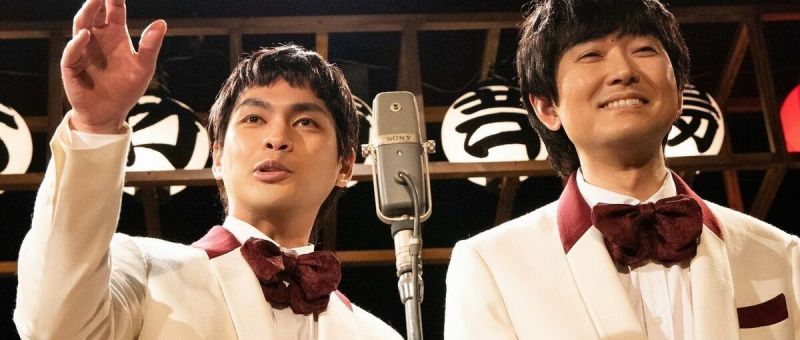
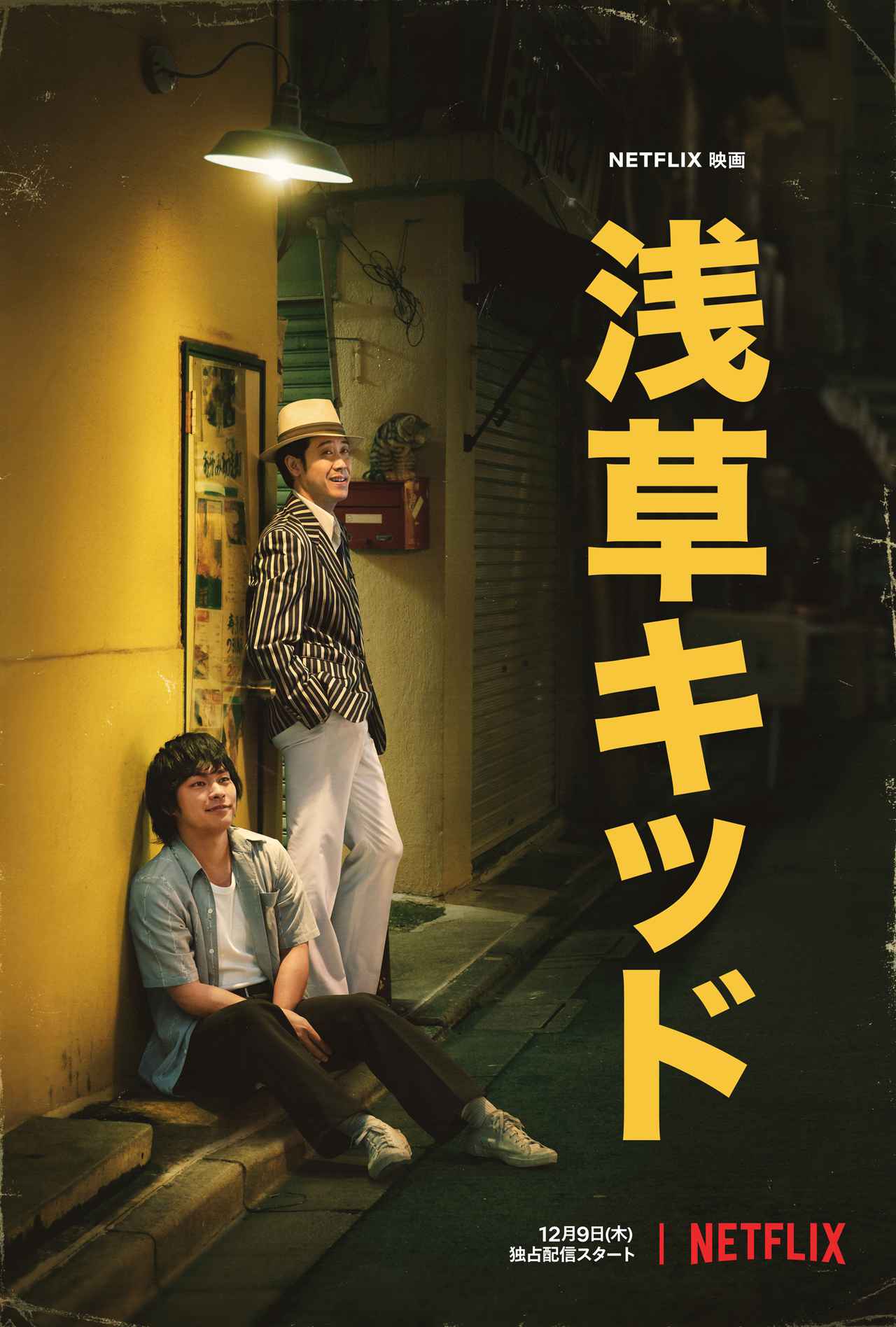
To international audiences, Takeshi Kitano has a very specific profile associated most closely with arthouse drama and violent gangster movies yet in Japan he’s best known as a comedian and TV personality. Inspired by Kitano’s memoir, Asakusa Kid (浅草キッド) charts his earliest days from entertainment district elevator boy to manzai star while lionising his earnest mentor Sozaburo Fukami (Yo Oizumi). Yet it’s also a nostalgic look back to a late Showa pre-bubble Japan as Kitano’s idol finds himself falling foul of a changing entertainment industry. 

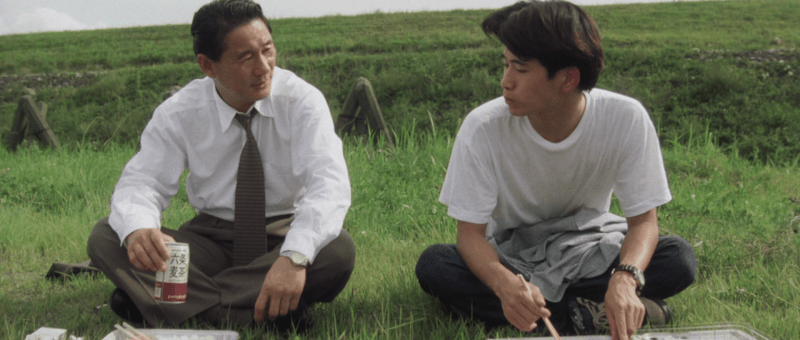
As the film opens in 1974, “Take” (Yuya Yagira) is one half of a struggling manzai comedy double act touring the country in various variety and cabaret establishments fearing his career may die out on the road before beginning to edge towards success and a high profile TV gig. Two years earlier, however, he’s an awkward college dropout working as an elevator boy at France-za comedy bar burlesque theatre. A local boy, Take has chosen France-za because of his admiration for “Fukami of Asakusa”, longing to make his way into the entertainment world while captivated by Fukami’s cool style, even copying his trademark tap dancing. Fukami soon sees talent in Take and tries to nurture it, but as the pair of them are repeatedly reminded, this kind of comedy is already old-fashioned. Audience numbers at France-za continue to decline while as one of the other girls later reminds him the men who come to these shows are there to see women take their clothes off, not random skits or singing. 

This is brought home to Take when he tries to encourage one of the strippers, Chiharu (Mugi Kadowaki ), to chase her dreams of becoming a singer by convincing Fukami to allow her to fill a 15-minute spot. As Fukami had attempted to warn him, the men appear to enjoy her song and offer rapturous applause but think it’s part of her act and soon resort to catcalls expecting her to take her clothes off. Take’s well-meaning gesture backfires, convincing Chiharu her dreams of singing are over, while Take is also poked into action by the other stripper’s retort that the comedy is only really “filler” between the burlesque acts which is what the customers have come to see. 

Even so, there’s less drama than one might expect in Take’s eventual decision to betray his mentor by choosing manzai and its opportunities for TV success over his by then old-fashioned sketch comedy. The father/son relationship somewhat falls by the wayside as even as a triumphant Take later returns “home” to present Fukami with the prize money for a TV award like a child with a report card full of As, while he gracefully accepts it but is privately filled both with a sense of pride and personal disappointment in being forced to accept that the heyday of Asakusa is over and there is no future in his vaudeville-style comedy acts. Nevertheless, Take appears to attribute much of his success to things he learnt from Fukami from his tap-dancing to his uncompromising attitude. “Don’t be laughed at, make them laugh,” he recalls Fukami telling him, “don’t suck up to the audience, tell them what’s funny,” later refusing to soften his inappropriate jokes about ugly girls and suicide for a more conservative TV audience and finding his edgy comedy an irreverent hit. 

Then again, not everyone is able to achieve their dreams from Fukami who lost the fingers on one hand in the war and finds himself forced off the stage, to Chiharu apparently a regular housewife with showbiz regrets, and Fukami’s wife Mari (Honami Suzuki) exhausting herself trying to help him save his dream of Asakusa. As much as Take might have admired Fukami, others too describing him as a father of contemporary entertainment, he can’t get away from the fact the press is only interested in his funeral if Take attends it. Filled with the nostalgia, the ethereal one shot closing sequence in which the older Take returns to Asakusa and to the past surrounded by the friends of his youth is genuinely poignant in the sudden juxtaposition of a lost world with the contemporary present but perhaps elegises nothing so much as nostalgia in its lament for late Showa breeziness. 


Original trailer (English subtitles)

Kubi (首, Takeshi Kitano, 2023)

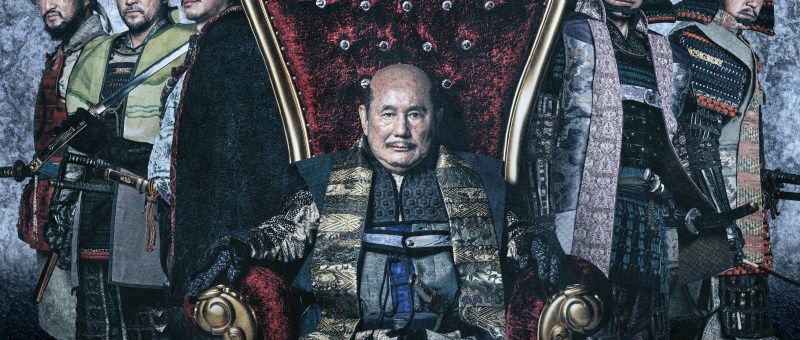
Apparently in gestation for a couple of decades, it’s unsurprising that Takeshi Kitano gave himself the role of Hideyoshi in a long-awaited historical drama adapted from his own novel, Kubi (首). Played as an irascible but wily old man, Hideyoshi is the second of Japan’s great unifiers and, unlike his predecessor, died as a result of an illness rather than intrigue. He was also a peasant who rose through the ranks and is perhaps witness to the tumultuous class conflict and social divisions of a hierarchal society.

Even so, in this version of events, Oda Nobunaga (Ryo Kase) too speaks in a thick rural dialect that sets him apart from his retainers and seems to hint at his uncouthness. This Nobugana is an unhinged despot who threatens and humiliates his subordinates, not to mention sexually assaulting them. In short, there’s no real mystery why his men have begun to turn against him and there is intrigue in the court. The film opens with Murashige’s (Kenichi Endo) quickly quelled rebellion which floundered when his reinforcements failed to arrive. Murashige is on the run and Nobunaga has heavily suggested whoever brings in his head will be first in line for the succession, but Murashige is also in a relationship with Mitsuhide (Hidetoshi Nishijima) another courtier vying for favour in more ways than one from the capricious Nobunaga. 

The striking thing about the staging is how like a yakuza drama this intrigue really is with each of the main factions manoeuvring for control, forming temporary or duplicitous alliances forged in the mutual desire of ousting a ruler whose increasing instability presents only the likelihood of a return to chaos. Nobunaga’s flamboyant speech and threatening manner are reminiscent of a yakuza boss on his way out, as is his obvious tactic of setting his rivals against each other while secretly planning to hand the reins to his son anyway. The film takes place in a largely homosocial world, the only women on screen are sex workers and peasants about to be murdered, only this time defined by romantic intrigue in which the various relationships between the men are inescapably linked with power and duplicity.

Mitsuhide’s relationship with Murashige is originally framed as a giri/ninjo conflict, Mitsuhide torn between the exercise of his duty as a samurai and his love for Murashige, only to later be set wondering if Murashige isn’t also playing him in urging him too towards rebellion, while Murashige accuses him of harbouring desires for Nobunaga which would also necessarily be desire for advancement. Advancement is something sought by all and in particular Mosuke (Shido Nakamura), a peasant who is taken on as a foot soldier after looting a battlefield for amour and killing his friend to get his hands on the prize only to realise just at the critical moment how pointless the constant desire for heads really is. The absurdity is rammed home in the closing scene in which Hideyoshi declares himself uninterested in the severed head he asked for, rendering the quest entirely pointless.

This absurdity extends to introducing the character of a comedian who is later killed for talking too much, while Kitano wise cracks his way along as the affable Hideyoshi. Kitano is in his way in dialogue with other samurai epics, using Akira Kurosawa’s horizontal wipes and introducing a pair of bumbling comic relief peasants only to suddenly kill one of them off because at the end of the day this world isn’t very funny. It’s cruel, and mean, and meaningless, so you might as well laugh like Hideyoshi. Residents of a ninja village conduct a festival in which they pray for death and to be released from this earthly torment as soon as possible, while farmers still dream of becoming samurai little knowing the reality of samurai life.

It’s this cycle of futility that is echoed in the opening image of a severed neck into which crabs in a river are crawling. Kitano stages lavish battle scenes, but ones that are often horrifying and absurd, a visceral struggle in mud and blood fought for no real reason. These samurai live their lives on the point of a sword, but they move and behave like yakuza fighting pointless turf wars and games of petty intrigue until someone finally comes for their heads. In the end, the victor is the one who doesn’t play the game at all, but sits and laughs at the absurd cruelty all around them in which the only stable force is ambition accompanied by a nihilistic lust for blood in an already bloody world.


Kubi  screens in New York July 16 as part of this year’s JAPAN CUTS.

Trailer (English subtitles)

The Mosquito on the Tenth Floor (十階のモスキート, Yoichi Sai, 1983)

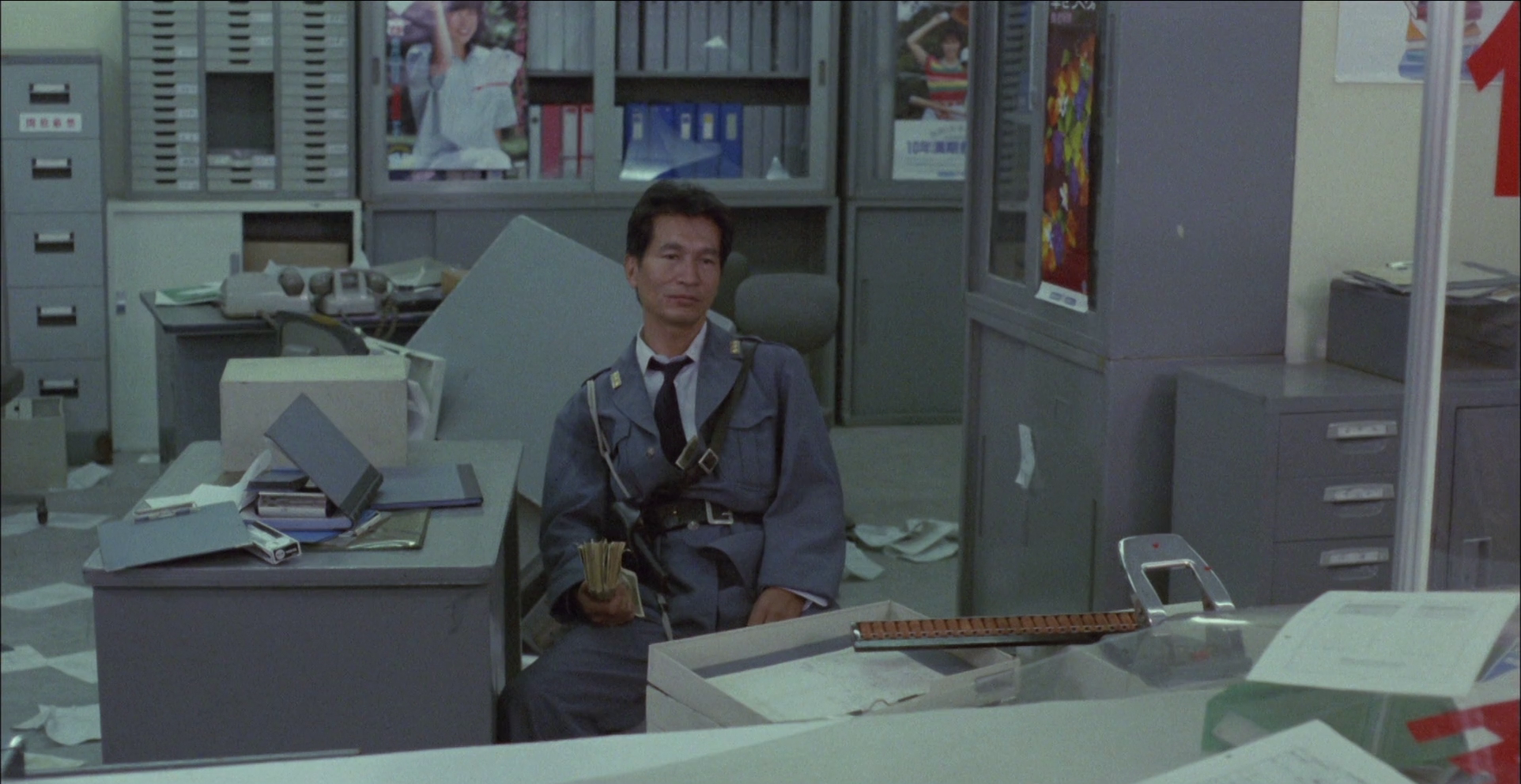
A beaten-down beat cop’s existential crisis progressively deepens after he throws himself into financial ruin to buy a computer in Yoichi Sai’s debut The Mosquito on the Tenth Floor (十階のモスキート, Jikkai no Mosquito). Like Pool Without Water, star Yuya Uchida conceived and co-scripted the film as a vehicle for himself and was apparently inspired by the sight of some blood, his own, on a wall where he’d squashed a mosquito though he also claimed the the 10 in the title is intended to reference the 10 commandments in addition to simply where the unnamed protagonist lives.

The fact that he lives on the 10th and top floor in a building with no lift is symbolic of his dismal circumstances. On the one hand he can rise no higher but on the other is stuck with an inconvenient living situation precisely because of his inability to rise socially. As it transpires the hero, a policeman, joined the force right out of high school with aspirations of rising to the rank of captain but has spent the entirety of his 20-year career manning a police box. He’s repeatedly failed the exam for promotion to lieutenant and realistically speaking is now simply too old to make much further progress. A man of few words, he listens as the other officers who took the exam with him outline the hierarchal structure of the police force while meditating that as a man on the wrong side of 40 his possibilities have decreased and it’s more than likely he’ll be stuck in the police box until he retires. 

His boss later says as much, sympathising with him but also pointing out that a policeman is also a public servant with a role to serve within the community. He is supposed to make people feel safe and contribute to the progress towards a crime-free society, but it’s clear that his life has spiralled out of control precisely because he cannot ally his career goals with the kind of life he wished to lead. His wife divorced him two years ago seemingly because she wanted a greater degree of material comfort and became resentful that he failed to progress in his career and could not move on from the low-salaried position of an ordinary street cop. She now makes a living selling golf club memberships, looking ahead to the oncoming Bubble-era and a society of affluent salarymen which is very much what her new boyfriend seems to be. Meanwhile, she lives in a very nice townhouse with their teenage daughter and constantly hassles the policeman for falling behind with his child support and alimony payments. He’s also racked up a healthy tab at a karaoke bar where he regularly hangs out and has a serious gambling problem with betting on boat races seemingly his only other form of social outlet.

As his daughter and others keep reminding him, the world is changing and his decision to buy a computer after unwisely taking out a payday loan is in part a symbol of his desire to progress into the modern society even if, somewhat ironically, others chastise him for spending what is then a huge amount of money on something they think of a child’s toy. Otherwise an upstanding policeman who irritatedly deflects a colleague’s joke about bribing someone to pass the exam, the policeman finds himself taking out one payday loan to pay another with loansharks constantly ringing him at the police box to remind him he’s behind on his payments. To overcome his sense of powerlessness, he begins by abusing his authority in catching a punk woman shoplifting and arresting her but then taking her back to his flat to play computer bowling and take advantage of her sexually. He later does something similar with a bar hostess, Keiko (Reiko Nakamura), who took him home when he was drunk. Though the encounter begins as rape, Keiko soon gives in and even comes back for more claiming that she’d never done it with a policeman before and it exceeded her expectations which is in many ways reflective social attitudes at the time. Emboldened, he invites danger by raping a female traffic cop, tearing her clothes as she fights back, screams, and cries though she presumably does not report him given the professional and social consequences that may adversely affect her life and career if she chose to. 

His ex-wife Toshie (Kazuko Yoshiyuki) says she’s not even sure if he’s human anymore, and his failed attempt to rape her after his boss reminds him that he advised against getting a divorce in the first place because it would negatively affect his chance of promotion may be a perverse way to prove he is though it obviously backfires. Having failed in every area of his life and with no prospect of ever getting back on track or starting again, he begins to go quietly insane typing rude words into his computer while the constant calls from loansharks take on a mosquito-like buzzing as does his own final wail of despair and powerlessness as he’s brought down by same authority he once served. His aloneness and confusion are palpable when he ventures into the city and discovers his teenage daughter Rie (Kyoko Koizumi) dancing in Harajuku staring at her intently but then walking away having invaded this space reserved for the young. “Police yourself!” one of the Rockabilly guys ironically instructs him on noticing that he’s dropped his ice cream cone, explaining that the police might shut them down if they’re discovered to be using the space irresponsibly by littering. Rie and her friends tell him to get a life, explaining that the world is changing while tapping him for cash he doesn’t have but is too embarrassed to refuse, laying bare the extent to which he and those like him have been left behind by the economic miracle, buzzing around maddeningly in mid-air with safe nowhere safe to land. 


Original trailer (no subtitles)

Gohatto (御法度, Nagisa Oshima, 1999)

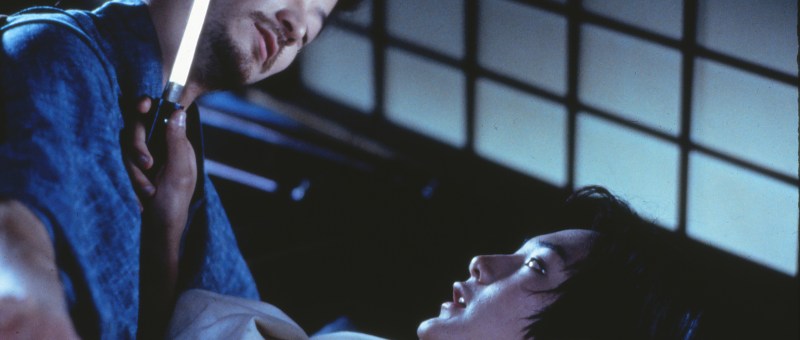
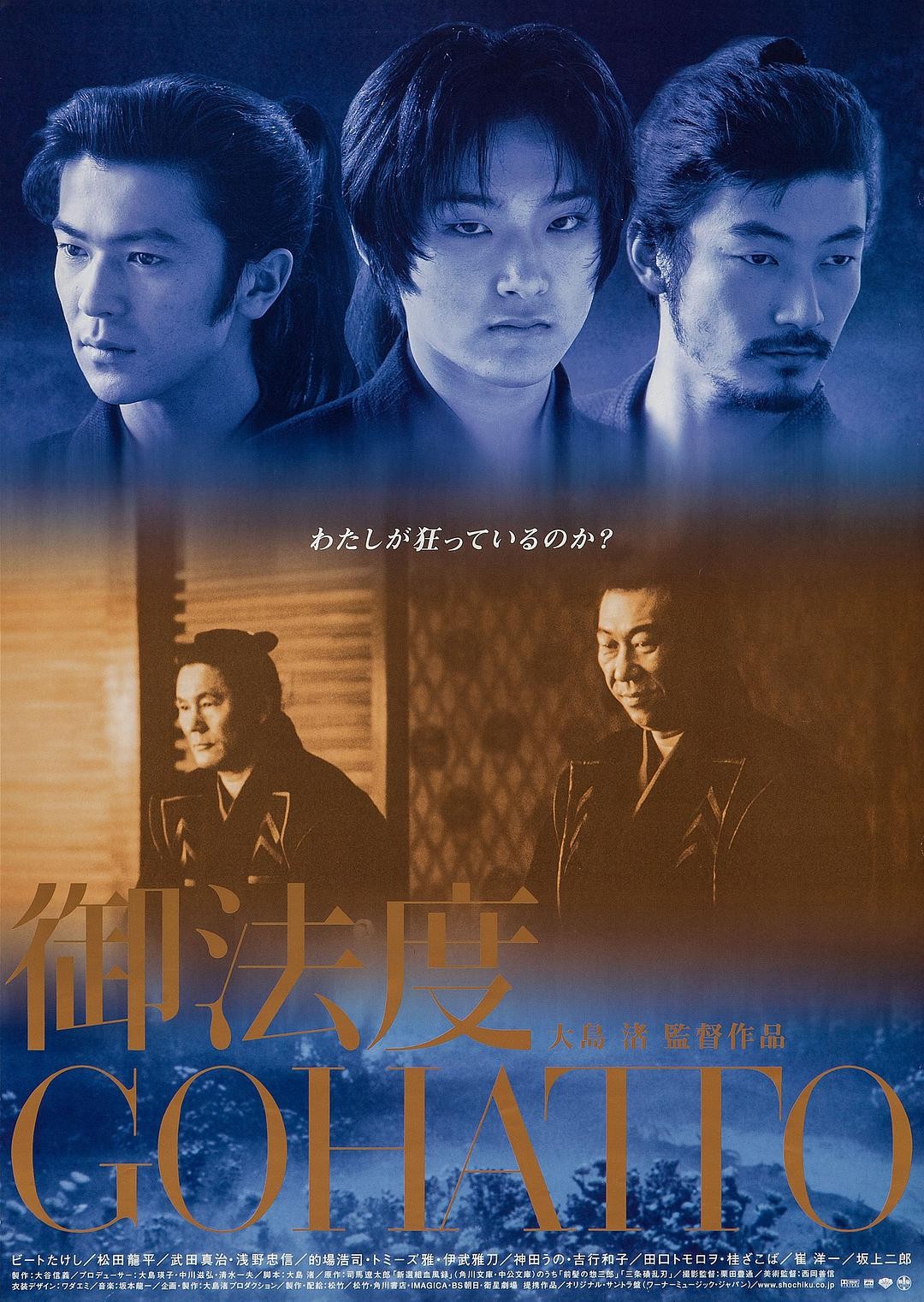
Nagisa Oshima once said that his hatred of Japanese cinema extended to absolutely all of it, decrying the hackneyed nativism of “foggy beauty and stupid gardens”, yet his final film is filled with Mizoguchian mist and almost a paen to Japanese aesthetics which ends with a cherry blossom tree in full bloom cut down in its prime. Burdened by the slightly more salacious title “Taboo”, Gohatto is less about love between men in an intensely homosocial world even as it asks what it might mean by “forbidden” or “against the law” than it is about idealism and aesthetics as its band of contradictory conservatives unknowingly approach the end of their world in a coming modernity ushered in by dangerous beauty. 

Set in the Kyoto of 1865, a scant three years prior to the Meiji Restoration, the film opens with an audition of sorts as the Shinsengumi search for promising new recruits among talented swordsmen. Already a mess of contradictions, the Shinsengumi is, loosely, a kind of official police force dedicated to defending the Shogunate against the revolutionary forces set on restoring power to the emperor. Nevertheless, in an odd way and in contrast to the elite Mimawarigumi which was staffed only by direct retainers to the Shogun, the Shinsengumi was noted for its lowkey egalitarianism in that it made a point of admitting those of ordinary birth as well as lower level samurai and ronin. Of course, the notions of equality only went so far and perhaps only fuelled its reputation for merciless savagery, but also make it a strangely progressive force fighting against progress in defence of the feudal status quo. 

Only two of the hopefuls are thought to be any good, one a young ronin, Tashiro (Tadanobu Asano), and the other a beautiful boy, Kano Sozaburo (Ryuhei Matsuda), the third son of a wealthy merchant whose line were once samurai but are no longer counted among the noble retainers. A talented swordsman, Sozaburo’s dangerous beauty presents an existential threat to the Shinsengumi order, the steely Hijikata (Takeshi Kitano) looking on conflicted in witnessing the way his commander, Kondo (Yoichi Sai), looks at this vision of androgynous beauty remarking that he had not known him to be “that way inclined”.

Being that way inclined does not seem to be a particular issue within the Shinsengumi, it is not against their draconian rules and in fact appears to be tolerated at least as long as it causes no further problems. Kondo is however mindful of the chaos caused by a similar wave of homoerotic lust which took hold shortly before a climactic battle which would prove to be their last success. What Sozaburo seems to arouse in them is something more dangerous than the accepted patterns of love between military men which is in a sense sublimated as a mentor/student relationship, loyalty more than romance. Tashiro, who is of a similar age to the apparently 18-year-old Sozaburo, lets his desire be known, vowing to sleep with him before he dies ironically acknowledging Sozaburo for what he is, an angel of death. 

For his part, Sozaburo remains curiously passive in each of his encounters, aroused only it seems by the act of killing. Yet Hijikata discerns that he has indeed become Tashiro’s lover on witnessing them fight, Sozaburo losing clumsily despite being the more skilled in a dynamic that mimics their relationship in which Tashiro is the dominant partner. Aware of the danger in Sozaburo’s allure, Kondo suggests having a superior take him to the red light district to show him the delights of woman hoping to guide him back towards a less dangerous path, only the attempt backfires on several levels. Firstly, Sozaburo has no interest in women and continues to decline believing his commander is also hitting on him (like everyone else), thereafter determined to seduce him after all. Another retainer does indeed succeed in seducing Sozaburo, developing a mild obsession, but later ends up dead, Tashiro a main suspect in his murder with the motive of sexual jealousy though all of this additional violence is perhaps only an expression of Sozaburo’s dangerous beauty. 

As so often, sex if not love becomes the force which destabilises the social order only here it’s equated both with death and with an alternative mediation of male violence. Perhaps reflecting the way they look to the 18-year-old Sozaburo who makes a faux pas in accidentally suggesting at least one of them is of pensionable age, the ranking members of the Shinsengumi are played by actors already well into their golden years as if relics of a bygone era though in reality most were in their 30s. As Soji (Shinji Takeda), a filial figure like Sozaburo wearing long hair, puts it, there are no old men in their unit which is in essence an anti-revolutionary force. Nevertheless, the Shinsengumi is on the wrong side of history and already living in its end times, perhaps ushered towards its doom by the figure of the beautiful boy. “You were too beautiful”, Hijikata eventually laments as he finally perhaps understands the nature of the revolution he is witnessing. Perverse to the last, Oshima sets his ethereal finale in a stygian fog and pays an ironic tribute to the Mizoguchian classicism he so railed against in his youth, taking a sword to the cherry blossoms as he like Hijikata severs his own legacy in a moment of destructive beauty. 


Gohatto screens at Genesis Cinema on 25th September as part of this year’s Queer East

International trailer (English subtitles)

Sonatine (ソナチネ, Takeshi Kitano, 1993)

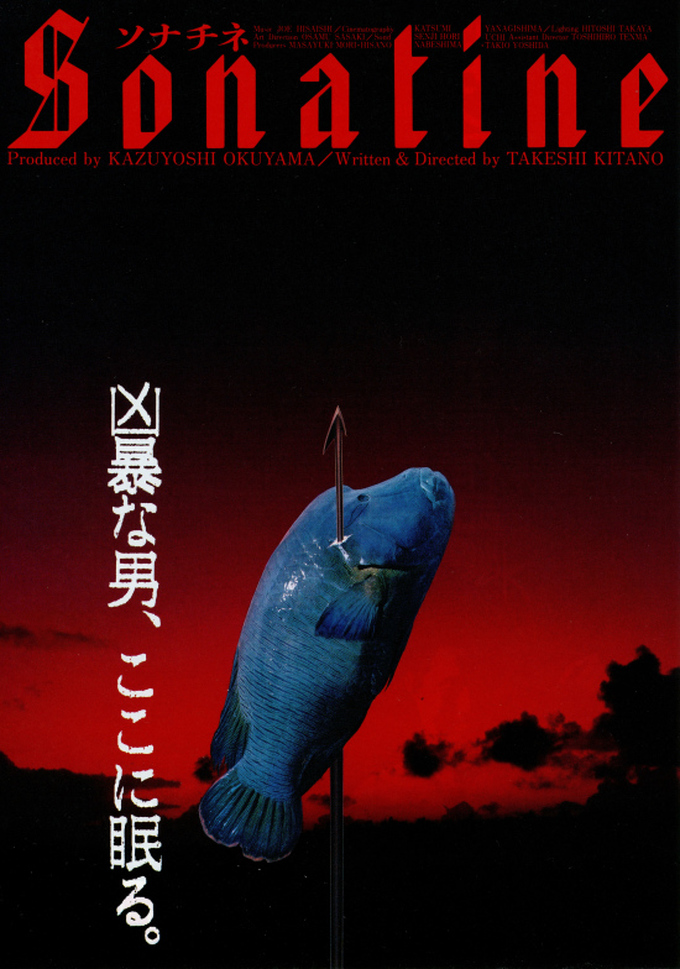
The problem with being a yakuza is that there is never any rest. Staying alive means constant vigilance, make a mistake and it could be the end of you or, conversely, get too good at your job and place a target on your own back. The hero of Takeshi Kitano’s Sonatine (ソナチネ) declares himself tired, not just of the life but life itself. By his fourth picture, Kitano was perhaps feeling something similar, later describing the near-fatal motorcycle accident he encountered some months after the film’s completion as an unconscious suicide attempt. For years he’d been one of Japan’s top TV personalities working a breakneck schedule that left him little time for other outlets such as painting, novels, and acting for others, but still he longed to be taken more seriously as an artist in his home nation where audiences largely stayed away from his “serious” films, as they did with Sonatine which flopped at the box office and put an end to his arrangement with Shochiku who had distributed his first two features in which he had also starred. 

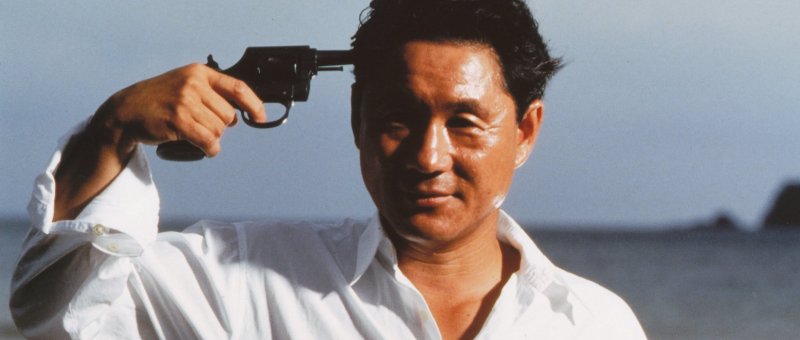
For this third film, A Scene at the Sea, Kitano remained behind the camera and distanced himself from the themes of crime and violence which defined his early career, crafting instead an intensely melancholy tone poem about a deaf surfer falling in love with the ocean. In Sonatine he casts himself as the lead for the first time since Violent Cop, this time as a gangster experiencing extreme existential malaise when confronted with the futility and emptiness of his life in organised crime. Murakawa (Takeshi Kitano) is aware he has probably reached the zenith of his career as a mid-tier gang boss working as a, by all accounts, unexpectedly successful enforcer in a rundown area of the city. His first crisis concerns the owner of a mahjong parlour who thinks the yakuza are an outdated institution and refuses to take their threats seriously. He sees no need to pay them the customary protection money and assumes they’ll back off he simply tells them he’s not interested, but he is very wrong. Murakawa has him kidnapped to teach him a lesson, observing while his minions attach him to a crane and threaten him by dunking him in a large pool of water. Immediately apologetic, the man sees the error of his ways, but Murakawa doesn’t really care about the money anymore and so they dunk him again to see how long it takes a man to drown, barely shrugging as they realise he really died. 

Either because he’s an unusual man, or because he is simply tired of everything, Murakawa no longer bothers to abide by the rules of petty gangsterdom. He doesn’t do deference, smoking away long before his boss offers permission to do so and feeling unafraid to voice his reluctance when he’s ordered to take some of his guys to Okinawa to settle a nascent gang war involving one of their affiliates. Murakawa doesn’t want to go because he lost three men in a similar job in Hokkaido, but in reality has little choice. Later events prove he was right to be suspicious. The Okinawan gang boss tells him that he reported some minor friction with another gang out of courtesy and is confused he’s been sent reinforcements, not that he’s not glad to see them. As soon as they arrive, however, the tension rises and Murakawa and the guys are forced into hiding, holing up at the beach as they await orders from head office or word on a possible truce. 

Murakawa, his two right-hand men, and the Okinawan gangsters adjust to tranquil island life, playing on the beach and taking the time to master the art of Okinawan folk dance, but the grim spectres of death and violence present themselves even here in empty games of Russian roulette and Murakawa’s childish prank of digging sand traps for the guys to fall into as if into their graves. While he’s busy admiring the night sky, the silence is ruptured by a local tough chasing a young woman onto the beach where he proceeds to rape her. Murakawa doesn’t intervene but is challenged anyway and then forced to kill the puffed up youngster while the young woman, Miyuki (Aya Kokumai), becomes strangely attached to him, impressed by his cool dispatch of her attacker. 

Murakawa’s somehow innocent relationship with the young woman creates a minor rift with his men who resent the absence of his leadership at a time of crisis while he ponders alternate futures outside of the gangster brotherhood. But deep down he knows that his idyllic beach holiday cannot last forever and that he will have to leave this liminal space eventually for a destination of which he is all too aware. As he explains to Miyuki, when you fear death so intensely you begin to long for it if only for an end to its terrible anxiety. 

The title “Sonatine” is apparently inspired by the “sonatina”, a short, tripartite piece piano players attempt to mark an attainment of skills before choosing the future direction of their musical career. Murakawa undergoes three distinct arcs, from the city to the beach and back again, but perhaps knows there is no future direction in which for him to travel only the nihilistic fatalism of a life of violence. As for Kitano, it does perhaps draw a line in the sand marking the end of an apprenticeship and its associated compromises as he fully embraces an authentic personal style, like Murakawa no longer prepared to be deferent in an admittedly exhausting world. 


Sonatine is the third of three films included in the BFI’s Takeshi Kitano Collection blu-ray box set and is accompanied by an audio commentary by Chris D recorded in 2008. The first pressing includes a 44-page booklet featuring an essay on Sonatine and introduction to Kitano’s career by Jasper Sharp,  an essay on Violent Cop by Tom Mes, a piece on Boiling Point from Mark Schilling, an archival review by Geoff Andrew, and an appreciation of Beat Takeshi by James-Masaki Ryan.

The Takeshi Kitano Collection is released 29th June while Violent Cop, Boiling Point, and Sonatine will also be available to stream via BFI Player from 27th July as part of BFI Japan.

Original trailer (English subtitles)

Boiling Point (3-4X10月, Takeshi Kitano, 1990)

The heroes of Takeshi Kitano’s films are often gentle men, capable of great tenderness but also filled with quietly mounting rage permanently on the brink of explosion. Everyone perhaps has their Boiling Point, the straw that breaks the camel’s back and sends it careering towards a self-destructive attempt at restitution. “Boiling Point”, however, has absolutely nothing to do with the original Japanese title (3-4X10月) which references the score on the board at a baseball game and the originally scheduled month of the film’s release, October (it was later moved up to September making the whole thing even more meaningless). This perverse randomness was apparently another minor win for Kitano who had scored a critical hit with his debut feature Violent Cop but had struggled to convince the team around him to embrace his unconventional vision. Working with greater independence, Kitano minimises camera movement in favour long takes with static camera which perfectly compliment his deadpan sense of the absurd. 

He also relegates himself to a supporting role unseen on screen for over half of the running time. Our hero is small town loser Masaki (Yurei Yanagi) who we first meet hiding in a toilet during an amateur baseball game in which he is desperate to play but strikes out when given the opportunity in the first of many petty humiliations. He has been taken under the wing of the team’s coach, Iguchi (Taka Guadalcanal), a former yakuza attempting to go straight by running a dive bar, and has a part-time job at a petrol station. Masaki perhaps images himself as something greater, as evidenced by his extremely cool motorcycle jacket and bike, but is a dreamer at heart, nervous and tongue-tied, unable to unlock his hidden potential. Even he has a boiling point, however, which is later hit when he gets into an altercation with a teddy boy yakuza at the garage who starts a pointless argument about being kept waiting, pulling the old trick of goading Masaki into fighting back to get leverage over their shop and begin extorting it. Masaki has just got his boss into trouble through losing his cool, but is ironically offered a job by a visiting thug jokingly admiring his fighting prowess. 

Iguchi meanwhile is a man divided, permanently on the brink of boiling over. When some irritating sophisticates “ironically” visit his bar clutching their designer handbags and holding their noses, he’s obliged to be nice to them but he simply can’t. Unable to bear their snotty arrogance, he glasses one of the women on the way back from the bathroom and throws the whole gang out. The yakuza has it seems been reawakened, and though he was reluctant before, he to decides approach his old boss, Otomo (Hisashi Igawa), on Masaki’s behalf. The reception he receives is not as he expected. Iguchi is reminded that he chose the civilian life and being a yakuza isn’t a part-time job, you can’t just pick it back up again when it suits you. Not being able to help Masaki is another small humiliation, one he perhaps intends to overcome through turning violence on an old underling who disrespected him in refusing the customary deference. Predictably, it backfires, you can’t be half a yakuza after all. Iguchi is completely finished, boiling with rage but too humiliated to do much about it other than vow revenge by going to Okinawa to buy a gun in order to put an end to the lot of them. To protect his mentor, an oddly yakuza-esque gesture, Masaki volunteers to go in his stead, dragging his catcher friend Kazuo (Duncan) along for the ride. 

A complicated liminal space, Okinawa is both an enticing holiday destination and source of political contention thanks to the controversial presence of the US military bases. It’s indeed corrupt foreign influences who can provide our guys with guns, but Okinawa is also a place slightly out of time, trapped in the Showa-era past while the rest of Japan has already transitioned to an economically prosperous mid-Bubble Heisei. Consequently, these are Showa-era yakuza with fancy outfits and sunshades hanging out in neon-lit bars with butterflies on the walls. Uehara (Takeshi Kitano) is in the process of being humiliated in front of his gang for supposed embezzlement of collective funds. He too wants a gun to enact his revenge, something which he fantasises about in an eerie and fatalistic flash forward. Before that, however, he’s befriended our guys and taken quite a liking to Kazuo, hinting a latent homosexuality in another example of the unwelcome association of queerness and savagery often seen in yakuza movies. Uehara has a girlfriend but treats her with utter contempt, insisting that she sleep with his underling only to punish her for it afterwards and take over halfway through to rape him. In fact all of his subsequent sexual actions are rapes, his assaults on women cold and mechanical as if purely performative, implying that it is his repressed homosexuality which underpins the sense of humiliation that fuels his violence and his cruelty. 

Unlike Uehara and Iguchi, our guys have not even one foot in the yakuza world and despite their ingenious plan to get the guns on the plane have no idea what they’re going to do with them, marching all the way over to Otomo’s before realising they don’t know anything about the use of firearms with the consequence that they become useless lumps of metal in their hands. They are boys playing gangster out of a misguided ideal of heroic nobility in their desire to avenge Iguchi who by all accounts is still sulking alone at home. This is their greatest and final humiliation, failing as men in front of men. Yet, their friendship perhaps survives, patched up in silence over shared ice lollies. Even so, Masaki is about to boil over, travelling towards a split second moment of fiery self-destruction and misdirected rage. But then Kitano pulls the rug out from under us again. Was this all a dream after all, grim wish-fulfilment from a repressed young man longing to burn out bright, or perhaps a lengthy vision of the kind visited on Uehara which would at least explain Kitano’s many non-sequitur cuts and ellipses? Who can say, but the humiliating sense of impossibility is all too real for those unable to take a swing at life’s many opportunities.


Boiling Point is the second of three films included in the BFI’s Takeshi Kitano Collection blu-ray box set and is accompanied by a new audio commentary by Little White Lies’ David Jenkins, plus a featurette recorded in 2016. The first pressing includes a 44-page booklet featuring a piece on Boiling Point from Mark Schilling, an essay on Violent Cop by Tom Mes, an introduction to Kitano’s career & writing on Sonatine by Jasper Sharp, an archival review by Geoff Andrew, and an appreciation of Beat Takeshi by James-Masaki Ryan.

The Takeshi Kitano Collection is released 29th June while Violent Cop, Boiling Point, and Sonatine will also be available to stream via BFI Player from 27th July as part of BFI Japan.

Original trailer (English subtitles)

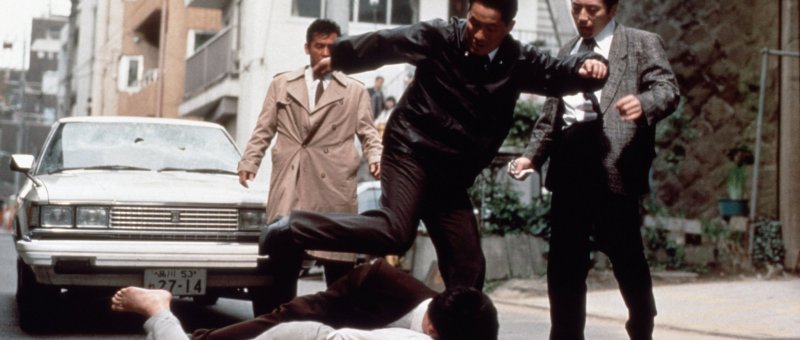
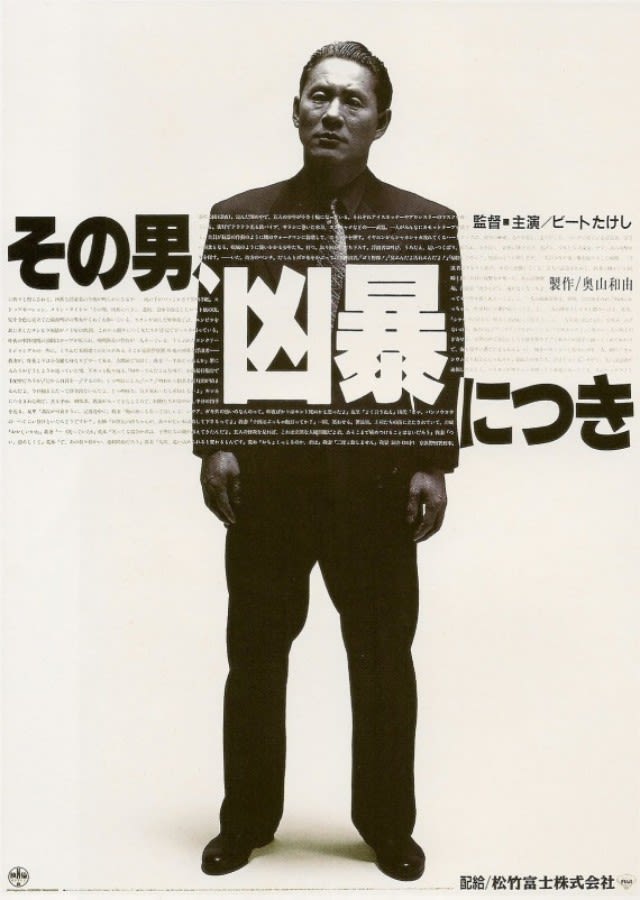
Violent Cop (その男、凶暴につき, Takeshi Kitano, 1989)

By and large, policemen in Japanese cinema are at least nominally a force for good. They may be bumbling and inefficient, occasionally idiotic and easily outclassed by a master detective, but are not generally depicted as actively corrupt or malicious. A notable exception would be within the films of Kinji Fukasaku whose jitsuroku gangster movies were never afraid to suggest that the line between thug and cop can be surprisingly thin. Fukasaku was originally slated to direct Violent Cop (その男、凶暴につき, Sono Otoko, Kyobo ni tsuki), casting top TV variety star “Beat” Takeshi in the title role in an adaptation of a hardboiled parody by Hisashi Nozawa. The project later fell apart due to Kitano’s heavy work schedule which eventually led to him directing the film himself, heavily rewriting the script in order to boil it down to its nihilistic essence while rejecting the broad comedy his TV fans would doubtless have been expecting. 

Kitano’s trademark deadpan is, however, very much in evidence even in this his debut feature in which he struggled to convince a veteran crew to accept his idiosyncratic directorial vision. He opens not with the “hero”, but with a toothless old man, a hobo beset by petty delinquents so bored by the ease of their comfortable upperclass lives that they terrorise the less fortunate for fun. Azuma (Takeshi Kitano), the violent cop, does not approve but neither does he intervene, later explaining to his boss that it would have been foolish to do so without backup. Having observed from the shadows, he tails one of the boys to his well-appointed home, barges past his mother, and asks to have a word, immediately punching the kid in the face as soon as he opens the door. Rather than simply arrest him, he strongly encourages that he and his friends turn themselves in at the police station the next day or, he implies, expect more of the same. The kid complies. 

Azuma embodies a certain kind of justice acting in direct opposition to the corruptions of the Bubble era which are indirectly responsible for the creation of these infinitely bored teens who live only for sadistic thrills. He arrives too late, however, to have any effect on the next generation, cheerfully smiling at a bunch of primary school children running off to play after throwing cans at an old man on a boat. Children always seem to be standing by, witnessing and absorbing violence from the world around them as when a fellow officer is badly assaulted by a suspect following Azuma’s botched attempt to arrest him in serial rather than parallel with his equally thuggish colleagues. But for all that Azuma’s violence is inappropriate for a man of the law, it is never condemned by his fellow officers who regard him only as slightly eccentric and a potential liability. Even his new boss on hearing of his reputation tells him that he doesn’t necessarily disapprove but would appreciate it if Azuma could avoid making the kind of trouble that would cause him inconvenience. 

That’s obviously not going to happen. What we gradually realise is that Azuma may be in some ways the most sane of men or at least the most in tune with the world in which he lives, only losing his cool when a suspect spits back that he’s just as crazy as his sister who has recently been discharged from a psychiatric institution. Azuma has accepted that his world is defined by violence and no longer expects to be spared a violent end. He smirks ironically as he slaps his suspects, connecting with them on more than one level in indulging in the cosmic joke of existential battery. To Kitano, violence is cartoonish, unreal, and absurd. The only time the violence is shocking and seems as if it actually hurts is when it is visited directly on Azuma, the camera suddenly shifting into a quasi-PV shot as a foot strikes just below the frame. The targets are otherwise misdirected, a young woman caught by a stray bullet while waiting outside a cinema or a cop shot in the tussle over a gun, and again the children who only witness but are raised in the normalisation of violence. 

Meanwhile, organised crime has attempted to subvert its violent image by adopting the trappings of the age, swapping post-war scrappiness for Bubble-era sophistication. Nito (Ittoku Kishibe), the big bad, has an entire floor as an office containing just his oversize desk and that of his secretary. These days, even gangsters have admin staff. Minimalist in the extreme with its plain white walls and spacious sense of emptiness, the office ought to be a peaceful space but the effect of its deliberately unstimulating decor is quite the reverse, intimidating and filled with anxiety. Behind Nito the ordinary office blinds look almost like prison bars. Meanwhile, the police locker room in much the same colours has a similarly claustrophobic quality, almost embodying a sense of violence as if the walls themselves are intensifying the pressure on all within them. 

Azuma is indeed constrained, even while also the most “free” in having decided to live by his own codes in rejection of those offered by his increasingly corrupt society. He walks a dark and nihilistic path fuelled by the futility of violence, ending in a Hamlet-esque tableaux with only a dubious Fortinbras on hand to offer the ironic commentary that “they’re all mad”, before stepping neatly into another vacated space in willing collaboration with the systemic madness of the world in which he lives. With its incongruously whimsical score and deadpan humour Violent Cop never shies away from life’s absurdity, but has only a lyrical sadness for those seeking to numb the pain in a world of constant anxiety. 


Violent Cop is the first of three films included in the BFI’s Takeshi Kitano Collection blu-ray box set and is accompanied by an audio commentary by Chris D recorded in 2008, plus a featurette recorded in 2016. The first pressing includes a 44-page booklet featuring an essay on Violent Cop by Tom Mes, as well as an introduction to Kitano’s career & writing on Sonatine by Jasper Sharp, a piece on Boiling Point from Mark Schilling, an archival review by Geoff Andrew, and an appreciation of Beat Takeshi by James-Masaki Ryan.

The Takeshi Kitano Collection is released 29th June while Violent Cop, Boiling Point, and Sonatine will also be available to stream via BFI Player from 27th July as part of BFI Japan.

Original trailer (English subtitles)

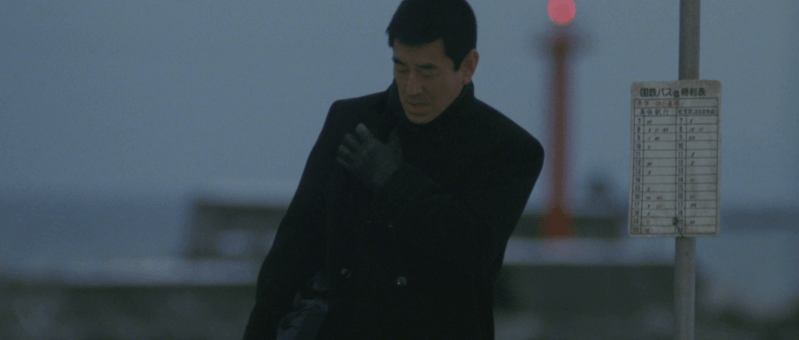
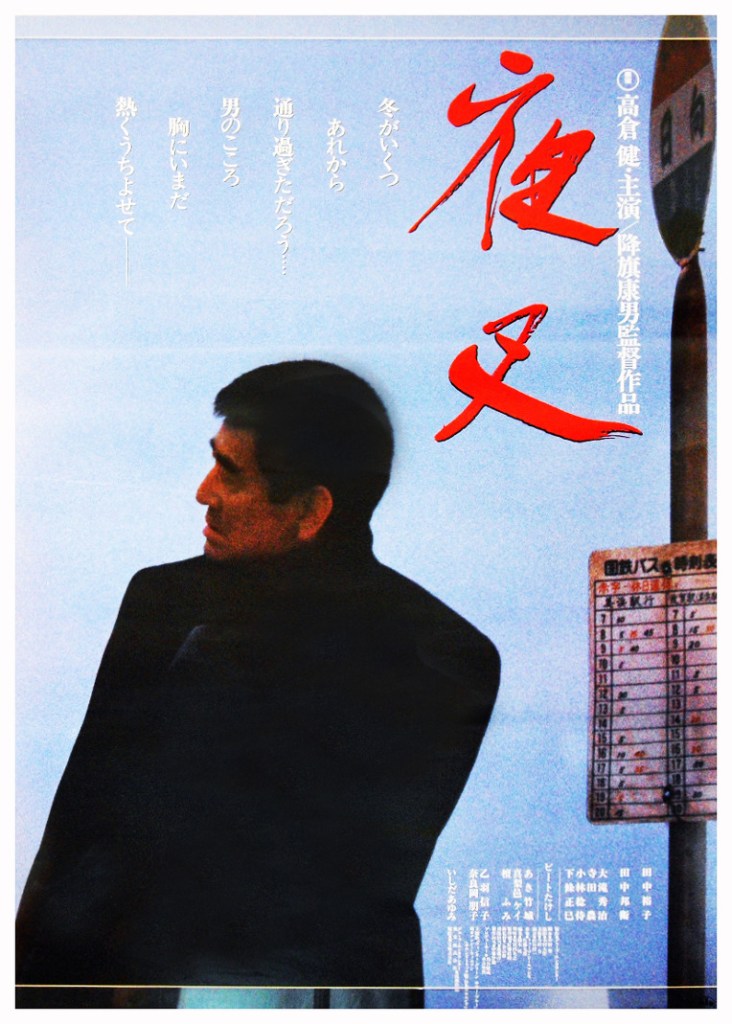
Yasha (夜叉, Yasuo Furuhata, 1985)

In melancholy gangster movies, the hero often dreams of leaving the city for an idealised rural paradise to start again as a righteous man redeeming himself through hard work with a good woman by his side. Usually, they don’t make it, their goodness is nothing but a weakness in the harsh post-war environment, but even if they did could they really lay their violent souls to rest and live as the rest of us do? Once again played by a manfully stoic Ken Takakura, the hero of Yasuo Furuhata’s Yasha (夜叉, AKA Demon) tries to find out, but discovers that sooner or later the past will always catch up with you. 

15 years ago, fisherman Shuji (Ken Takakura) was the notorious Osaka yakuza known as “Yasha”. A war orphan given refuge by a gangster brotherhood, two things happened to change his way of life, the first being innocent country girl Fuyuko (Ayumi Ishida) whom he met by chance and rescued on the dangerous streets of the city. The second is the death of his younger sister who had become addicted to heroin. Fiercely resistant to the traffic of drugs, Shuji quit the clan, married Fuyuko, and retreated to her fishing village home to take over her late father’s fishing business. Well respected in the community as a steady hand, he now has three children and a settled happy life though one tinged with anxiety in the need to keep his back covered lest anyone find out about his violent past. 

The violent past is brought home to him when a young woman, Keiko (Yuko Tanaka), arrives in kimono with her young son in tow to take over the local bar. Keiko is a bar hostess from Osaka hoping to make a new start far away from the city, not so much for herself it seems as her no-good boyfriend Yajima (Takeshi Kitano) who is a drug-addled thug and openly hostile to her little boy. It’s Yajima who threatens to disrupt the gentle rhythms of the town, firstly getting the fishermen hooked on all night games of mahjong which damage their daytime productivity, and then selling them heroin to keep them propped up. Unused to such urban vices as hard drugs and serious gambling, the fishermen are lambs to the slaughter, handing over their hard earned savings to the thuggish Yajima to keep their heads above the water. 

Shuji wants to keep the town clean, but he can’t exactly admit just how familiar he is with things like drink and drugs which are, as his friend Keita (Kunie Tanaka) points out, not things “normal” people should know about. After realising an old friend is the middle-man, Shuji has a quiet word with Yajima as one thug to another but it only makes the situation worse. He tries talking to Keiko instead, but her decision to get rid of the drugs has disastrous consequences for all when Yajima goes on a crazed, knife-wielding rampage through the town which only Shuji can end. During the fight Yajima slashes Shuji’s fisherman’s jumper right through to the expose the demon beneath, leaving his colourful tattoos on show for all to see. 

You’d think that Yajima’s rampage would have taught the town a lesson, shown them that they were in over their heads and Yajima was not the sort of person it was good to be associated with, but their animosity overwhelmingly turns to the demon Shuji whom they unfairly begin to blame for their many misfortunes. The fishwives begin to avoid Fuyuko, telling their kids not to hang out with her kids and suggesting that it must have been Shuji who got the guys playing mahjong. Shuji meanwhile doubts himself, drawn to Keiko as to Osaka and the sleeping demon within. Yasha reawakens and he wonders if he has the right to live here after all. 

Fuyuko’s mother tells her that it’s a good wife’s job to quell the demon, but she struggles to maintain hold on Shuji while Yasha is pulled towards the city. He makes a manly choice, attempting to redeem Yajima in redeeming himself by returning to his point of origin. The widow of his old boss warns him off, reminds him that he’s a fisherman now, and that should he move against her she will have to act in accordance with the rules of the underworld, but privately mutters to herself that he hasn’t changed at all, “stupid man”. In the end, Yasha’s manly gesture ends in futility. He cannot escape himself but neither can he solve his problems through violence as he might have before, not least because the code is no longer secure motivating those he thought he could trust towards betrayal. He still has a choice, leave with Keiko to be Yasha once again accepting the futilities of a violent life (and its inevitable end), or stay to be a peaceful fisherman with the “good wife” Fuyuko. One man cannot possess two souls, but the given the chance the demon can be subdued if there is the will to subdue it and the belief that the man himself is good enough for the world in which he wants to live.


Original trailer (no subtitles)

Getting Any? (みんな~やってるか!, Takeshi Kitano, 1995)

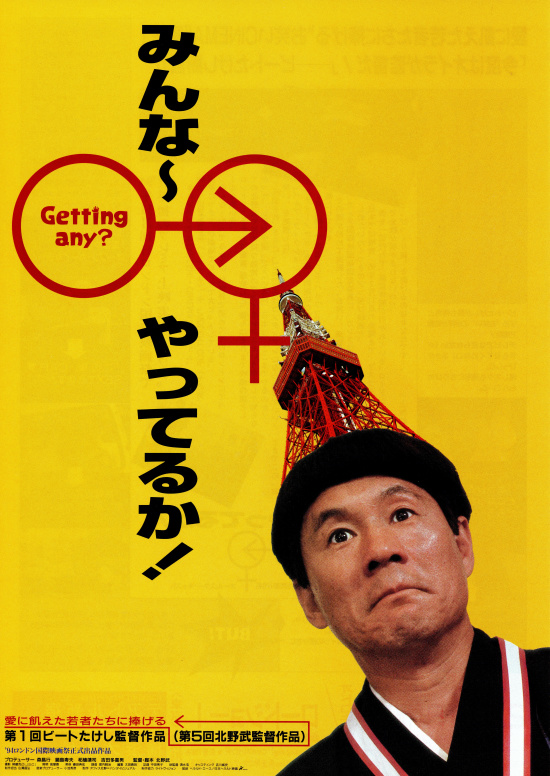
getting any? posterDespite his reputation for violent gangster dramas and melancholy arthouse pieces, Takeshi Kitano is one of Japan’s most successful comedians and began his career as half of an irreverent and anarchic “manzai” comedy double act. 1995’s Getting Any? (みんな~やってるか!Minna – yatteruka!) is his first big screen comedy and loosely takes the form of a series of variety-style skits in which a lonely, hapless middle-aged man tries on various different personas in the pursuit of his goal but remains an isolated bystander in the surreal events which eventually engulf him. Part bawdy, sleazy sex comedy and satire on the death of materialism in the post-bubble world, Getting Any? is a cineliterate journey through Showa era pop culture peppered with gratuitous nudity and absurd running jokes.

After watching a very 1980s “aspirational” movie in which a good looking, wealthy young salaryman type gives a young lady a lift in his flashy convertible in which they later end up having sex, Asao (Dankan), watching at home in his pants with his grandpa sitting behind him, decides the reason he hasn’t got any luck with women is that he doesn’t have a car. So, he goes and gets one from a very strange salesman but as he doesn’t have much money the car he gets is, well, it’s unlikely to get stolen, and he still isn’t getting anywhere. He tries a convertible too but that’s no good. Then he starts fantasising about air hostesses, decides to become an actor, gets mistaken for a top yakuza hitman, and comes into contact with a pair of mad scientists who want to turn him invisible.

Asao has only one goal – to have sex with a lady (preferably in a car), but he never stops to think of his potential partners as anything more than a receptacle for his desires. Consequently, he refuses to look at himself or consider the ways he might be getting in the way of his own needs, but constantly chases a quick fix thinking that the reason women don’t want him is because of something material that he lacks. He thinks the path to sexual success lies in cars, money, status, and finally technology, but none of these things really matter while Asao remains Asao.

As part of his journey, passive as it is, Asao does not always remain Asao, or at least the Asao he was for very long. Having failed to be the sort of man who can woo with car, he tries acting – literally playing a part, at which he seems quite good except for going “overboard”. An incident on an aeroplane sees him mistaken for a top yakuza which he is less good at but every mistake only ever works out in his favour. Thanks to his involvement with the mad scientists whom he allows to experiment on him so that he can go peeping in the women’s baths, Asao will finally become another kind of creature entirely, literally reduced to feeding off the excrement his nation has recently produced.

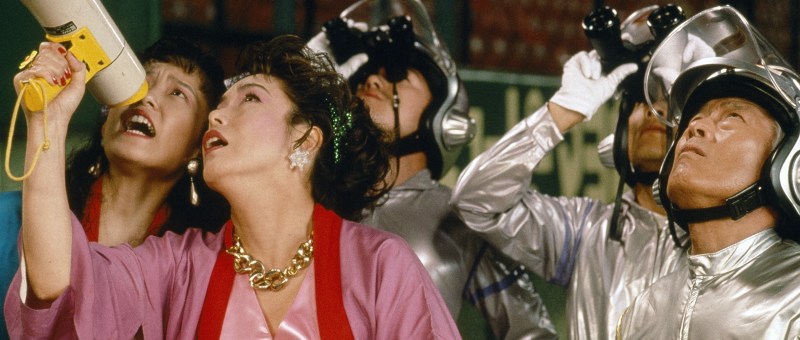
Kitano works in just about every element of almost “retro” pop-culture he can think of from the amusing soundtrack of Showa era hits and references to famous unsolved crimes to a hitman named “Joe Shishido” (star of Branded to Kill), the Zatoichi series, a Lone Wolf and Cub ventriloquist dummy duo, the Invisible Man, Ghostbusters, The Fly, and finally Toho’s tokusatsu classics culminating a lengthy skit inspired by Mothra including the iconic Mothra song given new lyrics and the same old dance performed by two full-sized ladies. Though most viewers will be able to spot the joke even without quite understanding it, some knowledge of Japanese pop-culture from the ‘70s and ‘80s will undoubtedly help.

The central joke revolves around Asao’s fecklessness as he repeatedly fails at each of his schemes, only occasionally succeeding and then by accident, and not for very long. A charmless literalist who lacks the imagination to achieve his goals in a more natural way, Asao fails to learn anything at all, engulfed by one surreal situation after another. It does however give Kitano the excuse to indulge Asao’s flights of fancy as his sexual frustration sends him off into a series of bizarre reveries involving topless women desperate to make love to the suave male stand-in Asao has imagined. Filled with silly slapstick humour and frequent nudity, Kitano’s subtle satire may get lost but even if the joke begins to wear thin just as “flyman” finally lands on his object of desire, there is plenty of amusement on offer for fans of lowbrow humour.


Getting Any? is released on blu-ray by Third Window Films on 16th October, 2017.

Original trailer (English subtitles)

Mozu the Movie (劇場版MOZU, Eiichiro Hasumi, 2015)

mozu-posterThe criticism levelled most often against Japanese cinema is its readiness to send established franchises to the big screen. Manga adaptations make up a significant proportion of mainstream films, but most adaptations are constructed from scratch for maximum accessibility to a general audience – sometimes to the irritation of the franchise’s fans. When it comes to the cinematic instalments of popular TV shows the question is more difficult but most attempt to make some concession to those who are not familiar with the already established universe. Mozu (劇場版MOZU) does not do this. It makes no attempt to recap or explain itself, it simply continues from the end of the second series of the TV drama in which the “Mozu” or shrike of the title was resolved leaving the shady spectre of “Daruma” hanging for the inevitable conclusion.

Six months on from the climatic events at the end of season two, Kuraki (Hidetoshi Nishijima) has become a drunk, Ohsugi (Teruyuki Kagawa) has left the force for the private sector, while Akeboshi (Yoko Maki) is still preoccupied with the strange phone calls she sometimes receives and the fate of her long lost father last seen on the deck of a sinking submarine. The dreams of the citizens of Tokyo are being haunted by the mysterious face of “Daruma”, but this is quickly superseded by an explosion in an office building which turns out to be a diversionary exercise as the autistic daughter of a refugee with diplomatic immunity is kidnapped by terrorists.

At this point, Kuraki appears at the scene, beats the bad guys into submission and rescues the girl, Elena, and her mother who are then taken into protective custody. However, things go south when Ohsugi’s daughter and Akeboshi are taken by the bad guys in the hope of an exchange forcing the gang to take Elena to a neighbouring Asian nation.

Mozu the movie suffers from many of the same problems which plagued the generally impressive TV series in its wildly inconsistent tone and increasingly convoluted, often bizarre plot twists. Assuming the audience will be familiar with the TV series, the film provides no recap, leaving the casual viewer completely lost amongst the numerous numbers of subplots held together by Kuraki’s need to find the answers behind the death of his wife at the site of a suicide bombing and the drowning of his daughter a year or so before. Likewise, Akeboshi’s familial concerns – her absentee father whose dark past was hinted at in the previous series and her close relationship with her two neices, is glossed over, as is Ohsugi’s ongoing battle to win back the respect of his teenage daughter. When a key character suddenly and quite unexpectedly appears to save the day (and then disappears again), the casual viewer has a right to be utterly baffled.

Where the central tone is one of cool noir supported by occasionally poetic camera work, Nishijima’s laid back minimalism gives way to broad, over the top villainy from Hasegawa’s Higashi as well as the punkish Mozu copycat who kickstarts the action. Kuraki remains an unbeatable super agent, taking out bad guys with well placed kicks to the chest and enduring numerous acts of torture whilst remaining doggedly fixed on his quest to find out the truth about his wife and a possible conspiracy plaguing Japanese society. Ohsugi is still the bumbling cop but equally committed to protecting his daughter while Akeboshi is underused, her slow burn romance with Kuraki simmering away in the background.

What remains is a collection of impressive action scenes and mysterious conversations offered with portentous seriousness. The purpose of Elena’s kidnapping is predictably grim yet reduced to a single sentence shortly before Kuraki apparently saves the day once again through undisclosed means. The central conspiracy in this conspiracy thriller, that Japan has been manipulated by a shadowy figure literally cannibalising his own children, fades into the background as Kuraki is left to affirm that all that remains now is chaos. Mozu the movie is season three with all the important bit stripped out – strange, confusing, and ultimately hollow. Yet for those well versed in the Mozu universe, it may provide a degree of closure to its ongoing mysteries, even if ultimately unsatisfying.


Original trailer (no subtitles)

https://www.youtube.com/watch?v=3SiONhHX6o0