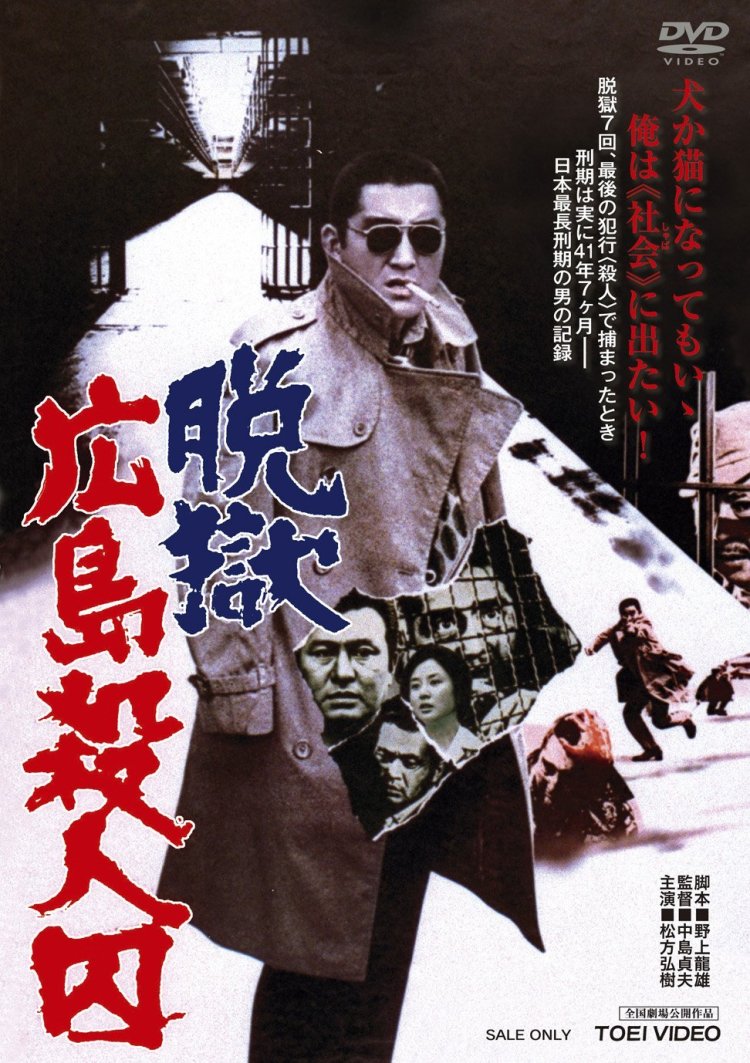
 Sadao Nakajima had made his name with Toei’s particular brand of violent action movie, but by the early seventies, the classic yakuza flick was going out of fashion. Datsugoku Hiroshima Satsujinshu (脱獄広島殺人囚, AKA The Rapacious Jailbreaker) follows in the wake of seminal genre buster, Battles Without Honour and Humanity, but also honours the classic Toei ganger movie past in its exploitation leaning, cynically humorous tale of a serial escapee and his ever more convoluted schemes to avoid the bumbling police force’s noose.
Kobe, 1947. Ueda (Hiroki Matsukata) and his buddy kill a drug dealer and his girlfriend in a robbery gone wrong. Landing himself a twenty year sentence, Ueda resigns himself to spending his prime years behind bars in a Hiroshima prison but then he starts getting a few ideas and his first escape attempt is a moderate success, until he’s recaptured after stupidly going home to his wife.
Nakajima spends quite a long time exploring the unusual environment of the prison in Hiroshima. The life is strictly ordered and run with precision but the prisoners are also forced to do a strange dance for the guards, waving their hands and shouting their ID numbers to prove there’s nothing interesting inside their mouths – a gesture which is hilariously turned back on the warden when a prisoner begins a mini riot after a sports game is turned off at crucial moment. The warden submits himself to the degrading dance but once the man surrenders, he does not honour any of the promises he made to convince him to come down from the tower he was occupying. The guards are corrupt, violent, and untrustworthy whereas the majority of prisoners are docile, resigned, and going mad through inactivity.
Ueda, like many “heroes” of yakuza films is a man who’s had a hard life, left to fend for himself after his father died and his mother left. He appears to love and care for his wife who pledges to wait for him, starting her own seamstressing business in the meantime, but his subsequent escape attempts take him further and further away from his home. Nevertheless, home is the first place he decides to go despite the danger even if his reunion with his wife is anything but romantic.
After being recaptured, Ueda’s desire for escape intensifies, requiring ever more complicated schemes to make it happen. These range from the traditional file hidden inside a lovingly prepared meal delivered by his wife, to simply running away when arraigned for a court date after committing another murder while inside. Seeing as Ueda intends to escape, he cares little for the prison rules and his 20 year sentence is soon doubled thanks to his ongoing crimes both inside and outside of the prison walls.
Other than his wife the other source of support Ueda turns to is his estranged sister with whom he’s had no contact since his mother left sixteen years previously. What he discovers is that the now widowed Kazuko (Naoko Otani) is involved in some dodgy business of her own concerning the local black market meat trade. Ueda decides Kazuko is not getting her fair share and more or less takes over, bending the local petty gangsters to his will, but once again he messes everything up for himself after getting into a fight at a brothel which lands him back at the police station.
Nakajima follows Fukasaku’s jitsuroku aesthetic using frequent onscreen text detailing names and conviction records for each of the major players though his approach owes far less to realism than b-movie action in its willingness to linger on blood and gore even if scenes of violence are generally few and executed quickly. Scenes of a cow being butchered in the woods, blood, skin, and bones dominating, introduce a note of sickening horror but are then echoed in Ueda’s animalistic murders committed with makeshift tools and an unforgiving heart. Despite this frightening coldness, Ueda’s humorous voiceover turns him into a roguish figure whose bumbling acts of self destruction and stubborn attempts to regain his freedom take on an oddly cartoonish quality. The situation may be hopeless, but Ueda does not give up. His story remains unfinished as he makes another (apparently) successful escape after being betrayed by a fellow criminal who is then himself betrayed by the police he mistakenly thought would help him, but as for how long he’ll manage to keep himself on this side of the bars, that remains to be seen…
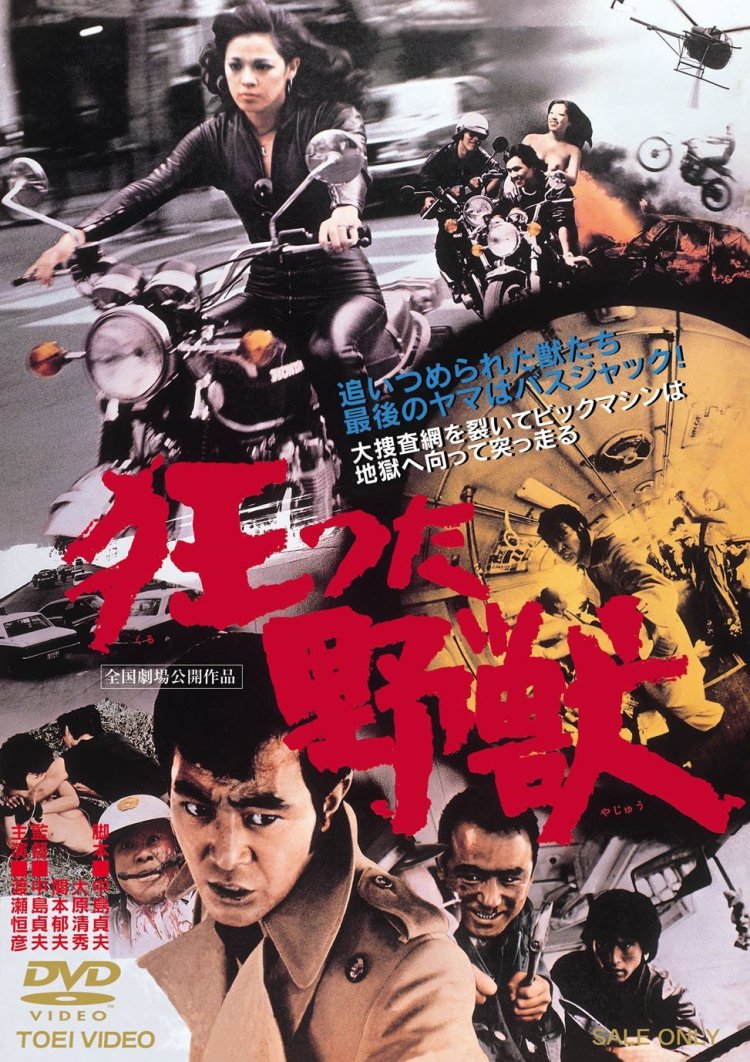 Robbing a bank is harder than it looks but if it does all go very wrong, escaping by bus is not an ideal solution. Sadao Nakajima is best known for his gritty yakuza movies but Kurutta Yaju ( 狂った野獣, Crazed Beast/Savage Beast Goes Mad) takes him in a slightly different direction with its strangely comic tale of bus hijacking, counter hijacking, inept police, and fretting mothers. If it can go wrong it will go wrong, and for a busload of people in Kyoto one sunny morning, it’s going to be a very strange day indeed.
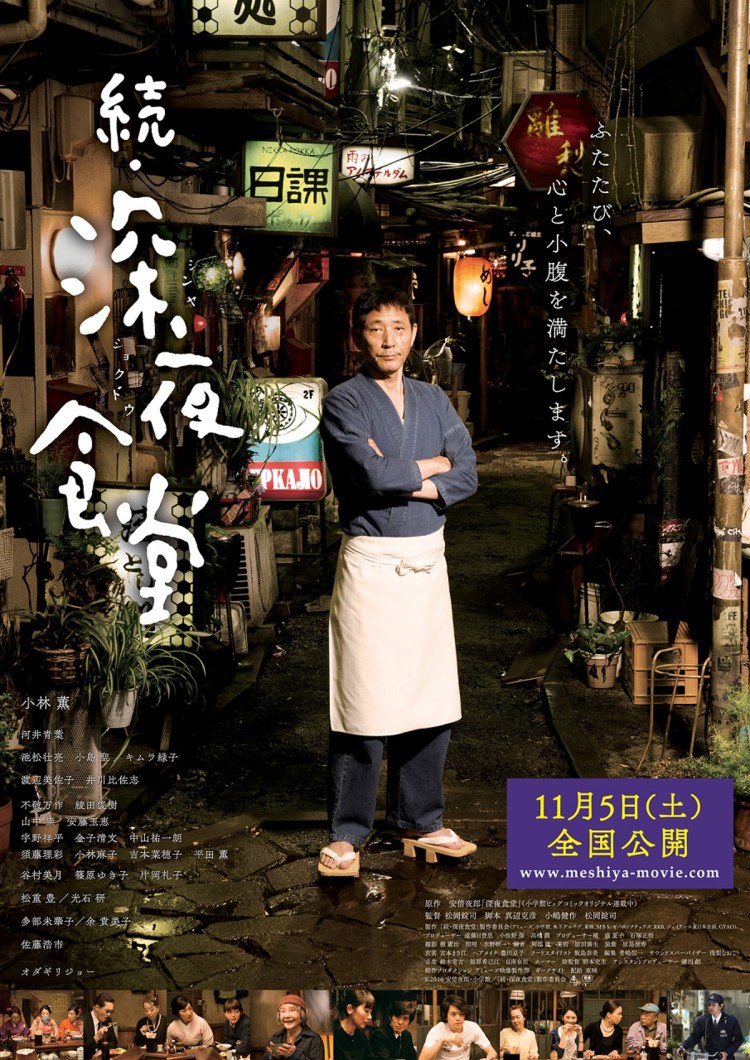 The Midnight Diner is open for business once again. Yaro Abe’s eponymous manga was first adapted as a TV drama in 2009 which then ran for three seasons before heading to the
 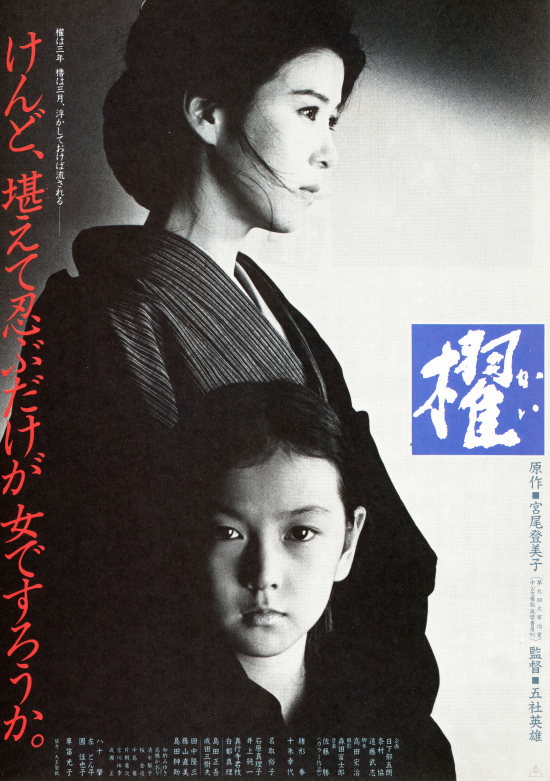 Until the later part of his career, Hideo Gosha had mostly been known for his violent action films centring on self destructive men who bore their sadnesses with macho restraint. During the 1980s, however, he began to explore a new side to his filmmaking with a string of female centred dramas focussing on the suffering of women which is largely caused by men walking the “manly way” of his earlier movies. Partly a response to his regular troupe of action stars ageing, Gosha’s new focus was also inspired by his failed marriage and difficult relationship with his daughter which convinced him that women can be just as devious and calculating as men. 1985’s Oar (櫂, Kai) is adapted from the novel by Tomiko Miyao – a writer Gosha particularly liked and identified with whose books also inspired
 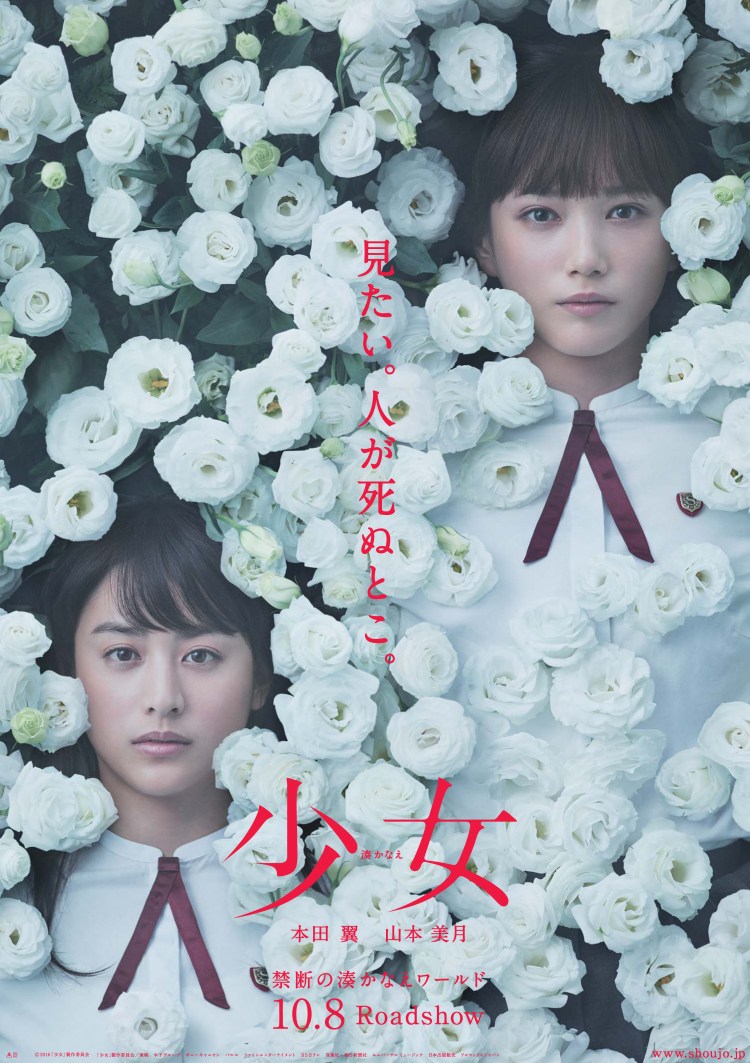 Kanae Minato is known for her hard-hitting crime stories from Confessions to
  When you spent your youth screaming phrases like “no future” and “fumigate the human race”, how are you supposed to go about being 50-something? A&R girl Kanna is about to find out in Kankuro Kudo’s generation gap comedy The Shonen Merikensack (少年メリケンサック) as she accidentally finds herself needing to sign a gang of ageing never were rockers. A nostalgia trip in more ways than one, Kudo is on a journey to find the true spirit of punk in a still conservative world.
 All things considered, a live pig is a rather insensitive gift to present to your local police station, though any gift at all might be considered in appropriate even if offered by a well meaning colleague keen to help out when a horrific murder may be connected to his missing person case. By 1977 Kinji Fukasaku had made a name for himself through the wildly successful “jitsuroku” or “true record” genre of yakuza movies kickstarted by his own
 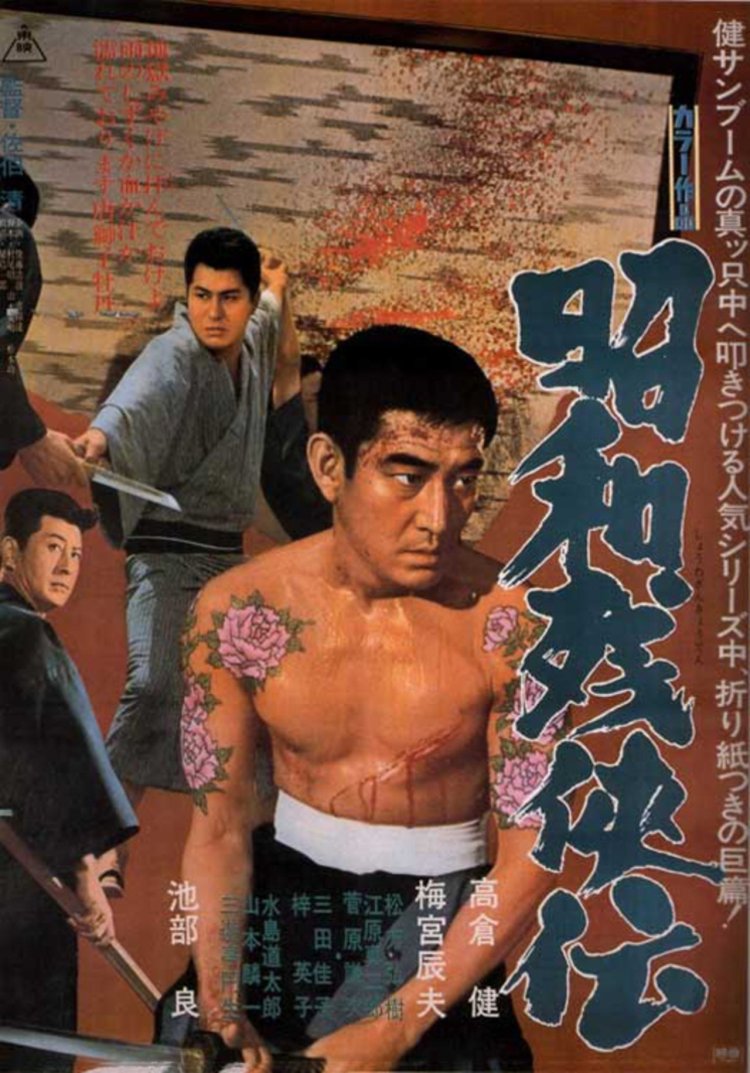 Brutal Tales of Chivalry (昭和残侠伝, Showa Zankyo-den) – a title which neatly sums up the “ninkyo eiga”. These old school gangsters still feel their traditional responsibilities deeply, acting as the protectors of ordinary people, obeying all of their arcane rules and abiding by the law of honour (if not the laws of the state the authority of which they refuse to fully recognise). Yet in the desperation of the post-war world, the old ways are losing ground to unscrupulous upstarts, prepared to jettison their long-held honour in favour of a dog eat dog mentality. This is the central battleground of Kiyoshi Saeki’s 1965 film which looks back at the immediate post-war period from a distance of only 15 years to ask the question where now? The city is in ruins, the people are starving, women are being forced into prostitution, but what is going to be done about it – should the good people of Asakusa accept the rule of violent punks in return for the possibility of investment in infrastructure, or continue to struggle through slowly with the old-fashioned patronage of “good yakuza” like the Kozu Family?
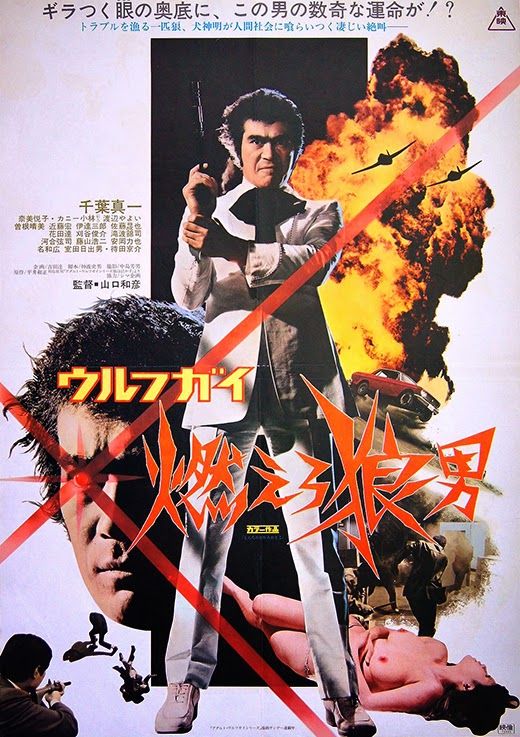 Universal’s Monster series might have a lot to answer for in creating a cinematic canon of ambiguous “heroes” who are by turns both worthy of pity and the embodiment of somehow unnatural evil. Despite the enduring popularity of Dracula, Frankenstein (dropping his “monster” monicker and acceding to his master’s name even if not quite his identity), and even The Mummy, the Wolf Man has, appropriately enough, remained a shadowy figure relegated to a substratum of second-rate classics. Kazuhiko Yamaguchi’s Wolf Guy (ウルフガイ 燃えよ狼男, Wolf Guy: Moero Okami Otoko, AKA Wolfguy: Enraged Lycanthrope) is no exception to this rule and in any case pays little more than lip service to werewolf lore. An adaptation of a popular manga, Wolf Guy is one among dozens of disposable B-movies starring action hero Sonny Chiba which have languished in obscurity save for the attentions of dedicated superfans, but sure as a full moon its time has come again.
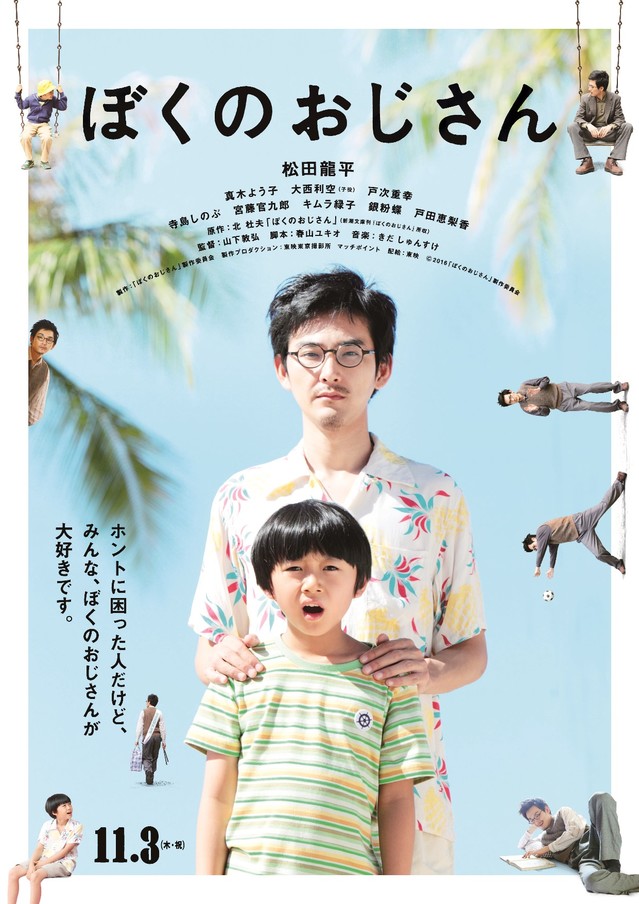 Crazy uncles – the gift that keeps on giving. Following the darker edged Over the Fence as the second of two films released in 2016, Nobuhiro Yamashita’s My Uncle (ぼくのおじさん, Boku no Ojisan) pushes his subtle humour in a much more overt direction with a comic tale of a self obsessed (not quite) professor as seen seen through the eyes of his exasperated nephew. “Travels with my uncle” of a kind, Yamashita’s latest is a pleasantly old fashioned comedy spiced with oddly poignant moments as a wiser than his years nephew attempts to help his continually befuddled uncle navigate the difficulties of unexpected romance.
 Windows on Worlds