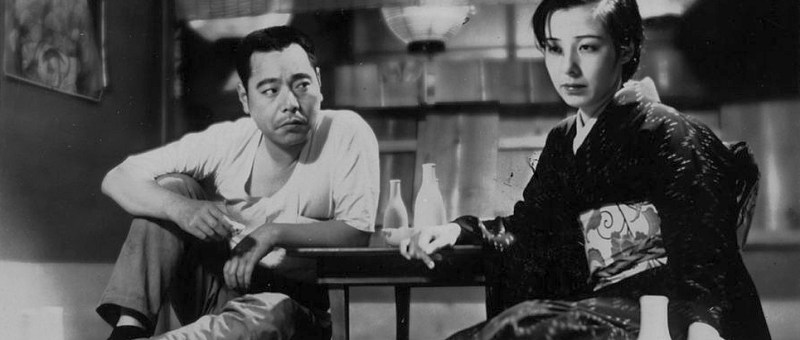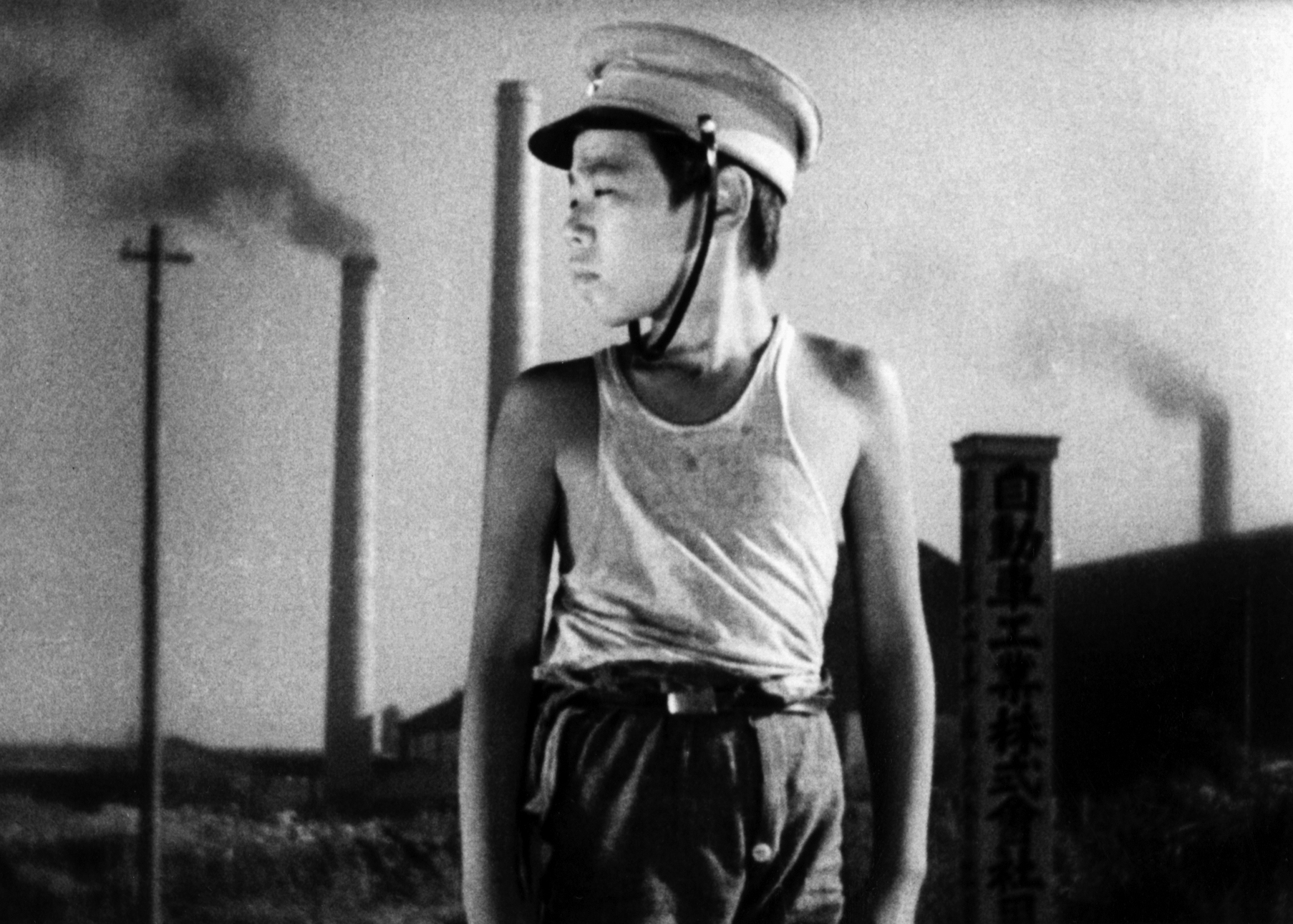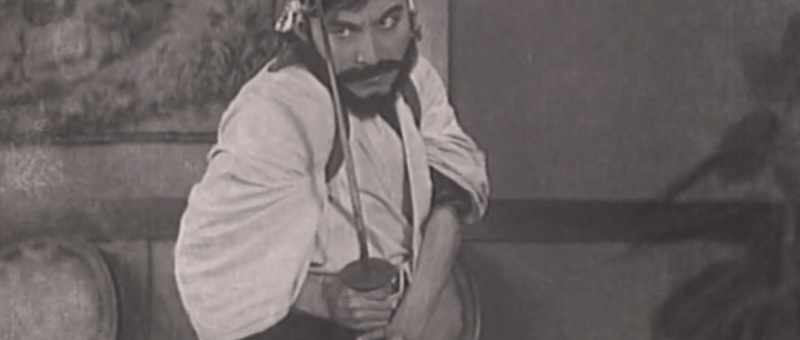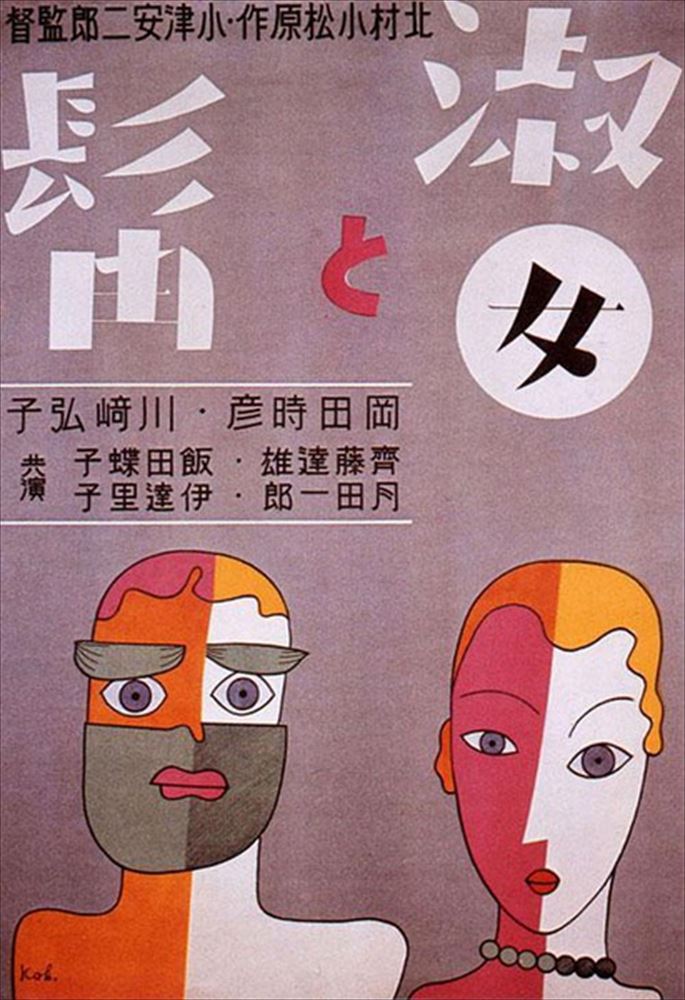
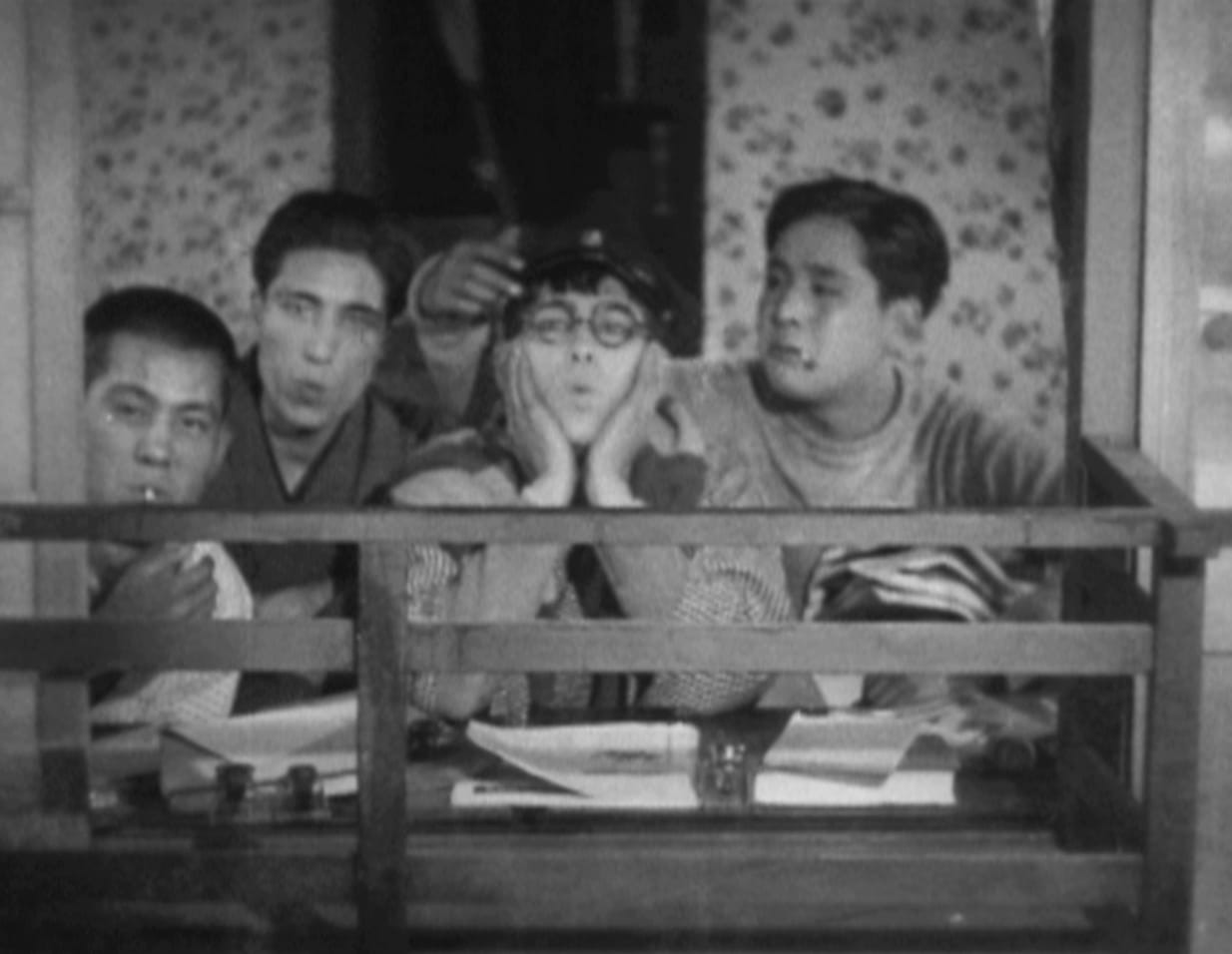
I Flunked, But… (落第はしたけれど, Yasujiro Ozu, 1930)

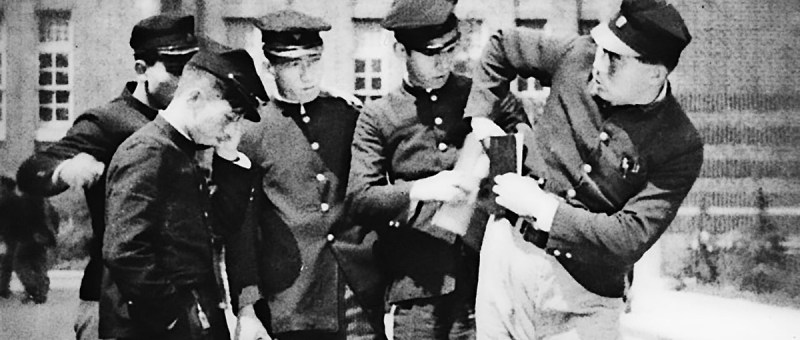
Yasujiro Ozu never went to college. By all accounts a poor student and rebellious young man, he took an early teaching position in a remote rural area precisely because it required no degree. Unsurprisingly, he didn’t last long in the job and eventually returned to Tokyo,  joining Shochiku as an assistant cameraman. Nevertheless, in his early career at the studio he found himself contributing to their popular brand of college comedies of which I Flunked But… (落第はしたけれど, Rakudai wa shitakeredo) is his third, directed when he was 26 years of age. 

Drawing inspiration from Hollywood campus movies and in particular Harold Lloyd’s The Freshman as we can see from the various US state college pennants seen hanging throughout the film, I Flunked But… follows a group of young men preparing for their final exams. They are all excited about the idea of graduating into the adult world as symbolised by the neat business suits they have each bought in preparation for their new lives and few seem burdened by anxiety about a potentially precarious future as members of a generation stepping into a world of reduced economic potential and growing political instability. 

In fact they live the last days of their student lives to the full, greeting each other with silly dances, playing turntable roulette to decide who pays for dinner, and spending more time figuring out how to cheat on the exam than studying to pass it. There may be truth in the idea that passing exams is all about the knack, but our boys are overly invested in kicking back against the system rather than playing by its rules to get ahead. As the film opens, two students are arguing because one supposedly betrayed the other in promising to help him cheat and then not following through. Takahashi (Tatsuo Saito) is supposed to help his friends by wearing a shirt which has a cheat sheet scrawled on the back, but he oversleeps and the landlady swipes it for the laundryman. The others manage to scrape through on their own while Takahashi alone fails. 

The remainder of the film becomes a more melancholy mediation on the changing fortunes of Takahashi and his friends. Overcome with shame and disappointment, Takahashi is left out of the others’ cheerful graduation celebrations, left with the choice to drop out or repeat the year (amusingly, one of his perpetual failure friends appears to be much older, even middle-aged, and one wonders if he is a serial repeater). The suit he had bought is now a grim reminder of his defeated hopes, as is the tie his girlfriend (Kinuyo Tanaka) who works in the bakery next-door was making for him as a graduation present. He now feels unworthy of wearing it, a fraudulent human trapped in adolescence by embarrassing failure. The girlfriend, however, already knows all about it and reassures him that even if he has not graduated, he still has the right to wear his graduation suit. 

As time moves on, however, Takahashi realises that he might actually be the more fortunate. Still wearing his student uniform, he lives a carefree student life and is still receiving money for his upkeep which makes him the rich man among his dorm mates who are still living in the same rooms with him and have all had to pawn their graduation suits because there are no jobs for them to go to. “I heard it’s hard to get a job these days”, the girlfriend laments, and it’s clear the depression continues to bite. The college world was safe and easy. Takahashi carries on goofing off, silly dances and cheerleading the order of the day. In this sense at least, a perpetual childhood might not be so bad a thing. The graduates wistfully play with a student’s cap, wishing they could return to their carefree college days rather than stuck in their old dorm receiving nothing but rejection letters and hand outs from a slightly smug Takahashi. “If I’d known it would be like this I wouldn’t have graduated so hastefully” they lament. Maybe flunking is actually the smart choice, riding out economic instability until something better comes along. You might as well enjoy yourself while you can, Ozu seems to say, you’ll never have it so good again.
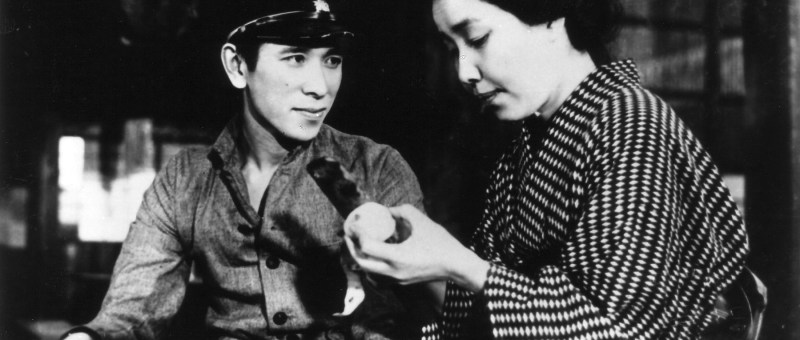
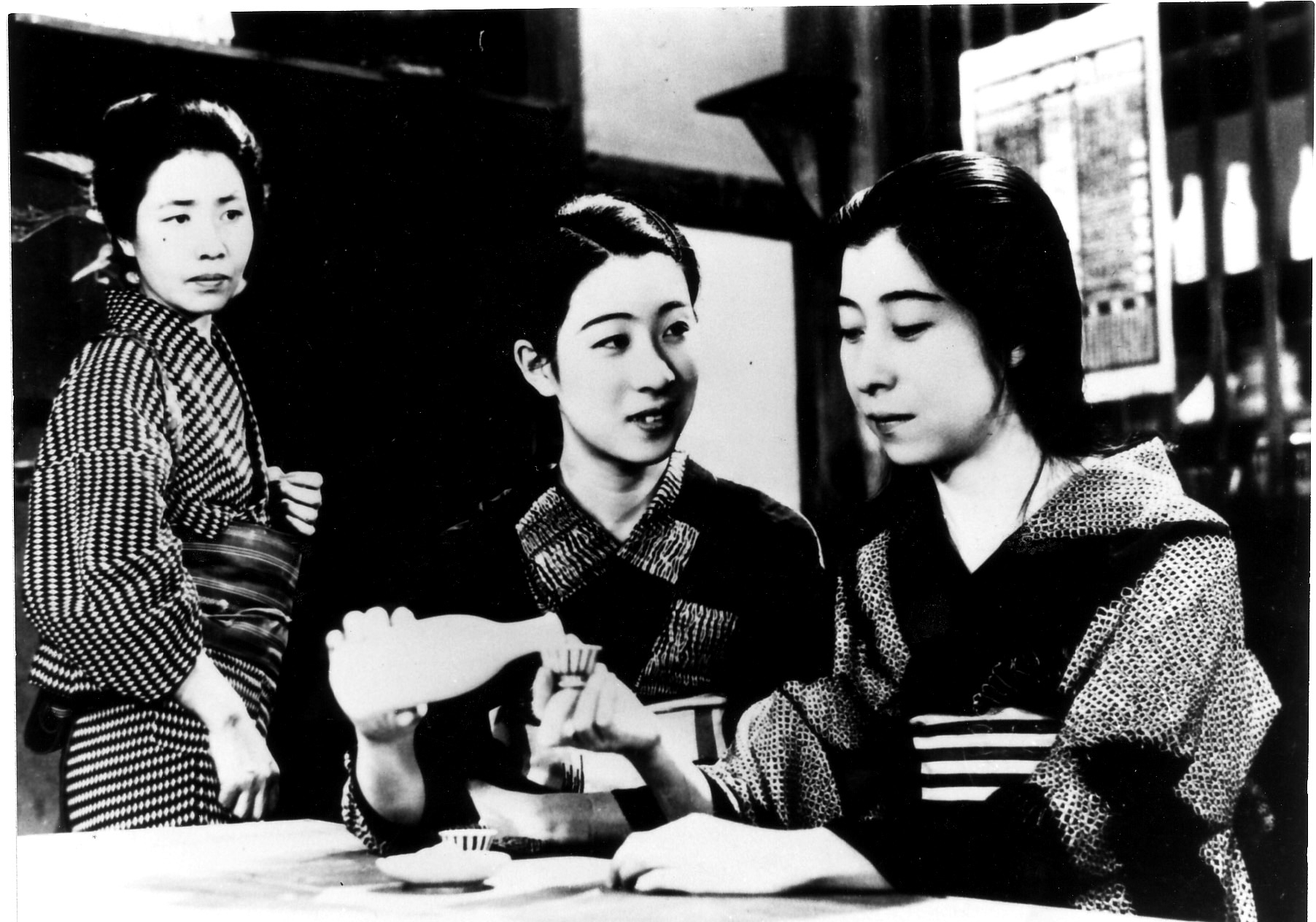
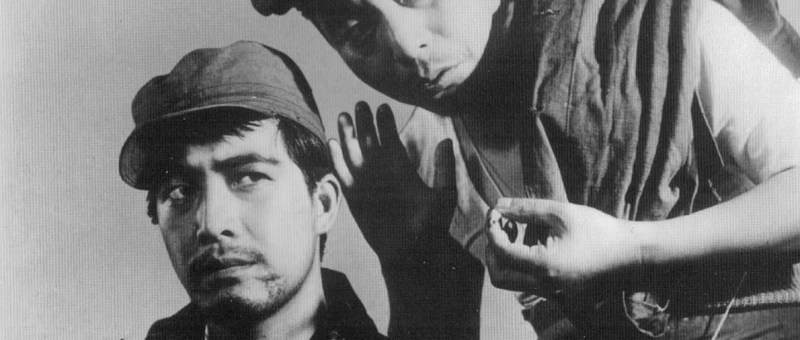
A Story of Floating Weeds (浮草物語, Yasujiro Ozu, 1934)

Japanese cinema is filled with tales of maternal self-sacrifice which is more often than not rejected by ungrateful children unable to understand the depths of a mother’s love. More contrarian than most would have it, Yasujiro Ozu’s abiding interest is with fathers and particularly with those who are flawed but loving. 1934’s A Story of Floating Weeds (浮草物語, Ukigusa Monogatari) which he later remade in colour 25 years later, is a tale of one such father and another of his “Kihachi” movies, but situates itself in a liminal space defined by Kihachi’s precarious position as a member of a virtual underclass of travelling players. 

Kichachi’s (Takeshi Sakamoto) troupe is returning to a small town after four years where they hope to stay a year. Unbeknownst to the other members, Kihachi has an ulterior motive in that the town is home to his former lover Otsune (Choko Iida) and his illegitimate son, Shinkichi (Koji Mitsui) who thinks that Kichachi is just a family friend and that his father was a civil servant who has now passed away. As is usual in travelling player stories, the troupe is in crisis and on the verge of disbanding, so Kihachi’s frequent absences do not go unnoticed, particularly by his current mistress Otaka (Rieko Yagumo) who has a petty and vindictive streak. When one of the veteran actors spills the beans, she marches straight over to Otsune’s to make trouble but Kihachi, sick of her possessive behaviour, breaks up with her. To take revenge, she bribes another actress, Otoki (Yoshiko Tsubouchi), to seduce Shinkichi. 

The central issue is one of Kihachi’s frustrated paternity. It’s clear that he couldn’t be physically present for his family but has always done his best to support them financially while Otsune runs a small restaurant. They are not married and their present relationship seems to be more one of companionship than romance but whatever label they might put on it they get along well and both deeply care for their son. While in town, Kihachi busies himself with fatherly activities, playing board games with Shinkichi or fishing in the local stream. It pains him that his visit may be short and that Shinkichi, who seems to like him a great deal, has no idea he is his son. 

That is largely because Kihachi’s only hope in life is that he spare Shinkichi from the depressing life of a travelling player. He has been paying for his education and Shinkichi is now almost a man, apparently a post-graduate student at an agricultural school. When he expresses an interest in coming to see the show, Kihachi seems panicked and tells him the kinds of shows he does are not for people like him and that he should stay home and study. Shinkichi laughs at the fatherly advice but little knows that it comes from a place of shame. Travelling players are regarded as an underclass. They are often barred from inns and not considered polite company.

“My son belongs to a world better than yours,” he shouts to Otaka during a heated, rain-drenched argument during which she threatens to expose him. Otoki, the other actress, was originally reluctant to enact Otaka’s plan, but later found herself falling for Shinkichi. Perhaps a young man bedding a travelling actress isn’t a grand shame or much of a problem for him, at least not so much as to provoke Kichahi’s despair in exclaiming he has caused his son’s ruin, but destroys his father’s hopes of keeping him out of that untouchable world for which he had sacrificed so much including his paternal love. 

Yet like the ungrateful child of a hahamono, on learning the truth Shinkichi rejects his sacrifice and feels only his abandonment, refusing to believe that any father could be so “selfish”. The rejection comes at a low point, immediately after Kihachi loses the acting troupe and considers returning to Otsune for a settled, ordinary life as a husband and father. Otsune scolds her son, reminding him that all he wanted was to give Shinkichi the settled, ordinary life that he could never live as a travelling player. It seems this life will always elude him, he is barred from his own home and must forever wander. Being a good father means he must keep far away from his son, a floating weed with no place to call home.


Passing Fancy (出来ごころ, Yasujiro Ozu, 1933)

“We have to help one another” a sympathetic soul insists towards the conclusion of Yasujiro Ozu’s Passing Fancy (出来ごころ, Dekigoroko). Ozu’s depression-era silents are not as devoid of hope as it might at first seem, but it is a much more positive statement and perhaps surprisingly the central messages lie more in the necessity or otherwise of repaying kindness and the kinds of forms that action may finally take. It is also, however, the first in a loose trilogy of films revolving around a single father named “Kihachi” and the only one in which he is not (at least potentially) exiled from the family he has been trying to protect. 

This Kihachi (Takeshi Sakamoto) has one young son, Tomio (Tokkan Kozo, AKA Tomio Aoki), and casual job working in a brewery though he is hardly a model employee and is often late due to oversleeping after a night of heavy drinking. A roguish womaniser, he is also a kinder soul than he seems which is why he stops to talk to a pretty young woman, Harue (Nobuko Fushimi), wandering around in distress late in the evening. His first approach is slightly crass, responding to her question about lodging for the night by explaining that he has a kid and no wife but then he takes her to a local cafe he frequents and persuades the owner, Otome (Choko Iida), to take her in. Otome takes a liking to her, and decides to offer her a job as a waitress. 

Kihachi develops a hopeless crush, comically dolling himself up in his fanciest kimono and getting an advance from work to buy a pretty comb, an unmistakably romantic gift, to present himself to Harue. Of course, she’s grateful but sees him as a nice older gentleman rather than a potential husband. In fact and somewhat surprisingly she develops a crush of her own on the brooding Jiro (Den Obinata) despite the fact he is constantly rude to her and more or less implies she’s an untrustworthy woman out to take advantage of “vulnerable” men like himself. There is something quite touching and unusual in the brotherly friendship between the two men that occasionally comes off as something more in Jiro’s deep antipathy to Harue, which is to say she isn’t going to come between them but the situation is indeed complicated. 

Harue is, in that sense, a distraction that takes Kihachi’s eyes off his proper role as responsible father. He and Tomio have a close, interdependent relationship and it’s clear that it’s often little Tomio, older than his years, who finds himself managing Dad. Kihachi is immensely proud of his son, fond of saying he’d be top of his class if only he had better manners. Like any father what he most wants for him is that he escape their life of poverty which is why he’s so glad that the boy does well at school. But little Tomio finds himself bullied precisely because of Kihachi’s lack of standing. The other boys mock his illiteracy, unable to believe a man could reach adulthood without being able to read. When his son is taken ill, Kihachi laments circumstances even more. “It’s horrible not having an education”, he tells Jiro, “I got my son sick and I can’t even pay the doctor’s bill”.

The depression may be less visible than in Ozu’s other ‘30s films, but its evidence is everywhere. Harue ends up on the streets after losing her job at a silk mill and having no family to fall back on. At the naniwabushi performance which opens the show, a series of spectators hopefully open a lost wallet but find it empty. Kihachi notices the discarded purse is slightly bigger than his own and makes a swap as a hopeful investment for the future. Just before the performance ends, several of the guests seem to be plagued by fleas. Kihachi is forever asking for advances for frivolous reasons but assumes he’ll be able to manage hand to mouth only to enter a moment of crisis when hit by the unexpected expenses of his son’s illness for which he feels responsible in attributing it to an excess of luxury after giving a him a pocket money bonus which he unwisely blew in one go on sweets (like father, like son after all). 

Yet what shines through is compassion and camaraderie. A friendly barber loans Jiro the money for a doctor, which is one reason he intends to leave for Hokkaido even after realising his feelings for Harue. As with the other Kihachis, this Kihachi rediscovers a sense of fatherly duty in feeling as if this debt must be his, that he should be the one to go to Hokkaido to repay it even if that means leaving his son behind. The barber tells him not to bother, the sentiment is enough for him and he doesn’t mind missing the money knowing it saved a boy’s life. “We have to help one another”, kindness doesn’t necessarily have to be repaid directly but can be paid forward in becoming a way of life. The Kihachis of A Story of Floating Weeds and An Inn in Tokyo are exiled from their families and serve their sons only by abandoning them, but this Kihachi turns back, his sense of “responsibility” perhaps a “passing fancy” but one that’s taught him the true meaning of fatherhood and what it is to live in a society.


An Inn in Tokyo (東京の宿, Yasujiro Ozu, 1935)

Yasujiro Ozu was perhaps most at home in the genial world of the shomingeki in which everyone is comfortable enough and the problems, such as they are, are emotional rather than practical. He was also, however, an exacting chronicler of his times and unafraid, even in the tightening world of 1935, to explore life on the margins of a society on the brink of crisis. A proto-neorealist take on depression-era fatherhood, An Inn in Tokyo (東京の宿, Tokyo no Yado) finds that there are good people everywhere, but also that people can be good and make bad decisions even in their goodness. 

Kihachi (Takeshi Sakamoto), a widowed father of two boys, is unemployed and looking for work. He tells the guard at a factory that he is a skilled lathe operator, but the man doesn’t even look up from his paper as he unsympathetically tells him to be on his way. Remaining polite, Kihachi thanks him for his time and returns to his sons who are obviously disappointed and mildly irritated by the “mean” guard. The boys look on sadly as other children go off to school and tell their dad they aren’t hungry because they know he has no money for food and do not want to depress him further after being turned down for yet another job. 

We don’t know exactly what landed Kihachi in the circumstances he’s currently in, what happened to his wife, or why he lost his last job but we can probably guess the economic depression is to blame for most of it. The guard at the factory ignores him because he has no work to give and perhaps Kihachi isn’t the first to ask. The small family has been lodging at the titular “inn”, sleeping in a communal room while their resources dwindle. After losing all their possessions, they face the choice of whether to go for dinner and sleep in a field or go hungry and return to the inn. They opt for food, only for the heavens to open, but on this occasion rain is perhaps their salvation because it enables them to run into an old friend, Tsune (Choko Iida), who is able to put them up for a while and help Kihachi find work. 

Meanwhile, on the road the family bumps into a widow and her daughter who are in much the same situation only, as must be obvious, hers is much more serious because if Kihachi cannot find honest work then it may be near impossible for a woman with a child. Mrs. Otaka (Yoshiko Okada) and her daughter Kimiko are staying in the same inn and the children quickly become friends. “Childhood is the best time of life” Kihachi wistfully laments as they watch the kids play, “Children are lovely”. Mrs. Otaka agrees that it’s difficult with a little girl, but that she also keeps her going. The boys too are resilient and positive, the oldest Zenko cheerfully insisting that everything will be alright tomorrow while his father’s attempt to comfort Mrs. Otaka with the claim that things work out in the end cannot help but ring hollow. 

Zenko is quite literally burdened by his father’s failure in that it is he who is expected to carry the small parcel which contains all of their worldly possessions. Later he tries to delegate the responsibility to his younger brother, an act which backfires causing the bundle to be lost. They try to help out by catching stray dogs they can turn in to the police for 40 yen as part of an anti-rabies drive, but they are also children and want what other children have which is why Zenko makes an irresponsible decision to spend the money from catching a dog on a fancy cap he took a liking to after seeing another boy at the inn wearing one. Kihachi is obviously displeased, catching a dog means they can eat and they don’t have money for frivolous things like caps but we hear from his old friend Tsune that he has his irresponsible sides too as evidenced by his longing for sake while the boys long only for wholesome meals rather than sweet treats.

Nevertheless Kichachi is a good man, as Mrs. Otaka later says. He takes a liking to the widow which might be somewhat insensitive to Tsune who has by this point taken him in and started to help him put his life back on track while taking care of the kids, but his desire to help her also has an unpleasantly conservative streak. On learning she’s taken a job at a bar he rants at her in disappointment, exclaiming that he didn’t think she was that sort of woman and wondering why she suffered so long only to finally give in to sex work. Her tearful justifications that her daughter is ill fail to move him. He tells her to quit the bar and get money some other way, which seems unrealistic and even more so in the absence of a good friend like Tsune, who seems to have made a decent life for herself as an independent woman, to miraculously sort everything out. He tries asking Tsune for money, but she worries he’s up to no good and doesn’t want to enable him messing up his life just as he’s getting himself sorted, and so he makes a terrible and frankly irresponsible decision which places his own children in jeopardy solely to “save” Mrs. Otaka from becoming a fallen woman. Leaving the women behind to pick up the pieces and take care of the children, he trudges off alone, a fugitive father exiled from his family and at the mercy of an increasingly indifferent society. 


The Eagle and the Hawk (鷲と鷹, Umetsugu Inoue, 1957)

Strapping sailors meditate on revenge and forgiveness while trapped aboard a moribund cargo ship in Umetsugu Inoue’s otherwise charming musical youth drama, The Eagle and the Hawk (鷲と鷹, Washi to Taka). One of several films Inoue released starring muse of the moment Ishihara, the film uses the boat as a kind of metaphor for a reluctance to deal with the unfinished past as several of its crew members are actively engaged in a self-imposed limbo wilfully remaining in a transient space floating between two harbours with no plans to disembark. 

This is most obviously true for the zombified Ken (Kinshiro Matsumoto) who wanders around the boat in a depressive daze unable to get over a girlfriend who left him for another man though as it turns out the bosun too is hiding out at sea waiting for the statue of limitations to run out on the murder of his lover 30 years previously. When two new recruits show up from the sailors union despite only one having been requested, many are under the assumption that they too are running from something on land though the boat itself is a confined environment from which there is no real escape so it’s also an ideal space for confrontation. 

The thing they may be running from is the murder of the boat’s chief engineer in the film’s noirish opening sequence in which a middle-aged man in a sailor’s cap is stalked by a youngster in jeans before being knifed with a ceremonial dagger. If they were running from that particular crime, it might be ironic that they chose this particular boat but then as the murdered man’s son, First Mate Goro (Hiroyuki Nagato), discovers the dagger was part of a set and the other one’s owned by the captain who seems very alarmed by the whole affair. Meanwhile, the captain’s daughter, Akiko (Ruriko Asaoka), has secretly stowed away along with Akemi (Yumeji Tsukioka), the heartbroken former girlfriend of one of the two new guys, Senkichi (Yujiro Ishihara). 

Women are regarded as unlucky on board, and it’s not difficult to guess why with Goro offering strict instructions to the new guys not to try anything with Akiko while one of the other sailors later attempts to rape Akemi with a palpable desperation existing within the crew. There is also a degree of homoerotic tension between the two new guys, the other being Sasaki (Rentaro Mikuni) who typically walks around shirtless in a pair of tight jeans and works hard to give the impression of having a mysterious past all of which leads Senkichi to suspect he’s an undercover cop possibly there after him or one of the other crew members though unbeknownst to (almost) everyone there is another crime in motion on board. 

As usual, it’s the past that’s come calling with Senkichi on the boat ironically running towards rather than away from a confrontation while others desperately try to cover up their crimes or deflect their responsibility for the dodgy dealings of their youth. Both Senkichi and Sasaki immediately remark that the boat’s a “junker” as soon as they get on board, implying that it too is on its way out, its disrepair a sign of its captain’s lack of respect and care for ship and crew alike. Then again, it seems the crew were intent on drinking half the cargo, most of them clearly happy in their work and enjoying a pleasant sense of camaraderie even on this crummy ship and its presumably not quite above board trip to Hong Kong which might hint at why Akemi shows up in cheongsam though for stowaways both women seem to have brought extensive wardrobes which in all honesty are not particularly well suited to life at sea. 

In any case, the boat becomes an unexpected place of healing and forgiveness largely brokered by manly magnanimity as Goro, on learning the truth behind his father’s murder, accepts that the killer’s motivations are “understandable” even while cautioning them against the fallacy of revenge which he insists will only create more hate and violence. He’s also fairly okay with Senkichi romancing his girl, Akiko, who sadly tells him she sees him more like a brother and isn’t interested in marrying him even if that’s what her father also expects neatly reflecting the dynamic which arises between Akemi and the lovelorn Ken who begins to cheer up and consider leaving the boat to open a transistor radio shop only for Akemi to describe him as a little brother while continuing to chase Senkichi despite his interest in Akiko. An expressionistic storm scene provides some divine justice, but also provokes a bittersweet romantic resolution which suggests it’s time to get off the boat and the face the past but with a kind of cheerfulness for the future otherwise at odds with the rage and violence of the original crime. Of course, this being a vehicle for Yujiro Ishihara, Inoue works in a few romantic scenes with his ukulele and a mournful song about the moon and ocean but finally sends him back to dry land a little more “grounded” for having found his sea legs.


The Hunter’s Diary (猟人日記, Ko Nakahira, 1964)

Ko Nakahira is most closely associated with the seminal Nikkatsu Sun Tribe film Crazed Fruit which sent Yujiro Ishihara to stardom though he began his career at Shochiku in 1948 alongside Seijun Suzuki who like Nakahira would transfer to the newly re-established Nikkatsu when it resumed production in 1954. Suzuki was rather famously let go in 1968 due to creative differences with Nakahira also leaving the studio that year in similar circumstances having decamped to Shaw Brothers in Hong Kong in 1967 where he remade some of his previous hits including 1964’s Hunter’s Diary (猟人日記, Ryojin Nikki). 

Based on a mystery novel by Masako Togawa who in fact stars in her only film role as the hero’s little seen wife, Hunter’s Diary is one of a string of films in the mid-1960s critical of the functioning of the legal system in the post-war society. Nakahira opens with a lengthy sequence introducing new forensic technologies which anticipate the use of DNA as an investigative tool in the use of blood type analysis to place a suspect at a crime scene. This science will however be undercut by the sympathetic lawyer Hatanaka (Kazuo Kitamura) who reminds us that the presence of such evidence is not proof in and of itself in much the same way that DNA has since become the new smoking gun and is as susceptible to misuse as any other kind of forensic technique. 

It’s a problem for the hero, Honda (Noboru Nakaya), because his blood type is incredibly rare. In fact he was once in the paper for saving a baby by coming to the rescue with a donation just in time which as we later discover is ironic because much of his behaviour is shaped by the loss of his own child who was born with osteogenesis imperfecta and did not survive. The traumatic circumstances of the birth left his wife, Taneko, with a fear of pregnancy that eventually destroyed their marriage. The couple now live largely apart, she in her family’s country mansion painting disturbing pictures and he in the city “hunting” women for one night stands adopting the persona of a man who is foreign or part-Japanese. There is something of the fear of foreignness seen in other similarly themed films of the era in the fact that Honda’s child is born in Mexico while the couple had met and married in the US, Taneko convinced that had they returned to Japan earlier her baby may have survived while Honda claims that “intellectual” women are drawn to foreign men as he assumes his rather creepy “Monsieur Soubra” alter-ego complete with a funny accent and slightly broken Japanese. 

He positions his “hunting” as a way of dealing with the collapse of his marriage and his guilt over the death of his child overcoming his sense of impotence through transgressive sexuality though many of the women Hatanaka later interviews describe him as disappointingly vanilla and as we discover his games might have begun long before. Meanwhile the women are themselves judged for their sexuality, the discovery of a male muscle magazine in the home of a mousy spinster somewhat amusing to Honda while the unintended darkness of his sport is brought home by the film’s opening sequence in which a 19-year-old woman who became pregnant after he seduced and abandoned her takes her own life in shame and desperation only to be branded an “idiot” by her grieving sister for having slept with a man she had only just met. When a previous conquest of his is murdered in her apartment, Honda is momentarily worried but assumes it’s a grim coincidence. When her death is followed by that of a woman who could have provided him with an alibi he comes to the conclusion that someone is trying to frame him. 

Hatanaka’s conviction is that “the law is everything in court” and that Honda should not be judged on his moral character for his sleazy philandering only on the basis of the evidence presented which he believes may have been deliberately planted to incriminate him. His investigations take him to unlikely places discovering the potentially unethical practices of blood donation programs along with the illegal sale of blood and other bodily fluids such as semen while seeing the tables turned on visiting a gay bar where a male sex worker reports a weird encounter with a suspicious client, and salesman continues to frequent a Turkish bath hoping to run into a woman who seduced him but may only have been interested in his blood type. Honda soon forgets the name of the woman who took her own life, but is haunted by the visions of the women he has harmed while simultaneously rejecting the labels placed on him as a pervert or a predator and believing that his child’s death is punishment for his “abnormal sexuality” as some may brand it. 

This sense of guilt is also reflected in his worry that he is a “spreader of death”, as if though he did not kill them directly he were the carrier of a disease or else some kind of grim reaper beckoning these women towards their demise though he evidently thinks little of them outside of their status as trophies and does not stop to consider the consequences of his actions on others. Above his bed in his city hideout (officially he lives in a hotel) there is a picture of a fox hunt making plain that his satisfaction lies in the chase rather than its conclusion yet otherwise his motives are rather banal. He cannot leave his wife because he married into her prominent family and his social standing depends on his connection to them, likewise he decides against alerting the police or the building’s caretaker on discovering one of the women’s bodies because his reputation would be ruined if were to become involved in a murder and his secret life exposed. Ironically his salvation comes precisely because of this social standing when his wealthy father-in-law hires Hatanaka to handle his appeal and save him from the death penalty. 

Hatanaka had resigned from a previous position in opposition to the system, disappointed on meeting the lawyer who defended Honda at trial and realising they did not attempt to mount a defence nor investigate his case simply try to mitigate it in the hope of working it down to a custodial sentence. He instructs his naive young assistant who wonders if Honda is the sort of man they should be saving that she should approach every case on its merits as if the defendant is innocent without bringing in external moral judgements on his character. As he tells him, Honda may be legally vindicated but his moral judgement would depend on how he lives his life from then on later offering him a kind of absolution in telling him that one of his conquests, who does not want to be identified, gave birth to a son who is healthy and happy signalling that his is not an original sin and he does not bear that kind of responsibility for the death of his child. Veering towards the avant-garde Nakahira makes frequent use of superimposition and dissolves to reflect Honda’s fracturing mental state along with the persistence of his guilt while shifting into the purely documentarian in his lengthy explanation of forensic techniques and the science behind blood types but always returns to the Hitchcockian interplay of sex, death, and remorse which is true source of Honda’s trial. 


DVD remaster trailer (no subtitles)

Temptation (誘惑, Ko Nakahira, 1957)

Ko Nakahira made his name with the seminal Sun Tribe movie Crazed Fruit, a nihilistic tale of bored, affluent post-war youth. Released a year later, Temptation (Yuwaku), adapted from a novel by Sei Ito, is in some ways its inverse pitting a melancholy widower harping on dreams of lost love against his relentlessly practical daughter for whom “Sex is life. Art is money” but finding in the end perhaps more commonality than difference save for the fact the youth of today may have no real dreams to betray. 

Now 55 years old, Sugimoto (Koreya Senda) is the proprietor of the Sugimoto Dried Goods store in upscale Ginza. Father to an only daughter, Hideko, now that his wife has passed away he finds himself carried back towards the past and is planning to turn the upstairs space in the store into a small gallery. For her part Hideko (Sachiko Hidari) and her coterie of artist friends are hoping to convince him to allow them to exhibit in the gallery for cheap, but he, slightly more conservative in his old age, views them all as low class Bohemians and fails to understand why Hideko hangs out with them in the first place. He has, it seems, an internal conflict symbolised by the beret he’s taken to wearing in which he is unable to let go of the broken dreams of his youth when he was a struggling artist forced to give up his first love, Eiko (Izumi Ashikawa), because he had no money or prospects while she eventually consented to an arranged marriage.  

The world of 1931 being very different, Sugimoto and Eiko never did anything beyond holding hands (later a key plot point), though in her parting letter she laments that she regrets not having let him kiss her and mildly berates him for not having been more forceful. A slightly uncomfortable sentiment, but diffidence seems to be the force defining Sugimoto’s life. At the store he finds himself dissatisfied with his senior salesgirl Junko (Misako Watanabe) whose brusque manner with customers and refusal to wear makeup he fears are harming sales, but is unable to say anything until his rather half-hearted attempt to talk to her provokes a mutual misunderstanding, he thinking she may be anxious about being fired and she wondering if he’s about to make a proposal. 

For unclear reasons, Junko seems to have a crush on Sugimoto, something which becomes a minor problem when he also becomes a target for Kotoko (Yukiko Todoroki), a middle-aged woman/insurance agent from Hideko’s floral arrangement class. Privy to their interior monologues, we can hear the two women squaring off against each other, Junko complaining that Kotoko is “meddling, talkative, and fat”, while Kotoko fires back that Junko wears “no makeup at all and is so stuck up” as they glare at each other through the shop window. Yet it’s not Sugimoto who eventually provokes a change in Junko, but another eccentric, struggling artist, Sohei (Shoji Yasui), who bluntly tells her that she is pretty and so should put some makeup on to bring it out. 

Junko later characterises this intervention as an act of salvation that sees her re-embrace her femininity, not only wearing makeup and having her hair styled but beginning to talk warmly with customers, improving the business but ironically giving Sugimoto the mistaken idea her friendly new demeanour may be partly for his benefit. For his part, Sohei, an unkempt artist suffering a seemingly permanent lice infestation, claims not to have cared very much about money or possessions which led him to accidentally abuse the generosity of his artist friends but has now been awakened, it seems, to a kind of consumerist mentality thanks to the interest of Junko and recognition of his art when some of Sugimoto’s old friends (well known artists Taro Okamoto, Seiji Togo, and critic Kimihide Tokudaiji) praise his paintings on seeing them in the gallery leading to them fetching a high price from prominent collectors. 

“The value of a work of art hinges on whether or not it sells” one of Hideko’s friends points out while she adds “We should be proud that art is profitable”, a sentiment that hugely offends Shohei (Ryoji Hayama), the beret-wearing leader of another artist circle the gang enlist to help them pay for the rental of the gallery. Though he concedes to Hideko’s argument that her father’s gallery is a business enterprise, not a charity, Shohei is somewhat horrified by the casual equation of art and commerce, shocked that the girls view their flower arranging as a practical more than an aesthetic skill. Still, in another irony it turns out that his talent is for business rather than art, shrewdly steering Sohei’s success rather than his own when it’s clear his work is the standout in the gallery. Just like Sugimoto had, he eventually resolves to give up his artistic dreams after falling in love with Hideko, planning to marry into her family and take over the Sugimoto store. She meanwhile, had described him as not good marriage material, “no poor painters for me, only rich men” but is apparently in favour of his selling out if only in that it ironically makes him more himself. 

As we discover there are more than a few reasons besides the beret that Sugimoto keeps feeling Shohei reminds him of someone else even as he finds himself wary of him, pointlessly trying to set Hideko up with someone more “suitable” just as she makes a point of inviting a series of alternative widowed, middle-aged ladies to the gallery opening not so much because she particularly objects to Kotoko but she’s worried her dad might get bamboozled into something without properly surveying his options. While Sugimoto remains maudlin and filled with regret though perhaps putting the past aside through a symbolic act of closure, the youngsters are cheerfully cynical, practical in the way the older generation are always telling them to be but are perhaps disappointed in them for not having dreams or aspirations beyond those of claiming or maintaining or their chosen status in life. “Art is money” Hideko is fond of saying, and it’s true enough in so much as money is an art and the one which seems at least to have captivated the post-war generation eagerly awaiting the advent of the consumerist revolution. 


The Lady and the Beard (淑女と髭, Yasujiro Ozu, 1931)

Yasujiro Ozu has sometimes been dismissed as middle of the road, particularly by the young radicals of the post-war generation who saw his, by then, rather conservative films as a symbol of everything they sought to reject in their national cinema. They may in some senses have had a point and, in 1931’s The Lady and the Beard (淑女と髭, Shukujo to hige), Ozu does indeed show us that the middle of the road might be the best place to be as his basically good yet rigidly traditionalist hero is cajoled towards modernity but ultimately rejects its extremes in pulling a “modern girl” back towards the path of righteousness. 

Recent graduate Okajima (Tokihiko Okada) is a kendo enthusiast with a rather unsettling beard which he has long refused to shave. Other than his strangely close friendship with nobleman Teruo (Ichiro Tsukida), he appears to have been rejected by mainstream society because of his odd appearance and socially awkward behaviour. Teruo invites him to his sister’s birthday party without bothering to ask her and consequently scandalises all of her friends who vow to humiliate Okajima as soon as he arrives. Okajima, however, has no idea he is being made fun of. He declines the invitation to dance with the young women in the modern fashion but volunteers to do a dance on his own, prancing about with a fan and waving his sword around in an unexpected display of traditional performance. When Teruo and his sister return after having a private argument, the party is ruined. All the girls have left, for reasons which Okajima seems not to understand. 

He is at least, however, chivalrous. Spotting a young woman in kimono being mugged in the street by a modern girl, he wades in to help, earning her eternal admiration while fending off the other members of the modern girl’s gang with his kendo skills. His heroism further pays off when he discovers that the woman he saved, Hiroko (Hiroko Kawasaki), is a typist at an office where he is interviewing for a job. Hiroko is able to explain to him that the reason he was turned down, despite the fact that the boss also had a big bushy beard, was his facial hair so he should try shaving it off. 

The beard is a symbol not only of Okajima’s traditional mindset but of a certain kind of masculinity which might not be welcome in the modern world. Teruo tries to defend it to his sister by showing her portraits of various great men from the past who all had facial hair while Okajima claims that his is inspired by Abraham Lincoln and is intended to put women off so that he doesn’t get distracted from becoming a great man himself. Okajima’s robust masculinity, avoidance of women, and intense friendship with Teruo, anxious should he get the wrong idea about women in his apartment, might hint at another possibility, but that soon goes out the window when he sheds the beard and instantly becomes irresistible to women. Not only is he developing a romantic relationship with the homely, traditional Hiroko but also becomes attractive to Teruo’s sister Ikuko (Toshiko Iizuka) and the modern girl Satoko (Satoko Date). 

Both Hiroko and Ikuko are attracted to Okajima because of his traditional masculinity in his capacity to protect them. Ikuko, rejecting a suitor who eventually exposes a problematic side to male dominance, tells him that she won’t consider anyone who’s not skilled in kendo because she is looking for a protector. He reminds her that’s what the police and the law are for, so she tells him fair enough, she’ll marry a policeman. Modernity codes “protection” into the system, depersonalised and in other ways perhaps problematic, where traditionalism relies on access to male strength. Ikuko disliked Okajima when he had a beard, but secretly desires those very qualities the beard was set to represent. 

Satoko, meanwhile, the modern girl, rejected Okajima because of his bizarre appearance while he rejects her for the same reason in a mirroring of the various ways we are the image we present. Kimono’d Hiroko is good, modern girl Satoko is bad. Even after shaving his beard, Okajima remains an undercover traditionalist, wearing his kendo clothes under his suit and chivalrous to the end. Not recognising him and possibly in the pay of Teruo trying to put his sister off marriage, Satoko seduces the clean shaven Okajima while he rejects her advances but tries to “save” her from an excess of modernity by getting her away from the gang. She fancies herself in love with him, but what he does is free her from the false image of the modern society to give her back the true freedom of her own agency. In the end he chooses the classically nice, middle of the road option in remaining with Hiroko who loved him with beard and without rather than modern girl Satoko or snooty aristocrat Ikuko. You trim it but it just keeps growing back, the final title card adds, but the message seems to be that too much of one thing be it nationalistic conservatism or hedonistic modernity is no good. The middle way it is, slow and steady and as wholesome as could be.


Currently streaming in the UK via BFI Player as part of Japan 2020. Also available to stream in the US via Criterion Channel.

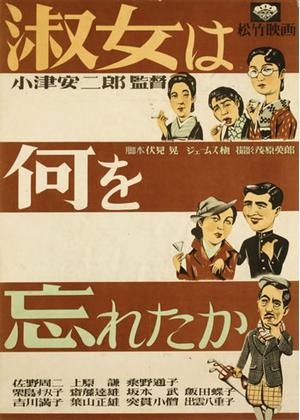
What Did the Lady Forget? (淑女は何を忘れたか, Yasujiro Ozu, 1937)

Japan was in a precarious position in 1937. Ozu’s What Did the Lady Forget? (淑女は何を忘れたか, Shukujo wa Nani wo Wasureta ka) was released in March of that year but by July the Second Sino-Japanese War would be in full swing and on the home front increasing censorship would render this kind of inconsequential comedy a much less easy sell. True enough, the film includes no “patriotic” content though it does eventually reinforce a set of patriarchal values in the remasculinisation of a henpecked husband while quietly sniggering at a new bourgeois social class.

The drama unfolds in the home of a medical professor, Komiya (Tatsuo Saito), and his austere wife Tokiko (Sumiko Kurishima). The couple have no children and mostly lead separate lives. Tokiko spends her days with two close friends, widowed single-mother Mitsuko (Mitsuko Yoshikawa), and wealthy older woman Chiyoko (Choko Iida) who is married to her husband’s friend, Sugiyama (Takeshi Sakamoto). The three women gossip about the usual things from fancy department store kimonos to new ways to laugh so you don’t get wrinkles along with the bizarrely difficult maths problems Mitsuko’s son has been studying in preparation for middle-school that none of them can answer. To help with the embarrassingly taxing homework, Tokiko offers to find a tutor, press-ganging her husband’s best student, Okada (Shuji Sano), into spending time with Mitsuko’s son Fujio (Masao Hayama) though it turns out that he too, a college graduate, is unable to solve these middle-school level problems. 

The real drama occurs when the couple’s neice, Setsuko (Michiko Kuwano), whom Tokiko had described as “proper” and “wholesome” rocks up from Osaka having become the epitome of a modern girl. Setsuko’s arrival further strains the Komiyas’ already fraying relationship as her surprising habits which include driving, smoking, drinking, and hanging out with geisha, continue to exasperate her aunt whose main objection to all of those things is that they aren’t appropriate because Setsuko is not yet married. To get away from his nagging wife who forces him to go golfing as usual when he doesn’t really want to, Komiya stashes his clubs with Okada and goes to a bar in Ginza where he meets Sugiyama who has also been forced outside by his wife. Sugiyama really does go golfing, promising to mail a previously written postcard to Tokiko on Komiya’s behalf, while he is eventually joined by Setsuko who has tracked him down to the bar despite being told to stay home and mind the house (the Komiyas have two live-in maids so the instruction seems unnecessary at best).  

As a “modern gal” Setsuko has some strangely old fashioned ideas even as she behaves like a 1930s ladette, striding around like man while drinking, smoking, and generally being almost as intimidating as Tokiko just in a more likeable fashion. Setsuko finds Komiya’s deferral to his wife embarrassing, encouraging him to be more masculine and stand up for himself even advising that he use violence to reassert his position as the man of the house. He seems uncomfortable with the idea but eventually does just that after a climactic argument once his lying about the golf and Setsuko’s nighttime adventures have been exposed. Caught in a moment of frustration, he slaps Tokiko across the face, leaving her to retreat in shock apparently “beaten”. The thing is, however, Tokiko likes it. She sees his slapping her as a sign of his love, as if she’s been needling him all this time in hope of a reaction while frustrated that perhaps he doesn’t care for her. Once he hits her, the marriage is rebalanced and repaired with traditional gender dynamics restored. She becomes more cheerful and deferent to his male authority, he acknowledges that he enabled her “arrogance” with his weakness as a man.  

Setsuko however, continues to shout at her uncle, disappointed that he apologised for his reaction and accusing him of giving away the victory he’d just won. He tells her that he’s simply using reverse psychology because wives like to believe they’re in charge and in the main it’s best to let them. Setsuko seems satisfied, but jokes with her new love interest Okada that he better not use reverse psychology on her. Or, he can, but she’ll just use reverse reverse psychology to get the upper hand, which perhaps undercuts the central message in praise of traditional gender roles. Nevertheless, What Did the Lady Forget? is full of Lubitschy late-30s charms from an unexpected sighting of real life star Ken Uehara at the Kabuki to Setsuko’s movie magazines featuring Marlene Dietrich and repeated references to Frederich March and William Powell proving that Ginza is open even in 1937, while the Komiya household descends into an oddly peaceful harmony of delayed marital bliss. 


Currently streaming in the UK via BFI Player as part of Japan 2020. Also available to stream in the US via Criterion Channel.

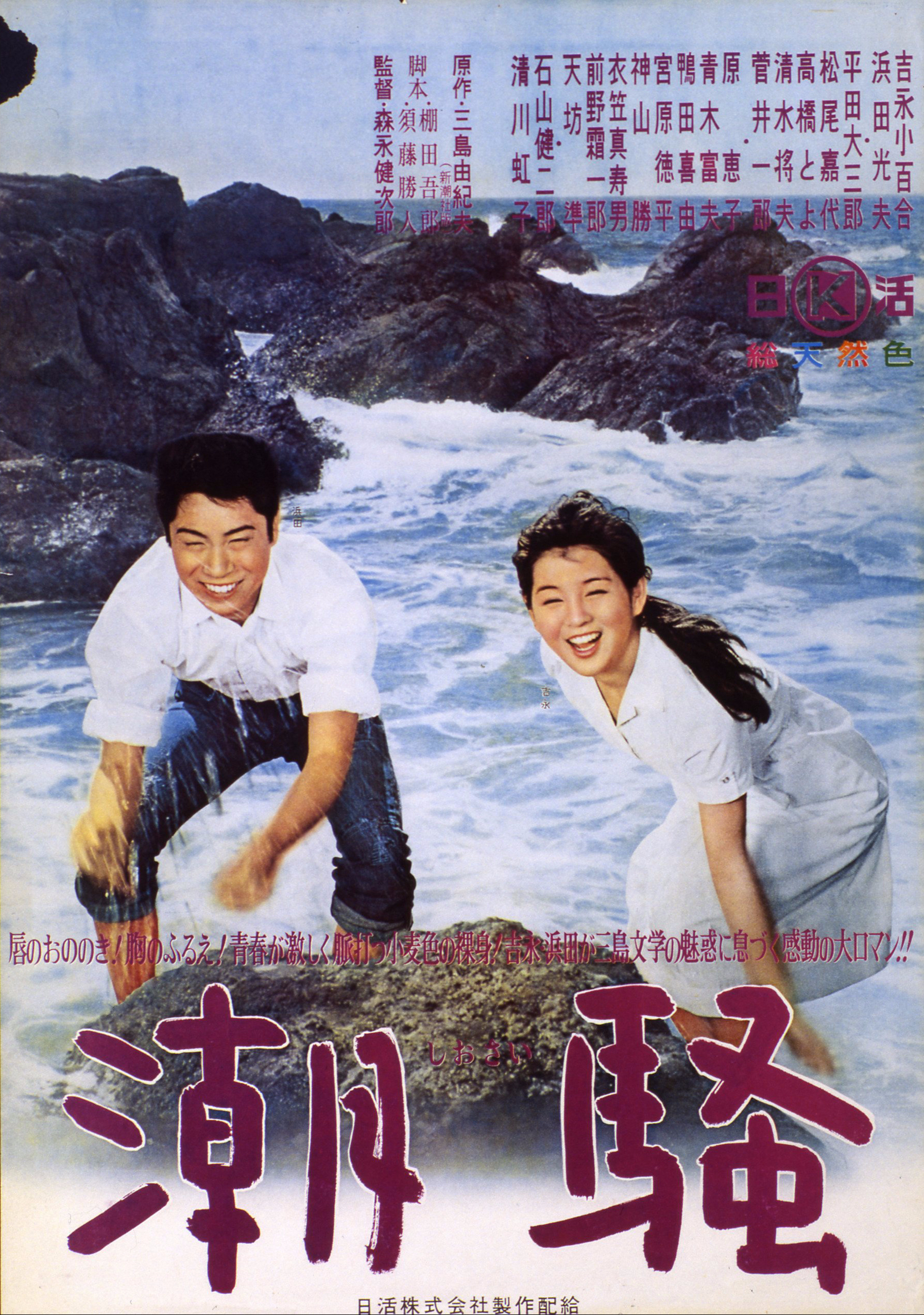
The Sound of Waves (潮騒, Kenjiro Morinaga, 1964)

Still a major marquee name well into her 70s, Sayuri Yoshinaga began her career as one of Nikkatsu’s young starlets in the early 1960s. Based on the well known novel by Yukio Mishima, The Sound of Waves (潮騒, Shiosai) finds her starring alongside regular co-star Mitsuo Hamada in another tale of love across the class divide. Usually, such forbidden love would be fodder for romantic tragedy, but Sound of the Waves is a cheerful exploration of tranquil island life where the people are simple and honest and the good will always triumph. 

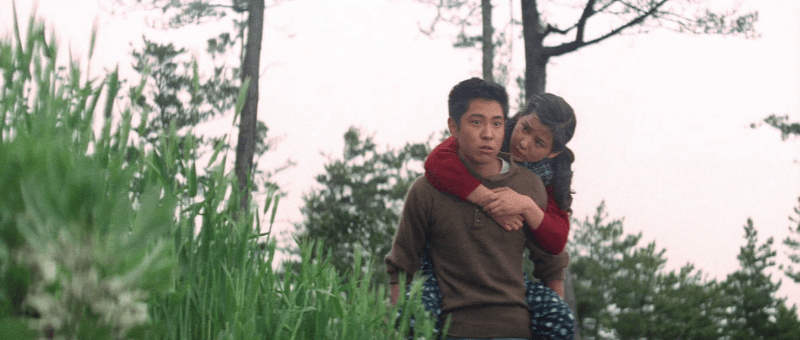
Shinji (Mitsuo Hamada) is indeed good. Though still only a teenager, he’s become the man of the house following his father’s death, working hard as a fisherman to support his family and saving most of his salary to pay for his little brother’s education. The trouble starts when the beautiful Hatsue (Sayuri Yoshinaga) who had been living as a pearl diver on another island is called back to live with her father, island big man Terukichi (Kenjiro Ishiyama), after her brother dies. There have long been rumours that, as what Terukichi wants is a son to take over his business, he will soon be marrying Hatsue off and probably to the slick and handsome Yasuo (Daizaburo Hirata) who seems to be his favoured choice of son-in-law. 

When Shinji lays eyes on Hatsue helping out with the boats it’s love at first sight, and even more so when he foolishly drops his pay packet while delivering a fish to an elderly couple and Hatsue takes the trouble of finding out where he lives and delivering it to his mother safely. Though everyone in Shinji’s household is quite taken with the beautiful, kind, and responsible newcomer, they are also aware that she is far out of Shinji’s reach. Terukichi is mean and arrogant, there’s no way he’d let his daughter marry a regular fisherman, and Shinji knows he can’t compete with an eligible young man like Yasuo. Hatsue, however, seems to like him too, especially after she gets bitten by a snake and his quick thinking, immediately sucking out the poison, probably saves her life. 

This being an innocent story of pure love, the couple have the opportunity to consummate their relationship after stripping off during a rainstorm but collectively decide to wait for marriage. That doesn’t stop the rumours starting, however, when they are spotted in the forest by Chiyoko (Kayo Matsuo), a young woman sweet on Shinji who’d gone away to study at university in Tokyo. She tells Yasuo who is immediately threatened, not only feeling unjustly betrayed, but acutely aware that the bright future he’d been so proudly boosting of as Terukichi’s future son-in-law might be in jeopardy. 

Where Shinji is kind and responsible, working hard to look after his family and always supporting the other villagers, Yasuo is, like Terukichi, arrogant and self-centred. He’s perfectly aware that he’s the island’s most eligible bachelor and makes a point of swaggering around like a little prince in waiting. Perhaps for that reason he’s also a snivelling coward and intensely insecure, angrily confronting Hatsue and even attempting to rape her while she collects water at the local spring. She manages to fend him off when he’s stung by hornets coming to her defence, and all he can do is plead with her not to tell her father so he won’t mess up his bright future any further. 

Hatsue seems not to have very much say in her future, romantic or otherwise. Having heard the rumours, Terukichi keeps her prisoner in her own home, insisting that she will marry his choice of son-in-law. The islanders, however, who seem to have grown used to ignoring Terukichi as much as it is possible to do so, are fully behind the youngsters’ romance. After all, what could be more natural than two young people falling in love? Eventually the island women launch a small petition to Terukichi to convince him to end his pettiness, but the contest, it seems, comes down to a test of manliness, Terukichi embarking on a young people today speech in complaining that his boat’s come loose in a storm but no one is man enough to retrieve it. Yasuo is found wanting once again, shrinking back from real risk while Shinji puts himself in harm’s way not only to prove himself a man and win Terukichi’s approval, but simply to serve the community. Manliness is redefined not only as strength and bravery, but kindness and patience too. Shinji’s goodness is indeed rewarded allowing him to dream of a brighter future, building a life for himself alongside a woman who loves him on their idyllic island home. 


Original trailer (no subtitles)