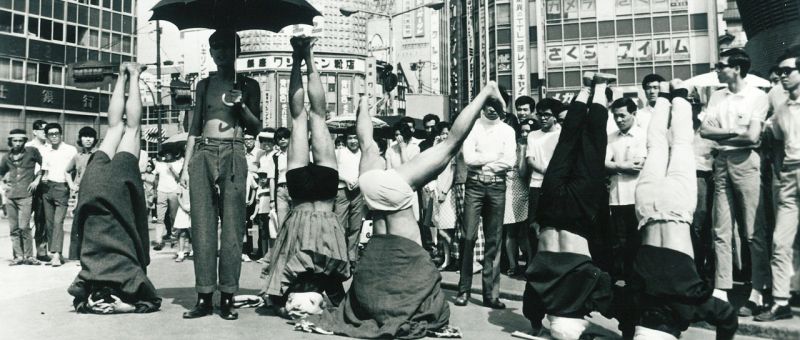
Diary of a Shinjuku Thief (新宿泥棒日記, Nagisa Oshima, 1969)

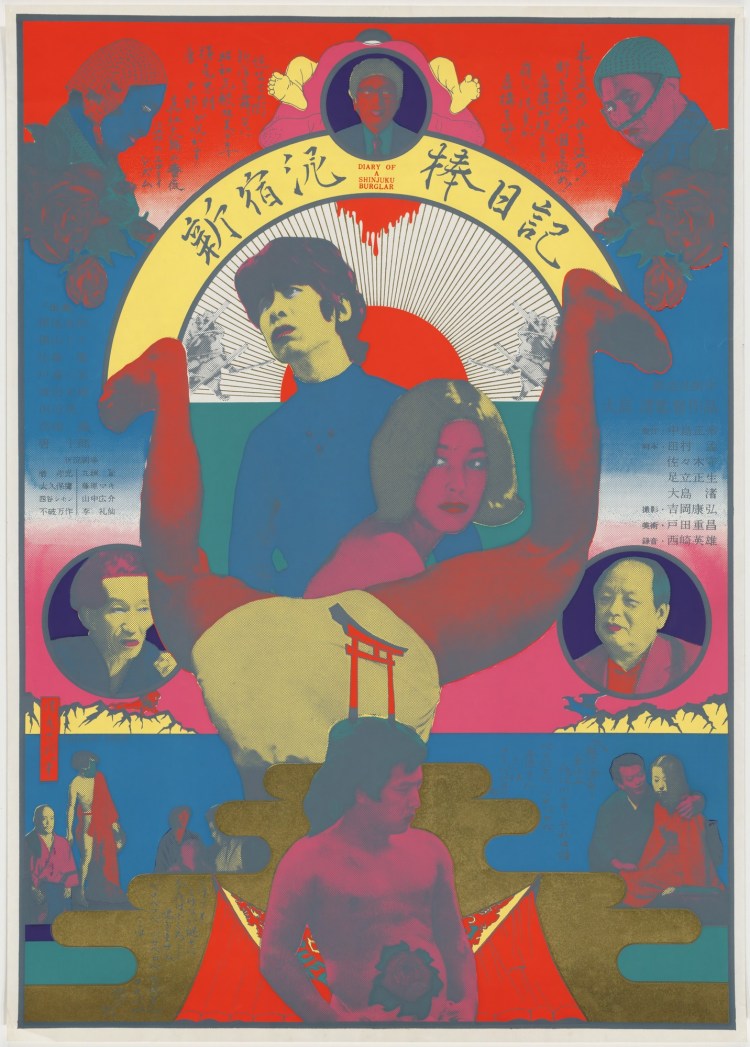
Shinjuku thief posterIn Sing a Song of Sex, Nagisa Oshima had lamented the depressing decline of political consciousness among the young who remained so preoccupied with their sexual desires that they’d forgotten all about the revolution. In Diary of a Shinjuku Thief (新宿泥棒日記, Shinjuku Dorobo Nikki), once again a story told through song, he examines the same problem from the other side – if repressed desires frustrate the battle for social change, then perhaps the sexual revolution must precede the political.

Our “hero” if you can call him that, is a man calling himself “Birdey Hilltop” (Tadanori Yokoo). Birdey gets off on shoplifting books from the huge Kunokuniya bookstore in Shinjuku. One day he is caught by a feisty young woman, Umeko (Rie Yokoyama), who we later discover is merely posing as an employee in one of the film’s many acts of role play. Umeko drags the shoplifting Birdey up to see her “boss”, Mr. Tanabe (the real life boss of Kunokuniya playing “himself”), who, to be honest, isn’t very interested in dealing with a petty thief but is quite interested in this strange pair of awkward young people and becomes something between invested audience member and accidental director in setting them off on a journey to explore the nature of their peculiar sexualities.

These largely seem to lean on the idea of anonymous theft, that neither Birdey nor Umeko are able to accept the reality of altruistic connection and value only that which is actively taken (preferably in secret). Umeko allows herself to be “stolen” in skipping out on already arranged date with a man who had threatened to take what he wanted by force to undergo an unfulfilling sexual experience with Birdey which nevertheless provokes in her a desire to shatter the realities of time and space. Given money to enjoy themselves, neither of the pair quite want to accept it – the idea of splitting it amicably isn’t appealing, or perhaps the magnanimity of insisting the other take it all more pleasurable, but neither of them want anything that isn’t in some way a transgressive transaction.

Yet perhaps what it is they long to steal is an identity. Neither Birdey nor Umeko has been entirely truthful with the other and they are each only too happy to inhabit various other roles as they act their way through life. The final apotheosis of the self occurs solely in the theatrical realm but apparently carries a level of essential truth which finally allows the pair to integrate their identities into a comfortable whole which liberates their bodies from sexual repression and perhaps becomes a kind of revolution of its own.

Nevertheless, their strange journey is massaged by a number of dubious guides from the sex therapist who reaches a series of bizarre conclusions based on little more than appearance and vague reactions to classic pornography to the gentle machinations of Tanabe who eventually declares himself too old for this particular game, and the entire legacy of world literature which crowds their heads with competing thoughts and leaves no room for originality. During their “therapy” session the pair are encouraged to get literally naked in front of the analyst who correctly points outs that they are each wearing masks (though his eagerness to see them disrobe does not seem entirely innocent) while also poking and prodding at their various dualities – Birdey is too “effeminate” and Umeko “too strong”, their gender atypicality apparently the root of all their problems. Birdey wonders if on some level he would rather be a woman, and if Umeko would rather be a man before deciding to search for himself on the stage.

Another of the dubious mentors, avant-garde stage performer and legendary figure of the Japanese underground theatre movement Juro Kara makes frequent appearances throughout the film strumming a guitar and singing a song about Alibaba while dressed in a deliberately gaudy modern take on traditional stage costuming. One of several real life figures Oshima cast in the film, Juro Kara more than any of the others is here to remind us that everything we see is affectation – something Oshima further rams home with his jarring transitions from elegant black and white photography to oversaturated colour filled with the deep red of passion and desire. Frequent title cards, surrealist imagery, rapid shifts in tone and style, and a free floating approach to narrative – Oshima out Godards Godard and even if his messages are obscure in the extreme, his images hold their power all the same.


Diary of a Shinjuku Thief was screened as part of the Japanese Avant-garde and Experimental Film Festival 2018.

Opening sequence (no subtitles)
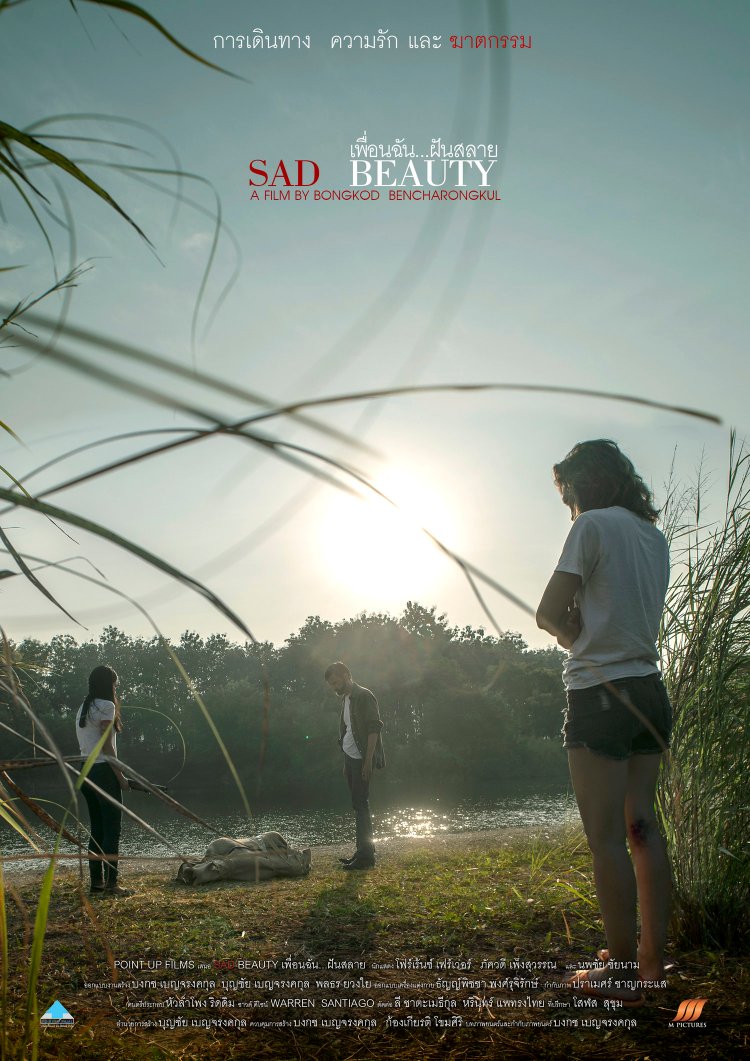
Sad Beauty (เพื่อนฉัน…ฝันสลาย, Bongkod Bencharongkul, 2018)

Sad Beauty posterToxic friendship poisons the lives of two young women each somewhat adrift in the modern Thai society in Bongkod Bencharongkul’s noir-infused tale of betrayals and frustrated futures, Sad Beauty (เพื่อนฉัน…ฝันสลาย). A former actress, Bencharongkul’s post-credit’s dedication may imply a degree of autobiographical inspiration, but the film’s uneasy mix of the upscale world of the showbiz elite and the relatively humble lives of the ordinary people on its fringes can be no accident as the two women at its centre struggle to maintain their lifelong friendship in the face of intransigent social pressures.

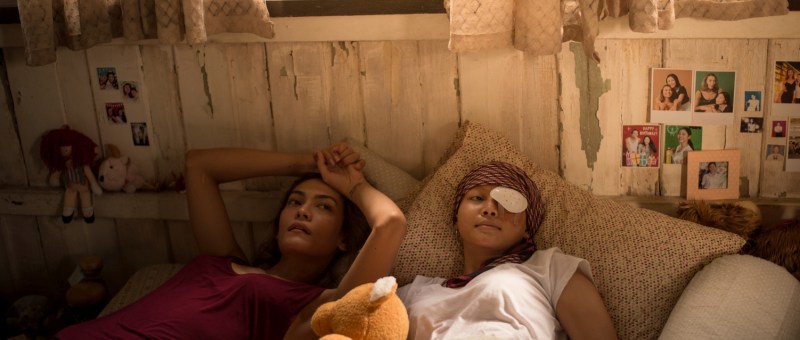
Yo (Florence Faivre), a famous actress and model, and Pim (Pakkawadee Pengsuwan), an ordinary young woman, have been friends ever since they were little. The friendship is close and intense, but Yo often over relies on Pim’s unwavering kindness, all take and no give, while Pim remains in awe of her beautiful and talented friend, unwittingly fulfilling the role of an unofficial assistant. Yo’s career has hit a rough patch thanks to an unwise public rant and subsequent refusal to apologise while her personal life is also threatening to implode thanks to an increasing drug and party habit. Pim maybe the only one able to prevent Yo’s self-destructive habits from going nuclear, but Pim has problems of her own – she has recently been diagnosed with cancer and, for a change, is now the one in need of care and support. Already strained, things go from bad to worse when the girls return home to Pim’s one night and discover her mother badly beaten by Pim’s drunken and abusive step-father who then turns on them. During the struggle, the step-father is killed and the two friends find themselves on the run with a dead body they don’t know how to get rid of.

A friend will help you move, a real friend will help you move a body – so the old adage goes, but the sudden introduction of crime on top of cancer and persistent narcissism injects another layer of complication into the friendship of the two women. Whether they like it or not they are now bound by something more than natural affection or loyalty and the increasing claustrophobia of their guilt forged connection cannot but paradoxically push them apart. Though Pim, who is perhaps in a way glad to have ended her mother’s suffering, seems to put the trauma of the crime and its aftermath behind her while consumed with mortal fear and the pain of her illness, Yo is haunted and even if her chastened attitude helps to put her career back on track, her self-destructive pursuit of sex and drugs and continues unabated.

When Pim tearfully revealed her cancer diagnosis to Yo, Yo promised she would be there for her no matter what. She promised the same thing again when Pim was trying to decide between chemo and “natural” treatments, but Yo is selfish and afraid – she fails her friend by refusing to accept the seriousness of the situation and offering only superficial reassurances that everything will be alright. Somehow or other, Yo manages to make even Pim’s suffering all about her, finally ready to be “supportive” only in time for the tragic finale in which she realises what she had only in losing it.

Strangely, the murder and its grisly coverup recede into the background – the real “crime” here is in the failure of friendship and the betrayal of a sacred trust. Yo took Pim for granted, relying on her for unconditional emotional support but refusing to offer much of anything in return. She basked in Pim’s admiration but also in her essential ordinariness as way of making herself feel superior, irritated when handsome men show an interest in Pim and not in her. Meanwhile Pim pines for her friend, longing for the reciprocity which is so defiantly absent yet also grateful for the sentiment of friendship and understanding (if also resentful) of Yo’s various reasons for retreating into solipsistic oblivion. This is perhaps the “sad beauty” of the title as the two women attempt to cling on to their friendship even while knowing that it must someday end, allowing the spectre of that final disappointment to poison what it is they have in the present.


Sad Beauty + introduction and Q&A with Director Bongkod Bencharongkul screens as part of the seventh season of Chicago’s Asian Pop-Up Cinema at AMC River East 21 on 26th September, 6.30pm. Tickets on sale now!

Original trailer (English subtitles)

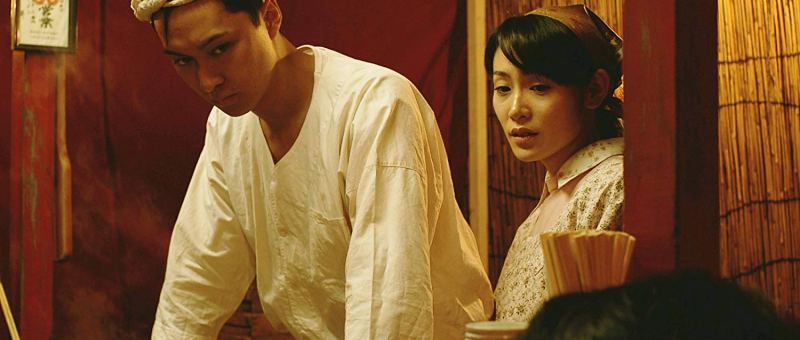
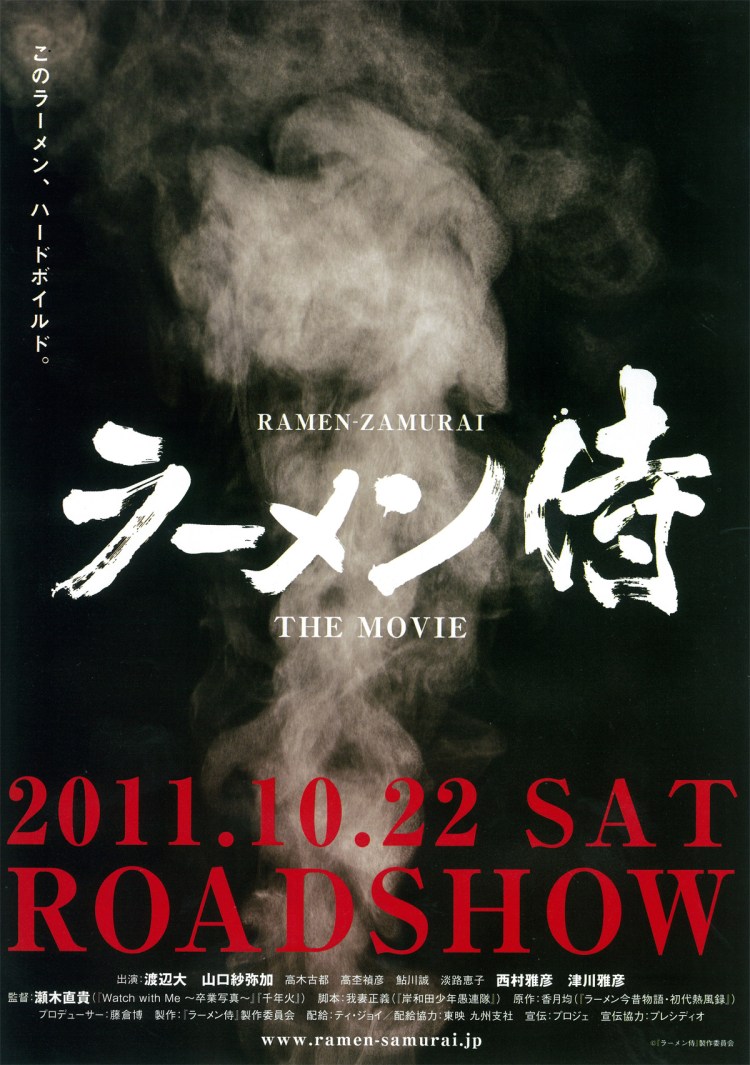
Ramen Samurai (ラーメン侍, Naoki Segi, 2011)

Ramen Samurai posterSet in the ‘90s, Ramen Samurai (ラーメン侍) is in many ways a post-Showa story or a tale of one man’s reaction to bubble era disillusionment. It’s also in the fine tradition of legacy movies in which a troubled child reflects on a complicated relationship with a late parent and struggles to accept their role as an inheritor of skills and knowledge they’d spent much of their youth attempting to reject. Yet the hero of Ramen Samurai, though he maybe reluctant, is more willing than most to pick up his father’s burden, walking back through family history with his long-suffering mother and rediscovering the heroism which lay behind his sometimes difficult father’s tough guy exterior. Hikaru (Dai Watanabe) does not see himself as a man like his father – he’s no “hero” and bears no natural inclination towards rebellion, but only through addressing his father’s life can he learn to define his own. This is all, of course, a roundabout way to discovering the soul of ramen lies in the confidence of the chef.

In 1990 Hikaru, a graphic designer, gets a call at work from his mum to let him know his father has had a stroke. Hikaru left town in a hurry some years earlier, rejecting the idea of taking over the ramen restaurant for a life in bubble era Tokyo. On his father’s death he assumes his natural responsibility and comes home but customers say his ramen’s not as good as his dad’s, and he has trouble keeping his staff in line because they simply don’t accept him. Try as he might, Hikaru just can’t seem to find a way to replicate his father’s recipe, in the store or in life.

Yet there’s a nostalgia in him that sees him want to try. Kurume, a small town in Kyushu, is defined by its ramen – a local delicacy that once brought tourists and general prosperity to the area, but during bubble era “modernisation”, the “backward” yatai ramen stands with their colourful tarpaulins were deemed too reminiscent of post-war privation to survive. The carts were shunted away from the new sophisticated city centre while the police started restricting licenses to run them, eventually prohibiting their sale and limiting their inheritance to direct family members. Hikaru is at least his father’s son and so has a natural right to take over the business even if he has hitherto rejected it.

Rather than a cooking tale, Ramen Samurai steps back to tell the story of its vicarious protagonist – the problematic figure of Hikaru’s dad who is, in many ways, the idealised figure of the Showa era “hero”. That’s not to say he was perfect – he drank to the point of financial ruin and frequently caused problems for his family, but his heart was always in the right place and so he was mostly forgiven. A salt of the Earth type and cool with it, Hikaru’s dad was the big man around town and the defacto leader of the yatai owner community. He brooked no injustice, stood up to the yakuza (who only had the profoundest respect for him), and sought to protect those who were unable to protect themselves. Seeing a sleazy yakuza molesting a young girl, Hikaru’s dad kicked him out and later offered the girl, who is mute, a job and a place to stay, almost adopting her into his family until another act of random kindness accidentally reunites her with her own long-lost father.

Faced with such an intense legacy, it’s no wonder Hikaru struggled. A sensitive, artistic soul he tried his luck in bubble era Tokyo working in an advertising agency where he found the coolness of his colleagues puzzling and difficult to bear. Hikaru’s boss loudly discusses pub lunches and evenings spent in hostess bars, often throwing away the lovingly made bento provided by his wife. Returning home with an empty lunchbox is, he says, his way of showing love though his refusal to eat it perhaps a reaction against a salaryman’s lack of freedom. Nevertheless, even if they clashed in terms of personal morality, Hikaru’s boss compliments him on his commitment to hard work and growth as an artist even whilst admitting that the work itself is often frivolous and ultimately thankless.

Hikaru eventually learns to channel his artistic inclinations into his ramen, seeing himself as a “ramen artist” incorporating his father’s legacy into a dish which is entirely his own. In a sense, Hikaru retreats into the safety of the Showa era past, or that is the cosy 1970s in which he lived a comfortable, if eventful, childhood under a yatai’s awning while dad made trouble but only for the best of reasons. A samurai’s duty is, after all, to protect and Hikaru has decided to do exactly that in “restoring” his hometown to its former glory, dragging retro yatai culture into the rapidly disintegrating post-bubble world and bringing warmth and community back with it.


Original trailer (no subtitles)

Swordsman II (笑傲江湖之東方不敗, AKA The Legend of the Swordsman, Tony Ching Siu-tung, 1992)

Swordsman II still 1In a world filled with chaos, is the answer to all life’s problems retreat or attack? After the unexpected success of Swordsman which survived the withdrawal of legendary director King Hu to go on to be a box office hit, a sequel was quickly set in motion to be directed by action choreographer Tony Ching Siu-tung. Swordsman II (笑傲江湖之東方不敗) would be the second in a trilogy inspired by Louis Cha’s novel The Smiling, Proud Wanderer and largely dispenses with the cast of the original film for a virtual reboot led by action star Jet Li and actress Brigitte Lin as an extraordinarily sympathetic villain.

Picking up soon after the end of the first film, Ling (Jet Li) and his female comrade nicknamed “Kiddo” (Michelle Reis) are on the run with the intention of retiring from the world of martial arts to live simply among honest people. However, they are about to ride straight into the heart of conflict. At this particular point in history, the “Highlanders” feel themselves oppressed by the ruling “Mainlanders” and would be set on rebellion if they weren’t so busy fighting amongst themselves. Meanwhile, a number of Japanese troops are also holing up in China to wait out political strife in Japan. “Invincible” Dawn (Brigitte Lin), a Highlander, appears to have gotten a hand on the first film’s MacGuffin – the “Sacred Volume” which holds the key to untold martial arts power. Teaming up with the displaced Japanese, Dawn plans to use the powers of the Sacred Volume to dominate the Highlanders and then eventually take over the entire nation.

Dawn happens to be the uncle of a woman, Ying (Rosamund Kwan), with whom Ling began something like a romance back in the first film. Ying’s father, Wu (Lau Shun), the chief of Highlander tribe Sun Moon Sect, has gone missing – presumed taken prisoner by Dawn as a prelude to seizing power. Despite his desire to escape the duplicitous world of martial arts, Ling finds himself on a quest to save Ying’s father and with it the Sun Moon Sect if not the entire nation from the tyrant that Dawn seems primed to become.

Ling, as heroes go, is very much of the wine, women, and song, school. Indeed, he’s not much for anything without a good cup of booze – something that provokes an instant connection with the unusual figure of Dawn when he spots her bathing in a local pool and she offers him some of her upscale alcohol in a pretty bottle. The powers of the Sacred Volume come with a price – in order to embrace them, Dawn must transform herself into a woman (or in the less poetic rendering of the text, simply cut off her penis). Dawn’s transformation is a gradual process and she continues to play her male role as the head her clan, even parading her mistress in front of her captives in a noticeably salacious manner. However, Dawn is also caught off guard by an unexpected attraction to the cheerfully tipsy Ling and the transformation seems to accelerate – she begins wearing makeup, her voice changes into a more feminine register, and her sexual relationship with her mistress appears to be definitively over.

Meanwhile, Ling is fighting a romantic war on three fronts – he’s captivated by the mysterious woman who avoided speaking to him never knowing she is really his enemy, but is still half in love with Ying, and the subject of Kiddo’s unrequited crush. While Dawn wrestles with a deeper transformation, Kiddo is also trying to process her place as a woman among men in attempting to shed her tomboyish image by styling her hair in more classically female fashions and wearing makeup – something which can’t help but arouse mild hilarity among her comrades who collectively think of her as a tough little sister. Trying to explain her new persona to her mistress, Dawn insists that she will never forget her and that essentially nothing has changed, while the guys partially mock Kiddo’s new desire to embrace her femininity by avowing that male/female/non-binary gender is an irrelevance. Even so, on realising Dawn is the person he’d been looking for and was once Ying’s uncle, Ling’s parting questions are all about whether he might have accidentally slept with a man which he seems to find embarrassing. Nevertheless, it’s “femininity” which finally does for Dawn as she finds herself weakened by love and eventually pushed towards a “heroic” act of romantic sacrifice.

Having defeated one tyrant, Ling finds himself threatened by another as Wu’s maniacal need for revenge provokes a wide scale purge of those who had “betrayed” him. Ling’s desire to remove himself from this world of betrayals, violence, and complex moralities seems ever more understandable but cannot be his answer even as he finds himself unwillingly exiled. If you turn your back on trouble, it will eventually engulf you and everything you love – as will a failure to resist a trusted ally’s descent into darkness. Strangely affecting in its hero/villain symmetries and air of tragic romance, Swordsman II’s beautifully choreographed action sequences are only surpassed by its fierce commitment to fantasy.


Swordsman II was screened as part of An Evening with Tony Ching Siu-tung presented by the Chinese Visual Festival.

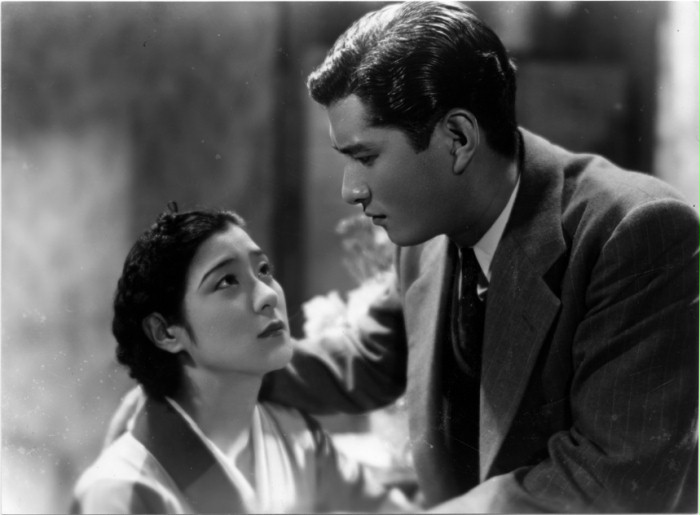
So Goes My Love (愛より愛へ, Yasujiro Shimazu, 1938)

(C) Shochiku 1938Yasujiro Shimazu had been a pioneer of the “shomingeki” – naturalistic stories of ordinary lower middle class life, and his early career included several forays into the world of the “tendency film” which carried strong left-wing messages. By the late 1930s however his films have shifted upwards a little and often deal with the lives of the upper middle classes as they find themselves at another moment of transition during the turbulent militarist years. In contrast with many contemporary films, Shimazu’s may seem curiously apolitical but speak volumes solely through their subtlety and direct refusal to engage with the propagandist concerns of the ruling regime.

In So Goes My Love (愛より愛へ, Ai yori Ai e), our lead, Shigeo (Shuji Sano), is a struggling writer living with his girlfriend, Miyako (Sanae Takasugi), who supports them both with her meagre earnings as a bar hostess. As we later discover, Shigeo is the eldest son of a prominent family who have (temporarily) disowned him because they don’t approve of his relationship with Miyako. Realising his dreams of becoming a successful writer are unlikely to be fulfilled, Shigeo has become moody and taciturn. He wants to find a job but isn’t exactly equipped to get one especially when the times are as hard as they are. He asks his uncle for help and gets an interview at a newspaper, but quickly realises that his uncle has set him up – he can only have the job if he “legitimises” his living arrangements. Shigeo leaves in a huff but there’s no denying he’s in a financial fix.

Things start to change when Shigeo runs into his younger sister, Toshiko (Mieko Takamine), by chance at a cafe. Toshiko insists on coming back with him to his lodgings “for future reference” but also out of morbid curiosity as a kind of touristic exercise in surveying the lives of those less fortunate. Shigeo thought Miyako would have already gone out but walks in just as she’s leaving. Though Miyako is shy and quiet, a little perturbed over being suddenly ambushed with a visitor, she does her best to ease the awkwardness between herself and her potential sister-in-law with black tea (foregoing a cup herself) until Toshiko finally consents to sit on their floor cushion. Toshiko looks around the bare, depressing flat and spots Miyako’s sewing box with a pair of freshly darned socks sitting on top. It’s immediately clear to her that Miyako is not, as her parents had suggested, some kind of gold digger (no self-respecting gold digger darns their socks, after all). More than that, she seems “nice”, which is perhaps why she’s able to put up with the petulant Shigeo with so little complaint.

The central problem is a two fold one – Shigeo has attempted to choose his own bride and therefore “modernity” over the “traditionalism” of an arranged marriage. He doesn’t particularly care about being the head of a household or about living in relative squalor save for guilt and wounded male pride that he’s condemned Miyako to live there with him (not to mention sending her out to the degrading world of hostess bars and cabarets just so they can survive). The parents have reacted badly and produced a stand-off. Shigeo’s uncle is trying to manipulate the situation to his advantage by convincing Shigeo to leave Miyako and come home, but Shigeo is a proud young man, even if he leaves Miyako there’s no way he’ll come home with his tail between his legs. If the older generation wants to win the younger one over, it will have to compromise and learn to play by less stringent rules.

Making a knee-jerk judgment, Shigeo’s father and uncle have decided that Miyako is just a passing fad, a floozy or a gold digger best worked out of one’s system young and then forgotten about (preferably so that it wounds you so badly you’re ready to accept the cold comforts of a proper arranged marriage). Rather than the uncle, it’s Toshiko who becomes the bridge when she realises how kind and devoted Miyako really is. Shigeo’s mother is also sympathetic but, sadly, it’s still the men who have the final say and it’s not until uncle pays a Miyako a visit to try and persuade her to leave Shigeo that he too begins to see how “sweet” she is and that allowing her into their family wouldn’t be such a bad thing after all. In fact, as we later realise, Shigeo’s father perhaps wasn’t so opposed as he pretended to be and was simply playing his son at his own game, planning to consent to the match once he proved that it was really “serious” and not just a passing fling. Nevertheless, Miyako’s own meekness proves the final barrier as she finds herself suddenly afraid that Shigeo’s family might think her inherent goodness is some kind of trick and she’s been plotting all along. Only when Toshiko comes to fetch her and Shigeo himself calls her to come does she finally understand it’s going to be alright.

For 1938, this rather frivolous story might seem decadent especially with its warmhearted liberalism as the union of a lower-class woman and upper-class man is finally blessed through nothing more than common sense and empathy. Though Shimazu otherwise steers clear of political concerns, he does send Shigeo, Miyako, and Toshiko to the pictures where they end up watching part of a film made by Leni Reifenstahl featuring beautifully photographed visions of lithe young men in swimming trunks after which Shigeo gets up in a huff to smoke a cigarette. Toshiko didn’t seem to enjoy it much either and tries to improve Shigeo’s mood by insisting that the next one will be better but the message is clear – Shimazu didn’t like that film and he doesn’t think you did either. Among fans of Shimazu, at least, modernity is winning. It may not be perfect (Shigeo is an obvious prig whose self-conscious masculine posturing is almost a self parody), but it’s getting there and if everyone would just forget about the “rules” and treat others with respect, decency, and understanding then perhaps things wouldn’t be in such a mess.


Short scene in which the trio go to the cinema

London Korean Film Festival Announces Full Programme for 2018

LKFF2018 The ReturnThe London Korean Film Festival returns for its 13th year kicking off in London on 1st November before touring to Glasgow, Edinburgh, Manchester, Sheffield, Nottingham, and Belfast. Opening with indie drama Microhabitat, the theme for this year’s edition is “a slice of everyday life” while the festival will also offer a selection of current hits, independent features, shorts, animation, and a few classics before bringing the London leg to a close on 14th November with Malene Choi’s The Return.

Opening

Microhabitat still 1

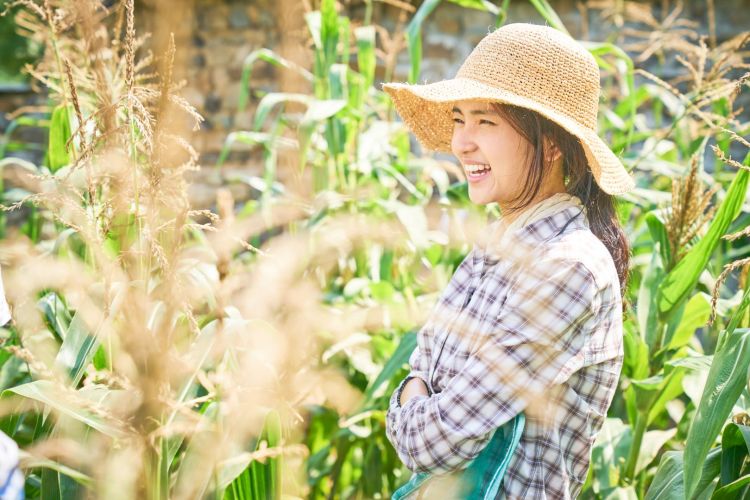
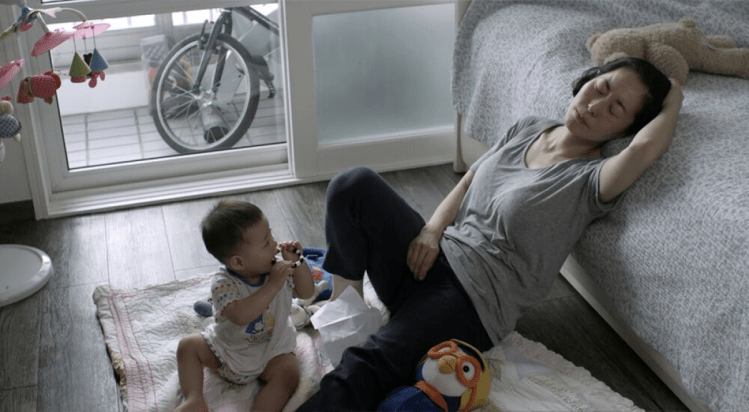
  • Microhabitat – A young woman living hand-to-mouth decides rent is an unnecessary expense in the debut feature from Jeon Go-woon who will also be present for a Q&A. Review.

Closing

The Return still 2

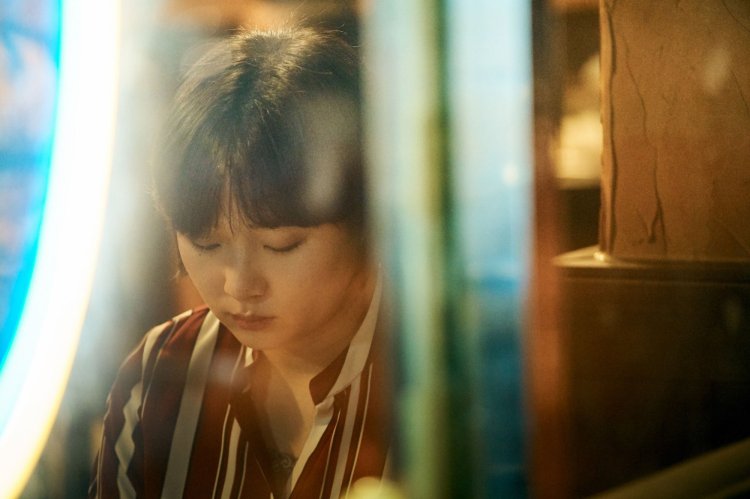
  • The Return – A Danish Korean adoptee returns to Korea looking for her history in a semi-autobiographical fiction debut from documentarian Malene Choi. Actress Karoline Sofie Lee will be present for a Q&A. Review.

Special Focus: A Slice of Everyday Life

poet and the boy still

  • The Power of Kangwon Province – a woman goes on holiday and ends up spending the night with a married policeman while an adulterous professor decides to visit the same area in the second film from Hong Sang-soo.
  • Christmas in August – 1998 romantic drama from genre master Hur Jin-ho in which a photographer falls in love with a terminally ill woman.
  • This Charming Girl – an isolated young woman develops a fondness for a shy writer but struggles to overcome past trauma.
  • Grain in Ear – second feature from A Quiet Dream‘s  Zhang Lu in which a woman of Korean ethnicity in North East China makes a living illegally selling kimchee.
  • Treeless Mountain – two little girls have to learn to look after themselves when their mum leaves them with relatives to go and look for their long absent dad.
  • The Journals of Musan – Park Jung-bum’s 2011 film in which he also stars as one of two North Korean defectors trying to adjust to life in the South.
  • Bleak Night – a father investigates the death of his son.
  • Alive – Park Jung-bum directs himself in his 2014 drama about a worker in a soybean paste factory.
  • The Bacchus Lady – Youn Yuh-jung stars as an elderly prostitute in E J-yong’s exploration of life on the margins. Review
  • The Running Actress – actress Moon So-ri steps behind the camera for three connected shorts each inspired by her real life and shot through with self deprecating humour. Review.
  • The Poet and the Boy – a middle-aged, unhappily married poet (Yang Ik-june) is suddenly struck by the beauty of a handsome young man.
  • Possible Faces – a young couple take different paths after splitting up in Lee Kang-hyun’s gentle drama.
  • Mothers – a woman becomes the guardian of the illegtimate son of her late husband in the second film from Lee Dong-eun (In Between Seasons)
  • The Land of Seonghye – Seonghye falls from the corporate ladder in Jung Hyung-suk’s indie drama.

Cinema Now

korean little forest 1

  • Heart Blackened – Jung Ji-woo remakes Fei Xing’s Silent Witness in which a wealthy CEO hires a fancy lawyer to defend his daughter who has been charged with the murder of her step-mother, a famous pop-star.
  • Love+Sling – father and son wrestlers face off when the girl next door turns down the son’s confession because she likes the dad…
  • The Princess and the Matchmaker – thematic sequel to The Face Reader starring Shim Eun-kyung as a princess who prefers the astronomer brought in to find the perfect match to anyone he suggests.
  • Seven Years of Night – thriller taking place over seven years beginning with the death of an innocent girl. Q&A chaired by Anton Bitel.
  • Little Forest – a lost young woman retreats to her country home in Yim Soon-rye’s take on the much loved Japanese manga. Review.
  • The Witness – a middle-aged salaryman witnesses a murder but selfishly keeps quiet even as the death toll rises.
  • Hotel by the River – the latest (?) from Hong Sang-soo in which a poet and his two estranged sons chat about death .

Woman’s Voices

hit the night still 1

  • Hit the Night – Bitch on the Beach‘s Jeong Ga-young once again stars as an extremely forward screenwriter “interviewing” her crush on the pretext of research. Jeong Ga-young will be present for a Q&A moderated by Sophie Brown as well as for a director talk at Kingston University at 11.30am on 7th November. Review.
  • For Vagina’s Sake – documentary in which director Kim Bo-ram travels around the world exploring attitudes to menstruation.
  • Grown Up – filmmaker Jang Hye-yeong chronicles the process of bringing her disabled sister home to live with her in Seoul.
  • Women’s Voices Shorts Programme

Indie Firepower

adulthood still 2

  • Motel Cactus – a series of encounters take place at a love hotel in Seoul. Introduction by Tony Rayns.
  • Camel(s) – a middle-aged couple have a lengthy one night stand in Park Ki-yong’s indie drama. Park Ki-yong will be present for a Q&A.
  • Old Love – Park Ki-yong’s most recent film in which old lovers reconnect at Incheon airport. Park Ki-yong will be present for a Q&A.
  • Adulthood  – a 14-year-old girl’s life is turned upside-down when her long lost uncle shows up at her father’s funeral and cheats her out of her inheritance. In order to get the money back she has to pose as his daughter so he can scam a lonely pharmacist. Review.
  • Back From The Beat – an aspiring DJ’s life is disrupted when he makes an unwise remark about employment rights. Introduction by Tony Rayns.

Contemporary Classics: Lee Myung-se & The 1990s

My Love, My Bride 1990 still 1

The subject for this year’s classic film special focus is director Lee Myung-se who began his career with Gagman back in 1988.  Lee will be present at each of the screenings for a Q&A. 

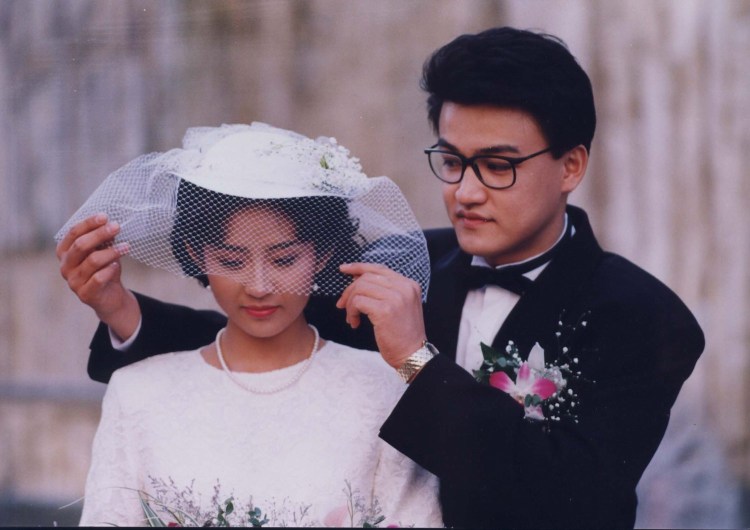
  • My Love, My Bride – Park Joong-hoon and Choi Jin-sil star as a mismatched couple in Lee’s romantic comedy.
  • First Love – an aspiring actress falls head over heels for a chain smoking writer from Seoul.
  • Their Last Love Affair – a married poet falls for a journalist who said some nice things about his work… screening with Short Can’t Live Without You

Animation

the shower (korean animation) still 1

  • The Shower – animation based on a short story by Hwang Sun-won in which a young boy becomes fascinated by a girl who plays by the stream.
  • Pororo, Dinosaur Island Adventure – Cute penguin Pororo returns for another adventure in which he travels to a tropical island to save some dinosaurs from a greedy alien and his robot minions.

Mise-en-scene Shorts

The-Monologue

Artist Video

Grace-Period

The London Korean Film Festival runs 1st – 14th November in London before touring the country until 25th November. Full details for all the films as well as screening times and ticketing information are available via the official website and you can keep up with all the latest news by following the festival on Facebook, Twitter, and Instagram.

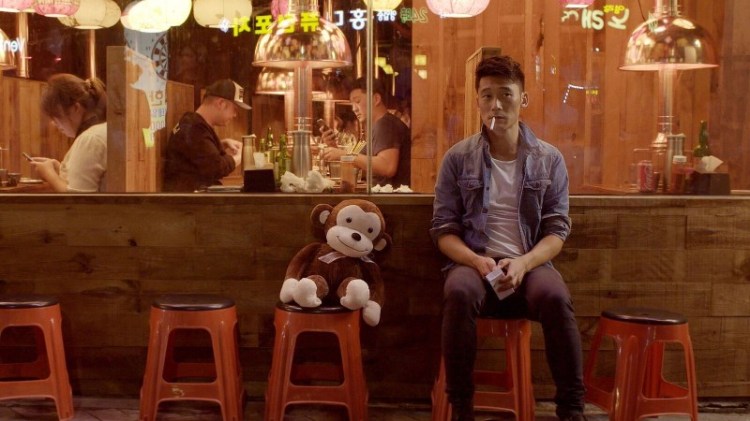
A Tiger in Winter (호랑이보다 무서운 겨울손님, Lee Kwang-kuk, 2018)

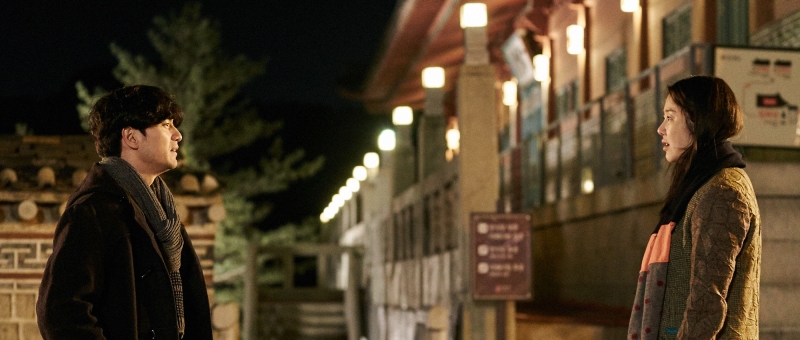
Tiger in Winter poster“Life just keeps getting harder” sighs a weary policeman charged with extracting a coherent statement from an accidental hero who only wants to talk about a tiger. Lee Kwang-kuk’s third feature, A Tiger in Winter (호랑이보다 무서운 겨울손님, Horangiboda Museoun Gyeoulsonnim), is in some ways a more conventional exercise in comparison with the time bending reflexivity of his earlier work, but the journey he takes us on is similarly circular as a melancholy young man finds himself chased out of his natural habitat and cast adrift, outside of his comfort zone too resentful to crawl back into a familiar cage but too afraid to embrace his freedom. 

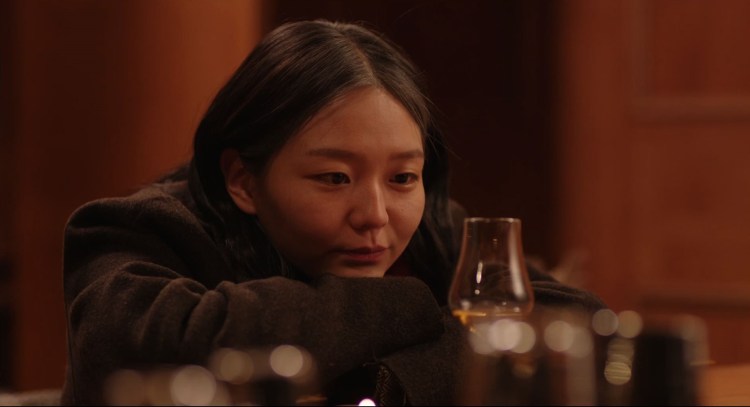
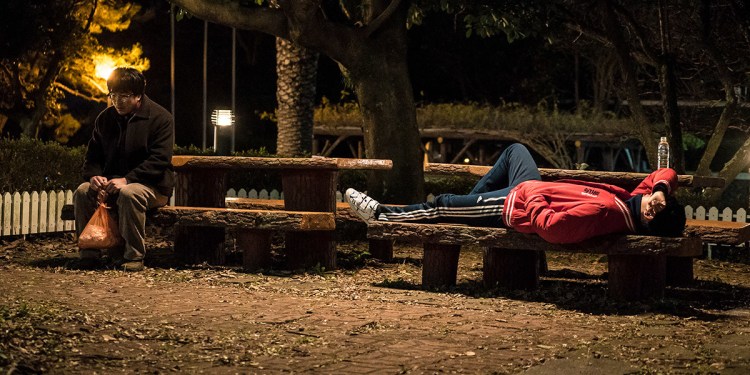
On the day a tiger escapes from the zoo, Gyeong-yu (Lee Jin-wook), a failed writer, “loses” his day job and has to temporarily vacate his apartment because his girlfriend’s parents are coming to visit and she evidently hasn’t told them she is “living in sin”. Gyeong-yu offers to stay and meet them, but bristles when his girlfriend wonders if he’s ready to make a firm a commitment. He packs and leaves, planning to return in a few days’ time when the coast is clear. Decamping to a friend’s place, Gyeong-yu continues his night “job” as a designated driver which brings him into contact with an old girlfriend – Yoo-jung (Ko Hyun-jung), who is also a writer and apparently successful but suffering from an extended bout of writer’s block and has descended into a self destructive spiral of alcohol fuelled existential desperation.

After reconnecting with Gyeong-yu, Yoo-jung pulls down a book he once gave her from her well stocked bookcase – a Korean translation of Hemingway’s The Old Man and the Sea. Hemingway’s hero fights his age as manifested in a powerful marlin and dreams of youth in the lions of Africa. The film’s English title, “A Tiger in Winter”, is perhaps a mild pun on “The Lion in Winter” which again tells of a once proud old man struggling to deal with his bodily decline, only Gyeong-yu is still young even if he feels himself diminished and brought low by life. Unlike the old man, he has stopped fighting and accepted his defeat. He no longer writes and flounders aimlessly, running away from the things that frighten him without aim or purpose. The loosed tiger is a manifestation of the fears Gyeong-yu refuses to fight which render him both physically and artistically impotent.

Writing, or perhaps art of any kind, becomes its own kind of vice – a dangerous addition, a need which must be sated or displaced without which the rest of life remains hollow. Unable to satisfy her need for creation, Yoo-jung has crumbled under the pressure of her own expectations and retreated into the comforting world of the permanently tipsy even whilst knowing that the alcohol itself inhibits her ability to create and forever separates her from that which would make her whole. She wants to stop, throws away her soju, but can’t move past her inability to face herself and resolve her creative doubts. Yoo-jung wants the quick fix, and like any addict, she is past caring about the harm she might do to herself and others in the pursuit of it.

Gyeong-yu, meanwhile, almost wallows in his degradation as he allows himself to be belittled by the customers who call for his services and insist on treating him like a servant. Designated driving doesn’t seem like a particularly safe arrangement for either party – many of Gyeong-yu’s customers are extremely drunk and willingly allowing a man they don’t know to drive them somewhere in their own car while they are barely conscious, while conversely many refuse to pay or accuse Gyeong-yu of damaging the car while berating him for acting in an insufficiently humble manner. Yet it’s not humiliation that knocks Gyeong-yu out of his stupor but trauma and a direct confrontation with someone else’s despair.

Tigers lurk everywhere, though when Gyeong-yu finally learns to look his in the eye it’s a very cute and non-threatening sort of tiger which perhaps makes him feel foolish for having evaded it for so long. Lee may not be playing with time in his usual fashion, but he sends Gyeong-yu retreating into the past all the same in an attempt to hide from his fears only to discover you can’t walk backwards into the future. An exploration of the destructive power of the creative urge, the soul crushing inertia of artistic block, and the continuing rootlessness of a life lived in flight, A Tiger in Winter is another beautifully poetic character drama from Lee whose world weary optimism loses nothing in its seeming simplicity.


A Tiger in Winter was screened as the final teaser for the London Korean Film Festival which will open on 1st November with Microhabitat. The full programme for this year’s event is now available on the official website – tickets on sale soon!

International trailer (English subtitles)

Smaller and Smaller Circles (Raya Martin, 2017)

Smaller and Smaller circles poster“Time and forgetfulness are the allies of abusers” – a Catholic priest reminds his students as part of a history lesson regarding the supposedly bloodless revolution that led to the end of the Marcos regime. Festival favourite Raya Martin dials things back a little in adapting the award winning novel by F.H. Batacan, Smaller and Smaller Circles. Batacan’s novel is often described as the first real Philippine crime novel – something echoed in the ridiculous views of a lazy and self serving police officer who believes there are no serial killers in the Philippines, yet the Smaller and Smaller Circles of the title lay the blame for the heinous acts its centre not at the feet of an evil madman but at those of the society which so progressively damaged his soul as to render it irreparable.

Our hero is himself a priest. Father Gus Saenz (Nonie Buencamino) is a man of faith and compassion who, despite all the failings he can see in it, still believes the Church is the best way to help those in need. He is sickened and appalled by the institution’s intransigence when it comes to bad priests and is preoccupied by one in particular – Father Ramirez, whose inappropriate conduct with children he has doggedly reported for more than a decade only for him to continually escape punishment. In addition to the priesthood, Father Gus is also a teacher of philosophy and a forensic scientist who works as an occasional consultant to the local police. It is in this capacity that he comes to discover a series of murders involving young boys whose bodies were discarded on a local rubbish dump deprived of their hearts, genitals, and faces. With the assistance of his junior priest, Father Jerome (Sid Lucero), and a reporter (Carla Humphries) who was once his student, Gus attempts to solve the mystery behind this horrific series of murders before the killer strikes again.

Martin breaks with genre norms by giving us an immediate insight into the killer’s psychology as we witness the prelude to the killings while listening to his own explanations of why they must occur. The picture he paints of his childhood quickly frames his crimes as a murder of the self as the killer indulges in a compulsion to kill the weak, targeting teenage boys and stealing from them not only the breath of life but the spirit of it too. The first of our circles is the Church – the bad priests whose abuses are sanctioned by their organisation and mitigated by the “good” they leave behind. Father Ramirez was shuffled on and now works for a children’s charity but Father Gus’ attempts to warn the charity’s director fall on deaf ears and then cost him his funding. Only when Father Ramirez’ financial improprieties are discovered is his position finally questioned.

The second ring is poverty. All of these boys were poor and many of them were not identified right away because aside from their parents (if they had them) nobody was going to miss them. The film opens with a scene of children running over a rubbish dump and as the father of the first victim explains, his son was one of many who supported their struggling families by combing over the left overs of the better off looking for anything which might still be useful. Our third ring is bureaucracy – when Fathers Gus and Jerome meet the local councillor, they are surprised to find that she is efficient and committed, keen to do whatever it takes to look after her constituents even if it means going up against the Church or the wider government. However, she knew nothing of the murders and though she is quick to grant Father Gus all the access he needs, it is partly her own efforts to provide essential services to the poor which have enabled the crimes as those who claim to want to help others are really only helping themselves and wilfully turning those same mechanisms back on the people who need them most.

As a man of faith Father Gus does his best, refusing to give up on the killer, trying to ease his burden whilst in grave physical danger. Set in the Philippines of the late 90s, Smaller and Smaller Circles is filled with those still trying to come to terms with the traumatic past but finding its unpleasantness echoing in unexpected places. As such it finds unexpected resonance in the world of 2017 in which life is once again cheap and compassion thin on the ground.


Smaller and Smaller Circles is screening as part of the seventh season of Chicago’s Asian Pop-Up Cinema on 19th September at 7pm, AMC River East 21, plus introduction and Q&A with director Raya Martin.

Original trailer (English subtitles)

Bleach (BLEACH ブリーチ, Shinsuke Sato, 2018)

BL_honpos_setTite Kubo’s Bleach (BLEACH ブリーチ) had the distinction of being one of three phenomenally popular long running manga series (alongside Eiichiro Oda’s One Piece and Masashi Kishimoto’s Naruto) which dominated the industry from the early 2000s until its completion in August 2016. The series spans 74 collected volumes and was also adapted into a successful television anime which itself ran for several seasons and spawned a number of animated movies. It might seem like a no brainer to bring the series to the big screen with a live action adaptation but Bleach is no ordinary manga and the demands of recreating its fearsome world of cruel death gods and huge soul sucking monsters are a daunting prospect. Perfectly placed to tackle such a challenge, director Shinsuke Sato (I am a Hero, Inuyashiki) spent more than a year in post-production working on the CGI and has brought his characteristic finesse to the finely crafted world of Kubo’s Karakura.

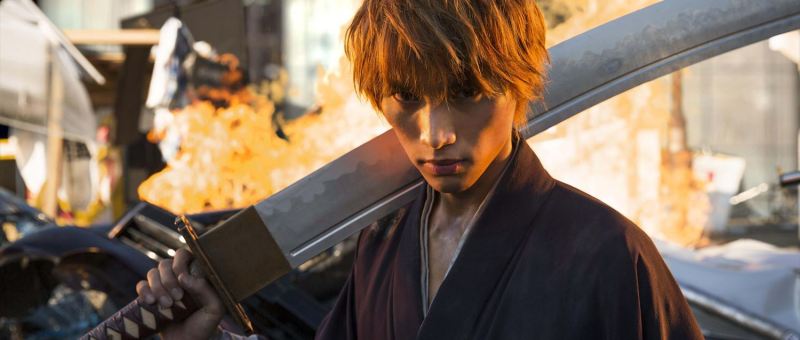
Our hero, Ichigo Kurosaki (Sota Fukushi), is a regular fifteen-year-old high school student, save for his fiery orange hair and the ability to see ghosts. He lives with his relentlessly cheerful father (Yosuke Eguchi) and two cute little sisters but is also nursing guilt and regret over the death of his mother (Masami Nagasawa) who died protecting him from a monster when he was just a child. Feeling disconnected from his family, Ichigo likes to put on a front of bravado – taking on petty punks to teach them a lesson though, in a motif which will be repeated, he only escapes an early encounter unharmed thanks to the intervention of his unusually strong friend, Chad (Yu Koyanagi). Ichigo’s life is changed forever when he finds a strange girl, Rukia (Hana Sugisaki), in his room where she despatches a lingering spirit back its rightful destination of Soul Society. That was not, however, her primary mission and a giant “Hollow” suddenly punches a fist through Ichigo’s living room and scoops up his littlest sister. Rukia does her best to defeat the beast but is seriously wounded. Sensing Ichigo’s high psychic ability, she breaks the rules of her own society and transfers her powers to him but later discovers she gave him too much and is unable to return to Soul Society unless Ichigo ups his Soul Reaper rep to the point he is strong enough to survive giving her powers back.

Loosely speaking Sato adapts the “Soul Reaper Agent” (which is eventually attached to the title during the credits sequence) arc, otherwise known as “Substitute Shinigami”, in which Ichigo gets used to his new life as a Soul Reaper. Condensing Kubo’s considerably lengthy manga to a mere 108 minutes is obviously a difficult exercise necessitating a slight refocussing of Ichigo’s essential character arc as well as that of the feisty Rukia. Sato’s streamlined narrative emphasises Ichigo’s ongoing psychodrama as an adolescent young man attempting to deal with the repressed trauma of his mother’s death and his own feelings of guilt and regret in having unwittingly dragged her into a dangerous situation from which he was unable to protect her. Being “the protector” remains a primary concern of the young Ichigo who withdraws from his family but is determined to protect them from harm. His odd friendship with the similarly conflicted Rukia whose upbringing in the austere surroundings of Soul Society has left her also feeling isolated and friendless (but believing these are both “good” things to be) paradoxically returns him to the real world just he’s turned into an all-powerful monster fighting hero.

Yet the important lesson Ichigo learns is through repeated failures. His mother died saving him, his first fight is ended by a friend, and he is finally redeemed once again by an act of selfless female sacrifice. What Ichigo is supposed to learn, is that he doesn’t always need to be the protector and that being protected is sometimes alright because what’s important is the mutuality of protection, emotional, spiritual, and physical. Meanwhile Rukia, having lost her powers, is perhaps sidelined, rendered both vulnerable and empowered as she becomes Ichigo’s mentor in all things Soul Reaper. This quality of restraint is also how she chooses to make use of her power – something beautifully brought out in Sugisaki’s wonderfully nuanced performance as Rukia’s icy Soul Reaper exterior begins to thaw thanks to her unexpected connection with Ichigo.

Rather than get bogged down in exposition, Sato is content to let the world simply exist with occasional explanations offered in the form of Rukia’s improbably cute rabbit drawings in a motif borrowed from the manga. Sato makes sure to include a number of background players including the strong armed Chad and the lovelorn Orihime (Erina Mano) as well the omniscient shop owner Urahara (Seiichi Tanabe) though their role is strictly to add background colour rather than actively participate in the plot. Despite occasional narrative fudging, Bleach succeeds as a high-octane action blockbuster, by turns slick, ironic, and affecting but always grounded in the real even in excess.


Bleach is currently available to stream worldwide via Netflix.

Original trailer (no subtitles)

Bloody Spear at Mount Fuji (血槍富士, Tomu Uchida, 1955)

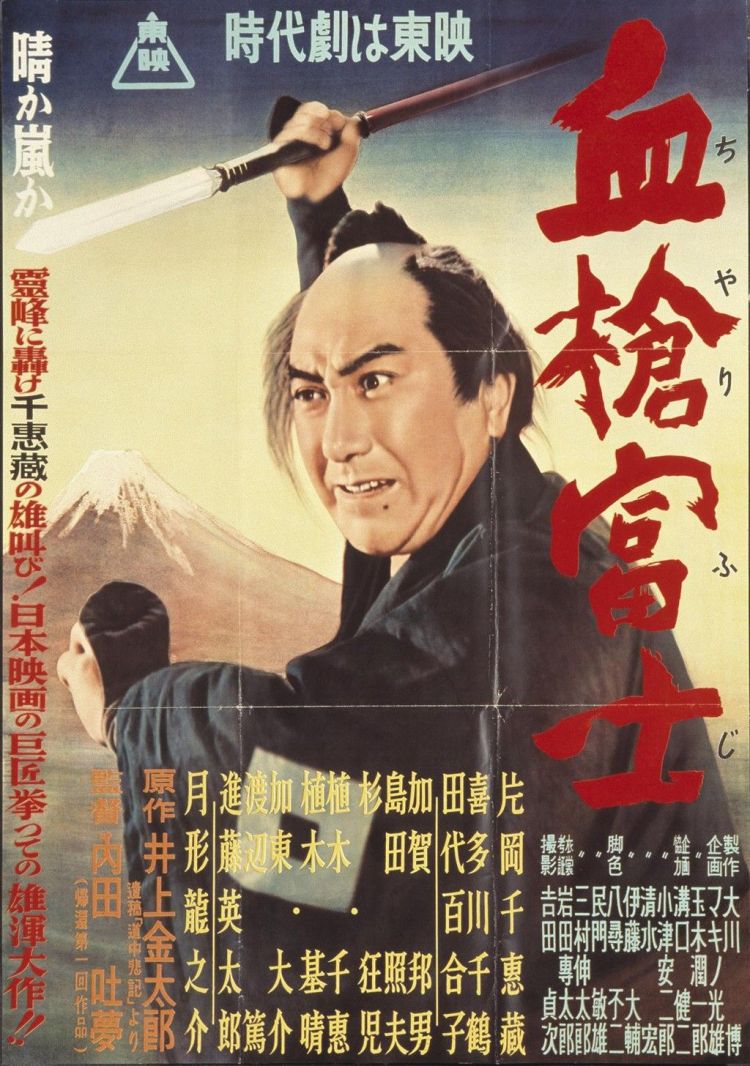
Bloody Spear Mount Fuji posterThere was a reason that the occupation authorities were suspicious of period films, but the jidaigeki of the post-war years are not generally interested in nationalistic pride so much as in interrogating the myths of the samurai legacy in order to pick apart the compromises of the modern era and the follies of the immediate past. Tomu Uchida had been among the most prominent directors of pre-war cinema but left to join the Manchurian Film Cooperative in 1942, remaining in China until 1953. Bloody Spear at Mount Fuji (血槍富士, Chiyari Fuji) was his “comeback” film, brought into existence through the good offices of fellow directors Yasujiro Ozu, Hiroshi Shimizu, and Daisuke Ito who had been the pioneer of samurai movies in the silent era. Like the later films of Masaki Kobayashi, Uchida takes aim at the hypocritical falsehoods of the samurai order and at a series of still prevalent social codes which oblige one human to oppress another in order to avoid acknowledging the fact that one is oneself oppressed.

Ironically enough we begin on the road to Edo as a goodhearted but compromised samurai, Sawaka (Teruo Shimada), makes the journey to the capital to make his name with a precious teacup in tow. He may be a samurai, but he’s making this lengthy journey on foot and accompanied by only two retainers – veteran spearman Genpachi (Chiezo Kataoka), and manservant Genta (Daisuke Kento). While on the road, the trio come across various other travellers including a shamisen player (Chizuru Kitagawa) and her daughter, a cheeky orphan who wants to be a samurai, and a melancholy father and daughter en route to visit a relative in the hope of financial assistance. There is also a notorious bandit on the loose going by the name of Rokuemon, which is one reason that the “recently wealthy” miner Tozaburo (Ryunosuke Tsukigata) is arousing suspicion with local law enforcement.

In contrast to many a jidaigeki epic, the travellers on the road to Edo are mostly good people if wise enough to be wary and on the look out for trouble. Genta and Genpachi have been given strict instructions that Sawaka is not to drink during the journey. Though he’s a nice enough soul when sober, Sawaka is a mean drunk with a tendency to start random fights and his mother doesn’t want him messing up his big chance by causing trouble on the road. This maternal solicitude can’t help but annoy Sawaka who overhears Genta complaining to a servant at the inn as he enjoys a quick glass of solo sake in the kitchen. There may be a sword on Sawaka’s belt, but he’s a middle ranker at best – something rammed home to him when the party is held up by a roadblock which turns out to be solely caused by three elite samurai having a picnic who wish to enjoy the view uninterrupted. Later he grips the handle on his sword in rage and desire to help a young woman in trouble before his hand begins to slip as he realises how little power he really has. The only thing to help her was money, and money is something Sawaka evidently does not have.

Sawaka’s “power” is entirely illusionary and dictated by the complex hierarchies of the samurai era. Breaking all the rules, he considers selling his “priceless ancestral spear” to get money to help the girl, but is told that the spear is a fake and hardly worth anything. With the help of the plucky little boy Jiro, Genpachi helps to apprehend a wanted criminal but it’s Sawaka who gets a commendation – something which causes him not a little consternation but his attempts to transfer the praise onto the rightful parties falls on deaf ears. In any case, the reward is just a piece of paper filled with more empty words and not much practical use to anyone. A fake spear begets a fake reward, he quips, becoming ever more disillusioned with the rights and responsibilities of the samurai order while somewhat romanticising the lives of the “ordinary” who might be more “free” in one sense but then Sawaka is never going to worry about being hungry or have to think about selling his daughter to avoid certain ruin even if he resents the ways in which is social class obliges him to affect coldheartedness.

Sawaka’s rejection of “samurai” values eventually leads to his downfall when an invitation to a servant to join him at his drinking table as an equal provokes outrage in a fellow nobleman who feels his own status threatened by this genial act of meaningless equality. Sawaka’s attempts to insist that he and his servant are both human beings only makes things worse and it doesn’t take long to figure out that he has picked the wrong battle if what he wanted was to strike a blow at samurai hypocrisy. Sawaka himself is no innocent in this game, terrorising a trio of peasants simply because one of them had an interesting nose and the drink was in him. Sawaka’s servant eventually pays the price for his mistake, bearing out his earlier frustrations with the chain of “shadows” that defines the samurai order and seemingly has no end.

Genpachi is the embodiment of the good retainer, but he’s also a kind and sympathetic man who takes an interest in the lonely orphan boy and, to a lesser extent, the shamisen player and her little daughter. The four of them form a kind of makeshift family, but the samurai order destroys even this small slice of happiness as the road prepares to force them apart. Having bloodied his spear but had his act of rage “approved” by the powers that be, Genpachi emerges broken and masterless, his fatherly attentions to Jiro relegated to a literal instruction not to follow in his footsteps and never to become a “spear carrier”, a mere tool at the mercy of a cruel and corrupt regime. Uchida begins in comedy complete with a whimsical contemporary score but makes clear that his ending is inevitable tragedy only made worse by the superficial rubber stamping that neatly sanctions the hero’s moment of madness as one perfectly in keeping with his moral universe.


Bloody Spear at Mount Fuji is available on blu-ray from Arrow Academy with a typically expansive feature commentary by film scholar Jasper Sharp including a minor digression into the career of director Hiroshi Shimizu – another sadly neglected figure of pre-war/golden age Japanese cinema. Other on-disc extras includes a series of interviews ported over from the French release – though it is nice to have them, it’s a shame that they are presented with the hardcoded French subtitles blurred out and English ones placed over the top which is less than ideal but perhaps cannot be helped. First pressing also includes a booklet featuring a lengthy essay by James Oliver which duplicates much of the information from the commentary while also situating the film within the context of Uchida’s career and the wider post-war world, as well as a complete filmography both for Uchida’s directing and acting work compiled by Sharp.

Short clip from an unrestored version of the film (no subtitles)