
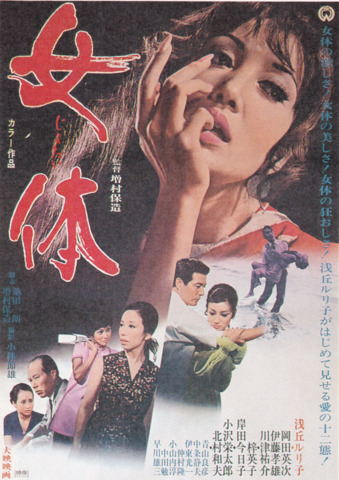
 “Freedom for the masses!” cry the student protestors outside the claustrophobic environment of a corrupt educational institution at the heart of Yasuzo Masumura’s Vixen (女体, Jotai – lit. “a woman’s body”). While they cry for freedom, one young “liberated” woman finds she’s anything but free even in the throws of her liberation. Possessed of little power, she has a need to find herself a white knight but no sooner has she got him than she begins to long for new conquests, trapped in a destructive cycle of sex and violence. Subverting his own ideas of sex as liberation, Masumura reconfigures lust as a trap in the form of a siren song sung by a lonely young woman unable to find her place in the complicated post-war landscape.
Michi (Ruriko Asaoka), a modern young woman, has a brief episode of fondling an office chair while waiting to see the chairman of a university. Proudly showing off the bruises on her thighs, she accuses the chairman’s son of rape. Despite the evidence, Michi’s accusation is undermined by her mercenary behaviour which does not tally with that expected in such difficult situations. She’s come alone, flirts with the chairman’s secretary Nobuyuki (Eiji Okada), and is quick to talk money. Questioned at home the chairman’s son admits everything but thinks it’s no big deal because that’s just “how it’s done these days”. The chairman, worried more for his reputation which is already under strain given the widespread student protest movement, thinks paying Michi off is the best thing to do but there’s a disagreement over the amount. Nobuyuki’s wife Akie (Kyoko Kishida), sister of the accused and daughter of the chairman, only wants to give Michi half of the two million she’s asked for. Nobuyuki gives her the full amount anyway behind his wife’s back, winning Michi’s eternal admiration for his considerate treatment. Unwisely visiting her hotel room, Nobuyuki develops a dangerous fascination with the alluring young woman and embarks on a passionate, ill-advised affair.
Michi is, in many ways, the archetypal post-war woman. Orphaned at a young age she was raised by a grandmother in a small fishing village and has been living with another relative whilst working as a waitress in his ramen restaurant after coming to the city. She’s grown up in a more liberal era, has a “positive” attitude to sex, and lives outside of the “traditional” path for “respectable” young women of early marriage and continued monogamy. As someone later puts it, women like Michi are two a penny now that the economy is getting back on its feet – they live alone in the city, aren’t interested in marriage and value their independence. Michi, however, is more or less the opposite of this “new” kind of woman. Independence is something that frightens her beyond all else. She cannot survive without a man, does not want or know how to live alone as a “single” woman and uses her sex appeal in order to manipulate men into staying by her side to look after her. Sex is not what she craves so much as security, but security also frightens her and so each time she’s made one conquest she latches on to the next gallant young man who shows her any sign of kindness or courtesy.
Indeed, all Michi thinks she has to offer is her body – the “Jotai” of the title. Perhaps hinting at some past trauma in speaking of the roughneck fishermen that frequented her grandmother’s ramen shop, fatherless Michi says she’s chased men in her dreams since childhood, seeking new tastes and new sensations. She wishes she could find one man and stick with him because the chase and the longing cause her nothing but pain, but her need will not let her be. Asked what she will do when her appeal fades (as it inevitably will), Michi has no other plan than drinking herself into oblivion. “I’m a woman,” she says, “what is there for me to do but love?”. Quite far from the idea of the “liberated”, independent woman spoken of before who has learned to make her own way in the new “freedoms” promised by increased economic prosperity.
This false idea of liberality is one which originally attracts Nobuyuki. A straight laced salaryman working for his corrupt father-in-law and often doing his dirty work for him against his batter judgement, Nobuyuki has sacrificed his individual freedom for the rewards his society offers those who play by the rules. Also a war orphan, Nobuyuki sacrificed his youth to raise his younger sister (now preparing to marry herself), and has a comfortable, middle-class life with an austere if loving wife. Having worked his way into their upperclass world, Nobuyuki feels he doesn’t quite belong, something always nagging at him prevents Nobuyuki from fully committing to his drone-like life of pleasant conformity. A mad infatuation with Michi, an irritating child woman at the best of times, is an excuse to go all out in escaping the oppression of his conventional life but it’s not one with long term stability and his life with Michi is unlikely to offer him the freedom he had originally envisaged.
Later, Michi makes a play for the man Nobuyuki’s sister is set to marry. Akizuki (Takao Ito) is not like Nobuyuki – he’s a post-war man but one with definite ambitions and goals, each element of his life is a product of considered choices. As anyone would who took the time to really think about it, he’s turning Michi down, but for some reason he continues to help her placing a wedge between himself and his fiancée. This way of living – the considered, ordered, boring but pleasant life is directly contrasted with the chaotic, destructive, and perhaps exciting one that is offered by Michi, and the dull life is winning. Michi is miserable, and her self destruction is primed to drag any “nice” young man into her wake along with any other woman associated with him. Nobuyuki is left with a choice but it turns out not to be so binary as might be assumed. Personal freedom, if it is to be found, is not found in abandonment either to another person or to a job or way of life, but in the realisation that choice exists and can be exercised, freely, by all.

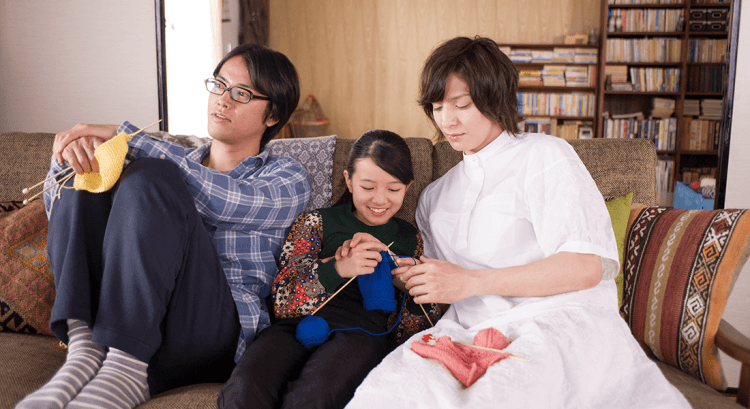 Naoko Ogigami’s touching family drama snatches the last spot on Kinema Junpo’s list. A departure of sorts from the director’s earlier career,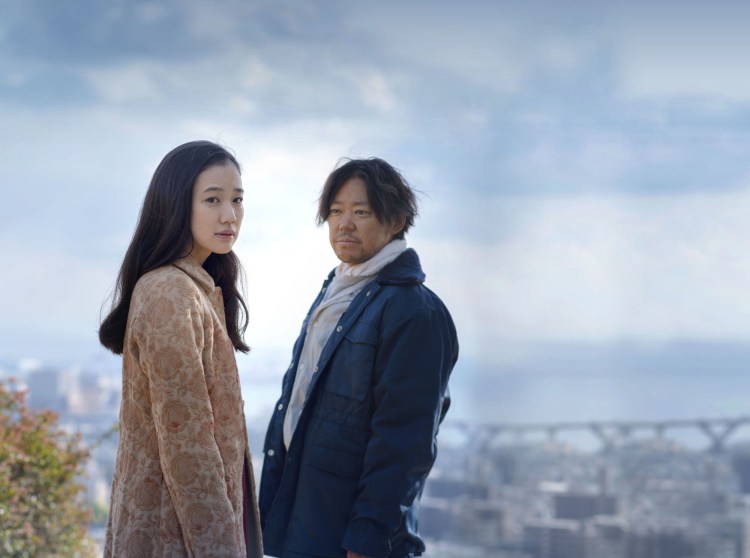
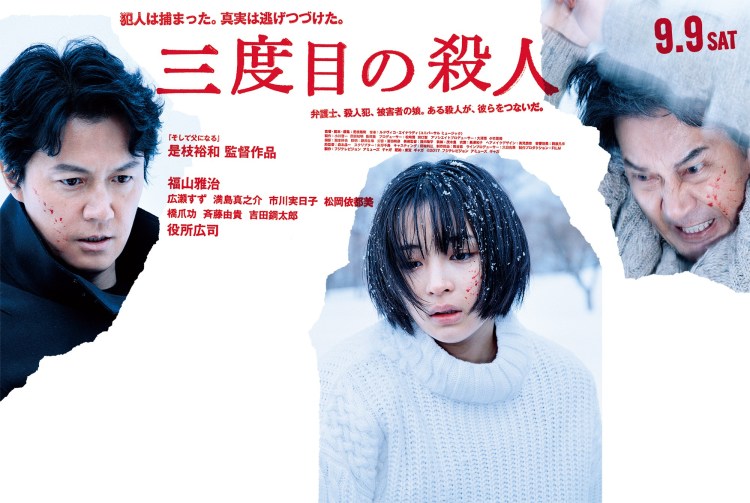 Hirokazu Koreeda makes a rare detour from the family drama for a high stakes legal thriller in which a veteran lawyer takes on the seemingly impossible task of defending a murder suspect who has already served time for violent crime and freely confesses his guilt, but the more the lawyer looks into the case the less confident he feels that his client is telling the truth.
 Fukushima native Ryuichi Hiroki adapts his own novel for an exploration of precarious rural life on the edge of a disaster zone. Newcomer Kumi Takiuchi stars as a young woman with a regular office job living in temporary housing with her father (Ken Mitsuishi) after being displaced by the 2011 earthquake and tsunami. For unexplained reasons, the young woman travels to Tokyo at weekends and engages in casual sex work which brings her into contact with Kengo Kora’s conflicted driver.
 Katsuya Tomita’s
  Kiyoshi Kurosawa rolls back on the nihilism of
 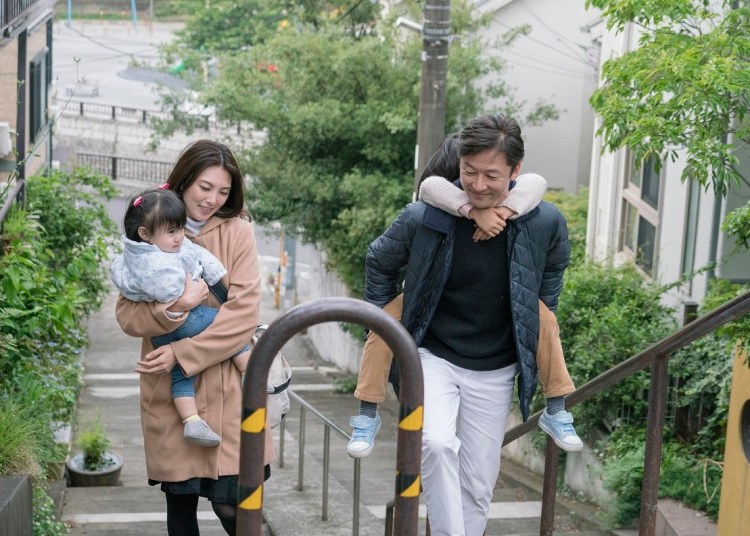 Yukiko Mishima’s adaptation of the Kiyoshi Shigematsu novel stars Tadanobu Asano in a tale of family and the modern society. A middle-aged man, Makoto, leaves his first wife for a younger woman after they disagree about adding to their family – he wanted another child and she didn’t. His second wife has two children already and when she announces she is pregnant, Makoto is not so sure about becoming a father again…
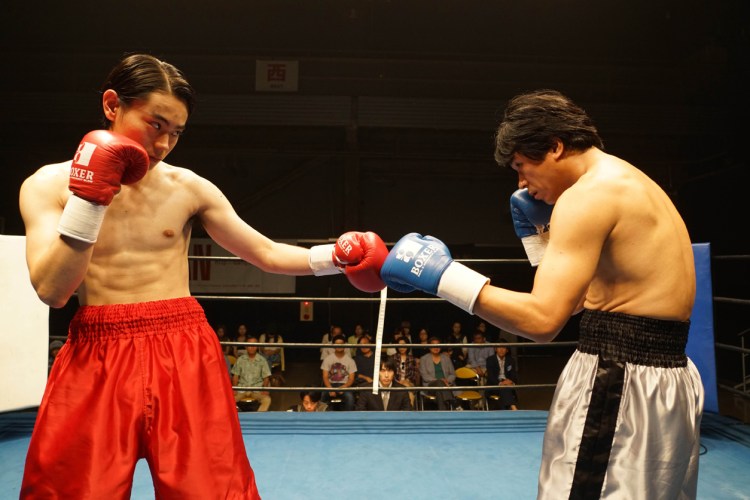 Released in two parts, Wilderness adapts the classic 1966 novel by Shuji Terayama in which two men seek release in the boxing ring but also discover friendship and brotherhood in the shared connection of violence. Up and coming director Yoshiyuki Kishi builds on the promise of the impressive
 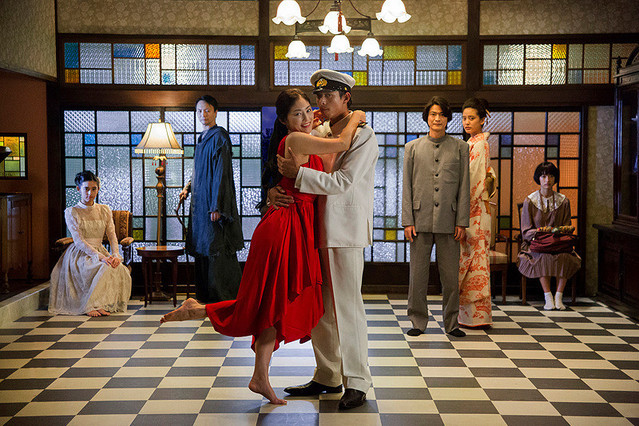 The latest from veteran director Nobuhiko Obayashi, Hanagatami is a project forty years in gestation. An adaptation of the wartime novel by Kazuo Dan, the film is a timely warning against the follies of war as a collection of youngsters dance along the edge of an abyss which will eventually engulf their entire generation.
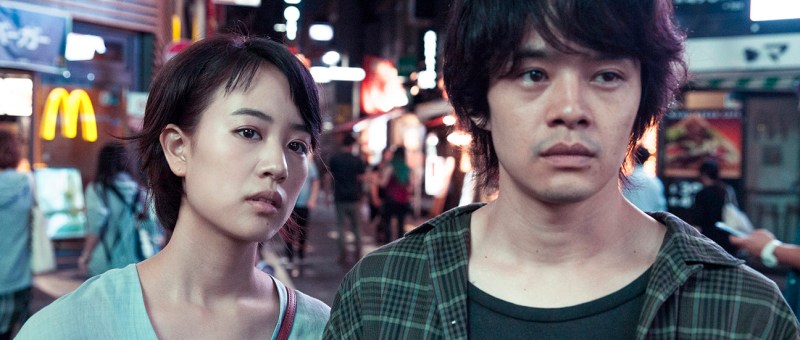
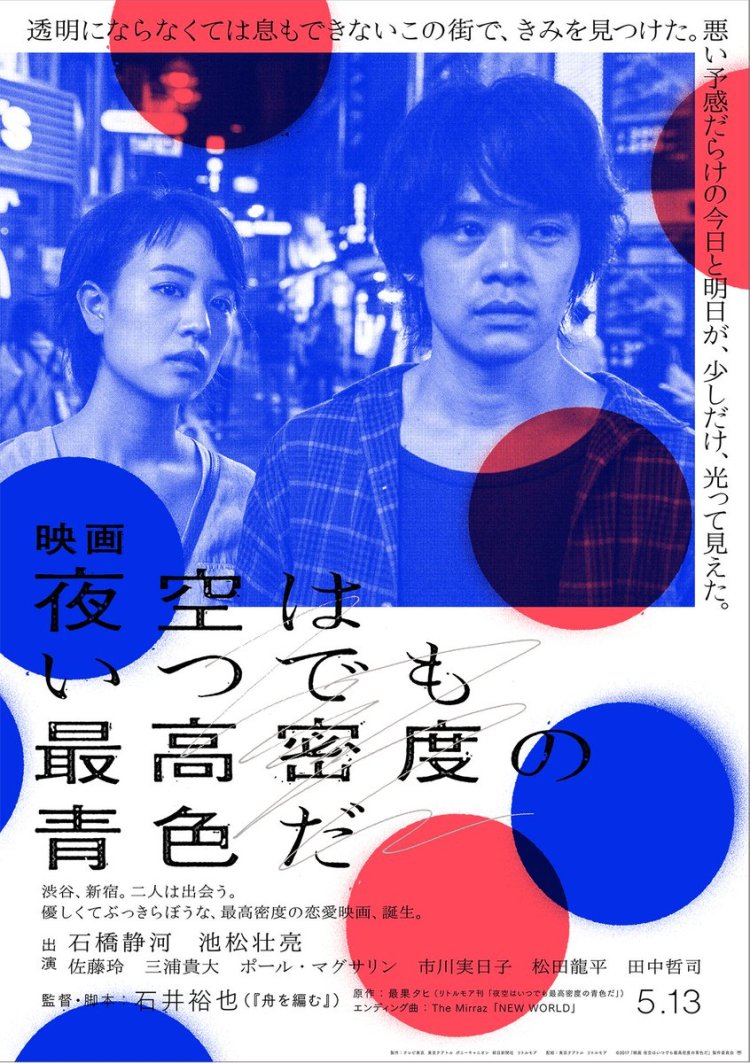
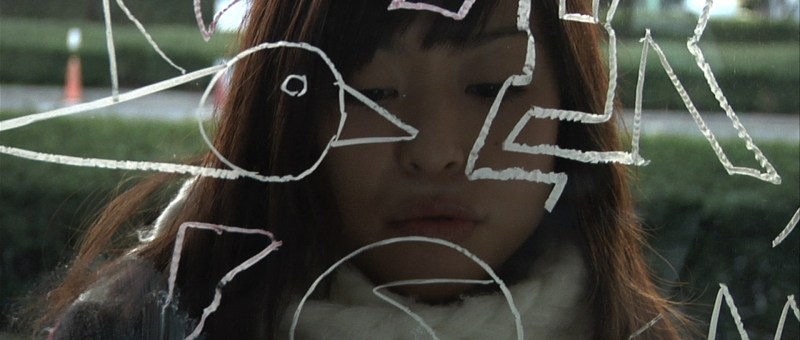
 Taking the top spot, Yuya Ishii’s melancholy romance is a love/hate letter to Tokyo and a poetical mediation on connection in the modern city. A depressed young woman and an anxious young man miraculously encounter each other thanks to the magic of the metropolis but their shared cynicism and distrust of feeling soon becomes a barrier to their growing romance.





 Windows on Worlds