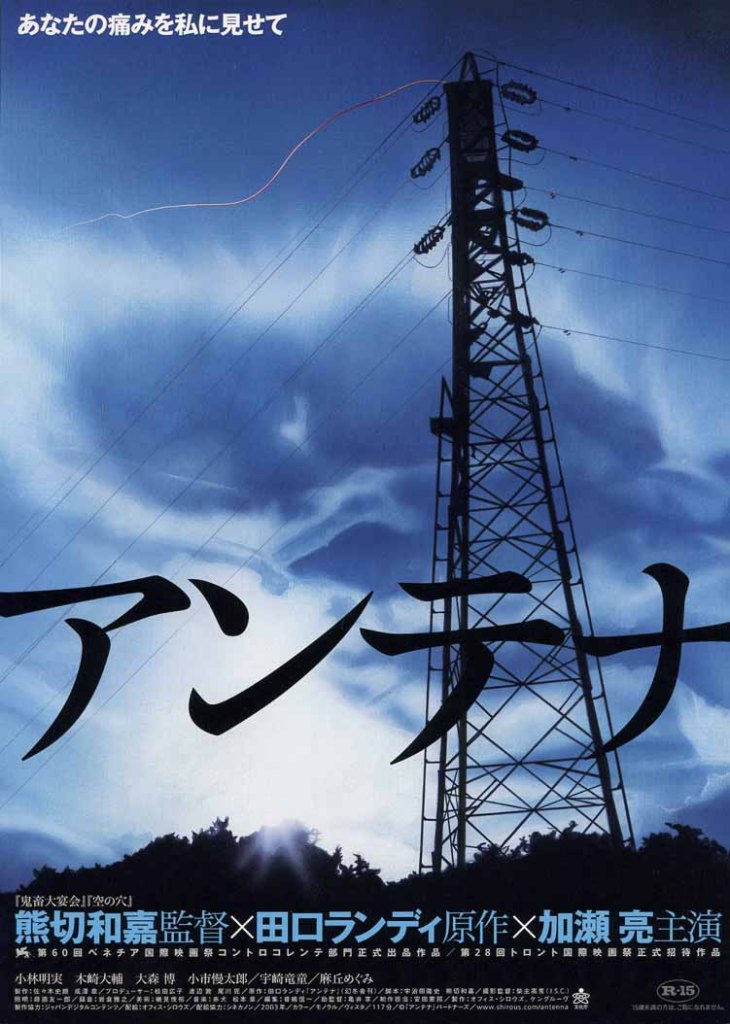
 Scarring, both literal and mental, is at the heart of Kazuyoshi Kumakiri’s third feature, Antenna (アンテナ). Though it’s ironic that indentation should be the focus of a film whose title refers to a sensitive protuberance, Kumakiri’s adaptation of a novel by Randy Taguchi is indeed about feeling a way through. Anchored by a standout performance from Ryo Kase, Antenna is a surreal portrait of grief and repressed guilt as a family tragedy threatens to consume all of those left behind.
Philosophy student Yuichiro (Ryo Kase) is currently working on a project which aims to reevaluate how pain is felt through attempting to identify with the pain of others. To do this he plans to investigate the S&M scene but before he can get started, a painful episode from his past is reawakened by current events. Yuichiro’s younger sister, Marie, has been missing since failing to return home from school one day when she was only eight years old. When news reports appear that another girl around the same age has been held captive in a nearby apartment complex since around the time Marie went missing hopes are sparked only to be dashed. Still no closer to discovering what happened to his younger sister, Yuichiro carries the guilt of having been unable to protect her as well as the inability to remember exactly what happened on that fateful day.
Matters come to a head when Yuichiro’s younger brother (their mother was pregnant with him at the time of the disappearance) turns up on his doorstep. Yuya (Daisuke Kizaki) repeatedly claims that Marie is about to return as he can feel her through his “antenna” (“like the horns of a snail”) and has a full scale fit aboard the train back. Things being what they are, the doctors advise Yuichiro to spend sometime at home as his distracted mother is no shape to cope with Yuya’s increasingly odd behaviour. A dutiful son, Yuichiro does what he can for what’s left of his family but his childhood home is far from a good environment for him.
Soon after Marie’s disappearance, both Yuichiro’s father and his uncle Shige who’d lived with them both died, leaving only Yuichiro’s mother and baby brother behind them. Unable to come to terms with Marie’s disappearance, Yuichiro’s mother has found religion, hosting Buddhist prayer sessions at the house and bringing in Feng Shui experts to try and heal the lingering sense of tragedy still present in the house. She has also become convinced that her second son, Yuya, is in fact the returned spirit of her daughter, raising him as a girl and dressing him in Marie’s clothes. This may explain some of Yuya’s conflicting behaviour and repeated insistence that his sister is “returning” in so much as something of her personality has become the ghost in his machine.
Once back in the house, Yuichiro’s mental state becomes ever more precarious as his memories of his sister’s disappearance begin to flicker to the surface. Overcome with repressed guilt, Yuichiro once again begins self harming by slashing his chest with a box cutter. Easing the mental pain with the physical, Yuirichiro finally begins to address some of his long buried trauma through repeated meetings with the dominatrix he was interviewing for his project. Undergoing a kind of S&M lead sex therapy, Yuichiro is slowly guided back through his memories to events he was too young to understand at the time and only now is fully able to comprehend.
Throughout his flashbacks Yuichiro is always sidelined, perched behind barriers or shut away by closed doors as the adults argue and loudly discuss things they claim are not suitable for children to hear. Crucial moments find him peaking through keyholes and seeing something he knew was not quite right but without knowing why. These incomplete and incomprehensible memories are the ones which haunt him, unresolvable but still trailing the guilt behind them of having seen yet done nothing.
Told in a slight non-linear fashion through frequent flashbacks, the film adopts a dreamlike tone and surreal imagery to make sense of the more extreme elements. The final sequence itself is either a hallucination or a dream that takes on a magical realist quality as the past is finally allowed to drift away from its lodging place, freeing up a space for light to return to the otherwise darkened house.
An intense exploration of buried trauma and childhood guilt, Antenna is a dark tale but does offer a glimmer of hope after all its hellish meandering. Kumakikri keeps things straightforward but his considered compositions have a strange kind of beauty despite the ugliness of the narrative. Embracing a number a taboo subjects coupled with strong emotion and explicit content, Antenna is not an easy watch but rewarding for those who can brave its extremes.
Original trailer (no subtitles)
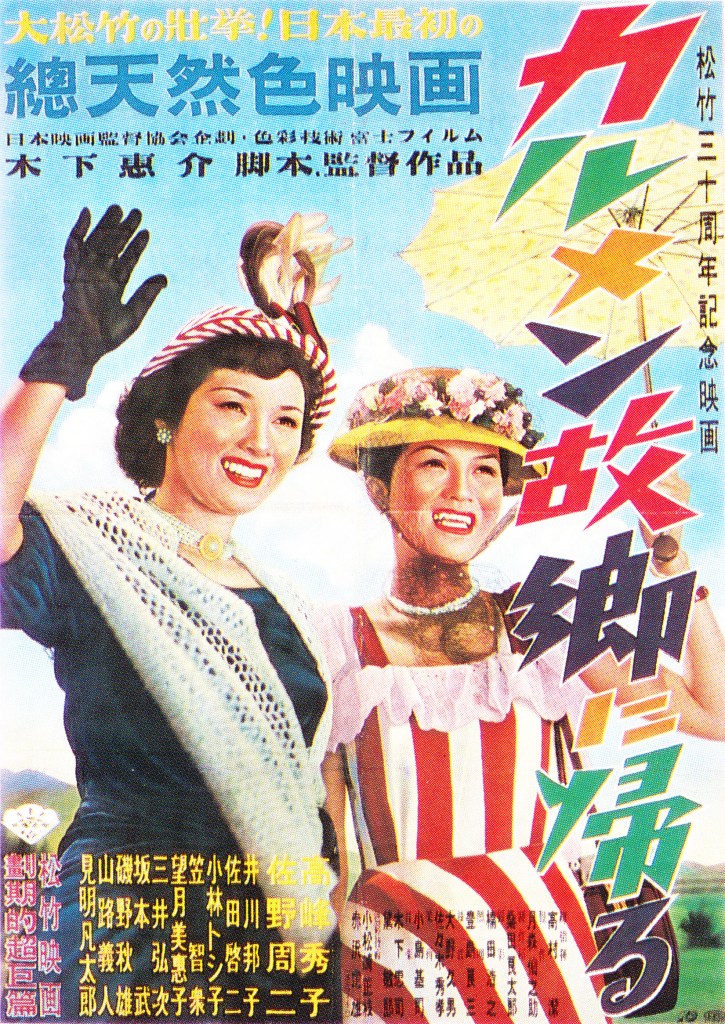 Shochiku was doing pretty well in 1951. Accordingly they could afford to splash out a little in their 30th anniversary year in commissioning the first ever full colour film to be shot in Japan, Carmen Comes Home (カルメン故郷に帰る, Carmen Kokyou ni Kaeru). For this landmark project they chose trusted director Keisuke Kinoshita and opted to use the home grown Fujicolor which has a much more saturated look than the film stocks favoured by overseas studios or those which would become more common in Japan such as Eastman Colour or Agfa. Fujicolour also had a lot of optimum condition requirements including the necessity of shooting outdoors, and so we find ourselves visiting a picturesque mountain village along with a showgirl runaway on her first visit home hoping to show off what a success she’s made for herself in the city.
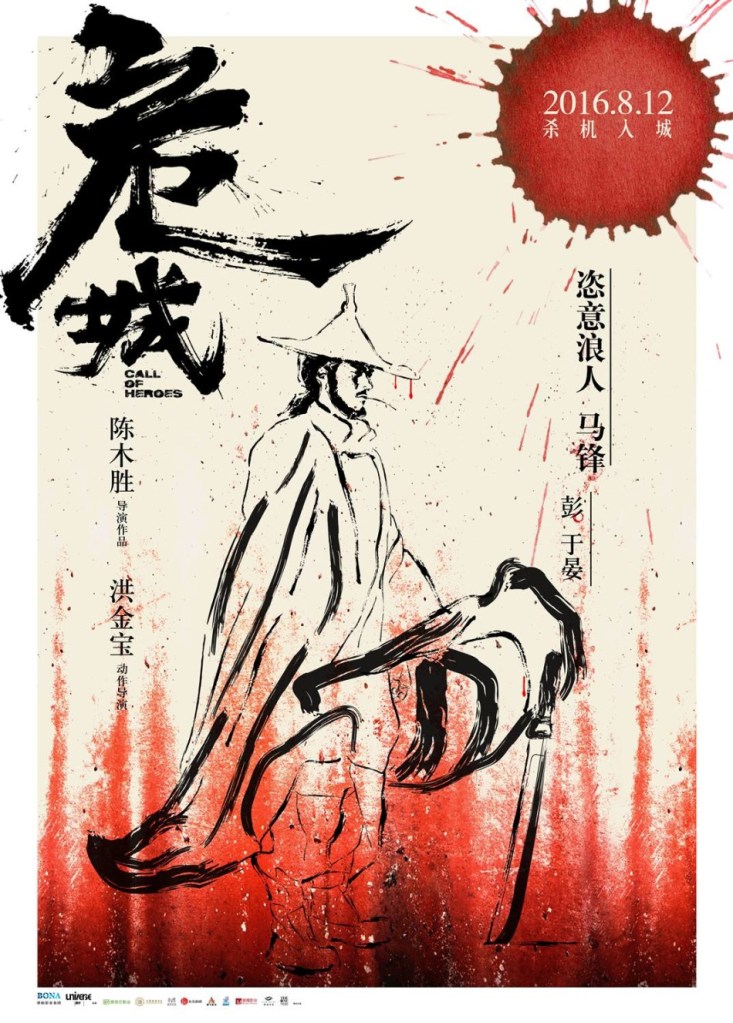 A blast from the past in more ways than one, Benny Chan’s Call of Heroes (危城, Wēi Chéng) is a western in disguise though one filtered through Akira Kurosawa and Sergio Leone more than John Ford. Filled with Morricone-esque musical riffs and poncho wearing reluctant heroes, Chan’s bounce back to the post-revolutionary warlord era is one pregnant with contemporary echoes yet totally unafraid to add a touch of uncinematic darkness to its wisecracking world.
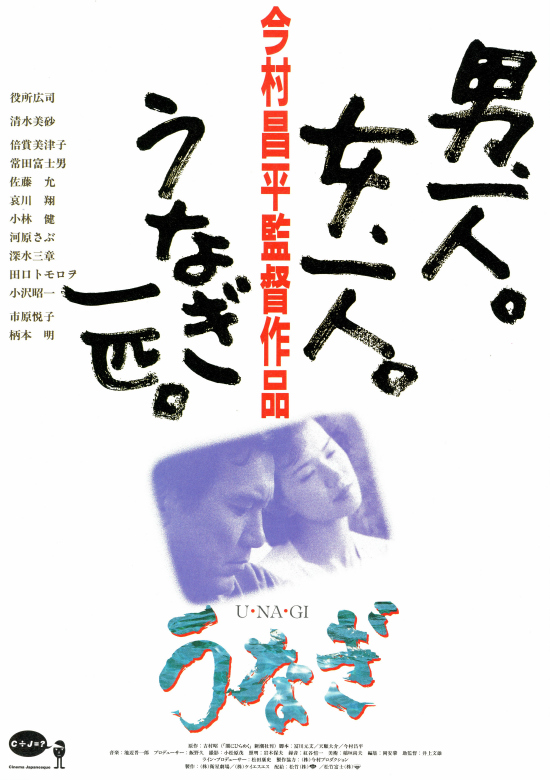 Director Shohei Imamura once stated that he liked “messy” films. Interested in the lower half of the body and in the lower half of society, Imamura continued to point his camera into the awkward creases of human nature well into his 70s when his 16th feature, The Eel (うなぎ, Unagi), earned him his second Palme d’Or. Based on a novel by Akira Yoshimura, The Eel is about as messy as they come.
 Sometimes love makes you do crazy things. Some people find themselves accomplishing previously unattainable feats powered only by the sheer force of romance. Unfortunately for the hero of Swimming Upstream (バタアシ金魚, Bataashi Kingyo), Joji’s Matsuoka’s adaptation of Minetaro Mochizuki’s manga, the task he sets for himself is a very lofty one indeed and may actually require him to abandon his love to complete it. Then again, the object of his affections shows little signs of reciprocation in any case.
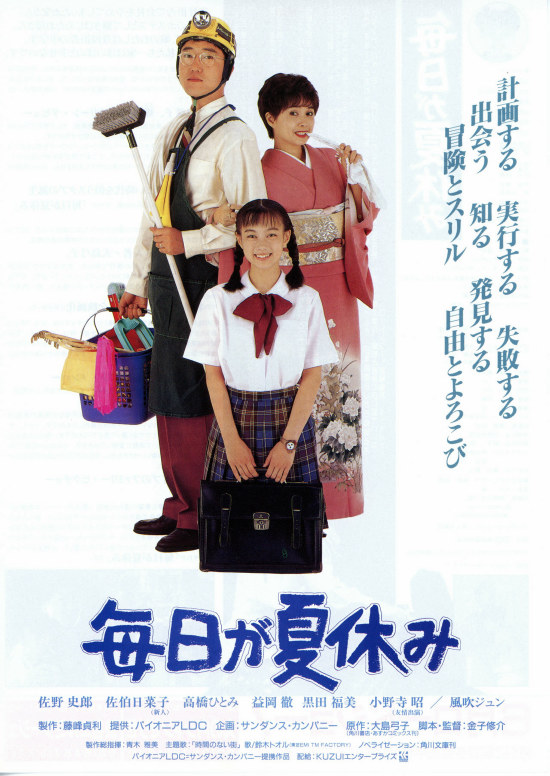 Summer Holiday Everyday – It’s certainly an upbeat way to describe unemployment but then everything is improbably upbeat and cheerful in the always sunny world of Shusuke Kaneko’s adaptation of Yumiko Oshima’s shoujo manga. Published in the mid-bubble era of 1988, Oshima’s world is one in which anything is possible but by the time of the live action movie release in 1994 perhaps this was not so much the case. Nevertheless, Kaneko’s film retains the happy-go-lucky tone and offers note of celebration for the unconventional as a path to success and individual happiness.
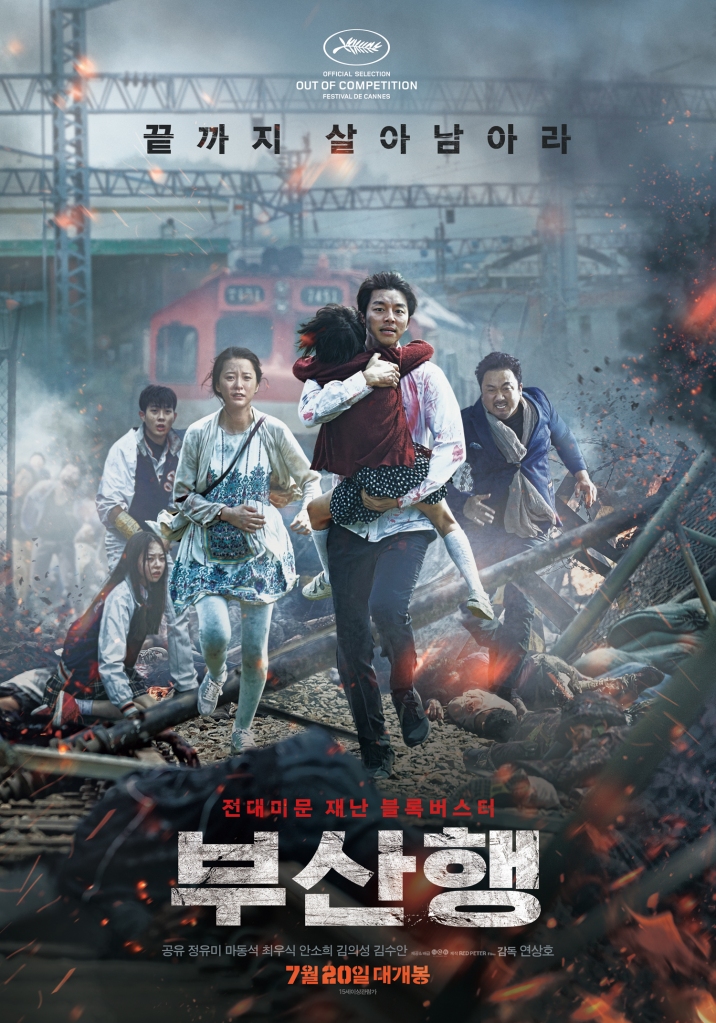 Many people all over the world find themselves on the zombie express each day, ready for arrival at drone central, but at least their fellow passengers are of the slack jawed and sleep deprived kind, soon be revived at their chosen destination with the magic elixir known as coffee. The unfortunate passengers on an early morning train to Busan have something much more serious to deal with. The live action debut from one of the leading lights of Korean animation Yeon Sang-ho, Train to Busan (부산행, Busanhaeng) pays homage to the best of the zombie genre providing both high octane action from its fast zombie monsters and subtle political commentary as a humanity’s best and worst qualities battle it out for survival in the most extreme of situations.
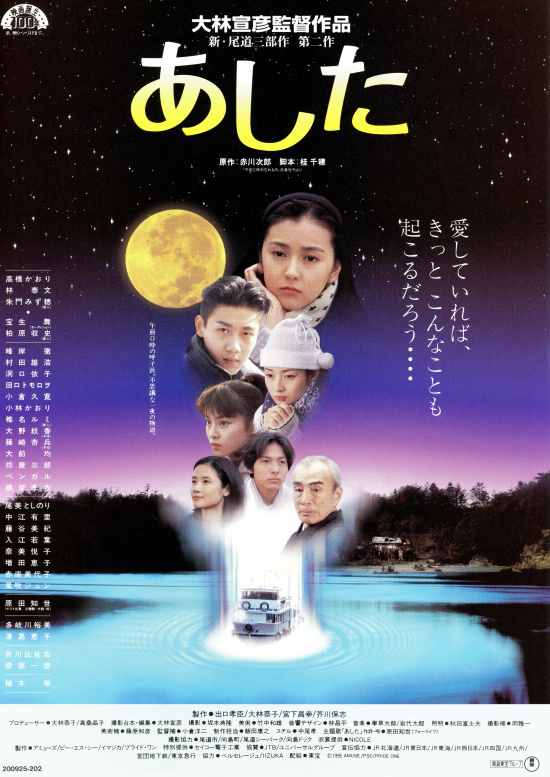 After completing his first “Onomichi Trilogy” in the 1980s, Obayashi returned a decade later for round two with another three films using his picturesque home town as a backdrop. Goodbye For Tomorrow (あした, Ashita) is the second of these, but unlike Chizuko’s Younger Sister or One Summer’s Day which both return to Obayashi’s concern with youth, Goodbye For Tomorrow casts its net a little wider as it explores the grief stricken inertia of a group of people from all ages and backgrounds left behind when a routine ferry journey turns into an unexpected tragedy.
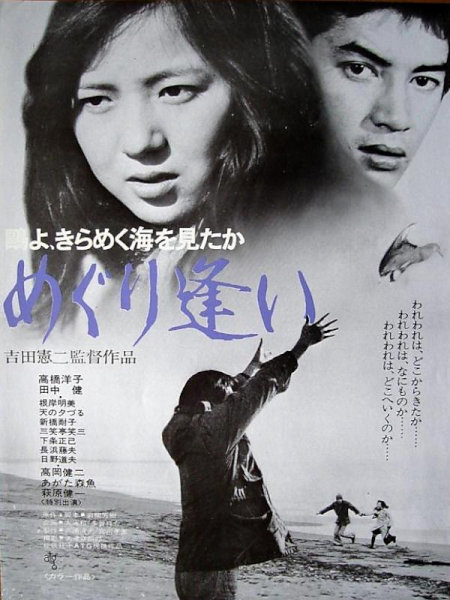 Sparkling seas sound like hopeful things, especially if you’re a majestic seagull flying far above, bathed in perpetual sunshine. But then, perhaps the water below is shining with the shards of broken hopes which float on its surface, is its beauty treacherous or in earnest? So asks the singer of the title song which recurs throughout the film as if to undercut even its brief moments of happiness. There is precious little joy to be found in the lives of the two protagonists of Oh Seagull, Have You Seen the Sparkling Ocean? : An Encounter (鴎よ、きらめく海を見たか めぐり逢い, Kamome yo, Kirameku Umi wo Mitaka: Meguriai), only pain and confusion as they try to rebuild their ruined lives in an uncaring city.
 If you’ve always fancied a stay at that inn the
