
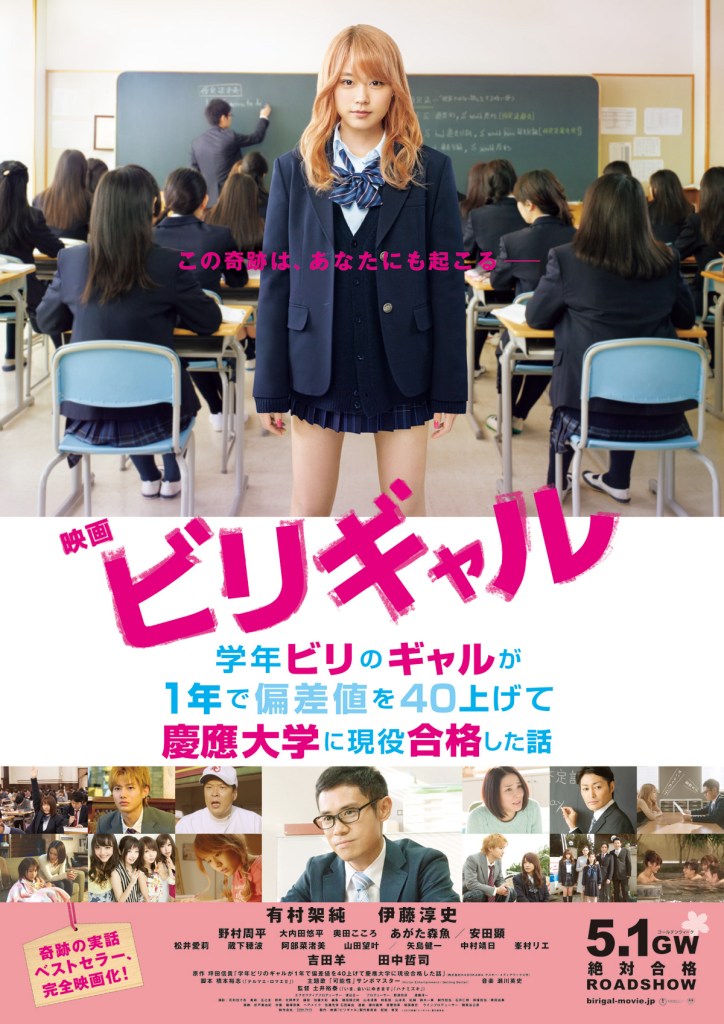
 Below average student buckles down and makes it into a top university? You’ve heard this story before and Nobuhiro Doi’s Flying Colors (ビリギャル, Biri Gyaru) doesn’t offer a new spin on the idea or additional angles on educational policy but it does have heart. Heart, it argues is what you need to get ahead (if you’ll forgive the multilevel punning) as the highest barriers to academic success are the ones which are self imposed. Arguing for a more inclusive, tailor made approach to education which doesn’t instil false hope but does help young people develop self confidence alongside standardised skills, Flying Colors is the story of one popular girl’s journey from anti-intellectual teenage snobbery to the very top of the academic tree whilst healing her divided family in the process.
Little Sayaka Kudo (Kasumi Arimura) got off to a bad start in her academic life, bullied and friendless at primary school. After the teachers refuse to help, Sayaka’s doting mother, Akari (Yo Yoshida), manages to get her into a more exclusive middle school which is affiliated with both a high school and a university which means that Sayaka’s academic destiny is fairly secure. However, though she does manage to make friends at her new school, she falls in with the “popular” crowd and begins dying her hair, rolling her skirt up, and wearing an inadvisable amount of makeup. Knowing that their entrance to high school and university is assured, the girls slack off completely and are at the very bottom of the class.
However, it all comes crashing down when Sayaka is caught smoking and threatened with expulsion. Bravely refusing to give up her friends and have them suffer the same fate, Sayaka is the only one who gets suspended but still risks missing graduation and losing her secured place at university. One of the few people to really believe in her, her mother Akari, arranges for Sayaka to attend an unconventional cram school where the well meaning teacher, Tsubota (Atsushi Ito), encourages her to have a goal, and it’s a lofty one – Keio University, one of the most prestigious institutions of higher education in Japan.
Despite her dismal academic prognosis, Sayaka is not lacking in ability, just the will and belief to see it through. After being so unhappy in primary school, Sayaka values her friendships and status as one of the popular girls and maintaining that side of her life is much more important than getting good grades. Written off by her teachers, no one is prepared to give her the permission to succeed and so she assumes she’s as dim as everyone says she is.
The situation isn’t helped by her home life in which her embittered father (Tetsushi Tanaka) ignores his two daughters in favour of devoting all his attention to his son, Ryuta (Yuhei Ouchida), whom he wants to become a professional baseball player. Vicariously thrusting his own dream on his unsuspecting son, Sayaka’s father is unprepared for the moment Ryuta realises he’s been denied the right to choose for himself and rebels against him as all young men are apt to do. In fact, many of the cram school students are there because of a grudge against an unfeeling father who has had quite an adverse affect on his child’s sense of self worth.
Tsubota is the first person other than her mother to show faith in Sayaka’s abilities and is able to convince her that she might be able to achieve something if she started to apply herself. Speaking to her in terms she can understand, Tsubota hunts down different kinds of study materials to help her along the way gradually raising her scores as she builds belief in her ability to reach her goal. Tsubota is the only teacher at the school and is able to take the time to get to know each of his pupils individually so he can tailor the course to bring out the potential in each of his charges. While the kids are studying to pass exams, Tsubota is studying pop culture so that he can talk to them on their own level and find out the best ways to keep them motivated.
As much as it’s the story of a persistent underdog finally discovering a well of self belief that will sustain them on a difficult path, Flying Colors is also an indictment on the modern educational system which only caters for the group rather than the individual and is so concentrated around rote learning and standardised tests that it fails to teach young people the critical thinking skills they need to succeed in life. Flying Colors probably is not going to influence public educational policy but it does offer an amiable and inspirational story that might give hope to those struggling under its often unreasonable demands.
Original trailer (English subtitles)
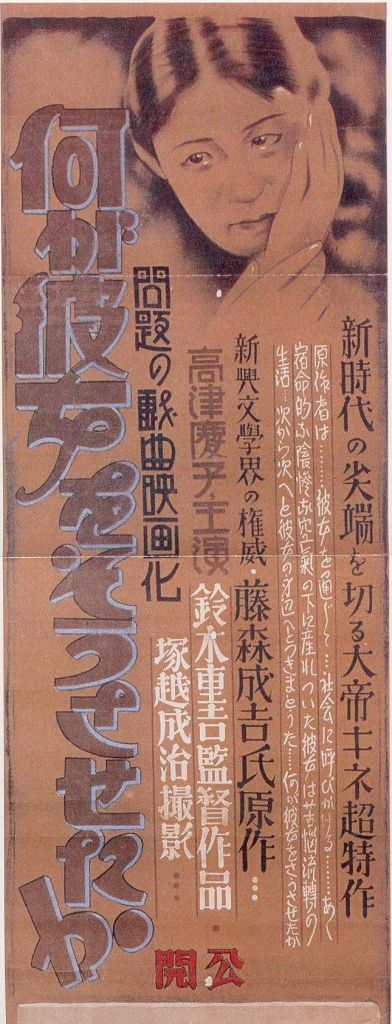 Like many other areas of the world in the first half of the 20th century, Japan also found itself at a dividing line of political thought with militarism on the rise from the late 1920s. Despite the onward march of right-wing ideology, the left was not necessarily silent. Ironically, the then voiceless cinema was able to speak for those who were its greatest consumers as an accidental genre was born detailing the everyday hardships faced by those at the bottom end of the ladder. These “proletarian films” or “tendency films” (keiko eiga) were increasingly suppressed as time went on yet, in contrast to the more politically overt cinema of the independent Proletarian Film League of Japan, continued to be produced by mainstream studios. Long thought lost, Shigeyoshi Suzuki’s What Made Her Do It? (何が彼女をそうさせたか, Nani ga Kanojo wo Sousaseta ka) was a major hit on its original release with some press reports even claiming the film provoked riots when audiences were passionately moved by the heroine’s tragic descent into madness and arson after suffering countless cruelties in an unfeeling world.
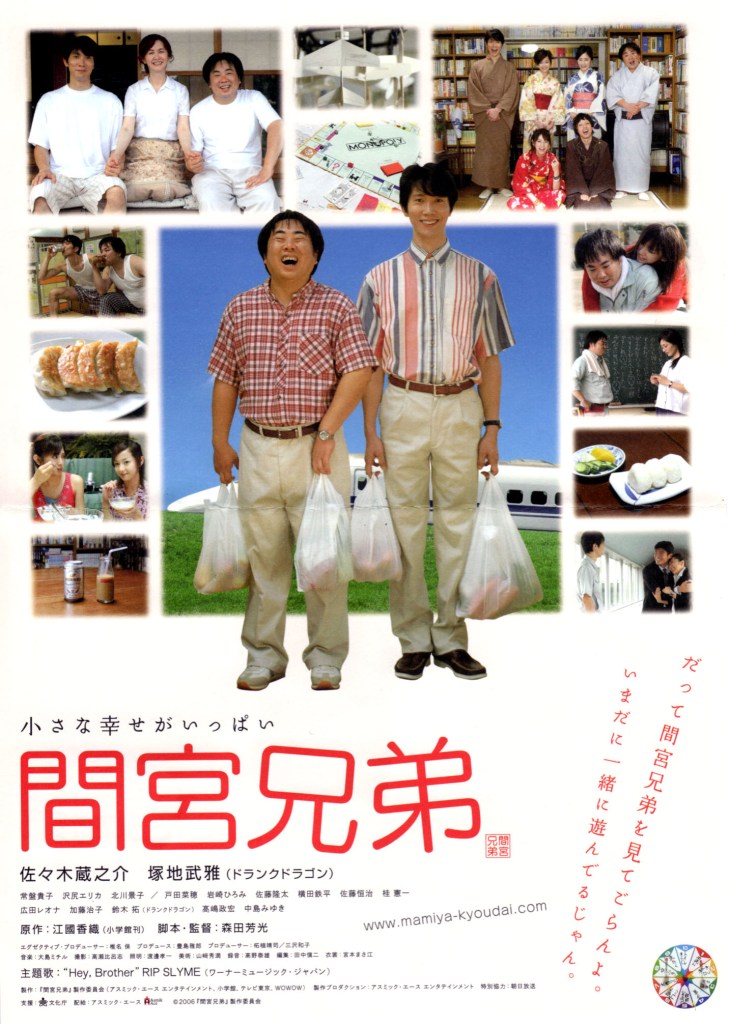 Ever the populist, Yoshitmitsu Morita returns to the world of quirky comedy during the genre’s heyday in the first decade of the 21st century. Adapting a novel by Kaori Ekuni, The Mamiya Brothers (間宮兄弟, Mamiya Kyodai) centres on the unchanging world of its arrested central duo who, whilst leading perfectly successful, independent adult lives outside the home, seem incapable of leaving their boyhood bond behind in order to create new families of their own.
 Review of Takeshi Kitano’s A Scene at the Sea – first published by
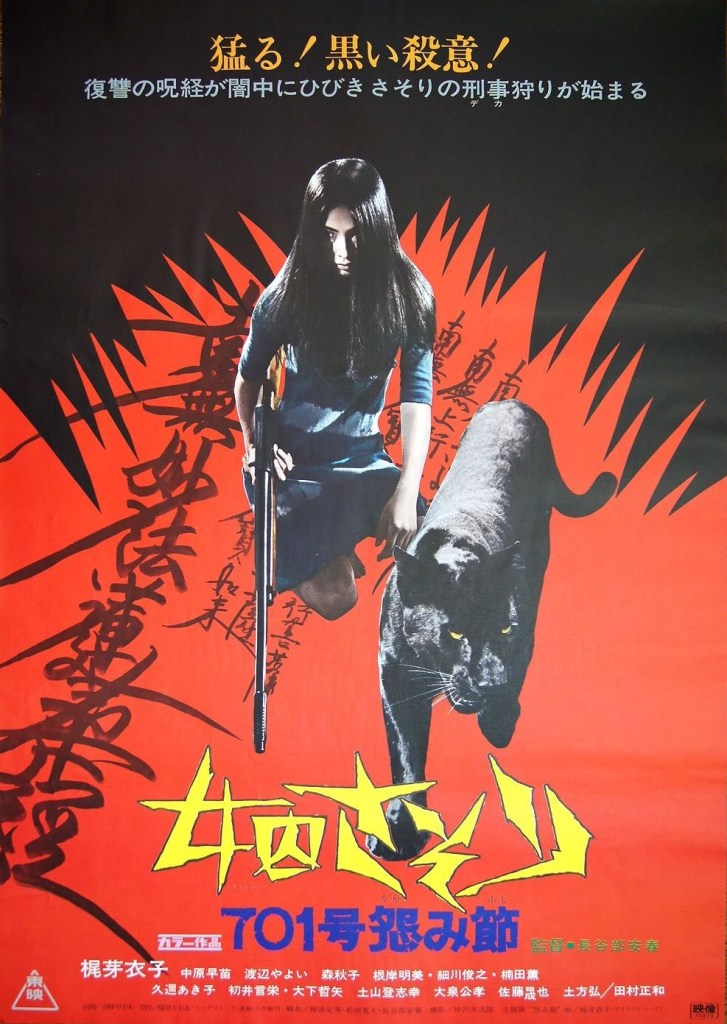 The saga seemed complete with the end of
  At the end of
 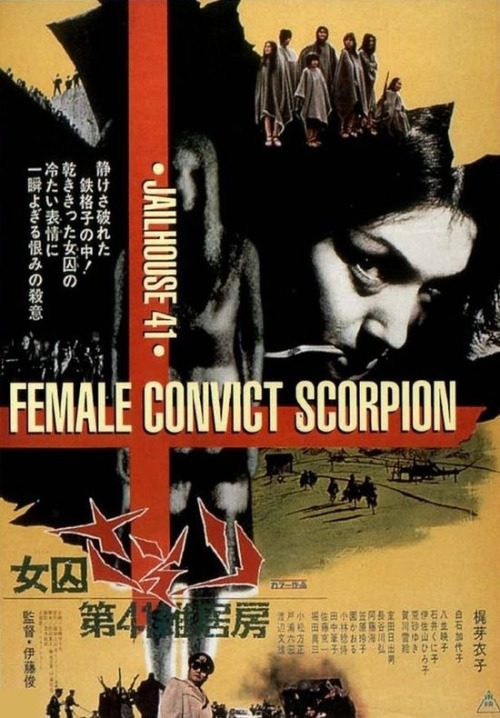 Female Prisoner Scorpion: Jailhouse 41 (女囚さそり第41雑居房, Joshu Sasori – Dai 41 Zakkyobo) picks up around a year after the end of
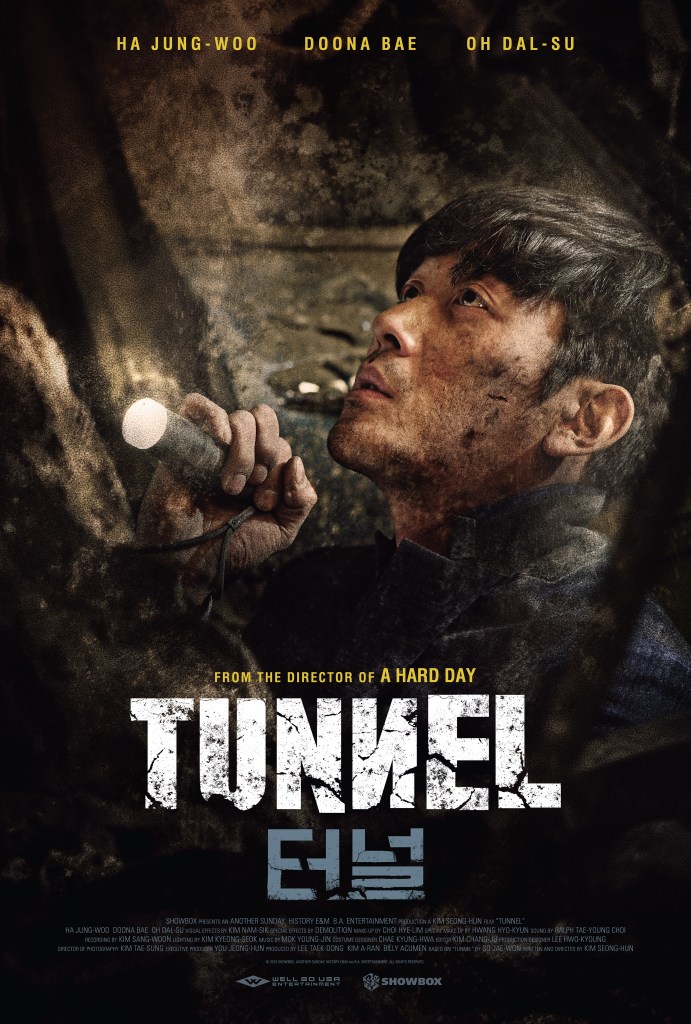 In 1925 an avid cave explorer, Floyd Collins, became trapped in a narrow crawl space. Though he was discovered and help came with food and water, a cave in left him sealed off down there and fourteen days later he died of thirst and exposure. As tragic as this obviously is, Floyd Collins is remembered for another reason – his rescue became one of the earliest mass media crazes. The surrounding media furore also inspired the 1951 Billy Wilder classic Ace in the Hole in which a grizzled reporter attempts to manipulate the fate of a man trapped in a cave for the maximum media coverage with the consequence that his delays cost the man his life. Jung-soo, a father on his way home with a birthday cake for his young daughter is about to join the marooned underground club when a shoddily built tunnel collapses sealing him inside. Unfortunately for Jung-soo, he finds that times have not changed all that much.
