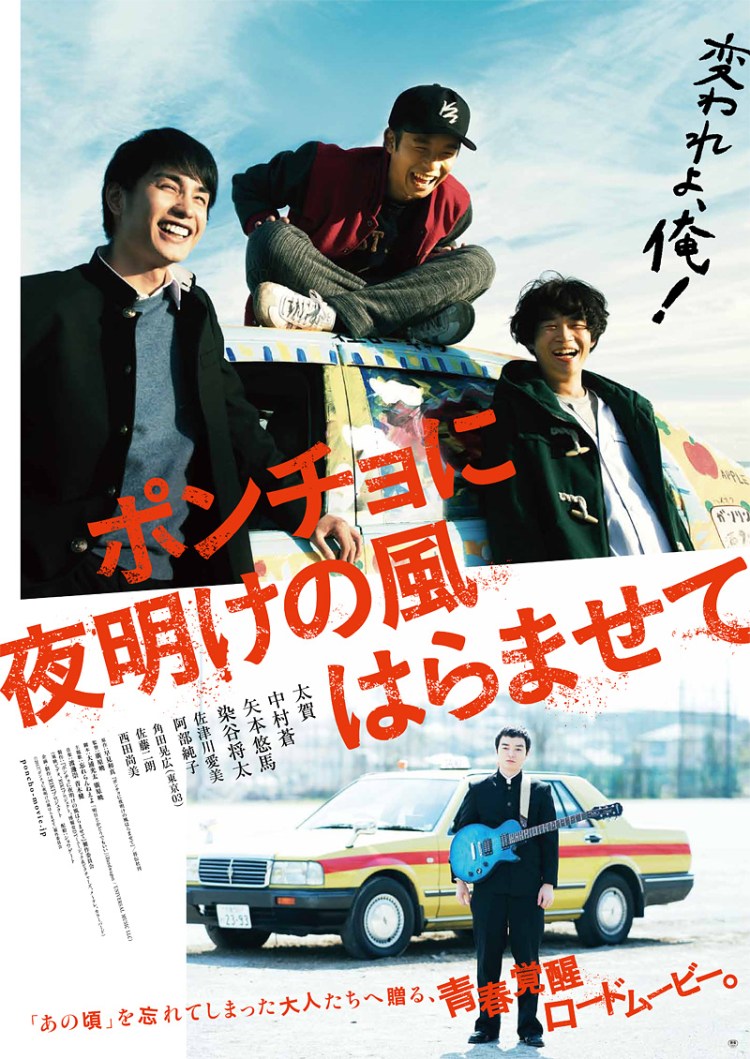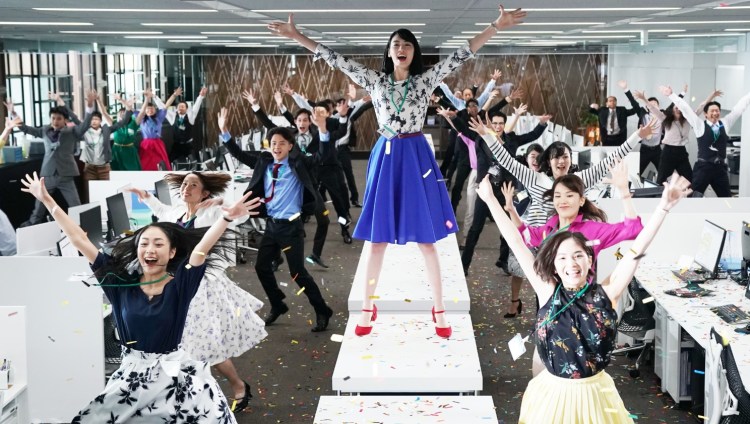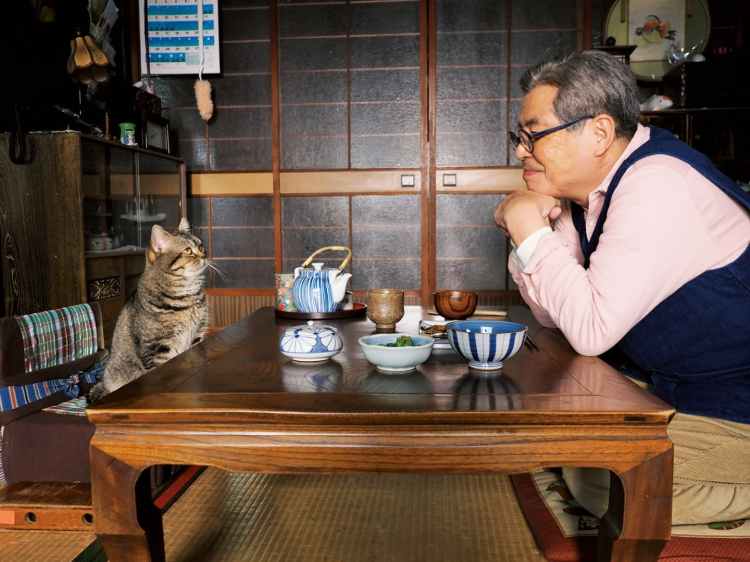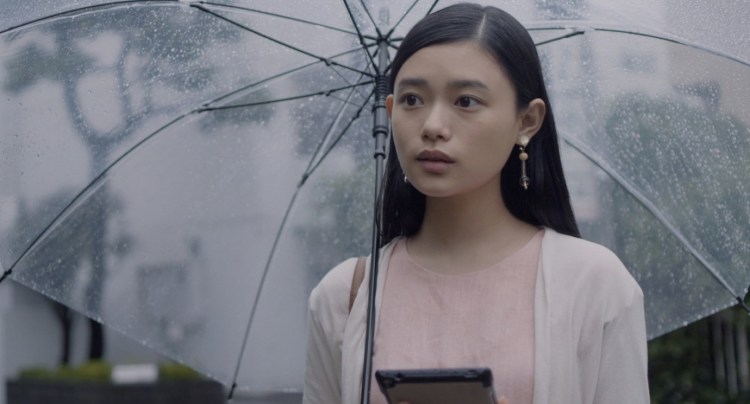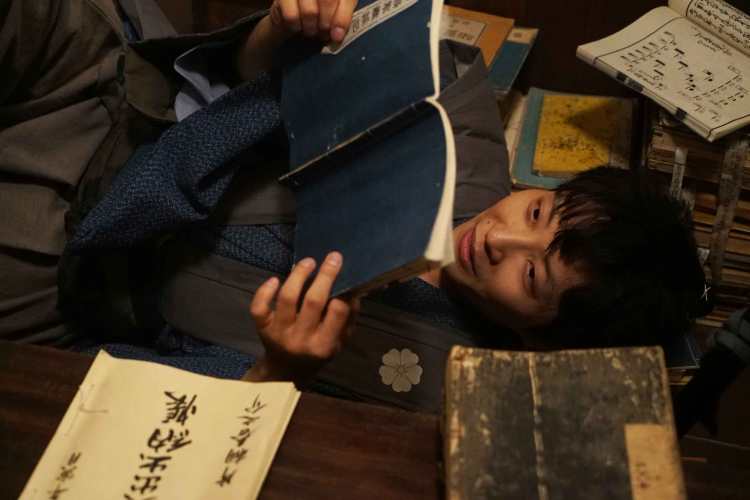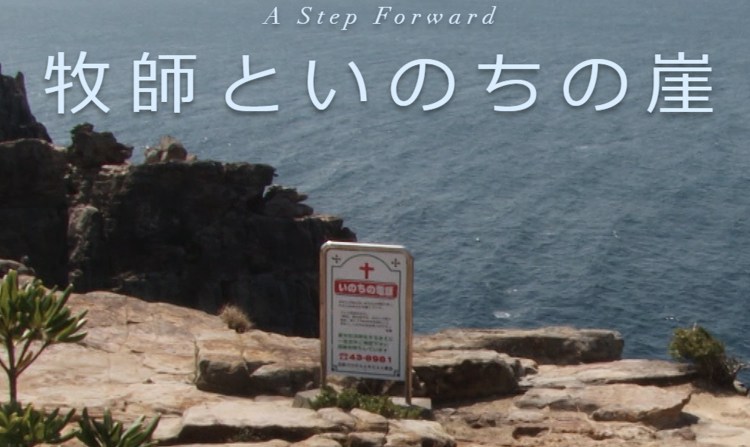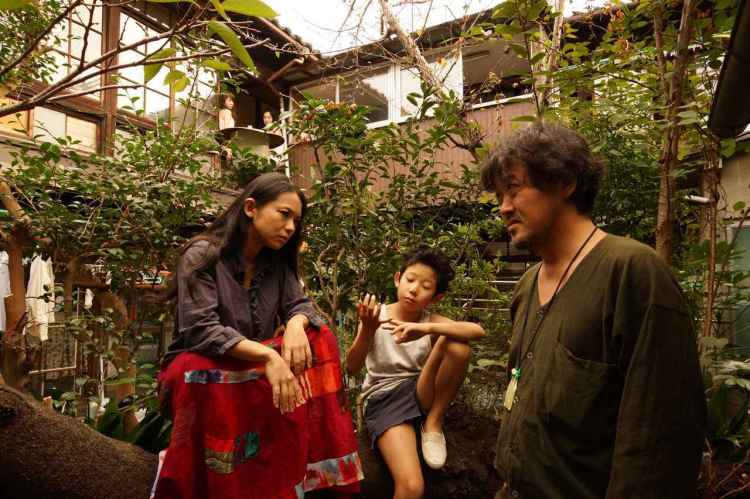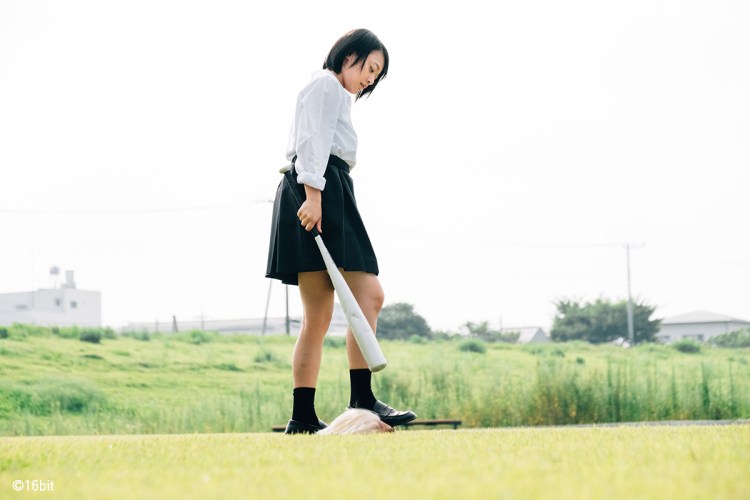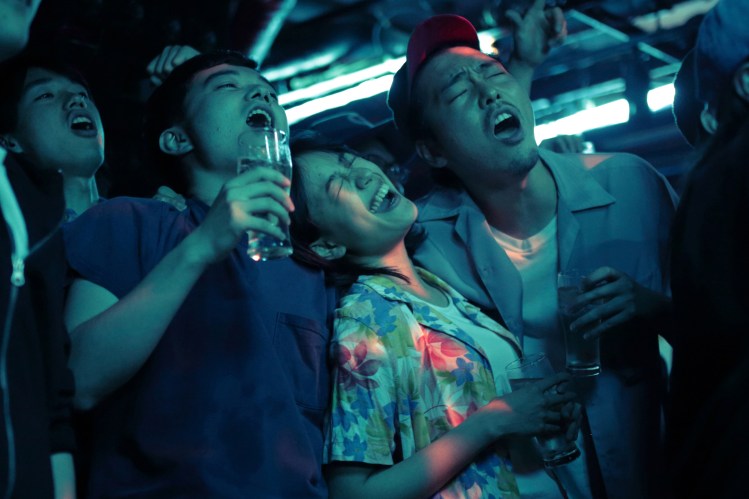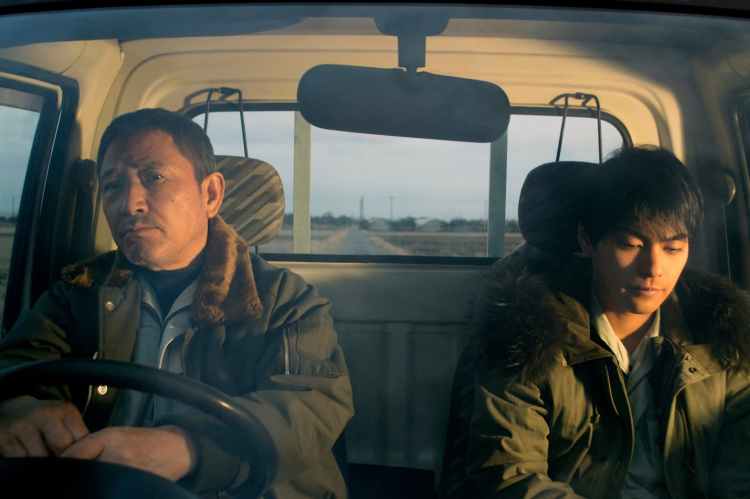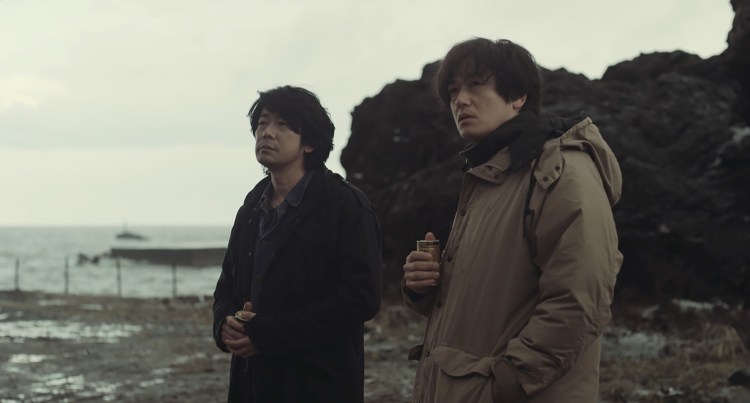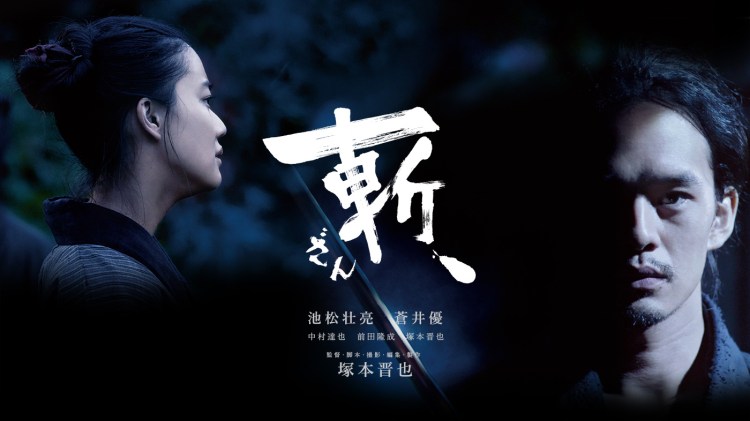
My Tomorrow, Your Yesterday (ぼくは明日、昨日のきみとデートする, Takahiro Miki, 2016)

Tomorrow I will date with yeaterday's you posterLike the Earth and the Moon, are lovers destined to move past and away from each other, sharing the same space only for a cosmic instant yet forever connected by the arc of their existences? It’s a heavier question than you’d expect from your average romantic melodrama. My Tomorrow, Your Yesterday (ぼくは明日、昨日のきみとデートする, Boku wa Asu, Kino no Kimi to Date Suru), another finely crafted tragic romance from genre master Takahiro Miki, is a kind of sci-fi “junai” in which the barriers to romantic fulfilment aren’t cultural or societal or medical, but cosmic in that our star-crossed lovers occupy opposing temporal realms which conspire against their union while also carving it into the arc of the spacetime continuum like a cruel existential joke.

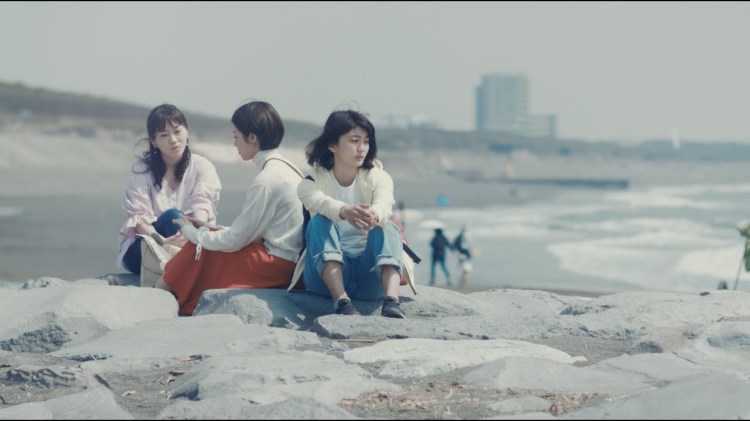
At 20, art student Takatoshi (Sota Fukushi) spots the beautiful Emi (Nana Komatsu) on his morning commute. Hit by a thunderbolt, he falls for her instantly but is shy and diffident. Despite himself, Takatoshi decides that if she alights at the same station as him then it’s really meant to be and he can’t not at least try talking to her. Alight she does and he chases after her as best he can only for his cheerful attempt to ask for a phone number to be rebuffed by the ultimate excuse that she doesn’t have one. Surprisingly, Emi’s claim turns out to be the truth rather than an attempt to politely decline his attentions, though Takatoshi is surprised that his attempts at romance eventually provoke a few tears from the visibly moved Emi. The pair eventually start dating and are well into the world of young love when Emi reveals her secret – she is from a parallel universe where time runs in the opposite direction. Takatoshi’s future is her past, and her past his future. Their universes only overlap every five years for a maximum of 30 days and so this is their one and only shot at true love.

Miki begins in true romantic fashion as Takatoshi giddily pursues his first, idealised romance only latterly beginning to see signs of trouble on the horizon in Emi’s sometimes quirky behaviour and strange ability to predict the future. They walk through the usual steps towards becoming a committed couple, finally dropping the honourifics in  mutual recognition of their deepening bond, but every decisive step reduces Emi to tears in a fashion that runs beyond the merely cute or girlish. Takatoshi, young, naive, and in love, finds his mild suspicion vindicated when he discovers Emi’s diary which seems to run in reverse order and mainly contains entries for dates which have not yet happened.

Gradually, Takatoshi begins to realise that he and Emi exist on opposing planes, destined forever to orbit each other with only this brief moment of connection to sustain them. He muses on whether moving past each other is the natural path of a romance before learning to accept the transitory nature of love so that he might appreciate this brief gift he’s been given even in the knowledge that it will soon be over. Briefly petulant, he resents Emi’s dependence on the diary, filled as it is with “facts” from his 25-year-old self gleaned during a “previous” meeting, wondering if she is merely going through the motions of their predetermined romance and spoiling his vision of easy, serendipitous love in the process.

Privileging his own perspective, Takatoshi comes late to the realisation that Emi has been making a series of sacrifices on his behalf and that their strange romance is likely to prove much more painful for her than it will for him. Their relationship is built not on “shared” memories, but only in their brief moments of togetherness as they actively forge a present for themselves which is distinct from their two worlds of past and future. Like the diverging points which heralded their meeting, they are travelling in different directions – every first for him is a last for her as their moments of joy and pain become strange mirrors of their eventual heartbreak. Nevertheless, each eventually comes to the realisation that their love is worth enduring despite its inevitably sad end and that something of it is destined to remain even in the entropic melancholy of their love story. An old fashioned romance in every sense, My Tomorrow, Your Yesterday offers a surprisingly deep appreciation of true love anchored by mutual understanding and emotional equality even if it acknowledges that the world is cruel and that love is unlikely to survive as anything more than a bittersweet memory.


Original trailer (no subtitles)
Here’s to the Young Lady (お嬢さん乾杯!, Keisuke Kinoshita, 1949)

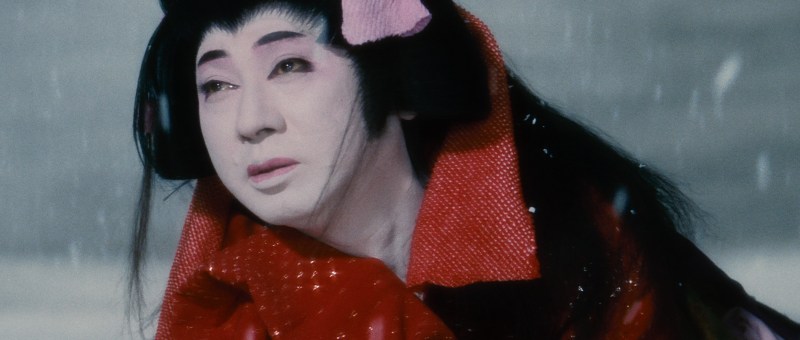
Here's to the young lady DVD coverLove across the class divide is a perpetual inspiration for melodrama, but what if the problem is less restrictive social codes and more emotional inertia and frustrated desire? Many things were changing in the Japan of 1949, racked by post-war privation and burdened with a scrappy desire to remake itself better and kinder than before. Keisuke Kinoshita, the foremost purveyor of post-war humanism, looks back to the 1930s for his 1949 cheerfully superficial romantic comedy Here’s to the Young Lady (お嬢さん乾杯!, Ojosan Kampai!). A tale of changing social codes and youth trying to find the courage to break free, Kinoshita’s easy romance is as breezy as they come but also hard won and a definitive step towards the freer, fairer world he so often envisages.

Keizo Ishizu (Shuji Sano), a 34-year-old self-made man and successful garage owner, is still single and seemingly pestered by his well meaning friends who keep finding matches for him that he doesn’t really want. Reluctantly, he acquiesces to the demands of his good friend Mr. Sato (Takeshi Sakamoto) who is desperate to introduce him to a pretty young woman from a wealthy family and agrees to meet Yasuko (Setsuko Hara) – a demure 26-year-old apparently keen to get married. Ishizu is instantly smitten, dumbstruck by her beauty and elegance. He begins to think all this marriage talk isn’t so silly after all, but then he is only a country bumpkin made good in the scrappy post-war economy. Yasuko is old money. How could he ever be permitted to enter her world and would she ever truly fit in his? Ishizu falls hard but his dreams of romance are eventually crushed when he discovers that the Ikedas, once a noble family, have hit upon hard times following half the family’s repatriation from Manchuria and the unwise business relations of Yasuko’s father which have landed him in jail as a co-conspirator in large scale fraud.

Despite his misgivings, Ishizu is talked into “dating” Yasuko for a few months during which he plans to find out if she could fall in love with him for real or if the marriage is likely to be an eternally one-sided affair which will make them both miserable. Ishizu resents being thought of as the cash cow, the classless nouveau riche upstart roped in to breathe new life into the fading aristocracy, but can’t let go of the hope that Yasuko might fall for his down to death charms even if not all of her family are very happy with this particular means of survival.

Yasuko’s grandparents are at great pains to emphasise (repeatedly) the immense gap in social class between Ishizu and their cultured, refined ingenue of a granddaughter who enjoys such elegant hobbies skiiing, tennis, and the ballet. Ishizu is into boxing and drinking at his favourite bar. He has no idea what the tune is that Yasuko plays on the piano that he bought for her and somewhat gauchely had delivered direct in front of the mildly scandalised family who can’t help feeling belittled by his generosity, but he finds it charming all the same even if his lack of refinement also stings with embarrassment. Nevertheless, the youngsters end up finding their own way – she takes him to the ballet where he is bored and then somehow moved, and he her to the boxing where she is frightened and then thrilled. They grow closer, but also not as Ishizu becomes increasingly frustrated (if in his characteristically good natured way) by Yasuko’s continuing aloofness.   

Perhaps unusually, it is Yasuko who struggles to move on from the idealised pre-war past in which she lived the romanticised life of a wealthy noblewoman who had not a care in the world and no need to worry about anything. The war has destroyed the nobility but this no Cherry Orchard-style lament for a declining world of elegance and rise of the unrefined in its place but a plea for rational thinking and a desire to move forward into a more egalitarian future. Yasuko’s grandparents cannot accompany her on this journey even if her parents and siblings are minded to be pragmatic, but it’s she herself who will need to make the decision to abandon her rigid ideas of what it is to be a fine lady and learn to embrace her own desires if she is to find happiness (as her father urges her to do) in the rapidly changing post-war world.

Then again, Ishizu is not entirely free of petty prejudice and the mild conservatism of the upwardly mobile as he shows in his intense hostility towards his best friend’s (Keiji Sada) tempestuous relationship with a club dancer (Naruko Sato). Nevertheless, after a good old fashioned case of fisticuffs and a proper consideration of all the obstacles he faces in winning the heart of Yasuko, Ishizu eventually reconsiders and urges his friend to chase happiness wherever it may lie. He vacillates and doubts himself, finds it impossible to approach the icy lady of the manor because of a feeling of social inferiority and finally decides to give up on an unrealistic idea of romance to spare them both pain, but then the obstacles were not all his to overcome and if there is a choice to be made it is Yasuko’s to make. A joyous throwback to the screwball ‘30s, Here’s to the Young Lady, banishes the darkness of the postwar world to the margins while its melancholy youngsters use romantic heartbreaks as a springboard to free themselves from the restrictive social codes of the past in order to choose happiness over misery and despair.


Titles and opening scene (no subtitles)

Neko Atsume House (ねこあつめの家, Masatoshi Kurakata, 2017)

mihon_neko_chirashi_BzenIt’s important to note that cats are living beings and not playthings for humans though they do seem know just what it takes to manipulate our affections. Neko Atsume started life as a popular smartphone game in which the aim is to “seduce” various types of cats to come into your garden so you can catalogue them. The game is just about collecting things and otherwise has no real narrative so it’s not the first one you’d think of for a movie adaptation, but then it does have the all powerful allure of cats being cats.

The movie revolves around blocked writer Masaru (Atsushi Ito) who scored a big hit with his debut work but is floundering in the high pressure world of serialised novels and has already skipped the last two editions. His editors are getting antsy – the truth is the series is boring, a simple college love story the like of which has been seen a million times before. What the suits think is…Masaru should turn his protagonist into a zombie! Understandably, he is not very keen on the idea, and neither is his junior editor Michiru (Shioli Kutsuna), but they need ideas and they need them fast. Unfortunately, Masaru doesn’t have any and so, after a strange meeting with a “fortune teller”, he decides to move to the country to get away from it all. The only problem is, his new home seems to be full of stray cats…

Neko Atsume House (ねこあつめの家, Neko Atsume no Ie) isn’t particularly trying to do very much beyond its rather restrictive title, though it does its best to set up Masaru’s internal dilemmas before he finds himself becoming a crazy cat man out in the middle of nowhere. Like many a youngster he’s been beaten down by early success and the subsequent pressure to repeat it. Where he’s going round in circles with a cliched story of young love, his contemporary who put out a less successful debut at the same time as Masaru’s, has gone on to score billboard worthy hits and become a rising star of the literary scene. At a particularly low point, Masaru even tries to add a few positive comments underneath his own work in the hope of digging up fans but only kicks the hornets nest of abuse as the mean spirited readers seem to know right away the only person who would say anything nice about his work is Masaru himself.

In touch of the meta, it’s Masaru who is the zombie, chowing down on the remains of his artistic integrity in order to save some semblance of a career. Of course, it doesn’t work. Unable to get any real writing done, Masaru becomes increasingly obsessed with the stray cats outside, eventually building them an entire mini paradise so they’ll come and keep him company while he’s busy not writing. In true fatalistic fashion, it turns out that Masaru has loved cats all along. He just forgot about it, and that’s one of the reasons he can’t write. Then again, perhaps it was just as Michiru, who never lost her faith in him, had said – he had to learn to be free like the cats in the garden in order to get his creative juices flowing again. At any rate, an up close observation of the lazy lives of pampered kitties begins to bring him closer to the human world, especially when he ends up working for the crazy (in a nice way) lady (Tae Kimura) who runs the local feline grooming centre and has to up his people skills as well as his cat man ones.

The latest in a long line of low budget dramas in which a conflicted creative exiles themselves from “real” life to get their mojo back, Neko Atsume House is at least the nicest in which Masaru’s petulance only really stretches to one unkind conversation with Michiru before he begins figuring out how to fix his many and various personal problems. Otherwise, the draw is the cats who are generally content to let it all hang out. Superficial, if charming, Neko Atsume House knows its target audience and proves a delectable enough treat to attract its very own cohort of cat collectors ready for cataloguing.


Original trailer (no subtitles)
Last Winter, We Parted (去年の冬、きみと別れ, Tomoyuki Takimoto, 2018)

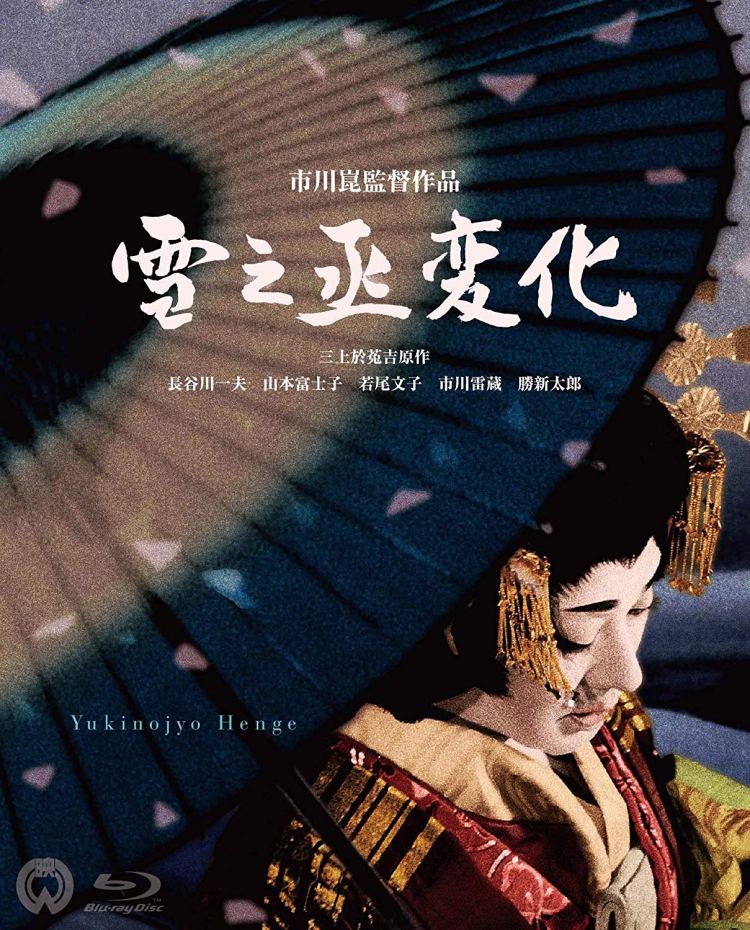
Last Winter we Parted posterAmong the most promising young writers of Japan, the work of Fuminori Nakamura is, it has to be said, extremely dark. Adapted by Grasshopper’s Tomoyuki Takimoto, Last Winter We, We Parted (去年の冬、きみと別れ, Kyonen no Fuyu, Kimi to Wakare) is as poetic an exploration of the dark side of desire as its title implies. Parting is, it turns out, not so much sweet sorrow as a wrenching act of existential dissonance that requires an absenting of the self and the creation of a new dark entity rising from the ashes of a once pure soul.

The tale begins in flames as a blind model, Akiko (Kaho Tsuchimura), burns to death in the studio of a respected photographer, Kiharazaka (Takumi Saito). Kiharazaka claims the fire was an accident and that he tried to save the victim but was not able to. Others claim that Kiharazaka had kidnapped Akiko and held her prisoner before deliberately setting fire to her in order to photograph a body burning alive. Released on a suspended sentence, Kiharazaka remains the focus of media attention which is where freelance writer Yakumo (Takanori Iwata) enters the picture. He is convinced Akiko’s death was not an accident and fascinated by an eerily oppressive photograph taken by Kiharazaka has approached a mainstream news organisation with a pitch for a book profiling the famously enigmatic figure with the ulterior motive of exposing the darkness of his soul.

The exposure of the authentic is the concern that binds Yakumo and Kiharazaka in a mutually destructive act of artistic inquiry. Kiharazaka’s most famous and only real success of a photograph features a whirl of butterflies that feels oddly like drowning as if pulled towards something dark and oppressive. Like the butterflies he observed, Kiharazaka instils fear while beguiling, a good looking man who seems to make a habit of luring vulnerable women into his web of destruction with a promise of intimate recognition, that he alone is able to truly see them and bring their true selves to the surface in act of artistic connection. Inspired by Akutagawa’s Hell Screen, he photographs only what he sees but craves darkness and violence, eventually, as Yakumo fears, allowing his need for fiery visions of hellish brutality to push him into heinous acts of human cruelty.

Meanwhile, Yakumo searches for an explanation behind Kiharazaka’s unsettling nature, trying to expose his own true face through (ostensibly) less violent means. He discovers that Kiharazaka and his sister Akari (Reina Asami) were orphaned after a violent attack in their home during which they were also injured. He hears that they may have endured years of abuse and cruelty at the hands of their father and that both are in some way warped, locked into an incestuous world of pain and suffering. A high school friend warns him that Kiharazaka has a magpie-like tendency to steal the things of others and that Akiko probably had a boyfriend which is what made her sparkle to Kiharazaka’s monstrous eyes. Still, Yakumo dangles his own fiancée, Yuriko (Mizuki Yamamoto), in front of the dangerous man as if daring him to take her while Kiharazaka declares himself captivated by her failure to know her “true self” which only he can expose.

Of course, not all is as it seems and there are several layers of “truth” in play as Yakumo continues his investigation and becomes further entangled in the spiderweb of Kiharazaka’s warped existence. Later, hearing from Akiko, she reminds us that there are other ways of “seeing” and that in the end she was not the one who was “blind” to the reality. Akiko’s boyfriend lost her precisely because he feared doing so, became over protective and patronising, and ruined their true connection through an over anxious preoccupation with unseen threat. Love can constrain as well as liberate, it makes people do dark things in its name and provokes chaos and confusion in place of happiness and harmony. Like the butterflies it can beguile while instilling fear.

Yet that same darkness also fuels art as in Kiharazaka’s distressing photographs and Yakumo’s all encompassing need to fulfil his “dream” of becoming an author. Vengeance takes many forms but all of them are destructive and in order to achieve it, one must enact a murder of the self leaving nothing behind other than a burnt out husk once the bloody business is done. A wretched tale of inescapable torments, the legacy of violence, frustrated loves, and the dark side of desire, Last Winter, We Parted is a suitably poetic exploration of the nihilistic despair in the hearts of its corrupted heroes living for love but only through a spiritual death.


Original trailer (no subtitles)

The Good Fairy (善魔, Keisuke Kinoshita, 1951)

Good fairy DVDAlthough one of the more prominent names in post-war cinema, the work of Keisuke Kinoshita has often been out of fashion, derided for its sentimental naivety. It is true to say that Kinoshita values heroes whose essential goodness improves the world around them though that is not to say that he is entirely without sympathy for the conflicted or imperfect even if his equanimity begins to waver with age. 1951’s The Good Fairy (善魔, Zemma), however, working from a script penned not by himself but Kogo Noda and adapted from the novel by Kunio Kishida, seems to turn his life philosophy on its head, wondering whether the tyranny of puritanical goodness is an evil in itself or merely the best weapon against it.

After beginning with a hellish, ominous title sequence set against the flames, the film opens with newspaper editor Nakanuma (Masayuki Mori) getting a hot tip regarding a politician’s wife who seems to have mysteriously disappeared. He hands the assignment to rookie reporter Rentaro Mikuni (played by the actor Rentaro Mikuni who subsequently took his stage name from this his debut role) who specialises in political corruption. Mikuni doesn’t like the assignment. He thinks it’s unethical and whatever happens between a man and his wife is no one’s business, but ends up going to see the politician, Kitaura (Koreya Senda), anyway and instantly dislikes him. Mildly worried by Kitaura’s lack of concern over his wife’s sudden absence, Mikuni stays on the case and visits the wife’s father (Chishu Ryu) up in the mountains where he also meets her sister, Mikako (Yoko Katsuragi), who eventually leads him to the woman herself, Itsuko (Chikage Awashima), who has taken refuge with a friend after becoming disillusioned with her husband’s “vulgar” pursuit of success at the continuing cost of human decency.

To pull back for a second, in any other Kinoshita film, Itsuko would be among the heroes in standing up against her husband’s corrupting influences, but for reasons which will later be explained she lingers on the borders of righteousness owing to having made a mistaken choice in her youth which was, in many ways, defined by the times in which she lived. Nukanuma had not been entirely honest with Mikuni in that he had known and secretly been in love with Itsuko when they were both students but he was poor and diffident and so he never declared himself, his only attempt to hint as his feelings either tragically or wilfully misunderstood. Where Itsuko, who married for money and status as a young woman was expected to do in the pre-war society, has mellowed with age and gained compassionate morality, Nakanuma who became a reporter to fight for justice against the background of fascist oppression has become cynical and selfish. Never having quite forgotten Itsuko, he has been in a casual relationship with a young actress, Suzue (Toshiko Kobayashi), for the last two years never realising that she has really fallen in love with him.

Thinking back on his college relationship with Itsuko, Nakanuma remembers talking with her about unsuccessful romances, that if a man tries his best to make a woman happy but isn’t able to then it must be because she doesn’t love him. Itsuko agrees, adding that men never seem to know what makes a woman happy in love but that friendship is a different matter. She says something similar when she tells him she’s getting married but doesn’t want to lose his friendship, and when he begins floating the idea of marriage hinting that he wants to marry her but perhaps giving the mistaken impression that there’s someone else in stating that it’s sad when a friend marries because the relationship with never be the same again and knowing that he intends to marry she now treasures their friendship even more. In a sense, Nakanuma thinks of Suzue as a “friend” with whom he occasionally sleeps, believing that their relationship is only ever liminal and temporary but mutually beneficial and capable of continuing even if the sexual component had to end.

Having failed once in love, Nakanuma is resolved not to do so again and determined to fight to win Itsuko rather than lose her through cowardice, but to do so he will cruelly wound Suzue who has treated him with nothing other than tenderness. By this time, Mikuni has fallen in chaste, innocent love with Mikako who reminds him of the parts of himself he feels are being erased by his compromising job as part of the mass media machine. Mikuni’s terrifying “goodness” is largely a positive quality which leads him to fight for justice against oppression even within his own organisation but his love for the saintly Mikako only intensifies his moral purity and threatens not only to turn him into an insufferable prig but to create in him a new oppressor, spreading guilt and unhappiness like the self-righteous hero of an Ibsen play.

Early on, following their mild disagreement about journalistic ethics, Mikuni and Nakanuma have dinner together over which they debate the power of the press to bring about social change and hold power to account. Nakanuma says he’s become cynical because hating injustice isn’t enough and there’s nothing that the individual can do against an oppressive system. What he’s telling Mikuni is that he used to be like him, but time has taught him righteousness is not an effective weapon against entrenched social privilege. He recounts a dark story from a Buddhist monk who told him that good can never win over evil because it isn’t strong enough, only evil is strong enough to fight evil and so in order to counter it you will need to affect its weapons. Later, crazed by grief and exhaustion, Mikuni’s “goodness” seems to pulse out of him with ominous supernatural force as he takes Nakanuma to task for his callous treatment of Suzue only for he and Itsuko to come to the conclusion that they’ve heard the voice of “evil” and are now condemned by their past choices to lives of morally pure unhappiness.

This central conundrum seems to contradict Kinoshita’s otherwise open philosophies in its unwelcome rigidity which says that there are no second chances and no possibility of ever moving on from the past with positivity. Itsuko made the “wrong” choice when she was young in choosing to marry for material gain, but she was only making the choice her society expected her to make in the absence of other options – it wasn’t as if she had any reason to wait around for Nakanuma whose regret over his romantic cowardice has made him cold and bitter. She realised her mistake too late and resolved to correct it, but the “Good Fairy” won’t let her, it says she has to pay (for the crimes of an oppressive society) by sacrificing again her chance of happiness in the full knowledge of all she’s giving up. Kinoshita’s films advocate the right to love by will, free of oppressive social codes or obligations but Itsuko is denied a romantic resolution despite having “reformed” herself and made consistently “correct” choices since discovering her husband’s “fraud”. She is denied this largely because of Nakunuma’s failing in being unkind to one who loved him, which is, in a round about way, still her fault for not having realised he loved her and deciding to marry him instead. In fact, the only one who seems to get off scot-free is Kitaura whose fraudulent activities will be covered up on the condition he consent to Itsuko’s divorce petition and sets her fully “free” so she can be fully burdened by the weight of her romantic sacrifice.

In the end, it’s difficult to see a positive outcome which could emerge from all this unhappiness which seems primed only to spread and reproduce itself with potentially disastrous consequences. Mikuni’s purity has become puritanical, unforgiving and rigid, condemning all to a hellish misery from which there can be no escape. The cure is worse than the disease. No one could live like this, and no one should. Goodness, tempered by compassion and understanding, might not be enough to fight the darkness all alone but it might be better to live in the half-light than in the hellish flickering of the fires of righteousness.


Title sequence and opening scene (no subtitles)

Miracle: Devil Claus’ Love and Magic (MIRACLE デビクロくんの恋と魔法, Isshin Inudo, 2014)

Miarcle devil claus posterChristmas is a time for romance, at least in Japan, but thanks to the magic of the season it can also be confusing. For one nerdy aspiring mangaka at the centre of Isshin Inudo’s Miracle: Devil Claus’ Love and Magic (MIRACLE デビクロくんの恋と魔法, Miracle Devil Claus-kun no Koi to Maho) it’s about to become very confusing indeed as he becomes convinced a prophecy he himself made up when he was a child is actually coming true. Cross-cultural love, lifelong longing, frustrated dreams, and misconstrued realities threaten to derail fated romance but never fear – it is Christmas after all, and even evil Santa has his heart in the right in place as long as anyone is prepared to really listen to him.

Hikaru (Masaki Aiba) and Anna (Nana Eikura) have lived across the street from one another all their lives and been friends as long as either of them can remember. These days, Hikaru is chasing dreams of manga success while working in a bookstore, and Anna is an aspiring artist specialising in large scale metal work. 20 years ago, Hikaru made up the figure of Devil Claus who is the embodiment of Santa’s emotional pain on being forgotten and abandoned for 364 days of the year. Seeing as no darkness can be permitted in the heart of Santa, Devil Claus evolved into his own pixie-like creature and now mostly stars in the cute, inspirational posters Hikaru illegally pastes all over town.

Devil Claus is also a big part of a prophecy Hikaru revealed to himself in which he believed Devil Claus would eventually lead him to the “Goddess of Destiny” who will appear dressed in red with the moon at her back, carrying knowledge of the future and accompanied by a leopard! It is quite a list and so when Hikaru bumps into an extraordinarily beautiful woman wearing a red coat, carrying a wooden leopard in one hand, and a collection of books about “the future” in the other, he comes to the obvious conclusion. In a coincidence worthy of the movies, it just so happens that the woman is Seo-yon (Han Hyo-Joo), a Korean artist in charge of organising a large scale Christmas display which is also the project Anna has been working on.

Predictably enough, Anna has long been in love with the completely clueless yet pure hearted Hikaru. Ironically, Hikaru thinks of Anna as a big sister who has always protected him when he is so obviously unable to stand up for himself, but though she berates him for his lack of backbone she is the one too embarrassed to confess her real feelings and has been patiently waiting for him to finally notice her all her life.

Nevertheless, this particular plot strand takes a strange turn when Anna figures out that Hikaru’s “Goddess of Destiny” is almost certainly Seo-yon. Despite her own feelings she does her best to fulfil Hikaru’s dreams but Inudo frames her behaviour strangely – Anna acts coldly towards Hikaru, while gazing somewhat longingly at Seo-yon who seems to literally sparkle as the sun shines ever behind her. It would be easy to come to the seemingly obvious conclusion that Anna has a different reason for being irritated with Hikaru and his current romantic pre-occupation (why exactly does she already have the book Seo-yon has been wanting before she decides to give it Hikaru to give her?), but the dilemma is later reframed as an inner conflict about her lack of traditional femininity. Yes, Anna’s “manly” dungarees and love of welding might easily play into a stereotype supporting the first conclusion but are actually offered as reasons for feeling underconfident in romance. Just as Hikaru thinks he isn’t good enough for someone so glamorous and accomplished, Anna thinks she isn’t good enough for Hikaru because she can’t measure up to a woman like Seo-yon.

All of that aside, the refreshing message behind Devil Claus is less one of conforming to a social ideal than of learning to regain your self confidence in order to open yourself up to the vulnerability of exposing your true feelings. Hikaru’s romantic and professional rival (not that Hikaru would ever really think of anyone else as an enemy), Kitayama (Toma Ikuta), was one a top rated city trader and now apparently successful mangaka but in a depressive slump over a conflict of artistic integrity. Only by remembering the importance of sincerity and emotional connection can he unlock his creative block by remembering what it is that’s really important. Frothy fun and proud of it, Devil Claus mixes infinitely cute if slightly subversive animation with innocent and pure hearted romance in which the main messages are embracing your authentic self and accepting other people’s. In other words, a perfect Christmas story.


Original trailer (no subtitles)
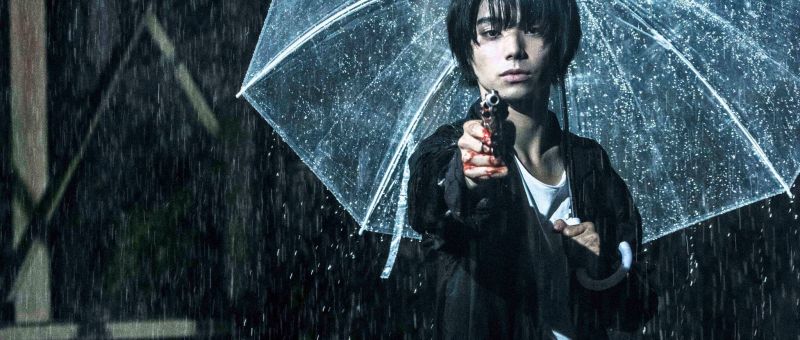
Go Find a Psychic! (曲がれ!スプーン, Katsuyuki Motohiro, 2009)

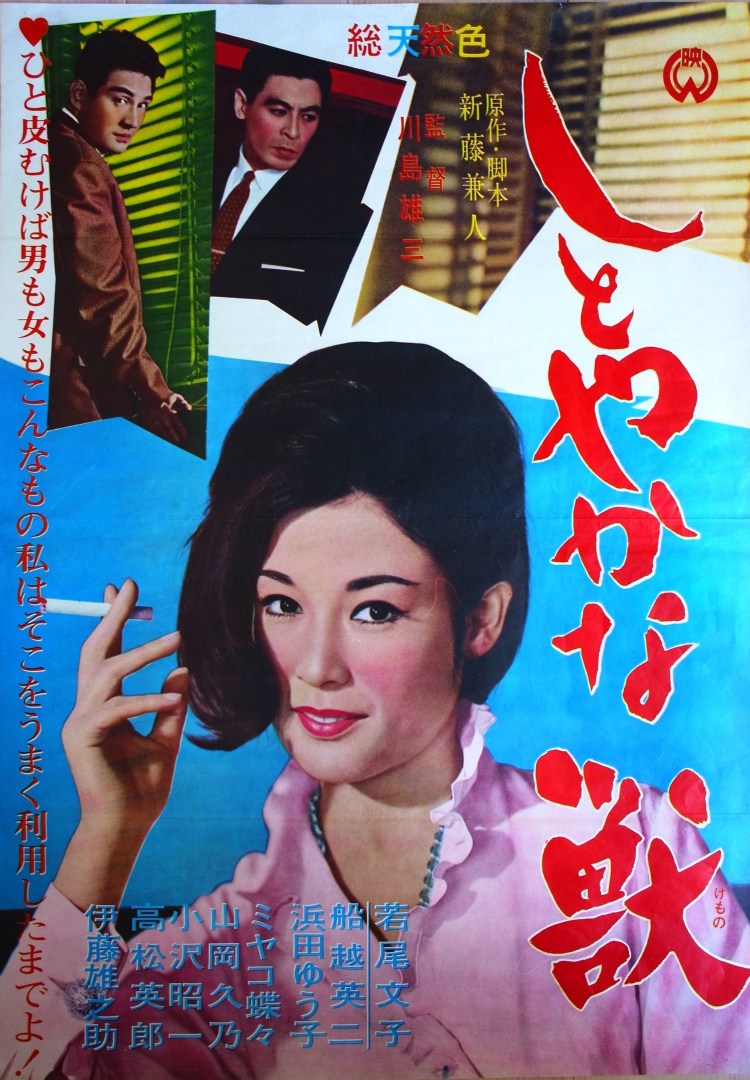
go find a psychic posterHow old is too old to still believe in Santa? Yone Sakurai (Masami Nagasawa), the heroine of Katsuyuki Motohiro’s Go Find a Psychic! (曲がれ!スプーン, Magare! Spoon) longs to believe the truth is out there even if everyone else thinks she must be a bit touched in the head. If there really are people with psychic powers, however, they might not feel very comfortable coming forward. After all, who wants to be the go to sofa moving guy when everyone finds out you have telekinesis? That’s not even factoring in the fear of being abducted by the government and experimented on!

In any case, Yone has her work cut out for her when the TV variety show she works for which has a special focus on paranormal abilities sends her out out in search of “true” psychics after a series of on air disasters has their viewer credibility ratings plummeting. Ideally speaking, Yone needs to find some quality superhero action in time for the big Christmas Eve special, but her lengthy quest up and down Japan brings her only the disappointment of fake yetis and charlatan monks. That is until she unwittingly ends up at Cafe Kinesis which holds its very own psychics anonymous meeting every Christmas Eve so the paranormal community can come together in solidarity without fearing the consequences of revealing their abilities.

Based on a comic stage play, Go Find a Psychic! roots its humour in the everyday. The psychics of Cafe Kinesis are a bunch of ordinary middle-aged men of the kind you might find in any small town watering hole anywhere in Japan. The only difference is, they have a collection of almost useless superhuman abilities including the manipulation of electronic waves (useful for getting an extra item out of a vending machine), telekinesis (“useful” for throwing your annoying boss halfway across the room), X-ray vision (which has a number of obvious applications), and mind reading (or more like image transmission). The bar owner is not a psychic himself but was once helped by one which is why he set up the bar, hoping to meet and thank the person who frightened off an angry dog that was trying to bite him. Seeing as all the guests are psychic, no one is afraid to show off their talents but when a newcomer, Mr. Kanda (Hideto Iwai), suddenly shows up it creates a problem when the gang realise his “ability” of being “thin” is just the normal kind of skinniness. Seeing as he’s not a proper psychic, can they really let him leave and risk exposing the secrets of Cafe Kinesis?

Meanwhile, Yone’s quest continues – bringing her into contact with a strange man who claims he can withstand the bite of a poisonous African spider. Needless to say, the spider will be back later when the psychics become convinced Yone’s brought it with her presenting them with a conflict. They don’t want her to find out about their psychic powers and risk getting put on TV, but they can’t very well let her walk off with a poisonous spider trapped about her person. Despite small qualms about letting Kanda leave in one piece, the psychics aren’t bad guys and it is Christmas after all. Realising Yone just really loves all sort of psychic stuff and is becoming depressed after getting her illusions repeatedly shattered, the gang decide to put on a real Christmas show to rekindle her faith in the supernatural.

Just because you invite a UFO to your party and it doesn’t turn up it doesn’t mean it doesn’t exist. Some things can’t be explained by science. Maybe those old guys from the bar really can make miracles if only someone points them in the right direction. Like a good magic trick, perhaps it’s better to keep a few secrets and not ask too many questions about how things really work. For Yone the world is better with a little magic in it, even if you have to admit that people who want to go on TV aren’t usually going to be very “genuine”. That doesn’t mean that “genuine” isn’t out there, but if you find it you might be better to keep it to yourself or risk losing it entirely.


Original trailer (no subtitles)

Until the Lights Come Back (大停電の夜に, Takashi Minamoto, 2005)

Until the Lights Come Back posterChristmas is, among other things, conveniently held on the same day every year. As such, it can’t help but become a moment of minor introspection inviting a thorough investigation of a life’s trajectory. In Japan, Christmas is also about romance which means it can also be an intense or melancholy occasion in which relationships past and present come up for reappraisal. Takashi Minamoto’s ensemble drama Until the Lights Come Back (大停電の夜に, Daiteiden no Yoru ni) spins a tale of city life as it catches hold of a number of accidentally connected souls and puts them through the emotional ringer thanks to an artificial psychological pause engineered by a power cut on Christmas Eve,

A melancholy barman sets a record going. A boy tracking satellites sees a girl hovering dangerously close to edge of the roof opposite. A conflicted salaryman finds out a dark family secret. A mistress is dumped while a wife wonders how much longer she should wait. A pregnant woman is chased by a yakuza, and an old lady gets an unexpected phone call.

Somehow, all of these events are connected though it takes a moment to figure out how. Christmas is a time for romance, but for the dejected salaryman, Ryotaro (Tomorowo Taguchi), it’s about to become a very difficult day indeed. When his terminally ill father decides to tell him the secrets of his birth, it prompts him into a mild bout of introspection concerning his own familial relationships. Ten years with the patient Shizue (Tomoyo Harada) haven’t cured his philandering and the marriage is strained to breaking point. Still, he thinks nothing of cancelling their special Christmas Eve dinner together to go meet his mistress even if his true purpose is to end things before they get any more complicated.

Missed connections and frustrated love stories continue to dominate. The mistress, Misuzo (Haruka Igawa), gets into a lift with Chinese bellboy Dongdong (Tsuyoshi Abe) who was supposed to be going back to Shanghai to visit his long-distance girlfriend who he worries is losing interest. Meanwhile, the melancholy barman, Mr. Kido (Etsushi Toyokawa), is pining for a failed love of his own – a woman he foolishly abandoned and then tried to pick back up again only to learn she had married someone else and that the marriage was unhappy. Mr. Kido gave up his musical dreams to open a jazz bar in the hope his love would someday return to him, only to be visited by “hope” in a different form – that of the strange young woman, Nozomi (Tomoko Tabata), from the across the way who’s about to have a very big business night in her off the beaten track artisanal candle shop.

Meanwhile, the recently released ex-yakuza, Gin (Koji Kikkawa), pines for his lost love in the form of the heavily pregnant Reiko (Shinobu Terajima) who swore to wait for him but eventually drifted away and married someone else though she seems to be happy enough which, strangely, he seems to find a comfort. When the lights go out there’s nothing much else to do but talk and think and so each of our wounded protagonists is forced to put their pain into focus, considering the wider context of an emotional landscape and attempting to find accommodation within it. Mr. Kido can’t quite let go of his failed love, however much he might want to, but Gin can perhaps learn to be thankful that the woman he loved found someone nice who looked after her when he couldn’t.

While the older generation swap stories of the eerie wartime blackouts and those of the comparatively less worrying power outages born of an inability to keep up with a rapidly recovering economy, the young make the best of it – swapping the twinkling lights of Christmas displays for the wonder of the stars. Candlelight and unexpected friendships give birth to new ways of thinking and create their very own Christmas miracles which seem set to pave a way towards a happier future for all in which forgiveness and understanding rule. Strangely warm yet never sentimental, Until the Lights Come Back captures a brief moment of stillness in a lonely city as its disconnected heroes find themselves pulled into a series of concentric epiphanies, putting the past to rest while learning to embrace an as yet unseen future.


Original trailer (no subtitles)

Growing Up (たけくらべ, Heinosuke Gosho, 1955)

Gosho Growing UpCaught in a moment of transition, it’s no great mystery that post-war Japanese cinema began to look back at the Meiji past. Progress had indeed been rapid but ended in national tragedy and collective madness. The post-war humanists were eager for a different outcome, to avoid the mistakes of the last fifty years and build a society that was kinder and freer than that which had come before. Though on the surface it might seem as if much had changed since the dawn of a new century, the problems were still the same and a failure to address them only likely to add new tragedies in place of the better future many hoped for. Among the foremost proponents of post-war humanism, Heinosuke Gosho made a rare trip back into the Meiji past in 1955’s Growing Up (たけくらべ, Takekurabe), an adaptation of the well known short story by Ichiyo Higuchi, finding that nothing much had really changed when it came to the fates of women and the poor in an often wilfully indifferent society.

The action opens on the outskirts of the Yoshiwara in 1894. Our heroes are a collection of children who find themselves dealing with typically adolescent problems but also, by modern standards, expected to grow up all too fast. Chief among them is 13-year-old Midori (Hibari Misora) whose sister, Omaki (Keiko Kishi), is the most famous courtesan of the red light district. Although she knows on some level that her parents have already sold her to the brothel owner in whose house they live as servants, Midori has not yet quite processed the full implications of her destiny or that her world of childhood innocence is rapidly drawing to a close. She is in love with a local boy, Shinnyo (Takashi Kitahara), who seems to return her feelings but is as awkward and confused by them as any teenage boy and treats her by turns with coldness and contempt mixed with grudging affection.

Shinnyo, meanwhile, is the son of a greedy and heartless monk (Takamaru Sasaki) who has decided to sell his older sister as a concubine to a wealthy man who already has a wife. As he loves his sister dearly and has a naive, childish sense of absolute morality, this is a sin Shinnyo cannot forgive. He argues with his father but has no real power to change the situation and then decides on rebelling against his father’s wishes that he not become a monk by leaving for the main temple in Kyoto to take holy orders. Of course, this also means he must sacrifice any youthful idea he might have had of pursuing his love for Midori.

The title, in a sense, could refer not only to the increasingly melancholy youngsters coming of age in an oppressive society, but also to Japan itself as it emerged into modernity in an effort to prove itself the equal of any other major power in the late 19th century. It is, however, an ironic a title as any could be. To “grow up” here is to abandon one’s humanity and conform to the kind of “real world” thinking that codifies cruelty and makes a virtue of heartlessness. Still an innocent child, Midori bounces her ball and basks in her somewhat elevated position as a wealthy young girl and sister of a “notorious” woman without fully understanding all that entails. When her sister tells her about a dream she had of climbing trees and picking persimmons, she is incapable of understanding her warning about the loss of innocence she’s about to experience, but her world is brought crashing down when a gang of rival boys rudely attack her and point out that all her finery was bought through “whoring” and that she is nothing more than a “whore” in waiting.

Another of the boys, Sangoro (Masanori Nakamura), whose family is poor, says he can’t wait to be “grown up”, reacting with less than sensitivity to Midori’s pained pleas that she wishes everything could stay as it was and they could be children forever. Sangoro sees adulthood as freedom. He’ll be free to earn his own living and maybe he won’t have to be like his father, too afraid to stand up to people with money because when you don’t have any you’re always reliant on their kindness. Sangoro may be poor, but he’s a man (or will be) and can’t process the total lack of agency that comes with being an adult female whose future is decided entirely by her closest male relative. Midori, like Shinnyo’s sister, has been sold by her father and there’s nothing she or anyone else can do about it now.

Nevertheless, confronted by her fate, Midori decides to own it. She encourages her parents to think of her as dead, cooly hitting back at their callousness but acknowledging an obligation as she goes. The final scenes preceding her passage across the small bridge which will forever sever her from her childhood are filled with dread and anger as if crying out for someone to stop the inevitable from happening, but of course, no one can. An old woman and former courtesan, Okichi (Isuzu Yamada), who owns a shop where Midori used to spend time and is indirectly responsible for Midori’s acceptance of her fate in some cruel, drunken words she threw at her, puts it best when she briefly feels as if she could have done something in affirming that it isn’t her fault, and it isn’t Midori’s, it’s simply “the world”.

Midori meets her fate not with resignation but rage and defiance. Shinnyo, who runs away from his inability to help his sister by becoming a monk, is forever incapable of declaring his real feelings in words but leaves a flower in front of her window in echo of another he gave her long ago. At first Midori picks it up and cherishes it for the innocent symbol of love that it is, but by the time she has travelled half way along the bridge which will take her to the Yoshiwara, she has realised this kind of innocence does not belong inside. She throws the flower to the mud and leaves her youthful dreams of love and happiness behind as she prepares to step through the doorway into a future which is not of her making and over which she has no say. To “grow up”, in this world, is a kind of spiritual death in which there exists nothing other than emptiness and indifference.


Tokyo Profile (都会の横顔, Hiroshi Shimizu, 1953)

Tokyo Profile posterJudging by the vision presented in the cinema of the time, the Japan of 1953 was one still fighting to emerge from post-war disillusionment and destruction. Set in the glittering Ginza, Hiroshi Shimizu’s Tokyo Profile (都会の横顔,Tokai no Yokogao) is, like much of the director’s work, a more cheerful affair. This world is a very different one from the dingy attics and rundown tenements of the average social drama in which the struggling urban poor battle economic impossibilities while earnestly investing in their future, a somewhat barbed aspirational comedy which lays bare the increasing gap between rich and poor but in a humorous, perhaps resigned fashion save for its strangely cutting finale.

Shooting once again almost entirely on location, Shimizu opens with a lengthy shot captured from the back of a tram traveling through contemporary Ginza – then and now an elegant and refined part of town home to numerous upscale department stores from all around the world. It’s an ordinary Saturday afternoon and the streets are only middling busy. A crowd has gathered around something mysterious, gradually attracting more people and becoming a spectacle in its own right. Thankfully there hasn’t been an accident. A shoeshine girl (Ineko Arima) is trying to comfort a crying child, Michiko (Sachiko Atami), who has become separated from her mother. Michiko is five years old and knows her parents’ names by rote, but all she can tell the concerned people trying to help about her home is the general vicinity it might be located in and that it’s next to Yoshiko’s house, which is not very helpful. Luckily a young man, nicknamed “Mr. Sandwich”  (Ryo Ikebe) because he’s one of Ginza’s many sign carriers, offers to take her to the police station while looking around and attracting attention with his sign (and patented silly walk) in case they spot her mum in the street.

Meanwhile, Michiko’s mother Asako (Michiyo Kogure) is wandering around frantically terrified she might never see her daughter again. Unfortunately she is accosted by a pushy neighbour who promises to help her look for Michiko but keeps pulling her into other business before finally landing her with the bill for two cream sodas which, needless to say, she cannot afford (and didn’t even want).

Michiko and her family are from Meguro which is quite a way out from the centre of the city and one gets the impression this is quite a rare day out for them. Michiko is very excited when she tells the shoeshine girl that they came to buy her a hat and a pair of red shoes, but as we later hear from Asako, Michiko’s presents are tiny splash of luxury in an otherwise economically anxious home. Shinji, Michiko’s father, was a Lieutenant-Commander during in the war but like many of his generation found himself unwanted after its end and struggled to find proper employment. Much to the family’s relief, he’s recently got a steady job as an accountant, but it still doesn’t pay enough to live on. Wanting to buy summer clothes for the children, Shinji worked overtime and walked to work rather than taking the train but little Yoshiko’s parents have bought her little red shoes and now Michiko wants a pair too. Doting parents, Asako and Shinji feel dreadful that they aren’t able to buy their daughter the things that other children have, but today she’s come to Ginza to see what she can do with what she has (which isn’t much either way).

Shimizu follows Michiko as she travels round the city with various adults looking for her mum but also having a grand adventure. Though she was originally quite distressed, Michiko is a clever little girl and quickly decides to start having fun instead of being sad. The sandwich man takes her all around Ginza, bumping into various people that he knows including a philandering boyfriend and the girl waiting for him, the girl he was with who has several boyfriends but has the most fun when standing them up, a shady gangster type not normally around during the day (he’s on his way to Osaka), and a geisha girl who’s taking classes in English for the “service” industry from an extremely camp instructor.

The irony is that Michiko and her family aside, the sandwich man, shoeshine girl, and everyone else they meet are people with no money who earn their living on the streets where rich people come to play. The gangster offers sandwich man a cigarette and he takes it, only to consider throwing it away when he sniffs it and realises it’s a cheap and nasty variety. Meanwhile, Asako’s horrible neighbour convinces her to ask a streetside psychic to help finding Michiko but he keeps interrupting their consultation to chase after discarded cigarette butts which he puts in a big pot and later smokes with the help of his pipe-like cigarette holder. The people who come to Ginza to play don’t care about smoking their cigarettes down to the last because they know they can buy more. Streetside psychics can’t even afford to buy any.

Nevertheless, no one seems to be unhappy with their life in Ginza. Sandwich man is nursing a crush on shoeshine girl which she might or might not return. So obviously good with children he longs for many, which is a problem because the one thing shoeshine girl dislikes about the city is that there are too many people – she only wants two. His desire for a big family means he doesn’t envisage spending the rest of his life as a sandwich man, but then it seems to be alright for the time being while he waits for something better to come along (which he seems to think it will). Shimizu takes us on a jaunty journey through the glitzy Ginza, taking in the musical halls and cafes while now famous tunes celebrating the area play unironically in the background, but as much as he celebrates the aspirational swankiness of the recovering city he’s always keen to remind us that not everyone who lives here lives in the same world and little girls like Michiko risk getting left behind for good if no one stops to think about that.