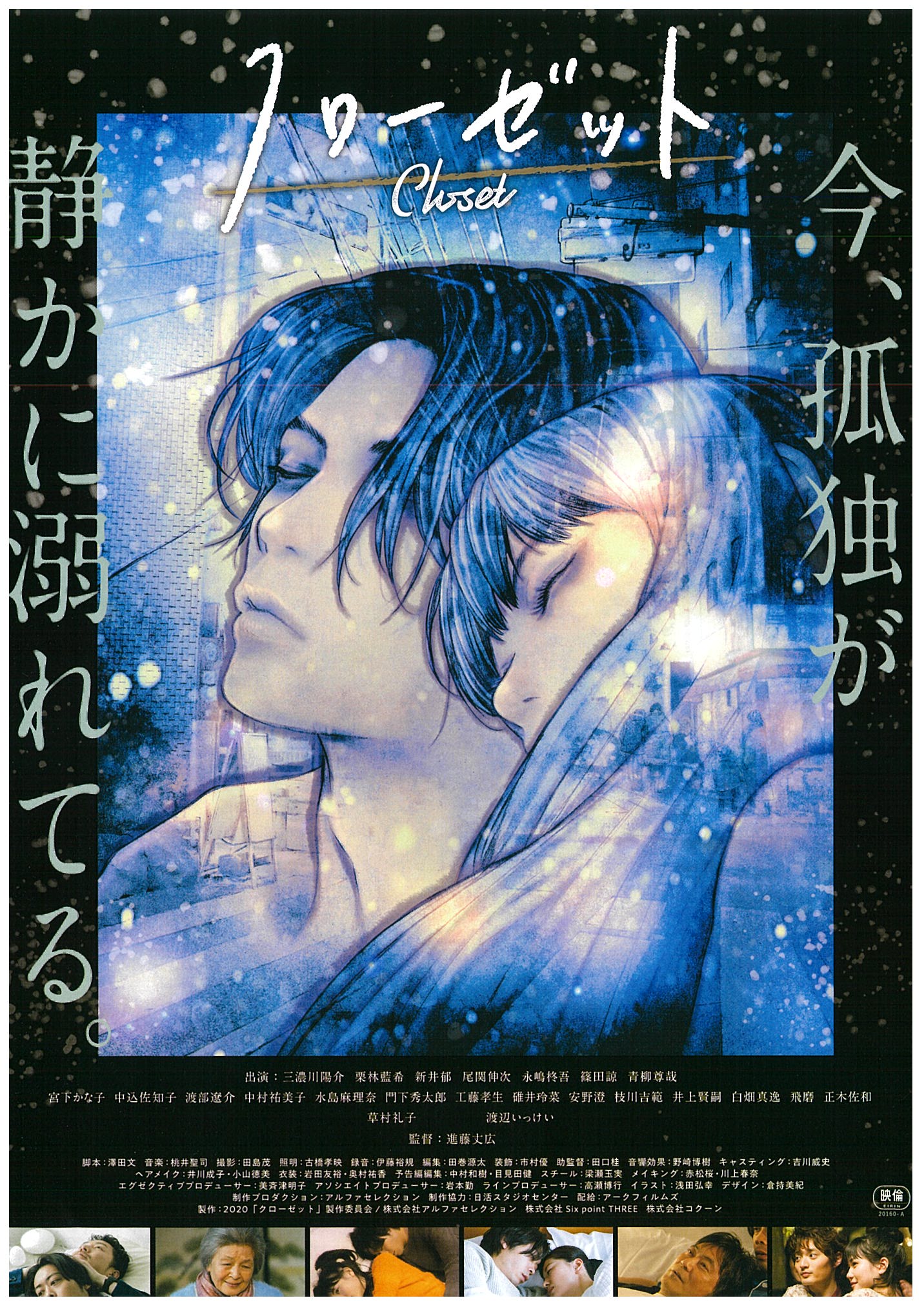
Crazy Thunder Road (狂い咲きサンダーロード, Sogo Ishii, 1980)

If you’re pushed out of the only group you’ve ever belonged to, where is it that you’re supposed to go? Produced as a graduation film, Sogo (now Gakuryu) Ishii’s second feature, Crazy Thunder Road (狂い咲きサンダーロード, Kuruizaki Thunder Road) captures a sense of youthful alienation in an age of prosperity in following in essence two men who choose to leave a group to which they have devoted their lives each for different reasons but both discovering that their new paths lead them nowhere but nihilistic despair. 

After a brief opening sequence foreshadowing the conclusion in which a ruined motorcycle lies abandoned amid the smoke of a volcanic explosion, the main action begins with the abdication of the previous leader of the Maboroshi biker gang, Ken (Koji Nanjo), who feels he’s aged out of the bosozoku lifestyle and hopes to settle down with his barmaid girlfriend Noriko (Michiko Kitahara). The Maboroshi gang is about to join an alliance with two other local outfits, Dokuro and Gaya, to put an end to the internecine street violence. Young hothead Jin (Tatsuo Yamada) decides he wants no part of this soft and cuddly version of the biker life and abruptly leaves with three of his friends to start his own gang, Maboroshi Kamikazes, declaring that his old outfit should now consider him an enemy.  

The problem is that system doesn’t like it if you step out of place and so the Elbou Alliance doesn’t really like it that Jin wouldn’t join, capturing and killing one of his friends to make a point. The more he tries to claim his independence, the more he is forced to realise that he is an ineffectual leader and being outside the group makes him vulnerable. His four guys are no match for the combined forces of three gangs which is one reason he later finds himself joining a new outfit, an ultra-nationalist militarist biker gang operated by former Maboroshi founder Takeshi (Nenji Kobayashi) who turns up in full infantry gear singing an imperial song, only to again become disillusioned because a life of order and austerity is the very opposite of everything he wanted which would be control and agency over his own life. 

In another way, that might what Ken wanted too but he doesn’t find it either and in the film’s hyper masculine worldview he appears weakened in his choice. An entirely passive figure, he is even seen wearing a pretty pinny while helping Noriko out at the bar otherwise usually looking blank or sullen like a man half alive who’s already given up on life. To ram the point home we discover at the film’s conclusion that Noriko eventually leaves him essentially for not being manly enough now that he’s left the biker subculture though her new squeeze is clearly a yuppie salaryman which itself points to a paradigm shift in contemporary visions of masculinity. 

Meanwhile, we’re suddenly presented with a new challenger, Shigeru (Masashi Kojima), who began as a shy foot soldier lead away by Jin but later finding a home with the nationalists, becoming Takeshi’s lover after Jin rejects the rigidity of militarism. Shigeru promises to protect both the town and Takeshi in an expression of the archetypal vision of masculinity as a protector, but love is it seems incompatible with this way of life in which strength is the only thing that matters. Ken loses Noriko because his desire to escape a life of violence renders him unmanly, while love doesn’t save Shigeru either because in the hyper masculine world in which he lives attachment is never anything other than weakness. 

Literally maimed by his failed attempt at dominance, Jin is cast out further into the post-war industrial wasteland where he encounters a teenage boy selling drugs and an old man weapons implying that the mediation of death has shifted with the generations only to be undercut with another piece of shocking and random violence that reminds us of the arbitrary meaninglessness of these petty struggles for dominance. True freedom, the film implies lies only in death, Jin the ultimate outsider a man who cannot be part of any group and must always remain outside of the pack while it remains impossible to survive alone. Set in the near future inches closer to an apocalypse, Ishii’s proto-cyberpunk aesthetic owes as much to The Warriors as it does to Mad Max painting pre-bubble provincial Japan as a post-war wasteland inhabited only by the hopeless perpetually fighting over the scraps of an increasingly prosperous but oppressively conformist society. 


Crazy Thunder Road is released on UK blu-ray on Feb. 21 courtesy of Third Window Films in an edition which includes an audio commentary by Tom Mes and video essay on jishu eiga by Jasper Sharp.

Trailer (English subtitles)
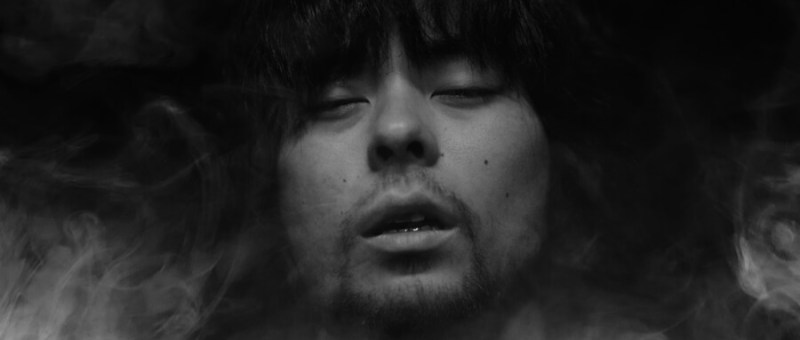
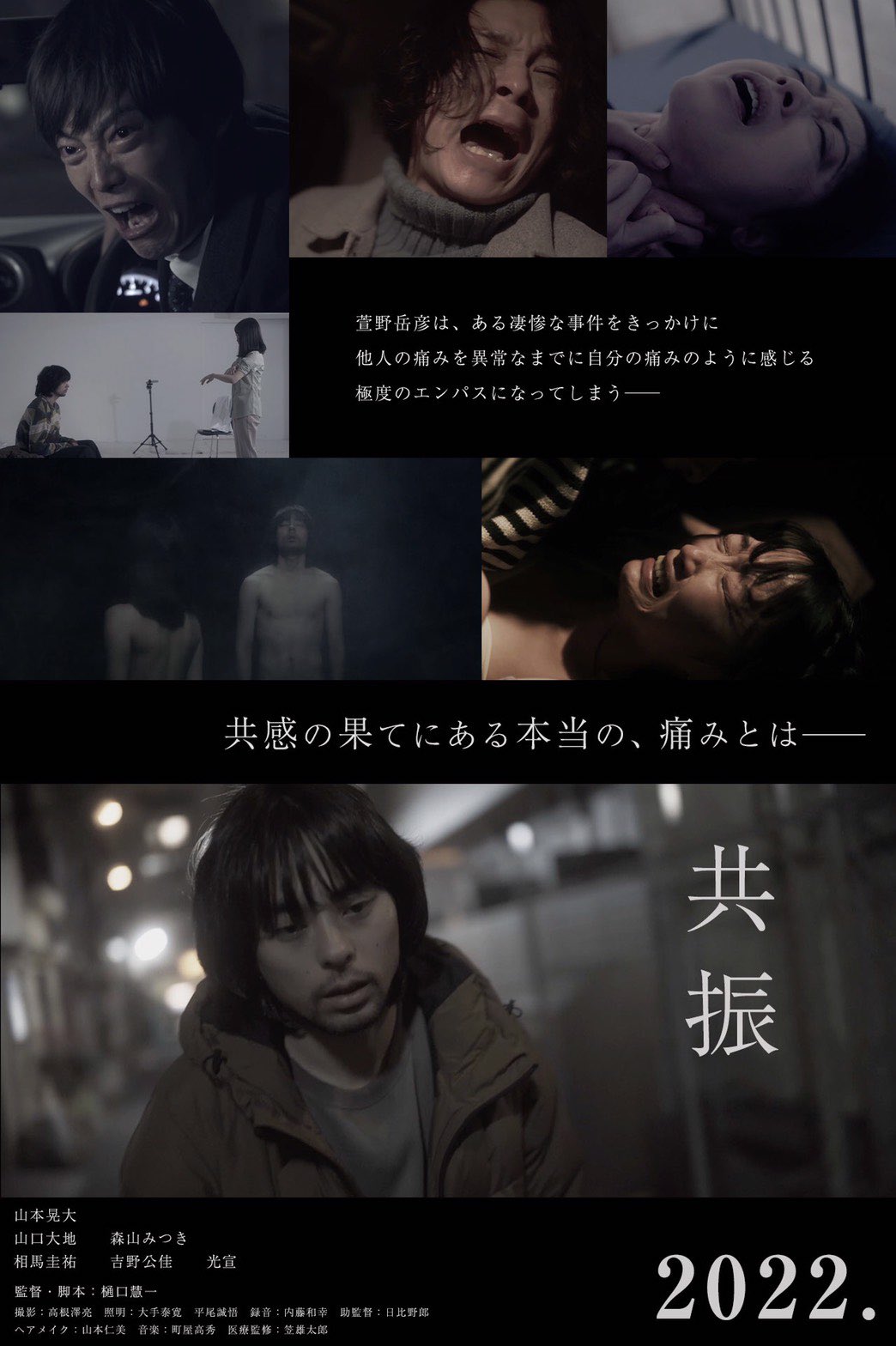
Kyoshin (共振, Keiichi Higuchi, 2021)

In modern society we often criticise others, but not always ourselves, for a perceived lack of empathy but what would it be like to truly empathise with everyone, all of the time, with no control over our own feelings? The hero of Keiichi Higuchi’s psychological drama Kyoshin (共振) finds himself with just this problem after a traumatic incident leaves him with both intense PTSD and the unwelcome side effect of being forced to feel the pain of others as his own. 

26-year-old Takehiko (Akihiro Yamamoto) thought of himself as perhaps a little over sensitive, feeling obvious discomfort sat opposite two salarymen arguing loudly in a crowded restaurant while also somewhat disconnected from his partner in a moment of supposed intimacy. It’s one evening on the beach, however, when everything goes into overdrive. Spotting two guys manhandling a screaming woman into a van he and his friend Gin (Keisuke Sohma) intervene but aren’t much of a match for two the young thugs and find themselves tied up and stunned in the back while the woman is forced to provide oral sex to the driver. Taking advantage of a momentary lapse from the other man who was busy interrogating Gin and Takehiko, the woman takes drastic action of her own in a bid to escape. Gin tries to help her, but seeing what’s befallen the driver Takehiko is plunged into fugue state able to do nothing other than scream in pain as if it were he that had suffered the catastrophic injury. 

A year on, Takehiko is a broken shell of a man unable to venture outside owing to the intense assault of other people’s pain. Ignoring calls from Gin, he’s cared for by his older brother Yuya (Daichi Yamaguchi) who ferries him to various doctor’s appointments, jeopardising his own employment in the process. Sick of medical professionals unwilling to admit they don’t know how to help him and obsessed with the curse of 27, Takehiko decides he’ll take his own life if there’s no improvement in his condition by his next birthday but then discovers potential salvation in an experimental programme run by a lesbian couple in which he will receive treatment from a woman who once experienced something very similar to himself but claims to have learned to live with it. 

The irony is that Takehiko’s condition is caused by extreme empathy in that he cannot avoid feeling other people’s physical pain as his own, yet he continues to treat those around him badly blind to the emotional toll caring for him is taking on them. His brother, feeling a parental responsibility as their parents passed away young, drops everything to help him but his boorish boss, ironically, has a fundamental lack of empathy. Annoyed that Yuya takes so much time off, he openly mocks him making the rather irrelevant point that Takehiko is 26 not six and therefore shouldn’t need so much care virtually accusing him of mollycoddling as if the problem were Yuya’s anxiety rather than his brother’s precarious mental health. 

Yet the experimental programme Takehiko finds himself involved with raises its own collection of ethical questions as the psychiatrist pushes him into a series of erotic situations arguing that if he learns to empathise across the emotional spectrum to experience other people’s pleasure as well as their pain he’ll be able to turn it off much more easily or at least flatten it out. She implies that similar therapies are what has enabled her to live a relatively normal life, but fails to disclose that she is also carrying a similar trauma which the treatment ironically recalls while largely failing to deal with the obvious possibility of transference in the potentially inappropriate lack of boundaries between patient and doctor. 

It might not be appropriate to ask how much empathy is too much empathy, but Takehiko’s path to recovery ironically enough lies only in secondary shock and a brush with death that allows him to reconnect with his friend Gin, suffering alone in their shared trauma, while empathising emotionally with his brother’s obvious care for him. It isn’t so much that Takehiko needs to disengage with those around him, but learn how to process effectively so that he can better help and understand rather solipsistically internalising external suffering. Shot with a sense of uneasy eeriness and a sci-fi twist in the manifestation of Takehiko’s descent into an oppressive empathy bubble, Higuchi’s provocative drama advocates for caring a little more about the pain of others but not so much that it stops you seeing where it hurts. 


Kyoshin streamed as part of Yubari International Fantastic Film Festival 2021.

Original trailer (no subtitles)

Lovely Little Ai (愛ちゃん物語♡, Ohno Candice Mana, 2021)

A lonely teenage girl begins to reevaluate her ideas of freedom and family after bonding with a sophisticated older woman from her neighbourhood in Ohno Candice Mana’s cheerfully quirky coming-of-age tale Lovely Little Ai (愛ちゃん物語♡, Ai-chan Monogatari). Aptly named for this is indeed a story of love, Ohno’s gentle drama cycles through the destructive effects of toxic, unsupportive parenting while finally finding solace in the strength of human connections to create new and enduring bonds not tied by blood. 

16-year-old Ai (Akane Sakanoue) explains that she lives alone with her father, her mother having passed away shortly after she was born, though alone is perhaps the most accurate word seeing as workaholic salaryman Tetsuo (Kan Hotoda) is rarely at home. Nevertheless, his authoritarian parenting style borders on the abusive as he bans Ai from hanging out with friends, makes her ask permission before anything she does, and insists she send him a photo of the clock to prove she’s home by the 6pm curfew (why she doesn’t just send the same picture every day is anyone’s guess). Ai seems not to think too much of it, but is also beginning to yearn for more freedom while additionally anxious that she has no friends and no idea how to make them because of her father’s controlling personality. 

Everything changes when she accidentally bumps into another woman on the street, knocking her over and spilling her bespoke cosmetics all over the road. Sensing a connection and hoping to get some feminine advice, Ai asks the woman to stay for a while and eventually ends up becoming friends with her, often eating in her apartment and taking various shopping trips together. In a sense, Ai comes to think of Seiko (Hisao Kurozumi) as a maternal figure but their relationship is later strained when she incorrectly comes to believe that she really is her mother despite having known all along that Seiko is trans and therefore could not have given birth to her. 

Well, Ai mostly refers to Seiko as someone who wears women’s clothing but evidently has no problem accepting her, offended on her behalf when a boy from school, Ryo (Ryo Matsumura), who has a crush on her rudely runs away screaming on seeing them together in town though he later makes a point of apologising explaining that he was merely shocked and had an unusual reaction born of nervousness. Nevertheless, a melancholy flashback reveals Seiko’s difficult childhood with an authoritarian father not unlike Ai’s who disturbingly decapitated her Barbie and broke her colouring in pencils in two in an attempt to discourage her femininity. Watching over Ai she encourages her to embrace her freedom, explaining that life is dull if you can’t do the things you want to do and allowing her the space and confidence to make friends with the popular girls at school while figuring out who she is in defiance of her father’s control. 

Even so on finding evidence that suggests Seiko has been keeping something from her she begins to doubt her new maternal relationship, unfairly feeling betrayed while refusing to give Seiko the opportunity to explain. What she eventually learns is that she’s come to see Seiko as a mother even if they are not related by blood and that the connection she has with her is what is most important. Her decision validates her right to choose and redefine the meaning of family including the boundaries around her own, but also affirms Seiko’s right to play a maternal role despite the rather unkind words Tetsuo had used to describe her before himself getting a wake up call in what it means to be a responsible father. 

Cute and quirky with its pastel colour scheme, whimsical production design, and frequent flights into fancy, Lovely Little Ai is a heartfelt tale of family as active choice in which a young woman comes of age while repairing her fracturing relationships by embracing the love of a new maternal figure and pushing her wounded father into accepting his emotional responsibilities and relinquishing his need for control. A lovely little tale indeed, Ai’s sweet summer story is a breath of fresh air and a welcome advocation for the new family founded on love and mutual respect rather than blood or obligation. 


Lovely Little Ai streamed as part of Yubari International Fantastic Film Festival 2021.

Teaser trailer (no subtitles)

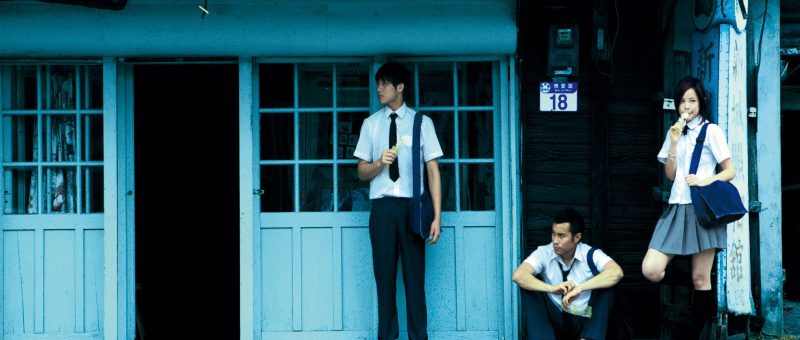
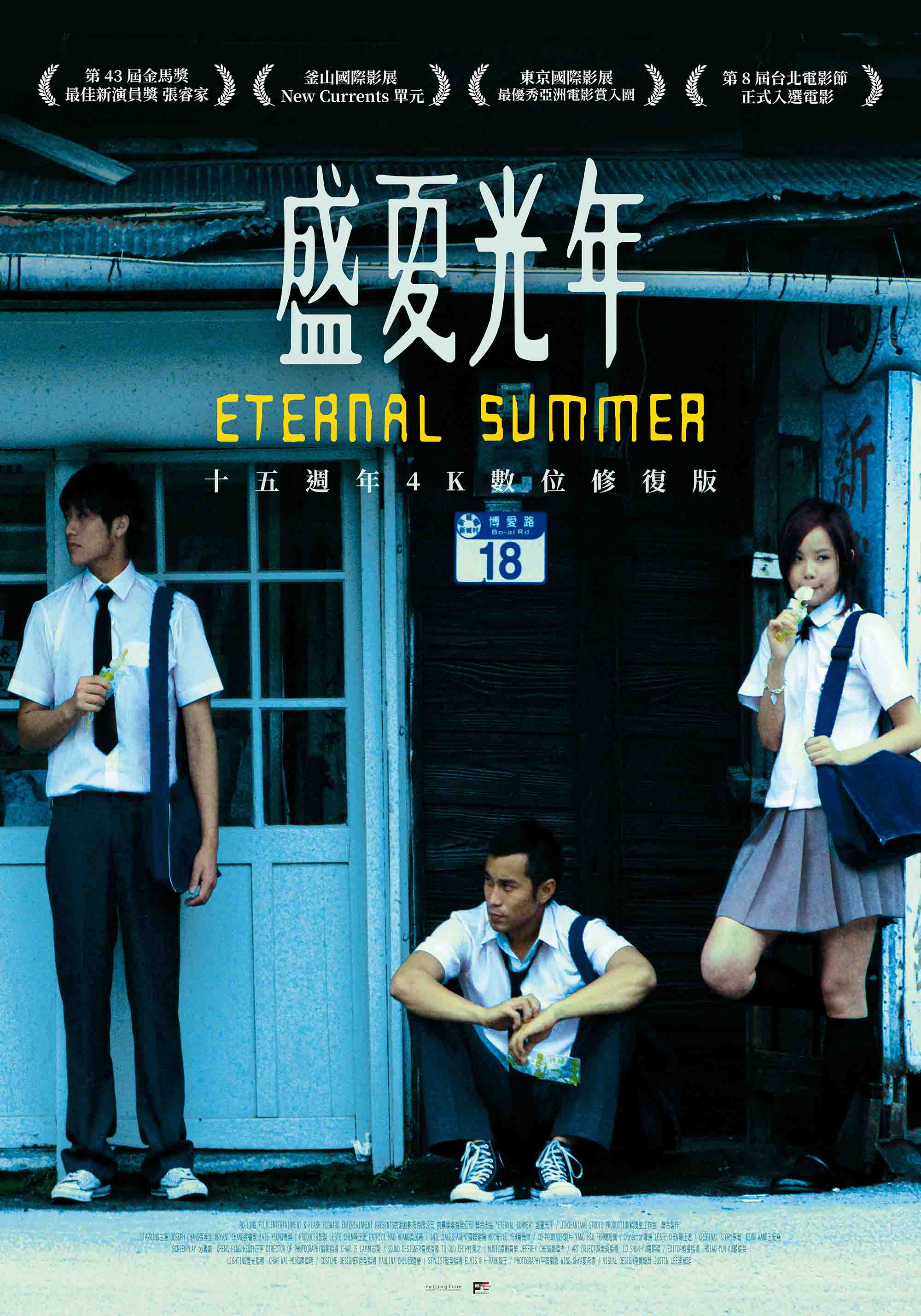
Eternal Summer (盛夏光年, Leste Chen, 2006)

A trio of emotionally displaced teens find themselves swept into an awkward love triangle while longing to escape their loneliness in Leste Chen’s melancholy youth drama Eternal Summer (盛夏光年, Shèngxià Guāngnián). Each in someway marginalised and searching for acceptance, the teens struggle to define themselves as the world changes itself around them while bound by the paradoxical qualities of their circular relationships, their unspoken secrets continually driving them apart even as they continue to long for the intimacy born only of sharing their authentic selves. 

A quiet, studious boy, Joseph Kang (Ray Chang) is asked to befriend his deskmate Shane (Jopseph Hsiao-chuan) who has ADHD and has been labeled disruptive in the hope that creating social relationships with other children will help calm him down. The arrangement in a sense backfires, Joseph’s academic achievement falling while his friendship with Shane only grows in strength and intensity. By the time they are teenagers, the pair are inseparable but Joseph has also fallen in deep, unrequited love with his best friend, a secret he is afraid to share with anyone and ironically cannot share with the one person to whom he is supposed to be able to tell anything. The friendship is further disrupted by the sudden introduction of transfer student Carrie (Kate Yeung Mei-ling) who has returned to Taipei to live with her mother after years of living with her father in Hong Kong. Carrie first develops a fondness for Joseph while working with him on the school paper, but later figures out that he’s secretly in love with Shane and decides to support him as a friend while in another irony Joseph’s ongoing internal crisis eventually forces his friends together, Carrie secretly dating Shane while each of them knows on differing levels how their relationship may hurt Joseph when he eventually finds out. 

In 2006 Taiwanese society was perhaps not quite as accepting as it would become, yet Joseph’s anxiety in his sexuality in compounded by the desire not to lose his friendship with Shane fearing not just that his feelings are not returned but that he may reject him altogether just for being gay. While Shane, a high school sports star with terrible grades, eventually blossoms academically after Carrie makes the ironic promise to go out with him in the unlikely event he gets into uni, it’s heavily implied that Joseph’s previously high level of achievement is damaged because of his preoccupation with his sexuality shockingly failing his uni entrance exams and thereafter further separated from his friends as they move on and he remains in cram school limbo hoping for better luck next year. Meanwhile he finds himself in potentially dangerous situations cruising in parks trying to verify his homosexuality while privately consumed by shame. 

For Shane, meanwhile, his problem is that he feels rejected by the world around him because of the way his ADHD was treated as a child. Regarded as a disruptive troublemaker none of the other kids would play with him save Joseph, meaning that he too is desperate to maintain the friendship in fear of his inescapable loneliness even while finding a similar connection with Carrie who is herself longing for love seemingly having strained relationships with each of her divorced parents while geographically and culturally displaced in having spent much of her life in Hong Kong. Carrie is, however, the only one to know the whole truth frustrated with the two men in her life that they can’t simply clear the air by voicing the secrets that continue to erode their relationship. 

Then again perhaps what they really fear is “change”, afraid of an uncertain adulthood in which their childhood connection will necessarily weaken. “We will lose each other in the future?” a conflicted Shane wonders, uncertain if his co-dependency is entirely healthy or fair on his friends but fearing becoming alone or having to make a choice unable to lose one or both of his essential connections. At heart a mood piece, Chen’s melancholy drama is filled with the strange canted angles of a world out of kilter and poignant reflections of the past in the midst of present torment, both elegiac and nostalgic for a particular moment in time which must in some way pass even if his parting words are painfully ironic in their cutting intensity.


Eternal Summer streams in Poland until Nov. 29 as part of the 15th Five Flavours Film Festival.

4K restoration trailer (Traditional Chinese subtitles only)

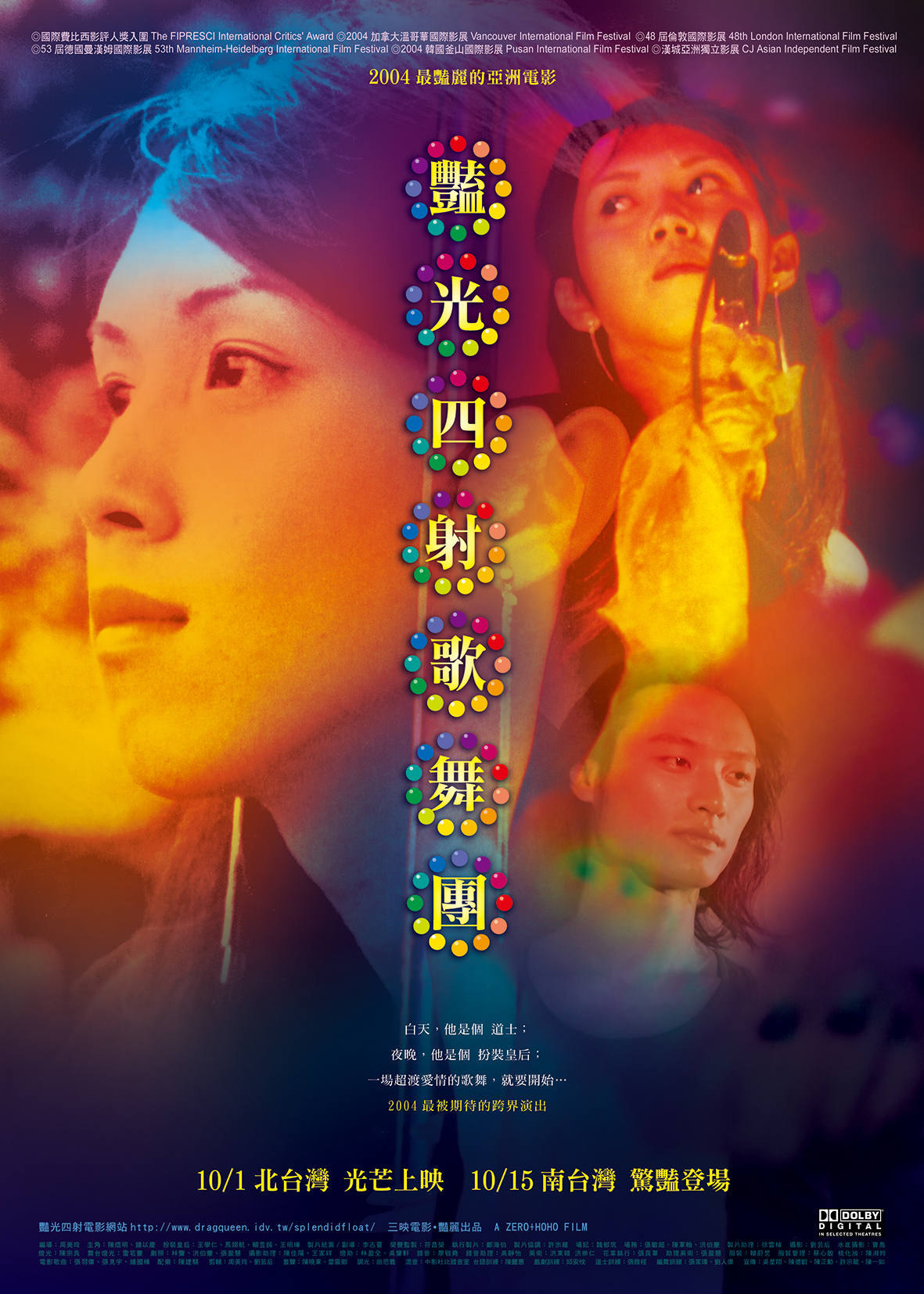
Splendid Float (豔光四射歌舞團, Zero Chou, 2004)

A lonely taoist priest with a sideline as a drag artist falls for the siren song of a drifting fisherman in Zero Chou’s mystical vision of love and loss, Splendid Float (豔光四射歌舞團, Yàn Guāng Sìshè Gēwǔtuán). One of very few out lesbian filmmakers currently working in East Asia, Chou’s films more often deal with love between women but her second narrative feature is a melancholy meditation on grief and impossibility revolving around a performer with an itinerant drag act as she struggles to understand why the man she loved couldn’t stay with her forever. 

A taoist priest performing death rituals by day, by night Roy (James Chen Yu-Ming) becomes Rose a drag performer singing sad songs of lost love from the makeshift stage of converted pickup truck with a rainbow roof. It’s one evening when the van breaks down that she first meets Sunny (Chung Yi-Ching), a handsome swimmer who soon becomes her lover only to disappear the next morning leaving behind only a note saying goodbye and a yellow flower. Heartbroken, Rose tries to find him and begins to suspect the worst later discovering that Sunny has apparently drowned at sea. 

The minor irony is that Rose’s day job is as a taoist priest which to say bound up with the rituals of death and grieving yet she struggles to come to terms with Sunny’s absence and is unable to let go of a tragic, fleeting love. Following the rather lengthy opening sex scene, Rose asks Sunny to stay with her longing for a place to settle down together looking for conventional domesticity as a couple, something about which Sunny appears unsure not it seems because of societal pressure but because he is not made for a settled life. Often seen swimming, Sunny is a kind of mermaid happiest in the water which lends his death by drowning an additionally poetic quality but also perhaps aligns his sexuality with a sense of impossibility suggesting Rose will never be able to achieve the fulfilling romance of which she dreams. 

This is further brought home in her frustrated attempts to make contact with Sunny’s spirit, often seeing his ghost but refusing to let him go. Ironically brought in to conduct a death ritual on behalf of Sunny’s mother and sister, she unwittingly hints at their relationship by using the t-shirt he left behind to summon him and thereafter determines to split his soul taking a funeral tablet with her after tossing coins to try and gain his consent only to ignore the result when it implies Sunny chose to leave her and does not want to be possessed by her in death. “We live amongst tradition but still there’s no place for people like us” one of Rose’s fellow performers laments, “look at you and Sunny, together for so long but what are you, just ordinary friends? It’s not like you can just go and tell everyone you’re his widow and take his icon with you.”

Even Roy’s family members are apparently ambivalent, suspecting he might be gay but unsure how to respond to it. They avoid sending him to funerals because he has a reputation for being overly emotional earning the nickname of “the wailing girl “and feel bad about him being teased while also confused that seems so “effeminate”, “not like a man at all”. His aunt, however, a fairly butch older woman asks if she doesn’t look “like a man” while in her full taoist priest outfit, suggesting perhaps that gender is an irrelevance at least in the course of their work. 

Rose, meanwhile, struggles to come to terms with loss while unable to voice her grief. In this quasi-musical, Rose’s songs are the only way she can express her suffering. “No one knows the pain I must face” she sings in a repeated refrain, “smiling and swallowing my tears secretly casting my sorrows to the sea.” Exploring both the vibrancy of traditional taoist practice, the soul guiding ritual described as the last dance of life, along with the precarious existence of the itinerant drag queens, Chou crafts an etherial fairytale of love and loss in which Rose herself becomes a kind of wandering ghost trapped in a rootless existence while yearning to settle down in perpetual search for safe harbour amid stormy seas. 


Splendid Float streams in the UK until 31st October as part of this year’s Taiwan Film Festival Edinburgh.

Original trailer (no subtitles)

The Prayer (간호중, Min Kyu-dong, 2020)

“I’m just wondering if they all live with nothing to live for and whether it has any meaning to live like that. And if I am no different.” a beleaguered daughter muses contemplating her own future while caring for her mother (Moon Sook) who has been bedridden in a coma for the last decade. A perhaps controversial advocation for euthanasia, Min Kyu-dong’s expansion of his entry into the SF8 series The Prayer (간호중, Ganhojung) offers a timely exploration of the nature of empathy, the limits of AI technology, the ageing society, and the destructive effects of inequality as mankind’s children find themselves wracked by the existential pain of human suffering. 

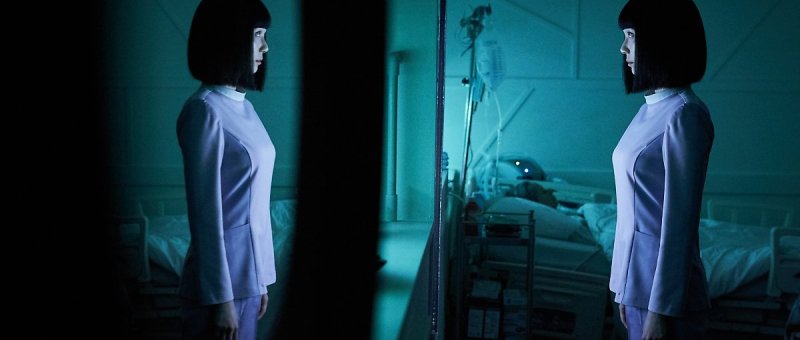
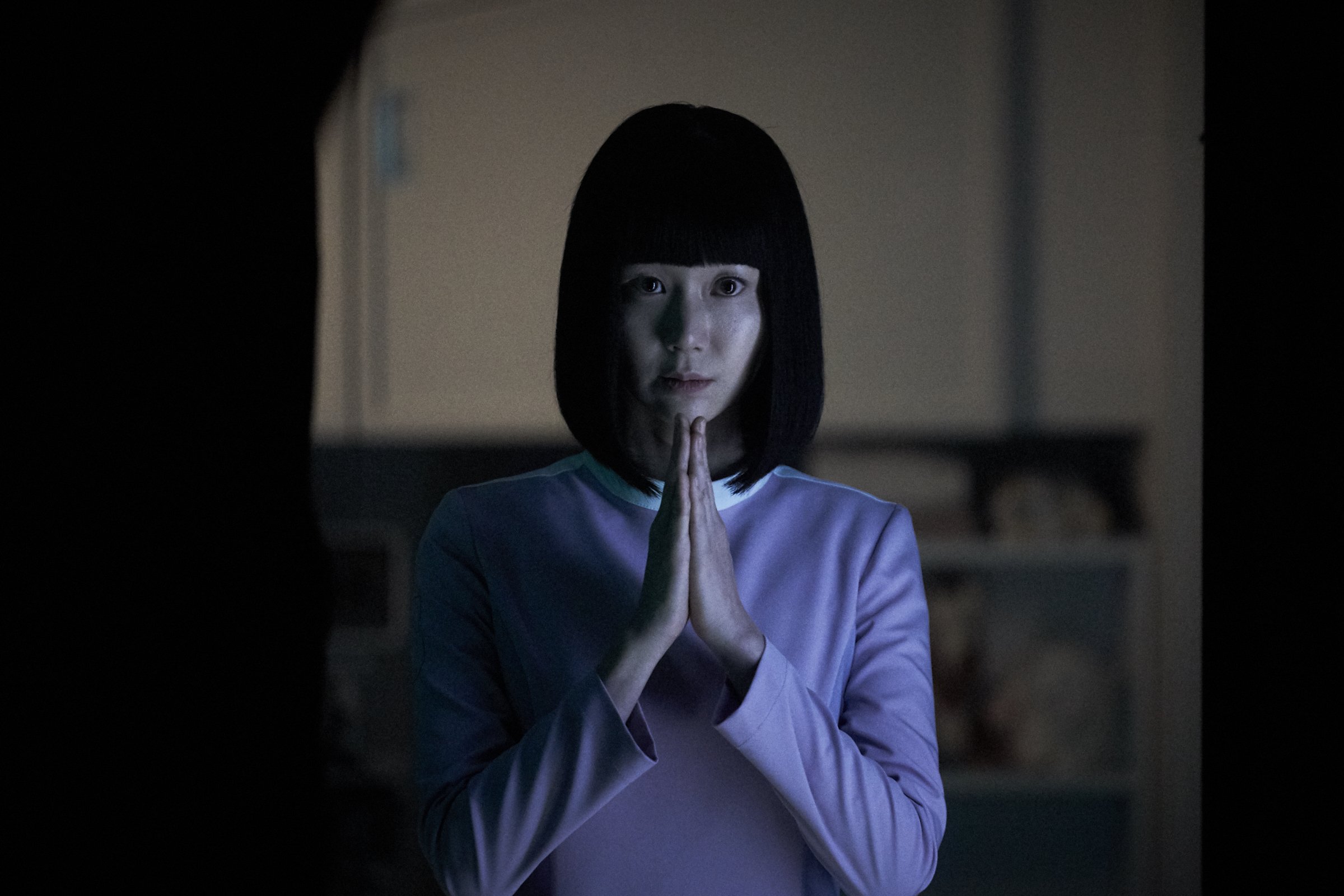
Set in the near future in which high schools are bulldozed to build additional care centres, The Prayer revolves around the relationship between the melancholy Jung-in (Lee Yoo-young) worrying if prolonging her mother’s life in this way is really what she’d want, and the robotic care nurse she’s hired to look after her, Ho-joong (also Lee Yoo-young). As we discover, Jung-in has taken advantage of the offer to have herself listed alongside her mother as a target for care leaving Ho-joong with an ironic conflict torn between her duty to look after Jung-in’s mother and witnessing the toll caring for her is taking on Jung-in who frequently expresses depressive thoughts and potentially suicidal ideations. 

In order to provide comfort to patients, the androids are designed with the same face as the primary guardian, meaning Jung-in is in someways in dialogue with herself while Ho-joong becomes increasingly confused in her imperfect, in some ways childish, application of human empathy. Fixated on Jung-in with a devotion which turns towards the romantic, she comes to the logical conclusion that in order to save her secondary patient the obvious choice is to sacrifice the first but has seemingly no understanding of the effect that may have on Jung-in who may be worn out and emotionally drained but would obviously feel responsible should anything happen to her mother at the hands of the robot nurse she hired because she has developed unintended feelings towards her. 

The extent of Ho-joong’s “feelings” are indeed at the heart of the matter as evidenced by her strange conversations with a well-meaning nun, Sister Sabina (Ye Soo-Jung), who is originally dismissive unwilling to recognise that a manmade creation may also desire access to God. As incongruous as it sounds, Ho-joong’s awakening spirituality positions her as uniquely human and as trapped as one of her patients, tormented by the pain of being alive and finally confined to table on which she claims to be experiencing near torture at the hands of those seeking to understand her “malfunction”. Her German manufacturers locate the fault in her advanced language processing unit, as if the problem were that she understands too well when perhaps it’s more that her empathy is based in a different metric and prone to misunderstand the irrationality of human impulses towards guilt and love. 

That’s also the problem with the unit next door owned by Mrs. Choi (Yum Hye-ran) whose husband (Yoon Kyung-ho) seems to be suffering from advanced dementia which often causes him to become violent or unpredictable. Unlike Jung-in, however, Mrs. Choi could only afford a basic model which offers little in the way of empathy nor will it care for her. Consequently, she appears to be overburdened with her husband’s care, doing laundry and tidying up after his frustrations cause him to trash his hospital room. The machine offers her only censure while the duty of care ironically prevents her from attending to her own health. Seeking help she turns to the manufacturer who bluntly tells her she doesn’t understand how to operate the machine and advises she ask her kids to teach her, only it appears that Mrs. Choi may have had a child in the past from whom she has become estranged and is otherwise all alone. Older than Jung-in, she despairs for the quality of her life and has no one to protect or care for her, pushing her towards a dark decision. 

Both women wonder if life is worth living if it means living like this, but have very different options open to them given their economic disparity. Having learned to feel pain, Ho-joong begs to be freed of it, positions now reversed as Sister Sabina becomes her caregiver. She accuses the nun of hypocrisy, that she allows her suffer by refusing to end her pain in order to preserve her own conscience in insisting to do so would be a “sin”. “What do I go through this pain for!” Ho-joong cries as if throwing herself into a fiery pit of existential torment while a cold authority insists she must continue to suffer. Min makes a powerful if perhaps controversial argument for the right to end one’s own suffering at a time of one’s own choosing if also leaning uncomfortably into the burdens of care as Mrs Choi and Jung-in too struggle with themselves while trying to do what’s best for those they love, but ultimately discovers a kind of serenity as his robot nurse encounters the spiritual and with it a release form the pain of living. 


The Prayer streamed as part of this year’s New York Asian Film Festival. It will also screen in London on 22nd October as part of this year’s London East Asia Film Festival.

Wheel of Fortune and Fantasy (偶然と想像, Ryusuke Hamaguchi, 2021)

It might be frightening, when you think of it, how much of life is dependent on coincidence. Chance encounters, some sparking lifelong connection others destined only for aching memory, are after all what life is all about. Given a little imagination, the heroes of Ryusuke Hamaguchi’s triptych of accidental meetings Wheel of Fortune and Fantasy (偶然と想像, Guzen to Sozo) each begin to work through their personal traumas, easing their loneliness in fleeting yet profound connections with others. “I’m glad I met you” one woman says to another, imagination and reality for a moment blurred as they role-play themselves towards a greater accommodation with the missed opportunities of the past. 

“Could you dare to believe in something less assuring than magic?” the anti-heroine of the first episode asks her former lover, undermining the central thesis in suggesting that sometimes coincidence is just that and everything else mere fantasy an attempt to convince oneself that life is grander than it is. Her friend, Tsugumi (Hyunri), excitedly tells her about the best night of her life born of a serendipitous meeting with a man who might be her soulmate but was also wounded, frightened of falling in love, still carrying the scars of betrayal after being cheated on two years previously.

What Tsugumi didn’t know is that Mieko (Kotone Furukawa) is the cheating girlfriend who broke the heart of her star-crossed lover Kazuaki (Ayumu Nakajima), but now Mieko’s sense of betrayal is two-fold. Tellingly, Mieko refers to her friend as “Gumi”, but to Kazuaki she’s the “Tsu” to his “Ka”, literally torn in two while Mieko both fears the loss of her friend and resents the love she herself discarded being picked up by another. The thought of the two of them, a perfect whole as she later admits, together near destroys her. When Kazuaki unwittingly invades their private space she has a choice, indulging in a moment of destructive fantasy which threatens to torpedo her friendship only for Hamaguchi to pull a Hong Sang-soo, zoom in and rewind, to allow her to make a more mature decision albeit one that leaves her exiled but allows a more positive path towards a freer future having let go of this brief moment of emotional trauma. 

But what if your emotional trauma is longer lasting, leaving you feeling isolated unable to understand why it is you’re not quite like everyone else and for some reason they won’t forgive you for it. Married housewife and mother Nao (Katsuki Mori) has gone back to college and is having an illicit affair with a much younger student but is frustrated not to be included in campus life in part blaming her sense of alienation on being so much older while also internalising a sense of discomfort that tells her it’s always been this way. Her lover, Sasaki (Shouma Kai), suggests it’s all her own fault, that she doesn’t know how to “go with the flow” and “puts up walls”. He meanwhile, is shallow and entitled, resentful towards a stuffy professor, Segawa (Kiyohiko Shibukawa), who held him back a year because his grades in French, a required subject, weren’t good enough.

To get back at him, he emotionally blackmails Nao into helping him set up a scandal but Segawa has a literal open door policy and their meeting eventually turns into something deeper even if Nao is forced to admit that a part of her craved this kind of seduction fantasy. Only Segawa, a distant, pensive man, meets her as an equal, tells her that he thinks her inability to go with the flow is no bad thing but a strength in that she lives by her own desires rather than those of an overly conformist society. An ironic mistake, however, later cheapens their profound connection spelling disaster for both while Sasaki it seems, as men like him often do, unfairly prospers plunging Nao into an even deeper sense of despair and self-loathing. “My own stupidity makes me want to cry” she confesses, offered hope only by another chance encounter with the unresolved past. 

Then again, do you actually need to meet to find resolution or is fantasy enough to overcome a sense of loss or missed opportunity? In the midst of a freak technological disaster in which the internet has been temporarily disabled, IT systems engineer Natsuko (Fusako Urabe) attends her 20-year high school reunion but the person she wanted to see wasn’t there. She thinks she sees her in fleeting moment passing each other on an escalator. The other woman seems to recognise her too, the pair of them caught in an escalator loop one chasing the other and thereafter visiting the other woman’s home. But as they talk they realise their chance encounter was mutual case of mistaken identity if one that exposes the similarities between them, connected Natsuko later puts it by an unfillable hole in the heart. Aya (Aoba Kawai), a middle-aged housewife, lives comfortably in a well-appointed suburban home but confesses herself wondering why she’s alive at all, feeling as if “time is slowly killing me”.

Not wanting to waste the “dramatic meeting” they role-play the conversation they might have had, Natsuko regretting having given up too easily on her high school love not wanting to cause her further pain but now realising that her care was mistaken, the pain was necessary for them both and its absence has condemned them to kind of limbo of unresolved longing and regret. Aya meanwhile reveals something else, a “boyish” friend for whom her feelings remain unclear though the final moment of connection in which she remembers her long forgotten name which literally translates as “hope” proves profoundly moving in the momentary connection between these two women, strangers but not, meeting by chance and bound by imagination each restoring something to the other if only in fantasy. 

A meditation on distance and intimacy, Hamaguchi’s series of empathetic character studies owes an obvious debt to Rohmer with a dash of Hong Sang-soo but is perhaps kinder allowing the randomness of life to provoke a gradual liberation in each of these wounded souls if only temporarily. The question might less be if you can believe in something less assuring than magic, than if you can learn to trust the strange mysticism of serendipity. 


Wheel of Fortune and Fantasy screened as part of this year’s BFI London Film Festival.

International trailer (English subtitles)
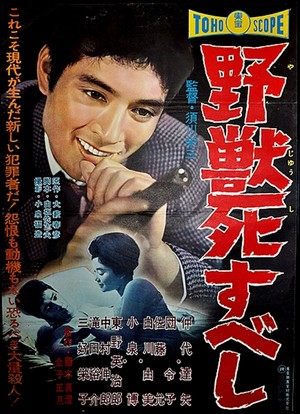
The Beast Shall Die (野獣死すべし, Eizo Sugawa, 1959)

“He’s not a beast. No, he’s a robot. A machine created by a modern, twisted society” according to a frustrated policeman acknowledging that a sociopathic killer is going to get away with his crimes because when it comes right down to it he’s just that good. Eizo Sugawa’s The Beast Shall Die (野獣死すべし, Yaju Shisubeshi) is the first of several adaptations of the hardboiled novel by Haruhiko Oyabu, Sugawa would himself direct a “sequel” 15 years later while a better-known version would prove a hit for Toru Murakawa in 1980 with action star Yusaku Matsuda in the leading role, and a two-part V-cinema adaptation would follow in 1997. The 1959 edition however is very much an expression of the anxiety of its times, a slightly reactionary take on the post-Sun Tribe phenomenon hinting at a generational divide between the nihilistic, hyper individualist post-war generation and their confused though morally compromised forbears. 

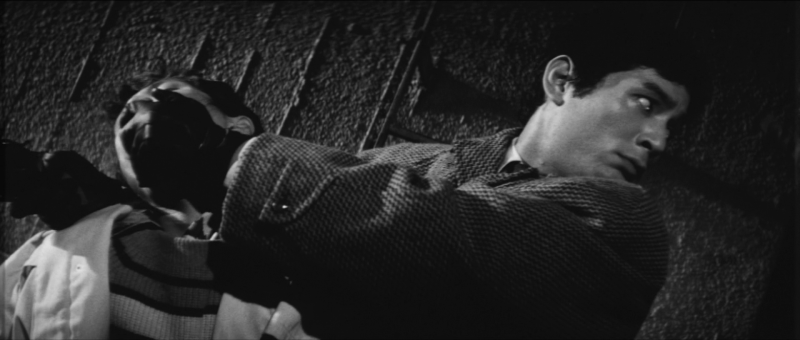
As the film opens, three policemen meet in a pub one of whom proudly shows off a Robby the Robot toy he’s picked up for his young son and is intending to give him on returning home from work. Sadly, however, Okada (Akira Sera) will never make it home because, for largely unexplained reasons, he is shot dead by nihilistic American literature student Date (Tatsuya Nakadai) who bundles the body into the boot of a car which he then simply abandons. Date never reveals much of a motive for this first murder, but he does later use Okada’s warrant card and service weapon to facilitate later crimes. 

The problem, at least for earnest policemen Kawashima (Eijiro Tono), a veteran cop and father of seven, and idealistic rookie Masugi (Hiroshi Koizumi) who is engaged to barmaid Yoko (Yumi Shirakawa) but drags his feet over the marriage because of his precarious life as a law enforcement officer, is an ideological divide within the contemporary police force. “Investigations are about science. And science is the best” according to their boss, reflecting a new faith in forensics prioritising physical evidence from the crime scene over a policeman’s intuition. From a modern perspective, this seems to be the right call though Kawashima and Masugi appear to find it both restrictive and mildly insulting as if their experience on the job now counts for nothing. They also worry that such rigid thinking prevents thorough investigation, and they might have a point in the boss’ continued insistence that the crimes must be down to “gang activity” even though the evidence clearly points at someone connected to the university or perhaps a disgruntled salaryman with access to the uni gun club. 

Kawashima and Masugi lament that they feel powerless to act because they don’t have the right to arrest someone on the basis of a “hunch”, and the film seems to agree with them as Date continues to commit his crimes unbothered by law enforcement though really who wants to live in such an authoritarian society that the police can haul you in solely because they think there’s something odd about you and “feel” you must be guilty of a crime even in the absence of conclusive evidence? Nevertheless it’s precisely these ideological divides that Date wilfully exploits while planning his hits, his second targets also reflecting the continuing Sinophobia of post-war cinema in impersonating a police officer to rob, but interestingly not kill, a pair of Chinese gangsters running an illegal gambling racket. 

Hearing Date’s back story, we realise that society has in a sense warped him in witnessing an injustice done to his father which later led to his suicide while his mother was apparently engaging in an affair with the man who framed him. He strongly argues that the only response to the “chaos, madness, and contradictions” of the modern society is to “show our beastly nature”, wilfully abandon humanistic morality and conventional civility in favour of an individualistic satisfaction of one’s personal desires above all other concerns. Date is certainly an amoral man who has no problem with sacrificing those he determines to be lesser beings for his own gain, but as even Masugi reveals his thinking may not be out of line with that of his generation. Many people are driven to murderous rage, he argues, but do not act on it because of a social taboo. 

As the film opens, a group of left-wing students is holding a rally in support of the anti-ANPO protests ahead of the treaty’s imminent renewal, though the professors mock them from inside insisting that their politics is not genuine only a reflection of the despair they feel in their society knowing that even if they graduate all that awaits them are low-level salaryman jobs with little promise of advancement. Those who can’t even manage that, they joke, turn to academia. Date’s professor (Nobuo Nakamura) affects sympathy with his poverty but also wilfully exploits him, getting him to do translations of novels which will later be published under his own name while it seems to be an open secret that he owes much of his success to the fact that he married into a prominent family which allowed him to spend five years studying abroad in America. 

Meanwhile, his students philosophise on the psychology of crime insisting that a “robotic, truly ruthless personality” can only come from a “mechanistic society like the US” while Japanese criminals are generally “emotional” in that crimes are committed because of “love affairs, resentment, finances”, “petty humanistic motives” which society can easily understand if not exactly condone. Date, admittedly a student of American literature with his eyes firmly set on going abroad, entirely disproves this theory. His crimes appear to be dispassionate and committed largely for practical reasons, the later ones at least with money as the motive even if he also derives a thrill from his amoral rebellion against the system. His poverty is offered as a justification yet we also see him abuse and manipulate those weaker than himself, humiliating an old lady trying to sell flowers in the bar where Yoko works while later talking a fellow student suffering with TB and unable to pay his tuition into helping him commit a robbery. 

Perhaps in someways uncomfortably in continuing a motif associating homosexuality with sadistic criminality, it’s also heavily implied that Date is bisexual, encountering an effeminate young man on the street with whom it is clear from their conversation he has previously been intimate to later use him as cannon fodder when engaging in a firefight with Chinese gangsters, while there is also an obvious homoerotic charge to his relationship to the student who later becomes a temporary accomplice. His relations with women are somewhat caddish and perfunctory, his sometime girlfriend Tae (Reiko Dan) telling the police that Date is a player who only sleeps with the same woman three times before becoming bored with her. Date’s attitude, though interestingly enough not his crimes, may reflect a societal misogyny, impoverished medical student Tae later refused access to the morgue because it’s not something a woman should see, though Tae herself later claims that it’s Date’s coldness and cruelty that draw her to him. Seemingly unable to feel genuine emotion for others, it nevertheless appears that Date is in a sense moved enough by Tae’s ability to embrace his inner darkness to eventually decide to alleviate her poverty on realising he no longer needs his ill-gotten gains because he’s secured his passage to America through more legitimate means. 

A reaction to the post-Sun Tribe sense of moral panic about disillusioned post-war youth, The Beast Shall Die suggests that for the moment at least those like Date are in an unassailable position thanks to an overly liberal justice system as the two policemen lament their inability to prevent his escape through judicial means while turning their attention to Tae though there’s no real way they can know that Date gave the stolen money to her rather than taking it with him or depositing it in some other location even if she’s walking around with an ugly handbag that might be full of cash. Alternating between an acceptance of Date’s nihilistic, crypto-fascist philosophy in implying that those who obey the rules of civility are doing so solely because they are too weak to break them, and advocating for a more authoritarian society in which policemen are free to act on their “hunches”, Sugawa’s take on Oyabu’s hard boiled tale of societal corruption and warped post-war morality has its reactionary qualities even as it ends on a note of ambiguity that implies order will eventually triumph though not, it seems, today. 


Original trailer (no subtitles)

My Name is Yours (君が世界のはじまり, Momoko Fukuda, 2020)

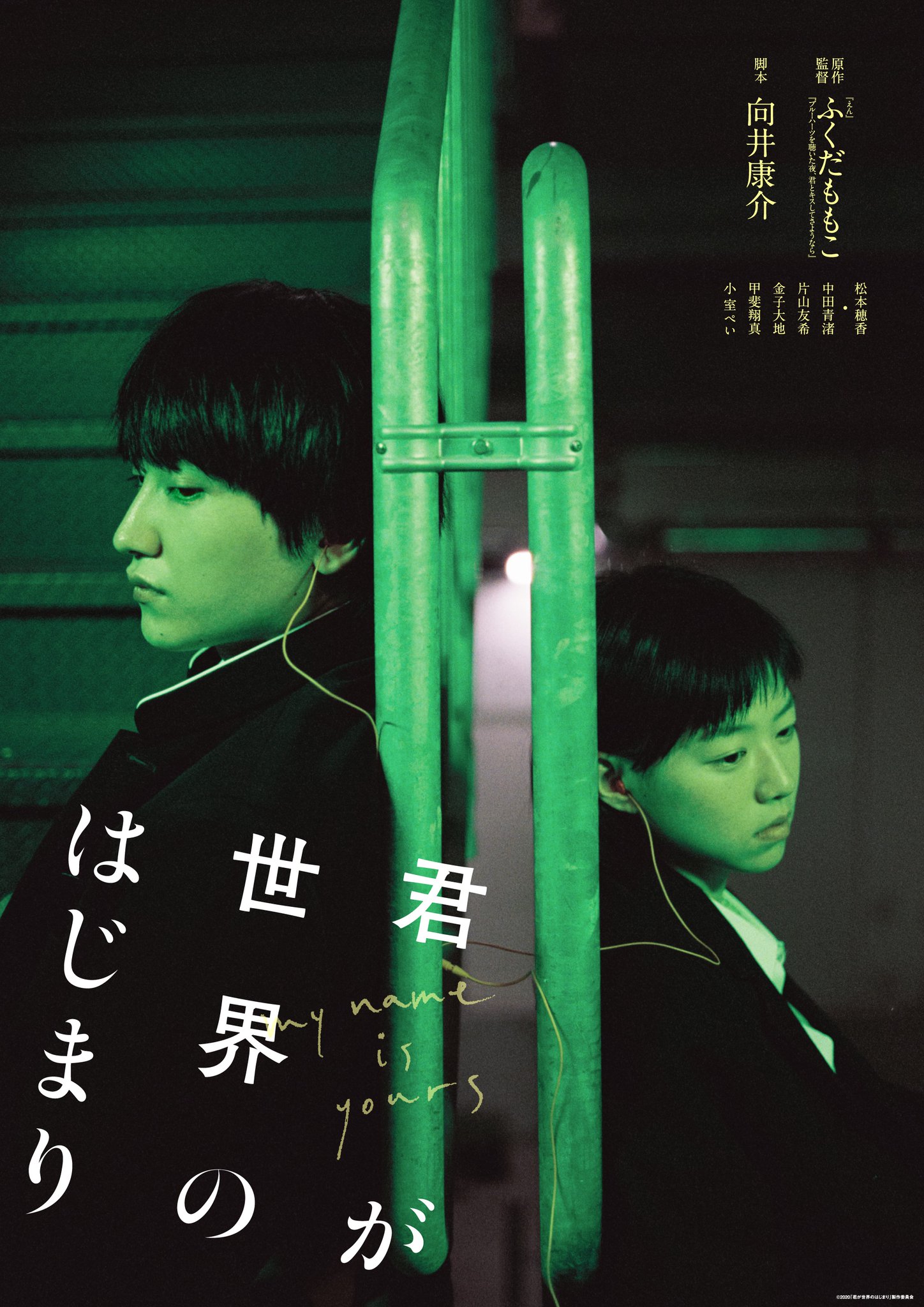
A collection of Osaka teens process adolescent angst and generational anxiety but in the end find a gentle solidarity in their shared suffering while resolving to be kind in Momoko Fukuda’s adaptation of her own novel, My Name is Yours (君が世界のはじまり, Kimi ga Sekai no Hajimari). “People are unknowable” they solemnly resolve, admitting that you never really know anyone but later making an effort to share their secrets, if only gently, bonding in a new sense of openness as they begin to move forward into a brighter future. 

Fukuda opens however with a scene of crime as a high school student is arrested for the murder of their father. As we discover, several of the teens could be potential suspects, each in someway resentful of their dads though for very different reasons. Recently transferred Tokyo boy Io (Daichi Kaneko), mocked for his accent, is involved in some kind of hugely inappropriate sexual relationship with his middle-aged step mother as accidentally witnessed by moody classmate Jun (Yuki Katayama) hanging round the shopping mall in order to avoid going home to her overly domesticated dad (Kanji Furutachi ) whom she blames for her mother’s decision to leave the family. Narihira (Pei Omuro), meanwhile, was abandoned by his mother soon after birth and is sole carer to his father who seems to be suffering with early onset dementia. 

Childhood best friends En/Yukari (Honoka Matsumoto) and Kotoko (Seina Nakata) first encounter Narihira in their secret hideout, a disused school library, having a private cry leading Kotoko to fall madly in love publicly dumping her current boyfriend with extreme prejudice seconds later. Meanwhile, En becomes an accidental confidant to nice guy Okada (Shouma Kai) who has received a mysterious love letter he doesn’t quite understand because it’s come in the form of a classical poem only for Okada too to fall for Kotoko while Narihira seems to prefer En. 

Love triangles aside, each of the teens has their private sorrows some more secret than others but nevertheless producing chain reactions of their own in their inability to express themselves fully. But as angry and frustrated as they are, they still want to be kind if more to others than themselves. “If I only think about my own freedom how can I be kind to others?” Narihira sadly reflects confessing his occasional resentment in trying to care for his father. Even Io, seemingly realising how inappropriate his relationship with his step mother is, resolves that he wants to be kind to her despite the harm she may be doing him. “Wanting to hurt other people is absurd” he claims, unable to understand the impulse to exorcise his frustration through violence. 

Narihira attributes his salvation to having met En, explaining that in a sense she opened up a new world in giving him the courage to talk about his father sharing the secret with Okada who told the coach on their sports team who told him about a facility that might be able to help. Yet Narihira also begins to disrupt the previously close relationship between En and Kotoko, leaving Kotoko feeling jealous and En confused it seems on more than on level as the unexpectedly perspicacious Okada seems to have figured out forcing her in turn to reckon with and accept her own unspoken feelings. 

Taking refuge in a darkened shopping mall overnight, the teens unexpectedly bond through a musical performance of the classic Blue Hearts track Hito ni Yasashiku with its melancholy yet cheerful chorus encouraging each other to hang in there, remaining kind in a world which often isn’t. “Well, I can’t say for sure. Nobody can.” an amused secretary guard honestly answers asked by one of the teens if the mall will be torn down, his refreshingly direct answer perhaps adding to their new sense of confidence even in the face of the world’s uncertainty. A gentle, quietly nostalgic coming-of-age tale, Fukuda’s Osaka-set lowkey yet stylishly moody drama begins with violent darkness but ends in bright sunlight, the teens each finding a sense of equilibrium having come to new understandings about themselves and those around them bolstered by a youthful solidarity. Some secrets it seems still cannot quite be shared, but friendships resolve themselves all the same if in unexpected ways allowing a melancholy intensity to dissipate into a sad if fervent hope for the future. 


My Name is Yours screened as part of this year’s Camera Japan

Original trailer (English subtitles)
Hito ni Yasashiku music video

The Blue Hearts – Hito ni Yasashiku

Closet (クローゼット, Takehiro Shindo, 2020)

“Everyone has their own closet” according to a bereaved older man sympathetically reflecting on a life half lived. The wounded hero of Takehiro Shindo’s Closet (クローゼット) is about to discover he may have a point as he works through his own issues, finally coming to an understanding of the true nature of intimacy before learning to open himself up to living life true to himself realising that perhaps his very ordinary dream is not as hopeless as he thought it was if only he can bring himself to put his male pride aside. 

Returning to Tokyo following a failed engagement, Jin (Yosuke Minogawa) finds himself taking on an unusual line of work on the invitation of an old friend, embarking on a career as a sleep companion. Essentially, he’s there to lie beside a lonely person offering a safe and supportive space where they can relax and be their authentic selves free from the judgement they may otherwise receive from a friend or a lover. Ironically enough, Jin is a man of few words, his fiancée once asking him to be a little more sociable when her parents visit, which means he’s a good listener but slow to adapt to the true purpose of his work. His first client, a harried hospital worker, seemingly just wants to destress but mostly through having someone listen to her rant about workplace concerns and nod along sympathetically rather than offer earnest advice. As his boss Takagi (Shinji Ozeki) reminds him, it’s all about empathy, or at least telling them what they want to hear which may sound insincere but in another sense may not be. 

As the old man says, everyone has something they don’t really want to let out but the presence of the sleep companion is intended to ease the burden and provide temporary relief. Jo Shimoda (Ikkei Watanabe), is grieving for his late partner who remained in the closet for the entirety of their relationship leaving him now with nothing but intangible memories. He asks Jin to put on the other man’s pajamas, experiencing the warmth and comfort he misses from his absent lover and gaining through it the ability to begin moving on. Kaori (Iku Arai), meanwhile, is a harried executive, or at least she claims, apparently in love with a slightly younger colleague but unsure if her crush is appropriate while worrying that she’s in danger of missing the boat both in love and in her career. 

A young student from the country, Nanami (Aino Kuribayashi), on the other hand, is in search of the kind of comfort she does not receive from her no good boyfriend, realising only too late that his treatment of her is abusive and their relationship is built on exploitation. Jin had in a sense experienced something similar, ruining his relationship in a crisis of masculinity. It is of course he who also receives warmth and support through his role as a companion, but the job also allows him to reconfigure his idea of what it is to be a man in providing a sense of safety, protection, and comfort while engaging in a true intimacy that is not defined by sexuality.

Through their shared experiences, both Jin and the sleepless companions begin to grow in confidence, accepting themselves for who they are and preparing to move on into a more authentic future even if for some the path turns darker before it reaches the light. Stepping out of their individual closets, they no longer feel so insecure finally gaining the courage to live as their true selves no matter what anyone else might have to say about it in the knowledge that others too are also suffering and might be led out of it by their example. A gentle tale of the simple power of human intimacy to overcome a sense of existential loneliness and individual despair, Closet allows its reticent hero to find new meaning in the ability to accept from and give to others comfort while coming to terms with his own traumatic past in realising that he is not and never was defined by conventional ideas of masculinity and that he is not worthless solely because he is no longer able to fulfil them. Perhaps that small yet infinitely ordinary dream is not so out of reach after all. 


Closet screened as part of this year’s Camera Japan

Original trailer (no subtitles)