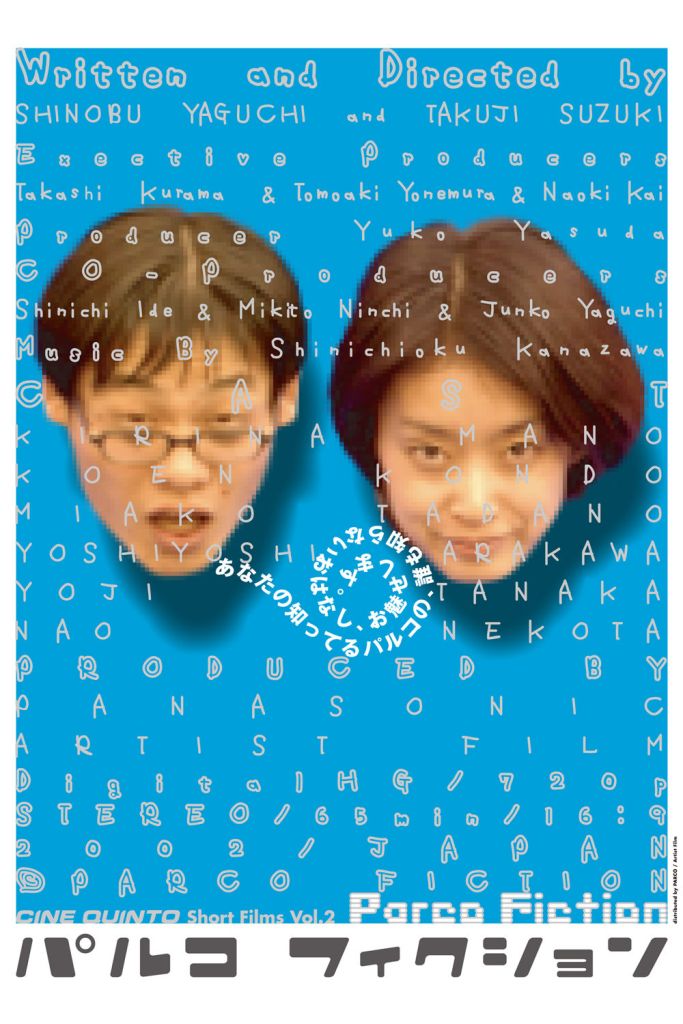
Since making 2002’s Parco Fiction, directors Shinobu Yaguchi and Takuji Suzuki have both gone on to bigger and better things but for this under seen portmanteau movie, they found themselves uniting to create something which seems to be a strange advert for the Parco department store in Tokyo’s trendy Shibuya district. The film is divided into five different short episodes loosely connected to the department store plus opening, closing and linking segments each filled with the kind of whimsical, absurd humour usually found in these kinds of films.
Opening with a planning meeting for the building of the department store in which its unusual name is decided after the chain smoking consultant finds it written on his scarred lungs after a medical emergency, the story moves on to a young lady who is undergoing an interview for a job at the store. Unfortunately, the young man being interviewed alongside her is an ideal candidate – a Tokyo university graduate who seems to have completely charmed the panel. However, the girl is given a job with the instruction not to open the envelope she’s been given but she can’t resist and finds herself setting off on a strange quest.
This only continues in part two as we come into contact with a soon to be middle school girl who has the misfortune of having a slightly dotty grandma by the name of “Harco”. Every time the Parco ad comes on, grandma gets very excited because she thinks someone’s calling her name even though the last person to call her “Harco” died, years ago. The little girl sets off to solve this problem by stopping grandma seeing the ads, but then something even stranger happens.
Tale three is set during a sale in which a young woman has her heart set on a particular dress and will stop at nothing to get it. This introduces us to the security guard at the Parco who takes us into story five as a shop worker has an unusual medical problem which prevents her from looking up. The security guard has a crush on the shopgirl, but he’s on the taller side so all he can do is stay close by and prepare to catch her every time she’s about to swoon after slightly raising her head. The film then closes with another mini sequence featuring the “standing room only” screening of Parco Fiction at a public cinema.
As is common with these kinds of films, some of the segments are more successful than others. The first perhaps goes on too long and the episode with the little girl and her grandma gets a little too surreal for its own good but the overall tone is zany, quirky humour. Sometimes very off the wall and filled with a good deal of slapstick too, Parco Fiction feels like a fairly low-key, frivolous effort but none the less enjoyable for it. Having said that, the entire duration of the film lasts only 65 minutes, and, truthfully, feels a little long despite the variation of stories involved.
Not a landmark film by any means, Parco Fiction still has plenty to offer particularly as a fairly early effort from these two directors who’ve since gone on to carve out fairly interesting careers. Sure to interest fans of quirky comedies, each of the segments has a zany, studenty humour vibe that often proves extremely funny. The film is undoubtedly low budget (and obviously filled with references to the Parco department store) but earnest enough and filmed in an accomplished and interesting manner.
This is another one you can randomly buy on UK iTunes with English subtitles.
Unsubbed trailer:
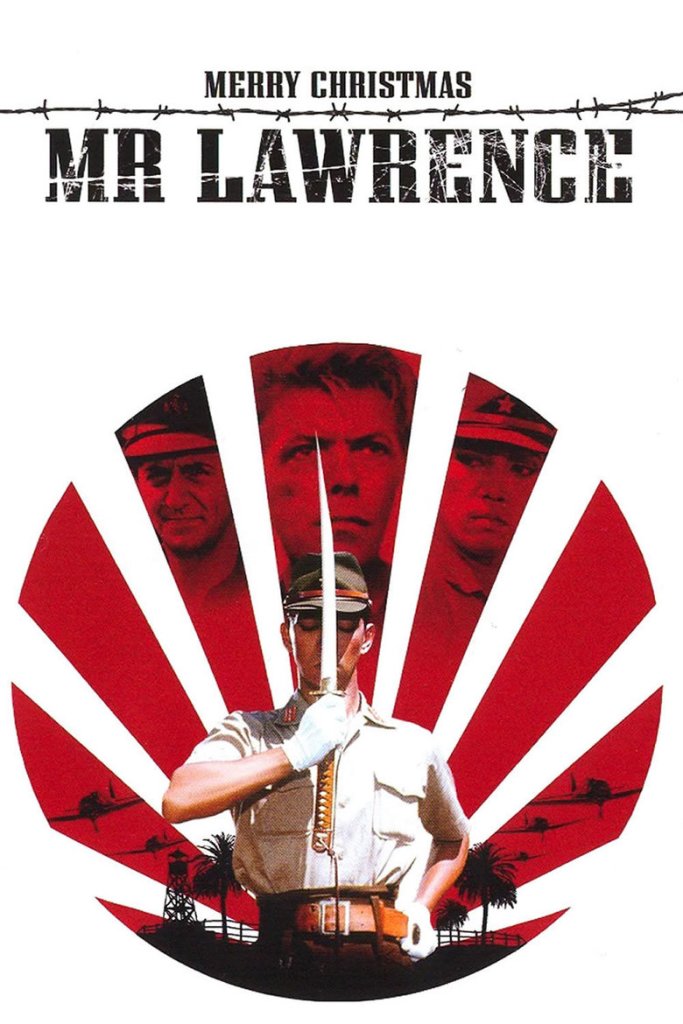 Of all the post-war Japanese filmmakers, the one who liked to twist the knife the most was surely Oshima. No subject too taboo, no pain too raw – he liked to find the sore spot and poke at it a little, if only in the hope of encouraging an accelerated healing, albeit one which would leave a scar to remind you that once you suffered. With Merry Christmas, Mr. Lawrence (戦場のメリークリスマス, Senjou no Merry Christmas) he takes an unflinching look at the treatment of Japan’s prisoners of war and contrasts the Japanese forces with the different attitudes of the (mostly) British soldiers held within the walls of the camp.
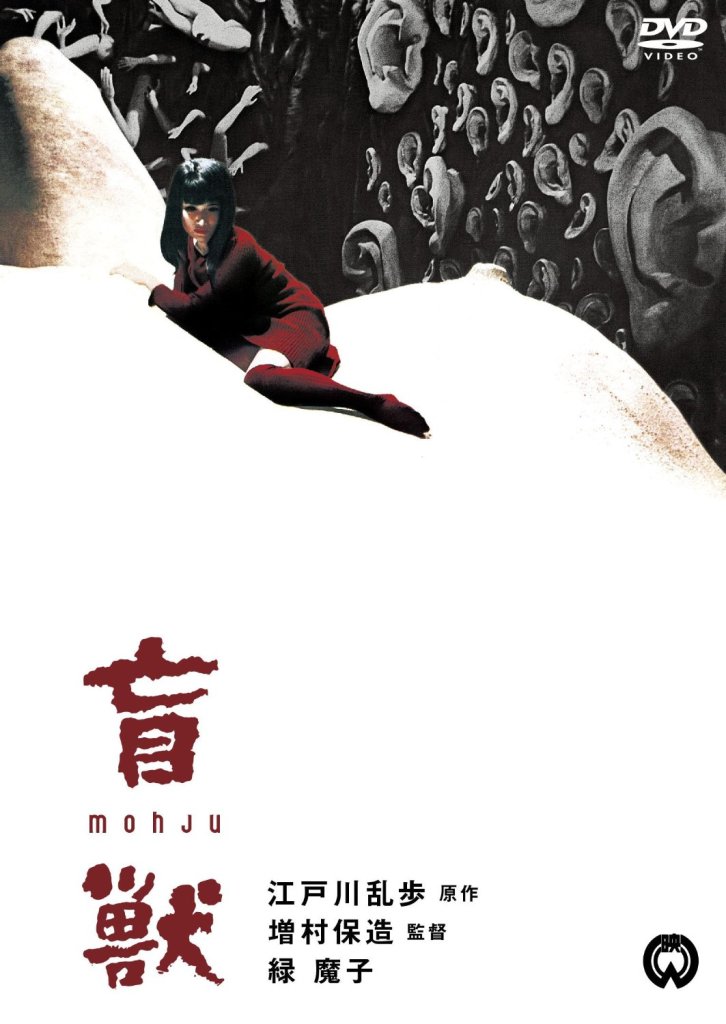 Never one to take his foot off the accelerator, Yazuso Masumura hurtles headlong into the realms of surreal horror with 1969’s Blind Beast (盲獣, Moju). Based on a 1930s serialised novel by Japan’s master of eerie horror, Edogawa Rampo, the film has much more in common with the wilfully overwrought, post gothic European arthouse “horror” movies of period than with the Japanese. Dark, surreal and disturbing, Blind Beast is ultimately much more than the sum of its parts.
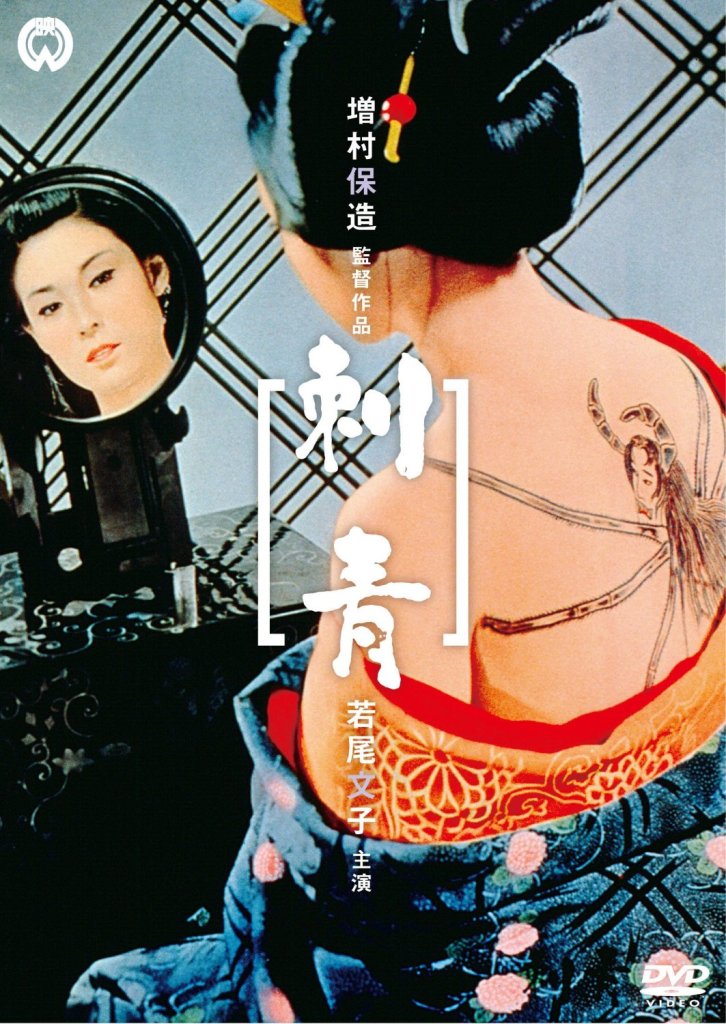 Irezumi (刺青) is one of three films completed by the always prolific Yasuzo Masumura in 1966 alone and, though it stars frequent collaborator Ayako Wakao, couldn’t be more different than the actresses’ other performance for the director that year, the wartime drama
  The debut film from Yasuzo Masumura, Kisses (くちづけ, Kuchizuke) takes your typical teen love story but strips it of the nihilism and desperation typical of its era. Much more hopeful in terms of tone than its precursor and genre setter Crazed Fruit, or the even grimmer The Warped Ones, Kisses harks back to the more to wistful French New Wave romance (though predating it ever so slightly) as the two youngsters bond through their mutual misfortunes.
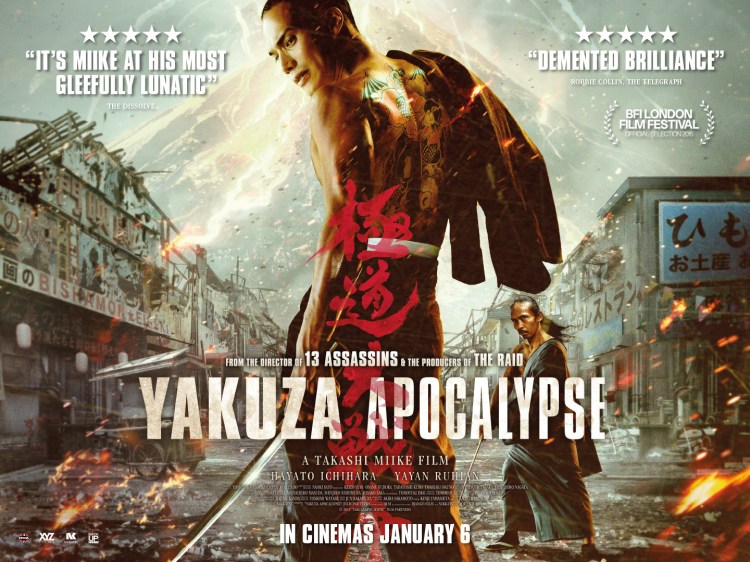 Belated review from the 2015 London Film Festival – Yakuza Apocalypse is released in UK cinemas for one day only on 6th January 2016 courtesy of Manga who will also be releasing on home video at a later date.
 Never one to be accused of clarity, Seijun Suzuki’s Capone Cries a Lot (カポネおおいになく, Capone Ooni Naku) is one of his most cheerfully bizarre movies coming fairly late in his career yet and neatly slotting itself in right after Suzuki’s first two Taisho era movies,
 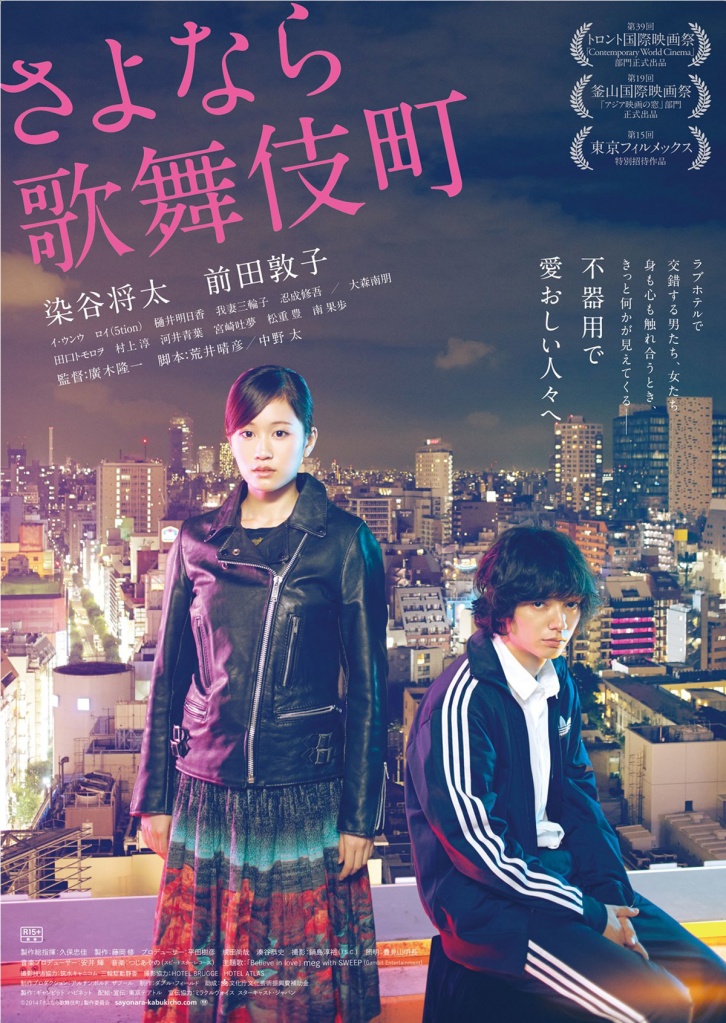 Kabukicho Love Hotel (さよなら歌舞伎町, Sayonara Kabukicho), to go by its more prosaic English title, is a Runyonesque portrait of Tokyo’s red light district centered around the comings and goings of the Hotel Atlas – an establishment which rents by the hour and takes care not to ask too many questions of its clientele. The real aim of the collection of intersecting stories is more easily seen in the original Japanese title, Sayonara Kabukicho, as the vast majority of our protagonists decide to use today’s chaotic events to finally get out of this dead end town once and for all.
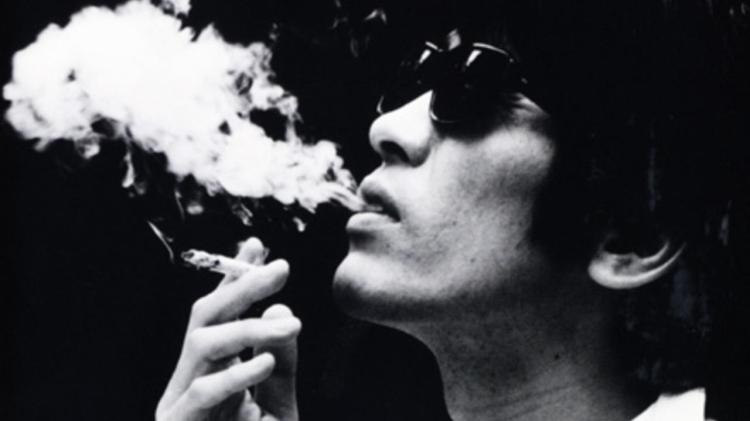 When you learn someone has died, suddenly everything they have ever done becomes tragic. No matter how old they were, this fact remains. Ryuji is a film which is always going to be overshadowed by the fact that its leading actor and screenwriter sadly passed away at the extremely young age of 33 from a terminal illness only days after the film’s release. Well, in actuality, the film was only “released” in a very limited sense, perhaps no one really had the heart to go on with it. However, it left its mark on all who saw it and eventually became a cult hit and influential classic on VHS. On paper, its tale is conventional – an existential yakuza drama about a man torn between conflicting desires and his own nature but on film, it’s something else.
 Windows on Worlds