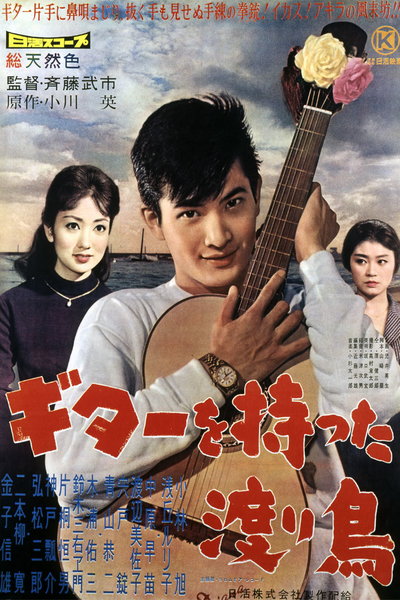
 Sometimes, just like an aimless drifter wandering into town, you feel as if you’ve come in during the second reel and missed some vital piece of information leaving you feeling a little at odds with the current situation. So it is with Buichi Saito’s The Rambling Guitarist (ギターを持った渡り鳥, Guitar wo Motta Wataridori) which is, apparently, the first film in a series though feels a little more like the second.
The film begins with a scene straight out of a classic western as the titular guitar toting wanderer, Taki (played by rising Nikkatsu star of the time Akira Kobayashi looking very fresh faced indeed), is fast asleep on the back of a cart travelling through an arid landscape with a mountain looming in the background before being woken by the driver who points him towards the nearest town. Having left the dry expanses on foot, Taki hasn’t been in Hakodate for long before he’s wrecked a local drinking establishment in a two on one bar brawl with a couple of drunken foreign sailors who were hassling the other musicians. This brings him to the notice of the crime kingpin Akitsu who offers him a job but Taki doesn’t like to linger and this kind of work’s not his thing so he passes. That is until a chance encounter with Akitsu’s pretty young daughter leads to a change of heart…
Akira Kobayashi went on to become one of the studio’s biggest action stars but here he’s every inch the pretty boy in a Brando-esque leather jacket and with a cooler than cool devil may care approach to life. The very epitome of the kind of pin-up star these films were created to sell, Taki is a noble, broken hearted drifter mournfully strumming along on his ever present guitar whenever the opportunity presents itself. Appealing to the rebellious side of post-war youth but still possessing a moral centre which places him on the side of right, Taki is the kind of youth hero you can still take home to mama.
Post set-up, The Rambling Guitarist drops most of its western tropes pretty quickly and falls back into a standard youth crime drama mould as Taki ends up joining the Akitsu gang who have a plan to build an amusement park on the quiet edge of the island to pull in a bit more tourist money. The snag is, there’s a small house and fishing company based there that they need to take out – the owners have a loan and are already in debt so it shouldn’t be too hard but Akitsu has neglected to mention that the house belongs to his sister (and her husband whom he doesn’t like very much).
Just when you thought everything was about to settle down, an old “friend” emerges from underneath a raincoat in the form of “Killer George” played by fellow Nikkatsu rising star, Jo Shishido. It’s from here on that we start to piece together some of Taki’s previous life and the reason he’s on this seemingly endless path of wandering from to place to place with no clear aim in sight. Things start to take a more generic turn as Taki and George dance around each other a little bit with Akitsu fuelling the fire by plotting behind both of their backs from the shadows. It’s a conventional narrative but acquits itself well enough.
Like the other films of the period, The Rambling Guitarist is built of bright, colourful and above all youthful fun. Consequently it has an energetic, freewheeling atmosphere coupled with a mildly nihilistic bent designed to appeal to the youth of the time. Aside from having some of the least realistic fight choreography ever committed to celluloid (that first bar brawl scene has some real howlers), The Rambling Guitarist proves an enjoyable embodiment of its genre but ultimately fails to build up the kind of emotional investment that would earn it a higher place on the list. A little bit disposable, perhaps, but nevertheless fun The Rambling Guitarist does at least leave you wanting to wander off and find your way to The Rambling Guitarist 2.
The Rambling Guitarist is the third (and final 😦 ) film included in Arrow’s Nikkatsu Diamond Guys Vol. 1 collection.
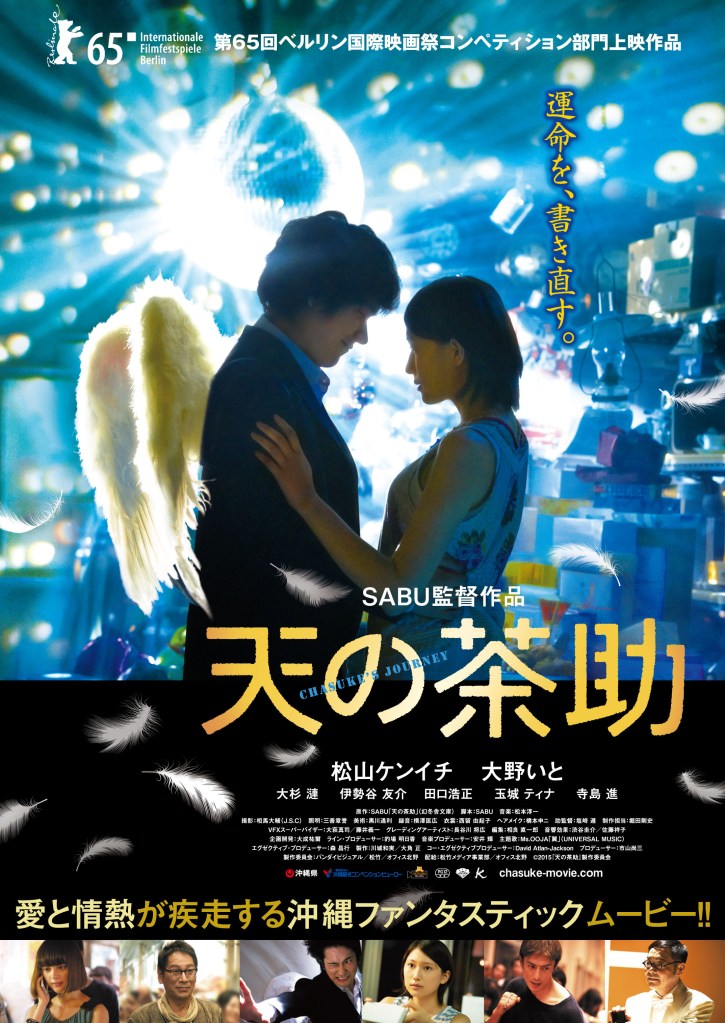 No fate but what we make – to steal the lines from another film just as one of the heavenly scriptwriters might in the latest film from the prolific Japanese director SABU (otherwise known as the actor Hiroyuki Tanaka), Chasuke’s Journey (天の茶助, Ten no Chasuke). Adapting his own novel for the screen (though the book was actually published after the film was completed), Sabu creates a romantic fantasy in which a lowly tea boy from heaven descends to Earth on a quest to save the woman he loves from certain death.
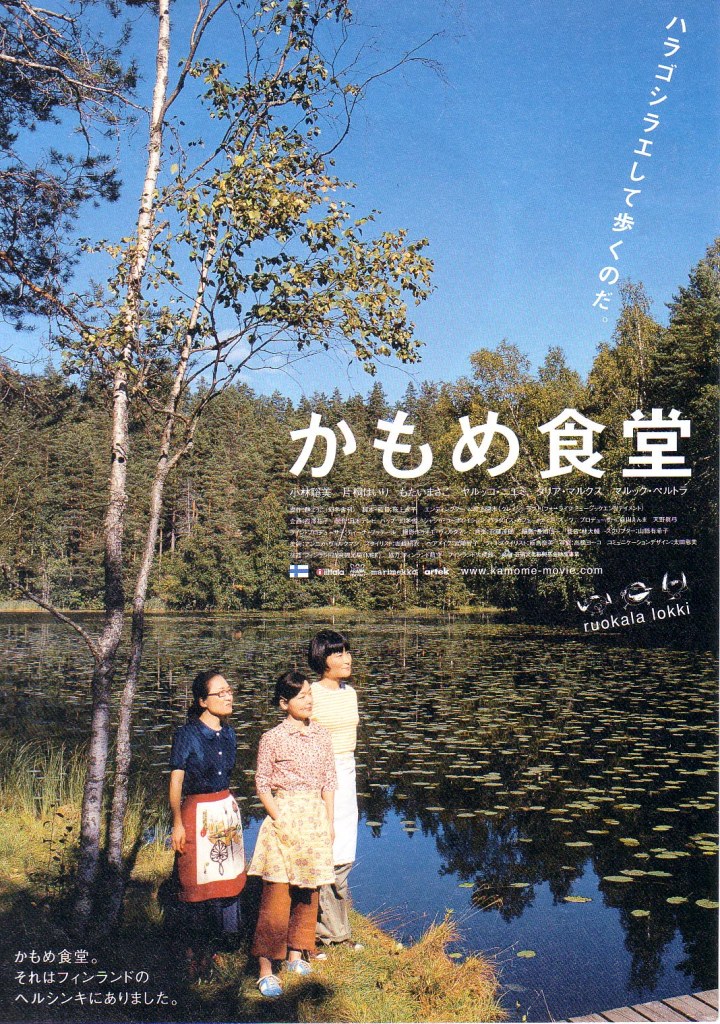 Finland, Finland, Finland. That’s the country for me! Where better could there possibly be to open up a small Japanese cafe than in Helsinki? On second thoughts, don’t answer that but moving to Finland and opening her own diner all alone is exactly what the leading lady, Sachie, has done in this warm hearted comedy drama from Naoko Ogigami, Kamome Diner (かもめ食堂, Kamome Shokudou). As in most of her films, Ogigami has assembled an eclectic cast of eccentric characters who each find themselves turning up at Sachie’s restaurant largely by chance but this time there’s a little added cross cultural pollination too.
 When considering their next holiday destination, many people like to peruse some brochures, have a read of trip advisor or head to a well known tourist spot that is likely to impress the guests at their next soirée but then there are always others who just simply show up somewhere and hope for the best. The central character of Megane, Taeko (Satomi Kobayashi), perhaps wishes she’d done a little research before heading out to a very strange inn on a very strange island but the longer she stays, the more the ways of the laid-back islanders seem to make sense to her.
 Just look at at that title for a second, would you? Crying Out Love, in the Center of the World, you’d be hard pressed to find a more poetically titled film even given Japan’s fairly abstract titling system. All the pain and rage and sorrow of youth seem to be penned up inside it waiting to burst forth. As you might expect, the film is part of the “Jun ai” or pure love genre and focusses on the doomed love story between an ordinary teenage boy and a dying girl. Their tragic romance may actually only occupy a few weeks, from early summer to late autumn, but its intensity casts a shadow across the rest of the boy’s life.
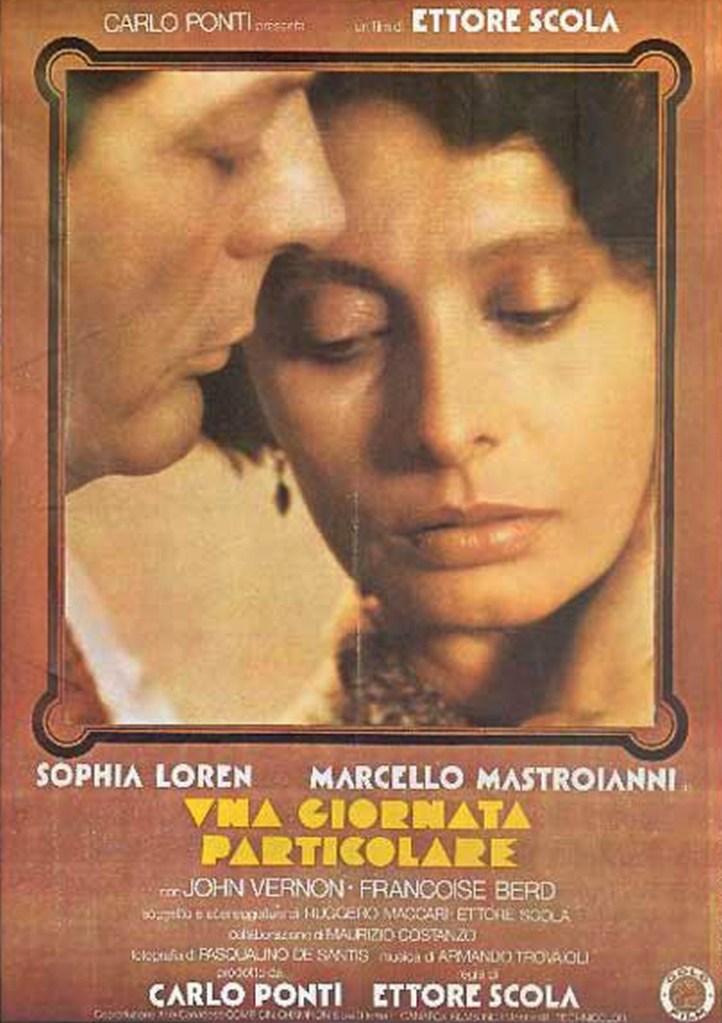 Ettore Scola, one of the most celebrated filmmakers of Italian cinema in the late 20th century, returned to one of the country’s darkest moments for the film which is often regarded as his masterpiece – A Special Day (Una Giornata Particolare). Set on one particular day in 1938 when Mussolini rolled out the red carpet for his fascist brother in arms, Adolf Hitler, it focusses less on this “historic” meeting of “likeminded” leaders of state than it does on two small figures each lonely and excluded from the festivities for very different reasons.
 For 1970’s If You We’re Young: Rage (君が若者なら, Kimi ga Wakamono Nara), Fukasaku returns to his most prominent theme – disaffected youth and the lack of opportunities afforded to disadvantaged youngsters during the otherwise booming post-war era. Like the more realistic gangster epics that were to come, Fukasaku laments the generation who’ve been sold an unattainable dream – come to the city, work hard, make a decent life for yourself. Only what the young men find here is overwork, exploitation and a considerably decreased likelihood of being able to achieve all they’ve been promised.
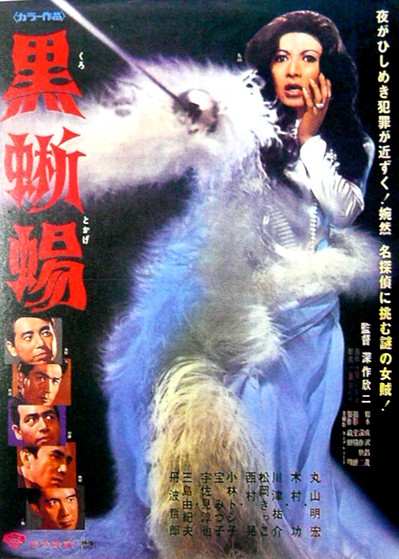 Those who only know Kinji Fukasaku for his gangster epics are in for quite a shock when they sit down to watch Black Rose Mansion (黒薔薇の館, Kuro Bara no Yakata). A European inflected, camp noir gothic melodrama, Black Rose Mansion couldn’t be further from the director’s later worlds of lowlife crime and post-war inequality. This time the basis for the story is provided by Yukio Mishima, a conflicted Japanese novelist, artist and activist who may now be remembered more for the way he died than the work he created, which goes someway to explaining the film’s Art Nouveau decadence. Strange, camp and oddly fascinating Black Rose Mansion proves an enjoyably unpredictable effort from its versatile director.
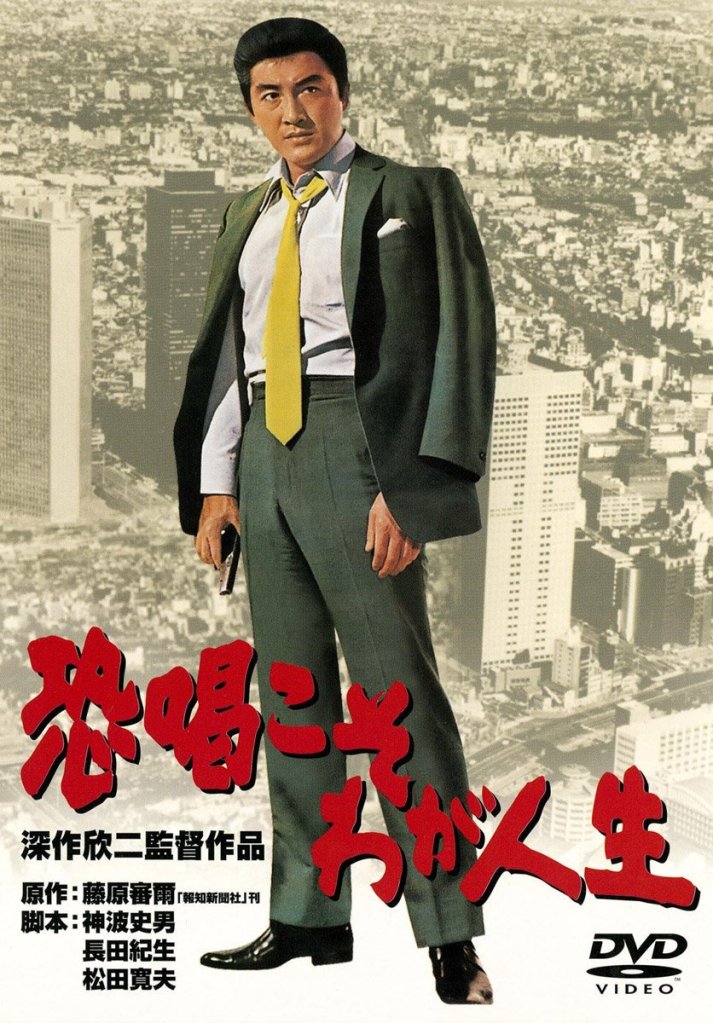 Suffice to say, if someone innocently asks you about your hobbies and you exclaim in an excited manner “blackmail is my life!”, things might not be going well for you. Kinji Fukasaku is mostly closely associated with his hard hitting yakuza epics which aim for a more realistic look at the gangster life such as in the
  These days we think of Sion Sono as the recently prolific, slightly mellowed former enfant terrible of the Japanese indie cinema scene. Hitting the big time with his four hour tale of religion and rebellion Love Exposure before more recently making a case for ruined youth in the aftermath of a disaster in Himizu or lamenting the state of his nation in Land of Hope what we expect of him is an energetic, sometimes ironic assault on contemporary culture. However, his beginnings were equally as varied as his modern output and his first feature length film, Bicycle Sighs (自転車吐息, Jidensha Toiki), owes much more to new wave malaise than to post-punk rage.
