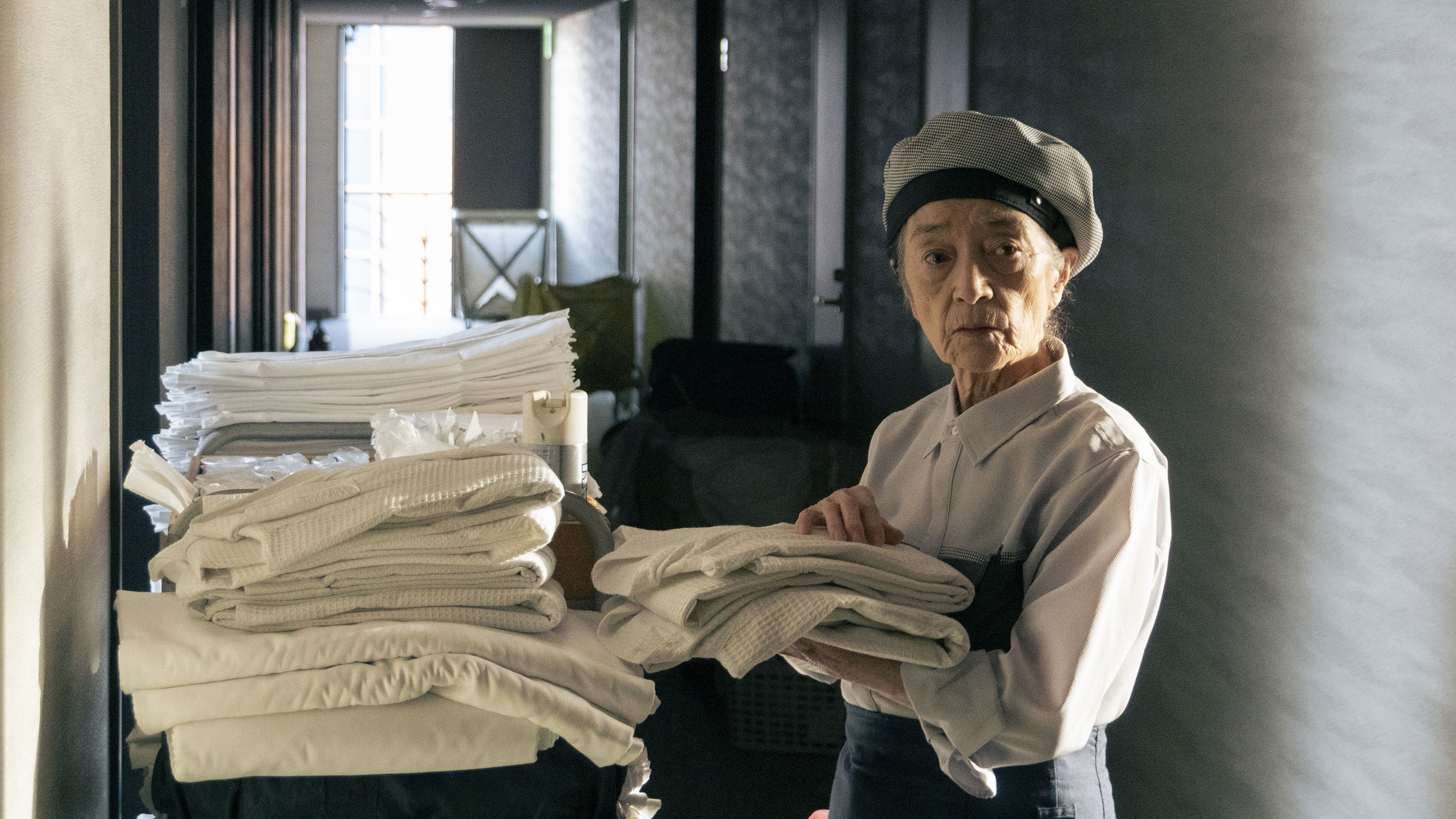
Plan 75 (Chie Hayakawa, 2022)

In 2016, a 26-year-old man went on a violent rampage murdering 19 people at a care home for the disabled claiming that he had done it “for the sake of society”. Prior to his crime, the killer had written an open letter in which he stated that he dreamed of a world in which those with severe disabilities could be peacefully euthanised, while claiming that those with no ability to communicate had no right to life and were nothing more than a drain on society. An expansion of her earlier short featured in the anthology film Ten Years Japan, Chie Hayakawa’s Plan 75 opens with a sequence which appears to directly reference the 2016 mass killing but in place of the widespread outrage and reconsideration of a social stigma towards disability that followed in its wake, the government decides to implement a “voluntary” euthanasia program for those aged 75 and over in response to the “concerns” of the young in an ageing society. 

Intergenerational resentment does indeed seem to be a motivating factory, the killer in this incident feeling himself oppressed by the responsibility of caring for the elderly while simultaneously hemmed in by a stangnant economy and heirarchical society. He points out that Japanese people have always praised self-sacrifice on behalf of the nation and alludes to the archaic tradition of ubasute or throwing out the old in which elderly people were abandoned on mountainsides to die in time of famine. There is no denying that the Plan 75 initiative has its insidious qualities in placing undue pressure on elderly people to give up their lives in order not to “burden” the young, an elderly woman attending a cancer screening remarking that she feels a little awkward as if she’s “clinging on to life”, being somehow greedy in the simple desire to continue living. 

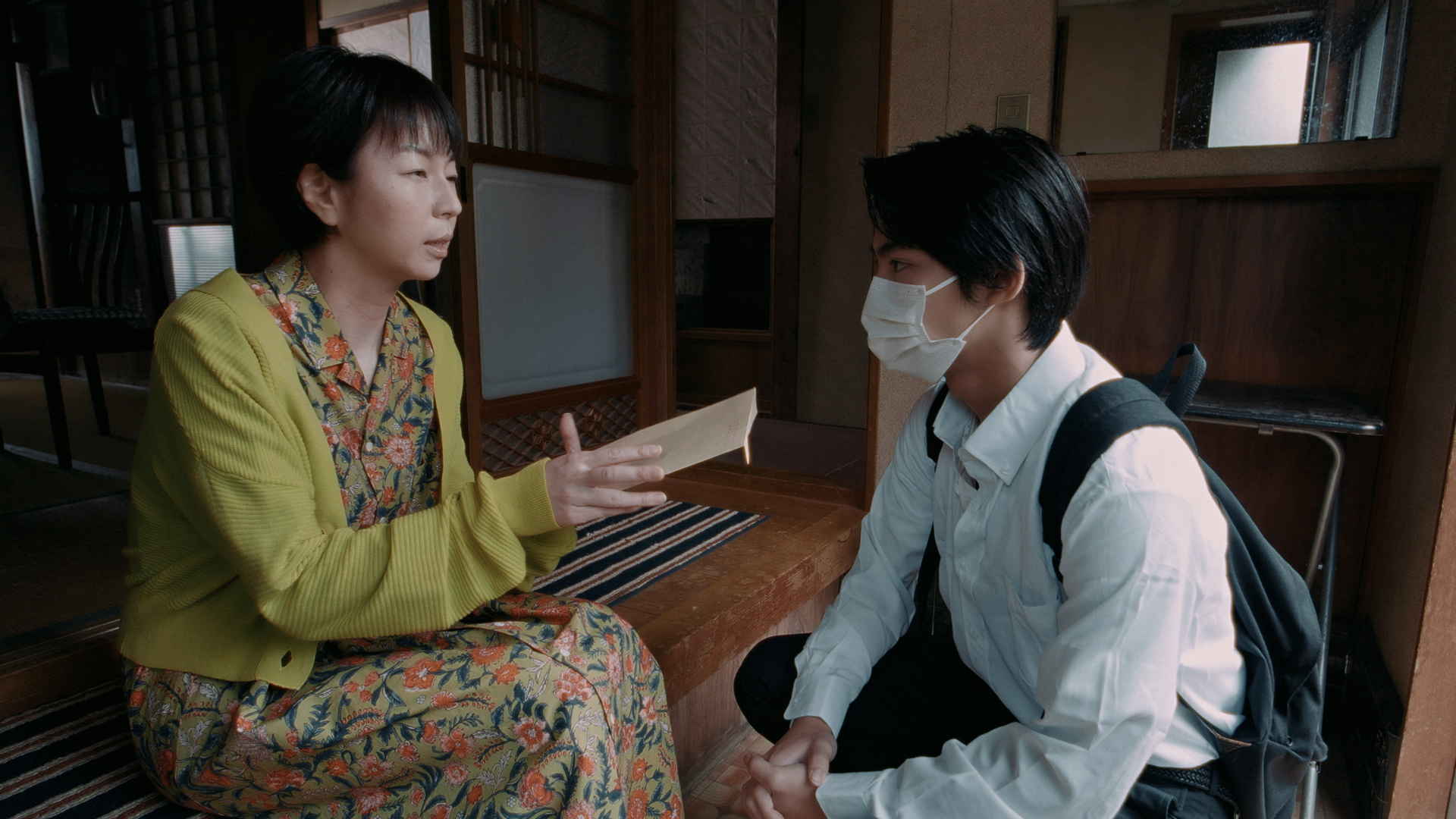
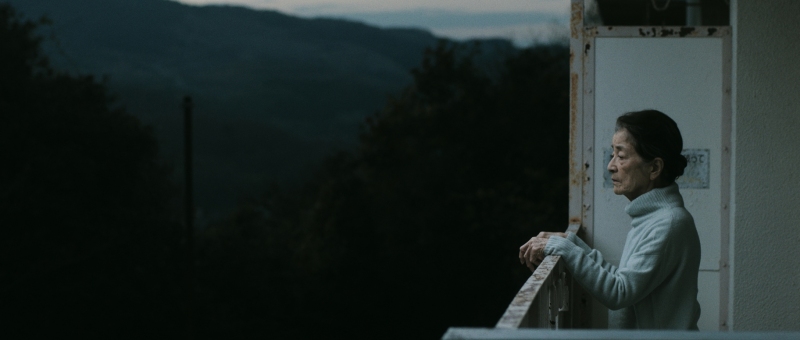
Meanwhile, their society has already abandoned them. 78-year-old Michiko (Chieko Baisho) had no children and lives alone supporting herself with a job as a hotel maid where all of her colleagues are also elderly women. When one of them has a fall at work, they are all laid off. The hotel claims that they’ve received complaints from guests about exploiting elderly people, but Michiko suspects it’s more like they don’t want one of them to drop dead in someone’s room. Not wanting to be a “burden”, Michiko is reluctant to apply for social security but even when she accepts she has few other options the desk at city hall is closed. Her building, like her now old, is set for demolition but no one is willing to rent to an unemployed 78-year-old woman nor is anyone willing to employ one. More and more Michiko is pushed towards Plan 75 if only to escape her loneliness. Being robbed of the opportunity to work also removes the opportunity for socialising especially as the other old ladies decide to move in with family and leave the area. 

This is in fact an integral part of the Plan 75 business plan with case workers specifically instructed to keep the applicants happy through regular phone calls while prohibited from meeting them in person to prevent the older person changing their minds having made new social connections that make their lives more bearable. In the quietly harrowing scenes at the processing centre, for want of a better term, it becomes obvious that the majority of those submitting to Plan 75 are women as staff members empty out their handbags, dumping their possessions into a large bin while setting aside anything of value such as watches or bracelets which are perhaps another valuable revenue stream for a callous government that sees the programme as a cost cutting exercise.  

Case worker Hiromu (Hayato Isomura) only becomes conflicted about Plan 75 after recognising an applicant as his estranged uncle and eventually discovering that despite sales claims of dignified funerals remains are often sent to landfill care of an industrial waste company. His uncle’s plight perhaps highlights the pitfalls of life in post-war Japan. Living hand to mouth working construction jobs all across the country he never had an opportunity to put down roots or save for his old age and is now living a lonely life of desperate poverty. Heartbreakingly he put his application in on his 75th birthday, an act Hiromu’s boss describes as almost heroic as if he couldn’t wait to sacrifice himself for the common good. Later a sign goes up that fixed addresses are no longer needed to apply, while the Plan 75 stand in a local park where they are in the process of putting bars on the benches so that homeless people can’t sleep there doubles as a soup kitchen. 

One has to ask, if there was money available for all of these resources to help people die why is it not available to help them live? A young woman assigned as Michiko’s handler appears to have second thoughts while bonding with her over the phone, tearfully reminding her she still has the right to withdraw (though it’s never mentioned if that means repaying the $1000 signing bonus) while Michiko’s life too has been brightened by this little bit of intergenerational friendship, itself cruelly commodified in the allotted 15-minute sessions included in the plan. Told with quiet restraint, Hayakawa’s vision of an eerily dystopian future in which human life is defined by productivity and all human relationships transactional, where loneliness is the natural condition and society itself has become little more than a death cult, is painfully resonant in our increasingly disconnected world. 


Plan 75 screens at Japan Society New York on Nov. 20 as part of The Female Gaze: Women Filmmakers from JAPAN CUTS and Beyond.

Festival trailer (English subtitles)

Images: © 2022 KimStim

Executioners (現代豪俠傳, Johnnie To & Tony Ching Siu-Tung, 1993)

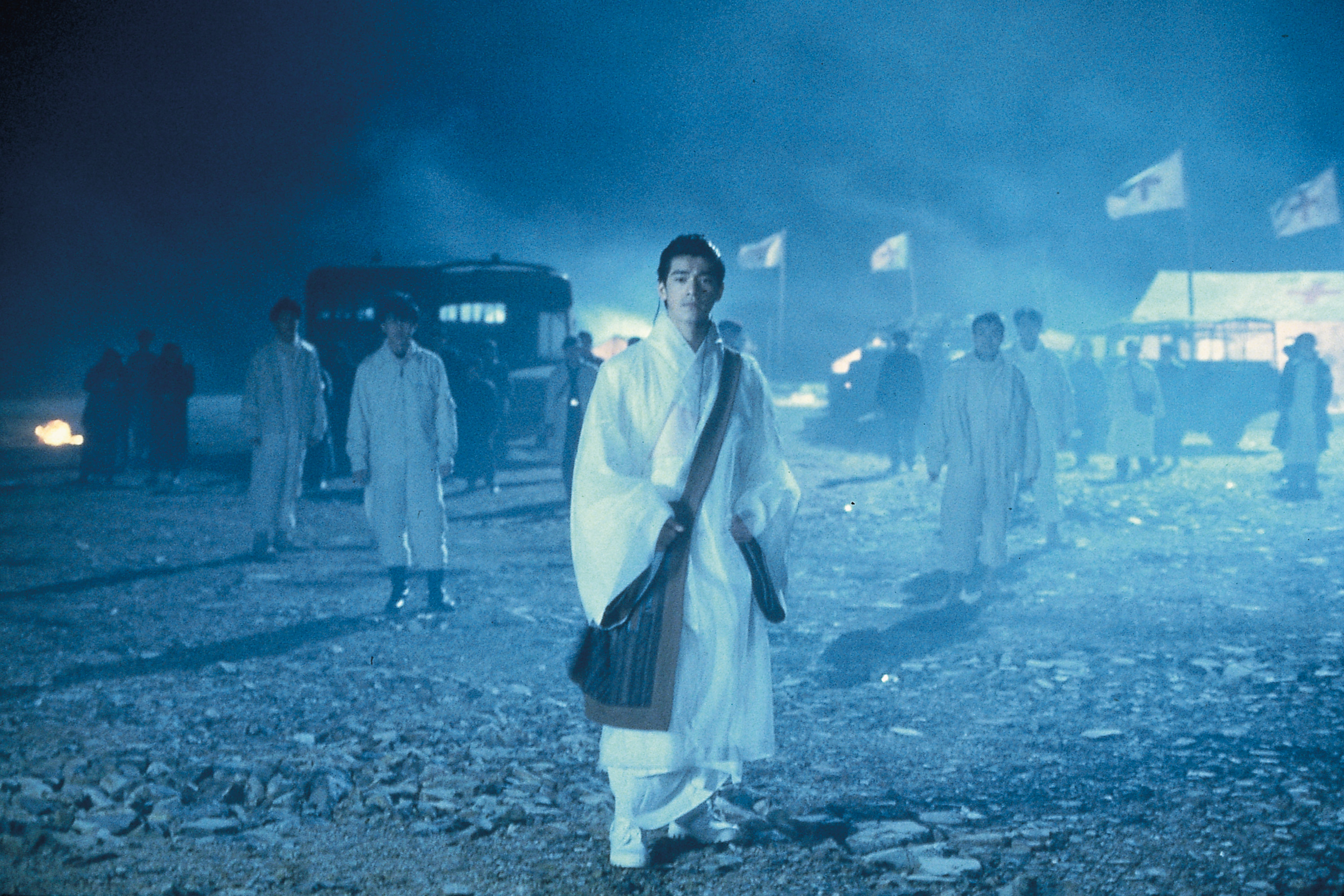
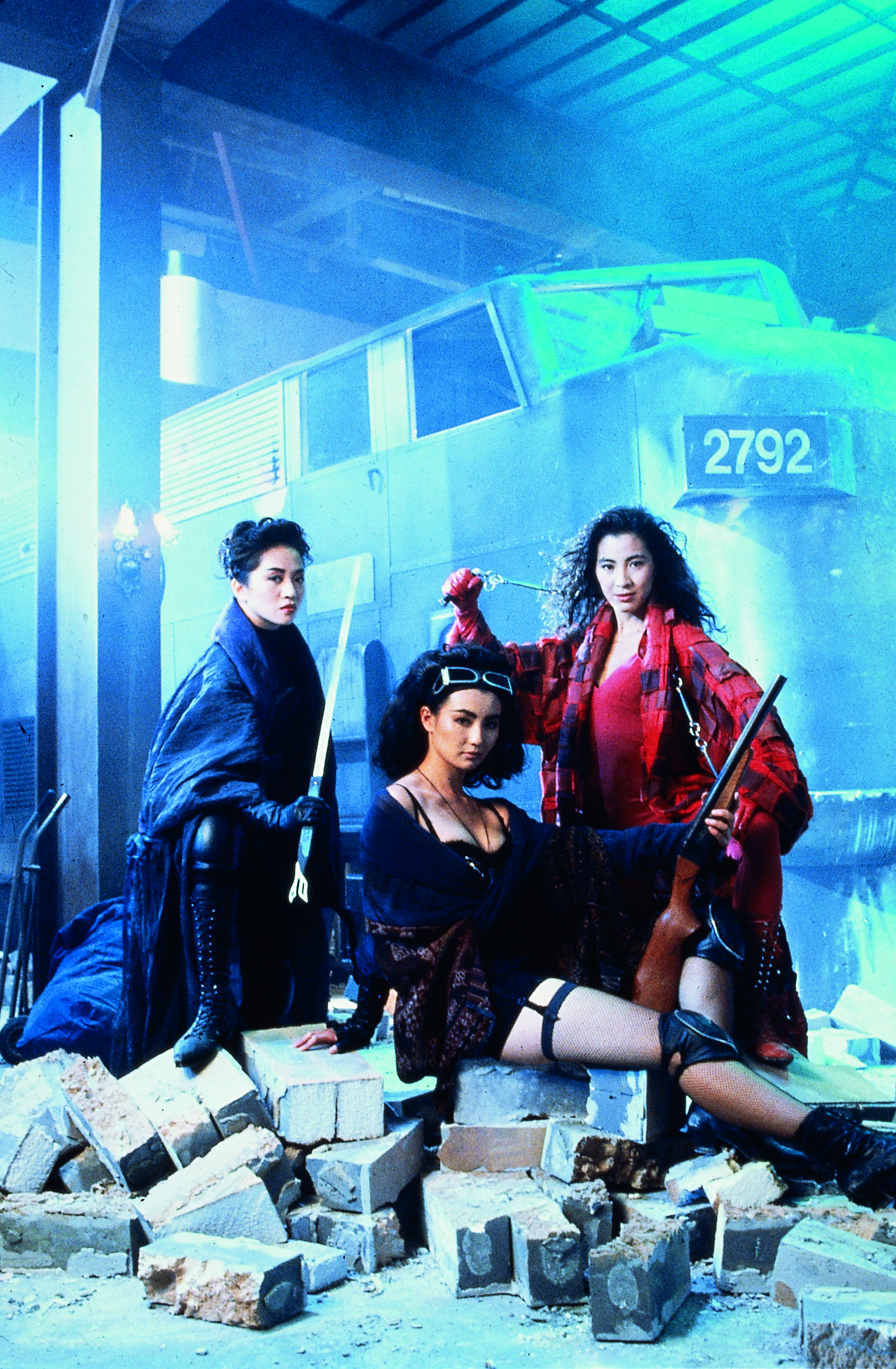
At the end of The Heroic Trio, the shadowy rise of authoritarianism seemed to have been beaten back. The three superwomen at the film’s centre had discovered joy and liberation in female solidarity and were committed to fighting injustice in a flawed but improving world. If Heroic Trio had been a defiant reaction to Handover anxiety, then sequel Executioners (現代豪俠傳) is its flip side shifting from the retro 40s Hong Kong as Gotham aesthetic to a post-apocalyptic nightmare world where nuclear disaster has normalised corporate fascist rule. 

As Ching (Michelle Yeoh) explains in her opening voiceover, a nuclear attack has ruined the city contaminating its water and leaving ordinary citizens dependent on the Clear Water Corporation for safe drinking supplies and basic sanitation. The trio have been scattered, pushed back into the roles from which they escaped at the first film’s conclusion save perhaps for Ching who continues to serve a duplicitous authority but does so with clearer eyes and a humanitarian spirit driving a medicine truck to ensure those in need have access to healthcare. Chat (Maggie Cheung Man-Yuk) meanwhile has reverted to her cynical bandit lifestyle, hijacking water trucks mostly for her own gain but also ensuring the water gets to the needy. Tung (Anita Mui Yim-Fong) has abandoned her Wonder Woman persona on the insistence of her husband who is now a high ranking policeman with the military authority devoting herself to the role of the traditional housewife and mother to her daughter Cindy. 

Though the women seem to have maintained their bond, Ching and Chat turning up for a Christmas celebration with Cindy, the political realities soon disrupt their friendship as they find themselves at odds with each other given their shifting allegiances. As in the first film, Chat has continued to accept work from dubious authority in the form of the Colonel including tracking down a man who embarrassed the police by firing a gun at a rally for a cult-like protest leader, Chung Hon (Takeshi Kaneshiro), only the gunman later turns out to be a patsy and Chat has unwittingly helped them bump off the voice of the people as an overture for a military coup. Ching is secretly working for responsible government trying to safeguard the President to prevent his assassination by the Colonel, but obviously cannot say very much about her mission arousing Tung’s suspicions that she may have been part of a plot to have her husband killed. 

In any case, the true villain turns out to be a kind of Wonder Woman mirror image in that the mysterious Mr. Kim (Anthony Wong Chau-Sang), CEO of Clear Water Corporation, is a man who wears a mask to hide his scarred face and dresses like an 18th century aristocrat as if engaged in some kind of Man in the Iron Mask cosplay. Kim and the Colonel have been collaborating to engineer a military coup by deliberately restricting water supplies. The oblivious Chung Hon had unwittingly been Kim’s stooge, stoking up public resentment about the water situation to give the government an excuse for a crackdown and the Colonel to move. Chat’s path to redemption amounts to vindicating the faint hope that the water contamination was a hoax, which she eventually does by taking Cindy with her to smash the corporate dam and return the water to its rightful flow and the people of the city. But like the Evil Master, Kim does not die so easily turning up for a surprisingly hands on fight squaring off against the barely unified trio who are only just beginning to repair their friendships on coming to a fuller understanding of the reality of their circumstances. 

They are all in a sense liberated, though less joyfully than in the first film and largely through violent loss. The good guys don’t always win and a fair few die while all the women can do is keep moving, fighting off one threat after another with few guarantees of success and not even each other to rely on. Where the first film had embraced a hopeful sense of comic camp, Executioners skews towards the nihilistic in its dystopian world of corporate overreach and increasing militarism in which the trio no longer trust each other and are each re-imprisoned inside their original cages from patriarchal social norms to capitalistic inhumanity and questionable loyalties with the only hopeful resolution resting on “the sincerity of our friendship” in a world which may be healing but is far from happy. 


Executioners screened as part of this year’s San Diego Asian Film Festival.

The Heroic Trio (東方三俠, Johnnie To, 1993)

Female solidarity becomes an unexpected weapon against stealthy authoritarian take over in Johnnie To’s gloriously camp superhero action fest, The Heroic Trio (東方三俠). Uniting three of the top stars of the age in Anita Mui, Maggie Cheung, and Michelle Yeoh the film flirts with Handover anxiety in the “Evil Religion” that threatens to steal the children of Hong Kong, but eventually locates the source of salvation in the heroine’s shared humanity brokered by a tripartite solidarity of justice and equality that defies both the patriarchal world around them and the cruel authoritarianism in which they have been raised. 

In an almost biblical allegory, large numbers of male infants have been going missing over the last 18 months and the police are, predictably, mystified relying on the reappearance of the mysterious superhero Wonder Woman to solve the mystery herself. Truth be told, top Inspector Lau (Damian Lau Chung-Yan) hasn’t yet realised that Wonder Woman is his own wife, Tung (Anita Mui Yim-Fong), so perhaps his investigative skills aren’t all that despite the dynamism of the opening scenes which see him demonstrate his masculinity by leaping out of a window stop a thief from driving off in his classic car which is parked outside a creepy mansion in the middle of nowhere. Nothing really gets done until the chief of police gets a note that his own infant son is next on the list, though he briefly considers simply swapping his kid for another couple’s child while hiring “Thief Catcher” Chat (Maggie Cheung Man-Yuk) to get him back when he’s kidnapped by an “Invisible Woman”, Ching (Michelle Yeoh), whom Tung manages to wound while saving the decoy baby. 

As it turns out, Ching has been taking the babies on behalf of “Evil Master” (Yen Shi-Kwan) who lives in an underground lair in the sewers and is the head of a mysterious cult hellbent on finding a new king for China. There may be a degree of Handover anxiety in Evil Master’s mission, seeking to possess and control Hong Kong by brainwashing its children eventually possessing Ching by removing her bodily autonomy while her sisters must quite literally free her from his icy grasp. Each of the kidnapped boys is said to have a divine destiny, though Evil Master doesn’t know which one is the new king and has a habit of simply killing the ones who disappoint him while the others are raised as mindless automatons consuming those like them and destined to become thoughtless killing machines like the bloodthirsty Kau (Anthony Wong Chau-Sang). 

Chat, who was raised as one of Evil Master’s minions but managed to escape thanks to the largess of Ching and his since become an ultra-capitalist bounty hunter if one less cynical than she originally seems, thinks it’s better to simply end the cannibal kids’ misery before they end up like Kau while Tung prioritises saving the infants so they can be returned to their parents before being subject to one of Evil Master’s weird rituals. Ching, meanwhile, is only participating in Evil Master’s plan to protect the man she loves, a mad scientist slowly succumbing to poisoning caused by his invention in true genre fashion. It is then in a sense love that causes Ching to reject her programming, but it’s the solidarity of Tung and Chat, along with a desire for vengeance, that finally gives her the courage to rebel. 

In a brief flashback, Tung had failed to save Ching during a tough training session with their mentor who had cruelly told her that she’d have to fight for justice alone while Ching, cast out, sought support by turning to the dark side. The scene repeats itself twice in the film’s closing scenes in which Tung is this time able to save Ching but only because of the support from their friend and equal Chat making up the third point of the triangle and anchoring them both firmly to ensure they will not fall. “Life is meaningful if you can face yourself” Tung tells Ching, shedding her mask having presumably dealt with her own dark past and pulling her sister up with her as an equal leaving the past behind to fight for a future of justice and freedom. 

To and action director Ching Siu-tung recast Hong Kong as Gotham with a production design quite clearly inspired by Western comic books in which the three heroines end by getting fancy capes that flicker in the wind. Chat, a motorcycle-riding delinquent force of nature, even at one point launches herself into battle on an oil drum propelled by dynamite which she later uses to take out the cannibal kids not to mention Evil Master himself. But it turns out the spectre of creepy, ritualistic authoritarianism doesn’t die so easily, Evil Master’s charred skeleton gets back up for one last hurrah until his brain finally explodes when confronted by Ching’s rejection having returned to the fold and now ready to sacrifice herself for a freer future for all. Essentially a comic book wuxia, To’s ironic action drama allows its heroic trio to find salvation in female solidarity anchoring each other in a world beset by fear and villainy.


The Heroic Trio screened as part of this year’s San Diego Asian Film Festival.

Hot Blooded (뜨거운 피, Cheon Myeong-kwan, 2022)

A dejected gangster decides to take the chance on a different kind of life but is soon pulled back into internecine underworld conflict where humanity is weakness and the only prize is a lonely hegemony in Cheon Myeong-kwan’s ‘90s-set thriller, Hot Blooded (뜨거운 피, Ddeugeoun Pi). As much about fathers and sons as it is about uneasy brotherhood, Choi’s adaptation of the novel by Kim Un-su harks back to the classic gangster picture in which the hero proves too noble for his surroundings and finds a single act of compassion provoking nothing more than chaos and misery. 

In the small enclave of Kuam, Busan, Hee-su (Jung Woo) is a petty foot soldier on the cusp of turning 40 who is becoming tired of this way of life. Loyal to his boss, Son (Kim Kap-soo), Hee-su is also aware that times are changing and the boss’ tried and tested approach may no longer meet them. When a vicious gangster, Yong-kang (Choi Moo-sung), returns from exile abroad after fleeing to escape a murder charge, gangland equilibrium is suddenly unbalanced not least by his shift into drug dealing that eventually places him at odds with Hee-su’s gang. After defusing a potential turf war, Hee-su decides he wants out and takes up with booze smuggler Yang-dong in the electric slot machine trade hoping to make enough money to open a small hotel on a nearby island with his longterm girlfriend and her adult son Ami (Lee Hong-nae) who has just been released from prison after falling in with a thuggish gang. 

As he eventually realises, Hee-su has merely ended up as a pawn stuck between Son and Nam, the head of a rival outfit trying to muscle in on their territory. His first problem is that his childhood friend, Chul-jin (Ji Seung-hyun), is a liaison for Nam’s gang. Son explains that only by taking out someone like Chul-jin can they start a negotiation with Nam to nix a gang war before it escalates, but Hee-su cannot bring himself to kill his friend while sufficiently unbalanced by his suggestion that he’s being played by Son as to doubt the old man’s advice. We’re given constant reminders that Chul-jin is a father of young children, while Hee-su has no children of his own but is a surrogate father figure to Ami. Effectively brothers, the two men met as orphans at a government facility and it’s clear that Hee-su sees Son as a man to whom he owes a fatherly debt while Chul-jin may not have any loyalty to anyone besides himself even as he claims that all he wants is to live peacefully with his children just as all Hee-su wants is to open his hotel and live with In-sook (Yoon Ji-hye) and Ami in a less violent environment. 

Hee-su’s decision to leave is a kind a of betrayal in itself, born of a desire to break free of the restrictive codes of gangsterdom and be his own man charting his own future but little realising that his life is still ruled by the laws of the underworld. Later someone asks him what it is he wanted to protect. All he can say is that there was something once, but he’s forgotten what it was. In leaving his gangster family he unwittingly destroys his dreams of forging his own, robbed of the more peaceful life he dreamed of by the chaos and violence of the underworld. The irony is that everyone describes Kuam as a “shithole”, a moribund small-town where even the casino hotel craze which is the centre of the gangster economy may be on its way out. Hee-su can’t really understand why they’re having a turf war over a place no one wants, only to realise it’s just a smokescreen to disguise what it is that’s really worth having and why. 

A late existential speech makes plain Hee-su’s predicament in Yang-kang’s logic that men like him fall to the depths of hell or become kings of all they survey. Yet for Hee-su it’s all much the same, rendered lonely by everything he’s lost while achieving the success craved by so many that is the opposite of what he wanted. It turns out Son may have had a point, the reason he survived so long was his ability to keep calm and play the long game. Hot-headed revenge is a luxury a gangster can’t afford as Hee-su finds out to his cost. “Fathers are all powerless” Chul-jin tries to tell him, though there’s something left of the old Hee-su in his final act of letting a man who betrayed him go because he’s the last in the boss’ bloodline potentially sealing his own fate in some far off act of vengeance. Very much a classic gangster drama in which a noble foot soldier finds himself torn by conflicting loyalties, Hot Blooded proceeds with a weary fatalism leaving its hero a coldblooded ghost which might be a fitting end for a man who once tried to make his fortune selling fake hot peppers.


Hot Blooded screened as part of this year’s London Korean Film Festival.

Original trailer (English subtitles)

Blue Island (憂鬱之島, Chan Tze-Woon, 2022)

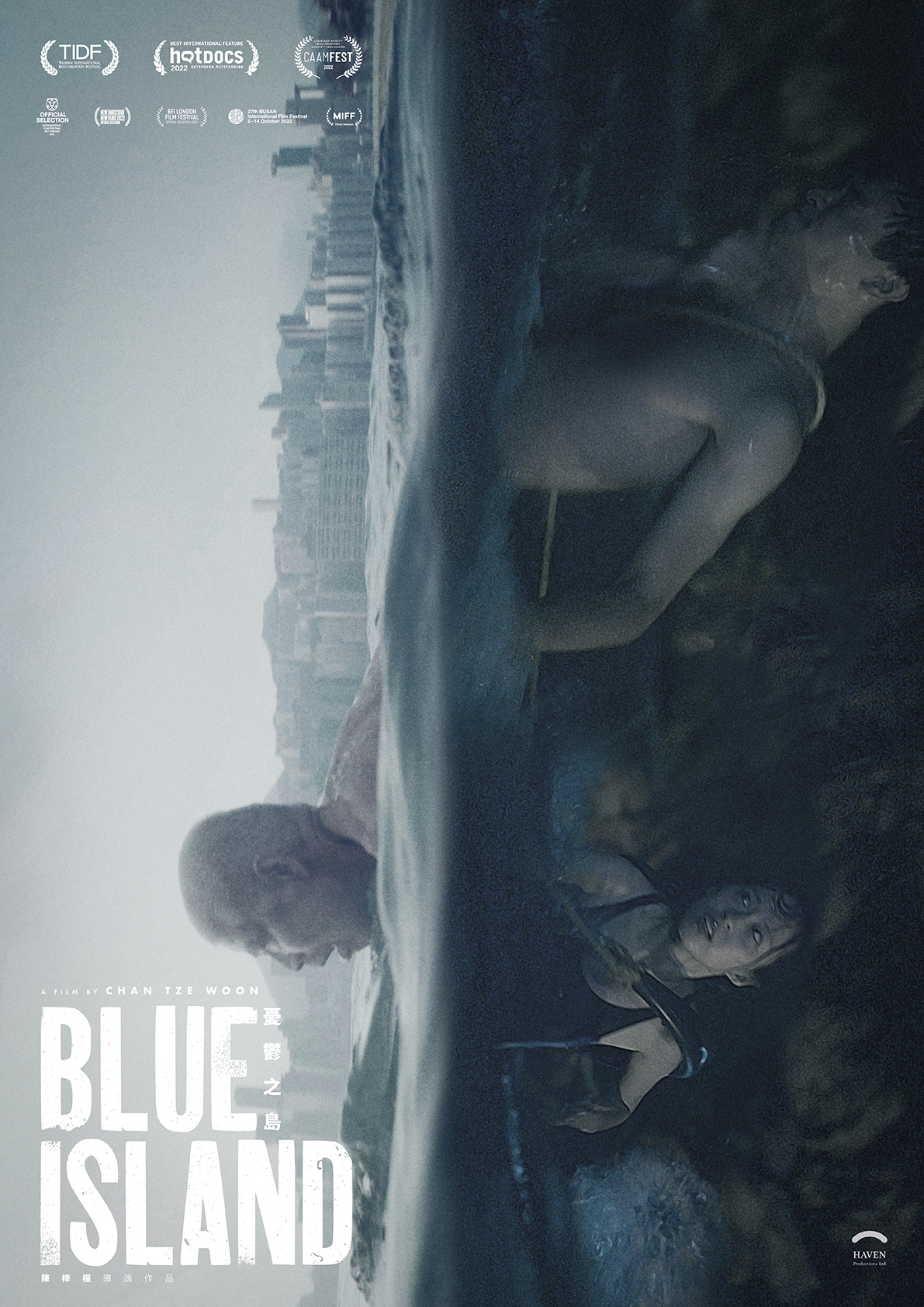
“In reality, we are just the abandoned kids of the riot.” an ageing protestor advises, sitting in a jail cell talking to a younger version of himself about the way that youthful revolutions fail and age erodes ideals. Chan Tze-Woon’s documentary Blue Island (憂鬱之島) places the protestors of today into the protests of the past, asking them to reenact the actions of their forebears while considering what Hong Kong means to them now and how they feel about those who simply decide to leave believing this is a battle that cannot be won. 

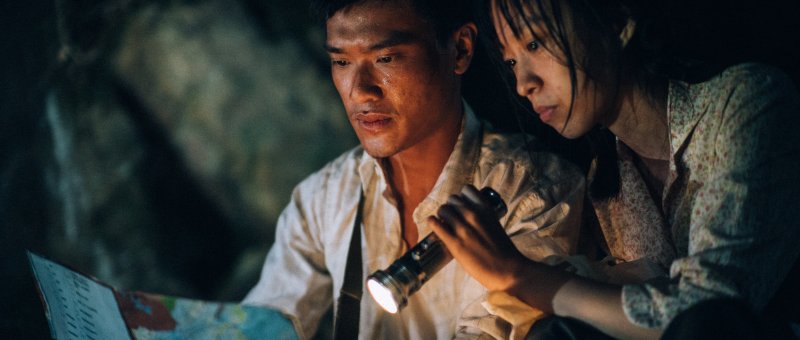
In a scene that seems to reference Tang Shu Shuen’s China Behind, a young couple fleeing the Cultural Revolution in 1973 attempt to reach Hong Kong by swimming, the camera then finding the same man nearly 50 years later still swimming in the bay. As one of the protestors of today puts it, he fled injustice because he could not fight it as many young Hong Kongers have also now chosen to do in the wake of the Security Law. Yet most of these young people have chosen to stay, most accepting the choice of others to leave though perhaps feeling it premature, explaining that to them Hong Kong is their home and their family. 

The old man, Chan Hak-chi, says he saw Hong Kong as a place of freedom yet it was also colonial outpost ruled by another distant and oppressive power. In a key scene a young protestor, Kelvin Tam, is charged with paying the part of a protester arrested during the anti-colonial riots of 1967. “I am Chinese” he answers the English civil servant, in English, when pressed why he resists them as someone who grew up in their colony and attended their schools, “And here belongs to China”. He tells the Englishman that this is his place and it is the Englishman who should leave. The situation then reverses, the now invisible voice on the other side of the table asking him in Cantonese “why do you oppose China?” as someone raised on Chinese soil who studied in government schools. “I’m a Hong Konger”, he replies.

The man whose shoes he’s filling is in many ways his opposite number. The riots of 1967 were led by left-leaning activists who desired a reunification with Mainland China in reaction to oppressive British colonial rule. The scenes of young people being carted off by the police are near identical, but it is true enough how identity is often constructed in opposition. The ’67 rioters declared themselves Chinese as distinct from the British, while Tam identifies himself as a Hong Konger in opposition the Chinese. Yet as Raymond Young, once a young man imprisoned for riot, points out when has Hong Kong ever been able to control its own fate? Other young protestors lament that they are offered only two conflicting narratives of their history, one which begins with British rule as if the island just popped up out of the sea in the early 19th century, and the other penned by Mainland authorities to encourage a One China philosophy.   

Now a disappointed old man, Young remarks that he no longer takes an interest in Hong Kong politics also pointing out that in order for you to love your country your country must first love you implying perhaps that he does not particularly feel loved by the Mainland. He may have something in common with Kenneth Lam who arrived in Hong Kong in 1989 after Tiananmen Square and holds up a small scarf with the innocuous message that the people will not forget now that the annual vigils that used to mark the June 4 Incident have been banned. Becoming tearful at a gathering he remarks that he has something in common with the youngsters in that they both dreamed of a better world and have experienced the “shattered faith” of a failed revolution, like Young feeling abandoned in the society he failed to change. 

Lam now works as social justice lawyer, defending many of these young people who have been arrested for vague offences such as “incitement to incite public nuisance”, “conspiring to subvert state power”, or simply “rioting”. Chan ends on a montage of faces sitting in the dock accompanied by their occupations and the “crime” with which they have been charged, some young some old, many students but also lawmakers and civl servants, delivery people, your friends and neighbours accused just for voicing an opinion. The court itself is ironically a colonial hangover in which barristers wear wigs and conduct their legal business, if not the questioning, in English. A blue island indeed, Chan ends on a note of sorry futility echoed by an extending list of credits marked only as “anonymous”. 


Blue Island screened as part of this year’s San Diego Asian Film Festival.

Original trailer (English subtitles)

She is me, I am her (ワタシの中の彼女, Mayu Nakamura, 2022)

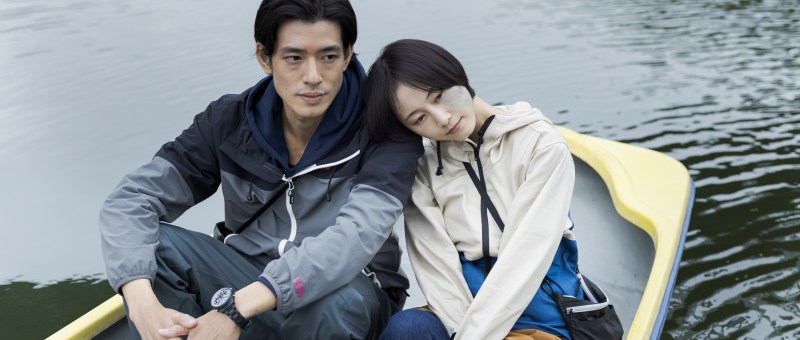
A gentle sense of haunting lingers over the protagonists of Mayu Nakamura’s pandemic-era anthology She is Me, I am her (ワタシの中の彼女, Watashi no Naka no Kanojo). COVID-19 seems only to have exacerbated their sense of loneliness and regret, confronted by the ghosts of other lives and absent friends while having little else to do but think about past and future amid an atmosphere of anxiety. Yet within the lonely city there is space for fresh connection and new beginnings even if in themselves somewhat unexpected.

The sense of distance is obvious from the first episode, Among Four of Us, in which three university friends meet again after many years in a public park, only in reality they’re each sitting on their own in different parts of the city while connected by telephone. They speak briefly of their lives, each filled with disappointment one a struggling actor, one a conflicted housewife happily married but wondering what might have been, and the other living with a former lover who can’t forget their absent friend. Much of the conversation revolves around Sayoko who haunts them on this beautiful moonlit night as they each realise they’ve done little but think about her though she somehow slipped away from them and may have had sorrows and regrets of her own they never thought to ask about. 

It’s Sayoko who again seems to haunt the third chapter, Ms. Ghost, in which a young woman encounters an old lady sleeping on a bench near the station and realises they have more than a little in common. In fact it’s almost as if she were talking to an older version of herself, alone and beaten down by life, dreaming of past glories. Both women reflect not only on their broken dreams as country girls who came to the city to act, but on the various ways they’ve been displaced by the pandemic having lost their places of work and been left with nowhere else to go. Forced into sex work after her hostess bar closed down, the younger woman is haunted by a sense of danger that she might end up just another name in the newspaper killed by a violent man. 

Then again the lonely woman of part two, Someone to Watch Over Me, finds herself captivated by a delivery driver, Kazuya, who hastily polished off one of the meals she ordered but did not have the strength to eat. Becoming somewhat obsessed with him she continues ordering food only to have him eat it, but is conflicted on discovering a note of darkness in their relationship. When he tells her that she is not alone even if she thinks she is, it comes across as a much less comforting statement than he meant it to be hinting at the various ways having someone to watch over you isn’t always as nice as it sounds. She too is haunted by absence, along a with a vague sense of being watched that she may however uncomfortably have started to enjoy. 

The heroine of the fourth episode, Deceive Me Sweetly, is haunted by the loss of her youthful dreams taken from her along with her high school lover, a photographer just like the delivery driver, by her declining sight. Yet she can perhaps see further than most and straight through the young man who arrives at her door attempting to run an ore ore scam poignantly claiming to be the brother that hasn’t contacted her in years. Struck by remorse, the young man begins to regret scamming this strangely trusting woman remarking that the real Kazuya wherever he may be must be lucky to have a family he could call in time of need, which the young man perhaps does not. While she is haunted by lost youth, the woman is also in a way haunting him like a mystical figure offering the hand of redemption and setting him free into a world that seems more open fuelled by the need to repay a debt of kindness to a woman he never really knew. Even in these days of lonely desperation, there can still be hope and connection. Filmed with dreamy minimalism, Nakamura’s four tales each starring actress Nahana and connected by seemingly random details discover a sense of the comfort in strangers that a city can offer even in the midst of its own loneliness. 


She is me, I am her had its World Premiere at Japan Society New York on Nov. 12 as part of The Female Gaze: Women Filmmakers from JAPAN CUTS and Beyond.

Original trailer (no subtitles)

Images: © 2022 Omphalos Pictures

The Nighthawk’s First Love (よだかの片想い, Yuka Yasukawa, 2021)

A young woman begins to regain a sense of self-confidence in the face of social prejudice when invited to consult on a film in Yuka Yasukawa’s adaptation of the Rio Shimamoto novel, The Nighthawk’s First Love (よだかの片想い, Yodaka no Kataomoi). Drawing inspiration from a Kenji Miyazawa story about an ostracised nighthawk bullied by a hawk who cannot accept that they are the same because he finds the nighthawk’s difference offensive, Yasukawa’s gentle drama is less about the transformational quality of love than it is about learning to accept oneself as distinct from the self that others see. 

A shy young woman, Aiko (Rena Matsui) keeps a distance with others because of a longterm sense of rejection owing to a prominent birthmark on her face. After agreeing to be interviewed for a book about people living with facial difference and disfigurement, Aiko is approached by filmmaker Tobisaka (Ayumu Nakajima) who just happened to chance on their photoshoot and was struck by what he describes as a quiet sense of strength in her reserve. Though Aiko is not originally keen on the idea of having someone turn her life into a film, she soon begins to bond with Tobisaka who does not appear to react to her birthmark and eventually embarks on a romance only to find herself insecure in his continuing attachment to a former muse and dedication to his craft. 

While visiting her publisher, Marie (Lisa Oda), Aiko encounters a curious little girl who touches her own face and bluntly asks Aiko if the bruise-like mark on her cheek hurts. Aiko answers patiently that it doesn’t and isn’t offended by the little girl’s question, but perhaps is by the mother’s reaction as she stares and wonders what to say before apologising for her daughter’s rudeness but not for her own. Aiko recounts something similar in recalling her childhood bullying in which the kids in her class nicknamed her “Lake Biwa” because the mark on her face resembled the famous landmark which they were learning about in school. Though they were being cruel to her, Aiko remembers that a part of her enjoyed the attention while the teacher’s attempt to shut her classmates down was in a way more painful as if it were the birthmark itself which was “horrible” rather than the kids’ comments. After that the other children began to avoid her, unsure what to say and perhaps blaming her for having gotten into trouble with the teacher. She explains that she worries people often drift away from her in part because of the birthmark itself and in part because of the way it influences her behaviour generating a vicious cycle of doubt, rejection, and loneliness. Tobisaka’s muse, Miwa (Miyuu Teshima), looks very much like her only without the birthmark and Aiko worries if she can keep him while fearing in her insecurity that their relationship is nothing but a long con designed to get her to agree to participating in the film. 

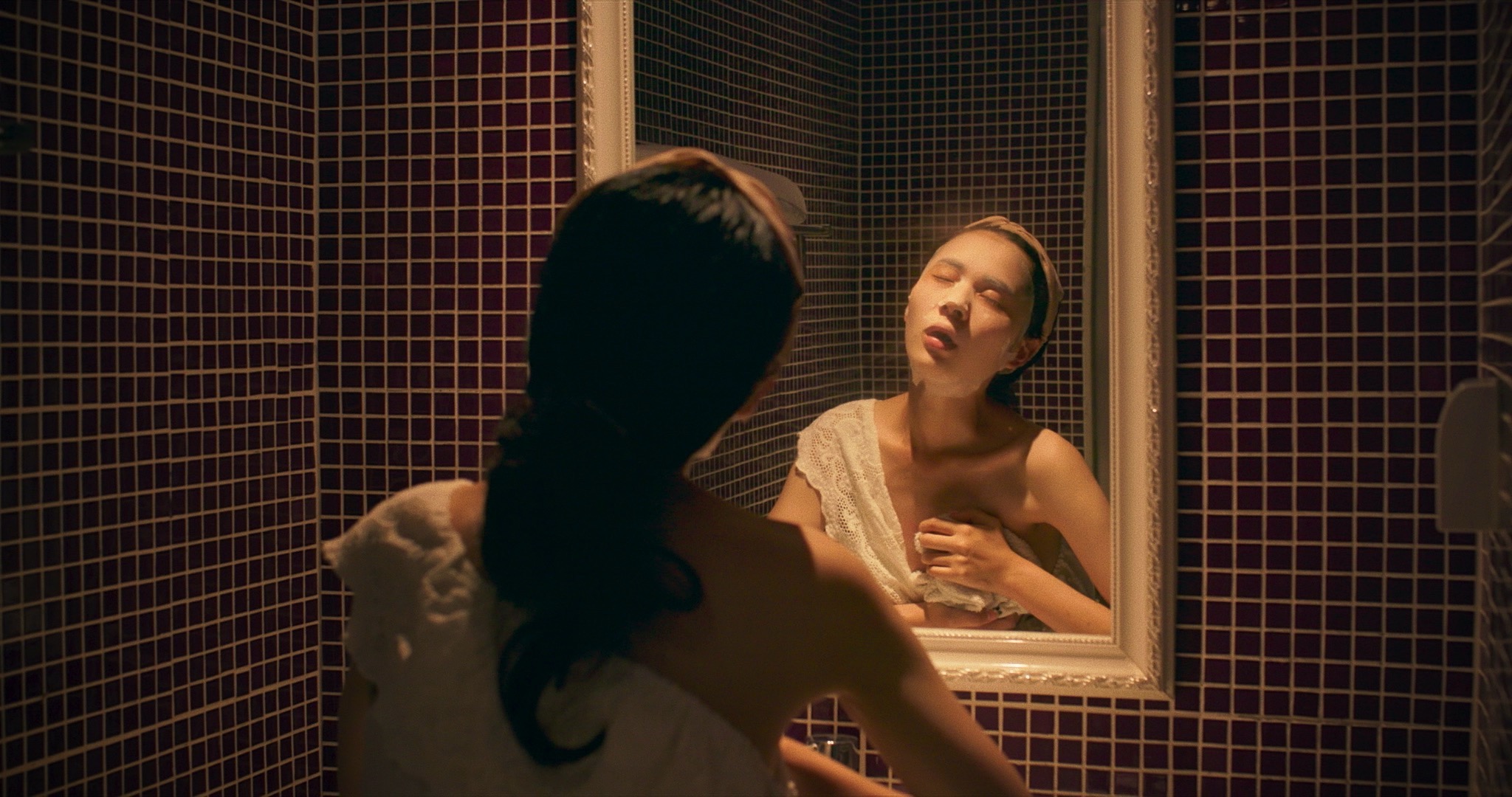
Yasukawa often frames Aiko looking into mirrors, at one point a reflection of her face appearing next to that of Miwa in her makeup on a poster for the film. Tobisaka gives her a compact mirror as a gift that he possibly intends to help her see herself though perhaps as he sees her, while she remains internally conflicted insistent that there’s nothing wrong with having a birthmark but carrying a degree of internalised shame and wondering if her life would be different without it. It’s another compact given to her by a similarly troubled friend that later grants her agency in realising that she does have a choice in displaying her birthmark or not even if deciding that she might not want to have it removed after discovering that it may be medically possible. Her supervisor advises her that attempting to become a different person in the pursuit of growth is nothing but a fantasy while she gradually comes to the realisation that change is not quite not quite what she’s looking for, quite literally freeing herself from her self-imposed imprisonment to embrace her authentic self. Her growth lies not simply in being loved by a man who may in a way be exploiting her, but in truly seeing herself and others for the first time. An elegantly lensed tale of self-acceptance, Yaskukawa’s gentle drama allows its diffident heroine the space to grow while becoming more rather than less of herself in defiance of a social prejudice that is all to often routed in the same insecurity she has now escaped.


The Nighthawk’s First Love screens at Japan Society New York on Nov. 13 as part of The Female Gaze: Women Filmmakers from JAPAN CUTS and Beyond.

Original trailer (no subtitles)

Stonewalling (石门, Huang Ji & Ryuji Otsuka, 2022)

A young woman finds herself caught between one generation and the next while dealing with an unexpected pregnancy in Huang Ji & Ryuji Otsuka’s pressing examination of contemporary womanhood, Stonewalling (石门, Shímén). Faced with an impossible situation she makes a decision that is in someways very old-fashioned and others very modern but certainly as another young woman describes it, very naive. Realising she has very little control over the decisions of her life the woman struggles to reaccommodate herself to the contradictions of the modern China. 

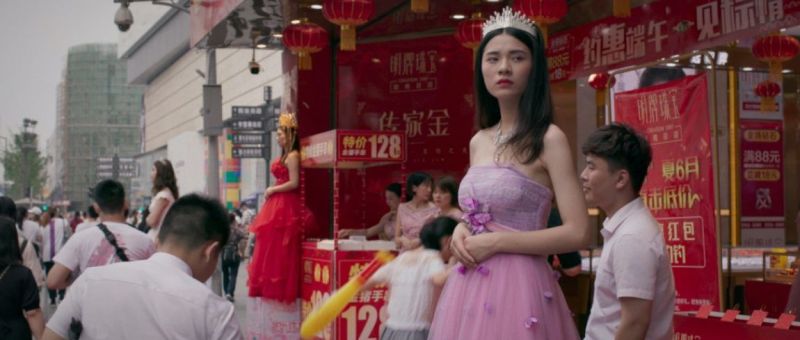
At 20, Lynn (Yao Honggui) has moved to the city from her home in provincial Changsha and is studying to become a flight attendant. Pressed to make money to support herself and pay off her mother’s debts, she’s taken up part-time modelling work and is dating a fellow student who seems to be something of a social climber constantly pressuring her to improve her English and mingle with the internationalist set. Hoping to earn more money she finds herself acting on a suggestion from an acquaintance to sell her eggs and discovers she is pregnant. While the boyfriend pressures her into an abortion, she isn’t really sure and decides to return to her parents’ home. One there she discovers her mother is struggling to pay off compensation payments after a mistake at her obstetrics clinic resulted in a woman losing her baby. Rather childishly Lynn suggests that she carry her child to term and then offer it to the other woman in return for the cancellation of the debt. 

It’s a very feudal solution to a very contemporary problem. Lynn does not see it as selling her baby only a way to overcome the futility of her situation. Everyone around her tells her to have an abortion as if it were as simple as having a tooth pulled and there’s really not much need to think about it. The film seems to ask if the silent consequences of the three decades of the One Child Policy have profoundly affected the way people think about motherhood and childbirth, normalising abortion to the point of becoming numb to its emotional dimensions. Lynn tells her mother that she does not want the baby to die inside her, having apparently witnessed an abortion going wrong at the clinic though her mother only tells her not to be so silly. She knows she can’t raise the child herself and accepts the arguments of others that early motherhood will derail her life and prospects, but wants the child to survive and naively believes both that it will help heal another woman’s pain and be raised in a loving family with better prospects than she could ever give it. 

But it’s obvious that the man she’s dealing with who claims to be a cousin of the woman who lost her baby is in no way on the level and most likely intends something quite different for the child perhaps selling it on in China’s child trafficking network, another unintended consequence of the One Child Policy. He suggests the cruelest solution of all, that Lynn and her family should raise the baby for a year and then part with it to him which aside from its emotional implications destroys the point of giving it away in the first place in that Lynn needs to keep her pregnancy secret to avoid the social stigma of unwed motherhood while returning to her studies after giving birth. Meanwhile, through the contacts she made in egg donation Lynn finds herself shepherding other young women many of whom are from the persecuted Uyghur minority to shady appointments with men in hotel rooms who quiz them on their physical health and mental attitudes in what seems to be a matchmaking/surrogacy service. In any case, these women seem to have little value outside of their ability to bear “healthy” children. “What is the standard for health?” a Lynn asks the middleman only for him to tell her that he’ll know it when he sees it, leading her to fear he may reject her child once it’s born leaving her quite literally holding the baby. 

Left with little means of support, Lynn is forced to continue working throughout her pregnancy even though medical personnel imply she is malnourished and should make sure to get plenty of rest while eating a protein rich diet. The only reason she is given such care at all is ironically because of the accidental commercialistion of the baby, the middleman willing to fund its development in return for the end product. Lynn’s mother tries to reason with the middleman to take the baby as soon as its born fearing that he will change his mind or that Lynn will be unable to go through with it after bonding with her child but does not really appreciate how little power they have in this situation. Using shady connections, the middleman has engineered it so that Lynn is getting medical care as “Sylvia”, the woman whose baby died and whose name will appear on its birth certificate leaving Lynn with no legal right to it anyway. 

Her mother, meanwhile, trying to take agency over her own life has been sucked into an obvious pyramid scheme selling fancy skin cream and has gained a false sense of success in her new business enterprise, arguing with her husband and wanting to close down the outdated maternity clinic altogether. Lynn struggles with English but is caught amid the dichotomies of the modern China, translating between standard Mandarin and the local Changsha dialect while trapped between the need to support her parents and providing for the next generation leaving little room for herself, her own hopes and desires. A grim picture of life on the margins of the contemporary society, Huang and Otsuka’s pressing drama ends with rain and hazard lights along with a helpless sense of abandonment and little hope in sight.


Stonewalling screened as part of this year’s San Diego Asian Film Festival.

Original trailer (English subtitles)

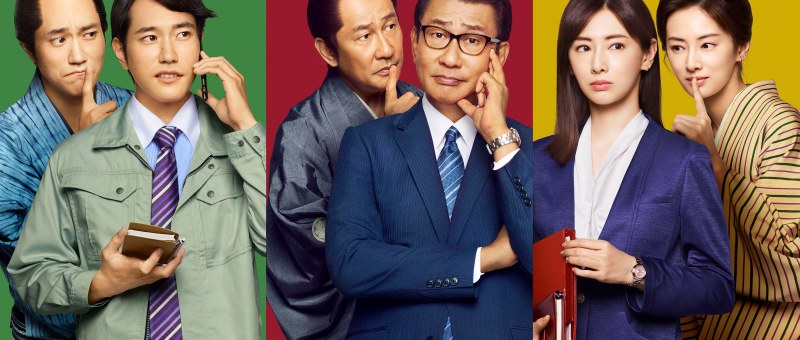
Dreaming of the Meridian Arc (大河への道, Kenji Nakanishi, 2022)

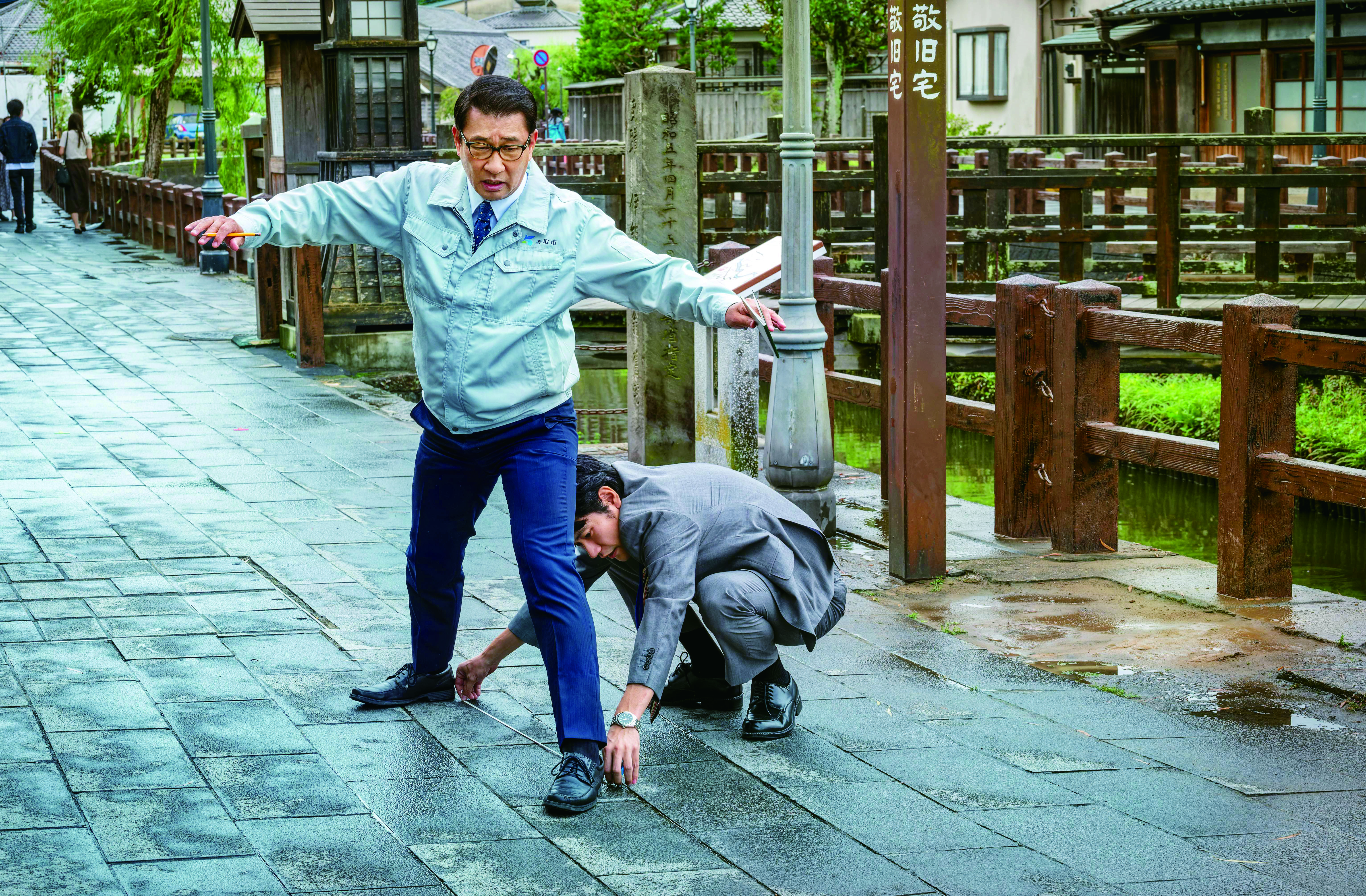
As it turns out, the modern world is not so different from the feudal after all. After realising that their friend and mentor has passed away, a team working together to create an accurate map of Japan in the early 19th century are immediately worried that their project will be axed as a part of a cost cutting exercise at the hands of the penny-pinching Shogun. Inspired by Shinosuke Tatekawa’s rakugo story, Kenji Nakanishi’s heartwarming dramedy Dreaming of the Meridian Arc (大河への道, Taiga e no Michi) tells parallel tales of hardworking civil servants trying to put their town on the map and Edo-era officials trying to avoid incurring the Shogun’s displeasure so they can ensure their late friend’s life’s work will eventually be finished. 

In the present day, the small town of Katori is trying to think of ways to raise its profile but according to junior civil servant Kinoshita (Kenichi Matsuyama) the programme proposed by the tourist board has little to offer in simply imitating the initiatives of other better known cities. As he points out, if tourists want to experience life in olden times there are lots of places they can do that already. Chief of General Affairs Ikemoto (Kiichi Nakai) idly suggests that they try and get local historical personannage Chukei-san, better known as Ino Tadataka the man who completed the first accurate map of the Japanese islands, featured as the subject of a year-long historical TV drama. Of course, Kobayashi from the tourist board (Keiko Kitagawa) thinks it’s a silly idea, but the governor likes it so Ikemoto now has a very difficult job not least because the governor wants him to convince a grumpy writer who hasn’t written anything in 20 years to handle the script. 

The reason Kato (Isao Hashizume) retired from screenwriting is that he too was fed up with placating commercially-minded executives and isn’t prepared to work on anything in which he doesn’t have full creative control which might be a problem a civil servant like Ikemoto could sympathise with if he wasn’t so desperate to bring him on board. It can’t be denied that the story of the map’s creation is itself fascinating if only in its technical detail of how these men were able to complete a map which almost perfectly aligns with modern aerial photography using only the technology of the early 19th century. As Kato points out, Tadataka was already in his 70s and the bulk of the work is simply walking all around Japan measuring it step by step. He’d only begun the project because he wanted to figure out the size of the earth by charting the Meridian Arc, but figured that out right away and still went on to work on the map for reasons largely unknown though later hinting a sense of anxiety in the late Edo society in believing that understanding the shape of the nation’s coastlines was the key to national defence in the wake of a Russian attack that had cost two of Tadataka’s local helpers their lives. 

Yet the drama idea is pretty much dead in the water after realising that Tadataka “died” three years before the map was completed. Fearing they’d lose their funding, Tadataka’s team buried him in secret and told people he was simply out on location while trying to finish the map before anyone found out knowing that their lives were at risk if the Shogun discovered they’d been lying to him and assumed they’d been doing it to continue claiming Tadataka’s stipend. To ram his point home, Nakanishi has the civil servants taking on the role of the mapmakers in Kato’s putative version of the story as they come together as a team to finish their mentor’s project but are eventually forgotten by history in much the same way as Ikemoto and his team will eventually be even as they too work for their betterment of their nation by taking care of the community. Ikemoto becomes something of a Tadataka figure, deciding to pickup a new skill in middle-age and aiming high in perfecting it (while slightly misleading the boss as he does so). A heartwarming tale of the value of teamwork and the perils of bureaucratic cost cutting, Nakanishi’s historical dramedy implies that not so much as changed in 200 years but that’s not entirely a bad thing as the dedicated team of civil servants do their best to put their city on the map.


Dreaming of the Meridian Arc screens at Japan Society New York on Nov. 12 as part of The Female Gaze: Women Filmmakers from JAPAN CUTS and Beyond.

Original trailer (no subtitles)

Images: ©2022 “Dreaming of the Meridian Arc” Film Partners

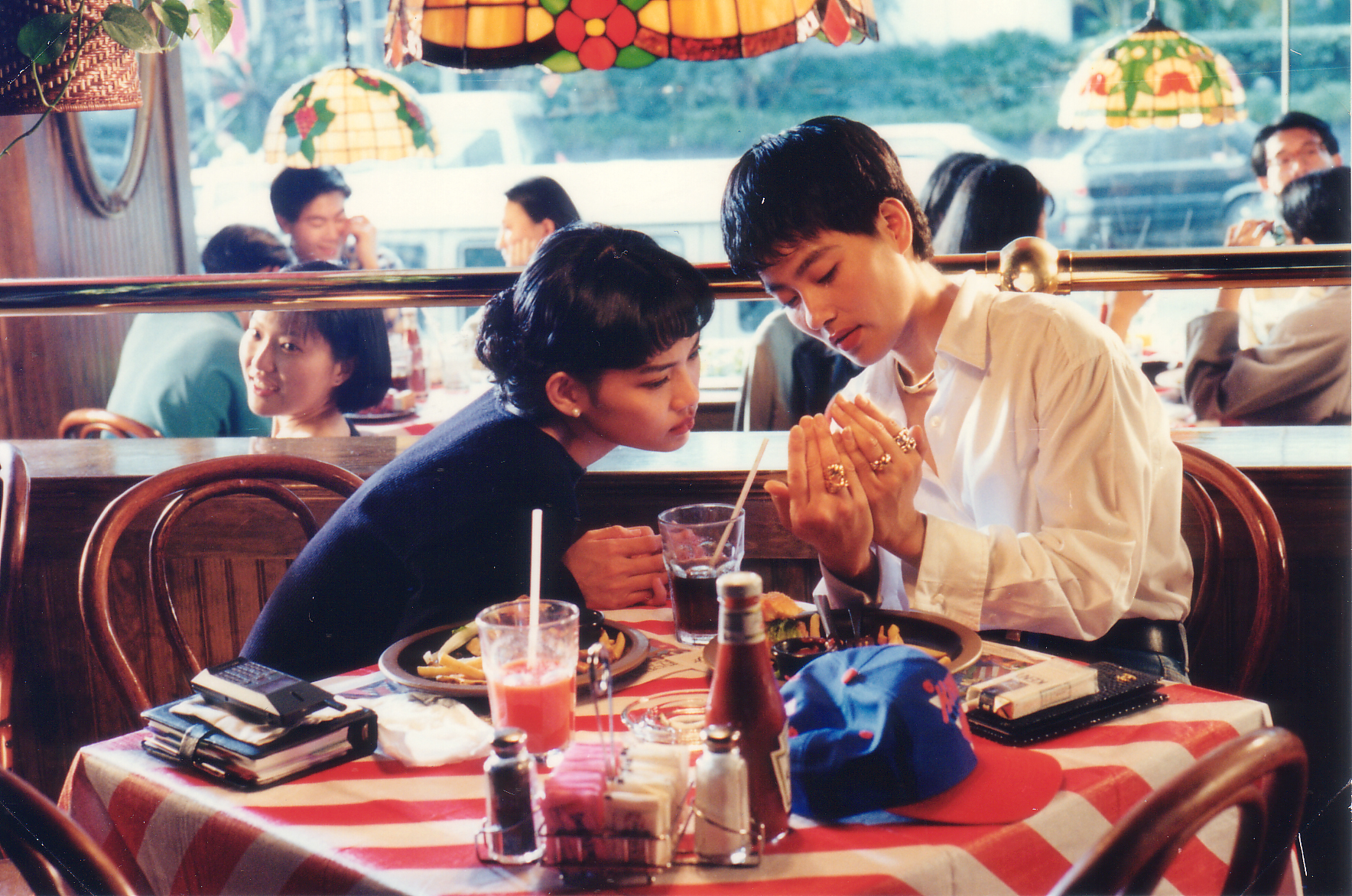
A Confucian Confusion (獨立時代, Edward Yang, 1994)

A collection of conflicted urbanites find themselves lost in a rapidly changing society in Edward Yang’s bitterly ironic social drama, A Confucian Confusion (獨立時代, dúlì shídài). Floundering in the post-martial law society, they struggle with the new freedoms of the democratic future torn between the blind obedience of the authoritarian past and the risky business of having to figure out who they are and what they want in a Taipei that seems to have its lost soul to rapidly advancing consumerism. 

Much of the confusion is centred on Chi-chi (Chen Shiang-chyi), a demure young woman admired by all for her radiant quality yet herself under-confident and worried that on some level others might resent her assuming that her genial persona is in someway an affectation. Chi-chi’s tragedy is that she is genuinely nice and relatively authentic in comparison to those around her only she’s beginning to realise that she doesn’t really know herself and has no idea what it is she really wants. “I didn’t have views of my own, it doesn’t mean I agreed with you” she eventually fires back at her ultra-conformist boyfriend Ming (Wang Wei-ming) after he takes the step of resigning for her when she expresses reluctance to accept a job offer set up by his father’s girlfriend.

“You weren’t like this before” Ming continues to berate her, telling another woman, Feng (Richie Li), that feels he no longer understands the changes in Chi-chi’s mind. A symbol of old school patriarchal thinking, he attempts to overrule all her decisions while frustrated that she can’t see he’s only acting in the best interests of her future. Ming thinks that everyone being the same is a good thing, determined to follow the conventional path for a “stable” life as a civil servant but carrying a degree of personal baggage that his politician father was once sent to prison for corruption. He tells Feng, the one person most at home with the duplicities of the modern society, that he chased Chi-chi because she most conformed to the image of his ideal woman which does rather imply that he preferred her to appear as an extension of himself not having any particular thoughts or opinions of her own. The realisation that she does indeed have individual agency seems to destabilise him even as his allegiance to the social conformity of the authoritarian era is shaken on witnessing the hypocrisy of contemporary corporate culture in which his straight-talking friend (Chen Yi-wen) is forced to pay for Ming’s own mistake. 

It’s the hypocrisy which seems to weigh heaviest on the mind of a struggling writer (Hung Hung) who finds it impossible to accept the democratic revolution and has given up the cheerful romance novels which made his name to write “serious” books. Now living in a tiny apartment without electricity, he has become estranged from the wealthy woman he married as a student (Chen Li-mei) who defied her family to turn down an arranged marriage just to be with him. She now hosts a fairly conservative TV programme aimed at housewives pushing family values which is one reason it would be a problem if their separation became public knowledge. The man she was supposed to marry, Chin (Wang Bosen) the foppish son of a business associate of her father’s, is now engaged to her sister, Molly (Ni Shu-Chun), and mainly conducts his business in Mainland China looking ahead to a kind of “One Country, Two Systems” future which may in a sense be a return to a more authoritarian society albeit one fuelled by corporatism. 

In any case, more than anyone Chin is caught between old and new desperately trying to make his engagement to Molly work by hoping they will eventually fall in love while she is more or less just going along with it while convincing him to continue investing in her failing business. In this very confusing environment, communication is never direct. Molly, who is also a childhood friend of Chi-chi and Ming, never really discloses her feelings but according to Chin’s sleazy business manager Larry (Danny Deng) is too “unique” for the times in failing to appreciate the necessity of emotion as a corporate tool. Yet she goes along with the arranged marriage unable to fully break with feudal norms as her much more conservative sister had ironically done even if she is no longer happy with her choice. As is so often pointed out, anything can happen anytime. Sudden reversals and accidental revolutions are just a part of life. 

Conformity had perhaps been a way of coping with life’s uncertainty, but in its way only created more misery and resentment. Ironically the radiant smile Larry so admires in Chi-chi is also the symbol of a societal defence mechanism. The angrier you get, the wider your smile, Larry had tried to teach Chin who nevertheless remains the most “emotional” of all the protagonists, eventually breaking with feudal past in ending his engagement to Molly after randomly falling in love with a voice on a telephone. “We’re all so lonely” Ming admits, disillusioned with his life of dull conformity and edging towards seizing the new freedoms open to him to finally be “independent” no longer bound either by lingering Confucianism or the authoritarian past. The writer’s last book had followed Confucius as he found himself in the modern society but discovered that the people no longer believed in his sincerity, seeing him as a kind of motivational speaker and wanting to learn the quick fixes of his philosophy. Yet in meeting his own destiny, the writer hits on an epiphany that the best weapon against hypocrisy is to live honestly and authentically. Finally integrating into the democratic future, each is finally becoming accustomed to making their own decisions but informed by a kind of mutual solidarity in navigating the still confusing landscape of a changing Taipei.


A Confucian Confusion screens at the Museum of Photographic Arts on Nov. 11 as part of this year’s San Diego Asian Film Festival.

Restoration trailer (Traditional Chinese / English subtitles)