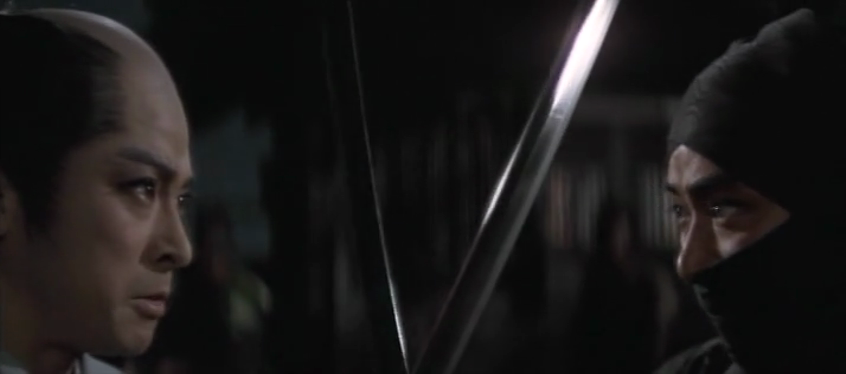
The Thief in Black (黒の盗賊, Umetsugu Inoue, 1964)

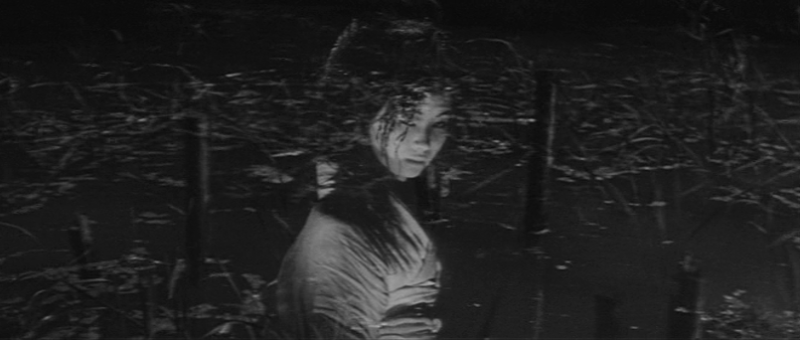
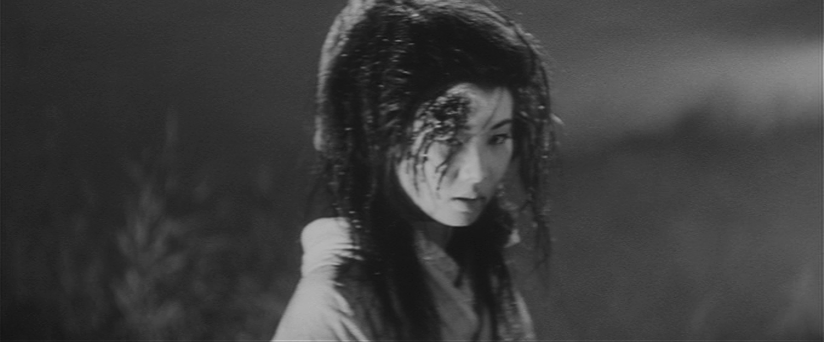
Best known as a master of the musical, Umetsugu Inoue had a long and varied filmography embracing almost every genre imaginable. He began his career at Shintoho and later joined Nikkatsu where he quickly became an in demand director often working with top star Yujiro Ishihara, but took the somewhat unusual step of going freelance in 1960 thereafter working at various studios including Shaw Brothers in Hong Kong. 1964’s The Thief in Black (黒の盗賊, Kuro no Tozoku) is not a musical but is characteristically playful even within the confines of the lighter side of Toei’s jidaigeki adventures. 

Set between the Battle of Sekigahara and the Siege of Osaka, the samurai corruption in play is essentially the burgeoning Tokugawa dictatorship, the heroes eventually uncovering Ieyasu’s secret plan for making sure his line (well, more himself in essence) remains in power for perpetuity through an insidious plot to weaken the feudal lords and ensure their loyalty to him. Meanwhile, the still developing city of Edo is beginning to turn against the Tokugawa who seem to be intent on exploiting ordinary people to enrich themselves most obviously through forcing the local workforce to renovate Edo castle rather than cleaning up the town which is apparently rampant with crime. Faced with such lack of leadership, the townspeople have come to admire a Robin Hood-like vigilante known only as the Thief in Black who alone is resisting overreaching lords. 

Part of the problem is that Ieyasu’s rule is still insecure because of the potential threat of Hideyori Toyotomi in Osaka. Consequently, they are fearful that some of the men working on the castle may be Toyotomi spies or otherwise disclose information that might benefit him if he chose to attack which is why they’ve refused the workers permission to return home to their families during the pause before beginning the second phase of works leading to further unrest. Meanwhile, corrupt local lord Tadakatsu (Ryutaro Otomo) and his sleazy priest buddy Tenkai (Minoru Chiaki) have an even darker plan in mind, preparing to simply kill the five master craftsmen in charge to ensure they present no threat. Alerted to the situation on the ground by idealistic samurai Jiro (Hashizo Okawa), their boss instructs Tadakatsu in no uncertain terms that he must treat the workers fairly in order to prevent civil unrest and/or disillusionment with the Tokugawa regime but the pair are entirely unfazed and determined to go on with their nefarious plan getting rid of Jiro if the occasion arises. 

As we later discover and in a typical jidaigeki plot device, Jiro is one of a pair of twins with his brother Kotaro (also Hashizo Okawa) abandoned because of the superstitious belief that multiple births are inauspicious. Though both men unwittingly lay claim to the name, Kotaro turns out to be the masked vigilante, his primary cause to regain the lands of the family who raised him unfairly displaced from their estates on the Musashino plains because of Tokugawa greed. Though Jiro, raised as a member of the establishment, is originally loyal to the Tokugawa who have after all brought about an era of peace, he soon begins to see that their rule is no good for the people of Edo. In his more egalitarian worldview, only by enriching the poor can they secure their rule which means less castle building and more infrastructural development along with paying people fairly for their work and absolutely not killing them afterwards. Kotaro too claims that his rebellion is for the good of the common people though unlike Jiro is much more transgressive in his ideology prepared to shake off his samurai status to become a wandering outlaw rather than content himself with the restrictive life of the heir to a samurai clan. 

Such messages are perhaps common in Toei’s brand of jidaigeki but seem unusually pronounced as the peasant workers are often given voice to lament their fate and resist their oppression more directly, pointing the finger not just at a rogue rotten lord but at the entire system built on exploiting their labour. Nevertheless, Inoue injects a hearty dose of whimsical humour to the politically charged narrative even going so far as to include a bumbling ninja claiming to be the famous Hattori Hanzo along with a comic relief magistrate and former samurai brothel owner taking his own kind of ironic revenge in getting the cowardly lords hooked on modernity with a load of faulty rifles. Obviously, Ieyasu couldn’t be stopped, but perhaps they slowed him down and reminded him of the dangers of underestimating the people. Shot with Inoue’s characteristic flare if remaining largely within the Toei house style, Thief in Black is a surprisingly direct attack on corrupt and entitled government but also a righteous romp as its idealistic heroes shuffle themselves back into their ideal positions while fighting Tokugawa oppression all the way. 


Detective Chinatown 3 (唐人街探案3, Chen Sicheng, 2021)

Cerebral sleuth Qin Feng (Liu Haoran) and his larger than life uncle Tang Ren (Wang Baoqiang) are back on the case in the third instalment in the Detective Chinatown franchise (唐人街探案3, Tángrénjiē tàn àn 3) picking up as promised in Tokyo as the duo take on another locked room mystery on the invitation of dandyish local investigator Hiroshi Noda (Satoshi Tsumabuki). This time around, the mystery is only tangentially connected to a Chinatown though the solution in itself does indeed lead back towards the Mainland and the complicated relations between China and Japan, while Qin in particular finds himself confronting the idea that oligarchy is in fact the “perfect crime”. 

Hired by a yakuza boss, Watanabe (Tomokazu Miura), accused of offing a Thai rival, Su Chaiwit, following a dispute over development rights in the local Chinatown, Qin and Tang Ren quickly find themselves hamstrung by their own discovery of evidence which further implicates their client and brings them to the attention of top cop Tanaka (Tadanobu Asano) who wastes no time telling them to mind their own business. Meanwhile they are also being pursued by muscly Thai detective Jaa (Tony Jaa) working for the other side. In a new high tech motif, the guys are each handed a simultaneous translation earbud which allows the Japanese and Chinese guys to converse with each other in their own languages though Hiroshi often chooses to speak directly in Mandarin instead while the Thai contingent exclusively use English. Unlike previous instalments the duo do not venture into the local Chinese community and Chinatown itself is merely territory contested by Japanese yakuza and South East Asian gangsters. 

Even so Qin and Tang Ren find themselves at a nexus of cross-cultural conflict caught between the cops, yakuza, and Thai gangsters each looking not so much for the truth but some kind of advantage for their side all of which culminates in a hilarious series of mixups at a morgue. Once again, Tang Ren falls in love with a local woman, in this case Su Chaiwit’s secretary Anna Kobayashi (Masami Nagasawa) who is certain Watanabe is guilty and later apparently kidnapped by a crazed serial killer (Shota Sometani) just by coincidence. Of course, all this cycles back towards the franchise’s growing mythology, Qin pursued and manipulated by the mysterious entity known only as “Q” which, as we learn, is as obsessed with the idea of the perfect crime as Qin largely in that they think they’ve perfected it in the stranglehold placed over civilisation by a shady elite. 

In this, the film may be taking aim at hidden oligarchy and the immorality of growing social inequality, but in its Japanese setting Chen is also freer to take potshots at contemporary Chinese society such as in Tang Ren’s confusion that they can’t simply bribe the police to get Qin out of jail when he is wrongfully arrested. “Justice and equality require sacrifices” Qin explains after solving a grim riddle only to be asked some difficult questions about the nature of justice and his own role within it by a manipulative villain, but in a classically censor-friendly move ends the movie with a brief monologue declaring that “justice always prevails and light overcomes darkness”, he and his team recommitting themselves to fighting “vices”, and presumably the shady elitism fostered by Q, wherever they arise. 

Like Detective Chinatown 2’s New York setting, the vision of Japan on display is deliberately stereotypical from an Akihabara cosplay carnival to tasks involving masked kendo fighters and a sumo wrestler, not to mention bumbling comedy yakuza forever threatening to cut off their fingers, the Shibuya Scramble set piece, or a playful homage to Phoenix Wright: Ace Attorney. Meanwhile, Chen continues his taste for huge ensemble action such as the complex slapstick routine that opens the film and now traditional end credits sequence featuring the cast dancing to theme tune “Welcome to Tokyo” dressed in the classic green detective mac worn by Qin. Truth be told, the solution to the central mystery is heavily signposted and slightly unsatisfying though Chen’s visualisations of Qin’s deductions are expertly rendered even as the hero’s growing confidence as a crimefighter unbalances his relationship with the increasingly silly if goodhearted Tang Ren. Boasting a host of A-list Japanese acting talent, the film also makes space for an unexpected cameo from one of the most recognisable faces in Sinophone cinema before teasing a further instalment to take place in London, home to the greatest consulting detective of them all. 


Detective Chinatown 3 is available to stream in the UK via iTunes, Google Play, Amazon Prime, Microsoft, Sky, and Virgin Media courtesy of Cine Asia.

Original trailer (English / Simplified Chinese subtitles)

The Ghosts of Kagami Pond (怪談鏡ケ淵, Masaki Mori, 1959)

“How could you do this to me?” asks a wandering ghost in Masaki Mori’s 1959 Shintoho kaidan Ghosts of Kagami Pond (怪談鏡ケ淵, Kaidan Kagami-ga-fuchi). Based on a story by Kozo Hayama, Mori’s supernatural morality tale is in many ways fairly typical for the genre save that the vengeance wreaked by the wronged spirit is extremely targeted rather than the sometimes indiscriminate curses aimed more at a corrupt society than the figures directly responsible for the death and mistreatment inflicted on the now wrathful ghost. 

The good-hearted hero, Yasujiro (Shozaburo Date), was forced to move to Edo after his father fell into disgrace with the Shogunate authorities and is grateful to have been taken in by the owner of kimono shop Ejimaya. However, his presence is intensely resented by veteran employee Kinbei (Joji Ohara) who had been expecting to inherit the business. Overhearing the boss, Jiemon (Hiroshi Hayashi), and his wife (Fumiko Miyata) discussing a possible marriage between Yasujiro and his childhood friend Kiku (Noriko Kitazawa) reunited by chance in the city, Kinbei realises that he intends to make Yasujiro his heir and hatches a plan to ensure that doesn’t happen beginning with selling Kiku’s sister Sato (Reiko Seto) a knock off wedding kimono that tears during the ceremony leading her intended’s family to cancel the marriage entirely leaving Sato a shamed woman in an impossible situation. Wandering the streets in despair intending to throw herself into Kagami Pond and thereafter become a vengeful ghost cursing the house of Ejimaya, Sato encounters Kinbei again and is killed in the ensuing struggle only to tumble into Kagami Pond sinking without trace. 

“No one ever floats up out of there” Kinbei later insists suggesting the pond as a possible dumping ground for additional bodies of which there are a fair few. As kaidan villains go, Kinbei is of the one note variety in simply being evil for no particular reason the only justifications offered for his ill conduct being his previous devotion to the kimono store and the fear that all his hard work will go to waste if Yasujiro is allowed to inherit. Even so, this seems disingenuous given an early scene in which an angry customer brings a kimono back complaining of shoddy work and suggesting she’s been fobbed off with a substandard product. Kinbei blames the whole thing on new employee Yasujiro though it later seems clear that he probably sold her a cheap kimono and pocketed the difference in price. 

He even goes so far as to mug Yasujiro in disguise, stealing 15 Ryo which he’d been transporting on behalf of the store attempting to sink his rival in debt. When Yasujiro’s disgraced father offers to sell a precious family sword to pay back Jiemon, Kinbei kills him too while 15 Ryo is also the amount for which he indentures Kiku to a brothel after framing her for adultery (illegal at the time) with the help of his sex worker co-conspirator Naka (Keiko Hamano) who bumps off Jiemon’s wife and quickly takes her place. Jiemon, who had previously been kind and fatherly insisting that Yasujiro and Kiku are like his own children to him, undergoes an unexplained and abrupt change of character becoming cruel and greedy, loaning money to another store holder in the assumption he won’t be able to pay it back in order to get his hands on his business and eventually party to all of Kinbei’s scheming little realising he most likely intends to bump him off too after he’s married Naka so that they will have full control of the business. 

Kinbei is occasionally haunted by the rising ghost of Sato who chillingly repeats the phrase “How could you do this to me?” but carries on with his dastardly deeds anyway. As in most kaidan tales, she cannot hurt him directly but leads him to hurt himself by causing him to hallucinate, as do the ghosts of Yasujiro’s dad and the storeowner eventually calling him towards Kagami Pond and his watery fate. Some disjointed storytelling aside, the introduction of a potential ghost cat for example is never followed up, Ghosts of Kagami Pond is a fairly typical B-movie kaidan running a tight 60 minutes even if the effects and supernatural imagery are perhaps muted in comparison with Shintoho’s similarly themed ghostly morality tales. 


Clip (no subtitles)

Just the Two of Us (二人ノ世界, Keita Fujimoto, 2020)

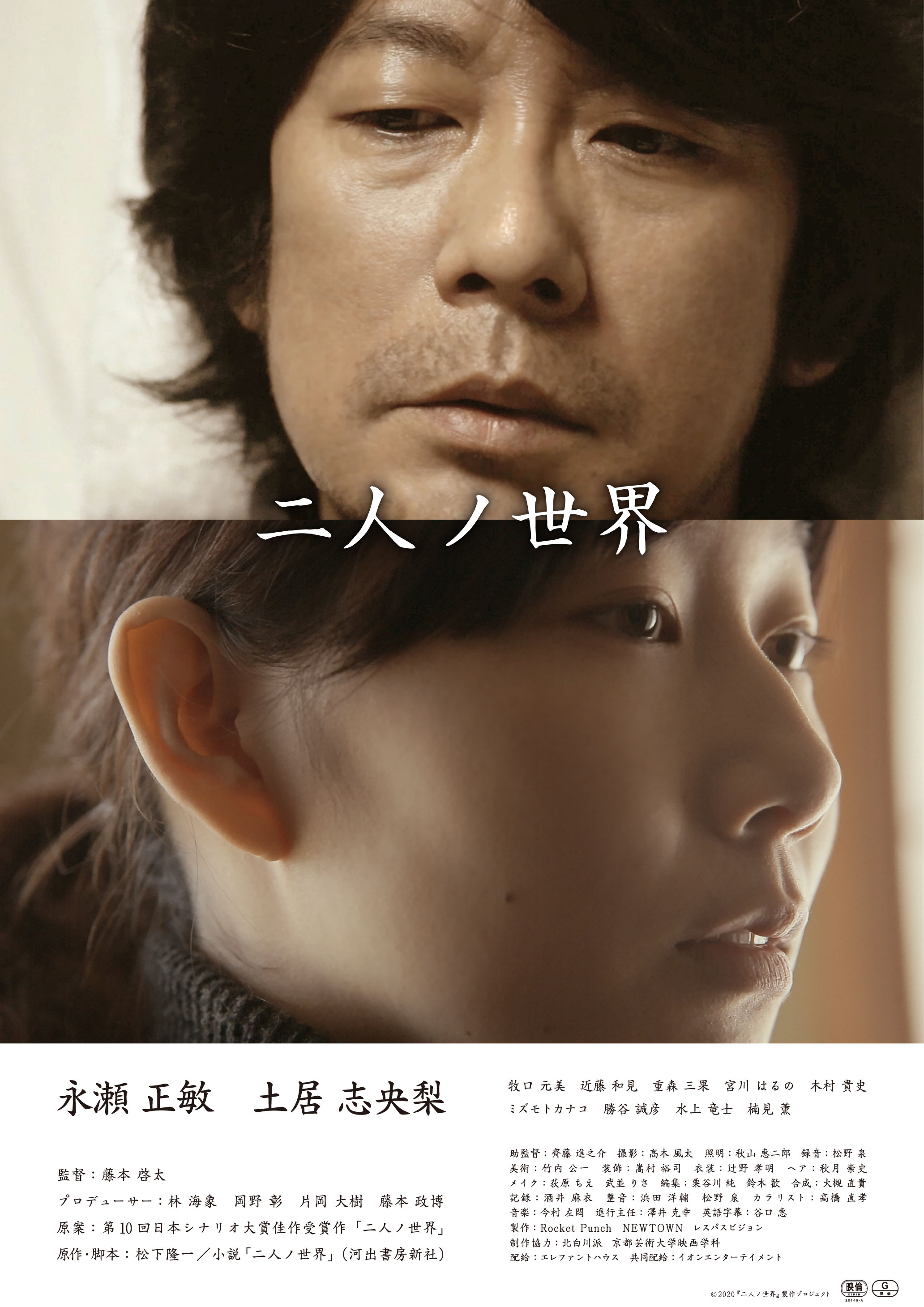
“We’re just ordinary people” the heroine of Just the Two of Us (二人ノ世界, Futari no Sekai) eventually exclaims in exasperation with the often hostile world around her. Produced by Kaizo Hayashi as a project for students at the Kyoto University of the arts, Keita Fujimoto’s sometimes bleak social drama offers a less rosy view on disability in the contemporary society than has perhaps been seen in recent Japanese cinema as the twin protagonists each struggle against prejudice and preconceived notions of how disabled people should live while internalising a sense of shame and impossibility that leaves them with little hope for the future. 

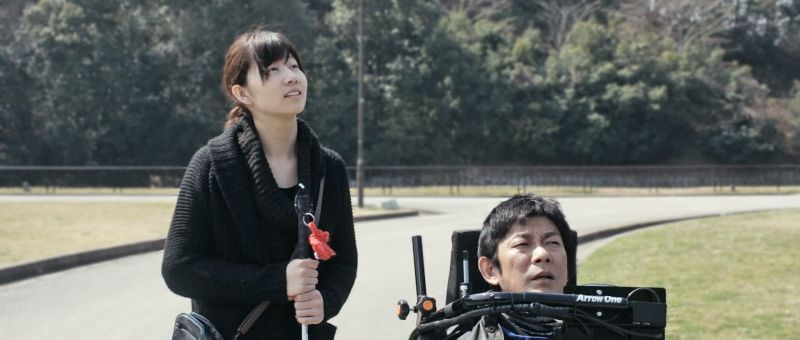
Opening in darkness, the scene then shifts to bright sun light as a young woman, Hanae (Shiori Doi), is woken by a phone call informing her she has been unsuccessful in a recent job application. Meanwhile, Gohei (Motomi Makiguchi), an old man caring for his son Shunsaku (Masatoshi Nagase) who has been paralysed from the neck down since a motorbike accident some years previously, finds his latest attempt to hire a carer ending in failure, Shunsaku deliberately making obscene comments towards the earnest young woman leaving her so upset that she leaves in tears and does not return. After hearing Gohei discussing his problem on a local radio show, Hanae decides to apply for the job the only thing being that she herself is blind which is why she’s been having so much trouble trying to find employment. 

Gohei has his doubts, but after talking to the young woman and witnessing her take no notice of Shunsaku’s attempts to make her uncomfortable, he decides to take her on in part because she reminds him of his late wife and he instinctively feels that he can trust her. As we discover, that’s something all the more pressing to Gohei because not only is he finding it increasingly difficult to care for his son as he himself ages but is also suffering with a serious medical condition and worrying who will look after him once he’s gone. For all these reasons he places a heavier responsibility on Hanae than she had expected, showing her where the spare key is in case she needs to get in when he’s out and even handing over their passbooks and bank cards. A little shocked, Hanae asks him if that’s really necessary, how does he know she won’t just run off with them but he simply tells her that he knows she’s not the sort of person who would do something like that and indeed she isn’t. 

As she later reveals, Hanae has no family of her own repeatedly reminding Shunsaku that he was lucky to have parents that loved and cared for him as much as they did. She becomes in a sense a member of the family, Gohei telling hospital staff she is his daughter while later even Shunsaku claims to be her husband in order to make a point. Yet the arrangement is not one that all find suitable, Shunsaku’s snooty aunts instantly taking against Hanae on the grounds that they cannot believe a blind woman could care for a paralysed man while simultaneously attempting to chase Shunsaku out of his home he fears disguising their desire to get their hands on the inheritance as concern for his wellbeing. They continue to infantilise him, refusing his right to make his own decisions over his life even though he is a man in his 40s of entirely sound mind insisting he should be put away in a nursing home rather than allowed to live as independently as possible in a house which he owns. 

Tellingly Shunsaku had been reluctant to leave the house afraid of the stigma and judgement he may receive from others in an ableist society, a fear later borne out by their encounter with an extremely rude man while trying to enjoy a summer a festival. Hanae who had been partially sighted since birth and lost her sight entirely five years previously reassures him that she feels people staring at her all the time but has had to become used to it in order to carry on with her life, her courage and support beginning to give him the desire to begin living again yet the world continues to place various barriers in their way eventually removing all sense of hope and possibility that the decisions they’ve made for themselves will be accepted or that they could become a conventional family supporting each other. 

“How can we live without bothering others?” Hanae eventually snaps back at the snooty aunts, signalling perhaps a slightly problematic framing that leans into the idea that Hanae and Shunsaku are burdens and that their presence is never anything other than a nuisance to those around them rather than taking others to task for their refusal to accept disabled people as equals or to treat them with basic human empathy. The conclusion is further reinforced by the bittersweet ending which echoes the film’s title implying that the pair can stay together but only by accepting exile from mainstream society and retreating into a world of two. Nevertheless, Fujimoto’s often sensitive, elegantly shot drama has genuine poignancy even in its melancholy conclusion as the marginalised heroes find solace in each other in defiance of a hostile society.


Original trailer (no subtitles)

Devotion to Railway (大いなる驀進, Hideo Sekigawa, 1960)

In the early 1960s, Japan’s rail network might have felt a little uneasy with the Shinkansen already on the horizon. Hideo Sekigawa’s Devotion to Railway (大いなる驀進, Oinaru Bakushin) is in part a celebration of this essential service, the conductor and steward ever fond of reminding us that most passengers probably don’t realise that the Sakura sleeper service on which they are travelling from Tokyo all the way to Nagasaki is operated by only seven or eight people (though they don’t seem to be counting the staff from the dining car which hints at a minor source of division among the crew). While the Japanese title which means something more like “the great dash” might hint at a little more excitement, the film is less thriller than gentle ensemble drama in which the passengers and crew must come together to solve the improbable number of crises arising on this otherwise ordinary journey. 

Even so considering the film is directed by the left-leaning Sekigawa best known for his anti-war films such as Hiroshima and Listen to the Voices of the Sea, not to mention scripted by Kaneto Shindo, it is a little ironic that the central thrust of the drama revolves around junior steward Yajima’s (Katsuo Nakamura) rediscovery of his own devotion to the railway after at the beginning of the film declaring this will be his final journey. Mimicking the dilemma at the centre of Yoshitaro Nomura’s Stakeout, Yajima’s problem is that he has been engaged for two years and is sick of waiting to get married but his girlfriend Kimie (Yoshiko Sakuma) is the main breadwinner in her family and though his salary could support them as a couple it won’t stretch much further. Kimie, however, is dead against him taking the counter-productive decision to quit the railways even with the suggestion of going into business with a friend who owns a cafe, partly because it’s better to stick with a steady job than take a chance on something less certain, and partly because she knows he likes his work and all his experience will be wasted if he suddenly opts to switch careers. 

Despite its positive warmhearted message of people pulling together to overcome crisis, the film does skew a little conservative in essentially turning Kimie into a minor villain as if she were in a sense responsible for making Yajima doubt his devotion to the railway. After jumping aboard to make sure he doesn’t suddenly quit before the end of the line, she eventually has a heart to heart with the sympathetic conductor Matsuzaki (Rentaro Mikuni) that forces to her to admit that perhaps she’s just nervous about the nature of married life and has been making trouble where there needn’t be any, now certain that it’s better to just get married as soon as possible and let the rest figure itself out. 

Meanwhile, there’s additional tension seeing as a waitress from the diner car has an obvious crush on Yajima and is quite resentful on being presented with his fiancée, but even this is eventually solved with the two women becoming accidental friends during the climatic crisis, a landslide caused by a typhoon, that grants each of the passengers an epiphany about what it is they really want out of life. While waiting for the maintenance crew from the next station to arrive, Yajima, still in a bad mood, stands around doing not much of anything until coaxed into action by Kimie and Matsuzaki, Kimie too eventually jumping off the train to solve this literal roadblock in their relationship followed by the dining car girls and a young woman only on the train to transport blood to a hospital needed urgently by 2pm the next day. This sense of collective endeavour opening the way gives everyone on board a new sense of positivity, allowing Kimie and Yajima to repair their relationship and a man who tried to take his own life in the night to gain a new sense of hope for future. 

Several times Yajima is reminded that he has the lives of the passengers in his hands which is undoubtedly true given that there is always the chance of disaster yet also perhaps going a little far seeing as most of his job is checking tickets and providing travel information. Nevertheless, there is a lot going on on this train from eloping couples to yakuza assassins, not to mention the twin sights of a newly wed couple and a pompous politician momentarily disembarking at each stop to be feted either by workers at their factory or the local members of their political party. The snooty politician even gets a minor comeuppance from a famous pickpocket who steals his watch as a joke and then gives it back only to dismissively ignore his thank you message while eating a giant apple. 

Surprisingly handsome for a Toei programmer, Sekigawa’s deft direction lends a claustrophobic sense of dread to the interior of the train stalked by a vengeful assassin, while simultaneously making it an essentially safe space guarded by the ever solicitous crew keen to help an anxious young woman with a long journey ahead of her arrive on time to get home to her chronically ill mother. An effective piece of advertising for the Sakura sleeper service (which ran until 2005 albeit in slightly different forms), Devotion to Railway may surprise in its insistence that the hero rededicate himself to his employer but is nevertheless a charming ensemble drama which finds a new sense of positivity in the solidarity between friends and strangers coming together to overcome crisis through common endeavour. 


Original trailer (no subtitles)

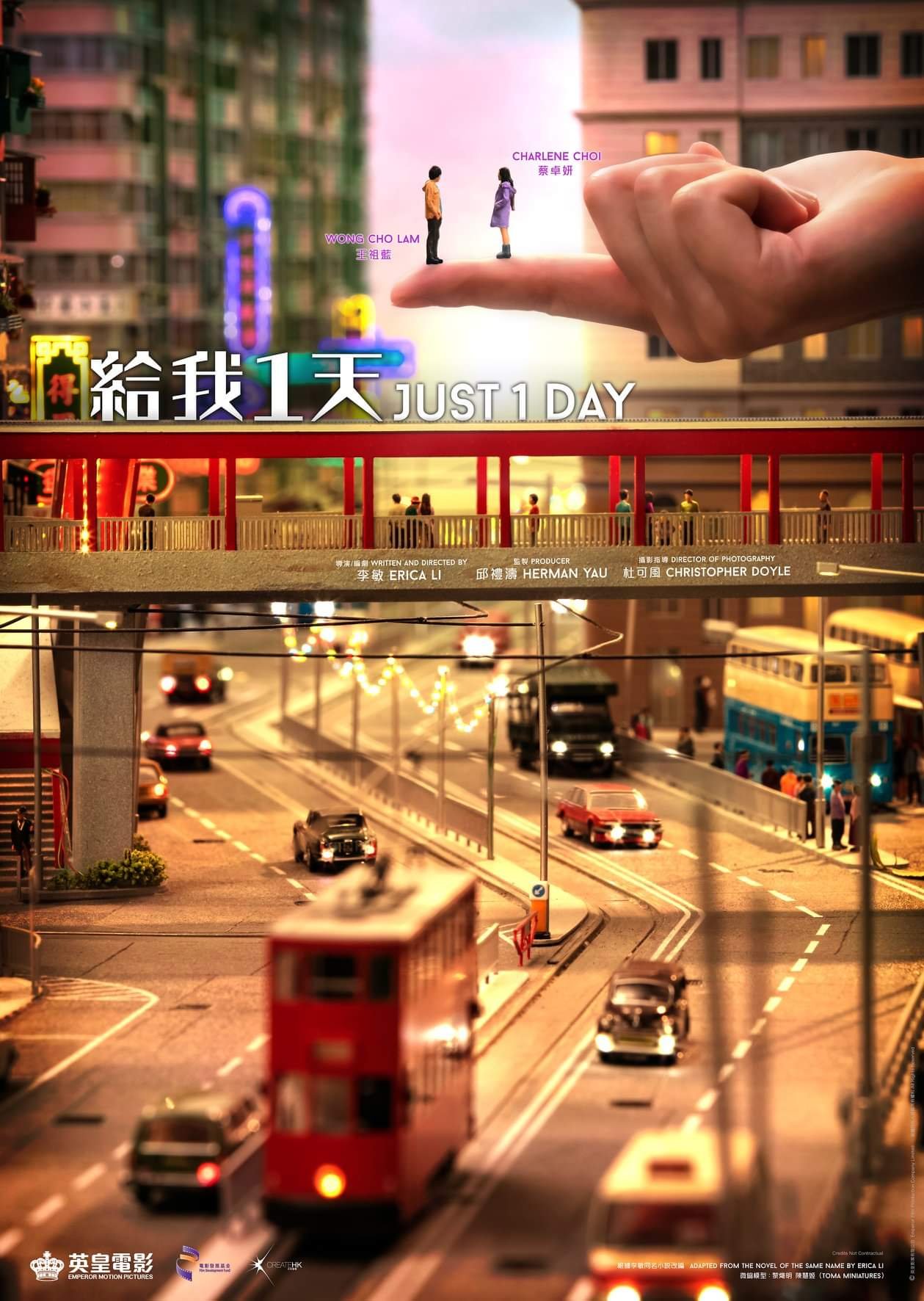
Just 1 Day (給我1天, Erica Li, 2021)

“Who has time for nostalgia with all the novelties out there?” asks the heroine of screenwriter Erica Li’s directorial debut Just 1 Day (給我1天), an adaptation of her own novel. She does, as it turns out, in fact that’s all she may eventually have time for in this tale of romantic transience as she, in a sense, learns to seize her future by living in the past through reconnecting with a childhood friend. 

Now in her early 30s, bank clerk Angelfish (Charlene Choi Cheuk-Yin) is an unfulfilled career woman who enjoys her job chiefly for the ability to be of service to others. Meanwhile, she’s trapped in a potentially dead end relationship with a man who she’s recently discovered has a longterm girlfriend in Canada he never gets round to breaking up with. Attending a primary school reunion marking the institution’s imminent relocation, Angelfish runs into a long lost childhood friend, Mosaic (Wong Cho-lam), now a sketch artist with a sizeable online following. Unbeknownst to her, Mosaic has long been carrying a torch but never had the courage to say anything partly because of a hangup about his short stature. As we later discover, however, he’s running out of time. Paying a visit to the bank where Angelfish works to enquire about insurance he reveals he’s suffering from the same condition that killed his father, ALS, and potentially has only a few more years to live. Shooting his shot, he asks Angelfish to spend just one day with him as his “girlfriend” to cross it off his list. Provided there’s no funny stuff, she agrees but of course discovers something far more profound than a fleeting connection. 

This being Angelfish’s story, Mosaic’s illness is more or less treated as a plot device intended to confront her with her own sense of mortality so that she reassesses her life choices in order seek true happiness. Mosaic in fact teaches her this when explaining the concept of a vanishing line so that she might learn to fix her eyes on the horizon and see the rest of the world in relation to it. Meanwhile, the fact that ALS is a degenerative condition is also aligned with the idea of a world slowly disappearing, the eventual message paradoxically amounting to the notion that nothing ever really disappears because it continues to exist in the hearts and minds of everyone that remembers it. In order to preserve this sense of “nostalgia”, Mosaic meticulously sketches the old Hong Kong before its inevitable destruction while Angelfish finds her vocation in recreating it through miniature diorama. 

The conflict is brought home to her in the opposing natures of her two men, boyfriend Ken chuckling at her distress over the destruction of a local landmark by claiming that the old has to go to make way for the new, but later finding himself unable to break up with his longterm girlfriend out of a sense of expectation and obligation. One might say he is similarly trapped by “nostalgia”, or at least an emotional coward either too afraid to take a risk on new love or unwilling to abandon the security of the familiar. Her female friends, meanwhile, present two opposing paths, one a free spirited flight attendant and the other a conventional housewife whose dreams of the perfect family are eventually dashed on discovering her husband’s infidelity. To that extent, what Angelfish chooses is a kind of independence in wedding herself to a memory while paradoxically living in the moment in the knowledge that her love has its own vanishing point. 

Though boasting cinematography by Christopher Doyle, Just 1 Day is fairly conventional in shooting style akin to many other contemporary Hong Kong dramas save its brief segues into the past and eventual transition into an artificial world of nostalgic memory. Nevertheless as much a love letter to a disappearing Hong Kong as a tearjerking romantic dramedy or inspirational tale of a soon to be middle-aged woman finding fulfilment in following her heart, Just 1 Day effortlessly sells its central messages of living life to the full while making and preserving memories that will, it assures, sustain you when all else is gone. 


Teaser trailer (English subtitles)

0&1 (Kei Nakata, 2001)

Filled with a sense of post-millennial ennui, Kei Nakata’s 2001 noir drama 0&1 is a familiar tale of fatalism and existential crisis but also a zeitgeisty capture of turn of the century Tokyo in which its heroes appear lost and in continual fear of displacement. Now digitally remastered, the meta quality of the film’s use of early DV ironically adds to the characters’ quest for proof of life through video while bearing out the mutability of physical recording which in itself can become inaccessible with terrifying speed. 

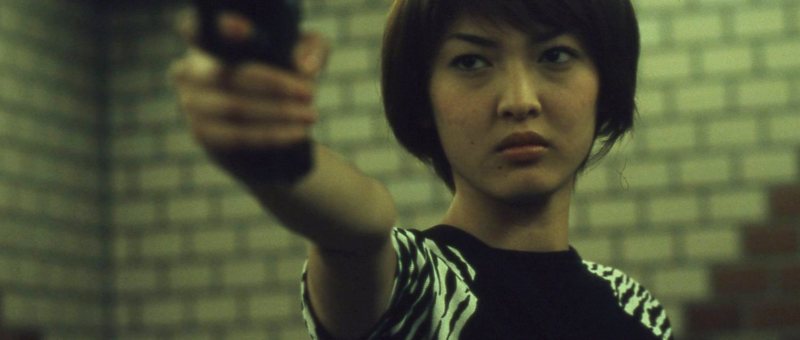
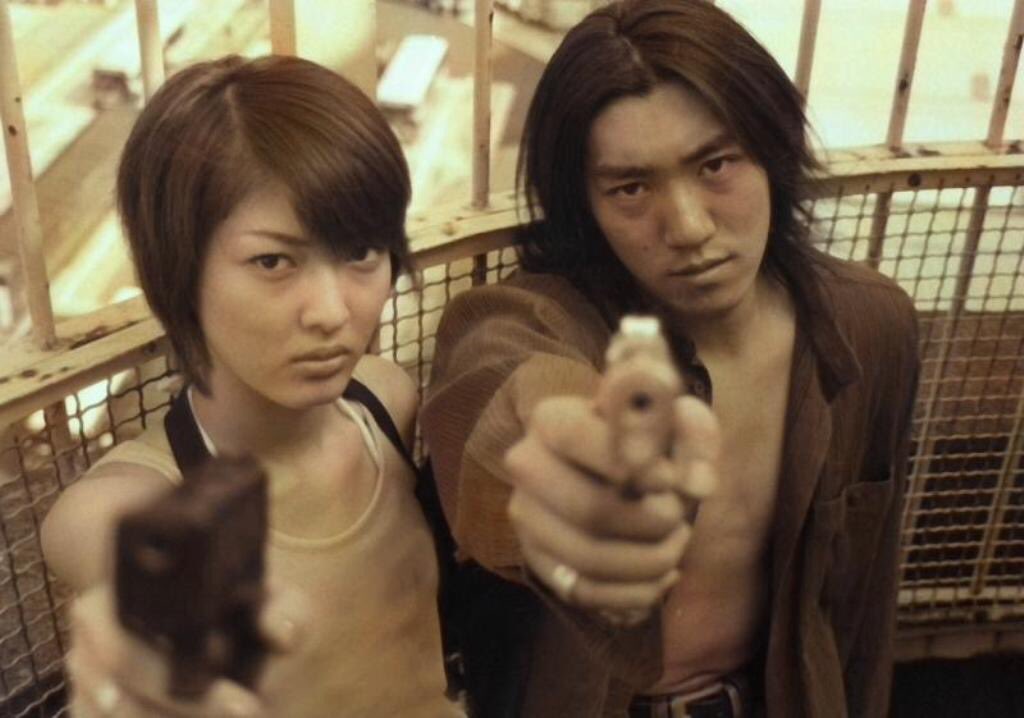
A young hitwoman ironically codenamed “0” is beginning to question her repetitive life of ceaseless killing, feeling in a sense as if she does not quite exist. In a quest to document her existence, she buys a handheld DV camera and begins recording herself and her thoughts as a kind of proof of life verifying that she does in fact live. “My memory will disappear someday. Will I disappear too?” she asks herself, stopping to capture cherry trees in bloom but disappointed to discover something at the harbour already gone. 

Her opposing force, a male hitman codenamed “1” is in the midst of a similar existential crisis feeling himself lost in a crowd as if it would make no difference to anything if he were to disappear. Unknowingly crossing paths with 0 in the chaos of the Shibuya scramble, he idly picks up a DV tape left behind in a cafe and, buying a DV camera for himself, is struck by 0’s existential musings. Taking up the camera he too begins to film himself because in this moment he wanted to exist even if describing his existence as “waiting to disappear slowly”. “We don’t know where to go” he laments, talking not just for himself and his opposing number but for the present generation trapped by post-Bubble malaise and millennial anxiety. Nakata frames his tale in terms of Y2K paranoia mired in the distrust of new technologies, but these two binary individuals look for salvation in the video screen for proof that they exist and that their reality has veracity.

Nevertheless, as the opening text informed us, 0 and 1 are numbers not meant to touch and their accidental meeting may spark its own kind of revolution in this case in the minds of two killers for hire otherwise trained neither to think or feel. Through their interactions, each begins to rediscover their sense of humanity while burdened by existential questioning but their newfound desire for emotional connectivity and individual identity is necessarily dangerous to their handlers who abruptly decide their broken robots must be destroyed before the contamination spreads. 

Yet the veteran they set on their tails, a refugee from old noir in crumpled trench coat, is facing much the same dilemma realising his end is near and in what form that end may likely come. Visiting an old school smokey jazz bar apparently after some time, he remarks on how nothing has changed inside but it too may soon disappear along with his own place to belong. Like the youngsters, he has grown tired of an existence of cynical repetition but given a new job he doesn’t quite like complains that in the old days things were fairer and had a kind or nobility rather than this rather sordid piece of housekeeping he’s just been asked to perform which could, he assumes, also be the end for him. His opposing number, however, is a pure survivalist living squarely in the moment who resents being saddled with a partner and insists on doing things her own way. 

Melancholy in its sense of fatalism, 0&1 ironically captures an early 20th century Tokyo which like its heroes has long since disappeared. The early DV aesthetic, while never quite beautiful, is the perfect evocation of the early 2000s while the medium itself has become largely obsolete, a digital halfway house now viewable only to those with the correct technology to unlock its secrets. Yet Nakata’s nihilistic prognosis is bleaker than it first seems, the heroine’s hopes of putting the camera down to make her own memories seemingly a forlorn hope while no refuge is available from the all pervasive sense of post-millennial emptiness, not even in dreams. 


 0&1 streamed as part of Yubari International Fantastic Film Festival 2021.

Original trailer (no subtitles)

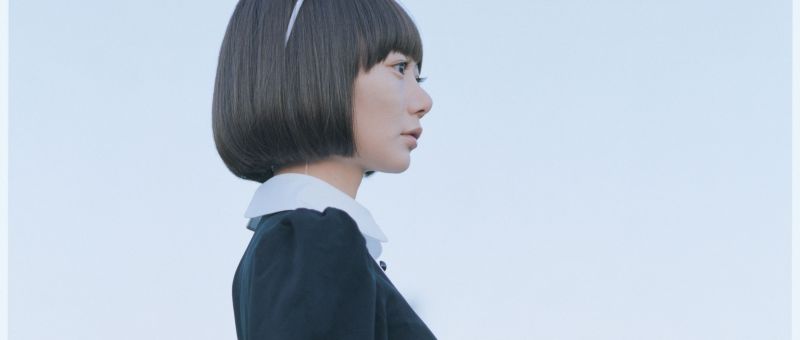
Air Doll (空気人形, Hirokazu Koreeda, 2009)

“Was everything you saw in this world sad? Was there something, anything, what was beautiful?” the heroine of Hirokazu Koreeda’s exploration of urban loneliness Air Doll (空気人形, Kuki Ningyo) is asked by her creator though he can offer her few answers for the strange mystery of her life. Like a child, she takes beauty where she finds it yet much of what she sees is indeed sad as she reflects on the disconnected lives around her, the emptiness and futility of life in the contemporary society where everything is just a substitute for something else which cannot be obtained. 

As for herself, she is quite literally empty inside, an inflatable sex doll owned by middle-aged family restaurant waiter Hideo (Itsuji Itao) who has given her the name of his ex, Nozomi (Bae Doona), which ironically means hope, wish, or desire though not generally of the sexual kind. Yet one day she suddenly wakes up and begins to explore the world rejoicing in its new sensations feeling the rain on her hands and the wind that sounds the chimes as she watches her neighbours go about their daily routine. Dressed in the French maid’s outfit picked out for her by Hideo she gets a job at a local video store and begins living a more independent life while learning how to operate in human society. She feels herself out of place but is repeatedly told that there are others like her, mistaking her literal emptiness for their spiritual despair. 

Yet that sense of emptiness and futility is evident from Nozomi’s first forays into the human world in that the first act of mundanity she witnesses is the bin men sorting rubbish for disposal. “Unfortunately they’re non-burnable” Nozomi’s creator explains when she visits him in search of answers revealing he throws out the broken dolls that are returned to him once a year, “after all, once we die we’re burnable garbage. It’s not such a big difference” he adds, though as it turns out it is quite a big difference to Nozomi in ramming home to her that she can never become human and will always be something else, an inorganic “substitute” for something perceived as the “real”. 

“Your only flaw is that your body’s so cold” Hideo ironically laments as he warms her up in the bath, something she is told repeatedly to remind her that though she has discovered a heart it does not beat and she is not “alive”. Yet an old man (Masaya Takahashi) seeking a different kind of comfort later remarks that those with cold hands often have warm hearts as he reflects on his own life as a “substitute” teacher while she looks over the pictures of the many dogs he’s had through the course of his life as substitutes for the traditional family that have only left him feeling lonelier through their inevitable absences. There is perhaps in this a slightly conservative and uncomfortable implication that the loneliness we see in everybody that we meet is partly caused by the decline of the traditional family itself partly a consequence of the shifting gender roles of the later 20th century society. When they first meet, Nozomi has been rejected by a group of local mothers for inappropriately cooing over a baby in a pushchair the old man comforting her with a tale of the mayfly which is itself empty inside existing only to give birth and then die its own life defined by futility. Nozomi can never truly be human, but more than that she can never truly be a woman because she cannot reproduce as signalled in her final exchange with a little girl in her neighbourhood who swaps her beaten up and broken doll, a substitute for her absent mother now symbolic daughter to Nozomi, in exchange for her ring, a symbol of adulthood. 

In this way Nozomi becomes herself a symbol of something that is broken, an active barrier to societal happiness in providing a way for men like Hideo to escape the responsibility of the traditional family by satisfying his sexual desire through a fantasy of intimacy with an inanimate substitute. When Nozomi throws her pump away, Hideo buys a new model and when she confronts him he asks her to go back to being a passive doll because he finds all the human stuff “annoying” and only wants a woman who can be a selfless embodiment of his desires, will never talk back, challenge him, or hurt his feelings. Meanwhile, when her boss at the store (Ryo Iwamatsu) who seems have experienced a recent familial breakdown of his own blackmails her into having sex with him in the bathroom he is conversely annoyed by her passivity while tearfully calling out his wife’s name. Even her innocent love for coworker Junichi (Arata Iura) has its darkness, not only does she suspect she’s merely a substitute for his ex, his fetishisation of her revolves around his ability to take control over life by letting out her air and then permitting her to live by blowing his own back into her. 

“I am an air doll. A substitute for sexual desire” is how she introduces herself, preoccupied with her literal emptiness yet along with a heart discovering a sense of self as she interacts with others, beginning to wear her own clothes rather than those purchased for her by Hideo. At a moment of crisis she is surrounded by all the treasures she’s collected which ironically include a number of ornaments intended for a doll’s house including a tiny simulacrum of a cake which reappears in her imaginary birthday party suggesting that the only true happiness is to be found in wishful fantasy while the “real” will only ever disappoint. Nevertheless, she uses her last breath to bring happiness to all she can, uniting the old man with a lonely old woman (Sumiko Fuji) who confesses to random crimes just to have someone to talk to. Shot with unusual fluidity by Mark Lee Ping-Bing, Koreeda captures a society in flux in which the easy convenience of disposable consumerism has begun to replace human relationships and left us all empty inside. 


Air Doll in in US cinemas and on VOD Feb. 4 courtesy of Dekanalog

Trailer (English subtitles)

Flesh Pier (女体桟橋, Teruo Ishii, 1958)

Teruo Ishii may be most closely associated with his exploitation work for Toei in the late ‘60s and ‘70s but in actuality he began his career at Toho, later joining Shintoho where he served as an AD to among others Mikio Naruse whom he regarded as a lifelong mentor. After making his debut with boxing movie King of the Ring: The World of Glory in 1957, he worked mainly in children’s sci-fi tokusatsu serials before sliding into B-movie noir of which 1958’s Flesh Pier (女体桟橋, Nyotai sanbashi) is an early example. 

Set firmly in the contemporary era, Ishii opens with a documentary-style voiceover exoticising the seedy underbelly of the city’s entertainment district hidden away in otherwise sparkling Ginza. Shooting in a bold reportage style, he captures a sense of natural spontaneity reminiscent of early American independent cinema transitioning directly into nightclub Arizona where a woman is furiously dancing. Arizona is as we’ll see the nexus of the recent proliferation of “call girl” businesses which have arisen since sex work was criminalised and in this case at least dependent on an international sex trafficking network backed by an American gangster, Thompson (Harold Conway). Salaryman Keizo (Ken Utsui) is a new customer, double checking that the business is “safe” before being reassured that they don’t deal with anyone they don’t know and have already vetted his identity, but when he reaches the hotel room he’s been handed the key for, he discovers the body of a woman lying in the bathtub and is forced on the run. The twist is that Keizo isn’t a bored executive after all but an undercover policeman working on breaking the trafficking ring. 

Co-scripted by Akira Sagawa, Flesh Pier seems to draw frequent inspiration from Casablanca only with the roles slightly reversed as replacement hostess Rumi (Yoko Mihara) finds herself wondering why of all the gin joints in Ginza Keizo had to walk into hers while the bar’s musician, Teruo (Teruo Hata), quite clearly in love with her himself, completes the triangular relationship. The couple even enter a Moroccan-style room while echoing Rick and Ilsa’s painful rehash of their Paris break up as Rumi tries and fails to explain why she left him on some previous occasion, Keizo remembering that she wore a white sweater and a blue coat to mimic Rick’s “the Germans wore grey, you wore blue” while the film’s ending is also hugely reminiscent of Casablanca’s “beginning of a wonderful friendship” only with additional romance. 

Nevertheless, the crime here is bigger and darker than most contemporary noir with awkward echoes of Japan’s prewar sex trafficking industry embodied by the karayuki as it becomes clear the gang’s business model relies on finding young women and luring them abroad with promises of good jobs only to force them into them sex work. Meanwhile one of the regular policemen, Hayami (Hiroshi Asami), gets a shock when he sets up a meeting with one of the call girls and is met by his own fiancée who, unbeknownst to him, has resorted to sex work in order to fund her brother’s tuition. “What else could I do?” she tearfully asks him making plain that in the difficult if improving economic environment of late 50s Japan sex work is still the only viable option for many women needing to support their families in the absence of men given persistent societal sexism which often locks them out of other kinds of well-paying jobs. Hayami perhaps understands this, drowning his sorrows with his veteran partner insisting that he’s sick of being a policeman and plans to quit only for the older man to sympathetically tell him not to give up so easily. 

Then again, Keizo’s secondary love interest Haruko (Akemi Tsukushi) is an intrepid undercover reporter posing as a model in order to bait the trafficking ring. Even so the primary drama revolves around Keizo and Rumi’s unfinished business along with her musician’s jealousy, the implication being more that her feelings for Keizo have clouded her judgement rather than reawakened a sense of moral goodness. Like many femme-fatales in post-war B-movie noir she is made to pay the ultimate price for her transgressive femininity in having firstly climbed the in-gang ladder and then damned herself in her conflicted love for the earnest Keizo even while suspecting he may be an undercover cop despite his acting like an underworld thug. These are indeed a new breed gangster much more like those seen in European and American noir rather than traditional yakuza while the environment of the Arizona is also something of a liminal space as the opening voiceover puts it in but not of Japan. 

While nowhere near as lurid as some of Ishii’s later work, Flesh Pier is certainly daring for the time period in the griminess with which it depicts the successor to the red light districts along with its air of forbidden allure even while its club scenes are in keeping with those found in other contemporary gangster tales if lent a little more realism in the immediacy with which Ishii shoots them making full use of documentary-style handheld. Expressing a degree of anxiety as regards Japan’s increasingly global outlook along with that of increasing social change, Flesh Pier is formally daring from the young Ishii artfully playing with classic noir while fully embracing the transgressive thrills of B-movie crime. 


Zombie Infection (Belaban Hidup: Infeksi Zombie, Ray Lee Voon Leong, 2021)

An indigenous village finds itself under threat thanks to concurrent waves of colonialism in Ray Lee Voon Leong’s indie undead drama, Zombie Infection (Belaban Hidup: Infeksi Zombie). “Don’t concern yourself with outsiders. Our longhouse should be our only concern” advises the village head, yet as the heroes will shortly discover nowhere is really as isolated as it might at first seem and the consequences of exploitation and abuse will eventually reach even the deepest of forests.

As detailed in the opening voiceover animation, evil Russian mad scientist Dr George (Weeam Shawaheen) has fled to Borneo after creating chaos elsewhere and is currently conducting his nefarious experiments on the marginalised taking villagers off the streets and tricking orphans with the promise of free medical care in return for participating in “clinical trials”. Unfortunately, Dr George’s marvellous medicine turns people into zombies which becomes a problem when a bunch of them escape along with a handful of orphans fleeing their captivity at the hands of the exploitative physician. After searching a nearby mall looking for a missing sister and picking up a little boy orphaned by his zombified mother, the gang make their way into the forest assuming that the rough terrain will make it harder for the zombies to follow them but unfortunately they are not quite correct in their assumption. 

Meanwhile, an indigenous village is going about its normal life hunting in the forest little knowing they are already under threat despite the persistent nightmares plaguing village head’s son, Gadang (Pablo Amirul). Gadang is soon to become a father for the second time but his relationship with his young daughter Suna is beginning to fray, his wife Jawai (Anna Melissa) cautioning him that he can’t keep making promises only to disappoint her later as he agrees to take her swimming in lieu of allowing her to accompany him into the forest. His father patiently sharpens knives, insisting that it’s best to be ready for any eventuality though village life seems to be happy and as far as they know there is no reason to feel unsafe. Nevertheless, the infection soon catches up with them even if they are slow to believe claims of an undead invasion coming from “outsiders” later blamed for bringing evil into the forest. 

Only, it wasn’t the orphans who brought it, one of whom has indigenous tattoos on his shoulders and speaks the same language as the other villagers, but arguably two of their own who had sold out their people to collaborate with Dr George in return for riches. Realising the scale of the problem on his hands, Dr George determines to look for an antidote but there’s nothing he can really do to put right the chain reaction his immoral greed has caused in his exploitative misuse of the marginalised members of a small South East Asian nation. 

“What has happened is indeed alarming” according to one of the villagers in what might be the understatement of several centuries, but isolation is no longer enough to protect their longhouse from the ravages of colonialism as they find themselves assaulted by hordes of man-eating monsters created by the greed and amorality of the infinitely corrupt Dr. George. Gadang is forced to face his nightmares, anxious in assuming his father’s responsibility to protect the village while mindful that he has perhaps in a sense neglected his duties as a husband and father while playing the big man in the forest. It’s just as well his dad sharpened all those knives, because they are its seems their last defence even as they’re forced deeper into the forest in search of a safety that may no longer exist. 

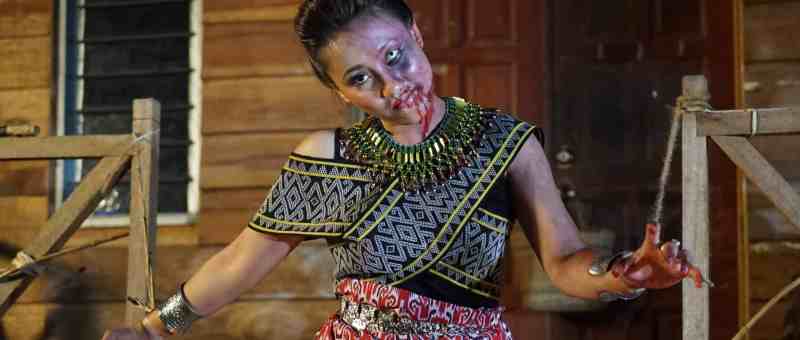
At its best when exploring the lives of the indigenous community, Zombie Infection reaches its stride only when arriving at the forest even while its attempt to shift focus from the fleeing orphans to the villagers is only partially successful. Nevertheless, the film makes the best of its meagre budget with some impressive prosthetics and zombie choreography as the villagers go after the undead threat with indigenous weapons and wearing traditional dress. Yet as the film’s melancholy conclusion perhaps implies, the legacy of colonialism can’t be overcome so easily leaving the survivors in the middle of a battle seemingly far from its end. 


Zombie Infection streamed as part of Yubari International Fantastic Film Festival 2021.

Original trailer (no subtitles)