Just 1 Day (給我1天, Erica Li, 2021)

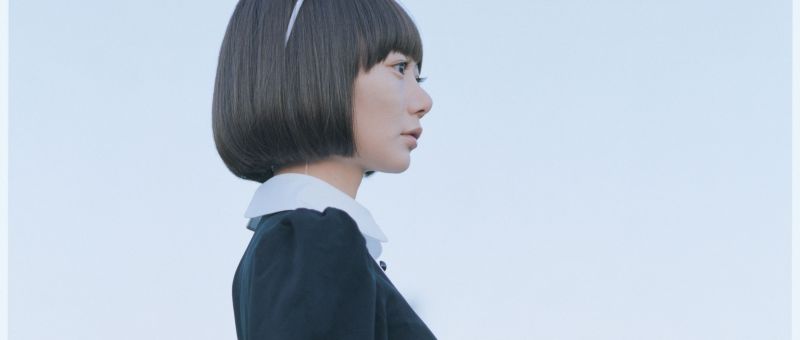
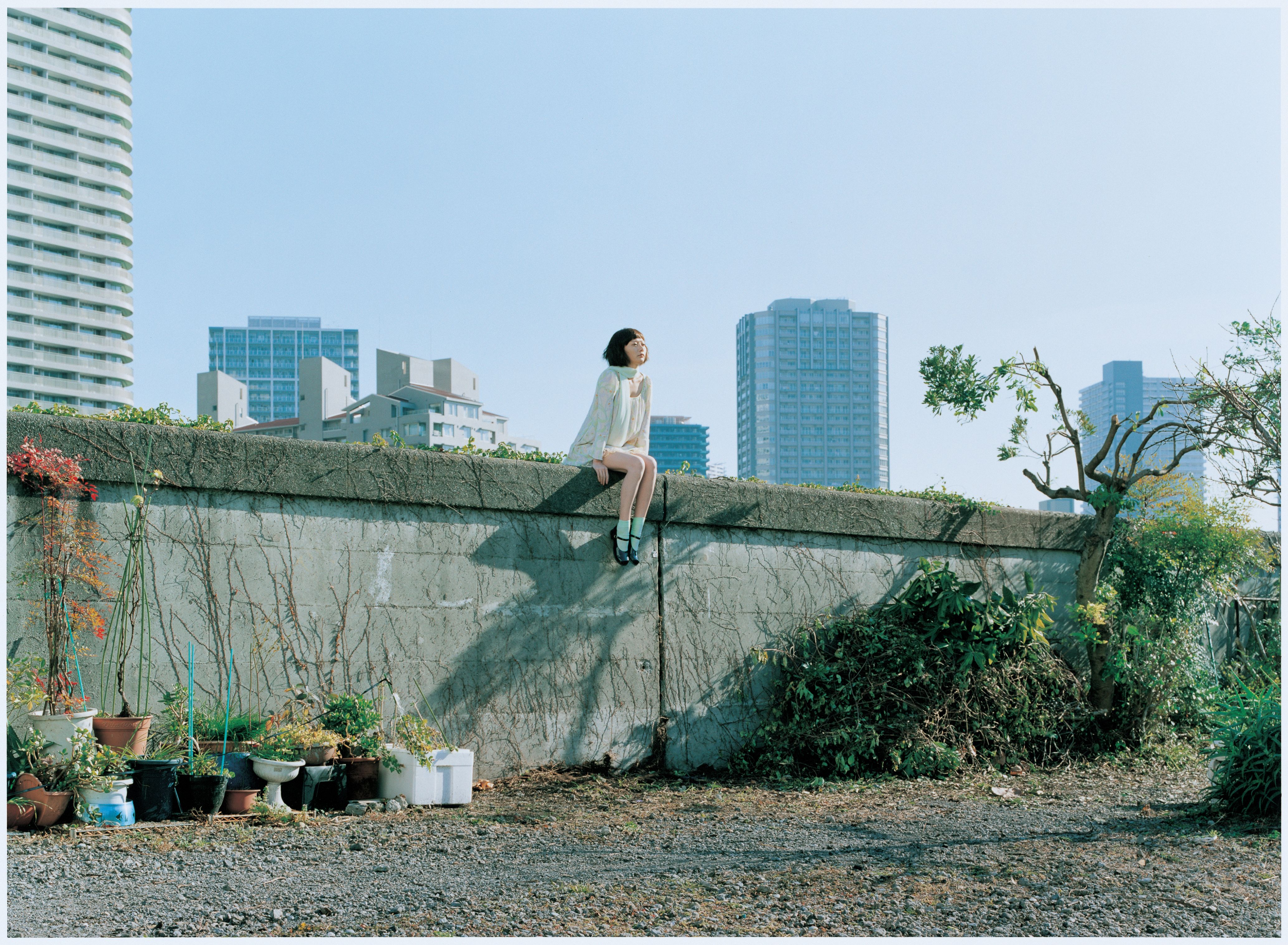
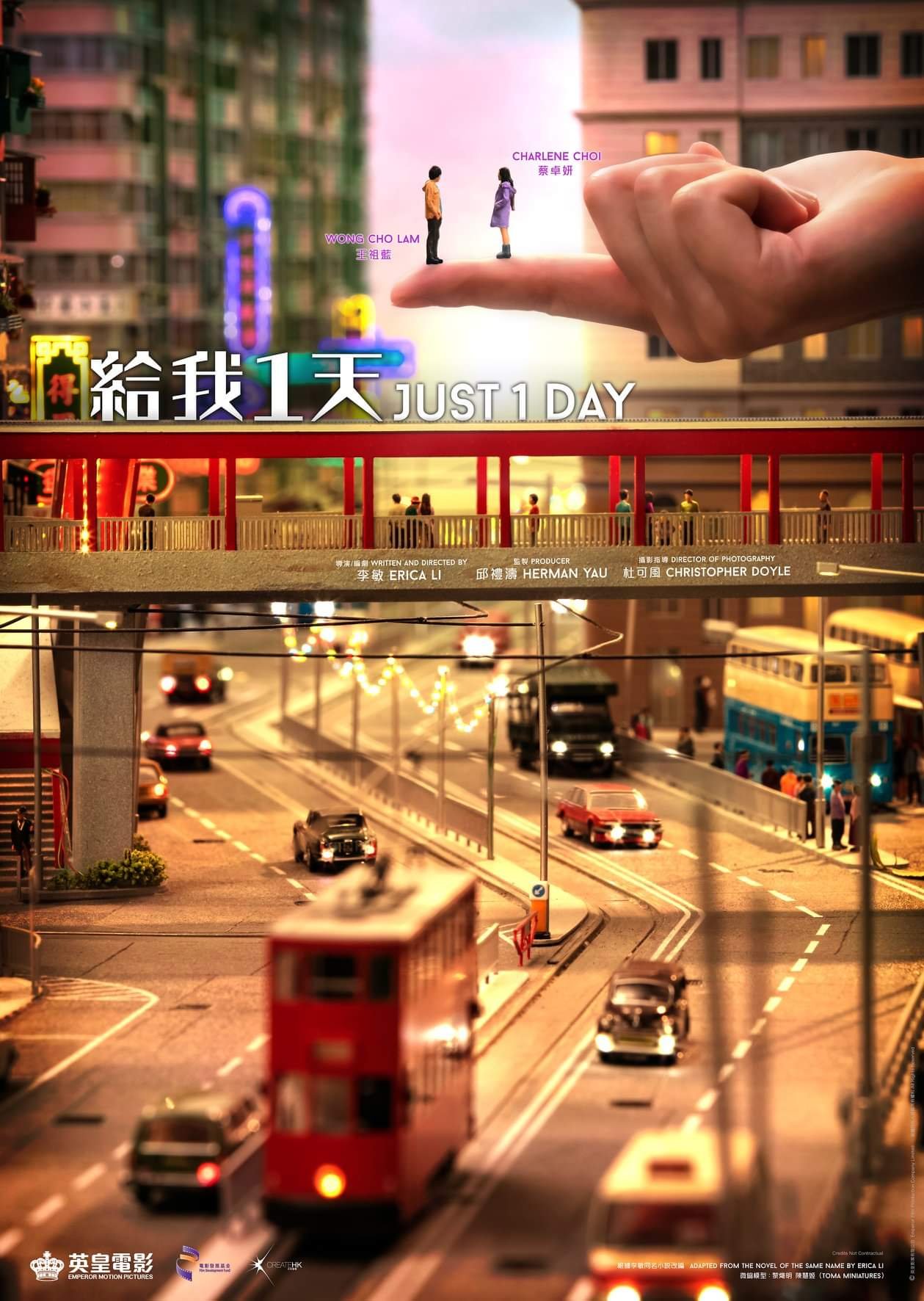
“Who has time for nostalgia with all the novelties out there?” asks the heroine of screenwriter Erica Li’s directorial debut Just 1 Day (給我1天), an adaptation of her own novel. She does, as it turns out, in fact that’s all she may eventually have time for in this tale of romantic transience as she, in a sense, learns to seize her future by living in the past through reconnecting with a childhood friend. 

Now in her early 30s, bank clerk Angelfish (Charlene Choi Cheuk-Yin) is an unfulfilled career woman who enjoys her job chiefly for the ability to be of service to others. Meanwhile, she’s trapped in a potentially dead end relationship with a man who she’s recently discovered has a longterm girlfriend in Canada he never gets round to breaking up with. Attending a primary school reunion marking the institution’s imminent relocation, Angelfish runs into a long lost childhood friend, Mosaic (Wong Cho-lam), now a sketch artist with a sizeable online following. Unbeknownst to her, Mosaic has long been carrying a torch but never had the courage to say anything partly because of a hangup about his short stature. As we later discover, however, he’s running out of time. Paying a visit to the bank where Angelfish works to enquire about insurance he reveals he’s suffering from the same condition that killed his father, ALS, and potentially has only a few more years to live. Shooting his shot, he asks Angelfish to spend just one day with him as his “girlfriend” to cross it off his list. Provided there’s no funny stuff, she agrees but of course discovers something far more profound than a fleeting connection. 

This being Angelfish’s story, Mosaic’s illness is more or less treated as a plot device intended to confront her with her own sense of mortality so that she reassesses her life choices in order seek true happiness. Mosaic in fact teaches her this when explaining the concept of a vanishing line so that she might learn to fix her eyes on the horizon and see the rest of the world in relation to it. Meanwhile, the fact that ALS is a degenerative condition is also aligned with the idea of a world slowly disappearing, the eventual message paradoxically amounting to the notion that nothing ever really disappears because it continues to exist in the hearts and minds of everyone that remembers it. In order to preserve this sense of “nostalgia”, Mosaic meticulously sketches the old Hong Kong before its inevitable destruction while Angelfish finds her vocation in recreating it through miniature diorama. 

The conflict is brought home to her in the opposing natures of her two men, boyfriend Ken chuckling at her distress over the destruction of a local landmark by claiming that the old has to go to make way for the new, but later finding himself unable to break up with his longterm girlfriend out of a sense of expectation and obligation. One might say he is similarly trapped by “nostalgia”, or at least an emotional coward either too afraid to take a risk on new love or unwilling to abandon the security of the familiar. Her female friends, meanwhile, present two opposing paths, one a free spirited flight attendant and the other a conventional housewife whose dreams of the perfect family are eventually dashed on discovering her husband’s infidelity. To that extent, what Angelfish chooses is a kind of independence in wedding herself to a memory while paradoxically living in the moment in the knowledge that her love has its own vanishing point. 

Though boasting cinematography by Christopher Doyle, Just 1 Day is fairly conventional in shooting style akin to many other contemporary Hong Kong dramas save its brief segues into the past and eventual transition into an artificial world of nostalgic memory. Nevertheless as much a love letter to a disappearing Hong Kong as a tearjerking romantic dramedy or inspirational tale of a soon to be middle-aged woman finding fulfilment in following her heart, Just 1 Day effortlessly sells its central messages of living life to the full while making and preserving memories that will, it assures, sustain you when all else is gone. 


Teaser trailer (English subtitles)
0&1 (Kei Nakata, 2001)

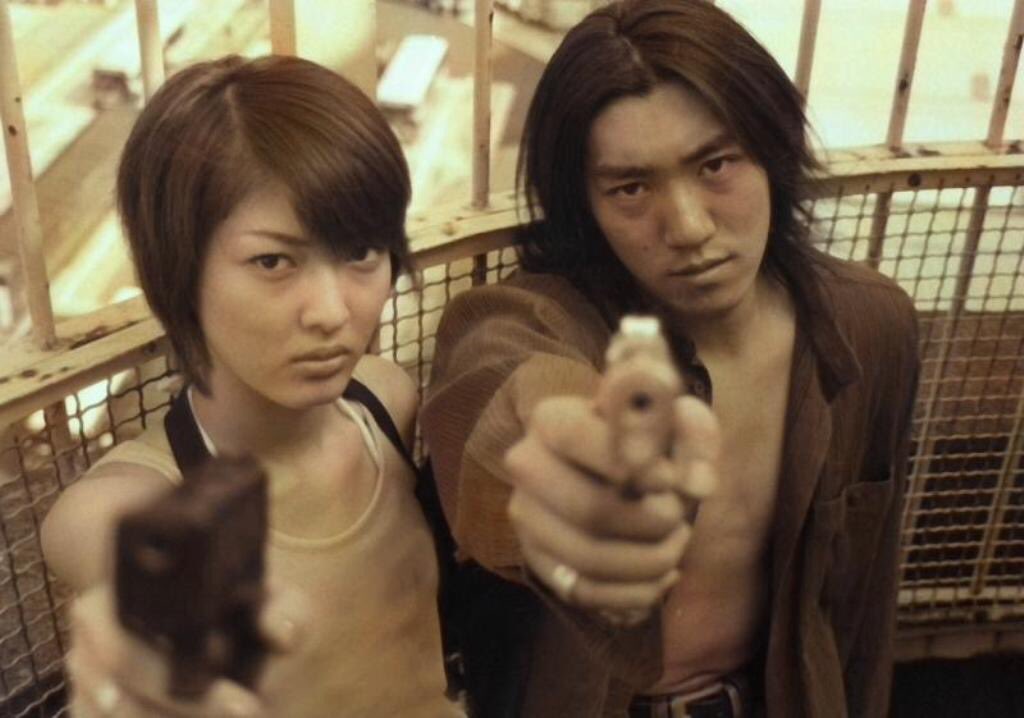
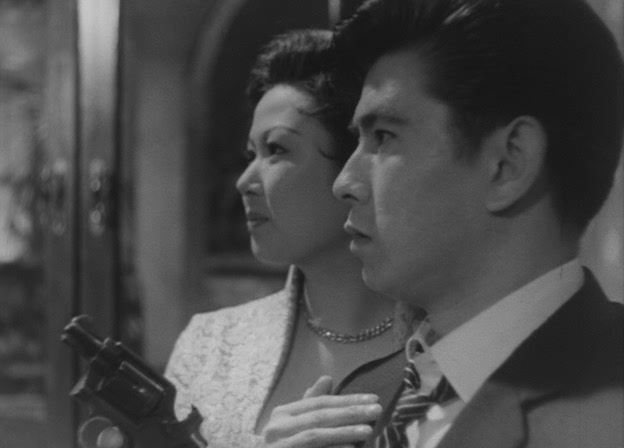
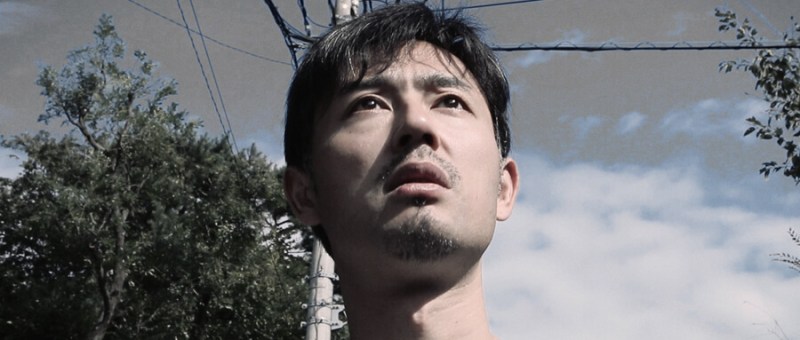
Filled with a sense of post-millennial ennui, Kei Nakata’s 2001 noir drama 0&1 is a familiar tale of fatalism and existential crisis but also a zeitgeisty capture of turn of the century Tokyo in which its heroes appear lost and in continual fear of displacement. Now digitally remastered, the meta quality of the film’s use of early DV ironically adds to the characters’ quest for proof of life through video while bearing out the mutability of physical recording which in itself can become inaccessible with terrifying speed. 

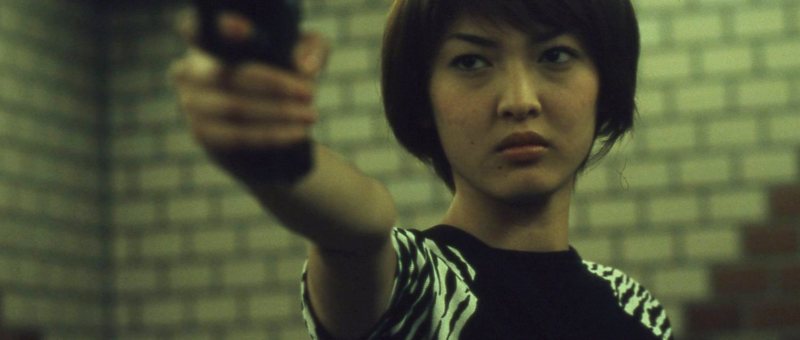
A young hitwoman ironically codenamed “0” is beginning to question her repetitive life of ceaseless killing, feeling in a sense as if she does not quite exist. In a quest to document her existence, she buys a handheld DV camera and begins recording herself and her thoughts as a kind of proof of life verifying that she does in fact live. “My memory will disappear someday. Will I disappear too?” she asks herself, stopping to capture cherry trees in bloom but disappointed to discover something at the harbour already gone. 

Her opposing force, a male hitman codenamed “1” is in the midst of a similar existential crisis feeling himself lost in a crowd as if it would make no difference to anything if he were to disappear. Unknowingly crossing paths with 0 in the chaos of the Shibuya scramble, he idly picks up a DV tape left behind in a cafe and, buying a DV camera for himself, is struck by 0’s existential musings. Taking up the camera he too begins to film himself because in this moment he wanted to exist even if describing his existence as “waiting to disappear slowly”. “We don’t know where to go” he laments, talking not just for himself and his opposing number but for the present generation trapped by post-Bubble malaise and millennial anxiety. Nakata frames his tale in terms of Y2K paranoia mired in the distrust of new technologies, but these two binary individuals look for salvation in the video screen for proof that they exist and that their reality has veracity.

Nevertheless, as the opening text informed us, 0 and 1 are numbers not meant to touch and their accidental meeting may spark its own kind of revolution in this case in the minds of two killers for hire otherwise trained neither to think or feel. Through their interactions, each begins to rediscover their sense of humanity while burdened by existential questioning but their newfound desire for emotional connectivity and individual identity is necessarily dangerous to their handlers who abruptly decide their broken robots must be destroyed before the contamination spreads. 

Yet the veteran they set on their tails, a refugee from old noir in crumpled trench coat, is facing much the same dilemma realising his end is near and in what form that end may likely come. Visiting an old school smokey jazz bar apparently after some time, he remarks on how nothing has changed inside but it too may soon disappear along with his own place to belong. Like the youngsters, he has grown tired of an existence of cynical repetition but given a new job he doesn’t quite like complains that in the old days things were fairer and had a kind or nobility rather than this rather sordid piece of housekeeping he’s just been asked to perform which could, he assumes, also be the end for him. His opposing number, however, is a pure survivalist living squarely in the moment who resents being saddled with a partner and insists on doing things her own way. 

Melancholy in its sense of fatalism, 0&1 ironically captures an early 20th century Tokyo which like its heroes has long since disappeared. The early DV aesthetic, while never quite beautiful, is the perfect evocation of the early 2000s while the medium itself has become largely obsolete, a digital halfway house now viewable only to those with the correct technology to unlock its secrets. Yet Nakata’s nihilistic prognosis is bleaker than it first seems, the heroine’s hopes of putting the camera down to make her own memories seemingly a forlorn hope while no refuge is available from the all pervasive sense of post-millennial emptiness, not even in dreams. 


 0&1 streamed as part of Yubari International Fantastic Film Festival 2021.

Original trailer (no subtitles)

Air Doll (空気人形, Hirokazu Koreeda, 2009)

“Was everything you saw in this world sad? Was there something, anything, what was beautiful?” the heroine of Hirokazu Koreeda’s exploration of urban loneliness Air Doll (空気人形, Kuki Ningyo) is asked by her creator though he can offer her few answers for the strange mystery of her life. Like a child, she takes beauty where she finds it yet much of what she sees is indeed sad as she reflects on the disconnected lives around her, the emptiness and futility of life in the contemporary society where everything is just a substitute for something else which cannot be obtained. 

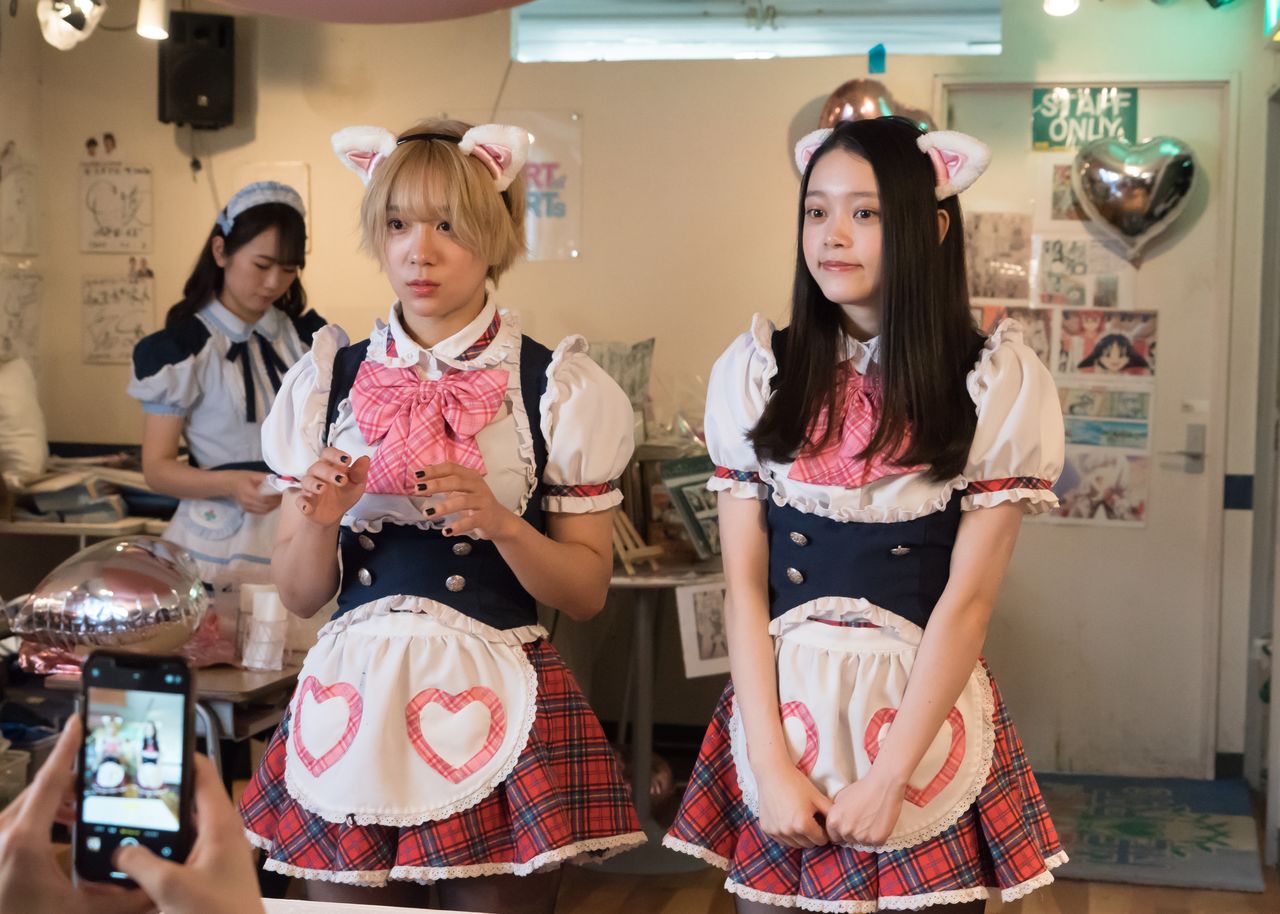
As for herself, she is quite literally empty inside, an inflatable sex doll owned by middle-aged family restaurant waiter Hideo (Itsuji Itao) who has given her the name of his ex, Nozomi (Bae Doona), which ironically means hope, wish, or desire though not generally of the sexual kind. Yet one day she suddenly wakes up and begins to explore the world rejoicing in its new sensations feeling the rain on her hands and the wind that sounds the chimes as she watches her neighbours go about their daily routine. Dressed in the French maid’s outfit picked out for her by Hideo she gets a job at a local video store and begins living a more independent life while learning how to operate in human society. She feels herself out of place but is repeatedly told that there are others like her, mistaking her literal emptiness for their spiritual despair. 

Yet that sense of emptiness and futility is evident from Nozomi’s first forays into the human world in that the first act of mundanity she witnesses is the bin men sorting rubbish for disposal. “Unfortunately they’re non-burnable” Nozomi’s creator explains when she visits him in search of answers revealing he throws out the broken dolls that are returned to him once a year, “after all, once we die we’re burnable garbage. It’s not such a big difference” he adds, though as it turns out it is quite a big difference to Nozomi in ramming home to her that she can never become human and will always be something else, an inorganic “substitute” for something perceived as the “real”. 

“Your only flaw is that your body’s so cold” Hideo ironically laments as he warms her up in the bath, something she is told repeatedly to remind her that though she has discovered a heart it does not beat and she is not “alive”. Yet an old man (Masaya Takahashi) seeking a different kind of comfort later remarks that those with cold hands often have warm hearts as he reflects on his own life as a “substitute” teacher while she looks over the pictures of the many dogs he’s had through the course of his life as substitutes for the traditional family that have only left him feeling lonelier through their inevitable absences. There is perhaps in this a slightly conservative and uncomfortable implication that the loneliness we see in everybody that we meet is partly caused by the decline of the traditional family itself partly a consequence of the shifting gender roles of the later 20th century society. When they first meet, Nozomi has been rejected by a group of local mothers for inappropriately cooing over a baby in a pushchair the old man comforting her with a tale of the mayfly which is itself empty inside existing only to give birth and then die its own life defined by futility. Nozomi can never truly be human, but more than that she can never truly be a woman because she cannot reproduce as signalled in her final exchange with a little girl in her neighbourhood who swaps her beaten up and broken doll, a substitute for her absent mother now symbolic daughter to Nozomi, in exchange for her ring, a symbol of adulthood. 

In this way Nozomi becomes herself a symbol of something that is broken, an active barrier to societal happiness in providing a way for men like Hideo to escape the responsibility of the traditional family by satisfying his sexual desire through a fantasy of intimacy with an inanimate substitute. When Nozomi throws her pump away, Hideo buys a new model and when she confronts him he asks her to go back to being a passive doll because he finds all the human stuff “annoying” and only wants a woman who can be a selfless embodiment of his desires, will never talk back, challenge him, or hurt his feelings. Meanwhile, when her boss at the store (Ryo Iwamatsu) who seems have experienced a recent familial breakdown of his own blackmails her into having sex with him in the bathroom he is conversely annoyed by her passivity while tearfully calling out his wife’s name. Even her innocent love for coworker Junichi (Arata Iura) has its darkness, not only does she suspect she’s merely a substitute for his ex, his fetishisation of her revolves around his ability to take control over life by letting out her air and then permitting her to live by blowing his own back into her. 

“I am an air doll. A substitute for sexual desire” is how she introduces herself, preoccupied with her literal emptiness yet along with a heart discovering a sense of self as she interacts with others, beginning to wear her own clothes rather than those purchased for her by Hideo. At a moment of crisis she is surrounded by all the treasures she’s collected which ironically include a number of ornaments intended for a doll’s house including a tiny simulacrum of a cake which reappears in her imaginary birthday party suggesting that the only true happiness is to be found in wishful fantasy while the “real” will only ever disappoint. Nevertheless, she uses her last breath to bring happiness to all she can, uniting the old man with a lonely old woman (Sumiko Fuji) who confesses to random crimes just to have someone to talk to. Shot with unusual fluidity by Mark Lee Ping-Bing, Koreeda captures a society in flux in which the easy convenience of disposable consumerism has begun to replace human relationships and left us all empty inside. 


Air Doll in in US cinemas and on VOD Feb. 4 courtesy of Dekanalog

Trailer (English subtitles)

Flesh Pier (女体桟橋, Teruo Ishii, 1958)

Teruo Ishii may be most closely associated with his exploitation work for Toei in the late ‘60s and ‘70s but in actuality he began his career at Toho, later joining Shintoho where he served as an AD to among others Mikio Naruse whom he regarded as a lifelong mentor. After making his debut with boxing movie King of the Ring: The World of Glory in 1957, he worked mainly in children’s sci-fi tokusatsu serials before sliding into B-movie noir of which 1958’s Flesh Pier (女体桟橋, Nyotai sanbashi) is an early example. 

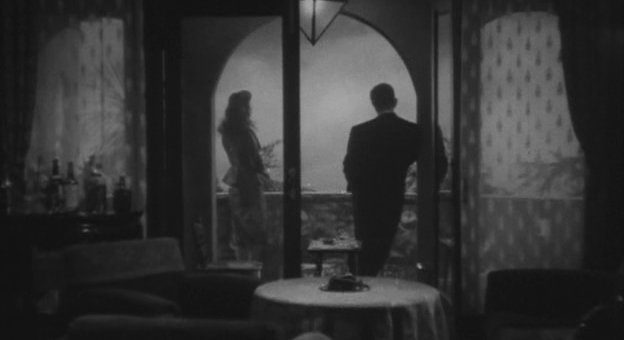
Set firmly in the contemporary era, Ishii opens with a documentary-style voiceover exoticising the seedy underbelly of the city’s entertainment district hidden away in otherwise sparkling Ginza. Shooting in a bold reportage style, he captures a sense of natural spontaneity reminiscent of early American independent cinema transitioning directly into nightclub Arizona where a woman is furiously dancing. Arizona is as we’ll see the nexus of the recent proliferation of “call girl” businesses which have arisen since sex work was criminalised and in this case at least dependent on an international sex trafficking network backed by an American gangster, Thompson (Harold Conway). Salaryman Keizo (Ken Utsui) is a new customer, double checking that the business is “safe” before being reassured that they don’t deal with anyone they don’t know and have already vetted his identity, but when he reaches the hotel room he’s been handed the key for, he discovers the body of a woman lying in the bathtub and is forced on the run. The twist is that Keizo isn’t a bored executive after all but an undercover policeman working on breaking the trafficking ring. 

Co-scripted by Akira Sagawa, Flesh Pier seems to draw frequent inspiration from Casablanca only with the roles slightly reversed as replacement hostess Rumi (Yoko Mihara) finds herself wondering why of all the gin joints in Ginza Keizo had to walk into hers while the bar’s musician, Teruo (Teruo Hata), quite clearly in love with her himself, completes the triangular relationship. The couple even enter a Moroccan-style room while echoing Rick and Ilsa’s painful rehash of their Paris break up as Rumi tries and fails to explain why she left him on some previous occasion, Keizo remembering that she wore a white sweater and a blue coat to mimic Rick’s “the Germans wore grey, you wore blue” while the film’s ending is also hugely reminiscent of Casablanca’s “beginning of a wonderful friendship” only with additional romance. 

Nevertheless, the crime here is bigger and darker than most contemporary noir with awkward echoes of Japan’s prewar sex trafficking industry embodied by the karayuki as it becomes clear the gang’s business model relies on finding young women and luring them abroad with promises of good jobs only to force them into them sex work. Meanwhile one of the regular policemen, Hayami (Hiroshi Asami), gets a shock when he sets up a meeting with one of the call girls and is met by his own fiancée who, unbeknownst to him, has resorted to sex work in order to fund her brother’s tuition. “What else could I do?” she tearfully asks him making plain that in the difficult if improving economic environment of late 50s Japan sex work is still the only viable option for many women needing to support their families in the absence of men given persistent societal sexism which often locks them out of other kinds of well-paying jobs. Hayami perhaps understands this, drowning his sorrows with his veteran partner insisting that he’s sick of being a policeman and plans to quit only for the older man to sympathetically tell him not to give up so easily. 

Then again, Keizo’s secondary love interest Haruko (Akemi Tsukushi) is an intrepid undercover reporter posing as a model in order to bait the trafficking ring. Even so the primary drama revolves around Keizo and Rumi’s unfinished business along with her musician’s jealousy, the implication being more that her feelings for Keizo have clouded her judgement rather than reawakened a sense of moral goodness. Like many femme-fatales in post-war B-movie noir she is made to pay the ultimate price for her transgressive femininity in having firstly climbed the in-gang ladder and then damned herself in her conflicted love for the earnest Keizo even while suspecting he may be an undercover cop despite his acting like an underworld thug. These are indeed a new breed gangster much more like those seen in European and American noir rather than traditional yakuza while the environment of the Arizona is also something of a liminal space as the opening voiceover puts it in but not of Japan. 

While nowhere near as lurid as some of Ishii’s later work, Flesh Pier is certainly daring for the time period in the griminess with which it depicts the successor to the red light districts along with its air of forbidden allure even while its club scenes are in keeping with those found in other contemporary gangster tales if lent a little more realism in the immediacy with which Ishii shoots them making full use of documentary-style handheld. Expressing a degree of anxiety as regards Japan’s increasingly global outlook along with that of increasing social change, Flesh Pier is formally daring from the young Ishii artfully playing with classic noir while fully embracing the transgressive thrills of B-movie crime. 


Zombie Infection (Belaban Hidup: Infeksi Zombie, Ray Lee Voon Leong, 2021)

An indigenous village finds itself under threat thanks to concurrent waves of colonialism in Ray Lee Voon Leong’s indie undead drama, Zombie Infection (Belaban Hidup: Infeksi Zombie). “Don’t concern yourself with outsiders. Our longhouse should be our only concern” advises the village head, yet as the heroes will shortly discover nowhere is really as isolated as it might at first seem and the consequences of exploitation and abuse will eventually reach even the deepest of forests.

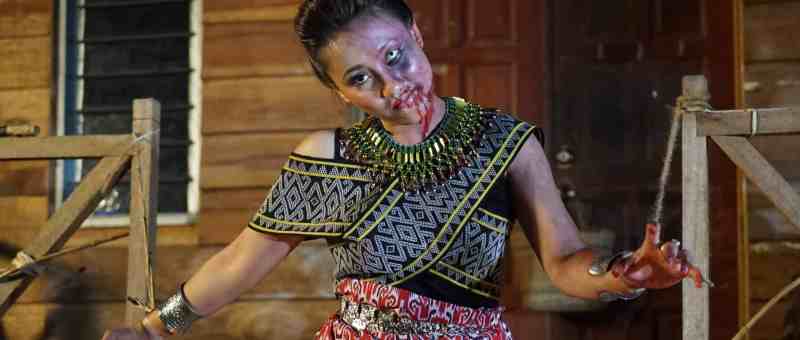
As detailed in the opening voiceover animation, evil Russian mad scientist Dr George (Weeam Shawaheen) has fled to Borneo after creating chaos elsewhere and is currently conducting his nefarious experiments on the marginalised taking villagers off the streets and tricking orphans with the promise of free medical care in return for participating in “clinical trials”. Unfortunately, Dr George’s marvellous medicine turns people into zombies which becomes a problem when a bunch of them escape along with a handful of orphans fleeing their captivity at the hands of the exploitative physician. After searching a nearby mall looking for a missing sister and picking up a little boy orphaned by his zombified mother, the gang make their way into the forest assuming that the rough terrain will make it harder for the zombies to follow them but unfortunately they are not quite correct in their assumption. 

Meanwhile, an indigenous village is going about its normal life hunting in the forest little knowing they are already under threat despite the persistent nightmares plaguing village head’s son, Gadang (Pablo Amirul). Gadang is soon to become a father for the second time but his relationship with his young daughter Suna is beginning to fray, his wife Jawai (Anna Melissa) cautioning him that he can’t keep making promises only to disappoint her later as he agrees to take her swimming in lieu of allowing her to accompany him into the forest. His father patiently sharpens knives, insisting that it’s best to be ready for any eventuality though village life seems to be happy and as far as they know there is no reason to feel unsafe. Nevertheless, the infection soon catches up with them even if they are slow to believe claims of an undead invasion coming from “outsiders” later blamed for bringing evil into the forest. 

Only, it wasn’t the orphans who brought it, one of whom has indigenous tattoos on his shoulders and speaks the same language as the other villagers, but arguably two of their own who had sold out their people to collaborate with Dr George in return for riches. Realising the scale of the problem on his hands, Dr George determines to look for an antidote but there’s nothing he can really do to put right the chain reaction his immoral greed has caused in his exploitative misuse of the marginalised members of a small South East Asian nation. 

“What has happened is indeed alarming” according to one of the villagers in what might be the understatement of several centuries, but isolation is no longer enough to protect their longhouse from the ravages of colonialism as they find themselves assaulted by hordes of man-eating monsters created by the greed and amorality of the infinitely corrupt Dr. George. Gadang is forced to face his nightmares, anxious in assuming his father’s responsibility to protect the village while mindful that he has perhaps in a sense neglected his duties as a husband and father while playing the big man in the forest. It’s just as well his dad sharpened all those knives, because they are its seems their last defence even as they’re forced deeper into the forest in search of a safety that may no longer exist. 

At its best when exploring the lives of the indigenous community, Zombie Infection reaches its stride only when arriving at the forest even while its attempt to shift focus from the fleeing orphans to the villagers is only partially successful. Nevertheless, the film makes the best of its meagre budget with some impressive prosthetics and zombie choreography as the villagers go after the undead threat with indigenous weapons and wearing traditional dress. Yet as the film’s melancholy conclusion perhaps implies, the legacy of colonialism can’t be overcome so easily leaving the survivors in the middle of a battle seemingly far from its end. 


Zombie Infection streamed as part of Yubari International Fantastic Film Festival 2021.

Original trailer (no subtitles)

The Golden Bat (黄金バット, Hajime Sato, 1966)

Named after Japan’s oldest brand of cigarettes, Golden Bat is regarded by some as the nation’s first superhero created as a character for Kamishibai in 1931 by Takeo Nagamatsu and Suzuki Ichiro. Drawing inspiration from mythological illustrations, Nagamatsu and Ichiro had however intended Golden Bat to be rooted in science rather than legend which might seem ironic on viewing Hajime Sato’s 1966 piece of Toei tokusatsu titled simply The Golden Bat (黄金バット, Ogon Bat). 

Though Toho might be more closely associated with big screen tokusatsu adventures, Toei also had a small sideline in special effects movies as well as a series of hugely popular television franchises. Back in the 1960s, however, Golden Bat was something of an outlier in that it shifts away from the predominant messages that underlined many post-war tokusatsu in the importance of responsible science favouring instead a kind of throwback to the 1930s serial origins of the title character. As the film opens a factory worker with an obsessive though amateur interest in astronomy, Kazahaya (Wataru Yamakawa), tries to convince a professor that the planet Icarus has left its regular orbit and is on an imminent collision course with the Earth. The professor, however dismisses him, stating that his story might appeal to the tabloids but “it is essential that scientists examine any situation carefully” (which he doesn’t seem interested in doing). An assistant then arrives to back him up, adding that as they live in a world in which mankind has been to the moon “the universe no longer poses any terror for us” which sounds like quite an irresponsible statement for a scientist to make. 

In any case, according to Kazahaya Icarus is going to collide with the Earth in under 10 days so there isn’t much time for careful investigation anyway. On his way out of the building he’s accosted by two scary looking guys, but contrary to expectation they aren’t from some shady government organisation carting him off because he knows too much but from the super secretive Pearl Research Institute which has apparently been following him closely and wants to offer him a job because he’s right about Icarus. In another break with the usual tokusatsu anti-nuclear messages, Pearl has developed the “Hyper Annihilator Beam Cannon” which, using a special lens they haven’t developed yet, can turn a ray of atomic light into a heat beam with the power of a thousand H-bombs. They plan use this to blow up Icarus before it hits the Earth (no mention is ever made about whether or not Icarus is also inhabited). It’s about this time that their expeditionary force begins sending distress signals and then drops out of contact, the gang then discovering Icarus is part of a master plan operated by the evil inter galactic villain Nazo who thinks that only he deserves to exist so wants the Earth destroyed. 

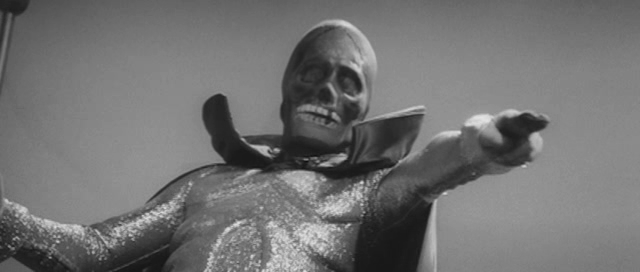
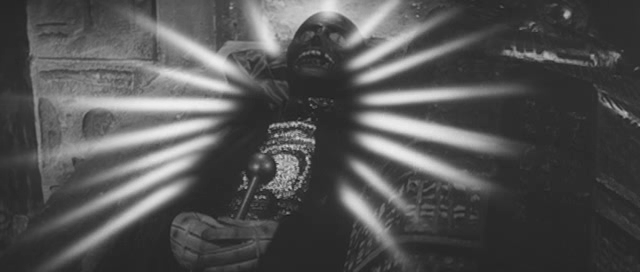
Nazo is Golden Bat’s arch enemy, here a man in a rat costume with four eyes and a large metal wrench for a hand. Travelling to find their fallen comrades, the gang discover Golden Bat in his sarcophagus hidden in what looks like an ancient temple with instructions to wake him up with a single drop of water should humanity be in crisis which he predicts will happen 10,000 years after he went into storage in Atlantis. Professor Pearl’s adorable 12-year-old granddaughter Emily (Emily Hatoyama) does just this and then becomes his point of contact, but in true tokusatsu fashion after simply gifting them the special lens and fighting off Nazo’s goons Golden Bat flies off into the sunset with important superhero business to attend to. Meanwhile, Captain Yamatone (Sonny Chiba) and the others attempt to save the Earth while battling Nazo’s three most dangerous henchmen: wolfman Jackal (Keiichi Kitagawa), fish woman Piranha (Keiko Kuni), and Keloid (Yoichi Numata) who has a large skin lesion on his face which honestly seems in poor taste. 

As in his other films, Sato appears to have his tongue very much in his cheek given that the performances of his cast are decidedly broad with a tendency towards evil glares and reaction shots, his camera often zooming in directly on villainy. Golden Bat meanwhile is often seen striking theatrical poses while uttering phrases such as “for justice alone do I fight!” and hitting people with his baton to make them behave. You might think children would find a skeleton man with an eyeless gold skull a little frightening, but Golden Bat seems to make it work while offering his own non-evil laugh as he cheerfully returns to save the day until finally forced to tap the sign he’s helpfully put up reading “those who attempt to subjugate the world through force by their own force shall perish”. Nazo meanwhile has a definite nautical theme, travelling by shark submarine/aeroplane and giant squid-shaped earth borer with laser eyes but is finally undone in surprisingly violent fashion by Golden Bat’s Baton of Justice. Defiantly irreverent and flying in the face of tokusatsu’s general responsible science stance, Golden Bat is exceptionally silly and makes little literal sense but is undeniably fantastic fun as the skeletal superhero does his best to ward off galactic imperialism. 


Original trailer (no subtitles)

My World (Murantin, 2021)

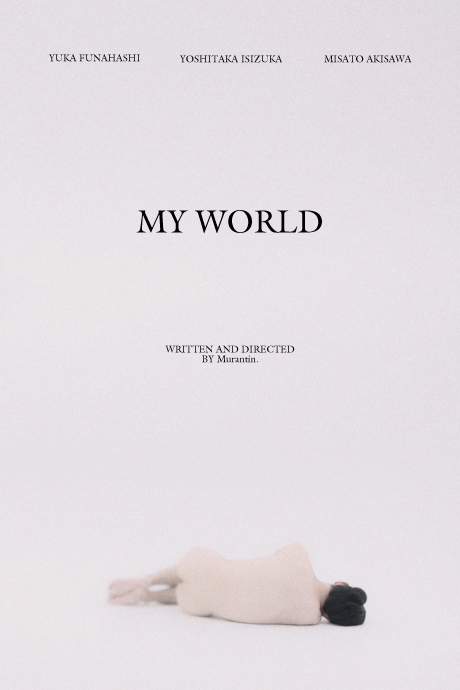
Perhaps we’ve all had that lonely feeling recently, walking around eerily empty streets as if somehow the world had ended while we were asleep and now we’re all alone, but the hero of theatre actor Murantin’s feature debut My World is about to discover that he really is (almost) the last of his kind as he struggles to reconstruct his history, identity, and sense of self while encountering only two other women one young and one more his own age but each with strange and unclear motives. 

A man wakes up naked in a park, almost rebirthed in a sense, and rises in confusion. Finding a grey tracksuit abandoned a little way away he wanders through a town he doesn’t recognise where all the stores are closed and there are no people nor any traffic on the streets. With no sign of life to be found he’s drawn towards a library but finds little in terms of illumination before leaving and noticing a second Earth hanging in the sky where the moon ought to be. Returning to the park he sleeps, but is woken in the morning by an apparently concerned high school girl who later offers him a place in her home where she is currently living alone as her siblings are away and her parents abroad. A kind gesture, but perhaps not very sensible given her circumstances. In any case, she tells the man not to go out, buying him some nicer clothes and cooking dinner every night.

With no memories of his own, the man remains confused. The high school girl appears to be living normally. She leaves every day to attend class which suggests there are other people around though he never sees any and the strangely old-fashioned TV in the living room only displays static. One day she informs him her boyfriend wants to come over so he’ll have to make himself scarce, later escorting him to the basement where she handcuffs him to a water pipe. Why would a regular high school girl own a pair of sparkly handcuffs with fairytale-esque little blue keys? Why is he not supposed to look into any of the other bedrooms? What secrets is this world hiding from him? The plot begins to thicken when he decides to break the rule and follow the high school girl to see where she goes, only to find himself at the library again where he encounters a middle-aged woman in what appears to be her negligee. 

The man is in a sense imprisoned within the house, the handcuffs a literal extension of his mental constraint in a world which may be of his own making in wilful self-exile from a traumatic past. His strange dreams hint at another life, possibly on the other Earth, in which there are flashes of potential violence. Before long he begins encountering other versions of himself, fracturing under the weight of his internal confusion when directly confronted. The high school girl tells him he’s creating too much “disorder” and the only way to repair it is to go back to his own world, but the man doesn’t want to. Describing it as painful, he insists there’s no need to return if he can stay with the high school girl but in the end he will have to face himself and the traumatic past from which he seems to be in mental flight. 

Dreamlike in its uncanniness, Murantin’s camera chases a man on the run from himself as he walks through a world already dead, a still place with no past or future. He does not know himself, and no one else does either or at least that’s what they claim. The world is quite literally his, a place which he has unwittingly created in refuge from his trauma but he is no god only a man imprisoning himself, a wilful exile from a world he couldn’t accept. A tale of guilt and loneliness, My World offers its hero a chance at redemption through facing his past, accepting his responsibility, and learning the truth about himself but nevertheless concludes that there may be only one path to freedom while atoning for his transgressions in a world suddenly more alive and once more in motion. 


My World streamed as part of Yubari International Fantastic Film Festival 2021.

Trailer (English subtitles)
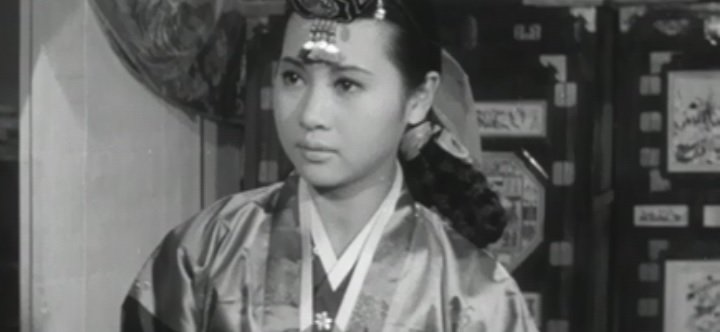
Apart from Life (地の群れ, Kei Kumai, 1970)

By 1970, Japan had more or less cemented its economic miracle and in terms of cinema at least memories of the war were beginning to recede with the young keen to address other concerns such as dissatisfaction with increasing consumerism or resistance towards American foreign policy in Asia. Unjustly neglected by international scholars, Kei Kumai by contrast refused to turn away from issues others might have found taboo or at least unpleasant enough to avoid mentioning. Like A Chain of Islands, Apart of From Life (地の群れ, Chi no Mure) has an overt anti-American sentiment but in essence criticises a society in which people are dying of guilt and shame though essentially blameless while those marginalised continue to oppress each other and fight amongst themselves rather than unite to resist their marginalisation. 

Based on a novel by Mitsuharu Inoue, the film opens with a brief prologue set in 1941 before jumping forward to the mid-1960s in the naval port town of Sasebo, the naval facilities now operated by American forces. An ensemble drama, the tale revolves around a drunken doctor, Unan (Mizuho Suzuki), though this one is far from an angel merely another wounded and compromised soul of the post-war era wracked by guilt over his various moral failures which began with the incident in the prologue in which he attempted to weasel out of his responsibility after getting an ethnically Korean girl pregnant as a young teenager working in a coal mine. He is the first of many to insist “I know nothing” that he’s “responsible for nothing” firstly denying the child is his then trying to smooth it over with money before coldly telling the woman’s sister to take her to a hospital in nearby Sasebo where no one will know them in order to get an abortion and avoid the social stigma of unwed pregnancy. The sister can only look at him with contempt. Later he discovers that the young woman lost her life while trying to provoke a miscarriage. 

Hako died, in a sense, out of shame. Many of Unan’s patients face the possibility of something similar. One woman comes to him about her teenage daughter, Yoshiko, who is bleeding continuously as if constantly menstruating. Unan asks the mother if she was in Nagasaki at the time of the atomic bombing as the symptoms are similar to the effects of the radiation poisoning he observed while working as a doctor in the city. She continues to deny it, but flashbacks to conversations with her now absent husband and daughter suggest she may not be telling the truth at least in its entirety even though her daughter’s life is at stake. She doesn’t want to be associated with “those Kaito Shinden people”, referring to the industrial slumland where many refugees from Nagasaki have settled which is treated as a kind of plague town by the rest of the local area. If her daughter survives but is unmasked as a second generation A-bomb victim her mother fears she will never be able to marry and that she will have “no future”. 

Yet they are not the only ones facing marginalisation. A young woman, Tokuko, comes to Unan’s office wanting a certificate that proves she has been raped, but Unan doesn’t help her firstly for the understandable reason that she is, understandably, unable to explain the exact circumstances to him, and secondly because he just isn’t very invested in her wellbeing bizarrely suggesting she come back with a relative or the person responsible. As she later explains, the rapist threatened to expose the fact that her family are burakumin in order to keep her quiet while she clearly remembers that he wore a glove on his left hand which she believes probably hides a distinctive keloid skin lesion marking him as an A-bomb victim and probable resident of Kaito Shinden. Tokuko’s father had also been a victim of workplace discrimination presumably because of his burakumin heritage, his wife told that he had stabbed himself while confronting the workers who were harassing him advised to keep quiet rather than attract the attention of the authorities. Tokuko is originally shamed into silence not by her violation but by her marginalisation, later deciding to track down her assailant by herself after someone else reports the crime to the police who arrest a local Kaito Shinden troublemaker and attempt to frame him for the crime. 

The confrontation however leads to a small war between the Kaito Shinden A-bomb survivors and the burakumin community which results in the death of a burakimin woman after they tactlessly insist that Kaito Shinden is a buraku below the buraku and that their blood is “rotten” and will be for generations. Discussing the case, some had even suggested that the rape was itself a result of prejudice towards the A-bomb survivors seeing as they are unable to find wives. Yet Tokuko’s mother had asked if being burakumin means it’s OK to rape her daughter, in much the same way Hako’s sister might have asked if being ethnically Korean made it OK for Unan to so casually discard her. Explaining that the locals regard Kaito Shinden as a “sick village” Yoshiko’s mother says she doesn’t think the people there are any different from anyone else despite her determination not to be associated with the A-bomb “disease”. “If Kaito Shinden is sick, the whole of Japan is sick!” Unan fires back revealing that he himself was also in Nagasaki shortly after the bomb dropped, apparently objecting to these baseless prejudices but seemingly unwilling to cure them even while his patients quite literally die of shame. 

In his own case, however, it’s not prejudice or wartime trauma that have led to Unan’s alcoholism but his many moral failures and their resulting guilt. His wife (Noriko Matsumoto) wants to divorce him, partly because of the drinking, but also because of his longstanding guilt over the death of a friend who retreated to the mountains with the communists during the Red Purge of the early 1950s of whom he is also jealous in that he was previously his wife’s lover and he can’t get over wondering if he’d lived his wife would have chosen him. Guilt over Hako, perhaps mixed with the fears of his radiation exposure, have also led him to emotionally blackmail his wife into several abortions as if he thinks it improper to father a child. 

Meanwhile, we seem to see pregnant women everywhere. Nobuo (Mugihito), orphaned by the A-bomb, sees a pair of them walking ahead of a gaggle of nuns which he later decides to freak out by creepily staring at them before lunging wildly like a dog among geese. The film’s conclusion finds him on the run from a gang of burakumin boys looking for revenge, running far out of the slums into the suburbs and through one of those nice new danchi housing complexes where a row of pregnant housewives sits silently knitting, something almost creepy in the vacant way they smile at him as he runs past before tripping over a child’s toy car. Boys like Nobuo are it seems cast out from the newly consumerist society of the economic miracle while just about everyone is in some way marginalised and in some cases several times over: rape victim, burakumin, A-bomb survivor, troublemaker, orphan, divorcee, communist, Christian. Nobuo wonders why God chose Nagasaki for an A-bomb when it’s where all the Christians live while the head of a Virgin Mary statue is repeatedly smashed as if to imply there’s no more mercy to be found here. 

Kumai regularly cuts back to a disturbing visual motif of a cage filled with rats who kill a live chicken and fight over the scraps of rotting meat until ignited by a gust of fire, the survivors scrabbling over each other blindly looking for an exit. Meanwhile, US jet planes fly constantly overhead and all Unan can think to do is throw a rock at a flag flying on the base. “She was killed by everybody” Tokuko exclaims of the burakumin woman, suddenly seeing the webs of prejudice, oppression, and selfishness which created the circumstances which led to her death by stoning. Shot in a crisp black and white and academy ratio, Kumai’s steely drama lets no one off the hook implying that all of Japan is indeed “sick” wilfully leaving these marginalised people to fight amongst themselves for the scraps of a newly prosperous society. 


DVD release trailer (no subtitles)

A Princess’ One-Sided Love (公主님의 짝사랑 / 공주님의 짝사랑, Choi Eun-hee, 1967)

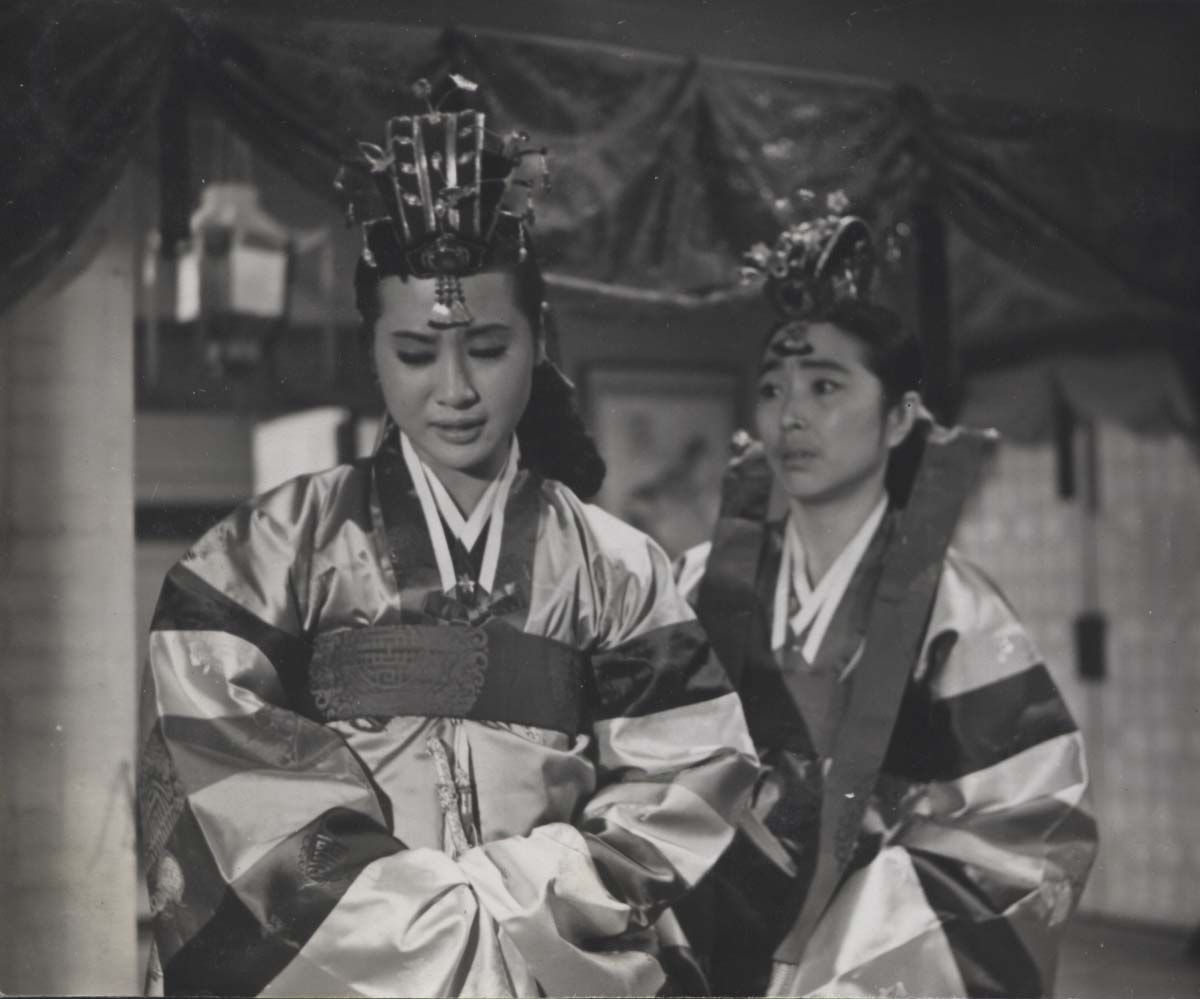
“Those are the rules of the palace for a princess” the rebellious heroine of Choi Eun-hee’s second directorial feature A Princess’ One-Sided Love (公主님의 짝사랑 / 공주님의 짝사랑, Gongjunimui Jjaksarang) is told, though the “palace” is really the society and the “rules” those which all women are expected to “endure”. Quietly and perhaps subversively feminist, Choi’s humorous tale draws inspiration from Roman Holiday but unexpectedly engineers a happier ending for its lovelorn heroine who is permitted to transcend the constraints of her nobility if not quite of her womanhood. 

Tomboyish princess Suk-gyeong (Nam Jeong-im) is the youngest of six princesses and the last to remain at home in the palace yet to be married. Consequently, she is infinitely bored all the time and continually up to mischief in part because as a princess she is not permitted to leave the estate and has a natural curiosity about the outside world. That curiosity is further sparked when she lays eyes on handsome scholar Kim Seon-do (Kim Gwang-su) who picks up a shoe she had dropped while inappropriately running on the day of her mother’s birthday celebrations. Possibly the first young and handsome man she has even seen, Suk-gyeong cannot help but be captivated by him and manages to convince her sisters to help her escape the palace to venture in search of her probably impossible love under the pretext of visiting her grandparents whom she has apparently never visited before.  

Like Audrey Hepburn in Roman Holiday, what Suk-gyeong wants is a break from the “tedious and pathetic” life of a princess, but soon discovers herself to be entirely naive as to how the “real world” works. Her sisters agreed to help her in part because they acknowledge how difficult it was for them when they married and had to leave the palace with no understanding of how to live outside it. Having left in the clothes of a servant, the first thing that Suk-gyeong realises is that the outside world is governed by a different set of hierarchies and even if she’s a princess she is still a woman and therefore presumed to be “inferior” to men to whom she is expected to remain subservient. Her grandfather, who has never met her before, wastes no time exerting his patriarchal authority in his own, comparatively humble, home. “A woman, once married, must abide by the rules of her new family, the confucian ethics, and respect your father and husband and become a wise and obedient wife” he explains, striking her across the calves with a cane to teach her a lesson for her imperious tone in failing to pay him the proper respect. 

Failing to use appropriately polite language with those around her, forgetting that she should now be deferent both to men and to those who exceed her in age, gets her into constant trouble. Nevertheless, a trip to the marketplace gains her a further understanding of the extremes in her society firstly when she misunderstands a rice cake seller’s patter and assumes he intended to gift her some of his produce as he might to a princess, and secondly when she bumps into a woman with a baby on her back and breaks the pots she was hoping to sell to pay for her husband’s medical care. Introduced to such desperate poverty, the undercover princess knows not what to do but later gifts her a jade pin hoping perhaps to at least cure the husband’s malady, only to wander into another dangerous situation when she is mistaken for a sex worker by a trio of drunken noblemen who pull her into a drinking establishment which is in fact a brothel. Naively drinking with the men she mocks them for their attempts to play on their names each boasting of their famous fathers and personal connections to men she knows to be elderly cranks and obsequious fools. Shocked to discover what goes in establishments like these she tries to make her escape but is almost assaulted by one of the men, Shim, who is later posited as an ideal match by her unsuspecting mother laying bare another patriarchal double standard as Shim plays the part of the gentleman in order to effect his advancement. Luckily, she is saved by Seon-do who happens to be passing but mistakes her for a boy because of the disguise she is currently wearing. 

Selfish in her naivety, Suk-gyeong is warned that her impossible crush might end up harming Seon-do’s hopes of making it into the elite through success in the state exam while he, once made aware of the truth, immediately does the right thing by kindly rebuffing the princess’ inappropriate interest leaving her with a poetic love letter claiming he’s gone off to a temple for a spell of intensive study. Perhaps improbably it’s the love letter that eventually saves them, touching the king’s heart and convincing him to acquiesce to his sister’s wishes of escaping the gilded cage of nobility. Suk-gyeon’s pleas to renounce her royal title might also stand in for a desire to renounce womanhood in that it “stops us from doing anything we want. We are matched up with an unknown husband and we spend our youths in misery for our lives are tedious and pathetic”, reminding her brother that as a king but in truth as a man he cannot understand even while he reminds her that these are the “rules” endured by countless ancestors. The king is moved, he breaks with tradition and frees his sister yet he does so to allow her to become a wife even if he has also granted her the freedom to choose her husband and live in the outside world unconstrained by the strictures of nobility but nevertheless bound by oppressive patriarchal social codes. Nevertheless, it’s an unexpectedly progressive conclusion advocating for change and personal happiness over the primacy of duty and tradition. 


A Princess’ One-Sided Love streamed as part of the Korean Cultural Centre UK’s Korean Film Nights: Filming Against the Odds 

Glasgow Film Festival Announces 2022 Programme

The Glasgow Film Festival returns to cinemas following last year’s online edition bringing another packed programme of recent cinema hits from around the world to screens in the city and beyond 2nd to 13th March. As usual there are a few East Asian offerings including Zhang Yimou’s long delayed One Second and the hotly anticipated animation Inu-Oh from Masaaki Yuasa.

Baby Assassins (ベイビーわるきゅーれ, Yugo Sakamoto, 2021)

Action comedy in which a pair of teenage girls are forced to become roommates after graduating from assassin school while working regular jobs trying to blend in with mainstream society only to accidentally get mixed up with yakuza!

Inu-Oh (犬王, Masaaki Yuasa, 2021)

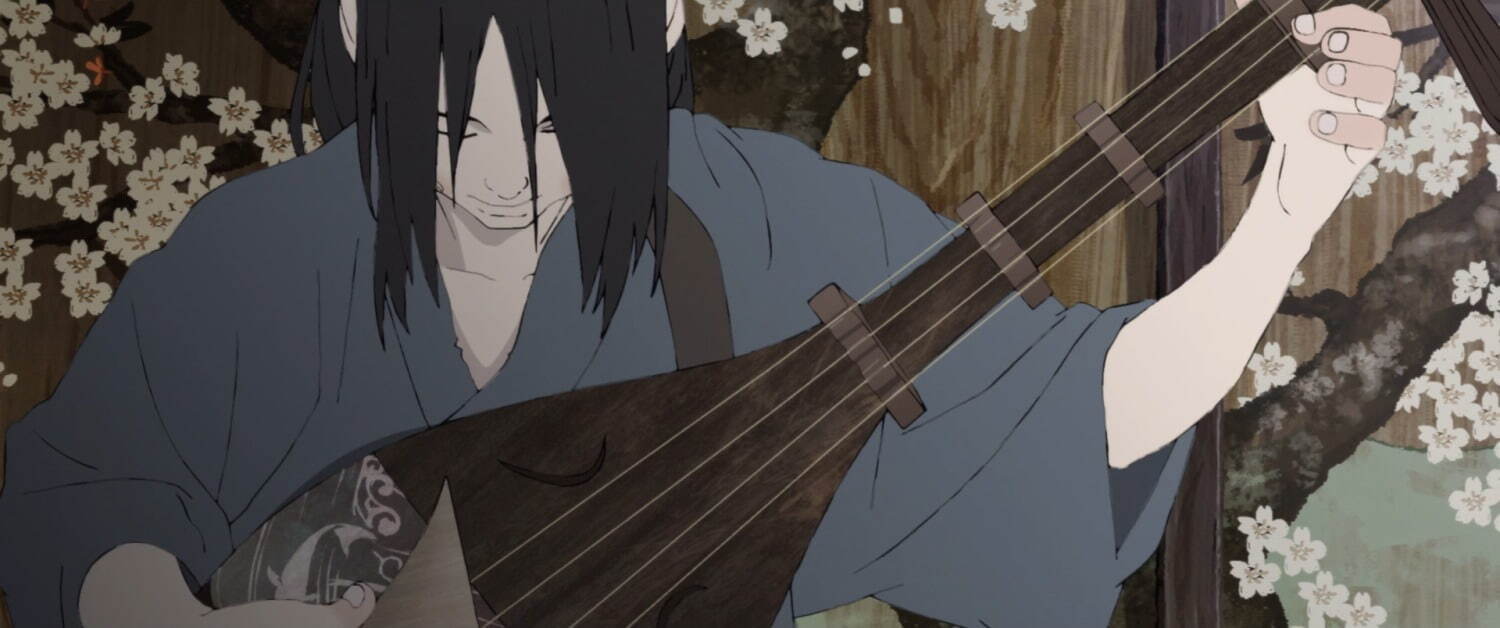
Animated feature from Masaaki Yuasa (The Night is Short Walk on Girl, Lu Over the Wall, Ride Your Wave) featuring character design from Taiyo Matsumoto and based on the novel Tales of the Heike: INU-OH by Hideo Furukawa in which a young boy forced to wear a mask because of his unusual physical features befriends a blind biwa player.

Love, Life and Goldfish (すくってごらん, Yukinori Makabe, 2021)

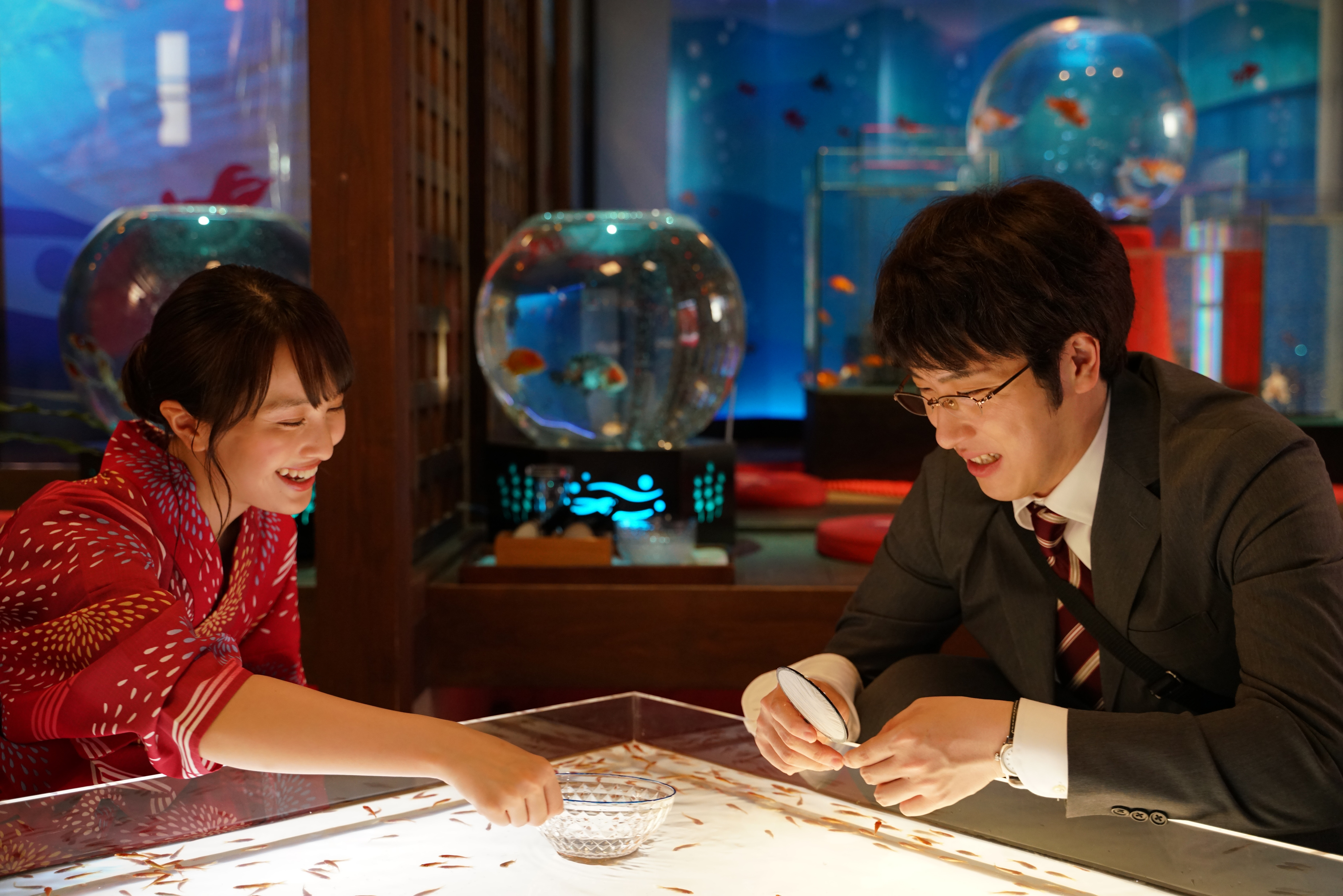
An emotionally repressed bank clerk has a minor existential crisis when demoted to a rural backwater after a silly workplace mistake but thanks to his experiences with the goldfish-obsessed townspeople rediscovers the joy of feeling in Yukinori Makabe’s cheerfully absurd musical comedy.

Hommage (오마주, Shin Su-Won, 2021)

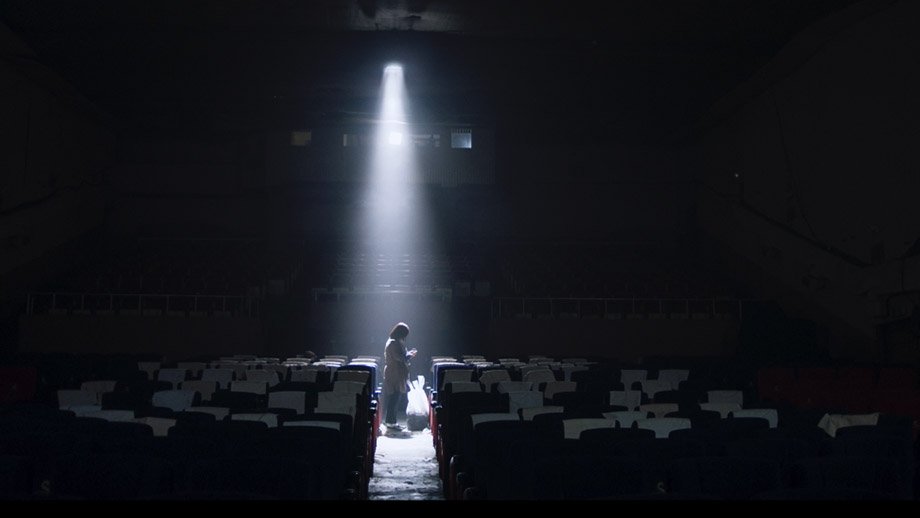
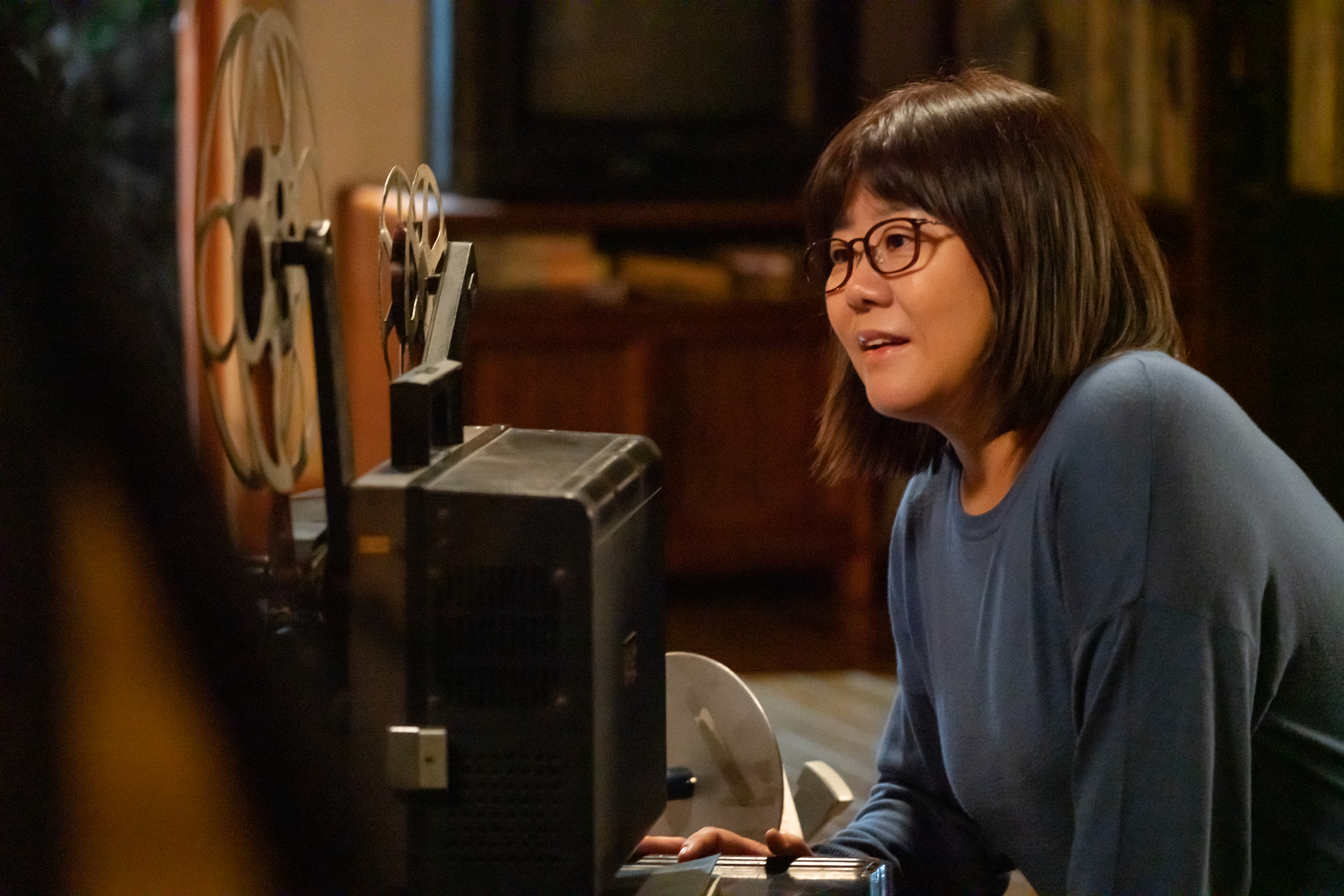
The latest film from Shin Su-Won (Pluto) stars Lee Jung-eun as a filmmaker re-evaluating her career after the poor reception of her last movie. An offer from a film archive to help restore a film by one of Korea’s earliest female filmmakers takes her back to the 1960s and allows her to rediscover her love for cinema.

One Second (一秒钟, Zhang Yimou, 2020)

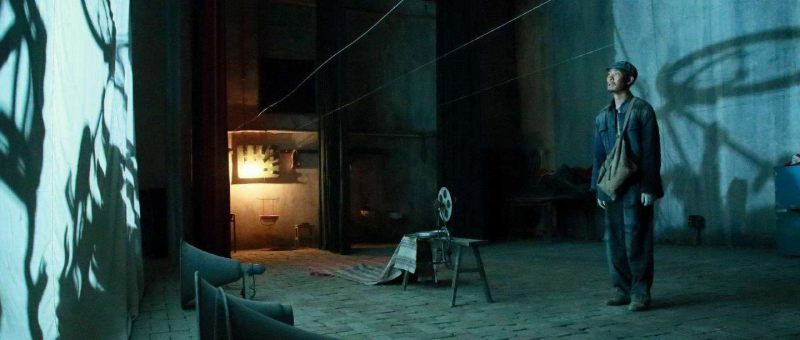
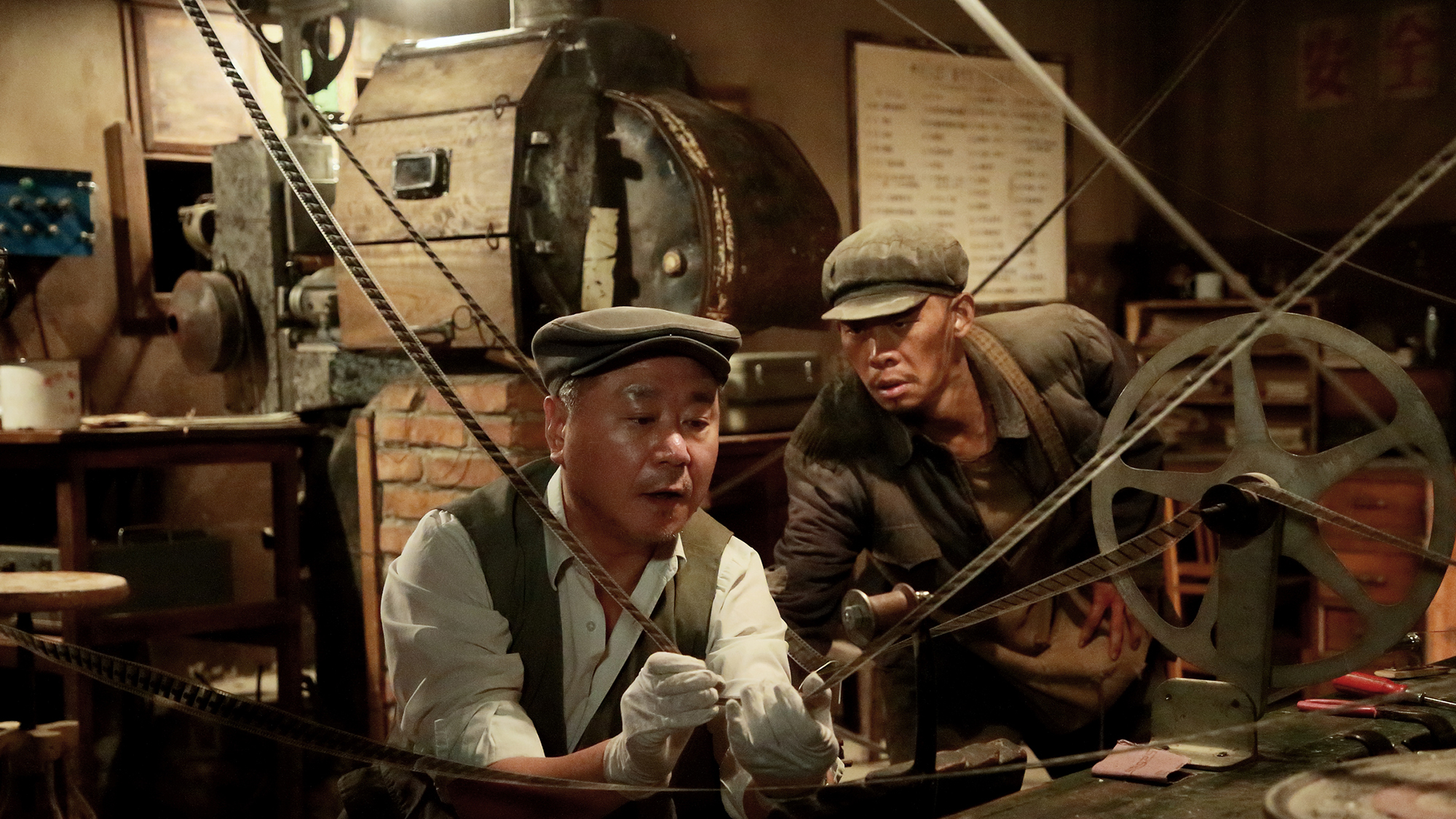
Long delayed love letter to cinema from Zhang Yimou in which a man escapes a labour camp hoping to catch a glimpse of his daughter in a cinema newsreel.

Yuni (Kamila Andini, 2021)

Indonesian drama from Kamila Andini in which a young woman wanting to go to university becomes a subject of rumour after she rejects a series of potential suitors in her conservatively-minded local community.

The Glasgow Film Festival takes place at Glasgow Film Theatre and Cineworld Renfrew Street with some screenings at partner venues throughout the country 2nd to 13th March. Full details for all the films as well as the full programme are available via the official website, and you can stay up to date with all the latest news by following the festival on Facebook, Twitter, and Instagram.