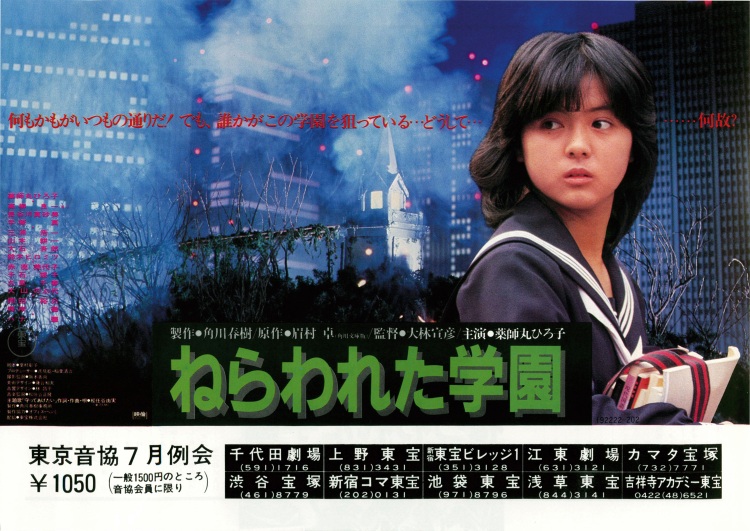
 Still most closely associated with his debut feature Hausu – a psychedelic haunted house musical, Nobuhiko Obayashi’s affinity for youthful subjects made him a great fit for the burgeoning Kadokawa idol phenomenon. Maintaining his idiosyncratic style, Obayashi worked extensively in the idol arena eventually producing such well known films as The Little Girl Who Conquered Time (starring Kadokawa idol Tomoyo Harada) and the comparatively less well known Miss Lonely and His Motorbike Her Island (starring a very young and extremely skinny Riki Takeuchi). 1981’s School in the Crosshairs (ねらわれた学園, Nerawareta Gakuen) marks his first foray into into the world of idol cinema but it also stars one of Kadokawa’s most prominent idols in Hiroko Yakushimaru appearing just a few months before her star making role in Shinji Somai’s Sailor Suit and Machine Gun.
Set once again in a high school, School in the Crosshairs is the ultimate teen movie for any student who’s ever suspected their place of education has been infiltrated by fascists but no one else has noticed. Top student Yuka (Hiroko Yakushimaru) is the archetypal Obayashi/idol movie heroine in that she’s not only bright and plucky but essentially good hearted and keen to help out both her friends and anyone else in trouble. Her life changes when walking home from school one day with her kendo obsessed friend Koji (Ryoichi Takayanagi) as the pair notice a little kid about to ride his tricycle into the path of a great big truck. Yuka, horrified but not quite knowing what to do, shouts for the little boy to go back only it’s time itself which rewinds and moves the boy out of harm’s way. Very confused and thinking she’s had some kind of episode, Yuka tests her new psychic powers out by using them to help Koji finally win a kendo match but when a strange looking man who claims to be “a friend” (Toru Minegishi) arrives along with icy transfer student Takamizawa (Masami Hasegawa), Yuka finds herself at the centre of an intergalactic invasion plot.
Many things have changed since 1981, sadly “examination hell” is not one of them. Yuka and Koji still have a few years of high school left meaning that it’s not all that serious just yet but still, their parents and teachers have their eyes firmly on the final grades. Yuka is the top student in her class, much to the chagrin of her rival, Arikawa (Macoto Tezuka), who surpasses her in maths and English but has lost the top spot thanks to his lack of sporting ability. Koji is among the mass of students in the middle with poor academic grades but showing athletic promise even if his kendo career is not going as well as hoped.
Given everyone’s obsession with academic success, the aliens have hit on a sure thing by infiltrating a chain of cram schools promising impressive results. Grades aside, parents are largely laissez-faire or absent, content to let their kids do as they please as long as their academic life proceeds along the desired route. Koji’s parents eventually hire Yuka as a private teacher to help him improve only for her to help him skip out to kendo practice. Her parents, by contrast, are proud of their daughter and attentive enough to notice something’s not right but attribute her recent preoccupation to a very ordinary adolescent problem – they think she’s fallen in love and they should probably leave her alone to figure things out her own way. A strange present of an empty picture frame may suggest they intend to give her “blank canvas” and allow her to decide the course of her own life, but she has, in a sense, earned this privilege through proving her responsible nature and excelling in the all important academic arena.
School is a battlefield in more ways than one. Intent on brainwashing the teenagers of Japan, “mysterious transfer student” Takamizawa has her sights firmly set on taking over the student council only she needs to get past Yuka to do it. Takamizawa has her own set of abilities including an icy stare which seems to make it impossible to refuse her orders and so she’s quickly instigated a kind of “morality” patrol for the campus to enforce all those hated school rules like skirt lengths, smoking, and running in the halls. Before long her mini militia has its own uniforms and creepy face paint but her bid for world domination hits a serious snag when Yuka refuses to cross over to the dark side and join the coming revolution. Asking god to grant her strength Yuka stands up to the aliens all on her own, avowing that she likes the world as it and is willing to sacrifice her own life for that of her friends. Accused of “wasting” her powers, Yuka asks how saving people could ever be “wasteful” and berates the invaders for their lack of human feeling. Faced with the cold atmosphere of exam stress and about to be railroaded into adulthood, Yuka dreams of a better, kinder world founded on friendship and basic human goodness.
Beginning with a lengthy psychedelic sequence giving way to a classic science fiction on screen text introduction Obayashi signals his free floating intentions with Yuka’s desaturated bedroom floating over the snowcapped mountains. Pushing his distinctive analogue effects to the limit, Obayashi creates a world which is at once real and surreal as Yuka finds herself at a very ordinary crossroads whilst faced with extraordinary events. Courted by the universe, Yuka is unmoved. Unlike many a teenage heroine, she realises that she’s pretty happy with the way things are. She likes her life (exam stress and all), she loves her friends, she’ll be OK. Standing up for the rights of the individual, but also for collective responsibility, Yuka claims her right to self determination but is determined not to leave any of her friends behind.
Original trailer (no subtitles)
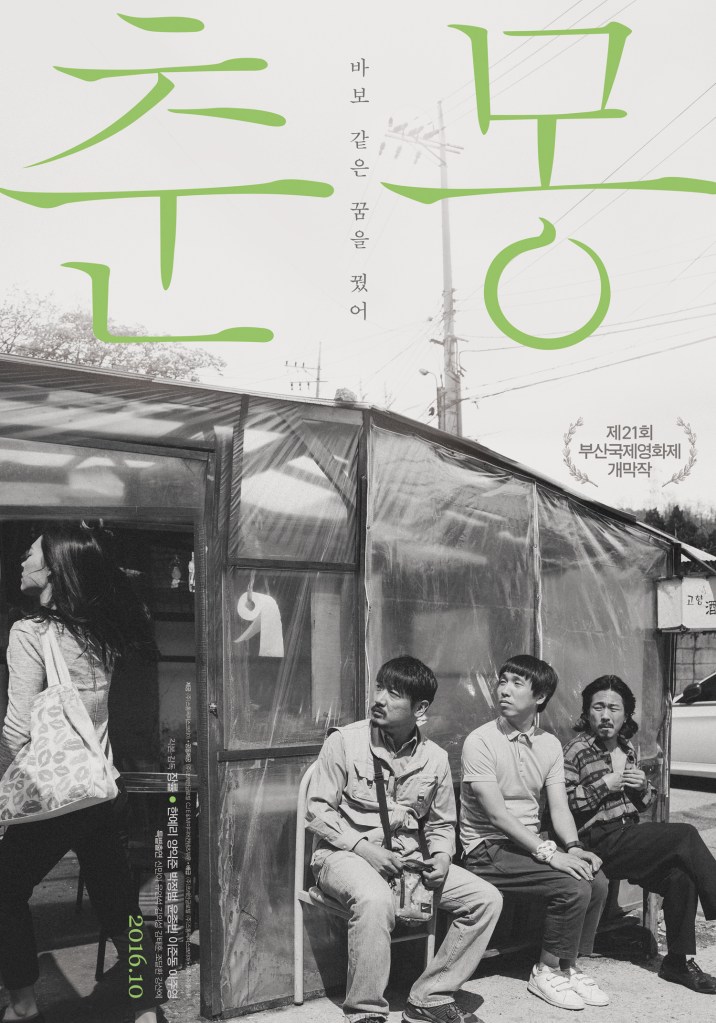 Review of Zhang Lu’s A Quiet Dream (춘몽, Chun-mong) first published by
 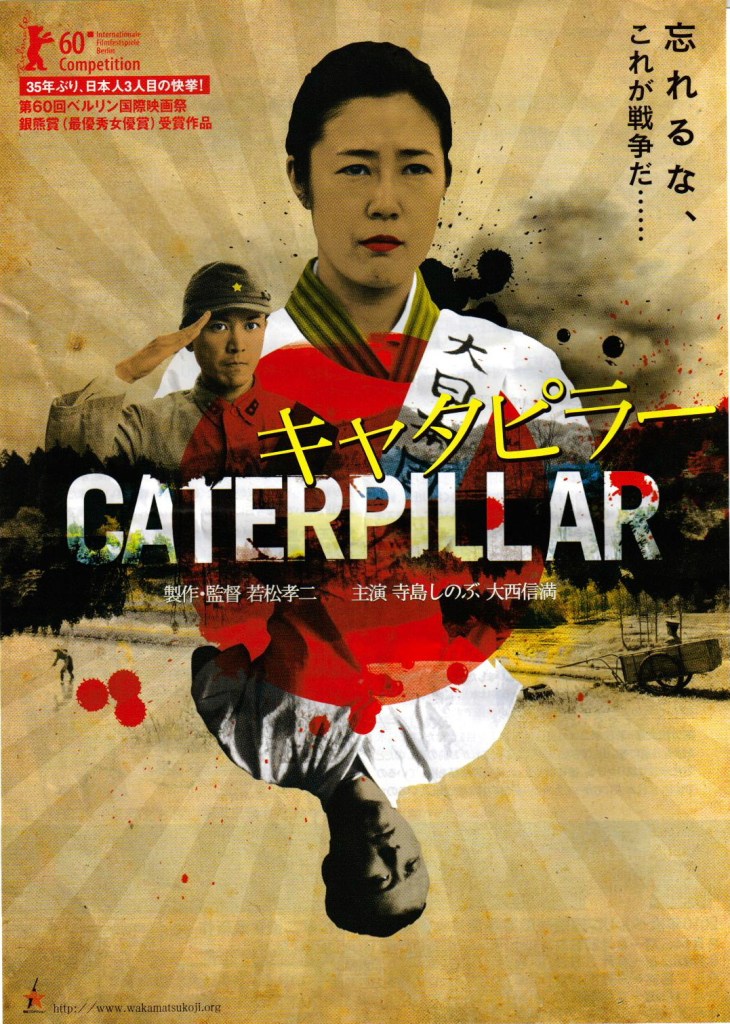 Koji Wakamatsu made his name in the pink genre where artistic flair and political messages mingled with softcore pornography and the rigorous formula of the genre. Wakamatsu rarely abandoned this aspect of his work but in adapting a well known story by Japan’s master of the grotesque Edogawa Rampo, Wakamatsu redefines his key concern as sex becomes currency, a kind of trade and power game between husband and wife. Caterpillar (キャタピラー), aside from its psychological questioning of marital relations, is a clear anti-war rallying call as a small Japanese village finds itself brainwashed into sacrificing its sons for the Emperor, never suspecting all their sacrifices will have been in vain when the war is lost and wounded men only a painful reminder of wartime folly.
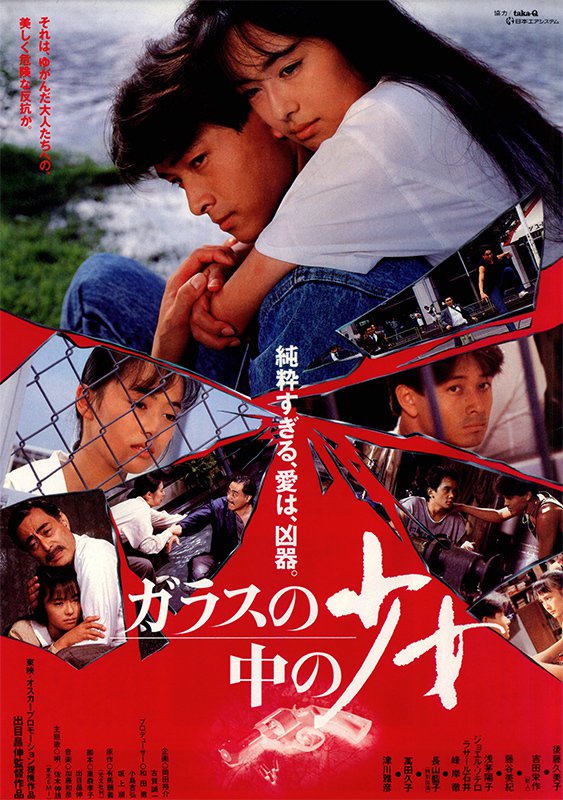 The popularity of idol movies had started to wane by the late ‘80s and if this 1988 effort from Masanobu Deme is anything to go by, some of their youthful innocence had also started to depart. Starring Kumiko Goto, only 14 at the time, The Girl in the Glass (ガラスの中の少女, Glass no Naka no Shojo) is an adaptation of a novel by Yorichika Arima which had previously been filmed all the way back in
 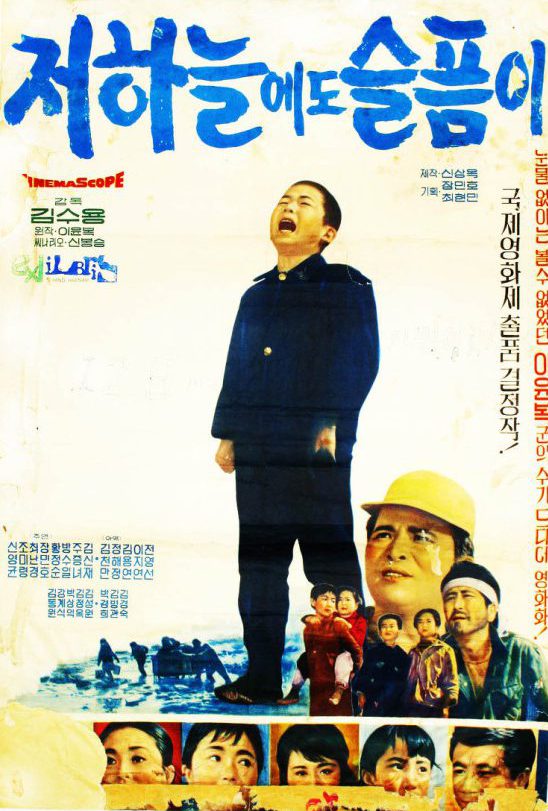 It’s a sorry enough tale to hear that many silent classics no longer exist, regarded only as disposable entertainment and only latterly collected into archives and preserved as valuable film history, but in the case of South Korea even mid and late 20th century films are unavailable thanks to the country’s turbulent political history. Though often listed among the greats of 1960s Korean cinema, Sorrow Even Up in Heaven (저 하늘에도 슬픔이, Jeo Haneuledo Seulpeumi) was presumed lost until a Mandarin subtitled print was discovered in an archive in Taiwan. Now given a full restoration by the Korean Film Archive, Kim’s tale of societal indifference to childhood poverty has finally been returned to its rightful place in cinema history but, as Kim’s own attempt to remake the film 20 years later bears out, how much has really changed?
 This area has a weird magnetic field, claims one of the central characters in Takuro Nakamura’s West North West (西北西, Seihokusei), it’ll throw you off course. Barriers to love both cultural and psychological present themselves with almost gleeful melancholy in this indie exploration of directionless youth in modern day Tokyo. Three young women wrestle with themselves and each other in a complex cycle of interconnected anxieties as they attempt to carve out their own paths, each somehow aware of the shape their lives should take yet afraid to pursue it. The Tokyo of West North West is one defined by disconnection, loneliness and permanent anxiety but it is not the city which is the enemy of happiness but an internal unwillingness to find release from self imposed imprisonment.
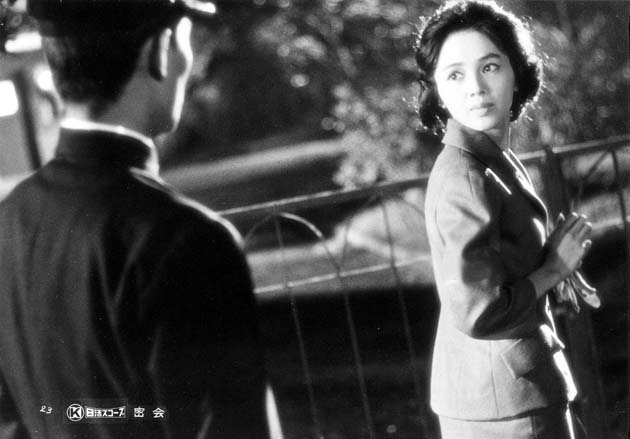 Aside from the genre defining Crazed Fruit which kick-started the era of the “seishun eiga” and, in its own way, the Japanese New Wave, Ko Nakahira has remained under seen and under appreciated outside of Japan. Completed just three years after the youth fuelled frenzy of Crazed Fruit with its freewheeling playboys and their speedboat crises, The Assignation (密会, Mikkai) is a much more measured, mature meditation on social constraint, guilt and the slow drip feed of poisonous thought. Nakahira wastes none of his characteristic energy in the necessarily tight 76 minute runtime, but this is an exercise in high tension as a pair of illicit lovers are suddenly confronted with their crime after accidentally witnessing a murder.
 In the closing voice over of Banmei Takahashi’s Rain of Light (光の雨, Hikari no Ame), the elderly narrator thanks us, the younger generation, for listening to this long, sad story. The death of the leftist movement in Japan has never been a subject far from Japanese screens whether from contemporary laments for a perceived failure as the still young protestors swapped revolution for the rat race or a more recent and rigorous desire to examine why it all ended in such a dark place. Rain of Light is an attempt to look at the Asama-Sanso Incident through the eyes of the youth of today and by implication ask a few hard questions about the nature of revolution and social change and if either of those two things have any place in the Japan these young people now live in. Takahashi reframes the tale as docudrama in which his young actors and actresses, along with their increasingly conflicted director, attempt to solve these problems through recreation and role play, bridging the gap between the generations with a warning from those who dreamed of a better world that was never to be.
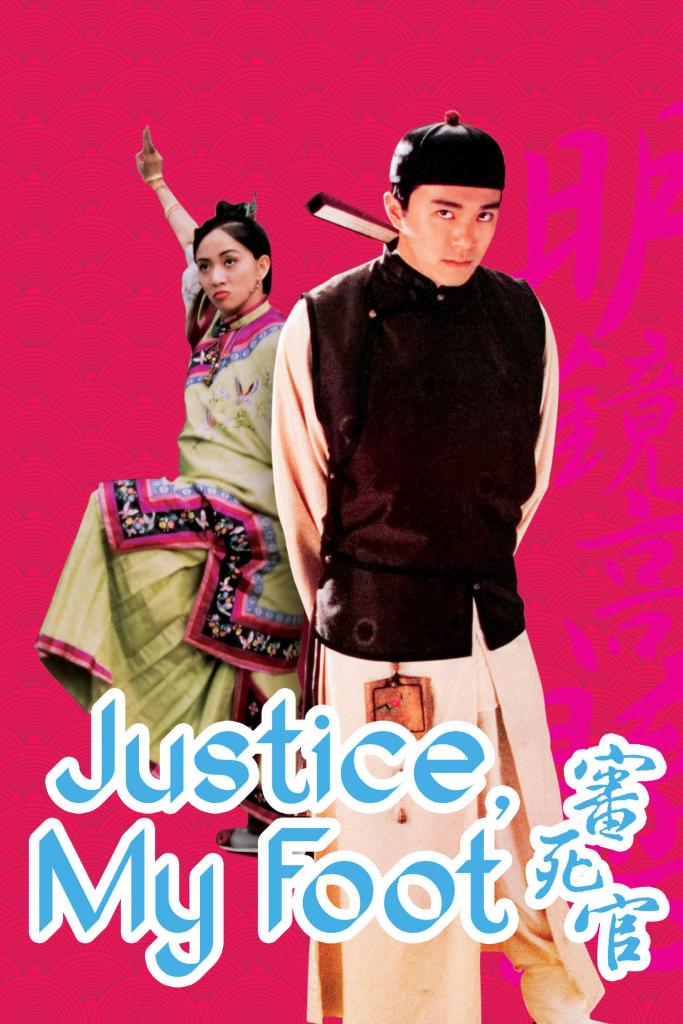 Stephen Chow has always been a force of nature but even before making his name as a director in the mid-90s, he contributed his madcap energy to some of the highest grossing movies of the era. Justice, My Foot! (審死官) is very much of the “makes no sense” comedy genre and, directed by Johnnie To for Shaw Brothers, makes great use of the collective propensity for whimsy on offer. Even if not quite managing to keep the momentum going until the closing scenes, Justice, My Foot! succeeds in delivering quick fire (often untranslatable) jokes and period martial arts action sure to keep genre fans happy.
 Japan was a strange place in the early ‘90s. The bubble burst and everything changed leaving nothing but confusion and uncertainty in its place. Tokyo, like many cities, however, also had a fairly active indie music scene in part driven by the stringency of the times and representing the last vestiges of an underground art world about to be eclipsed by the resurgence of studio driven idol pop. Bandage (Bandage バンデイジ) is the story of one ordinary girl and her journey of self discovery among the struggling artists and the corporate suits desperate to exploit them. One of the many projects scripted and produced by Shunji Iwai during his lengthy break from the director’s chair, Bandage is also the only film to date directed by well known musician and Iwai collaborator Takeshi Kobayashi who evidently draws inspiration from his mentor but adds his own particular touches to the material.
 Windows on Worlds