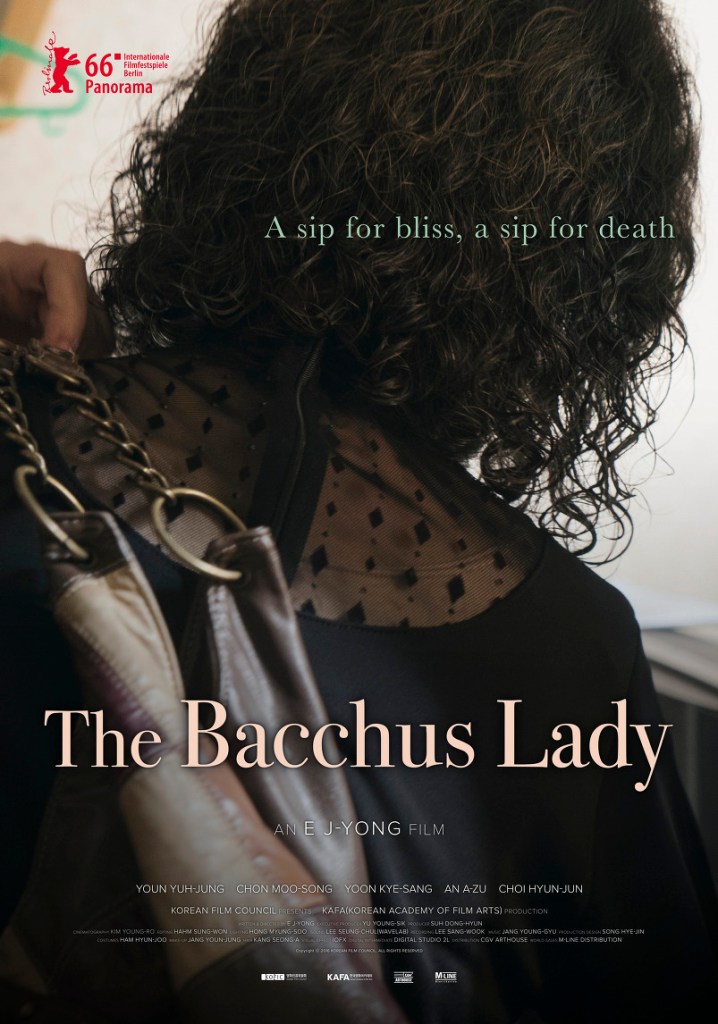
 Rather than a Maenad in a divine frenzy driven by drunkenness, lust, and hedonistic fury, a “Bacchus Lady” is a humorous nickname used for the older women who solicit men in Korean parks by euphemistically offering to sell them a bottle of Bacchus energy drink. E J-yong reteams with veteran Korean actress Youn Yuh-jung to tell the tragic story of Youn So-young, hooker with a heart of gold and now a member of the older generation permitted to slip through the cracks in the absence of familial connections.
Youn So-young (Youn Yuh-jung) is going to have to close the shop for a few days, she has gonorrhoea thanks to a no good customer who (presumably) paid her extra for no protection. As if that weren’t bad news enough, So-young becomes a witness to a public domestic dispute as the doctor’s Filipina former lover and mother to his unacknowledged son tracks him down to his clinic. During the heated argument conducted in English the jilted lover stabs her no good former beau with a pair of scissors and is hauled off by security, instructing her young son, Min-ho, waiting downstairs, to make a run for it.
Not knowing quite why, So-young chases after the boy and ends up taking him home. With the help of her transgender landlady (An A-zu) and younger neighbour with a prosthetic leg (Yoon Kye-sang), So-young cares for the boy before trying to figure out what’s going on with his mother. So-young returns to work after her initial problems are cleared up which brings her into contact with three former clients who each have a very unusual favour to ask of her…
First and foremost, The Bacchus Lady (죽여주는 여자, Jug-yeo-ju-neun Yeo-ja) wants to ask a lot of questions about the status of the elderly in contemporary Korea. Korea has one of the highest rates of older people living in poverty among the developed nations with many forced to keep working to support themselves even as their health fails. Though many older people have extended family networks, the nature of modern society leaves them isolated as their children may have moved away or even to foreign countries and are not able, or simply not interested, in providing later life care for their relatives. Some, like So-young, are on their own. With no familial connections to rely on and only her neighbours to count as friends, she has few options and opportunities for women of her age are thin on the ground.
Speaking to a client who turned out to be a documentary filmmaker, So-young reveals that she chose prostitution out of pride – she couldn’t bring herself to take a street cleaning job and thinks this is better. In fact, her story is more complex and exposes a deep seem of historical social problems as So-young first became a prostitute at the American air base.
There are odd parallels to be found everywhere – So-young was seduced an abandoned by an American soldier just as Min-ho’s mother has been abandoned by her Korean doctor who returned home and married well, leaving her far behind. In fact, Min-ho has a picture of his happy family which is almost identical to one So-young has stashed away in a drawer (only she’s torn out the painful half of hers). Now the Koreans are making the same mistakes as the previously mentioned occupying forces, sowing their wild oats abroad and forgetting all about their foreign adventures when they come home to settle down.
Parents reject their children, and children reject their parents. When one of So-young’s former customers suffers a stroke, his son’s family come back from the States to visit him but the daughter-in-law coldly announces that they won’t visit again for another year (knowing full well he may not have that long). The grandchildren barely speak Korean and aren’t interested in hanging round the sickbed of a man they don’t quite know, grandfather or not. The son says nothing. The daughter-in-law even tries to stop So-young visiting her husband’s father assuming she’s some kind of granny gold digger (got to protect that inheritance after all). No wonder the poor man becomes the first of many asking So-young to help him to die. Loss of youth, loss of health, loss of relationships – the loneliness and the boredom alone are too much to bear, let alone pecuniary worries.
So-young is an impulsive sort of woman. When asked why she does some of the things she does, So-young replies that she doesn’t know, she must be mad. Yet there’s a kindness and a naivety belying her otherwise straightforward personality. Even if she can feel something is probably a bad idea but it might help, she feels compelled to do it anyway, eventually with disastrous consequences. So-young is a nice woman who’s been unlucky and society continues to make her pay for that. Always left feeling as if she needs to atone for an unforgivable sin, So-young lives an oddly ascetic life, taking few pleasures and giving away most of her rewards. Her story may be an extreme one, but hers is the fate of many older women who find themselves abandoned without pensions, savings, or family to help them survive.
An interesting look at life on the fringes of an affluent city, The Bacchus Lady is sad tale though one filled with compassion and good humour. E avoids outward melodrama or unwelcome sentimentality, approaching So-young’s ultimate destination with the necessary pathos. The gentle accordion based score lends the film a whimsical air which is only undercut by the abrupt tonal shift and suddenness of the coda finale, but E’s aim is a serious one. So-young is her own woman, but she also stands for a disadvantaged stratum of society who have been consistently denied the ability to fend for themselves and are suddenly expected to do so in their old age when they most need society’s help. Sympathy for Lady Bacchus? Society would do well to take note.
Reviewed at the 2016 BFI London Film Festival
Original trailer (English subtitles):
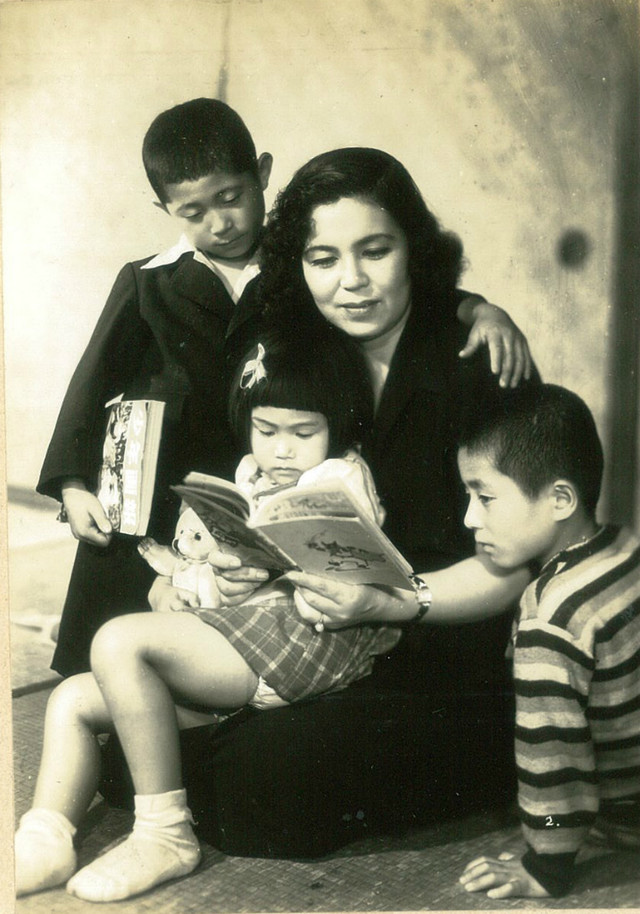 Shimizu’s depression era work was not lacking in down on their luck single mothers forced into difficult positions as they fiercely fought for their children’s future, but 1950’s A Mother’s Love (母情, Bojo) takes an entirely different approach to the problem. Once again Shimizu displays his customary sympathy for all but this particular mother, Toshiko, does not immediately seem to be the self sacrificing embodiment of maternal virtues that the genre usually favours.
 Nobuhiko Obayashi is no stranger to a ghost story whether literal or figural but never has his pre-occupation with being pre-occupied about the past been more delicately expressed than in his 1988 horror-tinged supernatural adventure, The Discarnates (異人たちとの夏, Ijintachi to no Natsu). Nostalgia is a central pillar of Obayashi’s world, as drenched in melancholy as it often is, but it can also be pernicious – an anchor which pins a person in a certain spot and forever impedes their progress.
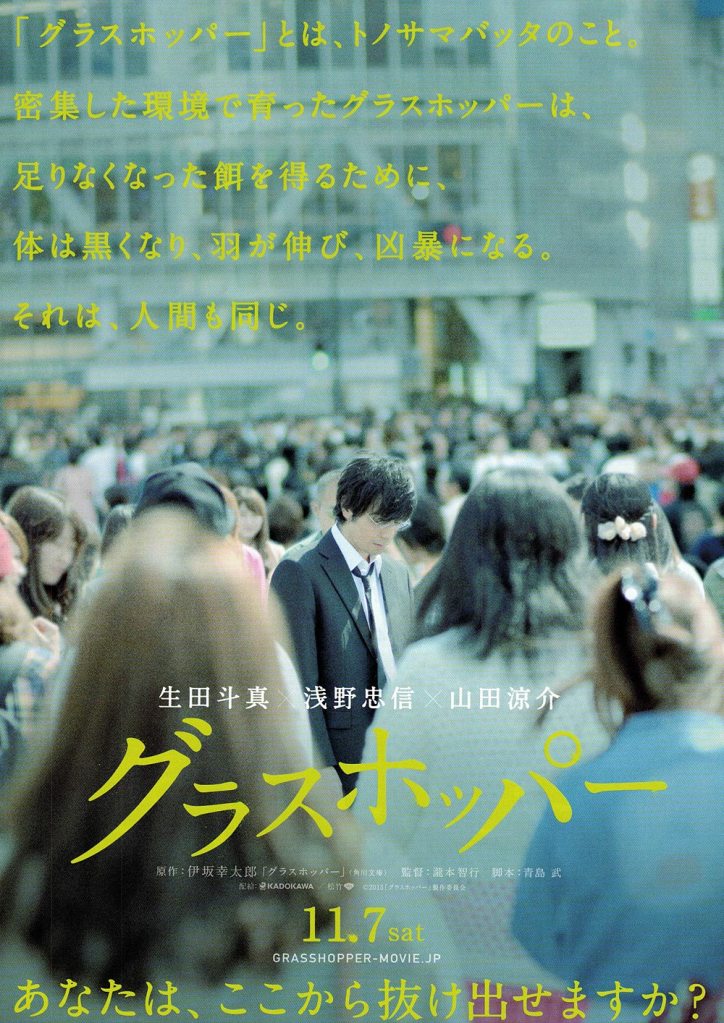 The best revenge is living well, but the three damaged individuals at the centre of Tomoyuki Takimoto’s Grasshopper (グラスホッパー) might need some space before they can figure that out. Reuniting with
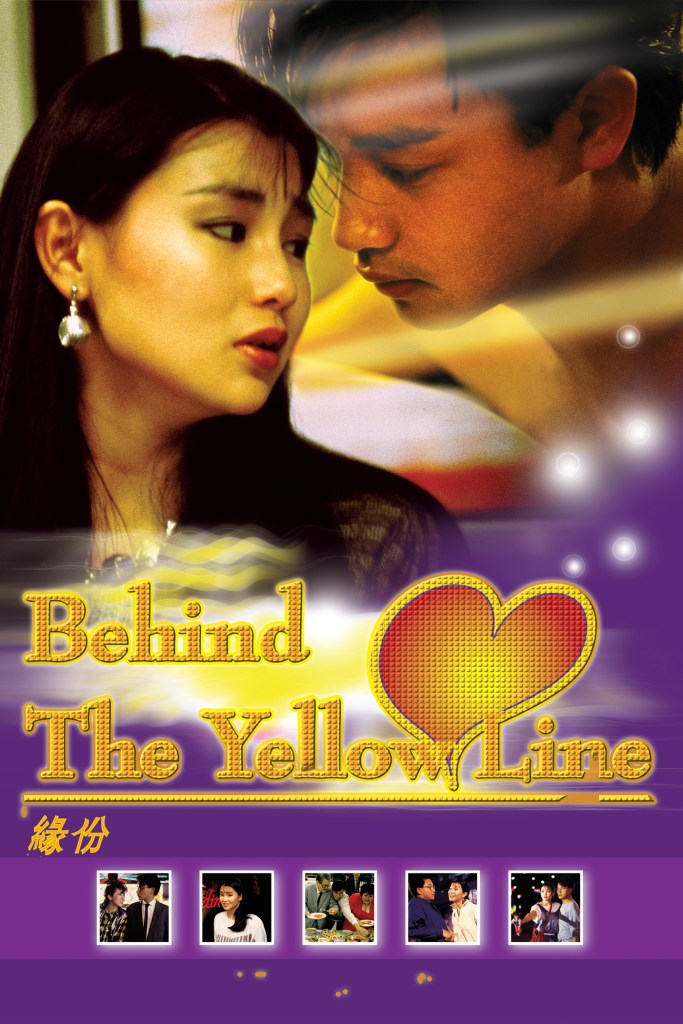 Back in the 1980s, you could make a film that’s actually no good at all but because of its fluffy, non-sensical cheesiness still manages to salvage something and capture the viewer’s good will in the process. In the intervening thirty years, this is a skill that seems to have been lost but at least we have films like Taylor Wong’s Behind the Yellow Line (緣份, Yuan Fen) to remind us this kind of disposable mainstream youth comedy was once possible. Starring three youngsters who would go on to become some of Hong Kong’s biggest stars over the next two decades, Behind the Yellow Line is no lost classic but is an enjoyable time capsule of its mid-80s setting.
 A Double Life (二重生活, Nijyuu Seikatsu ), the debut feature from director Yoshiyuki Kishi adapted from Mariko Koike’s novel, could easily be subtitled “a defence of stalking with indifference”. As a philosophical experiment in itself, it recasts us as the voyeur, watching her watching him, following our oblivious heroine as she becomes increasingly obsessed with the act of observance. Taking into account the constant watchfulness of modern society, A Double Life has some serious questions to ask not only of the nature of existence but of the increasing connectedness and its counterpart of isolation, the disconnect between the image and reality, and how much the hidden facets of people’s lives define their essential personality.
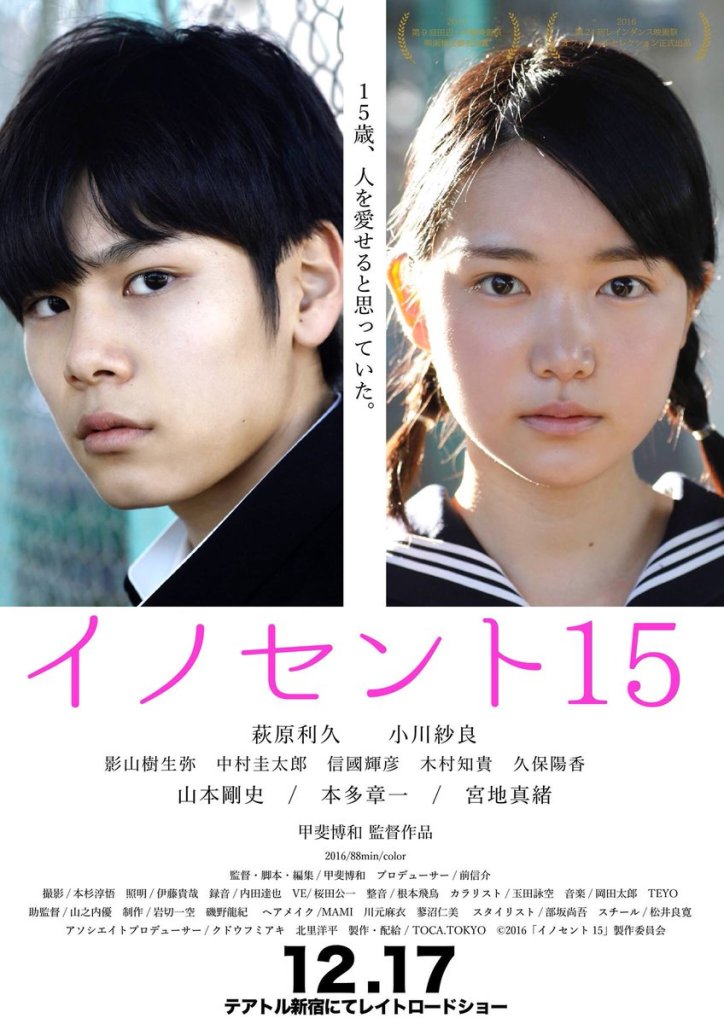 Innocence is a fairly nebulous concept and one often misused but if you were expecting an “innocent” tale of youthful romance, Hirokazu Kai’s Innocent15 (イノセント15) is out to wrong foot you from the get go. Kai does not shy away from the darker sides of human nature in examining abusive parenting and forced prostitution as well as the damage done when a secret is broken after long years of being unable to be honest about who you really are. This is a bleak tale, but one with with hope shining round the edges, even if uncertainly.
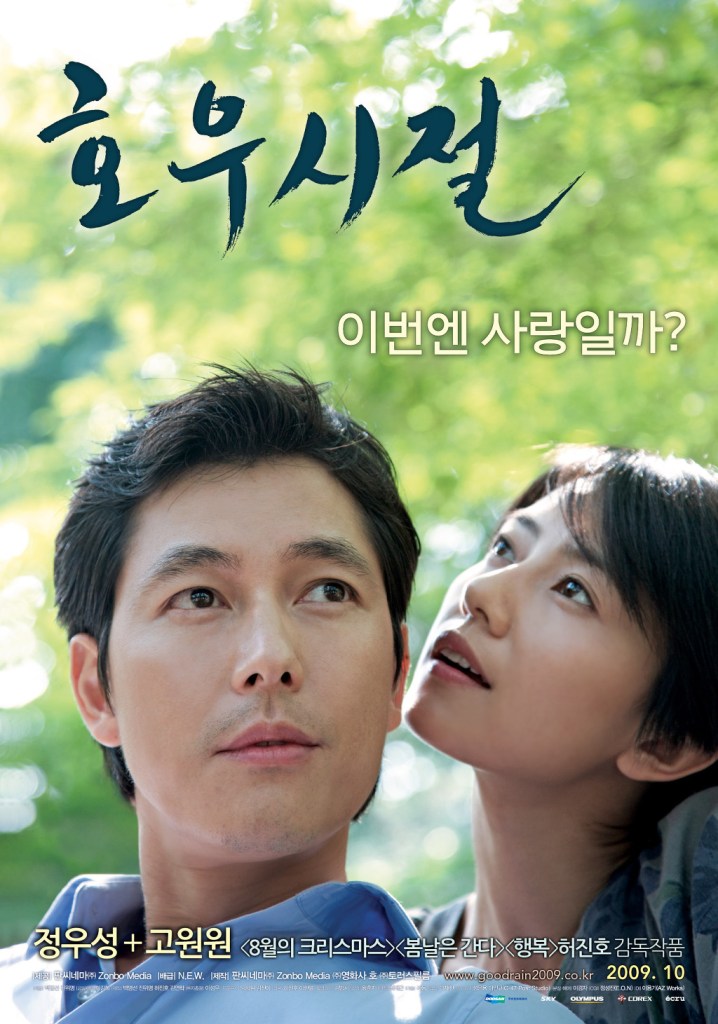 Hur Jin-ho’s A Good Rain Knows (호우시절, Howoosijeol) was originally developed as a short intended to form part of the China/Korea collaborative omnibus film Chengdu, I Love You which was created as a tribute to the area following the devastating 2008 earthquake. However, Hur came to the conclusion that his tale of modern day cross cultural romance required more scope than the tripartite omnibus structure would allow and decided to go solo (Chengdu, I Love You was later released with just Fruit Chan and Cui Jian’s efforts alone). Very much Korean in terms of tone and structure, Hur uses his central love story to explore the effects time, memory, culture, and personal trauma on the lives of everyday people.
 There are two very distinct sides to the career of Tatsushi Omori. Brother of the well known actor, Nao, Omori may be best known to certain audiences for his hard hitting, often gloomy and pessimistic dramas of human misery such as festival favourite Ravine of Goodbye or the little seen
