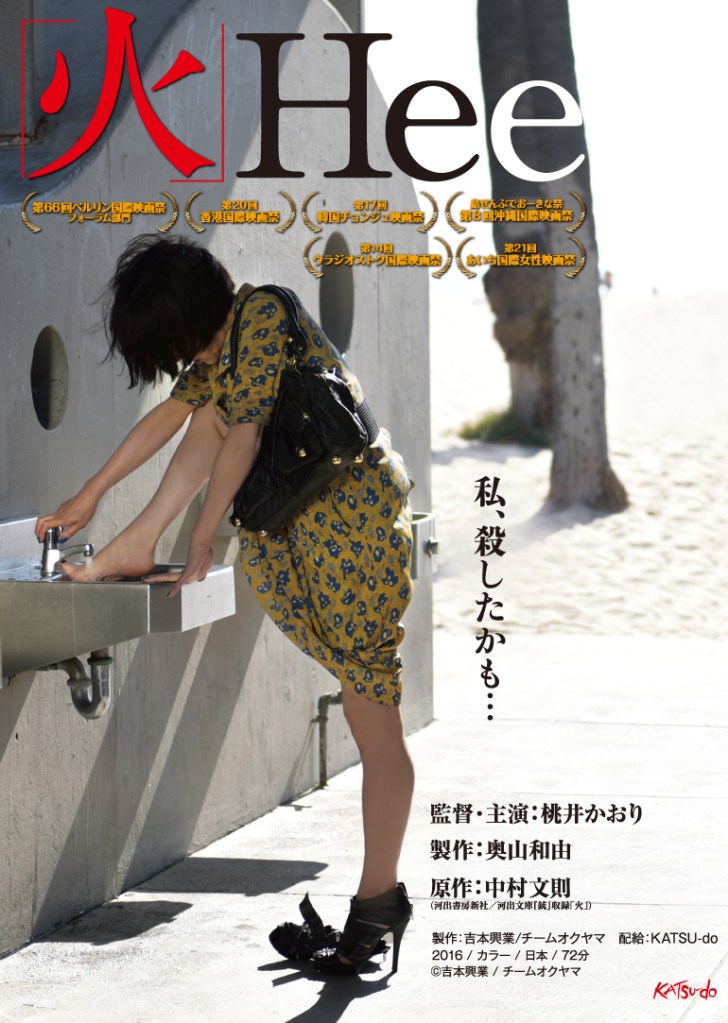
 One of Japan’s best known actresses with a career spanning over forty years, Kaori Momoi is perhaps just as well known for her outspoken and refreshingly direct approach to interviews as she is for her work with such esteemed directors as Akira Kurosawa, Kon Ichikawa, Yoji Yamada, and Shohei Imamura. One of the few Japanese actors to have made a successful international career starring in Hollywood movies such as Rob Marshall’s Memoirs of a Geisha and international art house fare in Alexander Sukurov’s The Sun, Momoi currently lives in LA and is even reportedly preparing to play Scarlett Johansson’s mother in the upcoming US live action adaptation of Ghost in the Shell. It’s perhaps less surprising then that in choosing to adapt a short story by one of Japan’s best young writers, Fuminori Nakamura, Momoi has chosen to shift the story to LA whilst maintaining its Japanese characters.
We first meet Azusa (Kaori Momoi) as she’s washing her foot in a public sink near a beach. A strange conversation with an American man implies that she’s involved in some kind of sex work and the pair head into a hotel where they’re stuck in a crowded lift with a collection of noisy strangers. Aside from this lift scene which is replayed with slightly different emphasises throughout the film, the narrative, such as it is, is provided by Azusa’s two sessions with passive psychiatrist, Dr. Sanada (Yugo Saso). In the first of these she discusses her feelings of guilt over the death of her family, killed in a fire started (perhaps not) by accident as she carelessly played with matches as a child. Later sessions see her accompanied by an official looking American man, seated in the corner but unable to understand much of what’s going on. Now Azusa is suspected of a violent crime but finds herself confessing to various other moral and criminal transgressions, but then again perhaps “confessing” is the wrong word.
Transposing the story from Japan to LA brings an additional layer of alienation to Azusa’s story as she finds herself alone and set adrift far from home. The slightly rundown, beachside faded glamour of the outside world contrasts neatly with the cool, ordered interior of the psychiatrist’s office where Sanada appears almost indifferent to Azusa’s monologue as he makes coffee in a vacuum pot and stares blankly straight ahead. It’s little wonder why Azusa remarks that perhaps he’s just not suited to this kind of work during her first session and even later states that he’s really just a sounding board for her – she’s monologuing for real, applying the talking cure to herself.
Intercut with Azusa’s monologues and the reoccurring lift scene in which Sanada also appears, Sanada is seen with his own, not quite happy, family. Married to a fellow doctor working at the same clinic, Sanada seems a little uncomfortable with his confident, dominant wife. Conversing in English at home the couple share extravagant meals prepared by their housekeeper with their little daughter but as Azusa’s monologues continue the family scenes become ever more strange and disjointed and Sanada is even seen wolfing down a plate of high grade beef in his pyjamas whilst sitting next to a bright burning fire inside a patio chimney heater. Azusa maintains control, both in the room and out, with Sanada left behind as passive observer.
Expertly played by director and lead actress Momoi, Azusa is a necessarily unreliable narrator as she offers her series of sad stories each of which leads towards a fire. Betrayed by men from her father onwards leading to a failed marriage, inappropriate relationship with another Japanese man in the US, and an ill fated assignation with an American possibly more interested in her daughter, Azusa’s only constant has been the fire but it also seems to spark her madness. It’s impossible to tell how much of what Azusa is saying is “true” at any given time as her oddly circular narratives fracture off yet return to the same point but what she appears to crave from Sanada is the simple act of acknowledgement – of being seen, understood, and respected as a human being.
Reportedly shot in just ten days for a minuscule budget, Hee is anchored by a strong performance from its leading lady but is occasionally undercut by Sanada’s passivity which leaves her without the necessary pushback. The English language actors offer their lines in a slightly surreal manner which adds to the heightened atmosphere of the piece but does not always gel with the other theatrical elements and, at times, proves jarring. Though sometimes too obtuse for its own good, Hee takes an interesting, experimental approach to its material and displays a nice flair for composition even if the cinematography itself remains more conventional. A frustrating, if sometimes fascinating, experience, Hee is the story of woman trapped in flames with only the last remaining hope that we will be able to see through the smoke and heat haze to finally acknowledge her presence.
Reviewed at the 2016 London East Asia Film Festival.
Original trailer (no subtitles)
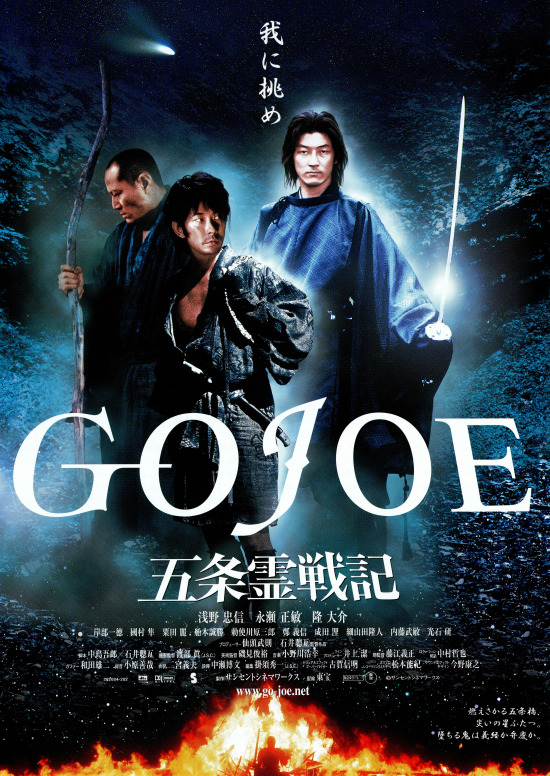 Not your mama’s jidaigeki – the punk messiah who brought us such landmarks of energetic, surreal filmmaking as Crazy Family and Burst City casts himself back to the Middle Ages for an experimental take on the samurai genre. In Gojoe (五条霊戦記, Gojo reisenki), Sogo Ishii remains a radical even within this often most conservative of genres through reinterpreting one of the best loved Japanese historical legends – the battle at Kyoto’s Gojoe Bridge . Far from the firm friends of the legends, this Benkei and this Shanao (Yoshitsune in waiting) are mortal enemies, bound to each other by cosmic fate but locked in combat.
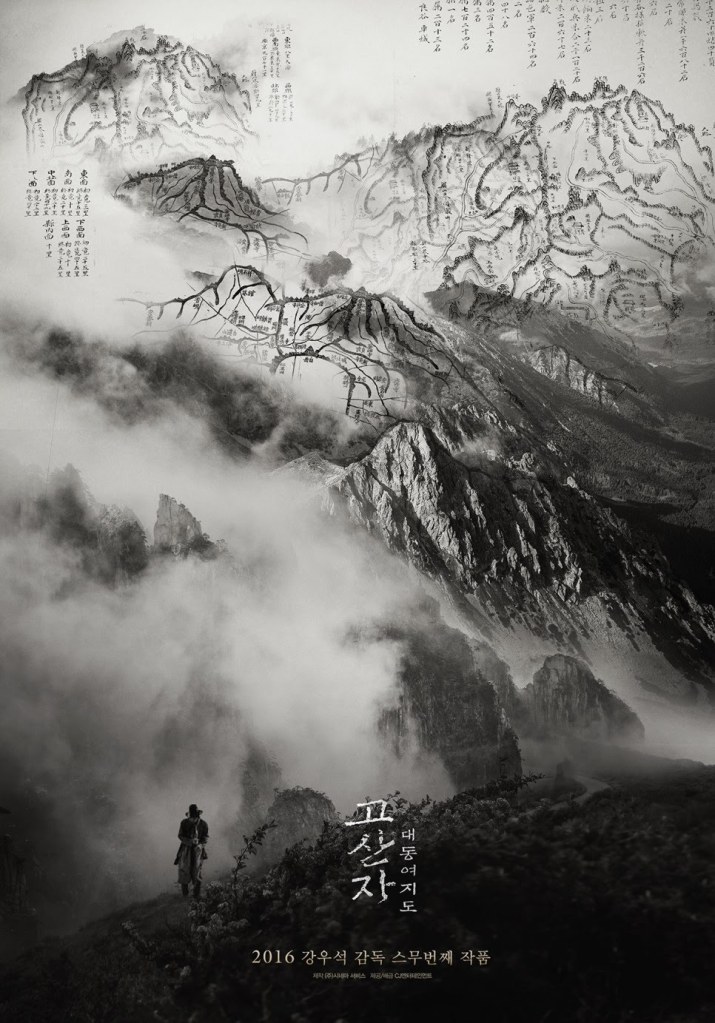 The map is not the territory – as the old adage goes. There’s always a difference between the thing itself and the perception of it but, as the “hero” of The Map Against the World (고산자, 대동여지도, Gosanja, Daedongyeojido) points out, if you’re about to set off on a long journey it’s a good idea to not to rely on a linear map else you’ll run out of good shoes long before you reach your destination. Kim Jeong-ho (Cha Seung-Won) was, apparently, a real person (though little is known about him) who set out to make a proper map of the Korean peninsula after a cartographic error led to the death of his father and many other men from his village when they ran out of resources crossing what they thought was one mountain but turned out to be one mountain range.
 Koji Fukada first ventured into the family drama arena with the darkly comic satire
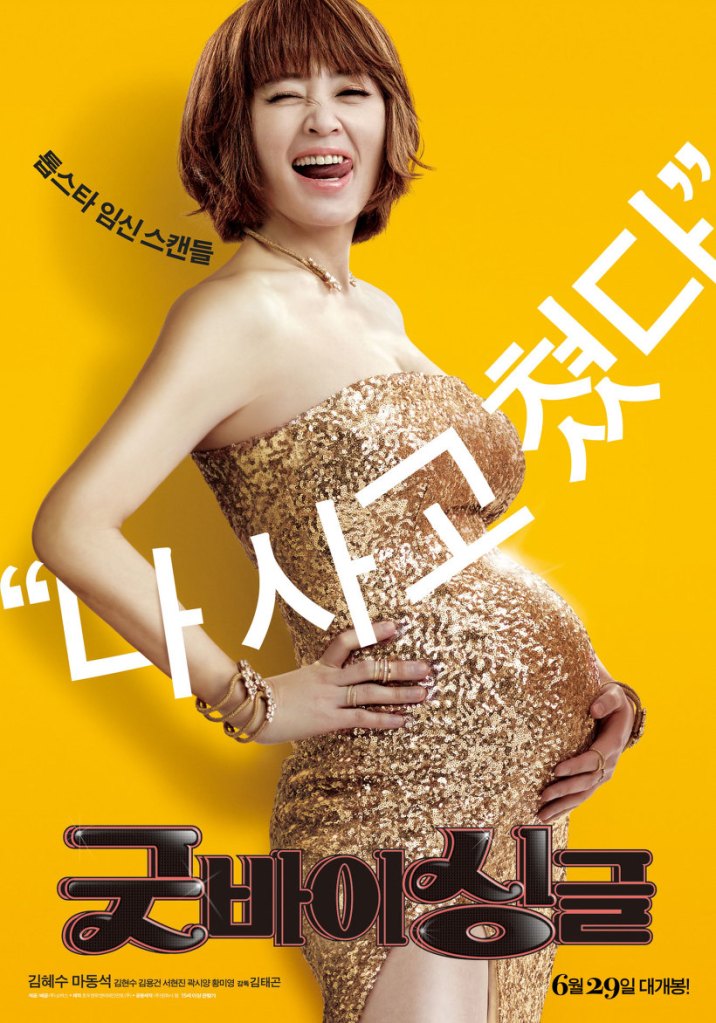 There are three kinds of actors – those who wait for roles, those who choose roles, and those who make roles for themselves. Ageing actress Go Ju-yeon (Kim Hye-soo) claims to be the third type, but at any rate she’s currently between gigs and facing professional scandals and personal crises from each and every direction. An unusual family drama, Familyhood (굿바이 싱글, Gotbai Singkeul, AKA Goodbye Single) is the coming of age story of a middle aged woman finally forced into adulthood through an unlikely friendship with a pregnant teenage girl.
 Kim Jong-kwan’s award winning unexpected indie box office hit has been given the rather odd English title of Worst Woman (최악의 하루, Choeakui Haru) in contrast with the original Korean which simply means “The Worst Day”. In fact, the film is about two people – an aspiring Korean actress with problems in her personal life, and a Japanese writer visiting for the launch of the Korean translation of his novel, each of whom is indeed having an exceptionally unlucky day. Part walking and talking, part split focus romantic comedy, Worst Woman is a polished piece of indie filmmaking anchored by quality performances and an interesting approach to its material.

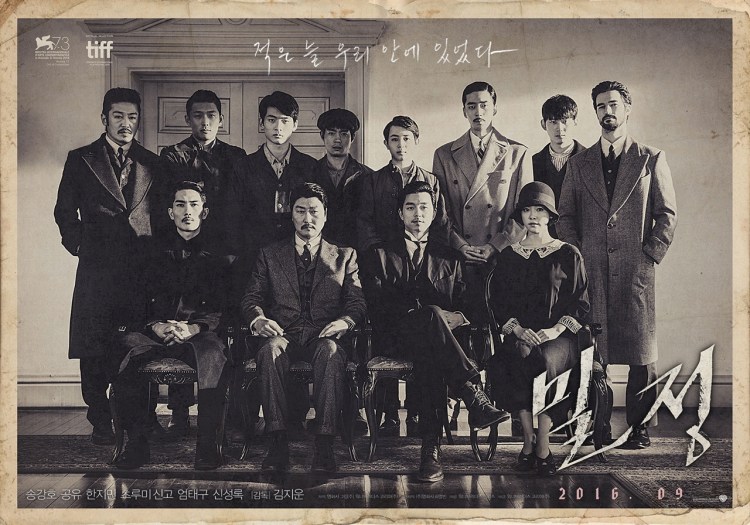 When the country of your birth has been occupied by another nation, what do you do? Do you fight back, insist on your independence and expel the tyrants, or quickly bow to your new overlords and resign yourself to no longer being what you once were? Kim Jee-woon becomes the latest director to take a look at Korea’s colonial past with the Resistance based thriller Age of Shadows (밀정, Miljung) which owes more than a little to Melville’s similarly titled Army of Shadows, as well as classic cold war spy dramas The Third Man and The Spy Who Came in From the Cold.
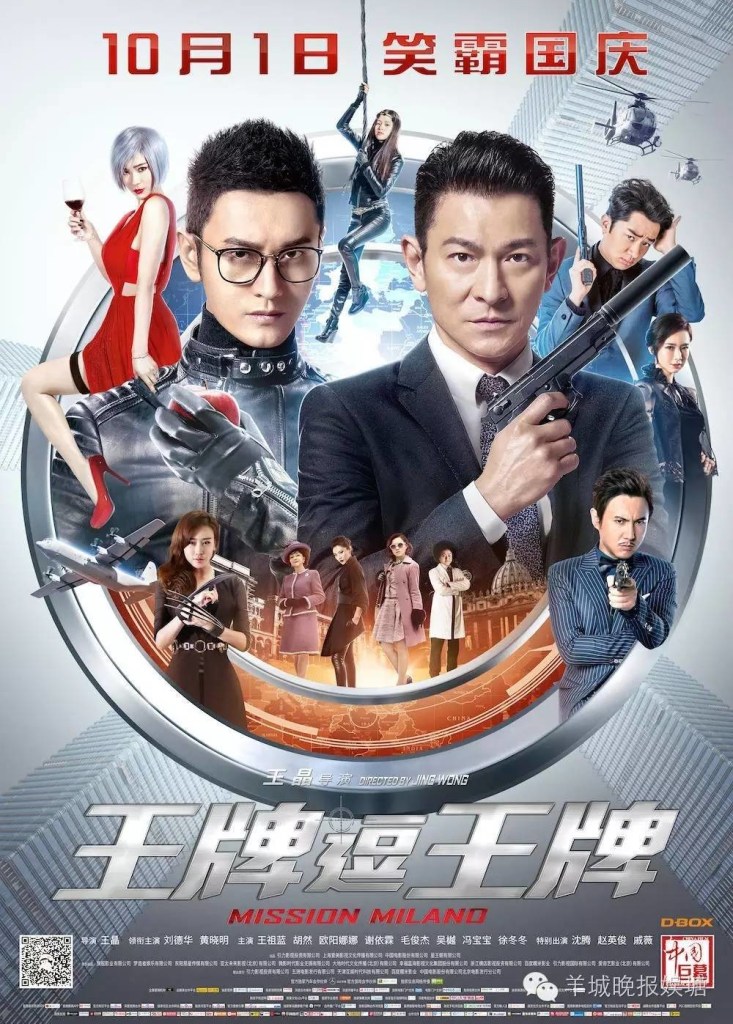 Despite its title, Mission Milano (王牌逗王牌, Wángpái Dòu Wángpái) spends relatively little time in the Northern Italian city and otherwise bounces back and forth over several worldwide locations as bumbling Interpol agent Sampan Hung (Andy Lau) chases down a gang of international crooks trying to harness a new, potentially world changing technology. Inspired by the classic spy parodies of old, Wong Jing’s latest effort proves another tiresome attempt at the comedy caper as its nonsensical plot and overplayed broad humour resolutely fail to capture attention.
 Every story is a ghost story in a sense. In every photograph there’s a presence which cannot be seen but is always felt. The filmmaker is a phantom and an enigma, but can we understand the spirit from what we see? Whose viewpoint are seeing, and can we ever separate that subjective vision from the one we create for ourselves within our own minds? The Man Who Left his Will on Film (東京戰争戦後秘話, Tokyo Senso Sengo Hiwa) is an oblique examination of identity but more specifically how that identity is repurposed through cinema as cinema is repurposed as a political weapon.

