 For 1970’s If You We’re Young: Rage (君が若者なら, Kimi ga Wakamono Nara), Fukasaku returns to his most prominent theme – disaffected youth and the lack of opportunities afforded to disadvantaged youngsters during the otherwise booming post-war era. Like the more realistic gangster epics that were to come, Fukasaku laments the generation who’ve been sold an unattainable dream – come to the city, work hard, make a decent life for yourself. Only what the young men find here is overwork, exploitation and a considerably decreased likelihood of being able to achieve all they’ve been promised.
Our story revolves around five young men who meet whilst working at a factory which later goes bust. The central pair, Kikuo and Asao have been friends since childhood. Both of their fathers were killed in mining accidents and the boys are part of the “golden egg” movement bringing in workers from the rural towns to increase prosperity in the capital. The other three are a fisherman’s son, Kiyoshi, a boxing enthusiast Ryuji and fifth wheel Ichiro. After a short spell in gaol, the guys hatch on the idea of clubbing together to buy a dumper truck and start a business of their own. However, by the time they’ve actually got the truck one of them’s in prison, one pulls out because of a shotgun marriage and the other is killed in a labour dispute. Asao and Kikuo get on with living the dream and are doing pretty well with the truck until their imprisoned friend decides to escape and ruins all of their lives in the process.
Almost proto-punk in tone, If You Were Young: Rage takes a long hard look at the put upon masses who rebuilt Japan but were left with little in return. These five guys left their small towns for the big city promised high wages, access to education and a path to a better life but largely what they found was cold rooms and overwork. There are frequent strike motions in the film as the construction and factory workers attempt to insist on better pay and conditions but are constantly defeated by the white collar bosses who can just bus in even more desperate young men who will agree to cross the picket line because they have no other choice. Our central five now have a dream and something to work towards, their truck isn’t just “a truck” – it’s a hundred trucks somewhere down the line and a symbol of the path to prosperity.
However, at the end of the film all of their dreams have been shattered. Some of this is not their fault, merely the vicissitudes of fate and changing times, some of it is down to poor choices but largely the odds were always stacked against them because the world is unfair. Kiyoshi lies all the time because he’s scared of pretty much everything, possibly because of an abusive (though perhaps not uncommon) upbringing. His selfishness and, ultimately, cowardice is about to mess things up for everyone else and there are somethings you just can’t come back from. Like many of Fukasaku’s heroes, what Asao dreams of is the friendship he found when the five guys were all together and working as a team. He wants to go back to that time of perpetual hope and friendship rather than live in this lonely prosperity.
Fukasaku veers between quirky new wave style optimism and the extreme pessimism of his general world view. The film is bright and colourful for the majority of its running time with memory and fantasy often relegated to black and white. He uses his usual freeze frames, often in times of violence, hand held cameras and dynamic framing to achieve his youthful, freewheeling atmosphere but as usual there’s a kind of desperation lurking in the background. As might be expected, the ending is all flames and ashes – youth lies ruined, dreams shattered, and the possibility of moving on seems woefully far off. Another characteristically caustic look at modern youth from Fukasaku, this more indie effort is one of his most searing and bears out his rather bleak prognosis for the future of his nation.
If You Were Young: Rage is available with English subtitles on R1 US DVD from Homevision and was previously released as part of the Fukasaku Trilogy (alongside Blackmail is My Life and Black Rose Mansion) by Tartan in the UK.
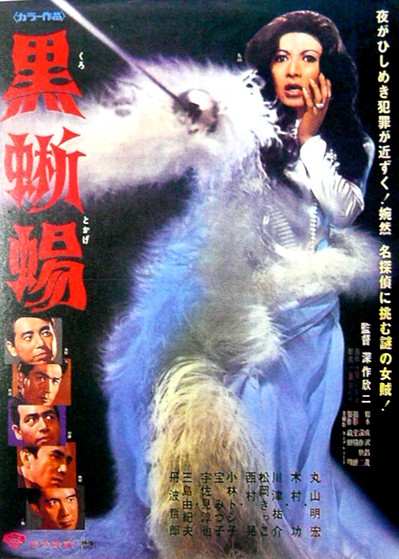 Those who only know Kinji Fukasaku for his gangster epics are in for quite a shock when they sit down to watch Black Rose Mansion (黒薔薇の館, Kuro Bara no Yakata). A European inflected, camp noir gothic melodrama, Black Rose Mansion couldn’t be further from the director’s later worlds of lowlife crime and post-war inequality. This time the basis for the story is provided by Yukio Mishima, a conflicted Japanese novelist, artist and activist who may now be remembered more for the way he died than the work he created, which goes someway to explaining the film’s Art Nouveau decadence. Strange, camp and oddly fascinating Black Rose Mansion proves an enjoyably unpredictable effort from its versatile director.
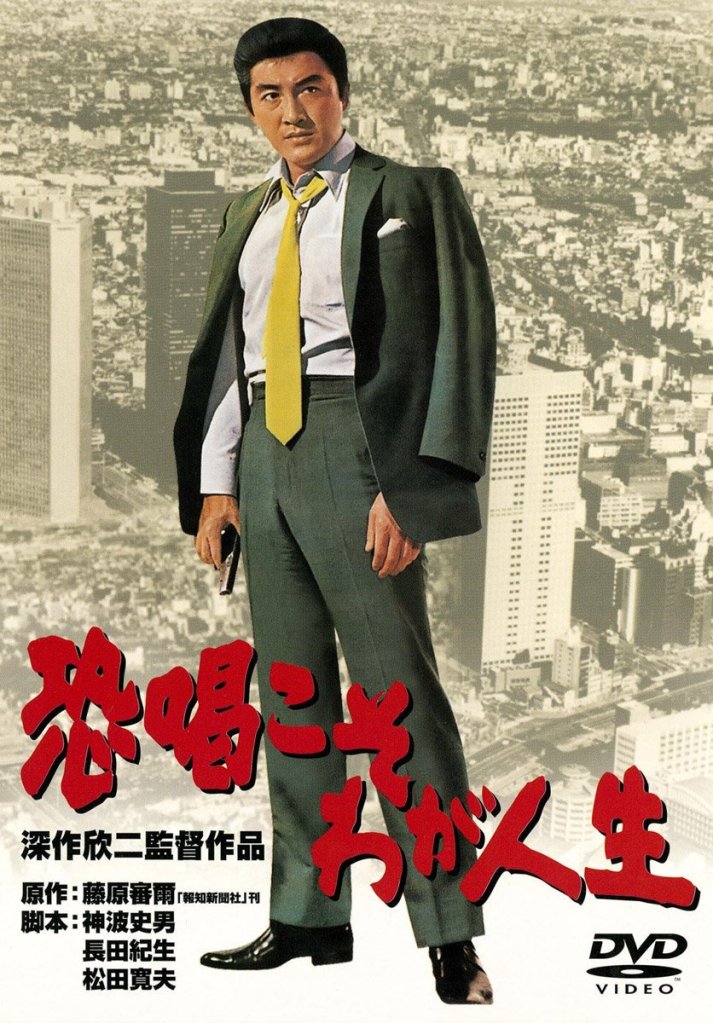 Suffice to say, if someone innocently asks you about your hobbies and you exclaim in an excited manner “blackmail is my life!”, things might not be going well for you. Kinji Fukasaku is mostly closely associated with his hard hitting yakuza epics which aim for a more realistic look at the gangster life such as in the
  These days we think of Sion Sono as the recently prolific, slightly mellowed former enfant terrible of the Japanese indie cinema scene. Hitting the big time with his four hour tale of religion and rebellion Love Exposure before more recently making a case for ruined youth in the aftermath of a disaster in Himizu or lamenting the state of his nation in Land of Hope what we expect of him is an energetic, sometimes ironic assault on contemporary culture. However, his beginnings were equally as varied as his modern output and his first feature length film, Bicycle Sighs (自転車吐息, Jidensha Toiki), owes much more to new wave malaise than to post-punk rage.
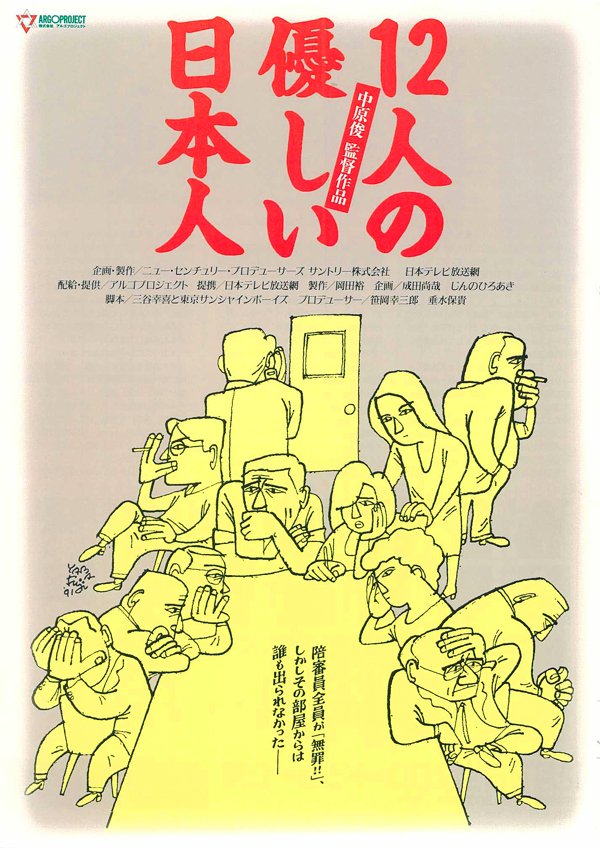 As you might be able to tell from its title, Gentle 12 (12人の優しい日本人, Juninin no Yasashii Nihonjin) is a loose Japanese parody of the stage play 12 Angry Men notably filmed by Sidney Lumet back in 1957. The Japanese title literally translates as “12 Kindly Japanese Guys” and the film takes the same premise of twelve jurors debating the verdict in a murder case which was previously thought fairly straightforward. This time our jury is a little more balanced as it’s not just guys in the room and even the men are of a more diverse background.
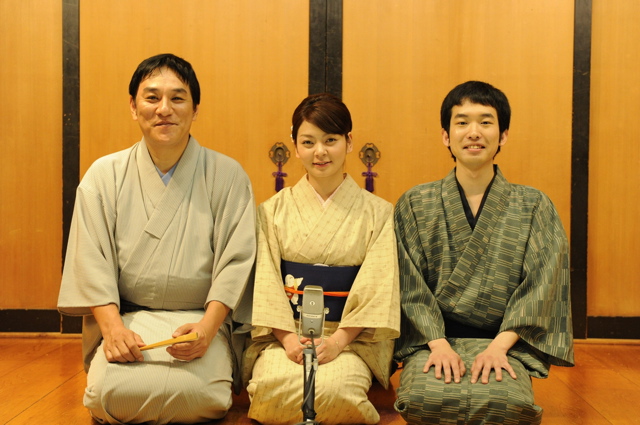 When it comes to the classic Japanese art forms, kabuki, noh and maybe even bunraku are not so uncommon overseas. Rakugo, however, has not been as lucky. Famously impenetrable for non-native speakers even if their language skills are otherwise top notch, rakugo is the art of traditional comic story telling in which the “rakugo-ka” recites a standard monologue with the aim of mining it for laughs in their own individual fashion. These stories date back to the Edo-era and rely heavily on classic Japanese puns, stock characters and cultural assumptions, consequently, their appeal has been on the wane in Japan for sometime. That’s not to say the art form is quite dead yet though, as real life rakugo-ka Shinpei Hayashiya’s Rakugo Monogatari attempts to prove.
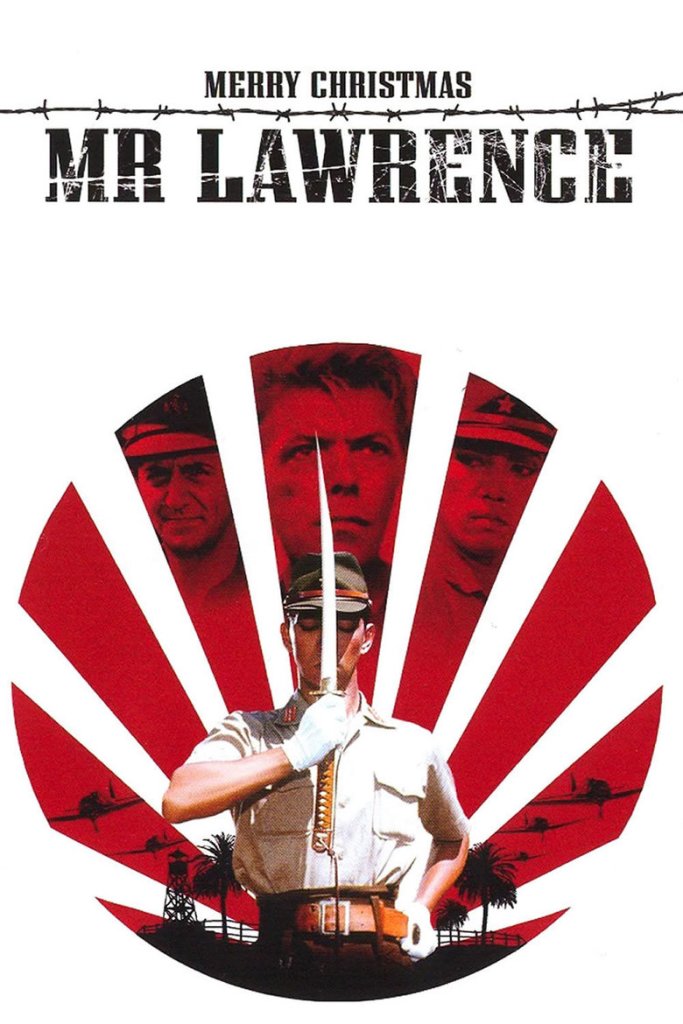 Of all the post-war Japanese filmmakers, the one who liked to twist the knife the most was surely Oshima. No subject too taboo, no pain too raw – he liked to find the sore spot and poke at it a little, if only in the hope of encouraging an accelerated healing, albeit one which would leave a scar to remind you that once you suffered. With Merry Christmas, Mr. Lawrence (戦場のメリークリスマス, Senjou no Merry Christmas) he takes an unflinching look at the treatment of Japan’s prisoners of war and contrasts the Japanese forces with the different attitudes of the (mostly) British soldiers held within the walls of the camp.
 Windows on Worlds