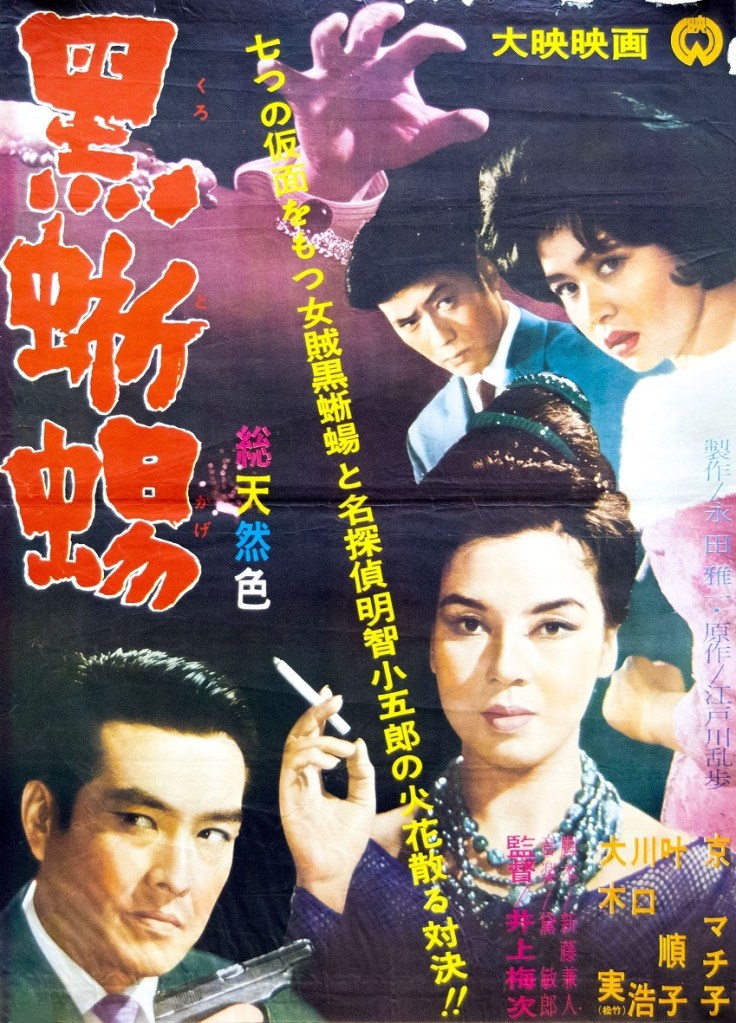
Black Lizard (黒蜥蝪, Umetsugu Inoue, 1962)

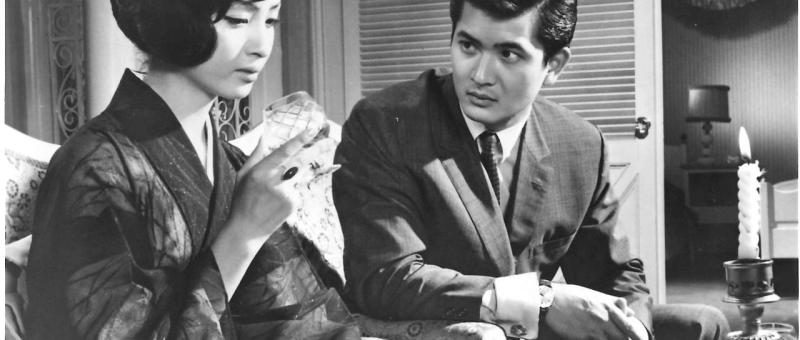
“I want to live in a world where things kiss spontaneously, money divides society like it does you and me” says the Black Lizard (黒蜥蝪, Kurotokage) to her mark, affecting the role of an elegant older woman but failing to conceal herself within the disguise. Though the later 1968 version by Kinji Fukasaku may be better known, Umetsugu Inoue’s adaptation of Edogawa Rampo’s 1934 short story, filtered through Yukio Mishima’s stage play and scripted by Kaneto Shindo, is a camp classic in its own right. Making full use of Inoue’s talent for musicals and the dance background of marquee star Machiko Kyo, Black Lizard is a full hearted crime melodrama in which the villain’s defeat is a perverse tragedy leaving the truly treacherous to ponder what it is they may have destroyed. 

Another outing for Edogawa Rampo’s master detective Akechi (Minoru Oki), the picture opens with “Japan’s best detective” offering a monologue to camera in which he explains that the world is a brutal place but crime too can be an art, it is after all a man-made creation. If only we had more artful crimes, he claims, the world might be a better place. That is perhaps why he seems to have fallen for the crafty Black Lizard, his Irene Adler talented at elaborate heists involving disguise and subterfuge. 

His present case, however, finds him on a retainer to boorish jewellery merchant Iwase (Masao Mishima) who has been receiving threatening letters claiming that someone “very evil” is planning to kidnap his 19-year-old daughter Sanae (Junko Kano) whom he is currently trying to marry off. The reason they’ve made this trip to Osaka (without her mother) is so that Sanae can meet another prospective husband. She doesn’t seem very happy about the idea, but is going along with it and it seems Iwase doesn’t intend to pressure her into a marriage she doesn’t want. In any case, she’s something of a sheltered young woman which might be why she doesn’t suspect anything of the over friendly Mrs. Midorikawa other than she seems to have designs on her father. Knowing that no young girl relishes the prospect of arranged marriage, “Mrs. Midorikawa” makes a point of introducing her to a “friend” of hers, Amamiya (Hiroshi Kawaguchi), whom she thinks might be more to her liking. Of course, Midorikawa is really Black Lizard and Amamiya is her henchman. They’ve come to kidnap Sanae in the hope of ransoming her for the precious jewel “Egyptian Star” that Iwase can’t stop boasting about. 

The thing about Black Lizard is that she’s not driven by monetary gain but by a lust for beauty. She loves everything that sparkles, but more than that the aesthetic pleasure of the human form. Black Lizard tells Sanae that she dreams of a world with no borders, in which people are free into wander into the homes of others, and the subway hangers will be made of diamonds and platinum – literally a sparkling world of peace and freedom where everything is beautiful and nothing hurts. In a slightly transgressive moment, she casts her eyes over Sanae’s youthful body, admiring her “perfectly shaped breasts” before turning melancholy in admitting that she feels sad whenever she sees someone beautiful in knowing they will soon grow old. Later, we realise we should have taken her at her word, her objection to transience apparently having turned murderous. 

Even so, Sanae in rejecting the idea of arranged marraige, foolishly admits she’d rather be stolen than bought. In her eyes, a desire to be swept off her feet by a romantic hero saving her from a bourgeois existence, but she is indeed about to be “stolen” if only to be redeemed when her father agrees to give up the Egyptian Star to save her. Iwase, however, like the Black Lizard herself, was seduced by the allure of precious jewels after striking it lucky as a working class young man labouring in a quarry. He loves his daughter, but cannot bring himself to surrender this the most precious of all his jewels even to save her life. Akechi assures him that he has a plan which will save both Sanae and the diamond, but is left with only contempt for the way that Iwase has been corrupted not quite by greed but by a kind of misdirected lust for illusionary lustre. 

Black Lizard, for her part, is smitten by Akechi’s acumen, taken both by his handsome form and by his ability to challenge her. They chase each other while wondering who it is that is really being pursued and what they intend to do if ever they manage to catch their quarry, but vowing to emerge victorious all the same. Black Lizard guards her heart jealously, like the most precious jewel of all, while Akechi is continually captivated by the perfection of her criminal escapades. “What I hate most in this world is fakes” Black Lizard exclaims, confronted by Akechi’s complicated doubles game where no one is quite whom they first seemed to be, but it’s her own authenticity which eventually blinds her in realising she might have made a damning confession to the man who has “stolen” her heart. Grotesque as it eventually is, and it ends in a bizarre museum of human taxidermy crafted into “beautiful” tableaux, Akechi cannot help but admire the “beauty” in Black Lizard’s artistry, lamenting the loss of something precious while those like Iwase will continue to sell their glittering emptiness to an increasingly “brutal” world. 


Black Lizard dancing away from the scene of the crime (no subtitles)

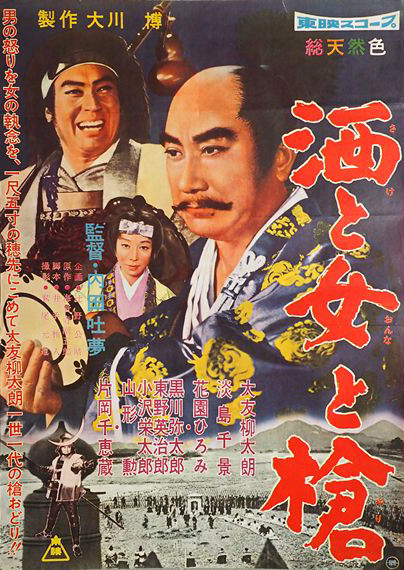
The Master Spearman (酒と女と槍, Tomu Uchida, 1960)

After the war during the American occupation, the samurai film encountered a de facto ban with the authorities worried that historical epics may encourage outdated fuedal and fascistic ideology. The period films of the post-war era, however, are often fiercely critical of the samurai order even as it stands in for the hypocrisies of the contemporary society. Two years before Masaki Kobayashi launched a similar assault on the notion of samurai honour in Harakiri, Tomu Uchida’s The Master Spearman (酒と女と槍, Sake to Onna to Yari) finds a loyal retainer similarly troubled when he is ordered to die only to be ordered not to and then finally told that yes he must commit suicide to serve a kind of honour in which he no longer believes. 

Takasada (Ryutaro Otomo) is a battlefield veteran with the Tomita clan much revered for his skill with the spear. As a retainer to the current regent, Hidetsugu (Yataro Kurokawa), he finds himself in trouble when the ageing Hideyoshi (Eijiro Tono) stages a coup to solidify his power, accusing his nephew of treason on abruptly “discovering” a stash of illegally obtained rifles. Takasada is outraged not to have been ordered to die with his master, but later resents being “strongly encouraged” to do so by his brother, the head of their clan. Storming out, he temporarily retreats into a drunken haze during which he convinces his favourite actress, Umeme (Hiromi Hanazono), to stay with him (just serving drinks, no funny business), before committing himself to public seppuku on a date of his own choosing. When the day arrives, Takasada is greeted by parades of “well wishers” keen to congratulate him for being such a fine samurai. Encouraging those in line to step out of it and stand horizontally without account of rank or status, he agrees to drink with them all, with the consequence that he becomes extremely drunk and passes out. 

Just as he’s about to cut his belly, a messenger arrives from Hideyoshi himself ruling Takasada’s suicide illegal. He if goes ahead and does it anyway, his clan will be disgraced. Takasada’s brother changes his tune and begs him not to proceed for the sake of the Tomita honour. Thoroughly fed up, Takasada has a sudden epiphany about the hypocrisies of the samurai code and decides to renounce his status, dropping out of court life to live simply in the country where he is eventually joined by Umeme who has fallen in love with him. 

Meanwhile, court intrigue intensifies. These are the quiet years leading up to the decisive battle of Sekigahara which in itself decided the course of Japanese history. While the elderly Hideyoshi attempts to hold on to power by ruling as a regent on behalf of his sickly son Hideyori, Tokugawa Ieyasu (Eitaro Ozawa) plots on the sidelines. Hideyoshi is advised by his steward Mitsunari (Isao Yamagata) to take a hard line with treachery, executing all 36 “spies” planted in his household by Ieyasu, including a number of women and children. Mitsunari is himself working with the other side, and the executions are nothing short of a PR disaster for Hideyoshi, provoking fear and resentment in the general populace who can’t accept the inherent cruelty of putting women and children to the sword. Sakon (Chikage Awashima), a kabuki actress and fiercely protective friend of Umeme, comes to a similar conclusion to Takasada, hating the samurai order for its merciless savagery. 

That’s perhaps why she’s originally wary of Takasada’s interest in Umeme, uncertain he will keep his promise to keep his hands off her and so staying over one night herself to make sure Umeme is safe. Umeme, meanwhile, may not have wanted him to be quite so honourable, leaving in the morning visibly irritated and exclaiming that Takasada is drunk on himself and understands nothing of women. That may be quite true, but it’s his sense of honour which eventually tells him that he must reject the samurai ideal. First they tell him honour dictates he must die, then that he must not, then when Hideyoshi dies and the prohibition is lifted, that he must die after all because his entire clan is embarrassed by his continuing existence. By this point, Takasada has decided to accept his “cowardice”. Sickened by the spectacle of his ritual suicide and the humiliation of its cancelation, he came to the conclusion that “loyalty and honour for world fame, glorious exploits etc” is all a big joke. He loves food, and wine, and his wife, and if that means others call him coward so be it because he’s finally happy and perhaps free. 

His spear, however still hangs over his hearth. He hasn’t truly let go of it or of the code with which he was raised. Sakon, perhaps on one level jealous and guarding her own feelings as she accepts that Umeme has chosen to leave the stage to retreat into an individual world with Takasada, warns her that her happiness will end if Takasada is convinced to accept a commission from the Tokugawa. He surprises her by once again renouncing his status as a samurai, choosing to stay a “coward” living a simple life of love and happiness. But as soon as he puts his hand on the spear intending to break it for good something in him is reawakened. He can’t do it. He finds himself at Sekigahara, confronted not only by samurai hypocrisy but by his own as Sakon does what he could not do to show him what he has betrayed. His rage explodes and he raises his spear once again but not for the Tokugawa, against the samurai order itself piercing the very banners which define it in an ironic assault on an empty ideology.  


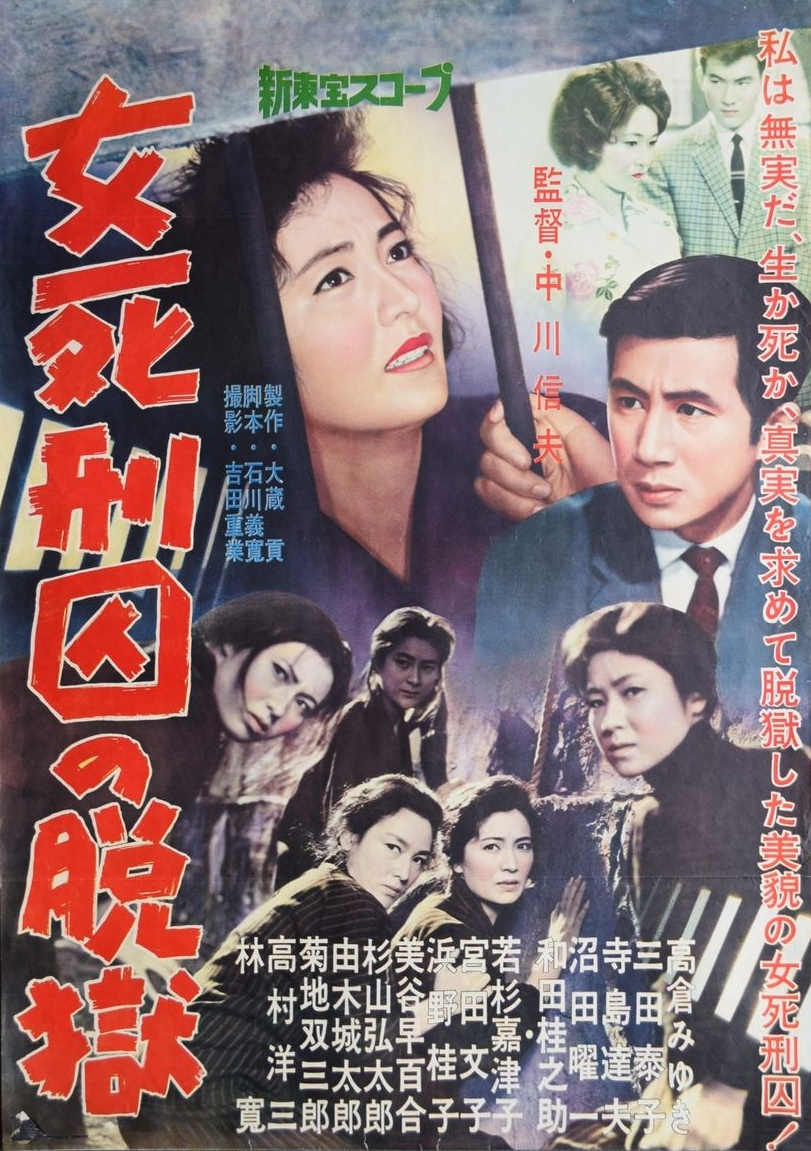
Death Row Woman (女死刑囚の脱獄, Nobuo Nakagawa, 1960)

How far does freedom extend in the complicated post-war society? Best known for his eerie horror films, Nobuo Nakagawa takes a stab at B-movie crime in a tale of wronged femininity as a woman’s attempt to escape her father’s authority ends in a death sentence. Death Row Woman (女死刑囚の脱獄, Onna Shikeishu no Datsugoku) sends its wrongfully convicted heroine on the run, literally, from a cruelly patriarchal society, but there is something quite perverse in its ambivalent conclusion which at once frees and vindicates but also suggests that perhaps daddy knows best after all. 

As the film opens, patriarch Imai (Hiroshi Hayashi) is engaging in a bonding ritual with his prospective son-in-law, Aoki (Keinosuke Wada), teaching him how to hunt. Meanwhile, his daughter, Kyoko (Miyuki Takakura), has wandered off with another man, Soichi (Tatsuo Terashima), with whom she is in love. Soichi is obviously worried about Aoki, but she tells him that the marriage is her father’s idea and she’s no intention of going through with it, not least because she is pregnant with Soichi’s child. The pair embrace, engaging in a clinch in the woods, but are spotted by Kyoko’s step-sister, Minako (Yasuko Mita), who apparently doesn’t like someone else hunting what she’s got her eye on, pointing her shotgun right at the loved up couple before her mother (Fumiko Miyata) arrives and knocks it out of the way sending a shot into the air in the process. 

Soichi is a spineless sort of man, telling Kyoko that he “can’t talk to old people” and refusing to go with her to see her father. She’s confident Imai will have to give in seeing as her pregnancy makes this a fait accompli, but he tells her to get an abortion and if she doesn’t like it she can get out. Imai wanted her to marry Aoki because he picked him out as a son, an heir to leave his company to. As Kyoko points out, he never considered her feelings, only seeing her as a tool to be manipulated for his own ends in securing his business interests. Imai objects to Soichi not only because he resents having his authority undercut, but because Soichi is a “nobody” and he finds the idea of his daughter marrying someone from a different social class distasteful in the extreme. All of that is about to become moot, however, because seconds after Kyoko storms out vowing to marry Soichi even if it means severing ties with her family, Imai drops dead, not of an apparent heart attack as it first seems but of poison! As the last person to see him alive and with the entire household having heard their row, Kyoko is arrested for her father’s murder and sentenced to death. 

Jumping on over a year, Kyoko’s son is seven months old and apparently living in a children’s home rather than being cared for by any of her family while she languishes in prison still proclaiming her innocence. Nakagawa flirts with woman in prison tropes, putting Kyoko in a room of four women including a predatory lesbian, but eventually allows her to find female solidarity with a “habitual criminal” who helps her escape in order that she might prove her innocence and be reunited with her son. Kyoko’s decision to escape is prompted by an awkward visit from Soichi who has neglected to bring the picture of their baby he’d promised her while claiming to be working hard on her case. He tells her that he’s engaged a lawyer who has turned up evidence implicating Aoki who has made several attempts of his own to visit her all of which she has turned down. Unbeknownst to her, he’s even transferred to the town near the prison and is living in a company dorm not too far away. Coming to the conclusion that Aoki is the architect of all her misfortune, she determines to pay him a visit and either get a confession or take her own life. 

Aoki, however, turns out to be a good guy after all. He didn’t kill Imai and has been living near by because he’s sure Kyoko didn’t either and is determined to crack the case. Aoki helps her hide from the authorities and manages to get her on a train to Tokyo daringly defying the police dragnet, while the case’s original investigator begins to smell a rat in staking out the Imai home. Soichi seems to have become awful close with the two Imai ladies, so perhaps he really was the odious social climber old Imai feared him to be. So far, Kyoko’s attempts to take charge of her own future in rejecting her father’s authority have not gone well. She has ended up with a death sentence for daring to challenge the social order by advancing her own agency and has escaped from the literal prison, but is once again locked up for her own safety while Aoki does all the investigating on the outside. Her desire to reassume her role as a mother to a child technically born out of wedlock is what eventually gets her caught, leaving her at the mercy of the magnanimous police who, thankfully, decide that the duty of law enforcement is to act in the best interests of justice, admitting their mistakes rather than covering them up to save face. 

So, Aoki turns out to be good and Soichi bad. Kyoko is vindicated, proving herself innocent of the crime of patricide, but is punished fiercely for her attempt to escape her father’s control. It’s tempting to think that the message is that her father knew best after all and if she’d only done as she was told and married Aoki without making a fuss all of this could have been avoided. Amoral post-war ambition has been unmasked, everyone has been shuffled back into their original class boxes with order seemingly restored. Kyoko has “escaped” her imprisonment, but is she truly “free”? “That’s all in the past now”, Aoki reassures her, “but hang on tight anyway”. 


Tarzan and the Treasure (泰山寶藏, Liang Zhefu, 1965)

Nothing is guaranteed to turn people against each other faster than hidden loot. So it is for the children of two wartime conscripts inheriting a dubious legacy from their departed fathers in the enticingly named Tarzan and the Treasure (泰山寶藏). The world was beginning to open up in 1965, but in cinema at least there was still space for the “mysterious East” even when seen from the relative proximity of Taiwan. 

A Taiwanese businessman travels to Macao in search of the missing half of a map said to lead to treasure hidden in the Malayan mountains by the Japanese at the end of the war. The man’s brother, Zheng, and the father of the man he’s supposed to meet, Fan, served together as conscripts to the Japanese army and agreed to tear the map in two because they were afraid that their descendants may try to do each other out of their shared inheritance. That proves truer than they could ever know seeing as they both died young. The businessman is shot dead by crooks including Fan’s son (Chin Tu) who planned to steal Zheng’s half of the map and get the treasure for himself, but thankfully he didn’t have it on him, leaving it with his niece Shufen (Liu Qing) for safekeeping. Fan’s son is also killed by his gangster boss who takes his leads about Shufen and her young cousin Hong-luk (Ba Ke) heading to Malaya and runs with them. 

Shufen meanwhile has been warned by a policeman from Macao that her uncle is dead and gangsters may be on her tail. Inspector Khoo tells her to go and wander around in the jungle as bait while he is supposedly going to protect her and her cousin. Hong-luk privately dreams of finding the treasure, but Shufen reminds him they’re here for “revenge” and to smoke out the gangsters, not to get rich. While in the jungle, however, they encounter many more dangers than the alien element of invading criminality. Despite being firmly set in the modern era, Shufen and her cousin repeatedly run into members of a primitive tribe, some of whom turn out to be predatory. A hero is, however, forever on the horizon and whenever Shufen finds herself shouting for help “Tarzan” (Gao Ming) swings out of the jungle to rescue her. 

Somewhat surprisingly, “Tarzan” speaks perfect Taiwanese but wears only a leopard print loincloth and a few bangles. He is apparently, and for obvious reasons, a popular guy but only has eyes for So-bi, his increasingly jealous girlfriend with an equally jealous sister constantly outraged on So-bi’s behalf. Tarzan never falls for the the “Jane” figure of Shufen standing in for urban sophistication but remains her protector, not only from the predatory members of his own tribe but from the gangsters too even as they bring unwelcome modernity in the form of guns into this idyllic paradise. 

As they said, Shufen and her cousin haven’t come to find the treasure, only to get justice and in the hope of figuring out what happened to Shufen’s father and brother who came to Malaya some years ago after Fan’s death made getting the second half of the map impossible. The treasure itself, unearned wealth with a less than ideal genesis, is the corrupting influence which has caused so much pain and suffering. Zheng may have given his life for it, his brother and Fan’s son were shot for it, and now amoral gangsters from Macao may make sure that Shufen pays for it too even though she seems to have no interest in striking it rich. The lesson seems to be that going off to foreign countries to pull dollars out of the hillsides is a meaningless and risky business. Shufen has the right idea in that she’s gone to Malaya to restore her family and if possible bring it home while paying her respects to her late uncle. 

Greed, romantic jealousy, and the dangers of the jungle, however, threaten her mission. Wise for his years, little Hong-luk is increasingly convinced they’ve been double-crossed and that “Inspector Khoo”, if that’s his real name, must be in league with the gangsters, having tricked them into coming into the mountains all alone without the promised police “protection” even while they’re supposedly acting as bait for vicious Macao gangsters. Rest assured, however, that the authorities are eventually vindicated while Shufen remains just as innocent as the guileless Tarzan but standing up to the forces of corruption as long as she is able. The “treasure” that she discovers is family unity, preparing to leave the exoticised “Eastern paradise” for the urban sophistication of “civilisation” in Taiwan, but taking something of Malaya with her as she goes.


Screened as part of touring retrospective Taiwan’s Lost Commercial Cinema

The Rice Dumpling Vendors (燒肉粽, Hsin Chi, 1969)

What could be more wholesome and comforting than a rice dumpling? To support their desperate family, a father and daughter become, unbeknownst to each other, Rice Dumpling Vendors (燒肉粽), hoping to buy back their innocence through honest work but secretly ashamed of the depths to which they’ve fallen. Rising economic prosperity has it seemed provoked a moral decline and resulted in an arrogant entitlement that allows wealthy men to assume they can do as they please, but one ordinary businessman is about to get an unexpected humbling when confronted by the consequences of his moral transgressions. 

Tsibing (Yang Ming) is outwardly successful. He dresses in suits, has a large house and chauffeur driven car, can afford to employ a nanny, and comes home to an elegant middle-class wife (Jin Mei) and three adorable children. Despite all of that, however, he’s about to ruin everything. His mistress is secretly part of a criminal gang. She gets her boyfriend to pretend to rob the place, knocking out Tsibing’s wife and undressing her, leaving a pair of underpants on the bed to make it look like her lover has thrown his clothes on in a hurry and jumped out of the French doors to avoid being caught out by Tsibing’s unexpected arrival. Tsibing doesn’t stop to ask questions. He rounds on his wife, beating her violently in front of their young son whom he also kicks in the ribs for trying to defend her. Hypocritically pointing out that his taking a mistress is no justification for her to take a lover a too, he throws her out of his house, only to be thrown out himself when he realises that his mistress has stolen all his money. Ruined and penniless he moves into a shack with the three kids and tries to keep things together while meditating on his mistakes. 

The Rice Dumpling Vendors is, somewhat unusually, a melodrama of male failure in which Tsibing experiences a humbling which pulls him away from the amoral capitalism of the post-war era towards humanistic compassion. The couple next-door, a balloon seller (Chin Tu) who dresses as a clown and his feisty wife (Siu Chu), were unable to have children of their own and quickly take to the young family, feeling sorry for Tsibing and often helping him out particularly with buying formula milk for the baby. “I always thought people were selfish” he confesses while lying on a hospital bed after sustaining a serious workplace injury, finally seeing a different, less materialistic way to live. 

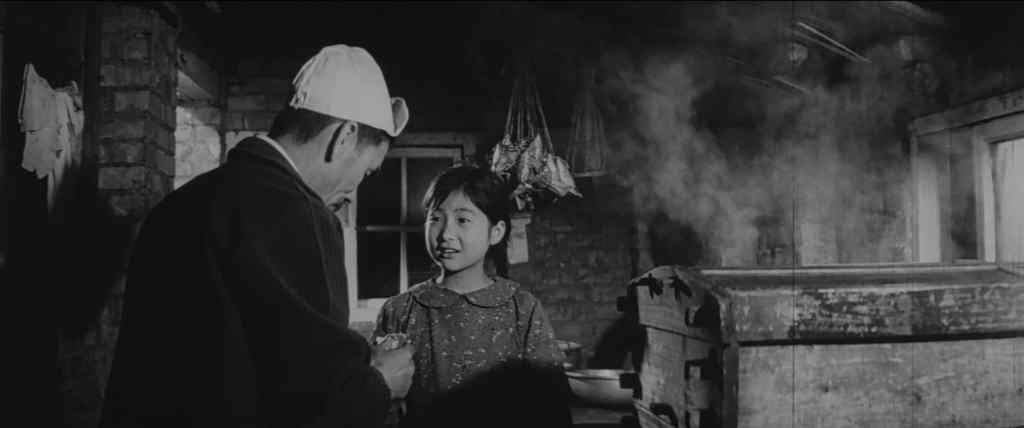
As the closing song reminds us, however, you can’t do anything without money. Attempting to walk away from failure, Tsibing finds himself in an impossible position. He can’t find work that can support a family, and even once he finds a job he gets himself injured leaving him entirely unable to provide. Oldest daughter Hsiu-chuan (Dai Peishan) tries to take the burden on herself, selling lottery tickets and heading out at all hours to hawk rice dumplings to passersby in the streets, unconvincingly telling her father that she’s going to help a classmate who is sick in the hospital with their homework. Hsiu-chuan’s earnestness stands in complete contrast to her father’s increasing desperation compounded by guilt and regret. In a low moment, he even considers abandoning the baby in front of the house of a wealthy childless couple in the hope that they will adopt her.

Strangely, Tsibing never considers asking the childless couple from next-door who already dote on his children if they’d be willing to look after the baby, but determines straight on placing himself at the mercy of the wealthy. The couple at least seem nice – they want a child and would spoil it with both love and money, but they are also arch materialists. Their first thought is that they should give Tsibing money in compensation, as if they were buying a pet. It doesn’t quite occur to them that he might change his mind, after all they can give his baby a quality of life he currently cannot in which she’ll be well fed and taken care of. Is it selfish of him to deny her that? Hsiu-chuan and her brother, however, aren’t having any of it. They’re taking their sister home where she belongs, vowing to give up on school and double down on their part time jobs to make sure they can afford milk to feed her. 

Tsibing too lowers himself once again, selling not only lottery tickets but later rice dumplings, telling Hsiu-Chuan, who is doing exactly the same thing, that he’s got a job as a nightwatchman in a warehouse which is why he’s out all night. Humbled and encouraged by the warmhearted altruism of his kindly neighbours, he’s learning to renounce the materialist life and re-embrace what’s important. The mistress, meanwhile, making an unexpected reappearance, pays a heavy price both for her amoral materialism, and for her transgressions as an “immoral” woman whose attempts to use men provoke only jealousy and violence. Meanwhile, the wife is eventually vindicated and seems to have retained both her wealth and her class status even after being unfairly thrown out by Tsibing. 

What we’re presented with is a seemingly uncomplicated family reunion, completely ignoring Tsibing’s brutal use of violence against his wife and son which is itself intended to demonstrate his “manliness” and patriarchal authority. He reminds his wife of the cultural double standard that insists that a man may take a mistress but a wife must be faithful, punishing her not for betraying their family but for making a fool of him. Little does he know however that he’s already been made a fool of by a “wicked” woman, and it’s entirely his own fault for acting irresponsibly, regarding a mistress as little more than a status symbol. Nevertheless, now humbled he has a new appreciation for what it means to be a family man, seeking not riches but simple wholesome pleasures like rice dumplings and friendship surrounded by kind and honest people always willing to lend a hand to those in need.


Screened as part of touring retrospective Taiwan’s Lost Commercial Cinema

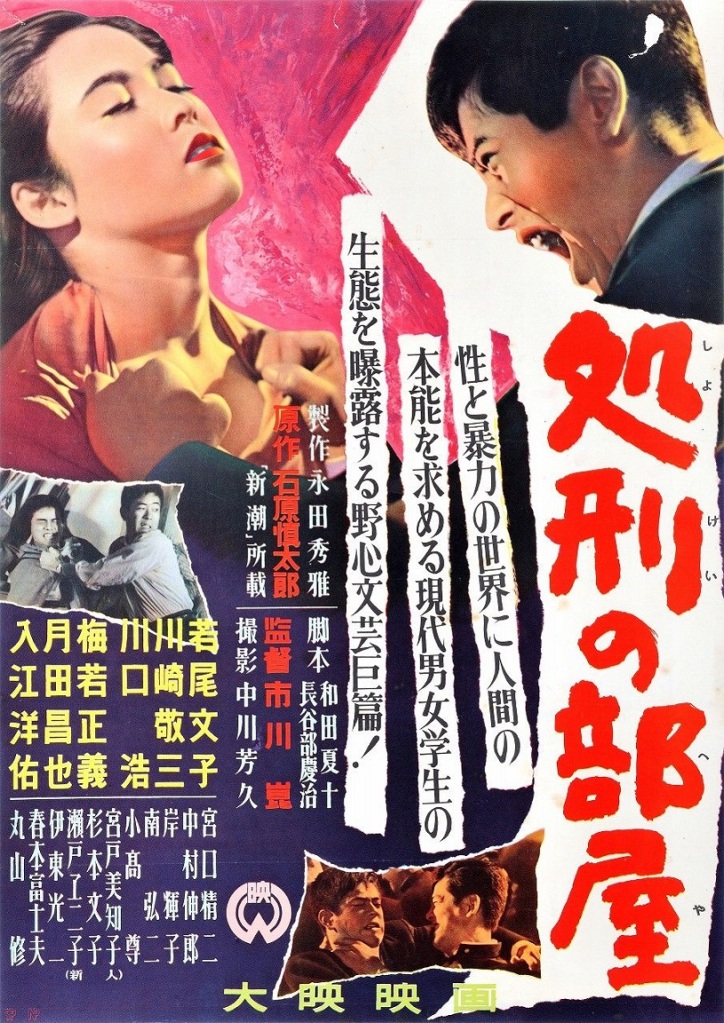
Punishment Room (処刑の部屋, Kon Ichikawa, 1956)

In the mid-1950s, Nikkatsu released a series of incendiary youth films which gave rise to a small moral panic in the older generation. The “Sun Tribe” movies proved so controversial that Nikkatsu could only release three of them before bowing to public pressure while Toho and Daiei both managed to release one each, bringing the total up to five. Produced by Daiei, Kon Ichikawa’s contribution to the Sun Tribe phenomenon, Punishment Room (処刑の部屋, Shokei no Heya), adapted another novel by Crazed Fruit’s Shintaro Ishihara who had, it seems, managed to capture something of the nihilistic spirit of the age.

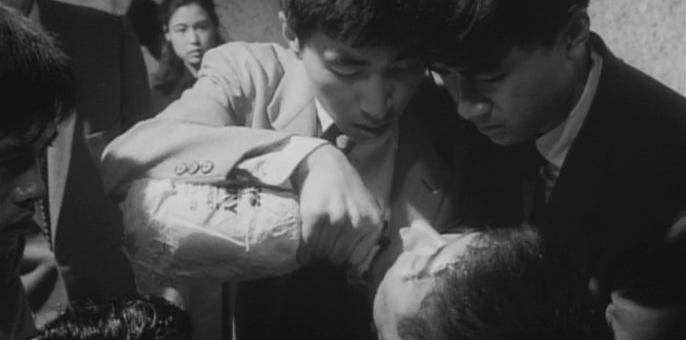
Among the darkest of the Sun Tribe tales, Punishment Room follows near sociopathic university student Katsumi (Hiroshi Kawaguchi) as he works out his frustration with his hangdog father Hanya (Seiji Miyaguchi) by kicking back against societal rigidity. Hanya is a bank clerk with some kind of stress-related stomach complaint for which he is forever taking medicine. One particular day, Katsumi and his friend Hideo (Shoji Umewaka) turn up to run some kind of scam on him, insisting that Hideo’s family are in dire straits because his dad’s working abroad and they don’t have money to make a payment on a loan. The boys want Hanya to buy the note of debt as security and lend them 30,000 yen, something which isn’t really allowed but he ends up taking out half of his own life savings to avoid embarrassing or being embarrassed by his own son in the workplace. The boys, however, were just trying to extort him and planning to use the money to host a college dance while making a little extra on the side. 

At this point, most still seem to feel that Katsumi is a “nice kid”, while Hideo is a bad influence. His middle school best friend Ryoji more or less says as much, but no one really knows the extent to which Katsumi is already becoming a black hole of nihilistic fury. His ire is provoked during a college debate session at which he’s outtalked by smart female student Akiko (Ayako Wakao) and abruptly cut off by the bored professor (Nobuo Nakamura). Despite knowing that one of his buddies has a crush on her, Katsumi makes a point of picking Akiko up during the chaos of celebration after a sports game. Along with Hideo and another, more innocent student they nickname “Sonny”, Katsumi takes Akiko and her friend to a nearby drinking house, popping out to buy sleeping pills and eventually spiking their drinks while they use the bathroom, knocking Sonny out for good measure to stop him getting in the way. After dragging the barely conscious girls back to Hideo’s family home, they take one each and rape them. On waking Akiko is defiant, threatening to call the police but an unrepentant Katsumi insists that she won’t be believed. Not content with their humiliations, the guys even insist on taking the girls home by cab only to run out and leave them with the bill. 

Katsumi is is equally unrepentant when someone sends his family a letter informing them of his conduct, admitting that the allegations are true but insisting that the women are complicit because they did not report him to the police. He even refers to Akiko, who has after a fashion fallen in love with him, as “sort of my girlfriend”. Hanya ironically blames his wife whom he has treated with nothing but contempt, giving his son a crash course in a inherited misogyny, but she turns the same logic of toxic masculinity back on him in pointing out that his own passivity is the major cause of his son’s resentful rebelliousness. If Katsumi is rebelling against something rather than just a sociopathic little punk, it is indeed the spinelessness he sees in his father, obliged to scrape and bow for a mere pittance as a “wage slave” of a cruelly conformist society. 

An angry young man, Katsumi preemptively rejects the salaryman straightjacket by rebelling against conventional morality. “I do what I want” he insists, as if proving that he’s a free agent acting under force of will alone and beholden to no one. His efforts are however, futile. His amoral violence buys him nothing but the same in return. Denied a mechanism for dealing with emotion, contemptuous of hollow authority figures, and infinitely bored by a society they believe has nothing to offer them bar empty consumerism, post-war youth seeks escape but finds only nihilistic self-destruction, trapped in a perpetual Punishment Room with no exit in sight. 


Opening Scene (no subtitles)

Super Express (黒の超特急, Yasuzo Masumura, 1964)

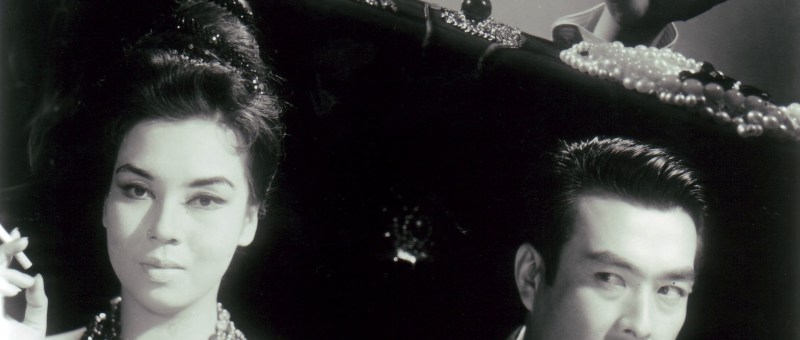
By 1964, Japan had returned to the world stage and was beginning to enter a new age of modernity as symbolised by the completion of the Shinkansen “bullet train” high speed rail network opened in time for the Tokyo Olympic Games. Behind the scenes, however, many were still trying to pull themselves free of post-war privation while others feared that the promised age of plenty had provoked a moral decline giving rise to widespread exploitation and rampant criminality. Yasuzo Masumura’s “Black” Super Express (黒の超特急, Kuro no Chotokkyu) was the last in a series of “Black” films (which also included the earlier Black Test Car) produced by Daiei in the mid-‘60s which exposed the seedy underbelly of the modern economy through tales of shady corporate shenanigans. Though in this case the hero finds himself in difficultly largely because of bad luck and his own poor judgement, he eventually exposes the cronyism and corruption which seem set to engulf the modern society. 

As the film opens, shady businessman Nakae (Daisuke Kato) approaches local real estate agent Kikyo (Jiro Tamiya) with an unusual business proposition. It seems that someone wants to build a factory on a large stretch of land currently owned by a number of farmers and other small concerns. Nakae wants to buy it up, but he’s afraid he won’t get a good price as an outsider and wants Kikyo to handle things on the ground. Kikyo is a little confused by Nakae’s intention to offer a significant sum of money to the farmers while proposing a sizeable commission to him, but eventually decides to go along with it. Everything goes to plan – it’s a not a scam, the farmers get their money, and everyone’s happy. Everyone except Kikyo, that is, who loses everything playing the stock market. It’s then he’s contacted by a disgruntled farmer who realises he might have been able to get more because it turns out the land wasn’t purchased for a factory, but for a second line on the Shinkansen. Nakae took their land and sold it on to the government at huge profit. 

Kikyo is extremely pissed off even though he was originally happy with the money he received and the reasons he lost it are nothing at all to do with Nakae. He gets straight on a train (not a Shinkansen) to Tokyo to confront him, but only gets the brush off and an offer of token hush money when Nakae realises Kikyo could cause a problem, something he is apparently keen to do because he starts connecting the dots between the elegant young woman he saw delivering envelopes to Nakae and a senior executive at the rail office. 

Needless to say, Nakae is a totally immoral, not quite conman chancer with the gift of the gab. He approached Kikyo with the job because he’d done his research and knew he’d take the bait. Kikyo already had a failed business behind him and desperately wanted to succeed. In the end he’d find it too difficult to resist the temptation of such a big contract even if he had his doubts, and his greed might prevent him asking too many questions. What Nakae didn’t bank on, however, was the depth of his resentment when he realised he’d been used and then cheated. 

“Large corporations are the new Daimyo” Kikyo tells his later accomplice, Yoko (Yukiko Fuji), Nakae’s former squeeze. He quit his salaryman job because he wanted to be his own boss, but feels like the world has pulled away from people like him, forever denying them a ticket on the Shinkansen, allowing them only to ride the now ironically named “super express”. Yoko feels something similar. She’s refused marriage after coming to the conclusion that men can’t be relied on – her father died in an accident when she was 11 after which her now bedridden mother raised her alone by working as a maid, and an ill-advised “affair” with a married university professor who took advantage of her naivety only further convinced her that she’s better off a free agent. Yoko wants total independence and the opportunity to start a business of her own, which is why she agreed to team up with Nakae to become the mistress of her boss at the rail company, Zaitsu (Eiji Funakoshi), who’d taken a liking to her and is the classic sad middle-aged salaryman with a wife suffering from TB he’d long since grown apart from. 

“There’s nothing more important than life” Nakae later grimly admits, trying to save his own skin, but it’s too little too late. Previously, he’d claimed he was “ready to commit any crime for money”, but mainly thrived on sadistic machinations setting up complex blackmail plots lined with little bombs he could set off if and when the occasion called. Kikyo takes him on at his own game, blackmailing the blackmailer, never really intending to expose the corruption only to parasitically profit from it. What he discovers is there was a much higher price to be paid than he realised because Nakae was only ever a middle man. The people at the top of the tree won’t want to pay at all and they think they don’t have to because “peasants” are expendable. Eventually turning to the police, he finds himself thanked for his service but is forced to admit that he only really wanted the money until he realised how far others were willing to go to get it. Spotting the shiny new Shinkansen rocketing past his widow seat on the super express, all he can do is lower the blind and try to get some sleep. 


The Scent of Incense (香華, Keisuke Kinoshita, 1964)

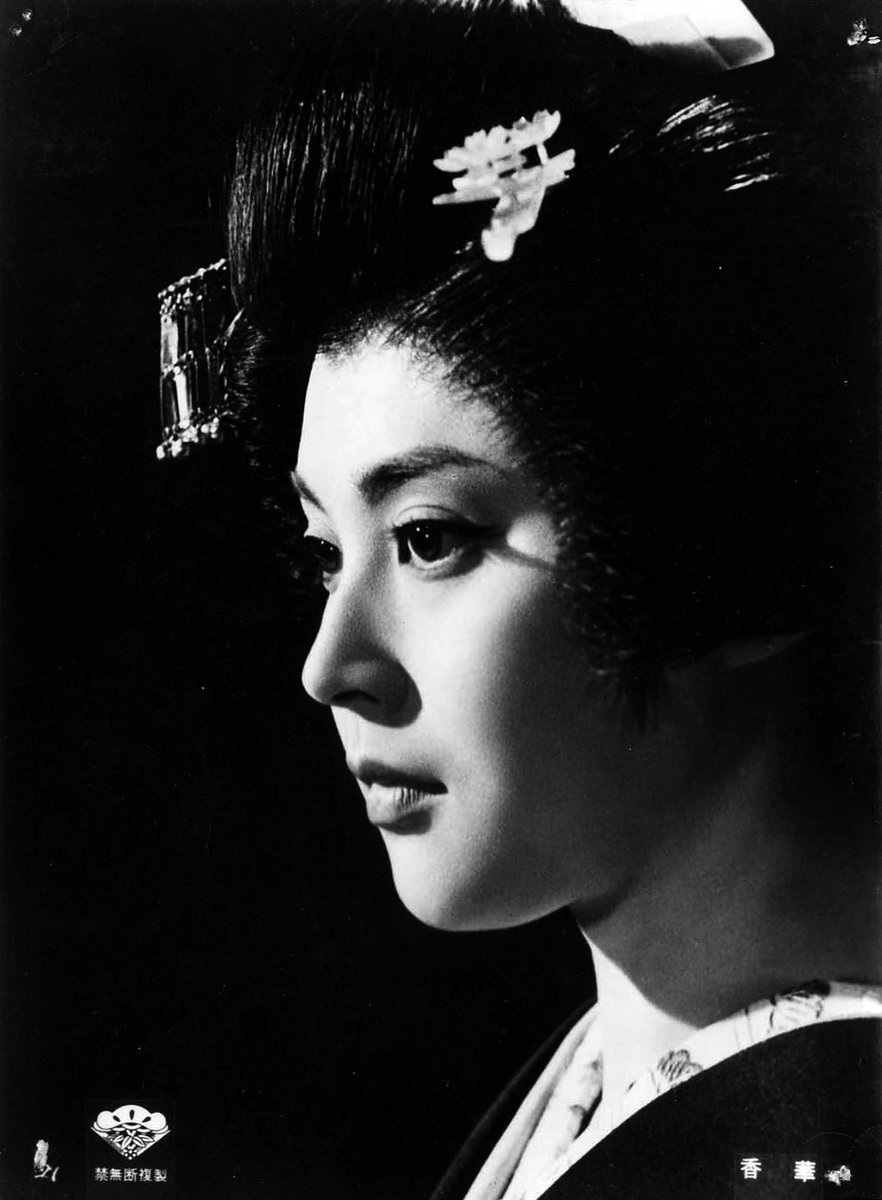
Scent of Incense still 1Sometimes regarded as overly sentimental, Keisuke Kinoshita’s later career grew progressively harder around the edges, as if he began to lose faith in the efficacy of human goodness but never it seems in its capacity for endurance. Spanning more than 50 years in the turbulent history of mid-20th century Japan, The Scent of Incense (香華, Koge) reverses the path of the hahamono in dramatising the complicated relationship of two women – a “selfish” mother and her “self-sacrificing” daughter who finds herself unable to give up on maternal approval despite the many disappointments of her life.

We open in late Meiji with a funeral interrupted by news from the Russo-Japanese war. Shortly after, young widow Ikuyo (Nobuko Otowa) argues with her mother, Tsuna (Kinuyo Tanaka), over custody of her five-year-old daughter Tomoko. Ikuyo is planning to remarry and her new husband has three children of his own. Fearing Tomoko would be an inconvenience, Ikuyo proposes to make her heir to her mother’s family, leaving her behind in her grandmother’s care. Though Tsuna loves Tomoko dearly, she resents her daughter’s intention to abandon them just because she’s got a better offer, and perhaps privately wonders how long she’ll actually stick it out for seeing as, as we later see, she has a strong tendency to give up when the going gets tough.

The prediction proves accurate. Ikuyo persuades her new husband to abandon his existing children and family home for the bright lights of Tokyo, while Tomoko and her grandmother live on alone in the country. Ikuyo has another daughter, Yasuko, but the couple quickly become impoverished without access to her husband’s family money. When Tsuna dies, Ikuyo decides to fetch Tomoko from the family residence, but then sells her to a geisha house. A few years later, she too falls into the sex trade but as a less exulted “oiran”, embarrassingly re-encountering her daughter from the other side of a brothel. Despite her abandonment and shame over her mother’s profession, Tomoko (Mariko Okada) continues to try to help her, maintaining an awkward familial relationship with a woman who only pays attention to her when she needs something.

Perhaps ironically, in one sense, Tomoko ends up becoming a successful, independent woman in pre-war Japan but is forever denied the kind of familial life she craves as a conventionally respectable wife and mother of the kind her own was not. In the course of her work, she meets dashing military cadet Ezaki (Go Kato) and, despite the warnings of her madam (Haruko Sugimura) who cautions her that she’s the type to fall in love too deeply, embarks on a longterm affair with him. Though he is obviously aware that she is a geisha, he is confident that his family would accept a marriage, but Tomoko’s hopes are later dashed when his pre-marital investigations turn up the fact that Ikuyo has worked as a “common prostitute”. Heartbroken, she resents once again paying the price for her mother’s transgressions, but does not break with her completely.

Tomoko’s liminal status is further brought home to her when her elderly patron, who has set her up with a geisha house of her own, suddenly dies and not only is she informed some days later by the madam at another house, but she’s not even permitted to attend the funeral. Another man, Nozawa (Eiji Okada), who’d had his eye on her but honestly admits that men of his class do not engage in “serious” relationships with geisha, asks her to become his mistress but she has had enough of the shadow life, vowing both that she doesn’t want to be “owned” anymore, and that her next man (if there is one) will have to marry her.

Loneliness renders that particular vow void as she finds herself embarking on a casual affair with Nozawa while Ikuyo considers getting married for the third time – this time, rather transgressively, with the family’s recently widowed former servant, Hachiran (Norihei Miki), who married into a wealthy family and apparently made something of himself. Hachiran, however, finds it difficult to shake off the old class attitudes, treating Ikuyo like a goddess while she bosses him around and makes a pretence of leaving every time she gets fed up.

Later we might wonder if Ikuyo’s sudden exit from Hachiran’s distant home is more that she missed her daughter than it was boredom with her husband. “I don’t think of her as a mother” each woman says, Ikuyo on learning that Tsuna is dangerously ill, and Tomoko when Nozawa suggests making a detour to visit Ikuyo and Hachiran. Ikuyo, it is true, is a cold woman who abandoned her daughter only to reclaim her in order to sell, later giving up two more children one of whom apparently disappears without trace. The proof of her love is found only in its end, while Tomoko suffers on all the long years otherwise alone, until in an immense act of circularity she at last becomes a kind of mother to another woman’s son.

Forever haunted by the spectre of soldiers, Tomoko loses everything in the Great Kanto Earthquake of 1923, but perseveres and rebuilds. She loses everything again in the firebombing of Tokyo, only later remembering her foresight in burying a large collection of crockery in the cellar which might allow her to open a restaurant. She resents her mother but keeps her close, while Ikuyo’s affections seem to ebb and flow as she disappears off to greener pastures only to resurface again when they’ve been thoroughly grazed. A flighty, perhaps selfish woman, Ikuyo too proves unable to sever connection from her daughter. Tomoko disapproves of her mother’s gaudiness, her unbridled lust for life and disregard of social conventions, but the two women are more alike than they first seem – each in their own way fiercely independent and unwilling to allow their desires to be defined or defeated by the world around them.


Original trailer (no subtitles)

Our Blood Will Not Forgive (俺たちの血が許さない, Seijun Suzuki, 1964)

Our blood will not forgive posterIn Japan, “kaeru no ko wa kaeru”, or “a frog’s son is also a frog”, is an often heard idiom, sometimes disparaging but often affectionate. Can a yakuza’s son become anything other than a yakuza, or does your blood define you in ways you cannot defy? Our Blood Will Not Forgive (俺たちの血が許さない, Oretachi no Chi ga Yurusanai), an early semi-absurdist gangster drama from Seijun Suzuki’s mid-period at Nikkatsu, asks just that question as two brothers battle the legacy of their slain father whose dying wish it was that the yakuza line die with him.

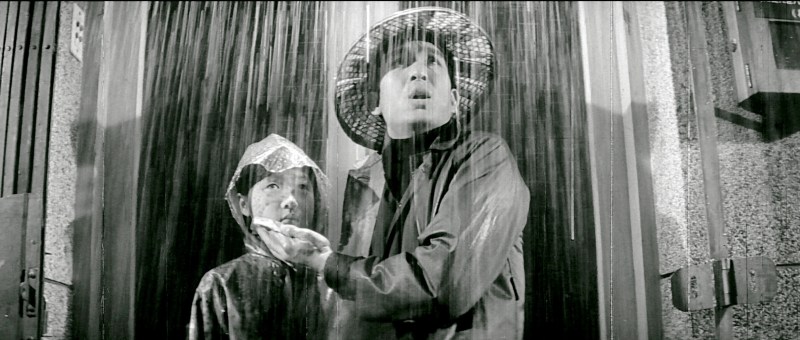
After their father was assassinated at home by sword, the Asari brothers were raised by their mother, Hatsu (Chikako Hosokawa), who did her best to keep them out of the underworld. After the war, however, times were tough. Older brother Ryota (Akira Kobayashi) had to work as a delivery boy to keep the family fed, studying hard at the same time and getting in to a good university. Now grown up, he’s a smart suited night club manager. His younger brother Shinji (Hideki Takahashi), meanwhile, is a clownish goof-off with a good job at an ad agency he’s always in danger of losing (like a fair few jobs before). Today, Shinji was meant to collect his bonus, but he’s bunked off to take part in a local festival which is unfortunate, because he’s got a visitor – Tobita (Akifumi Inoue), the man who killed their father without knowing why and now regrets it. He’s managed to track Shinji down thanks to the fact he looks just like his dad and has a habit of doing stupid things that get his picture in the papers like winning eating competitions and getting lucky on the horses only to get mugged outside.

Tobita’s desire to apologise to the boys exposes their father’s sordid yakuza past and forces them to deal with the legacy of their gangster blood. Though Ryota is more sanguine and simply declares that he “hates all yakuza” before asking Tobita to leave and never come back, Shinji immediately attacks him but then becomes enamoured of the romanticism of the gangster life and considers restarting the Asari clan after getting fired when a picture of him fighting with thugs on the company away trip makes the papers with the headline “yakuza’s son”.

The central irony is that Ryota, who was his mother’s favourite and ostensibly the steady, respectable son, has secretly been a yakuza for quite some time. The club he runs is a yakuza front, which is why he tries to talk Shinji out of trying to get a job there, leading him to feel rejected enough to have too much to drink and start a bar fight, causing problems for Ryota with his boss.

“All yakuza are the same,” Ryota confesses to Shinji as they argue in a car incongruously surrounded by roaring waves, “they’re violent because they’re afraid”. Despite graduating from Tokyo University, Ryota couldn’t get an honest job because they always found out his dad was a yakuza. Out of other options, he decided he had no other choice but to become one too, that he could not escape his blood but might be able to make sure his brother could. Shinji has romantic dreams of the yakuza lifestyle (his bedroom wall’s covered in pictures of Al Capone et al), but Ryota knows what it means, which is why he hates all yakuza, including himself. He’s planning to marry his secretary girlfriend, Yasuko (Chieko Matsubara), but his emotions are so corrupted that he isn’t quite sure if he really loves her or is only making a bid for respectability as a kind of atonement to his mother. In any case, he also feels guilty, knowing that just as his father eventually made his mother miserable, no woman can be happy with a yakuza.

“Yakuza are so stupid, you’re all obsessed with dying – what’s the point?” Shinji eventually exclaims, finally thoroughly disillusioned as his brother goes out in search of an honourable ending rather than trying to escape from certain death at the hands of his vengeful boss. “It may not be easy to live, but there’s nothing honourable about dying!” he tells him, undercutting a series of cultural signifiers, but finally crawling out of the yakuza trap and vowing to live on muddling through with his mother and perky girlfriend, Mie (Yuri Hase) whose birthday party he’s currently missing. Blood does not forgive, but it does eventually release if only you can learn to see it for what it is and choose to be free of it.


Opening (no subtitles)

The Human Vapor (ガス人間第一号, Ishiro Honda, 1960)

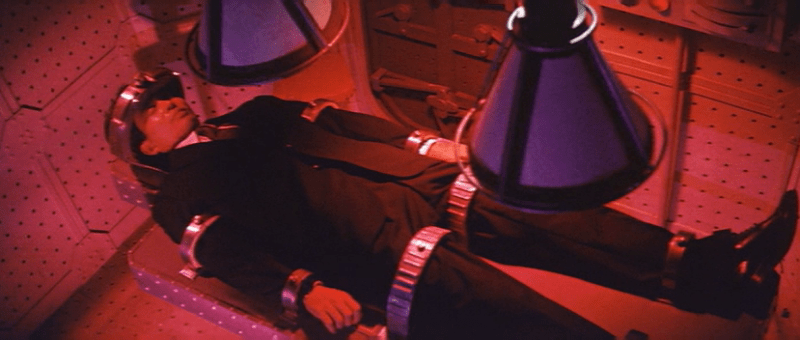
The Human Vapour poster“The world is full of hysteria towards things they don’t understand” admits the strangely chatty “villain” at the centre of Ishiro Honda’s The Human Vapor (ガス人間第一号, Gas Ningen dai Ichi-go). Third in a loose trilogy of “mutant” films put out by Toho beginning with The H-Man and followed by The Secret of the Telegian, The Human Vapor is at once the most futuristic and the most traditional in that it’s no longer wartime guilt or nuclear anxiety which has corrupted our increasingly amoral hero but unwise ambition in which desperation to win the space race has produced a new and dangerous threat we may not be able to contain.

Honda opens with an exciting bank heist which on later consideration might not make much sense, filled as it is with shots of a faceless man pointing a gun at terrified staff while the vault doors open seemingly on their own. Earnest policeman Okamoto (Tatsuya Mihashi) is on the case, chasing a suspect car down a narrow country road only for it to crash and be discovered empty with no trace of the driver to be found. Okamoto’s feisty reporter girlfriend Kyoko (Keiko Sata) is dismayed to find out he has no leads, but later picks up on his mention of a buyo dancer, Fujichiyo (Kaoru Yachigusa), who lives near the scene and might have something to do with the case. 

Chasing Fujichiyo takes Okamoto to a library, where he becomes further convinced she is in contact with the mysterious bank robber. A strange and isolated woman, Fujichiyo is apparently from a noble, wealthy family but lives alone in a small cottage with only a single male servant where she devotes herself entirely to perfecting the art of traditional Japanese dance. We discover that Fujichiyo has been in poor health, which is why she hasn’t given a public performance in some time. Okamoto posits that the bank robber is bankrolling her comeback, though he never seems to have much of an explanation why she would need him when she has access to her own resources.

He is however correct, though it seems Fujichiyo was not aware that the money was stolen otherwise she might have been more careful in using it. In a contrast with genre norms, honest cop Okamoto never falls for Fujichiyo but does become oddly invested in her sad love story while sparking with his cheerful reporter girlfriend who ends up doing much the same. In fact, Kyoko is the only one doing much investigating but largely finds herself having to do it in spite of the (generally useless) men around her, including an unpleasant younger colleague who mocks all her ideas but does nothing much of anything on his own.

In any case, smirking villain Mizuno (Yoshio Tsuchiya) later makes himself known to the police in a selfless gesture of love in order to clear Fujichiyo’s name and get her released from police custody. He does this by taking the police to a bank and demonstrating how he was able to get in the vault without a key which involves his curious ability to turn himself into a gas. When Fujichiyo is not released, he takes matters into his own hands and frees all the prisoners in the cells, but Fujichiyo refuses to leave, insisting that she has no intention of running away and prefers to stay until the police affirm her innocence by releasing her.

Mizuno’s intention to bypass the law is one of the many signifiers of his increasing danger, that now believes himself “above” the rest of humanity and therefore no longer subject to their laws. He later tells the police exactly that, sitting them down for a mini audience to explain himself during which he recounts his history as an SDF pilot discharged on a diagnosis of lung cancer after which he took the boring job in the library and fell in love with Fujichiyo. A shady doctor, Sano (Fuyuki Murakami), later approached him claiming to be working for Japan’s space programme and suggested that his fighter pilot background made him a perfect fit for becoming an astronaut. Mizuno agreed to participate in his research to “change the existence of the human body” in preparation for life in space, but when Sano’s weird experiments turned him into a “gas man”, the doctor committed suicide in horror leaving Mizuno just another lonely victim of a mad scientist.

Like many other “mutant” heroes, the change in Mizuno’s body has also changed his soul though his love for Fujichiyo remains unchanged. It seems he’s only committing these crimes to fund her ambition of performing traditional buyo dance on the contemporary stage, while she though obviously devoted to her art finds it difficult to accept the man that he’s become. He promises to give her the world, sacrificing anyone that gets in his way. She remains conflicted, not wanting to accept his offer if it involves that kind of cost, and defending him to her colleagues only with the rationale that he is “different from what they are accustomed to”. While some advise caution, that perhaps Mizuno is not as dangerous as they think despite already having killed and should be given the chance to reform, others take a harder line eventually opting to use a different kind of gas to counter him.

Kyoko pleads with Fujichiyo as one woman in love to another, trying to protect Okamoto while advising her to pull Mizuno back from the brink by cancelling her performance, but precisely because of the understanding that exists between them she cannot. Sadly, as many point out, no one is really interested in buyo dance – the only audience members in attendance are there for the drama and the possibility of seeing the gas man in action. “You and I have finally won” Mizuno tells Fujichiyo on completion of her dance, as if this performance was all that ever mattered to either of them. But their victory leaves them with nowhere else to go, and the world unready to accept the latent threat a gas man represents. Fujichiyo makes her choice, one perhaps informed by her art and her love, while the authorities can only wait outside for the vapours to disperse.


Original trailer (No subtitles)