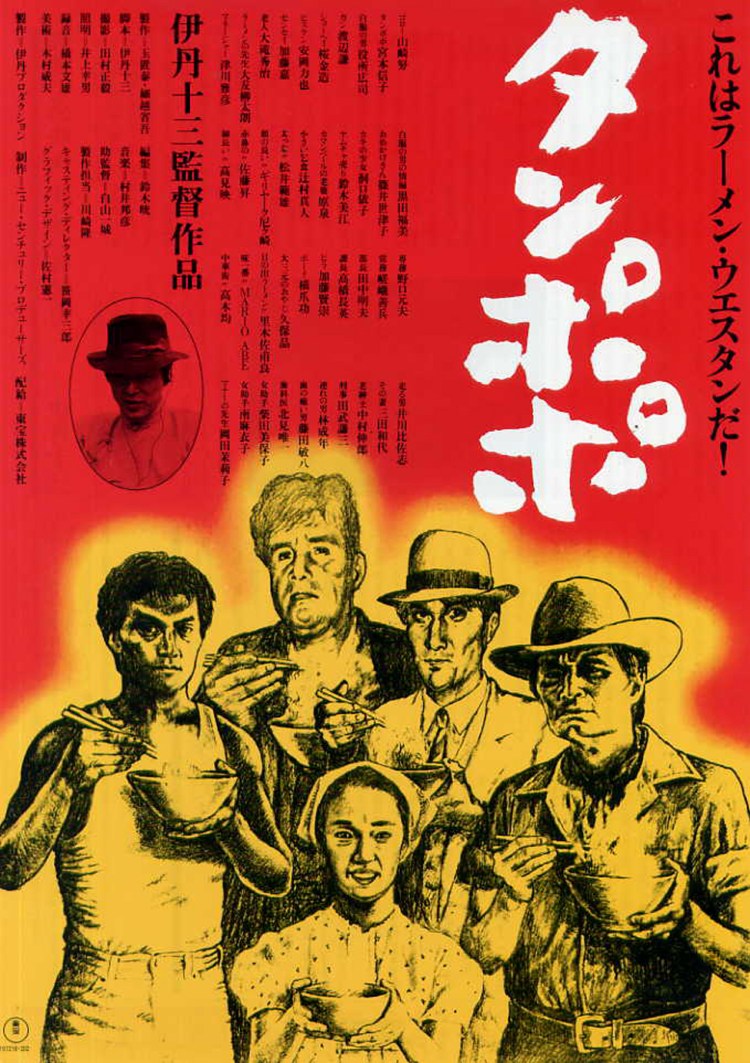
 Some people love ramen so much that the idea of a “bad” bowl hardly occurs to them – all ramen is, at least, ramen. Then again, some love ramen so much that it’s almost a religious experience, bound up with ritual and the need to do things properly. A brief vignette at the beginning of Juzo Itami’s Tampopo (タンポポ) introduces us to one such ramen expert who runs through the proper way of enjoying a bowl of noodle soup which involves a lot of talking to your food whilst caressing it gently before finally consuming it with the utmost respect. Ramen is serious business, but for widowed mother Tampopo it’s a case of the watched pot never boiling. Thanks to a cowboy loner and a few other waifs and strays who eventually become friends and allies, Tampopo is about to get some schooling in the quest for the perfect noodle whilst the world goes on around her. Food becomes something used and misused but remains, ultimately, the source of all life and the thing which unites all living things.
Goro (Tsutomu Yamazaki), a middle-aged man with a fancy hat, and his truck mate Gun (Ken Watanabe), younger, tight white jeans and colourful neckerchief, have become ramen experts thanks to their road bound life. Taking a break during a heavy rain storm, the pair run into a little boy being beaten up by three others and, after scaring the assailants off, escort him into the ramen restaurant where he lives with his widowed mother, Tampopo. Goro and Gun get the stranger in town treatment, but decide to sit down and order a bowl each anyway before a getting into a fight with another diner. Despite her skills as a home cook, Tampopo’s ramen is distinctly second-rate which explains why her business isn’t taking off. Goro and Gun spend some time helping her figure out where she’s going wrong leading Tampopo to beg them to stay, or at least come back when they have time, and teach her what it takes to make the perfect bowl.
Essentially a hybrid between a western and a sports movie, Tampopo has its fair share of training montages as the titular heroine tries to improve her stamina by taking intensive runs, carrying heavy pots of water from one place to another, and constantly trying get her cooking time down to three minutes. The lone woman on the “ranch” that is her restaurant, Tampopo may not be contending with boisterous cattle, threatening neighbours, or disapproving townsfolk but she is being mentored to become her own master as much as anything else. Goro is her strong and silent teacher, but, like Shane, he’s a man not meant to be tied down and is essentially teaching her how to survive alone however painful it may be for him to leave.
This is a fairly radical idea in and of itself. Tampopo’s goal is not another marriage and a man to mind the ranch, but the creation of a successful business which will support both herself and her son built on genuine skills and a lot of hard work. Goro, a ramen aficionado, takes charge but ropes in a few other “experts” to help him including a ramen loving former doctor now living on the streets, the private chef of a wealthy man the gang saved when he almost choked on mochi, and the guy Goro fought with in the beginning who also happens to be a childhood friend of Tampopo nursing a lifelong crush on her. From each of these men, as well as friendly (or not) rivalry with local competitors, Tampopo learns everything she needs to succeed including the confidence in herself to carry it through.
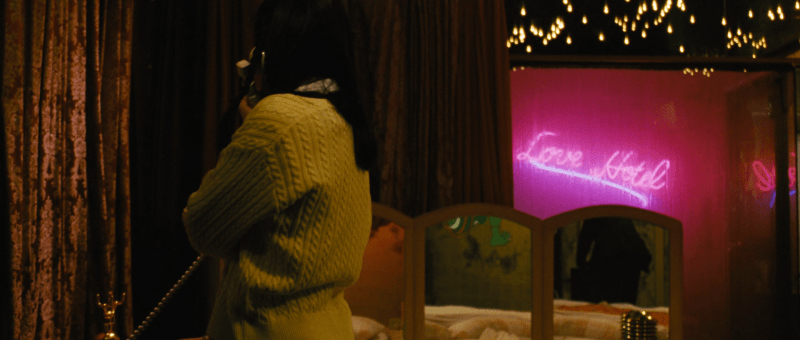
Whilst Tampopo and co. are busy figuring out the zen of ramen, Itami wanders off for a series of strange vignettes examining more general attitudes to food beginning with Koji Yakusho’s white suited, cinephile gangster who vows bloody murder on anyone daring to eat noisy snacks during the movie. The gangster and his moll eventually retreat to a hotel room where they find new and actually quite strange ways of using food to enhance their pleasure but their story leads us to others in the hotel from a young man stuck in a business meeting who shows up his less cultured colleagues with his culinary knowledge and either doesn’t know or doesn’t care that you’re supposed to order the same as your boss lest you be implying his choice of dish is “wrong”, to a group of young women taking a class in the proper way to eat spaghetti. The instructor (played by veteran actress Mariko Okada), goes to great lengths to explain that it’s considered very uncouth to make any kind of noise whilst eating pasta, only for a westerner of undisclosed nationality to loudly slurp his noodles half way across the room.
While these two episodes showcase the ridiculousness of food etiquette, others take a more surreal direction such as in the strange episode of an old lady who likes to sneak into the local supermarket and torment the clerk by squeezing the fruits, cheeses, and pastries while he chases her round the shop. Here appetites are to be indulged, even if they’re strange, rather than suppressed in favour of someone else’s idea of the proper way to behave. Yet that doesn’t mean that food is something throwaway, to be consumed without thought – in fact, it’s the opposite as Goro’s tutelage of Tampopo shows. Skills alone are not enough, achieving the zen of cookery is a matter of touch and sensitivity, of shared efforts and interconnected strife. Like a dandelion blowing in the wind, Tampopo’s ramen shop gives as it receives, generously and without pretension.
Available now in the UK/US courtesy of Criterion Collection!
Original 1985 trailer (English subtitles)

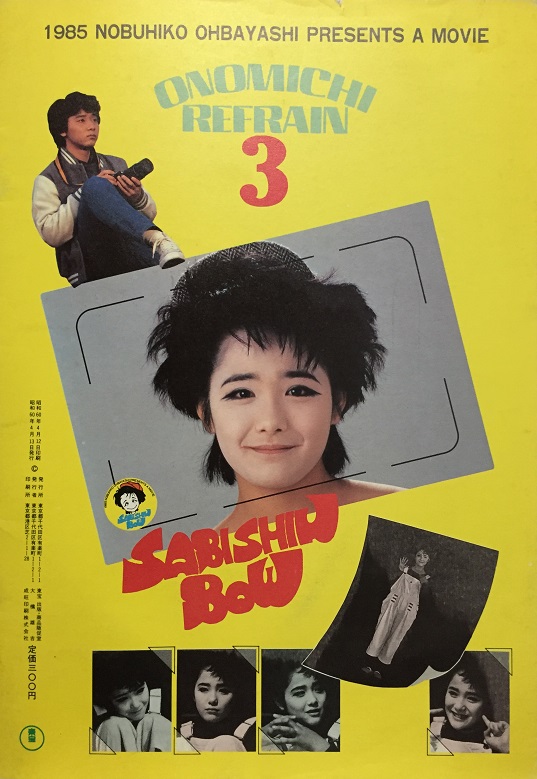 Miss Lonely (さびしんぼう, Sabishinbou, AKA Lonelyheart) is the final film in Obayashi’s Onomichi Trilogy all of which are set in his own hometown of Onomichi. This time Obayashi casts up and coming idol of the time, Yasuko Tomita, in a dual role of a reserved high school student and a mysterious spirit known as Miss Lonely. In typical idol film fashion, Tomita also sings the theme tune though this is a much more male lead effort than many an idol themed teen movie.
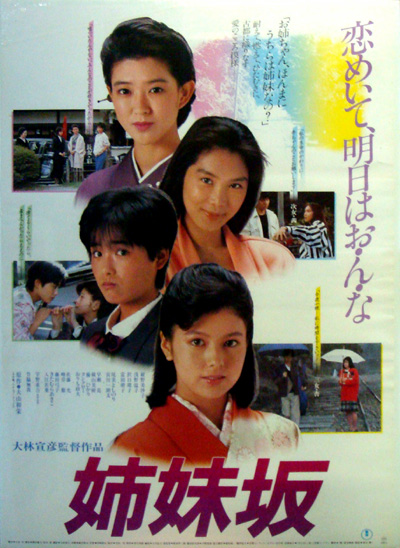 Nobuhiko Obayashi takes another trip into the idol movie world only this time for Toho with an adaptation of a popular shojo manga. That is to say, he employs a number of idols within the film led by Toho’s own Yasuko Sawaguchi, though the film does not fit the usual idol movie mould in that neither Sawaguchi or the other girls is linked with the title song. Following something of a sisterly trope which is not uncommon in Japanese film or literature, Four Sisters (姉妹坂, Shimaizaka) centres around four orphaned children who discover their pasts, and indeed futures, are not necessarily those they would have assumed them to be.
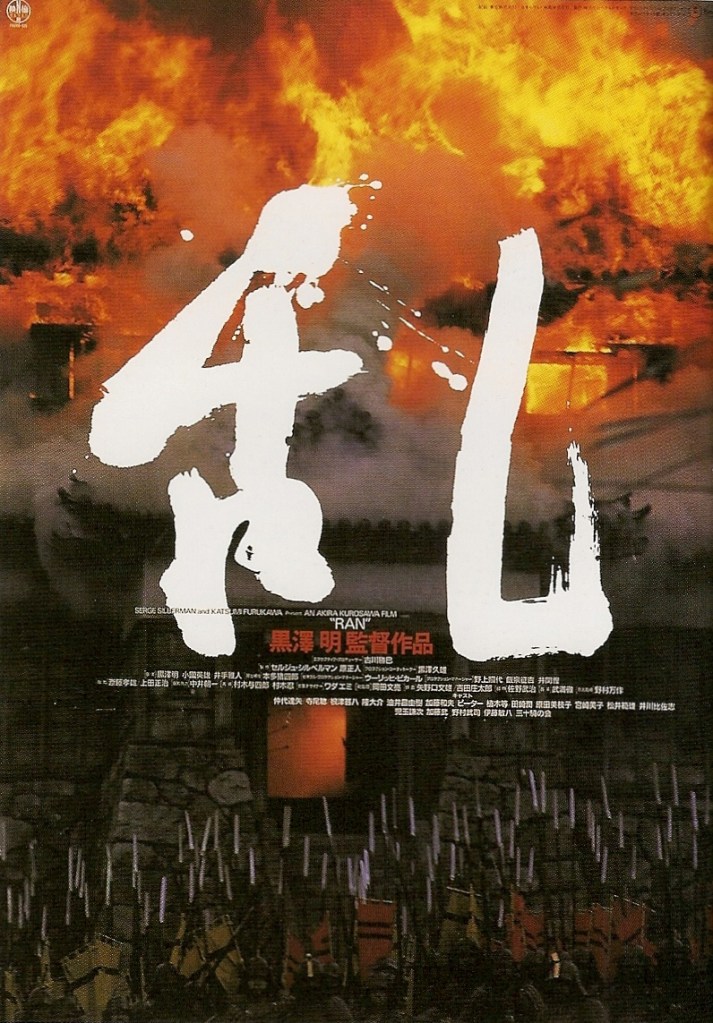 Akira Kurosawa is arguably the most internationally well known Japanese director – after all, Seven Samurai is the one “foreign film” everyone who “doesn’t do subtitles” has seen. Though he’s often thought of as being quintessentially Japanese, his fellow countryman often regarded him as too Western in terms of his filming style. They may have a point when you consider that he made three different movies inspired by the works of Shakespeare (The Bad Sleep Well – Hamlet, Throne of Blood – Macbeth, and Ran – King Lear) though in each case it’s clear that “inspired” is very much the right word for these very liberal treatments.
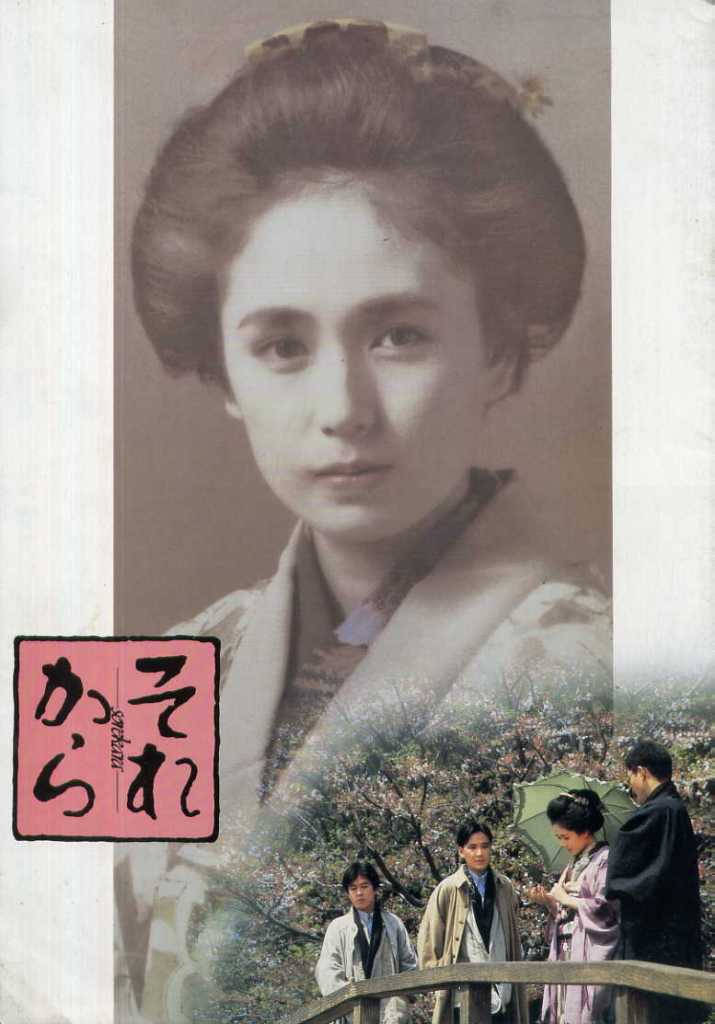 Yoshimitsu Morita had a long and varied career (even if it was packed into a relatively short time) which encompassed throwaway teen idol dramas and award winning art house movies but even so tackling one of the great novels by one of Japan’s most highly regarded authors might be thought an unusual move. Like a lot of his work, Natsume Soseki’s Sorekara (And Then…) deals with the massive culture clash which reverberated through Japan during the late Meiji era and, once again, he uses the idea of frustrated romance to explore the way in which the past and future often work against each other.
 Never one to be accused of clarity, Seijun Suzuki’s Capone Cries a Lot (カポネおおいになく, Capone Ooni Naku) is one of his most cheerfully bizarre movies coming fairly late in his career yet and neatly slotting itself in right after Suzuki’s first two Taisho era movies,
