Rex: Dinosaur Story (REX 恐竜物語, Haruki Kadokawa, 1993)

Like him or loathe him, Haruki Kadokawa was the dominant force in commercial Japanese cinema from the mid-70s to the end of the Bubble era. Thanks to his circular marketing approach which involved producing movie adaptations of books his company published starring idols he had under contract at his movie studio and releasing the theme songs they often sang to accompany them on his record label, Kadokawa had a virtual stranglehold on ‘80s pop culture. All that came to an end, however, in 1993 when he was arrested for cocaine use/smuggling and accused of embezzling money to pay for his habit, eventually winding up with a four-year jail sentence. Despite all of that, Rex: Dinosaur Story (REX 恐竜物語, Rex: Kyoryu Monogatari) was until the release of Lord of the Rings in 2002 the highest grossing movie distributed by veteran studio Shochiku and was due to extend its 10-week run but was ultimately pulled early because of the “moral embarrassment” surrounding its director’s arrest. 

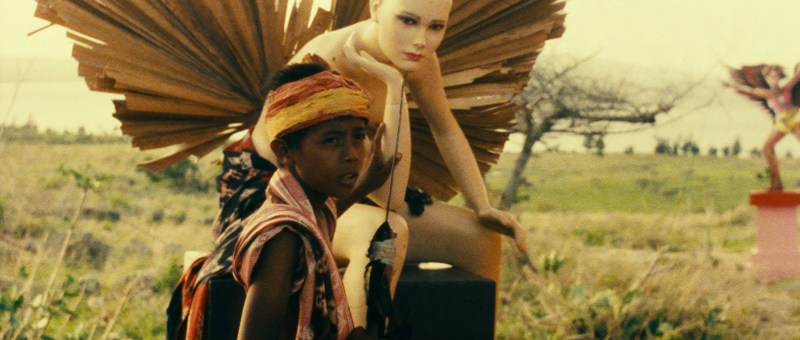
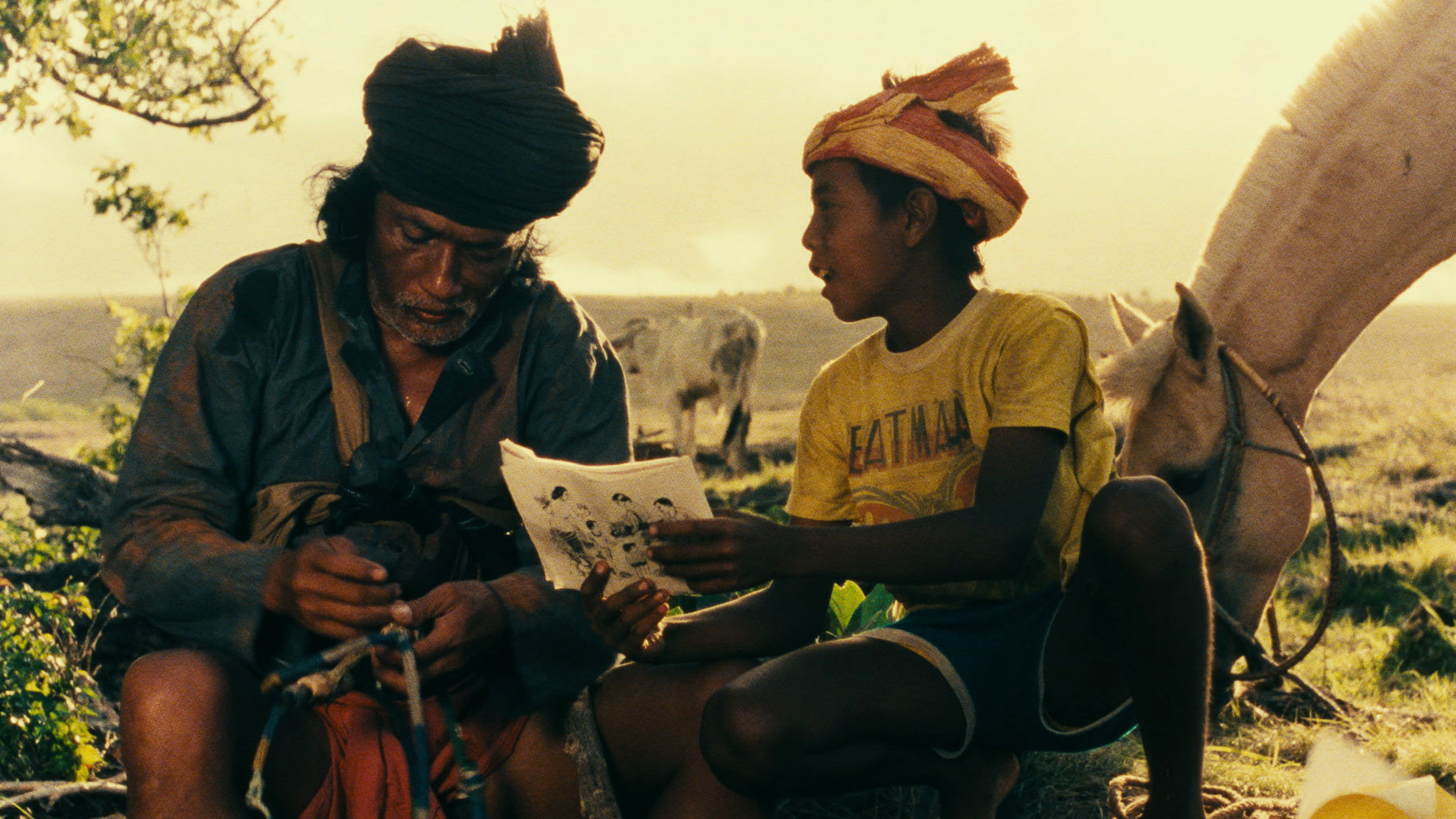
That moral panic might be all the more acute because as the title and poster might imply, Rex: Dinosaur Story is a tentpole family film released, despite its Christmas setting, at the height of the summer season and in the wake of Jurassic Park with an obvious eye on merchandising (much of which actually appears in the movie). The slightly ridiculous story revolves around 10-year-old Chie (Yumi Adachi) whose parents have recently split up with her mother Naomi (Shinobu Otake), a professor of veterinary medicine, heading to New York for an exciting work opportunity while she’s stayed behind with her nerdy father Akira (Tsunehiko Watase), a researcher of Japan’s Jomon period, and moved in with her maternal grandmother (Mitsuko Kusabue) at a Hokkaido ranch. Little Chie is it seems finding it hard to adjust and has become very withdrawn, refusing to answer when expected to introduce herself at her new school. Mostly she spends her time alone on the farm hanging out with the family dog and riding a horse while drawing pictures of her longed-for mother in a stylish Edwardian outfit with the farmhouse in the background. 

Meanwhile, Akira has made a discovery. A Jomon statue appearing to feature a boy riding on the back of a dinosaur along with a collection of shards he thinks are from a dinosaur egg have convinced him that dinosaurs may have survived in Japan until the Jomon period and perhaps may survive still. Intrigued by a message on a stele that advises one should not advance any further because a giant god is living further up the mountain, Akira takes his daughter and a handful of researchers to meet an Ainu priest (Fujio Tokita) who eventually leads them to a grotto where they find a giant dinosaur egg, narrowly escaping with it after having angered the gods. Akira and the researchers eventually hatch the egg, giving birth to Rex and allowing Chie to become his “mother”.

The egg’s discovery eventually hastens Naomi’s return, but she virtually ignores her daughter greeting her with nothing more than a curt hello while making it plain she’s only here to work on the historically significant discovery not patch up her family. Chie’s relationship with Rex is, in many ways, a way of bonding with her aloof mother who, it has to be said, comes in for a lot of slightly misogynistic criticism as a woman who “abandoned” her daughter to chase career success. Nevertheless, through parenting Rex Chie comes to understand something of motherhood while recognising that she and Rex are essentially the same and that he is most likely lonely missing his dinosaur birth mother. 

Meanwhile, she’s also acutely aware that not everyone has Rex’s best interests at heart. The birth of a cute baby dinosaur is obviously front page news with the consequence that Rex becomes the moment’s biggest celebrity trotted out for a host of TV commercials (featuring a cameo by Kirin Kiki) one of which has Chie and Rex perhaps insensitively sitting down to enjoy a wholesome family meal of Japanese curry. Aside from the irony, Chie’s attempt to suggest that they take break because Rex is after all a baby and he’s tired results in one of the other scientists, Morioka (Mitsuru Hirata), physically abusing him. Sidelined from the project, he enacts a dastardly plan to steal Rex for himself, turning up with four minions dressing like he’s just joined the Gestapo. 

In typical kids movie fashion, Chie and Rex end up on the run through a weird Christmas wonderland in which religious ceremonies and Santa mingle freely, a choir full of children led by her schoolfriend Kenta (Yuta Yamazaki) eventually aiding their escape by throwing snowballs at the bad guys. Chie’s attempts at “disguise” may be laughably bad, but it seems so many people are indulging in Rex cosplay that it becomes possible to blend in even while travelling with a dinosaur companion wearing a Santa hat and sunglasses. Nevertheless, the lesson that Chie begins to learn is that sometimes mothers have to separate from their children but it doesn’t mean they love them any less or that it doesn’t make them sad. Incongruously relegating the “happy ending” to a post-credits sequence, Rex’s distinctly Mid-Western aesthetic with its Dorothy-esque Hokkaido ranch coupled with the fantastical Jomon-era/Ainu mythology lend it a rather strange flavour but it remains an oddly nostalgic experience even as it lifts gleefully from its Hollywood contemporaries. 


Original trailer (no subtitles)

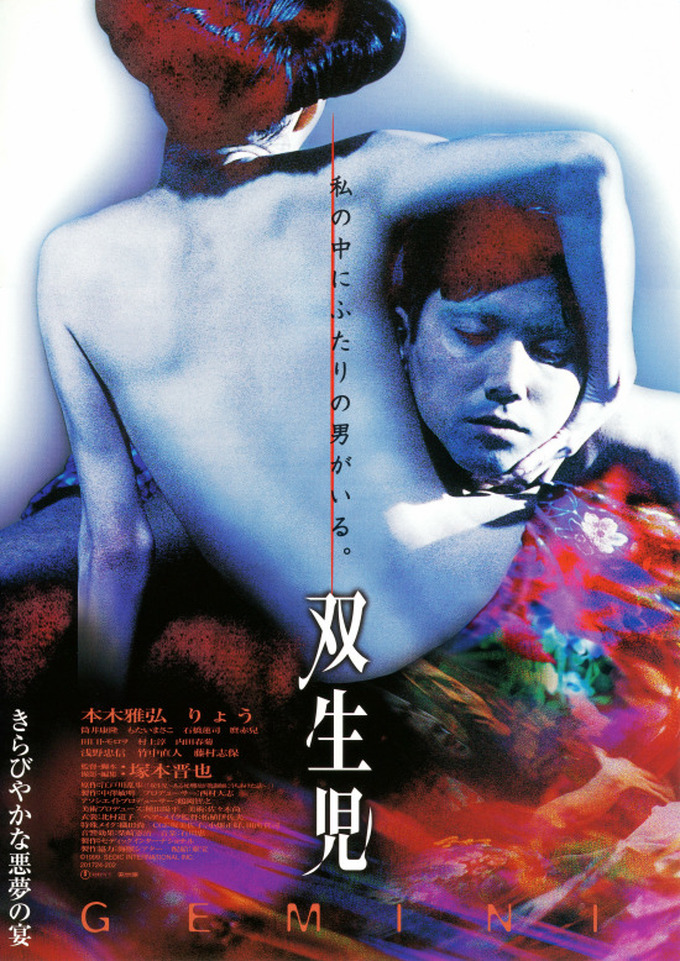
Gemini (双生児 GEMINI, Shinya Tsukamoto, 1999)

Shinya Tsukamoto made his name as a punk provocateur with a series of visually arresting, experimental indie films set to a pounding industrial score and imbued with Bubble-era urban anxiety. Inspired by an Edogawa Rampo short story, 1999’s Gemini (双生児 GEMINI, Soseiji Gemini) is something of a stylistic departure from the frenetic cyberpunk energy of his earlier career, marked as much by stillness as by movement in its strikingly beautiful classical composition and intense color play. Like much of his work, however, Gemini is very much a tale of societal corruption and a man who struggles against himself, unable to resist the social codes which were handed down to him while simultaneously knowing that they are morally wrong and offend his sense of humanity. 

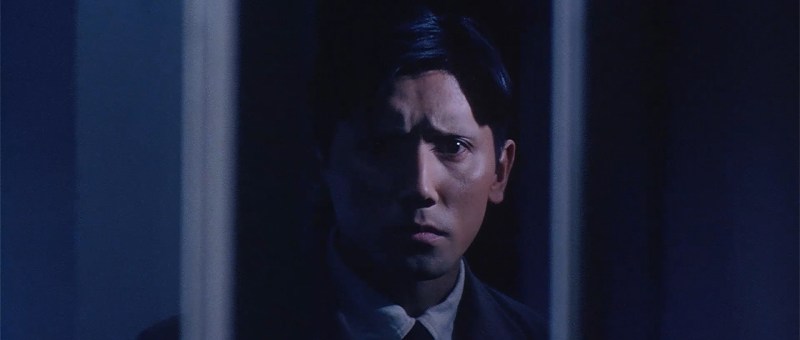
Yukio (Masahiro Motoki) is a war hero, decorated for his service as a battlefield medic saving the life of a prominent general during the first Sino-Japanese War. He’s since come home and taken over the family business where his fame seems to have half the well-to-do residents of the area inventing spurious excuses to visit his practice, at least according to one little boy whose mum has brought him in with a bump on the head after being beset by kids from the slums. “They’re just like that from birth” Yukio later tells his wife echoing his authoritarian father, “the whole place should be burned to the ground”. A literal plague is spreading, but for Yukio the slums are a source of deadly societal corruption that presents an existential threat to his way of life, primed to infect with crime and inequity. His home, which houses his practice, is hermetically sealed from those sorts of people but lately he’s begun to feel uneasy in it. There’s a nostalgia, a sadness, a shadowy presence, not to mention a fetid stench of decay which indicates an infection has already taken place, the perimeter has been penetrated. 

The shadowy presence turns out to belong to his double, Sutekichi whose name literally means “abandoned fortune”, a twin exposed at birth as unworthy of the family name owing to his imperfection in the form of a snake-like birthmark on his leg and raised by a travelling player in the slums. Having become aware of his lineage, Sutekichi has returned to make war on the old order in the form of the parents who so callously condemned him to death, engineering their demise and then pushing Yukio into a disused well with the intention of stealing his identity which comes with the added bonus that Yukio’s wife, Rin (Ryo), was once his. 

Rin’s presence had already presented a point of conflict in the household, viewed with contempt and suspicion by Yukio’s mother because of her supposed amnesia brought on by a fire which destroyed her home and family. Yukio had reassured her that “you can judge a person by their clothes”, insisting that Rin is one of them, a member of the entrenched upper-middle class which finds itself in a perilous position in the society of late Meiji in which the samurai have fallen but the new order has not quite arrived. In Rin modernity has already entered the house, a slum dweller among them bringing with her not crime and disease but a freeing from traditional austerity. In opposing his parents’ will and convincing them to permit his marriage, Yukio has already signalled his motion towards the new but struggles to free himself from the oppressive thought of his father. He confesses that as a battlefield physician he doubted himself, wondering if it might not have been kinder to simply ease the suffering of those who could not be saved while his father reminds him that the German medical philosophy in which he has been trained insists that you must continue treatment to the very last. 

This is the internal struggle Yukio continues to face between human compassion and the obligation to obey the accepted order which includes his father’s feelings on the inherent corruption of the slum dwellers which leads him to deny them his medical knowledge which he perhaps thinks should belong to all. The dilemma is brought home to him one night when a young woman is found violently pounding on his door wanting help for her sickly baby, but just as he makes up his mind to admit her, putting on his plague suit, a messenger arrives exclaiming that the mayor has impaled himself on something after having too much to drink. Yukio treats the mayor and tells his nurses to shoo the woman away, an action which brings him into conflict with the more compassionate Rin who cannot believe he could be so cynical or heartless. 

Where Yukio is repressed kindness, a gentle soul struggling against himself, Sutekichi is passion and rage. Having taken over Yukio’s life, he takes to bed with Rin who laughs and asks him why it is he’s suddenly so amorous. She sees or thinks she sees through him, recognising Sutekichi for whose return she had been longing but also lamenting the absent Yukio who was at least soft with her in ways Sutekichi never was. “It’s a terrible world because people like you exist” Sutekichi is told by a man whose fiancée he robbed and killed. Yukio by contrast is unable to understand why this is happening to him, believing that he’s only ever tried to make people happy and has not done anything to merit being thrown in a well, failing to realise that his very position of privilege is itself oppressive, that he bears his parents’ sin in continuing to subscribe to their philosophy in insisting on their innate superiority to the slum dwellers who must be kept in their place so that they can continue to occupy theirs. 

Apart, both men are opposing destructive forces in excess austerity and violent passion, only through reintegration of the self can there be a viable future. Tsukamoto casts the austerity of the medical practice in a melancholy blue, contrasting with the fiery red of the post-apocalyptic slums, eventually finding a happy medium with the house bathed in sunshine and the family seemingly repaired as a doctor in a white suit prepares to minister to the poor. Having healed himself, he begins to heal his society, treating the plague of human indifference in resistance to the prevalent anxiety of the late Meiji society. 


Gemini is released on blu-ray in the UK on 2nd November courtesy of Third Window Films in a set which also includes a commentary by Tom Mes, making of featurette directed by Takashi Miike, behind the scenes, make up demonstration featurette, Venice Film Festival featurette, and original trailer.

Original trailer (English subtitles)
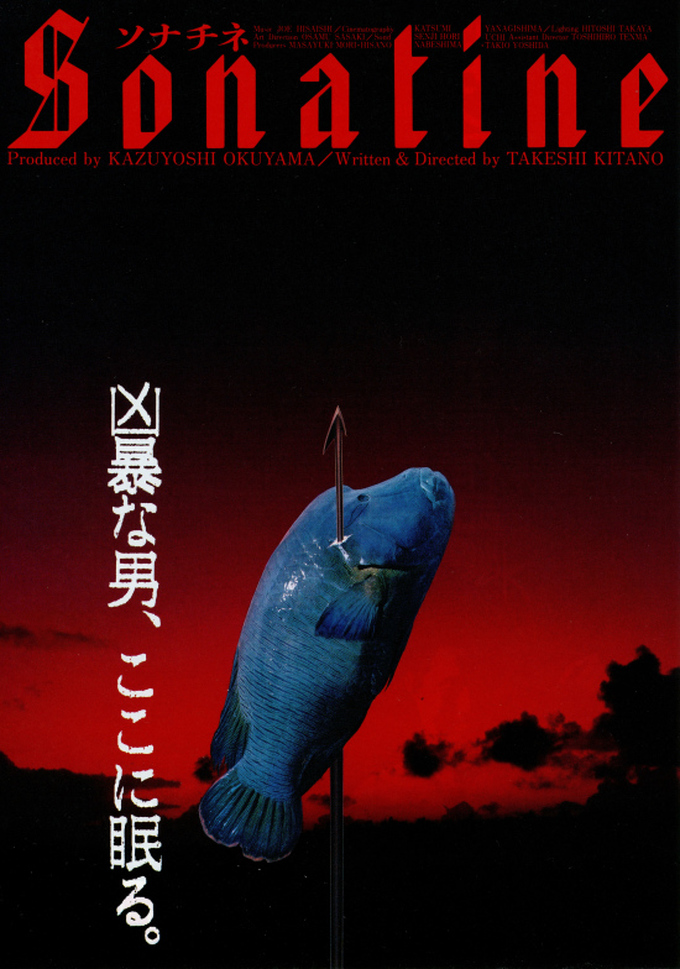
Sonatine (ソナチネ, Takeshi Kitano, 1993)

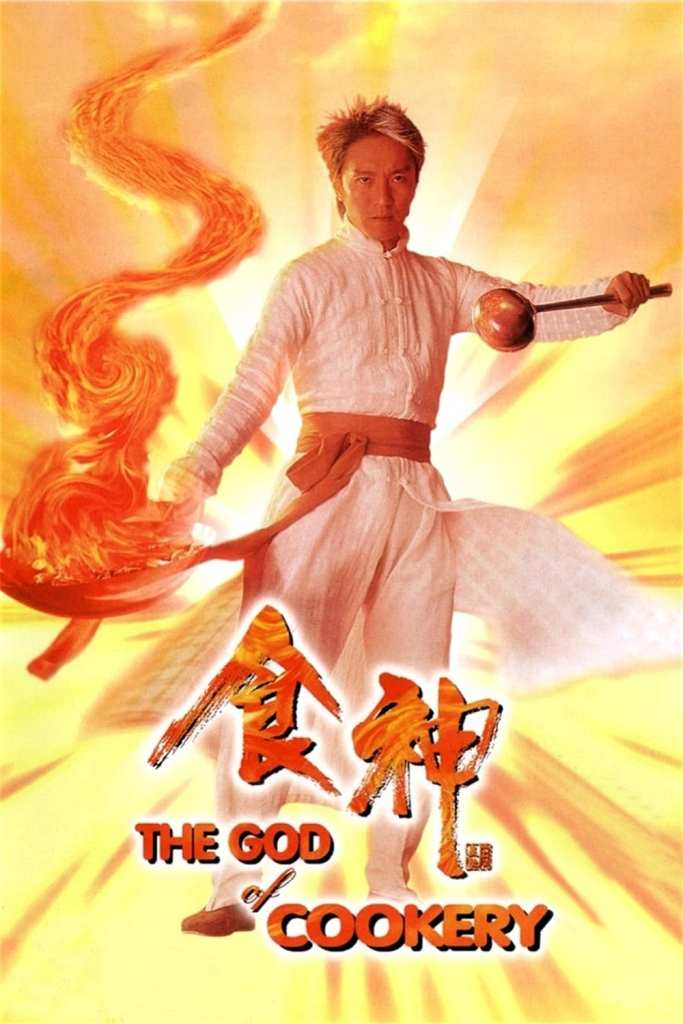
The problem with being a yakuza is that there is never any rest. Staying alive means constant vigilance, make a mistake and it could be the end of you or, conversely, get too good at your job and place a target on your own back. The hero of Takeshi Kitano’s Sonatine (ソナチネ) declares himself tired, not just of the life but life itself. By his fourth picture, Kitano was perhaps feeling something similar, later describing the near-fatal motorcycle accident he encountered some months after the film’s completion as an unconscious suicide attempt. For years he’d been one of Japan’s top TV personalities working a breakneck schedule that left him little time for other outlets such as painting, novels, and acting for others, but still he longed to be taken more seriously as an artist in his home nation where audiences largely stayed away from his “serious” films, as they did with Sonatine which flopped at the box office and put an end to his arrangement with Shochiku who had distributed his first two features in which he had also starred. 

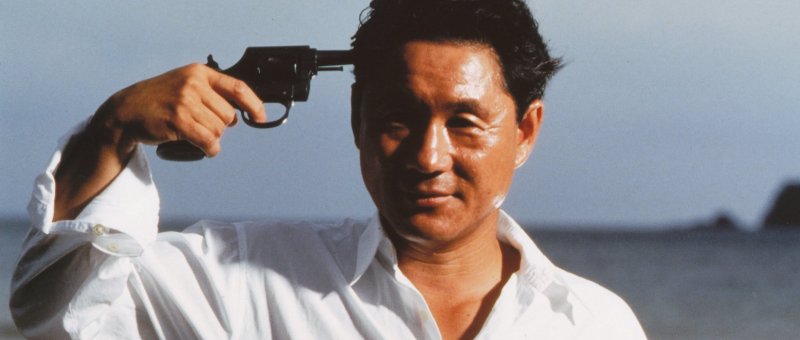
For this third film, A Scene at the Sea, Kitano remained behind the camera and distanced himself from the themes of crime and violence which defined his early career, crafting instead an intensely melancholy tone poem about a deaf surfer falling in love with the ocean. In Sonatine he casts himself as the lead for the first time since Violent Cop, this time as a gangster experiencing extreme existential malaise when confronted with the futility and emptiness of his life in organised crime. Murakawa (Takeshi Kitano) is aware he has probably reached the zenith of his career as a mid-tier gang boss working as a, by all accounts, unexpectedly successful enforcer in a rundown area of the city. His first crisis concerns the owner of a mahjong parlour who thinks the yakuza are an outdated institution and refuses to take their threats seriously. He sees no need to pay them the customary protection money and assumes they’ll back off he simply tells them he’s not interested, but he is very wrong. Murakawa has him kidnapped to teach him a lesson, observing while his minions attach him to a crane and threaten him by dunking him in a large pool of water. Immediately apologetic, the man sees the error of his ways, but Murakawa doesn’t really care about the money anymore and so they dunk him again to see how long it takes a man to drown, barely shrugging as they realise he really died. 

Either because he’s an unusual man, or because he is simply tired of everything, Murakawa no longer bothers to abide by the rules of petty gangsterdom. He doesn’t do deference, smoking away long before his boss offers permission to do so and feeling unafraid to voice his reluctance when he’s ordered to take some of his guys to Okinawa to settle a nascent gang war involving one of their affiliates. Murakawa doesn’t want to go because he lost three men in a similar job in Hokkaido, but in reality has little choice. Later events prove he was right to be suspicious. The Okinawan gang boss tells him that he reported some minor friction with another gang out of courtesy and is confused he’s been sent reinforcements, not that he’s not glad to see them. As soon as they arrive, however, the tension rises and Murakawa and the guys are forced into hiding, holing up at the beach as they await orders from head office or word on a possible truce. 

Murakawa, his two right-hand men, and the Okinawan gangsters adjust to tranquil island life, playing on the beach and taking the time to master the art of Okinawan folk dance, but the grim spectres of death and violence present themselves even here in empty games of Russian roulette and Murakawa’s childish prank of digging sand traps for the guys to fall into as if into their graves. While he’s busy admiring the night sky, the silence is ruptured by a local tough chasing a young woman onto the beach where he proceeds to rape her. Murakawa doesn’t intervene but is challenged anyway and then forced to kill the puffed up youngster while the young woman, Miyuki (Aya Kokumai), becomes strangely attached to him, impressed by his cool dispatch of her attacker. 

Murakawa’s somehow innocent relationship with the young woman creates a minor rift with his men who resent the absence of his leadership at a time of crisis while he ponders alternate futures outside of the gangster brotherhood. But deep down he knows that his idyllic beach holiday cannot last forever and that he will have to leave this liminal space eventually for a destination of which he is all too aware. As he explains to Miyuki, when you fear death so intensely you begin to long for it if only for an end to its terrible anxiety. 

The title “Sonatine” is apparently inspired by the “sonatina”, a short, tripartite piece piano players attempt to mark an attainment of skills before choosing the future direction of their musical career. Murakawa undergoes three distinct arcs, from the city to the beach and back again, but perhaps knows there is no future direction in which for him to travel only the nihilistic fatalism of a life of violence. As for Kitano, it does perhaps draw a line in the sand marking the end of an apprenticeship and its associated compromises as he fully embraces an authentic personal style, like Murakawa no longer prepared to be deferent in an admittedly exhausting world. 


Sonatine is the third of three films included in the BFI’s Takeshi Kitano Collection blu-ray box set and is accompanied by an audio commentary by Chris D recorded in 2008. The first pressing includes a 44-page booklet featuring an essay on Sonatine and introduction to Kitano’s career by Jasper Sharp,  an essay on Violent Cop by Tom Mes, a piece on Boiling Point from Mark Schilling, an archival review by Geoff Andrew, and an appreciation of Beat Takeshi by James-Masaki Ryan.

The Takeshi Kitano Collection is released 29th June while Violent Cop, Boiling Point, and Sonatine will also be available to stream via BFI Player from 27th July as part of BFI Japan.

Original trailer (English subtitles)
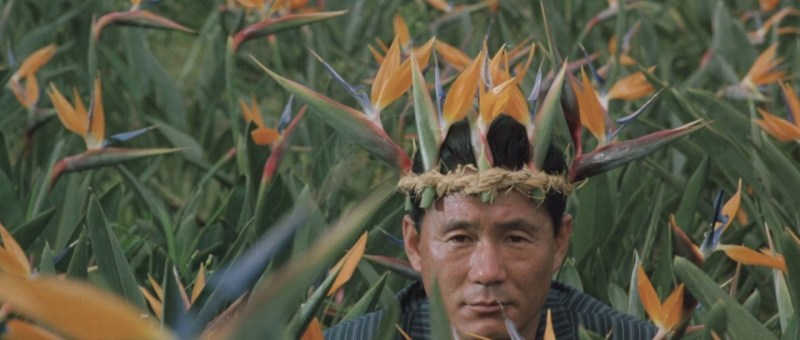
Boiling Point (3-4X10月, Takeshi Kitano, 1990)

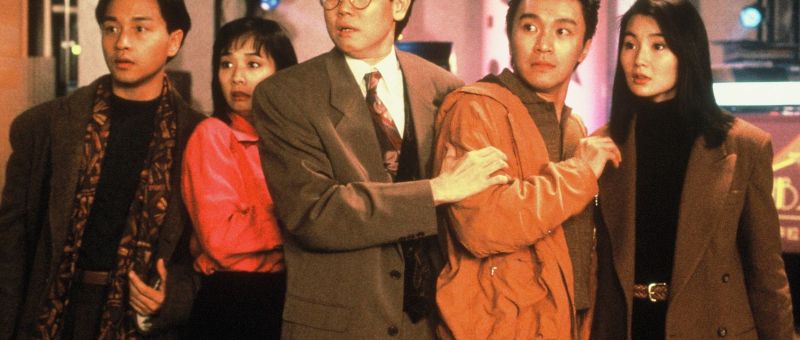
The heroes of Takeshi Kitano’s films are often gentle men, capable of great tenderness but also filled with quietly mounting rage permanently on the brink of explosion. Everyone perhaps has their Boiling Point, the straw that breaks the camel’s back and sends it careering towards a self-destructive attempt at restitution. “Boiling Point”, however, has absolutely nothing to do with the original Japanese title (3-4X10月) which references the score on the board at a baseball game and the originally scheduled month of the film’s release, October (it was later moved up to September making the whole thing even more meaningless). This perverse randomness was apparently another minor win for Kitano who had scored a critical hit with his debut feature Violent Cop but had struggled to convince the team around him to embrace his unconventional vision. Working with greater independence, Kitano minimises camera movement in favour long takes with static camera which perfectly compliment his deadpan sense of the absurd. 

He also relegates himself to a supporting role unseen on screen for over half of the running time. Our hero is small town loser Masaki (Yurei Yanagi) who we first meet hiding in a toilet during an amateur baseball game in which he is desperate to play but strikes out when given the opportunity in the first of many petty humiliations. He has been taken under the wing of the team’s coach, Iguchi (Taka Guadalcanal), a former yakuza attempting to go straight by running a dive bar, and has a part-time job at a petrol station. Masaki perhaps images himself as something greater, as evidenced by his extremely cool motorcycle jacket and bike, but is a dreamer at heart, nervous and tongue-tied, unable to unlock his hidden potential. Even he has a boiling point, however, which is later hit when he gets into an altercation with a teddy boy yakuza at the garage who starts a pointless argument about being kept waiting, pulling the old trick of goading Masaki into fighting back to get leverage over their shop and begin extorting it. Masaki has just got his boss into trouble through losing his cool, but is ironically offered a job by a visiting thug jokingly admiring his fighting prowess. 

Iguchi meanwhile is a man divided, permanently on the brink of boiling over. When some irritating sophisticates “ironically” visit his bar clutching their designer handbags and holding their noses, he’s obliged to be nice to them but he simply can’t. Unable to bear their snotty arrogance, he glasses one of the women on the way back from the bathroom and throws the whole gang out. The yakuza has it seems been reawakened, and though he was reluctant before, he to decides approach his old boss, Otomo (Hisashi Igawa), on Masaki’s behalf. The reception he receives is not as he expected. Iguchi is reminded that he chose the civilian life and being a yakuza isn’t a part-time job, you can’t just pick it back up again when it suits you. Not being able to help Masaki is another small humiliation, one he perhaps intends to overcome through turning violence on an old underling who disrespected him in refusing the customary deference. Predictably, it backfires, you can’t be half a yakuza after all. Iguchi is completely finished, boiling with rage but too humiliated to do much about it other than vow revenge by going to Okinawa to buy a gun in order to put an end to the lot of them. To protect his mentor, an oddly yakuza-esque gesture, Masaki volunteers to go in his stead, dragging his catcher friend Kazuo (Duncan) along for the ride. 

A complicated liminal space, Okinawa is both an enticing holiday destination and source of political contention thanks to the controversial presence of the US military bases. It’s indeed corrupt foreign influences who can provide our guys with guns, but Okinawa is also a place slightly out of time, trapped in the Showa-era past while the rest of Japan has already transitioned to an economically prosperous mid-Bubble Heisei. Consequently, these are Showa-era yakuza with fancy outfits and sunshades hanging out in neon-lit bars with butterflies on the walls. Uehara (Takeshi Kitano) is in the process of being humiliated in front of his gang for supposed embezzlement of collective funds. He too wants a gun to enact his revenge, something which he fantasises about in an eerie and fatalistic flash forward. Before that, however, he’s befriended our guys and taken quite a liking to Kazuo, hinting a latent homosexuality in another example of the unwelcome association of queerness and savagery often seen in yakuza movies. Uehara has a girlfriend but treats her with utter contempt, insisting that she sleep with his underling only to punish her for it afterwards and take over halfway through to rape him. In fact all of his subsequent sexual actions are rapes, his assaults on women cold and mechanical as if purely performative, implying that it is his repressed homosexuality which underpins the sense of humiliation that fuels his violence and his cruelty. 

Unlike Uehara and Iguchi, our guys have not even one foot in the yakuza world and despite their ingenious plan to get the guns on the plane have no idea what they’re going to do with them, marching all the way over to Otomo’s before realising they don’t know anything about the use of firearms with the consequence that they become useless lumps of metal in their hands. They are boys playing gangster out of a misguided ideal of heroic nobility in their desire to avenge Iguchi who by all accounts is still sulking alone at home. This is their greatest and final humiliation, failing as men in front of men. Yet, their friendship perhaps survives, patched up in silence over shared ice lollies. Even so, Masaki is about to boil over, travelling towards a split second moment of fiery self-destruction and misdirected rage. But then Kitano pulls the rug out from under us again. Was this all a dream after all, grim wish-fulfilment from a repressed young man longing to burn out bright, or perhaps a lengthy vision of the kind visited on Uehara which would at least explain Kitano’s many non-sequitur cuts and ellipses? Who can say, but the humiliating sense of impossibility is all too real for those unable to take a swing at life’s many opportunities.


Boiling Point is the second of three films included in the BFI’s Takeshi Kitano Collection blu-ray box set and is accompanied by a new audio commentary by Little White Lies’ David Jenkins, plus a featurette recorded in 2016. The first pressing includes a 44-page booklet featuring a piece on Boiling Point from Mark Schilling, an essay on Violent Cop by Tom Mes, an introduction to Kitano’s career & writing on Sonatine by Jasper Sharp, an archival review by Geoff Andrew, and an appreciation of Beat Takeshi by James-Masaki Ryan.

The Takeshi Kitano Collection is released 29th June while Violent Cop, Boiling Point, and Sonatine will also be available to stream via BFI Player from 27th July as part of BFI Japan.

Original trailer (English subtitles)

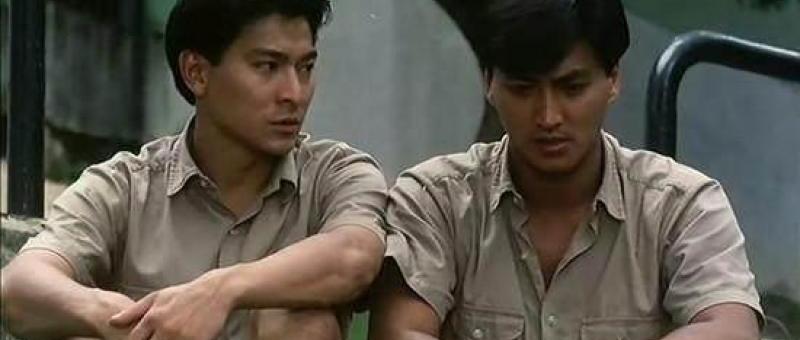
Dragon in Jail (獄中龍, Kent Cheng Jak-Si, 1990)

“For the poor life is a punishment” according to Henry (Andy Lau Tak-Wah), the embattled hero of Kent Cheng Jak-si’s Dragon in Jail (獄中龍), a subdued heroic bloodshed offshoot in which a poor boy and rich kid meet in juvie and become best friends for life even though fate seems to have very different paths in store for them. Less a critical expose of the cruelties of an increasingly stratified society than an ode to intense male friendship, Dragon in Jail puts its hero in a different kind of cell as he tries to escape the triad net but finds himself ensnared by past crime and present rage. 

Rich kid Wayne (Kenny Ho Ka-King) ends up in a reformatory for pulling petty stunts supposedly because he doesn’t like it that his widowed mother has remarried. Different from the other boys, he’s immediately hazed and asked for his gang affiliation, only he doesn’t have one. Tough boy Henry stands up for him, roping in his other friend Skinny (John Ching Tung) to take on the cell’s Mr. Big after which the boys become firm friends as they study together to sit their A Levels while inside. Wayne wasn’t planning to take his exams as a way of getting back to his mother, but Henry convinces him that education is the one way to show the world who’s boss. The boys come top in their class, Wayne gets out and decides to go the UK to study law, while Henry serves out the remainder of his sentence in an adult prison, sentenced to four years for manslaughter after accidentally killing a triad member during a fight over protection money at his family’s kiosk. 

Despite the differences in the scope of their possibilities, Henry and Wayne remain good friends, but once Henry gets out of prison he’s nothing much to look forward to. His hopes of attending a university are dashed by his defeatist father who thinks education is pointless and blames him for the failure of their business, while he struggles to find steady employment as a man with a criminal record. Eventually he decides to work as a mechanic by day and a cram school teacher by night with the aim of saving enough to apply for uni at later date so he can marry his longstanding girlfriend, Winnie (Gigi Lai Chi). Skinny, meanwhile, gets out of jail and heads straight back to the triads, trying to convince Henry he should join too. Henry doesn’t want to, but faces constant harassment from Brother Charlie (William Ho Ka-Kui), the boss of the man he killed in the fight. When his little brother is badly burned in a triad attack, he decides his only option is to become one himself to earn the protection of Boss Sean (Leung Gam-San) who mediates an uneasy truce with the psychopathic Charlie. 

When Wayne returns from the UK after graduating law school, Henry is married and a father-to-be living in a swanky apartment having risen in the triad ranks, but he’s also a hotheaded opium addict still sparring with the very present Charlie. “I’m a bad egg! I deserve it!” Henry wails on being confronted by Wayne who points out that it was he who was always encouraging him to study so that no one would ever look down on him. Henry thinks he’s not good enough to be Wayne’s friend and fully expects to be abandoned, but after some strong words of defence from Winnie, Wayne comes around, resolving to help get his friend off the stuff. The problem is the sense of futility which has already set in. Henry has become what everyone expected him to be, a thuggish triad, because they convinced him he could become nothing else.

Winnie berates Henry for keeping his sorrows to himself, remaining sullen and resentful at his inability to escape the triad world for an honest life of safety with his new family, though he once told Wayne that he should “speak up if you feel unhappy”. Despite everything the intense friendship between the two men endures. Cheng adds to the faintly homoerotic tone by shooting his early prison scenes with a lingering romantic gaze, while Wayne seems to pine for his broody friend, affirming that “no matter what you are, you are my buddy”. A caged dragon, Henry’s vengeance is swift and brutal but he retains his nobility even in the depths of his despair, eventually taking refuge in an unconditional friendship which transcends the forces which imprison him.


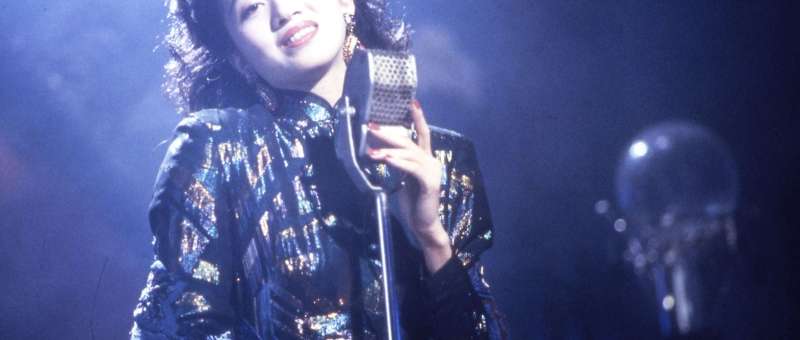
Au Revoir, Mon Amour (何日君再來, Tony Au Ting-Ping, 1991)

Love and Resistance go to war in Tony Au’s noirish romance, Au Revoir, Mon Amour (何日君再來, AKA Till We Meet Again). The evocative title sets the scene for a tale of love betrayed by changing times, but ultimately asks if love is a question of priorities and if you have the right to put your romantic destiny on hold to serve a greater good, even if that greater good is a shared ideal. Predictably, the answer may be no, because in the world of the movies at least love is an absolutist choice and you won’t be forgiven for resisting it. 

One fateful evening in the Shanghai of 1941, Resistance operative Sum (Tony Leung Ka-Fai) is an accidental witness to the murder of “notorious Japanese monks” which he later learns may have been set up by the Japanese authorities themselves. Chasing the perpetrator, Shirakawa (Jun Kunimura), through a series of back allies where he slices and dices his now redundant Chinese mercenaries, Sum is brought to a smoky nightclub where the singer, Mui-Yi (Anita Mui Yim-Fong), is none other than his one true love whom he met thanks to the Resistance movement some years earlier but was forced to leave behind with only a heartfelt letter explaining that he would return when the battle was done. Returning the favour Sum had done her in saving her life when she was about to be hit by a car, Mui-Yi tosses him a gun that allows him to defend himself against a crazed Shirakawa and thereafter shelters him in an abandoned garage until he is well enough to return to his mission. 

Heartbroken and embittered, Mui-Yi is still lowkey anti-Japanese and seemingly unafraid of telling the local goons where to get off despite her father’s attempts at collaboration. Her aunt Jing (Carrie Ng Ka-Lai), however, finds herself succumbing to the dubious charms of violent and thuggish turncoat Tit Chak-Man (Norman Chu Siu-Keung) who is working with the Japanese apparently because he thinks China is weak and unsophisticated. Tit Chak-Man thinks nothing of blowing up little children and blackmailing suspects which is how he begins to manipulate Mui-Yi after seizing her father’s bar and having him put in prison on a trumped up charge. Meanwhile, she flip flops in her relationship with Sum, at once resenting him for his tendency to disappear and then longing for his return, while he berates her in a mistaken assumption that she has decided to collaborate but promises that he will be hers and hers alone once the war is over. 

Unlike many similarly themed movies from both the Mainland and Hong Kong, the big bad is not the Japanese themselves but the Chinese who betrayed their country and sided with the enemy. Somewhat two dimensional, Tit Chak-Man is a thuggish brute who is prepared to do anything and everything to stamp out the Resistance but is at once humanised by his intense romance with Jing which continues even after she attempts to assassinate him and eventually proves his weakness when he refuses to abandon her to escape from a baying mob. Though Shirakawa is indeed crazed and bloodthirsty, we’re shown his opposite in the gentle, sensitive Noguchi (Hidekazu Akai) who has also fallen in deep and selfless love with Mui-Yi and is willing to facilitate her romance with Sum while doing everything he can to keep her safe. 

Years later, Sum irritably points out that Noguchi had a choice in serving his country and was therefore free to choose love instead which seems extremely disingenuous seeing as he was most likely (in some way) a conscript too but was in his own way resisting in order to serve the best interests of his country. Sum chose China over Mui-Yi. It’s unreasonable to expect someone to wait in line until you’ve finished being a revolutionary hero and have the proper time to devote to love, no one likes being second choice even if you’re right behind “freedom” when it comes to priorities. To save his love, Sum sent it into the arms of the enemy but failed to realise that she might also find a home there or at least a sense of relief in no longer needing to wait for someone who might never return. Can there be love in time of war? Yes, but love like revolution is a choice and it won’t wait for you forever, if you betray it you may not be forgiven. 


Fortune Star trailer (no subtitles)

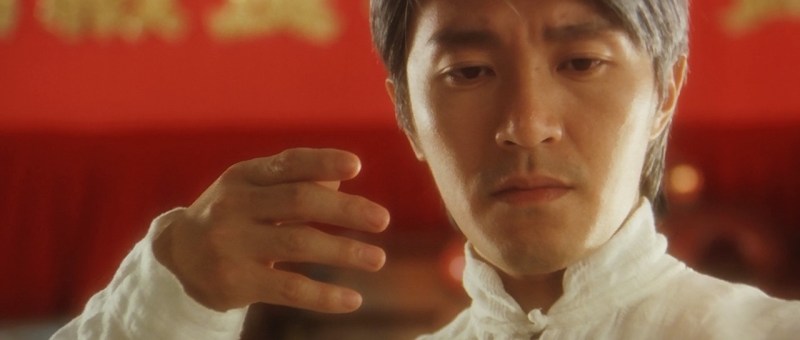
The God of Cookery (食神, Stephen Chow, 1996)

Thing about cooking is, you gotta have heart. At least, that’s the main takeaway from Stephen Chow’s 1996 culinary comedy God of Cookery (食神) in which he once again stars as a man who’s become rich and successful exploiting the talents of others but gets a major humbling when his duplicity is exposed by an even more duplicitous, though apparently talented, rival. Only by living among the people and rediscovering the simple joy of ordinary food cooked with love can he regain his true identity as the “God of Cooking”. 

Stephen Chow (Stephen Chow playing a character of the same name but written with different characters) has built up a successful food empire built around himself as a celebrity chef known as the “God of Cooking”. As a popular TV judge on a cooking competition, he makes a point of giving each of the contestants zero points, starting off with words of praise but eventually finding fault with “basic” techniques and even at one point complaining that it doesn’t matter how tasty the dish is because the chef is so ugly it’s made him lose his appetite. Chow treats his employees with total disdain, going so far as making a prospective hire defecate in public in front of a lift in return for a job, while schmoozing with Triads to expand his empire. The Triads, however, are getting fed up with him and have installed a mole in his organisation. Bull Tong (Vincent Kok Tak-chiu) is a talented chef who claims to have trained at the Chinese Culinary School on the mainland. He makes a point of causing public embarrassment to Chow by tearing apart one of his signature dishes at the press launch for the 50th branch of his branded restaurant chain. Chow is exposed as a talentless fraud and thanks to his haughty attitude, his friends abandon him. 

Penniless and destitute, he rocks up at a noodle stall run by Sister “Twin Daggers” Turkey (Karen Mok), critiquing her noodles in the same way Bull had torn apart his. Turkey takes pity on him after he’s beaten up by thugs and accepts him into her mini street gang. It’s Chow who finds an innovate solution to to her turf war with a rival stall holder in inventing the not entirely appetising “Pissing Beef Balls” which prove an instant hit with all who try them, even helping to cure those suffering with anorexia (apparently a widespread problem of the time, at least according to onscreen newspapers). Chow has not, however, lost his cynical streak and wants to get back to the top by opening a nationwide chain of Pissing Beef Ball restaurants, while Bull and the Triads begin to panic about his seemingly unstoppable success. 

Parodying both Tsui Hark’s Chinese Feast from the previous year, and Wong Jing hit God of Gamblers, Chow brings even more of his now familiar slapstick style, turning cookery into a kind of martial art, and even including a brief sequence in which he gets trapped inside the Shaolin Temple and ends up learning some of their patented culinary techniques. As the cynical top chef, Chow stands in for the evils of the age, puffed up on empty capitalism, openly telling his staff to pull dirty restaurant tricks like making the seats small and uncomfortable to increase turnover and filling the drinks with giant ice cubes to keep costs down and encourage guests to order more. Bull Tong, however, goes even further, beating the staff and suggesting they serve greasy, salt-laden dishes like French fries so kids order more soda, ignoring complaints from the chefs that it’s unethical to serve such obviously unhealthy food to children. 

Sister Turkey’s cuisine, by contrast, might not exactly be top table stuff but it makes no pretence of being anything other than it is. Her rival prides himself on using high quality ingredients, even making sure his oil is changed daily, making it plain that your average market hawker (whether he’s telling the truth or not) at least appears to have more concern for his customers than giant restaurant chains do. Turkey’s ordinary barbecue pork and rice dish with a side of egg is the best Chow’s ever tasted because it was made with kindness. He may have been fond of saying that you have to have heart to cook, but it was just one of his soulless catchphrases until he realised it was true. Good food, companionship, love, and a Christmas miracle slowly work their magic until the “God of Cookery” is finally restored thanks to a little celestial intervention, showing the Bull Tongs of the world exactly what they’re missing.


The God of Cookery screens in New York on Feb. 15 as part of this year’s New York Asian Film Festival Winter Showcase.

All’s Well, Ends Well (家有囍事, Clifton Ko, 1992)

Now an annual institution, the “New Year Movie” was only just beginning to find its feet at, arguably, the end of a golden age in Hong Kong cinema. Clifton Ko’s All’s Well, Ends Well (家有囍事) is often regarded as one of the key movies that made the genre what it is today, taking the box office by storm and spawning a small franchise with a series of sequels, the latest of which All’s Well, Ends Well 2020, is released this year. The original, however, is a classic “mo lei tau” nonsense comedy starring master of the form Stephen Chow as an improbable lothario chased into domesticity by the beautiful Maggie Cheung. 

The plot, such as it is, revolves around three brothers – Moon (Raymond Wong Pak-ming), Foon (Stephen Chow Sing Chi), and So (Leslie Cheung Kwok-wing). Oldest son Moon is a regular salaryman married to devoted housewife Leng (Sandra Ng Kwan-yue). Though it’s his seventh wedding anniversary, he’s late for the family dinner at home with his parents and brothers because he’s entertaining his mistress, Sheila (Sheila Chan), instead. Foon, meanwhile, is a disk jockey on local radio filling in for a friend taking a day off to get married. Eccentric movie enthusiast Holliyok (Maggie Cheung Man-yuk) rings into the show to complain that she feels lost and lonely, so Foon takes her address and phone number under the pretext of gifting her a laserdisc. So, meanwhile, is an effeminate young man who teaches flower arranging and clashes with his tomboyish, motorcycle riding “auntie” Mo-shang (Teresa Mo Shun-kwan) who practices extremely aggressive massage techniques. 

As this is a New Year movie, the conclusion we’re moving towards is the repairing of the family unit with the two unmarried brothers eventually pairing off, culminating in a mass wedding in which mum (Lee Heung-kam) and dad (Kwan Hoi-san) can participate too. Before that, however, we’re dropped into the increasingly affluent world of Hong Kong in the early ‘90s in which men like Moon think they’re king. Leng, meanwhile, laments that she married her husband after high school and unlike him does not have the option to quit her “job”, forced to serve the two “company directors” day and night with no overtime or double pay. Quit is exactly what she does do, however, when confronted with Moon’s infidelity. After promising to take her out for a swanky dinner, he gets distracted by his mistress and ends up getting rid of Leng to have dinner with Sheila after which he is so drunk she has to carry him to his own door. Sheila may have thought she was pushing herself into a middle class way of life, but being a housewife is hard work too, especially with Moon’s rather demanding if eccentric parents who suffer separation anxiety from their TV set and prefer to be vacuumed down to keep themselves clean while they watch. 

Leng, not quite having intended to really leave, is forced to reassert herself as an independent woman. She re-embraces her love of singing, getting one of the few jobs that’s open to women in her situation – working in a karaoke box. Eventually, she glams up and becomes a “credible” rival to Sheila, who has now become the housebound “hag” resented by the regretful (but perhaps not remorseful) Moon who has learned absolutely nothing at all about being a good husband.  

Meanwhile, Foon romances Holliyok through movie roleplay, cycling through Pretty Woman, to hit of the day Ghost, before heading into the darkness of Misery, and the unexpected salvation of Terminator 2. After himself getting caught with another girl, Foon gets hit on the head with an egg and “develops” a “brain disease” that causes him to lose his mind. Holliyok swears revenge, but, inexplicably, can’t seem to give up on the idea of Foon’s love while he remains just as pompously macho as Moon, believing women are things you win and then discard. 

Counter to all that, So and Mo-shang occupy a rather ambiguous space – quite clearly coded as gay complete with offscreen lovers they communicate with only by letter until they make a surprise appearance to make a surprise announcement. First feeling a spark of unexpected attraction while making some electrical repairs in the kitchen, they are eventually shocked straight – So transforming into a pillar of conventional masculinity, and Mo-shang suddenly wearing her hair long (did it grow overnight?), putting on makeup and dressing in ladies’ fashions. Thus, their gender non-conforming natures have been in some sense “corrected” by “love’ or “electroshock” depending on how you choose to look at it, assuming of course that their newfound romance is not just a clever ruse to neatly undercut the use of their homosexuality as a punchline. In any case, as the title says, all’s well that end’s well, and the Shang household seems to have regained its harmony, rejecting Sheila and all she stands for to embrace true family values just in time for the festive season.  


Screened in association with Chinese Visual Festival.

Rerelease trailer (traditional Chinese/English subtitles)

Sada (SADA〜戯作・阿部定の生涯, Nobuhiko Obayashi, 1998)

Sada poster“Facts can easily become fiction when recounted by someone, even by oneself. But with a bit of sincerity lies can become truth”, our genial guide explains, paradoxically telling us that the heroine, a woman he regards as a loveable kid sister, wants to tell us her story herself. Apologising in advance for her “rudeness”,  he reveals to us that the woman is none other than the “notorious” Sada Abe, a woman who, apparently now forgotten, was once a front page sensation for having killed her lover and cut off his penis to carry him with her always.

Despite the narrator’s claims that Sada’s fame has faded, her story has proved fertile cinematic ground, most famously inspiring Oshima’s In the Realm of the Senses which sees her claustrophobic descent into sexual obsession as a reaction to the intense austerity of militarism. Obayashi, however, is keen to remember that that aside from the newspaper headlines, the salaciousness and peculiar romanticism of her story, Sada was a real woman who suffered in an intensely patriarchal society and was perhaps seeking something that the world was unable to give her.

As she reminds us, Sada too had a childhood. Obayashi opens the film with a young Sada innocently throwing hoops over a tall phallic object. Six years later, her life changes when a college boy drags her off the street into a nearby inn and rapes her, claiming that she is well known as a good time girl and that he is perfectly entitled to behave in the way he is behaving. Deed done, the college boy leaves but Sada (Hitomi Kuroki) is rescued by the gentlemanly figure of sickly medical student Okada (Kippei Shina) who has a patch over his eye and a romantic disposition. Okada gives her not only a lifelong and strangely erotic attachment to donuts, but a junai foundation in an eternally unrealisable longing for a pure and innocent love.

Okada, as Obayashi later tells us, is also a “real” person though he has no real evidence that he and Sada ever crossed paths. He gives her the knife she will later use to sever her lover’s penis and tells her to use it to cut out his heart, which belongs to her. Okada, claiming that he will forever watch over her, introduces a secondary theme in that he is a sufferer of Hansen’s disease, or leprosy, then thought incurable and “treated” only by exile. Sada loses her pure love and never knows why, but sadly chooses not take his advice to remember that she is an honest girl and refuse to be corrupted by her trauma. Now unable to marry and it remaining a virtual impossibility to enter any other kind of profession, Sada becomes a geisha, later giving that up for the more lucrative world of casual sex work.

Perhaps ironically, it’s through her life as a sex worker that Sada begins to find a degree of freedom amidst the impassioned atmosphere of increasing militarism. While the men are caught up in destructive games of martial glory, Sada is just trying to live her many lives and dreaming her dream of love. It’s that dream of love that brings her to Tatsuzo (Tsurutaro Kataoka), a married, poetic ladies’ man with whom she eventually retreats into an isolationist kingdom of two. Yet their intensely co-dependent relationship is never quite enough for her because it fails to marry her physical need with the emotional, and the figure of Okada, the innocent, romanticised white knight of her youth, lingers in her mind. Sada kills Tatsuzo not quite by accident, attempting to take ownership of something which can never be hers in her fiercely patriarchal world where her clients coldly chide her for not being “polite” enough and despite the earning potential of her profession, she remains dependent on men to escape it.

Sada’s “crime” might not quite be revenge for all she’s suffered but it is a pointed act of rebellion towards a conformist society. She laments that her notoriety soon faded, that if being forgotten is like dying then she died long ago, but for a short time all of Japan was captivated not by the outrageous horror of her transgression but by an idea of “romance” that stood behind it as if Sada had moved beyond double suicide into new territories of eternal love through seeking to possess her lover even in death. The narrator, Sada’s sometime pimp, tells us that few remember Sada now and suggests that Japan is once again in a dark age, stopping only to remark that people were beautiful then too despite or perhaps because of the darkness. Fittingly the figure of the “real” Sada retreats and we’re left again with her legend, an imagined future for a woman who faded into pre-war tragedy as a symbol of its dangerous intensity. Even so, Obayashi is intent to show us that there was indeed a woman named Sada Abe who found herself at the mercy of her times but tried to live all the same, dreaming of impossible love in a world of corruption.


Original trailer (English subtitles)

Hero (馬永貞, Corey Yuen, 1997)

hero 1997 posterIt’s an old ‘un but a good un. Young gun from the country hits the city, decides to do things his own way, becomes the top dog but loses himself in the process and is then faced with a choice between his better nature and potential gains. Corey Yuen’s remake of the Shaw Brothers classic Boxer from Shantung, Hero (馬永貞, Ma Wing Jing), stars Taiwanese heartthrob Takeshi Kaneshiro in his first big action lead as the titular good guy who nevertheless finds himself wavering under the oppressive skies of turn of the century Shanghai.

Ma Wing Jing (Takeshi Kaneshiro) and his brother Tai Cheung (Yuen Wah) have left their old country home to seek their fortunes in the city following a devastating drought. The Shanghai International Settlement, nominally under the control of the British, was a bustling, international port city but also lawless place where gangsters ruled – Tam Sei (Yuen Biao), who is supported by the Brits, controls half the territory with his rival Yang Shuang (Yuen Ta), backed by the local police, taking the rest. The Ma brothers hoped to make something of themselves in the brave new world of Shanghai but are simply two of thousands of refugees fleeing famine and can only find dock work where they are exploited and treated poorly.

Their fortunes pick up, however, when Wing Jing gets an early opportunity to show off his hero qualifications by saving Tam from certain death during an ambush. Tam, grateful, somewhat humiliates Wing Jing by forcing him to bend for a silver dollar before berating him for doing it but the pair eventually bond in a good old fashioned fist fight. Tam offers him a job, but Wing Jing has learned his lesson – he’ll be his own man and make his own name.

A melancholy love story plays in the background behind the otherwise macho dynamics. Arriving at Tam’s saloon, Wing Jing falls in love at first sight with the beautiful singer, Ling-tze (Jessica Hsuan), but is unable to pursue his romance with her thanks to his brotherly debt to Tam, who is in love with the bar’s landlady, Yam (Valerie Chow), but has broken things off because the of precariousness of his gangster lifestyle. Tam disappears for a bit, leaving the bar and his territory to Wing Jing, but doesn’t bank on Yam’s machinations as she gets rid of Ling-tze and takes up with Wing Jing while working with Yang on an evil plan that turns out to be a weird way of protecting her one true love.

Nevertheless, Wing Jing takes centre stage as he quickly climbs the local tree and becomes the big guy in town, little realising that his bravado has irked just about everyone in sight – he’s not only made himself a target for Yang but for the local Chinese police while Tam’s old associations with the British can’t be counted on forever. Yang, ironically enough, is playing divide and conquer but Wing Jing is too naive to see and too hotheaded to listen to Tam’s advice even when he returns to offer it.

Then again, a hero is a hero through and through and so it’s not long before Wing Jing’s moral goodness begins to resurface and he realises where his loyalties really lie. Given that Hero is a Hong Kong production released in 1997, perhaps it’s less surprising that the good guys are the ones backed by the British rather than local law enforcement which is, of course, deeply corrupt and and immersed in Yang’s world of internecine scheming. Still, this Shanghai is one of scrapping poor boys fighting for freedom from oppression (if accidentally veering into the role of oppressor in the process) much more than it is about international politics or the or the increasingly global milieu of the late 19th century city and its position as the gateway to the East for an avaricious Europe.

Mixing classic Shaw Brothers style with a modern New Wave edge, Yuen gives Kaneshiro his time to shine as an ultra cool action hero complete with a series of hugely impressive action sequences culminating in a fantastically satisfying final shoot out where blood and brotherhood take centre stage. But there can be no winners in this world of betrayals and counter betrayals, and so our Hero may have to leave it behind for pastures new as he takes his heroism with him into a hopefully better future.


Currently available to stream on Netflix in the UK and possibly other territories.

Original trailer (no subtitles)