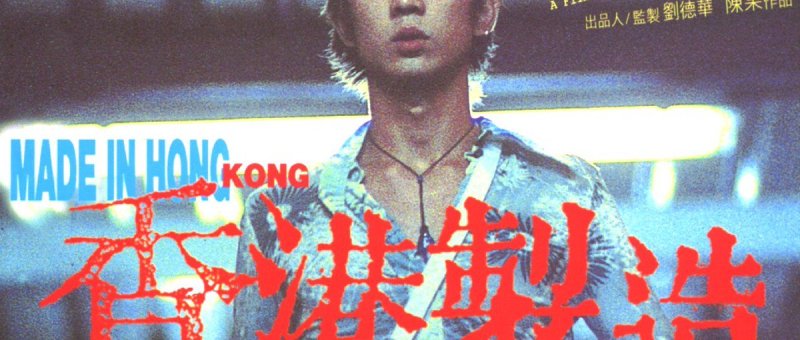
 The Hong Kong of 1997 becomes teenage wasteland for the trio at the centre of Fruit Chan’s urgent yet melancholy debut, Made in Hong Kong (香港製造). Made on a shoestring budget using cast-off film and starring then unknowns, Chan’s New Wave inflected meditation on dead end youth is imbued with the sense of endings – illness, suicide, murder, and despair dominate the lives of these young people who ought to be beginning to live but find their paths constantly blocked. The world is changing, but far from possibility the future holds only confusion and anxiety for those left hanging in constant uncertainty.
Autumn Moon (Sam Lee), our narrator, is a boy fighting to become a man but too afraid to leave his adolescence behind even if he knew how. Living alone with his mother (Doris Chow Yan-Wah) after his father abandoned the family, Moon is a high school drop out with no real job who spends his time playing basketball with the neighbourhood kids and running petty errands for small scale Triad Big Brother Wing (Sang Chan). Already indulging in a hero complex, Moon is friends with and the de facto protector of a young man with learning difficulties, Sylvester (Wenders Li), who has been disowned by his birth family and is constantly picked on, beaten up, and molested by the local high schoolers. Taking Sylvester with him on a job one day, Moon runs into Mrs. Lam (Carol Lam Kit-Fong) whose debt he’s supposed to collect but when Sylvester has one of his frequent nosebleeds on seeing Mrs Lam’s beautiful daughter, Ping (Neiky Yim Hui-Chi), Mrs. Lam manages to send them packing. Nevertheless, Sylvester and Moon end up becoming friends with Ping and enjoying the last days of Hong Kong together, engaged in a maudlin exploration of teenage mortality pangs.
As Moon puts it in his voice over, everything starts to go wrong when Sylvester picks up a pair of blood stained letters in the street. They belonged to a high school girl, Susan (Amy Tam Ka-Chuen), who we later find out killed herself from the pain of first love. The spectre of Susan haunts the trio of teens left behind who remain morbidly fascinated with her fate yet also afraid and anxious. Together they pledge to investigate her death and return the letters to their rightful owners as, one assumes, Susan would have wanted. Even so, when they finally track down the recipient of the first letter, the man Susan gave her life for, he barely looks at it and tears her carefully crafted words of heartbreak into a thousand pieces, scattering them to the wind unread.
In investigating Susan’s tragic love affair, Moon and Ping begin to fall in love but Ping too already has the grim spectre of death around her. Seriously ill, Ping is at constant risk if she can’t get a kidney transplant but the list is long and she’s running out of time. Moon wants to be the hero Ping thinks he is, but he’s powerless in the face of such a faceless threat. He makes two decisions – one, to get the money to pay her debt, and two to go on the organ donor’s register so that if anything happens to him, Ping might get his kidney, struggling to do something even if it won’t really help.
Powerlessness is the force defines Moon’s life as he adopts a kind of breezy passivity to mask the fact that he has no real agency. He says he doesn’t want to join the Triads full-time because he values his independence, prefers making his own decisions, and hates taking orders but he rarely makes decisions of his own and when he does they tend not to be good ones. Moon drifts into a life of petty gangsterism partly out of a lack of other options, and partly out of laziness. Abandoned by his father and then later by his mother too, Moon’s only real source of guidance is the minor Triad boss Big Brother Wing who, unlike his mother, at least pretends to trust and respect him. Getting hold of a gun, Moon dances around like some movie vigilante drunk on power and possibility but once again fails in the hero stakes when a friend comes to him in desperate need for help but he’s so busy playing the cool dude alone in his apartment that he doesn’t even hear him over the music.
When it comes to pulling a trigger, Moon can’t do it, no matter how many times he’s visualised the moment and seen himself making the precision kill like an ice cold hitman in a stylish thriller. Moon’s illusion of his heroic righteousness crumbles. He couldn’t save his friends, has been rejected by his family, and has lost all hope for a meaningful future. As if to underline the hopelessness and fatalism of his times, Fruit Chan ends on a radio broadcast which instructs the lister to say the same thing again, only this time in Mandarin – the language of the future. Moon, Sylvester, and Ping are all cast adrift in this dying world, abandoned by parental figures and left to face their uncertain futures all alone. As a portrait of youthful alienation and despair, Made in Hong is a timeless parable in which an indifferent society eats its young, but it’s also the story of a Hong Kong Holden Caulfield standing in for his nation as they both find themselves approaching an unbreachable threshold with no bridge in sight.
Screened at Creative Visions: Hong Kong Cinema 1997 – 2017
Trailer for the 4K restoration which premiered at the Udine Far East Film Festival 2017 (English subtitles)



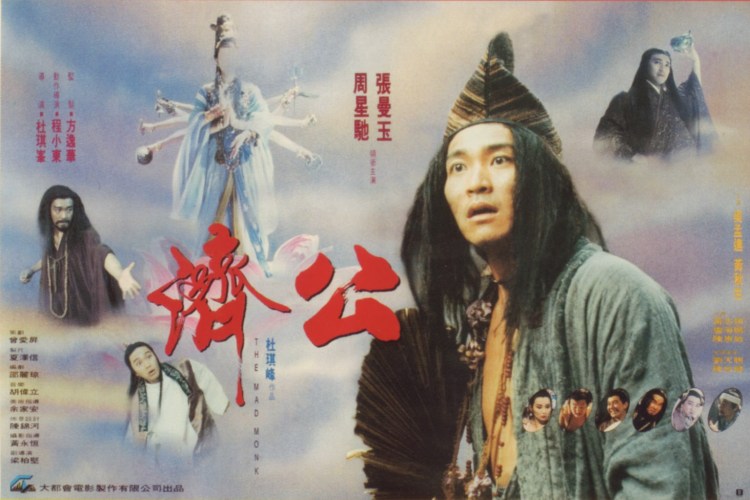 “The Mad Monk” sounds like a great name for a creepy ghost, emerging robed and chanting from the shadows to make you fear for your mortal soul. Sadly, The Mad Monk (濟公, Jì Gōng) features only one “ghost”, but it might just be the cutest in cinema history. The second of Johnnie To’s Shaw Brothers collaborations with comedy star Stephen Chow is another wisecracking romp in which Chow revels in his smart alec superiority, settling bets made in heaven and eventually vowing to spread peace and love across the whole world.
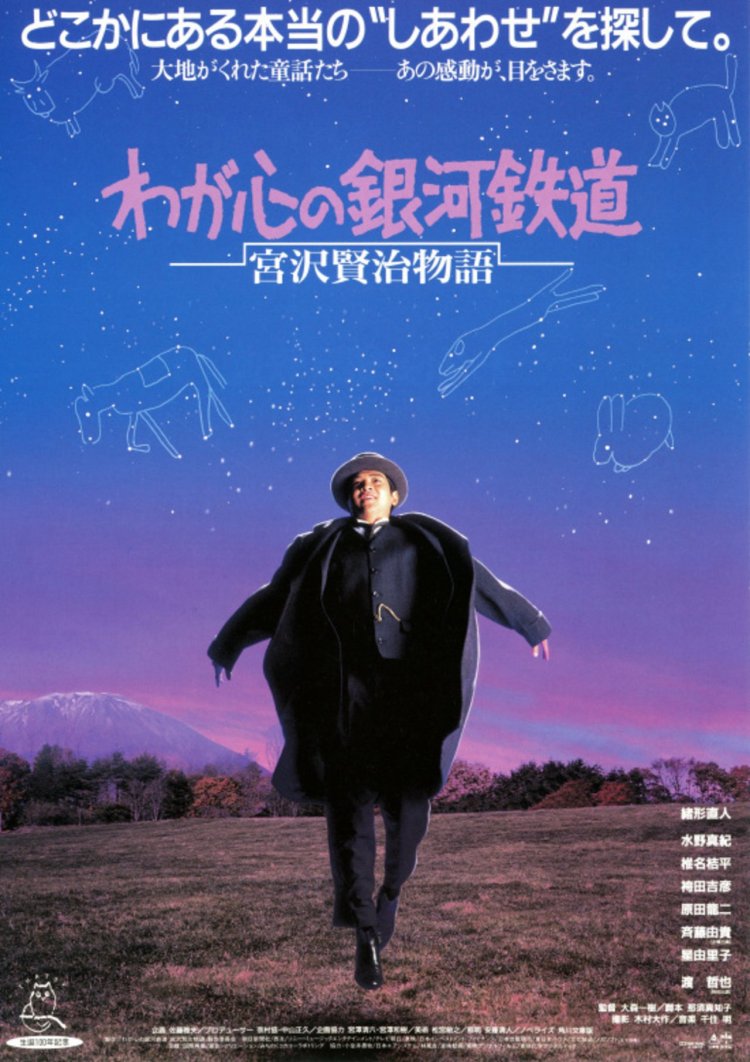 Kenji Miyazawa is one of the giants of modern Japanese literature. Studied in schools and beloved by children everywhere, Night on the Galactic Railroad has become a cultural touchstone but Miyazawa died from pneumonia at 37 years of age long before his work was widely appreciated. Night Train to the Stars (わが心の銀河鉄道 宮沢賢治物語, Waga Kokoro no Ginga Tetsudo: Miyazawa Kenji no Monogatari), commissioned to mark the centenary of Miyazawa’s birth, attempts to tell his story, set as it is against the backdrop of rising militarism.
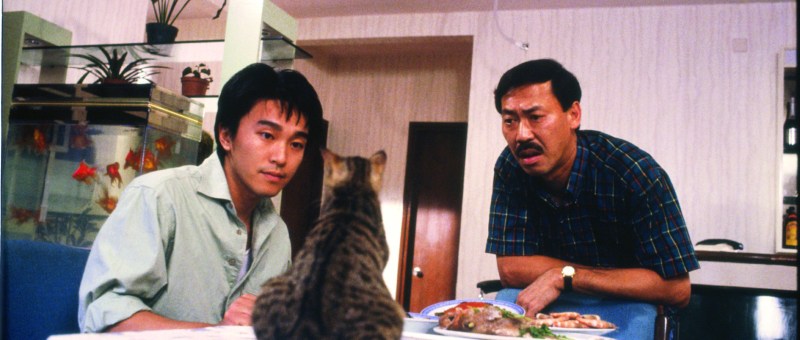
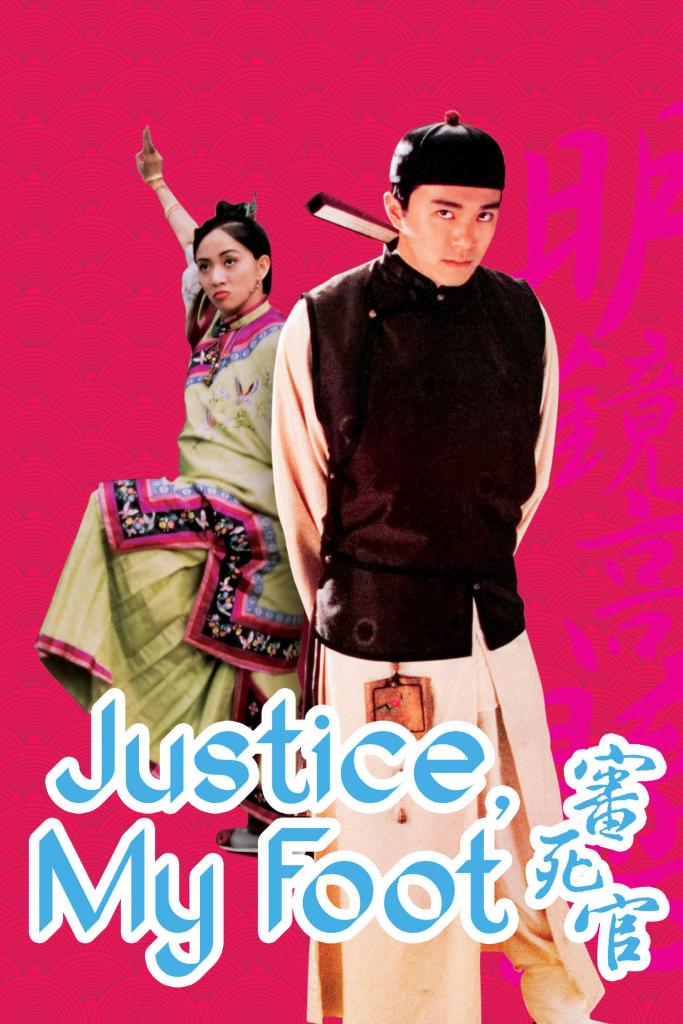 Stephen Chow has always been a force of nature but even before making his name as a director in the mid-90s, he contributed his madcap energy to some of the highest grossing movies of the era. Justice, My Foot! (審死官) is very much of the “makes no sense” comedy genre and, directed by Johnnie To for Shaw Brothers, makes great use of the collective propensity for whimsy on offer. Even if not quite managing to keep the momentum going until the closing scenes, Justice, My Foot! succeeds in delivering quick fire (often untranslatable) jokes and period martial arts action sure to keep genre fans happy.
 Windows on Worlds