
 At the very beginning of Kim Jong-jin’s Underground Rendezvous (만남의 광장, Mannamui Gwangjang), a group of kindly villagers in the north of Korea are caught by surprise when they unwittingly help to build the 38th parallel – a series of fortifications which will divide them from one another forevermore. Family members are trapped on different sides of an artificial border by a matter of accident rather than choice, a decision effectively made for them by the Americans and Russians amping up cold war hostility in engineering a proxy war over war-torn Korea.
30 years after the villagers sealed their own fates through being overly helpful, the South Korea of the 1980s is perhaps not so different from its Northern counterpart. A brief hope for democracy had once again been dashed and the land remained under the yoke of a cruel and oppressive dictatorship. Young-tan (Im Chang-jung), a boy from a poor village, is determined to escape his life of poverty by travelling to Seoul and studying to become a teacher. However, within five minutes of exiting the station, his country bumpkin ways see his only suitcase swiped by a street thief. An attempt to report the crime only gets him into trouble and so Young-tan is sent to a “re-education” camp in the mountains. Falling off the back of a truck, he gets lost and eventually ends up in a remote village where they assume, ironically enough, that he is the new teacher they’ve been expecting for the local school. The village, however, has a secret – one that’s set to be exposed thanks to Young-tan’s questions about a beautiful lady he saw bathing at the local watering hole.
Young-tan turns out to be a pretty good teacher, though not exactly the sharpest knife in the drawer. The village’s big secret is that the divided families were so attached to each other that they each started digging tunnels to the other side shortly after the wall went up and eventually met somewhere in the middle where they’ve built a large cave they use for underground reunions. Apparently existing for 30 years, no one outside of trusted citizens on either side knows about the tunnel’s existence. No one has used it to switch sides, the only purpose of the tunnel is for relatives and friends to mingle freely in defiance of the false division that’s been inflicted on them by outside forces.
Young-tan, however, is fixated on the bathing woman who turns out to be North Korean Sun-mi (Park Jin-hee) – the sister-in-law of the village chief. Thinking only of his crush and also a comparative innocent and devotee of the moral conservatism of ‘80s Korea, Young-tan catches sight of Sun-mi and the village chief and is convinced that the old man is molesting an innocent young maiden. He sets out to convince the villagers of this, little knowing the truth and unwittingly threatening to expose the entire enterprise through failing to understand the implications of his situation.
Kim pulls his punches on both sides of the parallel, only hinting at the oppressions present on each side of the border with Sun-mi fairly free in the North, working as the army propaganda officer in charge of the noisy broadcasts which attempt to tempt South Koreans to embrace the egalitarian “freedoms” on offer to defectors. Meanwhile the villagers in the South live fairly isolated from the unrest felt in the rest of the country, continuing a traditional, rural way of life but are also under the supervision of a local troop of bored army conscripts on the look out for North Korean spies. Nobody wants to defect, though perhaps there’d be little point in any case, but everyone longs for the day when families can all live together happily as they used to free from political interference.
Satire, however, is not quite the main aim. An absurd subplot sees the “real” teacher marooned on his own after taking a detour and accidentally standing on a landmine leaving him rooted to the spot on pain of death, but the majority of the jokes rest on Young-tan’s “misunderstandings” as a village outsider, goodnatured simpleton, and bullheaded idiot. A final coda tries to inject some meaning by hinting at the effects of repurposing the truth for political gain and the tempered happiness of those who get what they wanted only not quite in the way they wanted it, but it’s too little too late to lend weight to the otherwise uninspired attempts at comedy.
Currently streaming on Netflix UK (and possibly other territories)
Original trailer (no subtitles)
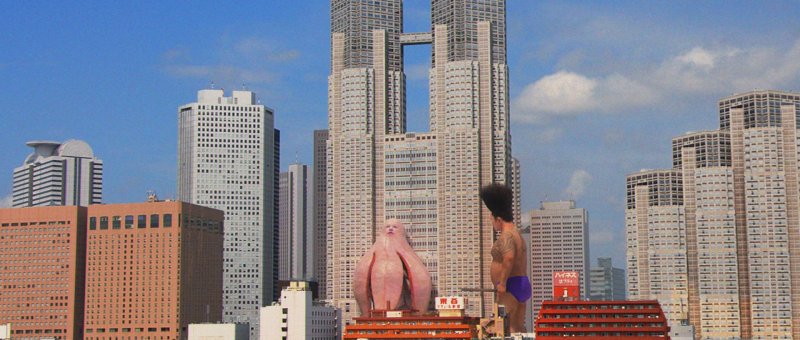

 “More specific, less poetic” the distressed author hero of Lee Myung-se’s M (엠) repeatedly types after a difficult conversation with his editor. Almost a meta comment on Lee’s process, it’s just as well that it’s advice he didn’t take – M is a noir poem, a metaphor for an artist’s torture, and a living ghost story in which a man shifts between worlds of memory, haunted and hunted by unidentifiable pain. Reality, dream, and madness mingle and merge as a single kernel of confusion causes widespread panic in a desperate writer’s already strained mind.
 “It’s not all about tofu!” screams the heroine of Akanezora: Beyond the Crimson Sky (あかね空), a film which is all about tofu. Like tofu though, it has its own subtle flavour, gradually becoming richer by absorbing the spice of life. Based on a novel by Ichiriki Yamamoto, Akanezora is co-scripted by veteran of the Japanese New Wave, Masahiro Shinoda and directed by Masaki Hamamoto who had worked with Shinoda on Owl’s Castle and Spy Sorge prior to the director’s retirement in 2003. Like the majority of Shinoda’s work, Akanezora takes place in the past but echoes the future as it takes a sideways look at the nation’s most representative genre – the family drama. Fathers, sons, legacy and innovation come together in the story of a young man travelling from an old capital to a new one with a traditional craft he will have to make his own in order to succeed.
 Koji Wakamtasu had a long and somewhat strange career, untimely ended by his death in a road traffic accident at the age of 76 with projects still in the pipeline destined never to be finished. 2008’s United Red Army (実録・連合赤軍 あさま山荘への道程, Jitsuroku Rengosekigun Asama-Sanso e no Michi) was far from his final film either in conception or actuality, but it does serve as a fitting epitaph for his oeuvre in its unflinching determination to tell the sad story of Japan’s leftist protest movement. Having been a member of the movement himself (though the extent to which he participated directly is unclear), Wakamatsu was perfectly placed to offer a subjective view of the scene, why and how it developed as it did and took the route it went on to take. This is not a story of revolution frustrated by the inevitability of defeat, there is no romance here – only the tragedy of young lives cut short by a war every bit as pointless as the one which they claimed to be in protest of. Young men and women who only wanted to create a better, fairer world found themselves indoctrinated into a fundamentalist political cult, misused by power hungry ideologues whose sole aims amounted to a war on their own souls, and finally martyred in an ongoing campaign of senseless death and violence.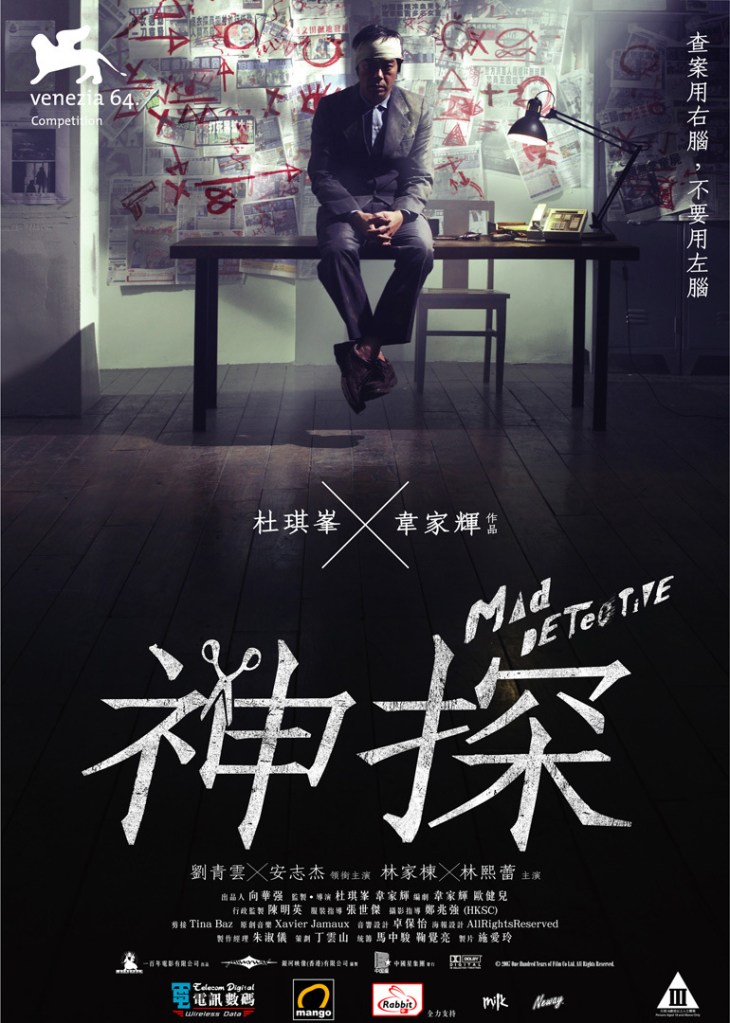
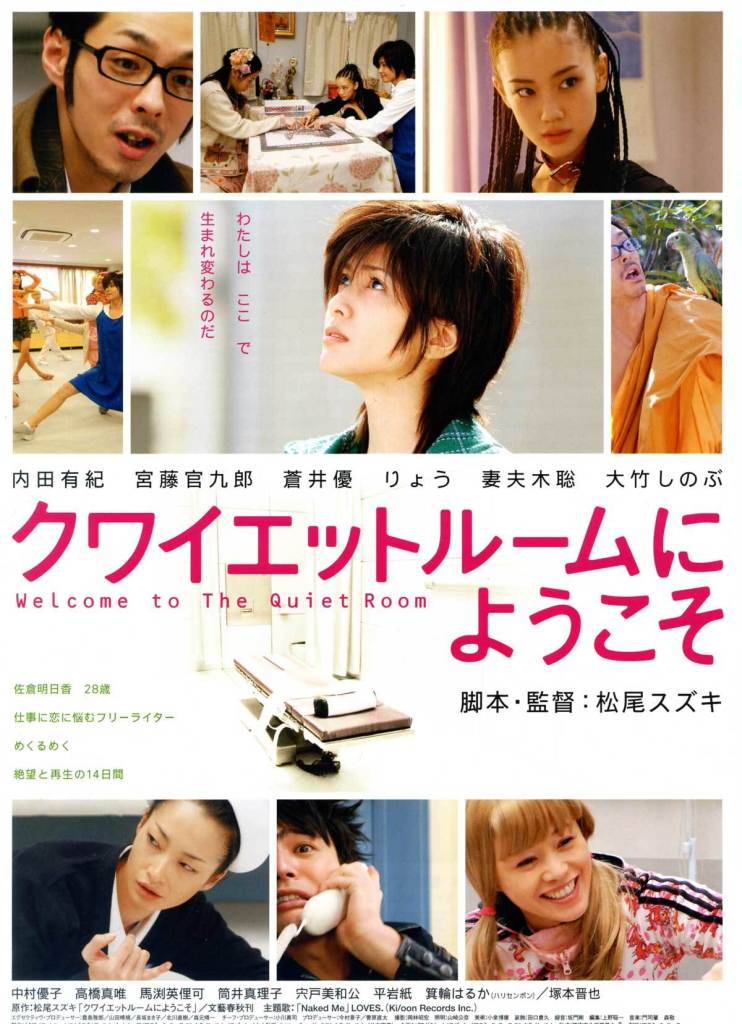 Everyone has those little moments in life where you think “how did I get here?”, but thankfully most of them do not occur strapped to a table in an entirely white, windowless room. This is, indeed, where the heroine of Suzuki Matsuo’s adaptation of his own novel Welcome to the Quiet Room (クワイエットルームにようこそ, Quiet Room ni Yokoso) finds herself after a series of events she can’t remember but which seem to have involved pills and booze. A much needed wake up call, Asuka’s spell in the Quiet Room provides a long overdue opportunity to slow down and take a long hard look at herself but self knowledge can be a heavy burden.
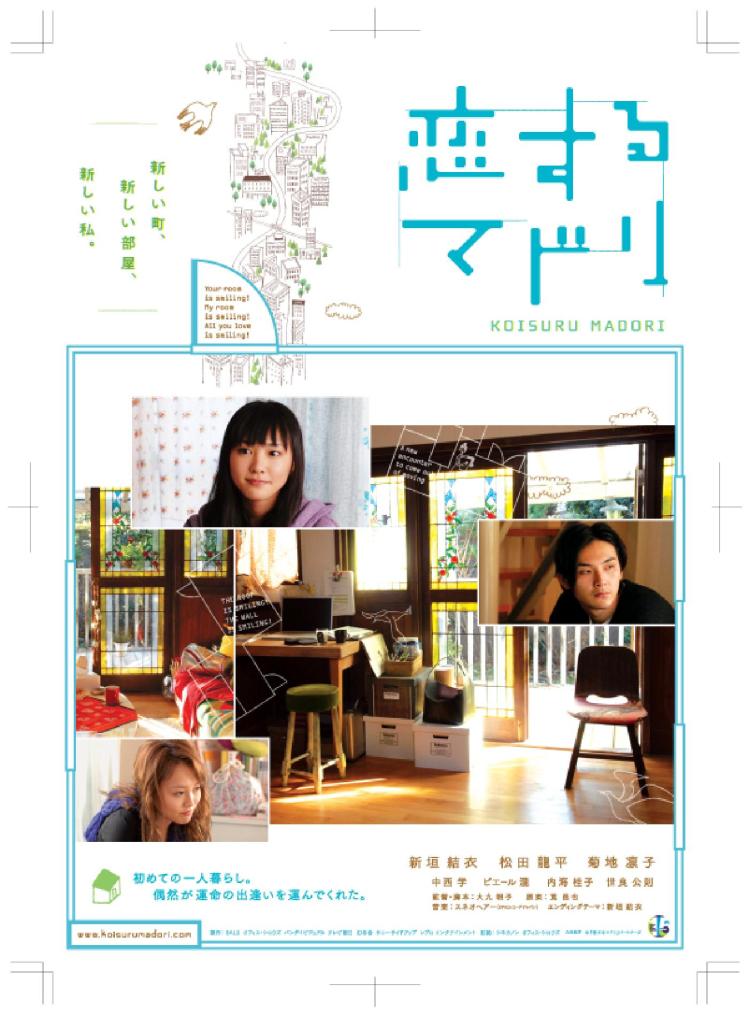 Cities are often serendipitous places, prone to improbable coincidences no matter how large or densely populated they may be. Tokyo Serendipity (恋するマドリ, Koisuru Madori) takes this quality of its stereotypically “quirky” city to the limit as a young art student finds herself caught up in other people’s unfulfilled romance only to fall straight into the same trap herself. Its tale may be an unlikely one, but director Akiko Ohku neatly subverts genre norms whilst resolutely sticking to a mid-2000s indie movie blueprint.
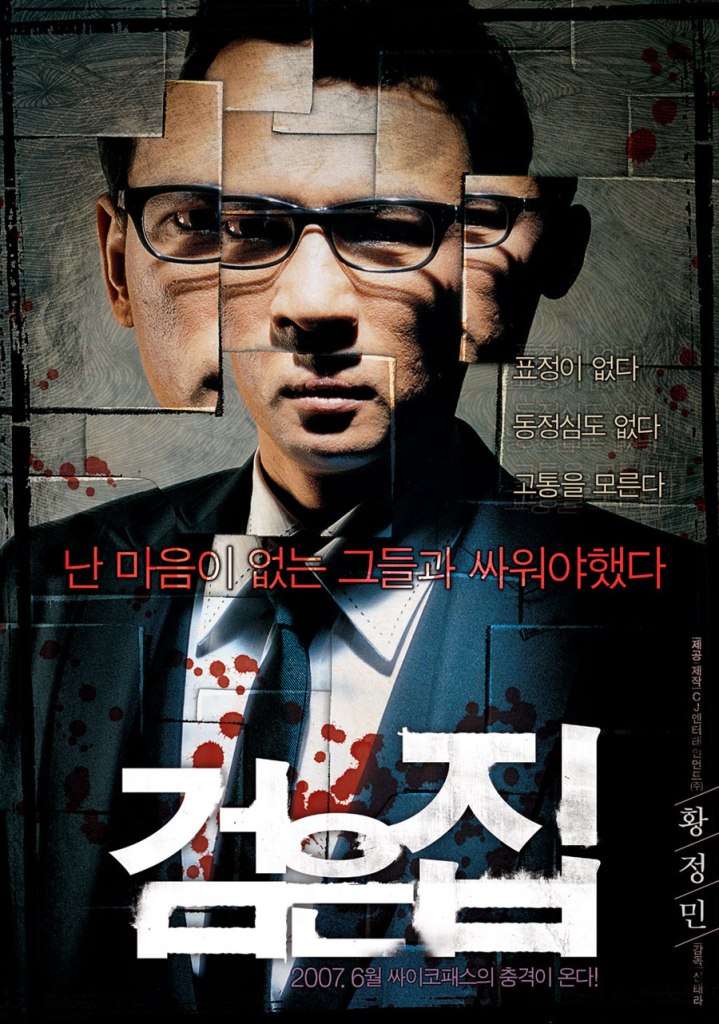 Yusuke Kishi’s Black House source novel was
 Windows on Worlds