 Written by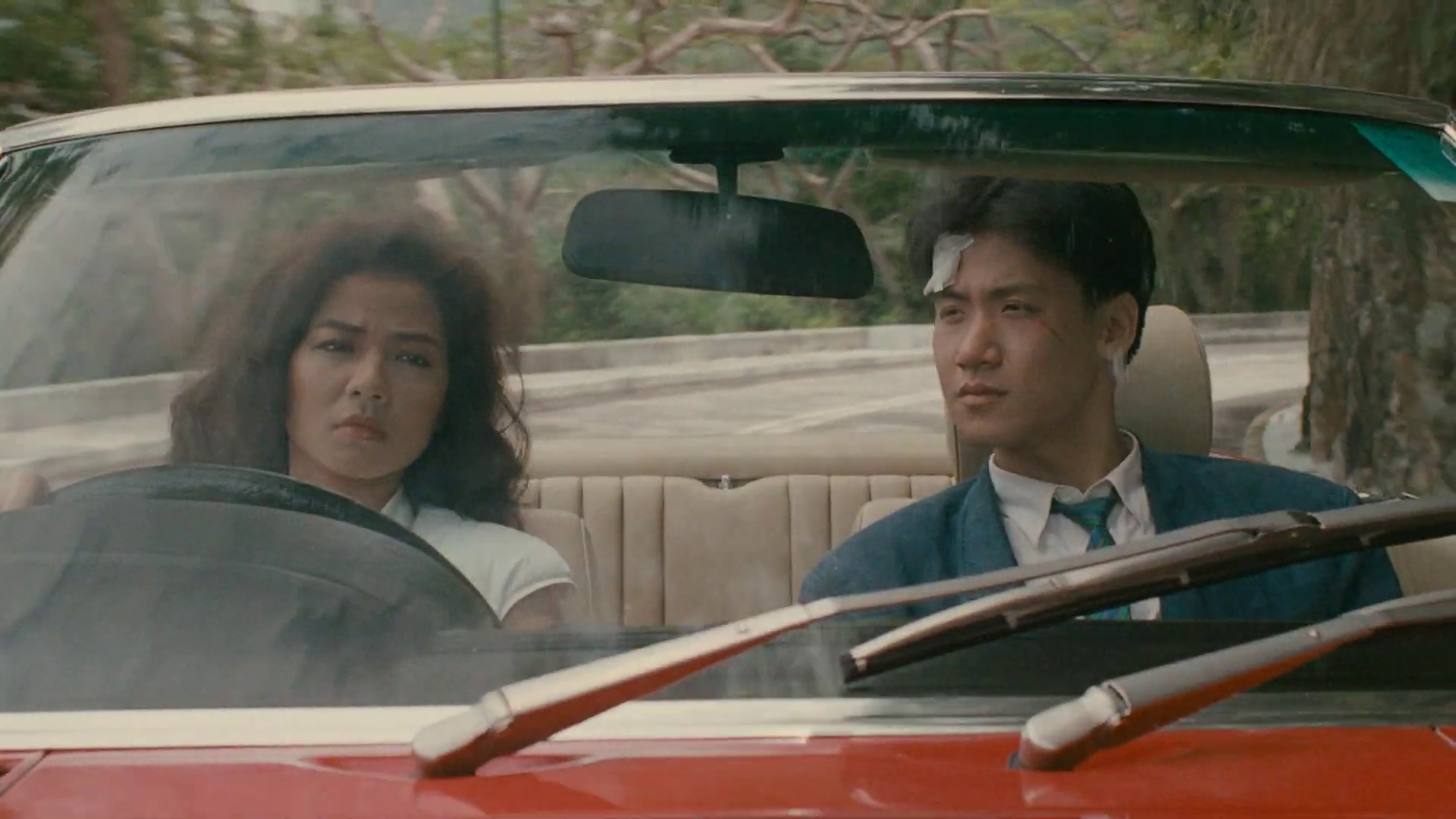
“The secret behind the secret is too mysterious for me to explain,” according to some kind of priest in Yonfan’s stylish tribute to the Hitchcockian thriller, Double Fixation (意亂情迷). The film does perhaps take the concept of the MacGuffin a little too far in its glowing blue orb which it makes no attempt to explain with no hint as to why the bad guys are so determined to get it back that they’ll even go to great lengths to retrieve a set of photos taken of it by a hapless photographer.
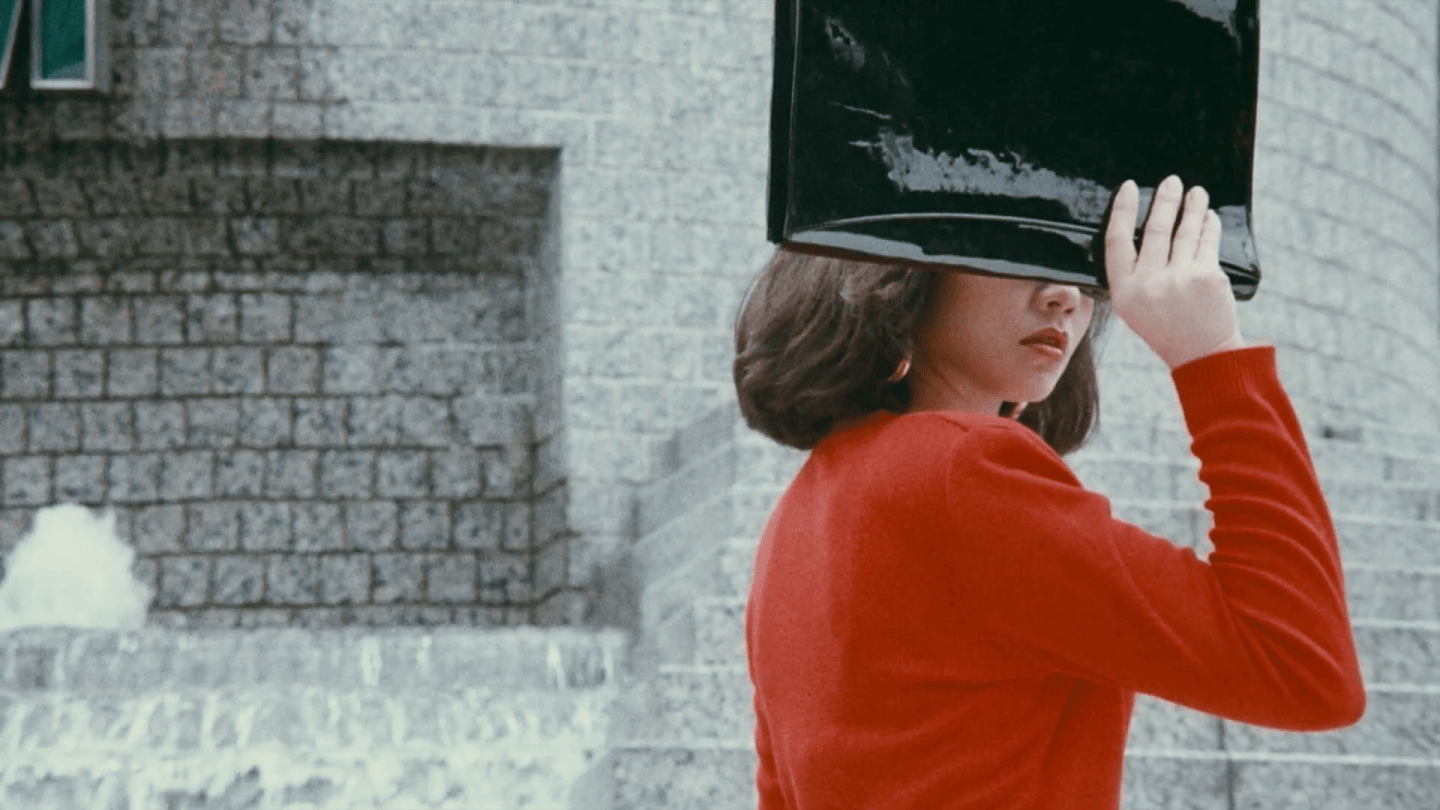
Jacky (Jacky Cheung Hok-Yau) is, to that extent, a classic “wrong man” who gets mixed up in a surreal conspiracy after being strong-armed into taking pictures of the orb by a wealthy businessman who wanted to give them to the priest so he could unlock its secrets. When Jacky goes to hand them over, he discovers the businessman has been murdered and laments his lost pay cheque, but, at the same time, is far more interested in some pictures he took of a stunning woman in red rather the mysterious blue orb. Jacky soon becomes the main suspect in a murder and is forced on the run, only to be rescued by the mysterious woman, Cherie (Cherie Chung Cho-Hung). Though Jacky falls for her, he can’t be sure she can be trusted. After Cherie disappears from his life, Jacky encounters another woman in San Francisco who looks just like her, but says her name is Jackie and claims to have no memory of him.
A riff on Vertigo, the film plays with identity and obsession as Jacky, abruptly cleared of suspicion as if the crime he was accused of committing may not have happened at all, continues to question his relationships with both Cherie and Jacky. Where Cherie had been a melancholy sophisticate living in a lonely mansion, Jackie is a down to earth aspiring actress whose fashion sense seems far more in the moment. She even seems to have Kim Novak’s hairstyle from the second half of Hitchcock’s movie. As Jacky gets closer to her, he’s honest about the fact that he can’t forget Cherie and the feelings he has for Jackie may be different in nature. Of course, this pains Jackie who can’t find a way to get through to Jacky who is still obsessed with a woman who may not have actually existed.
Jacky eventually comes to the conclusion that it doesn’t really matter who the mysterious woman is as long as she remains “herself” as a means of integrating his love for both Jackie and Cherie who are different but also the same. Yonfan also hints at Jacky’s own duality in often framing him with his reflection, while in a sense his gaze is doubled and refracted by his use of the camera. The film’s Chinese title may be that of Hitchcock’s Spellbound, echoing Jacky’s obsession and doubts about Cherie’s loyalties, but the English title too is reflective suggesting both Jacky’s fixation on a double of his lost love, and the fixation the villains seem to have with retrieving the photos for no clear reason.
As such, the film has a rather surreal mentality what its unexplained magical orbs, weird priests, and a random comedy character in the form of a strange-looking, effeminate man who carries around a teddy bear and turns up at Jacky’s studio wanting to become a male model but later seems to be connected to the bad guys. Jacky has a naive sense of optimism, sure that all this will be sorted out quickly because he’s an innocent man and never quite taking the situation he’s in very seriously even as he’s chased by a pair of “CID officers” who don’t seem to be obeying police ethics. Yonfan then largely sidesteps the darkness at the centre of the story and dramatises it more as one of improbable adventure and romantic confusion in which Jacky struggles with his conflicted feelings for two women who might be one and the same. The film is just as enthralled by Cherie Chung as its protagonist appears to be as her ghostly presence seems to haunt every frame with her motivations constantly unclear until the very last second.
Trailer (no subtitles)

