 There are two very distinct sides to the career of Tatsushi Omori. Brother of the well known actor, Nao, Omori may be best known to certain audiences for his hard hitting, often gloomy and pessimistic dramas of human misery such as festival favourite Ravine of Goodbye or the little seen The Whispering of the Gods which proved so controversial that his only option of screening the film involved erecting a tent where he could show it himself. However, a closer look at his filmography discovers a steady strain of laid-back comedy such as the Tada’s Do It All House series in which two brothers played by Eita and Ryuhei Matsuda act as bumbling handymen-cum-detectives-cum-whatever-you-need-them-to-be. It might be less surprising therefore that his latest effort is an adaptation of Kazuya Konomoto’s comedy manga Seto and Utsumi (セトウツミ, Setoutsumi) which revels in the everyday absurdity of teenage life in Southern Japan.
Seto (Masaki Suda) and Utsumi (Sosuke Ikematsu) are ordinary high school boys heading into their final year with the exam season and the end of their youthful, carefree days looming. Utsumi is a quiet, serious sort who generally doesn’t like a lot of company. Seto, by contrast, is a real live wire and not exactly a top student. Nevertheless, they found each other by a river one day and have been more or less inseparable ever since. Every day after school they meet and hang out in the same spot over looking the water where they shoot the breeze about various ordinary things from a non-argument over a girl to venus fly traps, Buddhist terminology, and ghosts.
Like many teenagers, Seto and Utsumi kill time doing nothing in particular and their conversations are generally inconsequential. Yet for all of their inherent randomness and absurdity, there’s a layer of poignancy underpinning each of them as the boys let slip various aspects of their private, interior lives. Seto’s big life drama involves the possible separation of his parents following the illness of the family cat which everyone in the family decided to indulge seeing as the poor thing didn’t have long left, but against expectation it’s two years later, the cat is still alive and Seto’s father is growing ever more resentful at spending so much money on luxury cat food. Seto’s family are a rowdy bunch, just as prone to drama as he is yet for all their complaining they seem fairly close – close enough for Seto to complain about the constant random text updates from his mother (a trait which Seto seems to have inherited himself).
Utsumi, by contrast, is much more aloof and keeps himself to himself. When Seto complains after his mother spots the boys at the river with bags full of shopping in her hands he remarks sadly that he rarely eats at home, implying it must be nice to have someone cook you a meal everyday. His approach to life is cerebral, calculating odds and planning angles, as he reveals to Seto in a piece of possibly not very helpful dating advice. Utsumi’s unseen parents are, presumably, just as aloof as he is, austere and religious. Nevertheless, in Seto he’s found a true sparring partner and someone he can waste time with amiably.
Utsumi’s parents are useful for one thing, they belong to the temple in which Seto’s crush, Kashimura (Ayami Nakajo), lives. Seto has been secretly trying to brush up on Buddhist terminology to impress her, but predictably she prefers the cool indifference of Utsumi to his friend’s energetic banter. Utsumi isn’t interested in Kashimura in any case, but not even this possible subject of conflict is big enough to seriously risk damaging the two boys’ friendship. As one character remarks towards the end of the film, it really is a once in a lifetime connection.
Omori keeps things simple, mostly sticking to static shots of the boys sitting on the steps near the river but he makes the stillness add to the sense of the absurd running through the quiet backwater town. After beginning with accordion music and ride through the canals, Seto and Utsumi’s first conversation takes place in front of an unintentional audience of a perfectly motionless older man, staring vacantly out at the river. The man turns out to have a valid (if sad) reason for being where he is, but the presence of the balloon animal vending clown from Eastern Europe (called Mr. Balloon) is a little harder to explain given that other than Seto, Utsumi, the aforementioned man, a high school bully, Seto’s mum, and a senile grandpa, no one else comes anywhere near this tranquil spot for the entire film. Using occasional dissolves and superimpositions to create a fleeting, dreamlike atmosphere with a handful of cutaways and flashbacks for comedic context, Seto and Utsumi is a truly charming ode to teenage friendship in all its pleasantly ridiculous absurdity.
Reviewed at Raindance 2016.
Original trailer (English subtitles)
There are also a few bonus web episodes of Seto and Utsumi enjoying even more pointless conversations:
No. 1 – Kendama (a kind of Japanese cup and ball game) (English subtitles)
No. 2: Timing (English subtitles)
3. Standing Ovation (no subtitles but you don’t really need them)
 Johnnie To is best known as a purveyor of intricately plotted gangster thrillers in which tough guys outsmart and then later outshoot each other. However, To is a veritable Jack of all trades when it comes to genre and has tackled just about everything from action packed crime stories to frothy romantic comedies and even a musical. This time he’s back in world of the medical drama as an improbable farce develops driven by the three central cogs who precede to drive this particular crazy train all the way to its final destination.
 The 102nd film from veteran Korean film director Im Kwon-taek may appear close to the bone in its depictions death, suffering, and the long look back on a life filled with the quiet kind of love but Revivre (화장, Hwajang) is anything but afraid to ask the questions most would not want to hear as the light dwindles. The inner journey is just too hazy, as one man puts it, unknowingly commenting on the human condition, yet Im does manage bring us nicely into focus, if only for a moment.
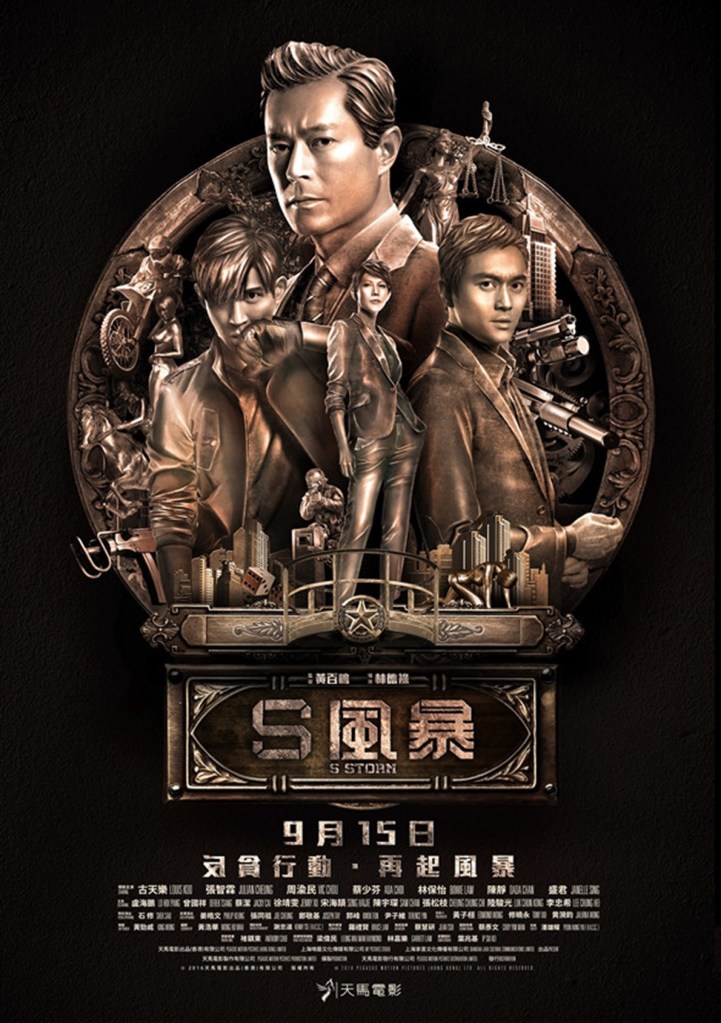 It’s become almost a cliché to describe a sequel as “unnecessary”, but then assessing how any sequel or, indeed, any film might be deemed “necessary” (for what or whom?) proves more fraught than one might originally think. It might, then, be better to think of certain sequels as “unwise” – S Storm (S風暴), a followup to the similarly named Z Storm is just one such film. Z Storm’s critical reception was, shall we say, lukewarm and did not exactly inspire a burning desire to return to its world of corporate corruption vs different kinds of bickering policemen but, nevertheless, here we are.
 Below average student buckles down and makes it into a top university? You’ve heard this story before and Nobuhiro Doi’s Flying Colors (ビリギャル, Biri Gyaru) doesn’t offer a new spin on the idea or additional angles on educational policy but it does have heart. Heart, it argues is what you need to get ahead (if you’ll forgive the multilevel punning) as the highest barriers to academic success are the ones which are self imposed. Arguing for a more inclusive, tailor made approach to education which doesn’t instil false hope but does help young people develop self confidence alongside standardised skills, Flying Colors is the story of one popular girl’s journey from anti-intellectual teenage snobbery to the very top of the academic tree whilst healing her divided family in the process.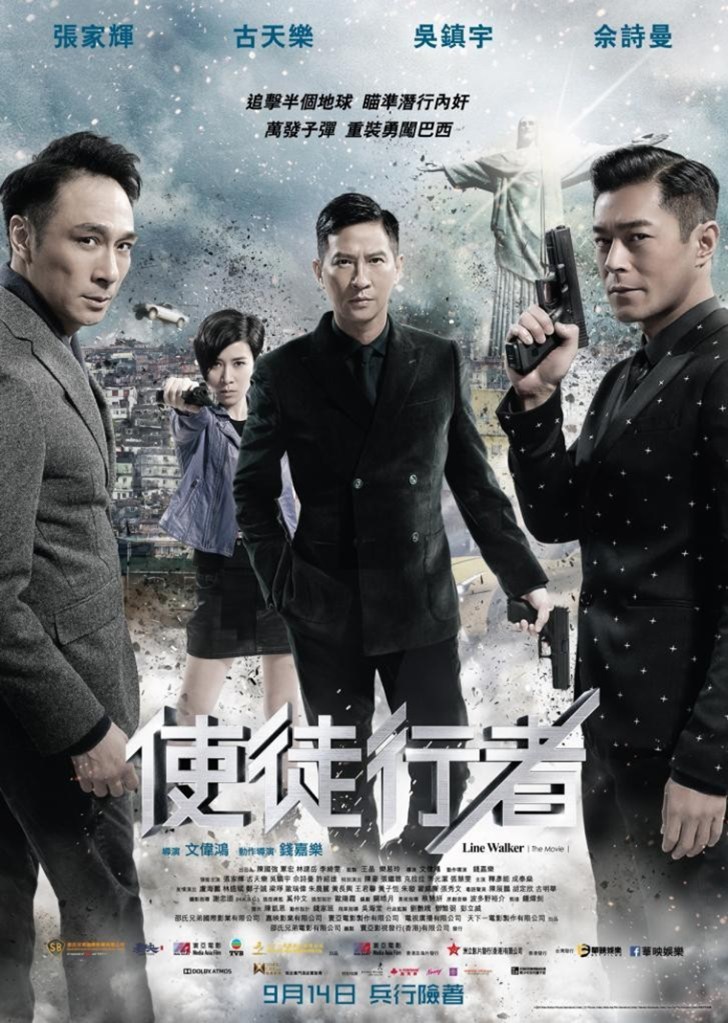
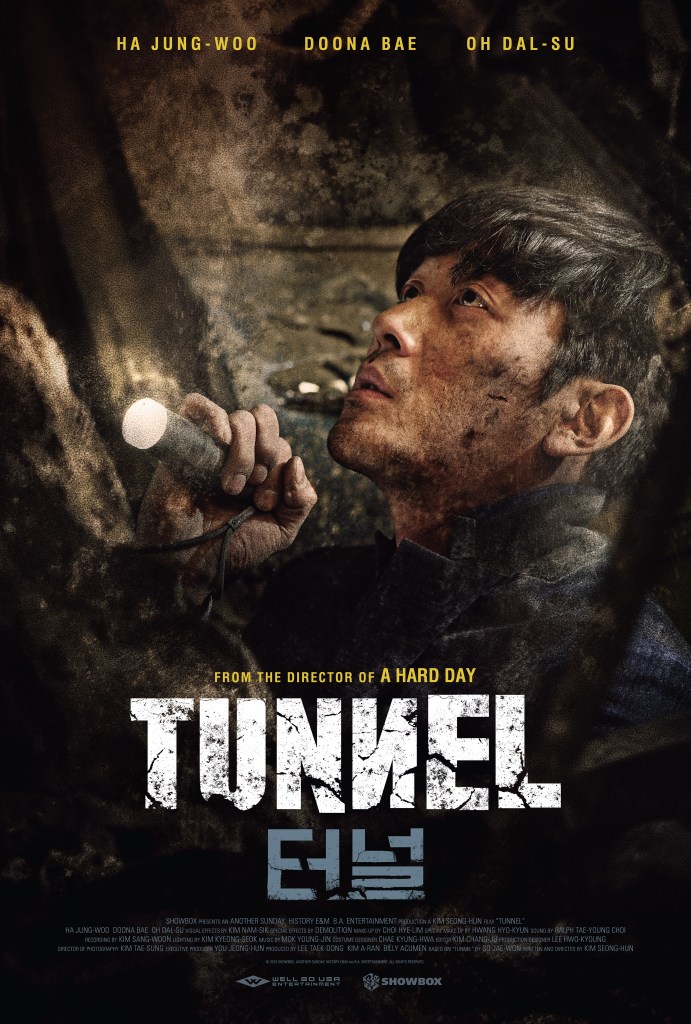 In 1925 an avid cave explorer, Floyd Collins, became trapped in a narrow crawl space. Though he was discovered and help came with food and water, a cave in left him sealed off down there and fourteen days later he died of thirst and exposure. As tragic as this obviously is, Floyd Collins is remembered for another reason – his rescue became one of the earliest mass media crazes. The surrounding media furore also inspired the 1951 Billy Wilder classic Ace in the Hole in which a grizzled reporter attempts to manipulate the fate of a man trapped in a cave for the maximum media coverage with the consequence that his delays cost the man his life. Jung-soo, a father on his way home with a birthday cake for his young daughter is about to join the marooned underground club when a shoddily built tunnel collapses sealing him inside. Unfortunately for Jung-soo, he finds that times have not changed all that much.
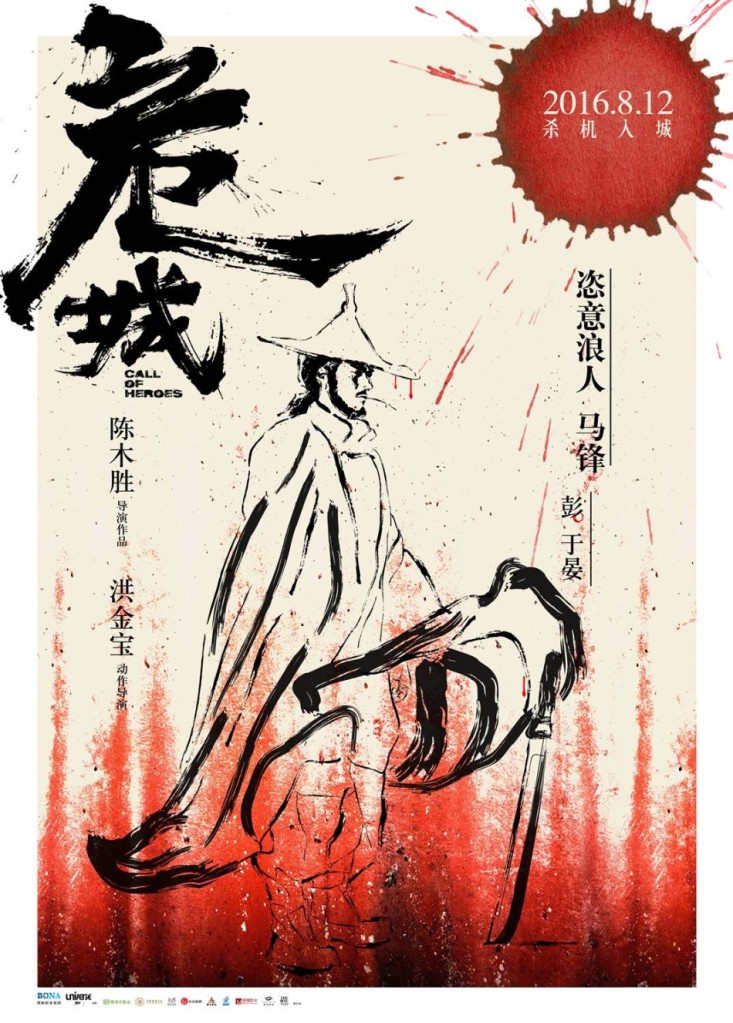 A blast from the past in more ways than one, Benny Chan’s Call of Heroes (危城, Wēi Chéng) is a western in disguise though one filtered through Akira Kurosawa and Sergio Leone more than John Ford. Filled with Morricone-esque musical riffs and poncho wearing reluctant heroes, Chan’s bounce back to the post-revolutionary warlord era is one pregnant with contemporary echoes yet totally unafraid to add a touch of uncinematic darkness to its wisecracking world.
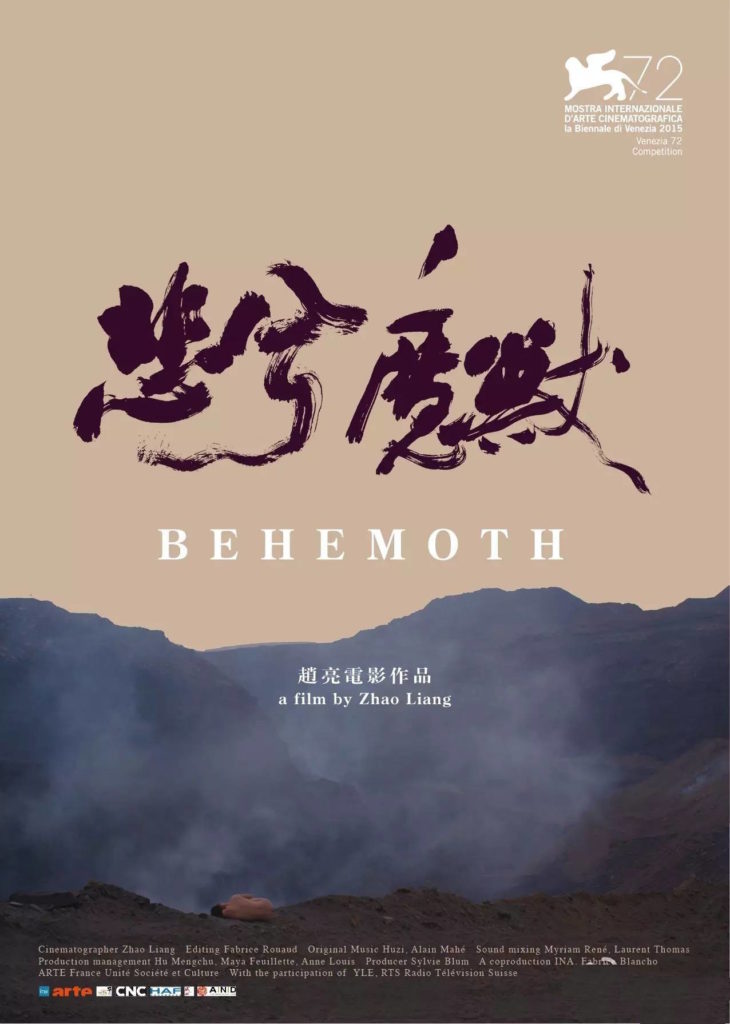 Evil, so a wise man said, begins when you start treating people as things. Fritz Lang’s Metropolis showed us a city that literally was its people – nothing but a vast yet perfectly functional machine with the workers little more than cogs to be replaced and discarded once worn out. Zhao’s Behemoth (悲兮魔兽, Bēixī Móshòu) is no fantasy but a very real journey through our own world and so we follow our narrator, a poetic, naked stand in for Dante’s Virgil, through hell and purgatory on a path to paradise only to find ourselves staring into a void filled with our unfulfilled desires and forlorn hopes.
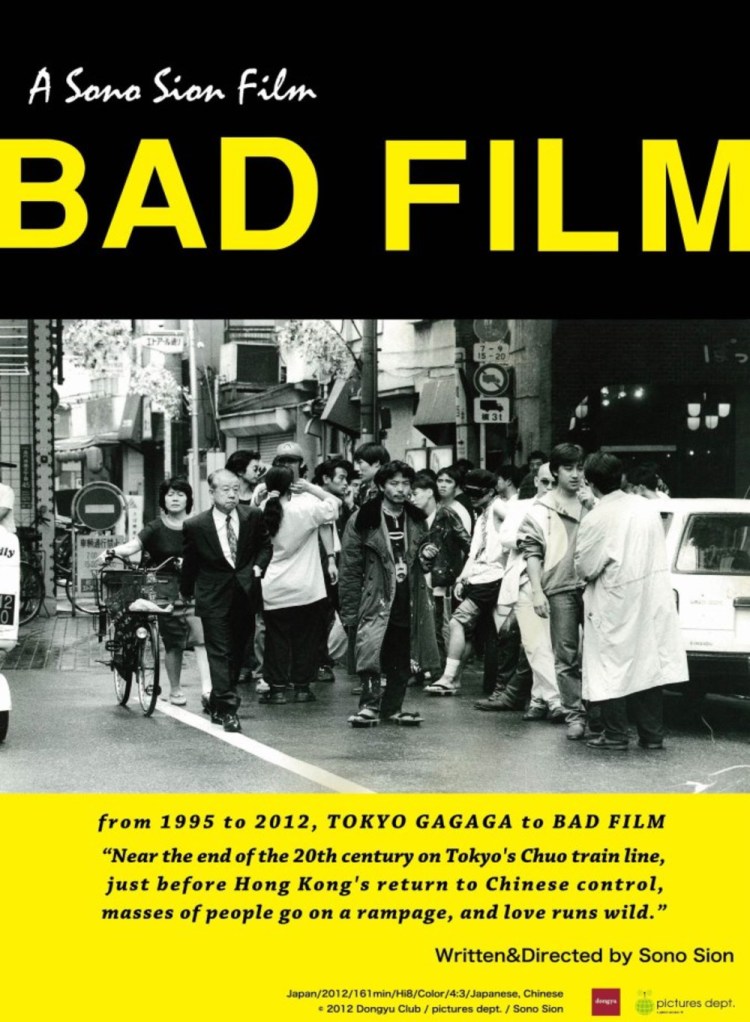 The recently prolific Sion Sono actually has a more sporadic film career dating back to the early 1980s though most would judge his real breakthrough to 2001’s Suicide Club. Back in the ‘90s Sono was most active as the leader of anarchic performance art troupe Tokyo Gagaga. Taking inspiration from the avant-garde theatre scene of the 1960s, Tokyo Gagaga took to the streets for flag waving protests and impressive, guerrilla stunts. Bad Film is the result of one of their projects – shot intermittently over a year using the then newly accessible Hi8 video rather the traditionally underground 8 or 16mm, Bad Film is near future set street story centring on gang warfare between the Chinese community and xenophobic Japanese petty gangsters with a side line in shifiting sexual politics.
