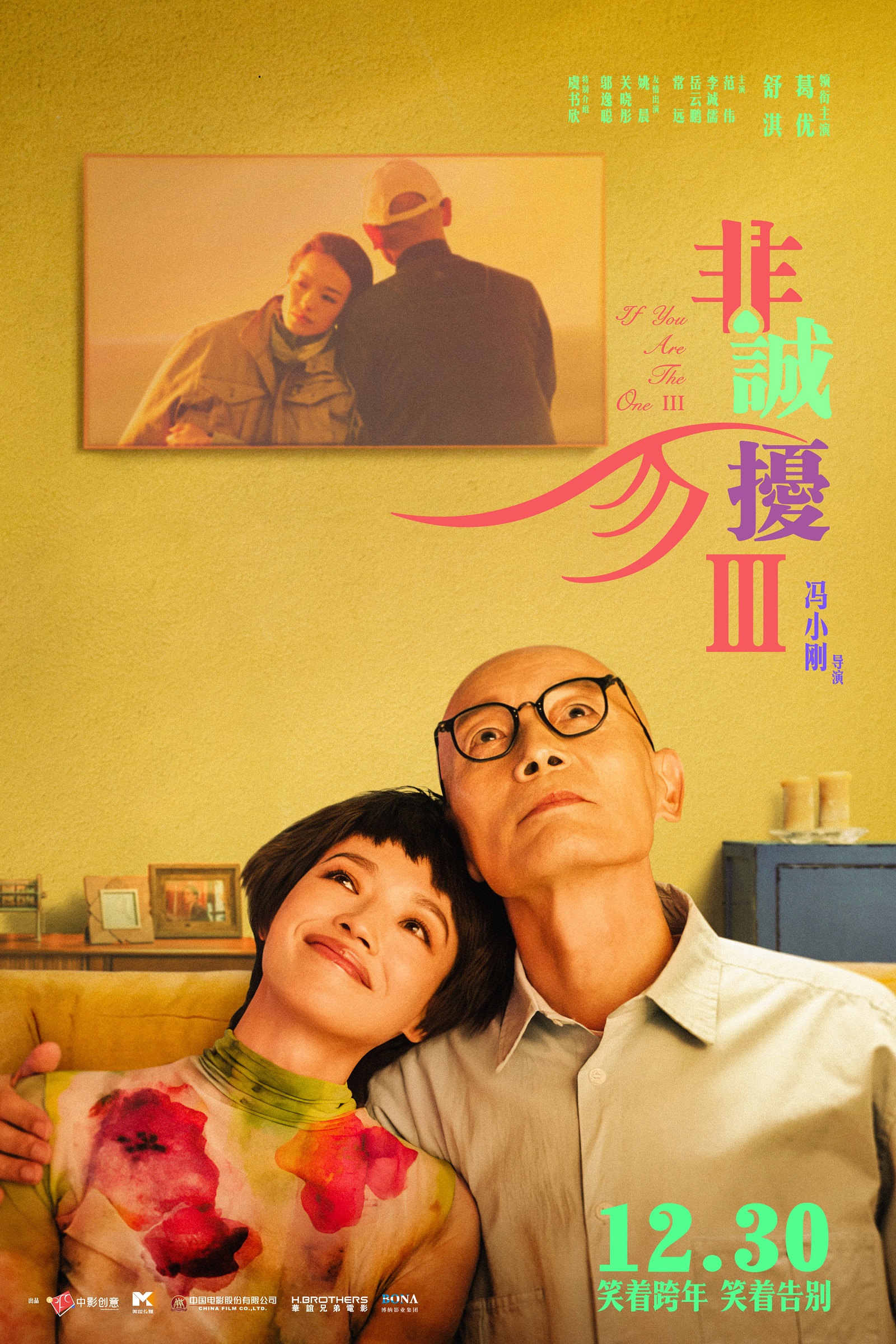
If You Are the One 3 (非诚勿扰3, Feng Xiaogang, 2023)

It’s been 15 years since the release of Feng Xiaogang’s If You Are the One, a phenomenally popular romantic dramedy in which a seemingly mismatched pair of lovelorn souls attempt to build on the spark of connection. A sequel was released in 2010 that turned a little more wistful in meditating on the brevity of life and its circular qualities, but returning all these years later Feng ventures in a surreal direction setting the film, as the sequel promised, in 2030 as Qin Fen (Ge Yu) approaches his 70th birthday in a colourful vision of an AI future.

Qin Fen still lives in the same house as he did in If You Are the One 2 only it’s had a complete redesign. Before it was cluttered and traditional, a comforting cabin overlooking the beautiful Chinese countryside but now it’s fairly minimalist and heavily stylised in a bold colour scheme that echoes the fashions of the mid-20th century. We learn that he has not seen Xiaoxaio (Shu Qi) for 10 years since she abruptly took off with a bunch on cult-like international rubbish collectors but has been patiently waiting for her return. His old friend Lao Fan (Fan Wei) who has launched a successful company selling uncannily real AI robots gifts him one that looks just like Xiaoxaio though it of course lacks her sarcastic character and is programmed to obey him totally which is how he thought he wanted but of course is nothing like the real Xiaoxiao.

At this point, the film seems to open a dialogue about the nature of love and the realities of marriage. Can the lonely Qin Fen be satisfied by this ersatz recreation of the woman he loved, or will it only cause him more pain? The answer seems to be a little of both, especially as she cannot eat or drink with him let alone sleep in the same bed. Meanwhile, unbeknownst to him the real Xiaxiao has returned but is too nervous to approach him having been out of contact for a decade, only now getting bored with rubbish collecting which is being taken over by AI robots anyway. Disguising herself as a upgraded version of the robot, she attempts to figure out how he really feels about her in a strange echo of the trial marriage from the previous film wondering if he’ll be able to figure out which version of her is “real” and which a fantasy of his own projections.

Then again, set largely within this futuristic cabin, now a little more surrounded by other similar dwellings, we might start to wonder if something else of going on and this place doesn’t quite exist in the way we think it does as if Qin Fen were literally living inside a memory. Having jumped on an additional eight years, the timelines and details do not always mesh exactly with a reappearance of Xiangshan’s daughter who should be around 30 but appears more like a sullen college student in the company of Xiangshan’s second wife, Mango (Yao Chen), who was not her mother nor raising her but apparently continued caring for her mother-in-law after her ex-husband’s death. Small splinters in the reality encourage us to doubt it, as if they corrupted files in Qin Fen’s ageing memory.

Feng presumably doubts our memory too, inserting frequent flashbacks to footage from the other movies whenever one of the returning cast allude to them in addition to providing a lengthy recap at the beginning of the film. Playing out a bit like a greatest hits compilation, the flashbacks prove unnecessarily clumsy and largely disrupt the flow of the ongoing drama while perhaps helping to fill in the blanks for those jumping in to part three without having seen one or two given that it has been fifteen years since the first film’s release. A little surprisingly given the tightening censorship regulations, Feng was able to continue the sympathetically presented running gag of Qi Fen’s male admirer, now having undergone a K-pop makeover and looking even younger, who also finds himself contemplating the nature of love after commissioning a Qin Fen robot to cure his own lovelorn desires.

A nod to the present day is given in a Lunar New Year movie-style epilogue (though the film was released around Western New Year) in which Shu Qi and Ge Yu play themselves dressed in matching outfits and nostalgically look back reflecting that young couples who came to see If You Are the One in 2008 might have teenage kids of their own or at least fond memories of an old love that wasn’t to be. Just at the end at they drop in the words that marriage is a commitment worth its weight in gold which feels like an approved message tackling the historically low rates of young people getting married. Nevertheless, it’s a cute and quirky way to bring the series to a close following the surreal absurdity of the two hours which preceded it.


International trailer (Simplified Chinese / English subtitles)

In Our Prime (이상한 나라의 수학자, Park Dong-hun, 2022)

Education is supposed to be the great leveller, a true meritocracy in which a combination of hard work and innate ability can enable anyone to follow their chosen path as far as it will go. The reality is however far less idealistic. Park Dong-hun’s In Our Prime (이상한 나라의 수학자, Isanghan Naraeui Suhakja) is the latest in a series of Korean films taking aim at corruption within the educational system along with a persistent classism that ensures only the “right” kind of people are allowed to prosper. 

Han Ji-woo (Kim Dong-hwi) knows he’s not the “right” kind of person and feels out of place at the elite boarding school where he is bullied by teachers and students alike for being a scholarship boy amid the children of mostly wealthy families. Though he won the place though being a top student at his previous school, now his grades are merely average and he’s bottom of the class in maths. Ji-woo’s odious, elitist teacher coldly tells him that his case is hopeless and he’ll never get into a top league university with these kinds of grades at this kind of school. He pressures Ji-woo into applying to transfer out which he is reluctant to do because he knows how much his attending such a prestigious school means to his widowed single mother. In any case as we later discover, the teacher merely has it in for him openly complaining with other members of staff about having to fuss with paperwork for kids on scholarships and bursaries who in his opinion don’t really belong in a place like this which is clearly geared towards perpetuating the privilege of the children of the elite at the expense of those like Ji-woo. 

When Ji-woo is caught smuggling in pork and soju at the behest of his exploitative roommates he refuses to dob them in, making the unlikely claim that he intended to consume all four meals himself. The teacher first praises his idealistic stance but then calls him an idiot because the other boys wouldn’t do the same for him nor are they coming forward themselves to take responsibility. Perfectly happy to let the scholarship boy take the blame one of them even crassly slips Ji-woo some money afterwards, genuinely confused when Ji-woo tries to turn it down claiming such things are unnecessary between friends. Nevertheless, the incident brings him the attention of the “commie officer”, a North Korean defector (Choi Min-sik) working as the nightwatchman who easily solves Ji-woo’s impossible maths problems. The officer eventually agrees to teach him maths but only on the premise that he doesn’t care about tests or grades but solely on the art of learning. 

What he teaches Ji-woo is a valuable lesson that cuts straight to the quick of the issues within the educational system in which children are being taught to blindly answer standardised questions without developing critical thinking skills. The first problem he shows him has a deliberate error in it, but Ji-woo is so focussed on giving the correct answer he doesn’t stop to consider the question itself may be wrong and as the officer is fond of saying there can be no correct answer to an incorrect question. Yet this new philosophy of maths in particular being a purely rational science in which there is only one true answer brings Ji-woo back into conflict with his teacher who complacently teaches to test and humiliates him when he points out one of the test questions is badly formulated. The teacher tells them the correctness of their answer is irrelevant for they must answer in accordance with the textbook and willingly say that black is white if the textbook says it’s so. Meanwhile it also becomes apparent that he has been taking kickbacks from parents getting wealthy students into an elite tutoring group where he leaks the questions on upcoming exams.

This discovery prompts a minor rebellion by rich kid Bo-ram (Jo Yun-seo) who becomes disgusted with her elitist mother after being unwittingly enrolled in the cheating cabal while already resenting her for having made her give up playing the piano. For the officer, music is a mathematical language and merely an expression of the beauty of numbers which can used to explain everything there is in the world, yet as we discover he left North Korea after finding out that his research was used in weapons production only to become disillusioned with the South on realising that here people merely use it as a tool for advancement towards dull and conventional lives in the service of capitalism. When Ji-woo admits that he supposes he wants good grades to get into a good uni and then get a good job to be set for life, the officer decides to broaden his horizons encouraging the better instincts the elites at the school had rejected and showing him how to think for himself rather than blindly follow what he’s being taught. 

All that might seem quite ironic for a man from North Korea pointing out the unhelpful brainwashing of a rote learning system along with the unpleasant complacency of Ji-woo’s teacher not to mention his unethical hypocrisy. Nevertheless, the officer has his own tragic past which suddenly rears its head just as the two begin to form a paternal bond and Ji-woo finds himself at a moment of crisis once again pushed towards a transfer. Though the system is stacked against them, Ji-woo and Bo-ram eventually find their way through it in their shared resistance bolstered by the officer’s teaching as they gain the strength to fight back with honesty and integrity. It may be a slightly rosy conclusion implying the system has been corrected as if Ji-woo’s teacher were the only problem rather than the product of its corruption but does at least make the case that integrity is the one thing that pays but can’t be bought.


International trailer (English subtitles)

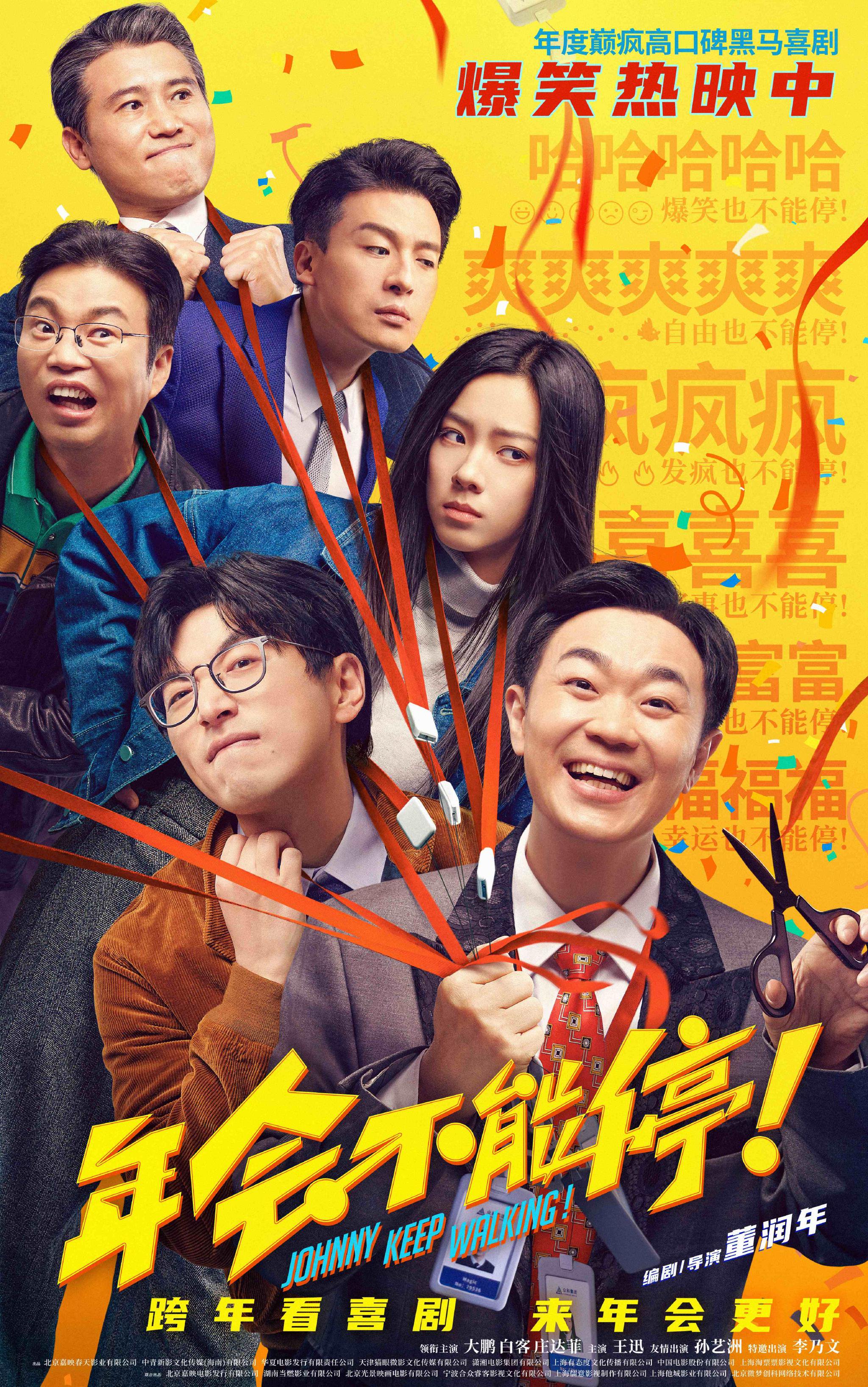
Johnny Keep Walking! (年会不能停!, Dong Runnian, 2024)

A satirical morality tale, Dong Runnian’s incredibly witty comedy Johnny Keep Walking! (niánhuì bùnéng tíng) sees a bumpkinish middle-aged factory worker still filled with an idealism that seems outdated even in the late 90s transferred into a lion’s den of corporate greed and dubious morality while ultimately expressing the younger generation’s increasing dissatisfaction with the inherent unfairness of corporate life in modern China. Ironically turning Tom Chang’s 1988 hit My Future is Not A Dream into a rallying cry from disillusioned youth, the film nevertheless places its faith in the moral generosity of a fat cat factory owner who struck gold in the nation’s 90s reforms but has largely forgotten those who helped him get there.

Key among them would be Jianlin (Da Peng) whom we first see trying to fix the disco ball at the factory’s 1998 gala and being asked to sing a song instead. 20 years pass with Jianlin still living the life of a model factory worker stuck on the same old salary while applying to perform in the company’s annual gala has become his only joy in life. Meanwhile, the factory owner has gone on to head an increasingly powerful multi-national company leaving Jianlin and those like him far behind deprived of the successes that the modern China has to offer. 

This is in part a paean for those left behind by the economic reforms of the 1990s which saw the end of the old factory system with mass unemployment and displacement amid frequent plant closures. Jianlin’s is still open, but devoid of the sense of comaradie that mark the opening scenes. His scheming floor manager, Zhangzi is trying to engineer a transfer to head office so that his son could attend a better school in the city and has been helping a series of corporate lackeys defraud the company, in addition to paying a direct bribe, in return for a job offer. A drunken mix up by office party boy Peter (Sun Yizhou) results in Jianlin being hired instead in a shock move that proves inexplicable to all. 

Jianlin is such an innocent that he thinks the reason he’s been given a huge promotion is because he was employee of the year for 12 years straight and the company probably want to send a message to the youngsters that hard work really will be rewarded. Of course, the opposite is true. HR manager Magic (Bai-Ke) quickly spots the mistake but is prevented from fixing it because it would get them all into trouble, and while it’s obvious to most people that Jianlin has no idea what he’s doing they choose to say nothing because they assume he must be a nepotism hire and they want to stay in the boss’ good books. Everyone at the company uses an English name with Jianlin rechristened “Johnny” though he understands no English and struggles with Chinese business jargon having no idea what people mean when they go on about “aligning the details”. Charged with firing someone under the company’s radical new “optimisation” programme, he takes the word at face value and gives them a promotion and a raise instead.

In fact, much of the film is him muddling along like typical middle-manager promoted beyond his abilities. He’s advised that good management is all about setting employees against each other so they forget about resenting you while basically delegating all your tasks to your subordinates who will be only too happy to help in order to curry favour. Slowly corrupted, Jianlin beings to play along, taking all the perks of corporate success while signing documents he couldn’t understand even if he actually read them.

Nevertheless, he develops a kind of team spirit with Magic, a man stuck in a mid-career rut because of his lack of skill at office politics, and Penny temp whose perpetually kept on the hook rather than being given full employee status so that the company can exploit her more. Penny also suffers sexual harassment at the hands of the party happy Peter with Jianlin getting her out of a sticky situation by telling her to finish a report and drinking with Peter himself. Together, and with the assistance of the workers at the factory and others about to be unceremoniously fired as part of the cost cutting enterprise, they attempt to expose corporate corruption and stage a protest against unfair working practices but the only saviour they have to turn to is the company president strongly suggesting a return to the old factory days which, it is implied, were much more wholesome and innocent. In any case, justice eventually wins out with the good rewarded and the bad getting their just desserts though it doesn’t do too much to tackle the inherent and quite ironic rottenness of the system in which the worker has been reduced to a mere tool to be used and discarded by a faceless and uncaring corporate entity. 


International trailer (English subtitles)

My Future is not a Dream (Tom Chang)

Blue Giant (Yuzuru Tachikawa, 2023)

There’s something quite poignant in the central themes of Yuzuru Tachikawa’s impassioned jazz anime Blue Giant that these very young men have decided to dedicate themselves to art that even they describe as dying. At their earliest meeting, saxophone player Dai (Yuki Yamada) and pianist Yukinori (Shotaro Mamiya) have a minor disagreement with Yukinori critical of the musicians he was previously playing with describing them as old and their lack of innovation as the reason that the art is decline but according Dai they are also the bearers of its legacy and the ensures of its survival.

It’s an ironic moment at least in that Yukihiro will also later be criticised for a “boring” performance style that plays it safe by concentrating on technical proficiency as opposed to the unbridled anarchy embodied by Dai whose determination to become the world’s greatest jazz player comes off as earnest more than arrogant and a mark of his intense self-belief which also generous and kind rather than jealous or petty. Like many anime heroes, Dai is a young man making the journey to the city and struggling to fulfil his dreams amid its various pressures. On arrival in Tokyo he struggles to find somewhere to practice that is both free of city noise and unlikely to disturb those around him but eventually discovers a small oasis not so different from the riverbank he played by in Sendai. 

We’re often reminded that music can be a lonely profession with the implication that Dai has had to sacrifice other areas of his life to dedicate himself to perfecting his art but has achieved surprising skill for only three years experience. Yukinori began playing at four and is envious of an innate talent he doesn’t believe he has or at least to the same extent as Dai. Then again, it may just be that his talent lies elsewhere and he has not yet quite discovered it. Rather than a musical rivalry the pair fall into a mutually beneficial rhythm in which they encourage each other to improve even if as Yukinori said jazz bands aren’t intended to stay together for long and are only ever more like stepping stones to somewhere else.

Their brotherhood is further tested by Dai’s decision to bring in his equally dejected friend Tamada (Amane Okayama) as their drummer despite his never having played the drums before insisting that it would be wrong to frustrate his newfound interest in music. Like the others, Tamada is struggling to rediscover himself after working hard to get into a university in Tokyo but bored by his lectures and disappointed in his fellow students who already seem to be playing the salaryman game. He’s drawn to music in part because of Dai’s love for it and it does seem to be his passion rather than jazz itself that wins over new converts to the supposedly dying art.

Dai claims to have fallen for jazz because it’s “hot” and “intense” and allows him a means to express himself in freely in a way that becomes almost infectious in its dynamism. Adapted from Shinichi Ishizuka’s manga, the animation emphasises the physicality of performance and the strength and stamina required to become a successful musician though the use of rotoscoping for additional authenticity sometimes seems oddly static and uncanny while largely at odds with the more expressive aesthetics with which the background drama is imbued. Even so Tachikawa echoes the freewheeling nature of the medium through drifting off into abstract, psychedelic sequences that attempt to visualise the transcendent and liberating quality of jazz.

Much of that featured in the film is composed by international jazz pianist Hiromi Uehara which lends a kind of irony to Yukinori’s growing realisation that his piano is the weak link as long he remains unable to unlock his potential and express himself freely through music rather than fallback on the safety and security of tried and tested techniques. In any case, it’s the relationships between them that propel the boys forward towards their respective destinies which may or may not coincide but are as much founded on friendship and solidarity as they are on a love of music.


Blue Giant opens in UK cinemas on 31st January courtesy of Anime Limited.

International trailer (English subtitles)

Images: © Blue Giant Partners

Godspeed (人生路不熟, Yi Xiaoxing, 2023)

An earnest young man does everything he can to try and impress his traditionalist father-in-law-to-be but just can’t seem to catch break in Yi Xiaoxing’s charming road trip comedy, Godspeed (人生路不熟, rénshēnglùbùshú). Seemingly a representative of contemporary youth who find themselves facing pressure from above with not only disapproving parents but exploitative bosses breathing down their necks, Yifan (Fan Chengcheng) is a classic mild mannered guy who’s been beaten down and bullied all his life but finally finds the courage to stand up for himself while battling to prove his worth to his girlfriend’s dad. 

The reason Donghai (Qiao Shan) objects to Yifan is at heart the obvious one that he can’t really accept the idea of his daughter getting married and in the end no man will ever be good enough to change his mind. But it’s also true that truck driver Donghai is an old fashioned man’s man with very strong ideas of traditional masculinity that Yifan is never going to live up to. Tall, skinny, and a glasses wearer, Yifan is a programmer at a games studio where he’s exploited by their smarmy boss who instantly turns down the game he’s made himself and tells him to pirate the latest successful games from other companies and rip them off instead. His problem is that Donghai thinks games are “immature” so his girlfriend Weiyu (Zhang Jinyi) has advised him to be economical with the truth when her father inevitably asks about his career prospects. 

It has to be said that it’s not practical to lie about something as fundamental as a job when you’re intending on forging a longterm relationship with someone, but Yifan is very focussed on the present moment and at least making a good impression on Donghai so that he’ll accept him as a son-in-law. In fact, Yifan hasn’t actually proposed yet and was planning on doing it after meeting the parents and attending the 80th birthday celebrations of Weiyu’s grandfather but things get off to a bad start when he accidentally locks Donghai in a butcher’s freezer after minor misunderstanding causing him to become fused with some giant slabs of pork. Donghai doesn’t like his “childish” fashion sense, so Yifai switches to smart shirts and trousers to try to please him but is never really sure if Donghai appreciates the way he’s changing to live up to his idea of “maturity” or in fact thinks less of him for it in his infinite desire to please. 

“You’re going the wrong way,” Weiyu’s mother Meimei (Ma Li) tries to tell Donghai in a more literal sense as she and Weiyu end up taking their car with Yifan and Donghai in the truck because Donghai insisted there wasn’t enough room for Yifan and the family dog. Donghai is afraid that Weiyu will “go the wrong way” with a man like Yifan, but is also going down a dangerous road himself in refusing to accept that his daughter has grown up and can make her own decisions as regards her romantic future. He wanted her to marry childhood friend Guang (Chan Yuen) who has since become incredibly wealthy, but even he is later exposed as a poser who has also “lied” about his financial circumstances in what seems to be an ongoing rebuke of the obnoxious superrich also exemplified by Donghai’s arrogant frenemy and his high tech caravan not to mention spoilt grandson with a Western name. 

Yet what Yifan comes to realise is that there is no “right way” except his own and it’s time for him to stop simply accepting the injustices of the world around him as Donghai has also been doing in appeasing a gang of petrol thieves who’ve been terrorising trucker society for the last few years. Together, they each begin to break free of their decade’s long inertia, Yifan deciding to be his own man and a “company owner” after all and Donghai embracing the freedom of retirement and the open road on going on a second road trip honeymoon with Meimei. The older generation has to learn to let the other one go, stepping back and getting out of the way of their children’s happiness, while simultaneously regaining a kind of independence to start a new life of their own. Flat out hilarious in its improbable mishaps but also poignant and heartfelt in its central relationships, the film’s zany sense of optimism and possibility become a winning combination as Yifan discovers the courage to step into himself and be his own man no longer beholden to a bullying society.


International trailer (Simplified Chinese / English subtitles)

Under the Light (坚如磐石, Zhang Yimou, 2023)

The irony at the centre of Zhang Yimou’s Under the Light (坚如磐石, jiānrúpánshí) is that it takes place in a neon-lit city of eternal visibility, though of course where you have light you’ll also find shadows. Even so, it appears he’s trying to make a point in the plain sight nature of political corruption and it’s connections with organised crime. At heart it’s a tense cat and mouse game between two men who share some kind of sordid past, but also of how it’s the next generation that often pay in the infinitely corrupted paternity of the contemporary society.

Zhang opens with a hostage crisis as a man hijacks a bus and threatens to blow it up if he doesn’t receive a visit from deputy mayor Zheng Gang (Zhang Guoli). Zheng attends but his policeman son Jianming (Lei Jiayin), currently assigned to the tech division, notices that the bomb can be detonated remotely and it doesn’t appear the hostage taker knew that it was real. In any case, all is not as it seems and as Zheng is soon squaring off against shady businessman Li Zhitian (Yu Hewei) who invites Jianming to dinner and puts on a show by blackmailing another business owner with a sex photo before forcing him to put his hand in boiling oil. 

In contrast to his ruthless exterior, Zhitian dotes on his grown up daughter currently pregnant with her first child and about to be formally married to his business heir David (Sun Yizhou). Jianming meanwhile has a complicated relationship with his father by whom he feels rejected in part because he’s adopted. Zheng also appears to be meeting with a mysterious young woman for unclear reasons, later hinting that she’s a kind of daughter figure someone at some point asked him to protect. In a strange and probably unintended way, it’s this parental quality of protection that has been disrupted by ingrained corruption and is then re-channeled in a desire to protect society in general. When it’s all over, Jianming asks his bosses why they trusted him to make the right decision, and they tell him it’s because he told them he wanted to be a “true policeman” for the people.

Apparently stuck in limbo for four years because of censorship concerns, the propaganda thrust of the film centres on the crackdown against political and judicial corruption. Zheng is engaged in a political project to target corrupt officials but is heavily implied to be on the wrong side of the fence himself which would explain his connection with Zhitian, a supposedly self-made man who keeps a heavy pole in his living room to remind him of his roots as a lowly porter in a rural town before taking advantage of the ‘90s economic reforms to make himself wealthy beyond his wildest dreams. 

They each have hidden secrets which Jianming becomes determined to drag into the light while working with the anti-corruption officers in his precinct, as well as old flame Hui-lin (Zhou Dongyu). Zhang adds in some distinctly retro comedy vibes not least in the frustrated romance of Jianming and Huilin who at one point dangle dangerously off a building while she later bites back, “don’t deprive me of the chance to protect you. It’s what they call love” when firing a pistol at a bunch or marauding bad guys. Yet the comedy seems incongruous with infinite bleakness of the resolution in which once again the children are made to suffer as Jianming comes to a greater understanding of his origins. 

In an ironic touch, the villains are later revealed to have been dyeing their hair which is in reality already white though they are not really all that old. Playing into the themes of duplicity, it also hints at the central message that the older generation must recede and the young, like Jianming, learn to find an accommodation with their failures in order to reclaim a sense of justice. Then again, the film itself is quite duplicitous with a series of glaring plotholes including a giant one relating to the DNA identification of a missing woman whose body is finally dragged into the light. Huiling warns Jianming that there are some boxes it’s better not to open. At the film’s conclusion he may wish he’d listened, but his job is to drag truth into the light and not least his own. In any Zhang’s infinitely bright, ever illuminated city of neon and glass has a host of hidden darkness only temporarily exorcised by the unusually lengthy parade of the now standard title cards explaining that the wrongdoers were caught and punished while deprived of their ill-gotten gains no matter how much it might seem that crime really does pay.


International trailer (Simplified Chinese / English subtitles)
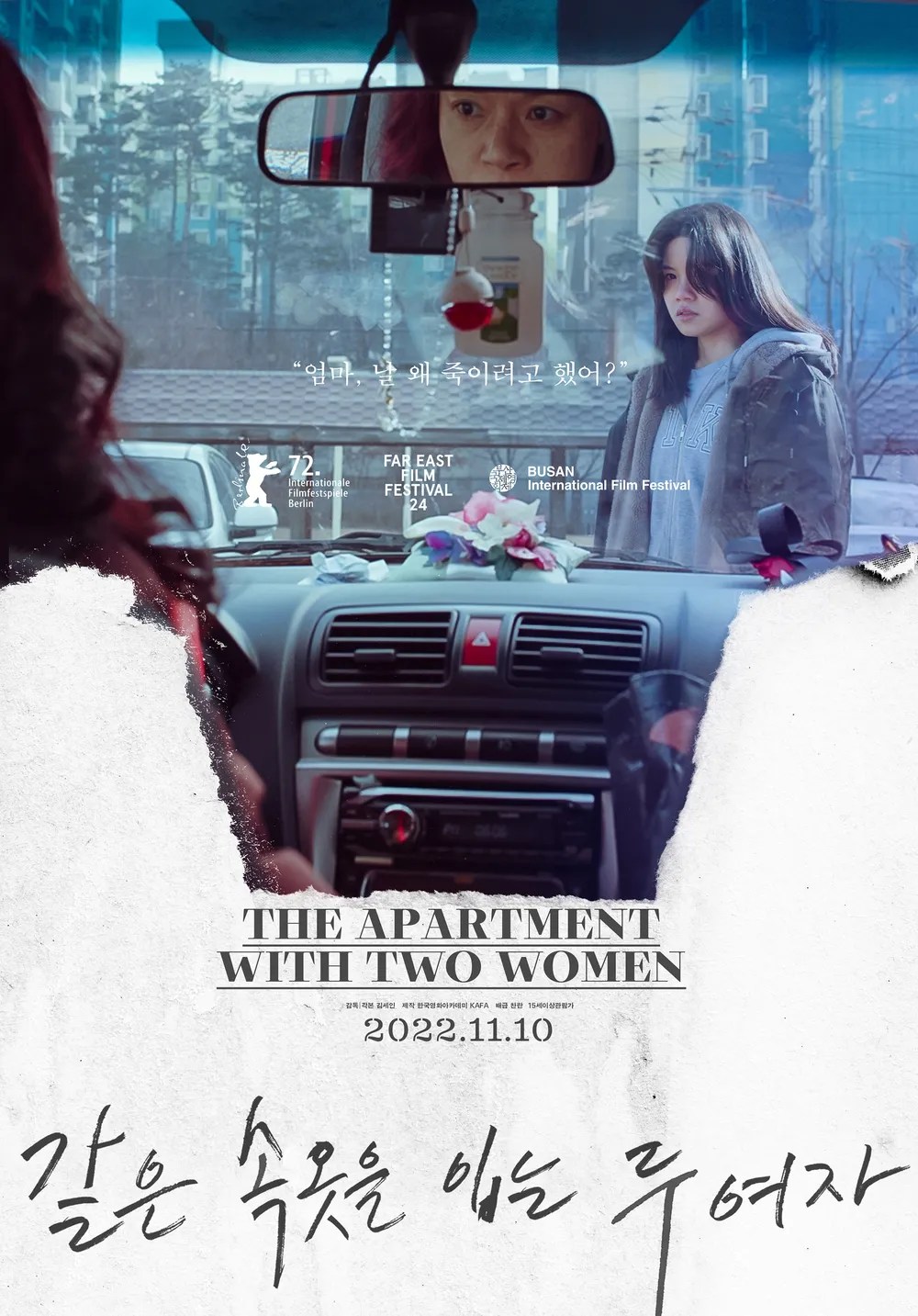
The Apartment with Two Women (같은 속옷을 입는 두 여자, Kim Se-in, 2021)

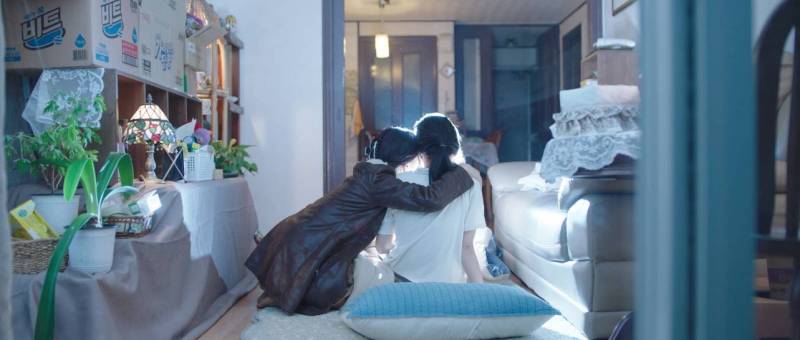
A mother and daughter remain locked in a toxic cycle of resentment and dependency in the debut feature from Kim Se-in, The Apartment with Two Women (같은 속옷을 입는 두 여자, gateun sogoseul ibneun du yeoja). While the English title may have an unfortunate sexist connotation implying that such a dysfunctional relationship is inevitable when two women live together, the Korean “two women wearing the same underwear” more closely suggests the awkward intimacy between them as they each seem to seek escape from the other but in the end are left with no option than to return or choose independent loneliness.

The awkwardness is obvious from the opening scenes as middle-aged, pink-haired mother So-kyung (Yang Mal-bok) chats to a friend on the phone while using the toilet even as her 20-something daughter Yi-jung (Lym Ji-ho) washes her undies in the bathroom sink. Once done, So-kyung slips off her underwear and simply throws them in with the others for Yi-jung to scrub, taking one of the newly washed but not yet dried pairs as a replacement before breezily leaving for work. So-kyung often becomes angry with her grown-up daughter for no ostensible reason, hitting and slapping her while a defeated Yi-jung can do nothing but cry no longer seeing much point in even asking what it is she’s done wrong. Matters come to a head when the pair argue in the car at supermarket car park. Yi-jung gets out and begins to walk away, but her mother suddenly jumps on the accelerator and hits her. So-kyung tries to claim the car malfunctioned but Yi-jung has long believed her mother would prefer it if she were no longer alive. 

During a blackout towards the film’s conclusion, So-kyung again insists the accident wasn’t deliberate reminding that Yi-jung that it wasn’t the first time she swore she’d kill her and forcing her to admit that she remained so calm because it wasn’t the first time she’d heard it. Later someone asks why she didn’t leave seeing as she is a grown woman with a salaried job capable of supporting herself and she answers that she thought she needed to save more money before making her escape but it’s also true that years of So-kyung’s emotional abuse have eroded her confidence in her ability to survive alone and that finally she is just so lonely that even her mother’s continual resentment is preferable to being on her own with no other friends or family to turn to. 

Yi-jung begins to bond with a woman at work who is in a similarly abusive situation with their employer, disliked by her co-workers and exploited by the boss who often hands her additional tasks to be completed for the next morning when everyone else is about to go home. But So-hee (Jung Bo-ram) evidently has troubles of her own, and in any case Yi-jung simply ends up in another apartment with two women while beginning to realise that So-hee is not interested in a close friendship with her for she too longs for “independence” and is turned off by her obvious neediness. So-kyung meanwhile is in a relationship with a genial man of around her own age, Yong-yeol, who has a teenage daughter, So-ra, to whom So-kyung more well disposed than to own but eventually cannot stand. So-ra is in many ways much like herself and So-kyung’s narcissistic tendencies prevent her from sharing Yong-yeol with another woman. When it comes to picking an apartment for them to live in after they marry, it comes as a surprise to her than Yong-yeol intended to bring So-ra to live with them roundly telling him that the “spare” room is for storage not a daughter. Given this ultimatum Yong-yeol choses So-kyung, agreeing that So-ra will live with her grandmother in a decision that shocks Yi-jung on discovering his letter prompting the realisation that her mother will happily abandon her too. 

Su-kyung is in many ways a narcissistic nightmare, refusing to apologise for who she is and always insisting other people are to blame for the way she treats them. All Yi-jung wants is an apology but what she gets is justification as her mother explains to her that her clients at her massage parlour dump all their negativity on her though she is also living a stressful life and so she dumps all of her negativity on Yi-jung whom she resents for trapping her poverty and loneliness as a reluctant single mother. Yi-jung asks her what she’s supposed to do with that, but her mother simply tells her she should have a daughter too. In any case it appears as if Yi-jung may finally be finding the strength to extricate herself from her toxic familial environment, finally being measured to figure out her correct bra size having presumably been forced to wear whatever her mother wore throughout all of her adult life in a moment which brings us back to underwear once again. At times darkly comic, Kim Se-in’s intense family drama circles around toxic dependency and an inescapable cycle of cruelty and resentment but does at least allow its heroines the glimmer of new beginnings in a more independent future.


International trailer (English subtitles)

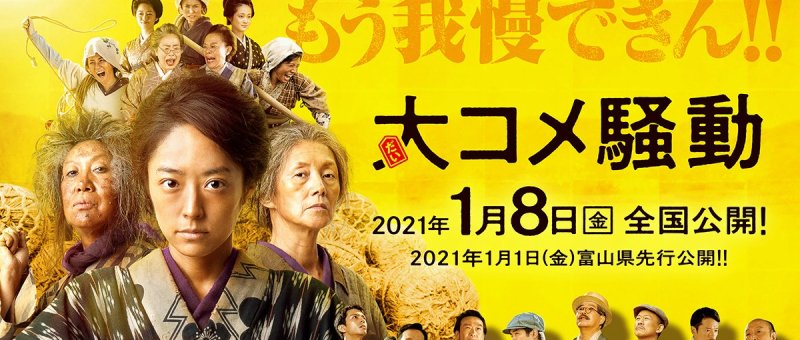
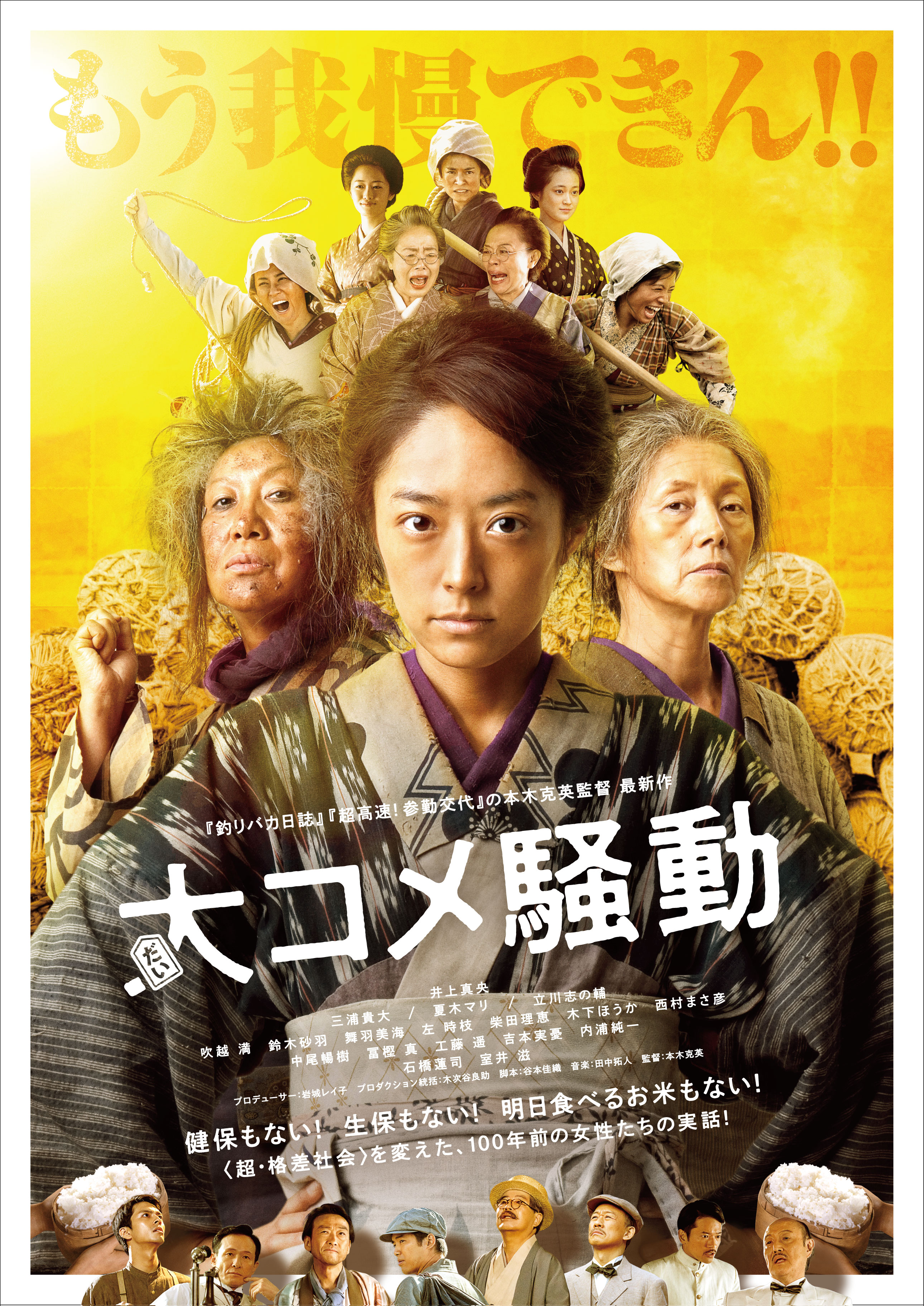
Angry Rice Wives (大コメ騒動, Katsuhide Motoki, 2021)

“Even if women try to do something, nothing will change” a condescending husband insists cautioning his wife not to take part in any more protests lest he lose his protected status and the family its source of income. Set in the middle of the Taisho era, Angry Rice Wives (大コメ騒動, Dai Kome Soudo) dramatises a small moment of revolution in which the resistance movement organised by a community of women towards the spiralling cost of rice sent shock waves through a changing society and in its own way provoked a change of course in an increasingly capitalistic society. 

Beginning in April 1918, the small fishing village of Toyama sees an exodus of its young men who must spend the off-season when the catch is low working other jobs in order to make ends meet, This necessarily means their wives and families are left behind and must make do with what they themselves can earn in doing menial jobs such as transporting rice and the little their husbands might be able to send before their return. A farmer’s daughter who married into the fishing community, Ito (Mao Inoue) is one of the few literate women in the village and looked to as a kind of oracle reporting the contents of the morning paper to the other wives who are keenly interested in the continually fluctuating price rice which seems set to rise still more with news that Japan plans to send troops to Siberia. 

As the voiceover relates, with the catch so low rice is the only form of sustenance available but prices have already exceeded what most of the women can earn in a day leaving them unable to feed their feed their families and giving rise to increasing discontent with the inequalities of the contemporary social order. Taking drastic action and led by eccentric old woman Kiyonsa (Shigeru Muroi), they stage a rebellion by intercepting their locally grown rice in order to stop it being sent to Hokkaido which is reported in the newspapers as an “uprising”. The term is indeed a little grand for what actually took place, but it does at least seem to spark a spirit of rebellion echoing around the country even if nothing much as changes in Toyama. Buoyed by a sense of wider support, the women continue their protests merely asking for the rice merchants to sell at a more reasonable rate (which they are perfectly capable of doing) while decrying the immorality of the obvious profiteering by corrupt authorities including local bigwig Kuroiwa (Renji Ishibashi) who are deliberately stockpiling rice to push the price up while planning to sell it to the government for a hefty price to feed their troops. 

Kuroiwa is entirely unsympathetic to the women’s predicament while the local police chief Kumazawa (Junichi Uchiura) believes himself indebted to him and is therefore entirely under his thumb. Neither of them think the women are much of a threat, Kumazawa randomly arresting a middle-aged man close to several of the women the rationale being as the husband of one puts it that women can never achieve anything no matter how hard they try but a man’s involvement in such rebellious activity would be cause for concern. Similarly, Ito is often told that her education is of no use, partly because the other women feel inferior for not having any, but struggles to find the self-confidence to standup to the corruptions of lingering feudalism owing to her liminal status as a non-native villager despite having given birth to three children there. Even so she is often looked to as a local problem solver and potential successor to Kiyonasa as leader of the village women if only she could learn to embrace the courage of her convictions. 

The children, by contrast have no such qualms, Ito’s young son Soichiro directly telling the profiteering proprietress of the rice store Mrs Washida (Tokie Hidari) that it’s her own fault another child stole food because if she hadn’t insisted in pricing her customers out to the point that they were starving she would never have needed to steal. “What exactly has capitalism done for us?” an opportunistic visitor from the workers party asks but receives short shrift from the cynical Kiyonsa who agrees they should rebel but is non-plussed by the flummoxed canvasser’s admission that he has no real plan for what do afterwards. Washida plays divide and conquer, pitting the women against each other and tempting even Ito with offers of under the table rice deals to feed their starving families if only they back down but though the solidarity of the women is temporarily ruptured it is never truly broken as they stand together to fight for fairness in the face of the Kuroiwas and Washidas of the increasingly capitalistic society. Their resistance eventually forces the government to backdown, realising they can’t simply ignore the plight of society’s poor or take their complicity for granted while attempting to starve them into submission. 


International trailer (English subtitles)

Wolf Pack (狼群, Michael Chiang, 2022)

A disillusioned doctor quickly finds himself in over his head when he’s kidnapped by Chinese mercenaries in Michael Chiang’s oddly positioned action thriller, Wolf Pack (狼群, láng qún). Once again, the action takes place in a completely fictional Middle Eastern/Central Asian country with the mercenaries playing mysterious spy games in which their heartless amorality is at least heavily implied to be an affectation and that they are ultimately interested in “more than money” while covertly protecting Chinese interests abroad.

The film heavily implies that they are in fact in some way working for the Chinese authorities with a lengthy focus on the Chinese flag outside the place of government in this foreign nation given the unlikely name of Cooley (in fact, most of the names given for various people and places seem mildly inappropriate). The photograph sullen doctor Ke Tong (Aarif Rahman) carries around also features his father in a Chinese military uniform which might be why he is so reluctant to believe that he may also have been a member of this “private army” as his new boss Diao claims. Though Ke Tong is originally very hostile to Diao’s gang who have after all kidnapped him he later undergoes an entirely unexplained change of heart accepting that his father must have had his reasons for whatever he did so Diao is probably OK anyway. 

In any case, their current mission involves defending Chinese energy interests against a local warlord who is working with European businessmen to disrupt a gas deal by placing faulty regulators designed to engineer an explosion which will apparently domino all the way back to the Mainland. Largely kept in the dark, Ke Tong is unable to see the big picture and keeps trying to help by doing righteous things such as shooting at a soldier hassling a young girl whose father he’d just killed but unwittingly making everything worse. Eventually he realises that the end client must be the Xingli group who are running the China-Cooley collaborative gas field, though even the energy official they’re later asked to protect seems to be prepared to die in order to ensure the project’s success and prevent a mass explosion. 

Diao’s selflessness is also well signalled thanks to his tendency to listen to a recording of a baby crying and meditate on “all he’s lost” to be a mercenary which again reinforces the idea that they have a greater cause than simply money along with Diao’s position as a surrogate father not just to Ke Tong but to the other soldiers who are all, it is said, looking for a place to belong. The gang apparently also have some kind of role funding orphanages in China to prove that they aren’t just in it for the cash. Ke Tong too comes to feel a kind of brotherhood that makes the mission more than just mercenary activity and gives him an excuse to chase the evil war lord even though that is not part of their mission and really the villagers, including a small child who has been forced to do their bidding, are not their concern. 

Despite starring two prominent martial arts stars, the film is much more focussed on technical wizardry and gunplay than it is on physical fights save for a late in the game confrontation between female mercenary Monstrosity and her opposing number as they try to liberate the gas field. Diao’s incredibly well equipped crew appear to be almost all-powerful, even if Ke Tong manages to play them at their own game, using fly-shaped drones to assist them in their work though the final mission involves an improbable plot device of the local government needing to sign a document by retinal scan within 60 seconds complete with an onscreen countdown via an encrypted briefcase computer in the middle of a firefight. 

Chiang does indeed bring action with a series of high impact sequences one involving a large petrol tank explosion which results in several of the warlord’s men being engulfed in flames. It does however leave a thread of mystery hanging over Ke Tong’s quest to solve the riddle of his father’s death with the suggestion that not all of his body parts were collected hinting that there may be further conspiracies in store for a potential sequel though what seems clear is that Ke Tong has discovered his place to belong alongside a surrogate father figure doing quite questionable things but apparently working for the national good. 


Wolf Pack is released on blu-ray in the US on 23rd January courtesy of Well Go USA.

International trailer (English subtitles)

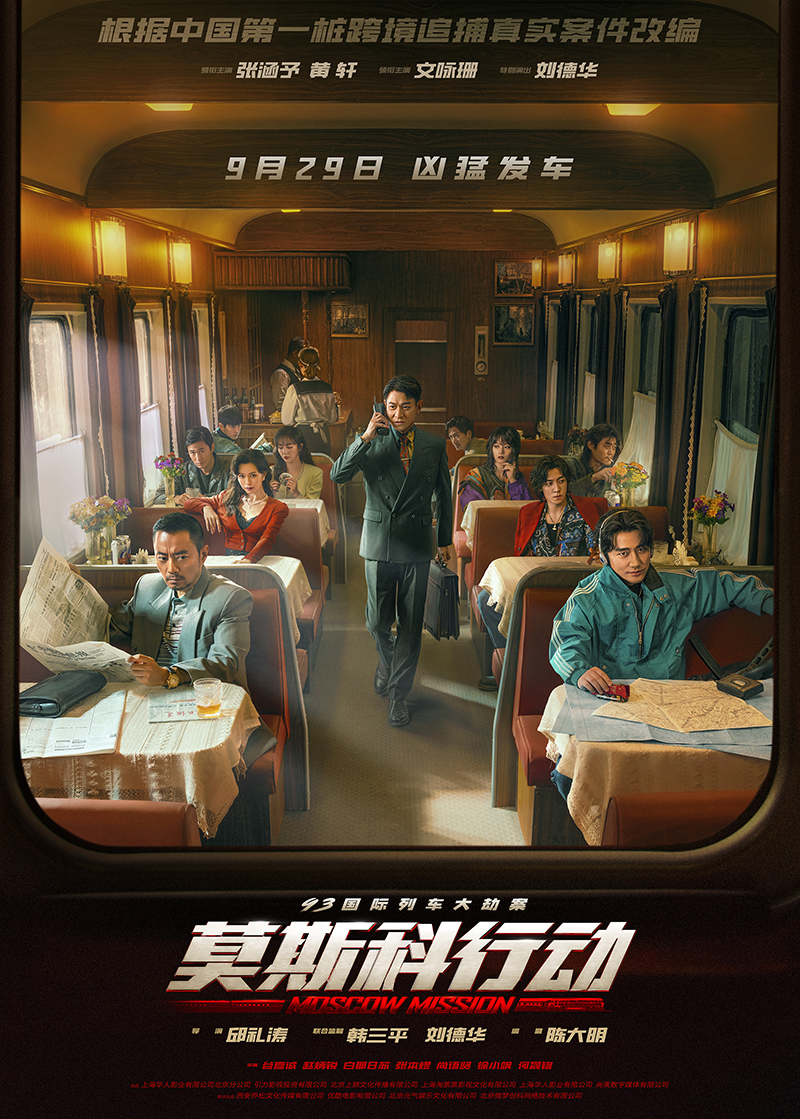
Moscow Mission (93国际列车大劫案:莫斯科行动, Herman Yau, 2023)

In the early 1990s, China and Russia were each struggling to accommodate new political and economic realities. This is at least one reason offered in explanation for the nexus of crime that overtook the long distance train connecting the two capitals in Herman Yau’s action drama Moscow Mission (93国际列车大劫案:莫斯科行动, guójì lièchē dà jié àn Mòsīkē xíngdòng). Inspired by a real life train heist in 1993, the film suggests that China was pulling ahead free of the labour protests which appear frequently in Moscow amid the collapsing Russian economy but equally insists that the bandits must be stopped because they not only endanger China’s international reputation but its trading relations with the former Soviet Union.

In truth there’s no real reason given for the mysterious D’s (Huang Xuan) heinous crime spree save a later allusion to a troubled childhood and the sudden death of his sensitive musician father when he was only 13 (which would put it shortly before the end of the Cultural Revolution). In any case, those around him have more complex motivations such as those of Zhenzhen (Janice Man Wing-San), a former sex worker employed by the gang to identify wealthy passengers and inform the rest of the crew by note, who needs the money for a sick relative. In any case, nearly everyone on this train is concealing vast amounts of hard cash, mostly in their underwear. Not content with the money, D also stops to rape a woman who had resisted but was found with a large amount of money stuffed in her bra. 

In short, there’s nothing noble about D’s gang or any implication they’re rebellious outlaws just thuggish crooks taking advantage of a geopolitical vulnerability. Local fixer Vasily (Andy Lau Tak-Wah), however, is otherwise depicted as a victim of circumstance cruelly separated from a then newborn daughter for whom he is continually searching. He made his money digging a tunnel from Shenzhen to Hong Kong and using it to smuggle luxury goods in much the same way many now use the train as is evident by the scenes at Russian station when passengers suddenly start leaning out windows flogging pairs of jeans. Vasily’s in on that trade too, as well attempting to broker a deal for a wealthy man to buy a former Soviet fighter jet, but seems unhappy with his life of petty crime selling fake passports to dodgy people and also has an ongoing non-romance with Zhenzhen who is trapped in an abusive relationship with D’s brother-in-arms Zhiwen (Jason Gu Jiacheng). 

Intense police captain Cui (Zhang Hanyu) is dispatched to catch the train robbers and avenge China’s international reputation by bringing order to the train but also stumbles on another crime in progress in the Russian capital. He has an opposite number in Sergey (Andrey Lazarev), a former KGB now FSB officer who hints at a new world order if also at a society very much in flux. In some ways the film suggests Cui’s inevitable victory is aided D’s hubristic overreach and the cooperation of the Russians rather than his own powers as a Chinese policeman, but also that China will clean up after itself taking down a Chinese gang while technically on foreign soil and making sure they return to China for justice. 

Yau opens strong with the high impact sequence of the original heist as the camera first pans along the inside of the train before finding Zhenzhen and then rest of the gang, while otherwise continuing to escalate the action with a climax at an abandoned rocket base and then a final shootout at the train depot where the carriages must quite literally change the gauge to shift from the old Soviet railways to the modern China. The gang members may implicitly be among those who’ve lost out in the face of new economic realities, though aside from D’s possibly duplicitous musing on the life he might have led if his father had not died leaves them little justification for the cruelty of their crimes. Meanwhile, Cui’s justice is not implacable, taking pity on both Zhenzhen and Vasily and promising to treat them fairly in acknowledgement of their cooperation as opposed to D who had problematic gang members bumped off by the possibly the worst hitman in Moscow and has been using Vasily’s daughter to manipulate him for last few years with no certainly that he actually knows where she is. Making a minor point about empty consumerism in the constant references to stolen watches, Yau goes big on spectacle but also homes in on the smaller stories of trauma and displacement that eventually provoke it.


International trailer (Simplified Chinese / English subtitles)