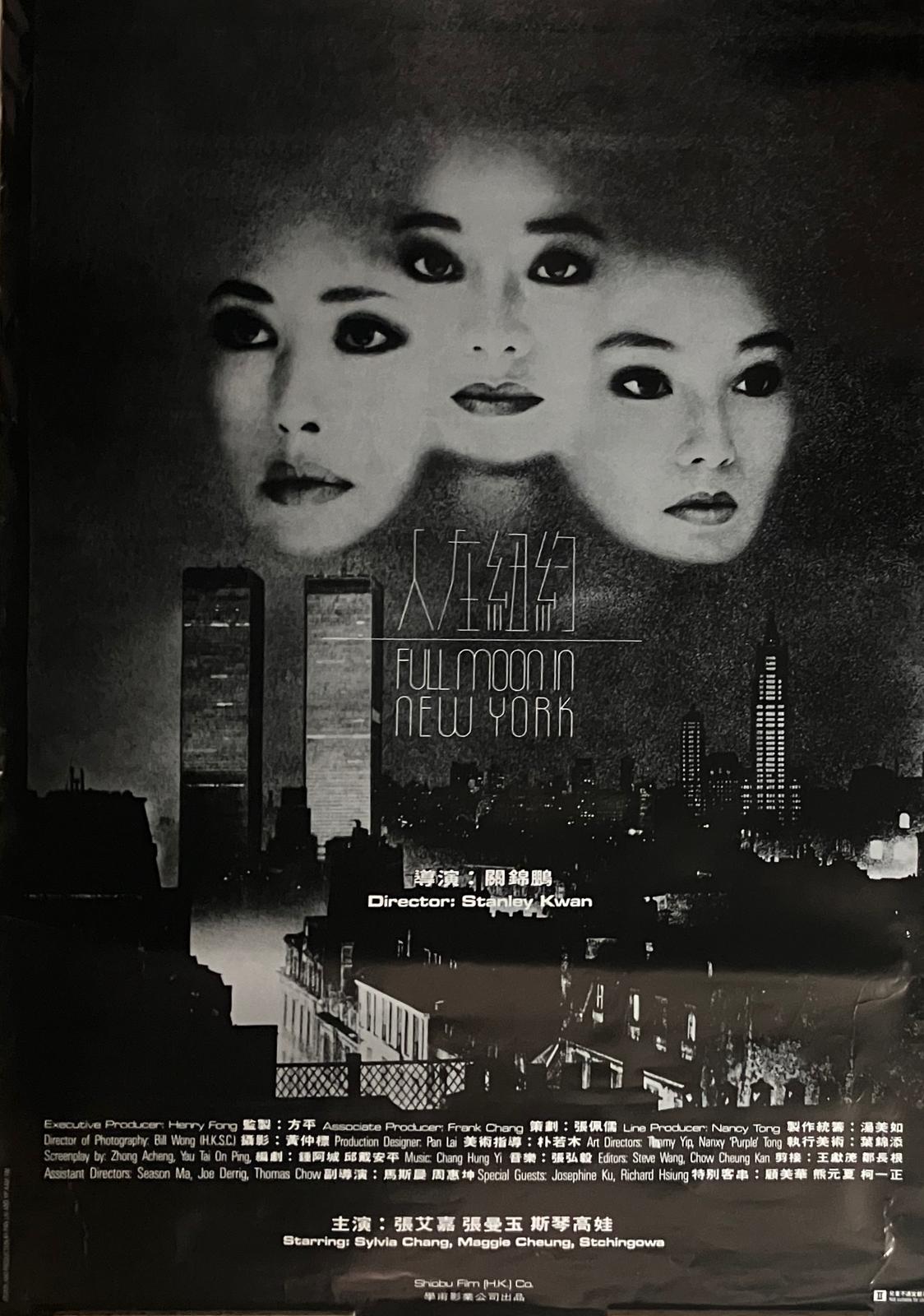
“We’re all Chinese, why argue?” asks one exasperated woman in Stanley Kwan’s tale of displacement and reunification, Full Moon in New York (人在紐約). While the three heroines hailing from Hong Kong, Taiwan, and Mainland China respectively may stand in for a pan-Chinese identity along with an attempt to preserve cultural identity in a third place, they also discover a sense of solidarity in being young women cast adrift in a sometimes hostile city and changing times.
As if to ram home the themes of reunion, the film opens with a wedding but one filled with awkwardness and contradictions. Chinese-American businessman Thomas makes a few off-colour jokes about his new bride, a woman he met while travelling to Shanghai, to the effect that it’s very funny he’s married a woman from the Mainland while praising the pastry chef who made their wedding cake for bothering to make the bride and groom like Chinese people. Zhao Hong (Siqin Gaowa) is confused and doesn’t get his jokes while struggling with the foreignness of an American-style wedding, uncertain as to how to cut the cake while Taiwanese guest Hsiung-Ping (Sylvia Chang) quips that she will teach her how to cut up men.
Hsiung-ping is an actress in the middle of a breakup with an obnoxious American boyfriend who has defaulted on the rent for their apartment which is owned by no-nonsense Hong Konger Jiau (Maggie Cheung). Jiau has fallen headlong into the capitalistic abyss of the 1980s in which she chases business success at all costs and is determined to make serious money. “I like taking risks,” she tells the boring the businessman she’s set up with while, despite having been in relationships only with women, apparently falling for his business savvy friend. She’s intermittently stalked by Stella, seemingly an ex that she struggles to move on from.
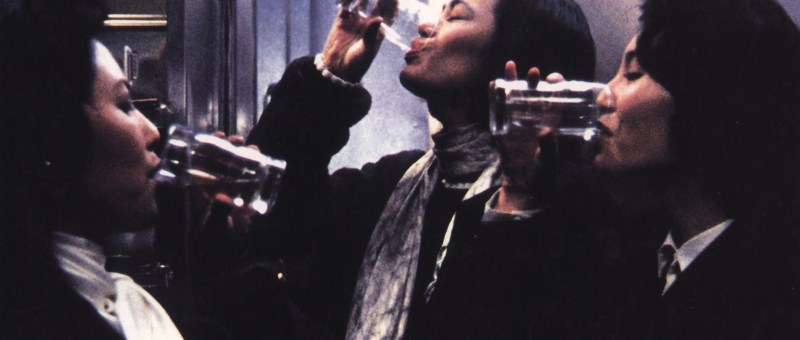
Though originally at odds with each other, the three women develop a sense of friendship and solidarity not least by being outsiders finding solace in their culture. After getting drunk at Jiau’s father’s Chinese restaurant, Hsiung-ping abruptly breaks into a rendition of a Taiwanese song, while Zhao Hong joins her with a folksong from northern China. Jiau looks on with confusion. She cannot think of what to sing as a woman from Hong Kong, signalling her difficulty in expressing her national identity, before settling on a Sally Yeh Cantopop track. She seems to be one of many choosing to seek their futures overseas with the Handover looming and the shadow of Tiananmen Square in the background.
Hsiung-Ping, meanwhile, represents a second wave of migration as her father was a nationalist solider who went to Taiwan after the Chinese civil war. With the White Terror now over, men like him aren’t so welcome anymore, though as Hsiung-Ping points out who exactly has he been representing for all these years in America? “Once can save one’s country from abroad,” he answers as if singing the song of an exile and echoing each of the women’s attempts to preserve their culture, though what she comes to discover about him through his relationship with a Mainland Chinese woman who suffered in the Cultural Revolution disturbs her sense of righteousness and legacy.
The legacy of the Cultural Revolution is also what Zhao Hong is trying to escape, but finds herself frustrated by life in America while Thomas constantly brushes off her desire to bring her mother to live with them in New York. Thomas’ family are almost entirely Westernised while he seems to almost fetishise Zhao Hong’s Chineseness with quips about his Mainland wife. She tries to ask him about her mother and he changes the subject by remarking that what drew her to him was her black hair. When they visit his family for dinner, Thomas’ mother cooks a pot roast while his father asks him to dispose of an ancestral tablet that he can’t bring himself to throw away. To Thomas it’s just an antique that he jokes is probably worth something to the right kind of collector and would look “cool” in their apartment. Thomas’ Cantonese-speaking father asks if it’s true that ancestral tablets were forbidden during the Cultural Revolution and smashed, making this one yet another example of culture surviving in another place, but seems to be uninterested in the answer when Zhao Hong sadly recalls her mother carving her late father’s name into the back of a chair in defiance of the regulations.
Zhao Hong’s fatherlessness is also a reflection of her sense of dislocation. As she points out, both Jiau and Hsiung-ping have their fathers with them in New York while she has no one other than Thomas. She looks on in consternation as he chats with a white male employee about arranging visits to Chinatown as a collection of mainly elderly Chinese women get on with the actual work of sorting fabric behind them. He finally tells her she should learn to be more American and likens missing her mother to a mental illness, explaining that American people don’t want to live with their parents all their lives, entirely missing the point that the issue is not cultural notions of filial piety that he has now, to some extent, abandoned, but that the close bond between Zhao Hong and her mother forged during the Cultural Revolution has been disrupted by this migration and must now be resolved through reunion.
Nevertheless, Jiau swears that one can only prosper here by embracing the qi of New York, on the one hand opening all her windows at night as advised by her feng shui practitioner, while, on the other hand, her Hong Konger father runs a Hunnan-style restaurant that serves Peking Duck to cater to American tastes and expectations with the staff and treasured guests eating the heads in the back. Hsiung-Ping is rudely asked by a white male theatre director why a Chinese woman thinks she can play Lady Macbeth, and Jiau loses her temper when a man deliberately bumps into her in the street chasing after him and then hitting him with her shoe. In various ways, this new environment can be hostile towards them, asking them to discard the culture they have come to save or otherwise to bastardise it, but nevertheless the three women discover a sense of community and solidarity even amid their own conflicts and contradictions.
Screened as part of Hong Kong Golden Age 1985-1997 at the Garden Cinema.

