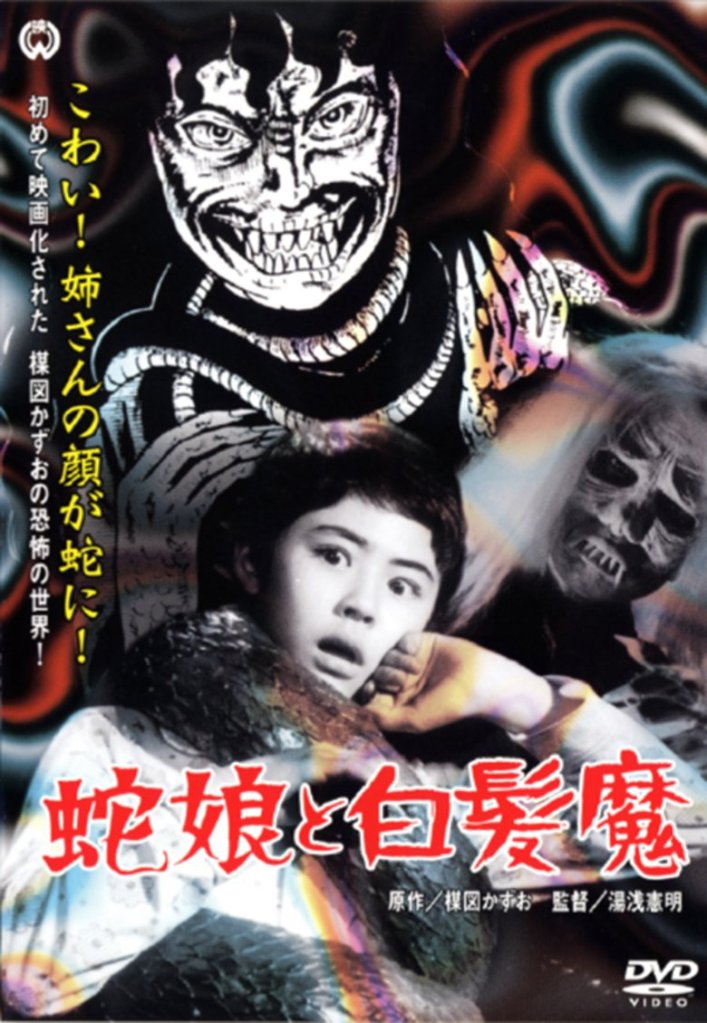
The Snake Girl and the Silver-Haired Witch (蛇娘と白髪魔, Noriaki Yuasa, 1968)

snake girl and the white haired witchLittle Sayuri has had it pretty tough up to now growing up in an orphanage run by Catholic nuns, but her long lost father has finally managed to track her down and she’s going to able to live with her birth family at last! However, on the car ride to her new home her father explains a few things to her to the effect that her mother was involved in some kind of accident and isn’t quite right in the head. Things get weirder when they arrive at the house only to be greated by the guys from the morgue who’ve just arrived to take charge of a maid who’s apparently dropped dead!
If that weren’t enough her “mother” calls her by the wrong name and then dad gets a sudden telegram about needing to go to Africa for “several weeks” to study a new kind of snake! On her tour of the house, Sayuri finds a room full of snakes, reptiles and insects (and also for some reason a large vat of acid?!) as well as a room with a buddhist altar where the food seems to disappear just as if Buddha himself were really eating it. Eventually, Sayuri is introduced to her secret sister, Tamami, who has slight facial disfigurement and a wicked disposition which has seen her locked away from view for quite some time…..

Based on the manga by Kazuo Umezu, Snake Girl and the Silver-Haired Witch (蛇娘と白髪魔, Hebi Musume to Hakuhatsuma) is, apparently, aimed at a younger audience which explains its child’s eye view of events but the film makes no concessions to the supposed softness of little minds. With a host of surreal imagery including dream sequences full of creepy, hypnotic spirals, and moments of shocking violence such as a large frog being suddenly ripped in half right in front of Sayuri’s eyes the film certainly doesn’t stint on blood, horror and general freakiness.

Sayuri herself seems largely unperturbed by these strange goings on outside of her nightmarish serpentine visions. She seems to have been well cared for at the orphanage and is happy to have found her family rather than just to be escaping the institution. On getting “home” she does her best to fit in right away, acting politely and trying to bond with her mother even in her confused state. She even tries to get on well with her mysterious sister despite the ominous warning to keep her very existence a secret from her father. Tamami, however, is a nightmare child with homicidal tendencies who isn’t interested in playing happy families with the girl who’s come to usurp her place in the household.

There’s a little more to the set up than just snake based horror (the clue being the Silver-Haired Witch of the title) but the secondary message seems to be one of remembering that the true beauty of a person lies not in their external appearance but in the goodness of their soul. The previously deformed Tamami is later said to be looking sweeter after having “redeemed” herself and Sayuri pledges to honour Tamami’s sisterly sacrifice by always remembering to hold fast and true to the beautiful things in her own soul without being swayed by worldly charms.

Snake Girl and the Silver-Haired Witch is more of a psychological horror tale than some of the effects laden efforts of the period. However, there are a fair few practical effects on show most notably during the dream sequences – one of which sees Sayuri actually fighting a giant snake with a sword, as well as the creepy spirals and the appearance of weird vampire-like snake women, dancing oni masks and the Silver-Haired Witch herself.

A children’s film that no one in their right mind would actually show to a child, Snake Girl and the Silver-Haired Witch is a freakishly psychological horror show seen through the eyes of a little girl. Part dreamscape and part terrifying reality, the film mixes the real and the imagined with a fiendish intensity and it just goes to show that sometimes you really do need to pay attention to the strange fancies of intrepid young ladies.


This trailer doesn’t have any subtitles but it is actually quite scary…..

https://www.youtube.com/watch?v=rLtwDVvTtA8

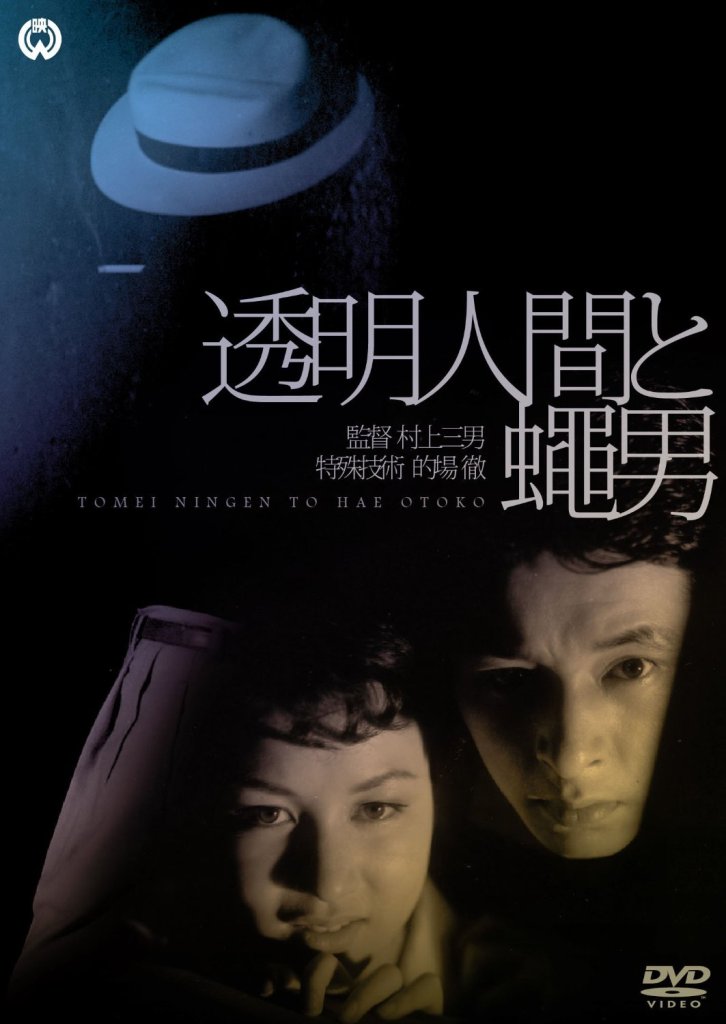
The Invisible Man vs The Human Fly (透明人間と蝿男, Mitsuo Murayama, 1957)

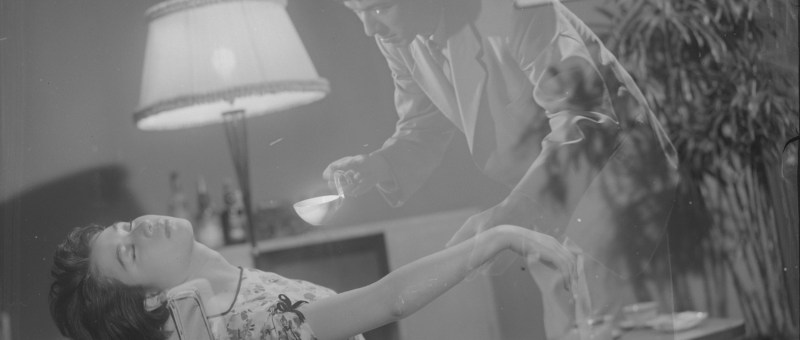
The Invisible Man Vs the Human FlyWho would win in a fight between The Invisible Man and The Human Fly? Well, when you think about it, the answer’s sort of obvious and how funny it would be to watch probably depends on your ability to detect the facial expressions of The Human Fly, but nevertheless Daiei managed to make an entire film out of this concept which is a sort of late follow-up to their original take on Invisible Man Appears from 1949. Like that film, The Invisible Man vs The Human Fly (透明人間と蝿男, Tomei Ningen to Hae Otoko) also adopts a deadpan, straightforward tone despite its rather ridiculous premise.

Tokyo is being plagued by a series of mysterious murders occurring in broad daylight in which the victim is stabbed through the back piercing the heart yet witnesses report seeing no suspicious activity near the crime scene. Perhaps The Invisible Man did it, hahaha….However, when the man sitting next to the professor in charge of researching the “imperceptibility device” is murdered in an aircraft toilet, the police get wise to a possibly surreal explanation for these bizarre crimes. The only other evidence they have is a connection between a sleazy nightclub owner, a friend of his and one of the murdered men who briefly served together during the war, the fact that one of the victims pointed at the sky before dying, and reports of a strange buzzing sound….

Interestingly, the major viewpoint here is from the policemen investigating the case and their attempts to get their heads around this extremely unusual series of events. As often happens with revisiting a form of technology which has been used for ill in the previous picture, here the “imperceptibility device” becomes a force for good as it might be able to help the powers at be stamp out The Human Fly. This time there’s not so much of the accompanying madness which is caused by going invisible but there’s still a heavy price to be paid as no one’s figured out a way of turning back which doesn’t involve rapid death from cancer immediately afterwards.

By contrast, The Human Fly is born of a man made serum developed by Japanese mad scientists during World War II and brought back by a man who was abandoned on an island by his comrades and subsequently left to take the wrap at a war crimes tribunal. He wants to use the technology to further his own success yet has a minion carrying out most of the dirty work. The Human Fly serum does, apparently, carry a number of psychological side effects including violent impulses, paranoia and addiction.

The special effects are not quite as good as in Invisible Man Appears though the invisible antics are not the focus of the film anyway. Bizarrely, The Human Fly is just a shrunken man who is somehow able to zip about like a regular fly even though he’s still dressed in his normal business suit and keeps his arms rigidly to his sides like some kind of human torpedo. Apparently, the buzzing sound is made because of his being very small (so says science) which gets around the inconvenient truth of him not having any wings or other fly-like characteristics other than the ability of flight.

It’s all very silly, though not quite silly enough in places. For the most part, the film plays out like a regular police procedural with slight noir undertones despite the obvious strangeness of the mysteries at hand. Though there’s obviously something to be made about the origin of the Human Fly serum and the anger of the “war criminal” who feels himself betrayed by his country, it’s a fairly subtle comment on post-war resentment. However, attitudes to the practice of scientific research do seem to have shifted with the researchers investigating the imperceptibility device cast as the good guys (though no particular reason for their work is ever offered) who can be relied upon to help catch the “bad guys” who are making use of “bad technology” to do “bad things”.

A fairly solid B-movie though one which is perhaps a little too po-faced for its genretastic title, The Invisible Man vs The Human Fly is an interesting mix of noir crime thriller with a little science fiction and even a few horror trappings thrown in. Thanks to its straightforward approach it may prove a little dull for genre enthusiasts but does offer its own kind of surreal iconography and it’s difficult to forget the sight of a tiny, angry looking besuited man flying around and committing random crimes while an invisible opponent stalks him from the shadows.


Invisible Man Appears (透明人間現る, Nobuo Adachi, 1949)

Invisible man appearsReleased in 1949, The Invisible Man Appears (透明人間現る, Toumei Ningen Arawaru) is the oldest extant Japanese science fiction film. Loosely based on the classic HG Wells story The Invisible Man but taking its cues from the various Hollywood adaptations most prominently the Claude Rains version from 1933, The Invisible Man Appears also adds a hearty dose of moral guidance when it comes to scientific research.
Once again the action centres around an esteemed chemist, Professor Nakazato, who has been working on a serum to render living things invisible. So far he has a sample which works on animals but is reluctant to move on to human testing as A) he hasn’t found a way to reverse the procedure, and B) there are some unpleasant side effects in which the subject becomes increasingly violent and irrational. The professor currently has two top students who are helping him towards his goal and, inconveniently, both have taken a shine to his daughter, Machiko. Half joking, the professor remarks that whoever can solve the problem first will win his daughter’s hand.

A business associate of the professor, Kawabe, is also interested in Machiko and also in the rights to the professor’s important new discovery. The professor, however, is a responsible man and refuses to sell it in case it falls into the wrong hands. Shortly after the professor is kidnapped by a gang of armed thugs who plan to use the serum to steal a set of diamonds known as The Tears of Amour.

There’s plenty of intrigue with various twists and turns to the original story which keep the viewer on their toes as they try to figure out who exactly is the invisible man and what he’s really after. Actually, the solution is sort of obvious and heavily signposted but that doesn’t make it any less fun. Kawabe is a moustache twirling villain from the get go and it’s obvious he has various things going on in the background but there’s more to the story than a greedy business man trying to manipulate everyone around him for his own gains. There’s also an interesting subplot in which the younger sister of one of the scientists is a top actress at the Takarazuka Review and turns out to have a connection to the Tears of Amour.

All of the classic B-movie hallmarks are here from the slightly ridiculous sci-fi jargon to the classic women in peril shenanigans as the serum starts to take hold and the Invisible Man becomes increasingly paranoid. There’s nothing good or bad but thinking makes it so – so it would be for science as far as the film is concerned. According to the message at the film’s beginning and end, there is no scientific discovery which is innately “evil” but each is apt to be misused. It’s not difficult to see why this would be a popular, even essential, message in the Japan of 1949 and indeed it recurs in many films of this type including, of course, the original Godzilla. The professor takes responsibility for having invented something which, although not created with evil intent, has wrought such destruction on society but finds himself with nothing left to do other than apologise.

Director Nobuo Adachi uses a lot of classic silent cinema techniques such as dissolves and montages with a fair amount of handheld camera and some location shooting (though the majority of the film is studio bound). The special effects were supervised by Eiji Tsuburaya who would later become the founding father of tokusatsu and co-creator of the Godzilla franchise and are top notch for the time period. An enjoyably silly B-movie, The Invisible Man appears is a well crafted addition to the Invisible Man corpus and a fantastic example of Daiei’s post-war genre output.


Original trailer (English subtitles) – I wish all trailers were this much fun!

Enjo (炎上, Kon Ichikawa, 1958)

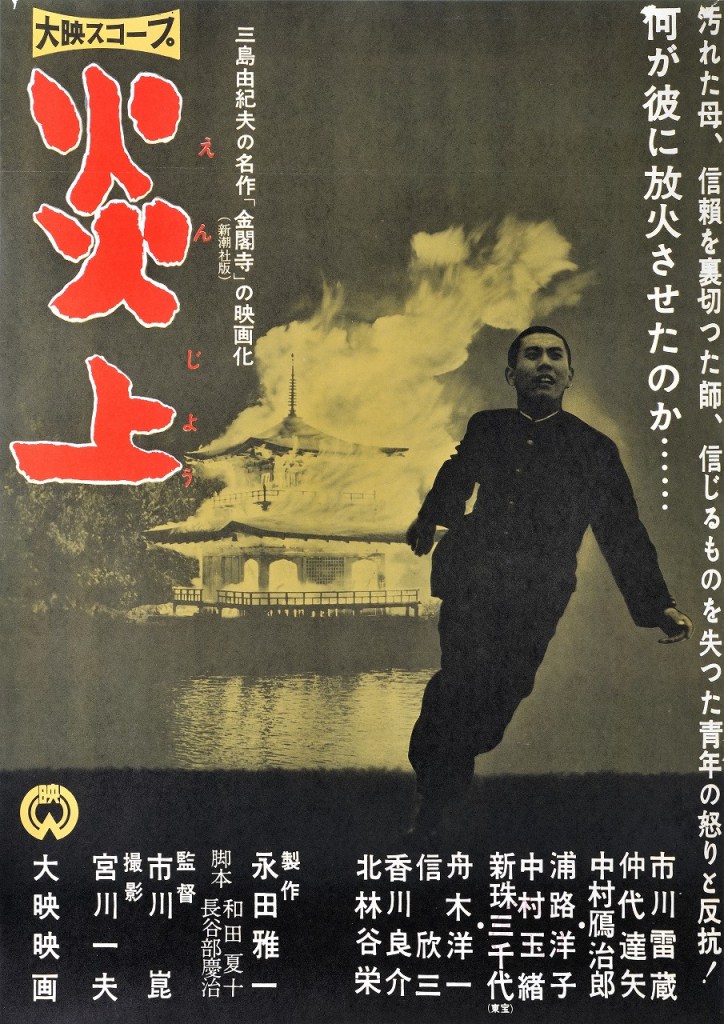
a0212807_23483150Kon Ichikawa turns his unflinching eyes to the hypocrisy of the post-war world and its tormented youth in adapting one of Yukio Mishima’s most acclaimed works, The Temple of the Golden Pavilion. Inspired by the real life burning of the Kinkaku-ji temple in 1950 by a “disturbed” monk, Enjo (炎上, AKA Conflagration / Flame of Torment) examines the spiritual and moral disintegration of a young man obsessed with beauty but shunned by society because of a disability.
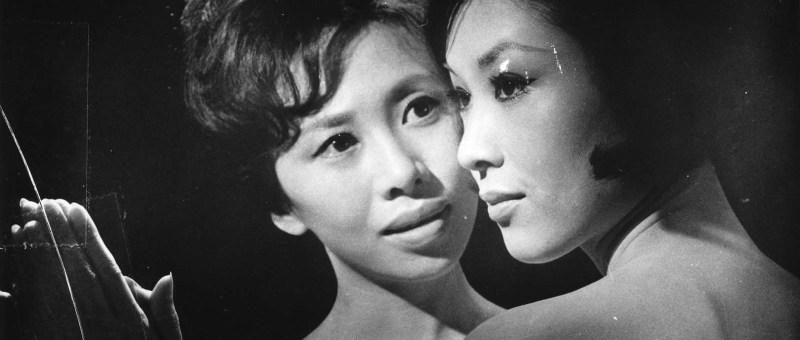
The film begins near its ending as a young boy with a monk’s haircut sits in a police interrogation room. He was found passed out in the woods behind a burning temple with two knife wounds on his chest plus the knife and a packet of matches lying next to him. The police would quite like to know why he, obviously, set fire to one of Japan’s most popular historical monuments, but the boy refuses to speak.

At this point we enter a series of extended flashbacks as the boy, Goichi (Raizo Ichikawa), enters the Soen Temple after his father’s death as an apprentice to the head monk there, Tayama, who was a friend of his father’s. The assistant chief monk is unhappy about this as he’s long wanted his own son to be accepted as a novice with an eye to one day inheriting the temple as the current head monk is not married and has no son of his own. When the other monks find out that the reason Goichi rarely speaks is his stammer, they begin to doubt his suitability to become a representative of their organisation.

Having grown up in a temple, Goichi idolised his father and wants nothing other than to become a monk himself. His father also loved the golden temple, “Shukaku-ji” more than anything else in the world and so it has come to symbolise a shining pillar of purity for the young Goichi who will stop at nothing to protect it. Simply being allowed to be near it is enough for him. That the temple survived the wartime air raids and subsequent chaos is nothing short of a miracle, if not proof of the gods’ love for it.

Yet, Goichi burns it down. He destroys this thing that he loved above all else, so why did he do it? The temple is too good for the world, too pure to be permitted to exist. Simply put, we don’t deserve it. One of Goichi’s earliest attempts to protect the sacred environs of the monument sees him physically push a woman away from its doors. The woman, dressed in a very modern style, had been having an argument with a GI and though it originally looks as if Goichi may come to her rescue it’s the temple he runs for. After the woman lands flat on her back, the GI thanks him for saving them “a lot of trouble with the baby”.

After having committed an unintended sin in defending his beloved temple from being defiled by an impure woman, Goichi has the urge to confess but never quite brings himself to do it. This begins to create a rift between himself and his mentor the head priest. Though the priest had been his champion, Goichi always doubted that he really saw him as a possible successor because of his stammer and only now realises that the priest has lost faith in him because of his cowardliness in not informing him of the incident with woman outside Shukaku-ji. After this slight the priest goes on supporting Goichi but not with the same warmth as before and Goichi eventually comes to resent him.

The priest has feet of clay – though it’s not unusual for priests to marry and have families, Tayama has nominally dedicated himself to the temple only, leaving himself with a problem as to its succession. However, Goichi discovers that the priest has a mistress in one of the most popular geisha houses in Kyoto. The monks are some of the wealthiest people around thanks to pimping out Shukaku-ji as a major tourist attraction and Tayama has already forgotten himself, becoming lost in the “worldliness” necessary to manage a religious establishment which is actually a lucrative business enterprise. The temple is itself defiled, prostituted, by the very people who are supposed to be protecting it and the proceeds fed back into funding an “immoral” lifestyle for its “CEO”.

This hypocrisy adds to the injustice dealt Goichi by the uncharitable nature of the monks who also, like just about everyone else, shun him because of his stammer. Though he never stammers reading the sutras and can even speak English plainly, his lifelong stutter has left him reluctant to speak and he finds only one friend at the temple. Later he meets another bad tempered man with a lame leg and the two develop an odd bond based on their shared “deformities”. Kashiwagi (Tatsuya Nakadai) is at odds with the world and encourages Goichi further onto the course of mistaken anger born of insecurity. He urges Goichi to test Tayama’s true virtue by constantly provoking him which only leads to a further fall in Goichi’s fortunes. However, Kashiwagi is also shown up for a hypocrite who exploits other people’s reactions to his disability for his own advantage.

All of Goichi’s idols fall. His parents – his mother an adulteress and his father a sickly heartbroken monk, his mentor a lecherous hypocrite and his friend a self hating coward. The world he saw in Shukaku-ji can never exist, humans are fallible and always will be including Goichi himself who is tormented by dark thoughts. An idealistic absolutist, the existence of Shukaku-ji in this imperfect world becomes to much for him to bear.

Ichikawa tells his story in a fractured, dreamlike way full of gentle dissolves as one period segues into another without warning. Goichi’s memories become more disparate and keenly focussed at the same time as his spiritual health deteriorates. Ichikawa tries to capture some of Goichi’s inner claustrophobia through the oppressive architecture of the temple environment but can’t get close to the pervading sense of dread in Mishima’s novel. Enjo is the dissection of one man’s self immolation in the fire of his own spiritual disintegration but is also a condemnation of the corrupting modern world which enables such pollution to take place and its tale of the doomed innocence of the idealist is one which is retold throughout history.


I can’t seem to find any video clips of this film, but as a side note 炎上 is current Japanese netslang for a flamewar so I did find a bunch of other “interesting” stuff.

Here’s a short video featuring clips from several of Ichikawa’s films including Enjo which you’ll be able to spot what with the temple on fire and everything…

Manji (卍, Yasuzo Masumura, 1964)

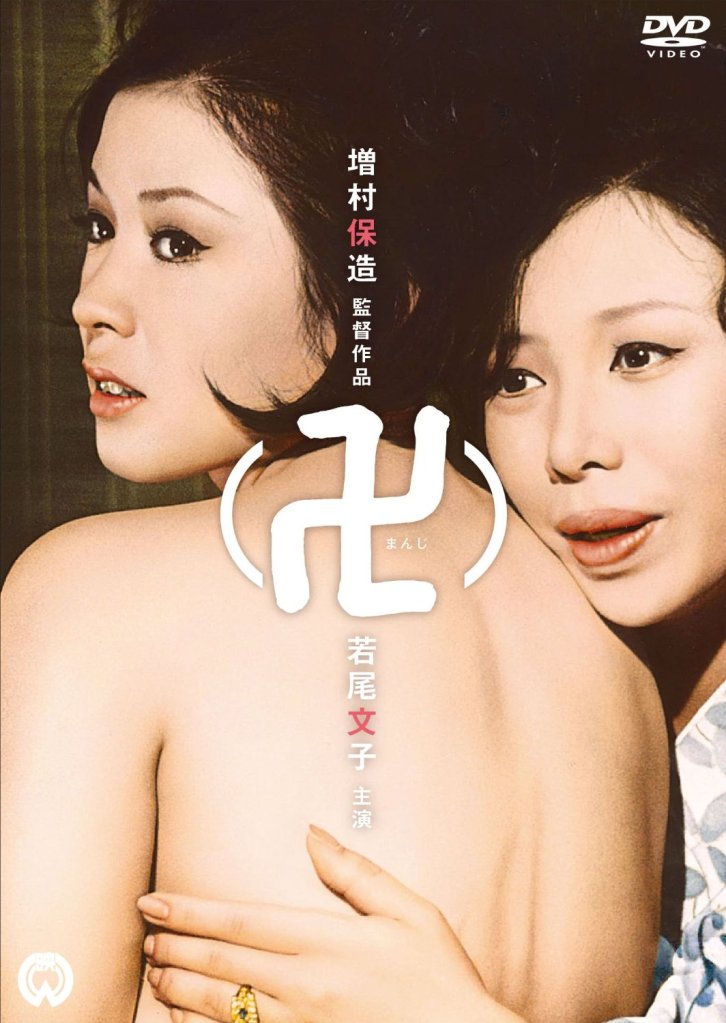
8127Ur2xnXL._SL1500_For arguably his most famous film, 1964’s Manji (卍), Masumura returns to the themes of destructive sexual obsession which recur throughout his career but this time from the slightly more unusual angle of a same sex “romance”. However, this is less a tale of lesbian true love frustrated by social mores than it is a critique of all romantic entanglements which are shown to be intensely selfish and easily manipulated. Based on Tanizaki’s 1930s novel Quicksand, Manji is the tale of four would be lovers who each vie to be sun in this complicated, desire filled galaxy.
The story begins with a framing sequence in which Sonoko sits down with a male mentor to recount her sorry tale from some later vantage point. As she would have it, she was an unfilled, unhappy housewife taking a series of art classes when the principal of the college noticed that the face in her sketch of the Goddess of Mercy doesn’t look much like the model. Her technique is good though so he asks her why she gave her drawing a different face and who it might belong to. She tells him it’s merely an ideal and isn’t based on any real person. However, it does look quite like another, very beautiful, pupil at the school – Mitsuko, and a rumour quickly starts that the two women are lovers. Though barely knowing each other before, the pair laugh it off and decide to become friends anyway. Gradually, something more than friendship begins to grow but not everyone is being honest with each other and the added complication of the men in their lives is set to make the road even harder for Sonoko and Mitsuko’s love affair than it might otherwise be.

Sonoko narrates things from her perspective, though you get the feeling she may not be a completely reliable narrator. She seems shy, innocent, wounded though she speaks of her great tragedy with ease and a surprising frankness considering its sensitivity. The object of her obsession, Mitsuko, by contrast plays the innocent but also seems to know perfectly well what she’s doing. Manipulative in the extreme she plays each of the other three lovers off against each other in an attempt to become the centrifugal force in each of their lives. All things to all people, Mitsuko doesn’t seem to know what she wants, other than to be adored by anyone that’s around to adore her.

At the beginning of the film Mitsuko reveals that she’d been involved in marriage negotiations with a young man from a high profile family and she believes the rumours at the art school were started deliberately to try and disrupt her matrimonial ambitions. Sure enough that liaison falls through but she neglected to mention that she also has another fiancee, the slimy Watanuki, that she longs to be rid of but can’t seem to shake off. After Sonoko finds out about Watanuki, Mitsuko feigns not only a pregnancy but a bloody miscarriage to get her female lover to return to her. However, Watanuki fights back by trying to form a bilateral alliance with Sonoko to ensure Mitsuko doesn’t suddenly take up with a third party – he even gets her to sign a contract saying that she’ll help get Mitsuko to marry him and in return he won’t interfere with the two women’s relationship even once they’re married.

Sonoko’s husband completes the quartet, becoming increasingly frustrated by his wife’s infatuation with another woman, her coldness towards him and her growing boldness. Sonoko labels Kotaro cold and passionless and claims never to have enjoyed any of their married life together. She’s also been taking illegal birth control medication to avoid having children with him. Trying to be an understanding husband, Kotaro ends up tangled in a web of desire after being seduced by Mitsuko. For a time, the three form an unlikely romantic trio (with Watanuki hanging around disdainfully on the edges) though even between the three of them petty jealousies sap their strength and keep them all guessing as to the exact motives of the other pair.

Just like the four pronged arms of the manji itself, our four lovers lie in a tangled and twisted crisscross of desire, each trying to eclipse the other in the eyes of the radiant Mitsuko. Anything but merciful herself, Mitsuko adeptly plays on the insecurities of the others to keep them all dancing along to her tune. This is not a story of true love, but of misused desires, almost of the inverse of love where lust becomes a weapon of control and self satisfaction. Even at the end, Sonoko can’t decide if she’s been saved or betrayed and if what happened to her was love or a kind of madness. Whatever it was, each has paid a high price for their selfish pursuit of romance or dominance or whatever Mitsuko really represents for them (clearly not the reincarnation of the Goddess of Mercy after all). Years ahead of its time and still just as dark and fascinating as it always was, Manji is a sadly universal tale of the destructive power of love that plays almost like a ghost like story and is likely to haunt the memory long after the screen falls dark.


Manji is available with English subtitles on R2 UK DVD from Yume Pictures.

Original trailer (no subtitles)

Blind Beast (盲獣, Yasuzo Masumura, 1969)

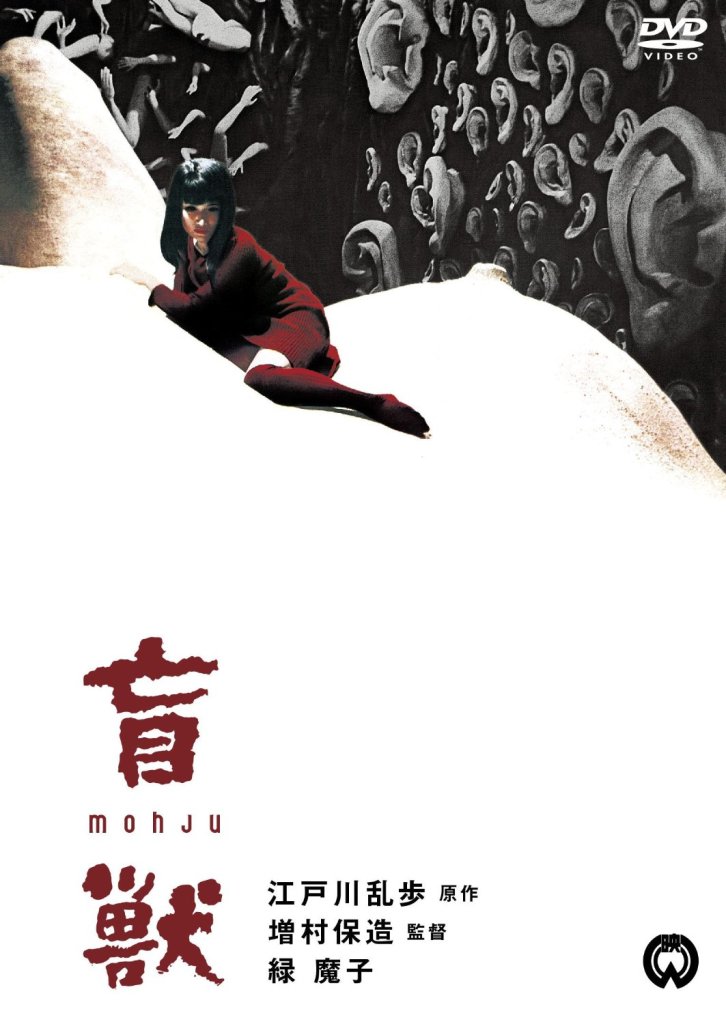
81dGenRMu-L._SL1500_Never one to take his foot off the accelerator, Yazuso Masumura hurtles headlong into the realms of surreal horror with 1969’s Blind Beast (盲獣, Moju). Based on a 1930s serialised novel by Japan’s master of eerie horror, Edogawa Rampo, the film has much more in common with the wilfully overwrought, post gothic European arthouse “horror” movies of period than with the Japanese. Dark, surreal and disturbing, Blind Beast is ultimately much more than the sum of its parts.
This dark tale is narrated by its “victim” Aki, a photographer’s model and the subject of a currently running exhibition. On paying a visit to the show herself, she finds a strange man caressing a statue of her built by one of the photographer’s students. Somewhat uncomfortable, she leaves the gallery in hurry and once home calls up a massage company help her relax. Once her masseuse arrives, he proceeds to caress her in a strange manner despite Aki’s protestations that she needs it “harder”. Eventually the ruse is uncovered and Aki realises he’s the blind man from the gallery at which point he chloroforms her and drags her back to his evil lair and mysterious studio in the middle of nowhere where he lives with his accommodating mother. The pair keep Aki prisoner until she consents to modelling for blind artist Michio’s latest sculpture project. After trying and failing to escape, Aki gradually falls into a kind of Stockholm syndrome where she finds herself in thrall to Michio and the pair’s sexual adventure enters a path towards the ultimate debasement and depravity…

The opening sequence of Blind Beast is the most surreal in this eerie, bizarre film. As Aki awakens in Michio’s lair she explores her darkened environment only to find the walls are each covered in sculptured motifs of various women’s body parts. First an entire wall of noses followed by mouths, arms, legs and breasts each apparently created from memory by the aspiring sculptor who, in his blindness, has decided that touch is the ultimate, neglected sensation. If that weren’t strange enough, the floor of the studio is taken up by a colossal statue of a woman lying on her back, as Aki finds out trying to escape the room by crawling over its perfectly sculpted breasts.

Micho himself is an unsettling though somewhat weakened figure, supported still by his caring mother who is prepared to do “anything” to indulge his “one pleasure in life”. Neither of the pair seems to appreciate the perfectly natural reaction of Aki to being held prisoner or her desire to escape and both are entirely focussed on making use of her in Michio’s new artistic movement which will place touch at the forefront of expression. Aki attempts to manipulate the situation in order to escape, firstly pretending to go along with their plans and then by attempting to place a wedge between Michio and his mother by emphasising Michio’s lack of autonomy and particularly his lack of sexual experience. Eventually she seduces him as a way of building his trust so he’ll let his guard down. However, after an event most would regard as traumatic, she comes to build a grudging affection for the blind sculptor and no longer wishes to leave.

Losing her sight herself, Aki grows ever more obsessed with the sculptor’s touch. As the pair’s relationship becomes increasingly intense they seek out even more vibrant sensations, new paths to ecstasy. Turning to sado masochism firstly through animalistic biting, clawing, and tearing they eventually resort to whips and knives before coming to a conclusion about where their new life of dissipation is leading them. Aki wonders if she had masochistic tendencies all along which the sculptor has “unlocked” with his magic touch.

Literally blinded, the two have entered a realm of sensations which are purely physical. Sexually naive, Michio has mentally dismembered the concept “woman” into a series of neatly separated components which can be assembled to form the physical shape without needing to think about anything which lies beyond the skin. Blind Beast is a romance, in some sense, even if an extremely disturbing one. Michio and Aki don’t fall in love in the conventional sense so much as become obsessed with the physical sensation of mutual touch. Pain and pleasure become interchangeable as the pair’s desire for physical satisfaction exceeds all limits.

Strange and surreal, Blind Beast carries one of the most disturbing final sequences ever committed to celluloid. With its European chamber music soundtrack it feels much more like an arty ‘60s giallo than anything else though in terms of what is actually visible on the screen is actually fairly light on gore or violence. This level of restraint only makes the film more disturbing as does its claustrophobic atmosphere and deadpan voice over. Another characteristically probing effort from Masumura, Blind Beast is among his strangest and most original efforts and is likely to linger in the memory long after its traumatic finale fades from the screen.


Blind Beast is available with English subtitles on R2 DVD from Yume Pictures.

http://www.youtube.com/watch?v=SG34PFaQJgE


Irezumi (刺青, Yasuzo Masumura, 1966)

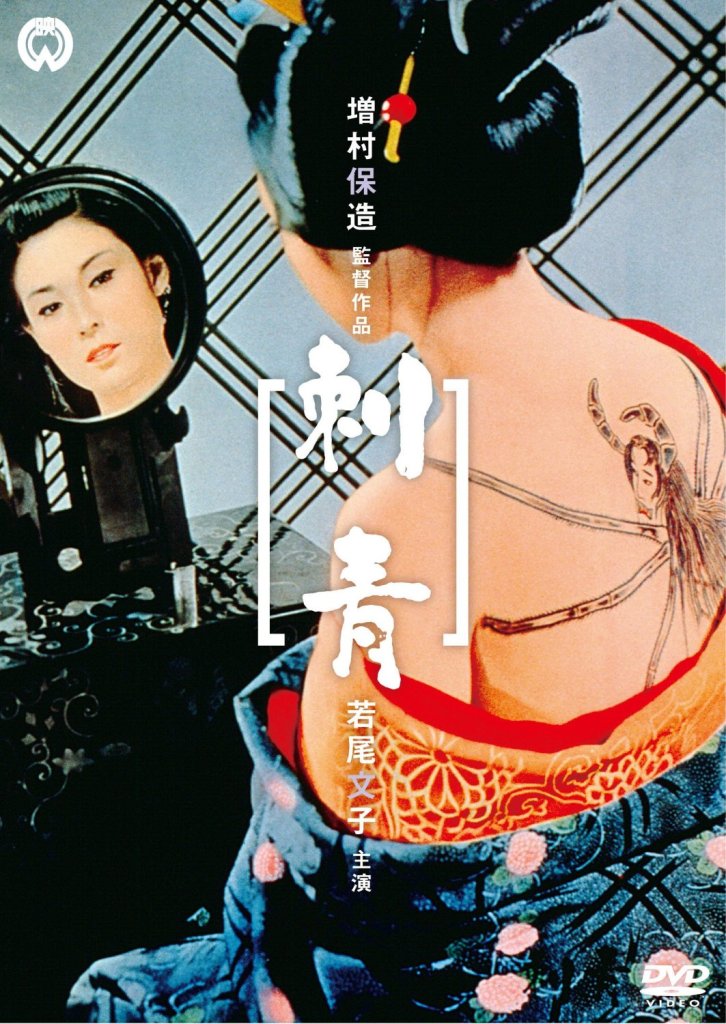
91HAEic7eNL._SL1500_Irezumi (刺青) is one of three films completed by the always prolific Yasuzo Masumura in 1966 alone and, though it stars frequent collaborator Ayako Wakao, couldn’t be more different than the actresses’ other performance for the director that year, the wartime drama Red Angel. Based on a novel by Tanizaki and scripted by Kaneto Shindo (Onibaba, Kuroneko), Irezumi is a supernaturally tinged tale of vengeance and betrayal.

The film begins in the middle as Otsuya, having been abducted and sold to a geisha house, is tied, bound and chloroformed so that a tattooist can mark her skin with the eery portrait of a spider with a human face. Skipping back awhile, it seems this came about as a consequence of Otsuya convincing the mild mannered assistant of her father, Shinsuke, to run away with her. The pair take refuge at the home of a family friend, Gonji, but after his advances towards Otsuya are rebuffed he arranges to have Shinsuke killed and Otsuya sold as a geisha. Shinsuke manages to get away after a bloody fight but he’s a gentle man and the violence of the encounter marks him. Otsuya, by contrast, finds she quite enjoys her new life and gets along OK with her pimp, Tokubei, who urges her to “feed on men”. Otsuya’s lusts become ever more violent with the spectre of the tattoo artist hovering in the background. Is the tattoo itself enacting these scenes of terrifying vitality or merely an excuse for releasing Otsuya’s true nature?

Shot in vibrant colour in contrast to Red Angel and many of Masumura’s other efforts from around the same time, Irezumi makes fantastic use of its lurid atmosphere. Sex and death and violence – hardly unusual themes for Japanese cinema though Irezumi feels like an early precursor to the exploitative pinky violence cycle of the following decade. In keeping with those films, Otsuya is another conflicted avenger, wreaking havoc on venial men who think they can buy and sell a woman’s soul as well as her body. As the violence mounts, Otsuya falls into a kind of mania and at one point exclaims that this isn’t really her at all, it’s all the fault of the spider on her back – trapping men in its silky web only to suck them dry and throw away the husk.

Whether Otsuya is herself an avenging warrior for the female sex or merely a demonic vision of the ultimate male fear is somewhat up for debate. Her transgressions are intentionally destabilising – she breaks with convention by “betraying” her father when she runs of with Shinsuke and not only that, she does so at her own insistence. Shinsuke himself is far too meek and mild mannered to have ever done such a thing entirely of his own will and is largely swept along by Otsuya for the entire course of the film. Only when he fears she may betray him does he decide to take action. Otsuya’s sexuality in itself is also transgressive, actively pursuing Shinsuke before a formal marriage and then even expressing her enjoyment of her new life in the pleasure quarters – neither attitude is one that is expected of the demure daughter of a noble house. Is she an emancipated woman, or fallen one? The film offers no clear judgement here but presents her both in terms of vengeful heroine and of terrifying villainess.

Along with its rather complicated structure beginning in a media res opening followed by a lengthy flashback sequence, Irezumi is never quite as successful as Masumura’s other mid ‘60s offerings. Though boasting a script by maestro Kaneto Shindo, a noted director in his own right and frequent visitor to the realms of horror, something about Irezumi fails to coalesce. That said, it does offer a visually arresting, generally interesting supernaturally tinged tale and yet another fantastic performance from its talented leading lady.


Irezumi is available with English subtitles on UK R2 DVD from Yume Pictures

Tattoo sequence from the film:

http://www.youtube.com/watch?v=pIlat5gmTAY


Kisses (くちづけ, Yasuzo Masumura, 1957)

tumblr_nwj79ycwjz1tvmqcgo1_500The debut film from Yasuzo Masumura, Kisses (くちづけ, Kuchizuke) takes your typical teen love story but strips it of the nihilism and desperation typical of its era. Much more hopeful in terms of tone than its precursor and genre setter Crazed Fruit, or the even grimmer The Warped Ones, Kisses harks back to the more to wistful French New Wave romance (though predating it ever so slightly) as the two youngsters bond through their mutual misfortunes.

The film begins as Kinichi and Akiko experience a meet cute whilst visiting their respective fathers who’ve both landed up in gaol. Kinichi’s dad is a politician who’s been accused of “electoral fraud” which he swears is some kind of plot (even though this is the third time he’s been accused of it) whereas Akiko’s father is a government official who’s embezzled a large sum of money in an act of desperation to pay for her mother’s medical treatment. Just as Kinichi is leaving the prison, Akiko is getting into a situation with the rather rude receptionist because she owes something for her father’s room and board. Kinichi becomes offended on Akiko’s behalf and plonks down more than enough money alongside a few choice words for the lady on the counter before flouncing out. Akiko chases after him with his change even though he tells her to get lost in no uncertain terms. Eventually the two end up spending the day together though things turn a little sour towards the end. In this unlucky world, can two crazy kids ever make it work?

In essence, Kisses is an innocent film. Though there may be a few hints of darkness lurking around the edges, its tone is more or less cheerful and fuelled by the idealism of youth. Both Kinichi and Akiko are realists, they’re both older than their years, put-upon and a little desperate but also a little naive. Kinichi’s grumpy and sullen, perhaps nursing a wound from his mother walking out on him. Even when he asks her for the money to bail his father out of gaol she tells him to grow up before treating him like a child by declaring that he himself is collateral on the loan. Akiko’s mother is hospitalised with TB – the misfortune that’s had her father reduced to this shaming state of affairs. To make matters worse it’s not as if she can even tell her mother why her father hasn’t visited for a couple of weeks or explain why the nurse was complaining that their insurance has expired. Her father is also in poor health and likely will not cope very well with remaining in prison hence why she (briefly) considers becoming someone’s mistress or going on a date with a dangerous and unpleasant man to get the money to bail him out.

In any other seishun eiga this situation would be a recipe for a disaster, but somehow it rescues itself from the brink of despair and becomes almost more of salty rom-com than anything else. After the initial cute sea-side and roller skating date, there are crossed wires, mislaid messages and a last minute dash to work out a forgotten address but the film never loses its youthful energy and guileless wit. The world outside might be cruel, but in here it’s just normal, and if a boy and a girl want to blow some time at the races or the beach, who can blame them. They’re young, they’re kind of unhappy but they’ll figure it out and probably be OK which is a lot more than you can say for the usual protagonists of these kinds of film.

Kisses doesn’t have the searing, angry eyes of Masumura’s later work. Yes there is dissatisfaction with the world as it is, but also hope and acceptance, rather than an attempt at rebellion. Neither of the two young lovers is trying to change the world. Forced to be older than they are, both are savvy and realistic but not quite old enough to be fearful or self-centred. Full of youthful nonchalance, Kisses is a tale of innocent romance which is only improved by its layer of ironic whimsy.


Kisses is available with English subtitles on R2 UK DVD from Yume Pictures.

The only (short) clip I could find only has Russian subs…but it’s of a song which is very pretty.

Red Angel (赤い天使, Yasuzo Masumura, 1966)

_1_image_size_900_xRed Angel (赤い天使, Akai Tenshi) sees Masumura returning directly to the theme of the war, and particularly to the early days of the Manchurian campaign. Himself a war veteran (though of a slightly later period), Masumura knew first hand the sheer horror of warfare and with this particular film wanted to convey not just the mangled bodies, blood and destruction that warfare brings about but the secondary effects it has on the psyche of all those connected with it.

The story begins as idealistic young nurse Sakura Nishi is sent to a military hospital in mainland China as the Japanese army continues its expansion into Manchuria. At this point the situation isn’t desperate, however, Nishi has barely settled into her new work when she’s grabbed by a patient who attempts to assault her. Far from coming to her rescue or raising the alarm, some of the other patients hold her down or guard the door while Nishi is raped. Reporting the incident to her superior the next morning, Nishi finds out she’s the third nurse this has happened to and only now the matron decides to have the patient (whom she brands a malingerer with mental problems) shipped back to the front lines. The soldier even has the audacity to say goodbye before he leaves whilst leering unpleasantly and if that wasn’t enough the friend also remarks that he enjoyed “the show” and is looking forward to “his turn”.

Things only get worse as Nishi is sent to the front line field hospital which is overrun with the dead and dying. The new patients are delivered by the truckload and the resident surgeon, Dr. Okabe, has to make split second decisions about who is most likely to survive and will receive treatment. Operations here generally result in amputations (whether strictly necessary or not) as this is the best way to prevent the onset of gangrene and other life threatening infections. Okabe was a top surgeon before the war but now he wonders if he’s even a doctor at all – let them die or mame them for life, these are his only options. Eventually, Nishi and Okabe develop a bond but in this desperate and dangerous environment, can you really trust anything or anyone or is every action simply part of the final death throws of those facing the ultimate horror of war?

The frontline field hospital is barely distinguishable from a charnel house as limbs are severed with terrifying efficiency by the conflicted Okabe. There’s little anaesthetic or even medication available and the men scream in agony, asking for their mothers until they finally pass out. Nishi retains some of her youthful compassion wanting to do the best for her patients but Okabe is already lost to a kind of fatalistic blankness.He knows the war itself is hopeless and repeatedly exclaims that China is just too big with too many people in it and they’ll make no impact at all here. At home at least he felt as if he could do something positive, save people’s lives, but here even if he manages to help someone they’ll be sent straight back to fight. They won’t even let the amputees go home for fear that the sight of so many limbless men will damage the nation’s morale.

Okabe, like most of the other men in the film, also has a preoccupation with sex and specifically how these men’s injuries may impact their later quality of life. As for himself, he’s been addicted to morphine for some time which has made him impotent and also places a barrier between himself and his developing relationship with Nishi. Perhaps for this reason he suddenly changes his mind about operating on a patient because it would mean interfering with an area of nerves directly related to sexual arousal and with so little time he’s worried it may be botched and ruin the man’s life so, as it’s likely he may survive without the surgery, he opts to leave it to the more capable hands of a homeland surgeon at a later date. Similarly, a sympathetic patient of Nishi’s who’s lost both of his arms later asks her to provide the “relief” that he is no longer able to supply for himself. Nishi comes to regard this as another of her duties of care and gives the man a few last minutes of comfort. However, this abundance of kindness proves to much for the man and only leaves Nishi feeling even more conflicted than before.

Despite the harshness of the environment, Nishi maintains her youthful and idealistic vision of the world. Okabe cautions her not to get attached to the patients and that the only way through is to view everybody as a stranger, she however refuses. Gradually, Nishi’s love and perseverance reawaken Okabe’s desire for life but in a world as chaotic and fragile as this one all human connections are fleeting and born of the proximity to death.

Red Angel plays out like a horror film full of blood and mangled bodies. Having opened with a series of broken skeletons, the film does not skimp on the macabre imagery and the scenes of buckets full of limbs and corpses being flung from sheets into mass graves are some of the most hauntingly authentic captured on screen. It’s raw and it’s grim, the frankness of its desire to address the murky sexual life of the wartime forces is also surprising from a film made in 1966. Yet there is passion and real connection here too. Throughout it all, Nishi never loses her desire to help or her commitment to love even in the darkest hours. She doesn’t, and cannot, win but her spirit remains unbroken. A harsh look at the animalistic nature of war and its destructive effect on basic human civility, Red Angel is one of the few films to deal with wartime sexuality in a frank way and is still, unfortunately, well ahead of its time.


Red Angel is available with English subtitles on R1 DVD from Fantoma and in the UK from Yume Pictures.

http://www.youtube.com/watch?v=6g8H7-x0gbY

Giants & Toys (巨人と玩具, Yasuzo Masumura, 1958)

91C6JzGDYTL._SL1500_

Less acerbic than Masumura’s later Black Test Car, Giants & Toys (巨人と玩具, Kyojin to gangu) is an altogether more humorous, if no less piercing look at post-war consumerism. This time the battle ground is confectionary as the Japanese sweets industry laments the all powerful American candies taking over the Japanese landscape. Three sweet companies are duking it out for the hearts of Japanese consumers and the hard working salarymen in the PR & marketing departments are becoming ever more desperate to find the key to becoming Japan’s top selling sweet maker.

The three companies are Giant, Apollo and World, each of which is currently trying to come up with an advertising campaign which has a competition element that will really hook in the populace. Our main focus is with World whose top PR man, Goda, is currently stumped when he spots quirky hillbilly Kyoko in a bar and hatches on an idea to make her the central poster girl of his ad campaign. Kyoko is 18 with gap teeth and a childlike innocence that makes her a great fit for selling their confectionary products to the adult market. At the same time, Goda’s assistant Nishi meets an older female executive from Apollo who’s trying to shift a set of spacesuits. This fits in neatly with another of Goda’s space themed ideas and a suitably bizarre campaign is launched with the gangly Kyoko dressed up in a kitsch spacesuit and pointing a ray gun which is somehow supposed to encourage people to buy sweets. Kyoko is a hit! However, the more popular Kyoko becomes the more her innocent charms begin to dissipate. What will become of her, and of the campaign, as the competition mounts?

For an area that’s supposed to be so totally frivolous and cheerful, confectionary sales are serious business. Goda is working himself into an early grave just to sell sweets to grownups and old people. It’s advertising and marketing but like everything else in life it’s just so much spin. What they’re really trying to sell is frivolous fun and a return to childhood’s freedom all packed into a momentary suck on a salted caramel. In the Japan where “everyone works all the time” this may be quite an attractive idea, especially to the put upon members of the confectionary marketing board.

However, trivial as sweets are, they represent the fleeting unimportance of pop culture memes. During one of Kyoko’s recording sessions we meet one of the solitary female producers (labelled a “machine” by two of the other women waiting to be seen) who laments that a has been star keeps hassling her for work though her time has passed and no one’s interested. This is most likely how things will wind up for Kyoko, five minutes of being everywhere followed by a lifetime of being nowhere at all. After signing with World for their TV and radio advertising she becomes a break out personality attending events as a celebrity in her own right and later even becoming a pop star complete with a totally strange, South Pacific themed musical number referencing some kind of cannibalistic genocide where they’ll sell back the remains of the men they’ve killed to the native wives. Pointed satire in more ways than one.

Goda wants to build a kind of mass media dictatorship, cleverly controlling the public mood through all pervasive advertising (a prescient thought, if ever there was one). Having taken things too far, he’s taken to task by his underling, Nishi, who’s had a bit of a rethink following a series of heartbreaks involving friends and lovers. “I won’t sacrifice my dignity” he says, only to be shown doing just that a couple of minutes later as he himself dons the ridiculously camp space suit, takes the ray gun in hand and wanders out into the streets to be met by a series of bemused stares from the passersby. Eventually, the woman from Apollo with whom he’d been having an affair spots him and with an equally amused expression instructs him to “smile warmly”, at which point he grimaces before managing to turn it into a robotic grin.

Still oddly current, Giants & Toys is an absurdist’s guide to corporate politics where personal integrity is sacrificed on the altar of commerce. Everyone runs round in circles working hard to sell things no one really wants or needs to other hardworking people just to keep the wheel spinning. “Kanban Musume” come and go, one ridiculous meme follows another and we all just fall over ourselves to chase whichever unattainable ideal they pitch us. It would be nice to think the world has moved on since 1958, however…


Giants & Toys is available on R1 DVD with English subtitles courtesy of Fantoma.

Trailer