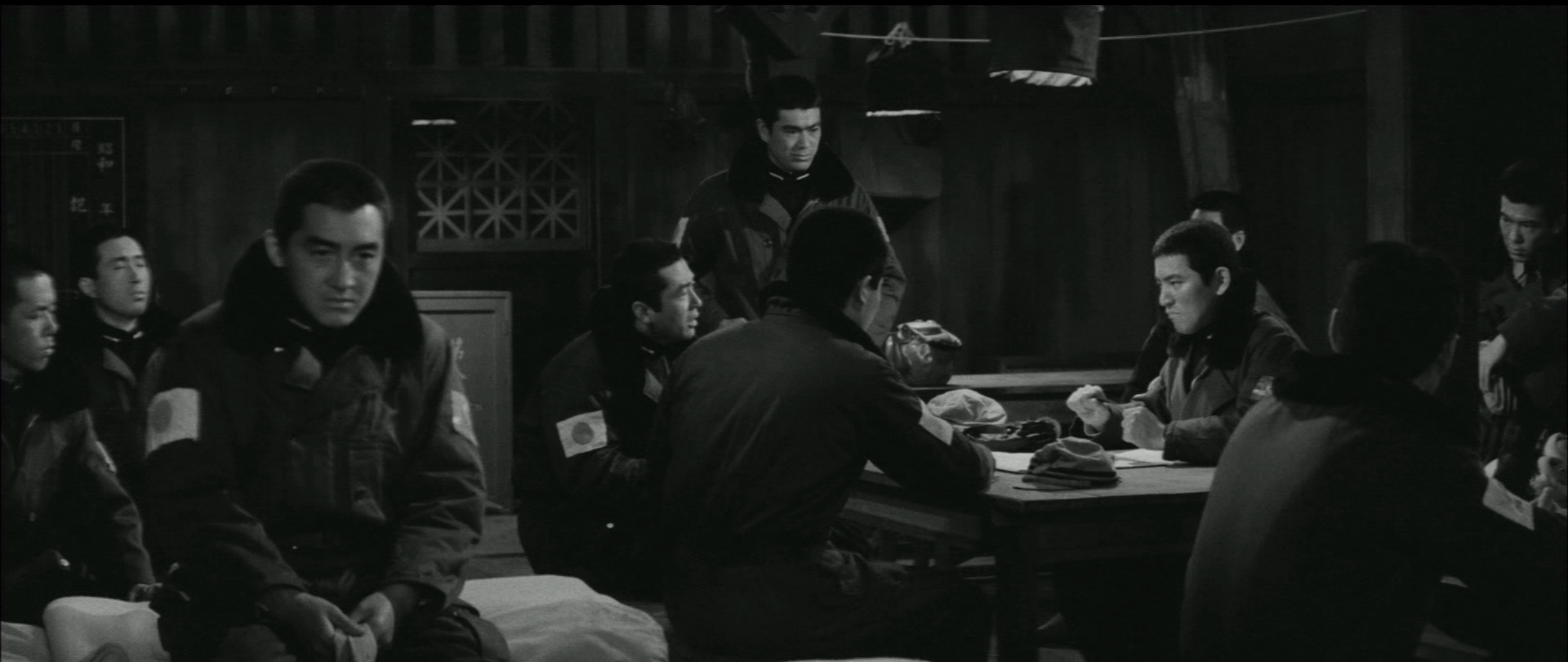
Classmates (あゝ同期の桜, Sadao Nakajima, 1967)

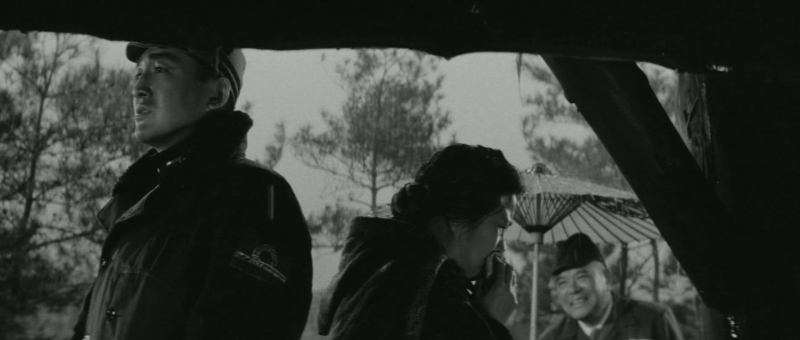
There had been films that dealt with the war before, but it was really with the generational shift that occurred among filmmakers in the mid-1960s that there was a greater willingness to reckon with the wartime past. Sadao Nakajima’s Classmates (あゝ同期の桜, Aa Doki no Sakura) was the first in a planned trilogy of war films at Toei, which was in other ways a studio that often leaned towards the right with its steady output of yakuza films, and most likely for that reason struggled to gain approval from studio heads. Taking its name from the military academy song, the film was inspired by a collection of essays put together from the letters and diaries kamikaze pilots had left behind. Nakajima had seen some of the letters sent back by the brother of a school friend, and reading them again on publication was determined to turn them into the film.

Nevertheless, only 25 years on from the end of the war it remained a sensitive topic. The film follows the men of the 14th class of reserve students who had previously had their draft notices deferred until they finished university but were now called up early because the war was going so badly. The majority of these men were allocated to kamikaze units and subsequently died in suicide attacks on US warships, though they received little in the way of training and mostly failed to hit their targets due to having limited fight experience. 

What might seem most surprising is that several of the men voice their opposition to the war along with the realisation that Japan is going to lose. Early on in training, one man deserts but the others are reminded that to do so amounts to treason and once caught, deserters will be executed by firing squad. This turns out not quite to be the case. Shiratori (Hiroki Matsukata), the resigned hero, encounters Taki (Mitsuki Kanemitsu) in Okinawa. where he’s working as ground staff. He’s insensible and appears to have lost his mind. The man working with him suggests that he was tortured so badly that it’s left him in a vacant state, though he’s still deployed for mindless tasks because they just don’t have the manpower.

Part of the reason for that is that they keep ordering people to die in a validation of the death cult that is militarism. On their arrival, the instructor tells the men he will have them all die, because dying for the emperor is their duty and destiny. The top brass insist this is the only way to win the war even though it’s counterproductive in that they’re running out of aircraft and skilled pilots even if one officer callously remarks that they have an endless supply of bodies. There’s also no real reason to send the planes up with two pilots as opposed to one, but they leave fully manned. The suicide missions are supposedly “voluntary”, but the men can’t really refuse due to a combination of peer pressure and military order.

When one pilot, Nanjo (Isao Natsuyagi), returns to base having been unable to reach his target, he’s immediately set upon by the others as a coward and a traitor. They accuse him of being afraid to die, leaving him feeling ashamed and frustrated by a sense of injustice while admitting that he didn’t want to die like a dog. He knows that he would not be able to go on living afterwards if he simply didn’t go through with it because the stigma of being a coward who let other men die so he could live would always be upon him. Eventually, he becomes so determined to prove himself that he insists on getting right back in his plane once it’s repaired and then blows himself up on the runway to prove a point.

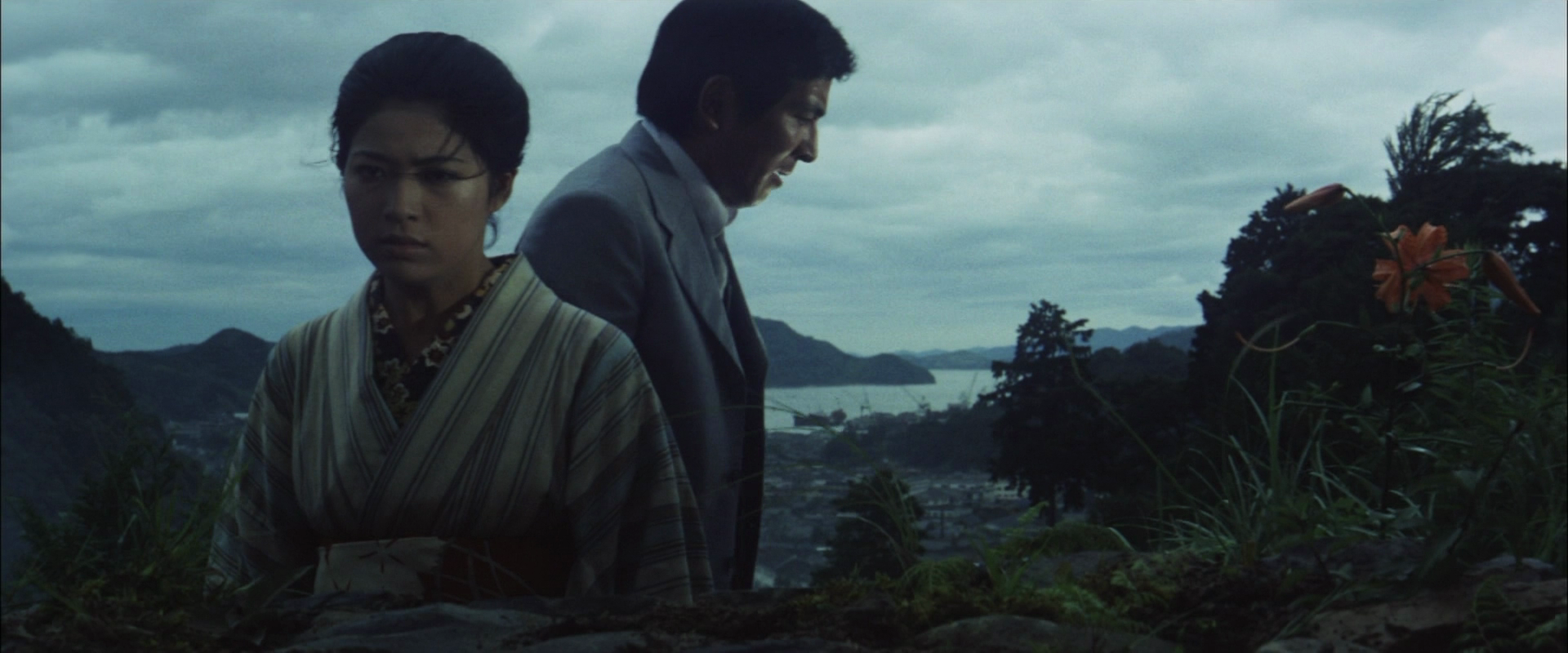
Nanjo’s case is all the more poignant because he was a new father whose son was born after he was called up. He appears to have married quickly against his parents’ wishes and is now anxious that his family won’t accept his wife and child who will be left alone when he dies. His wife (Yoshiko Sakuma) desperately tries to see him to show him the baby, but manages only a few seconds before he’s forced to return to the barracks. Given a little more time, she brings a wedding dress for the impromptu ceremony they presumably skipped before, but ends up tearing it and giving Nanjo a strip as a kind of good-luck charm though like everything else it’s a gesture filled with futility.

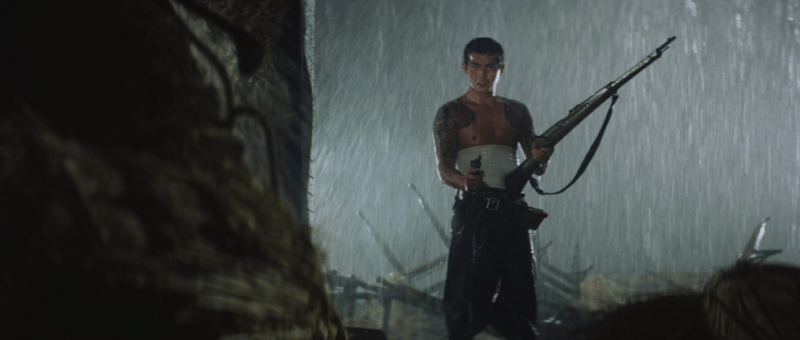
It’s this sense of futility and resignation that seems to overtake Shiratori who knows he cannot escape his fate. To desert to is be killed anyway or to experience a spiritual death like Taki. He had introduced a friend, Hanzawa (Shinichi Chiba), to his sister and the two had become close, but he is forced to abruptly break up with her because he knows it’s unfair to string her along when he’s been sentenced to death. Reiko (Sumiko Fuji) will lose her brother and her boyfriend on the same day. Hanzawa and the other men visit a brothel on the night before their mission where they are treated as “gods”, though he sees only irony in the situation in which they are more like human sacrifices offered in prayer for an impossible victory. Their deaths will have no real meaning and are really only intended to instil fear in the enemy and weaken their morale rather than cause actual material damage to their fighting capability. Making use of stock footage, Nakajima freeze frames a plane in flight and points out at that point the men inside were still alive before cutting to a title card confirming the war ended just four months later. The title card at the beginning dedicated the film to the souls of those who died in the Pacific War, though it’s perhaps as quietly angry as it was permitted to be in 1967 in the senseless sacrifice of these men’s lives who were shamed, tricked, or forced at gunpoint into their cockpits and told they were disposable while those who stayed on the ground cheered and whooped at the grim spectacle of death.
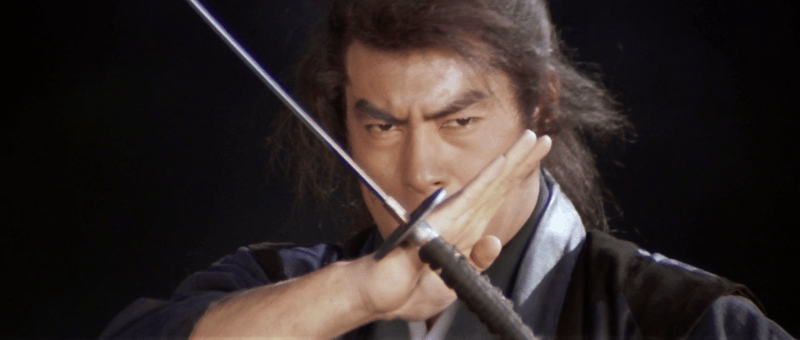

Haunted Samurai (土忍記 風の天狗, Keiichi Ozawa, 1970)

An exiled spy is confronted by the cruel inequalities of the feudal era in Keiichi Ozawa’s possibly mistitled ninja drama Haunted Samurai (土忍記 風の天狗, Doninki Kaze no Tengu). There is a kind of fatalism that follows him, and he is in some senses haunted not only by men like himself charged with the neutralisation of a deserter but by the ills of a corrupt society, though the only ghost here may be himself. Based on a manga by Goseki Kojima who illustrated Lone Wolf and Cub, the film ultimately suggests that to be a good man necessarily means to walk alone as a melancholy exile from a society founded on greed and power.

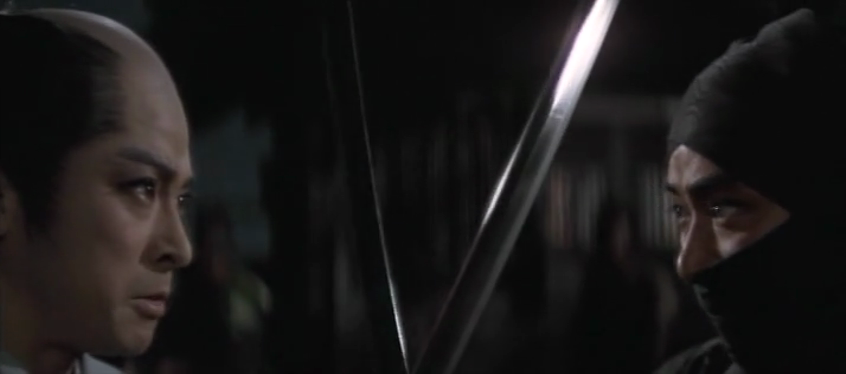
Indeed, Rokuheita’s (Hideki Takahashi) sole desire is to live a “simple and decent” life as an ordinary farmer. The film opens with him squaring off against a childhood friend, who is also his sister’s love interest, having been ordered to execute him for deserting from their ninja clan. His friend no longer wants to live “like a beast”, and so there’s nothing more either of them can really do in this situation. Rokuheita carries out his duty, and his sister takes her own life in despair. When he’s given another similar mission, he questions it but again resolves that he has no real choice. Only he discovers that his target, Ushizo (Yuji Odaka), has chosen to desert after marrying and having a child. When his family suddenly show up just as he’s contemplating delivering the final blow, Rokuheita decides to let him go warning Ushizo that the Yagyu will never give up and he’ll be haunted all his life so he should try to live it well for as long as it lasts. 

But this also makes Rokuheita an exile too, himself now a target and on the run from the Yagyu and his clan. On his travels, he runs into a small family who’ve been attacked by bandits while returning from town to buy wheat seeds because their harvest has failed in the drought and they’re facing onerous taxes from an unforgiving lord. Rokuheita decides to stay in the village hoping to become an ordinary farmer but is regarded with suspicion by some because of his samurai status, while there is also another samurai exile in town, Tarao (Seiichiro Kameishi) who first worked hard to be a part of the community but has since become lazy and aloof.

Tarao is also suspicious of Rokuheita but mostly fearing that either he’s come to make trouble for him or is a fugitive who will lead trouble their way. Unlike Rokuheita, Tarao was kicked out of his clan for stealing and now lives a slightly disreputable life made all the more so by his attempts to pan gold from the local river. Rokuheita fears that if the villagers find out about Tarao and the gold it will only cause chaos and the obsession with easy riches will in the end be much worse for them than the famine. Even Tarao’s wife Oryo (Utako Shibusawa) insists they’ve already got plenty to live on and should simply go somewhere else to lead a quiet life but Tarao wants more, his hand reaching out for his purse even while attacked by corrupt retainers themselves intent on discovering the gold and keeping it a secret from their lecherous lord. 

The retainers have been taking one life for every bale of “hidden” rice, carting off young women from the village to place into sexual slavery. Rokuheita tries to teach the villagers how to skirt the feudal order by secretly farming on rough terrain to evade taxes and ensure their own food supply, but this simply incurs harsher penalties even as one of the young men points out hungry farmers can produce nothing at all. Yet there’s nothing Rokuheita can really do for the villagers because it is the feudal order which is most at fault, an order which his ninja clan supports through their spy activities. The man who tracks him, Matahei (Isao Natsuyagi), says he does so as a means of appeasing the Yagyu and protecting his home territory from them but to do he must choose a lesser evil in killing those who have chosen to try to live “simple and decent” lives outside of this system.

Ozawa brings them together in a supernaturally charged conclusion which takes place during a solar eclipse marked by the eerie winds of the Japanese title but finds them both defeated, left with only the melancholy acceptance of their rootlessness as men who will always be pursued by the invisible hands of the feudal order. Utilising wuxia-esque jump cuts to recreate the ninja magic of Rokuheita’s spy craft along with a degree of surrealism in the underwater sequence in which he is attacked by a band of topless female ninjas the film seems to edge towards a more contemporary reading of jidaigeki and not least in the unexpected violence of its final scenes.


Bohachi Bushido: Code of the Forgotten Eight (ポルノ時代劇 忘八武士道, Teruo Ishii, 1973)

A nihilistic ronin falls into the hellish trap of the Yoshiwara in Teruo Ishii’s dazzlingly psychedelic period drama, Bohachi Bushido (ポルノ時代劇 忘八武士道, Porno Jidaigeki: Bohachi Bushido). Adapted from a manga short by Kazuo Koike, the film once again tackles Edo era corruption as a brothel owner with a special connection to the shogun attempts to wipe out the competition presented by an enterprising merchant class only to find himself hoist by his own petard.

Ishii signals his intentions early on with the artfully staged opening scequence in which wandering ronin Shino (Tetsuro Tanba) is attacked on a bridge at dusk. As he turns to slash at an opponent, the blood splatter morphs into the film’s title while the clang of swords gives off little blue sparks that turn into the listings for the cast and crew. By the time the title sequence has concluded, night has descended on the bridge and Shino finds himself engulfed in darkness. “To die is hell, but to live is also hell” he exclaims as he jumps into the water below, hoping to be free of his empty life of killing. 

Unfortunately, he is rescued and brought to the Yoshiwara where they try to persuade him to join the Bohachi clan so called because to do so you must abandon all eight human virtues. The Bohachi’s main line of work is the sexual torture of women until they become docile dolls for their brothel. Shino describes them as “revolting” but then adds “just like me” and agrees to join anyway only to earn their mistrust when he refuses to play along with their games, buying but not sleeping with a woman brought in over a debt. Though Shirakubi, the guy who recruited him, tries to kick Shino out and calls the police on him for good measure, the big boss, Shirobe (Tatsuo Endo), decides he’ll take him in for use as an attack dog taking down anyone who interferes with business be they lords or officials. 

The irony is that the nihilistic Shiro enthusiastically takes to his work because he dislikes the debauchery of the Edo-era society even while working for the “legitimate” brothel owner who is at least “licensed” to exploit women for financial gain. What Shirobe resents is the rise of quasi-brothels in the various teahouses that are obviously selling more than just tea but continue to undercut his business by selling women even cheaper than he does. He also feels betrayed by the various samurai lords who choose to visit the teahouses over his own establishment and therefore seeks to have them frightened into submission by ordering Shino to kill any man found with one of the tea house sex workers. Later he even declares a kind of sex worker amnesty promising to pay five ryo for any of the teahouse women brought to him, no matter by who, and then joking that he’s actually killing two birds with one stone by getting his hands on a high quantity of new stock for a very low price. 

Shino refuses to sleep with the women and is most offended when his male assistant is killed in an attack by the rival brothel owners yet the team of warrior women sent to protect him did nothing to help because their orders were only to protect Shino and Shirobe’s orders must be followed to the letter on the pain of death. He seems to know he’s living on borrowed time and Shirobe probably intends to finish him off once he’s finished his mission of removing all opposition and restoring Shirobe’s power to manipulate the shogun but barely does anything to resist until faced with the rather ironic punishment of being given opium and then forced to participate in a never-ending orgy intended to result in his death in an extraordinary psychedelic sequence from Ishii . 

Of course, what they didn’t reckon on was Shino’s ironic desire to live or at least not to be beaten in which he actively begins stabbing himself to overcome withdrawal symptoms and carry on fighting even when they try to ram him with a giant spear cart. Ears are cut off, flying across the screen followed by arms and then heads. Ishii lends a poetic sheen to the closing moments as Shino is caught in a hero pose alone in the snow but still standing, if barely, and freed at least from one kind of hell if not from many others. 


Invasion of the Neptune Men (宇宙快速船, Koji Ota, 1961)

Japan was well on the way to economic recovery by 1961, but the newly prosperous society also gave rise to other anxieties and most particularly in the light of the Cold War and space race with the nation fearful of falling behind in scientific development. Or at least, that’s something that particularly bothers the young heroes of Koji Ota’s kids tokusatsu, Invasion of the Neptune Men (宇宙快速船, Uchu Kaisokusen), in which the nation’s failure to build a space rocket is conflated with its traditional visions of masculinity. 

At least, the boys all agree that Tachibana (Shinichi Chiba), a young scientist who runs a kind of club with them at the research facility where he works, is pretty great but also a bit of a wimp who failed to stand up to some bullies who were hassling him at a local cinema. They think it would be better if he were cool, re-imagining him as a kind of tokusatsu hero named “Iron Sharp” for whom they even come up with a theme song. As part of their club activities watching satellites, the kids accidentally stumble across a spaceship belonging to Neptune men who are planning to invade though obviously as they are children no one really believes them until the Neptune men start causing other forms of destruction. 

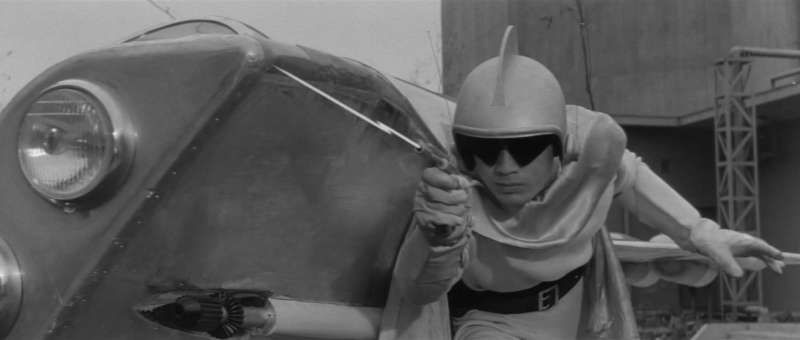
Attacked, the kids are saved by the hero they themselves made up flying in on a car/plane/spaceship though he too doesn’t really have a lot time for them and the kids don’t even really notice he looks a lot like Tachibana who is noticeably absent from the lab whenever he’s around. Even so, this being a kids film the major the problem is that no one else takes the boys very seriously, save Tachibana himself, leaving them to save the day on their own while the grown-ups argue amongst themselves. 

Getting people to argue amongst themselves turns out to be part of the aliens’ mission in exploiting Cold War paranoia to start world war three. The first attack results in a mushroom cloud which must have been fairly painful symbolism though the Americans immediately blame Russia who blame the US in return asking if they’re really intent on starting a nuclear war. The kids wonder why grownups are always so suspicious of other countries, hinting at a desire for a less xenophobic society eventually echoed in the calls for worldwide unity to defeat the Neptune men while otherwise repeatedly emphasising that Japan can’t be left behind by the US and Russia in the space race. 

Then again, there is something quite troubling in the fact that the invading Neptune men who’ve taken on human form appear as soldiers but wearing prominent feminine makeup, re-echoing the boys’ concerns regarding science and masculinity while introducing a seemingly unintentional dose of homophobia into the threat posed by the aliens who otherwise wield destructive nuclear powers echoing the atomic bomb in using their ray guns to vaporise their targets who then leave shadow imprints of themselves where they disappeared. The main weapon used to combat them is science, Tachibana and his boss, the father of one of the boys, coming up with an ingenious electric shield and then a series of magnetic rockets which allow them to shoot down the Neptunian’s ship. 

In this case, science is the “good” force that combats the “bad” use of nuclear weapons this time rendered alien rather than manmade therefore neutering the debate surrounding their use and the responsibilities involved with their discovery. Tachibana, the thinly disguised Iron Sharp, then becomes a hero of science racing round in his custom car and largely defeating the Neptunians through a more primal kind of hand to hand violence while embodying the kind of cool masculinity the boys the otherwise feared he lacked which is to say that unlike his real life guise, Iron Sharp is perfectly capable of standing up to “bullies” like extraterrestrial invaders. Reusing some of the effects footage from The Last War, the film emphasises the need for world unity and the end of the Cold War, but also sells a slightly contradictory, mildly nationalist message insisting that Japan can’t fall far behind technologically or will essentially be at the mercy of Russia and America, Tachibana having travelled to Moscow to assist with the creation of a new spaceship. Spurred on by their adventures, the kids all vow to become great inventors protecting Japan through their innovations, going on to explore Mars and Venus hinting at a new sense of possibility in the post-war society but also mindful of its geopolitical realities.


Tokyo Drifter (東京流れ者, Seijun Suzuki, 1966)

“Money and power rule now, honour means nothing” according to the new bread of upstarts gangsters in Seijun Suzuki’s Tokyo Drifter (東京流れ者, Tokyo Nagaremono). In many ways, what separates Nikkatsu’s youthful crime movies from Toei’s yakuza epics is that the nobility of Toei’s heroes is rarely questioned. In a Toei movie, it’s the world that’s wrong because the code is good and should be obeyed just as the hero obeys it, but in a Nikkatsu picture nihilism rules. The code isn’t right either, in fact it’s just another tool to manipulate and the hero, while noble, is wrong to follow it. 

That is in essence how Tetsu (Tetsuya Watari) will end up a Tokyo drifter, caught between the old world and a new consumerist Japan in which even the yakuza is attempting to corporatise and reform its image. His old boss, Kurata (Ryuji Kita), has done just that only he’s had to take out a sizeable loan from another former gangster turned real estate agent, Yoshii (Michio Hino), to do it. Realising his weakness, the upstart Otsuka gang sees an opportunity and stages an elaborate ruse that allows them to get their hands on Kurata’s valuable building and take out Yoshii at the same time though it results in Yoshii’s secretary (Tomoko Hamakawa), also the girlfriend of one of the Otsuka gang, getting caught in the crossfire. 

Tetsu describes his relationship with Kurata as like father and son and is sure he would never betray him. To preserve their new image, Tetsu does not fight back when ambushed by Otsuka goons and even puts himself on the hook for the secretary’s murder, but as much as Kurata insists he wouldn’t betray one of his “kids” to make things easier for himself perhaps he will if the situation calls for it. A defector from Otsuka’s gang, Shooting Star (Hideaki Nitani), tries to warn Tetsu that his faith in ideals like duty and loyalty is misplaced but Tetsu refuses to believe him. “Don’t shatter my dreams” Tetsu pleads, claiming that he cannot be around someone with “no sense of duty”.

Tetsu even feels sorry for Shooting Star, attributing his melancholy air to his having lost his sense of purpose in his disillusionment with post-war gangsterism. He might have a point in Shooting Star’s world weariness, but fails to realises that Shooting Star does in fact have a sense of duty and is in some ways the film’s only truly free man in forging it for himself from basic humanitarian values if tinged with a degree of cynicism. Though the pair clash, Shooting Star claims that he wants to save Tetsu from the pain of his inevitable betrayal and the disillusionment that will eventually come with it rendering him a perpetual wanderer and exile from mainstream society. 

Both men are in a sense lost amid the rapid social changes of their era, unable to move on from the post-war past into the new society even after breaking with the yakuza code in order to live by their own. In Suzuki’s complex colour scheme, Shooting Star is always clad in a forest-like green which echoes his freedom, while Otsuka is represented by a bloody red, and Tetsu dressed in an innocent powder blue suit until the final confrontation in which, along with his equally innocent love interest Chiharu (Chieko Matsubara) who had previously been associated with the colour yellow, is dressed in a pure white while all around him are now in black as representatives of those who have succumbed to the amoral capitalism of the the contemporary society. 

Suzuki even has Tetsu walk down an arched corridor reminiscent of a church into an abstract space expanding the stage at the club to lend this moment of existential struggle a little more theatricality. In a sense what Tetsu does is an act of suicide, severing his ties to the yakuza world by smashing Kurata’s glass and killing at least the image of him as a father figure to become a new man or perhaps a wandering ghost who no longer has a home and must even give up his romance with Chiharu in an acknowledgement of his exile. On Otsuka’s death, it’s almost like an alarm is switched off in the sudden shift from red to white in the giant statue standing behind Chiharu, the survivors united in white but rather than the wedding suggested by the colour of their clothes the atmosphere is funereal as Tetsu accepts he can no longer stay in this temporary space and must enter another sort of purgatory as lonely wander comforted only by his newfound freedom.


Tokyo Drifter screens at Japan Society New York on Feb. 4 as part of the Seijun Suzuki Centennial.

Original trailer (English subtitles)

The Blossom and the Sword (日本侠花伝, Tai Kato, 1973)

After joining the studio in the mid-1950s, Tai Kato quickly made a reputation for himself with Toei’s key brand of ninkyo eiga yakuza movies set in the chivalrous world of pre-war gangsterdom. By the early 70s, however, the genre was already played out and Kato began to work more frequently with other studios and in various genres but 1973’s The Blossom and the Sword (日本侠花伝, Nihon kyoka den), produced for Toho the studio which he had first joined at the beginning of his career in 1937, takes him back to his ninkyo roots if less directly in a politicised tale revolving around the 1918 rice riots

The film opens, however, a few years earlier with the heroine, Mine (Hiroko Maki), attempting to sell children’s educational picture books aboard a train (an activity strictly prohibited). As she explains, they are in the middle of a recession and times are hard for everyone though as we discover the reason for Mine’s journey is that she is in the process of eloping with the mild-mannered Minoru (Kunio Murai), the son of a wealthy family with literary dreams, who is prevented from marrying her because of the class difference between them. The couple are doing well enough evading detection, but are caught out when accidentally implicated in the murder of a treacherous politician by left-wing agitator/noble gangster Seijiro (Tetsuya Watari) who fatefully locks eyes with Mine while trying to escape forever binding their fates together. 

Epic in length the film was originally released in two parts with an interval in-between, this first half focussing on Mine’s doomed romance which is thwarted in part by the outdated social codes of the early Taisho society and the moral cowardice of her lover who finds himself unable to resist them. The pair are thrown in prison as possible co-conspirators and beaten by the police, Mine striking up a friendship with a woman, Tsuru (Junko Toda), imprisoned for distributing pamphlets as a labour activist who later helps her to get a waitressing job and teaches her rudimentary writing while Minoru lounges around in their home sort of writing a novel. Tsuru seems to be touched by their cross-class romance, “where love is concerned to hell with social status!” she insists berating Minoru for giving in so easily when the pair are finally tracked down by his austere mother. Her socialist activism may not directly rub off on Mine but does perhaps inform her later actions after discovering the depths of Minoru’s spinelessness, rescued after a failed bid at double suicide by a truly good man, Kinzo (Meicho Soganoya), who also happens to be a traditional yakuza heading a harbour gang in Kobe. 

After becoming his wife, Mine comes to witness the persistent unfairness and exploitation all around her as mediated by the outcry surrounding the fluctuation of rice prices in the late 1910s caused by attempts at profiteering and the necessity of supplying the military forces then participating in the war in Europe. Meanwhile, would be local dictator and amoral yakuza Kishimoto (Toru Abe) is intent on squeezing the Osada gang out of the harbour further pushing up rice prices while in cahoots with corrupt local authorities. Seijiro re-enters her life when dispatched to assassinate Kinzo on the orders of Kishimoto but stabbing him as carefully as possible to make sure he doesn’t die, thereafter switching sides to fight for the rights of the poor who he warns face even greater oppression should a man like Kishimoto be allowed to dominate the harbour. 

With Kinzo out of action, Mine assumes her natural destiny as a local leader doing her best to stand up to Kishimoto and the corrupt authorities but still faces difficulty getting her voice heard without a man standing next to her. On taking Kinzo’s place at a meeting of local bosses, she is dismissed as “just a woman” before a sympathetic naval officer decides to hand her a lucrative job shifting rice intended for sailors overseas because of her knowledge of current affairs undercutting Kishimoto’s attempts to game the system. It’s the trust the navy have in her that later saves her again when she is arrested and brutally tortured by corrupt policemen working with Kishimoto intent on tracking down Seijiro for the murder on the train all those years previously. Mine’s rise is also in a sense Seijiro’s redemption as he atones for the attack on Kinzo, rejects his association with Kishimoto to re-embrace his socialist beliefs, and fulfils the romantic destiny sparked when their eyes met on the train. 

Drawing a direct line between burgeoning militarism and gangsterdom along with the amoral exploitations of an increasingly capitalist society, Kato makes his intentions clear by dropping a ninkyo eiga hero into a world of infinite corruptions in which he eventually becomes a defender of the poor. Kato’s striking composition and use of colour along with expressionistic imagery lend the air of legend implied by the title as Mine fights her way through the oppressions of her era as a figurehead for justice in an increasingly unjust society.


The Thief in Black (黒の盗賊, Umetsugu Inoue, 1964)

Best known as a master of the musical, Umetsugu Inoue had a long and varied filmography embracing almost every genre imaginable. He began his career at Shintoho and later joined Nikkatsu where he quickly became an in demand director often working with top star Yujiro Ishihara, but took the somewhat unusual step of going freelance in 1960 thereafter working at various studios including Shaw Brothers in Hong Kong. 1964’s The Thief in Black (黒の盗賊, Kuro no Tozoku) is not a musical but is characteristically playful even within the confines of the lighter side of Toei’s jidaigeki adventures. 

Set between the Battle of Sekigahara and the Siege of Osaka, the samurai corruption in play is essentially the burgeoning Tokugawa dictatorship, the heroes eventually uncovering Ieyasu’s secret plan for making sure his line (well, more himself in essence) remains in power for perpetuity through an insidious plot to weaken the feudal lords and ensure their loyalty to him. Meanwhile, the still developing city of Edo is beginning to turn against the Tokugawa who seem to be intent on exploiting ordinary people to enrich themselves most obviously through forcing the local workforce to renovate Edo castle rather than cleaning up the town which is apparently rampant with crime. Faced with such lack of leadership, the townspeople have come to admire a Robin Hood-like vigilante known only as the Thief in Black who alone is resisting overreaching lords. 

Part of the problem is that Ieyasu’s rule is still insecure because of the potential threat of Hideyori Toyotomi in Osaka. Consequently, they are fearful that some of the men working on the castle may be Toyotomi spies or otherwise disclose information that might benefit him if he chose to attack which is why they’ve refused the workers permission to return home to their families during the pause before beginning the second phase of works leading to further unrest. Meanwhile, corrupt local lord Tadakatsu (Ryutaro Otomo) and his sleazy priest buddy Tenkai (Minoru Chiaki) have an even darker plan in mind, preparing to simply kill the five master craftsmen in charge to ensure they present no threat. Alerted to the situation on the ground by idealistic samurai Jiro (Hashizo Okawa), their boss instructs Tadakatsu in no uncertain terms that he must treat the workers fairly in order to prevent civil unrest and/or disillusionment with the Tokugawa regime but the pair are entirely unfazed and determined to go on with their nefarious plan getting rid of Jiro if the occasion arises. 

As we later discover and in a typical jidaigeki plot device, Jiro is one of a pair of twins with his brother Kotaro (also Hashizo Okawa) abandoned because of the superstitious belief that multiple births are inauspicious. Though both men unwittingly lay claim to the name, Kotaro turns out to be the masked vigilante, his primary cause to regain the lands of the family who raised him unfairly displaced from their estates on the Musashino plains because of Tokugawa greed. Though Jiro, raised as a member of the establishment, is originally loyal to the Tokugawa who have after all brought about an era of peace, he soon begins to see that their rule is no good for the people of Edo. In his more egalitarian worldview, only by enriching the poor can they secure their rule which means less castle building and more infrastructural development along with paying people fairly for their work and absolutely not killing them afterwards. Kotaro too claims that his rebellion is for the good of the common people though unlike Jiro is much more transgressive in his ideology prepared to shake off his samurai status to become a wandering outlaw rather than content himself with the restrictive life of the heir to a samurai clan. 

Such messages are perhaps common in Toei’s brand of jidaigeki but seem unusually pronounced as the peasant workers are often given voice to lament their fate and resist their oppression more directly, pointing the finger not just at a rogue rotten lord but at the entire system built on exploiting their labour. Nevertheless, Inoue injects a hearty dose of whimsical humour to the politically charged narrative even going so far as to include a bumbling ninja claiming to be the famous Hattori Hanzo along with a comic relief magistrate and former samurai brothel owner taking his own kind of ironic revenge in getting the cowardly lords hooked on modernity with a load of faulty rifles. Obviously, Ieyasu couldn’t be stopped, but perhaps they slowed him down and reminded him of the dangers of underestimating the people. Shot with Inoue’s characteristic flare if remaining largely within the Toei house style, Thief in Black is a surprisingly direct attack on corrupt and entitled government but also a righteous romp as its idealistic heroes shuffle themselves back into their ideal positions while fighting Tokugawa oppression all the way. 


Sword Devil (剣鬼, Kenji Misumi, 1965)

An orphaned son’s attempts to overcome his cursed destiny are poisoned by the duplicities of the samurai society in third part of Kenji Misumi’s loose “Sword Trilogy”, Sword Devil (剣鬼, Kenki). Perhaps unfairly dismissed by some as a mere genre craftsmen, Misumi was also an intense visual stylist, a quality very much on show in this vibrant drama which pits the beauty of the natural world against the samurai order but eventually finds its hero succumbing to cruelties of his age unable to outrun himself or his destiny. 

In the prologue which opens the film, shot in an arty theatrical style, a young peasant woman formerly a maid to the late Lady Makino gives birth to a “stranger’s” child after having been promoted and given a place in the women’s quarters as a reward for her loyalty in continuing to serve her mistress in the depths of her “madness”. Lady Makino claims that Kin’s kindness brought her back to reality and is keen to ensure she continues to be taken care of after her death, but also asks her to take charge of her precious pooch hoping that she will treat it “as herself”. This is perhaps why it is rumoured that the child, given the name “Hanpei” which ironically is in part inspired by the dog-like “Spot” coupled with a suffix which implies a lowly rank, is in fact the product of a taboo union between the maid and the dog (rather than admit he is almost certainly the illegitimate son of Lord Masanobu). For some reason this bizarre rumour persists throughout the boy’s life, cast out as he is from the palace and raised in an ordinary village as the son of a low-ranking samurai who appears to be kind and loving, worried enough about Hanpei’s (Raizo Ichikawa) future to advise him to find a special skill that will allow him to support himself and perhaps overcome some of the persistent prejudice against him after the old man’s death. 

The skill he perfects, however, continues to set him apart from his fellow men in that he chooses the cultivation of flowers. A particularly snotty neighbour describes Hanpei’s art as “annoying”, though others are impressed enough by his skill to marvel that they have such a man in their clan while also pointing out that in these times of peace becoming a samurai florist might be much more useful than perfecting the art of the sword. Ironically, however, it drags him back towards the court and intrigue when he’s invited to craft a flower garden to cheer up the present young lord who seems to be succumbing to the same “madness” as his mother. The trouble starts when the garden is completed to the lord’s satisfaction but marred by the sudden and apparently unexpected arrival of a bumblebee which damages the lord’s tranquility and provokes a violent outburst in which he begins to hack at the flowers hoping to punish the one which “rudely” invited the bee to the garden. Hiding behind a tree, Hanpei perfectly aims a rock at the lord’s head to prevent him destroying his precious work and is spotted by his chief retainer, Kanbei (Kei Sato), who earmarks him for future use in his nascent conspiracy. 

Hanpei finds himself at the centre of intrigue, increasingly seduced by promises of advancement that he might be “titleless” no more and perhaps in fact escape his lowly position as the son of a dog. He ingratiates himself by, like his mother, being one of the few servants willing to bear the lord’s violent rages in volunteering to accompany his horse even though he has none of his own and has to run along behind thereby demonstrating his slightly supernatural athletic ability that gives further credence to his canine origins. In similar fashion he learns by observation, captivated rather than appalled on witnessing an old ronin practicing his sword technique by cutting in half a butterfly in the forest. Preoccupied by his lowly status and consequent lack of sword skills, Hanpei is reassured by the man’s explanation that there’s nothing more to it than draw, strike, and sheath but takes yet another step towards the samurai dark side in accepting the gift of a sword. Later he breaks it, meaning to break with the cruel path on which fate has set him, only to pick up another, supposedly cursed sword to which he was attracted because of its “evil spirit”.

Osaki (Michiko Sugata), a kind and innocent woman seemingly attracted to Hanpei because of his difference in his gentle sensitivity in contrast to the rough men around her, refuses to believe the rumours he has become an assassin working for Kanbei because no one who loves flowers like he does could be a coldblooded killer. This is in fact what he has become, sent, like a dog, after Kanbei’s enemies killing without even knowing who it is who must die only to be remorseful on discovering he has killed someone known to him. There is division and sedition within the court caused by the lord’s madness, Kanbei and his associates keen to rule in his stead while keeping his mania secret from the shogun while others, a small group of lower samurai rebels, prefer to depose him in favour of his adopted heir. Hanpei is once again a pawn, taking no side in this debate but unthinkingly doing Kanbei’s dirty work in the service of his sword. He hopes that by taking the “evil” instrument in his hands he might double his bad luck to overcome his unhappy destiny, gazing at his distorted face in its reflection, but discovers himself merely outcast once again as the villagers begin to realise he is an obstacle to their rebellion and responsible for the assassinations of their loved ones. 

The ironic conclusion finds the hero’s planned flower garden, a shared endeavour with love interest Osaki, rendered a bloody graveyard, men cut down like weeds as Hanpei’s quick draw philosophy makes a mockery of their fancy samurai fencing. The poisonous samurai legacy, infected with madnesses literal and figural, destroys everything, all beauty and grace falling under Hanpei’s “evil” sword as he finds himself, quite literally, chased out of town like a stray dog condemned to wander exiled from human society. 


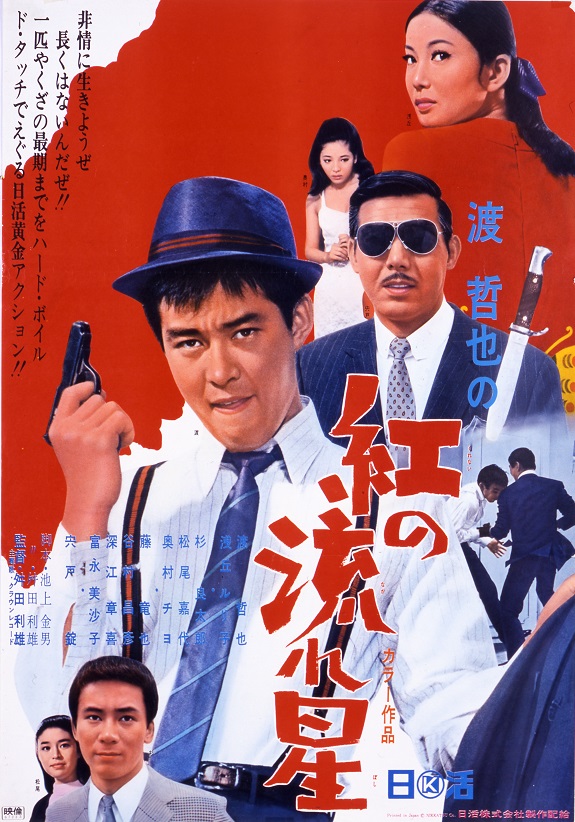
Velvet Hustler (紅の流れ星, Toshio Masuda, 1967)

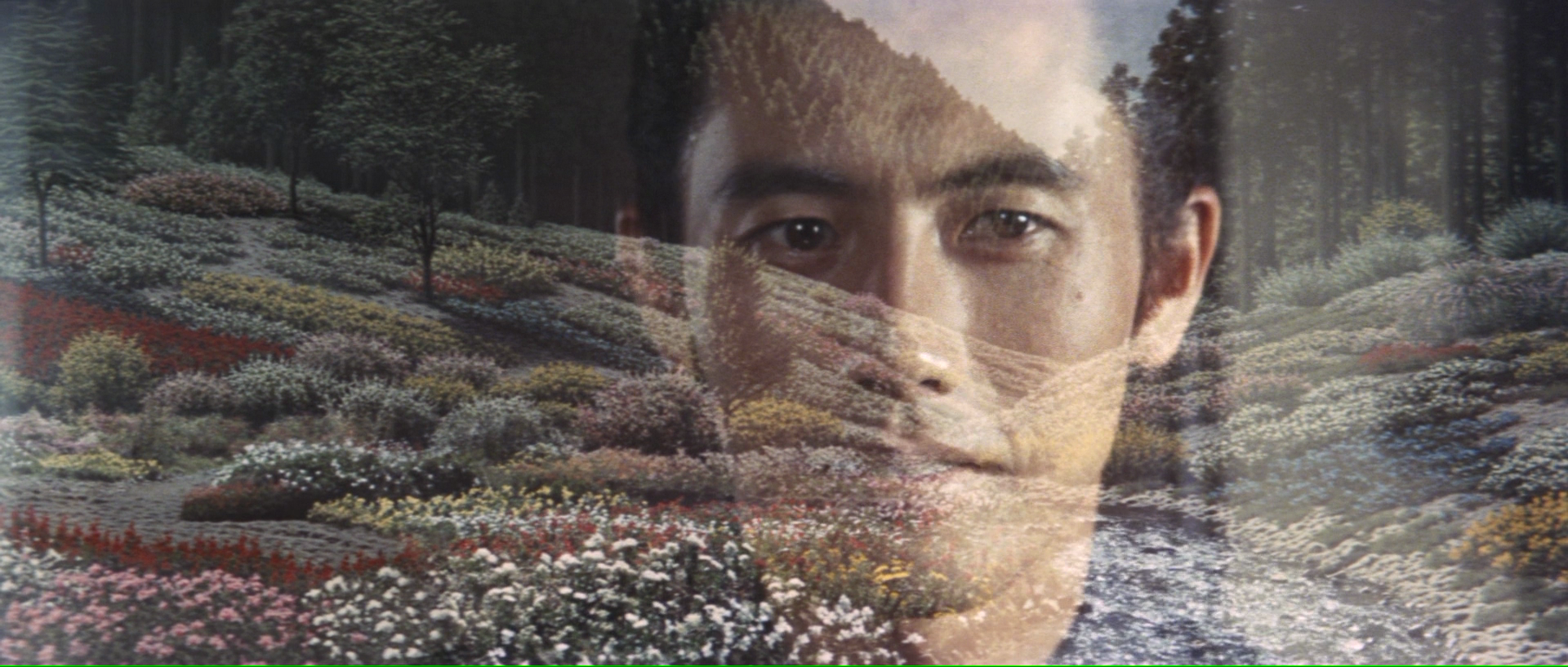
Perhaps overlooked in comparison with his better known contemporaries, Toshio Masuda was a bankable talent at Nikkatsu directing some of the studio’s biggest box office hits largely thanks to his long association with tentpole star Yujiro Ishihara. Nine years on from their collaborative debut Rusty Knife, however, times had perhaps begun to change. Featuring vibrant colour production design by Tokyo Drifter’s Takeo Kimura, a frequent Seijun Suzuki collaborator, 1967’s Velvet Hustler (紅の流れ星, Kurenai no Nagareboshi, AKA Like a Shooting Star) is a reworking of Masuda’s own Red Pier, itself inspired by Julien Duvivier’s 1937 French thriller Pepé le Moko, with Tetsuya Watari in the role originally filled by Ishihara. Apparently drawing inspiration from Godard’s Breathless, Velvet Hustler is a thoroughly post-modern retake, a parodic tale of gangster ennui and post-war emptiness in which rising economic prosperity has brought with it only despair. 

When we first meet petty gangster Goro (Tetsuya Watari), he’s coolly standing by, leaning on a fencepost like a bored gunslinger as he waits for the perfect getaway vehicle. Jumping into a fancy red convertible which it seems has already been stolen by the young man who parked it in this packed car park, the wires handily hanging striped and exposed, Goro barrels along the highway and and performs an infinitely efficient drive-by shooting on a rival gang boss. According to the man who hired him, Goro was only supposed to cause serious injury, not death, but as he points out if the guy insists on dying that’s hardly his problem. Taking his paycheque, Goro agrees to lie low in Kobe for the next six months after which his boss will come and get him. A year later, however, and he’s still there doing not much of anything, hanging out with the local kids and acting as a procurer dragging sailors on shore leave into gang-run clubs where Americans get into fights with Vietnamese émigrés. So desperate for escape are they that Goro’s underling even suggests they go to war, later thinking better of it when he remembers seeing horrific photos from the front.  

In a convenient but unsatisfying relationship with bar hostess Yukari (Kayo Matsuo), Goro explains that it’s not that he doesn’t like her, but he’s bored, “bored with fooling around with women”, but also of the business of living. The sun comes up, the sun goes down, and then it comes up again, every day all the same. His life has become completely meaningless and he has no idea what to do about it. He longs to go back to Tokyo, but is trapped in this strange Kobe limbo land, an end of the line sea port in which there is ironically no sense of escape. He doesn’t know it yet, but there’s a killer (Jo Shishido) on his trail, a killer who eventually reminds Goro that even if he kills him first another man will come. The bullets you fire are aimed squarely at yourself, Goro’s destiny is already set. There is only one way out of Kobe and it doesn’t lead back to Tokyo. 

Meanwhile, another possibility presents itself in the beautiful Keiko (Ruriko Asaoka), a temporary visitor from the capital looking for her missing fiancé presumed to have done a bunk with her father’s money. Keiko is a distinctly cool yet self-assured figure, generating an instant connection with the affable gangster at once reassured by a sympathetic mama-san that Goro is good but also warned that he’s still a yakuza and as such no good for a smart young woman like her. Keiko thinks that Tokyo is pretentious and boring, confused by Goro’s insistence on getting back there but like him perhaps in waiting. “I love you to death” she later ironically confesses while simultaneously insisting that men and women are different. There is no escape for her. Goro is tired of running but refuses to be handcuffed, choosing perhaps the only path to freedom presented to him. 

A nihilistic tale of gangster ennui in which life itself no longer has value, Velvet Hustler is a curiously cheerful affair despite its essential melancholy, Goro and Keiko sparring in a romantic war of attrition while he almost flirts with the dogged detective (Tatsuya Fuji) determined to bring him down. The kitschy production design gives way to Antonioni-esque shots of a strangely empty city while an ethereal sequence of dissolves eventually leaves the pair alone on the dance floor as if to imply their single moment of romance is but a brief dream of emotional escape. The trappings of post-war success are everywhere from Keiko’s elegant outfits to the cute red sports car and the weird club where Goro dad dances in front of his minions, not so much older than them but clearly out of place in this distinctly unhip seaside bar, but finally all there is is a dead end and an infinite emptiness the embrace of which is, perhaps, the only viable path to freedom. 


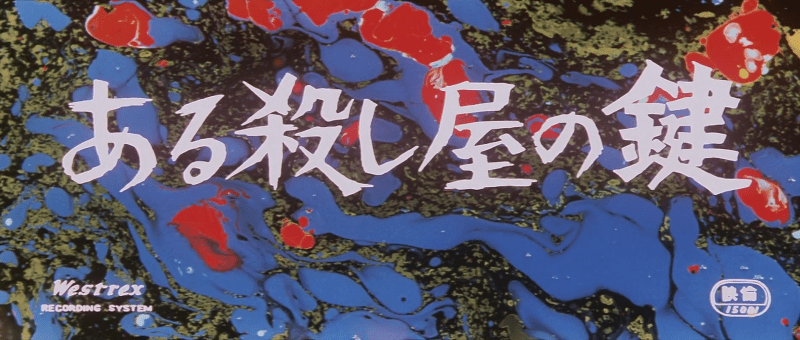
A Killer’s Key (ある殺し屋の鍵, Kazuo Mori, 1967)

Raizo Ichikawa returns as the jaded ace assassin only this time a little less serious. Set some time after the events of A Certain Killer, A Killer’s Key (ある殺し屋の鍵, Aru Koroshiya no Kagi) finds Shiozawa (Raizo Ichikawa) having left the restaurant business to teach traditional dance under the name Fujigawa while known as killer for hire Nitta in the underworld. Like the previous film, however, he thinks of himself as a justifiable good, standing up against contemporary corruption while still burdened by his traumatic past as a former tokkotai pilot. 

Nitta’s troubles begin when a corruption scandal kicks off with a prominent businessman, or less generously loan shark, arrested for tax evasion. Asakura (Asao Uchida) knows too much and political kingpin Hojo (Isao Yamagata) is worried because he knows Asakura has hard evidence about a land scandal and might be persuaded to spill the beans, exposing a circle of corrupt elitists for their shady goings on. He wants Asakura knocked off on the quiet, as he heavily implies but does not explicitly state to his underling Endo (Ko Nishimura) who gets in touch with their yakuza support who in turn decide that Nitta is the only man for the job.

Petty yakuza Araki (Yoshio Kanauchi) sells the job to Nitta as a public service, pointing out how unfair it is that Asakura has been cheating on his taxes when other people have taken their own lives in shame because they weren’t able to pay. Conveniently, he doesn’t mention anything about petty vendettas or that he’s essentially being hired to silence a potential witness before he can talk so Nitta is minded to agree, for a fee of course (which, we can assume, he won’t be entering on his tax form). Unfortunately things get more complicated for everyone when the gangsters try to tie up loose ends by engineering an “accident” for Nitta which sends him on a path of revenge not only taking out the gangsters but the ones who hired them too. 

Nitta’s revenge is personal in focus, but also a reflection of his antipathy to modern society as a man himself corrupted by wartime folly who should have died but has survived only to become a nihilistic contract killer. He perhaps thinks that the world is better off without men like Asakura, the dim yakuza, spineless underling Endo, and corrupt elitist Hojo but only halfheartedly. His potential love interest, Hideko (Tomomi Sato), a geisha learning traditional dance, has fallen for him, she says because she can see he’s not a cold man though continually preoccupied and there is indeed something in his aloofness which suggests that he believes in a kind of justice or at least the idea of moral good in respect of the men that died fighting for a mistaken ideal. 

As Hideko puts it, Asakura made his money off the suffering of others, so perhaps it’s not surprising that he met a nasty end. She herself is a fairly cynical figure, aware as a geisha that she is in need of a sponsor and that it’s better to get the one with the most money though she too has her code and will be loyal to whoever’s paying the bills. Or so she claims, eventually willing to sell out Endo to protect Nitta but disappointed in his continued lack of reciprocation for her feelings. Echoing his parting words at the close of the first film but perhaps signalling a new conservatism he coldly tells Hideko that he doesn’t need a woman who stays with anyone who pays refusing to include her in the remainder of his mission.

Nitta is perhaps a man out of his times as a strange scene of him looking completely lost in a hip nightclub makes clear. He tries to play a circular game, stockpiling his winnings in different suitcases stored in a coin locker, but eventually finds that all his efforts have been pointless save perhaps taking out one particular strain of corruption in putting an end to Hojo’s nefarious schemes. More straightforwardly linear in execution than A Certain Killer, Killer’s Key is a less serious affair, resting squarely on an anticorruption message and easing back on the hero’s wartime trauma while allowing his needle-based hits to veer towards the ridiculous rather than the expertly planned assassination of the earlier film, but does perhaps spin an unusual crime doesn’t pay message in Nitta’s unexpected and ironic failure to secure the loot proving that sometimes not even top hit men can dodge cosmic bad luck. 


Update, 13th February 2025: now available to stream via Arrow Player.

Original trailer (no subtitles)