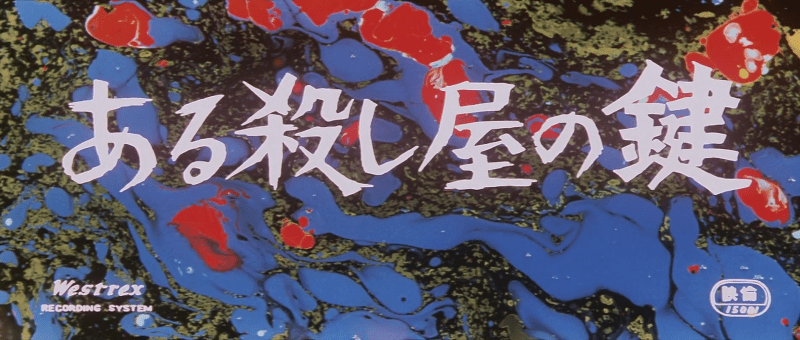

Raizo Ichikawa returns as the jaded ace assassin only this time a little less serious. Set some time after the events of A Certain Killer, A Killer’s Key (ある殺し屋の鍵, Aru Koroshiya no Kagi) finds Shiozawa (Raizo Ichikawa) having left the restaurant business to teach traditional dance under the name Fujigawa while known as killer for hire Nitta in the underworld. Like the previous film, however, he thinks of himself as a justifiable good, standing up against contemporary corruption while still burdened by his traumatic past as a former tokkotai pilot.
Nitta’s troubles begin when a corruption scandal kicks off with a prominent businessman, or less generously loan shark, arrested for tax evasion. Asakura (Asao Uchida) knows too much and political kingpin Hojo (Isao Yamagata) is worried because he knows Asakura has hard evidence about a land scandal and might be persuaded to spill the beans, exposing a circle of corrupt elitists for their shady goings on. He wants Asakura knocked off on the quiet, as he heavily implies but does not explicitly state to his underling Endo (Ko Nishimura) who gets in touch with their yakuza support who in turn decide that Nitta is the only man for the job.
Petty yakuza Araki (Yoshio Kanauchi) sells the job to Nitta as a public service, pointing out how unfair it is that Asakura has been cheating on his taxes when other people have taken their own lives in shame because they weren’t able to pay. Conveniently, he doesn’t mention anything about petty vendettas or that he’s essentially being hired to silence a potential witness before he can talk so Nitta is minded to agree, for a fee of course (which, we can assume, he won’t be entering on his tax form). Unfortunately things get more complicated for everyone when the gangsters try to tie up loose ends by engineering an “accident” for Nitta which sends him on a path of revenge not only taking out the gangsters but the ones who hired them too.
Nitta’s revenge is personal in focus, but also a reflection of his antipathy to modern society as a man himself corrupted by wartime folly who should have died but has survived only to become a nihilistic contract killer. He perhaps thinks that the world is better off without men like Asakura, the dim yakuza, spineless underling Endo, and corrupt elitist Hojo but only halfheartedly. His potential love interest, Hideko (Tomomi Sato), a geisha learning traditional dance, has fallen for him, she says because she can see he’s not a cold man though continually preoccupied and there is indeed something in his aloofness which suggests that he believes in a kind of justice or at least the idea of moral good in respect of the men that died fighting for a mistaken ideal.
As Hideko puts it, Asakura made his money off the suffering of others, so perhaps it’s not surprising that he met a nasty end. She herself is a fairly cynical figure, aware as a geisha that she is in need of a sponsor and that it’s better to get the one with the most money though she too has her code and will be loyal to whoever’s paying the bills. Or so she claims, eventually willing to sell out Endo to protect Nitta but disappointed in his continued lack of reciprocation for her feelings. Echoing his parting words at the close of the first film but perhaps signalling a new conservatism he coldly tells Hideko that he doesn’t need a woman who stays with anyone who pays refusing to include her in the remainder of his mission.
Nitta is perhaps a man out of his times as a strange scene of him looking completely lost in a hip nightclub makes clear. He tries to play a circular game, stockpiling his winnings in different suitcases stored in a coin locker, but eventually finds that all his efforts have been pointless save perhaps taking out one particular strain of corruption in putting an end to Hojo’s nefarious schemes. More straightforwardly linear in execution than A Certain Killer, Killer’s Key is a less serious affair, resting squarely on an anticorruption message and easing back on the hero’s wartime trauma while allowing his needle-based hits to veer towards the ridiculous rather than the expertly planned assassination of the earlier film, but does perhaps spin an unusual crime doesn’t pay message in Nitta’s unexpected and ironic failure to secure the loot proving that sometimes not even top hit men can dodge cosmic bad luck.
Update, 13th February 2025: now available to stream via Arrow Player.
Original trailer (no subtitles)

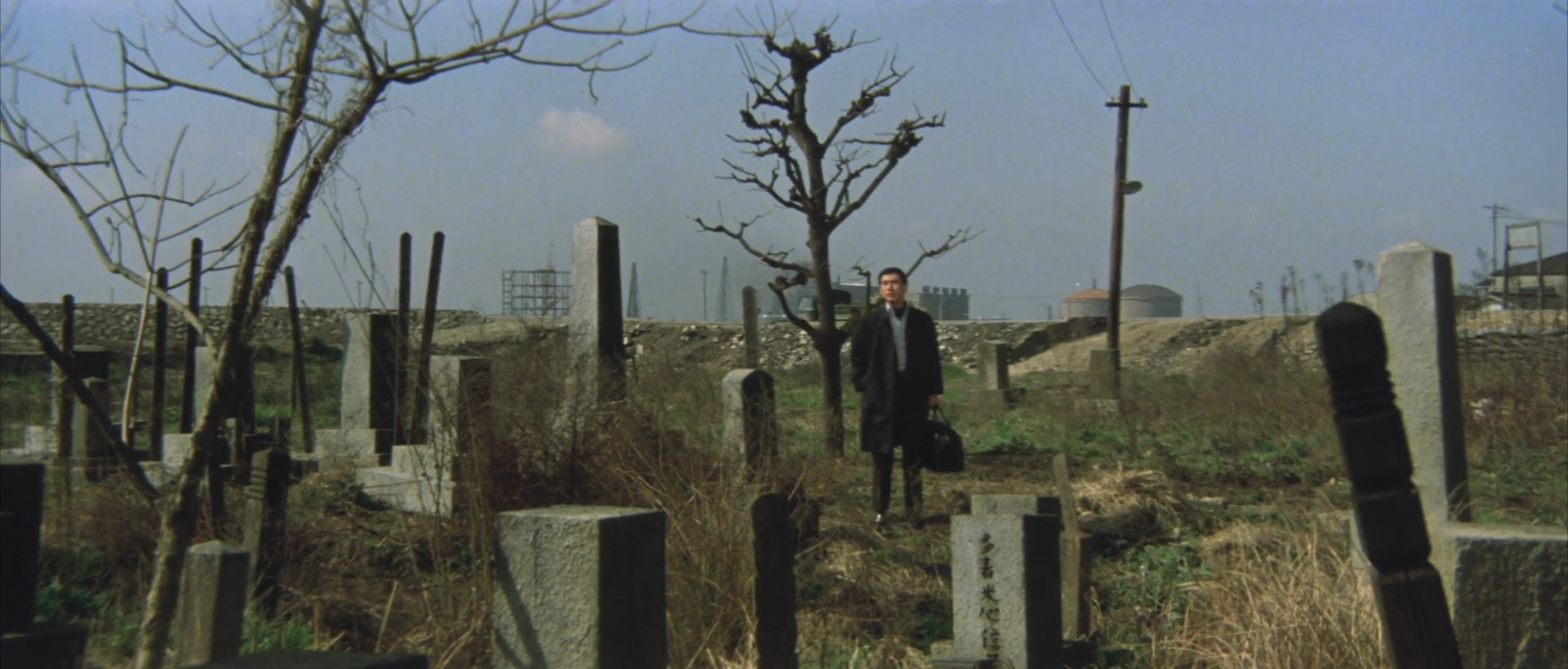


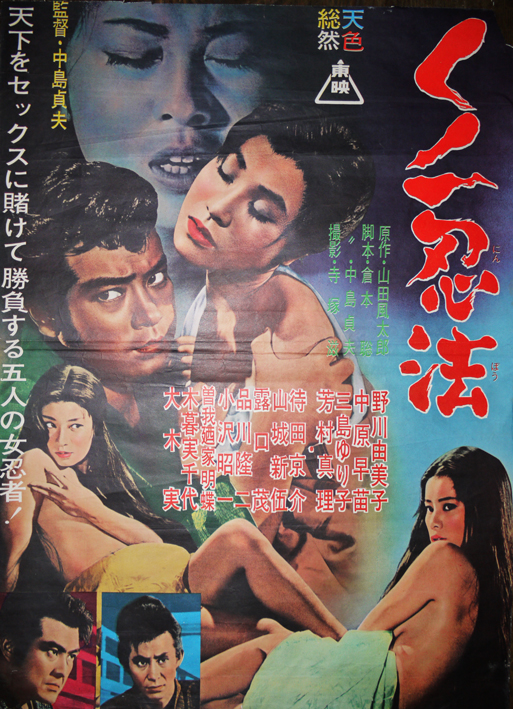
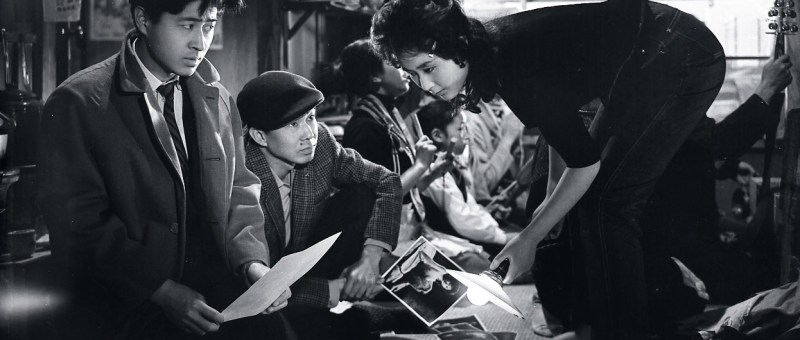

 Edogawa Rampo (a clever allusion to master of the gothic and detective story pioneer Edgar Allan Poe) has provided ample inspiration for many Japanese films from
  Japanese cinema has not been as shy as might be supposed in examining uncomfortable topics concerning the nation’s mid 20th century history but perhaps prefers to tackle them from a subtle, sideways viewpoint. By a Man’s Face Shall You Know Him (男の顔は履歴書, Otokonokao wa Rirekisho) is, in essence, a fairly straightforward gangster pic – save that the rampaging gangsters are a mob of “zainichi” Koreans rather than post-war yakuza or petty hoodlums. Less about what it is to be an outsider or the quest for identity in second generation immigrants, Kato’s film is about what it says it is about – a man’s face.
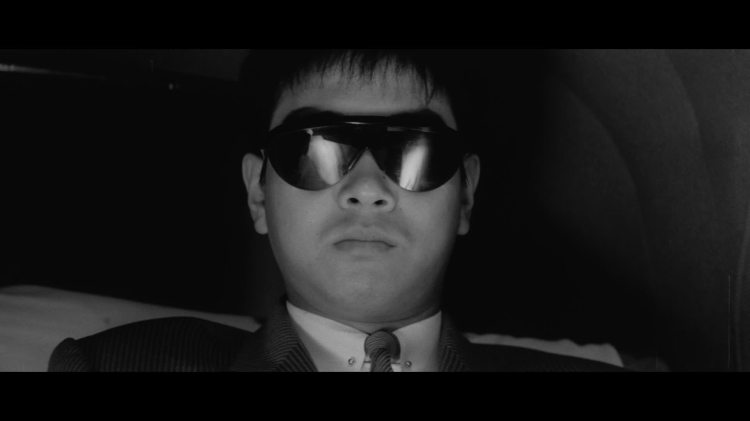 Loosely inspired by Julian Duvivier’s 1937 gangster movie Pépé le Moko, Toshio Masuda’s Red Pier (赤い波止場, Akai Hatoba) was designed as a vehicle for Nikkatsu’s rising star of the time, Yujiro Ishihara – later to become the icon of the Sun Tribe generation. On paper it sounds like a fairly conventional plot – young turk of a gangster comes to town to off a guy, sees said guy killed in an “accident”, and shrugs it off as one of life’s little ironies only to accidentally become acquainted with and fall head over heals for the dead guy’s sister. So far, so film noir yet Masuda adds enough of his own characteristic touches to keep things interesting.
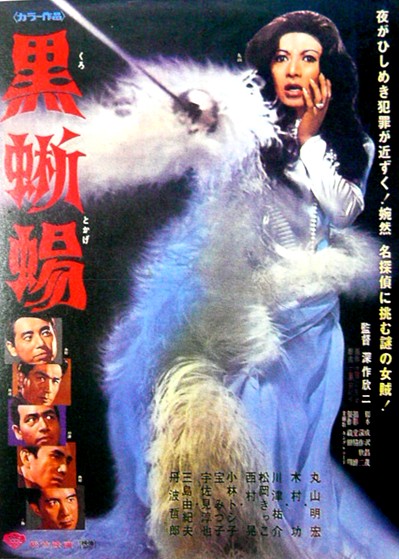 Those who only know Kinji Fukasaku for his gangster epics are in for quite a shock when they sit down to watch Black Rose Mansion (黒薔薇の館, Kuro Bara no Yakata). A European inflected, camp noir gothic melodrama, Black Rose Mansion couldn’t be further from the director’s later worlds of lowlife crime and post-war inequality. This time the basis for the story is provided by Yukio Mishima, a conflicted Japanese novelist, artist and activist who may now be remembered more for the way he died than the work he created, which goes someway to explaining the film’s Art Nouveau decadence. Strange, camp and oddly fascinating Black Rose Mansion proves an enjoyably unpredictable effort from its versatile director.
 Suffice to say, if someone innocently asks you about your hobbies and you exclaim in an excited manner “blackmail is my life!”, things might not be going well for you. Kinji Fukasaku is mostly closely associated with his hard hitting yakuza epics which aim for a more realistic look at the gangster life such as in the
