A Fishwife’s Tale (魚河岸の女石松, Eiichi Kudo, 1961)

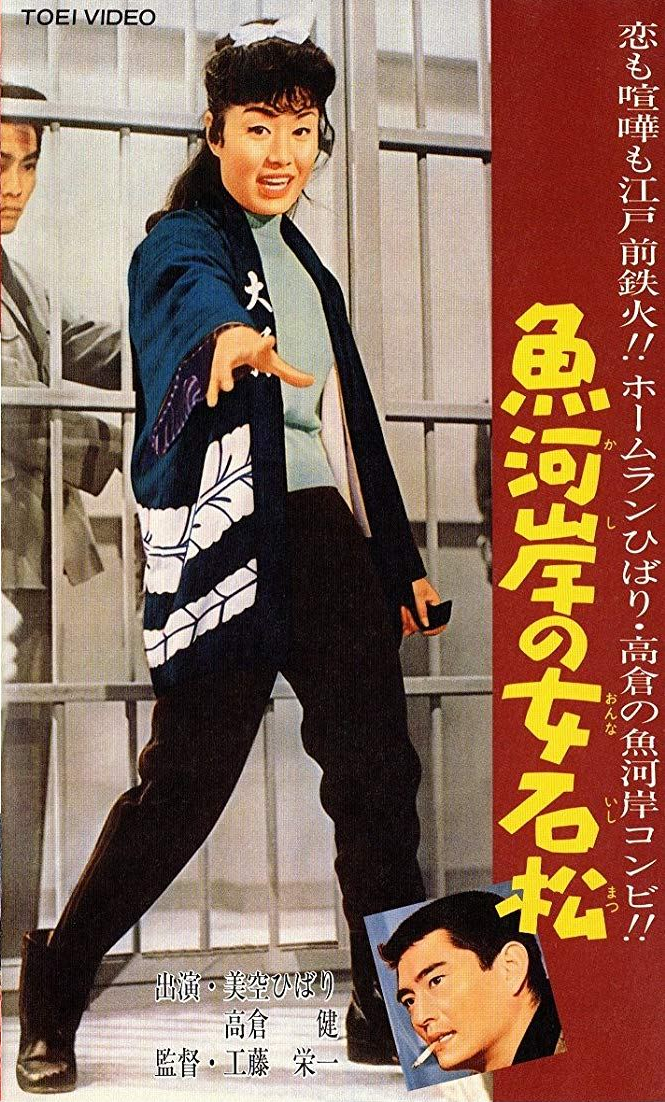
A Fishwife's Tale VHS coverWho better to take on post-war corruption and personal injustice than Hibari Misora? In another of her typically feisty roles, Hibari stands up for her friends, her community, and her family when they are threatened by the exploitative forces of the tabloid press, rubbish boyfriends, and evil corporations all while accidentally falling in love with Ken Takakura in an early role as cynical reporter with a heart of gold. Eiichi Kudo may be best remembered for a string of samurai movies in the ‘60s including 13 Assassins and The Great Killing, but like many of his generation he made a fair few programme pictures including several starring Hibari Misora of which A Fishwife’s Tale (魚河岸の女石松, Kashi no Onna Ishimatsu) is one.

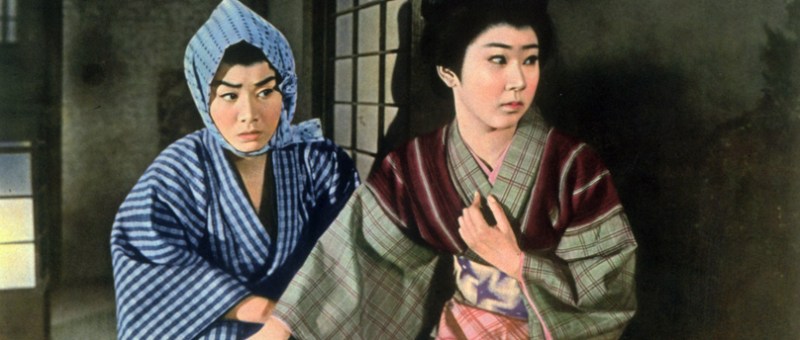
Kudo opens with stock footage of a small fishing harbour which is all aflutter with the arrival of some unusual outsiders. A photographer from a “magazine” has arrived claiming that he wants to document the lives of ordinary working class people from the fishing industry. While some of the young women doll themselves up and plead with the photographer, “Lady Ishimatsu”, Keiko Kano (Hibari Misora), steals all the attention by defiantly rolling through in her truck ready for a day’s work. As predicted Keiko doesn’t want anything to do with this photography nonsense, and as it turns out she was right not to. The guys aren’t from the Sundays or National Geographic, they’re a scandal rag and they’ve bulked out their story with a lot of made up rubbish about the “sexy lives of fishwives” which paints them all as predatory nymphomaniacs. Matters come to a head when Keiko’s friend Yoko (Yukiko Nikaido) tries to kill herself in shame because of the paper’s implication that she’s a loose woman which causes her wealthy boyfriend to dump her (luckily, she’d mixed up tummy tablets with sleeping pills so thankfully survived even if feeling a little sick and silly).

The newspaper business has a second unforeseen consequence. When Keiko stands up to the achingly cool reporter, he realises she’s connected to another case he’s working on. Across town, a canned food magnate is facing ruin thanks to a standards scandal and is also earnestly searching for his long lost daughter, born to a geisha 20 years earlier and then adopted by another family. Dogged reporter Kitagawa (Ken Takakura), recognising the necklace around Keiko’s neck, wonders if she might be the girl Tachibana’s looking for. When it turns out that he’s right, Keiko’s world turns upside-down. Tachibana (Eijiro Yanagi), overjoyed to have found his daughter, goes about everything the wrong way and tries to take her back from her loving home with the promise of wealth and comfort, but Keiko loves her parents even if they aren’t hers by blood and resents the attempt to drag her away. 

Nevertheless, when the two cases turn out to be even more connected thanks to Yoko’s terrible boyfriend being the no good son of one of the conspirators, and Mr. Tachibana falling ill though the stress of his situation, the entire family reconsiders if they haven’t perhaps been selfish in resolutely rejecting a lonely old man trying to make up for a past mistake. Keiko becomes committed to standing up to the bullies. “We’re still young, as long we’re alive we’ll resist you” she tells her biological father’s arch enemy in what might as well be a rallying cry for post-war youth fed up with the corrupted older generation.

Then again perhaps things don’t change all that much. Rather than a salt scam or rice profiteering, this time it’s fiddling with the labels on tin cans but ordinary people are still having their food supply tampered with by those with enough money not to need to worry so much about food security – the amoral petty samurai of the Edo era have merely become amoral businessmen in the dog eat dog post-war world.

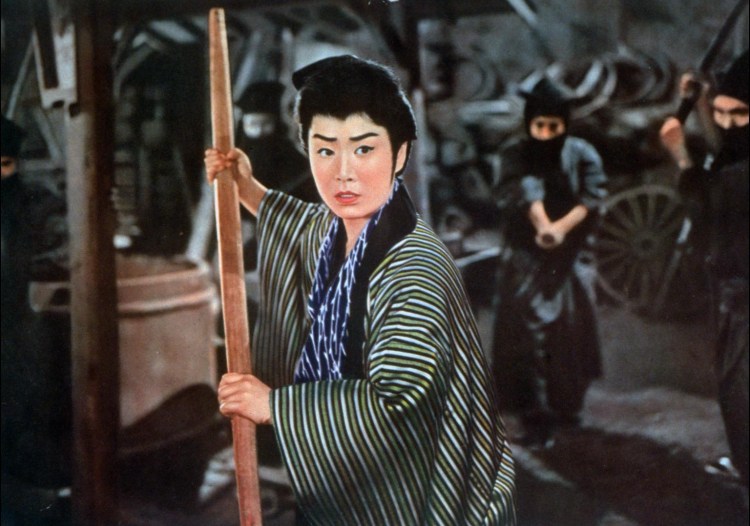
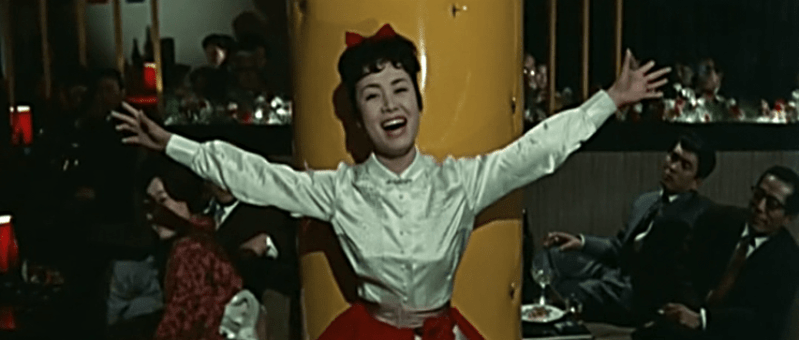
Comparatively light on song and dance – Hibari sings the title track as she drives in on her truck, hums a few tunes, and gets one dramatic musical number when she goes undercover as a nightclub singer to spy on the bad guys, Kudo ups the action quotient as Hibari makes herself the chief of the fishwives and takes on the photographers, sneaks around investigating, and then starts a full on brawl with goons in the final showdown. This time around the romance between frequent co-stars Hibari Misora and Ken Takakura is spiky and sparky, fuelled by Keiko’s strange positioning as a “tomboyish” bossy boots more at home in her truck and wellies than prancing around for the camera like the other girls. Oddly warm and filled with rebellious energy, A Fishwife’s Tale is, in its own quiet way, perhaps subversive in allowing a little political spirit of the age to creep in around the edges as Keiko steps forward to stay true to her roots, opposing injustice wherever she sees it and always acting on her own initiative.


Selection of scenes from the movie including Hibari’s big club number (no subtitles)

https://www.youtube.com/watch?v=o2C9SlTD278

Maintitles song – Hibari no Dodonpa
https://www.youtube.com/watch?v=LnATqXSHqbc

Ghost in the Well (怪談番町皿屋敷, Toshikazu Kono, 1957)

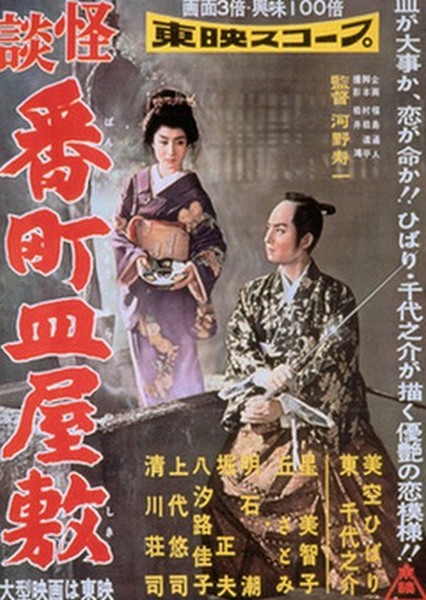
Ghost in the Well poster 2Love across the class divide threatens to overthrow the social order. Inspired by the classic folktale Bancho Sarayashiki, Ghost in the Well (怪談番町皿屋敷, Kaidan Bancho Sarayashiki) is indeed the story of a haunting though perhaps not altogether of the kind you might be expecting. This is a tale of romance, but also one of impossible love in which the only possible union is in death. The pure love of a servant girl is deemed incompatible with the oppressive world of samurai honour, and so she must die, but her lord cannot survive it. He cannot reconcile himself to having chosen to preserve his honour, his status, his lineage at the cost of her life and his love.

Rowdy samurai Harima (Chiyonosuke Azuma) loves making trouble in the streets. As the lord’s bannerman he knows he has a degree of status and likes to throw his weight around in the yoshiwara, much to the lord’s consternation. Harima has also taken a fancy to one of his maids, Okiku (Hibari Misora), who continues to reject his advances despite returning his affections because she knows the class difference makes a legitimate relationship between them impossible and a dalliance with her lord means losing the opportunity to marry anyone else. Harima tells her that there’s no such thing as status when it comes to love and that he doesn’t think of her as a passing infatuation. Eventually Okiku gives in and a kind of promise is made between them.

Nevertheless, it’s a promise which can’t be kept. The Aoyama family is in trouble and the obvious answer is to make a good match for Harima that will restore both status and wealth. When one of Harima’s friends is ordered to commit seppuku for the exact same petty punk antics Harima gets up to all the time matters come to a crunch. To keep him safe, Harima’s uncle arranges a marriage with an influential family. Harima tries to refuse but he too is more or less powerless even if he weren’t torn between the obligation to his samurai code and his illicit love for servant girl whom he would never be permitted to make his wife. To cement the match, Harima’s uncle has prepared 10 precious plates as a dowry, but Okiku, catching sight of Harima’s bride-to-be, drops one and breaks it in two. Her fate is sealed. Harima draws his sword on her and she backs away, eventually falling into the well and dying there.

The broken plate is, of course, a symbol of their broken covenant but also of Okiku’s shattered dreams as she watches a beautiful but haughty woman steal away her last hope of happiness solely through the accident of noble birth. As her friend tells her, a commoner cannot become the wife of a samurai and all Okiku can do is resign herself to her unhappy fate. Having broken the plate, however, all is lost. The men of the household admit their responsibility for entrusting the entirety of their future to a mere slip of a girl in the middle of intense heartbreak, but Okiku cannot go unpunished and Harima must claim his new life by destroying his past love.

Harima does what he’s supposed to do, if in passion and half by accident. Yet the marriage remains broken, the family in jeopardy, and Harima without hope of future. The ghost of Okiku, real or imagined, haunts him while he remains guilt ridden and filled with regrets. Despite his rowdiness and manly pride, he chose his samurai honour and condemned his one true love to a lonely death. Her love has, however, survived and resurrected her not as a demon of vengeance come to lead him to his doom but as a lovelorn woman keen to remind him of the promise he made and broke but which might be mended.

Harima pays for his transgressions, though more as a mischievous samurai who allowed his over inflated ego to convince him he had the right to oppress his fellow retainers than as a man who caused the death of an innocent woman, first by corrupting her and then by the same rigidity which has led to his present predicament. There can be no “love” in a such a society, let alone the love of a bannerman and a servant girl. Theirs is a blood wedding, uniting them in death, consumed by the impossibilities of the samurai era. At only 45 minutes, Ghost in the Well is perhaps a slight retelling of the tale and somewhat in imbalanced in its presentation of the fates of the two lovers but is nevertheless a refreshingly romantic take on an often dark story in which a scorned woman’s vengeance is reframed as a powerful condemnation of an oppressive society.


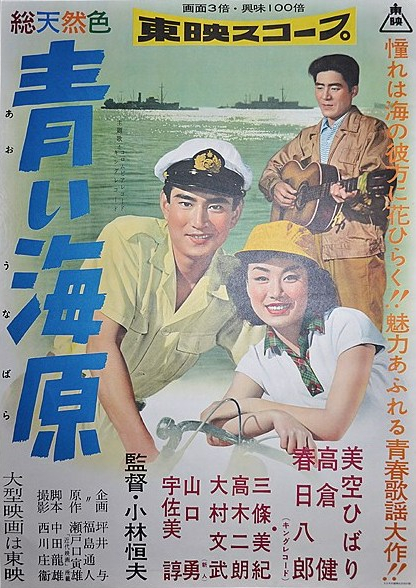
The Deep Blue Sea (青い海原, Tsuneo Kobayashi, 1957)

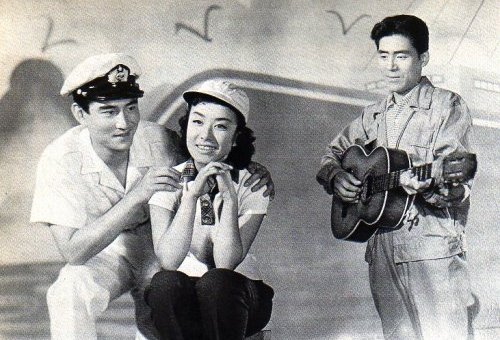
Deep Blue Sea posterHibari Misora turned 20 in 1957, but she’d already been working for eight years and was well on her way to becoming one of the most successful stars of the post-war era. The Deep Blue Sea (青い海原, Aoi Unabara) is one of her earliest grown up musical dramas and finds her sharing the bill with another of the biggest acts of the day in Hachiro Kasuga who, despite being stuck in second lead limbo, does the bulk of the musical heavy lifting. It also sees her star opposite an actor who would become her frequent leading man which might come as something of a surprise to those most familiar with his later work – Ken Takakura, then very fresh faced and playing the juvenile lead.

The action begins with Takakura’s Ken as the stranger who walks into town. In fact he’s not that much of a stranger – he runs into an acquaintance, Saburo (Hachiro Kasuga), right away, but he’s come on a mission. He’s looking for the friend of a man who died in an accident on his boat in order to give him a photograph and some money he’d saved for the daughter he had to leave behind. Before any of that happens, however, he ends up in a meet cute with Misora’s Harumi who manages to tip a whole bucket of water over him, and then later a jug of beer when he fetches up at the bar where she works (and where Saburo is a regular). As coincidence would have it, the man Ken is looking for also lives at the bar and is actually Harumi’s father. Harumi never knew she was adopted and is stunned when she overhears the conversation between the two men but decides to go on pretending not to know anything.

The real drama revolves around a lecherous gangster, Sakazaki (Isamu Yamaguchi), who is having an “affair” with the owner of the bar where Harumi and her dad live. He’s taken a liking to Harumi who wants nothing to do with him, but when her dad gets into an accident and needs money for medical treatment, Saburo makes a deal and unwittingly gives him an additional angle to start railroading Harumi into his arms.

Director Tsuneo Kobayashi would later be best known for genre pieces and tokusatsu. Besides some quite beautiful and unusually convincing work with backdrops, there are no shocks or special effects in Deep Blue Sea but there is plenty of music, most of it sung by Hachiro Kasuga with Misora taking centre stage for a few solo numbers of her own as well as humming an odd tune here and there. Despite not being an integrated musical (all of the songs have a diegetic genesis) and in contrast with many of Misora’s films, The Deep Blue Sea is otherwise a fairly typical musical drama in which the songs drive the narrative rather than being an aside to it.

It does however begin to blur genres, shifting into familiar Toei territory with the introduction of the sleazy yakuza tough guys who are willing to go to quite a lot of trouble to ruin the life of an ordinary girl like Harumi. The central romance follows a familiar pattern as Ken comes to care about Harumi and her dad through his connection with her birth father and becomes their noble protector, while Saburo, who’d silently harboured a crush on Harumi all along hovers sadly on the sidelines, wanting to support his friends in their romantic endeavour but also somewhat grateful when Ken decides to sacrifice himself on Harumi’s behalf. Ken’s sacrifice, however, doesn’t entirely work – you can’t get rid of men like Sakazaki through honest or logical ways and simply paying them off is never enough, in fact it might just make everything worse.

The Deep Blue Sea may be a little darker than most musical romances with its seedy port town setting, gangsters, smuggling action, and the constant sense of things always floating away with the boats that come and go, but in true musical fashion it all works out in the end. Despite learning that she is adopted and that a wealthier blood relative was keen to take her in, Harumi chooses to stay with her adopted father, steadfastly choosing real feeling over blood ties or pragmatic concerns – unlike the greedy bar owner who steals the money her father left her, or the nefarious gangster who tries to manipulate her into giving up her principles and stepping into his world of betrayal and avarice. As usual for a Toei film, the forces of good (for a given definition of “good”) eventually triumph and the bad pay for all their mistakes while the merely unlucky accept their fates with good grace and resolve to make the most of new opportunities. It may not have made any great waves, but The Deep Blue Sea is cheerful and fun and chock full of post-war humanism as the noble Ken comes to the rescue of the goodhearted Harumi and her steadfast father to stand up against the forces of corruption.


Some of Hibari’s musical numbers (no subtitles)

https://www.youtube.com/watch?v=3pInl0wDGHY

Hibari Ohako: Ojo Kichisa (ひばり十八番お嬢吉三, Yasushi Sasaki, 1960)

Ojo Kichisa still 1Following Benten Kozo, Ojo Kichisa (ひばり十八番お嬢吉三, Hibari Obako Ojo Kichisa) is the second in a small series of movies starring Hibari Misora in a tale adapted from a well known kabuki play and featuring a cross dressing hero/heroine. This time around Misora plays a young woman dressing as a man for the purposes of revenge who eventually meets up with two men sharing the same “Kichisa” name – a lord (Obo), and a priest (Osho), to form a brotherhood of three including her “Ojo” as in “young lady”. Together they fight the injustices of the feudal world (which are myriad) whilst helping Ojo Kichisa get revenge on the men who murdered her parents forcing her into a precarious life of self preservation.

Beginning with Misora singing the title song of the three Kichisa, the action then switches to a small drinking house where a young woman gets herself into trouble with a bossy samurai who accuses her of spilling sake on him. Though the woman, Otose (Eiko Maruyama), apologises profusely, the samurai threatens to make her pay with her body. Fortunately Ojo Kichisa strides in and fights the samurai into submission, temporarily saving the day. Unfortunately, the samurai come back later brandishing a loan agreement Otose’s father had signed and demand immediate repayment or they will take Otose in its stead.

Once again the feudal world is one of intense unfairness and corruption in which the samurai class abuse their privilege to oppress the ordinary men and women of the Edo era. The samurai who takes such extreme offence at Otose’s possible slip-up has no real reason to do so other than expressing his superiority and once humiliated by Ojo Kichisa feels himself duty bound to double down. The samurai order looks after its own and so his underlings spring into motion to manipulate Otose’s family into giving her up. The two loan sharks gleefully celebrate their good luck, confessing that a major reason for lending money to the needy is for occasions such as this – not only for the interest but for the leverage in getting the desired outcome in ongoing schemes.

Meanwhile, there is a bigger game at play concerning the new finance minister and local governor. The governor accepts “gifts” from a shopkeeper hoping to be promoted onto the council whilst subtly hinting that more “gifts” might be an idea while he needs to be turning a blind eye to the smuggling that’s currently going on in town. Of course, the governor turns out to be involved in Ojo Kichisa’s mission too and is currently being blackmailed by an old acquaintance who once helped him steal a famous sword from its rightful owner.

Another of Misora’s frequent cross-dressing roles, Ojo Kichisa starts out as male but is later revealed to be female having adopted male dress to survive in male dominated Edo and pursue revenge on those who rendered her an orphan. After losing her parents, Ojo Kichisa and her young brother Sannosuke (Takehiko Kayama) were travelling in search of relatives when they were abducted by slave traders and separated. Presumably, both managed to escape at some point and have been living by their wits vowing revenge and reunification but apparently largely untouched by the darkness of feudal society.

The darkness is something which gets pushed into the background in this otherwise comedic tale of the little guy standing up to corrupt elites. The three Kichisas each represent various areas of society – the priest, the noble lord who hates the cruelty of his class, and the elegant lady, Ojo. Obo Kichisa (Tomisaburo Wakayama), the lord with a conscience, is committed to protecting the weak and fighting injustice everywhere he sees it, but it’s not long before pretty much everyone has decided the governor has to go thanks to his inherently corrupt approach to governing in which he’s all about take and never about give, neglecting the townspeople under his care and prioritising his personal gain.

Hibari Misora sings the title song twice – at the opening and closing, as well as another insert song but her brother Sannosuke also gets an opportunity to showcase his singing his voice in a mild departure from the star vehicle norm (actor Takehiko Kayama was also Misora’s real life brother). As in Benten Kozo, Wakayama takes on the bulk of the heroic fighting but Misora gives it her all in the many fight scenes in which she too gets to defeat injustice and rescue maidens to her heart’s content. A straightforward jidaigeki idol movie, Ojo Kichisa is unremarkable in many ways but nevertheless another entertaining example of Misora’s talent for playing ambiguous gender roles.


Hibari Ohako: Benten Kozo (ひばり十八番 弁天小僧, Yasushi Sasaki, 1960)

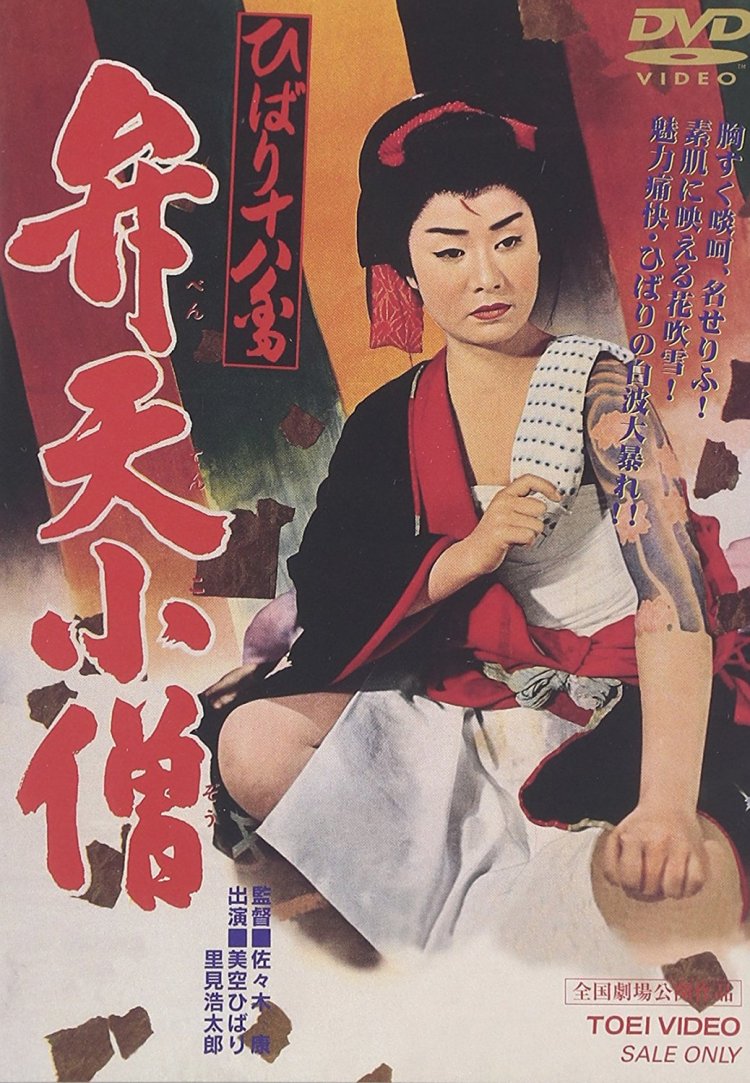
Benten Kozo dvd coverStarting out as a child actress, Hibari Misora was one of the biggest singing and acting stars of the post-war period whose songs are often pointed to as embodiments of the era’s melancholy yet determined spirit. Though it’s her singing career which has perhaps had the most historical impact, Misora made an immense number of films most of them in ’50s and ‘60s, many typical star vehicles of the time – silly comedies and softer musicals, usually finding an opportunity or two for a song even in straight drama. Hibari Ohako: Benten Kozo (ひばり十八番 弁天小僧), released in 1960 for Toei, is very much of this mould and showcases another somewhat interesting facet of Misora’s career in her readiness to play ambiguous gender roles.

Based on the well known kabuki play, Benten Kozo, which had also been adapted two years previously in a version starring male actor Raizo Ichikawa, Sasaki’s film stars Hibari Misora in the title role – a 13 year old boy who was given up at birth to be raised in a temple which specialises in performing Noh theatre. Kikunosuke (Hibari Misora) is their star, but there’s a dark side to temple performing companies in that they’re dependent on donations and it’s accepted practice to allow wealthy patrons to do whatever they like with the talent, no matter their age or gender. Kikunosuke knows this and isn’t having any of it. Pushed into a room with a lecherous, overly made-up older woman, Kikunosuke balks at the old monk’s attempts to pimp him out and tries to leave, much to the monk’s disappointment.

Unfortunately, just as Kikunosuke is leaving, a thief arrives to steal the money meant for the monk and kills the old woman in the process. Kikunosuke kills the thief but is accused of killing the old woman too and is forced on the run. Tracking down his birth mother, Ofuji (Mitsuko Miura), Kiku thinks he’s found a home but is betrayed, at which point he adopts the name “Benten Kozo” (lit. “Benten Kid” where Benten is the name of the goddess at the temple where he was raised) and joins a gang of Robin Hood-style outlaw thieves.

Like many period films of the time, Benten Kozo revolves around exposing the corruption of the samurai order. In this case, it’s a salt scam – the samurai elders have been stockpiling salt to push the price up, endangering the lives of ordinary people for their own financial gain and thinking nothing of it. The thieves, led by later Lone Wolf and Cub star Tomisaburo Wakayama, are dedicated to robbing the rich to feed the poor but they also aim to expose those in power for the reckless bullies they really are. Benten Kozo joins the “Shiranami Five Alliance” both out of self preservation and out of genuine sympathy with their cause, eventually encountering the same corrupt monk who turned a blind eye to his attempted molestation when he intervenes to save a woman forced into prostitution to pay her father’s debt whom the monk was attempting to rape.

Benten Kozo listens to the woman’s story and decides to give her his savings (which he no longer wants after being betrayed by his mother for whom he’d been saving the money) to pay off her family debt. In fact the pair met earlier when Benten Kozo was on the run and she helped him hide from the authorities. The woman, like several in the film, falls for Benten Kozo’s androgynous charms though he remains resolutely noble and indifferent. Benten Kozo would originally have been played by a male actor on the kabuki stage which did not allow female performers. The “onnagata” or actors who specialised in playing women were often effeminate younger men or boys much like Benten Kozo himself who plays these skills to the max throughout the film.

Hibari Misora, with her low, husky voice, effortlessly switches between the elegant upperclass women Benten Kozo impersonates on stage and in service of the gang’s scams, and the rough and ready dialect of a street ruffian. In a shocking display of bravado, Benten Kozo drops the top of his kimono to show his off his tattoos proving once and for all that he’s no lady but still his appeal lingers perhaps precisely because of his gender ambiguity.

Benten Kozo is not a musical but finds two occasions for Misora to sing – once as Benten Kozo takes off on the road, and the other at the end as he paddles a boat away back to his new found friends. The film ends with a giant mass brawl and also provides ample scope for Misora to escape across roof tops and fight off the unjust but it’s otherwise fairly straightforward fare and not exactly among the singer’s most memorable outings. It is however generally entertaining and interesting enough in its central theme of woman playing man playing woman to warrant attention from more than just diehard Misora fans.


Hibari Misora singing Benten Kozo in concert some years later.

With Song in Her Heart (希望の乙女, Yasushi Sasaki, 1958)

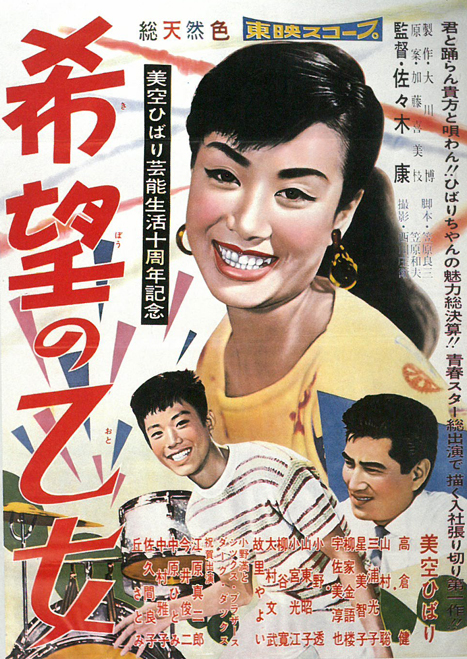
song in her heartAnother vehicle for post-war singing star Hibari Misora, With a Song in her Heart (希望の乙女, Kibo no Otome) was created in celebration of the tenth anniversary of her showbiz debut. As such, it has a much higher song to drama ratio than some of her other efforts and mixes fantasy production numbers with band scenes as Hibari takes centre stage playing a young woman from the country who comes to the city in the hopes of becoming a singing star.

After beginning with a rural, almost cowboy-style number in which Hibari appears as the well dressed lady of the manor, Sayuri, riding her horse across the wide pastureland, the action quickly moves to the city when Sayuri’s mentor finally convinces her uncle that her future lies in showbiz and not an early marriage as he had envisioned. However, once she gets there she finds her potential tutor extremely unwilling to fulfil his promise to take her on. After winning him over, she quickly makes friends with the locals who also want the singing teacher to become the leader of a band they’ve formed in the hopes of raising some money to build a proper children’s playground to stop them playing in dirty ditch land nearby which is a well known health hazard. Soon enough the band takes off but there’s more trouble ahead for Hibari and co. as they are betrayed by those closest to them.

Working as a celebration of Hibari’s career so far With a Song on Her Heart is filled with excuses for Hibari to sing both as a music student and band vocalist as well as fantasy production numbers some of which are even bigger on dance than on song. The plot is quite simple but there is a lot of it, in contrast to other films of this kind, as Hibari sets about healing the grief stricken heart of her bandleader and fulfilling the hopes of the ordinary people turned musicians through the power of song. The romance element is a light one and not the focus of the film but bears mentioning as Hibari’s love interest is played by Ken Takakura – the archetypical star of the yakuza movie who was to marry fellow singing sensation (and frequent Hibari Misora co-star) Chiemi Eri the following year.

Despite its nature as a celebratory project, With a Song in Her Heart doesn’t quite meet the high production standards of other Misora starring films. Shot in colour and in 2.35:1, the majority of the film is studio bound (often very obviously so) with simple sets and a straightforward directing style. Nevertheless, even if it fails to impress on a technical level, With a Song in Her Heart knows what it’s about and so it makes sure to fill its relatively short duration with as many songs as possible, light romance and a cheerful atmosphere of people coming together to try and solve a social problem through spreading love and joy in the form of music. The musical styles are unusually varied embracing Hibari Misora’s regular ballads as well as mixing in world influences from mariachi to african drums with a strong big band jazz undercurrent.The overall feeling is one of goodnatured wholesomeness and even if low on impact With a Song on Her Heart is a decent showcase for Hibari Misora’s talents as she celebrates her tenth year in the business at the age of only 21.


Utae! Seishun Harikiri Musume (歌え!青春 はりきり娘, Toshio Sugie, 1955)

vlcsnap-2016-07-04-00h41m46s630Hibari Misora was one of the leading lights of the post-war entertainment world. Largely active as a chart topping ballad singer, she also made frequent forays into the movies notably starring with fellow musical stars Izumi Yukimura and Chiemi Eri in the Sannin Musume series. This solo effort from 1955 is directed by the Sannin Musume director Toshio Sugie and follows a similar approach with the 18 year old Hibari starring as a teenage girl who looks really like Hibari Misora (but unfortunately cannot sing).

Hibari is playing a teenager here but she’s left school and is working as a bus conductoress. Bright and cheerful in her work, she takes some ribbing from the other employees because of her resemblance to the singing star (she has a large beauty mark drawn on her right cheek to make sure we know she’s not the “real” Hibari) and is a little embarrassed when they ask her to sing something because unlike her doppelganger, she’s tone deaf. Hibari lives at home with her mother and younger brother who’s still in school but their father seems to have left the household and there’s a degree of discord between the couple. Hibari tries to get her parents back together so they can live as a family whilst also maintaining her bus job, beginning a tentative romance with a former passenger, and even getting a few singing lessons from the real Hibari Misora herself!

Unlike the Sannin Musume movies, Harikiri Musume is shot in regular black and white though has pretty good production values for the time with some location shooting and outdoor scenes. Hibari is only 18 here but she’s already working at the bus company which seems like a pretty good gig all things considered (though her money is going to pay for her brother’s school fees, such is life). Her biggest problems are her no good father and her singing star doppleganger which continues to cause her embarrassment.

Harikiri Musume is a pop star vehicle but oddly Hibari doesn’t get to perform that much. Early on she laments not being able to sing as she listens to one of her bus company colleagues singing the song Rendezvous (also featured in one of the Sannin Musume movies) which is then followed by a more operatic track from a male colleague (of course, these two end up becoming a couple, united in their musical talents). She watches “herself”  on TV and later mimes to a recording of the famous Hibari at home but the main subplot of the film takes hold once the two Hibaris meet in a neat cinematic doubling trick. Famous Hibari teaches ordinary Hibari how to sing properly using Misora’s famous song Ringo Oiwake. She then turns up in the finale at the wedding celebration of two employees with a new song just for the bus company as a special gift.

As well as Rendezvous, there are even a few callbacks to Jankenbon which also appears in So Young, So Bright which was released the same year. Hibari is mostly acting with herself here and it’s altogether a more modest affair than the Sannin Musume pictures with no real production numbers or complicated staging but somehow all the more charming for it. In keeping with other similarly themed movies, Hibari has the disrupted family subplot and a very slight romance which never really gets started until near the end but the film cleverly avoids any kind of heaviness in favour of a light and breezy youthful tone. First rate fluff, but nevertheless an interesting look at the “ordinary” people of movie land in the mid fifties and an entertaining musical comedy in its own right.


No trailer but here’s a clip of Hibari Misora singing Ringo no Oiwake almost 25 years later:

Sannin Yoreba (三人よれば, Toshio Sugie, 1964)

vlcsnap-2016-06-02-01h37m01s384Hibari, Chiemi and Izumi reunite in 1964 for another tale of musical comedy and romantic turmoil in Sannin Yoreba (三人よれば). Beginning as teenagers in So Young, So Bright and Romantic Daughters before progressing to the beginning of their adult lives in On Wings of Love, the girls are all grown up now so the plot of Sannin Yoreba centres around the eternal conflict in the youth of every young woman in ‘60s Japanese cinema – marriage!
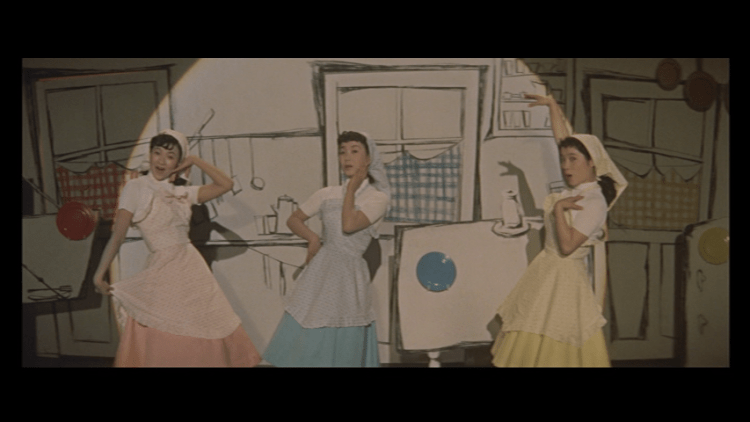
At the beginning of the film the three girls are intrigued and excited to receive a call from their old high school teacher who has recently retired. Meeting up to go visit her, the girls relive some old memories with the help of a few repurposed scenes from So Young, So Bright spliced in plus a few additional bits so that it looks like Izumi was also a classmate with them (in the movie she played an apprentice geisha Chiemi and Hibari met in Kyoto) as well as replacing the actress who played the teacher with the woman we’re about to meet. The trio even sing the title song to the first film, Janken Musume, as they drive over to their teacher’s house.

However, once they get there the nostalgic mood begins to dissipate as they realise their teacher has ulterior motives for inviting them. It seems, now that she’s retired, she’s opened a dating agency and wants to introduce our still single ladies to a few “eligible bachelors”. Horrified, the girls each quickly claim to have serious boyfriends already even though Hibari is the only one actually in a relationship. The teacher seems satisfied but invites them all back beaus in tow to give her final verdict. Thus begins the complicated road to true love for our musically inclined heroines.

It’s been seven years since the last Sannin Musume movie and truth to tell things have moved on the meantime leaving the Hollywood inspired musical glamour looking a little old fashioned. Much of Sannin Yoreba is a nostalgia fest despite the fact that it hasn’t really been all that long. Harking back to the first film by singing the title song and reusing the high school era footage seems primed to pull the similarly aged ladies of the audience back to screens across the country.

Sannin Yoreba has the fewest musical sequences and steers clear of large scale production numbers in favour of smaller solo showcases for the leading ladies. There’s more of a blur here into what are really fantasy sequences again taking place as the girls daydream or worry about various things – Chiemi at her place of work (in the production booth of a TV studio), Izumi in her salon, and Hibari at a bar after having a serious argument with her fiancee (once again played by Akira Takarada). That said, the girls end up at a theatre again as they did in the first two movies where they watch themselves perform a tripartite musical set piece which splits off into individual numbers for each one of them. A kind of Chaplin meets Marx Brothers meets Easter Parade theme, the girls dress up as tramps wandering through Times Square where they spot adverts for various shows which inspire their routines including Madame Butterfly where Chiemi plays both the captain and the geisha, and a bullfighting bolero number with Hibari giving it her full on Zorro.

Once again its an elegantly put together fluff fest intended to showcase the entertaining personalities of the three leading ladies who are now some of the biggest performing stars in post-war Japan. As usual the girls have great chemistry together and make a convincing group of lifelong friends whose relationship transcends that of any potential romance on offer. The movie ends with a wedding and another musical finale which incorporates three all three singers so, as expected, everything works out OK in the end which is mostly what people what from a cosy musical comedy starring three giants of the entertainment world. It may be a little sluggish in places and lacks the absurd comedic touch of the earlier movies, but Sannin Yoreba is a welcome return for the idol supergroup even if this kind of movie was evidently on its way out by the mid 1960s.


This is the last of the Sannin Musume movies  😦

Nothing from the film but here’s a video of the three girls some years later singing one of the songs which crops up throughout the movies:

https://www.youtube.com/watch?v=y985zFkUWyE

On Wings of Love (大当り三色娘, Toshio Sugie, 1957)

vlcsnap-2016-06-01-01h48m32s675The Sannin Musume girls are growing up by the time we reach 1957’s On Wings of Love (大当り三色娘, Ooatari Sanshoku Musume). In fact, they each turned 20 this year (which is the age you legally become an adult in Japan), so it’s out with the school girl stuff and in with more grown up concerns, or more specifically marriage. Wings of Love is the third film to star the three Japanese singing stars Hibari Misora, Chiemi Eri, and Izumi Yukimura who come together to form the early idol combo supergroup Sannin Musume. Once again modelled on the classic Hollywood musical, On Wings of Love is the very first Tohoscope film giving the girls even more screen to fill with their by now familiar cute and colourful antics.
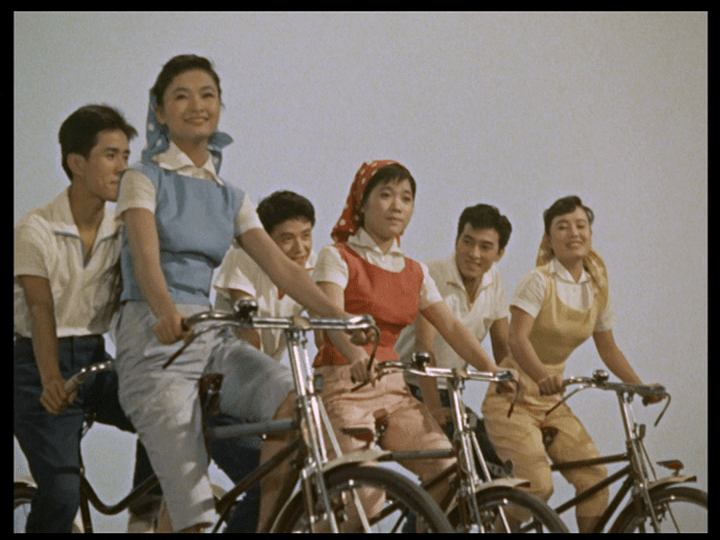
On Wings of Love does not have very much going for it in terms of plot (even compared to previous So Young, So Bright and Romantic Daughters). This time the three girls each work as maids in swanky households and have their eyes on the same guy who they think looks like James Dean (again played by Godzilla heartthrob Akira Takarada). Luckily, another two guys pop-up from somewhere so no one gets left on the shelf at the end when the completely non serious romantic difficulties work themselves out in time for the color coded waterskiing finale.

Like the other films in the series, On Wings of Love is not an integrated musical but one which is punctuated by musical numbers either given a real world context or portrayed as a fantasy sequence. In the previous two films the girls all went to the theatre and ended up watching themselves perform in one way or another, but this time the production number excuse is either a nap or a daydream whilst out on the river on a sunny day. Awkwardly, they each fantasise about Akira Takarada. Hibari goes all Madame Butterfly in an elegant sailor themed number, whereas Chiemi’s is all forlorn love with a melancholic, gothic ballad inspired by On London Bridge, but Izumi breaks all protocol here with a riotous cover of Bee-Bop-a-Lula which is sung entirely in English and becomes a high octane dance number (including the less successful involvement of Takarada).

There are fewer musical numbers included in On Wings of Love than in either of the other two movies though there are two trio sequences including the longer opening which sees the girls again color coded and drying dishes together as well as the finale which features the girls waterskiing while their boyfriends drive the boats. Each of the girls gets two numbers each, one solo and one production plus the trio stuff though interestingly there is a more “integrated” love song towards the end and Chiemi’s early song as she walks into town isn’t quite a fantasy sequence either.

Somehow, On Wings of Love isn’t quite as charming as either of the other movies in the series despite the kitch appeal of the opening number. The girls don’t actually spend much time together and the tone is a little rougher than the cutesy approach that had previously dominated with fewer humorous episodes to boot. That isn’t to say the film isn’t successful, but it doesn’t have the same kind of comforting fluffiness that dominated the previous instalments. The switch to Tohoscope gives series director Sugie a different canvas to play with though the most obvious change he makes is a split screen sequence to cover a telephone call. This time the colours appear a little muted too (though this may be down to the quality of the DVD which doesn’t seem as high as the transfers of either So Young, So Bright or Romantic Daughters which are both excellent) limiting the effect of the full on sugar rush the film seems to be aiming for. Nevertheless ,even if it doesn’t live up to the promise of either So Young, So Bright or Romantic Daughters, On Wings of Love is another suitably entertaining outing for the Sannin Musume girls only one a little less filled with laughter and song.


Hibari Misora’s Madame Butterfly inspired routine featuring her song Nagasaki no Cho Cho-san:

https://www.youtube.com/watch?v=JiGdsXagOXU

Also Izumi Yukimura’s quite wonderful Bee-Bop-A-Lula in its release version:

Romantic Daughters (ロマンス娘, Toshio Sugie, 1956)

vlcsnap-2016-05-30-23h55m41s358Romantic Daughters (ロマンス娘, Romance Musume) is the second big screen outing for the singing star combo known as “sannin musume”. A year on from So Young, So Bright, Hibari Misora, Chiemi Eri, and Izumi Yukimura reunite on screen once again playing three ordinary teenagers with a love of singing and being cheerful through adversity. This time the main thrust of the narrative is the girls’ friendship with a wealthy boy and his grumpy grandpa who takes a liking to them.

Michiru, Rumiko, and Eriko are three ordinary teenage girls in contemporary ‘50s Japan. Very close friends, they even have part time jobs working together at a local department store. One day Michiru decides to return some change a customer forgot to take with him directly to his home and the three girls are rewarded for their extremely high commitment to customer service by getting their pictures in the paper! This brings them to the attention of their friend Kubota’s grandfather who is very impressed with their honesty. He invites them round to his mansion where they enjoy a mini Western style feast and play a few songs on the piano. Shortly after, a man in a bow tie turns up and says he’s managed to find grandpa’s long lost daughter only she has unfortunately passed away leaving a little girl, Yukiko, with no one to look after her. Grandpa isn’t quite convinced by this story, but begins spending time with the sad little girl to try and see if she really could be his granddaughter.

Just like So Young, So Bright, Romantic Daughters is not an integrated musical but an ironic comedy with frequent musical interludes. There are plenty of excuses found for the girls to suddenly start singing, whether it’s that they’re involved in a local festival, entertaining an old man, or trying to cheer up a sullen little girl. Also like the first film, the girls (and Kubota) attend a theatrical performance but this time they do actually see “themselves” – that is Michiru, Rumiko, and Eriko head off to see Izumi, Hibari, and Chiemi. They even sit underneath a large poster of their real life counterparts in the lobby completely confusing one of their admirers who can’t believe his luck! Once again they each get a production number with Izumi getting the “sexy” routine this time which is a little bit On the Town. Chiemi gets an elegant set piece with a ball gown and a fairytale palace behind her, but Hibari’s number is just kind of nuts as she cross dresses to play a male samurai who ends up “saving” Michiru from the attentions of Chiemi who is also playing a guy complete with bald cap and top knot.

Kubota seems most interested in Rumiko and the other two girls have some kind of relationship with two other guys who work at an amusement park but are completely forgotten about for most of the film until they’re needed to fill the other two rear seats for the finale which is a trio number featuring the three girls riding bicycles with the guys on the back. At one point the girls and Kubota decide to take the little girl to the amusement park to try and cheer her up, which they eventually do by venturing into a haunted house (actually quite scary) where Chiemi decides to break protocol by using some of the judo moves she was seen practicing earlier on a couple of the ghosts and ghouls to be found in the psychedelic horror show.

Once again what’s on offer is cute and fluffy fun with some silly comedy and impressively choreographed production numbers thrown in. Like the first film there are also a number of recurring subplots of single mothers, long lost fathers, and this time also the problem of the little girl who may or may not be the granddaughter but by the time they start to reach a conclusion it may be too late to undo all the bonding that’s begin to occur in any case. Cinematic soul food, Romantic Daughters makes full use of its vibrant Eastman colours for a Hollywood inspired elegant musical feast that is undoubtedly a lot of empty calories but nevertheless extremely satisfying.


Can’t find any clips from the film but here is the English language US pop track sung by Izumi Yukimura in the movie in its release version: