
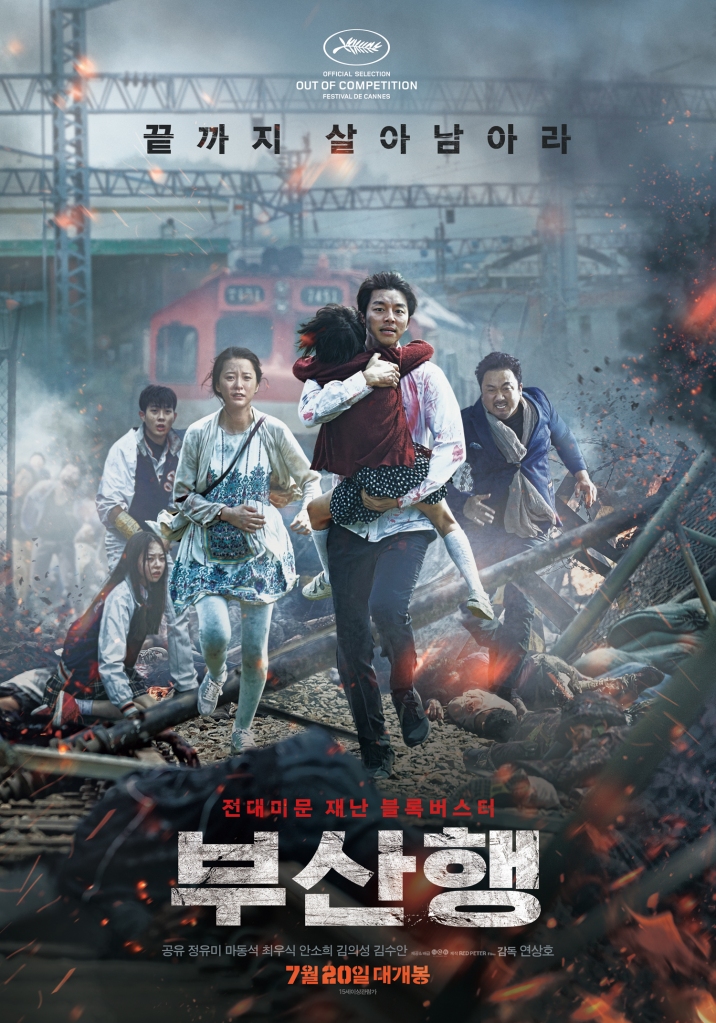
 Many people all over the world find themselves on the zombie express each day, ready for arrival at drone central, but at least their fellow passengers are of the slack jawed and sleep deprived kind, soon be revived at their chosen destination with the magic elixir known as coffee. The unfortunate passengers on an early morning train to Busan have something much more serious to deal with. The live action debut from one of the leading lights of Korean animation Yeon Sang-ho, Train to Busan (부산행, Busanhaeng) pays homage to the best of the zombie genre providing both high octane action from its fast zombie monsters and subtle political commentary as a humanity’s best and worst qualities battle it out for survival in the most extreme of situations.
Workaholic fund manager Seok-woo (Gong Yoo) is having a series of very bad days. His wife has left him and for unclear reasons, also left their young daughter, Soo-an (Kim Soo-ahn), in her father’s care though apparently wants custody in the ugly divorce battle that now seems inevitable. It’s Soo-an’s birthday but all she wants is to catch a train to Busan to see her mum and if she has to she’ll even go by herself. After his attempt at a birthday present spectacularly backfires, Seok-woo gives in and agrees to take Soo-an to her mother’s before catching the next train back after dropping her off. Unfortunately, they have picked a very bad day to take the train.
Yeon Sang-ho takes his time to build to the central train based set piece but is is careful to create an atmosphere which makes it plain that there is something very wrong with this seemingly everyday set up. After a brief dig about pig farmers losing out to government policy on foot and mouth disease and irresponsible hit and run drivers leaving deer corpses behind them for someone else to deal with, he has a parade of emergency vehicles racing past Seok-Woo and Soo-an on their trip to the station while ash rains down on their car. Seok-woo is still focussed on work though sleepy on the train so he misses Soo-an’s shocked reaction to a station guard being rugby tackled just as the train is leaving while a mass of improbable early morning revellers are trying to break through the line of staff holding them back at the platform steps.
Patient zero bounds onto the train just as the doors close though one wonders why no one is paying much attention to this obviously distressed young woman as she stumbles and writhes around in the train carriage before the virus fully takes hold. Just as we think someone is about to come to her aid, it turns out to be a case of a snooty passenger taking offence at the presence of an “odd person” on the train. The “odd person” turns out to be a homeless guy whose mutterings of “dead, all dead” take on a prophetic air rather than the ramblings of a mad man that the train guards assume them to be.
This kind of stereotypical othering and the selfish refusal to help fellow humans in need is at the very heart of the film. Seok-woo admonishes his goodhearted daughter when she repeatedly makes an effort to be a kind and decent person by giving up her seat for an old lady or wanting to stop and help others escape the zombie onslaught. However, Soo-an’s goodness wins through as she in turn chastises her father and explains that his selfishness and lack of regard for the feelings of other people is the very reason her mother left the family. Even if he begins by cruelly closing the door on the film’s most heroic character and his pregnant wife, Seok-woo gradually begins to develop a sense of social responsibility whether out of simple pragmatism or genuine fellow feeling.
Workaholic fathers with minimal connections to their offspring may be something of a genre trope but, as father-to-be Sang-hwa says, fathers often get a bad rap – making all of the sacrifices and enjoying none of the rewards. In an attempt to show solidarity with Seok-Woo, Sang-hwa assures him that his daughter will understand why he worked so hard all the time when she grows up and reiterates that true fatherhood is about self-sacrifice. This is one sense plays into the earlier themes of Seok-Woo’s self-centred viewpoint in asking if he really is working hard for his family or only wants to been as such, maintaining his own social status and upperclass lifestyle and completing it with a perfectly posed family photo. A father is supposed to protect his daughter and now Soo-an has only him to rely on, if Seok-woo is going ensure her survival he will have to decide what kind of sacrifices he’s prepared to make on her behalf.
If the film has a villain it isn’t the rabid zombie hordes who, after all, are only obeying their programming, it’s personal, corporate, and political greed. The clearest embodiment of this is in the panicked businessman who frequently tries to issue orders to the train staff and insists the train take him to his preferred destination. After trying to get the homeless man thrown off the train early on, the fascistic businessman picks up a lackey in the form of a steward and begins trying to exclude all the “suspicious” people from his general vicinity. Cruel and cowardly, the businessman’s selfish actions only cause more problems for everyone else whilst whipping up unhelpful paranoia among those who will need to work together to survive. Literally feeding even his most loyal comrades to zombies to buy himself time to escape, this egotistical CEO is the perfect metaphor for cannibalistic nature of the capitalist system which is, as Sang-hwa said, content to let the “useless” fall behind.
That’s not to forget the actual undead threat. Yeon Sang-ho’s walking dead take inspiration from his animated work and move quickly with jerky, uncanny movements more like Butoh dancers than the usual stupefied shufflers. The set pieces are expertly choreographed and well shot, maintaining the tension throughout though the increase in scale towards the final stretch is at odds with the leaner, meaner approach of the early scenes. Despite eventually giving in to melodrama in a heavily signposted script, Yeon Sang-ho’s live action debut is an impressive effort making room for his standard social concerns whilst also providing innovative zombie thrills. Yeon Sang-ho’s message is clear, when disaster strikes no one can survive alone, the only chance for salvation lies in altruistic compassion. In the end the best weapon against the darkness is a children’s song as innocence finally triumphs over fear.
UK release trailer:
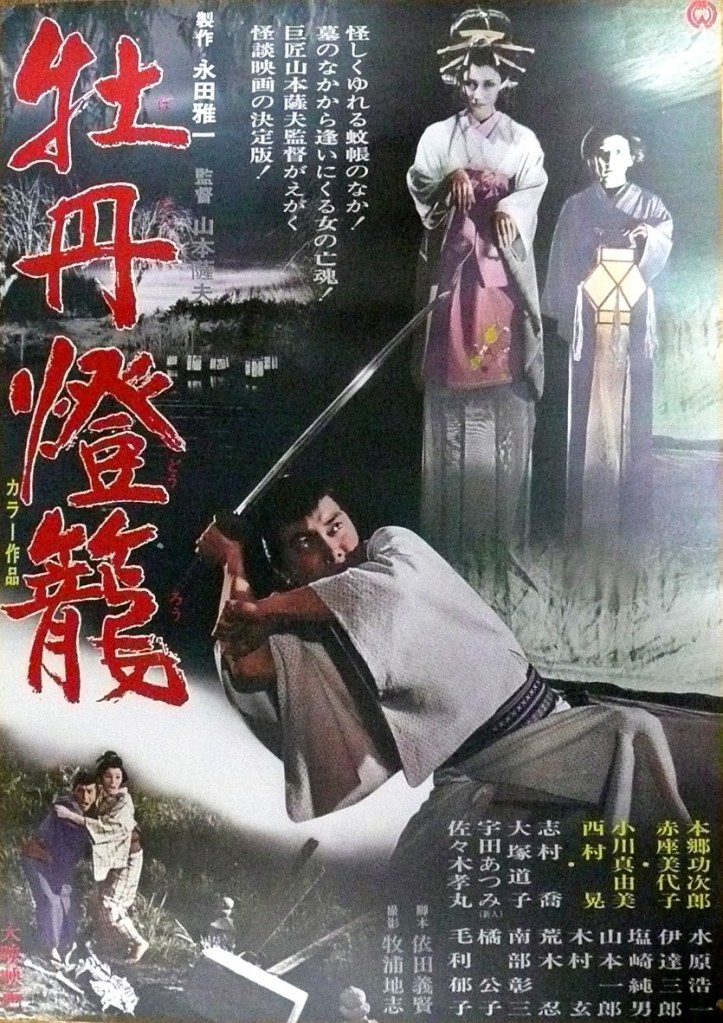 The Peony Lantern (牡丹燈籠, Kaidan Botan Doro) has gone by many different names in its English version – The Bride from Hades, The Haunted Lantern, Ghost Beauty, and My Bride is a Ghost among various others, but whatever the title of the tale it remains one of the best known ghost stories of Japan. Originally inspired by a Chinese legend, the story was adapted and included in a popular Edo era collection of supernatural tales, Otogi Boko (Hand Puppets), removing much of the original Buddhist morality tale in the process. In the late 19th century, the Peony Lantern also became one of the earliest standard rakugo texts and was then collected and translated by Lafcadio Hearn though he drew his inspiration from a popular kabuki version. As is often the case, it is Hearn’s version which has become the most common.
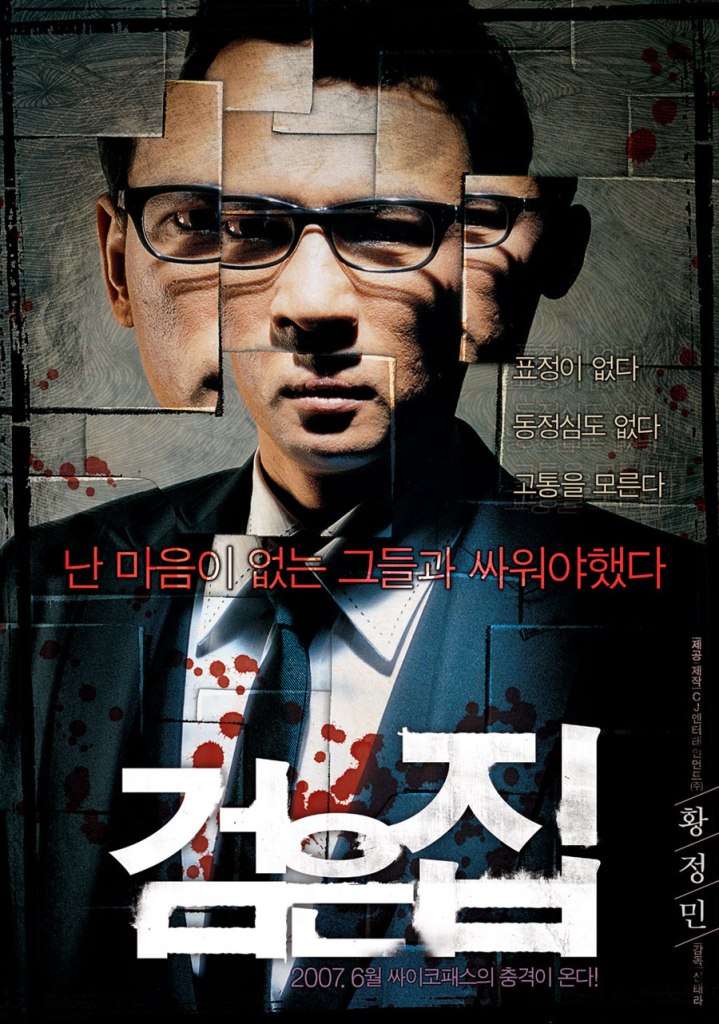 Yusuke Kishi’s Black House source novel was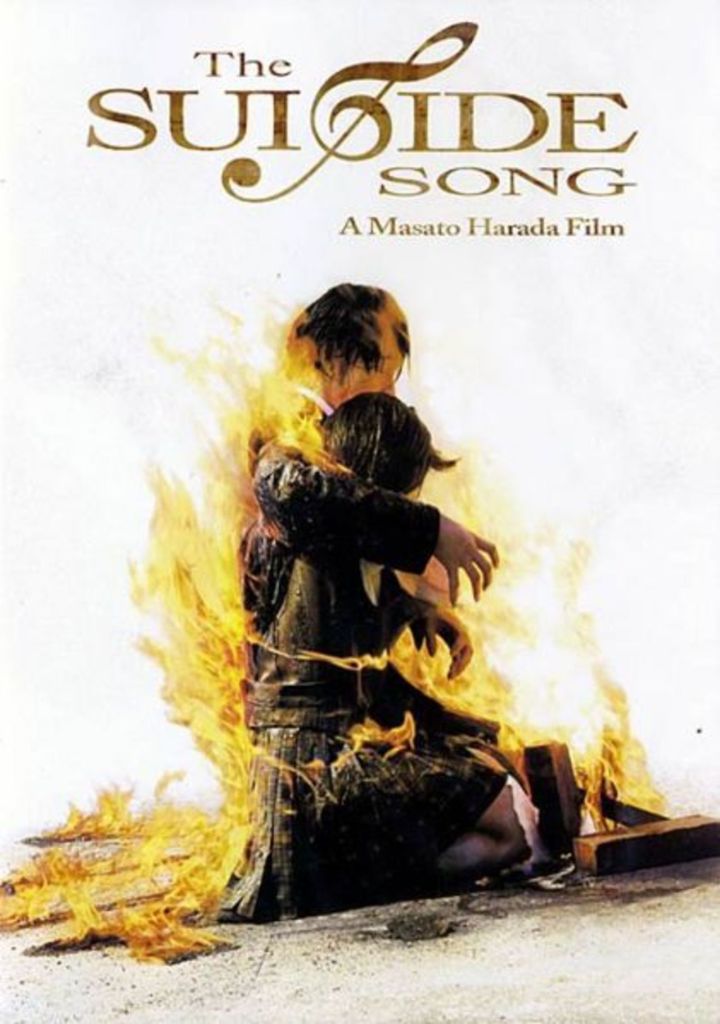
 These days, cats may have almost become a cute character cliche in Japanese pop culture, but back in the olden days they weren’t always so well regarded. An often overlooked subset of the classic Japanese horror movie is the ghost cat film in which a demonic, shapeshifting cat spirit takes a beautiful female form to wreak havoc on the weak and venal human race. The most well known example is Kaneto Shindo’s Kuroneko though the genre runs through everything from ridiculous schlock to high grade art film.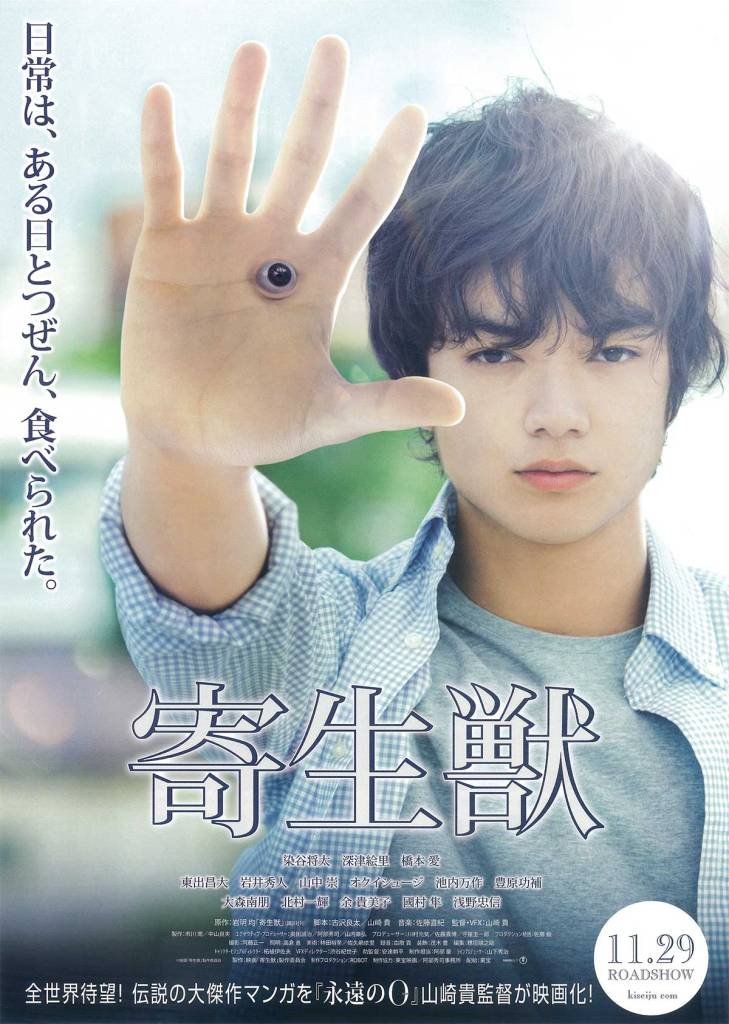

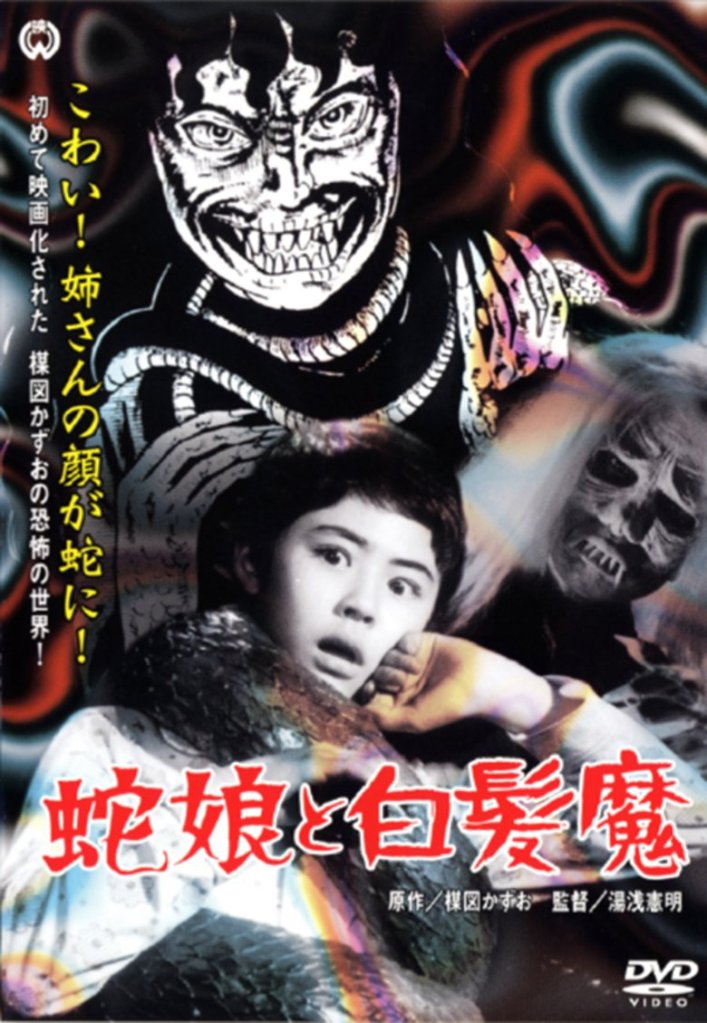 Little Sayuri has had it pretty tough up to now growing up in an orphanage run by Catholic nuns, but her long lost father has finally managed to track her down and she’s going to able to live with her birth family at last! However, on the car ride to her new home her father explains a few things to her to the effect that her mother was involved in some kind of accident and isn’t quite right in the head. Things get weirder when they arrive at the house only to be greated by the guys from the morgue who’ve just arrived to take charge of a maid who’s apparently dropped dead!
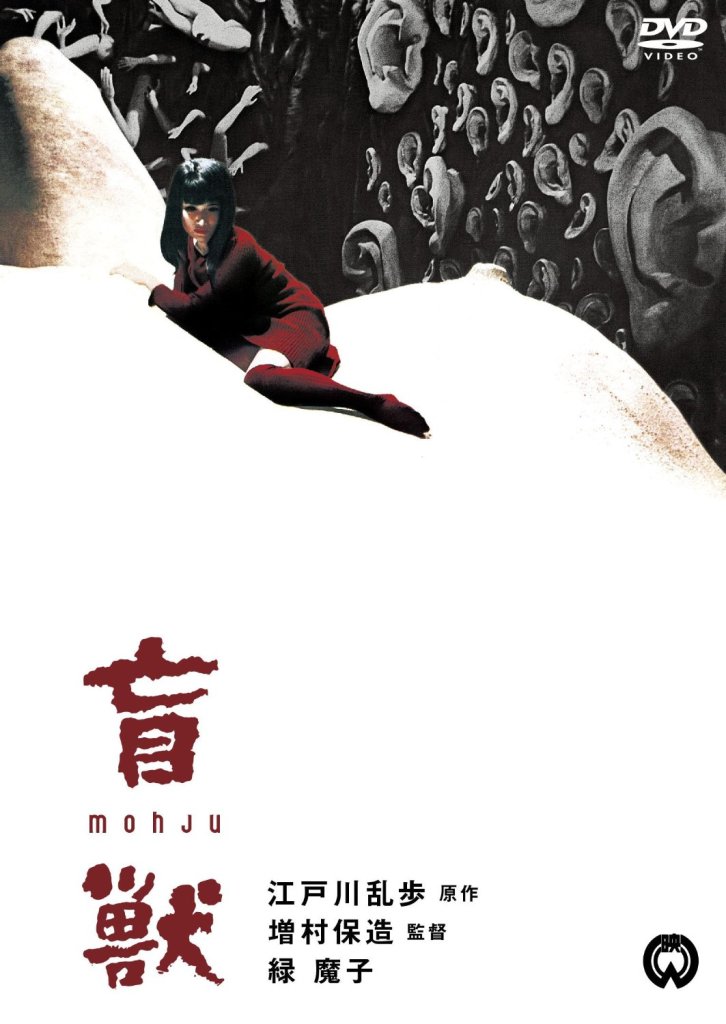 Never one to take his foot off the accelerator, Yazuso Masumura hurtles headlong into the realms of surreal horror with 1969’s Blind Beast (盲獣, Moju). Based on a 1930s serialised novel by Japan’s master of eerie horror, Edogawa Rampo, the film has much more in common with the wilfully overwrought, post gothic European arthouse “horror” movies of period than with the Japanese. Dark, surreal and disturbing, Blind Beast is ultimately much more than the sum of its parts.
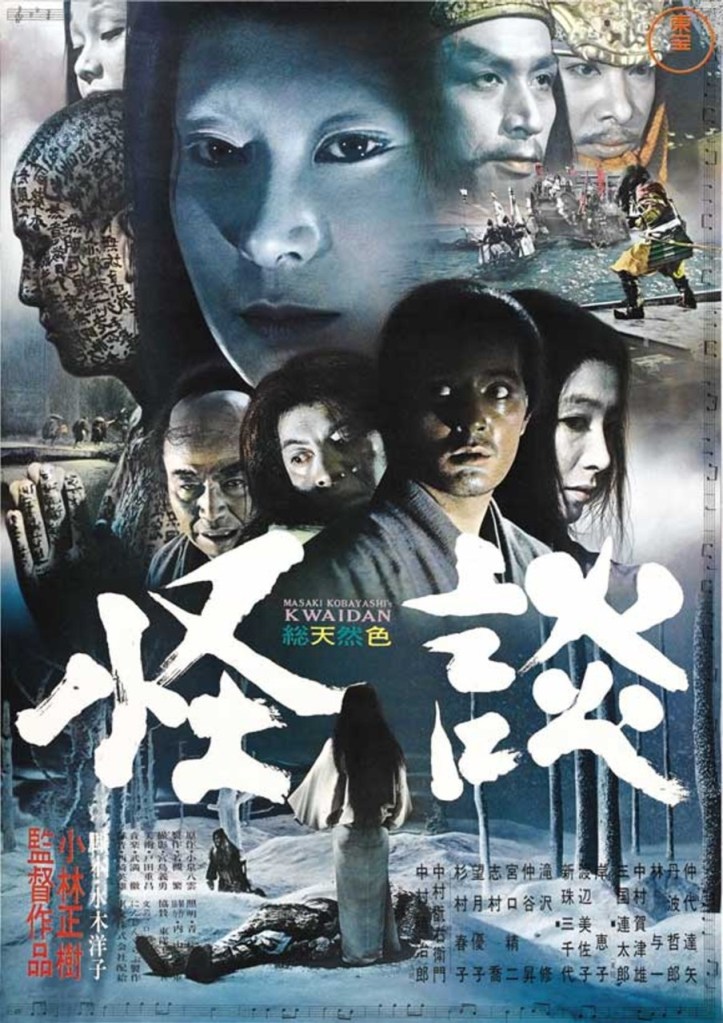 Kwaidan (怪談) is something of an anomaly in the career of the humanist director Masaki Kobayashi, best known for his wartime trilogy The Human Condition. Moving away from the naturalistic concerns that had formed the basis of his earlier career, Kwaidan takes a series of ghost stories collected by the foreigner Lafcadio Hearn and gives them a surreal, painterly approach that’s somewhere between theatre and folktale.
 Windows on Worlds