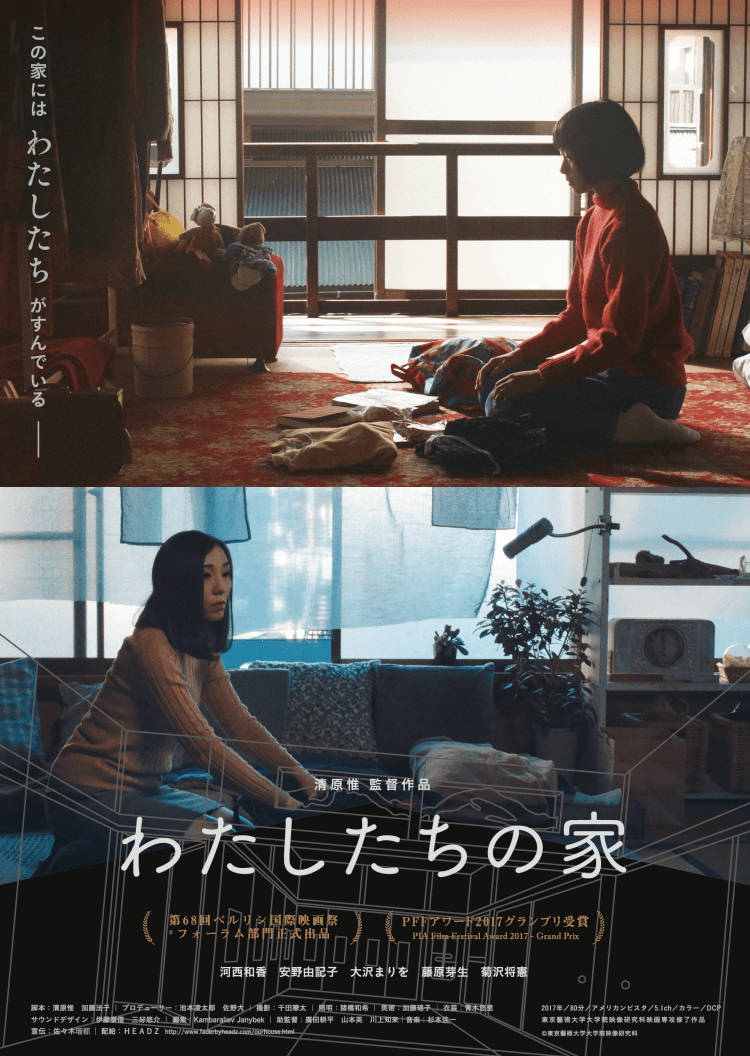
Our House (わたしたちの家, Yui Kiyohara, 2017)

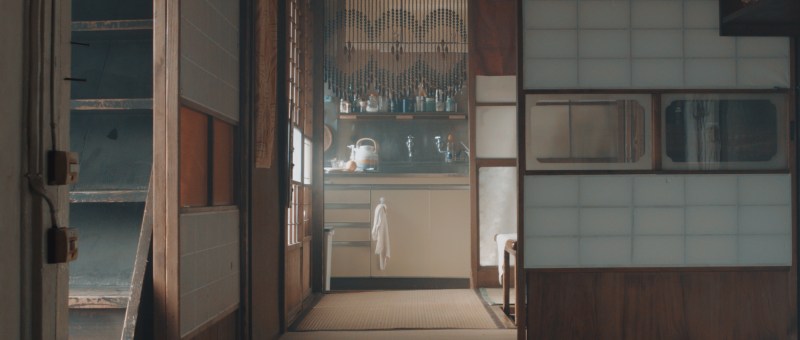
our house posterIs the definition of “space” defined by absence as much as presence? Do we carve out pieces of the world to inhabit, or simply shift into an idea of place which we construct entirely around ourselves? Yui Kiyohara’s feature debut Our House (わたしたちの家, Watashitachi no Ie), completed as part of her graduation project for a masters at Tokyo University of the Arts, hints at the eeriness of a shared existential continuum as four women bridge inter-dimensional connections while living in the “same” two-storey house in Yokohama.

We begin with 14-year-old Seri (Nodoka Kawanishi) dancing cheerfully with a few of her friends presumably on a sleepover wearing incongruously old-fashioned nightgowns like the heroines of a gothic boarding school drama. The fun stops however when Seri thinks she hears a funny noise, half convinced the house is haunted. Her friends tell her it’s all in her mind, but something seems odd and she can’t seem to shake the sense of presence in the house.

Part of that might be because, though Seri’s father appears to have left long ago, she still dwells on his memory and perhaps feels the echo of him in their family home. It may seem particularly poignant to her right now because her mother, Kiriko (Yukiko Yasuno), has found a new man – Takashi (Toshio Furuya), who drives the local rubbish truck. Kiriko wants to get married again, and Seri, entering adolescence herself and playfully teasing her friend about a possible romance, cannot quite accept that her mum’s moved on.

Changing tack, a young woman wakes up on a ferry with seemingly no memory of how she got there or of her previous life aside from her name, Sana (Mariwo Osawa). Another woman on the boat, Toko (Mei Fujiwara), stops to ask if she’s alright and then offers to let her stay at her place, which happens to be an identical house to the one in which Seri and her mum live, until she remembers who she is.

Though Seri’s story has its whimsy, it remains firmly within the realms of the natural while there’s something decidedly odd about the world Toko and Sana inhabit. There is, however, a strange symmetry to their relationships. Both sets of women are keeping things from one another if for slightly different reasons. There are after all secrets which must exist between a teenage girl and her mother, so perhaps Kiriko doesn’t quite discuss her relationship with Takashi with her daughter, and Seri doesn’t talk to her mother about the kinds of things she talks to her friend about, but there are also additional communication difficulties in their shared reluctance to talk about the “ghost” of Seri’s absent father or about Seri’s various anxieties which manifest in her preoccupation with a possible haunting.

With Toko and Sana there is of course the issue of amnesia, but in this case it’s Toko who appears to be keeping secrets in her well concealed paranoia and illicit activities which see her handing over plain envelopes in dingy corridors and asking pointed questions about water pollution. Does she know more about Sana than she lets on, or is Sana perhaps a spy herself faking her amnesia to get close to Toko? In any case, Toko seems to want to keep her around, letting her know she can stay for as long as she wants, but it’s not entirely clear if that’s altogether a good thing or if Toko has more or less kidnapped a friend to keep safely at home. When she recommends drinking from the bottled water in the fridge rather than from the tap, we’re apt to wonder which source it is that might be “polluted”.

In that sense, both environments, hitherto exclusively female spaces, are eventually “polluted” by unexpected male intrusion. The spectre of Seri’s father may be ever present in the home, but it’s Takashi who places a strain on the relationship of mother and daughter, whereas Sana’s coffeeshop buddy Natsuki (Masanori Kikuzawa) sets off Toko’s alarm bells in more ways than one as he simultaneously encourages her to doubt her new friend, become jealous on an emotional level, and then anxious on a professional one as she wonders if Natsuki has befriended Sana to get into the house and look for a mysterious “something” she quickly tells him is no longer there. 

“Things embedded in the mind can never be lost” Toko reassures Sana, but also affirms that “nobody can prove who they are”, which might be true but doesn’t do much to help her identity-shorn friend. Natsuki too, claiming that Sana resembles someone he used to know, describes his old acquaintance as if she were “filled with a light that can’t be seen” perhaps alluding to the hidden depths he could only be aware existed within her but was never permitted to see. Toko says she lives the way she does so that she “won’t be defeated by gravity” but offers no reply when asked if she knows of anyone who has ever successfully defied it.

What we’re left with, is two mutually dependent realities though we’ve no way of knowing if each is located in the same temporal space or if one is past and another future. There’s a curious timelessness to Seri’s innocent world of birthday parties and walking on the beach with a friend, whereas Toko’s odd attire and slightly robotic manner of speaking hint towards a kind of retro futurism. The space, it seems, remains the same. Seri’s aunt, looking around, notices cracks in the walls but admires the house’s resilience prompting Kiriko to describe it as “still healthy”, as if it were a living entity which envelops them rather than a space they shape themselves. Yet the space is what connects them, one location existing at an intersection between two worlds. Events mirror each other, actions begin to have effect on each side though unknowingly. The curious symmetry might go someway to explaining life’s uncanniness, the sense of echoing we all feel on entering a dark and empty room, but it also provides a mechanism for harmony as items find themselves transferred to the place in which they are most needed. The space defines itself, but then perhaps it really is all “our house” – a shared universe in which we remain aware of each other but painfully unable to connect.


Available to stream via Mubi (UK) until Sept. 27.

Original trailer (English subtitles)
Bumpkin Soup (ドレミファ娘の血は騒ぐ, Kiyoshi Kurosawa, 1985)

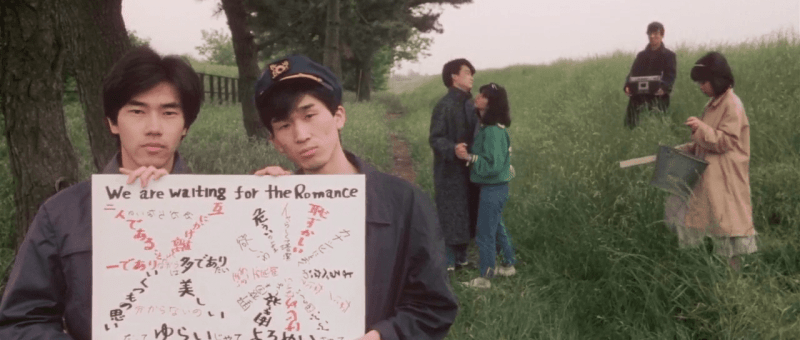
Bumpkin soup posterLike many directors of his generation, Kiyoshi Kurosawa began his career in “pink film” – mainstream softcore pornography produced to a strict formula. His debut had been made for Director’s Company, an independent production house which offered creative freedom to young and aspiring filmmakers. He then tried to move into the studio system by directing for Nikkatsu’s Roman Porno, but the film was rejected for not quite living up to the demands of the genre. Bumpkin Soup (ドレミファ娘の血は騒ぐ, Do-re-mi-fa-musume no Chi wa Sawagu, AKA The Excitement of the Do-Re-Mi-Fa Girl) was then purchased from Nikkatsu and released independently as his second film, earning Kurosawa something of a reputation as a contrarian. Though the film contains its fair share of nudity and strange sexual shenanigans, it is easy to see why it did not fit the Roman Porno remit thanks to its bizarrely absurdist tone and often nonsensical French New Wave-inspired post-modernism.

The film begins with the heroine, Akiko (Yoriko Doguchi), walking into a Tokyo university campus in search of her small-town boyfriend, Yoshioka (Kenso Kato). Yoshioka is not, however, where he said he would be – he rarely turns up to lessons and has been absent from the music club he said he had joined for some time. Determined and undaunted, Akiko continues to look for him, encountering various strange people and events including a psychology professor intent on exploring the depths of shame.

After meeting sexually obsessed female student Emi (Usagi Aso), Akiko remarks that the university campus is like a permanent festival, or perhaps an amusement park. It certainly seems to be some sort of continuous orgy as seen though the eyes of simple country girl Akiko who has, after all, only come here in search of lost love. Carrying around a walkman with a tape featuring Yoshioka’s music, she devotes herself to finding her beau but eventually sniffing him out, discovers that he’s not the man she thought he was. Truth be told, Yoshioka does not seem like much of a catch. A randy college student, he has more or less forgotten all about Akiko while he pursues just about everyone else on campus instead of going to lessons.

Latterly, Akiko comes to the realisation that she thought she was looking for an adventure leading to love, but perhaps what she really wanted was love leading to an adventure. She left the country behind, travelled to the city, transgressed borders and entered the university where she was sure she would find answers but has discovered only more questions. Akiko feels herself at odds with her new environment, unable to understand the strange grammar of the university world where people seem to talk mostly about themselves. She does, however, seem strangely taken with the befuddled professor Hirayama (Juzo Itami) whose attempts to explore the nature of shame are derailed by the “shamelessness” of the modern student.

Hirayama’s big idea is that shame is all a sham. That the custom of hiding the parts of the body we have been taught to be ashamed of is a kind of deception in itself. He hopes that in the future people will live “nakedly” without feeling the need to hide anything at all, or at least that it will be impossible to tell from the outside which parts of themselves someone might be ashamed of. In order to pursue his theories, the professor is currently engaged in experiments to provoke an “extreme shame mutation” – something which his students later undertake alone but are unable to fulfil because their subject, Emi, appears to get off on the very things they considered shameful and embarrassing which, in turn, turns them all on. So in one way a very successful experiment, but in another not. In any case, Hirayama comes to the conclusion that only Akiko, with her innocent country ways, will be capable of showing him true shame which is how she eventually becomes mixed up in his “research”.

Most obviously inspired by mid-career Godard, Kurosawa adopts a post-modern, absurdist approach satirising left-wing student politics and youthful intensity while inserting random moments of song and dance along with explicit (and often odd) sexual  content that was likely still not quite enough to make it worthy of the Roman Porno name. A strange subplot pits the psychology student against a gang of mute performance artists led by a girl banging a bucket with a stick, which eventually leads to the act of nihilistic revolution which closes the film with a lullaby sung by a girl wielding a gun. What does it all mean? That shame is just a tool of social oppression, that one should make one’s own decisions without blindly following “thinkers”, that young people destroy themselves in pointless acts of revolution? Who can say, perhaps it isn’t very important but Kurosawa certainly has his fun while exploring the innocence/experience divide.


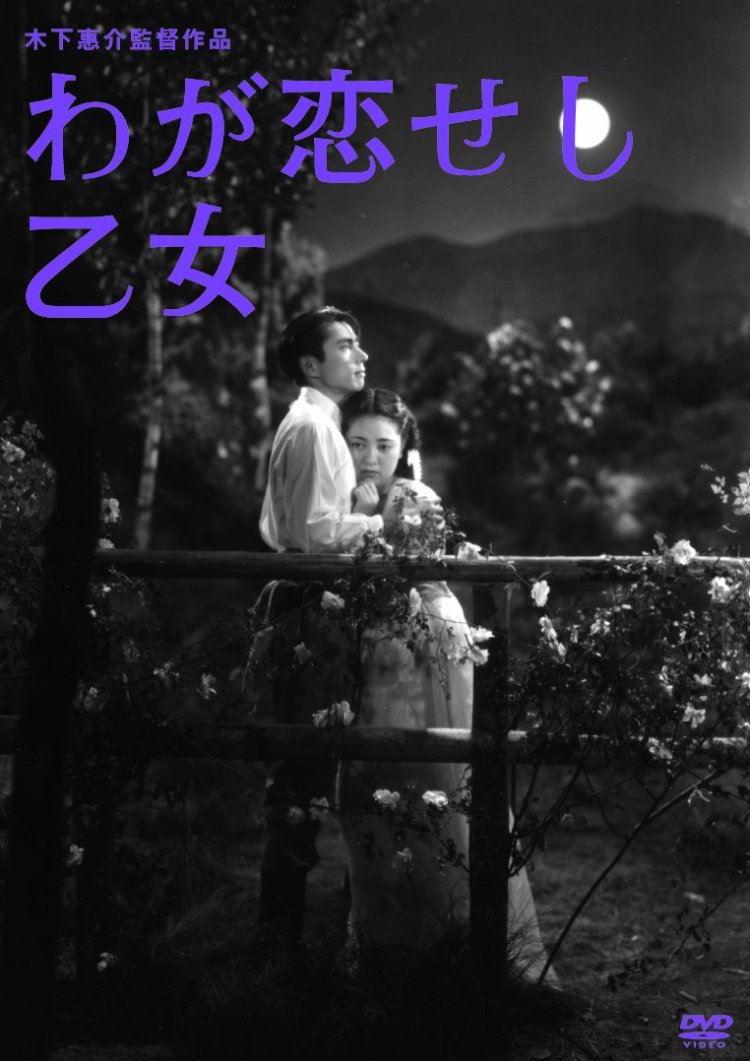
The Girl I Loved (わが恋せし乙女, Keisuke Kinoshita, 1946)

The Girl I loved DVD coverThe post-war era, as confusing and chaotic as it was, offered several choices, among them that to change to course, choose to create a better, kinder world than the one which had led to so much suffering. As always, however, the human temptation is to choose the opposite and allow anger and resentment to make everything even worse than it had been before. Occasionally censured for his sentimentality, Keisuke Kinoshita was perhaps among the more defiantly positive of the post-war humanists whose fierce love human goodness knew no bounds. In The Girl I Loved (わが恋せし乙女, Waga Koiseshi Otome) he puts his ideas to the ultimate test as a young man recently returned from the war must learn to cope with various kinds of disappointment but eventually resolves to take solace in other people’s happiness even at the cost of his own.

The tale begins some years earlier when a baby girl is abandoned in front of the Asama Ranch, her mother apparently having taken her own life by jumping from a nearby cliff. The Asamas are good people and moved by the letter they find with the baby so decide to take her in. Yoshiko (Kuniko Igawa) is raised alongside older brother Jingo (Yasumi Hara) as an adopted sister always aware of her origins but very much a full member of the family.

Flash forward to the present day and Yoshiko has become a beautiful young woman. Jingo has returned from five years of war in perfect physical health, keen to resume his idyllic farm life in the beautiful Japanese countryside. The fact is that Jingo has long been in love with Yoshiko, though the situation is understandably complicated seeing as they were raised as siblings even if there is no blood relation between them. Somehow it seems a perfectly natural idea that the pair will marry and many assume this will be the case. Jingo, however, remains somewhat reticent and afraid to voice his feelings. It seems Yoshiko has something to tell him too and so he dares to hope as they both agree to share their respective secrets after the harvest festival.

At the festival, however, Jingo gets a shock. He sees the way Yoshiko looks at another man and realises that what she wanted to tell him was probably that she had fallen in love with someone else. Shaken and confused, Jingo bites his tongue. He knows to say anything now would only create more pain and suffering for everyone while he alone will suffer if he decides to stay quiet.

Nevertheless the temptation is there. Mr. Noda (Junji Soneda), Yoshiko’s intended, is a quiet man, an intellectual who returned from the war early thanks to injury and still walks with a cane. Yoshiko has been fearful that her family may object to the marriage on the grounds of Noda’s disability – something he has also been aware of and warned her about in explaining the potential hardship she may have to endure as his wife seeing as he is also merely a poor schoolteacher. Jingo could try to refuse her permission to marry, try to force her to marry him instead, or refuse to give his blessing for her to marry anyone at all, but if he did that all he’d be doing is condemning both of them to eternal misery. It would be understandable if he began to resent Noda and most particularly his disability which brought him home from the war early and enabled him to be here to fall in love with Yoshiko while Jingo was away and dreaming of home, but then it could so easily have been the other way around.

In the end, Jingo’s love is selfless and good. What he wants is for Yoshiko to be happy and if being with Noda is what that means then Jingo will not stand in her way no matter how much it may hurt him to stand aside. After all, as Noda says, aren’t they both lucky to be alive in this beautiful place? Having suffered so much, the two men understand how precious life is and know it’s far too short for pettiness or resentment. A quiet, gentle tale The Girl I Loved is a sad story of youthful disappointment in love, but it’s also a kind of melancholy manifesto for the new post-war world built on compassion and understanding as a young man decides to take the noble path in accepting that the girl he loved loves someone else and that’s sad but it’s also happy and if you can learn to rejoice in someone else’s happiness even in the midst of your own pain then perhaps everything will be alright after all.


Titles and opening scene (no subtitles)

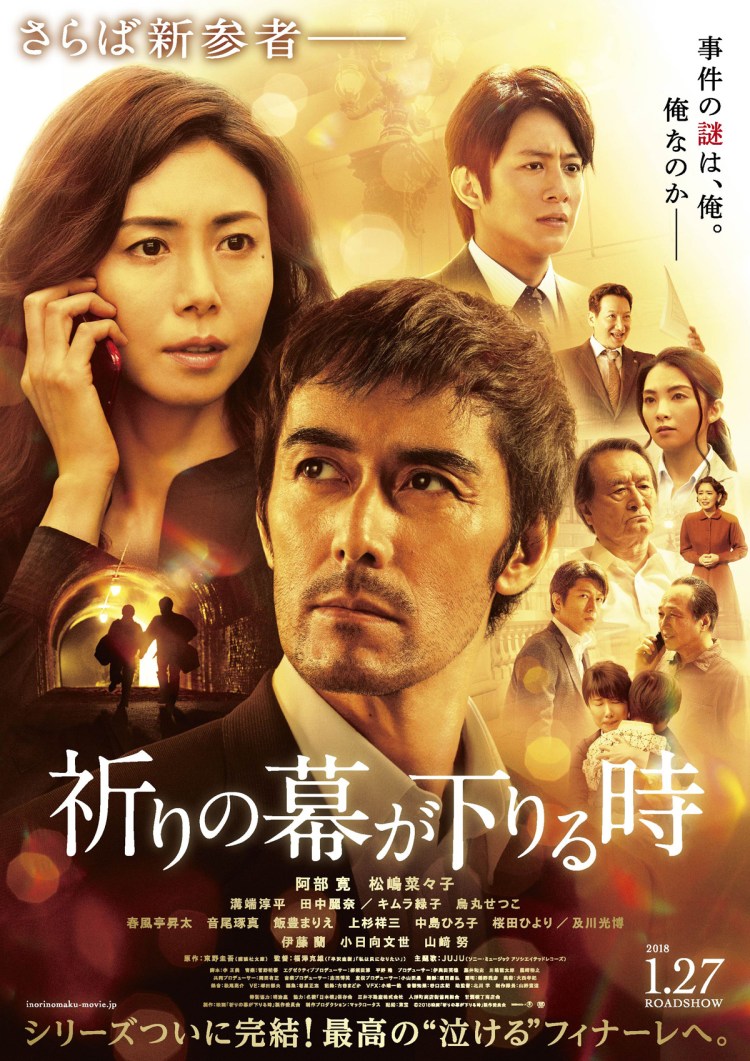
The Crimes That Bind (祈りの幕が下りる時, Katsuo Fukuzawa, 2018)

Crimes that bind posterDetective Kyoichiro Kaga has become a familiar screen presence over the last decade or so in a series of films and TV dramas starring popular actor Hiroshi Abe which might make it something of a surprise that The Crimes That Bind (祈りの幕が下りる時, Inori no Maku ga Oriru toki) is, after a fashion, a kind of origin story and touted as the culmination of the long running franchise. Another of prolific author Keigo Higashino’s key detectives, Kaga’s stalking ground has always been Nihonbashi where he has managed to make himself a friendly neighbourhood cop but, as it turns out, dedication is not the only reason he’s refused promotions and transfers to stay in what is, professionally at least, something of a backwater.

In fact, the film begins way back in 1983 when a young woman, Yuriko (Ran Ito), ran away from her husband and son to become a bar hostess in Sendai offering only the explanation that she felt herself unworthy of being a wife and mother. Some years later in 1997, she met a nice man – Watabe, but died of natural causes in 2001 at which point we discover that she is none other than the long lost mother of our master detective whom she abandoned when he was only eight years old. Being a compassionate man, Kyoichiro Kaga is not angry with his mother only sorry he did not get to see her before she passed and eager to meet the man who made her last years a little happier. Only, it appears, Watabe has also disappeared without trace. The only thing the Mama-san at the bar where Yuriko worked can remember about him is that he once said he often went to Nihonbashi. Kaga searches for the next 16 years with no leads, which is when the main case kicks into gear with the discovery of a badly decomposed body of a woman in a rundown Tokyo flat.

Of course, the two cases will turn out to be connected, giving Kaga an opportunity to investigate himself and come to terms with his difficult family circumstances including his strained relationship with his late father whose coldness he blames for driving his mother away. Parents and children will indeed develop into a theme as Kaga digs into why his mother might have done the things she did while also trying to reverse engineer his clues to figure out why he seems to be at the centre of an otherwise completely unrelated case.

Meanwhile, pieces of the puzzle seem to drop into place at random such as the fortuitous discovery of an old woman claiming to have lost her memory so that she can stay in hospital who may or may not be linked to one of the prime suspects – a top theatre director also known to Kaga thanks to a chance encounter some years earlier. In a neat twist, the theatre production she is currently trying to put on is Love Suicides at Sonezaki – a sad tale of young lovers, an adopted son of a merchant and a courtesan, who realise that they have no freedom to pursue their desires and so decide that their only solution is double suicide. The truth that Kaga uncovers leads him in much the same direction only the love at stake is familial rather than romantic and built on the strange filial interplay of the connection between a parent and a child.

It is quite literally “crimes that bind”, but Kaga’s repeated mantra that lies are the shadow of truth, illuminating as much as they conceal, does not quite fit with the incident he has been investigating which largely hinges on coincidences which place him, improbably, at the centre and tip him off to the hidden connections which will crack the case. Which is to say, the solution lies in the killer overplaying their hand (though for reasons unrelated to crime) and thereby undermining their carefully won subterfuge. Torn between solving the murder and exploring Kaga’s melancholy backstory, The Crimes That Bind finds itself falling between two stools even as its twin plot strands begin to dovetail as neatly as one assumes they eventually will, laying bare the central themes of parental sacrifice and belated filial gratitude. Playing best to those already invested in the Kaga franchise, Katsuo Fukuzawa’s adaptation may serve as a fitting conclusion (to this arc at least) but cannot quite overcome its over-reliance on confessional flashback as method of investigation or the improbable qualities of its admittedly twist filled central mystery.


International trailer (English subtitles)

Twilight Story (濹東綺譚, Shiro Toyoda, 1960)

Director Shiro Toyoda, closely associated with high minded literary adaptations, nevertheless had a talent for melancholy comedy and for capturing the everyday reality of ordinary people. A fierce condemnation of the patriarchal society at a moment of intense masculinity, Twilight Story (濹東綺譚, Bokuto Kitan), an adaptation of the novel by Kafu Nagai, follows an ambivalent author as he covertly observes the life and love of a former geisha daring to dream of romantic salvation while fully aware of the world’s cruelty.

Set in 1936, the film opens with an author on a research trip who guides us into the world of the Tamanoi pleasure quarter which he seems to disdain but is drawn to all the same. Whilst there he runs into a nervous middle-aged man, Junpei (Hiroshi Akutagawa), who is later accosted by sex worker Oyuki (Fujiko Yamamoto) for use of his umbrella during a violent storm. A mild-mannered sort, Junpei is unused to the ways of the red light district and quickly makes his escape after being invited into Oyuki’s home. After a swift drink, however, he returns and the pair begin an awkward semi-romantic relationship.

Despite his affirmation that he is single, Junpei is in fact already married if (for the moment) unhappily. Though he knew his future wife Mitsuko (Michiyo Aratama) had given birth to an illegitimate child fathered by her employer, Junpei chose to marry her anyway because he was in love. The pair married, they say, for “genuine” reasons but the father of Mitsuko’s son continues to send maintenance money for the boy’s education and his constant presence has begun to play on Junpei’s mind especially as his teacher’s salary is dwindling in this age of militarism in which educational hours are decreasing in favour of compulsory military drills. Meanwhile, Mitsuko also seems to have got religion and spends most of her time reciting sutras with the implication that she has begun to neglect her husband, emotionally, spiritually, and most particularly physically. In order to escape his depressing home life, Junpei hangs out in the Tamanoi where men’s hearts are lighter and people talk frankly about love.

This is, of course, not quite the case, but the fantasy the pleasure quarters sell of themselves. Our jaded author is perfectly aware of that and broadly sympathetic towards the women caught in its web. Oyuki, a former geisha, has “debased” herself in order to earn extra money to send home to her family and pay the medical fees for her sickly mother. Her uncles constantly pressure her for more and she wonders if they are not merely exploiting her, using her money for their own benefit and refusing to chip in for her mother’s care. Nevertheless, she is trapped. On meeting Junpei with whom she seems to develop a genuine emotional connection, she dares to dream that one day they might marry, that she could leave this life behind and build a stable family home of her own.

Of course, it’s not to be. Like all men in the Tamanoi, Junpei is misrepresenting himself for his own ends. He is only using Oyuki as an idealised point of refuge from the unhappy marriage he shows no other signs of leaving. As the author points out, the men think they’re using women but the women are also using them though they do so without calculation. Denied power or agency of their own, the women of the Tamanoi have no other option than to manipulate that of men, though the author sympathises with them so strongly that to expose the hidden “vulgarity” seems to him an act of intense cruelty.

Junpei falls in love with the world of the Tamanoi because he thinks it’s more emotionally honest, but the truth is quite the reverse. Wandering through the narrow streets at night, the author pities the women in the windows, knowing that men come here to escape their isolation but there is no escape for these women who are forced to delude themselves that a better future is waiting in order to go on living. Meanwhile Junpei’s colleague, looking back over his shoulder towards the young men in uniform, declares that he too has lost all hope for a promising future. With militarism on the rise, hyper-masculinity has led to a further decline in the already woeful status of women with even the girls’ sympathetic pimp lamenting that the army, who have been rounding up sex workers for forced service in Manchuria, regard them as little more than products to be poked and prodded and giggled over as they are cruelly bought and sold.

Reuniting with his wife, Junpei is forced to face his emotional cowardice, that he was just playing with Oyuki’s feelings in indulging the fantasy of an idealised romantic union. Oyuki, meanwhile, faces the destruction of all her dreams when she realises her uncle has betrayed her, her mother is dead, and all her sacrifices have been for nothing. On some level she may have known Junpei had another woman, but needed to believe in the fantasy of his love for her in order to make her life bearable. Even so, she now sees no other future for herself than a return to work shorn of all her hope. Toyoda’s condemnation of the red light district is bleak and total, even as the jaded author himself becomes an ambivalent part of it, but the Tamanoi is only a symptom of longstanding social oppression exacerbated by militarist fervour as the lights go out all over town.


Gu Gu the Cat (グーグーだって猫である, Isshin Inudo, 2008)

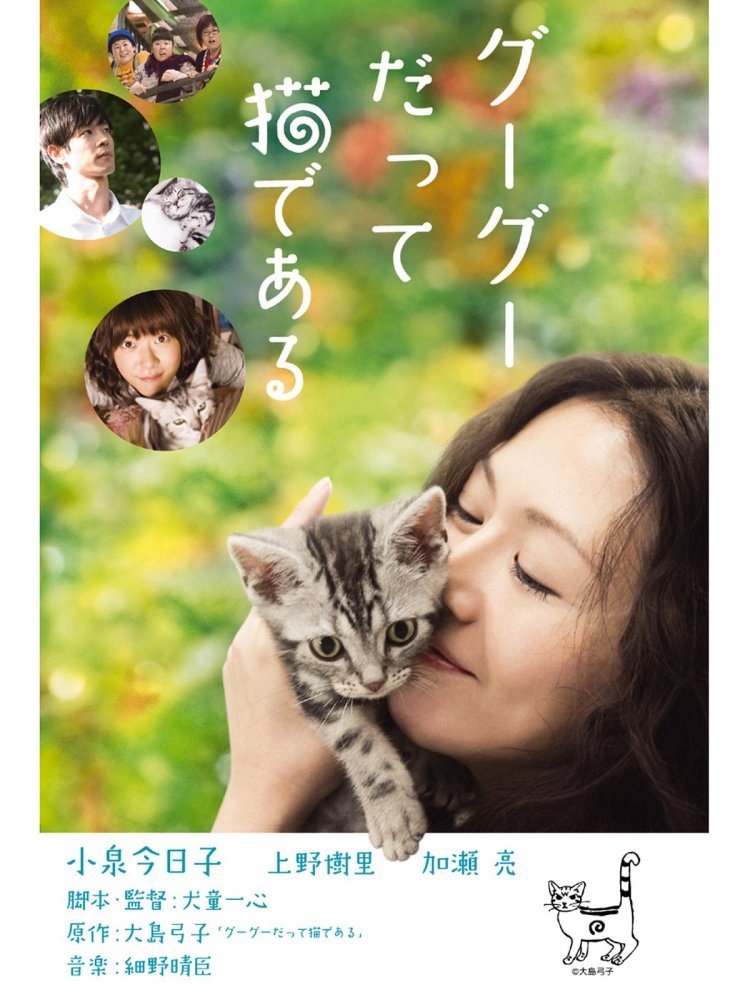
Gu Gu the cat posterJapanese cinema has long been in love with the local flavour movie. It may be true that many otherwise fantastic examples of the small subgenre have a “sponsored by the tourist board” aesthetic, but then the pure “furusato” love is usually genuine enough and often proves infectious. Gu Gu the Cat (グーグーだって猫である, Gu Gu Datte Neko de Aru) is a case in point in its fierce determination to sell the benefits of trendy Tokyo suburb Kichijoji – an upscale bohemian neighbourhood well known for being home to artists and dreamers who take care to foster the kind of hometown spirit you wouldn’t normally associate with city living. The film is also, however, the story of a struggling middle-aged mangaka who is forced to deal with a long delayed existential crisis after her elderly cat passes away.

Ça Va had been living with Asako (Kyoko Koizumi) for the last 15 years but passed away while she and her team were working flat out on a special Christmas issue. Asako is of course devastated and not least because she feels guilty that perhaps she was too busy to notice that Ça Va was ill until it was too late. According to her assistant Naomi (Juri Ueno), Asako’s career had been faltering even before Ça Va passed away – the Christmas issue had been the only thing she’d produced all year leaving her team of assistants out of pocket and worried for the future. Grief-stricken as she is, Asako eventually decides to get a new cat, Gu Gu, enabling a rebirth in her professional as well as personal lives.

Based on an autobiographical story by mangaka Yumiko Oshima, Gu Gu the Cat wastes no time in reminding us that being a mangaka is a precarious business. Asako is well acclaimed as an artist and has inspired countless young women with her shojo manga (Naomi not least among them) but is still pressed into working insane hours to meet publication deadlines and is constantly badgered by her publishing company to provide new material. Her mother (Chieko Matsubara), meanwhile, just wants her to settle down and get married before it’s “too late”.

Asako’s mother’s nagging may seem like the usual kind of conservatism that is a little embarrassed by an unmarried middle-aged woman, as well as with the idea of a woman having a career and especially in manga which is a “popular” art and therefore less respectable than literature or painting. It is also, however, born of knowing her daughter and seeing that there is a part of her that hasn’t quite matured thanks to working on manga all her adult life which has left her feeling isolated and lonely in a way a cat might not be able to satisfy. This is perhaps why potential love interest Seiji (Ryo Kase) describes all her manga as “sad”, and why Asako is somewhat uncomfortable with being treated as a “famous author” rather than as a person.

Gu Gu the cat takes a back seat to most of the action (as cats are want to do) but does help engineer a meeting with Seiji who, despite being much younger than Asako, begins to reawaken in her a sense of desire if not exactly for romance then perhaps for life. Following a familiar pattern, however, Asako re-channels that desire into her manga – coming up with an idea in which a teenager suddenly grows old, neatly mirroring her sudden sense of having become “a woman of a certain age” overnight without really noticing. Having lost Ça Va, Asako attempts to come to terms with lost time in accepting that many choices have already been made and opportunities lost. In that sense there is something sad in Asako’s decision to remain alone in knowing that in the end she lost love because she was too timid to claim it, but then, the answer isn’t new romance but an acceptance of being happy in the present in the knowledge that things change and people leave but it will all be OK in the end.

Based on Oshima’s real experiences, Inudo’s film takes a turn for the melodramatic towards its conclusion which feeds back into his “live every day” message but is perhaps a little heavy for the cheerful slice of life drama surrounding it. Likewise, his strange decision to sell the joys of Kichijoji (which appear to be many) through an American Eikaiwa teacher narrating a journey through the area in the manner of a TV programme aimed at tourists is a particularly strange one which in no way benefits from its surreal plot revelation. Nevertheless, Gu Gu the Cat is a warm and affectionate tribute to this seemingly warm and quirky area which acts as a kind of coming of age story for its middle-aged heroine who, in a sense, births herself in coming to an acceptance that life goes on and the best you can do go along with it for as long as you can.


Original trailer (English/Chinese subtitles)

Woman (女, Keisuke Kinoshita, 1948)

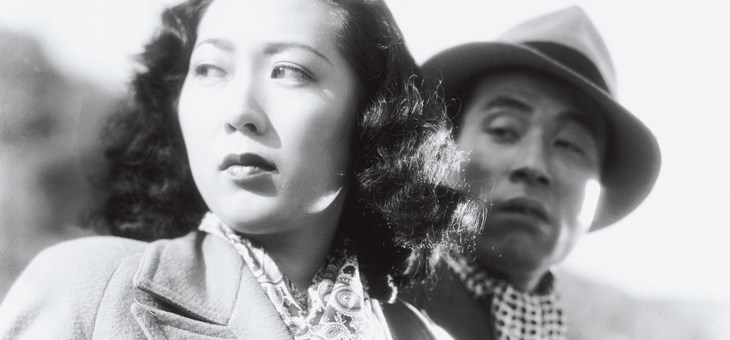
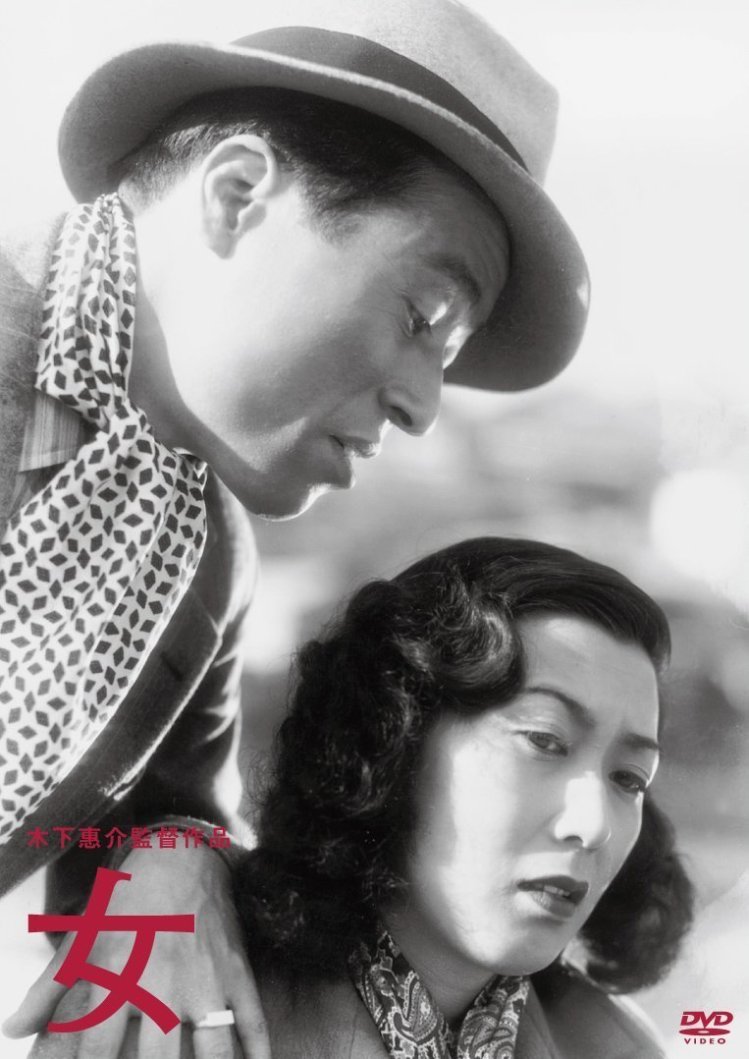
Kinoshita Woman dvd cover“You must remember there are many kind people in the world” the heroine of Keisuke Kinoshita’s Woman (女, Onna) instructs her recalcitrant boyfriend in his 1948 noir infused drama. It might as well be a mission statement for the famously humanist director, but in contrast to many of his later explorations of the power of goodness, Woman asks if a stubborn belief in the possibility of redemption for a selfish man might only be an act of mutual destruction which in itself enables the continuing decline of humanity.

Our heroine is Toshiko (Mitsuko Mito), a young woman we first meet preparing to take to the stage in her job as a chorus girl in a musical review. Toshiko’s evening is disrupted when her no good boyfriend, Tadashi (Eitaro Ozawa), turns up unexpectedly and instructs her to run away with him. Though reluctant, Toshiko does indeed find herself pulled along only to discover that Tadashi is responsible for a heinous crime for which he appears to be entirely unrepentant.

In a double irony, Tadashi’s name literally means “correct”, not just in the sense of being the indisputably right answer to a question, but also of being “just” and imbued with moral goodness. Tadashi is, however, an immensely corrupted figure. Toshiko has her doubts about him. She objects to his criminality and desperately wants him to find a way to live “honestly”, but for some reason finds it impossible to simply break with him and somewhere deep down seems to believe that he is worth saving and that she can in a sense restore him to his natural condition.

During her unwilling flight the possibility of being able to do so dwindles before Toshiko’s eyes. Tadashi’s chosen method of entertainment for the journey is reading the newspaper clippings he’s collected detailing his crimes which include burgling a middle-class home, tying up the family and their maids, and stabbing a policeman who tried to intervene. Not only is Tadashi unafraid, he seems to be proud of his actions, grinning broadly as he reads and shows off his glorious deeds to the stunned Toshiko.

As Toshiko tries to run from him, she wanders into a nearby village filled with the cheerful sound of children playing as if to throw their natural innocence in stark contrast to Tadashi’s growing corruption. Cornered he tries to convince Toshiko by softly crying as he hears the children sing the gentle folksong Akatombo, remembering that he was once an innocent child like them but that his childhood was ruined by poverty that left him responsible for supporting his siblings two of whom eventually ran away never to be seen again. This he claims caused him to despise the world and vow revenge against a society that had abandoned him. Deceived into fighting a pointless war to return to a land in ruins in which there was no work for men like him, he decided to embrace his dark side and turned to a life of crime.

If it had been just desperation, perhaps Toshiko could have understood but as she points out, if everyone thought like Tadashi the world would be in an even worse state than it already is. Times are hard for everyone, but there are still many kind people who haven’t given in to their baser instincts and continue to live honest lives helping each other as they go. Tadashi tries to convince her that he will change, that he loves her and that she is the only good thing in his life, but though there may be a grain of truth in it, his words are all calculation as his wry smirk proves when Toshiko consents to take the bento he offers her in order to suggest that he actually cares about her wellbeing.

Toshiko vacillates. The further she goes the more convinced she becomes that Tadashi is no good and cannot be redeemed. Still, she finds it hard to abandon him. She too has been deceived, corrupted by male pride. An innocent shopgirl seduced by Tadashi’s false promises she fell into the seedy underbelly of the post-war world as he forced her into bar work and then to extort her clients. The chorus girl job is perhaps a step-up, but the reason she doesn’t want to leave it is not so much a career and chance for escape as her essential character in that unlike Tadashi she is not selfish or irresponsible and does not wish to inconvenience her employers by making a sudden disappearance.

Tadashi meanwhile attempts to undermine her sense of self, snapping that “anyone could fill in” for her at the theatre while roughly grabbing her each time she attempts to move away from him. Kinoshita shoots Toshiko’s flight from claustrophobic, film noir-esque 45 degree angles. Only in brief moments of calm during her fractious conversations with Tadashi is her world restored to a natural plane, as if he is her only anchor in this decidedly off kilter world which might explain why she finds it so difficult to cut him loose. Eventually the pair end up in a pleasant resort town that apparently holds happy memories for them as a couple, but Tadashi’s childish joy as he joins in with some cheerful street musicians reminds her only of his psychopathic cruelty as he loudly sings along as if he has forgotten that he is a wanted man with blood on his hands. She remembers him throwing stones at starving children – a boy and a girl who could easily have been the brother and sister who ran away from his unhappy home, while greedily guzzling his bento without even considering that he might have shared and alleviated their suffering.

The chaos of the post-war world is made manifest by fire in the town which brings the citizens into the square and sends debris flying from windows and rooftops into the streets below. Toshiko is eventually made to realise that there is no good left in Tadashi, and, as she tells a fellow dancer in the closing scenes, even if his feelings for her are genuine she owes him nothing because them. This final declaration may be a mild misstep as it paints Toshiko and women in general as enablers of male corruption, placing the blame of societal decline on women who continue to love problematic men despite their badness in the mistaken belief that love alone can redeem them. Nevertheless, it is also a kind of defiant advocation for a new post-war world in which greed and selfishness will not be tolerated and a woman’s right to make her own decisions both in terms of her romantic future and the direction of her life in general are never in question. Toshiko has made her choice and chosen not to live in the world of men like Tadashi but in a better, kinder one free of his constraint and finally on her own terms.


Akatombo

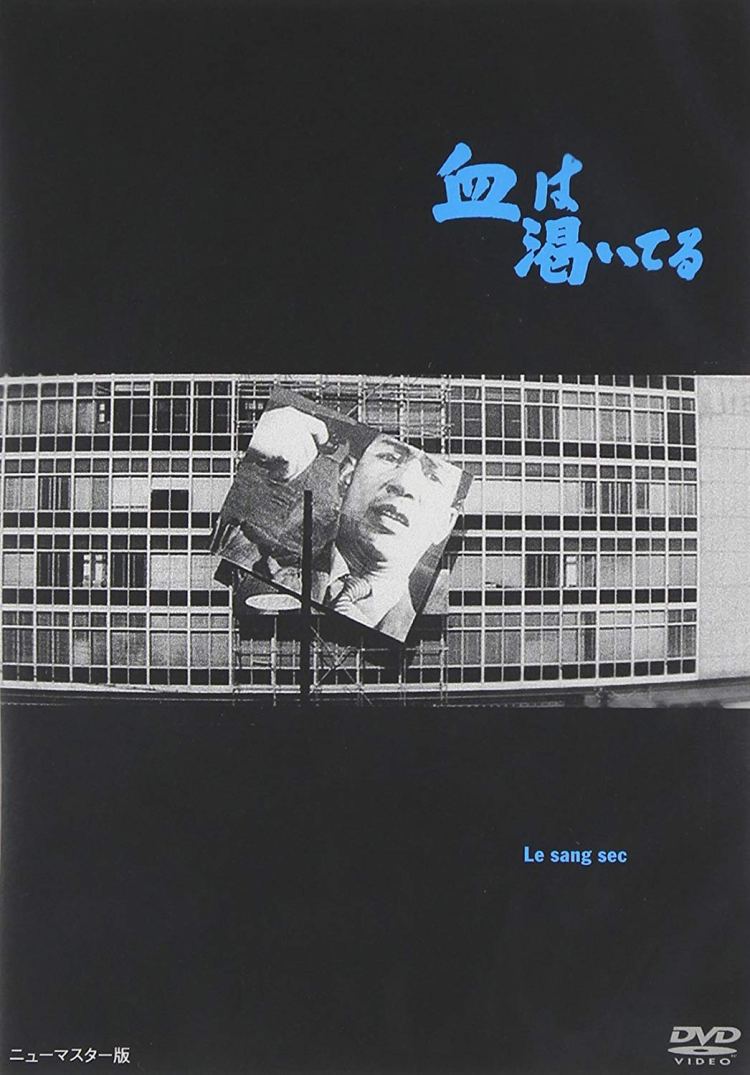
Blood is Dry (血は渇いてる, Kiju Yoshida, 1960)

Blood is dry DVD coverIn the new post-war economy, everything is for sale including you! Kiju (Yoshishige) Yoshida’s second feature Blood is Dry (血は渇いてる, Chi wa Kawaiteru) takes its cues from Yasuzo Masumura’s earlier Technicolor corporate satire Giants and Toys, and Frank Capra’s 1941 comedy Meet John Doe in taking a faceless corporate drone and giving him a sense of self only through its own negation. The little guy is at the mercy not only of irresponsible capitalist fat cats, but of his own imagination and the machinations of mass media who are only too keen to sell him impossible dreams of individual happiness.

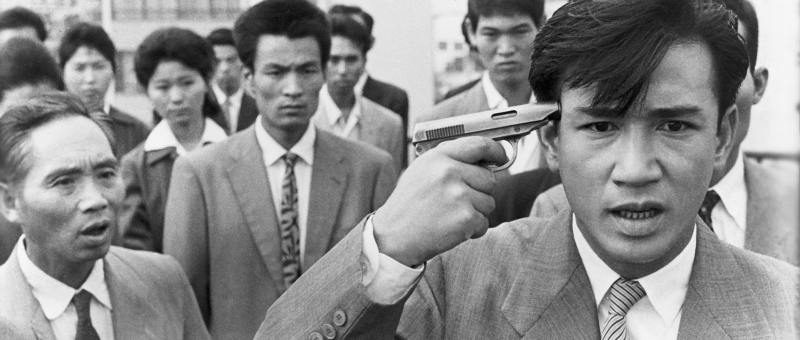
The action opens with a grandstanding rooftop speech from a former CEO to his distressed workforce informing them that because of “indifferent capitalism” this small business is going bust and everyone’s out of a job. Then, dramatically, our hero Kiguchi (Keiji Sada), steps out with a pistol and threatens to shoot himself, proclaiming that he no longer cares for his own life but doesn’t want anyone else to lose their job. Another worker, Kanai (Masao Oda), tackles Kiguchi and the gun goes off. Thankfully, he is only mildly wounded but Kiguchi’s case reaches the papers who make it into a human interest issue exemplifying the precarious economic conditions of the modern society. While he’s still somewhat current, an enterprising advertising executive hits on the idea of getting Kiguchi to act as the face of their campaign, bizarrely attempting to sell life insurance with the image of a man putting a gun to his head while proclaiming that “it’s high time everyone is happy”.

When we first meet him, Kiguchi is indeed a faceless, broken man at the end of his tether. His noble sacrifice is interpreted as an act of war on an unfair capitalist society, but as he later affirms in exasperation, Kiguchi had no political intent and never considered himself as acting with a greater purpose, he was simply terrified at the prospect of losing his job which is, in a sense, also his entire identity. Shy and mild-mannered, he stammers through speeches and curls himself into a hostile ball of awkwardness in front of the camera but ad exec Nonaka (Mari Yoshimura) is sure that only makes him a better sell for being “real” and relatable. Like the hero of Meet John Doe, however, Kiguchi starts to buy into his own hype. He fully embraces his role as the embodiment of the everyman, at once gaining and losing an identity as he basks in the unexpected faith of his adoring populace.

Kiguchi’s conversion wasn’t something Nonaka had in mind and it frightens her to realise she has lost control of her creation. Meanwhile, Nonaka’s ex, a paparazzo with a penchant for setting up celebrities in compromising situations in order to blackmail them, has it in for Kiguchi as the personification of his own dark profession. He resents the idea of using “suicide” as a marketing tool and the cynical attempt to sell the idea of happiness through the security of life insurance which, it has to be said, is a peculiarly ironic development.

Kiguchi’s liberal message of happiness and solidarity does not go down well with all – he’s eventually attacked in a taxicab by a right-wing nationalist posing as a reporter who accuses him of being a traitor to Japan, and it’s certainly not one which appeals to the forces which created him. Nevertheless, he does begin to capture something of the spirit of the man in the street who just wants to be “happy” only to have his message crushed when his image is tarnished by tabloid shenanigans and left wondering if the only way to reclaim his “artificial” identity is to once again destroy himself in sacrifice to his new ideal.

Yet Kiguchi’s motivation is both collectivist and individual as he claims and abandons his identity in insisting that he belongs to the people. His confidence is born only of their belief in him and without it he ceases to exist. Kiguchi’s entire identity has been an artificial creation with an uncertain expiry date and his attempts to buy it authenticity only damn him further while his actions are once again co-opted by outside forces for their own aims. The little guy has achieved his apotheosis into a corporate commodity leaving the everyman firmly at the mercy of his capitalist overlords, dreaming their dreams of consumerist paradise while shedding their own sense of self in service of an illusionary conception of “happiness”.


Original trailer (no subtitles)

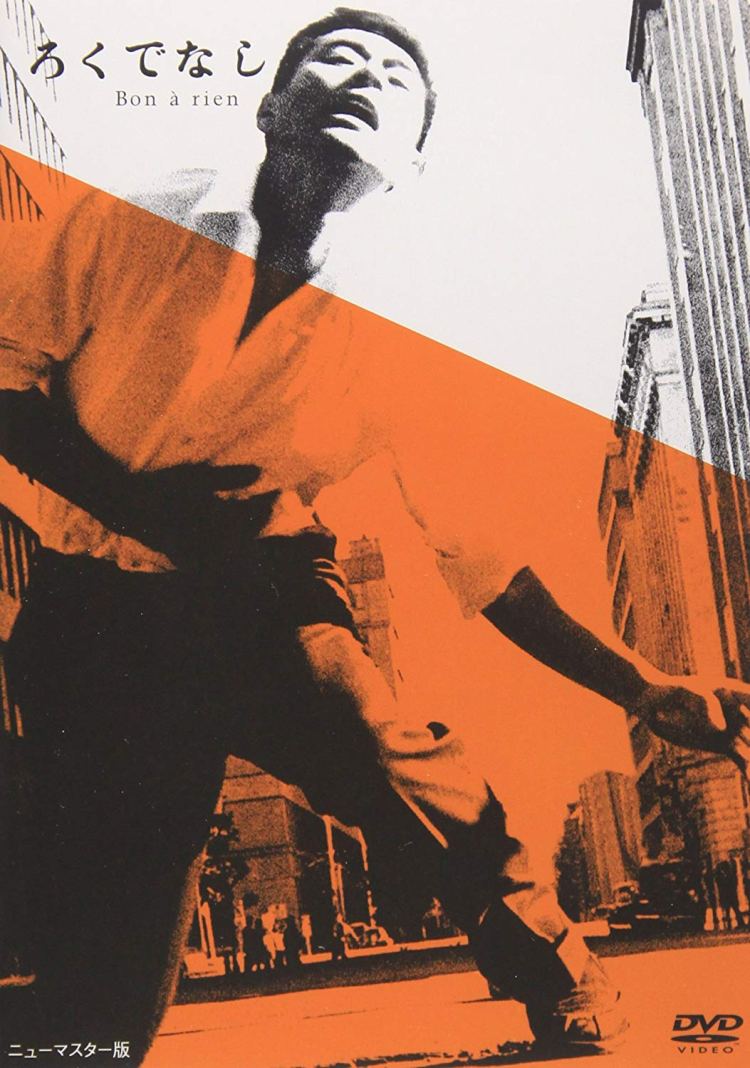
Good-for-Nothing (ろくでなし, Kiju Yoshida, 1960)

Good for nothing dvd coverIn the mid-1950s, Nikkatsu had accidentally provoked social outrage with a series of films later known as “taiyozoku” or Sun Tribe movies which revolved around aimless post-war youth who largely rejected the strident ambition of their parents for lives of dissipated abandonment. While the original author of the book that kickstarted it all fully intended to create moral panic, Nikkatsu perhaps hoped to capitalise on the inherent cool of adolescent rebellion and did it seems find an audience they hoped to continue courting with their youth movies even after the forced end of the taiyozoku movement. Shochiku, the home of polite melodrama, was a world away from Nikkatsu’s brand of angry young man but declining receipts encouraged them to get in on the action and so they began giving some of their younger ADs a chance to direct features in the hope of finding bold new voices who could speak to youth (a demographic their usual fare was not perhaps reaching).

Among these directors, Kiju (Yoshishige) Yoshida would go on to greater heights of avant-garde cinema but his Shochiku debut is perhaps more or less the kind of thing the studio was looking for. Released in the same year as Koreyoshi Kurahara’s The Warped Ones, Good-for-Nothing (ろくでなし, Rokudenashi) is another tale of youth gone wild only one with a much deeper sense of self pitying futility which casts its ill-fated hero as a noble soul left without purpose in the rapidly stratifying society of post-war Japan.

Against a heady yet whimsical jazz score (composed by Shochiku stalwart Chuji Kinoshita, brother of Keisuke), the action opens with a gang of petty delinquents kidnapping the secretary of one of their fathers, Hisako (Kakuko Chino), as she leaves the local bank. Toshio (Yusuke Kawazu) is in many ways the typical taiyozoku hero in that he is extremely rich and therefore filled with ennui because his life has no real purpose. He is not, however, the hero of Yoshida’s film. Gradually, our focus shifts to the intense figure of university student Jun (Masahiko Tsugawa) who, unlike the other members of the gang, remains internally conflicted as to the forward direction of his life and his complicated relationship with Toshio.

Whereas the taiyozoku films most often focussed on the bright young things of the new era – the children of those who had become rich in the post-war economy but had few values and were content to bury themselves in imported hedonistic pleasures, the “heroes” of Good-For-Nothing are the collaborators. If the taiyozoku were despised by the older generation as parasites living off inherited wealth and contributing nothing to society, then the guys like Jun are the parasites on the parasites. This is perhaps a view Jun holds of himself, wilfully embracing the “rokudenashi” label as expression of his intense self-loathing and acting in accordance with its values as an act almost of self-harm.

Toshio rebels against his sense of powerlessness in the darkest of ways – by setting his sights on taking his father’s “haughty” secretary down a peg or two. He may not like her confidence, self possession, and earnest determination towards honest industry but it is exactly these qualities which begin to attract Jun as representative of the society he has rejected but secretly longs to belong to. A poor student, he’s tried doing things the “right” way – part-time jobs, hard work etc, but has little interest in the student movement and views himself as “weak” for allowing himself to be swayed by the easy life of those like Toshio even in the full knowledge that he cannot live that way forever and his time at the beach will be as short as a summer vacation.

Hisako sees the conflict in Jun and tries to pull him towards a more positive path but is also attracted to him because of his darkness and nihilistic ennui. She too is unhappy with the status quo, living with her brother and his wife who quarrel about money and the disappointments of the salaryman dream while the office playboy hassles her at work and is only spurred on by her constant rejections. Hisako knows getting involved with Jun is playing with fire, especially if it keeps her in the orbit of the continually declining Toshio whose worrying behaviour is perhaps enabled by his well meaning liberal (though arch capitalist) father who is hoping his son will find his own way through hitting rock bottom, but salvation is a temptation it’s difficult to resist.

The heroes of the taiyozoku movies are aimless because they have no economic imperatives towards individual progress, but those like Jun or indeed like those of The Warped Ones are aimless because they see no sense of purpose in an intensely class bound society in which, paradoxically, all the cards are held by men like Toshio. Some, like Jun’s gang mate, decide the best way forward is to become a willing underling living off Toshio’s largesse who is, in his own way, intensely lonely and filling the friendship void with minions. Others, like Hisako, decide to plug on anyway despite the disappointments of socially conservative success. For men like Jun, however, the prognosis is as grim as in much of Yoshida’s later work, suggesting his nihilism is justified because there is no hope for men without means lost in the widening gulf of post-war inequality where any attempt at moral righteousness is likely to be rewarded only with further suffering.


Original trailer (Japanese with French/Traditional Chinese subtitles)

The Wonderland (バースデー・ワンダーランド, Keiichi Hara, 2019) [Fantasia 2019]

birthday wonderland poster 1The demands of adulthood are apt to overshadow any young teen’s life, but you can’t shake them off just by lying in bed and refusing to age. So the heroine of Keiichi Hara’s The Wonderland (バースデー・ワンダーランド, Birthday Wonderland) discovers as she determines to hideout from emotional complexity, waiting for the storm to pass and cowardly failing to defend a friend in the process. The last thing she wants is the responsibility of being “the chosen one”, but the thing about that is that you don’t get to choose and if the universe has plans for you it would be very irresponsible to refuse.

After (not) getting involved in a minor spat amongst friends about coloured hair clips, Akane (Mayu Matsuoka) decides the best solution is to feign illness, turn off her phone, and avoid going to school. Her kindly mother (Kumiko Aso), seemingly aware she’s not really ill, decides to let her stay home anyway but all she ends up doing is mistreating the cat in frustration and moping about, so her mum despatches her to her aunt Chii’s (Anne Watanabe) place to pick up her birthday gift which she presumably can’t open until the big day tomorrow. Truth be told, Akane doesn’t much like her aunt Chii, she’s far too free spirited and unpredictable for the neurotic teen, but she could stand to learn something from her irrepressible lust for life.

Akane gets the perfect opportunity to do just that when she sticks her hand onto a palm print in her aunt’s shop and is promptly greeted by a dapper-looking man with a fabulous moustache and his tiny minion (Nao Toyama) who crawl up through the hidden basement to explain that she is the “Goddess of the Green Wind” they’ve been searching for and must come with them right away because their nation is in peril! As expected, Akane doesn’t want to go, but is chivvied along by her overexcited aunt and a strange amulet the man, an alchemist named Hippocrates (Masachika Ichimura), places around her neck.

The amulet, he tells her, helps you move forward even if you want to go back. That is, in a sense, Akane’s entire dilemma as she finds herself on the cusp of adulthood, afraid to step forward and accept the responsibilities of maturity while longing to return to carefree childhood days when there was nothing much to worry about and always someone around to look after her. Like any good fairytale, she finds her mirror in the other world in a melancholy prince who remains so reluctant to take part in an essential ritual that he is almost willing to burn the world to avoid having to acknowledge his royal responsibilities.

Meanwhile, Akane is slow to adjust to the charms of her new Wonderland, refusing to engage and loudly stating her desire to go home while her aunt tries to encourage her to embrace a sense of adventure. Chii, the film’s best asset who proclaims “no alcohol no life” while thoroughly enjoying sparring with the uptight Hippocrates (who perhaps is also enjoying the challenge though might not want to admit it), might in some senses be a barrier to Akane’s self-actualisation but is also an important source of safety for her in an unsafe world and just irresponsible enough to push her niece towards taking the right kind of risks in order to do the right thing and save the kingdom.

The reasons the kingdom is in peril in the first place are hugely symbolic – an ongoing water crisis caused by governmental negligence is draining the world of colour while literally drying it out. Getting used to her new surroundings, Akane begins to see their charm. This world, near identical to her own in many ways, diverged around the industrial revolution. Where “our” world rocketed into a frenetic lust for convenience, the rhythms of this one stayed the same, a perpetual village society in which cheerful people live laidback lives surrounded by the beauty of nature – something Akane later comes to worry her own world is losing. Gradually letting go of her fear and getting a better idea of the kind of life she might want, Akane gains the courage to embrace responsibility through directly supporting someone else as they learn to do the same.

A whimsical coming of age tale, The Wonderland excels in world building but somehow never quite achieves the level of emotional engagement it seems to be looking for even as its sullen, detached heroine perhaps begins to realise she did a great disservice to her friend when she failed to defend her during the silly hair ornament argument largely because she personally didn’t want to rock the boat and put herself in the firing line. Her horizons suitably expanded, Akane finds she no longer needs an amulet to keep moving forward even when longing to look back and resolves to step into adulthood with an easy, laidback confidence learned from her palls on the other side.


The Wonderland was screened as part of the 2019 Fantasia International Film Festival.

Original trailer (English subtitles)