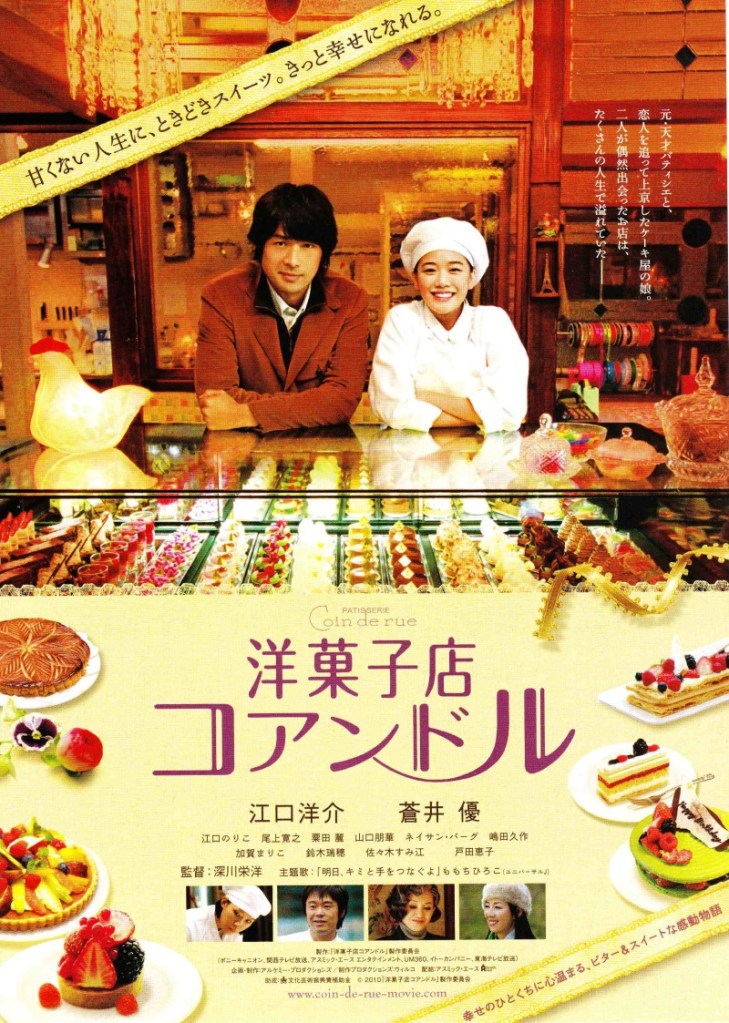
 You know how it is, when you’re from a small town perhaps you feel like a big fish but when you swim up to the great lake that is the city, you suddenly feel very small. Natsume has come to Tokyo from her rural backwater town in Kagoshima to look for her boyfriend, Umi, who’s not been in contact (even with his parents). When she arrives at the patisserie he’d been working at she discovers that he suddenly quit a while ago without telling anyone where he was going. Natsume is distressed and heartbroken but notices that the cafe is currently hiring and so asks if she may take Umi’s place – after all she grew up helping out at her family’s cake shop!
However, as you might expect, even if her cakes are perfectly nice in a “homecooking” sort of way, they won’t cut it at a top cafe like Patisserie Coin de rue. Natsume is not someone who takes criticism well and is hurt that her skills aren’t appreciated but vows to stay and become the best kind of pastry chef she can be.
At heart, Patisserie Coin de rue (洋菓子店コアンドル, Yougashiten Koandoru) is a fairly generic apprentice story as Natsume starts off as a slightly arrogant country girl with an over inflated opinion of her abilities but gradually develops the humility to help her learn from others around her. Natsume, played by the very talented Yu Aoi, is not an easy woman herself and often rides a rollercoaster of emotions in just a single sentence. She’s loud but passionate and she does work hard even if her over confidence and slapdash approach sometimes cause problems for her fellow workers.
Patisserie Coin de Rue is also refreshing in that it’s one of the few films of this nature that do not attempt to pack in a romantic element. Natsume may have come to Tokyo to look for her boyfriend but no attention is paid to the possibility of winning him back or finding someone else, after calling time on her quest Natsume simply buckles down to learning her craft.
This is doubly true of the film’s secondary plot strand which centres on former international pastry star Tomura (Yosuke Eguchi) who mysteriously abandoned his cooking career eight years ago and now mostly works as a critic with some teaching on the side. He cuts a fairly sad figure as a regular visitor to Patisserie Coin de rue where he’s also an old friend of the owner and Natsume’s mentor, Yuriko. Natsume finally manages to coax him out of his self imposed isolation but the relationship is more paternal than anything else and, thankfully, never attempts to go down any kind of romantic route.
It’s a story that’s familiar enough on its own to have become something of a cliché and Patisserie Coin de rue doesn’t even try to put much of a new spin on it but it does at least carry it off with a decent amount of sophistication. Occasionally the film falls into the televisual but its production values are strong with the tone neatly flitting between mainstream aesthetics and a slightly alienated indie perspective. Of course, being a cake based film there are plenty of enticing shots of the baked goods on offer which do at least create a feast for the eyes.
The saving grace of the film is its leading actors who each turn in naturalistic, nuanced performances even given the lacklustre nature of the script. Yu Aoi carries the film as her surprisingly feisty Natsume dominates each scene she’s in while support is offered by the silent, brooding Yosuke Eguchi and the wise and patient shop owner Yuriko played by Keiko Toda. The film really owes a lot to the talent and commitment of its leading players who help to elevate its rather ordinary nature into something that’s a little less disposable.
That said Patisserie Coin de Rue is a little like a pleasant cafe you find in an unfamiliar area – the coffee’s good and the pastries are pleasant enough, you might drop in again if you’re in this part of town but you probably won’t make a special journey. A little bit formulaic and ultimately too sweet, Patisserie Coin de Rue is a shop bought cake in a boutique box which though enjoyable enough at the time is unlikely to linger long in the memory.
The R3 Hong Kong DVD release of Patisserie Coin de rue includes English subtitles.
(Unsubtitled trailer)
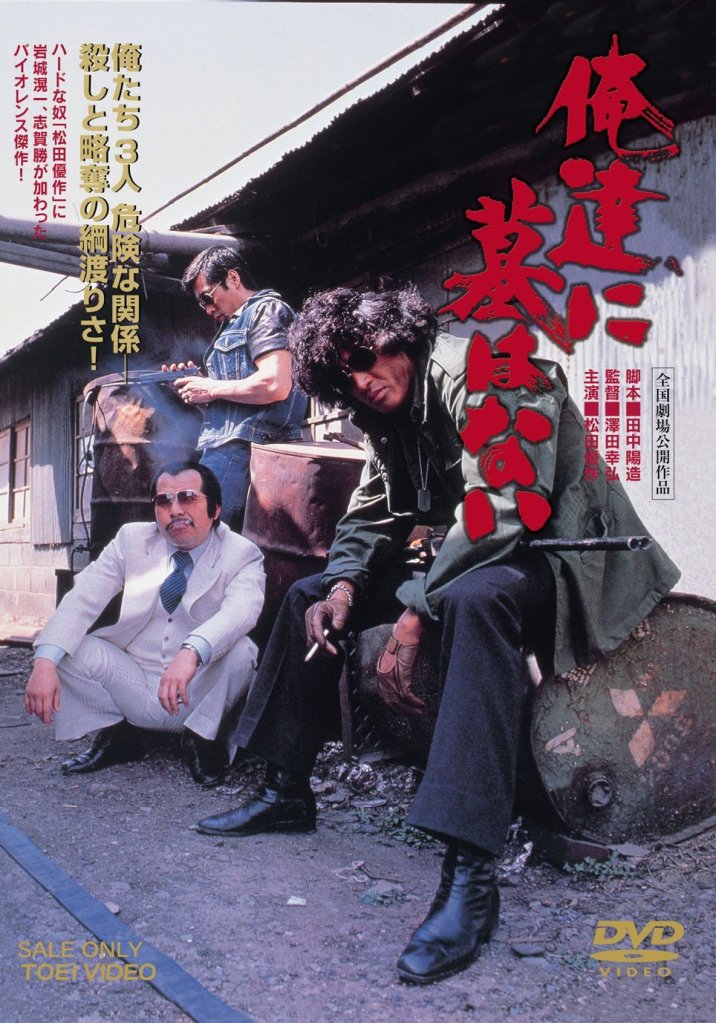 Though he might not exactly be a household name outside of Japan, the late Yusaku Matsuda was one of the most important mainstream stars of the ‘70s and ‘80s. Had he not died at the tragically young age of 40 after refusing chemotherapy for bladder cancer to star in what would become his final film, Ridley Scott’s Black Rain, he’d undoubtedly have continued to move on from the action genre in which he’d made his name. No Grave For Us (俺達に墓はない, Oretachi ni Haka wa Nai) is fairly typical of the kinds of films he was making in the late ‘70s as he once again plays a cool, streetwise hoodlum mixed up in a crazy crime world where no one can be trusted.
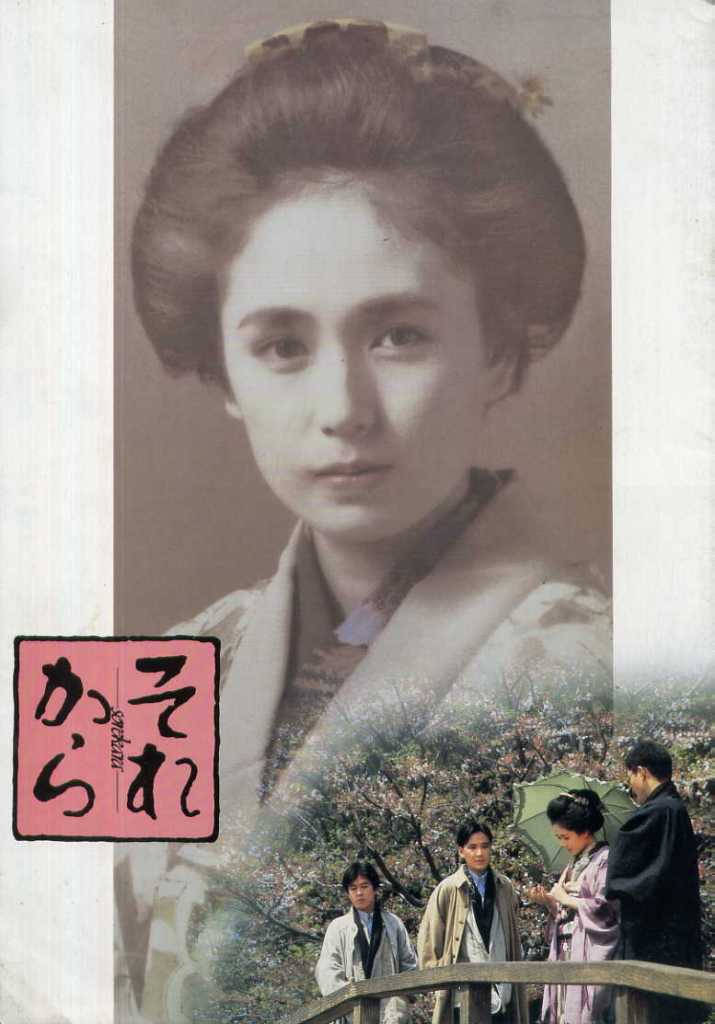 Yoshimitsu Morita had a long and varied career (even if it was packed into a relatively short time) which encompassed throwaway teen idol dramas and award winning art house movies but even so tackling one of the great novels by one of Japan’s most highly regarded authors might be thought an unusual move. Like a lot of his work, Natsume Soseki’s Sorekara (And Then…) deals with the massive culture clash which reverberated through Japan during the late Meiji era and, once again, he uses the idea of frustrated romance to explore the way in which the past and future often work against each other.
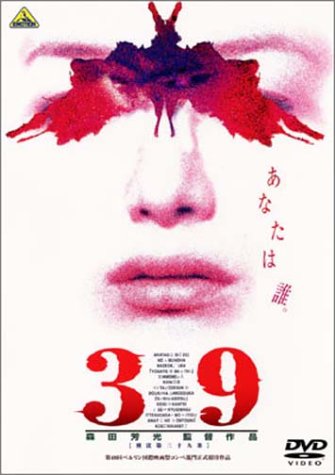 Article 39 of Japan’s Penal Code states that a person cannot be held responsible for a crime if they are found to be “insane” though a person who commits a crime during a period of “diminished responsibility” can be held accountable and will receive a reduced sentence. Yoshimitsu Morita’s 1999 courtroom drama/psychological thriller Keiho (39 刑法第三十九条, 39 Keiho Dai Sanjukyu Jo) puts this very aspect of the law on trial. During this period (and still in 2016) Japan does nominally have the death penalty (though rarely practiced) and it is only right in a fair and humane society that those people whom the state deems as incapable of understanding the law should receive its protection and, if necessary, assistance. However, the law itself is also open to abuse and as it’s largely left to the discretion of the psychologists and lawyers, the judgement of sane or insane might be a matter of interpretation.
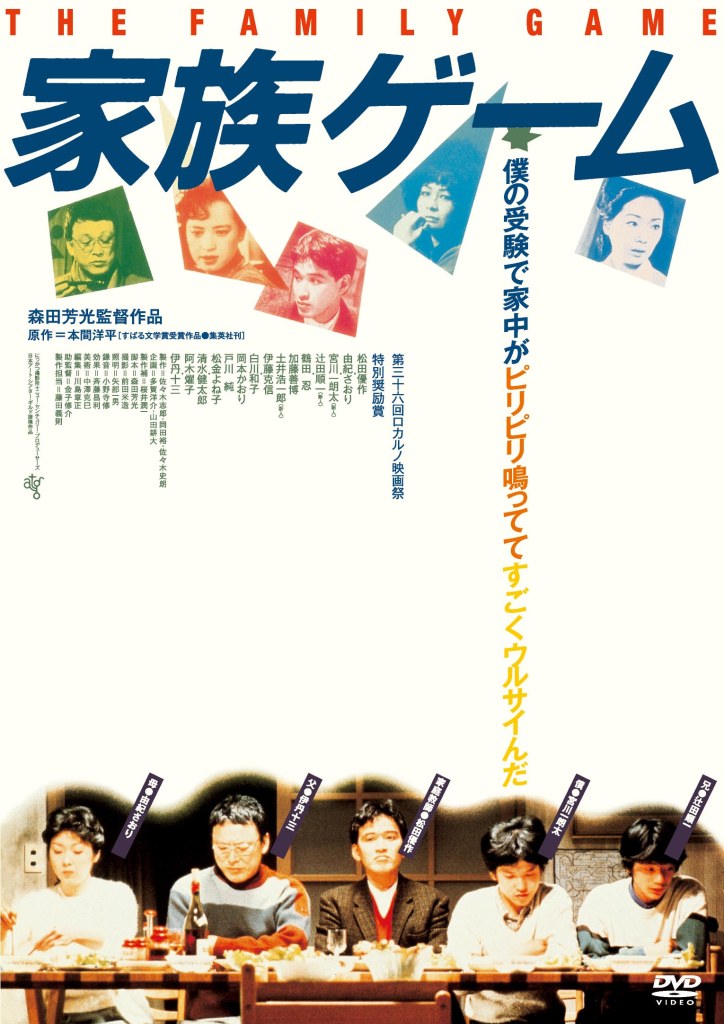 “Why do we have to make such sacrifices for our children?”. It sounds a little cold, doesn’t it, but none the less true. Yoshimitsu Morita’s 1983 social satire The Family Game (家族ゲーム, Kazoku Game) takes that most Japanese of genres, the family drama, and turns it inside out whilst vigorously shaking it to see what else falls from the pockets.
 Sogo (now Gakyruu) Ishii was only 20 years old when Nikkatsu commissioned him to turn his smash hit 8mm short into a full scale studio picture. Perhaps that’s why they partnered him with one of their steadiest hands in Yukihiro Sawada as a co-director though the youthful punk attitude that would become Ishii’s signature is very much in evidence here despite the otherwise mainstream studio production. That said, Nikkatsu in this period was a far less sophisticated operation than it had been a decade before and, surprisingly, Panic High School (高校大パニック, Koukou Dai Panic) neatly avoids the kind of exploitative schlock that its title might suggest.
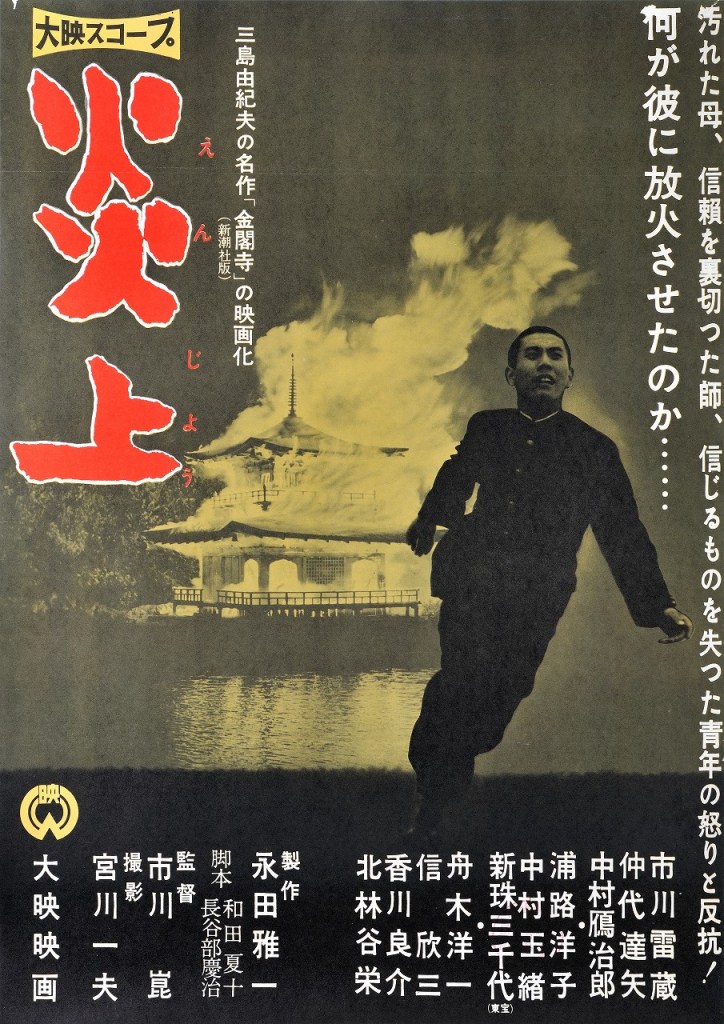 Kon Ichikawa turns his unflinching eyes to the hypocrisy of the post-war world and its tormented youth in adapting one of Yukio Mishima’s most acclaimed works, The Temple of the Golden Pavilion. Inspired by the real life burning of the Kinkaku-ji temple in 1950 by a “disturbed” monk, Enjo (炎上, AKA Conflagration / Flame of Torment) examines the spiritual and moral disintegration of a young man obsessed with beauty but shunned by society because of a disability.
 Sogo Ishii (now Gakuryu Ishii) was one of the foremost filmmakers in Japan’s punk movement of the late ‘70s and ‘80s though his later work drifted further away from his youthful subculture roots. Perhaps best known for his absurdist look at modern middle class society in The Crazy Family or his noisy musical epics Crazy Thunder Road and Burst City, Ishii’s first feature length film is a quieter, if no less energetic, effort.
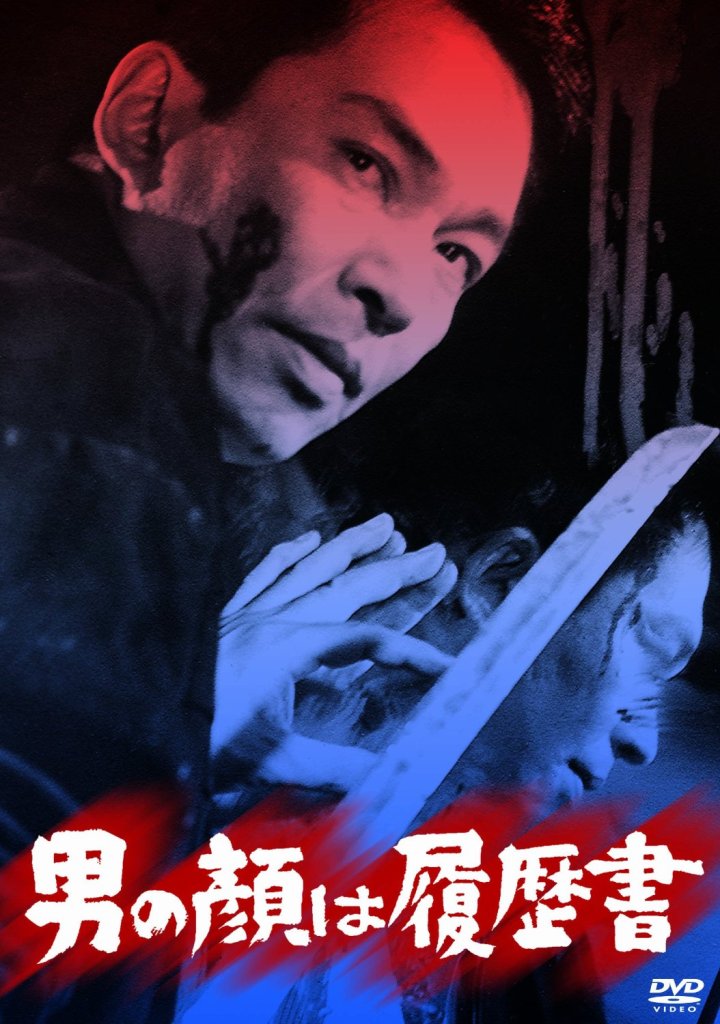 Japanese cinema has not been as shy as might be supposed in examining uncomfortable topics concerning the nation’s mid 20th century history but perhaps prefers to tackle them from a subtle, sideways viewpoint. By a Man’s Face Shall You Know Him (男の顔は履歴書, Otokonokao wa Rirekisho) is, in essence, a fairly straightforward gangster pic – save that the rampaging gangsters are a mob of “zainichi” Koreans rather than post-war yakuza or petty hoodlums. Less about what it is to be an outsider or the quest for identity in second generation immigrants, Kato’s film is about what it says it is about – a man’s face.
 Windows on Worlds