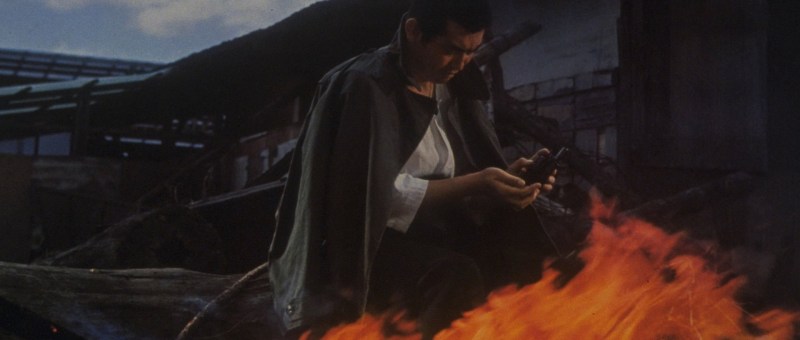
Graveyard of Honor (仁義の墓場, Kinji Fukasaku, 1975)

“Like hell you’re free” the “hero” of Kinji Fukasaku’s Graveyard of Honor (仁義の墓場, Jingi no Hakaba) coolly snaps back in squaring off against a rival gang in a crowded marketplace. Perhaps a familiar scene in the jitsuroku eiga, a genre Fukasaku had helped usher into being and later solidified in the hugely influential Battles Without Honour and Humanity series. A reaction against the increasingly outdated ninkyo eiga and their tales of noble pre-war gangsterdom, the jitsuroku or “true account” movie claimed a higher level of authenticity, inspired by the real lives of notorious gangsters and depicting the chaotic post-war period as it really was, a Graveyard of Honor. 

Based on another true crime novel by Battles Without Honour and Humanity’s Goro Fujita, Graveyard of Honour charts the slow self-implosion of reckless gangster Rikio Ishikawa (Tetsuya Watari). In keeping with the jitsuroku mould, Fukasaku opens in documentary mode, onscreen text giving us Rikio’s pregnant birthdate of 6th August, 1924 before giving way to the voices of, we assume, real people who actually knew him when he was child. They describe him alternately as shy, an oversensitive crybaby, and an evil genius in waiting who was always different from the others and had a lifelong ambition to become a yakuza. They wonder if it was the chaos of the post-war world which turned him into a “rabid dog” but note that he was in fact just as crazy before the war and after.

A cellmate during his time in juvenile detention recalls that Rikio would often liken himself to a balloon, intending to rise and rise until he burst but his trajectory will be quite the opposite. A mess of contradictions, he repeatedly tells his remarkably understanding boss Kawada (Hajime Hana) that whatever it is he’s done this time it was all for the gang but all he ever does is cause trouble, picking fights with the rival area gangs in an obsessive need for masculine dominance over his surroundings. His trip to juvie was apparently down to getting into a fight defending Kawada’s honour, implying that he was “the sort of kid who genuinely respected his godfather”, yet it’s in transgressing this most important of unwritten yakuza rules that he damns himself. Beaten up as punishment for setting fire to the car of a gang boss he felt slighted him, Rikio is asked for his finger but gets so drunk psyching himself up that he eventually turns on his own side and is exiled from the capital for a decade. 

That gang boss, meanwhile, Nozu (Noboru Ando), is currently running for political office in Japan’s new push towards democracy. He eventually loses but only by a small margin, bearing out that in this extremely difficult post-war environment, the yakuza is still a respected, if perhaps also feared, force providing services which ordinary people are sometimes grateful for in that they provide a buffer against other kinds of threat. Meanwhile, the first of Rikio’s gang raids is undertaken against so called “third country nationals” a dogwhistle euphemism for Zainichi Koreans, Chinese, Taiwanese, and other citizens from nations colonised by Japan during in its imperialist expansion who entered the country as Japanese citizens but have now been “liberated” only to face further oppression while those like Rikio accuse them of looking down on and taking revenge against the Japanese for the abuse they suffered as imperial subjects. When both sides are arrested a racist policeman allows the yakuza to escape, thanking them for helping him round up all the Chinese businessmen who will now go to jail for illegal gambling allowing the local gangs to seize their turf. 

The greatest irony is, however, that the American occupation forces may be the biggest gang of all, willingly collaborating with Kawada in peddling blackmarket whiskey (amongst other things) from the local base. The yakuza is also in collaboration with the local sex workers who use their connections with American servicemen to facilitate yakuza business. When Rikio starts a fight with a rival gang in a local bar that threatens to spark a war, it’s the Americans who are called in as neutral third party mediator, Nozu being unable to fulfil that role in having an affiliation with Kawada. The Americans, however, merely issue a loudspeaker announcement for the gang members to disperse or face possible arrest, keeping the peace if somewhat hypocritically. 

Rikio, meanwhile, continues to flounder. Exiled from his gang, he becomes addicted to hard drugs and gets a problematic minion of his own, Ozaki (Kunie Tanaka), not to mention contracting tuberculosis. In a particularly morbid moment, he has his own gravestone carved, perhaps detecting that the end is near or at least that an ending is coming for him. In another somewhat inexplicable turn of his life, though a common trope in jitsuroku, he eventually marries the sex worker who fell in love with him after he raped her, presumably touched by his concern after he burned a hole in her tatami mat floor. Wearied by grief and already out of his mind, a final act of nihilistic craziness sees him approach his former boss for the turf and capital to form his own gang, crunching his late wife’s bones as hardened gang members look on in utter disbelief. 

Rikio’s desire for freedom, to be his own boss, is elusive as the red balloon we often see floating away away from him, free in a way he’ll never be. “Don’t these young people respect the code anymore?” Kawada exasperatedly asks on hearing that Rikio has broken the terms of his exile and returned only a year into his sentence. But Rikio’s tragedy may in a sense be that he understood the code too well. On the side of his tombstone he writes the word “jingi”, honour and humanity, full in the knowledge that such concepts in which he seems to have believed no longer exist in the cruel and chaotic post-war world which forces even true believers to betray themselves in a desperate bid for survival. “We all live by a code” his friend echoes, “there’s just no way around the rules”. 

A case of printing the legend, Fukasaku’s take on the life of Rikio Ishikawa may not quite be the “true account” it claims but is in its own strange way a tale of frustrated gangster nobility, a cry baby’s failure to become the man he wanted to be in the complicated post-war landscape. Capturing the confusion of the era through frantic, handheld camera Fukasaku nevertheless takes a turn for the melancholy and mediative in his shifts to sepia, the listless vacant look of a drugged up Rikio somehow standing in for the nihilistic emptiness of a life lived in honour’s graveyard. 


Original trailer (English subtitles)
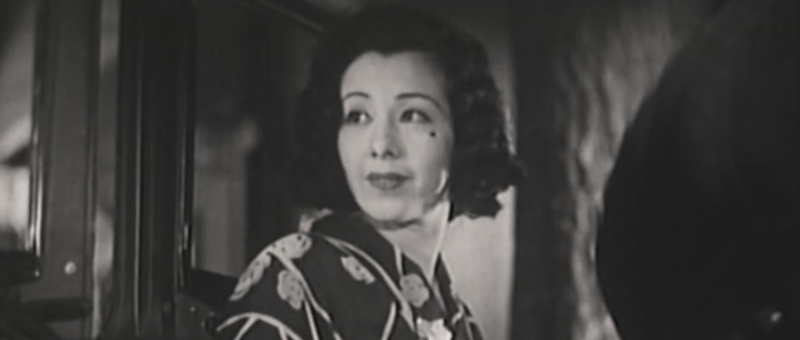
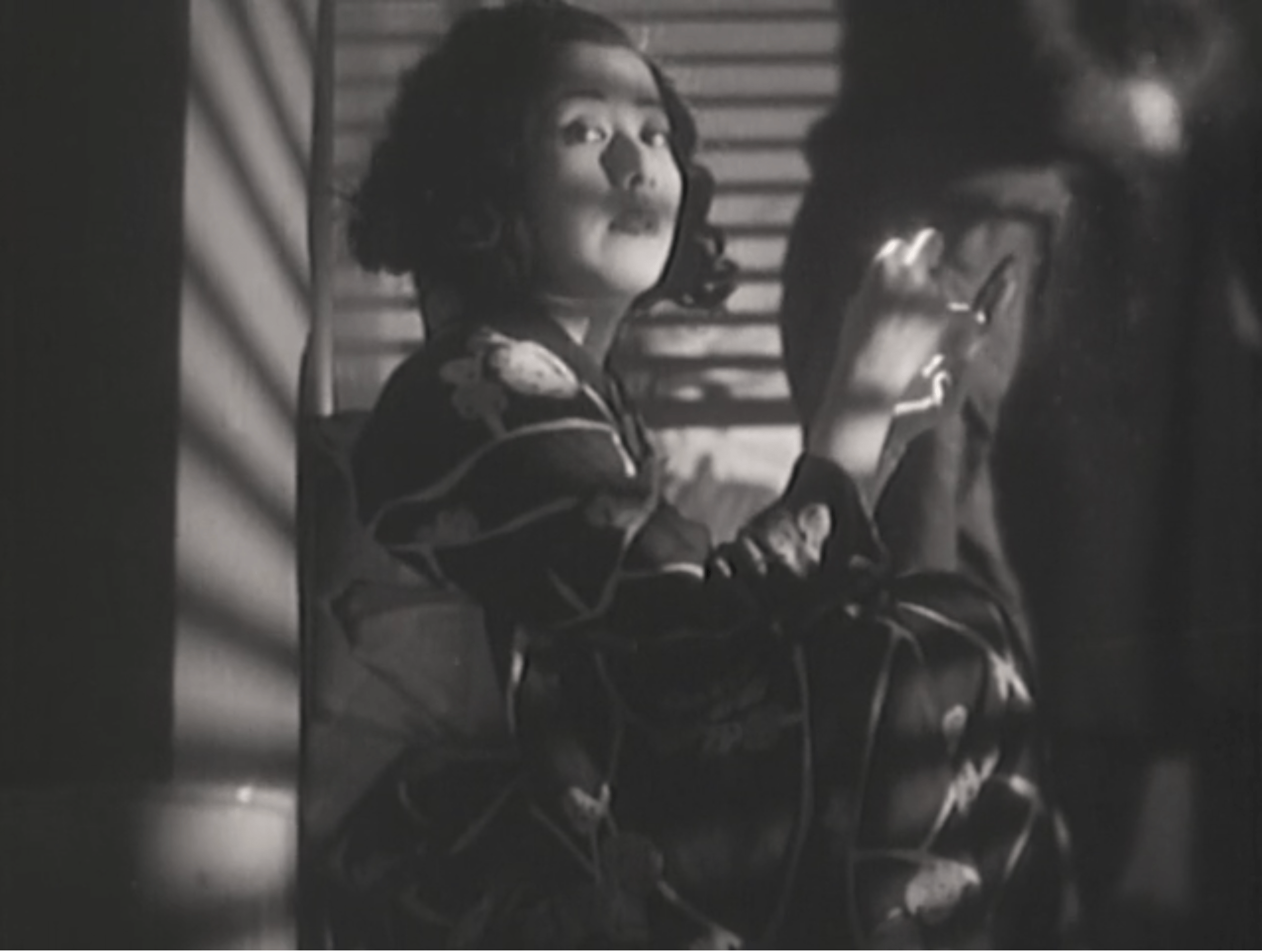
Woman of Tokyo (東京の女, Yasujiro Ozu, 1933)

Most closely associated with his family dramas, the films of Yasujiro Ozu while often deeply moving are generally safe spaces filled with warmth and love. He was never, however, afraid to explore the darkness of his society as the uncharacteristically bleak silent Woman of Tokyo (東京の女, Tokyo no Onna) makes plain. A tale of disintegrating families, Ozu substitutes a loyal sister for a self sacrificing mother but once again places her at the mercy of a conservative society which refuses to accept the nature of the sacrifice she has chosen to make on its behalf. 

The heroine, Chikako (Yoshiko Okada), is better off than most during these years of depression in that she has a steady full-time job as a typist with which she is able to support her younger brother, Ryoichi (Ureo Egawa), who is a student. Somewhat unusually, Ozu shows us a fairly progressive working environment in which Chikako is one of many women working alongside men in an open plan office which is arranged in a far less stressful manner than the one we later observe in the American film which Ryoichi and his girlfriend Harue (Kinuyo Tanaka) see at the cinema (If I Had a Million, 1932, the segment directed by Ernst Lubitsch, “The Clerk”) in which the desks are laid out in regimented style and staffed entirely by identically dressed men.  

In any case, the job apparently does not quite pay enough to cover Ryoichi’s fees and so Chikako has taken on a part-time gig assisting a professor with translation at his home in the evenings, or so she said. Unbeknownst to her, a policeman turns up at her office and asks to see her attendance records. Again surprisingly, Chikako’s boss is calm and supportive, telling the policeman she’s a model employee of four years’ standing and obviously confused as to how she could be the subject of any criminal investigation. The policeman does not explain, shutting the interview down as soon as the boss motions to ask Chikako about the mysterious professor presumably not wanting her to know she is under investigation. 

Rumours, however, will start and it is those rumours more than the truth of them which will prove the most fatal. Harue’s brother (Shinyo Nara) is a policeman and he’s heard that Chikako has been moonlighting as a bar girl and engaging in sex work. Harue decides to put the matter to her boyfriend, but he is immediately offended, brought to tears by anger, and throws Harue out for slandering his sister. The issue is that, as a woman and most particularly as a sister in place of a mother, Chikako is expected to sacrifice herself on her brother’s behalf. Her career, and implicitly the reason she is not yet married, is not for her personal fulfilment or financial security but only for her brother’s future. She has given up everything for him, and now apparently has also surrendered her body yet he rejects and shames her for it. He does not thank her, nor does he feel guilt for being the cause of her supposed degradation but again foregrounds his own suffering as the brother of a fallen woman. 

Harue, by contrast, is presented as a the soul of properness, not unkind but disapproving. In a difficult conversation with Chikako, she admits it’s not the right thing to say but immediately pities Ryoichi rather than sympathising with another woman who has found herself making difficult choices solely on his behalf. Ryoichi rejects her suffering and sees only the shame. Yet Chikako is not ashamed. She does not seem unhappy with her choices and is defiant in the face of censure. She hoped that Ryoichi would one day understand, but the decision he makes is cruel and selfish, ruining all her hope and rendering her long years of suffering void. She resents his cowardice in being unable to face and accept the truth in the depth of her love for him. 

In this instance, the family fails but only because of an oppressive social structure that is inherently unequal and refuses to accept either female agency or sacrifice. Chikako lives in a world of film noir despair, haunted by ominous shadows – policemen’s swords, gloves against the shoji, nooses in shadows on the walls, a boiling kettle giving way to a pillow shot of smoke pouring from a chimney in funereal foreshadowing that forever traps her in impossibility. Frustrated, Ryoichi tries to reassert his manhood through physical violence but remains impotent, dependent on his sister but resenting her for shaming him in transgressing against an oppressive society. Meanwhile, Chikako is one of many women of Tokyo enduring the same old tragedies, her suffering barely registers. Reporters leave her door giggling after concluding there’s nothing to see here before taking to the streets in search of greater scandal in a readily devolving city filled with only emptiness and despair. 


Currently streaming in the UK via BFI Player as part of Japan 2020. Also available to stream in the US via Criterion Channel.

Too Young to Die (死ぬにはまだ早い, Kiyoshi Nishimura, 1969)

Perhaps more or less forgotten for reasons we’ll come to later, Kiyoshi Nishimura was for a time a successful director associated with Toho’s line of noirish B-movie action dramas. When the Japanese cinema industry entered its decline in the 1970s, Nishimura shifted into similarly themed TV drama and was well respected for his ability to turn in on time and on budget. None of that mattered however when he was engulfed in scandal in 1987 after being caught operating spy cams in the female only area of a public bathhouse bringing his career to an abrupt end. Directing a few more projects under the name Yusai Ito, he sadly took his own life a few years later in 1993 at the age of 61. 

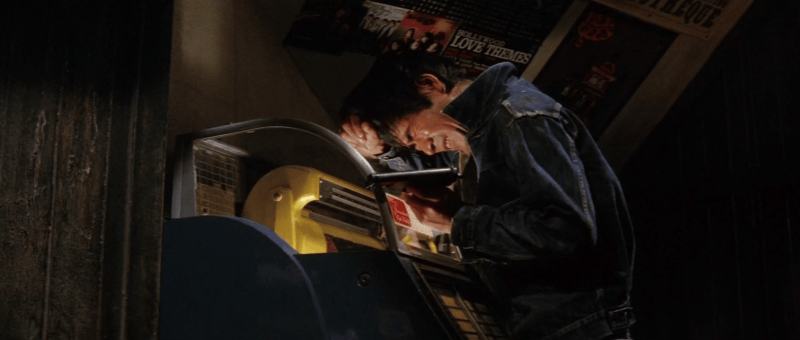
Nishimura’s 1969 debut Too Young to Die (死ぬにはまだ早い, Shinu ni wa Mada Hayai), however, is a masterclass in high tension filmed with shaky handheld set largely in a single location and imbued with a singular irony replete as it is with cosmic coincidences as a collection of customers at a roadside bar are taken hostage by a crazed criminal with a gun intent on finding the lover of the girlfriend he claims to have murdered for her infidelity. The heroes, however, are ennui-filled couple Matsuoka (Koji Takahashi) and Yumiko (Mako Midori) who are in fact not married, or at least not to each other, but carrying on an extra-marital affair which may be on the cusp of fizzling out. A former racing champ who claims he just got bored with the sport one day and now works for a company selling accessories for toy cars, Matsuoka is supposed to drive Yumiko home where she’s expecting a call from her controlling husband, away on a business trip, at 1am. These are all reasons they are unusually nervous about a police checkpoint searching for an armed fugitive, deciding to stop off at a roadside bar for a stiff drink and something to eat. Only, shortly after their arrival a young man (Toshio Kurosawa) in denim enters giving each of the other men intense side eye before shooting a policeman who comes in to make enquiries about the fugitive. 

The unnamed young tough takes the entire bar hostage intent on finding his lover’s lover, overcome with a sense of cosmic irony when Matsuoka calmly points out he may have arrived too early and the man he’s looking for had not yet arrived when he put the place in lockdown. Before the gunman’s arrival, Nishimura introduces us to each of the other customers via the handy device of two teenage girls apparently stranded and asking around for a lift back to the city. A middle-aged doctor (Chuzaburo Wakamiya), apparently a regular, eventually offers to take them but is dissuaded by the barman (Kazuya Oguri) who reminds him he’s been drinking too heavily to take passengers, while a taxi driver (Shigeki Ishida) who seems to be feeling unwell flat out refuses. The other customers are a suspicious looking man in a trenchcoat (Daigo Kusano) sitting in the corner piling matchsticks, and a newlywed couple who we later learn saved up for their wedding for three years, the wife (Nami Tamura) already going through her accounts book irritated by her friends’ decision to graffiti their car and wondering how much it’ll cost to get it cleaned up while the husband (Tatsuyoshi Ehara) disappoints her by wanting to rush home because he’s planning to return to work the next morning ahead of schedule. 

The relationships of the two couples are often directly contrasted, Matsuoka and Yumiko unsure of their connection as adulterous lovers while the newly married couple also seem be under strain even before the traumatic events about to take place. Apparently brokenhearted, the gunman collapses over the jukebox playing a series of melancholy songs about lost love, Matsuoka later darkly musing that perhaps he was only able to kill his lover because he loved her so much. Unlike the other customers, Matsuoka appears entirely unperturbed by their predicament calmly talking to the gunman and even ringing the police to ask them to temporarily stand back so they can evacuate a hostage in need of medical treatment. The gunman sends Matsuoka and the newlywed husband to take the injured party out, taking Yumiko hostage as security while she fears Matsuoka does not value her enough to return though both men do in fact come back rather than abandon their respective women. The newlywed husband, however, later fails a test of manhood when the enraged gunman goes off on a misogynistic rant and tries to force the doctor to rape the newlywed wife to prove that all women are faithless “whores”, the husband reduced to a gibbering wreck cowering in the corner unable to protect his new wife or challenge the gunman’s authority as Matsuoka later does when he orders Yumiko to remove her clothes in front of the other hostages. 

Though Yumiko had feared the affair was on its way out, ironically describing Matsuoka as not so different from her husband while lamenting that their connection seemed to have dwindled, the traumatic experience seems to reinforce the reality of their love as something more than a casual extra-marital fling even as Matsuoka forgives her for not trusting him because their relationship is not founded on the same idea of “commitment” as the married couple. The question for the other customers is how much the lives of others they’ve only just met really mean to them, the two teenage girls deciding to attempt escape while the gunman takes Yumiko hostage to use the bathroom, the doctor edging round the sides as Matsuoka tries to stop them to protect her while the newlyweds similarly waltz towards the door. All the while the TV crackles with an inane variety show complete with its cheerful advertisements while the police apparently have the place surrounded ironically convincing the gunman he has no way out and therefore nothing to lose. A tense meditation on interpersonal relationships, Too Young to Die is not without its share of ironies in strange number of coincidences and misapprehensions as the siege eventually draws to an unexpected close sending our conflicted lovers back into the night if perhaps a little more alive for their brush with death. 


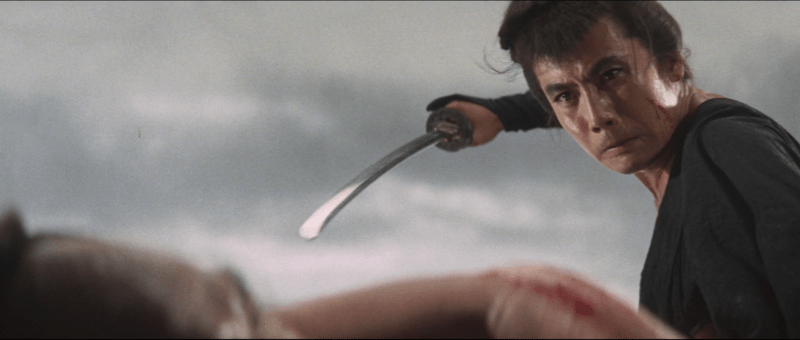
On the Road Forever (無宿者, Kenji Misumi, 1964)

“I take to the road whether or not I am alive” confesses the spiritually defeated hero of Kenji Misumi’s filiality drama, On the Road Forever (無宿者, Mushukumono). Two sons each seeking vengeance for a wronged father become first accidental friends, then almost enemies, and finally something more like brothers bound and ruined by the failures of the samurai code. The villain may not unfairly claim that the system of the world is one “dirty great monster”, but the implications of his revelations lead directly back into the infinite corruptions of the samurai order as mediated through the failures of fatherhood. 

“Drifting crow” Ipponmatsu (Raizo Ichikawa) temporarily teams up with fallen samurai Kuroki Yaichiro (Jun Fujimaki) who has become desperate enough to unwisely attempt robbing a gambling den. Nevertheless, we are clued in to the idea that these are the good guys when they’re helped by a young village woman, Haru (Mikiko Tsubouchi), who lends them her father’s horse instructing them to return it to him at a nearby village which the guys later do even attempting to hand the old man some of their ill-gotten gains as a thank you though he refuses and warns them not to hang around too long because “it’s a rough neighbourhood”. All too soon we discover what he means. A big wig former yakuza who suspiciously came into massive amounts of money two years previously has pressed the villagers into debt and is currently inducting them into indentured servitude on Sado island in order to recoup costs. Perhaps Ipponmatsu doesn’t approve, but he’s on a journey for a reason and would have carried on by had he not heard word that that shady yakuza Shima-ya Jubei (Toru Abe) may be connected to the death of his father during a high stakes robbery on a mountain pass. 

Ipponmatsu, whose name literally means “a single pine”, is the archetypal wandering son who ran away from his clan without permission in rebellion against his authoritarian father who raised him alone after his mother’s death and tried to instil in him the values typical of his class through the medium of violence. Having come across a decomposed body with his father’s distinctive sword at the scene of the robbery, Ipponmatsu has had a change of heart and dedicated his wandering to avenging his memory. Sticking around in the town, he comes to suspect that Yaichiro’s father Hanbei may have been behind the theft of the missing imperial gold only later realising that he too is on a quest to learn the truth in the hope of clearing his father’s name. The two men end up raising swords against each other but discovering they are indeed different, Yaichiro a gentle soul who apparently excelled in the dojo but has no “courage” in the field and Ipponmatsu a fiery hothead who thinks killing is less a matter of skill than “courage and explosiveness”. 

There is, it has to be said, a fairly obvious twist that neither man perhaps too bound up in their own sense of responsibility fully considers. Nevertheless, they are both faced with the decision of what to do should they discover the truth considering that raising a sword against one’s father is an unforgivable sin while knowing that such a heinous betrayal of their code cannot go unpunished. The villains boast of their well connected networks and supposed untouchability laying bare the essential corruption of the samurai order as they wilfully manipulate and exploit impoverished peasantry for their own ends while cruelly joking that all classes are alike in their greed when tempted with riches, entirely unrepentant even as they lament the hypocrisy of the samurai who have no money yet continue in their arrogance. 

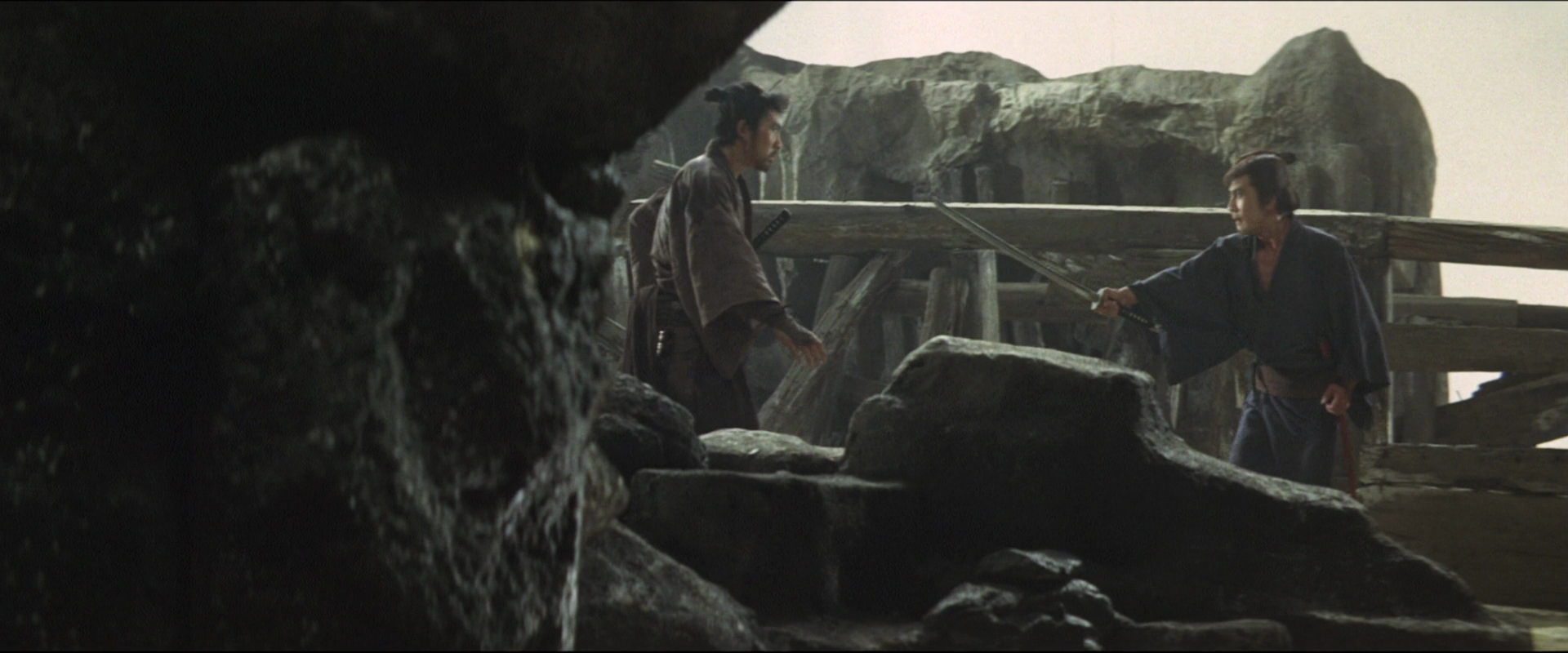
Despite having been raised in a homosocial environment told that falling in love with women is a pointless waste of time, Ipponmatsu picks up the affections of two firstly earnest farm girl Haru and secondly misused mistress and sister of Shima-ya, Osei (Eiko Taki). This is however a manly drama concerned with the ways in which men interact with other men, firstly in the awkward fraternity of Ipponmatsu and Yaichiro and then in their mutual and continually changing relationships with their absent fathers living in the shadow of patricide and justice. Elegantly composed as always, Misumi frequently shoots through obstacles imprisoning the men within the broken beams of ruined buildings or spying in a POV shot from an upstairs balcony while making full use of his trademark love for the natural world in closing with a painful confrontation in which the nature of filiality is turned inside out as a corrupt father falls on his sword for his noble son amid the rocks surrounded by rolling waves. As the title suggests, the melancholy ending severs the hero from his ancestral “home” leaving him forever a wanderer untethered yet in a sense never free of his paternal legacy. 


The Young Boss (花笠若衆, Kiyoshi Saeki, 1958)

Hibari Misora takes on yet more Edo-era corruption in Kiyoshi Saeki’s musical adventure, The Young Boss (花笠若衆, Hanagasa Wakashu, AKA A Martial Crowd, Twin Princesses). A program picture director at Toei, Saeki mainly worked on jidaigeki and ninkyo eiga launching the Brutal Tales of Chivalry series, though he also became a frequent collaborator with Misora ironically enough mostly working on her contemporary films in which she often starred opposite Ken Takakura, representative actor in the noble gangster genre. Young Boss, however, is a jidaigeki musical adventure very much typical of those Misora was making at Toei at the time and once again finds her playing dual roles as a pair of twins separated at birth because of superstition and social stigma.

Opening and closing at a local Edo festival, the film introduces us to the second generation of Edoya Kichibei, Kichisaburo (Hibari Misora), as he steps in to protect a young woman who has accidentally annoyed a bunch of yakuza fulfilling his sidekick’s introduction that he “helps the weak and crushes the strong”. Kinpachi (Juro Hoshi) also describes him as a “man’s man”, though as we discover Kichisaburo is not a man at all but the niece/adopted daughter of a prominent merchant apparently raised as a boy. Kichisaburo, however, only learns this when a pair of samurai turn up to badger Kichibei about the whereabouts of his younger sister, Sano, who apparently served as a maid to the Ogiyama clan 18 years previously but was cast out with her younger daughter Yuki after giving birth to twin girls fathered by the lord. The other twin, Chiyo (also Hibari Misora), was raised in luxury in the palace and in the absence of a male heir and the lord’s failing health is in line to inherit the clan. As usual, however, courtly intrigue has led some to conclude that Yuki’s is the proper the claim. Kichibei attempts to convince them that Yuki passed away in infancy shortly after her mother and that he burnt her birth certificate, but the resemblance between the effete Kichisaburo and the lady Chiyo has not gone unnoticed both by the visiting samurai and the handsome Matanojo (Hashizo Okawa) who joins in with Kichisaburo’s battle against the yakuza and is in fact the betrothed husband of Chiyo. 

Lady Chiyo appears only briefly but is the soul of courtly kindness, hugely regretting what has befallen her absent sister and affirming that should she return she would instantly surrender her claim to the clan in guilt that she has been raised in such luxury when Yuki was cast out to live with strangers. The dual roles in a sense reflect a perfect whole, Lady Chiyo’s feminine elegance contrasted with the rough Kichisaburo who has not been raised as a samurai but a merchant’s son like his sister set to inherit the family business. He is very attached to his adopted father, but also possesses a strong sense of justice often ignoring his pleas to stop getting into fights. Other than perhaps to disguise her true identity, there is no real explanation for why Kichisaburo has been raised as a boy though it seems that there would have been a time the ruse came to an end, Kichibei sadly lamenting that perhaps he has been jealously attempting to keep the child he loved so much with him against her better interests but explaining that he would have found her a nice husband in time, perhaps like that gallant samurai Matanojo.

Teaming up with him for purposes of revenge and justice, Kichisaburo begins to develop feelings for Matanojo though Kichibei reminds him that a townsperson would be “unfit to be a samurai’s wife”. Most of Misora’s films in which she stars as a feisty young woman see her undergoing a softening, drawing closer to conventional femininity often with marriage or at least a romance with a manly man on the horizon. The Young Boss meanwhile flirts with just this conclusion as Kichisaburo becomes Yuki while out on the road with Matanojo, dressing as an elegant princess and experiencing a vivid dream sequence in which she becomes his wife, but ultimately highlights the class rather than gender barriers between them in allowing to Yuki to return to her previous life as Kichisaburo while Chiyo remains a samurai noblewoman in a seemingly perfect mirroring which also represents a return to order. 

Nevertheless, Misora finds numerous occasions for a cheerful song even in her manly guise finally even beating a taiko drum at the closing festival while joining in with several elaborately choreographed sword fights along the way with her customary gusto. A bittersweet ending, perhaps, but one in which Misora makes division of herself and unusually is allowed to remain feisty, defiant, and independent helping the weak and crushing the strong in an ever duplicitous Edo.


Musical number (no subtitles)

Blue, Painful, Fragile (青くて痛くて脆い, Shunsuke Kariyama, 2020)

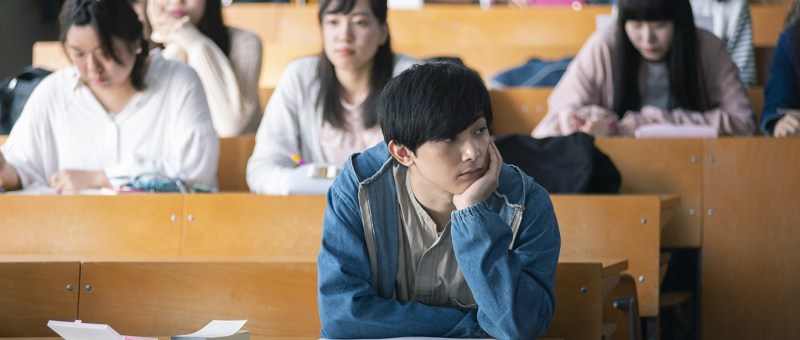
“If I became the person I wanted to be, would the world have changed?” the conflicted hero of Shunsuke Kariyama’s Blue, Painful, Fragile (青くて痛くて脆い, Aokute Itakute Moroi) eventually asks having undergone a kind of awakening but still perhaps struggling with himself caught between the desire to be better and the fear of the vulnerability that may entail. As the title implies, this is a tale of painful youth and bitter revelations but also of the fragile male ego, the damage that can be done by a young man who feels himself scorned, and the various ways an embittered, self-absorbed mind can reorder the world to accommodate its sense of righteousness. 

The hero, Kaede (Ryo Yoshizawa), opens with a voiceover revealing his life philosophy of social isolation afraid both of upsetting others and of getting hurt. Despite himself, however, he finds himself drawn into a friendship with the bright and friendly idealist, Hisano (Hana Sugisaki), whom he first noticed in one of his political science classes when she challenged the teacher advancing her life philosophy that peace is born only of mutual surrender and allows no role for violence. A true cynic, Kaede mocks her internally for her “naivety” but is moved on leaving the room to notice that she looks hurt not to have been taken seriously. Noticing him too, she tracks him down and makes a point of sitting next to him in the cafeteria, badgering him into a friendship he doesn’t resist because of his tenet of not challenging the views of others. Together they found the “Moai’ club which is dedicated to building a better world by helping people to become the people they want to be. 

Or at least, that’s what he tells us. As we slowly discover, Kaede is not a completely reliable narrator. Three years later he recruits a friend, Tosuke (Amane Okayama), to help him take down Moai, which has since become some kind of creepy cult corrupted by corporate interests that many seem to be using as a path towards employment, so that he can rebuild it to reflect the values he and Hisano intended when they founded the organisation she apparently having passed on. Yet the more he tells us, the more we start to wonder if there isn’t something else to it, especially when social welfare grad student Wakisaka (Tasuku Emoto) enters the scene. Is this really about the better world, or petty male romantic jealousy? Shy and introverted, it seems that Kaede never had the courage to tell Hisano how he felt and perhaps took it for granted that she understood, unfairly feeling betrayed when she showed interest in someone else despite her near constant prompts for him to speak up whether it be about her or their movement. Kaede says nothing, then blames Hisano for “rejecting” him as if the only reason she could have had for befriending him in the first place was the eventual breaking of his heart. 

In true “nice guy” fashion, Kaede can’t help but see himself as the wounded party. In the flip book he’s been idly drawing which opens the film, a man runs smack into a rock and bangs his head much in the way he seems to feel he has done in his abortive attempts to enter society. Yet later he begins to gain another understanding, his stick figure getting back up and climbing on top of the head of Moai to behold a new world below him. He starts to realise that to change the world you really do need to start with yourself and that in this he has resolutely failed. His petty act of revenge may in a sense be morally justifiable, exposing Moai for the questionable force it has become, but it’s also sordid and unpleasant intended solely to wound in order to avenge his sense of male pride. Only too late does he realise the consequences of his actions and what they say about the kind of person he is and wanted to be. Consumed by a sense of inadequacy, he is defeated by life, too afraid to become the person he should be lest the world reject him but his brief moment of fantasy of what could have been if only he’d been less cynical and cold is bathed in a kind of golden light he perhaps realises he could feel again if only he change himself in order to change the world in which he lives. A masterclass in male gaslighting, Kariyama’s duplicitous drama refuses to let its hero off the hook but reserves for him the right to start again, become the person he wants to be and lay down his arms in willing vulnerability in the hope that others may do the same. 


Blue, Painful, Fragile is currently available to stream via Netflix in the UK and possibly other territories.

Original trailer (no subtitles)

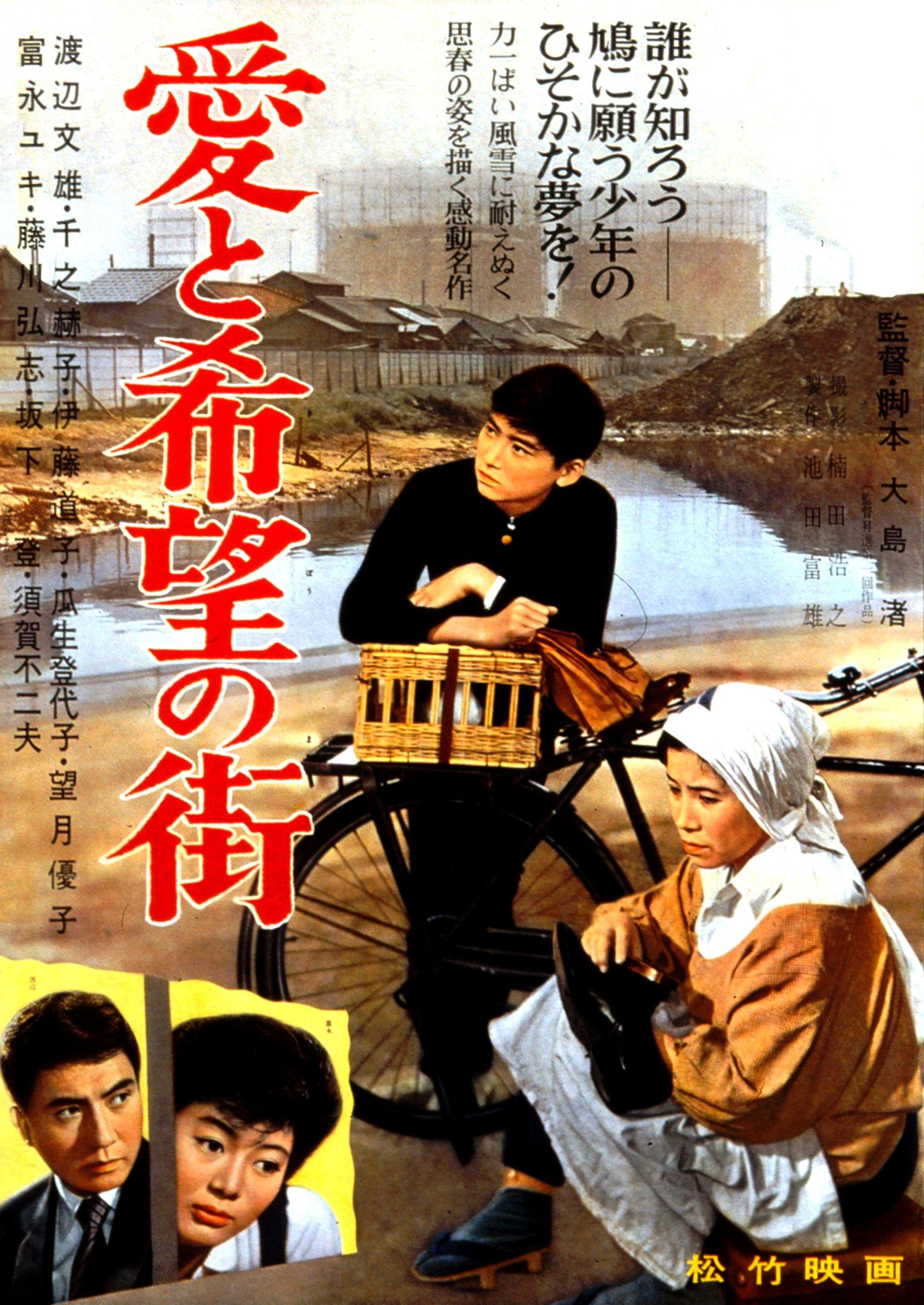
Street of Love and Hope (愛と希望の街, Nagisa Oshima, 1959)

“You must sell your pigeons or you can’t survive in this world” a less progressive figure than he first seemed eventually admits in Nagisa Oshima’s ironically titled debut feature Street of Love and Hope (愛と希望の街, Ai to Kibo no Machi). As might be expected given the director’s later trajectory, there is precious little love or hope on offer and it seems his particular brand of grumpy pessimism ruffled studio feathers from the very beginning earning him a sixth month directing ban with a top executive complaining “this film is saying the rich and poor can never join hands”. The executive may have had a point in the increasing inequalities of the post-war society in which humanist hypocrisy offers only entrenched division and inevitable class conflict. 

As the film opens, the hero, Masao (Hiroshi Fujikawa), is selling his sister’s beloved pet pigeons because, as his social worker later explains, welfare payments are not enough to live on and his mother Kuniko (Yuko Mochizuki), who usually shines shoes for a living, has TB which leaves her unable to work. Kuniko is keen for Masao to stay in education and attend high school, but he acutely feels the burden on his mother and intends to work while attending evening classes. The trouble begins when Masao sells his pigeons to a wealthy young lady, Kyoko (Yuki Tominaga), who is the teenage daughter of an electronics factory boss. 

Well-meaning as she is, Kyoko tries to give Masao the change from her purchase after he explains he’s selling the birds because he needs money. Ironically she gives one of them to her sickly younger brother, but the problem is that Masao is effectively running a scam. The birds are homing pigeons. Assuming the new owners don’t cage them in properly, the birds will fly right back home and he can sell them again. He’s already done this a couple of times and is at least conflicted about it, especially as it upsets his sister Yasue (Michio Ito) so much, though what else really is he supposed to do?

This central question is the one that eventually comes between Masao’s progressive schoolteacher Miss Akiyama (Kakuko Chino) and Kyoko’s sympathetic older brother Yuji (Fumio Watanabe) who works in HR at his father’s factory. Another of Oshima’s mismatched, ideologically opposed frustrated couples, Miss Akiyama and Yuji find themselves on either side of a divide. It seems that the factory does not ordinarily employ city boys, preferring to recruit from the countryside and house employees in dorms because the boss is convinced rural youth is less corrupted by amoral urbanity. Hoping to help Masao, Kyoko and Miss Akiyama team up to convince him to change his mind and give Masao a chance, but they eventually fail him during the exam because it accidentally uncovers his pigeon scam and therefore proves the boss’ point. 

That isn’t all it exposes, however, as even the seemingly progressive Yuji expresses some extremely outdated, quite offensive prejudices even as he insists they didn’t fail Masao because he comes from a single-parent family. According to the boss, children of “broken families” become “twisted human beings” which is unfortunate because “corporations value stability”. Even while not disagreeing with his father’s logic, Yuji explains that he can’t employ Masao not because of his fatherless status but because he’s fundamentally dishonest as proved by his pigeon scam. Miss Akiyama who’d previously described him as the kind of boy who never lies, is shocked but later reflects on his circumstances and her own. In its own ways, her life is also hard and she can see how it might happen that she too may have to “sell her pigeons” (a handy piece of wordplay hingeing on the fact the Japanese for pigeon, “hato”, sounds similar to the English word “heart”) in order to survive. She can forgive Masao for doing the same in the knowledge he had no other choice, but believes Yuji wouldn’t nor would he forgive her if he discovered that she too had sold herself. She cannot be in a relationship with a man who is so “heartless” and unforgiving and it is this which creates the unbreachable gulf between them itself informed by their differing socioeconomic circumstances. 

These differences in standing are also brought out in the youthful idealism of Kyoko who wholeheartedly believes she can help Masao by giving him money and then trying to improve his circumstances by getting him a job in her father’s factory. Both her father and her brother dismiss her altruistic desire to help as childish, Yuji pointing out that there are millions of poor people not just one and you can’t help them all, while their cynicism is eventually validated in the exposure of Masao’s “fraud” which accidentally brands those living in difficult economic circumstances as duplicitous criminals even as it directly implies that it is an unfair society which turns honest boys like Masao who never lie and just want to take care of their mothers into “heartless” bird traffickers. You can see why Shochiku didn’t like it, the hope of the post-war era shot down by the gun of a conflicted industrialist. 


A Woman’s Place (女の座, Mikio Naruse, 1962)

“A woman’s life is so dreary” laments a disappointed woman as she sits awkwardly at a funeral in Mikio Naruse’s A Woman’s Place (女の座, Onna no Za, AKA The Wiser Age). What exactly is “a woman’s place” in the changing post-war society? The continuing uncertainties of the age begin to burrow into the Ishikawa household as it becomes plain that the house is already divided, in several senses, as daughters and sons find themselves pulled in different directions, each of them perhaps banking on an inheritance to claim a different future. 

As the film opens, the sons and daughters of the Ishikawa family have been sent telegrams to come home at once because dad is at death’s door. Thankfully, that turns out to be premature. All he’s done is put his back out overdoing it in the garden by trying to lift a big rock in defiance of his age. Oldest daughter Matsuyo (Aiko Mimasu), who runs a boarding house, is quite put out to have rushed over for nothing, but everyone is obviously relieved that there turned out to be nothing to worry about after all. Widowed daughter-in-law Yoshiko (Hideko Takamine) realises that she needs to wire Michiko (Keiko Awaji) who moved to Kyushu when she got married that there’s no need to come, but she later turns up anyway along with her goofy husband Masaaki (Tatsuya Mihashi), claiming they’ve decided to make the trip a kind of honeymoon though it seems obvious to everyone that there must be reasons they seem intent on overstaying their welcome. 

“They depend on us, everyone does when they return home” mother/step-mother Aki (Haruko Sugimura) chuckles as Matsuyo and only remaining son Jiro (Keiju Kobayashi) pocket some paper towels from the family shop on their way out. Everyone is indeed depending on the family, not least for a clue as to where they stand as much as for a permanent place to return to. Three daughters of marriageable age still live at home. The oldest, Umeko (Mitsuko Kusabue), the daughter of patriarch Kinjiro’s (Chishu Ryu) first wife, has renounced the possibility of marriage and has made a career for herself as an ikebana teacher, a traditionally respectable occupation for “independent” women. In her 30s, she has become cruel and embittered, sniping at her sisters and always smirking away in a corner somewhere being aggressively miserable (nobody in the family seems to like Umeko very much, but still they accept her). Later she offers a sad, surprisingly romantic explanation for her decision in her unrequited love for a middle school classmate who died in the war, but is in someway revived by an unexpected attraction to a young man Matsuyo brings to the house who claims to be the infant boy Aki was forced to give up when she left her former husband’s family and married Kinjiro. 

The unexpected reappearance of Musumiya (Akira Takarada) destabilises the family across several levels, firstly in highlighting Aki’s awkward status as a second wife and step-mother to the two oldest children, and then by inciting a false romantic rivalry between the widowed Yoshiko and the unmarried Umeko. Umeko at one point cruelly describes Yoshiko as the only “outsider” in the household, viewing her connection to them now that her husband has died solely through the lens of being the mother of the only male grandchild, Ken (Kenzaburo Osawa). Yoshiko, only 36 years old, is repeatedly urged to remarry, but she like Aki would be forced to leave Ken behind if she did, though he is now a teenager and perhaps old enough not to feel abandoned. Ken in fact joins in encouraging his mother to find a second husband, but partly because she is always nagging him to study harder (something which will have have tragic, unexpected consequences). Yoshiko’s “place” in the household is therefore somewhat liminal, part of the family and yet not, because her status depends on solely on her relationships to others rather than blood. 

Nevertheless, Yoshiko is clearly in charge as we witness all of the other women disturbing her while she’s cooking to enquire after missing items, whether the bath is ready, or to attend to something in the store. Umeko has built her own smaller annex on another part of the property and mostly keeps to herself, while the two younger daughters busy themselves with a series of romantic subplots. Despite her sister Matsuyo’s eye-rolling that she should “forget about working and get married”, Natsuko (Yoko Tsukasa) is trying to find another job after being laid off when the company she worked for went bankrupt. Her brother, meanwhile, is experiencing the opposite problem in that it’s impossible to find and keep delivery staff at his ramen shop and he desperately needs help because his wife is pregnant again. Natsuko is convinced to “help out” though it’s clear that working in a ramen shop wasn’t what she had in mind, but it does bring her into contact with an eccentric friend of her sister Yukiko’s (Yuriko Hoshi) while she works on the box office of a nearby cinema. 

A crisis occurs when Natsuko is presented with the prospect of an accelerated arranged marriage to a man who took a liking to her while working at the company which went bust and has since got a job which requires him to relocate to Brazil. The ramen shop guy, Aoyama (Yosuke Natsuki), meanwhile is also getting a transfer but only to the top of Mount Fuji. Natsuko is torn, but also wonders if Yukiko actually wants Aoyama herself and only tried to set them up as a sort of test. In any case, both of these younger women also feel that their “place” is defined by marriage and their status conferred by their husbands even if they are exercising a personal preference in their choice, Yukiko’s in romance while Natsuko’s is perhaps a little more calculation in that she knew and liked her suitor but would not go so far as to call it “love”. 

In her own strange way, Umeko may be the most radical of the women in that she has attempted to define her own place through rejecting marriage and making enough money to buy her own home (albeit still on the family property) in a kind of independence, later deciding that perhaps she does want marriage after all but only on her own terms. Unfortunately, she is drawn to Musumiya whose presence poses a threat to the family on several levels, the most serious being that he is quickly exposed as a conman guilting Aki into assisting him financially while also trying some kind of car sale scam on the smitten Umeko who wants to add to her independence through learning to drive. Musumiya, it seems, prefers Yoshiko and his affection may well be genuine, but she is trapped once again. While she and Aki privately express their doubts about Musumiya, they have no desire to hurt Umeko’s feelings and cannot exactly come out and say that he is no good seeing as he is Aki’s son. Yoshiko stoically keeps the secret, perhaps also attracted to Musumiya but loyal to the Ishikawas and wanting no trouble from such a duplicitous man. Still, Umeko regards Yoshiko’s attempts to discourage her as “jealousy” and wastes no time embarrassing them both in a nasty public altercation. 

While all of this going on, there has been some talk that the shop may be compulsory purchased to make way for an Olympic road, and each of the Ishikawa children is eagerly awaiting their share of the compensation money, not least Michiko and her feckless husband who turns out to have fled Kyushu after getting fired from his job for assaulting a client. The “heir”, technically is Ken as the only male grandchild and Yoshiko’s tenuous status in the household is entirely conferred on her as his mother. When that disappears, her “place” is uncertain. Most of the others are for kicking her out, she’s not a “real” member of the family and so deserves none of the money with only Natsuko stopping to defend her. But, as so often, the widowed daughter-in-law turns out to be the only filial child. Mum and dad feel themselves displaced in their own home, somehow feeling they must stand aside, but it turns out they have plans of their own and Yoshiko is very much included. They want to take her with them, and if one day she decides to marry again then that’s perfectly OK and they will even provide a dowry for her as if she were one of their own daughters. 

“We have many children but they only think of themselves” Kinjiro laments, “let’s not worry about them and live peacefully by ourselves”. It’s easy to see their decision as a strategic retreat, as if they’re being left behind by a future they cannot be a part of, but it’s also in some ways an escape from the increasingly selfish post-war society. Yoshiko may not have actively chosen her “place” but she does at least have one and reserves the right to choose somewhere else in the future. The older Ishikawas choose to be happy on their own, freeing their children and giving them their blessing so long as they’re “doing their best”. It’s a strangely upbeat conclusion for a Naruse film, if perhaps undercut with a mild sense of resignation, but nevertheless filled with a hope for a happier future and an acknowledgement that “family” can work but only when it is defined by genuine feeling and not merely by blood. 


Record of a Tenement Gentleman (長屋紳士録, Yasujiro Ozu, 1947)

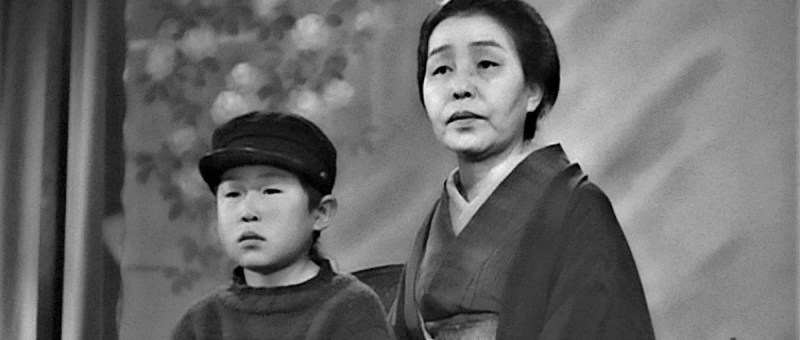
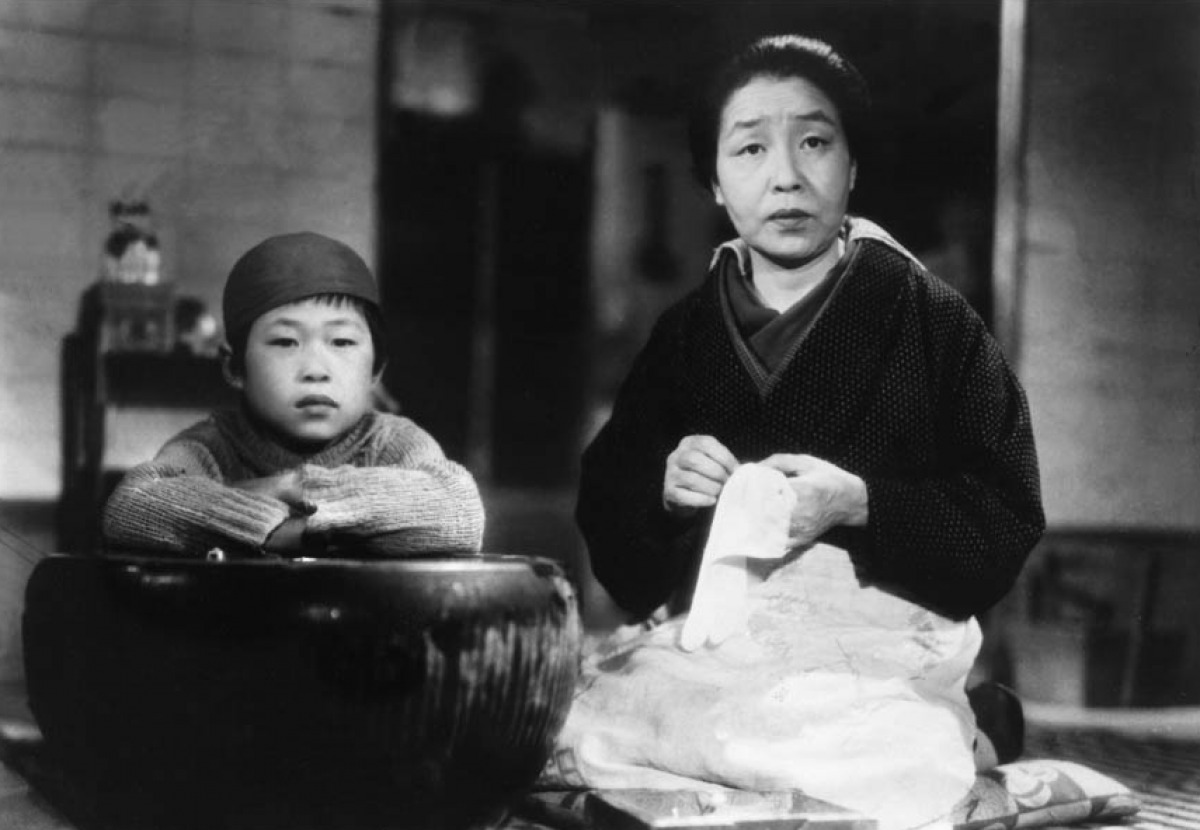
There are no real villains in the world of Ozu, though the immediate post-war world does its best to create them despite the best efforts of those quietly trying to live amidst the devastation. The misleadingly titled Record of a Tenement Gentleman (長屋紳士録, Nagaya Shinshiroku), the Japanese title a more ironic “a tenement who’s who”, is, like Hen in the Wind, a kind of manifesto statement for the postwar era only a much warmer one which looks forward to Ozu’s celebrated family dramas as its decidedly frosty heroine finds her emotional floodgates breached by the unexpected arrival of a problematic little boy. 

The little boy, Kohei (Hohi Aoki), is brought home by tenement gentleman Tashiro (Chishu Ryu) who found him wandering around in the town after becoming separated from his father. Tashiro’s roommate Tamekichi (Reikichi Kawamura) is unwilling to shelter the boy and so they decide to foist him on the grumpy old woman opposite, Tane (Choko Iida), who doesn’t want him either but is left with little choice. Tane is quickly angry with the boy because he wets the bed, ruining her spare futon, and tries to convince another neighbour who already has three children to take him in instead but is tricked into taking him back to the place he was previously living after Tamekichi rigs a game of straws. Travelling with him in the hope of finding his father, Tane wanders bombed out Tokyo and comes to the conclusion that Kohei’s dad has most likely abandoned him. 

A widow with no other family, or so it would seem, Tane is a cold and wily woman supporting herself with a small tenement shop. A sharp contrast is drawn when a childhood friend of hers, Kiku (Mitsuko Yoshikawa), arrives to ask about the best way to acquire a hose and shares some dorayaki sweets which have become a rare luxury in an age of rationing and privation. Kiku has married well and become a fine lady, not quite boasting but obviously very pleased with the walnut dressing table she had made with the mirror Tane helped her get on a previous occasion. Still, Tane is not embittered or especially unhappy just cynical and used to practicality. She didn’t see herself as the maternal type and had been intent mainly on ensuring her own survival.

Even so, she is touched and saddened to think a man might abandon his child even if she herself did not want to be burdened with him. She often scolds Kohei, frightening him with her stern expression, but later apologises when Tameshiro takes the blame for supposedly eating some of the persimmons Tane was drying at the window, even handing him the remaining fruit from the line. Talking with Kiku she recalls her own childhood as happy and carefree, tugging on her parents’ sleeves asking for pocket money while Kohei’s pockets are filled with cigarette butts and nails for the carpenter father Tane is sure has abandoned his son. This last fact is the one that finally touches her heart. Despite his fear and his hurt, Kohei has continued to think of his father and has been selflessly collecting little presents on his behalf to give to him when they are reunited. 

The innocence and selflessness of children is further emphasised by the son of a neighbour winning a prize in the lottery leading some of the other residents to insist that children are more likely to win precisely because they enter with a pure heart not with the intention of winning or monetary gain. Tane tries the theory out by making Kohei buy a lottery ticket with money Kiku had given him as a treat but of course he doesn’t win and Tane is upset, blaming him for not being as goodhearted as she’d assumed, but later giving him the money back when he bursts into tears (which is something he does often, perhaps understandably but out of keeping with the mentality of the times). Nevertheless, despite herself Tane becomes fond of the boy and even begins to think about adopting him as her own son. 

Eventually Kohei’s father returns, but Tane’s conversion is so complete and absolute that the tears she cries are not in lament for herself but in happiness to know that the boy’s father was not the awful man she thought he was but a doting parent distraught at the thought of his missing son. She is moved by the happiness they must feel in their reunion and realises that her time with Kohei has taught her many things, not least among them that she has allowed the times to cool her heart. The post-war world, the ruins and devastation we can glimpse beyond the tenement, has forced people to become self-interested, little caring if others starve so long as they aren’t hungry. She regrets that she wasn’t warmer to the boy when he arrived, and wishes we could all be more like children kind to others without thinking of ourselves. Cementing what would come to be his iconic signature style, Ozu ends, somewhat uncharacteristically, on a melancholy scene of street children, a crowd of war orphans abandoned by the society which created them through militarist folly. As much a chronicle of everyday life in the ruins of a major city, Record of a Tenement Gentleman is also an unsubtle argument for post-war humanism in a society it sees as in danger of failing to learn from past mistakes. 


The Last Gunfight (暗黒街の対決, Kihachi Okamoto, 1960)

“Times may change but there’s always a bunch of greed-blinded old men to rip you off” according to the sidelined noble yakuza pushed into the shadows of Kihachi Okamoto’s anarchic gangster romp The Last Gunfight (暗黒街の対決, Ankokugai no Taiketsu). Another of Okamoto’s early crime movies, Last Gunfight, adapted from the novel by hardboiled king Haruhiko Oyabu, as its name implies finds a stranger in town arriving at the tail end of a gang war in which the wrong side seems to have won hoping to offer a course correction for the post-war future. 

Branded a “dirty cop” and demoted to small-town Kojin, Fujioka (Toshiro Mifune) is a maverick officer exploring the local landscape by getting into fights with foot solders from differing outfits, quickly finding out that the Ooka gang are currently in the ascendent while old school Kozuka flounders. Improbably enough, the local flashpoint is over control of the gravel dredging business currently operated by Kozuka but contested by Ooka. Fujioka meanwhile is caught in a complex web at the nexus of which is Tetsu (Koji Tsuruta), a former Kozuka man who now runs a bar while he plots revenge for the death of his wife in a traffic accident he suspects may have been foul play possibly at the hands of Ooka man Niki, brother of brassy bar girl Sally (Yoko Tsukasa). 

Arriving on the same train as dodgy lawyer Tendo (Akihiko Hirata) and an exotic dancer destined for the club, Fujioka keeps his cards close to his chest leaving his loyalties all but clear. The station are less than thrilled to have him, especially as he spends his first night in town in one of their cells after starting a bar fight, waking up right under a sign which reads “stop violent crime”, while another earnest young officer reminds him that “policemen should never be involved in violence”. Fujioka continues to play both sides, cosying up to both Ooka and Tetsu, walking the line between cop and thug while seemingly scoping out the terrain on either side of the tracks. 

Meanwhile, the town is mired in a battle for its soul as the amoral Ooka gang slowly take over. As Kozuka foot soldier Yata (Makoto Sato) puts it, his boss is the sort who won’t have anything to do with yakuza who don’t obey the code which is why he won’t simply cut a deal with Ooka. According to Kozuka (Jun Tazaki), others might lump him in with “fools and trash” but he’s the old school kind of yakuza providing a genuine service to the community. He dredged the river to stop it flooding and was given the gravel business as a thank you so he resents having it stolen out from under him by the likes of Ooka who makes his money primarily through the drugs trade trafficking “China White” and has seemingly corrupted the entire city council. 

Then again, as Kozuka points out ties based on greed are the most fragile of all and it appears Ooka has secrets he’d rather weren’t exposed. Living in a Western-style mansion complete with open fireplaces and hunting trophies on the walls Ooka is laying claim to a fiefdom as the new inheritor of the feudal legacy. Tetsu’s bar, meanwhile, seems to have a Wild West theme which perhaps speaks of his love of freedom and independence as opposed to Ooka’s elitist authoritarianism. As a representative of legitimate authority Fujioka walks a tightrope between the two but eventually shuns a potential love interest in bargirl Sally, currently Ooka’s squeeze but playing her own game hoping to find out what happened to her brother, in favour of a bromance with the wounded Tetsu.  

Like Okamoto’s other gangster movies from this era however and in contrast to the heaviness of the title, Last Gunfight is imbued with a strong sense of irony and the director’s characteristically cartoonish sense of humour with its ridiculous fight scenes, elaborate production design, and playful subversion of gangster movie tropes right down to the frequent musical numbers starring a trio of minions clad in black suits and lip-syncing to songs about killing the moon. Ending as it began, Okamoto’s elliptical narrative sees the strangers leaving town, job done, but laying themselves bare as they go now shorn of their cover identities and headed back into the heart of corruption in search of new destinations.


Original trailer (no subtitles)