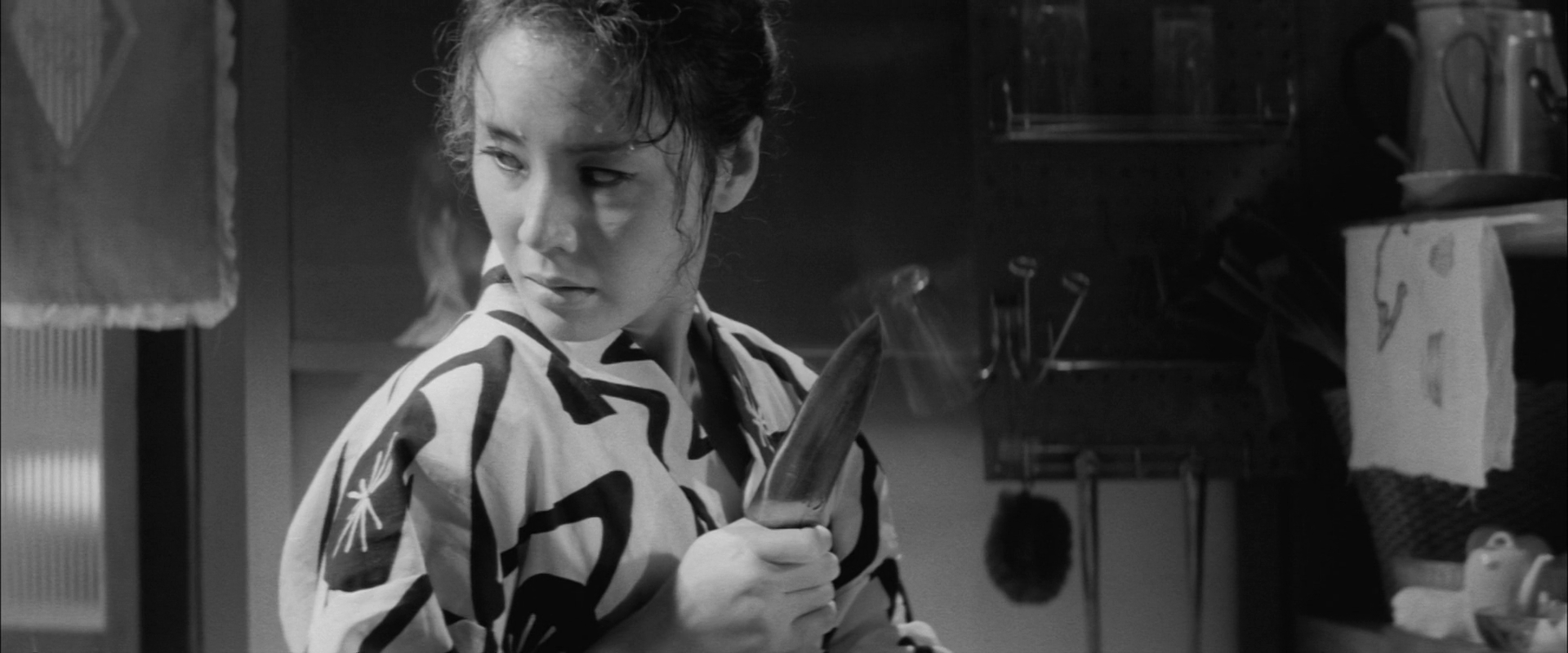
That Guy and I (あいつと私, Ko Nakahira, 1961)

Likely intended as a slightly silly student rom-com, Ko Nakahira’s That Guy and I (あいつと私, Aitsu to Watashi) captures a sense of the changing gender roles and sexual mores of the early 1960s, if through a very male and at times even middle-aged lens. Adapted from a serialised novel by Yojiro Ishizaka and set amid the ANPO protests of 1960, the film is narrated by its heroine, a very ordinary young woman from a typical, moderately wealthy middle-class family, as she struggles with her attraction to a fabulously wealthy young man who pretends to be a boor but is actually a nice guy and unexpected feminist.

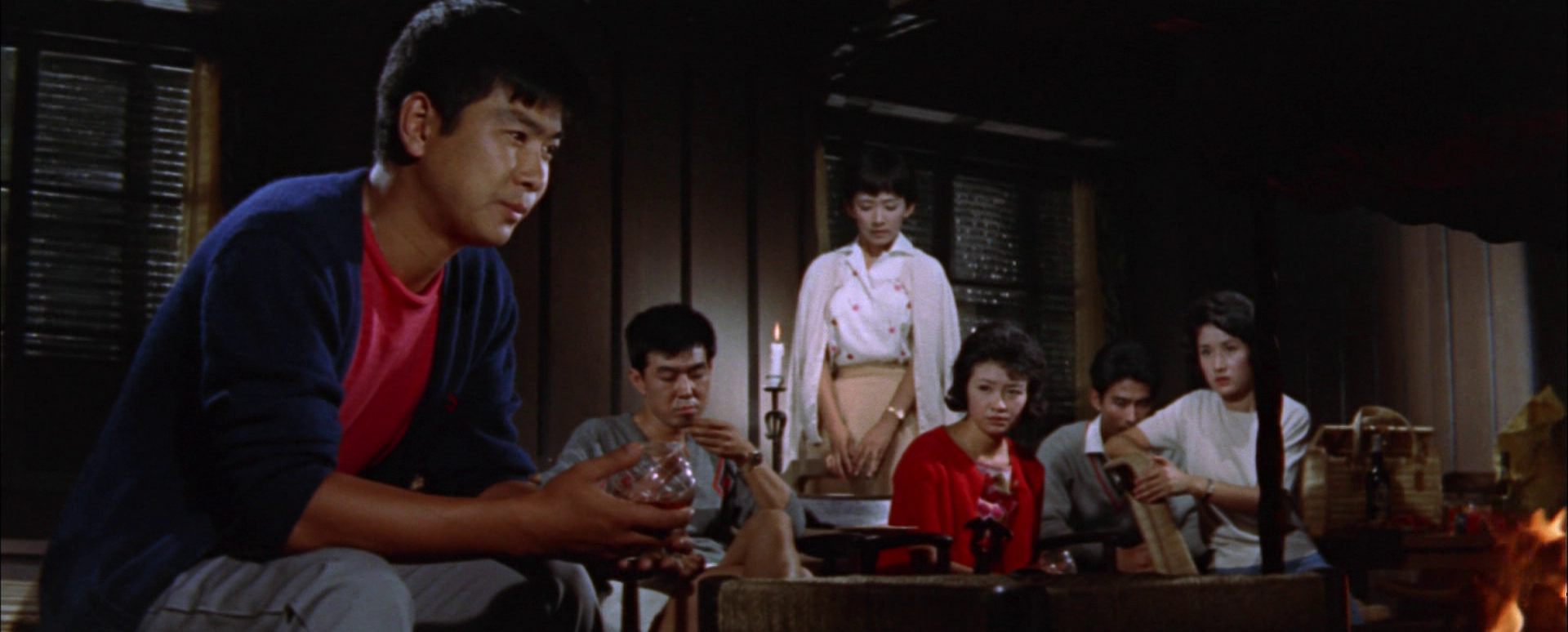
One of a new generation of women attending university with a prospect of independence, Keiko’s (Izumi Ashikawa) horizons seem to be broadening. She’s not exactly conservative and openly jokes about sex and dating with her friends, but is quite settled with her life, not particularly wanting anything more than she already has. Her psychology tutor highlights the problem of social inequality in their school that she had already raised in her opening voiceover in remarking that the rich kids all have cars and can drive themselves to school, while others are having to work to support themselves while they study. When he asks how much pocket money they all get, some are outraged and keen to stress they don’t get any help at all, but Keiko reveals that her parents actually give her a healthy allowance. It’s just that she has no real urge to spend it, so it’s been mounting up quietly in a desk drawer in her childhood bedroom while she still lives at home close to the university.

Saburo (Yujiro Ishihara), by contrast, boasts that he gets more than some people’s monthly wage as an allowance from his mother and blows it on drink, gambling, strip clubs and sex workers. It’s this last point that scandalises the female students who are all shocked and disapproving, even going so far as to ask the teacher to throw Saburo out because they don’t feel comfortable sharing a space with a man like that. The teacher also says he’s disappointed and wishes Saburo hadn’t added the last bit, only for Saburo to call him a hypocrite because sex work was legal in his day and he simply doesn’t believe that he’s never paid for sex. Most of the other boys join in on Saburo’s side, insisting that no man sees any problem with visiting sex workers which they regard as a natural right because the male sex drive is driven by “uncontrollable forces”.

But then there’s something unexpected that occurs among the female students in that some of them are obviously attracted by this very rough form of masculinity. “I’d rather have a wild beast than a meek sheep,” one intones, but nevertheless goes to join the group of girls confronting Saburo at the pool in the hope of gaining an apology for the offence he caused them. They’ve since found out that he probably made it up anyway, which is ironic because he claimed he’d only spoken the truth when they asked him to leave, but that’s somehow even worse because it means he said it deliberately to upset them. The upshot of it all is that Saburo ends up in the pool and is then forced to borrow some of the girls’ clothes while his dry off, signalling his awkward positioning between traditional masculinity and femininity in that he’s otherwise surprisingly sympathetic of women and makes sure to look out for them but in a way that encourages their independence and is never patronising. 

That might, in one way, be because of his unusual upbringing which is far more modern and bohemian than Keiko’s and in the beginning, at least, quite confusing for her. Saburo’s mother Motoko (Yukiko Todoroki) is a famous entrepreneur with a beauty shop empire. She writes her name in Western order and uses katakana for her first name which makes look foreign and therefore exciting and sophisticated even though it obviously isn’t. It was Saburo’s mild-mannered father who gave up his career in insurance to raise him, while his mother apparently blows off steam through numerous affairs. His father occasionally gets upset about this and the pair go through a charade of him leaving her while she professes her love for him, which seems to have a sexual dimension in itself. Perhaps this has given Saburo an alternative view of romantic relationships, though we also later discover that he was subject to what we’d now see as a form of sexual abuse as a teenager when his mother got a young but still adult woman, Michiko (Misako Watanabe), to essentially give him practical lessons in sex and satisfy his teenage urges, only he thought it was an organic romantic relationship and feels more than anything else emotionally betrayed. 

But then again, the film has a very of its time and defiantly male view of rape which is dealt with in a fairly flippant manner. Keiko rings her mother to tell her she’s realised that the reason she didn’t like the idea of her being at the ANPO protests was because she feared she’d be raped, which is at any rate an odd conversation to be having. Her mother asks her what her virginity has to do with ANPO, which is a fair question, but also implies that it’s not so much the physical and psychological harm of sexual assault that bothers her mother but the shame of premarital sex. One of the girls who goes to the protest, Ayako (Shigako Shimegi), is actually raped by the two boys she went with who deliberately plied her with alcohol and took her to a hotel knowing that she trusted them, but her roommate, who had a crush on one of the boys, immediately turns against her. Sadako (Kazuko Yoshiyuki), the most political of the students, calls her a slut who parades herself in front of men and says Ayako must have led them on. Only Keiko takes her side, walking her to the bath and waiting outside for her while admitting that she has conflicted thoughts about Saburo. She throws things at him to shoo him away, feeling that his presence as a man is inappropriate and not wanting him to see Ayako in this moment of vulnerability, but also she admits to herself because she’d be jealous and doesn’t want him to see a naked woman that isn’t her.

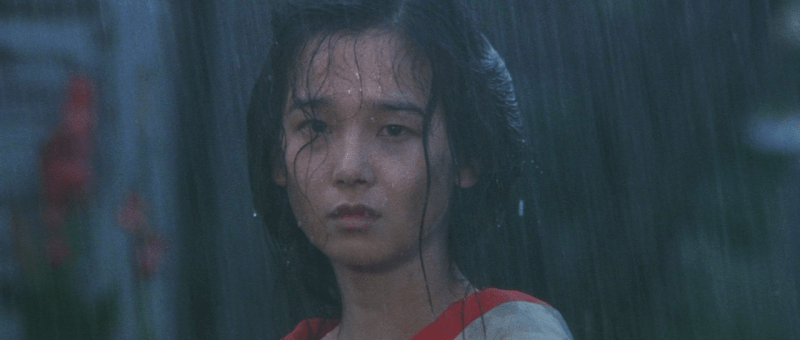
Something similar happens when she finds out about Saburo’s past and is jealous and resentful of Michiko, irrationally angry with Saburo, and on another level protective of him knowing that happened when he was a teenager was wrong. After she runs out into the rain and the pair argue about it, Saburo forces a kiss on her which, again, Keiko seems like in a show of robust manliness. Saburo is though also protective and sympathetic towards Ayako, insisting that that the way for her to move past her rape is to ensure she becomes financially independent and successful so that she can see it as just something unpleasant that happened to her rather than something that ruined her life or makes her unworthy of another man’s love. He even helps her to do that by getting her a job at his mother’s company. 

Saburo’s mother Motoko, meanwhile, gives Keiko some frank advice in disclosing the secrets of her life and Saburo’s birth. Even when Saburo suddenly announces their engagement without actually asking her, Keiko does not merely swoon but reflects that she’s got to have a proper think before actually agreeing which she is still free to do or not. Nevertheless, the film seems to have hit on a contradiction in redefining masculinity as both tough and soft. Keiko is despite herself attracted to Saburo’s forcefulness, but also his chivalrous nature and awkward kindness, his fair-mindedness and care, and recognition of women as actual human beings with interior lives and a right to independence. Nakahira may be a little less surreal than usual, but leans heavily into absurdity, on the one hand acknowledging the somewhat superficial quality of these privileged students’ lives in having them confront a band of angry rural workers and half-heartedly take part in the ANPO demonstrations without much thought to what they’re for or what they mean, but, in the end, characterises them as merely ordinary, slightly lost amid the rapid changes of the post-war society but otherwise cheerful and looking ahead to a bright future stretching out in front of them.


Trailer (no subtitles)
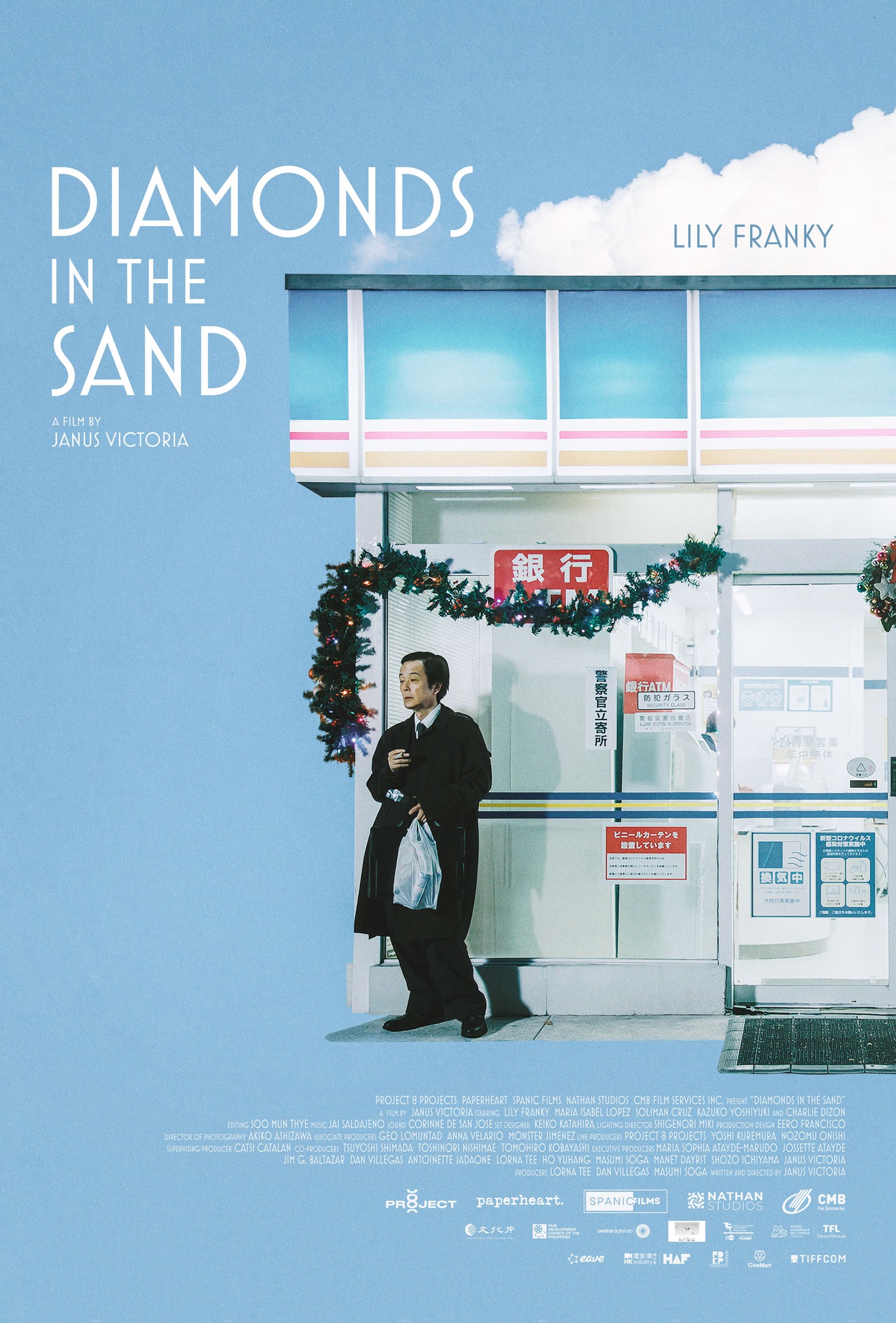
Diamonds in the Sand (砂の中のダイヤモンド, Janus Victoria, 2024)

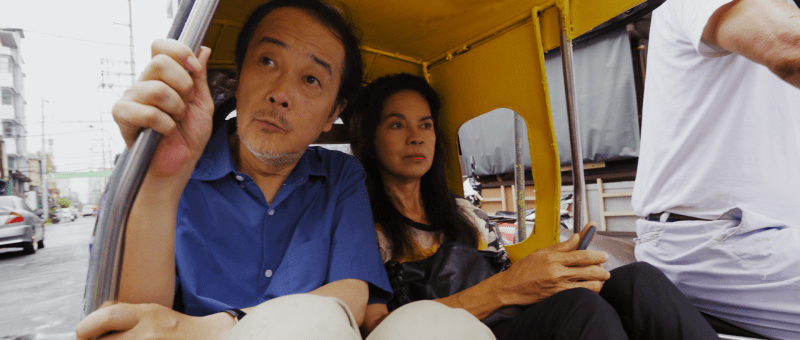
A middle-aged salaryman is awakened to the depths of his loneliness when his upstairs neighbour dies in an apparent lonely death in during the pandemic in Janus Victoria’s Filipino co-production, Diamonds in the Sand (砂の中のダイヤモンド, Suna no Naka no Diamond). Contrasting an epidemic of loneliness with the more literal spread of Covid-19, the film finds its hero trying to redefine his life and discover what gives it meaning in making connections with others. 

Yoji (Lily Franky) is indeed an isolated man whose world is shrinking around him. The DVD department of a large manufacturer where he works has been wound up and he’s been transferred to one that seems to deal in pornography is basically four men in a room with nothing to do. It’s no surprise that he tells his bosses he doesn’t need his computer when they go remote during the pandemic. A large clock seems to tick out his remaining time as if reminding him that his life is running out. Things aren’t much better at home, either. Divorced, he lives in a tiny, colourless flat and seems to have few friends. He’s aloof from even those he does know and always stands slightly outside of the group. One of his former colleagues has been given a big promotion, but it involves moving to Thailand which Yoji seems to regard as a kind of exile or age-based banishment even as he reminds them how much Japan has invested in the nation.

Yoji first becomes aware of the death of his upstairs neighbour when his discomposing body begins leaking through his ceiling. Staring at the stain left behind, he begins to contemplate the reality of his own lonely death and the meaninglessness of his life. He begins going to visit his mother in a care home and trying to rebuild a meaningful relationship with her, but she also asks him if he’s ever really been happy in his life. Though her body is failing and her days are sometimes dull or lonely, the memories of past happiness sustain her. If Yoji doesn’t even that, then his old age would be even more miserable and his life not worth living. The only spark of joy is a colourful pinwheel he bought for his mother on a whim but enlivens each of their worlds with a sense of fun and vibrancy.

This sense of encroaching isolation and emptiness is directly contrasted with the bustling streets of Manila which are alive with colour and life and where, Yoji is told, there is no loneliness. Minerva (Maria Isabel Lopez), the middle-aged woman who looked after his mother in the care home, is one of many working abroad to support a family in the Philippines and experiencing different kinds of loneliness and isolation in Japan. She has an almost grown-up daughter, Angel (Stefanie Arianne), whose father was Japanese, but she was not really accepted by his family and struggles to find a place for herself in either society. After abruptly travelling to Manila in search of a life less lonely, Yoji becomes to her almost a surrogate father offering the reassurance and connection that her own father obviously did not.

But Minerva has a point when she says Yoji lacks compassion and even after being warmly accepted by the community in the Philippines and witnessing their interconnected way of life refuses to become fully a part of it or to help others when they are in need. He sees coverage of extrajudicial killings on the television and is confronted by the fact that life is cheap here too, but is also judgemental and unwilling to fully embrace the community around him. Still, he ironically comes across a kind of graveyard of “surplus” Japanese goods like Mr Suzuki’s bowls that the house clearance staff patiently boxed up and threw away as if erasing his existence. One of the ashtrays still has ash in it. It’s this that perhaps enlightens him to what’s really important in life and convinces him of the necessity of accepting his responsibility to others rather wanting love connection from them without really thinking about giving anything in return. Like looking for diamonds in the sand, it’s the little things that matter and just asking someone if they’ve eaten yet can in its way save a life.


Diamonds in the Sand (砂の中のダイヤモンド, Janus Victoria, 2024) screened as part of this year’s Nippon Connection.

Trailer (English subtitles)

Golden Partners (黄金のパートナー, Kiyoshi Nishimura, 1979)

Kiyoshi Nishimura began his career in the action genre with a series of paranoid thrillers so it feels particularly odd to see him tackle similar themes in such a breezy, lighthearted way as 1979’s Golden Partners (黄金のパートナー, Ogon no Partner). Though based on a novel by Kyotaro Nishimura, the film seems to have been envisioned as an homage to Robert Enrico’s Les Aventuriers in following two men and a young woman on a quest to track down a missing person and also find a large amount of gold supposedly contained in a downed submarine. 

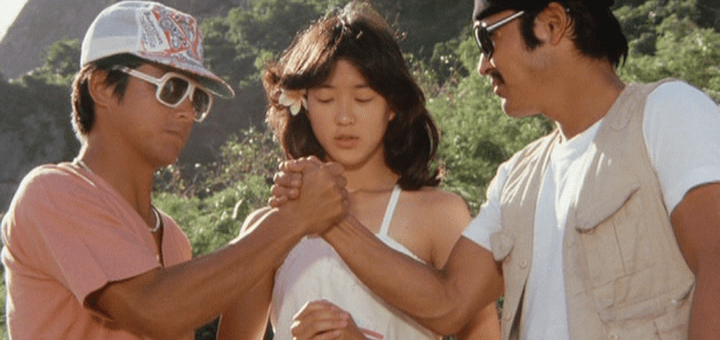
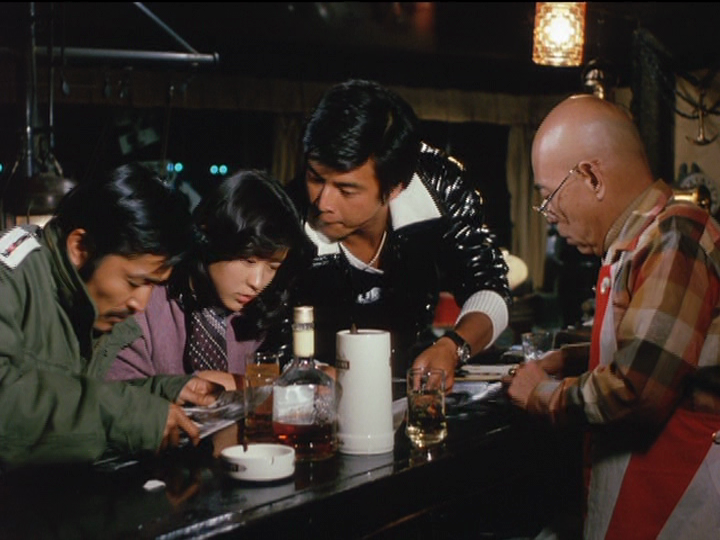
Kosuke (Tomokazu Miura) is a rather aimless young man who lives on a fishing boat and has a career as a freelance photographer taking photos of things people would rather weren’t photographed, while his best friend Shusaku (Tatsuya Fuji) is a motorcycle-riding policeman who has a strong sense of civic duty yet mostly spends his time giving out tickets to locals traveling slightly over the speed limit. They’re both good friends with the landlord at the Polestar bar whom they affectionately refer to as Pops (Taiji Tonoyama). Pops has let them run up a significant tab even though he doesn’t appear to have any other customers. In any case, their aimless days are interrupted when Kosuke begins hearing a strange SOS message but can’t seem to identify where it’s coming from to be able to help. Meanwhile, a young woman arrives looking for Pops and explains that her father, an old friend of his, has gone missing which may be connected to the mysterious stash of gold bars Pops is fond of talking about every time he has too much to drink. 

Figuring out that the SOS message is using a code employed by the Imperial Navy during the war, the trio embark on trying to solve the mystery partly to help the young woman, Yukibe (Misako Konno), and partly because they want to find the gold. Basically a buddy movie, the film has a childlike quality as it mainly follows the trio hanging out on the beach in Saipan solving puzzles and getting into minor arguments. Things take a slightly darker turn when Shusaku decides to stay on even after his paid leave from the police force ends despite realising it’s unlikely they’re going to find the gold bars or even figure out what’s happened to Yukibe’s father. Having realised that Yukibe likes Kosuke and despite his own feelings for her, he’s beginning to feel like a third wheel but in the end cannot bring himself to leave this unending holiday adventure.

But after making a shocking discovery, what they stumble on is a wartime conspiracy in which a corrupt spy killed the other men assigned to transport the gold and took it for himself. He then used it to become a rich and powerful man in post-war Japan, apparently suffering no consequences for his actions hinting at the essential corruption of the post-war society. Realising he likely can’t be prosecuted nor would justice really be served if he went to prison for a few years, they decide on blackmail as their way of recovering the gold little realising how far someone who has killed before will go to protect their secrets. Nevertheless, despite the conspiratorial overtones the atmosphere remains largely cartoonish rather than dark or threatening right up until another tragedy occurs and brings the whole thing to an end.

This laidback sensibility is aided by the soundtrack provided by Takao Kisugi who briefly appears at the end of the film as his city pop folk songs run constantly throughout. Nishimura’s use of a ghostly zero fighter as the gang investigate the former airbase on Saipan proves slightly uncomfortable though ties in with some ghostly imagery as an evocation of a past that’s apparently still very present and largely unresolved. In any case, like a classic children’s adventure story the film does not particularly engage with its larger themes but concentrates on the trio’s attempts to solve the mystery along with their zany plans and crazy stunts culminating in the guys parachuting out of a private plane after aiming it right at that of the bad guys in a moment of extreme irony. A little bit sad and more tragic than it perhaps ought to be, the film is nevertheless a warmhearted tale of male friendship, the childish glee of solving a mystery, and the satisfaction of getting one over on the bad guys even if it comes at a very high price.


Trailer (no subtitles)

Jungle Block (地図のない町, Ko Nakahira, 1960)

The contradictions of the post-war era are thrown into stark relief in the forced redevelopment of slum area on the edge of an increasingly prosperous city in Ko Nakahira’s intense noir, Jungle Block (地図のない町, Chizu no nai Machi). The slightly unfortunate English title may hark back to that chosen for a US screening of Nakahira’s landmark film Crazed Fruit, Juvenile Jungle, or just echo the titles of classic Hollywood noir movies such as Asphalt Jungle and Blackboard Jungle, but otherwise has little to do with the content of the film. The Japanese title, meanwhile, means something like “a town not marked on the map” and hints at the invisibility of those who live in this slum, a self-built post-war shantytown inhabited by those largely left behind by the nation’s rising prosperity. 

Then again, Shinsuke (Ryoji Hayama) seems to have fallen behind on his own account. We’re later told that he resigned from his position at the hospital because of some kind of medical mistake for which he blames himself and has since taken to drink and gambling while working at the poor clinic run by his former mentor Kasama. The most immediate effect of his, perhaps unnecessary, decision to resign was that it prevented the marriage of his younger sister, Sakiko (Kazuko Yoshiyuki), as he was then financially dependent on her. Having delayed the wedding for two years waiting for Shinsuke to pull himself together, Sakiko and her fiancé are set upon by local gangsters working for yakuza turned politician and legitimate businessman Azusa (Osamu Takizawa). Sakiko attempts to take her own life and the relationship does not survive this crisis thanks to her fiancé’s wounded masculinity in having been unable to save her or stand up to the goons afterwards. 

As repeated flashbacks reveal, Azusa is the root of the disease spreading across the city. It’s he that’s intent on clearing the slum, as he says just doing what the government has asked him to do, planning to build luxury apartments on its site along with supermarkets and entertainment facilities. Perhaps it’s not an entirely bad thing to clear a slum, the living conditions are in themselves a health hazard, but Azusa has drastically cut the amount of compensation on offer preventing the residents from securing new places to live and essentially rendering them homeless which defeats the humanitarian justification for forcing them out when most of them don’t want to go. 

Kayoko (Yoko Minamida), an old flame of Shinsuke’s who’s since become a sex worker to pay off her father’s debts to loan sharks and ends up as Azusa’s mistress, has a cat that she confesses to mistreating which makes her feel better only to feel terrible afterwards. The film seems to align the cat with the people of the slums who are bullied by men like Azusa who have untold influence buying off police and politicians while he himself later holds public office. The cat eventually fights back by scratching Kayoko who acknowledges it’s her own fault for her treatment of it, while it’s clear that the anger of the slum dwellers will eventually boil over and they too will strike back against the corruptions of this post-war era which otherwise sees fit to leave them behind. 

Meanwhile, Shinsuke plots a revenge he may not have the courage to take explaining to Kasama (Jukichi Uno), otherwise the voice of moral reason, that it’s the city that sick and the only way to save it is an operation to remove the Azusa-shaped tumour that’s currently killing it. It’s not for mere convenience that his weapon of choice is a scalpel. Kasama, however, tells him that he’s got the wrong idea and it’s their responsibility as doctors to take the long-term view and patiently run their clinic to produce results in the far off future. But Kasama’s eventual decision would seem to walk that back, suggesting that perhaps a radical solution really is necessary to save the patient from the ravages of amoral capitalism. 

Then again, like Kayoko’s father Yoshichi (Jun Hamamura) who is branded a “cripple” and “only half a man” by Azusa, Shinsuke begins to realise that perhaps you can’t create lasting change on your own and taking out Azusa won’t solve the problem as someone else will simply rise to take his place. There is a pervasive sense of hopelessness, Shinsuke caught and frantic amid the dim backstreets of this rundown town desperate for revenge when the police are in league with Azusa and no one really cares about the residents of the slum who are beginning to lose the will to resist. Nevertheless, eventually rediscovering himself Shinsuke opts to follow Kasama’s path insisting that will join the ranks of “good, honest, people” who, like the cat, will eventually scratch back until then resisting by “doing the right thing” even in the face of violence and intimidation while staunching the flow of corruption and cruelty from the seeping wounds of the post-war society.


DVD release trailer (no subtitles)

Ajin: Demi-Human (亜人, Katsuyuki Motohiro, 2017)

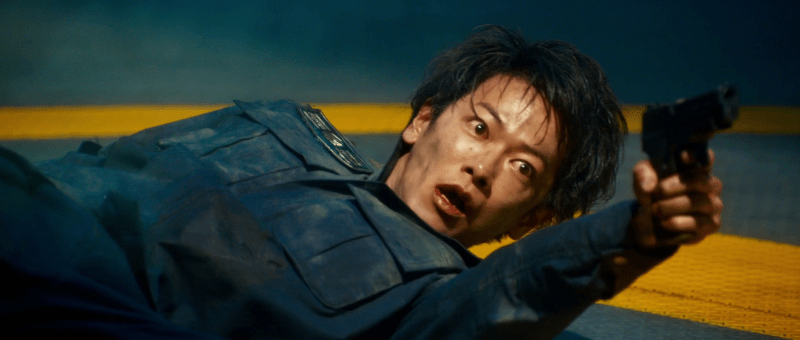
Katsuyuki Motohiro’s 2001social drama Transparent: Tribute to a Sad Genius had attempted to show the government acting with compassion having discovered humans with a potentially dangerous power, in that case the unfortunate ability to broadcast their every thought. Rather than locking them up in labs, the government had allowed the Transparents to live in the community under the caveat that they must never be told of their ability while continuing to monitor them secretly and in fact micromanaging their lives with less than ethical attention. 2017’s Ajin (亜人), adapted from the manga by Gamon Sakurai, is in many ways Transparent’s flip side in which the government has discovered the existence of a series of people known as Demi-Humans with super fast healing ability meaning that they cannot die from injury and has been conducting what is essentially vivisection on them justifying themselves that “the Ajin are the precious key to the evolution of mankind”. 

Nevertheless, they are mindful that the public would not accept it if they knew the government’s claims of “protecting” Ajins was a smokescreen to disguise the fact they’ve been experimenting on them, let alone selling the results to commercial companies for the production of chemical weapons among other things. Previously a regular medical student, Kei Nagano (Takeru Satoh) is the third Ajin to be unmasked in Japan after being hit by a bus only to heal rapidly and stumble away. After a brief period of torture, Kei is “rescued” by crazed terrorist revolutionary leader Sato (Go Ayano) and his underling Tanaka (Yu Shirota), escaped Ajins 1 and 2, but becomes their enemy after he refuses to turn against the scientists who had been torturing him pointing out that killing them would only make him feel worse and is therefore counterproductive. 

The implication is that 20 years of brutal torture at the hands of mad scientists has turned Sato into a crazed fascist hellbent on the extinction of the human race, seeking an “autonomous” space for Ajin along with full civil rights for Demi-Humans. Though we are told that only three Ajin have been unmasked so far in Japan, the implication is that there are many more living quietly some of whom Sato recruits after putting out a call for all disenfranchised Demi-Humans to join his revolution not for equality but domination. It’s this movement Kei can’t support, the classically “good” Ajin who disapproves of Sato’s actions and wants to leave peacefully alongside humanity. As such, there’s something a little uncomfortable in his inevitable decision to team up with the people who were just vivisecting him in order to stop Sato achieving his goal of guaranteed civil rights for people like him asking for nothing more than that his family be protected and he be left alone and given a new ID to live quietly in somewhere in Japan when all of this over. 

The unpalatable implication seems to be that minorities are only worthy of respect if they serve those in power, both Kei and another closeted Ajin benefiting directly and individually by siding with humanity though humanity may not honour the various promises it makes while they are partially complicit in the torture and exploitation of other Ajins. Sato’s basic request is only to given his full rights in the freedom from torture, but even this cannot be granted because of the threat he presents to humanity in that the inability to die means that he cannot be controlled through violence. Ironically enough Sato does seem to believe himself to be the next step in human evolution, after 20 years of brutal torture believing that humanity is a lesser being which those like him are intended to replace. 

Kei meanwhile encounters kind humans such as Mrs. Yamanaka (Kazuko Yoshiyuki) who kindly offers him a place to hideout because when you see someone is in trouble you just help them even if a baying mob later turn up at your door to ask why. There may be a minor allegory in the way the Ajins are treated, feared by and excluded from regular society, forced to keep their true natures secret in order to live a “quiet” life but than again Sato and his cohort of equally crazed young Demi-Humans who presumably have never been tortured are depicted as quasi-fascist radicals selling their own organs on the medical black market and eventually prepared to unleash a chemical weapon on Tokyo to make it unliveable for regular humans in order to claim their own space. Nevertheless, Motohiro’s drama is at its best during its high impact, well choreographed action sequences displaying some top quality visual effects as the Ajins produce their ghostly avatars or reassemble themselves after catastrophic injury even if the discomfort of the underlying messages cannot be entirely escaped. 


Original trailer (no subtitles)

The Mosquito on the Tenth Floor (十階のモスキート, Yoichi Sai, 1983)

A beaten-down beat cop’s existential crisis progressively deepens after he throws himself into financial ruin to buy a computer in Yoichi Sai’s debut The Mosquito on the Tenth Floor (十階のモスキート, Jikkai no Mosquito). Like Pool Without Water, star Yuya Uchida conceived and co-scripted the film as a vehicle for himself and was apparently inspired by the sight of some blood, his own, on a wall where he’d squashed a mosquito though he also claimed the the 10 in the title is intended to reference the 10 commandments in addition to simply where the unnamed protagonist lives.

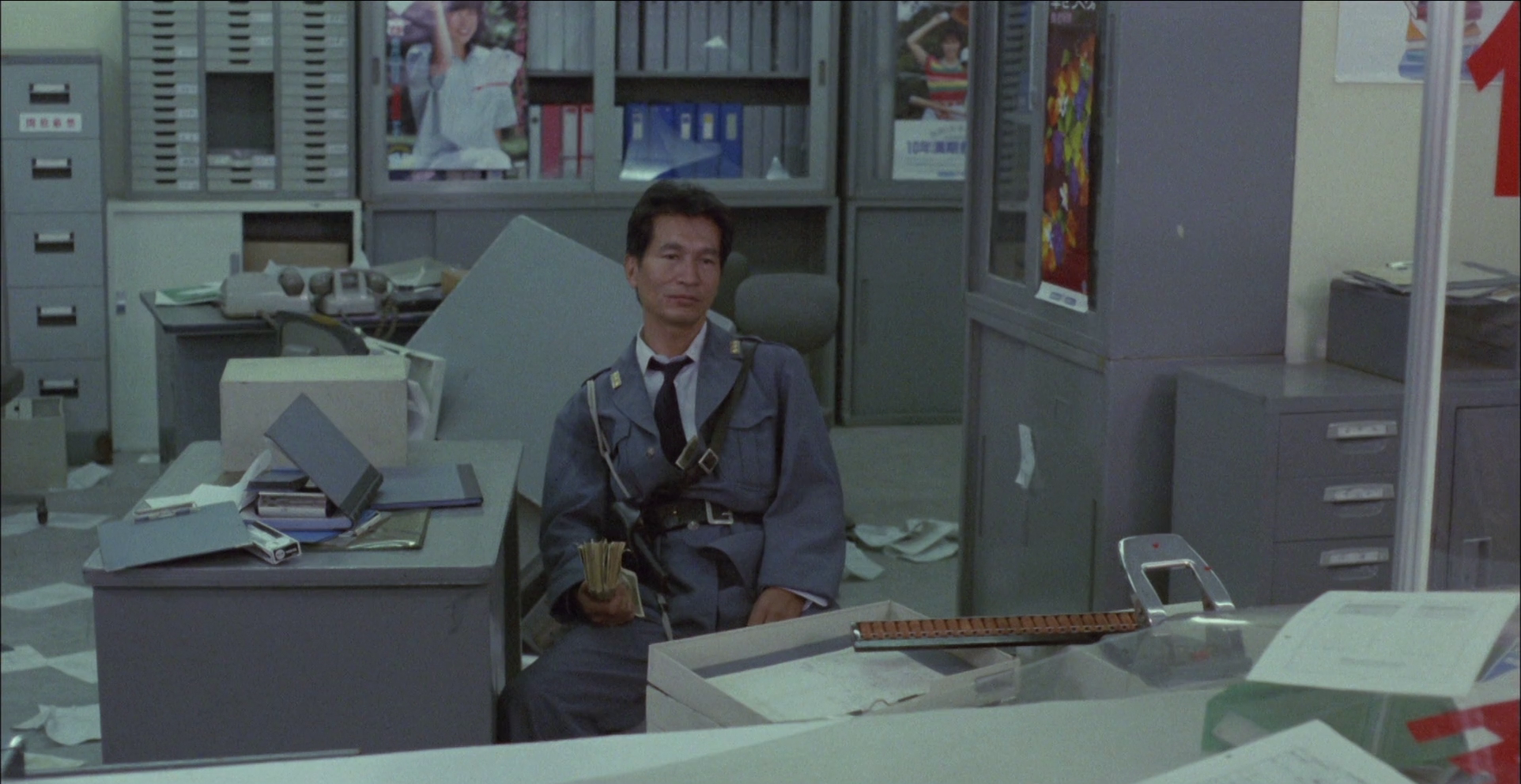
The fact that he lives on the 10th and top floor in a building with no lift is symbolic of his dismal circumstances. On the one hand he can rise no higher but on the other is stuck with an inconvenient living situation precisely because of his inability to rise socially. As it transpires the hero, a policeman, joined the force right out of high school with aspirations of rising to the rank of captain but has spent the entirety of his 20-year career manning a police box. He’s repeatedly failed the exam for promotion to lieutenant and realistically speaking is now simply too old to make much further progress. A man of few words, he listens as the other officers who took the exam with him outline the hierarchal structure of the police force while meditating that as a man on the wrong side of 40 his possibilities have decreased and it’s more than likely he’ll be stuck in the police box until he retires. 

His boss later says as much, sympathising with him but also pointing out that a policeman is also a public servant with a role to serve within the community. He is supposed to make people feel safe and contribute to the progress towards a crime-free society, but it’s clear that his life has spiralled out of control precisely because he cannot ally his career goals with the kind of life he wished to lead. His wife divorced him two years ago seemingly because she wanted a greater degree of material comfort and became resentful that he failed to progress in his career and could not move on from the low-salaried position of an ordinary street cop. She now makes a living selling golf club memberships, looking ahead to the oncoming Bubble-era and a society of affluent salarymen which is very much what her new boyfriend seems to be. Meanwhile, she lives in a very nice townhouse with their teenage daughter and constantly hassles the policeman for falling behind with his child support and alimony payments. He’s also racked up a healthy tab at a karaoke bar where he regularly hangs out and has a serious gambling problem with betting on boat races seemingly his only other form of social outlet.

As his daughter and others keep reminding him, the world is changing and his decision to buy a computer after unwisely taking out a payday loan is in part a symbol of his desire to progress into the modern society even if, somewhat ironically, others chastise him for spending what is then a huge amount of money on something they think of a child’s toy. Otherwise an upstanding policeman who irritatedly deflects a colleague’s joke about bribing someone to pass the exam, the policeman finds himself taking out one payday loan to pay another with loansharks constantly ringing him at the police box to remind him he’s behind on his payments. To overcome his sense of powerlessness, he begins by abusing his authority in catching a punk woman shoplifting and arresting her but then taking her back to his flat to play computer bowling and take advantage of her sexually. He later does something similar with a bar hostess, Keiko (Reiko Nakamura), who took him home when he was drunk. Though the encounter begins as rape, Keiko soon gives in and even comes back for more claiming that she’d never done it with a policeman before and it exceeded her expectations which is in many ways reflective social attitudes at the time. Emboldened, he invites danger by raping a female traffic cop, tearing her clothes as she fights back, screams, and cries though she presumably does not report him given the professional and social consequences that may adversely affect her life and career if she chose to. 

His ex-wife Toshie (Kazuko Yoshiyuki) says she’s not even sure if he’s human anymore, and his failed attempt to rape her after his boss reminds him that he advised against getting a divorce in the first place because it would negatively affect his chance of promotion may be a perverse way to prove he is though it obviously backfires. Having failed in every area of his life and with no prospect of ever getting back on track or starting again, he begins to go quietly insane typing rude words into his computer while the constant calls from loansharks take on a mosquito-like buzzing as does his own final wail of despair and powerlessness as he’s brought down by same authority he once served. His aloneness and confusion are palpable when he ventures into the city and discovers his teenage daughter Rie (Kyoko Koizumi) dancing in Harajuku staring at her intently but then walking away having invaded this space reserved for the young. “Police yourself!” one of the Rockabilly guys ironically instructs him on noticing that he’s dropped his ice cream cone, explaining that the police might shut them down if they’re discovered to be using the space irresponsibly by littering. Rie and her friends tell him to get a life, explaining that the world is changing while tapping him for cash he doesn’t have but is too embarrassed to refuse, laying bare the extent to which he and those like him have been left behind by the economic miracle, buzzing around maddeningly in mid-air with safe nowhere safe to land. 


Original trailer (no subtitles)

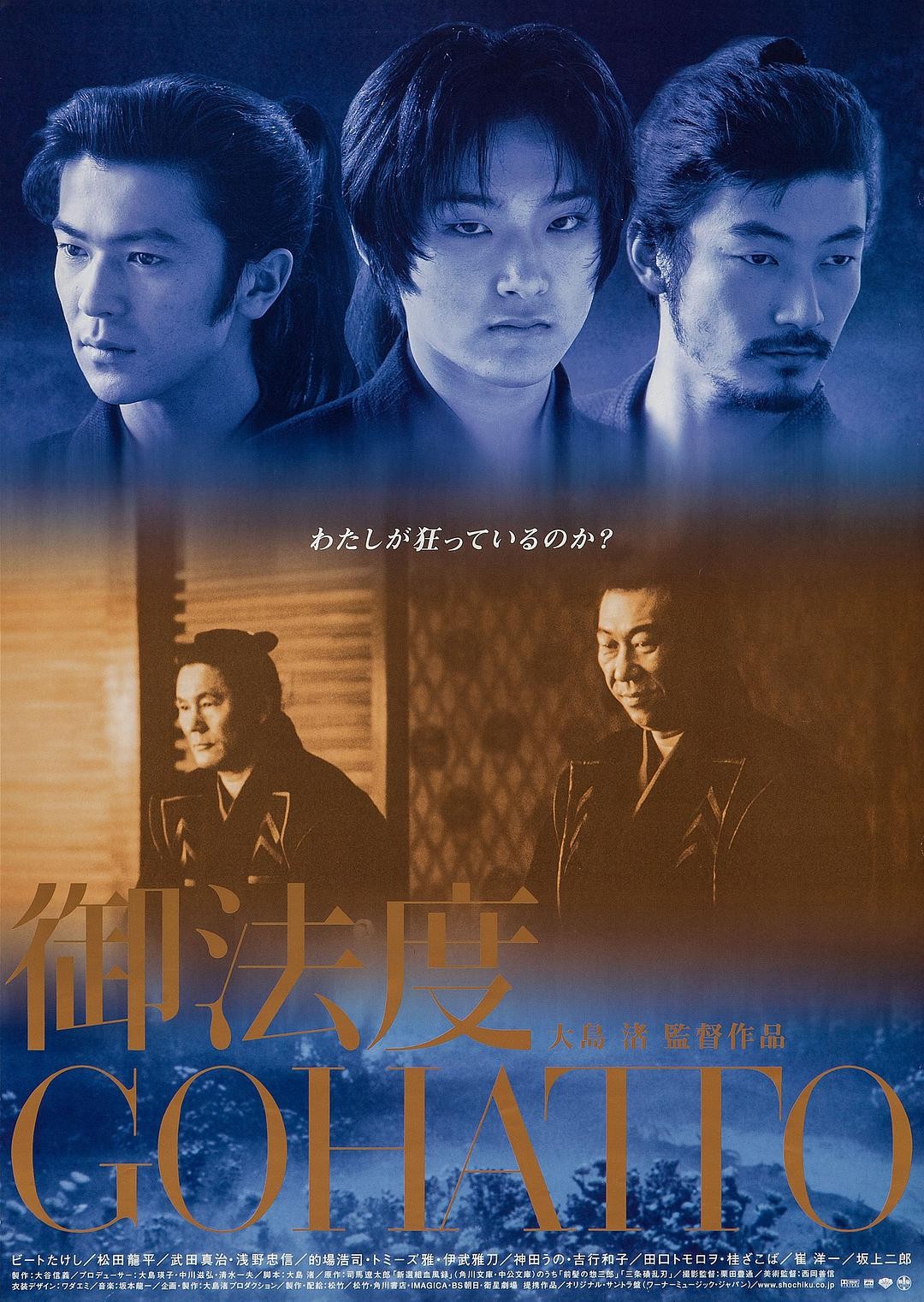
Gohatto (御法度, Nagisa Oshima, 1999)

Nagisa Oshima once said that his hatred of Japanese cinema extended to absolutely all of it, decrying the hackneyed nativism of “foggy beauty and stupid gardens”, yet his final film is filled with Mizoguchian mist and almost a paen to Japanese aesthetics which ends with a cherry blossom tree in full bloom cut down in its prime. Burdened by the slightly more salacious title “Taboo”, Gohatto is less about love between men in an intensely homosocial world even as it asks what it might mean by “forbidden” or “against the law” than it is about idealism and aesthetics as its band of contradictory conservatives unknowingly approach the end of their world in a coming modernity ushered in by dangerous beauty. 

Set in the Kyoto of 1865, a scant three years prior to the Meiji Restoration, the film opens with an audition of sorts as the Shinsengumi search for promising new recruits among talented swordsmen. Already a mess of contradictions, the Shinsengumi is, loosely, a kind of official police force dedicated to defending the Shogunate against the revolutionary forces set on restoring power to the emperor. Nevertheless, in an odd way and in contrast to the elite Mimawarigumi which was staffed only by direct retainers to the Shogun, the Shinsengumi was noted for its lowkey egalitarianism in that it made a point of admitting those of ordinary birth as well as lower level samurai and ronin. Of course, the notions of equality only went so far and perhaps only fuelled its reputation for merciless savagery, but also make it a strangely progressive force fighting against progress in defence of the feudal status quo. 

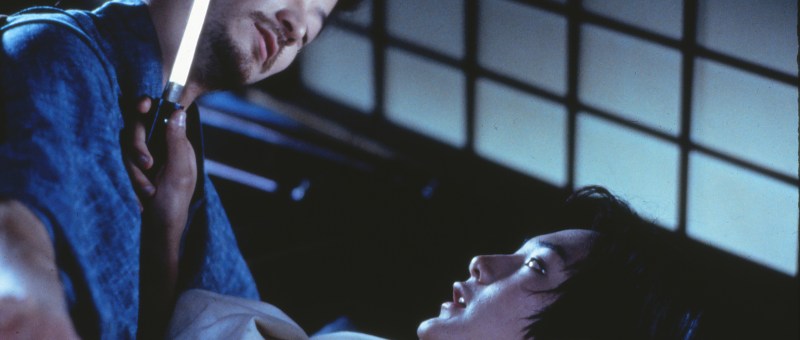
Only two of the hopefuls are thought to be any good, one a young ronin, Tashiro (Tadanobu Asano), and the other a beautiful boy, Kano Sozaburo (Ryuhei Matsuda), the third son of a wealthy merchant whose line were once samurai but are no longer counted among the noble retainers. A talented swordsman, Sozaburo’s dangerous beauty presents an existential threat to the Shinsengumi order, the steely Hijikata (Takeshi Kitano) looking on conflicted in witnessing the way his commander, Kondo (Yoichi Sai), looks at this vision of androgynous beauty remarking that he had not known him to be “that way inclined”.

Being that way inclined does not seem to be a particular issue within the Shinsengumi, it is not against their draconian rules and in fact appears to be tolerated at least as long as it causes no further problems. Kondo is however mindful of the chaos caused by a similar wave of homoerotic lust which took hold shortly before a climactic battle which would prove to be their last success. What Sozaburo seems to arouse in them is something more dangerous than the accepted patterns of love between military men which is in a sense sublimated as a mentor/student relationship, loyalty more than romance. Tashiro, who is of a similar age to the apparently 18-year-old Sozaburo, lets his desire be known, vowing to sleep with him before he dies ironically acknowledging Sozaburo for what he is, an angel of death. 

For his part, Sozaburo remains curiously passive in each of his encounters, aroused only it seems by the act of killing. Yet Hijikata discerns that he has indeed become Tashiro’s lover on witnessing them fight, Sozaburo losing clumsily despite being the more skilled in a dynamic that mimics their relationship in which Tashiro is the dominant partner. Aware of the danger in Sozaburo’s allure, Kondo suggests having a superior take him to the red light district to show him the delights of woman hoping to guide him back towards a less dangerous path, only the attempt backfires on several levels. Firstly, Sozaburo has no interest in women and continues to decline believing his commander is also hitting on him (like everyone else), thereafter determined to seduce him after all. Another retainer does indeed succeed in seducing Sozaburo, developing a mild obsession, but later ends up dead, Tashiro a main suspect in his murder with the motive of sexual jealousy though all of this additional violence is perhaps only an expression of Sozaburo’s dangerous beauty. 

As so often, sex if not love becomes the force which destabilises the social order only here it’s equated both with death and with an alternative mediation of male violence. Perhaps reflecting the way they look to the 18-year-old Sozaburo who makes a faux pas in accidentally suggesting at least one of them is of pensionable age, the ranking members of the Shinsengumi are played by actors already well into their golden years as if relics of a bygone era though in reality most were in their 30s. As Soji (Shinji Takeda), a filial figure like Sozaburo wearing long hair, puts it, there are no old men in their unit which is in essence an anti-revolutionary force. Nevertheless, the Shinsengumi is on the wrong side of history and already living in its end times, perhaps ushered towards its doom by the figure of the beautiful boy. “You were too beautiful”, Hijikata eventually laments as he finally perhaps understands the nature of the revolution he is witnessing. Perverse to the last, Oshima sets his ethereal finale in a stygian fog and pays an ironic tribute to the Mizoguchian classicism he so railed against in his youth, taking a sword to the cherry blossoms as he like Hijikata severs his own legacy in a moment of destructive beauty. 


Gohatto screens at Genesis Cinema on 25th September as part of this year’s Queer East

International trailer (English subtitles)

Amagi Pass (天城越え, Haruhiko Mimura, 1983)

There’s no statute of limitations on guilt an ageing policeman laments in Haruhiko Mimura’s adaptation of the Seicho Matsumoto mystery, Amagi Pass (天城越え, Amagi-Goe). Co-produced by Yoshitaro Nomura and co-scripted by Tai Kato, Amagi Pass arrives at the tail end of the box office dominance of the prestige whodunnit and like many of its kind hinges on events which took place during the war though in this case the effects are more psychological than literal, hinging on the implications of an age of violence and hyper masculinity coupled with sexual repression and a conservative culture. 

In a voiceover which doesn’t quite open the film, the hero, Kenzo (Mikijiro Hira / Yoichi Ito), as we will later realise him to be, likens himself to that of Kawabata’s Izu Dancer though as he explains he was not a student but the 14-year-old son of a blacksmith with worn out zori on his feet as he attempted to run away from home in the summer of 1940 only to turn back half-way through. In the present day, meanwhile, an elderly detective, Tajima (Tsunehiko Watase), now with a prominent limp, slowly makes his way through the modern world towards a print shop where he orders 300 copies of the case report on the murder of an itinerant labourer in Amagi Pass in June, 1940. A wandering geisha was later charged with the crime but as Tajima explains he does not believe that she was guilty and harbours regrets over his original investigation recognising his own inexperience in overseeing his first big case. 

As so often, the detective’s arrival is a call from the past, forcing Kenzo, now a middle-aged man, to reckon with the traumatic events of his youth. Earlier we had seen him in a doctor’s office where it is implied that something is poisoning him and needs to come out, his illness just as much of a reflection of his trauma as the policeman’s limp. Flashing back to 1940 we find him a young man confused, fatherless but perhaps looking for fatherly guidance from older men such as a strange pedlar he meets on the road who cheekily shows him illustrated pornography, or the wise uncle who eventually tricks him into buying dinner and then leaves. His problems are perhaps confounded by the fact that he lives in an age of hyper masculinity, the zenith of militarism in which other young men are feted with parades as they prepare to fight and die for their country in faraway lands. Yet Kenzo is only 14 in 1940 which means he will most likely be spared but also in a sense emasculated as a lonely boy remaining behind at home. 

He tells the wise man who later tricks him that he’s run away to find his brother who owns a print shop in the city because he hates his provincial life as a blacksmith, but later we realise that the cause is more his difficult relationship with his widowed mother (Kazuko Yoshiyuki) whom, he has recently discovered, is carrying on an affair with his uncle (Ichiro Ogura). Returning home after his roadside betrayal he watches them together from behind a screen, a scene echoed in his voyeuristic observation of the geisha, Hana (Yuko Tanaka), with the labourer plying her trade in order to survive. Described as odd and seemingly mute, the labourer is a figure of conflicted masculinity resented by the other men on the road but also now a symbolic father and object of sexual jealously for the increasingly Oedipal Kenzo whose youthful attraction to the beautiful geisha continues to mirror his complicated relationship with his mother as she tenderly tears up her headscarf to bandage his foot, sore from his ill-fitting zori, while alternately flirting with him. 

Yet his guilt towards her isn’t only in his attraction but in its role in what happened to her next even as she, we can see, protects him, their final parting glance a mix of frustrated maternity and longing that has apparently informed the rest of Kenzo’s life in ways we can never quite grasp. Amagi Pass for him is a barrier between youth and age, one which he has long since crossed while also in a sense forever trapped in the tunnel looking back over his shoulder towards Hana and the labourer now on another side of an unbreachable divide. The policeman comes like messenger from another time, incongruously wandering through a very different Japan just as the bikers in the film’s post-credit sequence speed through the pass, looking to provide closure and perhaps a healing while assuaging his own guilt but finding only accommodation with rather than a cure for the traumatic past. 


Original trailer (no subtitles)

Neither Seicho Matsumoto’s original novel or the film adaptation are directly related to the well-known Sayuri Ishikawa song of the same name released three years later though the lyrics are strangely apt.

Cupola, Where the Furnaces Glow (キューポラのある街, Kirio Urayama, 1962)

(C) Nikkatsu 1962

cupola-poster-e1539038053246.jpgThe “shomin-geki” is generally associated with naturalistic depictions of the lives of “ordinary people”, but in reality most often focuses on the polite lower middle classes – white collar workers, shop keepers, small business holders etc, in short the sort of people who aren’t wealthy but aren’t starving either and generally live in moderate family homes rather than tenements or cramped apartment blocks. Blue collar lives are a less frequent sight on screen – something director Kirio Urayama seems to highlight in his mildly exoticised opening which introduces us to Kawaguchi, Saitama, a small town across long bridge not so far from Tokyo.

Unlike the bustling city still fighting its way back from post-war privation, Kawaguchi is a “town of fire and sweat” where the landscape is dominated by the “cupolas” of the title (Cupola, Where the Furnaces Glow , キューポラのある街, Cupola no aru Machi, AKA Foundry Town). Rather than the beautiful architectural domes the name might imply, these cupolas are the industrial kind – chimneys from the 500 foundries which are the area’s dominant economic force. There is, however, trouble in that the steel industry has been decline since the immediate post-war heyday and increasing automation is changing the face of working life.

Our heroine, Jun (Sayuri Yoshinaga), is a young woman with post-war ambitions trapped in the depressing blue collar world of Kawaguchi. She’s currently in her last year of middle school and is determined to carry on to high school and perhaps even beyond, but the family is poor and her father, Tatsugoro (Eijiro Tono), has just lost his job at the local steel works. The family’s neighbour, Katsumi (Mitsuo Hamada), is big into the labour movement and has been protesting the changes at the works which has been bought by a bigger concern who are intent on compulsory layoffs. Tatsugoro, however, likes to think of himself as a “craftsman” rather than a “worker” and refuses to join the union partly out of snobbery and partly out of an entrenched fear of “communism”. He refuses to fight his compulsory redundancy because he is still wedded to the old ideas about loyalty to one’s superiors whilst simultaneously viewing himself as “better” than the other workers because of his long experience and skilled craftsmanship.

Nevertheless, Tatsugoro continues to selfishly abnegate his responsibilities to his family, refusing to insist on his severance pay and drinking the little money he still has left. Tatsugoro has four children ranging from teenager Jun to an infant born just as he lost his job. Some way into the film, Jun and and her younger brother Takayuki (Yoshio Ichikawa) take their father to task for his continued selfishness but the confrontation ends only in defeat. Tatsugoro simply doesn’t care. Loudly exclaiming that he has no daughter and will send Takayuki to the boys’ home, Tatsugoro destroys their hopes by reminding them that their fate is the same his – leave school early, work in a factory, marriage, children, drink yourself into an early grave. The argument proves so disheartening that Jun gives up on a school trip she’d been given a special subsidy to attend to roam around the streets, sadly visiting the prefectural high school that she has now given up on attending and accidentally witnessing another reason to give up on life that she, naively, misunderstands.

Meanwhile, Jun and Takayuki have also made friends with a family from North Korea who will be returning (without their mother) under a preferential “repatriation” programme organised by North Korean officials in Japan with the backing of the US and the Japanese government which, uncomfortably enough, saw only advantage in reducing the ethnic minority population. Though the film adopts a mildly positive view of repatriation – after all, no one really knew what North Korea was like in 1961 and many saying goodbye to their friends fully expect to stay in touch and perhaps meet again one day, it does highlight the persistent layer of xenophobic prejudice that the children face. Sankichi (Hideki Morisaka), one of Takayuki’s best friends, is taunted from the audience whilst on stage in a children’s play by cries of “Korean Carrot” (he is wearing a funny wig at the time) while Jun’s mother makes no secret of her dislike of the children’s friendships, believing that the Koreans are “dangerous”. Others associate the North Korean (in particular) population with communism and possible insurrection, fearing that Japan might be pulled into another nuclear war in Asia by political troubles across the sea.

The repatriation program is attractive not only as a means of escaping a world of constant oppression, but because of the entrenched poverty of the Kawaguchi area and the relative impossibility of escaping it. In a poignant, resentful school essay Jun wonders why her future is dictated by a lack of money, why she alone will be prevented from going on to high school and pulling herself out of the lower orders solely because of her responsibility to her family and father’s fecklessness. Tatsugoro is eventually offered another job thanks to the kindness of the father of one of Jun’s wealthier school friends, but continues to view himself as a “craftsman” and resents being ordered around by youngsters. What’s more, the factory is much more advanced – doubtless, the father of Jun’s friend (so different from her own) thought it might be better for Tatsugoro whose health is poor because the work would be less physically strenuous, but Tatsugoro finds it impossible to adapt to automated working methods and soon quits, leaving the family cash strapped once again.

An inability to adapt is Tatsugoro’s tragedy though he later makes amends when he consents to join Katsumi’s union and takes a job in a new factory, confident that he can’t be summarily dismissed ever again. Jun, meanwhile, has discovered a third way. Longing to escape the burden of her family she resolves to step forward alone but also instep with her society. Having discovered the existence of a progressive factory which is run with friendliness and consideration and even provides education for employees, Jun realises she can have the best of both worlds. Though Jun’s decision is perhaps one of individualism and a bold assertion of her own agency, it’s also in keeping with the broadly socialist message of the film which insists that a problem shared is a problem halved and places its faith in ordinary people to look after each other. Optimistic, perhaps, but a perfect encapsulation of post-war humanism and growing hopes for the future for those who are prepared to work hard on behalf not only of themselves but also for the social good.


Original trailer (no subtitles)

Cupola, Where the Furnaces Glow was scripted by Shohei Imamura whose work often focusses on the working classes and rural poor. As such it shares some similarity with his early film My Second Brother which also touches on the lives of ethnic Koreans living in Japan though this time in a mining village where the labour movement is engaged in actively opposing the exploitative practices of the corporate mine owners.

The Sleeping Beast Within (けものの眠り, Seijun Suzuki, 1960)

Sleeping Beast Within posterTo those of a “traditional” mindset, a woman’s career is her home and she never gets to retire. Men, by this same logic, are killed off at 60 and reborn into a second childhood where they get to indulge their love of fly fishing or suddenly discover an untapped talent for haiku. Seeing as a man often lives at the office, being excommunicated from his corporate family can seem like a heavy penalty for those who’ve devoted their entire existence to the salaryman ideal. So it is for the old timer at the centre of Seijun Suzuki’s 1960 mystery thriller, The Sleeping Beast Within (けものの眠り, Kemono no Nemuri) in which the sudden disappearance of a model employee sparks his daughter and her dogged reporter boyfriend to investigate, unwittingly discovering a vast drug smuggling conspiracy headed by a dodgy cult leader.

Veteran salaryman Junpei Ueki (Shinsuke Ashida) has been working in Hong Kong for two years and is finally coming home, to retire. His family have come to meet him but, as his daughter’s reporter boyfriend Kasai (Hiroyuki Nagato) points out, no one much else has turned up – so it is for those who don’t play office politics, claims one of the few colleagues who has arrived to greet the recently returned businessman. Ueki isn’t very happy about his retirement and believes he’ll be getting a part-time job at the same company only to be informed position has been “withdrawn”. When he doesn’t come home after his retirement party, something surely out of character for such a straight shooting family man, his wife and daughter become worried. Keiko (Kazuko Yoshiyuki) enlists Kasai to help figure out what’s happened to her dad only for him to suddenly turn up with a bad excuse and an almost total personality transplant. Kasai keeps digging, and the reporter in him loves what he finds even if the nice boyfriend wishes he didn’t.

Suzuki sets up what a good guy Ueki is when he brings back a modest ring for Keiko only for her to mockingly ask if her dad couldn’t have brought something a bit flashier. Ueki points out that the customs people might not have liked that so she jokes that he should have just smuggled it in like everyone else. Kasai reminds her that her dad’s not that kind of man, but two years in Hong Kong have apparently changed him. Having spent two years away from his family and 30 years slaving away at a boring desk job, Ueki feels he’s owed something more than an unceremonious kiss off and a little more time for gardening. The reason he ended up entering the world of crime wasn’t the money, or that he was blackmailed – it started because of his sense of integrity. He felt he owed someone and he did them a favour. It went wrong and he ended up here. His decision to join the gang came after he tried to “pay back” the money for some missing drugs only to realise that his entire retirement plan was worth only a tiny fraction of his new debt. Ueki felt small and stupid, like a man who’d wasted his life playing the mugs game. He wanted some payback, but his life as criminal mastermind turned out not to be much of a success either.

Trying to explain her father’s actions to the wounded Keiko, Kasai explains that everyone has a sleeping beast in their heart which is capable doing terrible things when it awakens. Ueki’s sleeping beast was woken by his resentment and sense of betrayal in being so cruelly cast aside by the system to which he’d devoted his life while the guys who broke all the rules – drug dealers, gangsters, and corrupt businessmen, lived the high life. One could almost argue that a sleeping beast is stirring in Kasai’s heart as he pushes his investigation to the limit, occasionally forgetting about the harm it will do to Keiko even whilst acknowledging the greater good of breaking the smuggling ring once and for all. Keiko too finds herself torn, confused and heartbroken by the change in her father’s personality though her mother feels quite differently.  Claiming that “a woman has no say in her husband’s work”, Keiko’s mum tells her daughter that a wife’s duty is to do as her husband says and avoid asking questions. Keiko has asked a lot of questions already and shows no signs of stopping now, even once she realises she won’t like the answers.

Despite the grimness of the underlying tenet that it doesn’t take much for honest men to abandon their sense of morality, Suzuki maintains his trademark wryness as Kasai and Keiko go about their investigation like a pair of pesky kids chasing a cartoon villain. Though the tale is straightforward enough, he does throw in a decent amount of experimentation with two innovative flashback sequences in which the flashback itself is presented as a superimposition with the person narrating it hovering at edges as if referring to a slide. The beast is quelled with a shot to the heart, but not before it wreaks havoc on the lives of ordinary people – not least Ueki himself who is forced to confront what it is he’s become and who he was prepared to sacrifice to feed the hungry demon inside him.


Available as part of Arrow’s Seijun Suzuki: The Early Years Vol. 2 Border Crossings box set.