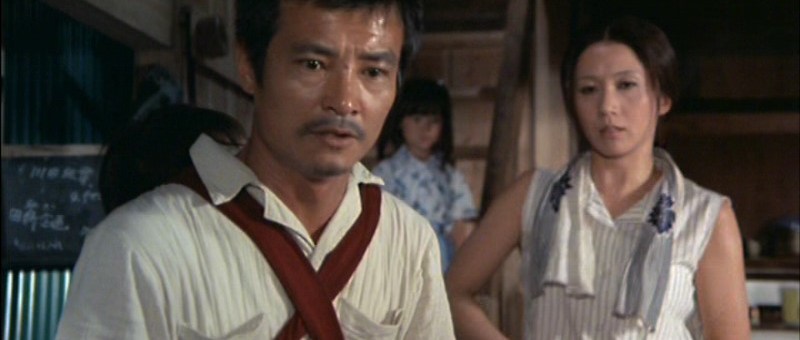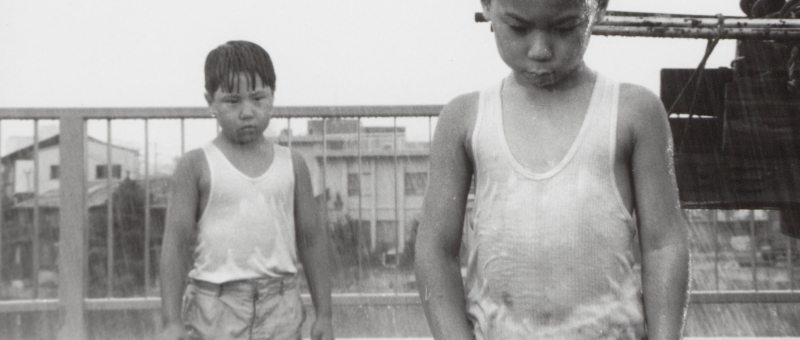
Classmates (あゝ同期の桜, Sadao Nakajima, 1967)

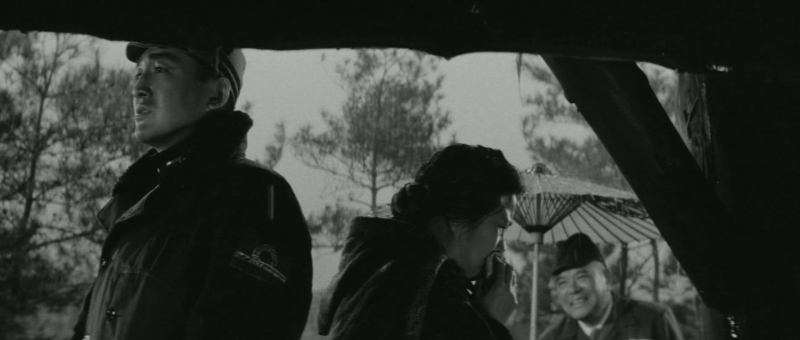
There had been films that dealt with the war before, but it was really with the generational shift that occurred among filmmakers in the mid-1960s that there was a greater willingness to reckon with the wartime past. Sadao Nakajima’s Classmates (あゝ同期の桜, Aa Doki no Sakura) was the first in a planned trilogy of war films at Toei, which was in other ways a studio that often leaned towards the right with its steady output of yakuza films, and most likely for that reason struggled to gain approval from studio heads. Taking its name from the military academy song, the film was inspired by a collection of essays put together from the letters and diaries kamikaze pilots had left behind. Nakajima had seen some of the letters sent back by the brother of a school friend, and reading them again on publication was determined to turn them into the film.

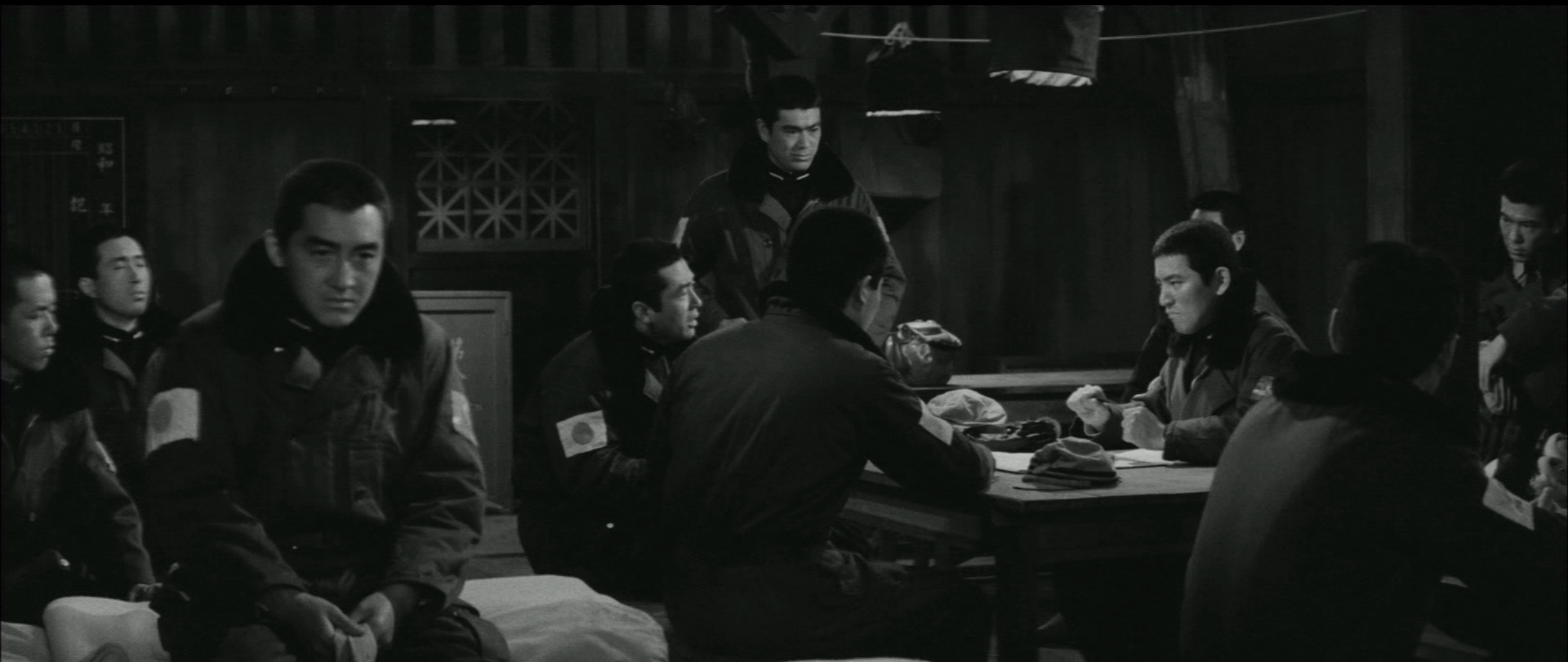
Nevertheless, only 25 years on from the end of the war it remained a sensitive topic. The film follows the men of the 14th class of reserve students who had previously had their draft notices deferred until they finished university but were now called up early because the war was going so badly. The majority of these men were allocated to kamikaze units and subsequently died in suicide attacks on US warships, though they received little in the way of training and mostly failed to hit their targets due to having limited fight experience. 

What might seem most surprising is that several of the men voice their opposition to the war along with the realisation that Japan is going to lose. Early on in training, one man deserts but the others are reminded that to do so amounts to treason and once caught, deserters will be executed by firing squad. This turns out not quite to be the case. Shiratori (Hiroki Matsukata), the resigned hero, encounters Taki (Mitsuki Kanemitsu) in Okinawa. where he’s working as ground staff. He’s insensible and appears to have lost his mind. The man working with him suggests that he was tortured so badly that it’s left him in a vacant state, though he’s still deployed for mindless tasks because they just don’t have the manpower.

Part of the reason for that is that they keep ordering people to die in a validation of the death cult that is militarism. On their arrival, the instructor tells the men he will have them all die, because dying for the emperor is their duty and destiny. The top brass insist this is the only way to win the war even though it’s counterproductive in that they’re running out of aircraft and skilled pilots even if one officer callously remarks that they have an endless supply of bodies. There’s also no real reason to send the planes up with two pilots as opposed to one, but they leave fully manned. The suicide missions are supposedly “voluntary”, but the men can’t really refuse due to a combination of peer pressure and military order.

When one pilot, Nanjo (Isao Natsuyagi), returns to base having been unable to reach his target, he’s immediately set upon by the others as a coward and a traitor. They accuse him of being afraid to die, leaving him feeling ashamed and frustrated by a sense of injustice while admitting that he didn’t want to die like a dog. He knows that he would not be able to go on living afterwards if he simply didn’t go through with it because the stigma of being a coward who let other men die so he could live would always be upon him. Eventually, he becomes so determined to prove himself that he insists on getting right back in his plane once it’s repaired and then blows himself up on the runway to prove a point.

Nanjo’s case is all the more poignant because he was a new father whose son was born after he was called up. He appears to have married quickly against his parents’ wishes and is now anxious that his family won’t accept his wife and child who will be left alone when he dies. His wife (Yoshiko Sakuma) desperately tries to see him to show him the baby, but manages only a few seconds before he’s forced to return to the barracks. Given a little more time, she brings a wedding dress for the impromptu ceremony they presumably skipped before, but ends up tearing it and giving Nanjo a strip as a kind of good-luck charm though like everything else it’s a gesture filled with futility.

It’s this sense of futility and resignation that seems to overtake Shiratori who knows he cannot escape his fate. To desert to is be killed anyway or to experience a spiritual death like Taki. He had introduced a friend, Hanzawa (Shinichi Chiba), to his sister and the two had become close, but he is forced to abruptly break up with her because he knows it’s unfair to string her along when he’s been sentenced to death. Reiko (Sumiko Fuji) will lose her brother and her boyfriend on the same day. Hanzawa and the other men visit a brothel on the night before their mission where they are treated as “gods”, though he sees only irony in the situation in which they are more like human sacrifices offered in prayer for an impossible victory. Their deaths will have no real meaning and are really only intended to instil fear in the enemy and weaken their morale rather than cause actual material damage to their fighting capability. Making use of stock footage, Nakajima freeze frames a plane in flight and points out at that point the men inside were still alive before cutting to a title card confirming the war ended just four months later. The title card at the beginning dedicated the film to the souls of those who died in the Pacific War, though it’s perhaps as quietly angry as it was permitted to be in 1967 in the senseless sacrifice of these men’s lives who were shamed, tricked, or forced at gunpoint into their cockpits and told they were disposable while those who stayed on the ground cheered and whooped at the grim spectacle of death.


Writhing Tongue (震える舌, Yoshitaro Nomura, 1980)

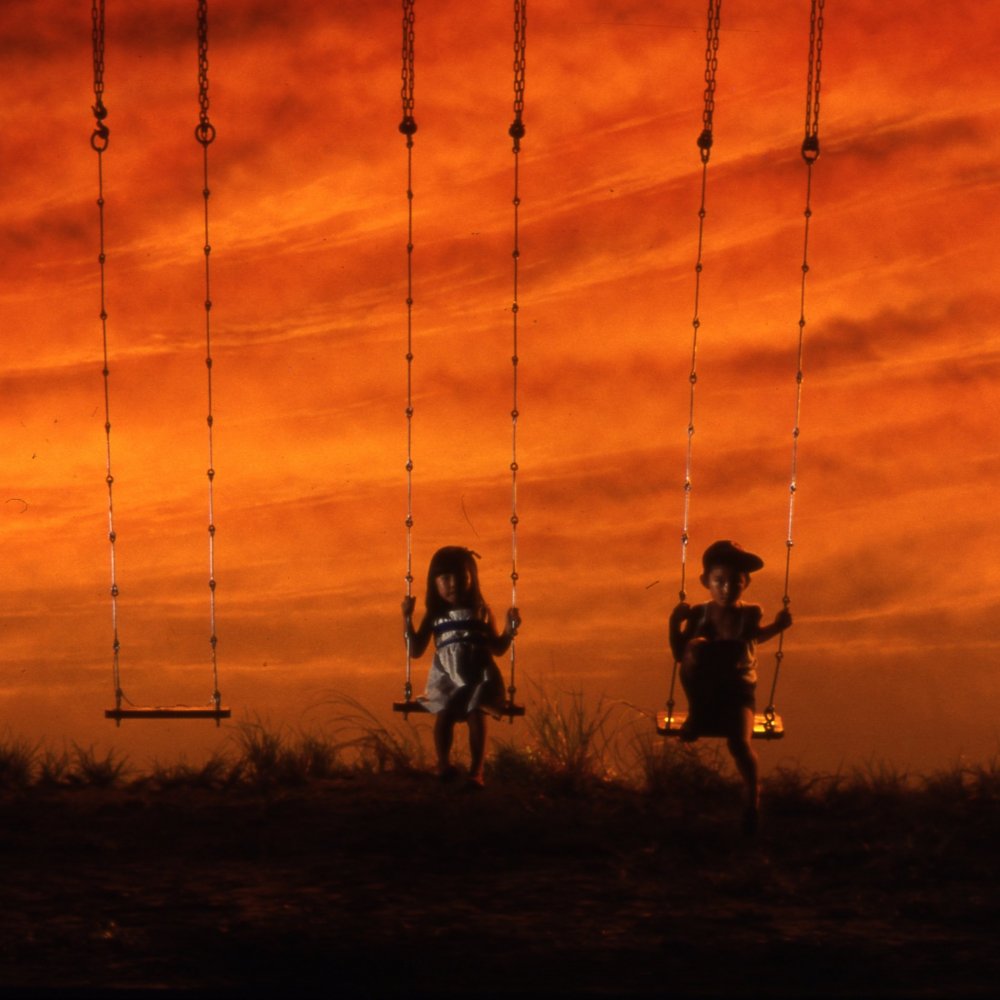
Yoshitaro Nomura is best known for his crime films often adapted from the novels of Seicho Matsumoto though his filmography was in fact much wider than many give him credit for. Even so, 1980’s Writhing Tongue (震える舌, Furueru Shita) may seem an odd entry adapted from the semi-autobiographical novel by Taku Miki exploring the psychological torment of the parents of a little girl who contracts tetanus while innocently playing near a pond. Like the following year’s Call From Darkness, Nomura’s intense drama eventually shifts into the realms of psychedelia in the father’s strange fever dreams while lending this harrowing tale of medical desperation the tones of supernatural horror. 

When five-year-old Masako (Mayuko Wakamori) seems to be under the weather, her mother Kunie (Yukiyo Toake) takes her to the hospital but is told by the disinterested doctor that she simply has a cold. This is a little surprising seeing as Masako’s main complaint is she that cannot open her jaw, probably the best-known indication of tetanus infection which is after all not so rare as to be easily missed by a medical professional. Still worried, Kunie keeps taking her daughter back especially once her leg becomes twisted leaving her struggling to walk, but the doctors that she sees don’t really listen to her, even implying that Masako is having some kind of early life breakdown because her father, Akira (Tsunehiko Watase), is overly strict with her. This may be in part because Masako, perhaps in fear, keeps saying that she could walk or open her mouth if she wanted but is choosing not to. In any case the true diagnosis is only discovered after the couple manage to get a referral from a friend to a larger hospital where the veteran professor (Jukichi Uno) quickly overrules his junior’s lack of concern to have Masako admitted right away later explaining that tetanus is a difficult disease to treat and unfortunately has a high mortality rate. 

The treatment dictates that Masako receive as little stimulation as possible, lying in an entirely dark room with minimal noise so as to avoid the violent convulsions that accompany overstimulation and cause her to bite her tongue. As Akira later puts it, all they can do is wait trapped alone in the dark and tiny room with Masako entirely powerless to help her and with little knowledge of what exactly is going on. Meanwhile, despite having been repeatedly reassured that the disease is not transmitted in that way, Akira is convinced he may have contracted tetanus after being bitten by Masako while trying to prise open her jaw. Kunie too later worries that she also has tetanus, the pair of them sucked into a claustrophobic world of isolation and medical paranoia in which they are unable to sleep or find relief while watching over their daughter. 

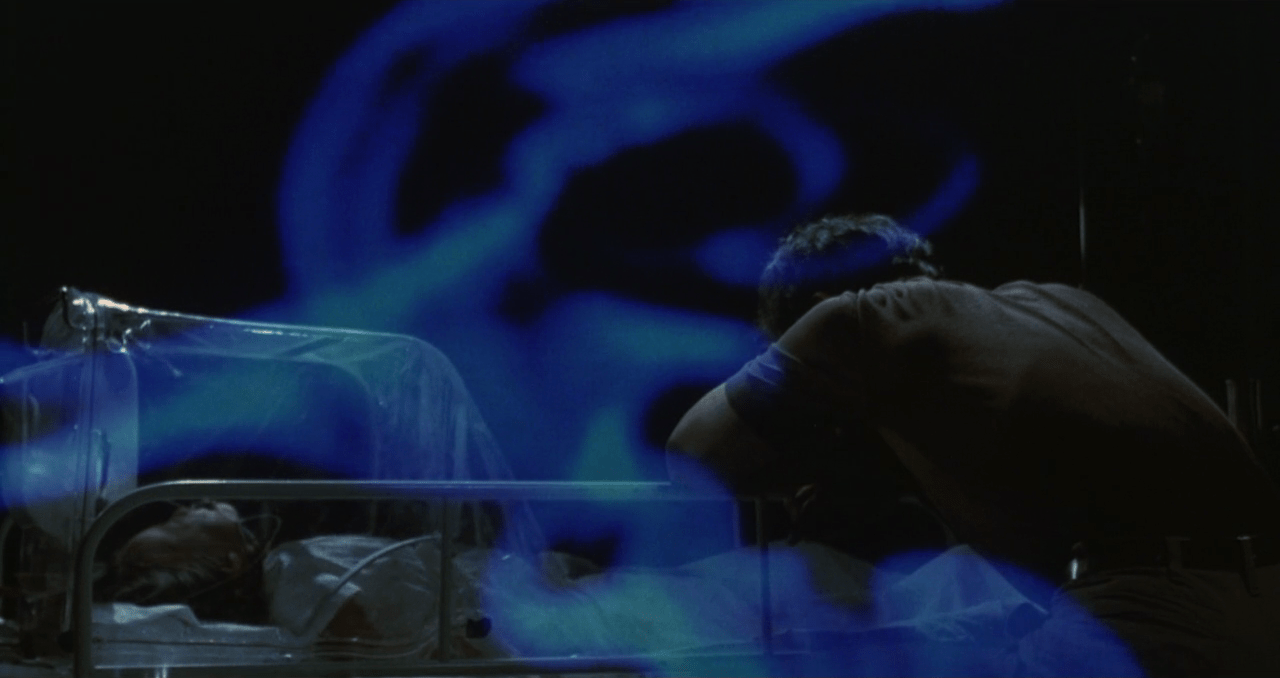
Some time later, Akira begins having bizarre psychedelic dreams recalling the time when he too was hospitalised as a child having contracted blood poisoning, remembering his own fear and confusion on being forced to endure “red injections” which he feared would “turn the whole world red” while the hieroglyphics he and his wife have been using to record Masako’s seizures dance before his eyes. He dreams of crows and blood rain while Kunie goes quietly out of her mind at one point threatening the sympathetic Doctor Nose (Ryoko Nakano) thinking it might be kinder to stop the treatment and let her daughter escape this excruciating pain. The utter powerless with which the couple are faced is filled with almost supernatural dread as if Masako had been possessed by some terrible evil, Akira attempting to speak directly to the bacteria asking them why it is they’re trying to colonise his daughter’s body and if they realise that in killing her they kill themselves too.

“It’s odd, our life. It’s so fragile” Akira sighs. All of this happened because of a tiny cut on a little girl’s finger the kind not even quite worth putting a plaster on and yet she might die from it. Convinced they all may die, Akira tells his wife to go home and put their affairs in order while she is so traumatised that she becomes unable to re-enter the room paralysed not out of physical disability but mental anguish. When Masako’s condition finally improves, Akira can hear his daughter crying that she’s frightened reminding him that he can never really understand the way she suffered through this terrible disease while all he could do was watch. A truly harrowing depiction of the hellish psychological torment of serious illness, Nomura’s occasionally psychedelic drama lays bare the fragility of life in a world of constant and unexpected dangers. 


Trailer (no subtitles)

Crest of Betrayal (忠臣蔵外伝 四谷怪談, Kinji Fukasaku, 1994)

“I was trying to reform our times!” cries a man about to abandon his revolution at the moment of its inception. “The times have reformed us” his friend retorts, rejecting him for his self-interested cowardice before seconds later deciding to follow his example. Largely remembered for his contemporary jitsuroku gangster pictures, Kinji Fukasaku’s tale of rising individualism amid political turbulence and economic instability Crest of Betrayal (忠臣蔵外伝 四谷怪談, Chushingura Gaiden: Yotsuya Kaidan) hints at a perceived moral collapse in contemporary post-Bubble Japan defined by a sense of nihilistic impossibility in marrying the classic ghost story Yotsuya Kaidan with the noble tragedy of the 47 Ronin. 

The action opens the very concrete date of 14th March 1702 which as an early title card reminds us is at the close of the Genroku era which had been regarded as a “golden age” but its appearance of affluence had in fact been semi-engineered by the shogunate’s unwise decision to continue debasing the currency which later led to an inflation crisis (sounding familiar?). Meanwhile, in the samurai world Tsunayoshi, the fifth Tokugawa shogun, has deposed 38 Daimyo creating 40,000 masterless samurai each vying either for new positions as retainers in other clans or some other way to survive in a manner which befits their station. 

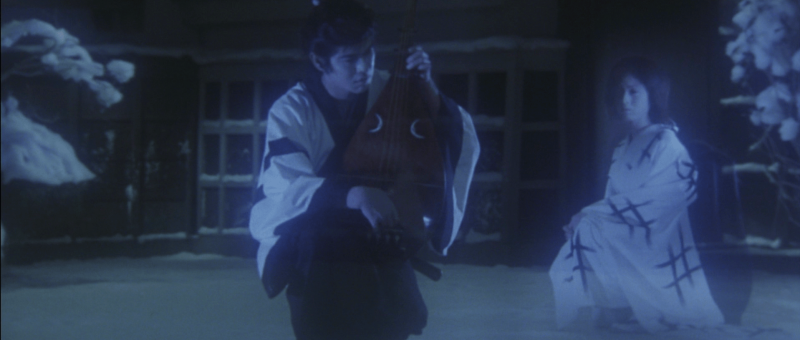
The 14th March, 1702 is a significant date in terms of the narrative in that it marks the first anniversary of the death of Lord Asano who was ordered to commit seppuku after offending another lord, Kira Kozuke-no-Suke Yoshinaka (Takahiro Tamura), leaving his house ruined and his retainers masterless. Samurai code dictates they seek revenge, but leader Oishi (Masahiko Tsugawa) suggests they bide their time leaving him and the clan open to accusations of cowardice or betrayal, mocked by peasants at the memorial service while Oishi decries their appetite for samurai drama. Enter Iemon Tamiya (Koichi Sato), antihero of the classic Yotsuya Kaidan, who had apparently joined the clan only two months before it was dissolved after years as a wandering ronin biwa player and alone has the courage to ask him if he truly has no appetite for vengeance moments after Oishi has scandalised his men by pointing out that it was Asano’s “short-temperedness” which destroyed their clan. His only answer is that it cannot be now, they must wait a year in order to prove their internal resolve. 

In marrying the two classic tales, Fukasaku directly contrasts the sublimation of the individual self into the samurai code as in the internecine nobility of the 47 ronin avenging the death of their lord knowing their own must shortly follow, and the self-serving individualism of (in this case) conflicted opportunist Iemon. Iemon has indeed been reformed by his times, becoming a thieving murderer out of desperation and misplaced filial piety after he and his father were forced into a life as itinerant biwa players on the dissolution of their clan. In most versions of the classic tale, Iemon is an ambitious sociopath who tricks his way into marrying up but loses interest in new wife Oiwa after she bears his child, later doing them both in to marry the daughter of a wealthy merchant who took a liking to him in a market square. Here, Oume (Keiko Oginome) is taken with him after he hacks the sword-bearing hand off an aggressor but unbeknownst to Iemon her father is a retainer of his sworn enemy leaving him with a double conflict, while Oiwa is a lowly bath house sex worker pregnant with a child he does not truly believe is his. 

The radical samurai had wanted to “reform our corrupt times”, but Iemon like his friend who drops out of the movement after being taken on as a successor to a hatamoto and becoming a direct retainer to the shogunate, comes to the conclusion that the times cannot be reformed and he must conform to them. If he chooses Oume, he betrays his loyalty to his lord by uniting with his rival to further his own prospects, a decision many will understand it is perhaps little more than leaving one firm for a better job at another, but it’s also an unforgivable subversion of the samurai code which drives him deeper even than the class conflict which sometimes informs his choices in Yotsuya Kaidan into a hellish spiral of greed and immorality. “The world hates your type” Oishi reminds him, “they’ll kill you, like a snake. Can you live fighting with the world for the rest of your life?” He asks, pitying Iemon for his self-destructive decision to turn away from “justice” for personal gain knowing that he will never reconcile himself to his choices nor will the world approve them. 

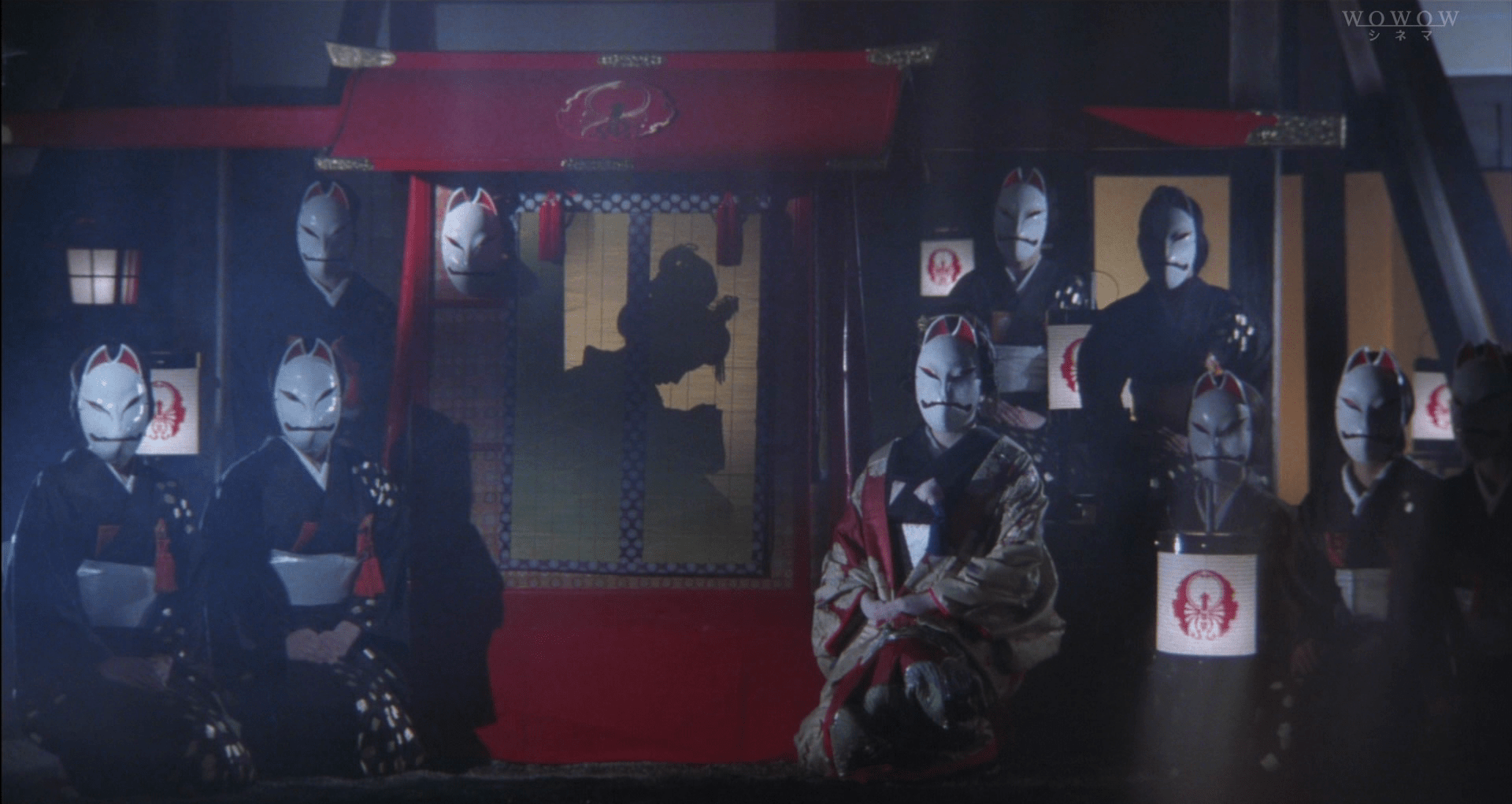
Yet as in Yotsuya Kaidan it’s not so much his latent sense of guilt that does for him as Oiwa’s curse, her ghost with its face ruined by his transgression taking its otherworldly revenge though interestingly only indirectly against him even as she provokes Iemon into destroying his chances for the secure, comfortable life he’d chosen for himself. The 47 ronin, meanwhile, continue with their righteous mission even if it’s a stretch to insist that their vengeance serves the cause of justice or is even intended to “reform these corrupt times”. Those corrupt times, Fukasaku seems to argue, forged a man like Iemon rather than the toxic masculinity, personal insecurity, or innate sociopathy which are generally ascribed to him to explain his dark deeds, and so these corrupt times of post-Bubble insecurity might create more like him. Finding the director in a noticeably expressionistic mood, opening with an ominous storm and climaxing in an unexpected, supernatural blizzard, Crest of Betrayal adopts a register of high theatricality and an etherial air of mystery culminating in a beautifully executed series of ghost effects overlaid with a watery filter but ends on a note of hopeful ambiguity in which Oiwa’s curse has perhaps been healed even if Iemon finds himself condemned, a wandering samurai for all eternity. 


Original trailer (no subtitles)

Fire Festival (火まつり, Mitsuo Yanagimachi, 1985)

By 1985 the Japanese economy was approaching its zenith yet along with increasing economic prosperity had come social change of which small-town Japan was either casualty or sacrificial victim. “Nigishima will stay as it is” declares the last holdout of an increasingly obsolete way of life in Mitsuo Yanagimachi’s intense modernity drama, Fire Festival (火まつり, Himatsuri), a manly mountain man and animalistic force of nature by several metrics unsuited to life in the contemporary society into which he is ultimately unable to progress. 

There are many things which it seems have not changed in Nigishima for generations, one being the animosity between the cohorts of its bifurcated community, those who live by land and those who live by sea. Rural depopulation may have forced them to come closer but it has also increased their sense of mistrust while both industries continue to suffer in an economy which no longer prizes their humble rural output. Despite being catapulted into a promised modernity by the advent of the railway to great fanfare in 1959, it now seems that Nigishima cannot survive without a new road which could be paid for by the development of a marine park only mountain man Tatsuo (Kinya Kitaoji) owns the property right in the middle of the earmarked area and has hitherto refused to sell further increasing the tension between the two communities. 

Tatsuo is thought of, and thinks of himself, as a big man in the area quite literally it seems as part of the reason he enjoys this status is down to his being unusually well-endowed. He believes himself to have a special relationship with the mountain goddess, often joking to the other men about having a sexual relationship with her while sometimes describing her as his girlfriend. Several times he is mistaken for an animal, firstly by the boatman bringing his childhood sweetheart and sometime mistress Kimiko (Kiwako Taichi) back to the island who assumed he was a monkey crawling along the cliff edge thoughtlessly throwing rocks at them, while he often gambols through the forest whooping like some kind of Tarzan. Entirely unreconstructed, his worldview is patriarchal and misogynistic. All of his banter with the other men is sexual, constantly referring to his penis while greeting his friends with lewd hand gestures thrusting his fist into his pocket as if waving with an erection. The cure for offending the goddess he tells his young protege Ryota (Ryota Nakamoto) is to drop his trousers and display his manhood, Tatsuo strangely believing this would appease her for taking wood from a sacred tree or killing without permission. 

Smearing the blood of a sacrificial animal over his chest and forearms he dedicates the death to the goddess, a gesture he will repeat in the film’s violent and tragic conclusion yet there is also arrogance in his conduct as if he believes himself above natural law, protected as the goddess’ favourite even as he describes himself as “suffocated” by the women in his life from his mother and five older sisters all of whom indulge him to his wife, kids, and mistresses. He has trained his dogs to hunt wild boar without the use of guns in a method he admits even other hunters describe as “cruel” while breaking a local taboo shooting monkeys in the forest well aware of nature red in tooth and claw. As such, there is little nobility to be seen in his determination to preserve this already obsolete way of life. His virility maybe contrasted with that of the ageing land broker Yamakawa (Norihei Miki) and his failed attempts to bed sex worker Kimiko who tricks him into paying off her debts, but he at least knows the way the wind is blowing explaining to her that towns such as Nigishima survive only through things like marine parks or hotels or even nuclear power plants. Without the road, the town will die. 

Yet in 1959 they were told the railway would save them and it seems it did not. Tatsuo’s love making with Kimiko in a boat borrowed from a treacherous fisherman who later agrees to sail it transgressively into sacred waters is intercut with memories of the rail line’s opening ceremony, two teenagers who might have been them or at least of around the same age ride an elephant on the jetty while the townspeople arrange themselves into the formation of the character for “celebration” captured by the aerial photographer above. For Tatsuo as a boy, was this a rebirth of Nigishima or the beginning of its demise as the coming modernity began to eat away at its foundations? 

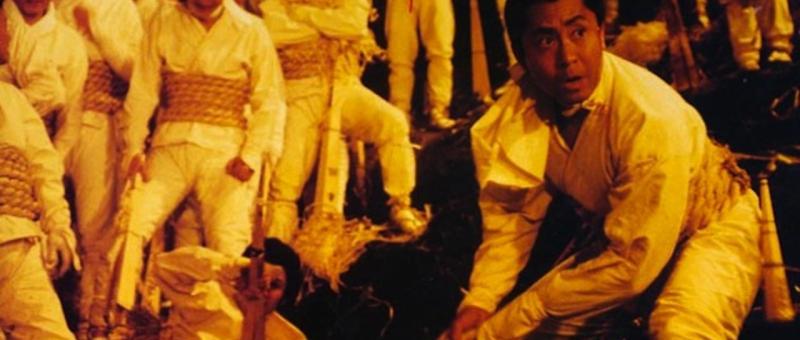
The fire festival is “for men”, according to Tatsuo, “to drive out evil spirits”, his manliness getting the better of him as he disrupts the proceedings to attack a man he accuses of having brought “false fire”. These are the lessons he teaches to surrogate son Ryota whose devotion to him borders on the homoerotic, Tatsuo cradling him during the climactic rain storm and he seeming to develop a fascination for Kimiko as a kind of indirect fixation. Ryota has learned Tatsuo’s chauvinism mimicking his lewd hand gestures and swaggering walk, his cruelty in sacrificing 1000 yen to trick Yamakawa into injuring his hand in a bear trap, and his arrogance ensuring that his problematic masculinity will survive into another generation presumably no more capable of halting the march of modernity than he has been. Tatsuo poisons the waters with fuel oil which as one of the greek chorus of fish wives points out does not catch fire, Tatsuo himself smouldering until an inevitable explosion. Receiving some kind of epiphany during a mystical congress with the goddess in the middle of a storm, he knows what he must do and accepts that he cannot progress into the modern society. Smoulderingly intense in its small-town animosity and primeval sensibilities, Yanagimachi’s poetic tragedy of futility and the broken promises of a badly distributed modernity may accept the the sacrifice but mourns it all the same. 


Fire Festival screens at the BFI on 20/27 December as part of BFI Japan.

Clip (English subtitles)

The Demon (鬼畜, Yoshitaro Nomura, 1978)

By the late 1970s Japan had achieved its economic miracle, but it had yet perhaps to deal with the traumas of the immediate post-war era. Once again adapted from a story by Seicho Matsumoto, Yoshitaro Nomura’s shocking social drama The Demon (鬼畜, Kichiku) explores the radiating effects of orphanhood and economic privation on the family unit producing as a rather judgemental policeman eventually puts it a generation of parents who don’t know how to raise children and may even lack the inclination to do so even if thankfully not to the extent of the couple at the film’s centre.

Nomura opens with one of his trademark lengthy train sequences following a harried mother and her three children travelling in the sweltering heat from the countryside to the city as she makes a last, desperate attempt to remind the father, Sokichi Takeshita (Ken Ogata), of his responsibilities. Once a successful businessman, Sokichi has become financially ruined after a fire destroyed his print shop and no longer has the means to maintain a second household for his mistress and children at a discrete distance from the home he shares with his wife, Oume (Shima Iwashita). As Kikuyo (Mayumi Ogawa) points out to him, she is unable to support herself economically while caring for the children but he has little answer for her especially once the previously oblivious Oume overhears their conversation. After a series of heated arguments, Kikuyo makes the radical decision to simply abandon the children with their father and thereafter disappears having vacated her previous home and left no forwarding address. 

A part of the problem in the Takeshitas’ marriage had been that they have no children of their own, Sokichi remarking to Kikuyo, whom he met while she was working in a traditional teahouse where he used to take clients, that he had always wanted a child. Conventional gender roles have in a sense been reversed, Oume angrily insisting that her husband would never have made any money had not been for her while it appears that she is more or less in charge of their business affairs and he is the one largely looking after the children to the extent that they are “looked after”. To Oume, the siblings are partly a reminder that her husband betrayed her with another woman but also an attack on her femininity in reminding her that she was unable to become a mother while someone else has given birth to Sokichi’s children. For all of these reasons they are to her children which cannot continue to exist. She undermines Sokichi’s attachment to them by frequently questioning their paternity pointing out that they share little physical resemblance while reminding him that he met Kikuyo through her occupation on the fringes of the sex trade. 

Her mistreatment begins as neglect, refusing to feed or bathe “a stranger’s” child and then graduates to physical violence stuffing food into the mouth of Sokichi’s infant son Shoji after catching him playing with the dinner bowls. Yet when Sokichi finds her endangering the baby while moving heavy papers from a shelf he does nothing, suspecting his wife has become a threat to the children’s safety but also as she later implies wanting to be rid of them himself. The couple could, of course, have simply surrendered the children to an orphanage (it remains unclear how exactly their existence has been registered), but ultimately choose not to as if they wanted to obliterate the idea of them as if they had never been born. 

It may be tempting to view Sokichi as a helpless victim casting Oume as terrifying Lady Macbeth intimidating him into destroying the evidence of his indiscretion, but even if it was Sokichi “looking after” the children, it is finally he who must also “take care” of them. During his abandonment of his second child, 3-year-old daughter Yoshiko (Miyuki Yoshizawa), he takes her into a toy store where a group of boys are playing with remote control cars demonstrating that this is no longer an age of economic privation and that in the end the reason for the children’s second abandonment is not primarily financial even if Sokichi has been in a sense humbled, deluded into a false sense of security in his business success only to be robbed of the era’s increasing prosperity through a freak accident. “Everybody’s struggling” he eventually reflects as his assistant (Keizo Kanie) informs him that he is leaving, ironically to take better care of his ageing parents and small children presumably in a less toxic environment.

Yet as we discover the reasons for Sokichi’s sense of displacement stem back to his own post-war childhood, apparently born out of wedlock never knowing his father and then abandoned by his mother, bounced around between relatives all of them poor who viewed him as nothing more than a burden until effectively indentured to a print shop at ten years old by an uncle who stole his advance pay and once again abandoned him. These kinds of familial disruptions whether caused by a literal orphanhood or the economic constraints of the immediate post-war period have produced according to the moralising policeman at the film’s conclusion a generation of people who do not know how to parent because they were not effectively parented themselves many of whom go on to have children perhaps accidentally but have no idea how to relate to them, frightened of the responsibility or resentful of the “burden” as Sokichi eventually seems to have become. 

Nevertheless, Nomura ends on a note of ambiguity, the goodness in eldest son Riichi (Hiroki Iwase) emphasised as he refuses to name his father or reveal his abuse, an action interpreted by the police as an attempt to protect Sokichi but could equally be a trauma response owing to have been returned to him by the police once before. In any case the film asks if in being rescued from his toxic family circumstances, effectively orphaned, Riichi will simply end up continuing the cycle of displacement, another man unable to become a “father”. But then again, what of Kikuyo who branded Sokichi “inhuman” yet left her children with him and disappeared, perhaps as a neighbour implies with another man? A sympathetic policewoman (Shinobu Otake) reassures Riichi they’ll look for his mother, but as she too abandoned him would that actually help? The jury seems to be out on whether this sense of displacement, in essence the integrity of the traditional family, can ever effectively be repaired even as an increasingly consumerist society continues to erode its foundations. 


The Demon screens at the BFI on 12/19 December as part of BFI Japan. It is also available to stream in the US via Criterion Channel.

Original trailer (no subtitles)

Muddy River (泥の河, Kohei Oguri, 1981)

The post-war era refuses to die in Kohei Oguri’s heartbreaking exploration of childhood friendship and the costs of experience, Muddy River (泥の河, Doro no Kawa). Adapted from the novel by Teru Miyamoto and situating itself in the Osaka of 1956, Oguri’s realist drama takes place at a moment of transition not only in the life of the young hero but also of the nation which was at long last beginning to leave post-war privation behind thanks to increasing economic prosperity. Yet for men like young Nobuo’s father Shinpei (Takahiro Tamura), the traumas not only of the war itself but its aftermath will not be so easy to escape. 

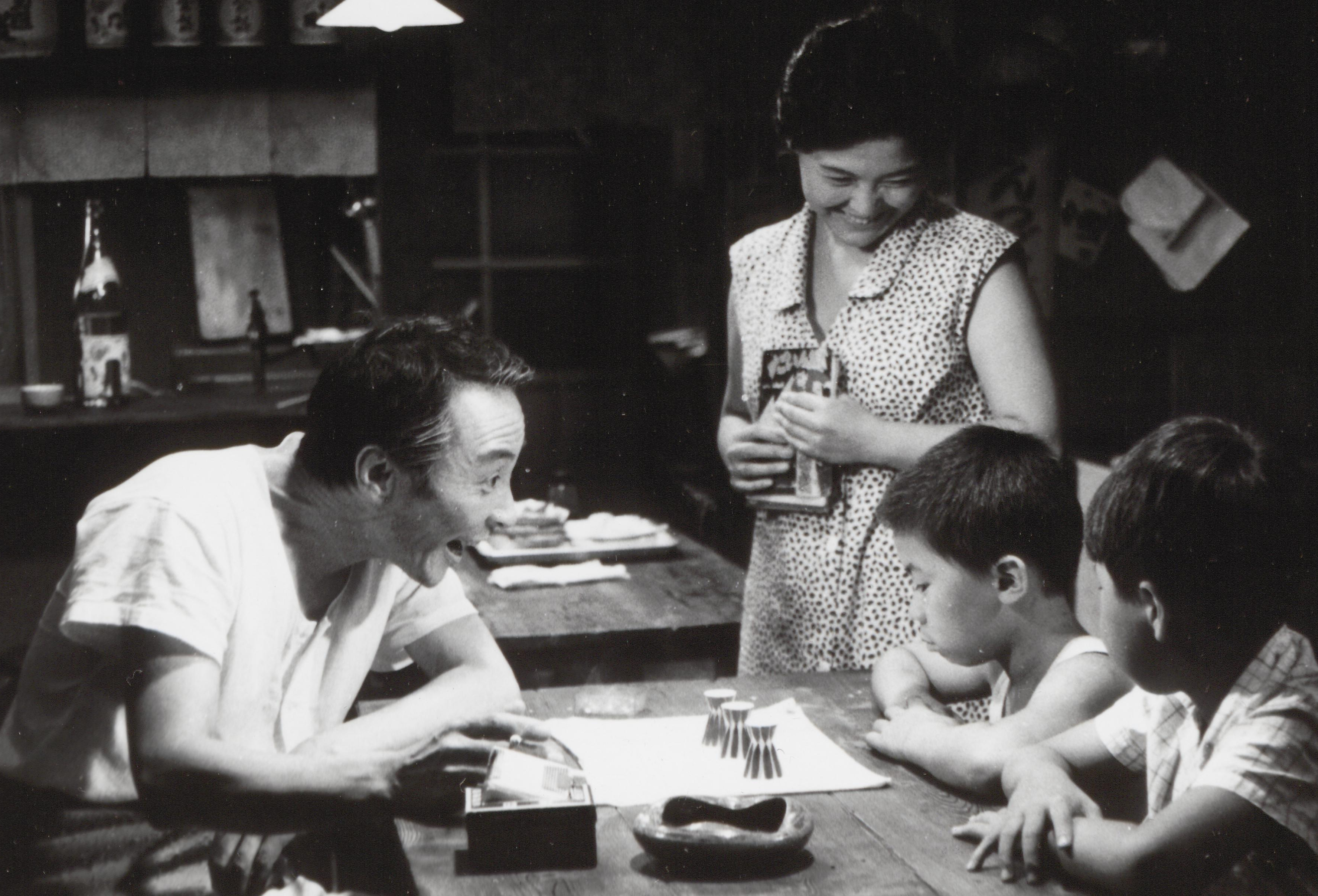
A shy child who often wets the bed, 9-year-old Nobuo (Nobutaka Asahara) lives with his parents Shinpei and Sadako (Yumiko Fujita) above a small riverside noodle bar mainly frequented by sailors and workmen such as Shioda (Gannosuke Ashiya), a regular who pulls a horse and cart for a living. Nobuo can’t stop staring at Shioda’s ruined ear, presumably a battlefield injury though the avuncular gentleman tries to raise his spirits with false cheerfulness explaining that he’s seen the writing on the wall and the days of cart pullers are coming to an end. He jokes about giving his horse to Nobuo as a pet though obviously he has no need for or ability to keep a horse, explaining that he’s going to buy a second-hand truck so he won’t be left behind in the race for modernity. Unfortunately, however, as Nobuo follows him out Shioda’s cart gets stuck in the mud. Somewhat bluntly he violently beats the horse to make him free it, but the cart ends up blocking the bridge and the horse is spooked by oncoming traffic. Crushed by his falling load, Shioda is pulled under the wheels and killed, his hopes for the future dashed while his wife and child are left without economic support. 

Emulating the visual imagery of silent cinema, Oguri frames this sequence perfectly with an inescapable anxiety that captures the inevitability of the moment. This is Nobuo’s first glimpse of death, running confused back to his father to tell him that the cart man’s dead, Shinpei at first not quite comprehending but later reflecting that he was like him another casualty of the post-war era as if his death were merely delayed remembering that he’d once said the war had already killed him and so he’d never die again. On an awkward train journey Shinpei opens a newspaper and reads that “the post-war period is over”, but of course for him it isn’t and perhaps never will be. Reflecting on the last 10 years of his life, he wonders if it was worth it, there must be many people who think it would have been better to die in the war than suffer as they did afterwards. Young Nobuo, born to him in his 40s, is his only achievement. Sadako meanwhile harbours her own guilt in feeling as if she wronged another woman with whom Shinpei had previously been involved after the war by stealing him away and building this life together in burned out Osaka which, while far from perfect, is comfortable enough and happier than most. 

That Nobuo learns for himself when he befriends another boy staring at the abandoned cart. 9-year-old Kiichi (Minoru Sakurai) and his sister Ginko (Makiko Shibata) live on a houseboat recently moored opposite, something which Nobuo finds unusual and mysterious but not itself bad. Still innocent and too young to have incorporated moral judgement, Nobuo simply befriends the other boy bonding over a strange tale of a monstrous carp in the river though perhaps also feeling sorry for him on noticing his ragged clothes and the holes in his shoes. On visiting their houseboat, he only hears only the voice of Kiichi’s mother Shoko (Mariko Kaga) a mysterious disembodied presence who lives in a separate area of the boat accessible only via a different entrance. When she instructs Kiichi to give him some raw sugar and tell him not to come back too often, he takes it that he’s unwanted later confused when his father tells him that it’s fine for his new friends to visit but he shouldn’t go near the boat after dark. 

Understanding people, neither Shinpei or Sadako, instantly grasping the situation, reject the family because of the stigma of sex work realising that people do what they have to to survive and in any case it isn’t the children’s fault or responsibility. On hearing Kiichi enthusiastically singing an old imperial song about losing friends in Manchuria, Shinpei begins to feel a kinship with his late father as another old soldier claimed by the muddy river of the post-war society. Like the cart man, and an old fisherman Nobuo witnessed “disappear” from his boat never to be seen again, he was simply a casualty of the times one of many unable to enter the new society promised by rising economic prosperity. Shinpei fears he may also be one of these men, left behind unable to break free of wartime survivor’s guilt and the traumas of what came afterwards. He also disappears from his son’s life abruptly and without warning if only temporarily, but accidentally deserts him at the time he needs him most allowing his fragile new friendship to fracture as the two boys fatefully return to the boat after dark and Nobuo encounters a loss of innocence on several levels Kiichi realising that something is now broken between them. 

Something is perhaps broken in the times, the end of Nobuo’s childhood coinciding with the the dawning of a new era free of post-war privation but one that also threatens to leave those who can’t catch up to it behind Kiichi’s boat bound for further down the river while Nobuo remains firmly on land his own foundation perhaps more secure now that his father has exorcised some of guilt over the recent past. Shot with a nostalgic realism in black and white and in academy ratio, Oguri’s quietly devastating drama sets one boy’s loss of innocence against the lingering affects of another as the adults all around him struggle to acclimatise themselves to a changing society but all he sees is the muddy river flowing past him taking his friend away because he saw something he shouldn’t have leaving him with nothing but sorrow and loneliness on the other side of an unbreachable divide. 


Muddy River screens at the BFI on 12/23 December as part of BFI Japan.

Opening sequence

A Chaos of Flowers (華の乱, Kinji Fukasaku, 1988)

Kinji Fukasaku is best remembered for his work in the yakuza genre and most particularly the Battles Without Honour cycles which chronicled the darkness beneath Japan’s progress towards the economic miracle of the post-war era. He was, however, much more varied in output than it might at first seem. Set before the war, A Chaos of Flowers (華の乱, Hana no Ran) positions the great Kanto Earthquake of 1923 as the day innocence died, Taisho-era liberalism crushed in a fundamental collapse of the old world which led only to the intensification of militaristic ideology and the subsequent corruption of Japanese imperialism. 

Our guide is legendary poet Akiko Yosano (Sayuri Yoshinaga) who tells the story of pre-war 20th century Japan by recounting her own which begins in 1901 when she fell in love with fellow poet and later husband, Tekkan (Hiroshi) Yosano (Ken Ogata). The situation is complicated firstly because Hiroshi is already married with an infant daughter, and secondly because Akiko’s friend Tomiko (Yoshiko Nakada), another poet who had worked with her on a feminist journal, was also in love with Hiroshi and perhaps her rival. Akiko tricks Hiroshi into seeing him alone on the pretext that Tomiko is coming too, confessing her feelings and discovering that he plans to divorce his wife because she is unsupportive of his work. Full in the knowledge that he is choosing poetry over his daughter, Hiroshi decides to enter a relationship with Akiko because she, as a fellow poet, is more appreciative though it proves harder than expected to separate from his first wife. In any case, Akiko is left with a sense of guilt which continues throughout her married life that she cheated Tomiko to claim Hiroshi. 

During this time, Akiko Yosano becomes one of the most celebrated yet controversial young poets in Japan well known for her explicit, erotic love poetry much of which was inspired by her husband. She has eclipsed him as an artist and is supporting the family while he has fallen into a deep depression. A mother of 13 children, Akiko has begun to feel lonely in her marriage and wonders if someone who has only known one man has the authority to continue writing tracts about love and sex. Meanwhile, thanks to the admiration her poetry has received among the young radicals, she has become an accidental figurehead for the Taisho radicals and finds herself swept up by the movement through her associations with such avant-garde figures as Sakae Osugi (Morio Kazama) and his wife Noe Ito (Eri Ishida), the actress Sumako Matsui (Keiko Matsuzaka) held responsible for a revolution in Japanese theatre, and finally tragic author Takeo Arishima (Yusaku Matsuda) who was also the father of golden age actor Masayuki Mori. 

Arishima is first struck by Akiko when knocks her out of a rickshaw during an anarchist publicity stunt driving a motorcycle and sidecar around outside the theatre where Sumako Matsui is performing one of her most famous roles in a play inspired by Tolstoy’s Resurrection. It turns out that Akiko bears a striking resemblance to his late wife, which is one reason he sends her an extravagant gift of a beautiful Western-style outfit which she first tries to return partly because she only wears kimono and partly because it’s an inappropriately expensive gesture. Arishima is from a wealthy, landed family and like many of his generation uncomfortable with his privilege but struggling to convince himself to abandon it. Drawn to him in the same way she was drawn to Hiroshi, Akiko accepts the dress and later wears it on a picnic she organises where her children and Arisihma’s two sons can play together. The Western clothing becomes a kind of signifier of Akiko’s drive towards the future and away from her husband as she too despite her feminist perspective struggles to free herself of the image of the good wife while inwardly burning with a desire for love and passion which her husband can no longer satisfy. 

That same dilemma is one which plagues her rival, journalist Akiko Hatano (Kimiko Ikegami) who is already involved with Arishima but married to a patriarchal man who sees her as nothing more than a “doll”, something which is supposed to look pretty and live in its box until he chooses to take it out. Akiko Hatano warns Akiko Yosano that Arishima is a man drawn to death and is merely looking for someone to die with in a lovers’ suicide, something of a fad at the time. In meeting Akiko Yosano, however, his desire for life seems to have been reinvigorated. He makes peace with himself by dissolving his estate in Hokkaido and surrendering control of it to a peasants’ committee, but is thrown again into suicidal despair when the secret police turn up to harass the peasants for undermining the social order. 

As Akiko Hatano puts it, Arishima is a man vacillating between life and death, claiming to be in love with Akiko Yosano soon after meeting her and actively rejecting Akiko Hatano as symbolic of his newfound desire to live. Arishima committed a love suicide with Akiko Hatano on 9th June, 1923 which is only a few months before the Great Kanto Earthquake which devastated the city of Tokyo and enabled a roundup of subversive forces such as socialists and anarchists along with Koreans many of whom were massacred by state sanctioned forces after a false rumour circulated that they had been poisoning the wells and preparing an insurrection for Korean independence (Sakae Osugi and Noe Ito along with their 6-year-old nephew were also victims of this pogrom). 

In her voice over, Akiko describes the earthquake as the death of Taisho which in real terms lasted a few more years until 1926, but was perhaps over as far as its liberalising ideals are concerned, the crisis giving the militarists further excuses to increase their powers. Yet like Arishima the Taisho intellectuals had also been obsessed with death and futility of which the love suicides were a part. Arishima, shortly before witnessing Sumako’s very public breakdown over the death of her lover Hogetsu Shimamura (Keizo Kanie) from Spanish Flu, describes her nothing more than a ham actress but also believes that the theatrical revolution of the Taisho era would not have been possible without her. Sumako also committed suicide for love a few months after Hogetsu’s death, unable to go on without him. Tomiko, Akiko’s old friend, contracted TB and painfully faded away with Hiroshi unexpectedly by her side. Catching sight of a couple of Osugi’s comrades being dragged away after the earthquake Akiko chases after them with rice balls, telling them they must survive. She’s watched many of her friends and the finest minds of her generation die, mostly through choice, and is making an active choice to live. 

In essence this choice may not be as positive as it first sounds. One of Japan’s first avowed pacifists, Akiko Yosano turned increasingly towards the right in the years following the earthquake, eventually becoming an enthusiastic supporter of the war in China and actively subverting the words of her previous poems in insisting it was glorious to die for the emperor after all. Her friends died out of a sense of futility, that the social changes they envisaged were not possible or that they were unable to continue living with themselves in such a society. Society changed, and Akiko changed with it, such was the path she found to continue living. Nevertheless, something did die with the earthquake and it was perhaps those youthful dreams of overwhelming romance crushed like Akiko’s hat in the rubble of a world which was already collapsing. 


Original trailer (no subtitles)

Distant Thunder (遠雷, Kichitaro Negishi, 1981)

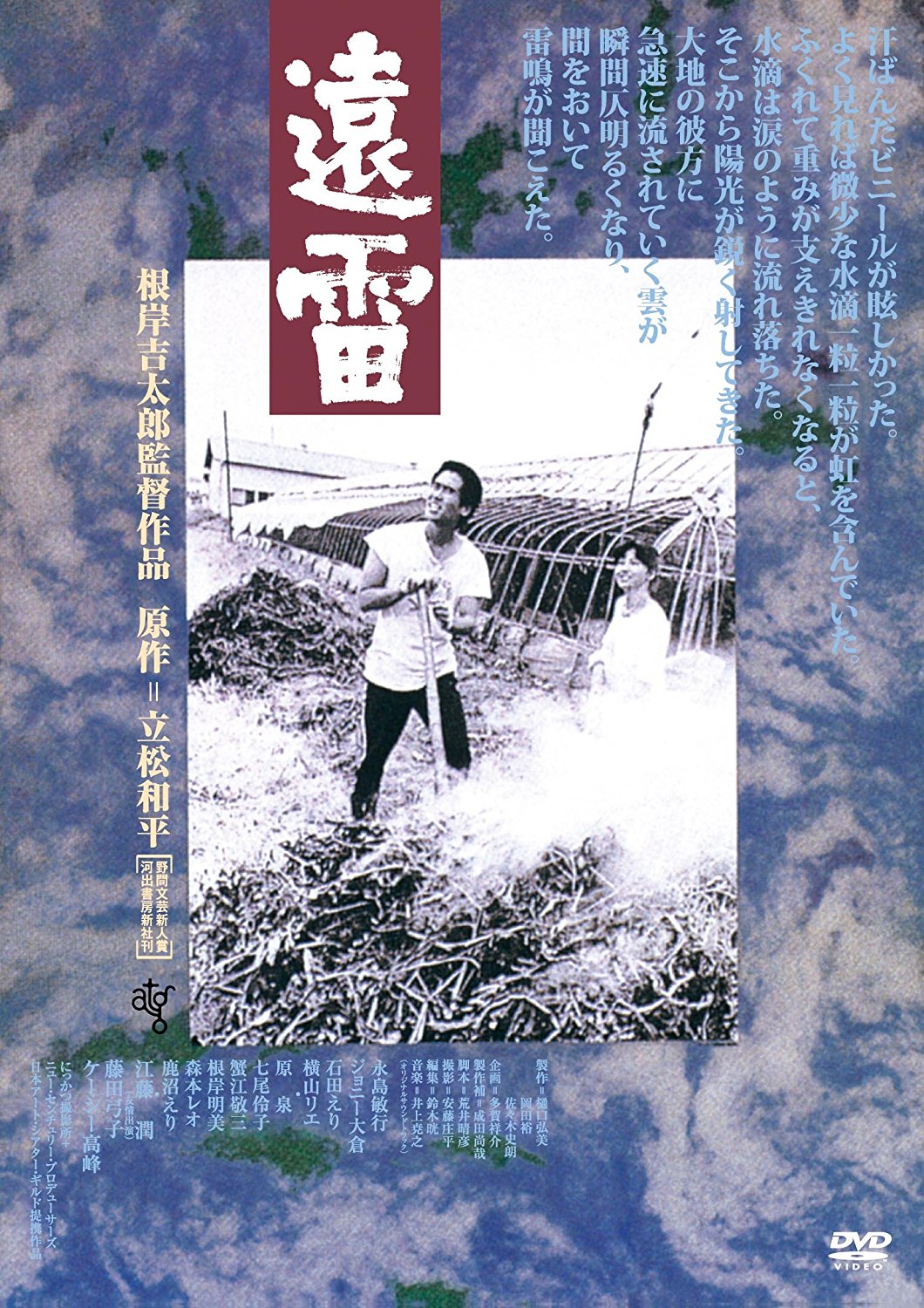
distant thunder dvd coverBy 1981 Japan’s economic recovery was more or less complete and the consumerist future had all but arrived. Based on the novel by Wahei Tatematsu, Distant Thunder (遠雷, Enrai) is the story of impending doom staved off by those clinging fast to the their ancestral traditions even whilst the modern world threatens to engulf them. Kichitaro Negishi already had a long career directing Nikkatsu’s Roman Porno, but made his mainstream debut with this quietly affecting social drama for Art Theatre Guild which relies on the strong performances of its cast to convey the subtitles of youth caught between past and future.

In the contemporary world of 1981, 23-year-old Mitsuo (Toshiyuki Nagashima) is a tomato farmer stubbornly hanging on to his family’s ancestral land which happens to be inconveniently placed in the middle of a modern housing complex. Women from the estate sometimes pop round to ogle Mitsuo under the pretext of buying super fresh tomatoes. Mitsuo is happy for them to enjoy the fruits of his labour, but refuses to accept them as “neighbours” lamenting the death of the village in which he grew up.

It transpires that Mitsuo’s father (Casey Takamine) sold off most of the farmland without consulting the rest of the family and used the proceeds to open a bar with the hostess he ran off with. Mitsuo hasn’t forgiven him for this and continues to work the tomatoes alone while his older brother is married and living a modern salaryman life in the city. At 23 it’s high time Mituso got himself a wife, but a flirtation with a barmaid, Kaede (Rie Yokoyama), who claims to be a divorced single parent proves diverting enough for the time being. Mitsuo knows being a farmer’s wife is no prize, so when his mother comes up with a possible match Mitsuo thinks it’s worth a try even if she’s probably none too pretty.

An old soul in many ways, Mitsuo wants to hang on to his family’s farm despite the constant offers he gets from salesmen at the door who want him to sell. Where once there was a village, now there are high rise apartment blocks. Mitsuo misses the world he grew up in where farmers helped each other out in difficult times and wandered in and out of each other’s houses like one big happy family. Not content with ruining his own, it’s also this wider concept of community as family that Mitsuo’s father has ruined for him in rejecting his traditional responsibilities for the irresponsible pleasures of taking up with a fancy woman and starting again as a bar owner.

Sadly, the bar hostess really does seem to love Mitsuo’s feckless father, perhaps seeing him as her last chance for happiness. Kaede, by contrast, is looking for something far less permanent. She claims to be divorced but is married to a mild-mannered man (Keizo Kanie) with a tattoo poking out of his collar who accepts her need for new conquests but would rather they not become regular arrangements. Kaede whips up more potential destruction when she comes between Mitsuo and his childhood best friend, Koji (Johnny Okura), who also likes her and has been led to believe Kaede’s relationship with Mitsuo was not altogether consensual. Meanwhile, Mitsuo’s blind date went far better than expected and it looks like he’s on course to find a wife in petrol station assistant Ayako (Eri Ishida).

Ayako, like Mitsuo, is a more old fashioned sort though she’s no prude and is of an earthier yet somehow “purer” nature than the comparatively urban Kaede. Mitsuo finds himself pulled in different directions – Ayako and the tomato farm, or the freely given pleasures of Kaede who threatens to burn everything to the ground with her mysterious, self destructive lifestyle. Mitsuo doesn’t want to be like his dad – a philanderer who runs out on his responsibilities and makes a fool of himself in the process, cosying up to local politicians and playing fast and loose with the law, but he’s late to see the danger a woman like Kaede might cause him. His friend, Koji, is not quite so perceptive and naively falls for her charms. Mitsuo knows deep down that his friend has in a sense saved him from making a ruinous life decision and helped him rediscover the happiness of his traditional, simple way of life.

Filming in 4:3, Negishi’s camera is soft and unobtrusive yet pointed, capturing the minor details of the everyday with a poetic beauty. Filled with realistic detail and anchored by strong performances, Distant Thunder is both a picture of innocents battling the inevitable death of their way of life with determination and purity, and a document of changing times in which the confusions of the modern world threaten to destroy those who cannot reconcile themselves to their fated paths.


Short clip from the ending (English subtitles)

Play (遊び, Yasuzo Masumura, 1971)

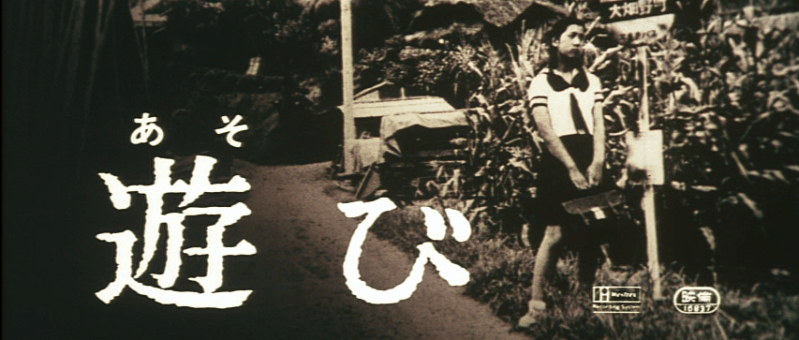
5a4a5621a8387Yasuzo Masumura is most often associated with the eroticism and grotesquery which marked the middle part of his career, but his beginnings as a regular studio director at Daiei are a more cheerful affair even if darker in tone and with additional bite. His debut, 1957’s Kisses, was an unusual youth drama for the time – an innocent romance between a naive boy and girl who meet when each of their parents is languishing in jail. Far from the tragic conclusion of Ko Nakahira’s Crazed Fruit, Masumura offers his youngsters a degree of hope and the possibility, at least, of a happy ending. Daiei would go bust in 1971, and so it’s a minor irony that Masumura would revisit a similar theme towards the end of his tenure at the studio. Play (遊び, Asobi, AKA Play With Fire / Games), inspired by Akiyuki Nosaka’s novel, is another tale of youthful romance threatened by a harsh society, but this time around Masumura is not quite so hopeful.

A 16 year old (unnamed) girl has become the main breadwinner for her mother and bedridden older sister following the death of her father, formerly a violent drunk. Having had to leave school, she has a full-time job at an electronics factory where she lives in the company dorm along with a number of other female employees, most of whom are a few years older than she is. The girl is an earnest sort, she resents her mother’s constant pestering of her for money, but she sends her pay checks home keeping only enough to keep herself fed and clothed.

When an older woman, Yoshiko, who works as a “hostess” in one of the local cabaret bars comes to visit, she does so dressed to the nines with a handsome man sporting fancy sunglasses and porting a selection of upscale cakes. Yoshiko sells the virtues of life in the clubs, talking about the money to be made by having fun while the naive gaggle of young women remain in awe of her confidence, poise, and fancy haircut. In desperate need of money, the girl considers Yoshiko’s suggestion which is what brings her into contact with the (unnamed) boy (Masaaki Daimon).

The boy is 18 and pretends to be more worldly wise than he really is. He offers to show the girl around the cabaret scene, though he discourages her from working there. Taking her out and around town, the boy charms the girl though he has a dark and ulterior motive. The boy is a petty yakuza for a gang whose main stock in trade is pulling girls off the street and raping them for reasons of both blackmail and forced prostitution.

Owing to her young age and bad experience with her father who was often drunk and violent, the girl has steered clear of men. The other girls make fun of her for not having a boyfriend, not wearing make up, and for being “good” in sending all her money home. The girl isn’t really interested in the same kind of fun loving life as the more jaded of the factory girls – especially when she sees them roll in drunk boasting about the bruises on their skin from a night of debauchery, or even staggering back crying with a dress torn to shreds after being violently assaulted (perhaps by the same kind of yakuza thugs that will shortly target her). Despite the harshness of her life, she remains naive and innocent, concerned for her mother and invalid sister who have only her to depend on.

The boy is in a similar situation, though far less keen to confess it. Also let down by a drunken, promiscuous mother, he’s found himself in a gang desperate for the approval of his new “big brother”. Though he reacts with horror to the gang’s main stock in trade, he does not try to stop it even if he stops short of rape himself, but continues to assist in trapping the girls whilst fully aware of what will happen to them.

Coming from a harsh world, the boy has never met anyone as earnest or as naive as the girl and her goodness starts to reawaken something in him. Likewise, the girl, unaware of the boy’s true purpose, has never met anyone that was so immediately nice to her – her fear of men and alcohol dissipates as she (mistakenly, or perhaps not) believes she has met someone truly good and kind who only wants to help her. The girl does not belong in the boy’s world of sleazy clubs and youth haunts but bears them well enough for him. The boy recognises the incongruity and takes her somewhere else, still conflicted in his true purpose of delivering her to the dingy love hotel where his boss conducts his illicit trade.

The boy and the girl are innocents corrupted by their environments. Let down by irresponsible parenting (perhaps also a symptom of the difficulties of the society they live in), the pair remain trapped, dreaming of freedom and happiness but seeing no way of finding them. Deciding to make a break for it, leave their respective disappointing families far behind, the boy and the girl sail away. Their boat is full of holes, but they refuse to be beaten, committing to forge ahead together they swim towards the sea and an uncertain but hopeful future.


Title sequence (no subtitles)

Hanzo the Razor: Who’s Got the Gold? (御用牙 鬼の半蔵やわ肌小判, Yoshio Inoue, 1974)

Hanzo the razor who's got the gold posterAll things must come to an end, and so the third instalment in the Hanzo the Razor series, Who’s Got the Gold? (御用牙 鬼の半蔵やわ肌小判, Goyokiba: Oni no Hanzo yawahada koban) is the last. To be frank the central tenet is wearing a bit thin (not least because Hanzo’s been bashing away at it with a mallet for the last two movies), and though scripted by the previous film’s director, Yasuzo Masumura, direction has been handed to the less experienced studio director Yoshio Inoue. Consequently, Who’s Got the Gold? is the most obviously parodic entry in the series, camping it up in grand style as Hanzo (Shintaro Katsu) goes after a more obvious kind of vice in the form of greedy, entitled lords, corrupt priesthood, and a nation too obsessed with its past to survive in a rapidly modernising era.

Inoue opts for a purely theatrical opening as Hanzo’s two ex-con underlings, Devil and Viper, enjoy a spot of night fishing whilst dreaming about having enough money to head to the red light district. They get the fright of their lives when they think they see a creepy ghost woman emerging from the lake. Being Devil and Viper they panic and run home screaming to report this terrifying incident to their brave protector Hanzo. Hanzo is in the middle of his usual “tool polishing” routine but fancies paying a visit this mysterious lake because, well, it might be fun to try having sex with a ghost for once. Devil and Viper are very confused by this idea, but it’s par for the course with Hanzo and so off they go.

Of course, the ghost lady is not a real ghost so only part of Hanzo’s lusts are satisfied as he performs his normal sort of “special torture” on her and finds out that she’s part of an ongoing scam in which treasury officials have been skimming off some of the gold they’re supposed to be protecting. Sadly, Hanzo’s investigations hit a snag when the woman’s husband turns up and kills her for having been raped by Hanzo before promptly getting killed himself.

Hanzo does not approve of any of these goings on and fully intended to arrest the treasury officers if only they hadn’t gone and died first. Accordingly he reports all of this to his superiors but advises against prosecutions because he sympathises with the difficult position these men found themselves in. Being a samurai is not cheap and these lowly jobs are very badly paid – how are you supposed to maintain your house to the manner required without resorting to extreme measures when your lord is snaffling all the money and not paying his retainers what they’re owed. It will not come as a surprise that the lord didn’t want to hear this, and so Hanzo marks his card. It didn’t really help that Hanzo’s walk into the castle involved running a gauntlet of unfortunate samurai forced to kneel along the path all day just hoping that the lord would show them some favour. Among them was a old friend of Hanzo’s who receives a tactless offer of fixed employment if only he will give up a family heirloom that the lord has been admiring.

The gold smuggling subplot runs in parallel with another problem – a doctor whom the lord has ordered Hanzo to arrest because he was advocating the adoption of Western technologies, fearing that the nation was leaving itself dangerously vulnerable if it refused to modernise. The doctor, like the girl’s father in the first film, is dying of a terminal illness and so Hanzo thinks the sentence can wait. Hiding the doctor in his house he listens to his ideas and then comes to the same conclusion, allowing him to finish building a cannon to prove to the lord just how destructive these new weapons really are and just how dangerous it would be to fight them with only katanas and samurai spirit. Hanzo lives in interesting times, but this dilemma says something both about the precarious position of the samurai order in the face of increasing modernisation and about the 1970s background in which a small war was currently being waged against American imperialism.

As usual Hanzo refuses to bow. He will not give in to bullies or those who abuse their authority to add additional oppression onto an already oppressed populace which he has pledged his life to protecting. The contradiction of being a rapist so well endowed that afterwards no one seems to mind has still not been solved, but by this third instalment in the series the “joke” is so well worn as to receive little attention. Who’s Got the Gold? is weakest of the three adventures for Hanzo and his well conditioned razor but it has its charms, if only in the troublingly easy way that its central conceit has become so essentially normalised as to be barely noticed.


Original trailer (no subtitles)

https://www.youtube.com/watch?v=S4lQYgAAEr8