 Review of Korean animation Kai (카이 : 거울 호수의 전설, Kai: Geowool Hosueui Jeonseol) first published by UK Anime Network.
Hans Christian Andersen’s classic fairy tale, The Snow Queen, has inspired a great number of animated classics with Disney’s Frozen not least among them. This Korean take shifts the action to the nomadic tribes of Mongolia and a young boy who failed to save his sister from a tragic accident only to see her fall into the clutches of an evil magician. Kai comes with a solid pedigree as it’s produced by one of the country’s leading animation lights in Yeon Sang-ho (King of Pigs, The Fake) and helmed by another successful director Lee Sung-gang (Yobi, The Five Tailed Fox), yet despite all of its advantages Kai still suffers from many of the same problems which continually plague Korean animation including noticeably low production values and an inability to move beyond children’s animation.
Beginning with a brief narrative voiceover detailing the origin story of the Snow Queen Hattan, the action then shifts to a convoy of nomads in Mongolia attempting to traverse a mountain in heavy snow. Youngster Kai is travelling with his family but quickly gets into trouble. Despite his mother’s desperate attempt to save both her children, only Kai is rescued with his sister Shamui falling into the snow below.
Years pass and Kai and his mother try to make a life for themselves, little knowing that Shamui is still alive but a prisoner of the Snow Queen Hatton. When Kai’s village begins to grow strangely cold, the villagers come to the realisation that the Snow Queen is back and trying to freeze the whole land. Kai, being the headstrong young man he is, decides to fight the supernatural threat all by himself entirely unaware that he is partly to blame for everything that’s going on.
Towards the end of his quest, Kai comes across a girl his sister’s age but fails to recognise his missing sibling owing to the intervening few years. Meeting again, she tells him her name is “Atta” which means “grudge” – a strange name to give a baby girl, still Kai is not the sharpest knife in the drawer and doesn’t even figure anything out when she tells him about her resentment towards the family she believes abandoned her. As in the original story, the Snow Queen seduces rather than bewitches Shamui through her emotional insecurity. Hurt and fearful, Shamui is easily taken in by the cold hearted witch who promises her protection and vengeance, even if rejecting familial warmth. The Snow Queen is not all ice as her loneliness dictates, though her inability to connect forces her to steal rather than earn loyalty as distinct from affection.
With younger audiences in mind Lee opts for a lighter tone than might be expected, moving away from the darker elements with cutesy forest folk complete with adorable spirit creatures and jovial childish rivalry between Kai and the woodland children. Though these episodes are enjoyable enough, they do detract from the overall narrative as Kai’s battle for the Snow Queen’s soul takes a back seat to the antics of a cheerful squirrel. Nevertheless, it all helps to lighten the mood even if it means that the story lacks depth as a consequence.
Kai is undoubtedly technically proficient and occasionally ambitious but also suffers from an obvious lack of production values. The TV quality animation will be turn off to those expecting a Studio Ghibli level of visual opulence but is of a fairly high standard given its limitations. Kai’s biggest problem lies in making its central battle engaging given its unwillingness to embrace the darker elements of its story in which unresolved negative emotions fester until they become infectious, forcing injured people to injure others in a mistaken attempt to heal themselves. Playing best to its target audience of younger viewers, Kai is likely to frustrate those watching with them but does offer a new take on a classic tale and enough cute characters to keep the little ones occupied.
Reviewed at the 2016 London Korean Film Festival.
Original trailer (Korean subtitles only)
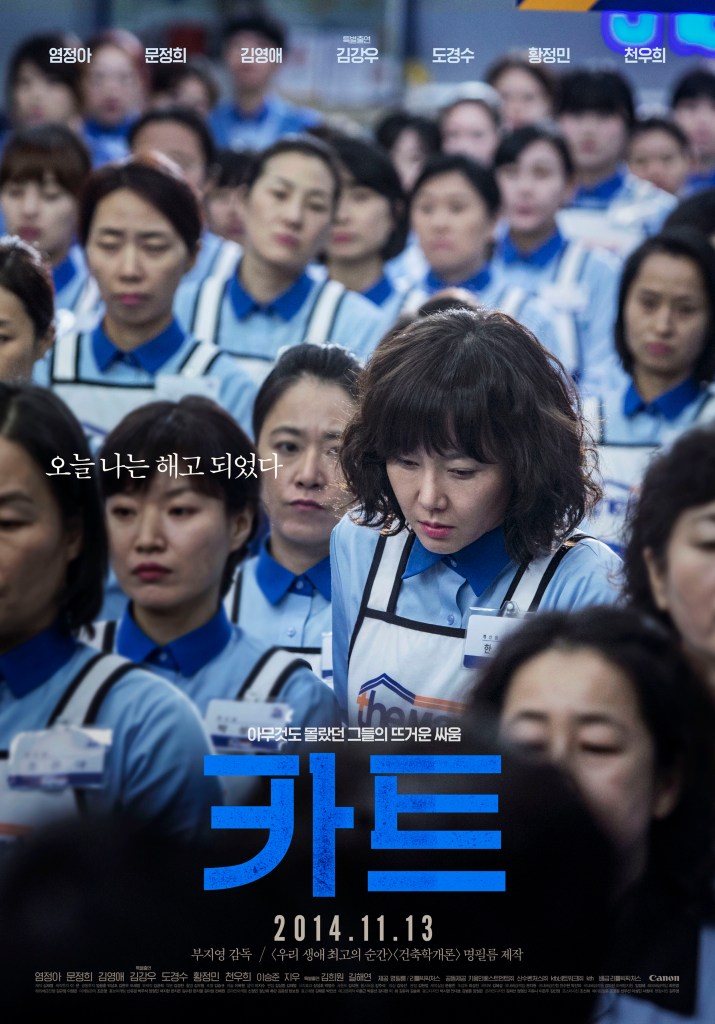 Up until very recently, many of us lucky enough to live in nations with entrenched labour laws have had the luxury of taking them for granted. Mandated breaks, holidays, sick pay, strictly regulated working hours and overtime directives – we know our rights, and when we feel they’re being infringed we can go to our union representatives or a government ombudsman to get our grievances heard. If they won’t listen, we have the right to strike. Anyone who’s been paying attention to recent Korean cinema will know that this is not the case everywhere and even trying to join a union can not only lead to charges of communism and loss of employment but effective blacklisting too. Cart (카트), inspired by real events, is the story of one group of women’s attempt to fight back against an absurdly arbitrary and cruel system which forces them to accept constant mistreatment only to treat their contractual agreements with cavalier contempt.
 The history of LGBT cinema in Korea is admittedly thin though recent years have seen an increase in big screen representation with an interest in exploring the reality rather than indulging in stereotypes. The debut feature from Lee Hyun-ju, Our Love Story (연애담, Yeonaedam), is among the first to chart the course of an ordinary romance between two women with all of the everyday drama that modern love entails. A beautiful, bittersweet tale of frustrated connection, Our Love Story is a realistic look at messy first love taking place under the snowy skies of Seoul.
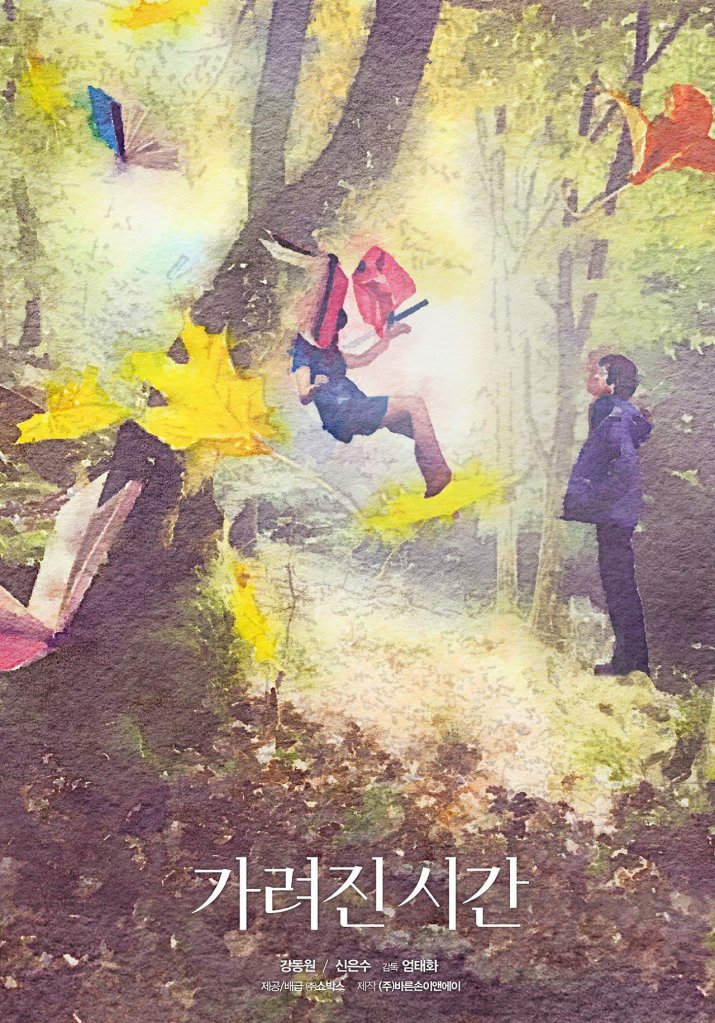 When no time passes, does anything change? Yes, and then again, no, if Um Tae-hwa’s Vanishing Time: A Boy Who Returned (가려진 시간, Garyeojin Shigan) is to be believed. Dealing with the nature of time, connection, and faith Um’s film is a supernaturally tinged fairytale which never seriously entertains the more rational explanation offered by the naysayers, but is filled with the innocence of childhood and the essential naivety of adolescence. Melancholy, though somehow uplifting, Vanishing Time neatly avoids the pitfalls of romantic melodrama for a genuinely affecting coming of age story as its heroine is forced to make peace with her traumatic past through accepting the loss and sacrifice of her present.
 Do you know Hong Sang-soo? So asks the heroine of Miss Ex (비치온더비치, Bitch on the Beach) as part of her nefarious mission to win back her childhood sweetheart. Unfortunately, his reply is to ask if he directed The Host, so Ga-young (Jeong Ga-young) is out of luck with her Dark Knight loving former love, but possibly in luck with us as her movie obsessed ramblings and strange stories about accidental AIDS tests during wisdom tooth extractions continue to dominate the screen for the next 90 minutes. Divided into three chapters and filmed in an oddly colourful black and white, director and leading actress’ Jeong Ga-young’s debut feature channels Hong Sang-soo by way of Woody Allen and the French New Wave but may prove funnier than all three put together.
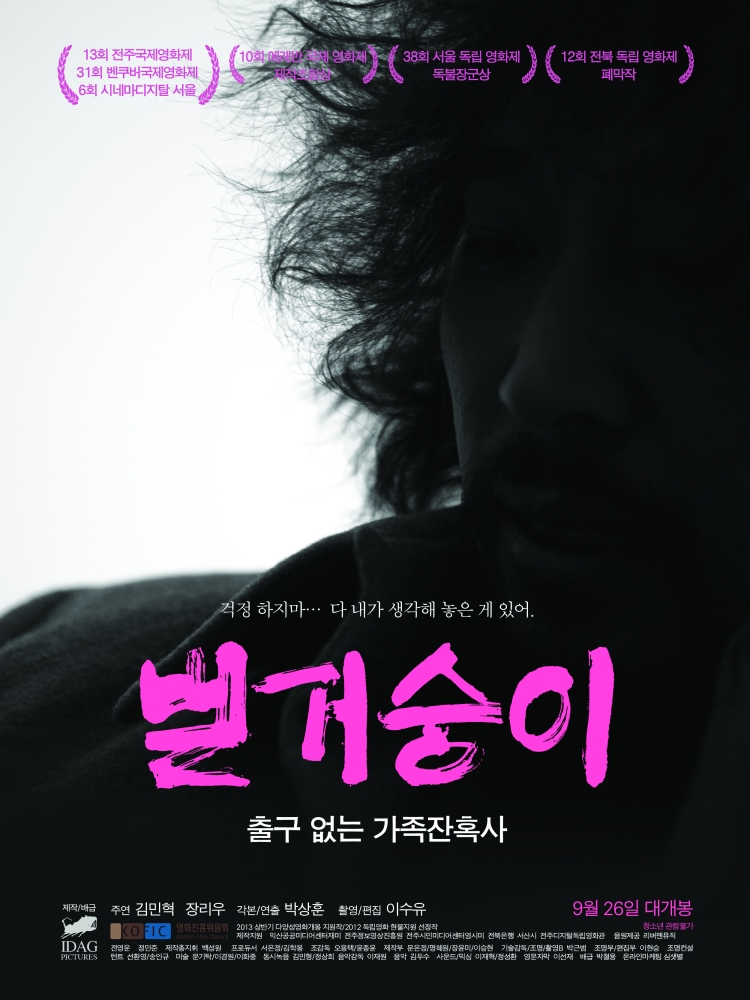 Anyone who follows Korean cinema will have noticed that Korean films often have a much bleaker point of view than those of other countries. Nevertheless it would be difficult to find one quite as unrelentingly dismal as A Mere Life (벌거숭이, Beolgeosungi). Encompassing all of human misery from the false support of family, marital discord, money worries, and the heartlessness of con men, A Mere Life throws just about everything it can at its everyman protagonist who finds himself trapped in a well of despair that not even death can save him from.

 Review of Byun Young-joo’s Helpless (화차, Hwacha) first published by
 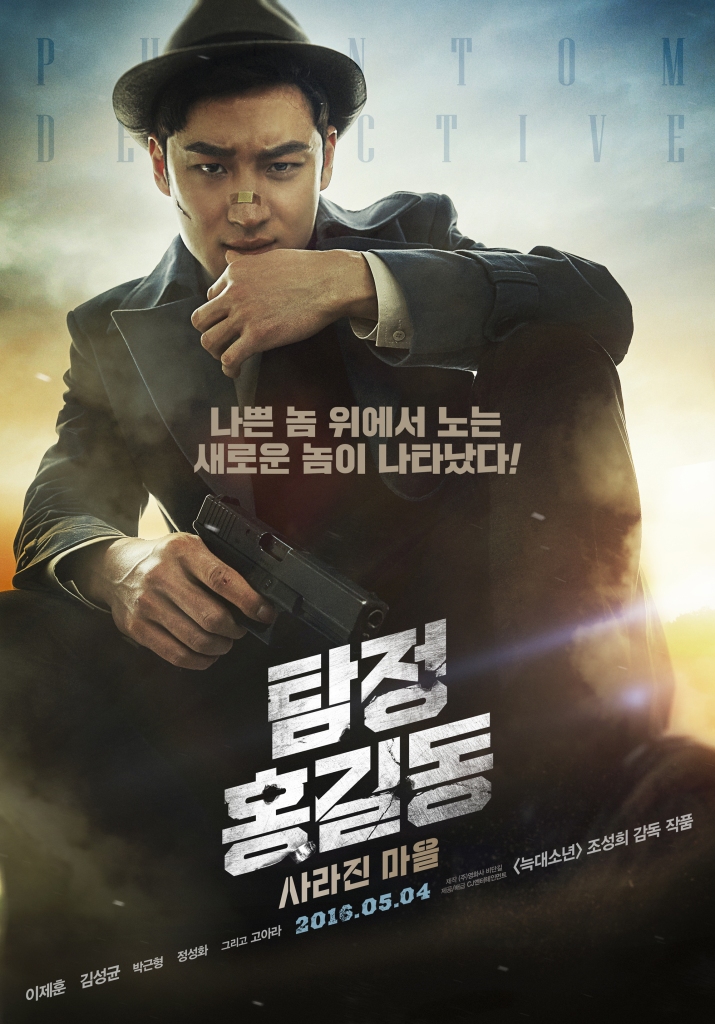 Review of Jo Sung-hee’s The Phantom Detective (탐정 홍길동: 사라진 마을, Tamjung Honggildong: Sarajin Maeul) first published by

