The Man Without a Map (燃えつきた地図, Hiroshi Teshigahara, 1968)

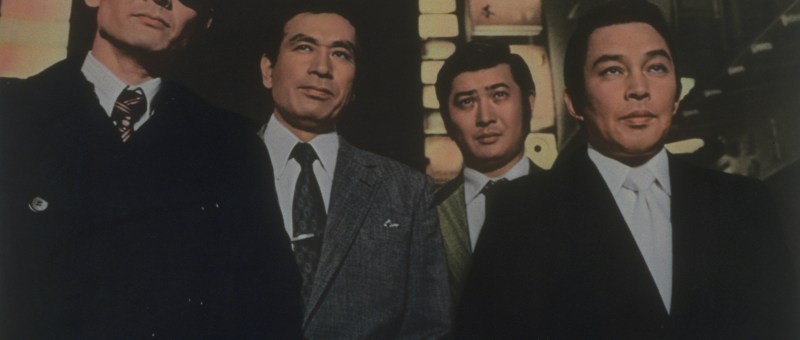
Hired to find a missing person no one really wants found, a detective begins to chase his own tail amid the impersonal vistas of the contemporary city in Hiroshi Teshigahara’s The Man Without a Map (燃えつきた地図, Moetsukita chizu). The fourth and final in his series of Kobo Abe adaptations and the only one in colour, the film’s Japanese title “burned-up map” may also, in its way, refer to the city of Tokyo which appears blurred out and indistinct in the sepia-tinted opening and is thereafter frequently shot from above as a depersonalised space where anonymous cars shuttle along highways like so many ants moving in rhythm with the momentum of the metropolis.

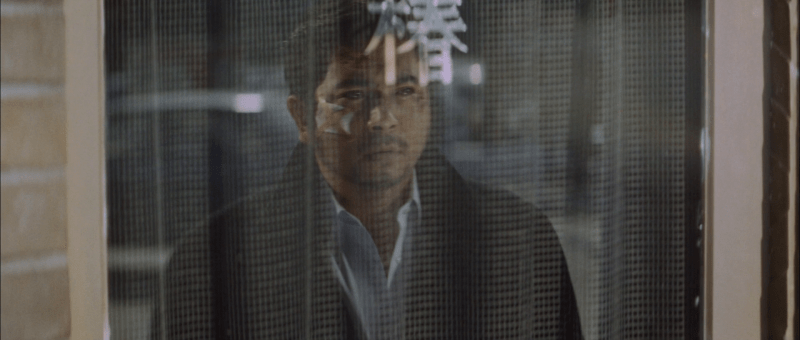
We follow a nameless detective (Shintaro Katsu) as he’s charged with investigating the disappearance of a 43-year-old salaryman, Hiroshi Nemuro, who turns out to have myriad other personalities and hasn’t been seen for six months. The man’s wife, Mrs Nemuro (Etsuko Ichihara), is not terribly helpful and the detective comes to wonder if the investigation itself is intended to further disguise the man’s whereabouts and prove that he really is a “missing person”. Yet this Tokyo is full of “missing people” including the detective who, we later learn, is a kind of fugitive himself. He apparently walked out on his wife (Tamao Nakamura), the owner of a successful boutique, because he couldn’t find his place there any more. He was once a salaryman too, and became a detective because it was the furthest thing he could think of from a regular job. 

It confuses him that no one really seems to be interested in where Nemuro is or if he’s alright, only in the reason behind his disappearance. The more he chases him, the more he begins to take on Nemuro’s characteristics as if he were intended to slide into the space Nemuro has vacated. Toru Takemitsu’s eerie harpsichord score only seems to add to the hauntingly gothic quality of this quest. The question is whether such a thing as identity even exists any more. The detective puts on Nemuro’’s jacket, though it’s too small, and is mistaken for him, while a colleague of Nemuro’s insists that he’s seen him in the street and is sure it was Nemuro simply because of the unusual colour of his suit without ever seeing his face. Tashiro (Kiyoshi Atsumi) tells the detective that Nemuro had a secret hobby taking nude photos at a specialist club that caters to such things. The two of them are confident they’ve identified the woman in the picture based on her haircut, but the girl they speaks laughs and takes off her wig explaining that she was merely asked to wear it, so the woman in the photo could be anyone, including Nemuro’s own wife.

Nemuro apparently had a series of hobbies for which he’d obtained certificates because he said that having them helped him to feel anchored in his life, though he’s apparently unmoored now. Like the detective, he may have been trying on different personalities from car mechanic to school teacher looking for the right fit and a place he felt he belonged in rebellion against the depersonalisation of the salaryman society in which one man in a suit is as good as another. The detective finds an opposite number in the missing man’s brother-in-law (Osamu Okawa), a very modern, apparently gay gangster connected with a network of male sex workers sold on to influential elites, and a commune of similarly displaced people working as casual labourers that is overcome with corporate thugs and eventually trashed.

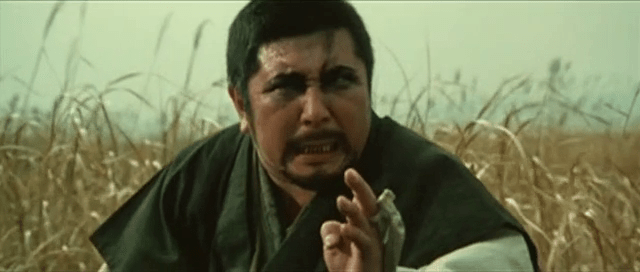
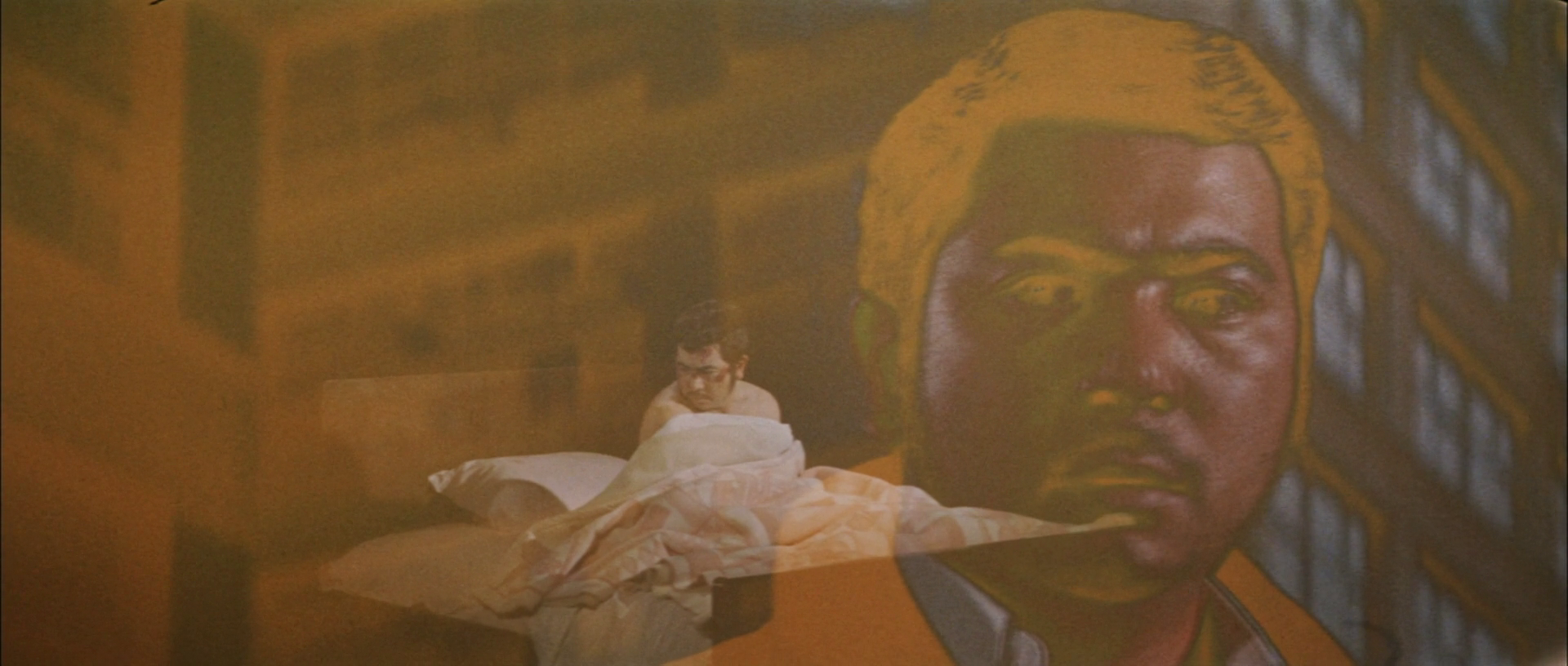
The trashing of the commune may have something to do with a man named Maeda who is a councillor in a town no one’s heard of, but was possibly involved in some shady business over which Nemuro may have been intending to blackmail him or blow a whistle with the assistance of his brother-in-law who helped him land a big contract at work. The more the detective investigates, the more confused he becomes. It’s impossible to follow the case as we might expect in a conventional noir thriller, but we’re not supposed to be looking at Nemuro’s disappearance so much as the detective’s gradually fracturing sense of self as he becomes lost in the anonymous city. He sees himself bury Mrs Nemuro in leaves only for her body somehow reduce itself to its component parts and sink into the street. Later her face is superimposed on the buildings as if she were looking down on him while he is lost and alone. Nemuro’s face also appears on buildings, though more as a metaphor as if the salaryman and the office building were one and the same and the reason the detective can’t find him is because he doesn’t really exist as a concrete identity. The detective spots a dead cat in the road and laments that he never thought to ask its name, but will try to think up a good one later. He might as well be talking about himself, now displaced, unmoored, and pursued among the city streets, a man without a map lost amid the simulacrum of an imaginary city.
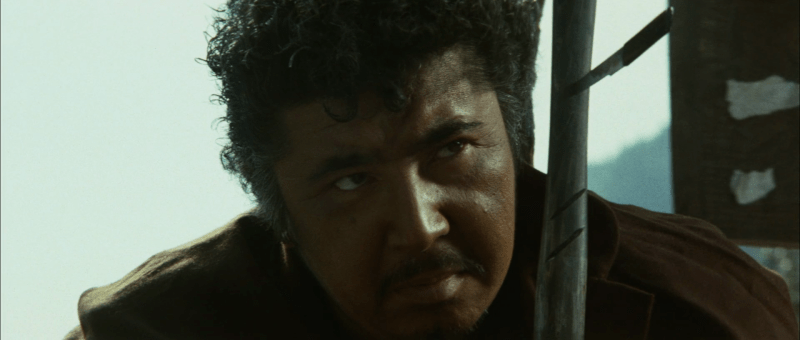
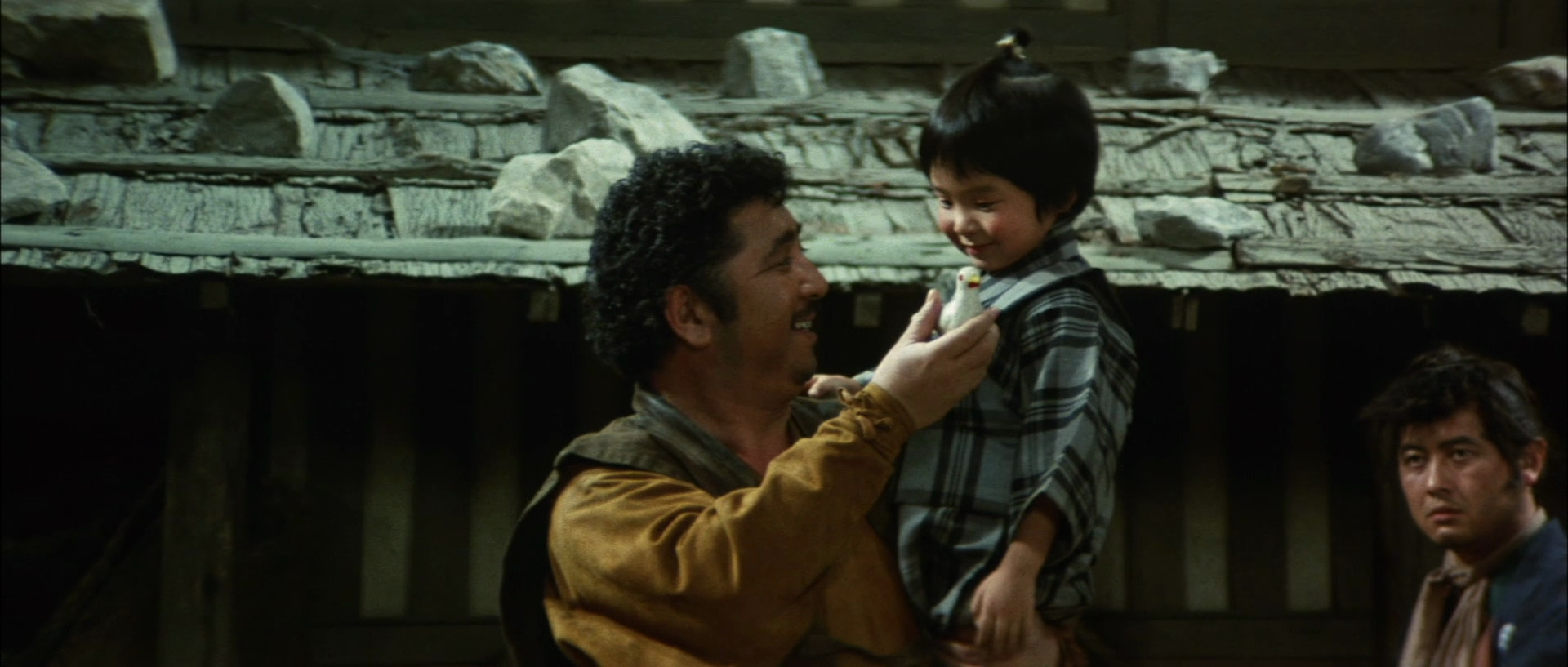
Eight Men to Kill (賞金首 一瞬八人斬り, Shigehiro Ozawa, 1972)

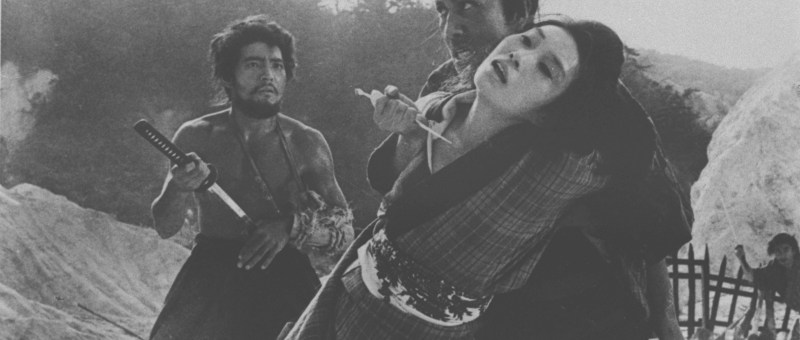
In the first instalment of the Bounty Hunter series, Shikoro Ichibei (Tomisaburo Wakayama) had been a shogunate spy intent on putting down rebellion to their oppression, but by the third, it seems he’s thoroughly fed up with the ills of feudalism and apparently no admirer of the Tokugawa who he feels to have failed in their responsibility to the people along with their personal greed and desire to hold on to their power.

Ichibei’s chief objection is their lack of healthcare provision, seeing as he is a doctor who mainly cares for the poor. That’s one reason he agrees to the job, asking for a large percentage of the gold he’s been asked to retrieve by a worried retainer who explains that the Edo government is relying on it to bridge a gap on their finances. If the gold’s not returned, the entire economy may crash. The government’s heartlessness is further borne out by the retainer’s words that it’s not the time to be concerned about one boy whose importance pales in contrast to that of the Tokugawa Shogunate when a rogue ronin kidnaps the son of the man responsible for the theft of the gold from a local mine. 

In a repeated motif, men attempt to swallow the gold as a means either of stealing or hiding it but it gets stuck in their digestive system and causes them a great deal of pain that could lead to death. The cruel mine owner Kanoke Tatsu (Minoru Oki) forces Ichibei to cut open the man’s stomach to get the gold out, while he insists on sewing him back up again because as a doctor it would be wrong not to. What he’s really performed maybe a kind of gold-ectomy, removing the toxic substance from the men’s stomachs even if he may not be able to save their lives or improve their circumstances.

Ichibei tells the bandit, Yasha the Wolf (Kenji Imai), who is held responsible for the theft of the gold, that he is as bad as him and is only looking for a fast way to make money, yet he wants it to use to build better hospitals for the poor, ironically using the government’s cash to make up for their failing. Meanwhile, he finds himself coming up against a man much like himself only inverted in the form of wandering assassin Yajuro (Shigeru Amachi), a former secret policeman in the rebellious Bishu domain who doubt crosses everyone he comes across in an attempt to get his hands on the gold. Ichibei asks the man who hired him why they don’t want to use government spies but he tells him that it’s because they’d run out. The ones they sent to investigate have all been killed, presumably by the treacherous Yajuro.

All around him, Ichibei discovers only omnipresent greed. A geisha he comes across is working with the mine owner to steal the cash, but simultaneously seducing Ichibei and the apparently won over by his bedroom prowess though it’s difficult to know which is an act, her fondness for Ichibei or pledges to sell him out to Kanoke. Meanwhile, Kanoke vacillates when presented with a binary choice by Yajuro, his adorable three-year-old son, or the gold. As always, it’s the innocent who suffer while personal greed and governmental indifference leave ordinary people little room to manoeuvre. 

This time around, the righteous Ichibei cuts a solitary figure. He no longer has a posse and is supported only by an older gentleman who is mute. As a result of his mission, he even ends up on a wanted poster himself with the shogunate, presumably unwilling recognise him, yet eventually congratulating him on a job well done, much to his shame and embarrassment having witnessed shogunate soldiers committing an atrocity. Very much in the western vein, Ozawa lends the dusty old mining town a sense of dread and decay as it rots from the inside out thanks to the corrupt authority of a weakened shogunate seeking only ways to cement its own power. The red-tinted final taking place during a solar eclipse seems to emphasise the hellishness of the situation even as Ichibei announces that they can all go to hell but he’s sending the money to heaven where it can be put to better use. 


The Killing Machine (少林寺拳法, Norifumi Suzuki, 1975)

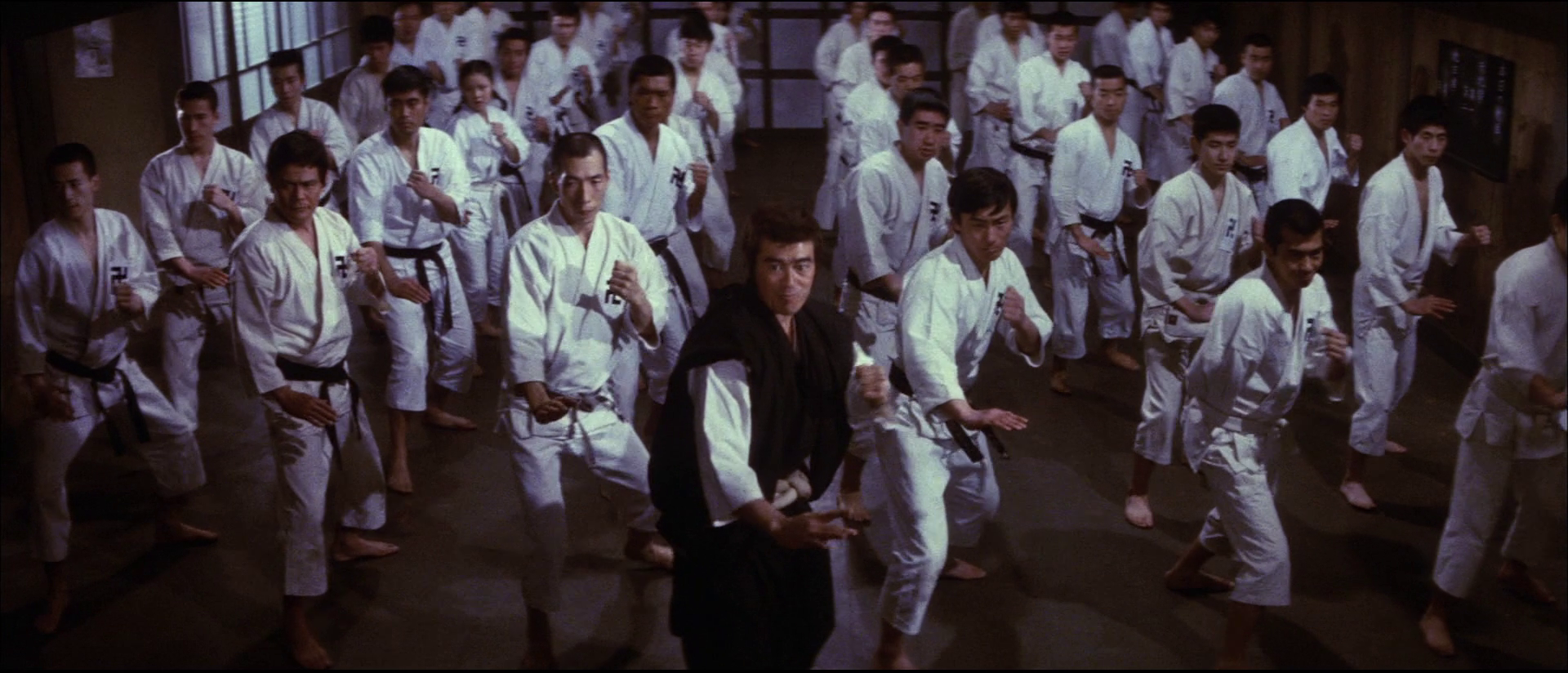
“As long as somebody like you is around, there’s hope for Japan,” an oddly sympathetic prison warden says to the last patriot standing in post-war Osaka. The title of Norifumi Suzuki’s Sonny Chiba vehicle The Killing Machine (少林寺拳法, Shorinji Kempo) maybe somewhat inappropriate or at least potentially misleading as the film is deliberately constructed as a martial arts parable emphasising the spiritual philosophy of self-improvement and compassion that is inextricable from its practice.

To that extent, the hero, Soh Doushin (Shinichi Chiba), is trying to fight his way out of the miasmas of the immediate post-war era. As may be apparent, Soh has taken a Chinese name, though Soh was apparently his along and belonged to a former samurai family whose nobility has been crushed by militarism. As the film opens, however, he’s a Japanese secret service operative in Manchuria blindsided by the news of Japan’s surrender. Soh is it seems a nationalist and a patriot, but a fairly revisionist one who stands up to the abuses of the Japanese army. He later says that he protested the way that the local Chinese population were often treated and he does indeed raise a fist toward an officer who wants to sell a young Japanese woman to a Chinese soldier in return for a guarantee of their safe passage to a boat heading out of the country. The young woman’s mother protests that she is an innocent virgin, a fact that has some later relevance. Soh refuses to let the officers take her, though evidently separated from her later.

When he meets the young woman again in the bomb-damaged backstreets of Occupation Osaka, she is dressed in Western clothing as opposed to the smart kimono she wore in Manchuria and is about to become a “pan pan” or streetwalking sex worker catering to American servicemen. Of course, Soh can’t let this happen either, but as she later tells him, she was raped by Russian soldiers during the retreat and now feels herself to be despoiled. She never wears kimono again and becomes a kind of symbol for a despoiled nation that Soh is reluctantly forced to accept he cannot save in part because his philosophy, which is still uncomfortably rooted in the philosophy of militarism, only valued strength when it should have valued love. The kind of love that Kiku (Yutaka Nakajima) had for her brother that made her willing to sacrifice herself for his wellbeing. 

Even so, Soh is doing his best to issue a course correction by caring for a small group of war orphans and helping them support themselves by running a rice soup stall so they won’t end up becoming dependent on the yakuza or the black market. It’s the yakuza and their increasingly corporatising nature that become Soh’s chief enemies, though standing right behind them are the Occupation Forces. They are, of course, just the biggest gang, as we can see when one of the kids steals a few tins from the gangster’s crate which is marked with text making it clear it came from the mess hall at the American base. The backstreets are full of sleazy soldiers and pan pans or otherwise the starving and dejected, sometimes violent demobbed soldiers filled with despair. It’s these men that Soh wants to buck up, telling them to rediscover their fighting spirit and giving them the opportunity to do so through learning Shaolin martial arts.

Of course there are those who don’t want to learn Chinese kung fu in the midst of their defeat, but what Soh is advocating is something that has a greater spiritual application even than karate can also have. It’s a kind of humanitarian riposte to the futility of the post-war society that might sometimes fail to recognise the depths of the impossibility faced by many in insisting they can be faced by discipline and moral fortitude but at the same time is not really judgemental except toward those who have deliberately abandoned their humanity, such as the trio of goons who rape a school for amusement (the girl is later seen among the students at Soh’s school along with the children from Osaka). The girl’s father reports it to the police, but the police and the gangsters are in cahoots, so nothing gets done. Soh cuts the guy’s bits off so he won’t be doing that again. Strength without justice is violence, he realises. But justice without strength is inability. Strength and love like body and mind should never be separated. The closing shots show an entire mountain covered in white-clad figures practising Shaolin kung fu and joining the humanitarian revolution rather than the cruel and selfish one represented by the gangsters with their red-light districts and black markets. It may be a simplistic solution, but it is in its way satisfying and at least a rejection both of the militarist past and the capitalistic future.


*Norifumi Suzuki’s name is actually “Noribumi” but he has become known as “Norifumi” to English-speaking audiences.

Eleven Samurai (十一人の侍, Eiichi Kudo, 1967)

“If no one denounces the absurdity of this world, then our descendants will keep suffering,” a soon-to-be ronin insists in Eiichi Kudo’s revengers tragedy, Eleven Samurai (十一人の侍, Juichinin no Samurai). It seems clear from the outset that their actions will have little effect no matter whether they succeed or fail because the enemy is feudalism which may be approaching the end of its life but is definitely not dead yet. They can at least attempt to avenge their clan even if they can’t save it while refusing to let an entitled, selfish lord get away doing whatever he likes just because he happens to be the son of the former shogun and brother of the current one.

The opening scenes see Nariatsu (Kantaro Suga) chasing a deer having declared himself a “real hunter”. He ignores the cries of his men to watch where he’s going and sails over the border into the territory of Oshi which amounts to an invasion seeing as he is armed and has no permission to be there. The deer gets away, but Nariatsu shoots an old woodcutter whom he felt to be in his way with his bow and arrow. The Lord of the Abe clan that rules Oshi immediately takes him to task and tells Noriatsu that his behaviour is unbecoming for the son of the former shogun. He’s committed a murder in their territory, but they’re prepared to let it go as long as he leaves as soon as possible. But Nariatsu doesn’t like being told what to do and simply shoots the lord in the eye, potentially sparking a diplomatic incident. 

The Abe clan try to lodge a complaint in Edo, but are shut down by courtier Mizuno (Kei Sato) who fears that to acknowledge an event such as this would damage the moral authority of the Tokugawa regime. He decides to cover the whole thing up by claiming it was the Abe clan who insulted Noriatsu. The Abe clan will then be dissolved, and Oshi essentially gets nationalised. All of which suits Nariatsu just fine because he wants to take control of Oshi and expand his territory anyway. Part of his petulance seems to stem from the fact that he feels hard done by with such a small inheritance when his brother became the Shogun and received multiple fiefdoms. The previous Shogun, Tokugawa Ieyoshi, had produced an unusual number of children which became quite a problem in that he had to find lands for them all and eventually hastened the demise of the shogunate because of the additional strain. 

But Nariatsu is also an overgrown child who has no idea how to do anything for himself and no concern for the feelings or fortunes of others. When instructed to do something he doesn’t want to, Nariatsu petulantly stamps his feet and complains, and when his actions are challenged he simply replies that he’ll be telling his father. In fact, he is so infuriating that it’s likely most of his men secretly want him dead too, including his chief adviser Gyobu (Ryutaro Otomo) who was once the General Inspector but is now expected to babysit this absolute buffoon. Even though Nariatsu knows the Abe clan will be trying to kill him, he still sneaks out to the red light district and gets blind drunk with geisha which in itself is conduct unbecoming for a high ranking samurai such as himself. 

As such, he represents almost everything that’s wrong with the feudal order while Mizuno represents the rest. It’s Mizuno that secretly plots against the plotters, manipulating them into giving up their assassination mission by claiming to have switched sides only to backtrack and reveal he’s actually still working for Nariatsu fearing a reputational loss for the Tokugawa. Chief revenger Hayato (Isao Natsuyagi) is also banking on this fear of reputational damage, certain that the Shogunate won’t be able to bear the humiliation of Nariastsu being killed by a ronin so will instead claim that he died from an illness. Vowing to avenge the clan, Hayato righteously gives up his position to become one so that the Abes won’t be linked to the crime and is joined by 10 more similarly annoyed samurai. Six of them are already “dead” having been asked to commit seppuku for recklessly attacking Nariatsu on their own and blowing the whole operation. 

Hayato at least believes this to be a suicide mission. He leaves his loving wife and home and allows people to think he’s run off with Nui (Eiko Okawa), the younger sister of one of their number who died before he could join them. They do this because they think it must be done, and also because if no one stands up to samurai oppression it will never end. Wandering peasant Daijuro (Ko Nishimura) agrees with them. He wants revenge on the samurai for raping his sister after which his father and brother took their own lives. Nariatsu is as good as anyone else and he does very much need to die. 

But despite Daijuro’s homemade cannons, nothing quite goes to plan. Kudo sets his final battle in an atmospheric, misty valley that is an obvious stand in for the underworld. Hayato may succeed in killing Nariatsu but it’s a pyrrhic victory. Though he vowed “to put an end to this ridiculous world,” a samurai cannot really win this battle. It’s Daijuro who eventually walks off with Nariatsu’s head, symbolically decapitating the shogunate which the closing titles confirm was mortally wounded by this incident. With his striking black and white cinematography, Kudo does indeed paint this samurai world as a hellish place ruled over by an infinitely corrupt and self-interested authority. The nihilistic futility of it all is emphasised by the figure of a grown man sitting like a small child and splashing his sword in a puddle while surrounded by dead bodies. There might be a way out of this, but not for the samurai, only for those who will come after and perhaps finally be free of this world’s absurdity.


Wicked Priest 4: The Killer Priest Comes Back (極悪坊主 念仏三段斬り, Takashi Harada, 1970)

At the heart of the Wicked Priest series is an idea of rootlessness, the wandering monk Shinkai (Tomisaburo Wakayama), an orphan, often finding himself dragged into familial disputes between fathers and sons for one reason or another often estranged from each other. The aptly named Wicked Priest 4: The Killer Priest Comes Back (極悪坊主 念仏三段斬り, Gokuaku Bozu: Nenbutsu Sandangiri) finds Shinkai returning to his hometown after reencountering a childhood friend who’s found himself on the wrong side of a historical divide.

When Shinkai and Takegoro (Ichiro Nakatani) left their childhood village, they swore to become the best priest and mountain owner in Japan respectively but that obviously hasn’t worked too well for either of them. Takegoro evidently joined the wrong side during Bakumatsu chaos, a fact rammed home when his attempt to use currency issued by a feudal lord is rebuffed in a gambling den whose owner reminds him that it is now worthless. Only official currency issued by the central government is considered legal tender. On top of all that, it seems Takegoro might also have been cheating which signals just how far he has fallen. Running into him by chance, Shinkai ends up saving the day while accidentally humiliating a chastened Takegoro who is given a further dressing down by the old school lady yakuza boss Kuroda (Chieko Naniwa), also known as “the Thunder Woman”, who appears to be in charge, shooting off his little finger as an attempt to save face. 

In any case, the encounter has Shinkai feeling nostalgic and he decides to return to his hometown to hold a proper memorial service for his late mother. Only once there he ends up being drawn into another cycle of local corruption on discovering that the river workers are being exploited by rival yakuza groups who are working them to exhaustion and paying almost nothing. The leader of the Gondawara is quite obviously up to no good as he wears a western suit and has a handlebar moustache, quite clearly an amoral capitalist while his rival Ryuo (Eizo Kitamura) is a violent thug in ominous sunshades. In actuality, however, they are both branches of the yakuza syndicate led by Kuroda who is of the old school and doesn’t approve of their exploitative mindset. Just as she had Takegoro, she gives both men a good telling off reminding them that the river workers are essential for providing a steady supply of coal without which the new industrial economy will flounder. 

It’s also true that this same industry is fuelling militarisation and an eventual eye towards expanding imperialism, but Kuroda does seem to be mainly mindful of the workers welfare immediately insisting they should be paid a fair wage which is five times more than they’re currently getting. Ryuo and Godawara superficially agree but intend on simply exploiting their workers differently by demanding five times as much work for five times as much pay in a fifth of the time. Shinkai does his best to defend the rights of the local people, but is faced with a dilemma on realising that Takegoro is member of Godawara and hellbent on killing him having become cynical and desperate, willing to sell out a childhood friend for a few pennies. 

Part of Shinkai’s mission is winning Takegoro back over the side of right while reuniting him with his mother whom he’d been too ashamed to visit. On the other hand, this is perhaps the first time Shinkai shows a darker side to himself on threatening to rape a lascivious nun who tricked him into a martial arts contest while rebuffing his amorous intentions. He’s also still being pursued by Ryotatsu (Bunta Sugawara) and ironically ends up temporarily losing his sight himself but just as always Ryotatsu decides to come to his rescue mostly because it would be very annoying if someone else killed him first before he’s got his revenge. He also agrees to wait for Shinkai to finish his mother’s memorial service before scheduling their death match, the most patient revenger in jidaigeki history. In any case, it all ends with another massive showdown as a wounded Shinkai purifies the town of corrupt yakuza and liberates the river workers while finally getting to honour his late mother’s memory leaving Ryotatsu to make his exit deciding that vengeance can wait until the mourning’s over.


Bohachi Bushido: Code of the Forgotten Eight (ポルノ時代劇 忘八武士道, Teruo Ishii, 1973)

A nihilistic ronin falls into the hellish trap of the Yoshiwara in Teruo Ishii’s dazzlingly psychedelic period drama, Bohachi Bushido (ポルノ時代劇 忘八武士道, Porno Jidaigeki: Bohachi Bushido). Adapted from a manga short by Kazuo Koike, the film once again tackles Edo era corruption as a brothel owner with a special connection to the shogun attempts to wipe out the competition presented by an enterprising merchant class only to find himself hoist by his own petard.

Ishii signals his intentions early on with the artfully staged opening scequence in which wandering ronin Shino (Tetsuro Tanba) is attacked on a bridge at dusk. As he turns to slash at an opponent, the blood splatter morphs into the film’s title while the clang of swords gives off little blue sparks that turn into the listings for the cast and crew. By the time the title sequence has concluded, night has descended on the bridge and Shino finds himself engulfed in darkness. “To die is hell, but to live is also hell” he exclaims as he jumps into the water below, hoping to be free of his empty life of killing. 

Unfortunately, he is rescued and brought to the Yoshiwara where they try to persuade him to join the Bohachi clan so called because to do so you must abandon all eight human virtues. The Bohachi’s main line of work is the sexual torture of women until they become docile dolls for their brothel. Shino describes them as “revolting” but then adds “just like me” and agrees to join anyway only to earn their mistrust when he refuses to play along with their games, buying but not sleeping with a woman brought in over a debt. Though Shirakubi, the guy who recruited him, tries to kick Shino out and calls the police on him for good measure, the big boss, Shirobe (Tatsuo Endo), decides he’ll take him in for use as an attack dog taking down anyone who interferes with business be they lords or officials. 

The irony is that the nihilistic Shiro enthusiastically takes to his work because he dislikes the debauchery of the Edo-era society even while working for the “legitimate” brothel owner who is at least “licensed” to exploit women for financial gain. What Shirobe resents is the rise of quasi-brothels in the various teahouses that are obviously selling more than just tea but continue to undercut his business by selling women even cheaper than he does. He also feels betrayed by the various samurai lords who choose to visit the teahouses over his own establishment and therefore seeks to have them frightened into submission by ordering Shino to kill any man found with one of the tea house sex workers. Later he even declares a kind of sex worker amnesty promising to pay five ryo for any of the teahouse women brought to him, no matter by who, and then joking that he’s actually killing two birds with one stone by getting his hands on a high quantity of new stock for a very low price. 

Shino refuses to sleep with the women and is most offended when his male assistant is killed in an attack by the rival brothel owners yet the team of warrior women sent to protect him did nothing to help because their orders were only to protect Shino and Shirobe’s orders must be followed to the letter on the pain of death. He seems to know he’s living on borrowed time and Shirobe probably intends to finish him off once he’s finished his mission of removing all opposition and restoring Shirobe’s power to manipulate the shogun but barely does anything to resist until faced with the rather ironic punishment of being given opium and then forced to participate in a never-ending orgy intended to result in his death in an extraordinary psychedelic sequence from Ishii . 

Of course, what they didn’t reckon on was Shino’s ironic desire to live or at least not to be beaten in which he actively begins stabbing himself to overcome withdrawal symptoms and carry on fighting even when they try to ram him with a giant spear cart. Ears are cut off, flying across the screen followed by arms and then heads. Ishii lends a poetic sheen to the closing moments as Shino is caught in a hero pose alone in the snow but still standing, if barely, and freed at least from one kind of hell if not from many others. 


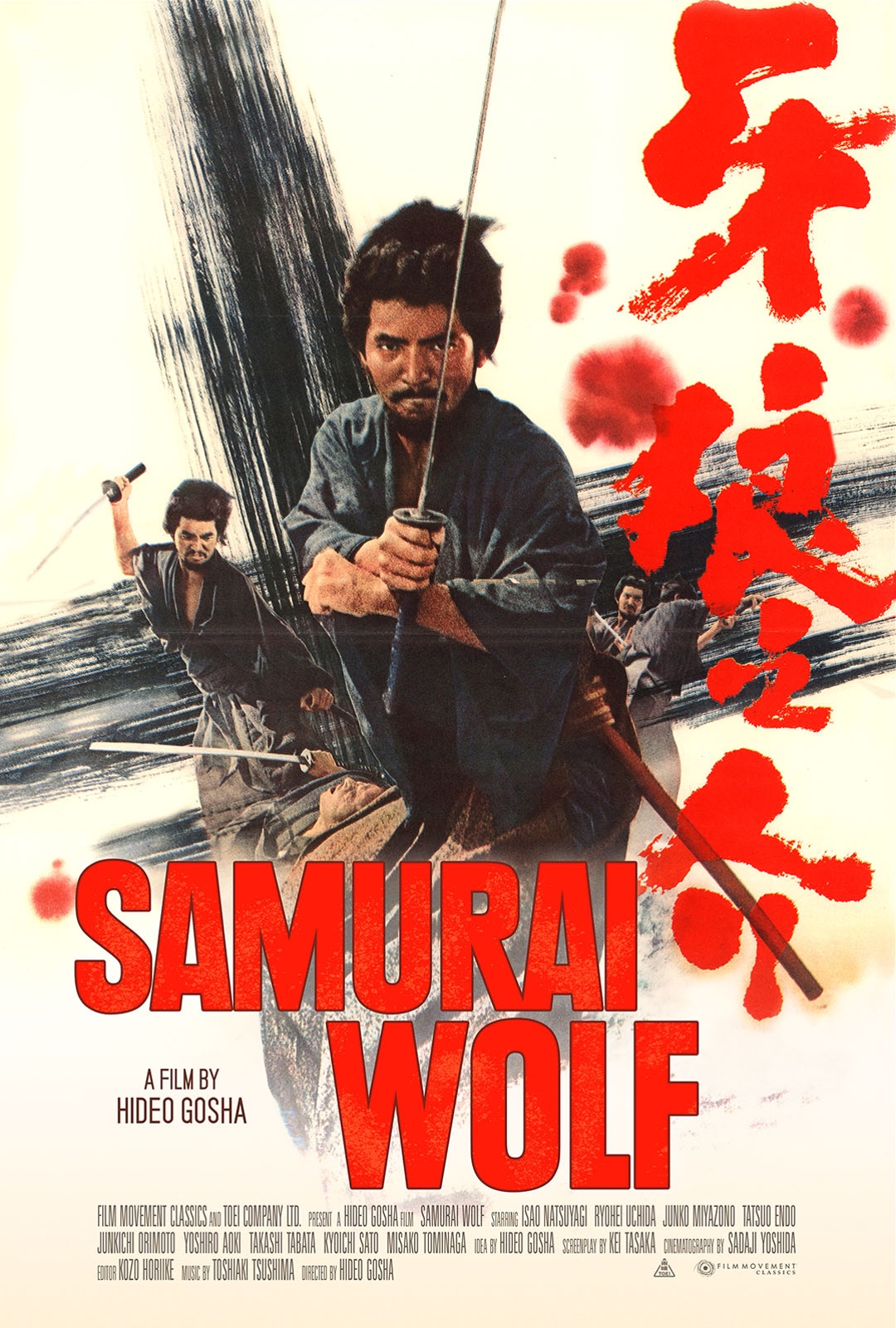
Samurai Wolf 2: Hell Cut (牙狼之介 地獄斬り, Hideo Gosha, 1967)

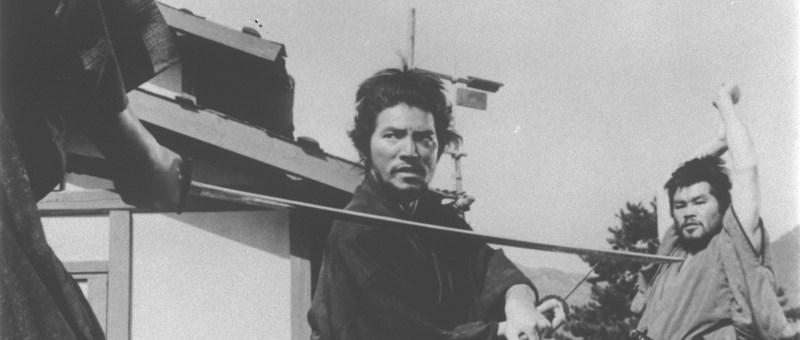
“We ronin must live without mercy” insists a fugitive on a quest for vengeance and riches only to meet his match in the justice-loving wanderer Kiba (Isao Natsuyagi) making his return for Samurai Wolf II: Hell Cut (牙狼之介 地獄斬り, Kiba Okaminosuke: Jigoku Giri). Like the second instalment in many series, Gosha’s avant-garde chambara largely follows the same formula picking up several familiar elements from the first film if giving them a new spin as Kiba once again finds himself caught up in intrigue provoked by the amoral venality of late Meiji society. 

In this case, he makes a rod for his own back by humiliating some swordsmen after catching them harassing a young woman, mocking them when they try to claim that their treatment of her is part of their “training”. Kiba saves the girl, Oteru (Rumiko Fuji), who has some kind of etherial quality and doesn’t quite seem to know what’s going on immediately throwing herself at Kiba who turns her down in gentlemanly fashion. Sometime later, he runs into a convoy of officials transporting criminals to the nearest judicial centre and stops to give the prisoners some of his own water explaining that that from the stream is polluted thanks to leaks from a nearby goldmine. In any case, Kiba is struck by the appearance of one of the men, Magobei (Ko Nishimura), who reminds him of the father who was killed by swordsmen he’d humiliated with his skill. 

Magobei is in chains for murdering the manager of the mine which previously belonged to the shogun but has now been shut down, its seam apparently exhausted. But like the toxins that poured into the river, the mine is a poison to society and in more ways than one. Magobei tells Kiba that he’s been set up. He was hired to kill the manager by a duplicitous gang leader named Jinroku (Bin Amatsu) who has found a new seam and has been operating the mine illegally taking all the gold for himself so obviously Magobei wants revenge. After seeing off an ambush, Kiba agrees to act as a bodyguard delivering both Magobei and the other prisoner, Kihachi (Out Yokoyama) who claims to be a big time bandit in trouble for robbing a samurai family, to the nearest city but secretly seems to sympathise with the injustice dealt to Magobei and the female prisoner who later joins them, Oren the Thistle (Yuko Kusunoki), who murdered a judge who killed her lover. 

Yet Kiba’s memories of his father cloud his judgment about Magobei who is definitely not a man worthy of his faith in him. “What good would pity do?’ Magobei asks, certain that compassion is a weakness and that if he were to give in to human feeling he would immediately be betrayed. The men misunderstand each other, assuming they are alike when in reality they are opposites. Kiba bets on Magobei’s humanity and loses, while Magobei assumes that Kiba will easily be won over by the riches to be found in the goldmine and help to wipe out Jinroku’s gang which is also a family of which Oteru is a member. “Life’s tough that’s how it is” he justifies, but Kiba cannot forgive him not least for his callous murder of a man who was only a frightened braggart and could not have harmed him and a woman who was otherwise blameless. Just as Sanai had in the first film, Magobei tells him that “one day you will be like me” a future that Kiba once again violently rejects. 

But then again he can never escape the world where goldmines pollute the rivers and money can buy anything, even the hearts of men. Just like his father, he’s pursued by the swordsmen he’s unwittingly insulted while discovering his desire to serve justice backfiring, eventually robbing him of the only thing he actually wanted just as it had at the end of the previous film. Even so, Kiba retains his sense of humanity and unlike so many jidaigeki (anti-)heroes refuses to give in to nihilism or despair. A little less avantgarde than the previous instalment, Gosha nevertheless conjures a world of dazzling violence in freeze-frame and silence while once again leaving Kiba the furious wolf to wander, a lonely figure in an unforgiving landscape.


Samurai Wolf 2: Hell Cut opens at New York’s Metrograph on Dec. 26 as part of Hideo Gosha x 3

Original trailer (English subtitles)

Samurai Wolf (牙狼之介, Hideo Gosha, 1966)

A cheerful ronin with strong moral fibre finds himself squaring off against a nihilistic assassin and a corrupt retainer/postmaster in Hideo Gosha’s new wave chambara Samurai Wolf (牙狼之介, Kiba Okaminosuke). Where many jidaigeki of the age would follow the antagonist Sanai (Ryohei Uchida), Gosha’s focusses on the figure of a man with wolfish appetites who is otherwise unaffected by the infinite corruption of the world around him and in that at least unwilling to submit himself to the dog-eat-dog mentality of late Edo-era society. 

Wandering samurai Kiba Okaminosuke (Isao Natsuyagi) explains that he got his name because often he bares his fangs and is known as the Furious Wolf, yet as much as the ferocity of the opening titles might bear that image out he is not cruel or avaricious but measured and honest. After wolfing down an exorbitant amount of food prepared by an old woman at a way station, he announces that he can’t pay. The old woman panics and we wonder if he might become violent or even kill her, but Kiba simply offers to pay in kind fixing the old lady’s leaky roof and chopping a supply of wood much to her surprise and gratitude. It seems, the wolf always pays his way. While there, he witnesses a trio of bandits attack a postal cart and kill the men who were pulling it. He retrieves the bodies along with a runaway horse and takes them back to the outpost they came from but the guard there is disinterested claiming that, as they died on the road and not in the town, it’s not his business. As Kiba soon discovers, the guard is in league with a corrupt lord, Nizaemon (Tatsuo Endo), who is an official messenger for the shogun but wants to take over the public postal service which is why he’s terrorising the postmistress, Chise (Hiroko Sakuramachi), with the intention of getting his hands on the relay outpost. 

There is something a little ironic in the fact that Ochise is blind while Nizaemon’s chief assassin is deaf and mute, both of them excluded from mainstream society and looking for support but finding it in opposing directions. Formerly a samurai woman, Ochise wants to hang on to the outpost because it has become her place to belong while resenting the incursion by corrupt lord Nizaemon who only wants it for the potential to control the cargo route along with raising the rates to use it to exorbitant heights. Shortly after Kiba tries to take out the assassins, a bunch of government inspectors turn up to complain about the missing merchandise while backing Chise into a corner by forcing her to accept the liability for transporting a large sum of gold coins. Kiba originally says he won’t help because he doesn’t want to risk his life for people he doesn’t even know, but of course later agrees in part on the promise of a significant return but also because he likes Chise and resents the kind of corruption men like Nizaemon represent.

On the other hand, his humanity is mirrored in his antagonist, hired gun Sanai who fetches up to help Nizaemon stop Kiba and take over the outpost. Sanai cynically tells him, that in five years’ time Kiba will be no better than he is, if he doesn’t kill him first. Kiba rejects the claim but it’s easy enough to see how someone could be corrupted by the realities of Edo-era society. Sanai later reveals that he fell in love with a samurai woman and eloped with her, a fierce taboo given the class difference between them, and later fell into his present state of nihilistic despair when she was taken from him quite literally betrayed by the social order. But Kiba seems different. He is not naive and has no expectations of human goodness yet remains cheerful and in his own way honest. When a young woman comes to him with her life savings and tells him that Sanai is the man whom she’s been waiting for to gain her revenge, he tells her to keep her money because he’s going to end up fighting him anyway. Likewise, when he realises someone he trusted has betrayed him, he tells them that he understands why they did it and bears them no ill will it’s simply the way things are only he suspects they will regret that others have died because of it. Even in his final confrontation with Sanai, he notices that his opponent is injured and ties one of his own hands to his belt to ensure it will be a fair fight. 

In any case, it seems that Sanai’s morally compromised existence is about to catch up to him with several other players intent on taking his life aside from the sex worker who longed to avenge the deaths of her family murdered during a massacre of peasants killed for standing up to a cruel landowner. A female gang leader also wants revenge for the death for her boss, while the cynical madam at the local brothel offers to team up with him to steal the gold from under Nizaemon’s nose. It seems that Sanai is a man already dead, having long abandoned the lovelorn boy he was for the nihilistic existence of a wandering assassin only to be confronted with the ghosts of the unattainable past. This world is indeed rotten, but Kiba has somehow managed to rise above it embracing his wolfish appetites in more positive ways while opposing injustice wherever he finds it. Much more avant-garde than much of his later work would be, Gosha makes great use of slow motion and silence broken only by the reverberating sound of clashing swords and hints at the meaninglessness of a life of violence in an agonisingly haunting death scene in which a bloodstained man turns and falls as if the air were suddenly leaving his body. In the end all Kiba can do is turn and walk away, on to the next crisis on the highways of a lawless society.


Samurai Wolf opens at New York’s Metrograph on Dec. 26 as part of Hideo Gosha x 3

Original trailer (English subtitles)

Violent Streets (暴力街, Hideo Gosha, 1974)

“Nothing’s like it used to be anymore” sighs a woman who’s had to betray herself but has tried to make break for it only to discover there is no way back. Hideo Gosha’s Violent Streets (暴力街, Boryoku Gai) is like many films of its era about the changing nature of the yakuza in an age of corporatised gangsterdom. Now “legitimate businessmen” who claim to no longer deal in thuggery, their crimes are of a more organised kind though a turf war’s still a turf war even if you’re fighting from the boardroom rather than simply getting petty street punks to fight it for you in the streets. 

In a touch of irony, former yakuza Noboru Ando stars as a man who’s tried to leave the life behind but is pulled back into underworld intrigue when his former foot soldiers mount an ill-advised bid for revenge against the clan they feel betrayed them. After serving eight years in prison for participating in the last turf war, Egawa was given flamenco bar Madrid on the condition that he dissolve his family and attempt to go straight as a legitimate businessman. The Togiku gang has since gone legit and distanced itself from most of its old school yakuza like Egawa. But now a yakuza conglomerate from Osaka is moving in on their old turf and the Togiku want the Madrid back as a bulwark against incursion from the west which is why they’ve been sending the boys round to cause trouble in the bar. 

Egawa is the classic ex-gangster who wants to turn himself around but is largely unable to adapt to life in a changing society. He is technically in a relationship with a bar hostess who has a severe drinking problem in part exacerbated by his inability to get over his former girlfriend who left him and married the boss, Gohara, while he was in prison. His former foot soldiers attempt to convince him to get the gang back together and take revenge, resentful of having been used and discarded, but he tells them to let it go, that they’ve all got “honest jobs” and that they should try to live as best they can. Like him, the guys are ill-equipped to make new lives in the consumerist society and cannot move on from the post-war past. Hoping to engineer a turf war between the Osaka guys and Togiku, they kidnap a popular TV personality/pop singer (Minami Nakatsugawa) attached to a station which Togiku controls and frame a rival affiliated with the Osakans for taking her. 

This just goes to show the various ways in which newly corporatised yakuza have expanded their business portfolio, heavily participating in the entertainment industry moving beyond bars, clubs, and the sex trade into mainstream television and idol stars. Egawa’s old friend Yazaki (Akira Kobayashi) is his opposing number, just as caged but trapped within the confines of the new gangsterdom, reprimanded by his boss for raiding the rival studio’s offices and undoing the gang’s attempt to rebrand themselves as legitimate businessmen rather than violent street thugs. “I can’t stand being humiliated” he explains as Gohara points out he’s stepped right into their trap now giving the Osakans an excuse for retaliation. “The Togiku group is a defanged, domesticated dog” Yazaki barks, “I can’t pretend to be an obedient company employee forever and do nothing”. 

Neither man is able to progress into the new era of rising prosperity, both little more than caged animals thrashing around trying to break free but continually crashing into the bars. Just as Egawa’s old guys had tried to engineer a turf war hoping that the two gangs would take each other out and leave a vacuum they could fill, arch boss Shimamura (Tetsuro Tanba) flies above the city in a helicopter as the “worms fight among themselves” and observes the chaos below as he completes his silent conquest of the contemporary economy like some modern day Nobunaga of corporatised gangsterdom. 

Taking over the Togiku through a process of corporate infiltration and gradually ridding themselves of all the old school yakuza ill-suited to the shady salaryman life, the contrast between the world of cabaret bars and back street dives and Shimamura’s smart suits and helicopters couldn’t be more stark. A slightly sour note is struck by the use of a transgender assassin (Madame Joy) who performs a lesbian floorshow by day and kills by night while working with a bald sidekick who carries a parrot on his shoulder, her coldness bearing out the tendency of yakuza movies to associate queerness with sadistic savagery. Gosha rams his point home with the otherwise surreal scene of a pile of abandoned mannequins by a swamp that becomes a popular yakuza kill site homing in on the emptiness of their eyes and the uncanniness of dismembered bodies, mere empty shells just like the men who die in this literal wasteland. Egawa perhaps feels himself to be a man already dead long before being pushed towards his act of futile rebellion, somewhere between sitting duck and caged dog fighting for his life between the chicken coops of a moribund small-town Japan. Marching to a frenetic flamenco beat of rising passions and barely contained rage, Violent Streets leaves its former foot soldiers with nowhere to go but down while their duplicitous masters continue to prosper riding the consumerist wave into a new and prosperous future.


Violent Streets opens at New York’s Metrograph on Dec. 16 as part of Hideo Gosha x 3

Trailer (English subtitles)

Prison Boss (獄中の顔役, Yasuo Furuhata, 1968)

“Both you and I must do what a man must do and live this life to the very end” according to the melancholy theme song of Yasuo Furuhata’s fatalistic tale of gangster nobility, Prison Boss (獄中の顔役, Gokuchu no Kaoyaku). Another vehicle for tough guy star Ken Takakura, this post-war drama despite the name spends less time in a cell than one might imagine but casts its melancholy hero as a man imprisoned by the times in which he lives, too good to survive in an ignoble society and eventually brought down by his self-destructive need for retributive justice. 

As the film opens, Hayami (Ken Takakura) is goaded into a knife fight with a foot soldier from the evil Honma gang, Tetsu the Viper, and eventually kills him. Stumbling into a nearby bar, his only intention is to do the right thing and turn himself in filled with remorse as he is that he’s offed Tetsu in territory which belongs to “good” mob boss Tajima (Ichiro Ryuzaki). Tajima lives up to his name when some of his guys rescue Hayami and take him to their HQ where the old man insists that he rest and recover from his wounds. Whilst there, Hayami is cared for by Tajima’s teenage daughter Toshiko (Junko Fuji) who falls in love with him and vows to wait while he honours his word and spends seven years in jail for the killing of Tetsu. 

Meanwhile, awkward small-town politics is destabilising the precarious post-war environment as the Honma, embodiments of the new, venal and violent yakuza who care nothing for honour or humanity, are intent on squeezing Tajima’s influence mostly through muscling in on the running of the local bike races for which Tajima currently runs security. Though the Tajima gang is presented as an unambiguous good, the old style noble yakuza who live by a code and care about protecting the little guy, you can’t deny the levels of nepotistic corruption on display at the local council meetings given that the mayor and Tajima are apparently childhood friends while his rival shouts about allowing yakuza too much sway in politics while in the pay of Honma. 

Nevertheless, the central drama exists solely in the soul of Hayami who emerges from seven years in prison into this already destabilised environment owing a debt of honour to Tajima. Not quite a yakuza, he feels himself a perpetual other forever tainted by his crime having lost the right to live as other men live. Thus he struggles with discovering that Toshiko has also remained true to her word, having waited for him all this time running a small coffee bar rather than getting married. Even so, he finds himself dragged back into yakuza drama avenging the death of a Tajima man gunned down by Honma and thereby ending up back inside where he’s reunited with another childhood friend, Kurosaki (Ryo Ikebe), who’s been far less fortunate and is now affiliated with Honma.  

Kurosaki and veteran prisoner Pops (Shogo Shimada) are perhaps both mirrors of Hayami’s internal conflict, Kurosaki like him bound by a code but forced to act in ways which betray his own sense of honour and humanity and eventually paying a heavy price for doing so. Pops meanwhile as a man nearing the end of his life tries to talk him down from the road of destructive nobility, reminding him that he has a choice and ought to choose himself rather continuing to suffer for an outdated ideal. Hayami’s selflessness, his oft remarked tendency to disregard his own interest to protect others (the true mark of the noble gangster), is his weakness and fatal flaw. A yakuza’s daughter, Toshiko understands the code of manliness well enough and even she eventually tells him to run, to abandon his revenge and live free rather than becoming just another sacrifice on the altar of yakuza honour, but of course a man has to do what a man has to do. 

Though Hayami himself becomes a big man in prison, it’s Honma to whom the film’s title primarily refers hinting at the corruption involved in a society in which it is perfectly possible (and in some ways advantageous) to continue running a yakuza gang from behind bars, while the central crisis also turns on post-war desperation in betting all on controlling the lucrative bicycle races. In such a world as this, there’s precious little room for the noble gangster who must in the end damn himself if only to redeem it.