The Enchantment (誘惑者, Shunichi Nagasaki, 1989)

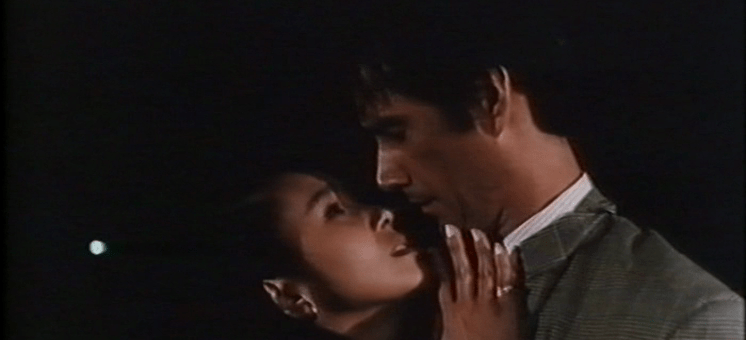
“A broken romance affects everybody” a sympathetic psychiatrist tries to reassure a patient suffering a dangerous romantic obsession with a possibly imaginary woman. Like so much of his work, they’re soft words offered casually as a path towards something deeper but in this case it’s not the patient we need to worry about but the doctor. The aptly named The Enchantment (誘惑者, Yuwakusha), somewhat less subtly titled “Temptress” in Japanese, takes its “hero” on a dark journey into fascination, the male need for domination, and the self delusions of irresolvable disappointment.   

The film opens with genial psychiatrist talking to a patient, Hirayama (Tsutomu Isobe), who proclaims himself more or less cured from a nervous breakdown born of a broken heart. Hirayama’s love affair may be largely imaginary, and he seems far from “cured”, but Doctor Sotomura’s (Masao Kusakari) failure to challenge him on his new affirmation that he’s over her because he’s realised she was “just a bitch” who treated him “like trash” might be a worrying oversight. Hirayama was supposed to be his last patient of the day, but a last minute walk-in, Miyako (Kumiko Akiyoshi), piques his interest enough to keep him in the office rather than on a planned date with his receptionist fiancée and surgeon best friend.

Miyako, nervous and reticent, tells him the appointment is “about a friend” and takes some coaxing before beginning to explain that she has been physically assaulted by her female roommate apparently jealous over the unwanted attentions of a man who developed an attraction for her at her job as a tour guide. Miyako does not spell it out, but somewhat implies that her relationship with her roommate Kimie is romantic while Sotomura has the good sense not to push the issue, only to urge her that perhaps she should think about staying with a friend a while if she doesn’t feel safe at home. Miyako, however, doesn’t want to do that and is only worried about what might have provoked this sudden and unexpected change, fearing most of all that she herself will fall out of love with Kimie if her moodiness continues to intensify.

Overstepping the mark, Sotomura is fascinated with his mysterious new patient, particularly after he becomes a kind of white night rescuing Miyako from a dangerous encounter with Hirayama who is under the delusion that she is the embodiment of his romantic obsession “Junko”. The fascination only intensifies after he makes a surprising discovery – Kimie is not “real” but a secondary personality inside Miyako. Infuriated by Sotomura’s romantic overtures, Kimie takes control and stabs him in the leg while Miyako continues to visit him in the hospital, unable to remember what exactly happened between them.

Sotomura’s obsession is both sexual and professional, after all how many sufferers of MPD is he going to meet in the course of his career? He is indeed ambitious, casually dating his receptionist Harumi (Kiwako Harada) mostly because she’s the daughter of his former professor. Though the couple live together, Harumi is constantly frustrated by his indifference to their relationship and foot dragging over making it official. Sotomura’s best friend, Shinbori (Takashi Naito), is facing much the same dilemma but has resigned himself to an arranged marriage to further his career and keep his family happy. Sotomura instinctively thinks he ought to do the same and tells Harumi that he’ll sort things out with her father, but remains fixated on the mysterious Miyako and her unconventional love life. 

A more cynical friend warns him that sex is the only thing that matters and it’s essential to avoid emotional entanglements. Nevertheless, Sotomura finds himself desperate to unlock the mystery of Miyako, but it remains open to debate which part of her he wants to “fix” – her MPD, or her sexual orientation. As we find out, Sotomura might assume that Miyako’s love for another woman has driven her “mad”, but in reality it’s more that a sense of impossibility led her to believe that there was no solution to her suffering other than death. Faced with unreconcilable loss, she internalised the figure of her fixation, literally becoming one with her lost lover in order to avoid facing that she was alone once again. Uninterested in Sotomura, Miyako/Kimie becomes fascinated with Harumi who eventually becomes so intensely obsessed with Miyako that she is willing to erase her own identity and become “Kimie” for her in order to support her sense of reality and protect the integrity of the Miyako personality.

Again, Sotomura has a few issues. The first is multi-layered sexual jealousy. Now that Harumi has moved on, found someone who “needs” her, and seems to be happier he is instantly irritated that she left him (for a woman) and desperate to win her back (along with the career boost he romanced her for in the first place). He resents Harumi’s differing vision of medical care, that she is willing to embrace Miyako’s delusion in order to keep her stable while wilfully abnegating her sense of self in a profound act of love. Sotomura the clinician wants to “cure” Miyako of her delusion, but his intervention is brutal, intruding on the mental space of her traumatic memory with physical violence designed to rip her from her safety of her artificial reality. He tries to insert himself between the two women, asserting his masculine “right” to dominate, but is eventually ejected by another knife blow to the thigh as the women assert their right to their own reality in the absence of men.

A strange psychosexual odyssey, The Enchantment spins a dark tale of obsession, delusion, and jealousy but ends on a broadly positive, if perhaps uncomfortable, note, in which the dominant psychiatrist is forced to recognise his irrelevance and the legitimacy of realities outside of his own. Broken romance affects everyone, as Sotomura said, but perhaps he doesn’t have the right to intrude on the broken hearts of others or judge the various ways in which they attempt to patch them back together again. A chronicle of bubble era Tokyo bathed in garish neon and a sense of infinite possibility, Shunichi Nagasaki’s heady feature is a surprisingly subversive affair in which trauma cannot be overcome but can perhaps become integrated in a mutually beneficial whole.


House of Hummingbird (벌새, Kim Bora, 2019) [Fantasia 2019]

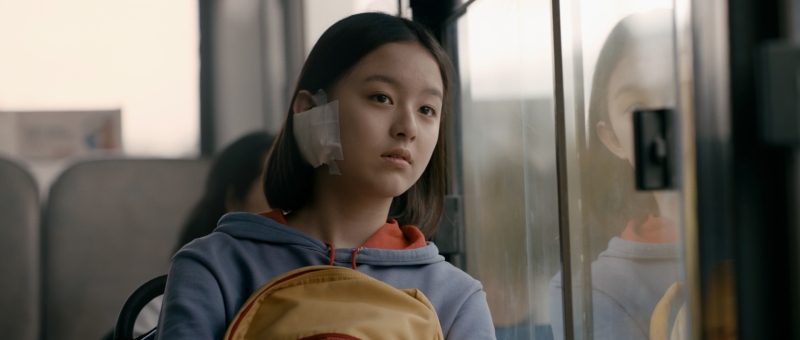
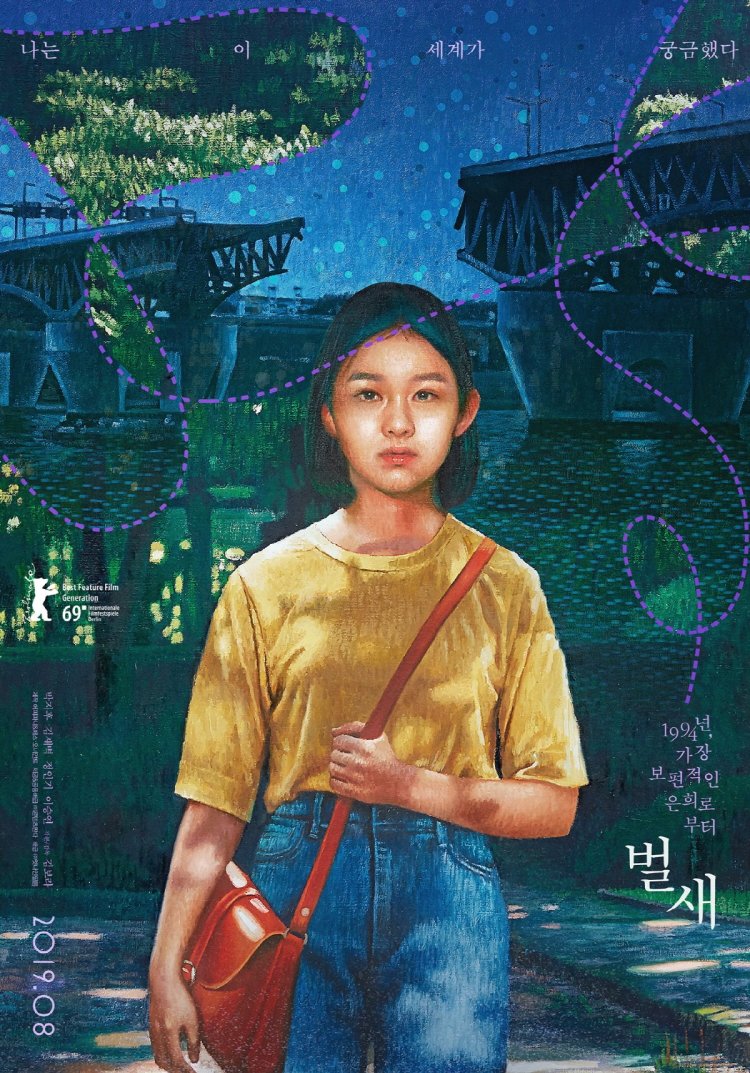
House of hummingbird poster 1“The world is fascinating and beautiful” the teenage protagonist of Kim Bora’s House of Hummingbird (벌새, Beolsae) is told in an especially poignant letter recited in the film’s closing moments. It’s a lesson that she’s longing to learn, but finds few willing to teach her in a society whipping itself up into a frenzy of aspiration perhaps at the cost of true human connection. A chronicle of one surprisingly traumatic summer in the newly democratised Korea of 1994, Kim’s film charts its heroine’s gradual progress towards a kind of self acceptance with a melancholy ease as she begins to find her own way despite the toxicity of the world all around her.

14-year-old Eun-hee (Park Ji-hu) is one of three siblings living in a cramped apartment with her harried, emotionally distant parents who run a small rice cake shop. A mediocre, disinterested student she falls asleep at school where the other kids cruelly exclaim that dozy girls like her never make it to college and are destined only to become housemaids to the “successful” adults they assume they’ll be. Meanwhile, Eun-hee’s hardline dad (Jung In-gi) makes her go to Chinese cram school where she “studies” along with her best friend, Ji-suk (Park Seo-yun), spending most of their lesson time making fun of the teacher in hastily written notes.

Previously purposeless, her world begins to widen when the Chinese teacher abruptly quits and is replaced by the infinitely cool, enigmatic university student Young-ji (Kim Sae-byuk) whom she first glimpsed smoking a melancholy cigarette by an open window on the stairs. Strangely captivated by this “odd” young woman, Eun-hee suddenly has the urge to study, especially as Young-ji turns out to be unique among the adults that she knows in that she seems to genuinely care about her and is interested in hearing all about her troubles, which, as we will find out are many.

In the mid-90s, Korea was a newly democratised and rapidly modernising society keen to claim its place on the economic world stage. Where Eun-hee’s parents are defeated, disappointed figures, they want better for their children in the new society but struggle as to how to get it for them. Eun-hee’s mother (Lee Seung-yeon), as we find out from her dejected brother, was bright but had to leave school to pay for his tuition (a promise he seems to think he has not fulfilled). Consequently, the parents are convinced “education” is the way out but fail to realise that their obsession with academic grades is slowly destroying their family home. While Eun-hee is sullen and withdrawn, pushed out by her rowdy family, her older brother’s exam stress often turns violent and her sister skips school to go clubbing in an attempt to escape adolescent anxiety.

Even when Eun-hee discovers a lump on the side of her neck, her mother sends her off to the doctor’s alone though he can’t actually treat her without parental consent which Eun-hee fears they won’t get round to giving. Though they visit her once, they don’t bother to pick her up from an extended stay in hospital and are not home when she returns. Not even an accusation of shoplifting rouses them from their busyness. Eun-hee’s father rudely tells the shopkeeper to stop bothering him and call the police, causing the shopkeeper to feel so sorry for her that he lets her go.

Meanwhile, Eun-hee looks for intimacy in other places. She tries innocent teenage romance with a feckless but good-looking boy, Ji-wan (Jeong Yun-seo), whom truth be told she perhaps likes more as an abstract idea than in himself. The unexpected gift of a bright red rose from a bashful girl (Seol Hye-in) sends her thoughts in another direction but leaves her more confused than ever when that too betrays. Through it all she idolises the mysterious figure of Young-ji with whom she seems to share some kind of affinity and the sense of connection so painfully absent in her frenetic family home.

Eun-hee’s difficult path towards an acceptance of adulthood mirrors that of her nation, finding itself in one particularly traumatic summer marked by a dangerous sense of anxiety in the end of eras as the North’s Kim Il-sung passes away, provoking fears of a disturbance in carefully won political equilibrium. Meanwhile, a literal bridge collapse threatens to destroy Eun-hee’s new path towards maturity once and for all, taking her only source of solace with it. Yet what she learns is that though bad things happen, good things happen too and there are always new people to share them with. She may feel herself to be alone, lost in a confusing landscape and uniquely indifferent to her nation’s relentless pursuit of consumerist success, but she does finally perhaps have herself and new hope for the future found in the security of her own hands.


House of Hummingbird was screened as part of the 2019 Fantasia International Film Festival.

Festival trailer (English subtitles)

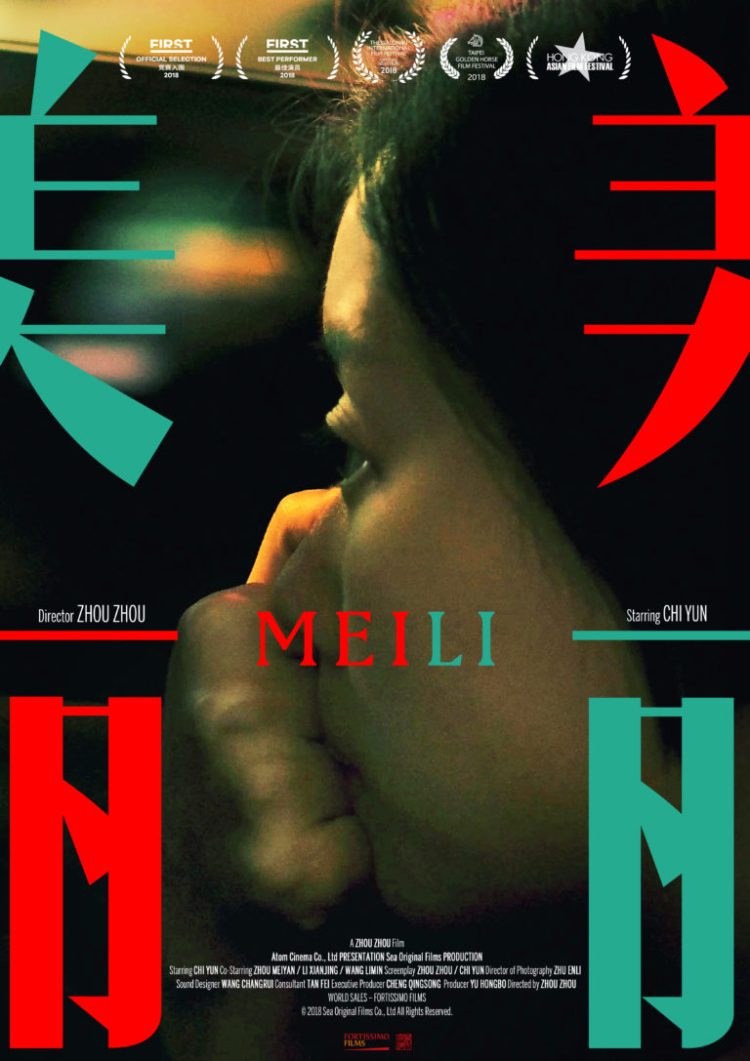
Meili (美麗, Zhou Zhou, 2018)

Meili poser 2Though Mainland cinema has a famous aversion to the representation of LGBT lives on-screen, there does seem to have been a notable shift towards the positive in recent years with even big budget blockbuster comedies and family films offering subversive, if subtle, messages of tacit support. Nevertheless, lesbian life continues to be underserved with Fish and Elephant, often regarded as the “first” explicitly lesbian film from Mainland China, released only in 2001. Zhou Zhou’s Meili (美麗) is not an issue film nor does it make much of its protagonist’s sexuality but it does attempt to address the many difficulties she experiences in her life as a gay woman from a humble background.

Meili (Chi Yun) has a casual job in a laundry and lives with her high flying career woman girlfriend Li Wen (Zhou Meiyan) who is often forced to stay out late drinking to excess with colleagues in an attempt to climb the ladder. Li Wen receives the opportunity of an extended business trip to Shanghai and asks Meili to go with her only to change her mind abruptly at the last minute, fearing her colleagues will find out that she’s in a relationship with another woman and it will damage her prospects or perhaps even cost her her job. Though Meili was ambivalent about going anyway, the sudden reversal proves a huge shock, especially as she’s also been let go from her laundry job for having the temerity to ask about the annual leave policy.

Meanwhile, Meili is constantly pestered for money by her hard-pressed older sister (Li Shuangyu) who is married to a man (Wang Limin) so vile Meili can hardly bear to look at him. The reasons for her disdain will become apparent, but adding to the confusing family situation is a little girl being brought up by the couple which is apparently Meili’s. Meili is a lesbian with no interest in men which may hint at the reasons she intensely hates the child and resents the entire situation. Despite all that, however, Meili does not seem to be able to cut her sister off and finds herself going out of her way to help her even though she is herself in extreme difficulty.

Toughness and tenderness do seem to go together as we witness Meili set up an IV for her hung-over girlfriend, berating her for drinking too much yet again but caring for her anyway. Meili blows up at her brother-in-law’s, overturning their dinner table when he insults her in front of his friends, but shuts down when wounded by Li Wen, seemingly unwilling to engage in a probably destructive argument but dragged into one anyway. The relationship between the two women appears settled and positive despite the disparity of their socioeconomic statuses, but there are cracks and when Meili begins to suspect that Li Wen may be seeing a male colleague behind her back, perhaps as a cover or to improve her career prospects, she begins to wonder what they really are to each other.

For Meili who could not rely on her family, and had no future plans or real place to belong, Li Wen had become everything. “Shanghai” is a dream to the youngsters of Changchun who assume the gleaming city must be full of opportunity and excitement but it may well be one beyond their reach even if they manage to escape industrial town casual labour hell. Meili bears her difficult circumstances with fortitude. Obliged to live quietly and under the radar, she works hard and saves her money but is betrayed at every turn – by unscrupulous employers, by her toxic family, by her ambitious girlfriend, and even by her supportive and well meaning friends who reluctantly decide that they will have to leave her behind alone in order to chase their own dreams in the city. Having lost everything and all hope for the future, violent revenge seems an unavoidable consequence of her almost total oppression.

A popular name for baby girls, “Meili” means beautiful but there’s precious little beauty in Meili’s increasingly grey and hopeless world. Human selfishness, capitalistic avarice, and conservative patriarchal values conspire to rob her of all possibility for life or forward motion. There is no path out of poverty and little possibility of happiness in being able to live openly and equally with a woman by whom she is fully loved. Painting a bleak picture of life in post-reform provincial China, Zhou’s debut presents a refreshingly normalised depiction of a same sex relationship while making plain each of the various ways its heroine is backed into a corner by the oppressive and increasingly unequal society in which she lives.


Meili was screened as part of the 2019 Chinese Visual Festival.

International trailer (English subtitles)

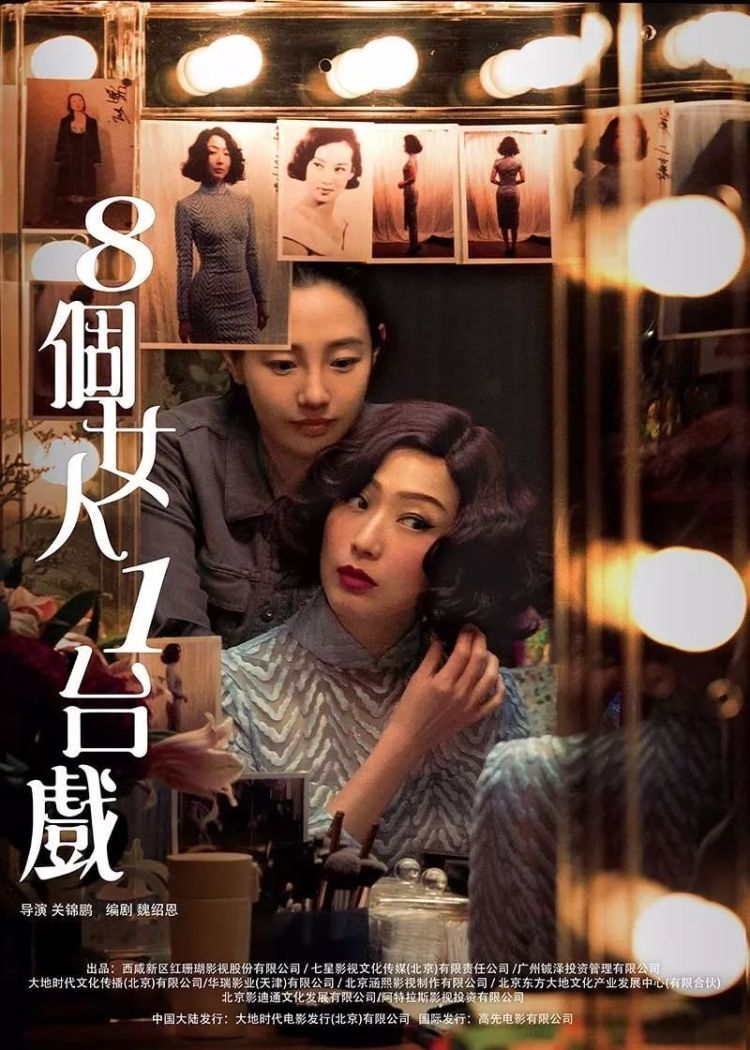
First Night Nerves (8個女人1台戲, Stanley Kwan, 2018)

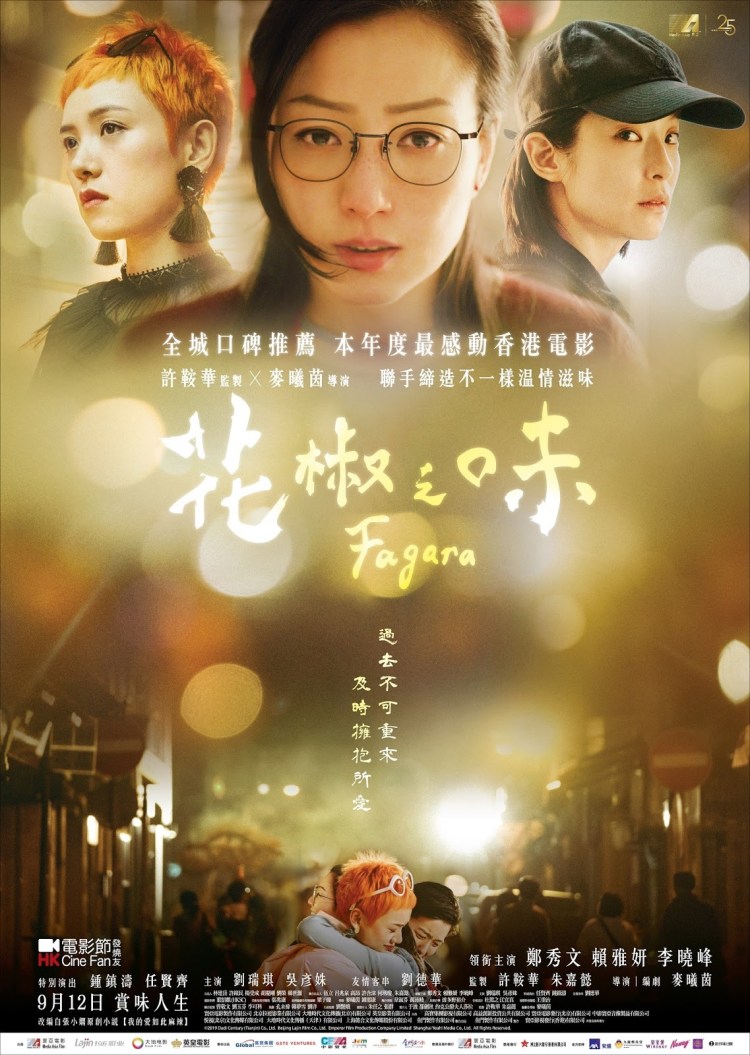
First night nerves posterStanley Kwan returns to the director’s chair after a lengthy hiatus with a cheeky piece of self-referential meta comedy revolving around two “stage sisters” and their parallel quests to seize the spotlight in the increasingly competitive and celeb obsessed Hong Kong entertainment industry. As implied by its Chinese title “Eight Women, One Stage”, First Night Nerves (8個女人1台戲) is an almost exclusively female affair in which straight men barely feature, but for as much as it heartily embraces the cattiness of backstage life it is also keen to affirm the many ways in which women support and nurture each other even if it is clear that the arts are not always as liberal as one might expect them to be.

Kwan begins in high camp as the diva actresses square off during a tense press conference for an upcoming play which marks the long awaited comeback of veteran actress Xiuling (Sammi Cheng Sau-man) who abruptly retired some years previously, notably playing opposite the slightly younger starlet, Yuwen (Gigi Leung Wing-kei), many accuse of stealing her spotlight (and thereby forcing her off the stage). The behind the scenes gossip makes Two Sisters the hottest ticket in Hong Kong, which is all very good news for Xiuling’s sister-in-law Cong (Angie Chiu) – a wealthy Shanghainese heiress and theatrical impresario producing the play, some say, as a personal favour following the death of her brother in a recent plane crash which has become a minor scandal seeing as he died alongside his American mistress.

A canny business woman, Cong is not above pitting her two stars against each other as a means of getting bums on seats but she also needs to make sure the show goes on which is difficult when Yuwen, still insecure in her star billing, is intent on proving she’s not playing the second lead by constantly upstaging her co-star. Yuwen, it has to be said, is the less sympathetic of the pair – cast early as a divaish upstart who finagled her way into showbiz with sex appeal, while Xiuling remains the dignified, wounded star laid low by life. The truth is, of course, more complex as the two women circle around each other before reaching a kind of equilibrium born of mutual understanding and a healthier professional rivalry.

Before that, however, the two stars occupy two very different camps each with their own retinues. The assistants – Mainlander Nini (Qi Xi), a relative of Cong, and former pool hall girl Yilian (Catherine Chau), support their respective mistresses in different ways but are each responsible for and reflective of their emotional difficulties. Yilian, in a heartfelt conversation with the otherwise perspicacious Nini, explains that she puts up with Yuwen’s sometimes divaish antics and is happy to act as an all purpose maid because Yuwen has also been loyal to her – supporting both herself and her son even after she became famous, making plain that Yuwen is, deep down, a sincere and caring person. Xiuling, meanwhile, is cast as somewhat cold and distant, keeping Nini at arms length and the relationship professional despite Nini’s, as it turns out, entirely accurate characterisation of her strangely intense friendship with adoring lesbian heiress “Master” Fu Sha (Bai Baihe).

Despite the supposed liberality of the arts, Xiuling is not the only one to experience mild discomfort with homosexuality even if her coming around to a surprise announcement from her son eventually gives hope to the lovelorn Sha whose confused grandmother has offered a vast bounty in the hope of hooking a prime son-in-law in a ripped straight from the headlines subplot. Transgender playwright An (Kam Kwok-Leung) encounters frequent transphobic slurs passed off as an extension of divaish lovey banter and is never fully accepted as a woman by her colleagues, subtly hinting at the extent to which LGBTQ issues still struggle for mainstream acceptance.

Underneath the high camp and beautifully pitched melodrama, Kwan makes space for subtle barbs towards the creeping influence of the Mainland in Hong Kong cinema as Yuwen irritatedly admits she’s considering learning Mandarin while outraged that producers on a previous film had the audacity to dub her dialogue and insisting everyone stay in Hong Kong to watch the Cantonese version. Behind all the bitchiness and backstabbing, there is real affection for the Hong Kong entertainment industry if tempered by a mild anxiety for its future as exemplified by the strangely warm closing scene in which the two divas sit shoulder to shoulder appreciating the beauty of Victoria Harbour while acknowledging their own small role in ensuring it survives.


First Night Nerves screens as the opening gala of the 2019 Chinese Visual Festival at BFI Southbank on 2nd May where director Stanley Kwan will be present for a Q&A.

Original trailer (English subtitles)

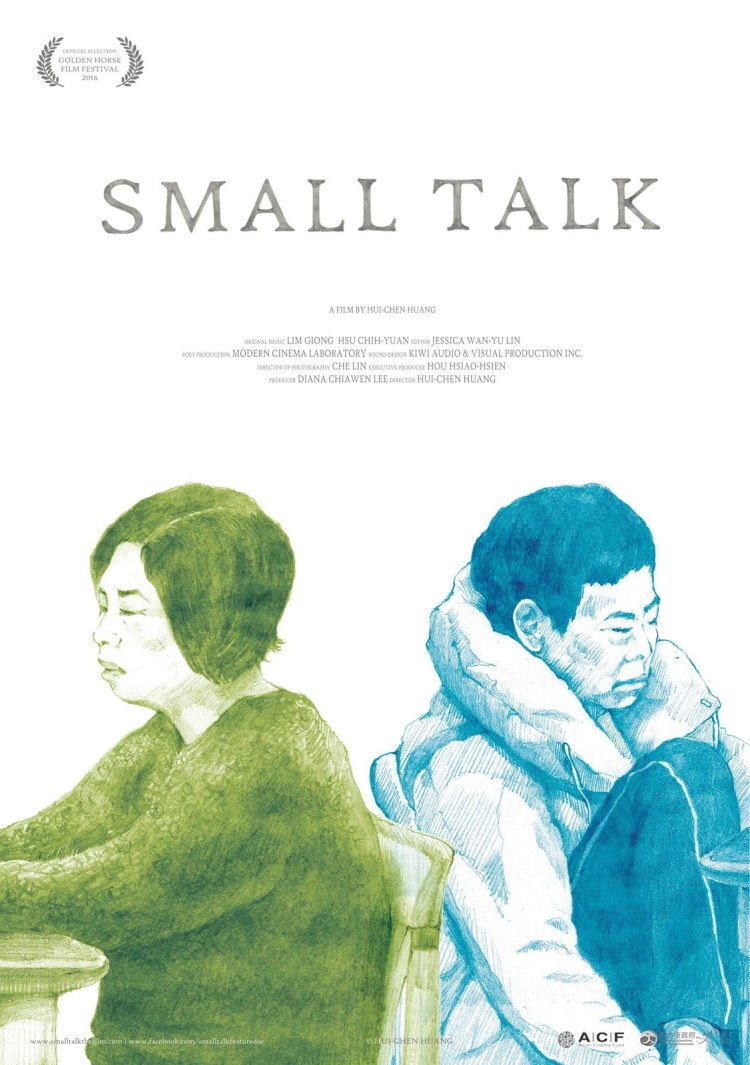
Small Talk (日常對話, Huang Hui-Chen, 2016)

Small talk poster“Who would want to understand me?” asks the laconic mother of filmmaker Huang Hui-Chen early in her autobiographical documentary, Small Talk (日常對話, Rì Cháng Duì Huà). “We do” the director replies, “but you won’t let us”. Huang’s film is, in a sense, an attempt to break through an emotional fourth wall in order to make sense of her complicated relationship with her distant mother Anu if only to ensure that her own daughter never feels as rejected or isolated as she herself has done living under the same roof with a woman she cannot quite claim to know.

In fact, Huang’s childhood memories of her mother are mainly to do with her absence. Even her younger sister eventually remarks that she always felt as if her mother was uncomfortable at home, preferring to spend time out with her friends rather than with her children. Forced to join her mother in her Spirit Guide business rather than attend school like the other kids, Huang began to resent her but also longed to be close to Anu despite her continuing distance. This desire for closeness is, ironically, only achieved through the introduction of the camera, acting as an impartial witness somehow uniting the two and making it possible to say the things which could not be said and ask the questions which could not be asked.

For Huang, the central enigma of her mother’s life is why she married man and had two daughters if she always knew she was gay. That her mother is a lesbian is something Huang always seemed to just know – it’s not as if Anu ever sat her down and explained anything to her, she gradually inferred seeing as her mother had frequent female partners and seemed to prefer spending time with groups of other women. Putting the question to her extended family perhaps begins to illuminate part of an answer. Like Anu, they will not speak of it. They claim not to know, that they do not want to know, and that they would rather change the subject. Even Anu, who otherwise seems to have no interest in hiding her sexuality, remarks that it “isn’t a good thing to talk about”. Nevertheless, her marriage seems not to have been a matter of choice. In those days marriages were arranged by the family, which is perhaps how she ended up with a man her sister describes as “no good” who later became a tyrannical, violent drunk she eventually had to flee from and go into hiding with her two young daughters.

Abusive marriages become a melancholy theme as Anu briefly opens up to recall throwing away sleeping pills her own mother had begun to stockpile in desperation to get away from her violent husband. A former girlfriend also mentions having divorced her husband because he was abusive, but seems surprised to learn that Anu had been a victim too. According to her, Anu had told her she was married once but only for a week and that her two children were “adopted”. Of course, this is mildly upsetting for Huang to hear, but seems to amuse her in discovering her mother’s tendency to spin a different yarn to each of her lovers to explain the existence of her family while also distancing herself from it. This seems to be the key that eventually unlocks something of Anu’s aloofness. Humiliated by her capitulation to marriage and then by her mistreatment at the hands of her husband, she cannot reconcile the two sides of her life and has chosen, therefore, to reject the idea of herself as a mother. Something she later partially confirms in admitting that though she does not regret her daughters, given the choice she would not marry again, not even if same sex marriages were legal believing herself to be the sort of person best off alone.

Huang interrogates her mother with a rigour that is difficult to watch, often to be met only with silence or for Anu to walk away with one of her trademark “I’m Off”s. It may be true that most people have something they would rather not talk about, and perhaps Anu is entitled to her silence but if no one says anything, then nothing will change and the cycle of love and resentment will continue on in infinity. Using the camera as a shield, Huang brokers some painful, extremely raw truths to her elusive mother and does perhaps achieve a moment of mutual catharsis but is also too compassionate to satisfy for laying blame, exploring the many social ills from entrenched homophobia to persistent misogyny and even the class-based oppression hinted at by the use of native dialect rather than standard Mandarin which help to explain her mother’s complicated sense of identity. Yet she does so precisely as a means of exorcising ghosts more personal than political in the hope that her own daughter will grow up to know that she is loved, unburdened by a legacy of violence and shame, and free to live her life in whichever way she chooses.


Small Talk was screened as part of the Taiwan Film Festival UK 2019.

Original trailer (English subtitles)

Luxurious Bone (贅沢な骨, Isao Yukisada, 2001)

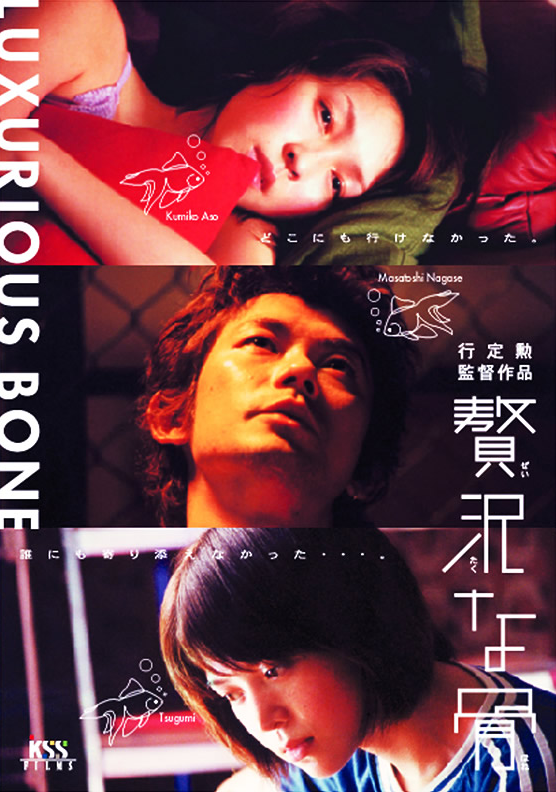
Luxurious Bone poster

Isao Yukisada made his name with the 2004 hit Crying Out Love, in the Centre of the World, but even before becoming a “junai” pioneer his early films were far from strangers to melancholy, impossible romance. The strangely titled Luxurious Bone (贅沢な骨, Zeitakuna Hone, AKA Torch Song) is a case in point in its early, ambiguous treatment of same sex love and emotional repression. Though in some senses very much of its time, Yukisada’s sad chamber drama is a sensitive exploration of the path towards awakening, if ultimately not to happiness.

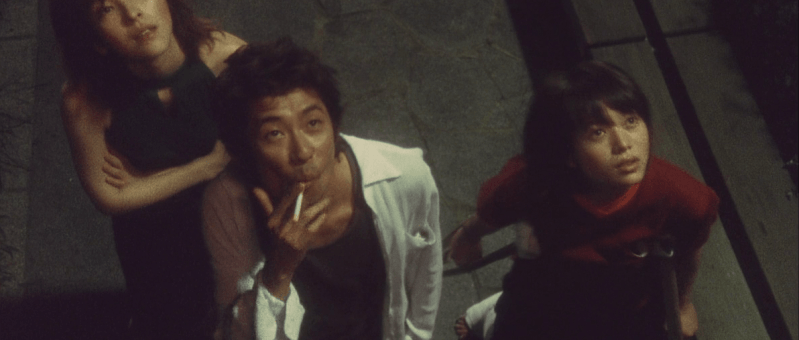
The drama begins when Miyako (Kumiko Aso) gets the titular “luxurious bone” lodged in her throat. In this case, it’s an eel bone which is a fish too expensive for either she or her roommate Sakiko (Tsugumi) to eat very often, hence its tinge of luxury even if there’s relatively little difference when it’s tickling your trachea. “Roommate” might not be the best way to describe exactly what Sakiko is to Miyako, though their relationship seems curiously ill-defined. The two women share a bed, and seemingly a life, but perhaps platonically. Sakiko wants to look for a job, but Miyako doesn’t quite want her to because she’s happy to support the pair of them on her wages as a sex worker. Likewise, Sakiko isn’t quite happy with Miyako’s line of work, not because she’s jealous or judgmental, but because she worries the job is unpleasant. Miyako reassures her that it’s fine because she feels nothing at all during sex so mostly it’s just dull.

All that changes however when Miyako meets unusual client Shintani (Masatoshi Nagase) who goes to the trouble of buying her a hamburger bento because he heard that’s the sort of thing you’re supposed to do in these situations. Shintani blows Miyako’s mind which isn’t something she was expecting or quite knows what to do with. On hearing the news Sakiko seems mildly worried, but following a strange series of events Shintani ends up becoming a minor part of their lives as the third wheel in their previously stable though somehow awkward relationship.

Miyako’s intense opening voice over makes reference to a secret she cannot bear to speak that will lie closed within her heart for all eternity. The fish bone becomes a symbol of the thing stuck in her throat, the truth she is too afraid to voice. Choking, Miyako gasps for air like a goldfish floundering in shallow water but cannot find the strength to swallow.

As we will later discover, this dark secret is bound up with her complicated feelings for Sakiko of which she seems to feel afraid and ashamed, wanting to possess her love in its entirety but also unable to access it and hating herself for her continuing need for possession and control. Her unexpected connection with Shintani is, after a manner of speaking, simply a more “acceptable” way of accepting her desire for Sakiko as she later reveals when confessing that she only ever thought of Sakiko when making love with Shintani which is presumably why only he was ever able to give her a satisfying experience.

Unable to cope with the intensity of her feelings, Miyako turns self destructive and attempts to lure Shintani into a sexual relationship with Sakiko who, apparently, is afraid of intimacy altogether having been raised in an abusive, neglectful home in which she was convinced that she was “dirty” and unloveable, an obstacle in the way of her father’s new relationship with a much younger step-mother (Makiko Watanabe).

Something of a cliché in itself, Luxurious Bone first attempts to delegitimise the feelings of the two women for each other by introducing the figure of Shintani to suggest that their problems are largely down to not having met a good man. Miyako sleeps with Shintani to feel closer to Sakiko, while Sakiko begins to move past her emotional trauma only thanks to the gentle machinations of Shintani. Their strange ménage à trois brings them together whilst driving them apart as the two women attempt to touch each other through Shintani while he remains detached and conflicted if perhaps wilfully used. Miyako’s self destructive impulses push her towards burning her world before facing what it is that frightens her. Only a strange encounter with another woman in a club shows her that her fear was not so much love as submission, while Sakiko tries to reconnect with her childhood self to move past her emotional trauma.

Despite its motion towards a positive resolution, Luxurious Bone cannot quite find the courage of its convictions and as quickly delegitimises the love as it tried to legitimise it through leaving Sakiko broadly where she started – lost, confused, and afraid, uncertain if unresolved longing is a natural condition of living. Perhaps of its time and overly simplistic in its treatment of complex issues from traumatic childhoods to shame and repressed sexuality, Luxurious Bone nevertheless has its heart (broadly) in the right place even if it leaves its lovelorn youngsters in the same position as many a Yukisada hero still looking for their place in a cruel and arbitrary world.


Original trailer (no subtitles)

Torch Song by The Humpbacks which features prominently throughout. The song was actually written for the film and is performed by Masatoshi Nagase.

Keiko (Claude Gagnon, 1979)

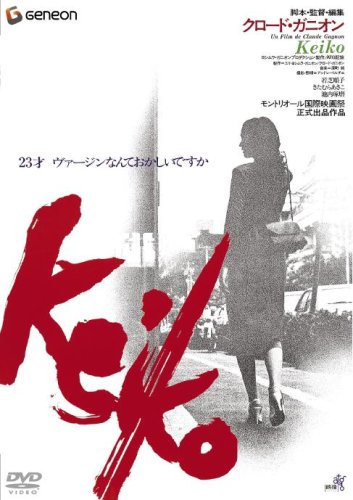
Keiko DVD coverThe Art Theatre Guild of Japan found itself in an awkward position in the late ‘70s. The kind of politically charged art cinema which had been its mainstay throughout the ‘60s was now out of fashion in the post-Asama Sanso world. The studio was then looking for new, young, dynamic voices who could potentially have something equally new and radical to offer to the the mid-’70s Japanese cinema scene which increasingly leaned towards the populist. That is perhaps how they came to work with émigré French Canadian filmmaker Claude Gagnon, distributing his independently produced debut feature Keiko. Gagnon’s film was nothing if not atypical of the time, dealing with the relatively taboo subject of female sexuality and the patriarchal society and doing it with a lens influenced more by European arthouse and New American cinema than by that of Japan or by the avant-garde movement which had forged ATG’s central ethos.

As the title implies, the tale revolves around the titular Keiko (Junko Wakashiba) – a 23-year-old office worker preoccupied with her lack of romantic success. Hoping to find a potential boyfriend, she spends her evenings in cafes, often staying until closing before going home alone. Embarrassed to still be a virgin at 23, she invites her old high school teacher (married with two children) out for a drink and they wind up in a love hotel but if Keiko thought losing her virginity would give her more confidence in dating she couldn’t be more wrong.

Soon enough she ends up in another “relationship” with a guy she meets in cafe but it’s obvious to everyone but Keiko that he is just using her for sex. Masaru (Takuma Ikeuchi), a photographer, constantly talks about himself and his work, refusing to go “out” on dates and preferring to simply arrive at Keiko’s flat and then leave again once he gets what he came for, claiming that his “mother” is waiting up for him at home. Eventually Keiko’s suspicions get the better of her and she finds out he is already married with children. The affair ends, leaving Keiko resentful and broken hearted. She drifts into a relationship with a colleague (Toshio Hashimoto) who is nice enough but Keiko isn’t really interested in him. Then something unexpected happens – a drunken experience with a female colleague leads to the most fulfilling and happiest period of her life but she is also plagued by calls from home about arranged marriages and “settling down”.

Told from Keiko’s perspective, Gagnon’s film paints a bleak picture of female existence in ‘70s Japan. Keiko’s office lady job is only really a stop gap ahead of a marriage and even at 23 she’s beginning to panic about finding a husband before her father finds one for her. She is shy and demure, modest and innocent as her society demands her to be, but she is also lonely. The camera finds her sitting alone at tables meant for four, the bars and cafes often completely empty save for her as they approach closing time. Keiko waits until the last minute, telling the girl behind the counter that she’s nothing much to do at home, but there’s nothing much to do in the bar either and she simply sits there all alone not talking to anyone, waiting for someone to take an interest only they rarely do.

Following the first few unsuccessful encounters with men, Keiko is initially confused by the unexpected interest from female colleague Kazuyo (Akiko Kitamura). Kazuyo, free spirited and independent, is perhaps portrayed more stereotypically with her short hair and tendency to dress in an overtly “masculine” fashion outside of work but few seem to have picked up on these seemingly “obvious” clues and she remains free to live her life in the way in which she chooses. Unlike Masaru who left in the middle of the night, Kazuyo is still around the next morning and not only that, she offers to cook breakfast and even takes a trip to the pharmacy to pick up some aspirin for Keiko’s sore head. Somewhat mystified by the whole affair and Kazuyo’s kindly consideration the morning after, Keiko tells her it might be better to forget about what happened the night before which Kazuyo again accepts without rancour.

Touched by all this maturity, Keiko begins to look at Kazuyo differently, and eventually decides to take a chance on something different. Before long they’ve taken an apartment together a little way out of town and begun building a life for themselves. Kazuyo is thinking about the future – she wants to start her own business and wants Keiko to help her, but the need for additional capital has her staying out evenings working in bars to earn extra money while Keiko is still getting letters from home about marriages.

Told entirely from Keiko’s perspective, Gagnon’s script veers away from its most interesting questions – why someone would willing abandon the greatest happiness they have ever felt and are certain they ever will feel to succumb to societal pressure to conform. Keiko’s oppression is almost taken as read, a constant background presence that never thinks to explain itself. Yet she is a grown woman (as she tries to point out to her father) who could simply have refused to take phone calls or answer letters. She has the power to say no to an arranged marriage, even if she perhaps does not have the power to live openly with Kazuyo as a married couple might. The film offers few explanations why she continues to placate a father she doesn’t like very much who lives a long way away save for leaving it at a need to be accounted “successful” in the eyes of society even if that conventional “success” is destined to make her very unhappy.

Gagnon’s approach is informed by European arthouse and to a lesser extent by contemporary New American cinema in attempting to create a kind of cinematic naturalism that exists in direct contrast to the expressive acting styles often found in more populist entertainment. He demonstrates the inertia of Keiko’s life by capturing her stillness, the scenes remain the same – only the outfits have changed. The camera pulls away from her as if it’s almost painful to do so, emphasising her loneliness and isolation as she remains trapped and alone in a society which abhors individualism but in reality cares little for individuals. The conformist society and its entrenched patriarchal social codes conspire to destroy happiness in order to maintain “stability”, condemning each to a particularly individual kind of misery from which it seems impossible to escape.


Original trailer (no subtitles)

A Crimson Star (真っ赤な星, Aya Igashi, 2018)

A Crimson Star posterFalling in love is, perhaps, like standing too close to the sun and for the young heroine of Aya Igashi’s debut feature A Crimson Star (真っ赤な星, Makkana Hoshi), it means nothing unless it burns. Set in the otherwise serene environment of a rural Japanese summer, full of blue skies and green fields bursting with life, A Crimson Star is the story of two ostensibly very different women in very different places who nevertheless develop an essential and inescapable bond in their shared sense of loneliness and isolation, but their relationship is also a problematic one in which the familial and the romantic have become inextricably linked.

14-year-old Yo (Miku Komatsu), undergoing a lengthy period of hospitalisation for an undisclosed illness, develops an intense fondness for her kindly nurse, Yayoi (Yuki Sakurai). On her discharge, however, Yo is stunned to learn that Yayoi has abruptly resigned and all but disappeared. Meanwhile, Yo’s family life continues to deteriorate. Her disinterested mother has got a new boyfriend who is often drunk and violent. In order to escape him, Yo takes a trip to the corner shop and makes a surprising discovery in a street of parked cars which turns out to be (as yet unknown to the the naive Yo) the secluded byroad used for secret assignations seeing as this is such a one horse little town that there isn’t even a love hotel. Yayoi has become an embittered sex worker and her lonely degradation breaks Yo’s heart. When her mother’s boyfriend eventually begins molesting her, it’s to Yayoi that Yo turns looking for care and support from a woman who had nursed her but is no longer a nurse.

The “crimson star” of the title most obviously refers to the wings of the paraglider gazed at so often by the earthbound Yo, but it is also echoed in the tiny scars and wounds which define the relationship between the two women. In the first scene of the film, the hospitalised Yo has a prominent bruise on her foot apparently caused by Yayoi nicking a vein when taking a blood sample. Even so, Yo leans in tell her that she is her favourite nurse – words which bring tears to Yayoi’s eyes and perhaps precipitate her decision to leave the hospital. For Yo, who is emotionally neglected by her mother and has never known true care and affection, the bruise becomes an odd kind of proof of love which she has come to associate with pain. Later, Yo spots an odd mark on Yayoi’s neck – she is of course too young to know what it is. Yayoi shows her, literally, by biting her slightly below the shoulder and creating another kind of “crimson star”.

Yo’s early attraction to the 27-year-old Yayoi has a distinctly maternal quality in which she looks for the same kind of compassionate care she experienced in hospital and which her mother refuses to give her. There is also, however, a nascent sexual attraction which provokes intense jealousy as Yo attempts to get closer to Yayoi but finds herself unable to achieve the kind of all encompassing love she is seeking. Given Yo’s extreme youth, the relationship is in many ways extremely inappropriate and infinitely confused, a combination of familial, platonic, and romantic longings which appear to be unbreakable but remain unresolved. Yo, almost becoming the thing she wants to find, begins to take care of the depressed, broken Yayoi – tidying the apartment, folding washing, and repairing external signs of damage, while Yayoi becomes care taker rather than care giver presenting her with an opportunity to reexamine her self-destructive tendencies including a dead end relationship with married paraglider Kengo (Katsuya Maiguma).

Kengo becomes a particular point of contention for Yo, not just for reasons of jealousy but because he causes Yayoi to suffer. Early on she spots him on his bike with his small daughter, every inch the doting dad which is, of course, something she never had. Kengo is also a symbol of familial betrayal as he undermines his seemingly happy family by continuing to string Yayoi along on what is, ironically enough, a no strings basis. Family has betrayed both women who find themselves adrift and alone with no clear anchor except perhaps each other.

Yet what Yo wants is to escape – to soar in the quiet skies high above all, free of earthly constraints like the paraglider she so often sees, but paragliders are crafts built for two and Yo wants to go with Yayoi, strapped together enveloped in a private world into which nothing else may enter. The “crimson star” then becomes the unattainable feeling of closeness and total connection that continues to elude her, furthering her view that love is pain and the pain she feels must be love. Backed by a crimson sky, the future is both hopeful and filled with light, but perhaps also tethered and marked by a melancholy resignation. Beautifully composed, Igarashi’s debut is a raw, often uncomfortable examination of an elemental bond forged between two lonely, damaged women each seeking impossible connection as an escape from a loveless existence.


A Crimson Star made its World Premiere at the 2018 Raindance Film Festival.

Original trailer (English subtitles)
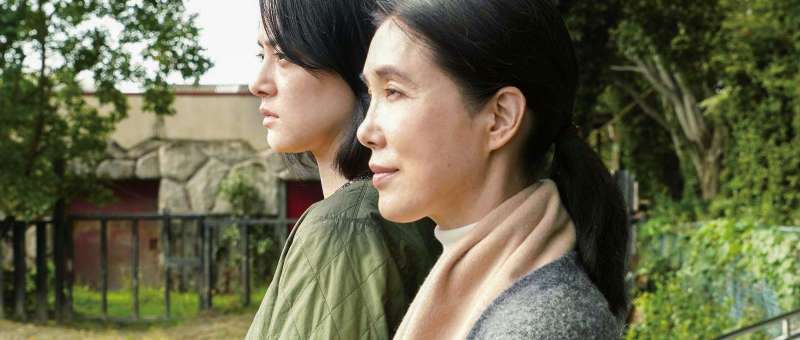
After My Death (죄 많은 소녀, Kim Ui-seok, 2017)

After my death posterKorea has one of the highest suicide rates in the world as the pressure cooker society conspires to railroad those who find themselves in someway excluded from its rigourously conformist demands toward inescapable despair. With the phenomenon so common, has it become true that society itself has become inured to its effects, seeking not to ease suffering but to control damage? For the clutch of schoolgirls at the centre of Kim Ui-seok’s After My Death (죄 많은 소녀, Choe Manheun Sonyeo), suicide has taken on its own allure as an escape from the demands they feel themselves unable to meet but there are few looking to guide them away from the abyss rather than to negate their own responsibility for failing to do so.

A high school student, Kyung-min, is missing. Her backpack and shoes have been found near a local bridge and it is feared that she may have committed suicide though there is no note or additional evidence to suggest that she has taken her own life nor have they found a body. With speculation rife, all eyes are on another student, Young-hee (Jeon Yeo-Bin), apparently one of the last people to have seen Kyung-min alive. Though Young-hee and Kyung-min had been good friends in the past, they were no longer close and had apparently run into each other by chance along with another friend of Young-hee’s, Han-sol. Han-sol’s testimony differs from Young-hee’s in that she says Kyung-min seemed “gloomy” and that the evening had taken an intense turn after she suddenly declared her love for Young-hee only for Young-hee to tell her to prove her devotion by dying.

Things get worse for Young-hee when the police track Kyung-min’s movements via CCTV and find footage from a nearby tunnel which appears to show a gentle kiss between the two girls. Hounded, Young-hee finds herself a target of persistent harassment by her school mates who insist that she is in someway cursed and “infects” people with “bad thoughts” while Kyung-min’s mother (Seo Young-hwa) has also started semi-stalking her hoping to find out “the truth” about what happened to Kyung-min.

The other girls, testifying to Kyung-min’s character, reinforce the view that she was “gloomy”, a loner who didn’t fit in. She didn’t like K-pop, didn’t socialise much, and was into depressing things. When suspicions rise regarding her possible suicide, the school is quick to leap to conclusions – that like many in South Korea she had become over anxious about college applications, but as her grades were good and Kyung-min was a diligent student this explanation seems unlikely which works out well for the school. Kyung-min’s teacher quickly goes into damage limitation mode, confirming that she had been withdrawn, struggled to communicate with her classmates, and was probably very lonely though he lays most of the blame on melancholy ‘90s shoegaze which he assumes must have somehow tipped her over the edge. What all of this means is that it’s not his fault, and he feels he has justification for “failing” in his duties of pastoral care towards a student whom by his own admission he suspected of being in distress.

During Young-hee’s questioning, she repeatedly tells the police officer in charge that she too is suicidal and that she told Kyung-min about her own plan to jump off a bridge because she thought it might help. Young-hee is quite clearly depressed even before all of these very difficult events but finds no one willing to listen to her distress, only making herself a magnet for further hostility from just about everyone with even her teacher berating her for stealing Kyung-min’s thunder in insisting that she stole her idea of jumping off the bridge rather than trying to commit suicide through an overdose of sleeping pills which, Young-hee claims, was her intention before she discouraged her lest she end up still alive but brain damaged.

The lingering doubt is to which “me” is the owner of “death” in the title, or to whom the Korean title of “unrighteous girl” might apply. The motives for Kyung-min’s (presumed) death may be beside the point as a policeman investigating the case suggests – perhaps she didn’t want “understanding” so much as oblivion. What we’re left with is a rather poignant love triangle and the suggestion that Young-hee’s intense depression is a result of repressed same sex attraction which opens another series of questions about which acts are “unrighteous” – suicide or love, with the unfortunate implication that perhaps one cannot but lead to the other. In any case, the problem is that all these kids want to die and the adults no longer want to stop them, only to avoid any potential responsibility for what the children in their care may or may not try to do. Melancholy and drenched in despair, After My Death has nothing but sympathy for its lonely teens but finds no possible escape from the crushing vice of a blame fuelled conformist society.


After My Death was screened as part of the New York Asian Film Festival 2018.

Original trailer (English subtitles)
Interview with director Kim Ui-seok from the 2017 Busan International Film Festival (English subtitles)

Chedeng and Apple (Si Chedeng at si Apple, Rae Red & Fatrick Tabada, 2017)

chedeng and apple posterWhen you feel you’ve discharged all your social obligations, you might feel as if you’ve a right to live by your own desires. Whether the dreams you abandoned in youth will still be there waiting for you is, however, something of which you can be far less certain. Following the death of her husband, one Filipina grandma decides to find out, taking to the road with her best friend who is, incidentally, wanted for murder and carrying around the severed head of her late spouse in a Louis Vuitton handbag belonging to her vacuous step-daughter, in search of the one that got away.

Chedeng (Gloria Diaz), apparently plotting the death of her sickly husband, is shocked to find him already gone when she takes him his breakfast. Shielded by the window which places her in the crematorium and her children outside it, Chedeng decides to make a shock announcement that comes as no surprise to her supportive best friend Apple (Elizabeth Oropesa). Standing front and centre and with intense determination, she announces to her grown up sons that she is a lesbian and will now be embarking on a more authentic life. Her sons are scandalised. Despite the fact that her youngest son is gay himself (and slightly hurt that his apparently supportive mother had never thought to share her own conflicted sexuality with him), the other two cannot get their heads around it and assume their mother has had some kind of mental breakdown.

Meanwhile, Apple whose life has been far less conventionally successful has been married to a wealthy but violent and abusive husband for the last five years. Praying furiously for his demise through black magic, she eventually snaps and kills him. Calling Chedeng for help, the pair dismember (in full view of the “discreet” maid) and bury the body (save for the head which Apple insists on keeping, and his penis which she can’t resist nailing to the wall and ruining the perfect crime in the process). With both their husbands out of the picture the pair decide to go on the run to look for Chedeng’s first love – a woman called Lydia for whom she had promised to return, only that was over 40 years ago.

At heart Chedeng and Apple is a story of liberation. The two women have been consistently impeded by men who prevented them from living the lives they wanted to live, trapping them within the patriarchal system of the conventional family. Chedeng, a serious and earnest woman, has prided herself in conforming so completely to the social role expected of her. A straight laced schoolteacher, she married well and kept a fine home raising three sons and supporting her husband who apparently knew she was gay and just accepted it. With her children grown and her obligation to the man she married at an end, she finally feels herself free to be her true self. Apple meanwhile has had the opposite experience in a series of unfulfilling relationships with useless men on whom she blames (rightly or otherwise) her inability to pursue her dreams of becoming an actress. Finally ending up in an abusive but economically comfortable relationship, she eventually has no choice but to free herself through violent means.

A pervasive sense of melancholy haunts the film as it becomes clear how much Chedeng has suffered in sacrificing her authentic self to live the life society expected of her. Lydia, the lost love of her youth, was braver – she dreamt of escaping to an island for a simple fisherman’s life in which she and the woman she loved could perhaps live together wanting little more than each other’s company. Chedeng, conventional as she is, could not imagine it and, though she vowed to return and reclaim her love after going to the city, she has waited 40 years and fears it may be too late.

Yet the resolution to her problems isn’t found in romance but in the depth of the friendship she shares with the loose cannon that his Apple – a woman her total opposite who follows her desires to destruction and freely speaks her mind little caring what anyone else may think about it. The spiky banter between the two women has an authentic, lived-in quality that brings a degree of realism to the often absurd adventure and proves a comedic counterpoint to the heaviness of the issues. Warm and oddly hopeful for its aged protagonists, if lamenting that they had to wait so long to achieve their “freedom”, Chedeng and Apple is at once a fierce condemnation of an oppressive, misogynistic society and a joyful celebration of friendship and liberation.


Screened at the 20th Udine Far East Film Festival.

Original trailer (no subtitles)