Released at the tail end of the Bubble-era, Shusuke Kaneko’s vampire dramedy My Soul is Slashed (咬みつきたい, Kamitsukitai) is one of a series of films that seems to be filled with a prophetic sense of dread and the feeling that the good times are about to come to an end. Fiercely critical of the costs of the salary man dream along with the amoral capitalism that seems to have accompanied it, the film may also be drawing inspiration from a then recent contaminated blood scandal as haemophiliacs in Tokyo and Osaka sued the government in 1989 after contracting HIV through infected transfusions.
The hero, Ishikawa (Ken Ogata), works for a pharmaceuticals company that has been accused of engaging in corrupt practices and bribing the government to be able to sell unlicensed medical products. Ishikawa is not aware of this and does not believe the rumours, so is keen to find out what’s been going on at his company. After making some enquiries and attempting to get in touch with a friend in the media, however, Ishikawa is involved in a hit-and-run and taken to hospital where he receives a blood transfusion but eventually dies of his injuries.
A researcher at the same facility, Yuzuko (Narumi Yasuda), has secretly come by a pack of Dracula’s blood that was apparently lost during the recent revolution in Romania where deposed dictator Ceausescu had been experimenting with it. For reasons best known to herself, she decides to stash the blood in the “do not use” draw of the medical fridge, only for it to come to life and jump into the shelf below. Though there is some concern among the medical staff that the pack is not properly marked with a blood type or other information, other staff members become indignant on being questioned about it, so the operating team go ahead and use the unmarked pack without proper procedure being followed, which is how Ishikawa ends up receiving contaminated blood, in this case that apparently belonging to “Dracula”. A distraught Yuzuko attends Ishikawa’s funeral and tells his teenage daughter Saeko (Hikari Ishida) that, assuming she is a virgin, she can revive her father by sprinkling her blood on his ashes, which she does, though Ishikawa is not resurrected until a year later.
Ishikawa had been a loyal salaryman who worked hard and believed in his company, which is why he was so shocked by the rumours and by the suggestion of his colleague Kitahara (Takero Morimoto) that the buck stops with the company president. As a consequence of his dedication to the firm, however, Ishikawa has neglected his family and become a ghostly presence within his own home to the extent that he hardly ever sees his daughter and has, in fact, forgotten her birthday, asking his secretary to pick up a dress as a present which turns out to be too small for her to wear. Saeko appears rather indifferent towards him while is alive and has also started rebelling by staying out all night with her queer-coded, motorcycle-riding friend. Though she misses him when he’s gone, Saeko is also in favour of her mother remarrying a much more attentive man, Tokita (Kazuyoshi Kushida), who brought her a cake for her birthday and seems to fill in with all the other paternal tasks that Ishikawa never paid any attention to because he was so focused on his career.
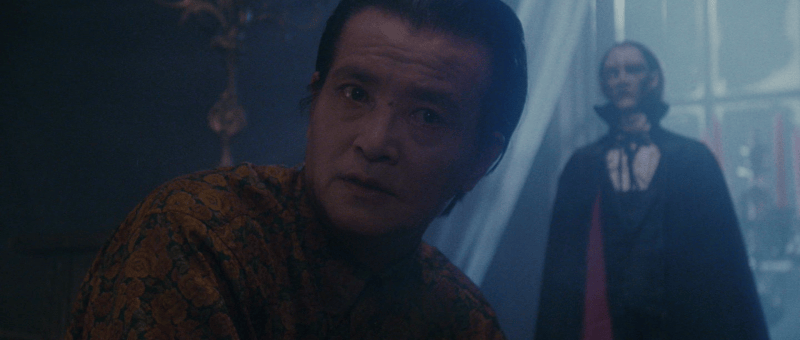
It’s his dedication to his company that Ishikawa most regrets on being resurrected. A year has passed and his family’s already moved on, doing just fine without him, while he was scapegoated for the bribery scandal at work and died in disgrace which might explain why both Saeko and her mother are working around the clock to support themselves. He realises that even though he’s come back, he is not the same person and he cannot simply slot back into his former life even if he’s been able to forge a new relationship with Saeko who declares that she doesn’t care if he’s Dracula, he’s still her father and a good person. At the same time, Ishikawa comes to accept his new Dracula persona as a potential means for good, insisting that there are plenty of bloodsucking people in the contemporary society and Dracula doesn’t seem too bad by comparison.
The interesting this is that Yuzuko’s attraction to him also seems to be bound up with his position as a father, having lost her own at a young age. Yuzuko’s father was apparently one of the foremost Dracula researchers in the world who also helped countless vampires return to being human, even if it didn’t work for everyone and some ended up as ashes once again. Though dating an age-appropriate colleague, she complains that he’s “too young” for her, and longs for the centuries-old embrace of Dracula which is also a reflection of her quasi-incestuous desire for her father whom she never really knew. On the other hand, Saeko comes to a new appreciation of her now anti-corporate dad and resolves that, though she may have his workaholic blood, she won’t sacrifice herself for a company and will earn a living doing something she likes while hanging out with her maybe girlfriend.
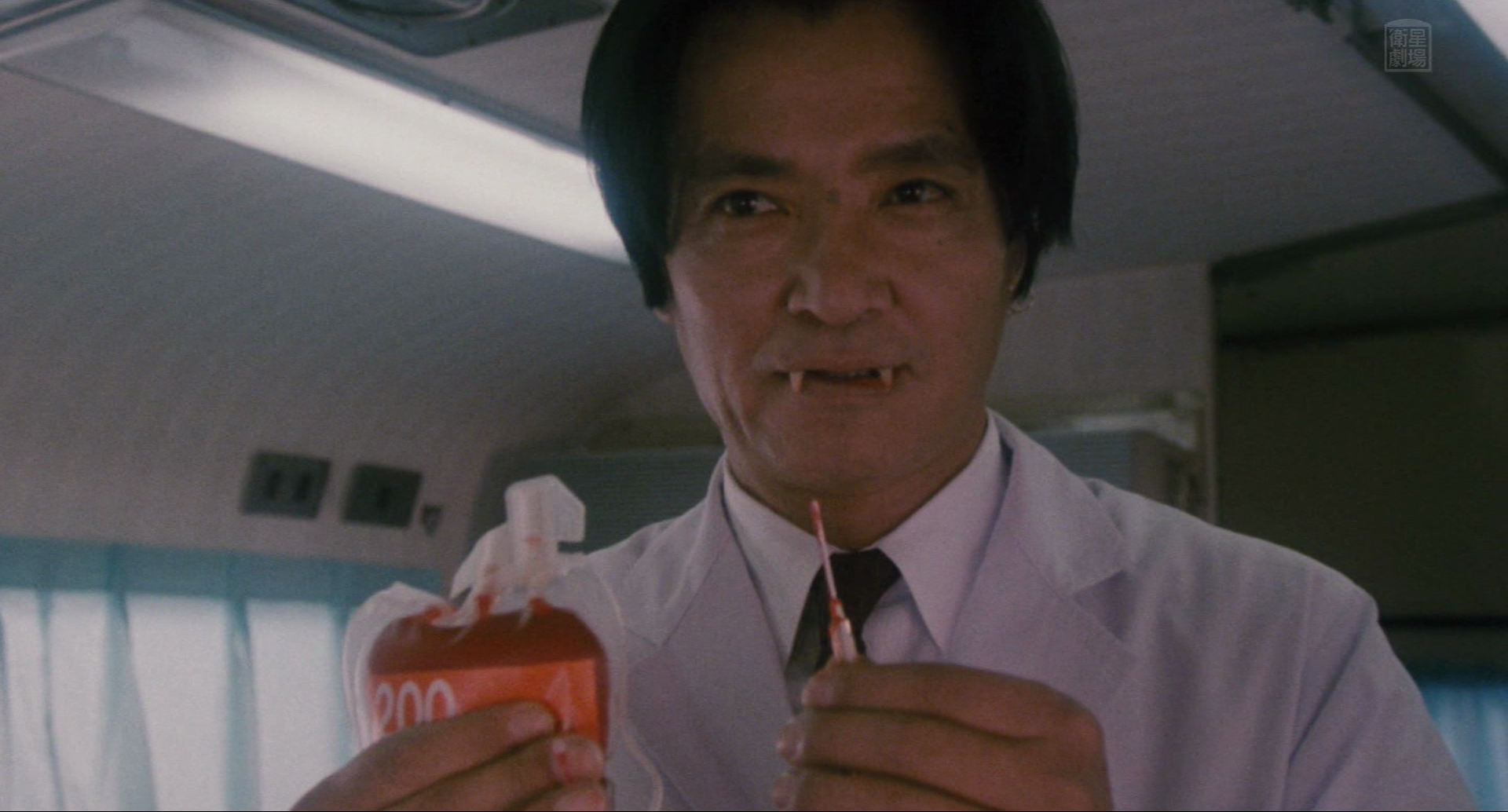
Which is all to say, Ishikawa is more alive now he’s “dead” than he ever was while his heart was still beating. Using his Dracula powers to expose the company’s wrongdoing and force his killer to confess live on air, he turns his back on culturally defined notions of corporate success and retreats to live a quiet life with Yuzuko, who has also become a vampire, in a travelling blood donation van. “Clean blood is rare these days,” Ishikawa reflects hinting at the various corruptions of the late Bubble society which itself heading for an implosion. The project apparently started because Ogata wanted to play a role completely against type, which he undoubtedly does, in embodying an incongruous source of vampiric paternal authority that is determined to live outside the system rather than chase corporate success.