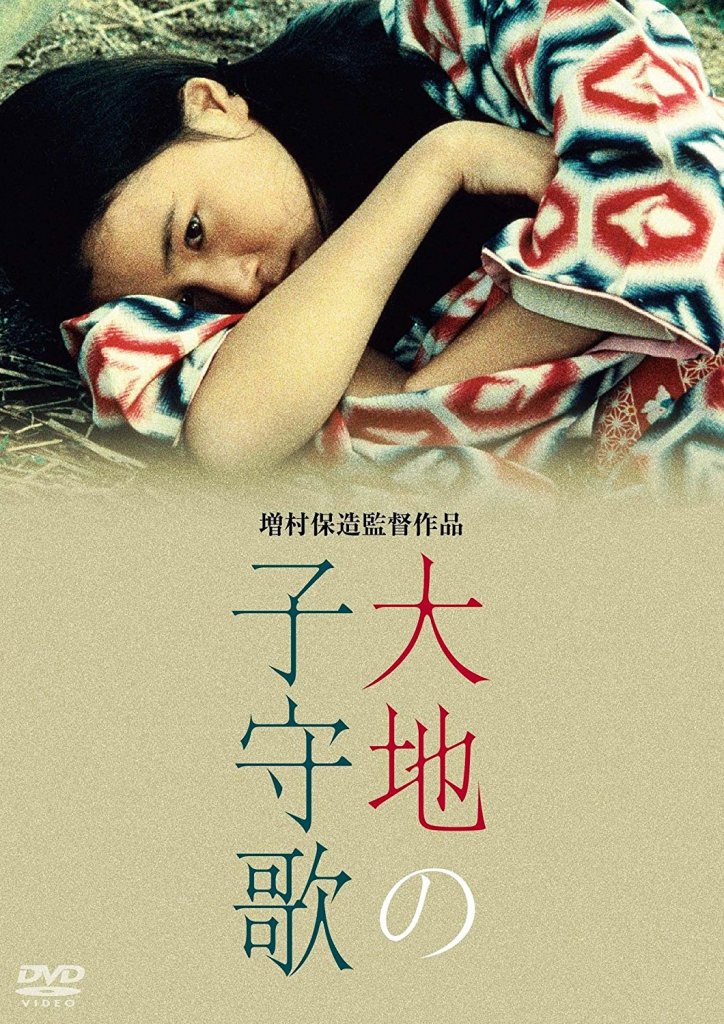
Lullaby of the Earth (大地の子守歌, Yasuzo Masumura, 1976)

lullaby-of-the-earthYasuzo Masumura is best remembered for his deliberately transgressive, often shockingly grotesque critiques of Japanese society and its conformist overtones. Lullaby of the Earth (大地の子守歌, Daichi no Komoriuta) is one of his few completely independent features, filmed after the bankruptcy of Daiei where Masumura had spent the bulk of his early years. As such, it is quite an exception in terms of his wider career both in terms of its production and in its earthy, spiritual themes. Adapted from the 1974 novel by Kukiko Moto, Lullaby of the Earth is the story of an abandoned and betrayed woman but one who also draws her strength from the Earth itself.

13 year old Rin (Mieko Harada) has been living with her adopted grandmother in a remote mountain community. Returning home one day triumphantly carrying a rabbit for dinner, Rin discovers that her grandmother has passed away. Being just a child and now alone and frightened, Rin does not know what to do and later receives harsh treatment from the villagers from whom she temporarily conceals her grandmother’s death. With no one to look after her, Rin is approached by a kind seeming man in Western dress who offers her a good job on a nearby island which, he says, pays well and offers a much better quality of life than Rin’s current survivalist setup in the mountains. Rin has heard tales of men like him before and is not taken in by his arguments, even when he suggests she could use the money to buy a proper grave for her grandmother. She is, however, caught when he mentions taking her to see the sea – something she has been longing for for most of her life.

However, Rin’s pure joy at the waves and endless horizons of the shoreline is short lived when reality hits home and she realises she has been sold to a brothel. The brothel owners are not a bad sort, considering, and intend on using her as a servant until she comes of age but Rin is not having any of it. Refusing to eat, work, or wear her new clothes, Rin is proving to be a very bad investment but changes her tune when she strikes up a friendship with a girl who works at a local store who convinces her that her rebellion is misplaced. Work hard and pay off your debt, she says, and they’ll let you go home. Rin decides to do just that, and with her characteristic energy, but her journey home is not to be such a straight forward experience.

Lullaby of the Earth maybe unusual in Masumura’s filmography due its period setting and gentler, more spiritually orientated progression but Rin is, in many ways, a typical Masumura heroine. A true child of nature, Rin is athletic, at home in the forests and woods trapping rabbits and building fires. Her downfall is brought about precisely because of her desire for total freedom. Longing to see the sea with all of the freedom and possibilities that it suggests, Rin allows herself to be taken in by the false promises of a procurer (presumably alerted by a less than helpful villager), little knowing that she’s damned herself for a period of at least three years.

Made to suffer numerous degradations from the humiliation of her servitude, to a beating that leaves her half dead and her final forced prostitution, Rin maintains her resistance in whichever way she can. Striving for control, Rin takes on a masculine quality defined by strength and agility rather than elegance and beauty. Once again longing for the sea, Rin begs to be allowed to row the boat that takes the girls out to find business from passing ships. “If you take my oar you’ll be in trouble” she later exclaims, clinging to her source of male power even whilst being forced into the gaudy brothel kimono. Displaying her own ability for active choice even within her controlled environment, Rin takes the scissors to her own hair, cutting it short like a man’s.

Given the chance to escape the brothel for a comfortable life as the mistress of a wealthy man, Rin refuses. A decision which seems bizarre to many of the other girls, but Rin will have her freedom back in its entirety – she will not swap one cage for another as the prized possession of a some other authority. Meeting a man who claims he may be able to help her, Rin starts working overtime to save the money to escape with the consequence that her health suffers, leading to almost total blindness followed by listless depression. Only at this point does her inner fire start to waver, but it is never extinguished allowing her to finally make a break for it even if she literally cannot see where she is headed.

Rin’s guiding voices come from the Earth itself as mediated by the kindly internal presence of her grandmother. The soil is sacred, as her grandmother told her. Rub soil into your wounds and you’ll soon be healed. In times of trouble, lie against the Earth’s surface and you will know what to do. Rin wants to find the way back to her mountain, but it may no longer exist for her. Nevertheless, the Earth itself is singing and will tell her where to go, so long as she can find the strength to listen.

Masumura begins the film with Rin at prayer, dressed in the white clothes of a pilgrim and dutifully following the temple paths around the island of Shikoku. Suffering a final PTSD flashback of all she’s suffered since her grandmother’s passing, Rin is once again comforted by the sounds of the Earth, beginning with her grandmother’s voice to which more are slowly added, cheering her on with chorus of support as she walks towards the end of her journey. A wonderful, early leading performance for Mieko Harada, Lullaby of the Earth is a far more new age exercise than Masumura’s generally cynical approach to human spirituality would usually allow but neatly tallies with his primary concerns in its heroine’s eternal quest for her own autonomy, body and soul, as she traverses a cold and unforgiving world.
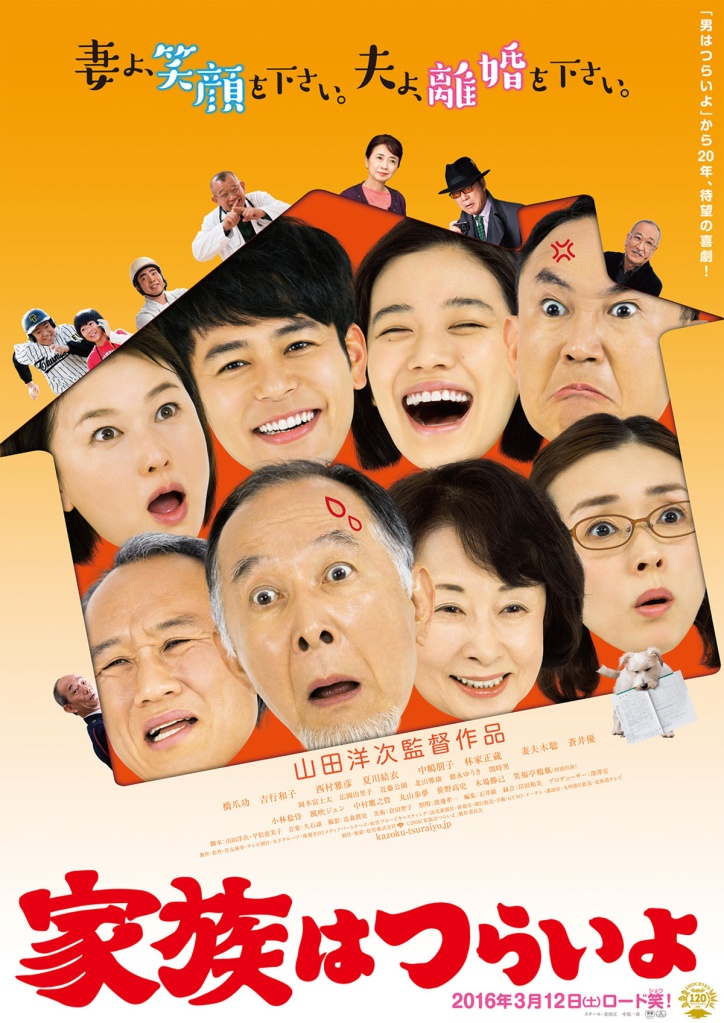


What a Wonderful Family! (家族はつらいよ, Yoji Yamada, 2016)

what-a-wonderful-familyProlific as he is, veteran director Yoji Yamada (or perhaps his frequent screenwriter in recent years Emiko Hiramatsu) clearly takes pleasure in selecting film titles but What a Wonderful Family! (家族はつらいよ, Kazoku wa Tsurai yo) takes things one step further by referencing Yamada’s own long running film series Otoko wa Tsurai yo (better known as Tora-san). Stepping back into the realms of comedy, Yamada brings a little of that Tora-san warmth with him for a wry look at the contemporary Japanese family with all of its classic and universal aspects both good and bad even as it finds itself undergoing number of social changes.
Once upon a time it was normal for the entire family clan to live together, sons bring their wives to their father’s house, become fathers and then grandfathers themselves passing the property on their eldest when they go. After the war everything changed, the return to prosperity brought about a greater need for mobility as well as increasing desire for privacy and individual freedom which saw the domestic environment shrinking.

The Hiratas still live the old way with “difficult” family patriarch Shuzo (Isao Hashizume) nominally in the lead but spending his retirement in the local bar flirting with the mama-san, Kayo (Jun Fubuki), who is gracious, but extremely skilled in her work which often involves deflecting the attentions of the clientele. His long suffering wife, Tomiko (Kazuko Yoshiyuki), eases her boredom with classes at the local community centre while the wife of eldest son Konosuke (Masahiko Nishimura), Fumie (Yui Natsukawa), has taken taken over the running of the household whilst also taking care of her two sons. The house is also still home to sensitive youngest son Shota (Satoshi Tsumabuki), and a point of refuge for daughter Shigeko (Tomoko Nakajima), during her inevitable fights with mild mannered husband Taizo (Shozo Hayashiya).

When Shuzo can’t really be bothered with his wife’s birthday, he asks her what she’d like as a present – as long as it’s not too expensive, he’s not made of money after all. That’s no problem she says, what I want only costs 450 yen. Shuzo’s confusion gives way to shock as he realises the bit of paper he’s just been handed is a petition for divorce….

Tomiko’s reasoning is sound, the position she’s been occupying for the last forty years is, effectively, a job. Now that the children are grown and another woman has taken over the domestic responsibilities, Tomiko wants to retire and enjoy some well earned freedom at last. The decision sends the entire family into a spiralling existential crisis as they contemplate this unexpected development and what it could mean for their previously ordinary way of life.

It would be nice to think men like Shuzo are a dying breed, so gruff and aggressive that his own daughter-in-law almost hangs up on him thinking he’s an “ore ore” scammer. Having worked hard for his family throughout his life, he feels a tremendous sense of entitlement in playing the king of his own domain. Tomiko, by side all these years putting up with his rudeness, selfishness, and inconsiderate behaviour is thoroughly sick of being taken for granted and unfavourably compared to a bar hostess whose job it is to stroke her husband’s ego.

More challenges to the domestic set up occur when youngest son Shota, still living at home into his 30s, decides to move out and get married. The polar opposite of his brash father, Shota has often been the mediator between different family factions which might well have gone to war and destroyed the household long before now were it not for his calming influence. A marriage would usually be a cause for celebration but Shota has picked exactly the wrong time to introduce his lovely new fiancée, Noriko (Yu Aoi), to the family right in the middle of this extended moment of crisis.

Divorce is still a taboo subject in Japan carrying its own degree of stigma whatever the circumstances which makes Tomiko’s sudden bid for individualistic freedom all the more difficult to understand for her family. This is thrown into sharp relief when Tomiko begins enquiring about Noriko’s family background and discovers she is actually the child of divorced parents only to have a momentary flash of distaste or perhaps mild disapproval before getting over it and trying to make her son’s future wife feel welcome even in this quite tense domestic environment. Disconnected from her own family, being suddenly thrown into the deep end with the boisterous and perhaps too closely involved Hiratas might be a little overwhelming for Hirata-in-waiting Noriko but luckily she takes to it well enough and perhaps finds the liberated frustrations of the large family unit a warm rather than intimidating experience.

It is, indeed, hard being a family. Total honesty is neither possible nor advisable and harmony is largely born of mutual compromise but the essential thing is understanding – both of everyone else’s feelings and of everyone’s unique places within the familial system. Like any good Japanese family drama things have to change so that everything can stay the same, and there’s a poignant moment towards the end where we observe the large number of vacant family homes in the neighbourhood where the elderly owners have either died or moved into residential care facilities while their children and grandchildren founded homes of their own. At the end of the day all anyone wants is a degree recognition as an individual rather than as an embodiment of a concept and if certain people are able to swallow their pride, there might still be hope for the old ways yet.


HK Trailer (English/Traditional Chinese subtitles)

Children in the Wind (風の中の子供, Hiroshi Shimizu, 1937)

vlcsnap-2016-12-06-23h27m52s218It would be a mistake to say that Hiroshi Shimizu made “children’s films” in that his work is not particularly intended for younger audiences though it often takes their point of view. This is certainly true of one of his most well known pieces, Children in the Wind (風の中の子供, Kaze no Naka no Kodomo), which is told entirely from the perspective of the two young boys who suddenly find themselves thrown into an entirely different world when their father is framed for embezzlement and arrested.  Encompassing Shimizu’s constant themes of injustice, compassion and resilience, Children in the Wind is one of his kindest films, if perhaps one of his lightest.
Brothers Zenta (Masao Hayama) and Sampei (Bakudan Kozo) live a fairly comfortable life in a small town with their accountancy clerk father (Reikichi Kawamura) and doting mother (Mitsuko Yoshikawa). Older brother Zenta is the stereotypically good boy who studies hard, gets good grades, and causes no trouble. Sampei, by contrast, is a handful. Running out of the house to play Tarzan with the other neighbourhood kids even though he’d promised his mother he’d stay home to study to improve his awful performance at school, Sampei is the loveable rascal that no one quite knows what to do with. Despite their mother’s protestations, the boys’ father is content to let Sampei run riot for now, he’s only young after all.

When their father is accused of embezzling company funds, sacked, and later arrested, the boys’ world begins to crumble. The other kids won’t play with them anymore, their dad isn’t home, and their mother is worrying about money now that her husband has lost his job. Sampei is packed off to an uncle’s while Zenta stays behind to try and get a job to help out. Unfortunately, Sampei does not take well to his new environment and starts misbehaving even more than usual by disappearing up trees, riding a bucket down a river, running off to meet kappa, and even trying to run away with the circus!

All of this is told more or less from Sampei’s point view meaning that the facts of his father’s case recede into the background while Sampei’s worry and confusion comes to the fore. Having been in the office to deliver his father’s lunch when the coup occurred, Sampei can tell something awful has happened and tries to comfort his dad by closing all the blinds to block out the nosy kids’ faces peeking in from outside, and grabbing his father’s hat to get him to come home. Reassuring his dad that it’s all fine because he can just start a better company of his own, Sampei puts a childishly brave face on things while his ashen faced father walks home in silence. Of course, because Sampei is a child, no one explains to him exactly what’s happened, so no one explains it to us either, but we can perhaps infer a little more from the adults’ passing conversation than the still innocent Sampei.

The boys’ relationship with their father is one of the film’s warmest elements as, in contrast to the stereotypically austere salaryman dad, he delights in playing with his children, even breaking off from worrying about his impending doom by launching into a game of sumo. Sampei and Zenta know their father couldn’t have really done anything bad, so they aren’t really worried and though they miss him, they are sure he’ll be home soon. It’s not until fairly late on that they start to realise the gravity of the situation and how difficult things are for their mother, but once they do they become determined to support her too.

This being a (happy) Shimizu film, the injustice is finally undone and everything goes back to normal which what all children always want. Children, more than adults, are apt to forget quickly and so it’s not long before the other neighbourhood kids start responding to Sampei’s Tarzan call once again. In a typically nice touch, Sampei even invites his arch rival, Kinta – the son of the man who framed his dad for embezzlement in the first place, to come and see the approaching circus with him. A final gesture of reconciliation signals the end to hostilities as a possibly life changing event becomes a humorous summer interlude in the boys’ early lives. Warm and lighthearted, Children in the Wind is perhaps not as cutting or incisive as some of Shimizu’s more socially conscious efforts, but is filled with his characteristic compassionate humanism in its childlike certainty in justice and the willingness to forgive and forget.


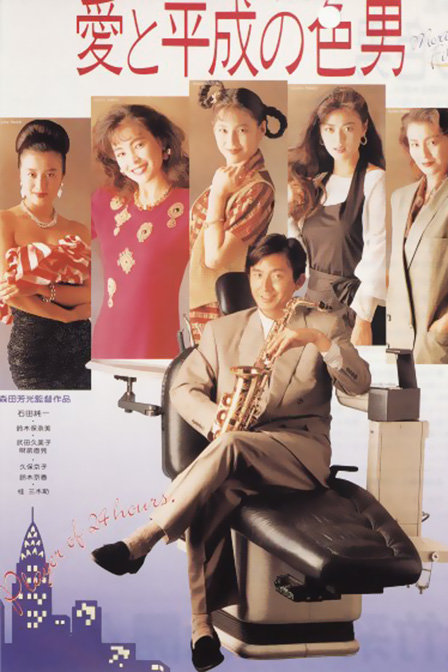
24 Hour Playboy (愛と平成の色男, Yoshimitsu Morita, 1989)

24-hour-playboyYoshimitsu Morita is an enigma. While directing some of the most acclaimed Japanese films of the 80s including The Family Game or the Soseki adaptation Sorekara, his primary dedication was to the “popular” which meant he did his share of more commercial projects such as the Kadokawa idol movie Main Theme or Banana Yoshimoto adaption Kitchen. As might be discerned from the title, 24 Hour Playboy (愛と平成の色男, Ai to Heisei no Irootoko) is among his more populist efforts and is most concerned with capturing the unique quality of its time as mid-bubble Japan said goodbye to the traumatic Showa era for the (hopefully) more prosperous Heisei.
After opening with a series of scenes of the luxury to be found in the modern era from expensive rolexes to elegant yachts, the film zooms in on its hero, Nagashima (Junichi Ishida), as he receives a call from his girlfriend to the effect that she will be visiting him shortly. However, Nagashima’s first action is to leap over his balcony and run down the hill below to hide out in his car and play his saxophone before taking refuge at his younger sister’s place. Nagashima has a serious problem in that he finds himself unable to sleep and is longing for a woman who can really tire him out. Consequently he’s become the “24 hour playboy” of the title, flirting with women here there and everywhere all day long hoping to find the one who can send him straight to bed.

Unusually for a film set in the age of consumerism, Nagashima is not a high powered executive or something more glamorous like an actor or a singer, he is, in fact, a dentist. When not inappropriately flirting with the young women who end up in his dentist’s chair, Nagashima also has a sideline as a jazz saxophonist which seems to be what he’d really like to do with his life but presumably is not as lucrative as the unexpectedly elite world of dentistry.

The consumerist society runs as background throughout the film as Nagashima enjoys a fairly upscale lifestyle perfect for a playboy with visits to trendy nightclubs and late night driving ranges, but the film also gets a lot of milage out of the literal change in era occurring just at the time the film was made. The traditional Japanese dating system takes its name from the emperor – the Showa era began in 1926 and was witness to both Japan’s tragic affair with militarism and expansionist warfare and the beginnings of its return to prosperity in the now nostalgic ‘70s and ‘80s. With the death of Hirohito in January 1989, his son Akihito assumed the throne and began the “Heisei” era. The film was released in 1989 but “Heisei” is referenced several times throughout both as a joke on the fact that “Heisei” means “peace everywhere” and in Nagashima’s comments that some things have already improved in the extremely young new regime.

In keeping with Morita’s determination to stay up to the minute, the film is very much of its time but paints its transitional moment as one of excitement and possibility but also of confusion and inertia. When Nagashima tells a late night barman that he doesn’t know what he wants, he’s talking about more than drinks though he seems happy enough with the gimlet the bar tender picks out for him. Nagashima’s insomnia is apparently caused by not having a good woman to share his bed, but he spends the film playing four women off against each other without ever being really serious about any of them.

After his sometime girlfriend whom he ran out on in the beginning starts talking marriage, Nagashima hatches a plan to get his sister to pretend to be a religious nutcase to put her off. Later he gets another girlfriend to pretend to be his wife and mother of his three children to rid himself of one of the others, gets rid of another by telling her he’s off to “dentists without borders”, and even ends up treating two of his simultaneous girlfriends at the same time in adjacent dental surgeries. Nagashima’s behaviour is caddish in the extreme, thinking only of himself and never really seeing the women in front of him as entities separate from their relationship with him.

A throwback to feckless ‘60s male heroes whose casual womanising represented aspirational male fantasy, Nagashima’s exploits are depicted in a light hearted and humorous way eased by the fact that the women don’t seem to mind very much even after they discover that they aren’t Nagashima’s one and only. Eventually outed as a love rat in the papers, Nagashima’s accidental fame, far from causing outcry and condemnation, attracts a vast crowd of ladies wanting in on the action for themselves.

Oddly the one woman Nagashima does seem to be able to connect with is his sister whom he ironically describes as the one woman he doesn’t understand. Frequently staying over at her apartment, Nagashima often remarks that he wishes all women like her or that all women were his sister, which is an extremely odd thing to say in the circumstances but she is the one woman he seems to have a fully realised conception of and is able to relate to on a human level.

Necessarily very much of its time – the Heisei era is even referenced in the slightly ironic title, 24hr Playboy is one of Morita’s most disposable efforts but is also a perfect reflection of contemporary society in its increasingly consumerist fervour where dentists can live like playboy millionaires and the sheer abundance of choice leaves young men paralysed with indecision. Nagashima’s playboy lifestyle is mined for comic value as he plays the melancholic hero who doesn’t know what he wants and and so has a massive fear of (and yet intense desire for) commitment, but Morita is always careful to point out his essential ridiculousness as Nagashima’s “Heisei” lifestyle becomes less “peaceful” with each additional girlfriend and the increasingly elaborate excuses needed to jilt them.


The Fireflies (螢火, 1958, Heinosuke Gosho)

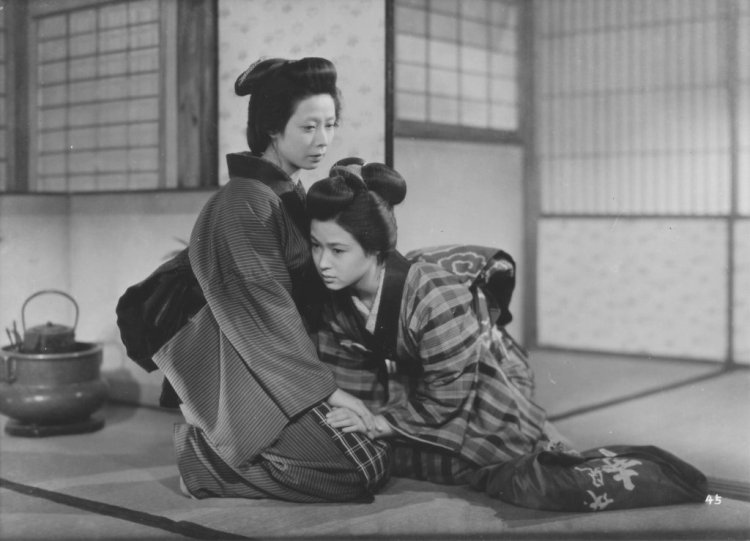
bxbnzqmccaa5-cg-jpg-largeHistory marches on, and humanity keeps pace with it. Life on the periphery is no less important than at the centre, but those on the edges are often eclipsed when “great” men and women come along. So it is for the long suffering Tose (Chikage Awashima), the put upon heroine of Heinosuke Gosho’s jidaigeki The Fireflies (螢火, Hotarubi). An inn keeper in the turbulent period marking the end of the Tokugawa shogunate and with it centuries of self imposed isolation, Tose is just one of the ordinary people living through extraordinary times but unlike most her independent spirit sparks brightly even through her continuing strife.
Beginning in the “present” – the late 1860s, Tose is the de facto manager of Teradaya, a successful inn in Kyoto. Japanese history buffs will instantly recognise the name of the establishment, as well as that of Tose’s 18 year old adopted daughter, Oryo (Ayako Wakao). Nevertheless, that story can wait as we flashback with Tose as she gazes blankly at a stretch of water, remembering the time she first came to Teradaya as a young bride. The daughter of peasant farmers, Tose was not welcomed by her mother-in-law, Sada, both because of the class differences, and because the man she’s married is not Sada’s son but that of a concubine and she would prefer her biological daughter, Sugi, to inherit. Tose’s husband Isuke, though by no means unpleasant towards her, is a feckless man obsessed with cleaning and singing folk songs, leaving the bulk of the work to his wife.

Tose bears all, taking on the running of Teradaya and making it the most popular inn in town thanks to her friendliness, efficiency, and discretion. However, her position is threatened when she is almost ruined by a bizarre scam involving dummies and ventriloquism. Vindicated, Tose’s position is strengthened but there is more trouble in store when Sugi runs off with the conman leaving her infant illegitimate daughter in Tose’s care. Becoming a mother as she’s always wanted, Tose begins to find a little more fulfilment in her life only to have her dreams cruelly dashed once again. In an act of kindness she later adopts another orphaned girl, Oryo, who arrives at the inn starving and in the care of an older man who’d been looking after her since her doctor father was murdered for supposedly collaborating with the rebel ronin trying to over throw the shogunate.

This is the first mention of the ongoing political instability present in the country at large but largely unseen in the peaceful world of a small inn in Kyoto. Of course, you can’t say Teradaya and Oryo without eventually saying Sakamoto Ryoma (Miki Mori). Ryoma does eventually arrive in all his revolutionary glory albeit in an appropriately humanised form and proceeds to turn Tose’s life upside down in more ways than one. Locked into her loveless, but far from cruel, marriage Tose’s spirited nature is reignited by Ryoma’s fervour. Falling in love with him for his commitment to creating a better world for all, Tose’s dreams drift a little but are dashed again when she realises he and Oryo are the more natural pair.

Though Tose reacts badly to the discovery that Oryo is also in love with Ryoma, she is later able to patch things up, entrusting the man she loves to her daughter in an act of maternal sacrifice. Tose talks about her admiration for those who sacrifice all of themselves for other people but this is exactly what she has done with her own life, only in a much quieter way. Where Ryoma was a father to a movement, Tose is a mother to the world. Denied a child of her own through her husband’s indifference, Tose first adopts her niece and then an orphaned girl but consistently acts in the best interests of others rather than herself. Hearing the cries of betrayed revolutionaries, she describes them as sounding like howling babies – an idea she repeats several times including when describing Oryo’s famous naked dash from the bath to warn Ryoma of the impending arrival of the Shinsengumi. Tose’s only instinct is to silence those cries through maternal warmth, even if it ultimately causes her pain.

Tose, for Gosho at least, is no less a heroic figure than Ryoma as her everyday acts of kindness and strength contribute to an ongoing social change. Where other inn owners turn in the rebels either for material gain, active opposition, or desire to avoid the hassle, Tose stands firm and allows Teradaya to become known as a safe haven for the revolutionary movement. Ryoma shone brighter but for a short time, whereas Tose’s life goes on and Teradaya continues to be the favourite stop for beleaguered travellers passing through the old capital in these difficult times. Reconciling with her husband who finally offers the possibility of having a child of their own to inherit the inn, there is a glimmer of hope for Tose once again even if it’s clear that Isuke hasn’t really changed. It may seem that Tose’s firefly has blinked out as she takes her dull and self centred husband back, vowing to spend less time on the inn as she does so, but there is a glint of light in her few final words which are followed by putting her apron straight back on to meet the first boat, shouting the virtues of her beloved Teradaya all the way.


Injured Angels (傷だらけの天使, Junji Sakamoto, 1997)

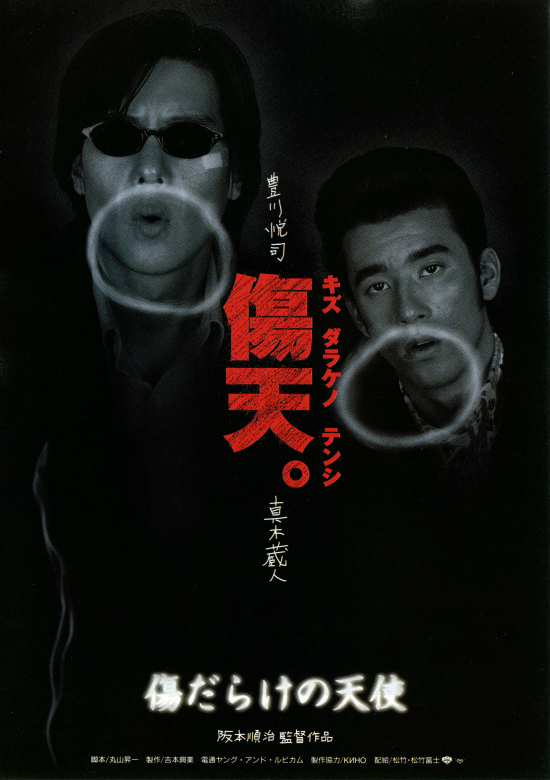
injured-angelsDespite having started his career in the action field with the boxing film Dotsuitarunen and an entry in the New Battles Without Honour and Humanity series, Junji Sakamoto has increasingly moved into gentler, socially conscious films including the Thai set Children of the Dark and the Toei 60th Anniversary prestige picture A Chorus of Angels. Injured Angels (傷だらけの天使, Kizudarake no Tenshi) marries both of aspects of his career but leans towards the softer side as it finds genial private detective Mitsuru (Etsushi Toyokawa) accepting a request from a dying man to ensure the safe passage of his young son to the boy’s mother in Northern Japan.
Reluctantly taking on an assignment to question the last remaining tenant of an office block, Mitsuru discovers the man inside already mortally wounded. During their conversation, the man offers him all the money he has left to take his young son to his estranged wife, currently living in a small town in the North of Japan. Mitsuru doesn’t really want this kind of hassle but feels sorry for the man and his son and eventually decides to make sure the boy, Hotaru, gets to someone who can take of him. The pair set off on a kind of road trip eventually joined by Mitsuru’s partner Hisashi (Claude Maki) meeting friends old and new along the way.

Inspired by the 1970s TV series of the same title, Injured Angels adopts an oddly jokey tone throughout as Mitsuru has various strange adventures whilst trying to guide a small child to someone willing to take him in. At one stage, the film goes off on a long and improbable tangent in which Mitsuru runs into an old friend who is currently wearing a lucha libre mask “for work”. The pair then board the bus with the wrestlers before Mitsuru himself ends up in the ring. Though fun, the sequence has little to do with the ongoing plot other than adding to the already absurd atmosphere.

Predictably, when Mitsuru reaches the address he’s been given, Hotaru’s mother has already moved on but even when they eventually find her, the reaction is not the one you’d expect. Soon to be married again, Hotaru’s mother (Kimiko Yo) is not keen to resume custody of her son (or rather, her husband to be has no desire to raise another man’s child and even goes so far as to use physical violence on Mitsuru to show the strength of his feeling). Hotaru starts to grow attached to the two detectives who are probably giving him the most normal kind of family life that he has known for a very longtime. The guys seem to know they can’t keep him indefinitely and are intent on finding another relative but the mini family they’ve formed may be painful to break up.

While all of this is going on, Mitsuru also has a series of meetings with a woman from Tokyo, Eiko (Tomoyo Harada), who keeps bumping into him. Though an obvious attraction develops, Eiko is also fleeing her own kind of trouble and the pair seem content to leave things up to fate and possible drinks in Tokyo at an unspecified point in time, but this oddly integrated plot strand fails to have a real impact within the narrative as a whole. It does, however, add to Mitsuru’s ongoing existential dilemma as he begins to reexamine his life and relationships after bonding with Hotaru. Ultimately he opts for asking his partner, Hiasashi, to move in with him when they get back to Tokyo but at the same time Mitsuru seems to know he may be headed for another destination entirely.

This tonal strangeness is a serious weakness where would expect a more nihilistic atmosphere as Mitsuru’s journey begins to take shape but the inconsequential humour and mildly absurdist approach continues right until the anticlimactic ending. Perhaps feeling a need to recreate the feeling of the TV series, Sakamoto fails to reconcile these differing levels of seriousness into a convincing whole in allowing for the kind of light and breezy action in which everything is definitely going to be OK by next week’s episode. For what’s actually a look at neglected, abandoned children coupled with intense friendships and romantic dilemmas, the bouncy, ridiculous tone is an odd fit and robs the piece of its dramatic weight. Nevertheless, despite the structural problems, Injured Angels is often a fairly enjoyable, if odd, character drama even it ultimately fails to amount to very much as a whole.


Original trailer (no subtitles)

Samurai Spy (異聞猿飛佐助, Masahiro Shinoda, 1965)

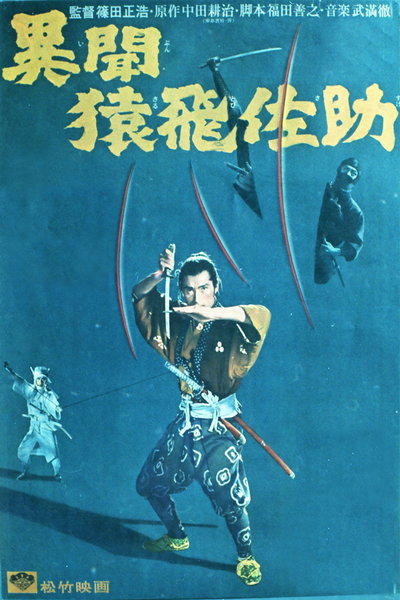
samurai-spyNothing is certain these days, so say the protagonists at the centre of Masahiro Shinoda’s whirlwind of intrigue, Samurai Spy (異聞猿飛佐助, Ibun Sarutobi Sasuke). Set 14 years after the battle of Sekigahara which ushered in a long period of peace under the banner of the Tokugawa Shogunate, Samurai Spy effectively imports its contemporary cold war atmosphere to feudal Japan in which warring states continue to vie for power through the use of covert spy networks run from Edo and Osaka respectively. Sides are switched, friends are betrayed, innocents are murdered. The peace is fragile, but is it worth preserving even at such mounting cost?
Our “hero” Sasuke (Koji Takahashi) is a wandering spy for the Sanada clan, nominally part of the Tokugawa though with no strong allegiance to either side. Everywhere he goes he feels hunted, watched by shadowy forces and unseen motivators. After bumping into Mitsuaki (Mutsuhiro Toura), an old comrade who fought alongside him at the Battle of Sekigahara, Sasuke is pulled into the ongoing intrigue as his friend is murdered and he assumed to be the culprit. Things are further complicated when a mysterious woman to whom he had become attached, Okiwa (Misako Watanabe),  is killed in a similar fashion. A political shift is taking place as a high ranking Tokugawa official, Tatewaki (Eiji Okada), is in the process of defecting to the Toyotomi with white cloaked ninja master Takatani (Tetsuro Tanba) (presumably) working against him. Sasuke is charged with trying to sort all of this out but constantly finds himself on shaky ground as everything around him is constantly changing and the air is filled with conspiracy.

Shinoda aims to disorientate. After beginning with a brief historical narration to set the scene including a bloody excerpt from the horrific Battle of Sekigahara (the historical context presumably much more apparent to a Japanese viewer than an overseas one), he jumps forward 14 years and proceeds to give a rundown of the current situation. Quick fire naming and a lack of external context intentionally make it difficult to pin down who is who and which side is which. The opening sequence takes place in darkness with only moonlight and lanterns to light the way, so our players are always cast in shadows, only half visible and unidentifiable. Nothing is as it seems, the world is murky and the people in shadier still.

Sasuke fought at Sekigahara when he was just 15. His true coming of age has been in an era of peace and he is committed to sustaining that peace at all costs rather than return to the bloody, internecine warfare of the past. This stands in contrast to his double dealing friend, Mitsuaki, whose own coming of age was forged by war and so now finds himself at a loose end as warriors are obsolete in an age without war. Nevertheless, Sasuke feels the peace is threatened – all conversations are eventually about conflict, no one thinks about the meaning of death or what it is to be alive. Men like Mitsuaki have decided to live purely for pleasure, wanting nothing more than women and sake, thinking of nothing beyond satisfying their needs, and rarely consider the moral or political dimension of their actions. Mitsuaki’s unexpected degree of self interest accidentally threatens to completely destabilise the status quo, setting off a series of betrayals and counter betrayals in its wake, but all Mitsuaki was thinking about was a how to get paid twice for doing one job.

Navigating this complex network of allegiances and betrayals, Sasuke comes to discover what it is he really wants out of life and what he needs to do to get it. No longer a neutral observer, he has to pick a side and the one he picks that of the wronged. Coming to the aid of the threatened and oppressed, Sasuke adds himself to the list of enemies of the state yet he sees it as his duty to fight against the forces of darkness for a better, fairer world. Of course, he has his personal reasons for revenge but even these are partly born out of a sense of outrage for the injustice done to people who mattered to him.

Yet for all of the real world intrigue and political allegory Samurai Spy is also imbued with an unsettling sense of the absurd. Sasuke is plagued, yet at times assisted, by the almost supernatural Takatani who, incongruously, dresses in a bright white outfit with the fabric of his hood tied up into horns on the front. Appearing as needed along with his more conventionally dressed ninja minions, Takatani seems to float through the air performing strange acts of ninjadom and acting with no firm course of action. Shinoda shoots the battle scenes from odd angles using slow motion to give them a strange kind of power, even in one instance allowing a severed limb to float to the ground. In a nod to the circularity of violence, he even allows the climactic fight to be interrupted and witnessed by a small boy, shocked by what he has seen. The fact that the situation is laid to rest by a forgotten deus ex machina is yet more evidence for the world’s essential leaning towards constructed narrative.

Filled with the fog of war (literally so in places), Samurai Spy dramatises the uncertainties of its environment through the extreme lack of visual clarity. The audience is as disorientated as Sasuke, continually wrong footed and left at a loss as to the true motivations of each of the major players. The atmosphere is palpably intense, as if sitting on a powder keg ready to explode at any spark of conflict. From this viewpoint, it’s impossible to see who is in the right and who the wrong or even if those two ideas are even appropriate ways of thinking about things. Peace stands on a knife edge and, ironically, only survives if robustly defended. Violence is shown up for all of its essential cruelty and senselessness yet it is the only thing which is certain. Sasuke, at least, seems to have made his own peace in one way or another but the world he leaves behind him is far from ready to do the same.


Creepy (クリーピー 偽りの隣人, Kiyoshi Kurosawa, 2016)

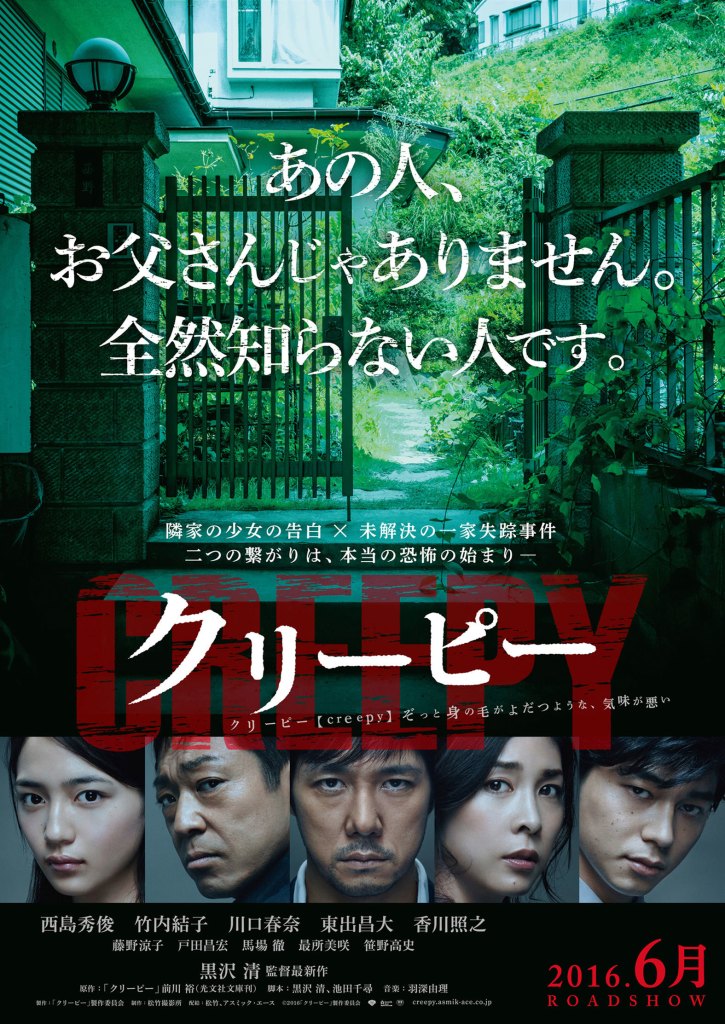
creepyHow well do you know your neighbours? Perhaps you have one that seems a little bit strange to you, “creepy”, even. Then again, everyone has their quirks, so you leave things at nodding at your “probably harmless” fellow suburbanites and walking away as quickly as possible. The central couple at the centre of Kiyoshi Kurosawa’s return to genre filmmaking Creepy (クリーピー 偽りの隣人, Creepy Itsuwari no Rinjin), based on the novel by Yutaka Maekawa, may have wished they’d better heeded their initial instincts when it comes to dealing with their decidedly odd new neighbours considering the extremely dark territory they’re about to move in to…
The Takakuras, Koichi (Hidetoshi Nishijima) and Yasuko (Yuko Takeuchi), have just relocated to the suburbs where Koichi will be taking a position at a local university teaching criminal psychology. A year previously, Koichi had been a member of the police force working on serial murder cases but after a serious miscalculation on his part during a negotiation with an escaped prisoner leaves an innocent woman dead and himself in the hospital, Koichi comes to the conclusion that he’s not quite cut out for the force after all.

Having just moved into the neighbourhood, Koichi and Yasuko attempt to make the expected visit to announce their presence to their neighbours only to find that the locals aren’t exactly friendly. After one neighbour slams the door in her face, Yasuko pays a visit to the other one, Nishino (Teruyuki Kagawa), but the way in which be begins talking to her is very strange indeed. Though unsettled, Yasuko just can’t let the idea drop and becomes intent on building up a more conventional relationship with her hard to read neighbour, ignoring all of her better instincts in the process.

Meanwhile, Koichi has become intrigued by a six year old cold case in which three members of a family abruptly disappeared leaving their young daughter, Saki (Haruna Kawaguchi), behind. Working with a former colleague, Nogami (Masahiro Higashide), Koichi tracks down the abandoned little girl (now a teenager) and attempts to get to the bottom of the mystery.

Japanese films are full of the parasitic interloper who wheedles his way into a family only to usurp control for himself and eventually colonise it. Generally, such families go back to normal once the interloper has had his fun but for the families of Creepy that would be quite difficult. In the modern world when the family unit has become so fractured and insecure that it renders once permanent communities only temporary, a chasm has been opened in human interactions which makes it easier for extreme horror to locate itself right next door to you. Nobody knows what goes on behind closed doors, and in a sense no one wants to know. Koichi attempts to use his scientific knowledge to reassure Yasuko that, as psychopaths are usually very good neighbours, Nishino must be fine, but this only goes to show superficial the couple’s interest in their environment really is.

Koichi has a mild obsession with serial killers. His desire to spend more time with a real life psycho contributed to this fall from grace at the beginning, but his investigative abilities leave a lot to be desired. Yasuko may have suggested that Nishino is the kind of person who “has no social skills” but Koichi is the archetypal interrogator – only interested in the facts and blind to the emotional subtext. After Koichi puts too much pressure on the traumatised Saki, she accuses him of tearing into people’s emotions as if dissecting a rat, and later asks him if he has any kind of heart or real human empathy at all. For all his highly prized science, most of Koichi’s clues are based on his intuition – he just “feels” the house seems like a crime scene, that Nishino is a bad guy, and that something strange is going on.

This almost supernatural “feeling” becomes the central spine of the film as creepiness travels through the air in invisible waves. Kurosawa adopts a swirling, floating approach to camera movement in the early part of the film which gives it a drunken, ethereal atmosphere, preventing any concrete attempt to grasp the reality. Playing with lighting levels Kurosawa emphasises and isolates the characters but also adds a note of uncertainty that hints at the darkness lingering at the edges of the frame. This sense of the ever present evil that exists within otherwise pleasant environments contributes to the Lynchian sense of the absurd which is also echoed by the anxiety inducing lingering camera shots of banal objects such as room thermostat or closed gates.

Despite the eeriness of the general tone, Kurosawa encourages a strain of black humour which helps to cover some of the more outlandish plot elements. The final conclusion perhaps strains credulity and is never fully explained but then the lack of concrete details adds to the already overwhelming creepiness of the events in play. Wonderfully atmospheric, beautifully photographed, and filled with a spirit of absurdism, Creepy is a very modern horror story though one not unafraid to step into the realms of the senses.


Reviewed at 2016 BFI London Film Festival

Original trailer (English subtitles)

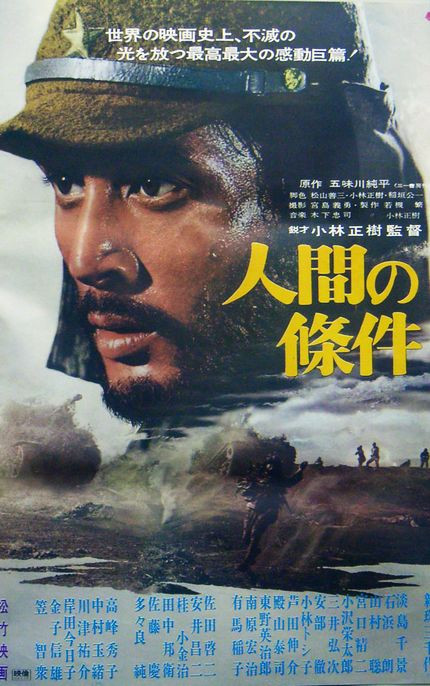
The Human Condition (人間の條件, Masaki Kobayashi, 1959-61)

human-condition

Review of Masaki Kobayashi’s magnum opus The Human Condition (人間の條件, Ningen no Joken) first published by UK Anime Network


If Masaki Kobayashi had an overriding concern throughout his career, it was the place of the conflicted soul within an immoral society. Nowhere is this better articulated than in his masterwork – the nine and a half hour epic, The Human Condition. Adapted from a novel by Junpei Gomikawa, Kobayashi’s film also mirrors his own wartime experiences which saw him conscripted into the army and sent to Manchuria where he was accounted a good soldier, but chose to mark his resistance to the war effort by repeatedly refusing all promotions above the rank of Private. Kaji, by contrast, essentially sells his soul to the devil in return for a military exemption so that he can marry his girlfriend free of the guilt that comes with dragging her into his uncertain future. At this point Kaji can still kid himself into thinking he can change the system from within but to do so means compromising himself even further.

The first of three acts, No Greater Love, takes place in Manchuria during the Japanese expansion where Kaji is working for a Japanese steel company. Fully aware that the company is using forced and exploitative labour, Kaji has been tasked with increasing productivity and has written a comprehensive report indicating that introducing better working conditions would positively affect efficiency as there would be less absenteeism and fewer sickness related gaps in the line. His boss is impressed and presents him with an offer of promotion managing a mine in the North. Kaji is conflicted but ultimately decides to accept as the post comes with a certificate of military exemption so he can finally marry his girlfriend, Michiko. However, his progressive ideals largely fall on deaf ears.

Road to Eternity finds him in the army where his left leaning ideas are even less appreciated than they were at the mine. Asked to train recruits, Kaji once again enacts a progressive approach which takes physical reinforcement out of the process and focusses on building bonds between men but his final battle comes too early leaving his team dangerously exposed. Kaji is briefly reunited with Michiko who has made a perilous journey to visit him but neither of the pair knows when or if they will see each other again.

The concluding part, A Soldier’s Prayer, finds a defeated Kaji wandering the arid land of Northern Manchuria on a desperate quest south with only the thought of getting back home to Michiko keeping him going. Eventually he is taken prisoner by Soviet forces but far from the people’s paradise he’d come to believe in, the Russians are just as unforgiving as his own Japanese. In the army he was a “filthy red” but now he’s a “fascist samurai”.

As much as Kaji is “good” man filled with humanistic ideals, he is also an incredibly flawed central presence. Already compromised by working for the steel company in Manchuria in the first place fully knowing the way the company behaves in China, his decision to take the mining job is an act of self interest in which he trades a little more of his integrity for military exemption and a marriage license. Needless to say, the head honchos at the mine who’ve been at the coal face all along do not take kindly to this baby faced suit from head office suddenly showing up and telling them they’ve been doing everything wrong. Far from listening to their experiences and arguing his point, Kaji attempts to simply overrule the mining staff taking little account of the already in place complex inter-office politics. This creates a series of radiating factions, most of whom side with Kaji’s rival and have come to view the cruel treatment of workers as a sort of office perk.

The complicity only deepens as Kaji becomes ever more a part of the machine. Kaji feels distraught after he loses his temper and strikes a subordinate, but before long he’s physically whipping a crowd of starving men in an attempt to stop them killing themselves through overeating. His biggest crisis comes when a number of Chinese prisoners are caught trying to escape and Kaji is unable to help them after specifically guaranteeing nobody would be killed. Forced to watch the botched execution of a brave man who refused to capitulate even at the end, Kaji is forced to acknowledge his own role in the deaths of these men, his complicity in the ongoing system of abuse, and his complete powerlessness to effect any kind of change in attitudes among the imperialist diehards all around him.

Kobayashi pulls no punches when it comes to examining the recent past. The steel company is built entirely on the exploitation of local workers who are progressively stripped of their humanity, whipped and beaten, starved and humiliated. The situation is only made worse when Kaji is forced to accept a number of “special labourers” from the military police. Tagged as prisoners of war, these men are not soldiers but displaced locals from Northern villages razed by Japanese troops. The train they arrive on is worse than a cattle truck and some of the men are already dead of heat, thirst, and starvation. The others pour out, zombie-like, searching desperately for food and water. Kaji is further compromised when the head of the mine has a plan of his own to subdue the men which involves procuring a number of comfort women which Kaji eventually does even if the entire process makes him sick. This is where the system has brought him – effectively to the level of a people trafficker, pimping vulnerable women to enslaved men.

Kaji comes to believe in a better life across the border where people are treated like human beings but anyone who’s read ahead in the textbooks will know this doesn’t work out for him either. Equally scathing about the left as of the right, The Human Condition has very little good to say about people, especially when people begin to act as a group. Even Kaji himself who has so many high ideals is brought low precisely because of his self-centred didacticism which makes it impossible for him to take other people’s views into account. With his faith well and truly smashed, Kaji has only the vague image of Michiko to cling to. Even so, he trudges on alone through the snowy landscape, deluded by hope, still dreaming of home. Trudging on endlessly, driven only by blind faith, perhaps that’s the best definition of the human condition that can be offered. A brutal exercise in soul searching, The Human Condition is not always even certain that it finds one but still retains the desire to believe in something better, however little in evidence it may be.


Trailers for each of the three parts (English subtitles)


The Discarnates (異人たちとの夏, Nobuhiko Obayashi, 1988)

discarnatesNobuhiko Obayashi is no stranger to a ghost story whether literal or figural but never has his pre-occupation with being pre-occupied about the past been more delicately expressed than in his 1988 horror-tinged supernatural adventure, The Discarnates (異人たちとの夏, Ijintachi to no Natsu). Nostalgia is a central pillar of Obayashi’s world, as drenched in melancholy as it often is, but it can also be pernicious – an anchor which pins a person in a certain spot and forever impedes their progress.

Hidemi Harada (Morio Kazama) is a successful TV scriptwriter whose career is on the slide. He’s just gotten a divorce and seems to be conflicted about the nature of his new found bachelordom. As if he didn’t have enough despair in his life, the closest thing he has to a friend – his boss at the TV station, tells him he thinks it’s better if they end their professional relationship because he plans to start dating Harada’s ex-wife and it would all get very awkward.

Feeling unloved, Harada takes a trip to his hometown on a location scout for another project and takes in a few familiar sights along the way. It’s here that he runs into a youngish man who looks just like Harada’s father did when he was a boy. Not only that, accompanying his new found friend home, the man’s wife looks just like his mother, but Harada’s parents died when he was just twelve years old. The mysterious couple are glad to have him in their house and treat him with the warmth and kindness that seemed to have been missing in his life, leaving him the happiest and most cheerful he’s been in years.

Now in a much better mood, Harada feels guilty about rudely dismissing the woman from upstairs who’d come to visit him the day before. Apologising, Harada strikes up a friendship and then a romance with the equally damaged Kei (Yuko Natori) but even if his mental health is improving, his physical strength begins to deteriorate. Looking pale and old, Harada’s teeth rot and fall out while his hair loses its color. Even so, Harada cannot bear to pull himself away from the warmth and security that was so cruelly taken away from him when he was just a child.

Harada doesn’t start off believing that the mysterious couple really are his late parents, but if even if they weren’t these two people who are actually younger than him take him in as a son, feeding and entertaining him. When Harada returns a little while later confused by what exactly has happened, his mother immediately treats him as a mother would – physically taking off his polo shirt and urging him to remove his trousers lest they get wrinkled from sitting on the floor. Having lost his parents at such a young age, Harada has been a adrift all his life, unable to form true, lasting emotional bonds with other people. Lamenting his failure as a husband and a father, this very ordinary kindness provides the kind of warmth that he’s been craving.

However, there is always a price to be paid. Harada’s visits become increasing tiring, taking a physical toll on his ageing body. Each hour spent in the past is an hour lost to the dead. His parents are both dead and alive, existing in a strange, golden hued bubble filled with the comforting innocence of childhood free from the concerns of the adult world. Yet each time Harada succumbs to his weakness and goes to visit them, he is doing so as a way of avoiding all of his real world problems. According to one of Harada’s scripts, the past becomes a part of you and is never lost, but memory can be an overly seductive drug and an overdose can prove fatal.

Contrasted with the warm glow of the post-war world of Harada’s childhood home, his life in bubble era Tokyo is one filled with blues and a constant sense of the sinister. Harada believes himself to mostly be alone in the apartment block save for a mysterious third floor light that hints at another resident who also favours late nights over early mornings. The light turns out to belong to a lonely middle-aged woman, Kei, who is also a fan of Harada’s work. Kei has her own set of problems including a wound on her chest that she is too ashamed to let anyone see. Ultimately, Harada’s self-centred inability to lay the past to rest and fully take other people’s feelings into account will deal Kei a cruel blow.

Harada sees everything with a writer’s eye. His childhood world is a dream, but his life is a film noir filled with shadows and misery. His environments appear too perfectly composed, like a TV stage set and, as if to underline the fact, at the end of each “scene” the colour drains from the screen to leave a blue tinted black and white image shrinking into a rectangle and disappearing like the dot going out in the days when television really did close down overnight. Whether any of this happened outside of Harada’s mind or reflects a constructed reality he wrote for himself in the midst of a mental breakdown, his dilemma is an existential one – return to childhood and the side of his parents by accepting the death of his present self, or say goodbye to remnants of the abandoned child inside him and start living an adult, fully “fleshed” life by killing off this unattainable dream of a long forgotten past which never took place.

Filled with melancholy, longing and regret, The Discarnates is the story of a hollow man made whole by coming to terms with his traumatic past and all of the ways it’s influenced the way in which he’s lived his life. Harada’s parents treat him as their twelve year old son, barely acknowledging that he’s a middle aged man with a teenage son of his own. They feel regret for all of the thousand things they were never able to teach him though they are unable to see the full depths of his inability to escape his interior bubble for the wider world. Unsettling, though not as obviously surreal as some of Obayashi’s other efforts, The Discarnates is one of his most melancholic works speaking of the danger of nostalgia and all of its false promises whilst also acknowledging its seductive appeal.


Original trailer (no subtitles)