Welcome Back (Naoto Kawashima, 2024)

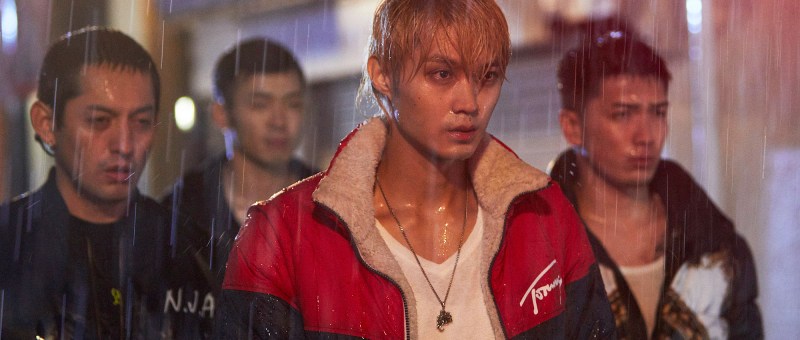
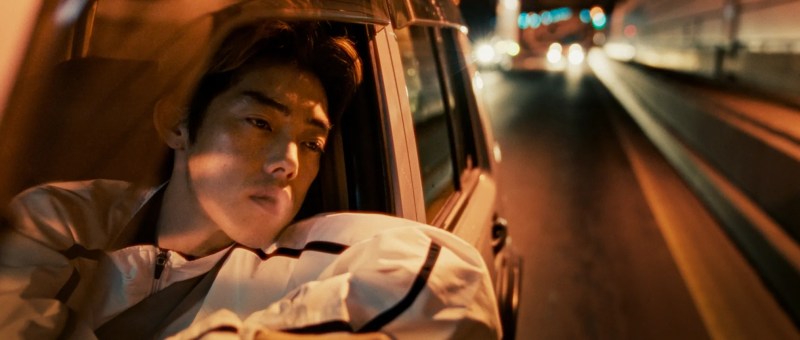
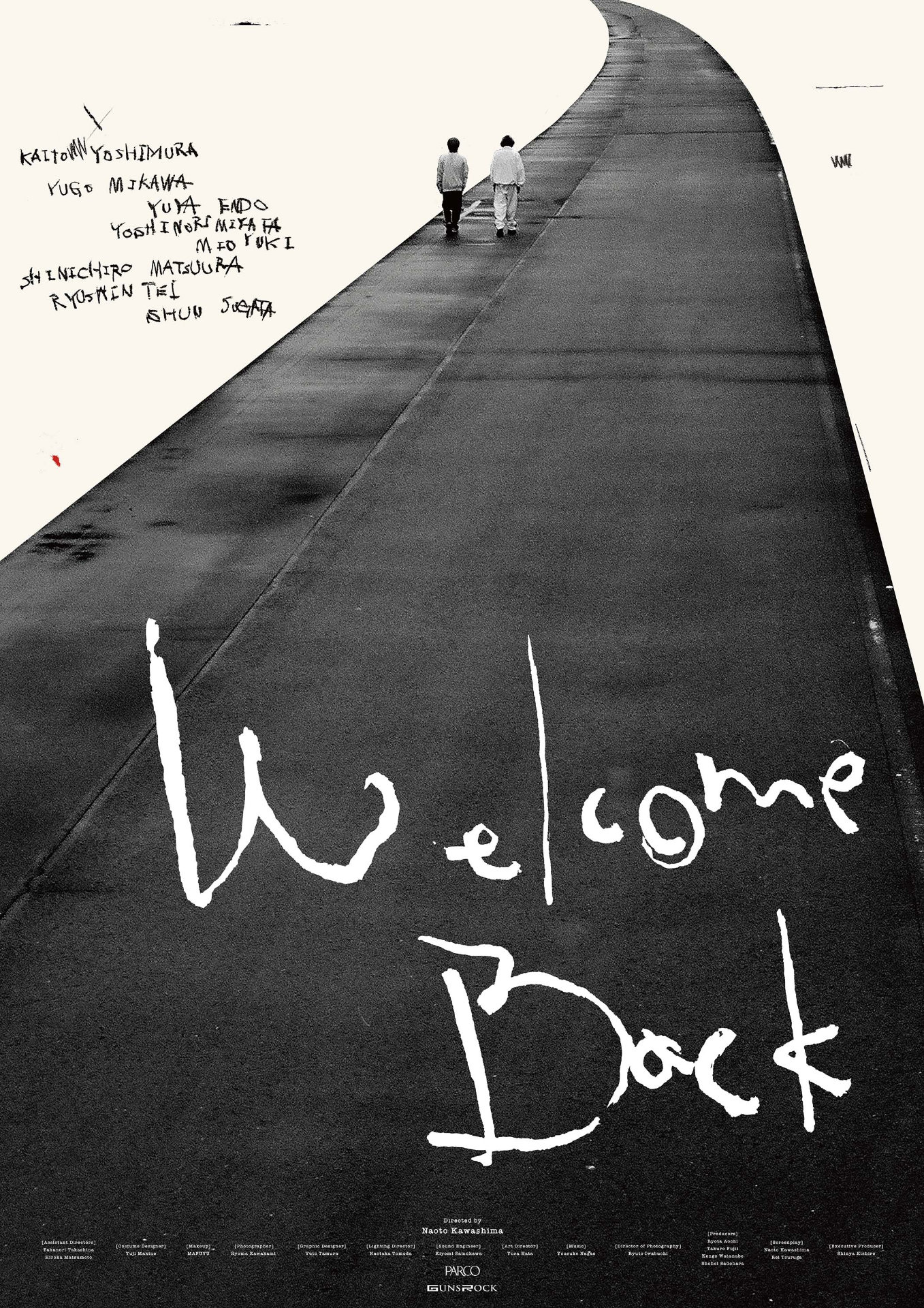
“Once you play the heel, you can’t go back,” according to up-and-coming boxer Teru’s (Kaito Yoshimura) coach, but it turns out to be truer than for most for the aspiring champion for whom getting up off the mat proves an act of impossibility. While he plays the hero for younger brother figure Ben (Yugo Mikawa) and talks a big game before stepping into the ring, in reality Teru is riddled with insecurity and using bluster to overcome the fear that he can’t live up to the image Ben has of him.

The terrible thing is, he might be right and Ben, a young man with learning difficulties who later gives his age as 10 though clearly in his 20s, may be beginning to see through him. “I lost because I looked at you,” he later says of a failed attempt to fight off their chief rival, but it might as well go for his life which he’s spent in Teru’s footsteps ever since his mother abandoned him with Teru’s family when they were just children on the same housing estate.

As such, Teru does genuinely care for Ben, but has also been hiding behind him in allowing him to become something like a mascot or cheerleader, someone over whom he feels superior but also looks up to him as the sort of person he wants to be but perhaps isn’t. In any case, his boxing career has been going well and he’s on track to become the Japanese champion, but at the same time he’s proud and arrogant. He thinks he knows better than his coach, and likes to make a big entrance trash talking his opponents in a larger-than-life manner that might be more suited to pro-wrestling than the comparatively more earnest world of boxing and earns him a degree of suspicion as a result. His opponent Kitazawa (Yoshinori Miyata) is his opposite number in that, as Teru points out, he’s deathly serious and certain in his abilities which is why he’s able to KO Teru mere seconds into their title match. No longer “undefeated”, Teru simply gives up and retires from boxing only to spiral downward while working as a supermarket mascot, eg. Ben’s old job from which he also gets him fired by messing it up for both of them because of his pride and temper.

But for Ben, the certain truth of his life has been that “Teru never loses”. Now that Teru lost, something’s very wrong with the universe and he has to put it right, which is why he decides to fight Kitazawa himself even if he has to walk to Osaka from Tokyo to do it because they’ve got no money for transport. What neither Teru nor Aoyama (Yuya Endo), a boxer Teru once defeated in another title fight but ends up helping him and Ben on their quest, is that after obsessively watching Teru all this time, Ben is actually quite a talented, if untrained, fighter. They were hoping they could get him to give up on his plan by finding someone weaker than Kitazawa to defeat him so he’d know he had no chance, but he basically fights his way all across Japan to prove that Teru really is the hero he always thought him to be. 

This turns out to be inconvenient for Teru because inside he feels himself to be a loser and since his single defeat has been running away from the fight. As he later begrudgingly realises, none of this would be happening if he’d knuckled down done the training so he’d be able to beat Kitazawa in the first place rather than being consumed by his pride and arrogance. He should be the one fighting Kitazawa, not Ben who is putting himself in danger because the world doesn’t make sense to him any more. Kitazawa, meanwhile, has his number and seems to look down on him for his lack of fighting spirit, correctly surmising he will walk away from the chance to fight him for real when he opts for a last resort of trying to bribe him to fake a sparring match so that Ben will see him win and be able to go on with his life. 

But nothing quite goes to plan, and it seems like Ben might be starting to see that Teru might actually be using him to bolster his own sense of low self-esteem which obviously means that he does and always has looked down on Ben. Having come to a realisation that he needed to play the role of the hero that Ben needed him to be, perhaps what he sees is that Ben has outgrown him and that despite his constant insistence that “Ben is a child” is capable of doing what he couldn’t in fighting back even when the odds seem impossible. Teru is defeated by life, but fighting back in his case might look like something a little less glamorous that starts with eating some humble pie and calling in a favour to get a shot at a regular job he’ll have to take a little more seriously. In one way or another, their accidental road trip clarifies the dynamics of their “brotherly” relationship, but at the same time leads them to a point of division in which moving forward might necessarily mean they’re going in different directions.


Welcome Back screened as part of this year’s Camera Japan.

Trailer (no subtitles)
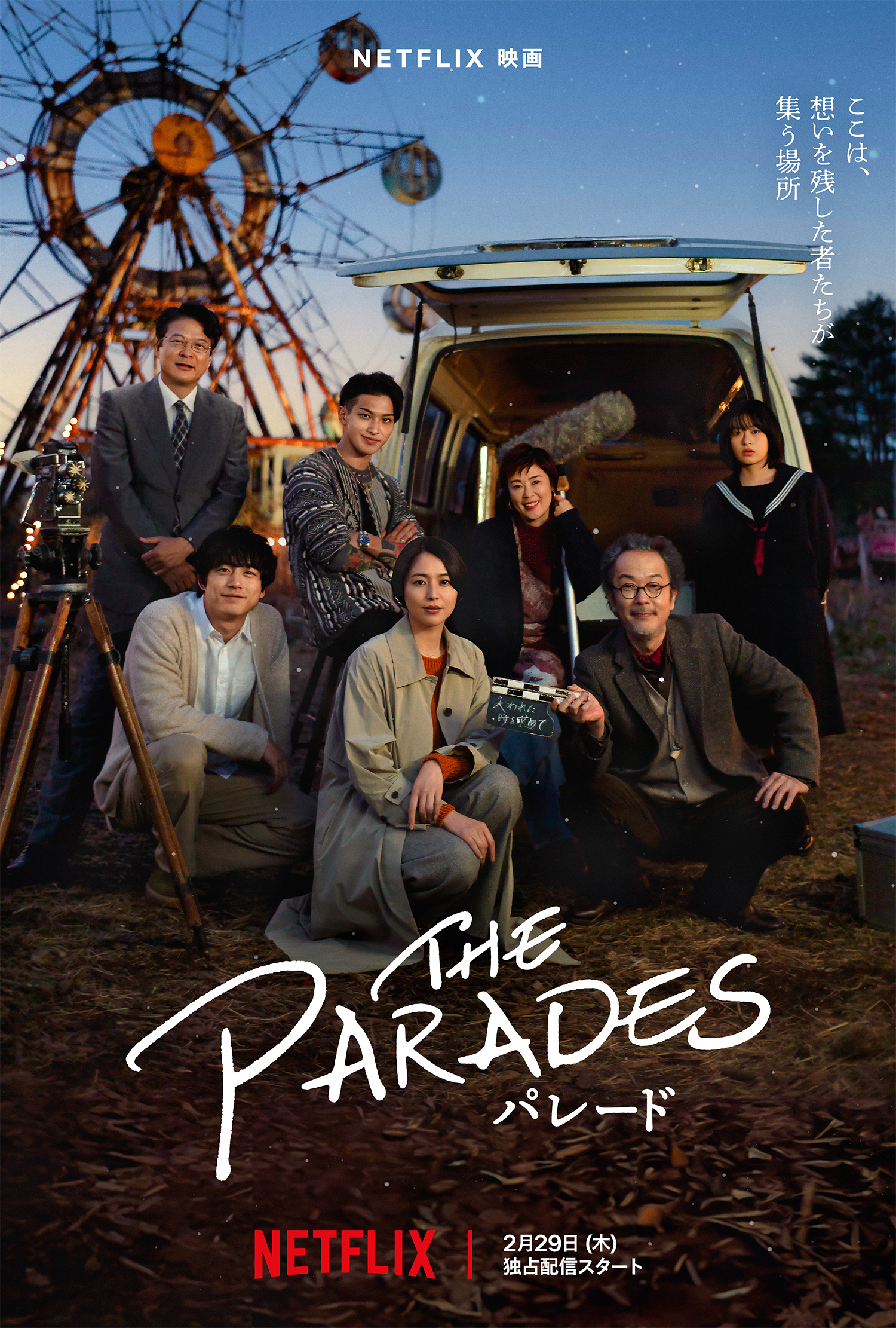
The Parades (パレード, Michihito Fujii, 2024)

Living a life without regrets is easier said than done. The protagonists of Michihito Fujii’s The Parades (パレード, Parade) each have unfinished business that prevents them moving on from this world, but what they discover is an unexpected sense of solidarity among similarly lost souls as they try to lay themselves to rest. After all, all they can do now is observe and reflect while helping others like them with their own lingering doubts and regrets.

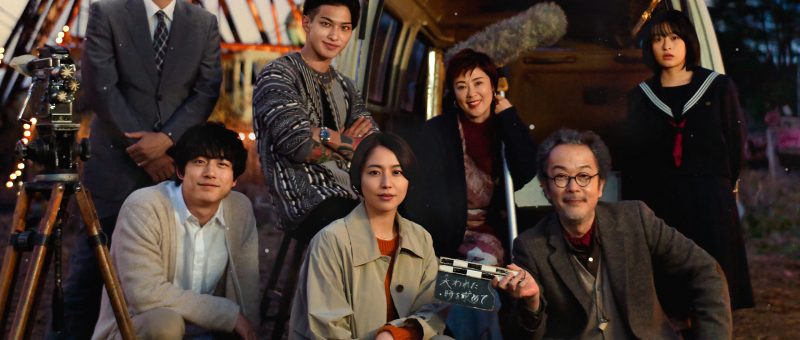
Drawing inspiration from the 2011 earthquake and tsunami, Fujii first introduces us to Minako (Masami Nagasawa). A 35-year-old single mother, she wakes up on a beach and frantically looks for her seven-year-old son Ryo (Haru Iwakawa) little realising that the reason no one seems to be able to hear or react to her is because she’s already dead. Picked up by fellow ghost Akira (Kentaro Sakaguchi), she’s taken to a disused fairground that doubles as a hub for wandering souls. Though it takes her a while to accept her new situation, she gradually bonds with others at the camp each of whom have their own unfinished business which isn’t all that different from her own in that they mostly want to be sure the people they left behind will be alright.

The film takes its name from the monthly processions in which wandering souls meet by lantern light to look for their missing people together. This sense of solidarity and empathy seems to echo the best of humanity along with a melancholy longing. There appears to be little rancour in this afterlife, a yakuza who was killed in a gang war simply feels sorry for his father and so guilty about the girlfriend he left behind that he’s been afraid to face her for the last seven years, and a high school girl who took her own life because of bullying first thinks her unfinished business is vengeance on the bullies but later accepts is actually a desire to apologise to her best friend who then had to take the brunt of the bullies’ cruelty on her own.

What the film seems to say is that we should have more of this fellow feeling in life. Former film producer Michael (Lily Franky) constantly references his days as a student protestor remarking that they might not have amounted to very much but at least they had unity. His regret is less his failed revolution than a moment of emotional cowardice that saw the woman he loved marry someone else instead. Constant references to the end of Casablanca echo their plight as if Maiko (Yuina Kuroshima / Hana Kino) married Sasaki (Ayumu Nakajima / Hiroshi Tachi) for the good of the revolution though she really loved Michael who unlike Rick just walked out on it because in the end he wasn’t brave enough to risk the consequences of its success or failure. 

The world building may not always be consistent and the rules of this universe appear unclear. It seems that in general the ghosts don’t linger long. Even the heavenly liaison Tanaka (Tetsushi Tanaka) appears to have been dead not longer than 40 years with Michael seemingly the only other long-stayer with the others’ deaths fairly recent. In general they are only really waiting for themselves or others, wanting to make sure that their loved ones will be alright in their absence even though there’s nothing more they can do for them now other than observe. Though they can walk through this world and interact with physical objects, their presence is otherwise invisible unless the person they wish to contact happens to be in an altered state. To this extent, the resolution may seem like a bit of a cop-out but does lend an additional poignancy and imply that these lessons learned in limbo can still be taken into the mortal realm creating additional empathy and solidarity among the living so that they may be able to live their lives freely and fully perhaps not entirely without regrets but at least with fewer of those that would prevent them from moving on when their time comes. But even if they find themselves trapped in limbo, they’ll hopefully find others like themselves and a gentle sense of hopefulness about what’s to come even as they prepare to leave this world.


Trailer (English subtitles)

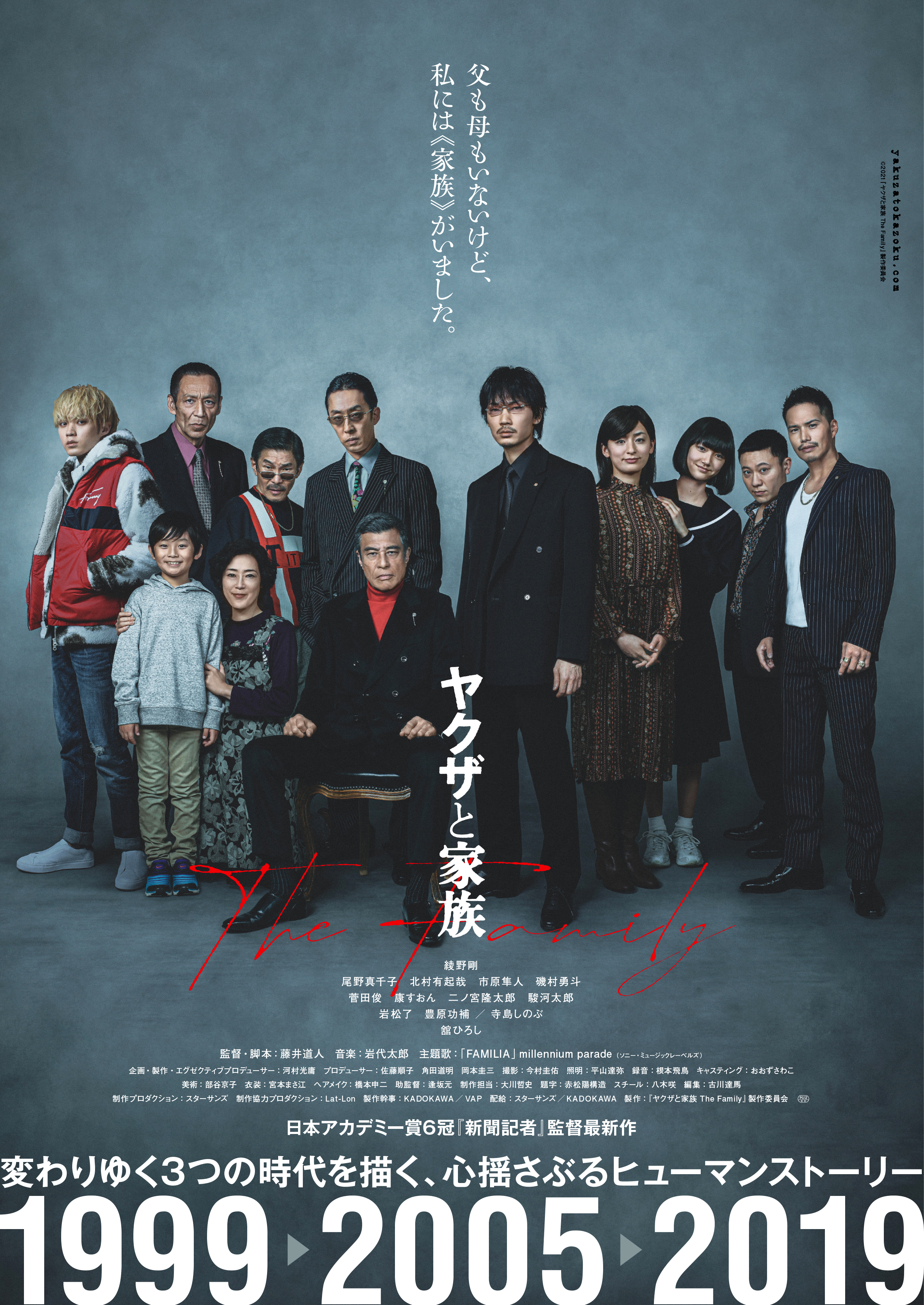
A Family (ヤクザと家族 The Family, Michihito Fujii, 2020)

“No one can survive as a yakuza in this world” according to another orphaned son playing the long game of a crime adjacent existence in Michihito Fujii’s melancholy gangster drama, A Family (ヤクザと家族 The Family, Yakuza to Kazoku The Family). The yakuza, or at least yakuza in the movies, has long been a relic of the Showa era rendered increasingly irrelevant in a society no longer in need of its dubious claims of protection. In truth, it’s hard to mourn the passing of organised crime, but Fujii at least finds a kind of pathos and infinite sympathy for these men for whom the gangster brotherhood took the place of a family even if one with a self-destructive legacy. 

To begin with, petty street punk “Li’l Ken” (Go Ayano) wants nothing to do with the yakuza, seemingly the only guest at the funeral of the drug dealer father he resented other than a corrupt cop from the organised crime squad, Osako (Ryo Iwamatsu), who expresses regret that had he simply arrested him perhaps Ken’s father would be still be alive. Visiting another “familial” environment, a Korean barbecue run by the maternal Aiko (Shinobu Terajima) herself the widow of a gangster currently with a baby on her back, Ken gets himself noticed by local mobster Shibasaki (Hiroshi Tachi) by taking on some punks who stormed into the restaurant and attacked his guys. Explaining that his guys don’t associate with drugs, Shibasaki offers him a job which he refuses but having his card in his pocket literally saves his life when he’s pickup by rival gang leader Kato (Kosuke Toyohara) after having stolen and then destroyed some of their stash after stumbling across a drug deal. The course of Ken’s life is set, he joins the Shibasaki gang along with his two delinquent friends and accepts Shibasaki as his “oyabun” or “father”. 

In Shibasaki, Ken finds a father figure more palatable than the one he lost. As in many a yakuza movie, the Shibasaki clan is positioned as “good yakuza” of the old school kind who believe in things like duty and honour and are apparently pursuing the path towards becoming “true men”. The rival Kyoyo, by contrast, are “bad” new yakuza who no longer play by the old rules and make their money through destructive vices such as drugs. The expected turf war does exactly materialise though the uneasy truce between the rival gangs becomes increasingly strained as the economic situation of millennial Japan begins to shift, the local town council apparently set on demolishing the red light district as part of their plans for redeveloping the city. Kyoyo would rather take over its entirety, pushing Shibasaki to retreat in exchange for a small amount of monetary compensation while shady cop Osako tries to play the situation to his own advantage. 

Yet it’s also clear that the yakuza as an institution is on its way out. After a 14-year prison term, Ken emerges into a very different world in which organised crime has been hounded further into the margins thanks to effective, though the film would also argue inherently vindictive, legislation. No one can make any money anymore, and the slightest slip up can lead to arrest. The Shibasaki gang is now a handful of old men, most of the guys having moved on only moving on from the yakuza life is not easy as Ken’s old friend Hosono (Hayato Ichihara) explains. In order to rejoin regular society, a former yakuza must endure five years in the wilderness unable to open a bank account or get a regular job leaving them with few possibilities for basic survival that enable them to leave a life of crime. Now with a young daughter and job in waste disposal, Hosono is nervous and reticent, reluctant to be seen in public with Ken lest he be tarred with the criminal brush and lose access to the new life he’s managed to build for himself as a responsible husband and father. 

Urged by Shibasaki, Ken eventually leaves one family for another in reuniting with a woman he loved before prison who has since made a respectable life for herself as a low level civil servant but once his life of crime is exposed by a thoughtless colleague at his new job in deconstruction, he discovers that there is no place for a “reformed” yakuza in the contemporary society because in a sense there can be no such thing. Once gangster always a gangster, there is no path forward. Complaining that Osako has stolen his right to life, Ken is told only that the yakuza lost human rights long ago. 

“They’re my family. No reasons are needed” Ken replied when asked why he became a yakuza, but he continues to find himself torn between the various concepts of family and the inheritances of his two very different father figures. “Your time is over old man”, Aiko’s fatherless son Tsubasa (Hayato Isomura) tells an unrepentant Kato attempting to hang on to his territory in the face of a younger generation operating on an entirely different level, rejecting the codification of gangsterdom but seemingly embracing its romance. Tsubasa too is later sucked in by the hyper masculine revenge drama of the yakuza way, seeking vengeance for the death of his father and apparently prepared to ruin his life in order to gain it. It’s for this surrogate son, now a kind of father figure himself, that Ken will eventually make a sacrifice. A sad tale of dubious paternal legacies, frustrated fatherhood, life’s persistent unfairness, and a perhaps uncomfortable lament for a bygone Japan defined by giri/ninjo conflict ruled by manly men, the ironically titled A Family has only sympathy for those trapped by an inescapable spiral of manly violence but also reserves its respect for those who know their time has passed and elect to end the cycle in order to set their “sons” free. 


Original trailer (no subtitles)

Heaven’s Story (ヘヴンズ ストーリー, Takahisa Zeze, 2010)

“When your family’s murdered, aren’t you entitled to happiness?” remarks a bereaved husband trying to move on from tragedy to a similarly bereaved little girl who is determined not to. “I don’t think so”, she coldly replies, dragging him back into a dark world of hate and vengeance. At that time perhaps best known for his career in pink film, Takahisa Zeze’s 4.5-hour epic Heaven’s Story (ヘヴンズ ストーリー) weaves a tale of interconnected hurts born of violence and its legacy, parental betrayals, and irreconcilable loss. The only victory is survival, but it’s a prize none of us will win. The best we can hope for is continuity, and perhaps leaving something more behind us than fear or rage. 

Our heroine, Sato (Moeki Tsuruoka), is orphaned when her parents and older sister are brutally murdered by a disgruntled employee exacting some kind of petty revenge on her father. The killer is later found dead in a hotel room, presumed to have taken his own life. The tragedy is however just one of many. Passing by a TV screen, Sato catches a report detailing the death of her family members and their murderer which is immediately followed by a press conference with a very angry young man whose wife and infant daughter were killed in random attack by a passing drifter who has been given an indeterminate sentence on account of the fact that he was underage and suffered greatly during his childhood. Tomoki (Tomoharu Hasegawa), the bereaved husband and father, vows revenge angrily insisting he won’t ask for the death penalty because he wants the killer, Mitsuo Aikawa (Shugo Oshinari), released as soon as possible so he can kill him with his own hands. Only eight years old, Sato identifies with his rage. The man she wants to kill is already dead and she’s been robbed of the chance of closure through vengeance so vicariously latches on to Tomoki’s quest for retribution, making him something of a personal hero. 

Tomoki’s words were offered in the raw pain of his loss. His reaction is understandable, but as he later says, people started to lose sympathy for him once he called for the killer’s death. As time moves on, he perhaps starts heal, marrying again and having another little girl, starting a new life in a new place which of course does not overwrite his past loss but is a new start. That’s something Sato can’t allow or understand. She feels irrationally betrayed by Tomoki’s decision to leave his loss in the past and move on to a new life. Rocking up at his tranquil island home, she accuses him of forgetting the dead, guilting him into thinking he’s betrayed the memories of his wife and child by not knowing that Mitsuo has been released from prison let alone not having taken his revenge. 

Mitsuo, however, has also attempted to move on. It can’t be denied that he committed a heinous, unforgivable crime, but he is also, in a sense, a victim himself. His mother took her own life when he was 13 because his father was abusive and he carries that abuse with him, which of course does not excuse his crime but might help to explain it. Kyoko (’70s folk singer Hako Yamasaki), a lonely doll maker, is taken by his enigmatic statement that he wants to be remembered by the unborn and begins writing to him in prison, eventually agreeing to adopt him as her son though she is already suffering with the early stages Alzheimer’s. Later in a tense conversation with Tomoki, Mitsuo describes Kyoko as a woman of great warmth and if it were not for her he might perhaps have killed again. Her positive maternal presence gives Mitsuo the sense of anchoring through parental love that he had never had, restoring him towards a more normal kind of existence as he diligently cares for her while her condition continues to deteriorate. 

Time swindles them all. Kyoko desperately tries to remember something she’s forgotten, while Sato is locked into a pleasant childhood memory of walking with her parents to see a newly completed housing estate which seems to be the very embodiment of a post-war utopia, a large green space surrounded by neatly arranged, identical blocks with well appointed family homes piled one on top of the other. The conclusion takes us somewhere similar, only inverted, in the empty shell of a disused danchi, once a home to a bustling mining community now abandoned by the modern era. In the monologue which opens the film, Sato recounts a folktale about a monster who lived in the hills and attacked people, but did so only accidentally in his loneliness and longing to be a part of the world around him, but the people were afraid and so they rejected him and his monstrousness intensified. Tomoki destroys his second family in an internecine need to avenge the first driven by Sato’s demonic need for vicarious retribution, while Mitsuo’s attempt to move into the light is frustrated by an inability to escape his past. All the fear, and hate, and suffering, breeds only more of the same. “Heaven’s Story” may be in many ways the story of violence, but violence is not its resolution. Sato makes a kind of peace with the past, but will also carry that legacy of pain back into the complicated urban world as far from the heavenly vistas of tranquility which exist now only in her memory as it’s possible to be. 


Original trailer (no subtitles)

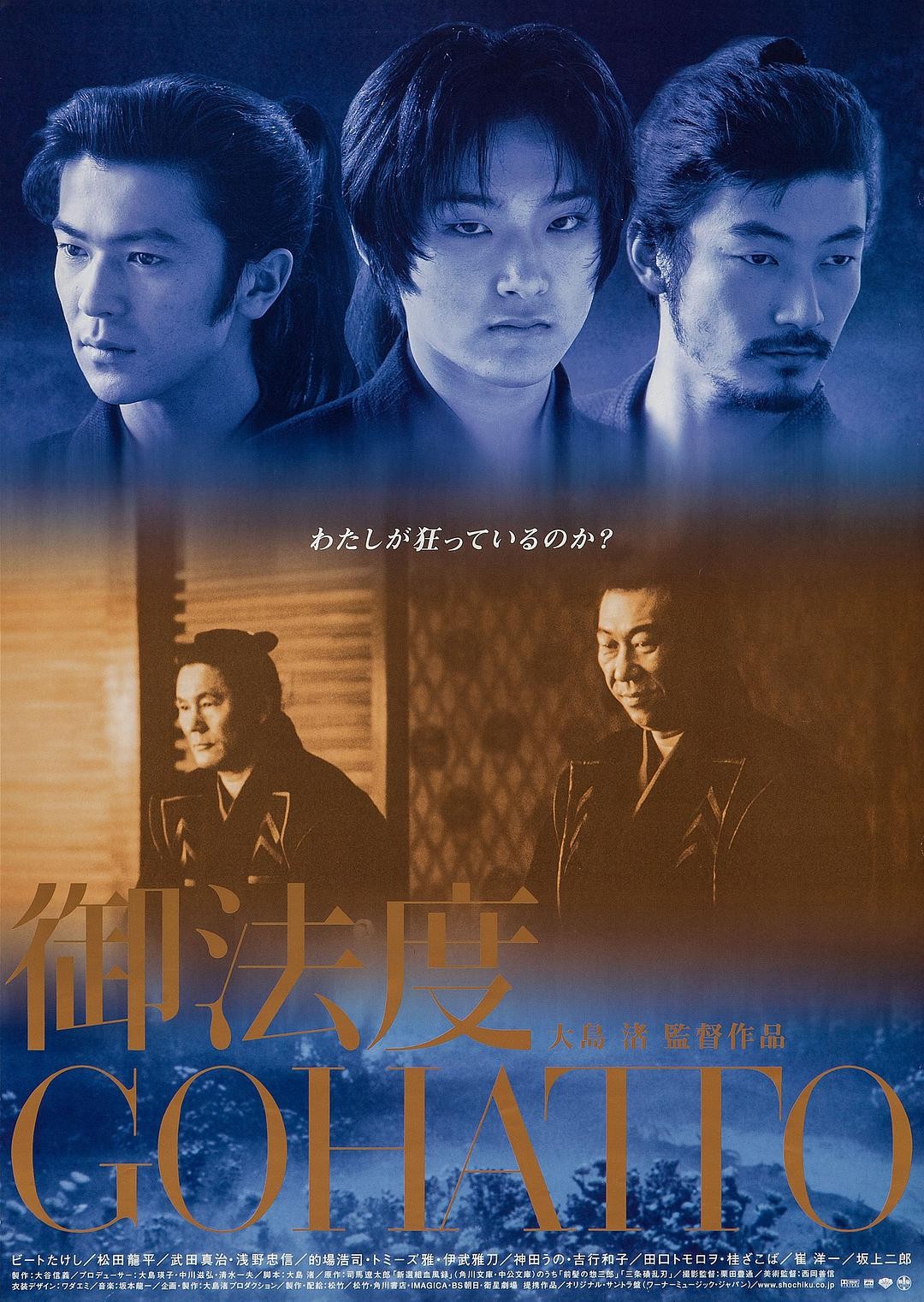
Gohatto (御法度, Nagisa Oshima, 1999)

Nagisa Oshima once said that his hatred of Japanese cinema extended to absolutely all of it, decrying the hackneyed nativism of “foggy beauty and stupid gardens”, yet his final film is filled with Mizoguchian mist and almost a paen to Japanese aesthetics which ends with a cherry blossom tree in full bloom cut down in its prime. Burdened by the slightly more salacious title “Taboo”, Gohatto is less about love between men in an intensely homosocial world even as it asks what it might mean by “forbidden” or “against the law” than it is about idealism and aesthetics as its band of contradictory conservatives unknowingly approach the end of their world in a coming modernity ushered in by dangerous beauty. 

Set in the Kyoto of 1865, a scant three years prior to the Meiji Restoration, the film opens with an audition of sorts as the Shinsengumi search for promising new recruits among talented swordsmen. Already a mess of contradictions, the Shinsengumi is, loosely, a kind of official police force dedicated to defending the Shogunate against the revolutionary forces set on restoring power to the emperor. Nevertheless, in an odd way and in contrast to the elite Mimawarigumi which was staffed only by direct retainers to the Shogun, the Shinsengumi was noted for its lowkey egalitarianism in that it made a point of admitting those of ordinary birth as well as lower level samurai and ronin. Of course, the notions of equality only went so far and perhaps only fuelled its reputation for merciless savagery, but also make it a strangely progressive force fighting against progress in defence of the feudal status quo. 

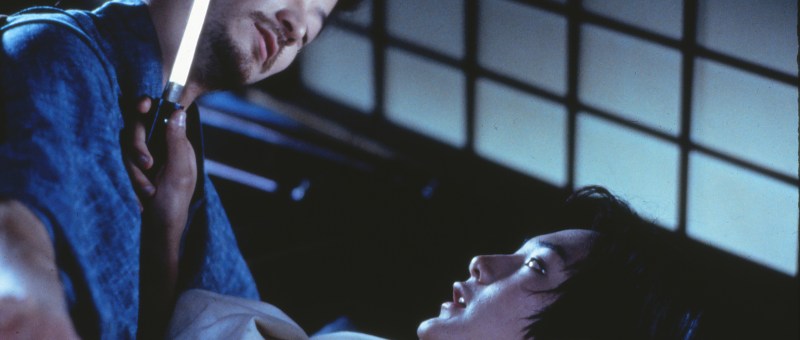
Only two of the hopefuls are thought to be any good, one a young ronin, Tashiro (Tadanobu Asano), and the other a beautiful boy, Kano Sozaburo (Ryuhei Matsuda), the third son of a wealthy merchant whose line were once samurai but are no longer counted among the noble retainers. A talented swordsman, Sozaburo’s dangerous beauty presents an existential threat to the Shinsengumi order, the steely Hijikata (Takeshi Kitano) looking on conflicted in witnessing the way his commander, Kondo (Yoichi Sai), looks at this vision of androgynous beauty remarking that he had not known him to be “that way inclined”.

Being that way inclined does not seem to be a particular issue within the Shinsengumi, it is not against their draconian rules and in fact appears to be tolerated at least as long as it causes no further problems. Kondo is however mindful of the chaos caused by a similar wave of homoerotic lust which took hold shortly before a climactic battle which would prove to be their last success. What Sozaburo seems to arouse in them is something more dangerous than the accepted patterns of love between military men which is in a sense sublimated as a mentor/student relationship, loyalty more than romance. Tashiro, who is of a similar age to the apparently 18-year-old Sozaburo, lets his desire be known, vowing to sleep with him before he dies ironically acknowledging Sozaburo for what he is, an angel of death. 

For his part, Sozaburo remains curiously passive in each of his encounters, aroused only it seems by the act of killing. Yet Hijikata discerns that he has indeed become Tashiro’s lover on witnessing them fight, Sozaburo losing clumsily despite being the more skilled in a dynamic that mimics their relationship in which Tashiro is the dominant partner. Aware of the danger in Sozaburo’s allure, Kondo suggests having a superior take him to the red light district to show him the delights of woman hoping to guide him back towards a less dangerous path, only the attempt backfires on several levels. Firstly, Sozaburo has no interest in women and continues to decline believing his commander is also hitting on him (like everyone else), thereafter determined to seduce him after all. Another retainer does indeed succeed in seducing Sozaburo, developing a mild obsession, but later ends up dead, Tashiro a main suspect in his murder with the motive of sexual jealousy though all of this additional violence is perhaps only an expression of Sozaburo’s dangerous beauty. 

As so often, sex if not love becomes the force which destabilises the social order only here it’s equated both with death and with an alternative mediation of male violence. Perhaps reflecting the way they look to the 18-year-old Sozaburo who makes a faux pas in accidentally suggesting at least one of them is of pensionable age, the ranking members of the Shinsengumi are played by actors already well into their golden years as if relics of a bygone era though in reality most were in their 30s. As Soji (Shinji Takeda), a filial figure like Sozaburo wearing long hair, puts it, there are no old men in their unit which is in essence an anti-revolutionary force. Nevertheless, the Shinsengumi is on the wrong side of history and already living in its end times, perhaps ushered towards its doom by the figure of the beautiful boy. “You were too beautiful”, Hijikata eventually laments as he finally perhaps understands the nature of the revolution he is witnessing. Perverse to the last, Oshima sets his ethereal finale in a stygian fog and pays an ironic tribute to the Mizoguchian classicism he so railed against in his youth, taking a sword to the cherry blossoms as he like Hijikata severs his own legacy in a moment of destructive beauty. 


Gohatto screens at Genesis Cinema on 25th September as part of this year’s Queer East

International trailer (English subtitles)

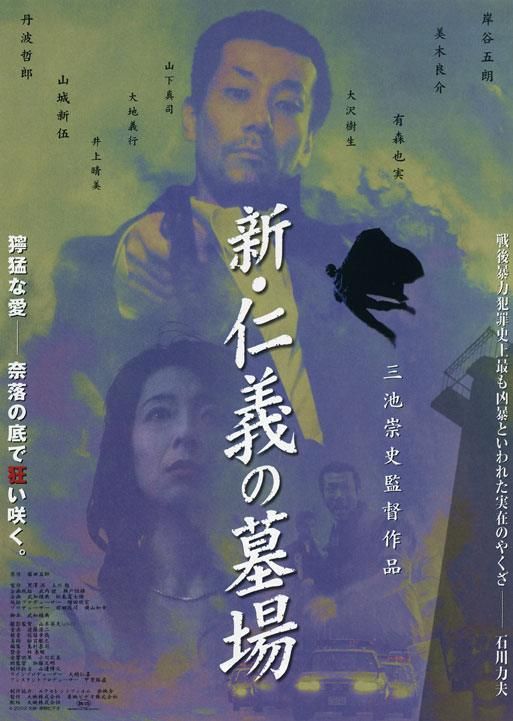
Graveyard of Honor (新・仁義の墓場, Takashi Miike, 2002)

In Kinji Fukasaku’s 1975 jitsuroku eiga Graveyard of Honor, a collection of voices open the film musing on whether the hero was corrupted by the times in which he lived or merely born crazy. Like most jitsuroku or true account gangster movies of the ‘70s, Fukasaku’s Graveyard of Honor is a post-war story about a man who failed to adapt himself to the rules of his society which was of course in constant flux though the rules of the yakuza are perhaps as fixed and timeless as any. Inspired by the same source material Takashi Miike’s comparatively subdued, contemplative Graveyard of Honor (新・仁義の墓場, Shin Jingi no Hakaba) maintains the moody, noirish feel of the ‘70s gangster drama complete with melancholy jazz score but updates the legend of Rikio Ishikawa to late 20th century Japan which again finds itself in crisis, floundering for direction and filled with despair. The bubble has burst in more ways than one as the young in particular awaken to the fact they have been deceived by the false promise that the good times of the Bubble years were cost free and would last forever leaving them abandoned in a world they no longer recognise as their own. 

Unlike Rikio Ishikawa who, we are told, always wanted to be a gangster, Rikuo Ishimatsu (Goro Kishitani) falls into the gokudo world by chance, his life thereafter one long fall until the bloody suicide with which the film opens. A bleach blonde dishwasher at a Chinese restaurant, he gets an offer he can’t refuse when he calmly defuses a would be assassin by hitting him on the head with a chair, earning the eternal gratitude of boss Sawada (Shingo Yamashiro) who takes him on and makes him his protege. This meteoric rise in the yakuza ranks, however, is not without its drawbacks especially in that it destabilises the internal politics of the Sawada gang with old retainers instantly resentful that this young upstart has leap frogged them to sit at the boss’ side while they’ve patiently put the work in only to be sidelined. 

A stretch in prison for avenging the boss’ honour brings him into contact with Imamura (Ryosuke Miki), later his sworn brother but also his opposing number, possibly the last honourable yakuza. “A yakuza without honour isn’t worth shit” Imamura’s boss later remarks, instructing him that Rikuo is a liability he’ll have to take responsibility for, but in this graveyard of honour that kind of responsibility is the one that will get you killed. Honourable yakuza can no longer survive in the world of corporatised thuggery that is the modern gokudo existence. Later we realise that the tale is being narrated by Rikuo’s former underling, Kikkawa, who reminds us that “even yakuza are human beings” existing within a social structure with clearly defined rules which must be followed, yet the rules themselves are largely superficial and Kikkawa survives because he subverts them, abandoning the reckless Rikuo for the certainty of Sawada and setting himself on the traditional gokudo path of sucking up to the boss in the constant hope of advancement. 

Kikkawa is, in a sense, the grovelling salaryman to Rikuo’s frenzied maverick, one as much they symptom of the age as another. Rikuo’s rise occurs against the economic boomtown of Japan in the ‘80s which is as much a paradise for gangsters as for anyone else but also a kind of twilight, the yakuza as an institution relegated to the Showa era and the post-war past. Gangsters forced out of their families like the desperate ronin of the feudal era further destabilise an already chaotic environment which, like that of the post-war years, is filled with despair and disillusionment only to be further disrupted by the advent of natural disaster and economic collapse. 

Like the yakuza of the jitsuroku, those of Miike’s Graveyard of Honor struggle to reorient themselves in a changing society, no more equipped to deal with economic stagnation than their forbears were for the end of occupation and the increasing irrelevance of gangsterdom in a world of economic prosperity. Increasingly paranoid and anxious, Rikuo sees betrayal in all quarters and remains essentially powerless, eventually imprisoned in what appears to have been previously used as a child’s bedroom. He seeks escape in drugs which he finds by chance, and then in romance with an equally powerless woman who bizarrely seems to have fallen in love with him after he brutally raped her though their strange, drug-fuelled quasi-wedding ceremony is the tenderest, most vulnerable we ever see them. Yet as the opening scene implied, all there is is futility. Knowing what he knows, Kikkawa meditates on his memories of happier days when he was just a minion at Rikuo’s side. In this graveyard of honour only the slippery survive and the only way to be free is to fall, and fall hard. 


Original trailer (English subtitles)

The Chrysanthemum and the Guillotine (菊とギロチン 女相撲とアナキスト, Takahisa Zeze, 2018)

Chrysanthemum and the Guillotine poster 1“I see it now, we can’t change anything” a despondent would-be-revolutionary decries in a moment of despair. Almost 100 years later, you might have to concede they have a point when the world finds itself on a tipping point once again and the same old prejudices refuse to disappear. Takahisa Zeze’s The Chrysanthemum and the Guillotine (菊とギロチン 女相撲とアナキスト, Kiku to Guillotine Onna Zumo to Anarchism) casts an unflinching eye back towards the Japan of 1923 caught in the aftermath of a devastating natural disaster which followed on from a chaotic era of rapid social change and bewildering modernisation during which a series of battles were being fought for the future direction of a nation still trying to define itself in world dominated by empires.

When the Great Kanto Earthquake struck claiming mass loss of life and extreme damage to infrastructure, the ensuing chaos gave rise to a vicious rumour that Koreans were taking advantage of the situation to foment the independence movement by poisoning wells and committing arson leading to a pogrom against anyone who failed to prove themselves Japanese enough to satisfy the mob. Meanwhile, the same forces also turned on political opponents whose influence they perceived as destructive to their own aims culminating in the murder of prominent anarchist Sanae Osugi along with his feminist wife Noe Ito and their six-year-old nephew.

We begin, however, with a different band of outsiders in the Tamaiwa itinerant female sumo wrestler troupe many of whom have taken refuge in an isolated world of female solidarity in order to escape abusive relationships. Kiku (Mai Kiryu) is one such woman who found the courage to run away from a violent husband on catching sight of the powerful female wrestlers who made her realise that she too could become strong like them. Having accepted that “weak people can’t change anything”, Kiku has vowed to become “strong” in order to claim her own agency and ensure that she can’t be pushed around ever again.

Meanwhile, an anarchist sect known as the Guillotines are fomenting a more general kind of revolution but have not been very successful and are now on the run from the authorities which is how they end up running into the female wrestlers and more or less bringing them into the struggle. Led by libertine and (as yet) unpublished poet Tetsu Nakahama (Masahiro Higashide), the Guillotines are more romantic bandits with high ideals than serious revolutionaries. They rob the rich to fund their “activism” but spend most of the money on sex and drink while plotting revenge for the murder of Osugi with various schemes which imply that at heart they aren’t so different from that which they hate.

Nevertheless, the forces of darkness are rising and history tells us that, temporally at least, they will win. The vigilante militias which carried out the massacres were largely made-up of farmer soldiers who’d served in Russia and experienced terrible hardship. Unable to bear the idea that their traumatic wartime experiences had been a senseless waste, they doubled down on militarist ideology and insisted on their nationalistic superiority. This led them to hate, to regard anything that lay outside of their code as inferior and dangerous. Though the massacres were condemned by the government and the perpetrators prosecuted for their crimes, the convictions were largely quashed a short time later which is why we see our major villains rewarded by the state and our revolutionary “heroes” imprisoned for their resistance towards state oppression and desire to create a fairer, more equal society.

Ironically enough, Nakahama’s big utopian idea is an overly idealistic vision for a future Manchuria which in hindsight proves extremely uncomfortable but is perhaps an indication of the naivety of the times. Even so, the Guillotines for all their romanticism are essentially progressive in their thinking and in full support of sexual equality, insisting on the necessity of the wrestlers to embrace their physical capabilities in order to defend themselves against an oppressive and patriarchal society fuelled by male violence. Though this in itself might be mildly problematic in implying that in order to become “equal” women must learn to be more like men, it also plays into the film’s subtle sense of irony in which the tools of militarism are being subverted in order to oppose it. The “intellectual” Guillotines find their revolutions failing, while fighting fire with fire may be the only surefire way to win even if it legitimises the problematic act of violence in the process. Then again, as another of the Guillotines puts it, the truly strong are those who have no need of killing. 

In any case, the Tamaiwa stable becomes a tiny enclave of progressive values built on female solidarity though they ultimately discover that solidarity is not quite enough and they cannot protect each other from the ravages of the times without external assistance. Even so, they attempt to hold the line, literally pushing back against the fascist incursion while insisting on their right to resist as human beings with will and agency. The prognosis seems bleak. 100 years later the same battles are still being fought and the same tensions rising in the wake of new disasters yet there are also those who will continue to resist and like the Tamaiwa wrestlers refuse to give in to those who threaten to restrict their freedom.


The Chrysanthemum and the Guillotine was screened as part of the 2019 Nippon Connection Film Festival.

Original trailer (no subtitles)

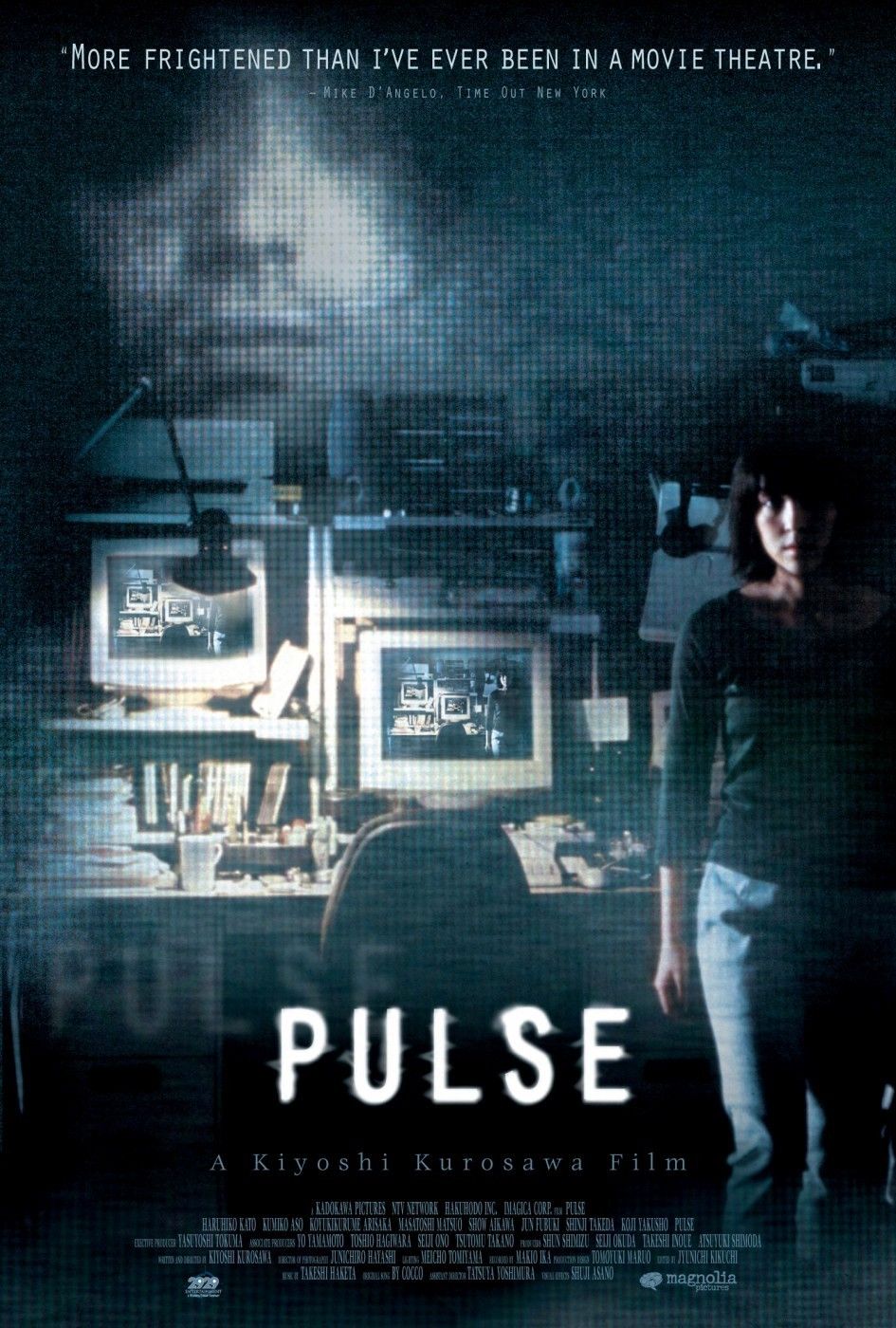
Pulse (回路, Kiyoshi Kurosawa, 2001)

pulse US posterTimes change and then they don’t. 2001 was a strange year, once a byword for the future it soon became the past but rather than ushering us into a new era of space exploration and a utopia born of technological advance, it brought us only new anxieties forged by ongoing political instabilities, changes in the world order, and a discomfort in those same advances we were assured would make us free. Japanese cinema, by this time, had become synonymous with horror defined by dripping wet, longhaired ghosts wreaking vengeance against an uncaring world. The genre was almost played out by the time Kiyoshi Kurosawa’s Pulse (回路, Kairo) rolled around, but rather than submitting himself to the inevitability of its demise, Kurosawa took the moribund form and pushed it as far as it could possibility go. Much like the film’s protagonists, Kurosawa determines to go as far as he can in the knowledge that standing still or turning back is consenting to your own obsolescence.
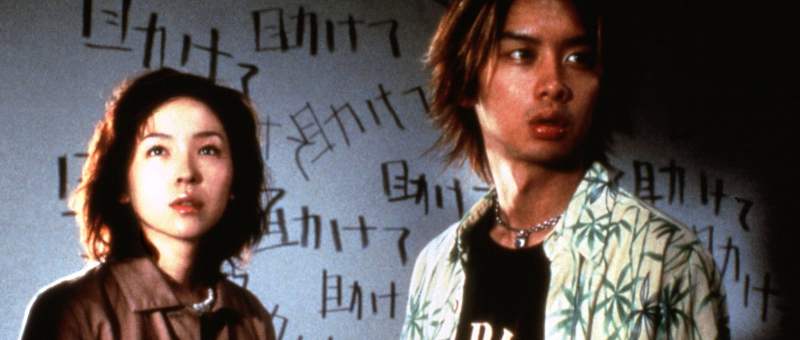
The end of the world starts with a young man staring at his computer screen and the strange images it conjures of the only half alive. Michi (Kumiko Aso), a young woman working at a rooftop plant centre, is dispatched to find out what’s happened to a colleague, Taguchi (Kenji Mizuhashi), who has some essential information stored on a floppy disk. Arriving at his flat she finds him distracted, informing her that the disk is somewhere in a pile scattered on the desk before disappearing off somewhere else. Having found what she came for, Michi looks for Taguchi to say goodbye but finds him hanged in an adjacent room. Barely reacting, Michi deals with the police before meeting up with her colleagues to relate the news, leaving each of them stunned. Another colleague, Yabe (Masatoshi Matsuo), then receives a strange phone call as a distorted voice repeatedly utters the words “help me”.

Meanwhile, economics student Kawashima (Haruhiko Kato) is attempting to set up this new fangled internet thing in his dorm but failing miserably. When he finally gets online and is greeted with the message “would you like to meet a real ghost?” he thinks he’s done something very wrong and hurriedly shuts his computer down. Seeking advice in the uni computer club he gets to know IT professor Harue (Koyuki) who tries to help him but may be beyond help herself.

The Japanese title, “Kairo”, literally means “circuit”, a fixed path of connectedness along which something flows continuously. A “pulse” is itself a circuit, or more accurately an observation of a fixed point in motion along it which maybe continuous or finite. Pulse, in its most immediate meaning is the life force by which we live, the thing which defines the states of life and death, but the “circuit” here is bigger than that which exists in one body alone, extending across the great confluence of humanity, or at least of that still regarded as “living”.

When Harue attempts to fix Kawashima’s internet she prompts him about why he wanted it in the first place (it was hardly necessary back in the still largely analogue world of 2001). He seems confused and replies he doesn’t quite know, it’s just that everyone seemed to be into it. Harue thinks she has his number – he thought he could use it to connect with people, but, she says, that is hopeless, people don’t truly connect, we all live in our separate bubbles. Harue is the most classically “disconnected” of our protagonists. Never having felt at home in the world, she talks of a lifelong fascination with the idea of death as a portal to another one in which it might be possible to live happily with others, only to realise as a teenager that it might also be a gateway to a land of perpetual nothingness and isolation. Terrified of being alone yet unwilling to submit herself to the inherent risks of connection, Harue exists in a permanent state of embittered longing and anxiety in which the cold embrace of death may prove the the only companion she will ever allow.

Harue may be an extreme case but she’s not the only example of disconnected youth. Michi, is also aloof and isolated – a child of divorced parents who has a close if imperfect relationship with her mother (Jun Fubuki) and an absent father she has already rejected. She says she’s OK in the city because she has her friends prompting her mother to warn her that she’s too trusting, too blind to the dangers of city life. Michi’s connections may turn out to be shallow, but unlike Harue she remains broadly open, seeking physical connections rather than digital ones. She visits her friend’s apartment, and makes a point of chasing after Yabe even after her boss warns her that friendly words can wound and that wounding a friend is also an act of self harm. Compelled to travel onwards, she resolves to keep on living, continue seeking connections until there are no more left to seek.

Kurosawa’s world is one of essential interconnectedness which finds itself frustrated by a mysterious forces leaking in. Yet the ghosts are not all on the other side, these are people who are spiritually dead while physically alive – isolated, defined by routine and expectation, and endlessly unfilled. “Trapped inside their own loneliness” as one character puts it, the disappeared gain a kind of immortality but it’s one filled with eternal longing and isolation. These “broken connections” are continually in search of vulnerable ports, flooding a system which has already begun to fail, and threatening to destroy that which they seek. The “ghosts” have destroyed the machine, but Kurosawa’s apocalyptic conclusion, melancholy as it seems to be, offers as much a hope for rebirth as it does a condemnation to existential loneliness.


Now available on blu-ray from Arrow Films!

Arrow release EPK

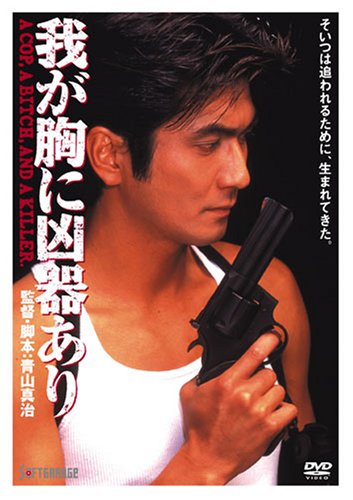
A Weapon in My Heart (我が胸に凶器あり, AKA A Cop, A Bitch, and a Killer, Shinji Aoyama, 1996)

a-weapon-in-my-heartShinji Aoyama would produce one of the most important Japanese films of the early 21st century in Eureka, but like many directors of his generation he came of age during the V-cinema boom. This relatively short lived medium was the new no holds barred arena for fledgling filmmakers who could adhere to a strict budget and shooting schedule but were also aching to spread their wings. After a short period as an AD with fellow V-cinema director now turned international auteur Kiyoshi Kurosawa, Aoyama directed his first straight to video effort – the sex comedy It’s Not in the Textbook!. Released just after his theatrical debut, Helpless, A Weapon in My Heart (我が胸に凶器あり, Waga Mune ni Kyoki Ari, AKA A Cop, A Bitch, and a Killer) is a more typically genre orientated effort with its cops, robbers, and femme fatale setup but like the best examples of the V-cinema trend it bears the signature of its ambitious director making the most of its humble origins.
Call girl Alice has ripped off her gangster bosses for a large amount of heroine only her accomplice has got cold feet and called a relative in the police force. The kid gets shot as officers Goro and his partner Yoshioka wade in all guns blazing but Alice calmly allows herself to be taken into custody. Yoshioka is a strangely cheerful chap who informs Alice that he has a game running where he gives suspects odds to bet on their likelihood of escape. Hers are brilliant because there is no way she is getting away. However, the trio are ambushed by crazy gangster Matsumura and his gang forcing Goro and Alice onto the run. In addition to avoiding Matsumura and his dastardly schemes, Goro and Alice are also being stalked by a mysterious hitman, Hoshi, who claims to be “watching from up above” and has his own motives for his bizarrely heroic hunting style.

This being a V-cinema effort, the production values are low, shot in widescreen but on the kind of cheap video cameras common to the V-cinema movement. Nevertheless, Aoyama makes the most of what he has to create a stylish genre throwback which recalls the Nikkatsu action films of years gone by only a little less madcap even if leaning towards the surreal. Told in a non-linear fashion, exposition is delivered largely through flashbacks but each of these is innovatively offered such as in a touching scene in which Goro remembers a conversation with Yoshioka in which only the lighting darkens to let us know that the happy memory has ended and the melancholy present has resumed. Similar techniques mark Alice’s frequent flashbacks to her traumatic crime, though in line with their much more pressing nature Alice’s memories are given harsher, more abrupt entrances and exits, lacerating the screen as they do her mind.

The genre elements may be familiar enough but Aoyama ensures each of the major players is fully drawn despite the necessarily tight running time. Good cop Goro is arguably the least explored but it’s antagonist Hoshi who leaves the biggest mark. A joke that’s somewhat lost in translation runs on the fact that “Hoshi” means star which lends an oddly comic dimension to his frequently uttered catch phrase in which he promises to be watching “from up above”. Having once abandoned the killing game, Hoshi has found himself forced back into the life in order to earn the money to pay for an operation to restore the sight of his blinded son – something he feels karmically responsible for. Frequently letting our heroes go out of a debt of honour, Hoshi nevertheless has his mission to complete, no matter how much it might offend him to do so.

Our policemen also seem to operate from a mysterious antique shop where they keep the records for their escape based betting games. Add in weird dirt bike riders, mysterious statues, and strange phone calls not to mention a horror movie inspired sequence where our two heroes are trapped in a shed while the enemy looms large in a thunderstorm outside and there are plenty of interesting quirks to be going on with. Deaths are dramatic, slow motion falls and set pieces become remarkably elaborate but there’s also a sort of childish innocence as a fearsome killer tries and fails to unwrap one of his beloved boiled sweets even as he dies. Very much part of the fast and loose V-cinema universe, A Weapon in My Heart is also pure Aoyama, filled with strange details and surrealist touches but ultimately imbued with his own strange brand of humanity.


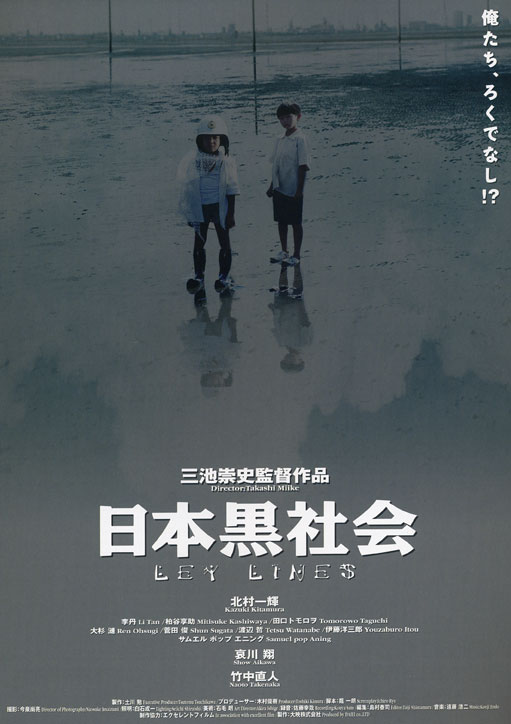
Ley Lines (日本黒社会 LEY LINES, Takashi Miike, 1999)

ley-linesThe three films loosely banded together under the retrospectively applied title of the Black Society Trilogy are not connected in terms of narrative, characters, tone, or location but they do all reflect on attitudes to foreignness, both of a national and of a spiritual kind. Like Tatsuhito in the first film, Shinjuku Triad Society, the three young men at the centre of the final instalment, Ley Lines (日本黒社会 LEY LINES, Nihon Kuroshakai LEY LINES), have each faced prejudice and discrimination due to their Chinese heritage. Fleeing their small town blues and heading for the big city, they want out of the homeland which can find no place for them to try their luck in pastures new, but desperation breeds poor choices and if they find their freedom it may not be in the way they might have hoped.

Angry young man Ryuichi (Kazuki Kitamura) seems to have been in some trouble with the law recently, at least that’s the reason the pedantic government official gives for rudely rejecting Ryuichi’s attempts to get a passport whilst subtly underlining the fact that a “real” Japanese person would know you can’t have one whilst on probation. Offended, Ryuichi picks up a small potted tree and hits the uncooperative desk jockey on the head with it. With Brazil off the cards and no work or prospects on the horizon, Ryuichi decides to blow town with some friends. All but three of them change their minds at the train station but Ryuichi, his sensitive younger brother Shunrei (Michisuke Kashiwaya), and their friend the impulsive Chan (Tomorowo Taguchi) head for the sleazy streets of Shinjuku hoping to find someone to forge their papers for passage overseas.

Once there, hotheaded Ryuichi immediately begins to cause trouble and the trio get mixed up in an ongoing series of gang problems with the traditionally minded Chinese gangsters and a petty thug (Show Aikawa) selling what he claims is a new wonder drug, Toluelene. Teaming up with a brutalised local prostitute, Anita (who previously ripped them off leading to their ill advised Tolulene adventures), also desperate to get the hell out of Shinjuku, the four form an unconventional mini family but a last ditch solution to their dilemma will turn out to be a gamble too far.

Neatly uniting the themes of the previous two movies in the Black Society Trilogy, Ley Lines casts its heroes as multilayered outsiders. Miike begins the film with deliberately retro, aged footage of the brothers as young boys playing happily on a beach until some Japanese kids turn up and remind them that they’re different. Never allowed to just fit in, Ryuichi has become angry and frustrated whereas Shunrei studies harder than anyone trying to earn his place in a competitive society. If their Chinese heritage had set them at odds with their small town peers, the boys are just as much adrift in the big city, a trio of bumpkins wandering into all the wrong places naively thinking they can scrap their way out of Japan. Anita, also Chinese, shares in their desperation as her situation has become unsustainable. Shackled to a useless pimp and forced to endure frightening and barbaric treatment, Anita needs out of the flesh trade and the guys might just be her ticket to ride.

As he would later do so splendidly in Audition, Miike deliberately wrong foots us in the beginning as if he’s about to embark on a standard tale of a young man making his first big set of mistakes which will set him on a path to becoming a better person, but of course this isn’t where we’re going. The original Japanese title, “Japan Black Society” hints at the all pervading darkness which exists below the everyday world into which our trio of hapless dreamers have fallen. The guys are ordinary young men making ordinary mistakes which have a familiar, often comedic quality which only serves to deepen the agony they’re about to face.This underworld belongs to people like the mad gangster Wang (Naoto Takenaka) dreaming of his Chinese homeland and forcing young women to tell him folktales to remind him of it, the pimp the who mishandles the desperate Anita, and the deluded drug dealer Ikeda convinced he’s onto the next big thing. The boys don’t stand a chance. Ending with a typically poetic, bittersweet set of images as some of our heroes find a kind of freedom in an endless sea, Miike does not stint on the irony but his sympathy is very much with these disenfranchised youngsters, denied their futures at every turn and finally backed into a corner by the cruel and unforgiving nature of the Black Society which they inhabit.


Original trailer (English subtitles)

https://www.youtube.com/watch?v=9hB0d_u-6Zk&t=3s