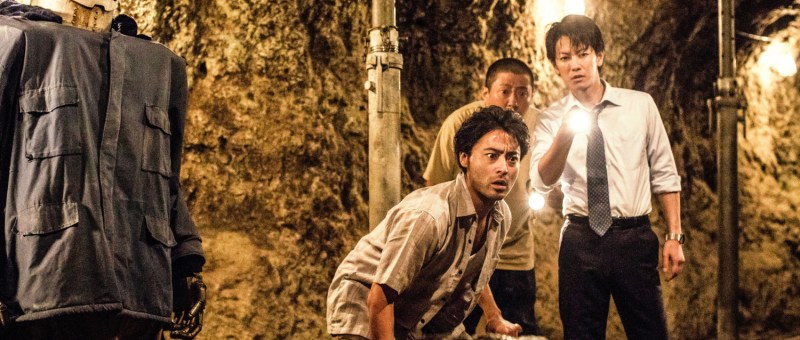
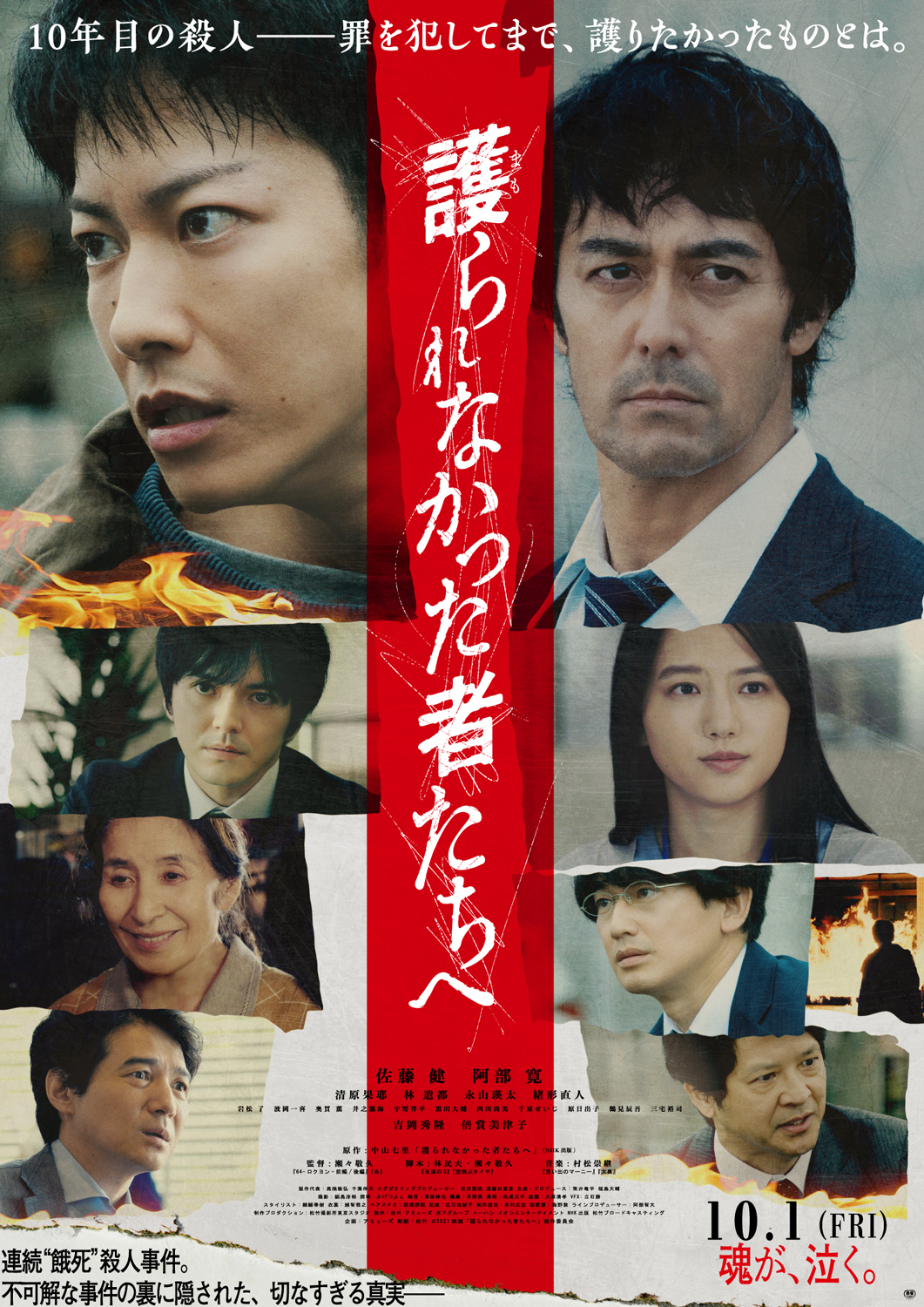
In the Wake (護られなかった者たちへ, Takahisa Zeze, 2021)

According to a young woman at the centre of Takahisa Zeze’s In the Wake (護られなかった者たちへ, Mamorarenakatta Monotachi he), natural disasters are monsters that devour humans with no rhyme or reason, but people close to her have died by human hands while left at the mercy of a hypocritical social welfare system. Though the social workers insist that benefits are something everyone is entitled to when they need support, others go to great lengths to stop anyone getting them. “That’s the country we live in,” one explains with a tone that implies he thinks this is exactly as it should be.

That social worker is the second to be found dead in suspicious circumstances nine years after the devastating 2011 earthquake and tsunami. The police obviously suspect a grudge, that someone who was turned down for benefits got fed up and killed him in revenge. But as assistant Mikiko (Kaya Kiyohara) says, it’s unlikely to be any of them because they are all “too busy trying to survive,” so they don’t have time to waste on things like vengeance. Zeze then switches to the welfare office where a social worker is trying to explain to an elderly applicant all of the different forms and documentation he’ll need to prepare for his claim. These people already have to jump through hoops to prove their “neediness,” while most of them feel defeated and humiliated in even having to ask and would prefer not to have to depend on the government. 

But a lot of Mikiko’s work involves challenging those suspected of committing benefits fraud. The first of two people she talks to is a single mother with mental health issues (Chika Uchida) who’s had to start working full-time and consequently gone over her allowance meaning her benefits should stop and she should pay back what was “wrongfully” claimed. The woman insists she needs the extra money because her daughter was being bullied for being on benefits so she wants to send her to cram school and be able to buy educational supplies, but Mikiko remains unsympathetic. The second is a man who it’s admittedly harder to sympathise with as he appears to have bought quite a fancy car which again takes him over the limit as a car is classed as a luxury item rather than a necessity. Mikiko doesn’t think they should pay out when he could easily sell the car. Of course, it’s not that simple. The man may need the car in order to work and without it would have no choice but to rely on benefits to a greater extent. In any case, he gets on Mikiko’s nerves because to her it’s people like him that prevent them helping more “genuinely” needy cases. 

But on the other hand, when they could and should have helped they refused and effectively blackmailed an old lady into revoking her application even though she had only 6000 yen (£30) left in the bank and was on the brink of starvation with no one else to turn to. Another of the social workers insists that good neighbours are the most effective way of tackling poverty which is equal parts unreasonable and unrealistic. Then again, there was a kind of solidarity that arose in the wake of the earthquake in which an old woman’s kindness saved a young man and little girl from being dragged away by the weight of their despair, giving them a new home and surrogate family along with proof of the fact that there is always someone there to help and that kind of compassion can be a kind of salvation. 

Even so, Mikiko’s insistence that you have to ask to receive, along with the welfare officer’s almost vampiric obsession with getting the applicant themselves to clearly state they need help, seems contrary to her philosophy in which it should just be provided with no questions asked. They know how difficult asking for help can be and deliberately leverage the social stigma of being on benefits to discourage people from applying for them. Citing increased demand and government cut backs in the wake of the earthquake, the social worker confusingly suggests that by declining more cases they can help more people in the long run which doesn’t make a tremendous amount of sense while his eerie grinning hints that he has begun to enjoying sadistically humiliating these vulnerable people who’ve been brave enough to come forward and ask for that to which they are otherwise entitled. 

They are all living in the wake of this disaster, something of which aloof yet empathetic detective Tomashino (Hiroshi Abe) is all too aware having lost his wife and son in the disaster. As his son’s body was never found, he too lives in a state of limbo but through investigating the killings begins to find a kind of closure along with an unexpected sense of understanding with a gloomy young man, Yasuhisa (Takeru Satoh), himself a suspect and struggling to make sense of the past, his survival, and the ongoing injustice of the world around him. The film takes its Japanese title, “those who were not protected”, from a note Mikiko writes about the importance of empathy in social work encouraging her colleagues to rebel even if their bosses tell them not to, but also hints at the grief and guilt felt by those left behind that in the end there were those they were not able to save but they can perhaps make their peace with that by continuing to help those around them even if their society largely refuses to do so.


In the Wake screens as part of this year’s Japan Foundation Touring Film Programme.

Trailer (English subtitles)
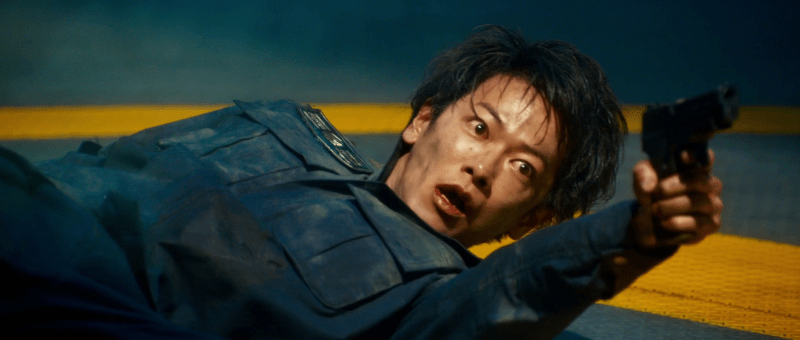
Ajin: Demi-Human (亜人, Katsuyuki Motohiro, 2017)

Katsuyuki Motohiro’s 2001social drama Transparent: Tribute to a Sad Genius had attempted to show the government acting with compassion having discovered humans with a potentially dangerous power, in that case the unfortunate ability to broadcast their every thought. Rather than locking them up in labs, the government had allowed the Transparents to live in the community under the caveat that they must never be told of their ability while continuing to monitor them secretly and in fact micromanaging their lives with less than ethical attention. 2017’s Ajin (亜人), adapted from the manga by Gamon Sakurai, is in many ways Transparent’s flip side in which the government has discovered the existence of a series of people known as Demi-Humans with super fast healing ability meaning that they cannot die from injury and has been conducting what is essentially vivisection on them justifying themselves that “the Ajin are the precious key to the evolution of mankind”. 

Nevertheless, they are mindful that the public would not accept it if they knew the government’s claims of “protecting” Ajins was a smokescreen to disguise the fact they’ve been experimenting on them, let alone selling the results to commercial companies for the production of chemical weapons among other things. Previously a regular medical student, Kei Nagano (Takeru Satoh) is the third Ajin to be unmasked in Japan after being hit by a bus only to heal rapidly and stumble away. After a brief period of torture, Kei is “rescued” by crazed terrorist revolutionary leader Sato (Go Ayano) and his underling Tanaka (Yu Shirota), escaped Ajins 1 and 2, but becomes their enemy after he refuses to turn against the scientists who had been torturing him pointing out that killing them would only make him feel worse and is therefore counterproductive. 

The implication is that 20 years of brutal torture at the hands of mad scientists has turned Sato into a crazed fascist hellbent on the extinction of the human race, seeking an “autonomous” space for Ajin along with full civil rights for Demi-Humans. Though we are told that only three Ajin have been unmasked so far in Japan, the implication is that there are many more living quietly some of whom Sato recruits after putting out a call for all disenfranchised Demi-Humans to join his revolution not for equality but domination. It’s this movement Kei can’t support, the classically “good” Ajin who disapproves of Sato’s actions and wants to leave peacefully alongside humanity. As such, there’s something a little uncomfortable in his inevitable decision to team up with the people who were just vivisecting him in order to stop Sato achieving his goal of guaranteed civil rights for people like him asking for nothing more than that his family be protected and he be left alone and given a new ID to live quietly in somewhere in Japan when all of this over. 

The unpalatable implication seems to be that minorities are only worthy of respect if they serve those in power, both Kei and another closeted Ajin benefiting directly and individually by siding with humanity though humanity may not honour the various promises it makes while they are partially complicit in the torture and exploitation of other Ajins. Sato’s basic request is only to given his full rights in the freedom from torture, but even this cannot be granted because of the threat he presents to humanity in that the inability to die means that he cannot be controlled through violence. Ironically enough Sato does seem to believe himself to be the next step in human evolution, after 20 years of brutal torture believing that humanity is a lesser being which those like him are intended to replace. 

Kei meanwhile encounters kind humans such as Mrs. Yamanaka (Kazuko Yoshiyuki) who kindly offers him a place to hideout because when you see someone is in trouble you just help them even if a baying mob later turn up at your door to ask why. There may be a minor allegory in the way the Ajins are treated, feared by and excluded from regular society, forced to keep their true natures secret in order to live a “quiet” life but than again Sato and his cohort of equally crazed young Demi-Humans who presumably have never been tortured are depicted as quasi-fascist radicals selling their own organs on the medical black market and eventually prepared to unleash a chemical weapon on Tokyo to make it unliveable for regular humans in order to claim their own space. Nevertheless, Motohiro’s drama is at its best during its high impact, well choreographed action sequences displaying some top quality visual effects as the Ajins produce their ghostly avatars or reassemble themselves after catastrophic injury even if the discomfort of the underlying messages cannot be entirely escaped. 


Original trailer (no subtitles)

Not Quite Dead Yet (一度死んでみた, Shinji Hamasaki, 2020)

©2020 Shochiku Co., Ltd. Fuji Television Network, Inc.

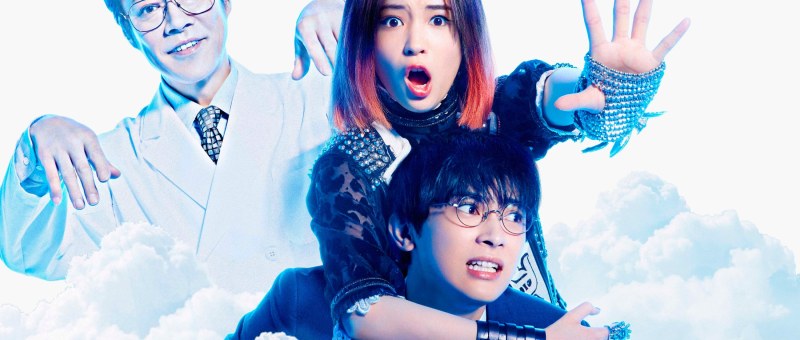
“What’s important is purpose, to live for something. Without it you’re as good as dead” according to the hero of madcap existentialist farce Not Quite Dead Yet (一度死んでみた, Ichido Shinde Mita). The feature debut from ad director Shinji Hamasaki pits a rebellious student against her overly literal, authoritarian dad as the pair begin to come to a kind mutual understanding only once he “dies” after being tricked into taking an experimental drug in order to unmask conspiracy within his own organisation. 

College student Nanase (Suzu Hirose) intensely resents her father (Shinichi Tsutsumi), the CEO of Nobata Pharmaceuticals which he has long been pressuring her to join. She’s currently the lead singer in death metal band Soulzz only according to a record scout at one of their shows their problem is that they’re all “zz” and no soul. Meanwhile, Nobata has assigned an underling, Matsuoka (Ryo Yoshizawa), to shadow her partly because Matsuoka too has very little presence and is in fact nicknamed “ghost” for his essential invisibility. The trouble starts with the escalation of a corporate feud as Nobata’s old buddy Tanabe (Kyusaku Shimada) starts manoeuvring to get his hands on the company’s research into an anti-ageing serum codenamed “Romeo”, planting a mole inside the organisation. As a consequence of his research another of the scientists nicknamed “Gramps” has stumbled on another drug which renders someone temporarily “dead” for a period of two days, naming it “Juliet”. Watabe (Yukiyoshi Ozawa), a consultant Nobata has brought in to streamline the business, convinces him to take the experimental drug in order to flush out the mole while secretly working with Tanabe to take over the company by forcing through a merger while Nobata is out of action. 

A typical socially awkward scientist, Nobata believes that life is about experiment and observation, a belief system which has thoroughly irritated his daughter who still lives at home but has divided the territory in half with clearly marked red tape. Nanase’s animosity towards her father apparently stems back to the death of her late mother Yuriko (Tae Kimura), angry with him that he never left his desk and didn’t make it to the hospital in time to see her before she passed away. “Life’s not a lab experiment” she sings, recalling her childhood during which her overly literal father took away life’s magic by patiently over explaining fairytales, scoffing that Prince Charming probably didn’t revive Sleeping Beauty with a kiss but a transfer of static electricity, while continuing to order her around in fatherly fashion now she’s all grown up. Perhaps still stuck in a petulant adolescence she started the band to vent her frustrations with the world in the form of a death metal “mass”, but she’s growing up. Her bandmates are getting jobs or getting married, she’s still stuck with no real clue about what it is she actually wants to do with her life except that she doesn’t want anything to do with Nobuta Pharmaceuticals.  

Once her father “dies”, however, she begins to gain a new appreciation for his life philosophy able to see but not hear his “ghost” while his body lies on a table in the office cafeteria. Nobata went into pharmaceuticals to help people, but has been led on a dark and vacuous path pursuing anti-ageing technology which is in itself a rejection of change and transience. Ending all her sentences with the word “death”, that’s not something Nanase can get behind. She believes in growing old gracefully, that they make drugs not to cheat death but to be able to spend longer with those they love. As her father had advised Matsuoka to do, she begins to find her purpose, rediscovers her soul, and figures out what it is she’s supposed to do with her life.

Matsuoka, however, seems to be permanently “invisible” despite the tentative romance that develops as he and Nanase attempt to subvert the conspiracy to stop them doing her dad in for good, brushing up against the venal Tanabe who seems set to muster all his corporate advantages against them partly because of an old grudge against Nobata. Of course, you have to wonder why the conspirators didn’t just poison him rather than having him go Juliet and then entering a race against time to cremate him before he wakes up, but as Nobata reminds us there are many things which science cannot explain. A cheerfully silly Christmas tale of rediscovering what it means to be “alive” in the presence of death, Not Quite Dead Yet is zany seasonal fun but with plenty of soul as its heroes learn to shake off cynical corporatism for a healthy respect of the values of transience.


Not Quite Dead Yet screened as part of Camera Japan 2020.

Original trailer (English subtitles)

Images: ©2020 Shochiku Co., Ltd. Fuji Television Network, Inc.

One Night (ひとよ, Kazuya Shiraishi, 2019)

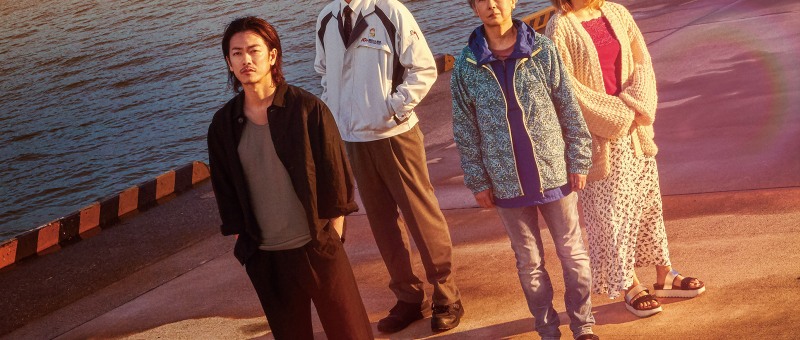
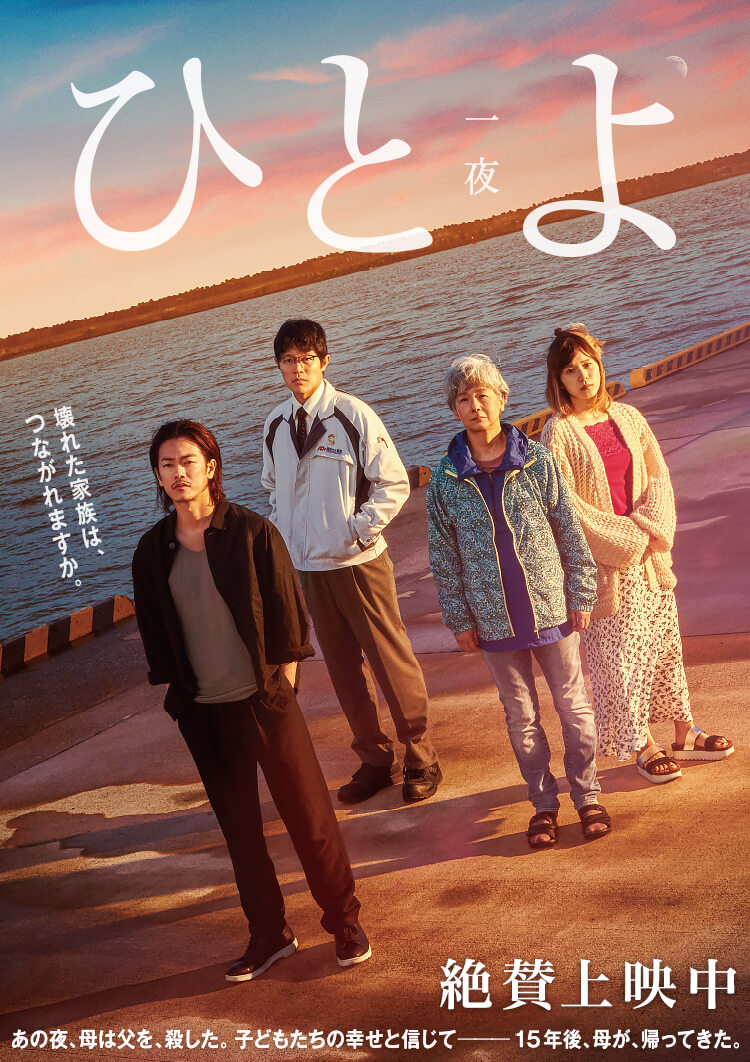
“You can live however you want, you’re totally free. You can be anything” a woman tells her children, believing she is freeing them from a cycle of violence and oppression but unwittingly consigning them to another kind of cage in Kazuya Shiraishi’s raw family drama One Night (ひとよ, Hitoyo). Adapting the stage play by Yuko Kuwabara, Shiraishi is the latest in a long line of directors asking questions about the true nature of family, taking the hahamono or “mother movie” in a new direction but ultimately finding faith at least in the concept as the family unit finally begins to repair itself in a spirit of reconciliation and forgiveness. 

The “one night” of the title is that of 23rd May, 2004 on which wife and mother Koharu (Yuko Tanaka) backs over her relentlessly abusive husband in one of the taxis operated by their company. At some point, even if only perhaps in those few moments sitting at the steering wheel, Koharu appears to have given this a great deal of thought. Calmly walking back into her familial home where her three children are each sporting prominent facial wounds from a recent beating, she hands each of them a handmade onigiri and explains that she has just killed their father. Planning to hand herself in she reassures them that an uncle will look after them and the company so they’ve no need to worry. She has no idea how long she’ll be in prison for, but cautions that she may not return for 15 years hoping that by then the stigma will have passed. On her way out, she pauses to tell them that she is proud of what she’s done, saving them from their father’s authoritarian abuse and urging them to be free to live their lives in whichever way they choose. 

15 years later, however, the children find themselves burdened by her words. Yuji (Takeru Satoh) who dreamed of being a novelist has become a cynical journalist working for a pornographic magazine. Daiki (Ryohei Suzuki) who has a stammer and wanted to be a mechanic has never been able to hold down a steady job and is on the brink of divorce after showing signs of becoming abusive himself, while Sonoko (Mayu Matsuoka) who wanted to be a hairdresser is now working as a bar hostess drinking herself into oblivion. Living with the legacy of that one night, none of them has been able to live freely or to achieve their dreams but has remained arrested in some way waiting for Koharu’s return. 

While in her mind she freed them, the children find themselves dealing with the secondary sense of abandonment in her decision to exile herself from their lives, essentially leaving them to deal with the fallout of her “crime” all alone. Not only are they now orphaned, they also have to live with the stigma of being related to a notorious murderess with all of the peculiar burdens that entails in Japanese society from harassment and bullying to reduced employment opportunities and an internalised shame. Meanwhile, their mother’s words ring in their ears, urging them to be free, to be who they wanted to be and achieve their dreams, but they find themselves paralysed by the pressure to live up to the sacrifice Koharu has made on their behalf. While Sonoko is the most sympathetic, the boys are consumed by resentment. Koharu sees her 15 years of wandering as an exile undertaken as a kind of atonement and intended to keep the children safe from further social stigma, but her sons feel only the abandonment. 

Still, “mom’s still mom. It’s we who’ve got to change” Daiki tries to convince his brother, “we’re not kids anymore” he later adds as they recreate a thwarted teenage attempt to save their mother but in a very real sense they are. The problem in Daiki’s marriage turns out be rooted in insecurity, a failure of intimacy that saw him reluctant to let his wife and daughter into his traumatic past which finally expressed itself in violence. Meanwhile another driver at the taxi firm finds himself in a parallel struggle as he processes his own troubled relationship with an estranged teenage son and comes to realise his sins are indeed being visited on him despite his best efforts to prevent it. He sympathises with Koharu against the “ungrateful” children who, like the those of the classic hahamono, fail to understand the quality of their parent’s love as expressed in the sacrifices they have made on their behalf. Yet it’s Yuji who had branded his family a mere simulacrum who eventually fights hardest to save it, paving the way for a reconciliation as they finally bring closure to the events of 15 years previously and begin to move on with the rest of their lives. A raw and painful examination of familial trauma, Shiraishi’s bruising drama eventually allows the family to reclaim the night, repairing their fracturing bonds in sharing their emotional burdens freed at last from the oppressive legacies of abuse and resentment.


One Night streams in the US via the Smart Cinema app on Sept. 6 & 11 as part of this year’s New York Asian Film Festival.

Original trailer (no subtitles)

Samurai Marathon (サムライマラソン, Bernard Rose, 2019)

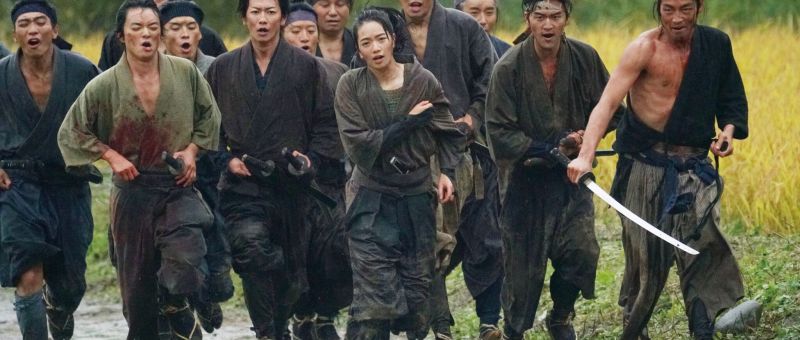
Samurai Marathon posterAfter two and a half centuries of peaceful slumber, Japan was jolted out of its isolation by the arrival of Commodore Perry’s Black Ships. The sudden intrusion proved alarming to most and eventually provoked a new polarisation in feudal society between those who remained loyal to the Shogun and the old ways, and those who thought Japan’s best hope was to modernise as quickly as possible to fend off a foreign invasion if it did eventually arise as many feared it would. Lord Itakura (Hiroki Hasegawa) has a foot in both camps. He has no desire to move against the Shogun, but fears that centuries of peace have made his men soft and complacent. His solution is to institute a “Samurai Marathon”, forcing his retainers to run 36 miles to prepare for a coming battle.

If you’ve spent your life sitting around and occasionally waving a sword at something just to keep your hand in, suddenly trying to run 36 miles might not be the best idea, as many samurai keen to win favour through racing glory discover. There is, however, an additional problem in that, unbeknownst to anyone, samurai accountant Jinnai (Takeru Satoh) is a secret ninja spy for the shogun. Confused by the preparations for the race, he reported that a possible rebellion was in the offing only to bitterly regret his decision on realising Itakura’s anxieties are only related to external, not internal, strife. All of which means, the Shogun’s men are on their way and Itakura’s retainers are sitting ducks.

Helmed by British director Bernard Rose, Samurai Marathon (サムライマラソン) plays out much more like a conventional European historical drama than your average jidaigeki. Where samurai movies with an unusual focus tend to be comedic, Rose opts for a strangely arch tone which is somewhere between po-faced Shakespeareanism and post-modern irony. Rather than the stoical elegance which defines samurai warfare, the violence is real and bloody, if somewhat over the top in the manner of a gory Renaissance painting complete with gasping severed heads and gruesome sprays of dark red blood.

A chronicle of bakumatsu anxiety, the film also takes a much more pro-American perspective than might perhaps be expected, taking the view that the arrival of the Americans heralded in a new era of freedom and the origins of democracy rather than the more ambivalent attitude found in most jidaigeki which tend to focus much more strongly on the divisions within samurai society between those who wanted to modernise and those who just wanted to kick all the foreigners back out again so everything would go back to “normal”. Itakura, like many, is suspicious of foreign influence and the gun-toting, yankee doodle humming Shogunate bodyguard is indeed a villain though it’s Itakura himself who will end up firing a gun as if conceding that the future has arrived and the era of the sword has passed. 

Ramming the point home, Itakura is also forced to concede to the desires of his wilful daughter, Princess Yuki (Nana Komatsu), who wanted to travel and see the world while her society (and conventionally minded though doting father) insisted all there was for her was marriage and a life stuck inside castle walls. Managing to escape and disguising herself by cutting her hair and putting on peasant clothes, Yuki is able to evade detection longer than expected precisely because few people have ever seen her face. She also gets to make use of some of the samurai training she’s received by holding her own out on the road, though it seems improbable that her father would let her ride out alone even if he finally allows her free rein to go where she chooses.

Meanwhile, other ambitious retainers try to use the race to their own advantage though there’s poignant melancholy in one lowly foot soldier’s (Shota Sometani) dreams of being made a samurai considering that in just a few short years the samurai will be no more. The final sepia shift into the present day and a modern marathon may be a stretch, as might the unnecessary final piece of onscreen text informing us that we’ve just watched the origin story for the Japanese marathon, but the main thrust of the narrative seems to be that the samurai were running full pelt into an uncertain future, preparing to surrender their swords at the finish line. An unusual take on the jidaigeki, Samurai Marathon perhaps takes an anachronising view of Bakumatsu chaos in which the samurai themselves recognise the end of their era but finds its feet on the road as its self-interested heroes find common purpose in running home.


Samurai Marathon screens as the opening night gala of the 2019 New York Asian Film Festival on June 28 where actress Nana Komatsu will be in attendance to collect her Screen International Rising Star Asia Award.

Original trailer (no subtitles)

Hard-Core (ハード・コア, Nobuhiro Yamashita, 2018)

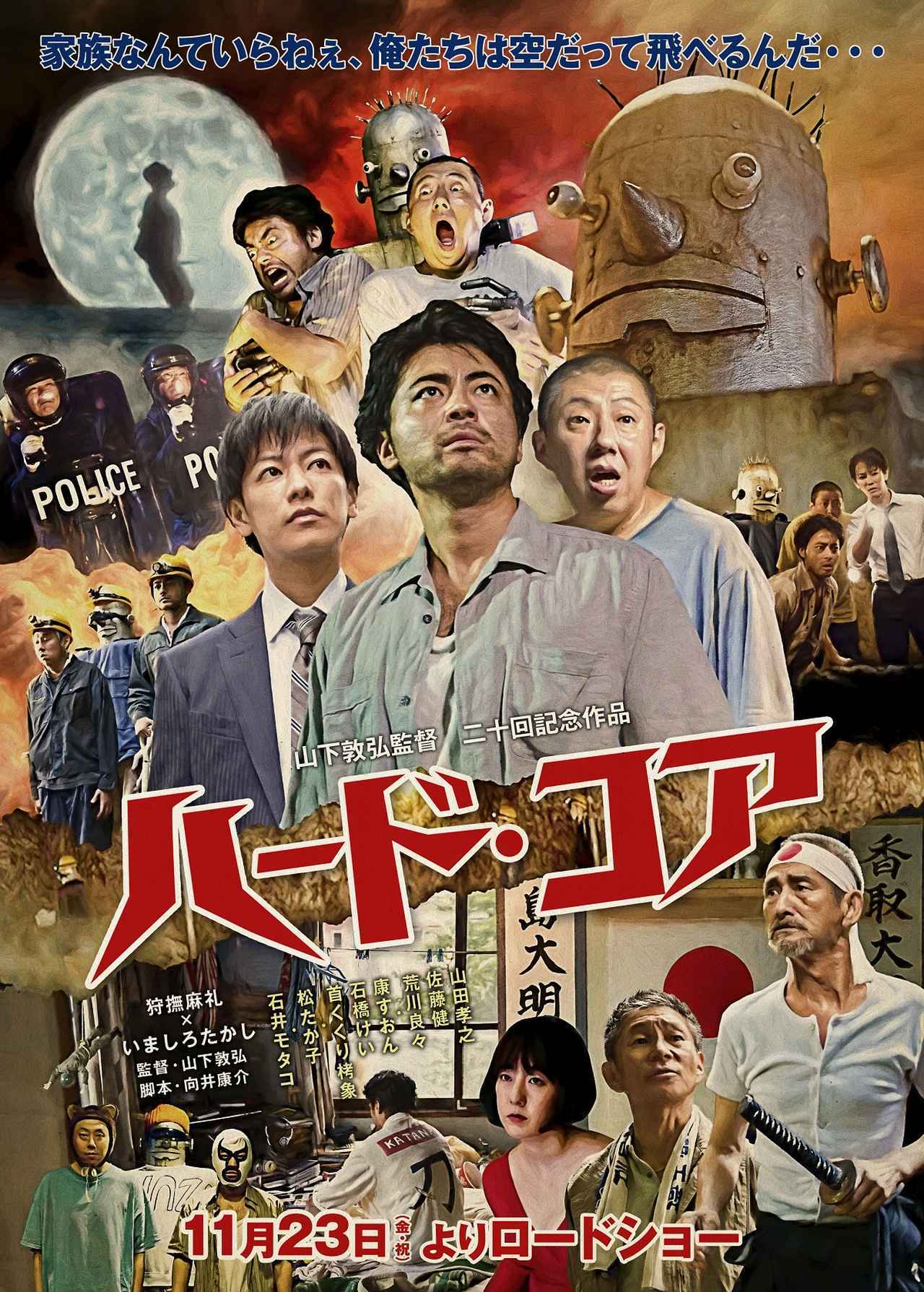
Hard-Core retro poster“The world will always be corrupt”, the cynical brother of the angry young man at the centre of Nobuhiro Yamashita’s Hard-Core (ハード・コア) advises him, “you just have to work around it”. Unfortunately, Ukon (Takayuki Yamada) just wants to do “the right thing”, but it is constantly unsure of the best way to do it while remaining resentful and conflicted in his conviction that the world has already rejected him. Yamashita has made a career out of chronicling the struggles of disenfranchised young men but Ukon and his pals are less genial slackers than potentially dangerous idealists looking for a way back to a simpler time in which the world was not quite so rotten.

An opening bar scene in which Ukon gets slowly drunk and then lays into a rowdy bunch of guys bothering a middle-aged woman (Takako Matsu) just trying to enjoy a drink showcases his propensity to abruptly lose his temper and fall into a self destructive cycle while also subtly pointing out his entitlement issues in his taking the guy to task by praising himself for leaving the lady alone while he presumably had exactly the same desire not to. In any case, after getting banned from the bar, he ends up joining an ultranationalist political cell, the Crimson Hearts, which aims to teach the youth of Japan to re-embrace its traditional culture. In order to facilitate his goals, the elderly and eccentric leader, Kaneshiro (Kubikukuri Takuzo), has enlisted Ukon, along with a friend, Ushiyama (Yoshiyoshi Arakawa) who is almost entirely mute, to dig out a mysterious cavern where he is convinced there is buried Edo-era treasure.

It’s easy to see why Ukon might fall for the rather insane ramblings of Kaneshiro. They reinforce his sense of moral decline while giving him a banner to follow and a place to belong. His loyalty to Kaneshiro is as absolute as a retainer’s to his lord, though he is perhaps conflicted in his commitment to the core ideology even as he sees obvious merit in wanting to reclaim something of the old Japan. Meanwhile, his relationship with his family appears strained. His younger brother Sakon (Takeru Satoh) has become a cynical salaryman out for nothing other than greed and self interest, staring into his own empty eyes in the reflection of the full glass panelling of his high rise office as he has meaningless sex with anonymous office ladies. Ukon just wants to do the right thing, but Sakon wants to make the smart choice and doesn’t particularly care about the wider implications of his choices.

Meanwhile, Ukon is fiercely loyal to his friends and fellow outsiders in solidarity with all those who feel the world will never be willing to accept them. Ushiyama, a man laid low by familial expectation and societal pressure, lives in an abandoned factory where he has made “friends” with a broken robot that Ukon manages to repair and names “Robo-o”. Believing that Robo-o is just like them in that he would be ostracised if people discovered his true nature, Ukon and Ushiyama set about disguising him and even get him in on their gold hunting gig (where he gets paid!) at which he proves adept considering his considerable technical superiority. Ukon’s first instinct is to protect his friend, while Sakon’s is how best to exploit him.

Nevertheless, events at the Crimson Hearts begin to escalate as unpleasant underling Mizunuma (Suon Kan) considers taking the battle to the next stage to “overthrow the corrupt totalitarianism masquerading as democracy” through actions others will regard as terrorist. Meanwhile, Ukon has also begun to fall for Mizunuma’s damaged daughter Taeko (Kei Ishibashi) whom he met by chance after being inappropriately charged with spying on Mizunuma’s new girlfriend to make sure she wasn’t sleeping around (as women do, according to Mizunuma). Ukon, as the first scene implied, is not in favour of all this obvious misogyny but can only find the strength for passive resistance. What he chooses, in the end, is his friends and his precious group of outsiders, albeit with his hopes pinned on his cynical brother and the illusionary lustre of historical treasure. The power of friendship eventually enables even Robo-o to break his programming, though it’s Sakon’s cynicism that, in one sense at least, seems to triumph. Yamashita takes his troubled young heroes on a rocky, noirish path through the “rotten” world which they are increasingly convinced holds no place for them but finally finds hope in human compassion even if that compassion may be the long buried treasure of an archaic civilisation.


Hard-Core was screened as part of the 2019 Udine Far East Film Festival. It will also be screened at the 2019 Nippon Connection Film Festival on 31st May at 22.30pm and 1st June, 22.45pm.

Original trailer (English subtitles)
Inuyashiki (いぬやしき, Shinsuke Sato, 2018)

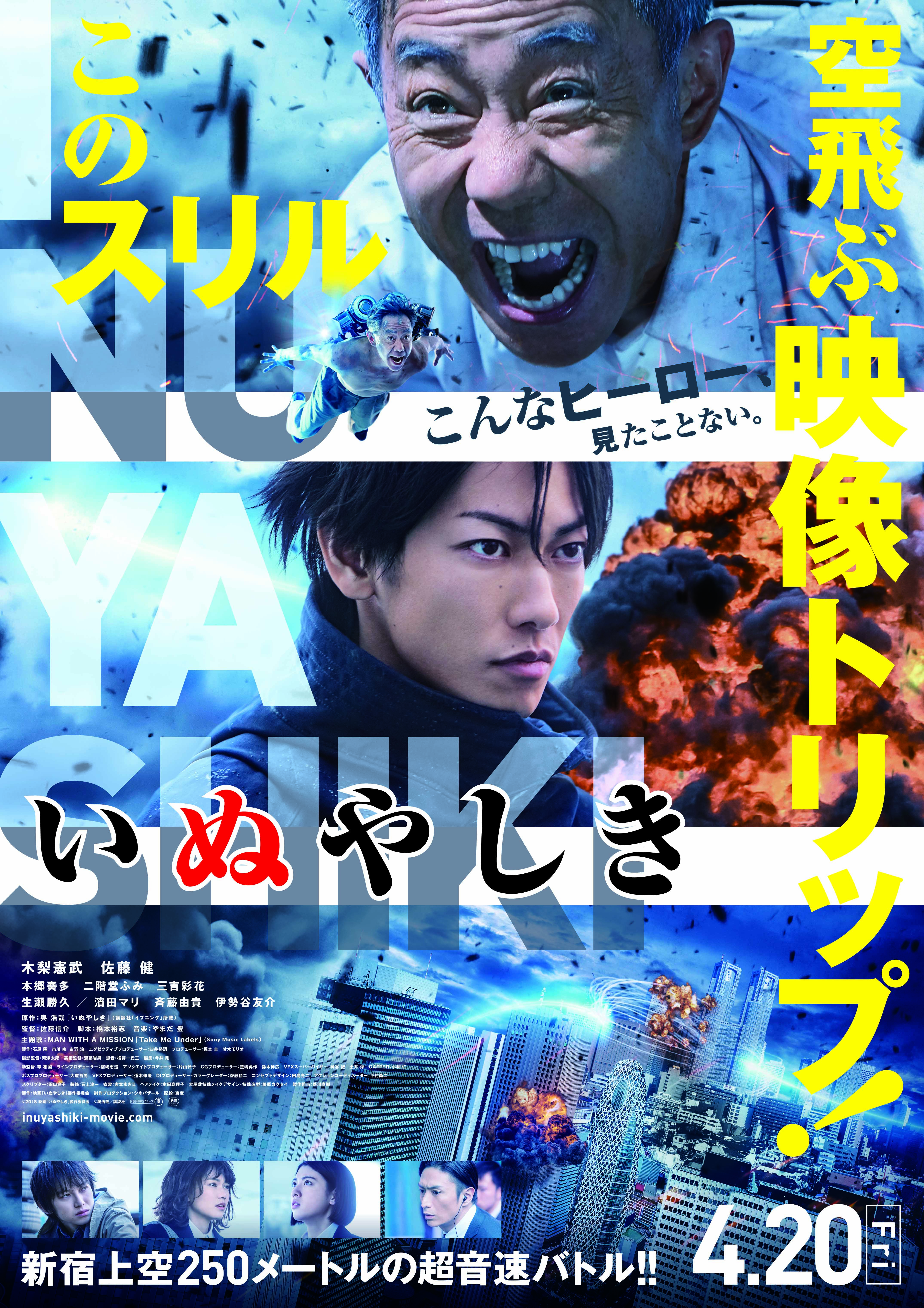
inuyashiki_poster_B1_0206D_fin_ol_3Japanese cinema has long been preoccupied by the conflict between age and youth though it usually comes down on the side of the youngsters, even when rebuking them for their selfish immorality. Inuyashiki (いぬやしき), adapted from the manga by Hiroya Oku, is similarly understanding but makes a hero of its sad dad protagonist whose adult life has been a socially acceptable disaster, while finding sympathy for his villainous teenage counterpart who resents his lack of possibilities in an already unfair world.

Unsuccessful salaryman Inuyashiki (Noritake Kinashi) has just moved into a new house of which he is very proud but his wife (Mari Hamada) and children find small and old fashioned. He’s bought sushi to celebrate the occasion, but the other family members ignore him and head out for dinner on their own. Held in contempt at home, Inuyashiki’s working life is also something of a disaster in which he is publicly berated by his boss who threatens to fire him, leaving Inuyashiki kneeling in supplication just to be allowed to work until retirement so he can keep up the mortgage payments on that new house (which he bought for his family who all hate him).

To make matters worse, Inuyashiki has also just received the news that he is suffering from terminal cancer and has only a few months to live. His only ray of sunshine appears when he finds an abandoned dog, Hanako, and decides to adopt her but his wife orders him to throw the dog out in case it messes up the house (that she already hates). Sadly walking Hanako to the park with the intention of sending her on her way, Inuyashiki is struck by a mysterious blast and later wakes up to discover he has become an all powerful cyborg with booster rockets on his back and guns in his arms.

Inuyashiki’s first instinct is that he can use his new found powers to save people. Contemplating his mortality, Inuyashiki was made to feel that his life had been a failure; he’d never done anything of consequence and had never been able to protect anyone. Reviving a wounded bird in the street, he realises he has the power to heal along with super sensitive hearing which allows him to hear the cries of those in peril.

Meanwhile, the teenager caught in the same blast, Shishigami (Takeru Satoh), is heading in the opposite direction. Shishigami is also filled with resentment though mostly as regards his poverty and comparative lack of possibilities. He hates that his single-mother (Yuki Saito) has to work herself to the bone because his father (Kiyohiko Shibukawa) left the family for another woman with whom he has built another home and become extremely wealthy. He hates that his video game otaku friend (Kanata Hongo) is mercilessly bullied and has stopped coming to school altogether rather than fight back. Filled with a young man’s rage and a mild kind of psychopathy, Shishigami doesn’t see why it’s wrong to become a bully rather than fighting them. Frustrated beyond reason he declares war on an uncaring society and sentences everyone in Japan to death for their indifference to their fellow citizens.

The conflict between the angel and the devil concludes in predictably bombastic fashion as our two cyborgs go head to head in a climactic battle for the soul of Japan. Strangely enough both men are motivated by love even if one’s actions are darker than the other’s. Inuyashiki wants to protect, to be someone his family can respect and depend on – he flees the scenes of his miracles because he isn’t interested in being a “hero”, just in being of use. Shishigami, by contrast, is motivated by love for his mother whose continuing suffering proves too much for him to bear though his attempts to take revenge only end in more tragedy. Mustering all the technology of the age from smartphones to live broadcasts, Shishigami makes himself a familiar face on TV sets and LCD screens across the country to preach his message of hate as a declaration of war.

Shishigami proclaims that Inuyashiki’s sense of justice is no match for his hate, but there is a definite irony in the squaring off of two men from different generations trying to figure out their differences by pounding the living hell out of each other and destroying half of Tokyo in the process. Still, that is in many ways the point as these two “gods” actively choose the sides of light and darkness, vying for the right to rule the future as forces of destruction or salvation.


Screened at the 20th Udine Far East Film Festival.

Original trailer (English subtitles)
The 8-Year Engagement (8年越しの花嫁 奇跡の実話, Takahisa Zeze, 2017)

8-year bride posterRomantic melodrama has long been a staple of Japanese cinema which seems to revel in stories of impossible love. The short lived boom in “jun-ai” or “pure love” romances which blossomed at the beginning of the century may have petered out gracefully after plundering every terminal or debilitating illness for traces of heartbreaking tragedy, but the genre has never quite gone away and is unlikely ever to do so. Takahisa Zeze’s The 8-Year Engagement (8年越しの花嫁 奇跡の実話, 8-nengoshi no Hanayome: Kiseki no Jitsuwa) is, however, a slightly different case in that it is inspired by a true story which became something of a hot topic in the relatively recent past. Romantic in a grand, old fashioned sense, the film shifts away from the melodrama of misery while praising the power of perseverance and the enduring potency of true love in bringing about unexpected miracles.

In 2006, shy and retiring car mechanic Hisashi (Takeru Satoh) tries and fails to get out of a party his chatty colleague is arranging for that very evening. Sullen and resentful at having been roped into a social occasion he was not mentally prepared for, Hisashi says barely anything and then manages to free himself when the others decide to go for karaoke. Just as he’s walking off mildly regretful, one of the other partygoers, Mai (Tao Tsuchiya), comes back to harangue him about his “attitude”. Hisashi explains that he’s sorry but he’s not very good at this sort of thing anyway and the truth is he wanted to go home because he’s got a killer stomach ache which being forced to eat fatty meat and down sake out of politeness has done nothing to help. Mai approves of this excuse, and even loops back after leaving to meet the others at the karaoke to hand him a heat pack she had in her bag in the hope that it might help with the stomach trouble. The pair start dating, become wildly happy, and get engaged. Three months before the wedding, Mai is struck down by a rare illness and winds up in a coma.

The romance itself is tucked up neatly into the first half hour or so and mostly conforms to genre norms – he is shy and extremely sensitive, she is extroverted and extremely kind. The love story proceeds smoothly, though there are signs of trouble to come in Mai’s increasing clumsiness followed by headaches which lead to memory loss and finally a painful hallucinogenic episode resulting in prolonged hospitalisation. Zeze wisely scales back on medical detail and focuses on Hisashi’s devotion and unwavering belief that Mai will one day open her eyes and return to him. Rather than cancel the wedding date, Hisashi decides to keep it open in the hope that Mai will be well enough to attend before booking the same date, the date of their first meeting, in every subsequent year just in case she should wake up and regret missing out on her dream wedding.

As the condition is so rare, no one is sure what the prognosis will be though the doctors admit there is a strong possibility Mai may never awaken or that if she does there may well be extensive brain damage and irreparable memory loss in addition to life long medical needs. Hisashi puts his life on hold and comes to the hospital every day, making short video messages he sends to Mai’s phone so she can catch up on what she’s missed when she wakes up. His devotion does however begin to worry Mai’s doting parents (Hiroko Yakushimaru & Tetta Sugimoto) who eventually decide to explain to him that as he’s “not family” there’s no need for him to feel obliged to stick around. They do this not because they’re territorial over their daughter’s care, or that they don’t like Hisashi, they simply worry that he’s going to waste his life waiting for a woman who will never wake up. As he’s still young and has a chance to start again, they try to push him away in the harshest way possible – through cool politeness, but are secretly pleased when he refuses to be pushed.

People making other people’s decisions for them as a means of reducing their suffering becomes a recurrent theme. Rather than say what they mean, kindhearted people say the things which they believe are for the best and will end someone else’s suffering through a moment of intense pain. Everyone is so keen to spare everyone else’s feelings, that they perhaps suffer themselves when there is no need to. Hisashi’s supportive boss remembers a rather odd comment he made during his interview – after replying that he enjoyed fixing things when asked what made him apply for the job, Hisashi’s boss asked him what he thought about while he did it to which he replied “love”. Love does it seems fix everything, at least when coupled with undying devotion and a refusal give up even when things look grim. A romantic melodrama with a positive ending The 8-year Engagement is a happy tearjerker in which love really does conquer all despite seemingly unsurmountable odds.


Screened at the 20th Udine Far East Film Festival.

Original trailer (English subtitles)

N@NIMONO (何者, Daisuke Miura, 2016)

Nanimono posterGrowing up is a series of battles in Japan. Exam hell soon gives way to the freedom and liberation of university but students know that their carefree days of youth and discovery will be short lived. Job hunting is done en masse and takes place in the final year of study (or even before). The process of securing a work placement is much the same as deciding on which school to apply to – attending job fairs to meet with representatives, getting hold of brochures, talking to anyone and everyone you know about the various reputations of the big firms, and then figuring out what your best bets are. Many companies run written exams which are then followed by group interviews in which the applicants are made to answer humiliating questions in front of their fellow candidates. What this all amounts to is a gradual erasure of the self in order to become the perfect hire, making the same tired phrases sound interesting in an effort to say all the right things whilst trying not too seem calculating or too bland.

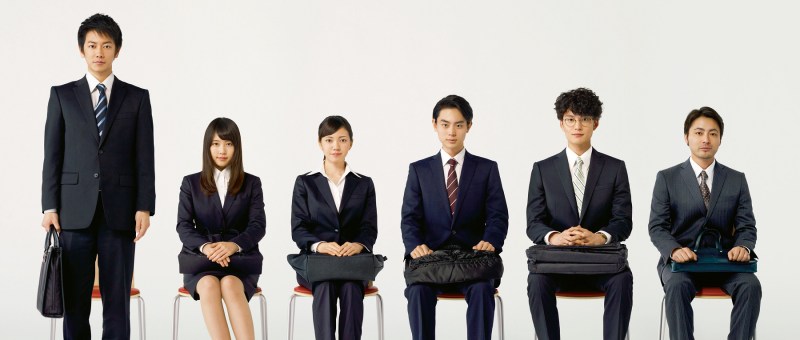
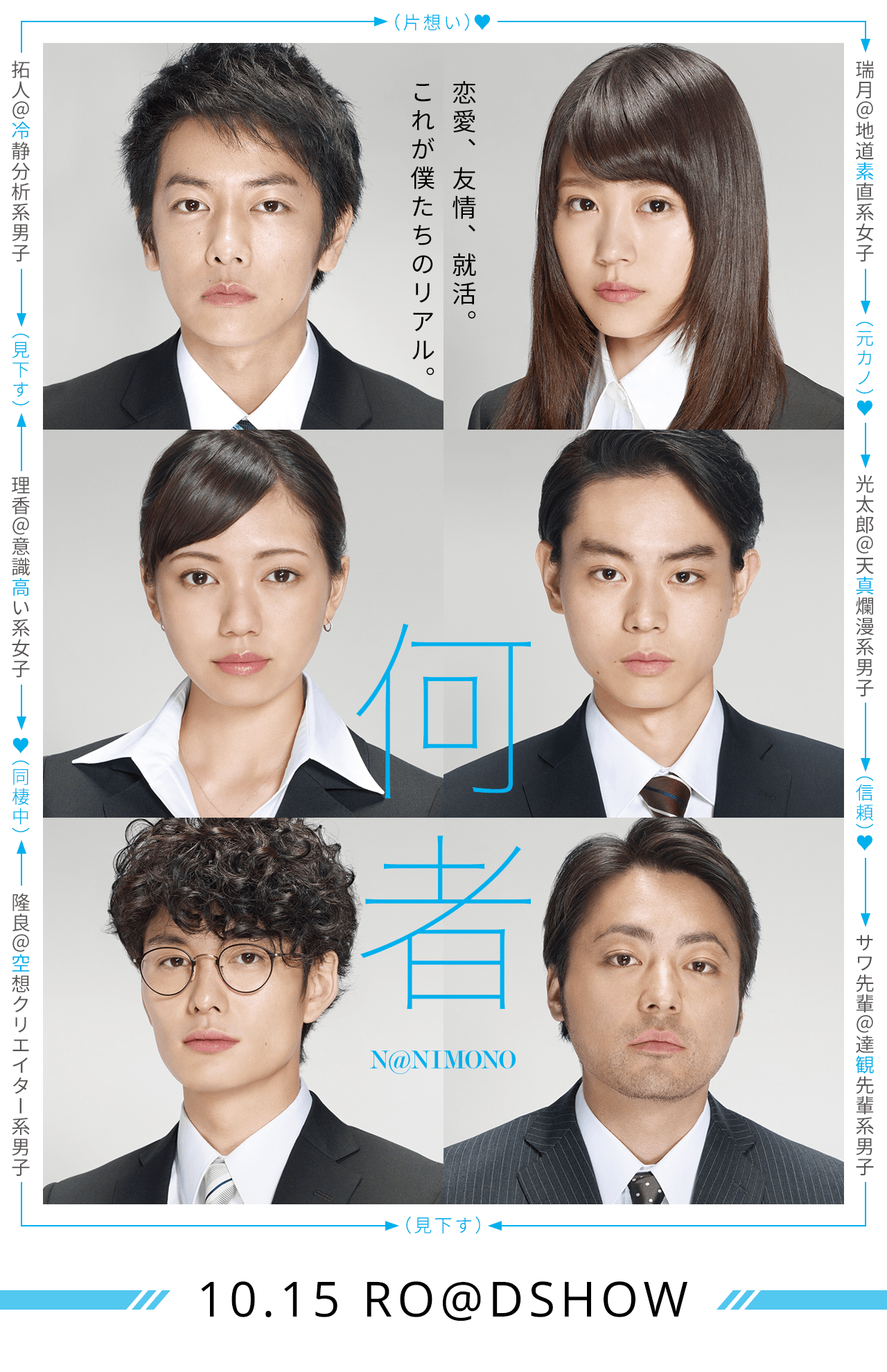
The group at the centre of Daisuke Miura’s adaptation of the Naoki Prize winning novel by Ryo Asai, N@NIMONO (何者, Nanimono, AKA Somebody / Someone), know this better than most. Protagonist Takuto (Takeru Satoh) used to be interested in theatre but has abandoned his dreams of the stage for the mainstream route into company life while his friend Kotaro (Masaki Suda) has played his last gig as the lead singer of a rock band, died his hair black again, and got a smart haircut in preparation for interviews. The boys are still good friends and roommates despite the fact that Takuto has long been carrying a torch for Kotaro’s former girlfriend, Mizuki (Kasumi Arimura), who has just returned from studying abroad. Mizuki is good friends with another girl, Rica (Fumi Nikaido), who happens to live upstairs from the boys and suggests that the four of them all get together to compare notes on the job hunting process. Rica lives with her boyfriend (still somewhat unusual in Japan), Takayoshi (Masaki Okada), who is working as a freelance journalist and is disdainful of the others’ passage into the regular workaday world but later tries to get into it himself.

There is a kind of sadness involved in this process, even if no one seriously thinks about fighting back. Everyone wants to get their foot onto that corporate ladder to become “someone”, at least in the eyes of society. There are a lot of rungs on the ladder to success, and if you miss your footing it’s near impossible to get it back – you’ll wind up one of the many crowded round the bottom staring up at the top even if you don’t want to admit it. University is the last time time there is real scope for indulging one’s personality before the corporate life takes hold – thus Takuto and Kotaro both accept that their artistic pursuits have to go in their quest for a regular middle-class life even if they inwardly struggle with their decisions to “sell-out”.

Takayoshi thinks of himself as above all this. He asks himself what all of this is for, why people put themselves through this humiliating ritual just to be locked into a nine to five that makes them miserable and turns them into soulless drones. There’s an obvious answer to that, and Takayoshi’s refusal to take it into account borders on the offensive, as does his often patronising attitude to those actively engaged in the job hunting process, but his hypocrisy is eventually brought home to him when he turns down a project to work with another artist because he thinks their work isn’t good enough. Maybe there’s courage in just putting something of yourself out there, even if it isn’t very good, rather than sitting at home looking down on everything and critiquing everyone else’s life choices whilst getting nothing done yourself.

It’s this conflict between interior and exterior life in which N@NIMONO is most interested. Main character Takuto begins as the everyman, depressed and stressed by his job hunting odyssey but aloof isolationism soon reveals itself as a kind of cowardice and self-involvement born of insecurity as he takes to a “secret” Twitter account for acerbic comments on his friends’ lives, sarcastically taking cruel potshots safe in the knowledge of his anonymity. Takuto’s entire concept of himself is a construction as his eventual descent into abstraction shows us in recasting his interaction with his friends as an avant-garde theatre show in which he finally begins to see the various ways his resentment of others is really just a way of expressing dissatisfaction with himself. This inability to fully integrate his own personality is offered as the final reason he hasn’t managed to find employment – his insincerity marks him out as a poor prospect. Takuto’s final realisation that he is unable to successfully answer the standard interview question “define your own personality in under one minute” for the perfectly sensible reason that the task is impossible kickstarts his own journey to a more complete life, even if it doesn’t do much to help the countless other “someones” out there hammered into a standard sized holes as mere cogs in the great social machine.


N@NIMONO seems to have been screened under the English titles of both “Somebody” and “Someone” but “N@NIMONO” is the one that features on the title card of the English subtitled Hong Kong blu-ray.

Original trailer (no subtitles)

https://www.youtube.com/watch?v=Ti0TMOtvUYI

Real (リアル 完全なる首長竜の日, Kiyoshi Kurosawa, 2013)

real posterKiyoshi Kurosawa has taken a turn for the romantic in his later career. Both 2013’s Real (リアル 完全なる首長竜の日, Real: Kanzen Naru Kubinagaryu no Hi) and Journey to the Shore follow an Orpheus into the underworld searching for a lost love stolen by death, but where Journey to the Shore is a tale of letting go, Real is very much the opposite (or so it would seem). Taking on much more of a science-fiction bent than Kurosawa’s previous work, Real adapts the Rokuro Inui novel A Perfect Day for a Pleisiosaur in which the boyfriend of a woman in a coma journeys into her subconscious through a process known as “sensing” in order to help her face up to whatever it is that’s keeping her asleep and lead her back towards the living world (or so we think). Strange and surreal, Real is a meditation on love, trauma, and the nature of consciousness in which “reality” itself is constantly in shift.

Koichi (Takeru Satoh) and Atsumi (Haruka Ayase) are childhood friends now living together as a couple. Despite their apparent happiness, one year after we see them enjoying a cheerful breakfast Atsumi is in a coma following a suicide attempt and Koichi is about to undergo an experimental procedure known as “sensing” to try and venture inside her consciousness to find out why she did it and possibly help her wake up.

Koichi makes contact and finds Atsumi living more or less as she had before, inhabiting their shared apartment and hard at work on a manga series, Roomi, which is now on hiatus following her indisposition. Roomi, like much of Atsumi’s work, is dark and macabre – the story of a serial killer who murders people in increasingly violent and disturbing ways. The brief flashes of bloody victims Koichi begins to notice in his peripheral vision soon give way to “philosophical zombies” or the NPCs of of the subconscious which take the form of badly animated third parties peopling Atsumi’s mind. What Atsumi wants from Koichi is to find a drawing of a Pleisiosaur she drew for him when they were children, because it was “perfect” and will help restore her faith in herself as an artist.

The Pleisiosaur turns out to be a little more significant than it first seems, taking Koichi and Atsumi back to the remote island where they first met. Almost like Stalker’s “The Zone” the island is a place of ruined dreams and frustrated inertia where some kind of accident related to the construction of a resort Koichi’s father was involved in building has permanently destroyed any idea of progress. This frozen, rubble strewn landscape perfectly reflects the lost world of the trapped dreamers as they battle the ghost of a shared yet half forgotten childhood trauma.

Though less obviously disturbing than some of Kurosawa’s previous forays into eerie psychological horror, Real has its share of typically J-horror tropes including a dripping wet ghost albeit this time one of a little boy popping up in unexpected places. Kurosawa opts for a hyperreal aesthetic, filming with harsh digital cameras which make little concession to the obviously cinematic, adding to the appropriately lifeless atmosphere of Koichi’s “real” world life and the surreal dreamworld of Atsumi. Koichi’s oddly pyjama-like clothing adds to the ongoing uncertainty as the two worlds blur into each other, becoming indistinct as the screen texture suddenly changes or the camera rolls to an unusual angle.

Shifting from Tarkovsky’s landscapes of desolation to Antonioni’s fog filled confusion, Kurosawa peels back the layers of repressed trauma to finally get to the core of what’s trapping the protagonist’s psyche within its frozen state. Childhood friends as they are, Koichi and Atsumi are trapped by a sense of guilt for something that they were both witness to all those years ago and so to overcome it, they will need to face it together. This time Orpheus descends but refuses to leave alone, battling literal dinosaurs from the distant past which must be placated with tokens of affection and, finally, heartfelt apologies. The “real” remains obscure, but Kurosawa does, at least, demonstrate his faith in love as salvation in a climax that echoes A Matter of Life and Death even if in a surreal and not altogether successful way.


International trailer (English subtitles)